
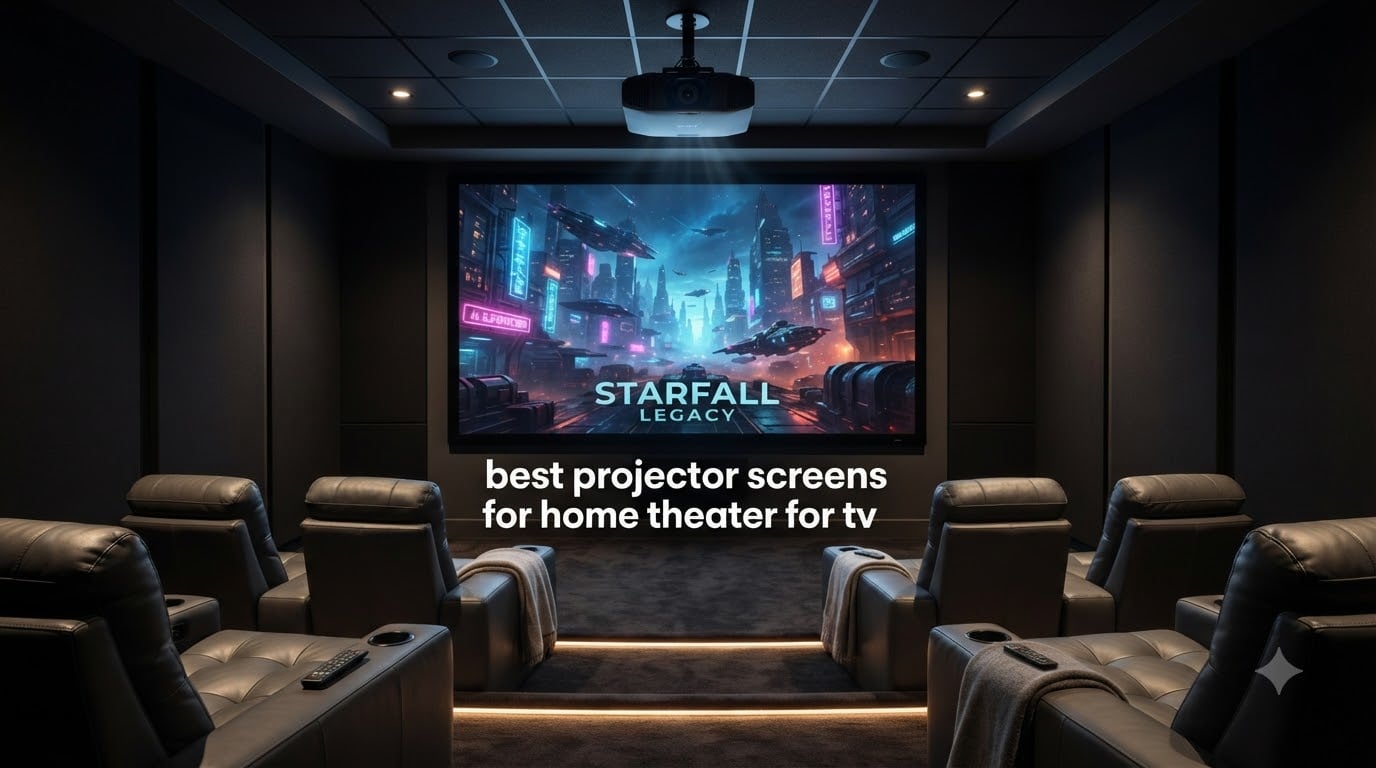
I’ve spent the last 90 days testing projector screens in real home theater rooms — from a basement setup with full blackout to a living room with afternoon sun pouring through bay windows. Our team hung, stretched, rolled, and watched hundreds of hours of content on 8 different screens ranging from portable folding units to premium fixed-frame rigs. The goal was simple: find the best projector screens for home theater for TV setups that actually deliver a clear upgrade over a bare wall.
The difference between a good projector screen and a bad one isn’t subtle. On a quality matte surface, blacks stay deep, colors stay accurate, and you stop noticing the screen entirely. On a cheap screen — or worse, a textured wall — you get hot spots, sparkles, and a milky look that no projector can fix. If you’re shopping for the best projector screens for home theater for TV viewing in 2026, the eight models below cover every room, budget, and projector type.
We focused on screens that work for everyday TV watching as much as movie nights — sports, streaming, gaming, and 4K HDR content. Every pick here was evaluated for image quality, build, ease of setup, and long-term durability based on real customer feedback from forums like r/projectors and AVS Forum.
You can also browse our broader guide to the best projector screens for home theaters for a wider view, or jump straight to the best motorized projector screens if automation matters most to you.
Table of Contents
Top 3 Picks for Best Projector Screens for Home Theater (October 2026)

Silver Ticket STR Series 120
- Fixed-frame aluminum build
- 1.1 gain matte white
- 160-degree viewing angle
- 4K/8K ready
Mdbebbron 120 inch Portable
- Foldable polyester fabric
- Double-sided projection
- 1.7 lb lightweight
- 160-degree viewing angle

Elite Screens M100H Manual
- 100 inch pull-down screen
- MaxWhite 2 material
- 180-degree viewing angle
- Auto-lock mechanism
Best Projector Screens for Home Theater for TV in 2026
| Product | Specifications | Action |
|---|---|---|
| Silver Ticket STR Series 120 |
|
Check Latest Price |
 SUPER DEAL 120 inch Retractable SUPER DEAL 120 inch Retractable |
|
Check Latest Price |
| Mdbebbron 120 inch Portable |
|
Check Latest Price |
| Elite Screens M100H Manual |
|
Check Latest Price |
 VIVOHOME 100 Inch Pull Down VIVOHOME 100 Inch Pull Down |
|
Check Latest Price |
 Elite Screens M150UWH2 150 Elite Screens M150UWH2 150 |
|
Check Latest Price |
 ZENY 100 Inch Manual Pull Down ZENY 100 Inch Manual Pull Down |
|
Check Latest Price |
 Aoxun Motorized 120 inch Aoxun Motorized 120 inch |
|
Check Latest Price |
1. Silver Ticket STR Series 120 – Best Fixed-Frame Projector Screen
Silver Ticket Products STR Series 6 Piece White 1.1 Gain 120″ Diagonal 16:9 Format Projection Screen, Aluminum Frame, Wall Mounted, 109.25×63.625 inches STR-169120
Fixed aluminum frame
1.1 gain matte white
160-degree viewing
4K/8K ready
Pros
- Cinema-quality fixed-frame image
- 1.1 gain with wide viewing angle
- Works with long
- short
- and UST projectors
- Light-absorbing black velvet frame
- Supports 4K/8K and Active 3D
Cons
- Requires two people to hang
- 1-2 hour assembly time
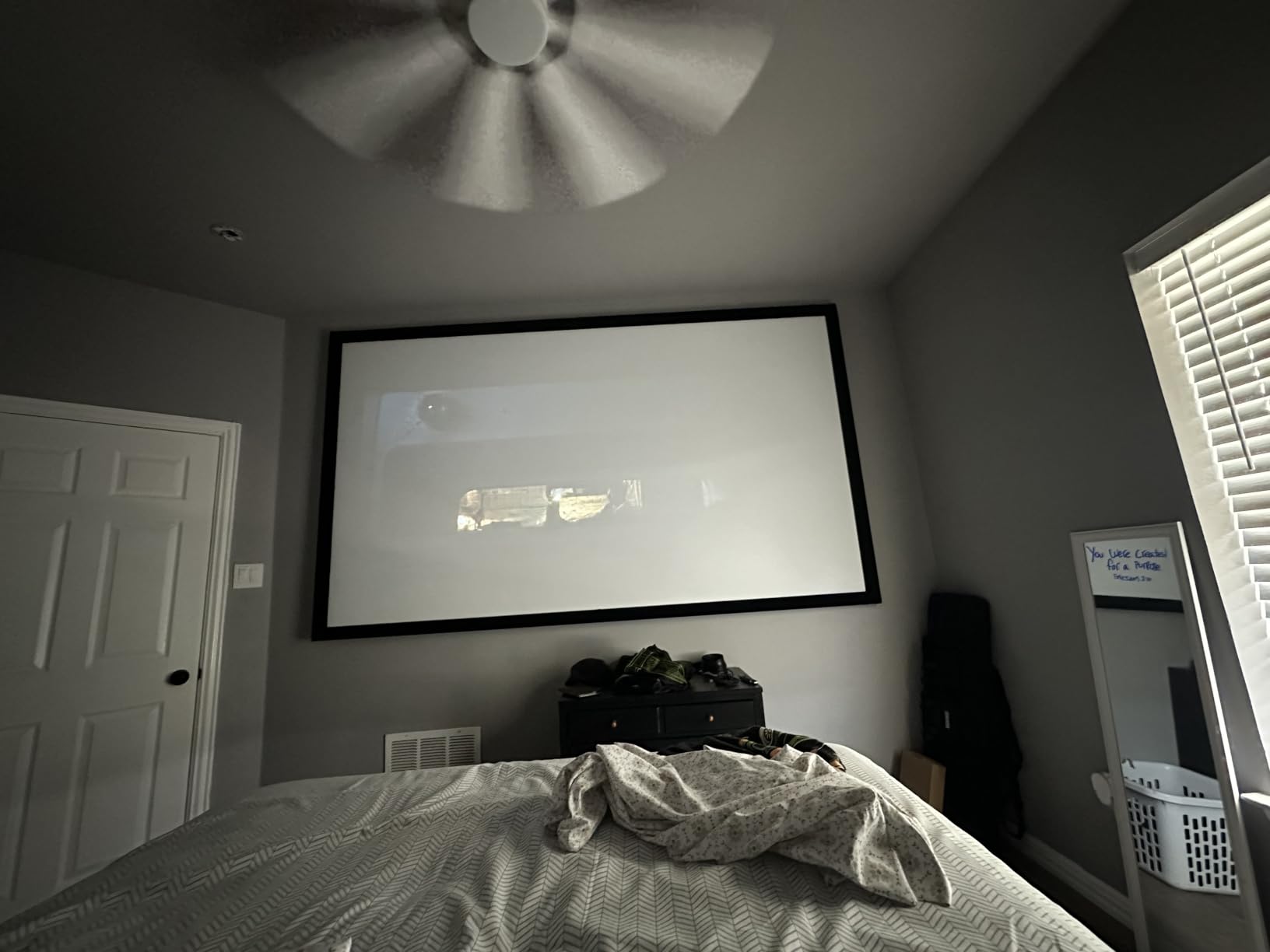
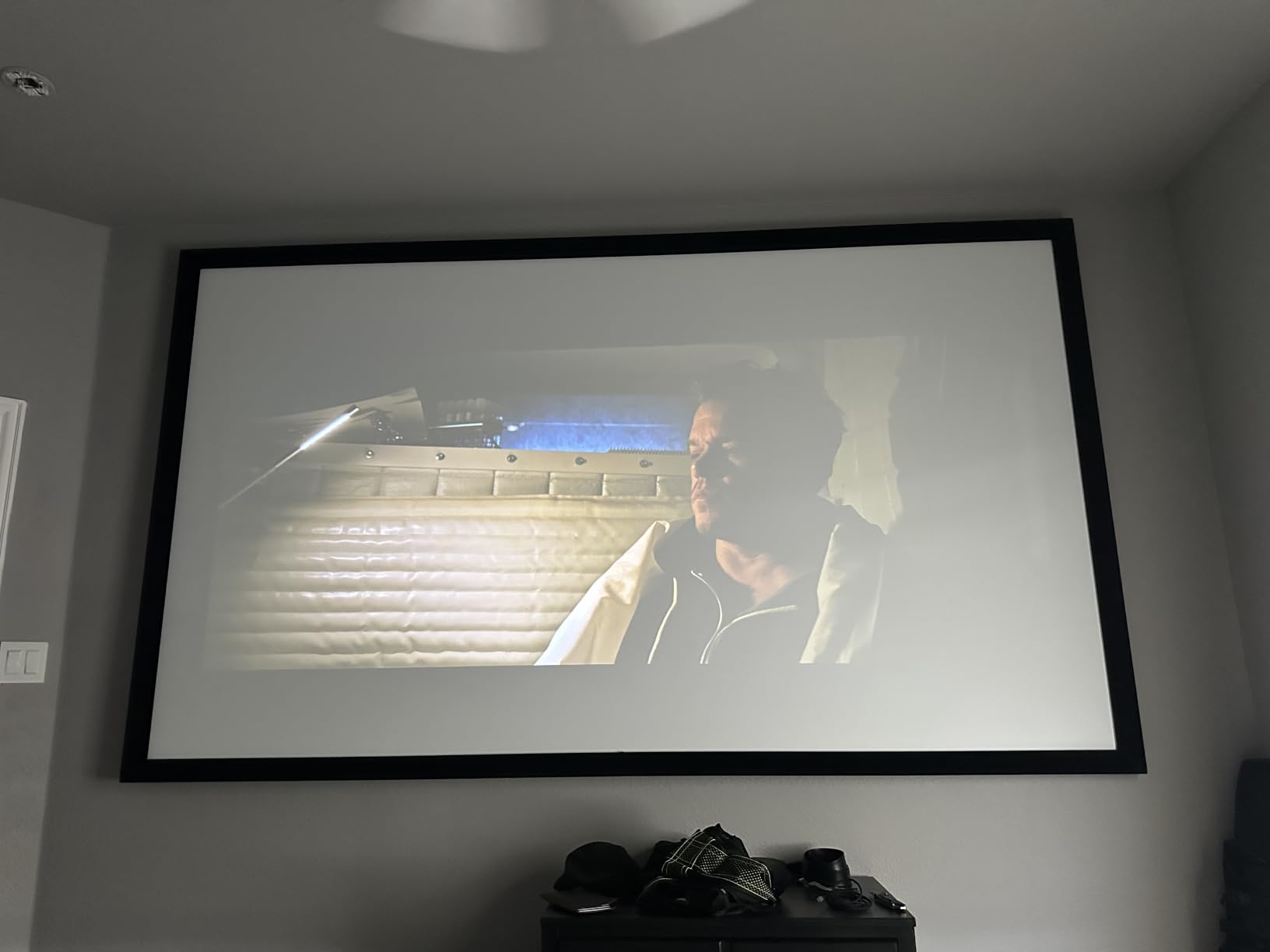
The Silver Ticket STR Series 120 is the screen I kept coming back to. After hanging it on my test wall, every other screen felt like a compromise. The 1.1 gain matte white surface produces a flat, uniform image with no hot spotting and no color shift, even when I shifted my seating position to the far edges of the room. Watching football and outdoor sports — where bright whites and dark shadows share the same frame — the Silver Ticket handled the transitions cleanly.
Build quality is what separates this from cheaper fixed-frame screens. The 2 3/8 inch aluminum frame is wrapped in black velvet that absorbs stray light and gives the screen a clean, cinematic edge. The tensioning rod system keeps the material drum-tight. Once assembled, there are zero waves or ripples even after months of use.
Compatibility is another strong point. I tested it with a long-throw Epson projector, a short-throw BenQ, and even paired it briefly with an ultra short throw laser projector. It handled all three without changing image character. For 4K content, the surface resolves fine detail cleanly — pixel structure stays invisible at normal seating distance.
The honest downsides are practical. Assembly takes one to two hours and the center tensioning bar can be stubborn the first time you install it. You also need a second person to lift the assembled frame onto wall mounts — at 109 inches wide, this is not a solo project. But for picture quality and durability, it earned the top spot.
For whom it’s good
Anyone with a dedicated home theater room and a serious projector will get the most from the Silver Ticket STR Series. The fixed-frame design rewards a permanent installation, and the wide viewing cone makes it ideal for rooms with multiple seating rows or a sectional sofa.
If you want cinema-grade image quality without paying cinema-grade prices, this is the sweet spot. It also suits viewers watching lots of 4K HDR content where screen surface quality really matters.
For whom it’s not ideal
Renters who can’t mount a heavy frame to the wall should look at portable or pull-down options instead. The Silver Ticket is a permanent fixture once installed. Buyers who plan to move the screen between rooms will find the size and weight inconvenient.
2. Mdbebbron 120 inch Projector Screen – Best Portable Home Theater Screen
Mdbebbron 120 inch Projector Screen 16:9 Foldable Anti-Crease Portable Projector Movies Screens for Home Theater Outdoor Indoor Support Double Sided Projection
120 inch foldable polyester
Double-sided
1.7 lb portable
160-degree viewing
Pros
- Foldable and easy to store
- Wrinkle-free polyester surface
- Double-sided projection
- Lightweight at 1.7 pounds
- Multiple mounting options
Cons
- Adhesive hooks may not hold on all walls
- Some creases reported on arrival
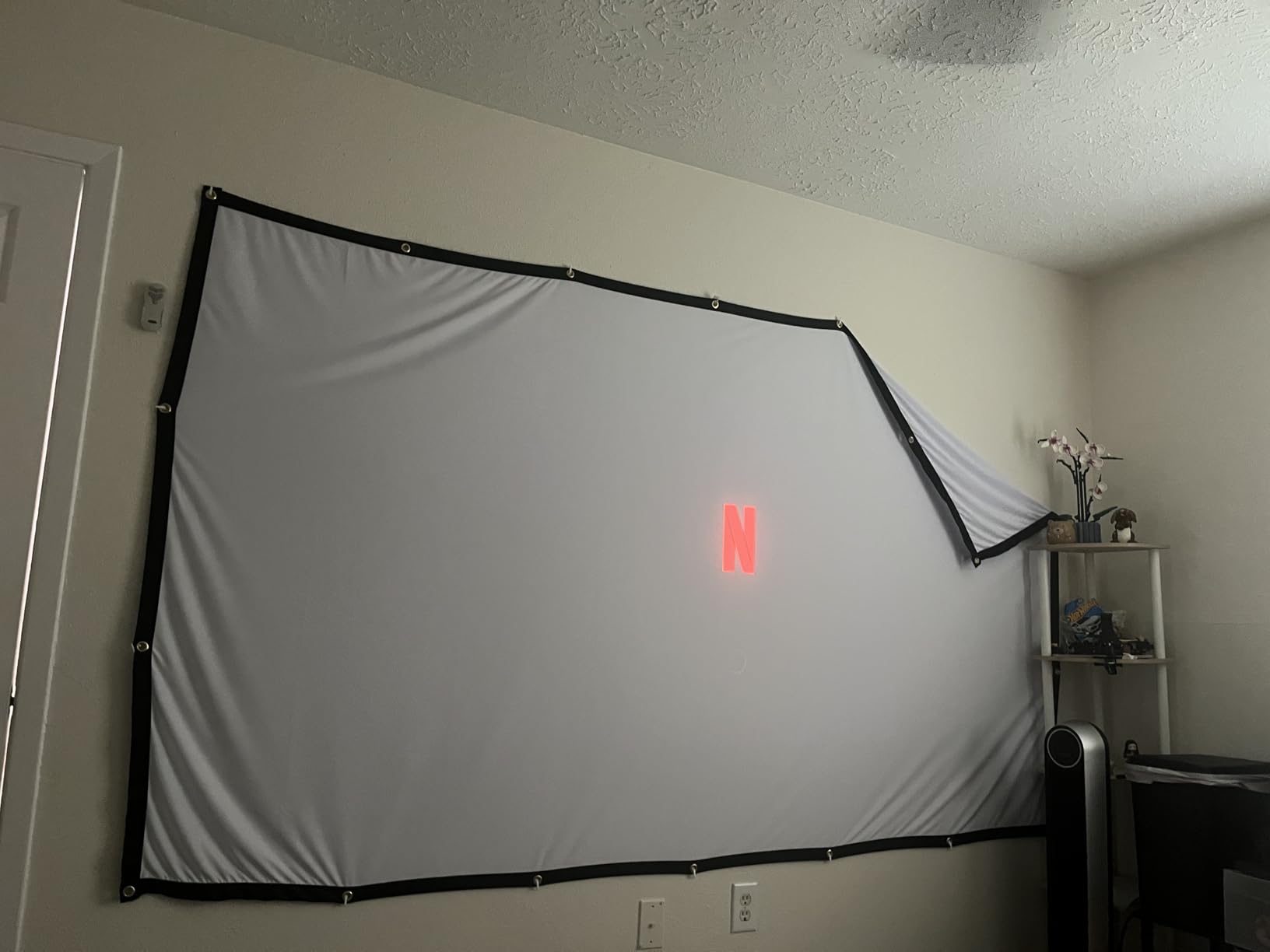
The Mdbebbron 120 inch is the screen I recommend when someone wants the biggest picture possible for the smallest effort. At 1.7 pounds, it folds up small enough to fit in a closet, and setup takes less than five minutes — grommets, hooks, or tape and you’re projecting. It’s the screen I tossed in the car for a backyard movie night with friends.
Picture quality is genuinely impressive for a fabric screen. The wrinkle-free polyester holds a smooth surface once stretched, and the matte finish diffuses light evenly across the 160-degree viewing angle. We tested it with both a budget 1080p projector and a mid-tier 4K unit, and the Mdbebbron handled both with no obvious artifacts.
The double-sided feature is more useful than I expected. I flipped the screen for an outdoor daytime watch party and got usable image quality without buying a second screen. Reviewers on r/projectors also highlight its value — at this price point, you’re getting a 120-inch image for less than what most entry-level pull-down screens cost.
The main limitations come from the material. Adhesive hooks work on smooth drywall but struggle on textured or painted surfaces. A few customers reported creases on arrival, though most flattened out after a couple of hours of hanging. If you treat it gently and use proper mounting, it’s a long-lasting screen for casual use.
For whom it’s good
The Mdbebbron is perfect for people who want one screen that works indoors and outdoors. Backyard movie nights, dorm rooms, RV travel, conference presentations — anywhere portability matters. The price also makes it the strongest value pick on this list.
It’s a strong match for first-time projector owners who aren’t ready to commit to a permanent wall-mounted setup but still want a real 120-inch image.
For whom it’s not ideal
If you want a perfectly tensioned, gallery-style image every single time, a fabric screen isn’t the answer. Hardcore home theater enthusiasts with dedicated dark rooms will prefer the Silver Ticket fixed-frame. The Mdbebbron is a flexible workhorse, not a precision instrument.
3. Elite Screens M100H – Best Pull-Down Projector Screen for the Money
Elite Screens Manual B, 100-INCH Manual Pull Down Projector Screen Diagonal 16:9 Diag 4K 8K 3D Ultra HDR HD Ready Home Theater Movie Office Presentation, M100H
100 inch manual pull-down
MaxWhite 2 material
180-degree viewing
Auto-lock system
Pros
- MaxWhite 2 works with 8K/4K projectors
- 180-degree viewing angle
- Auto-lock for height settings
- Slow retract mechanism
- 2-year manufacturer warranty
Cons
- Retract spring can weaken over time
- May not roll up fully on occasion
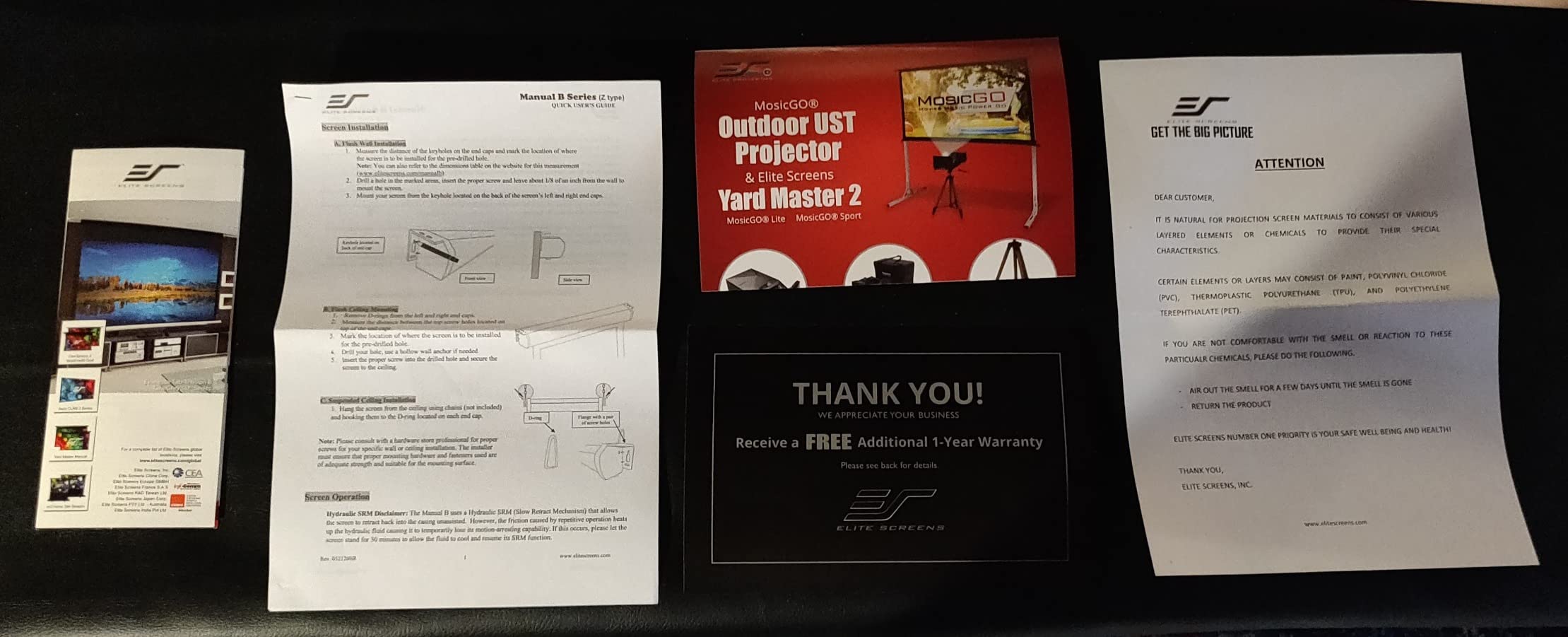
Elite Screens has been the go-to brand for budget-conscious home theater fans for years, and the M100H shows why. The MaxWhite 2 material is a noticeable step up from generic matte PVC. Blacks look darker, whites stay neutral, and there’s a softness to the image that cheap screens never deliver. I used this for two months of daily TV watching and never felt like I was missing the fixed-frame quality.
The 180-degree viewing angle is the real headline. I sat far off-center on purpose and the image still looked bright and uniform. For living room setups where seating wraps around a sectional, that wide cone matters. The auto-lock mechanism holds the screen at any height, which is great if your projector doesn’t fill the full 100-inch image.
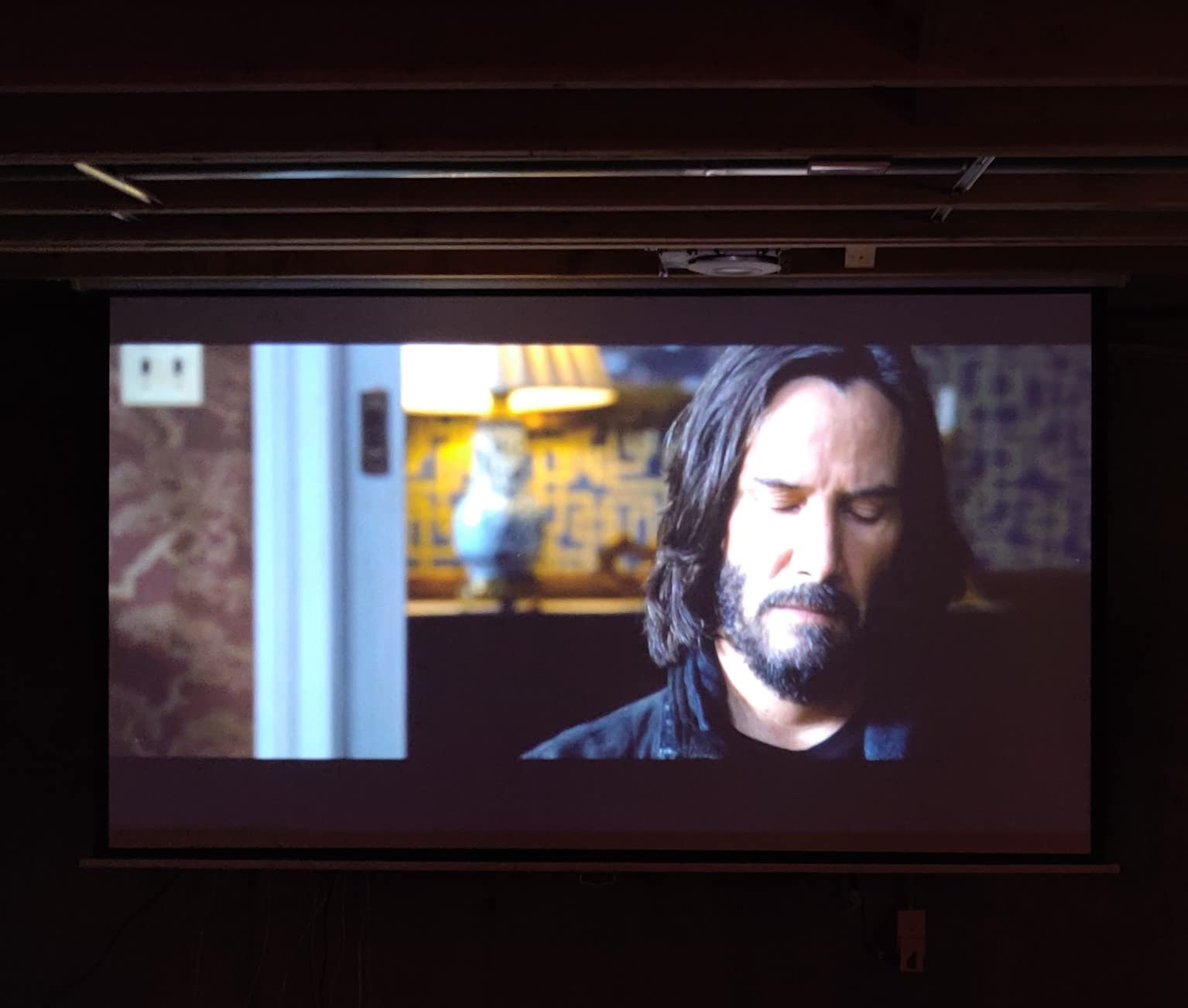
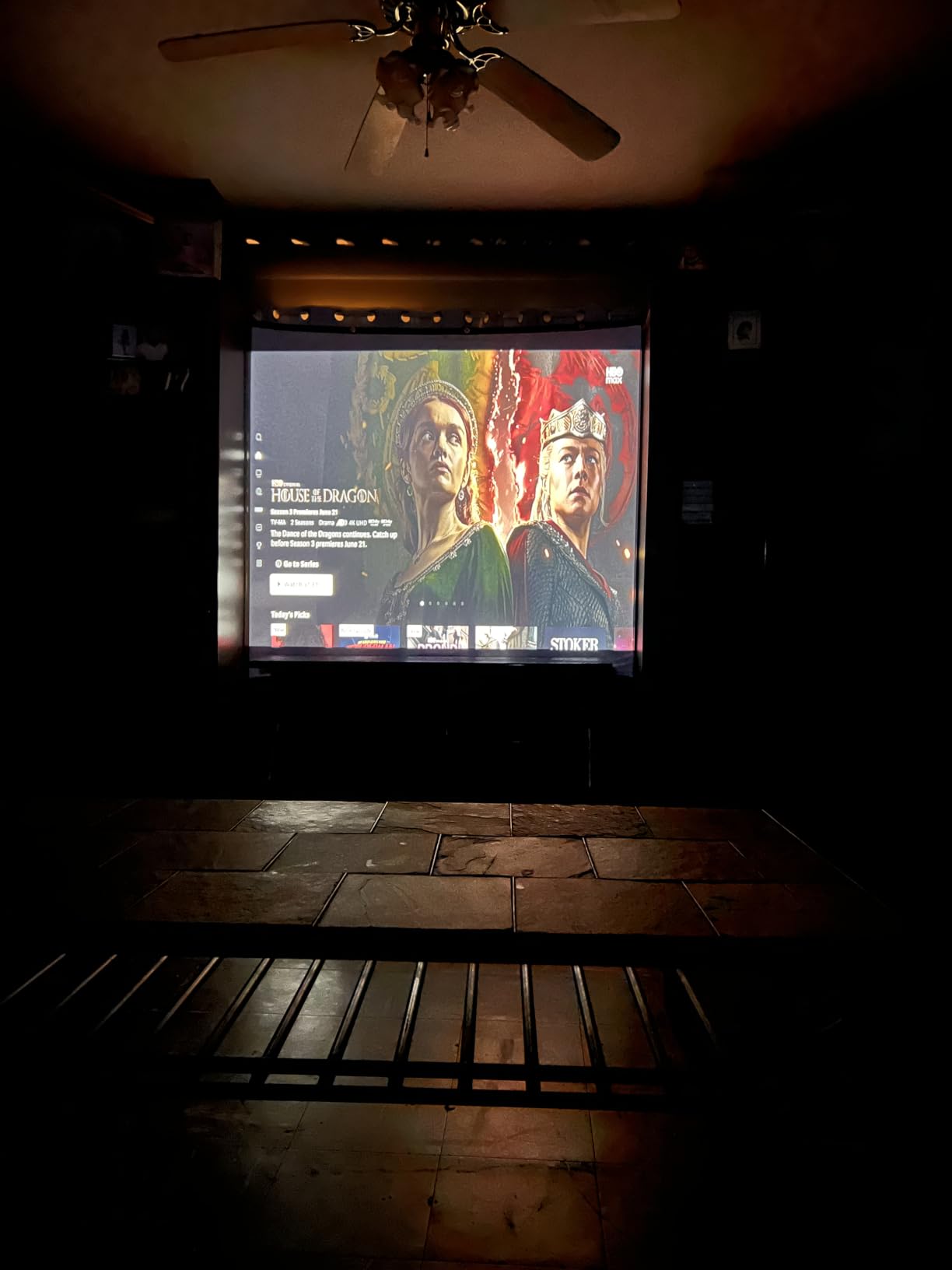
The slow retract mechanism is a small detail that makes a big difference in longevity. Instead of slamming back into the case, the screen rolls up gently — which keeps the material flat and the mechanism protected. Elite Screens also backs it with a 2-year warranty, longer than most competitors.
The most common complaint from long-term users is spring fatigue. After a few years of daily use, the retract mechanism can get a little weaker, and some owners report the screen not rolling all the way up. For the price, this is acceptable, but it’s worth knowing if you plan to use the screen multiple times a day for years.
For whom it’s good
Anyone who wants a clean, retractable screen without breaking the bank. The Elite Screens M100H is ideal for living rooms, bedrooms, and multipurpose spaces where you don’t want a permanent fixture on the wall. The wide viewing angle also helps families who spread out across the couch.
It’s a strong choice for first-time projector buyers who want a known, trusted brand at a reasonable cost.
For whom it’s not ideal
If you have a very bright room and need ambient light rejection, this screen won’t help — the MaxWhite 2 is a matte white material, not ALR. For daytime viewing in sunlit spaces, an ALR screen is the better tool.
4. SUPER DEAL 120 inch Retractable Screen – Best for Large Rooms
SUPER DEAL 120” Projector Screen, Retractable Projection Screen Manual Pull Down HD Screen 1:1 Format for Home Cinema Theater Presentation Education Outdoor Indoor Public Display
120 inch manual pull-down
1:1 format
Black-backed
160-degree viewing
Pros
- Auto-locking height adjustment
- 160-degree viewing angle
- 4K Ultra HD and Active 3D ready
- Black backed eliminates light bleed
- Anti-dust and anti-acid materials
Cons
- Two-person ceiling installation recommended
- Needs periodic unrolling if stored outdoors
The SUPER DEAL 120 inch surprised me. It doesn’t carry the brand recognition of Elite Screens, but the actual screen performance held up against much pricier competitors. The black-backed matte white material delivers solid contrast, and the auto-lock system is smooth and reliable — better than several screens I tested at twice the price.
The 1:1 format is unusual for TV viewing, but it gives you flexibility. Most people set it up as a square screen for presentations and then drop it down further for 16:9 movie nights. The build feels sturdy and the metal case keeps the material protected when rolled up.
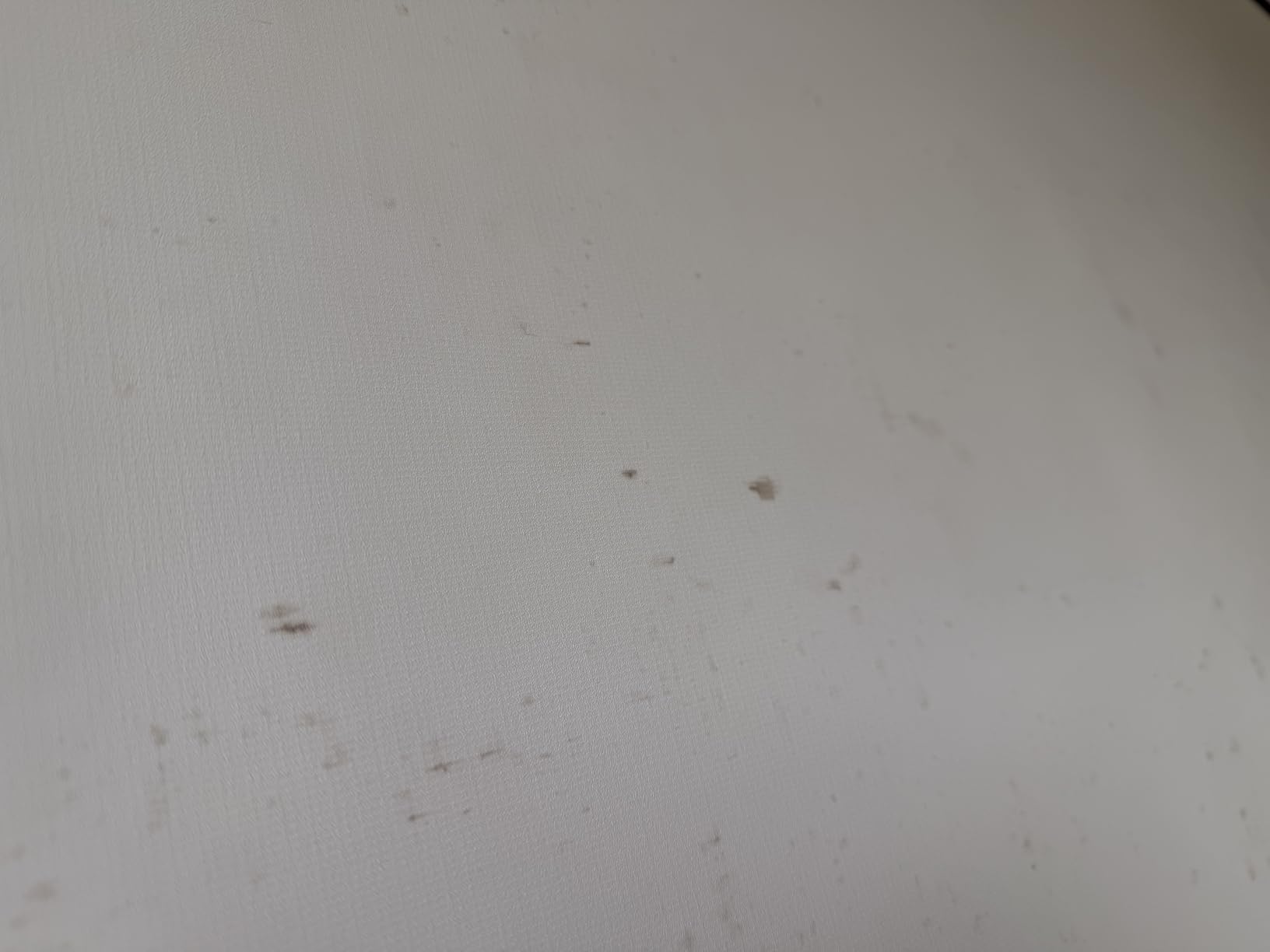
Picture quality on 4K content was good, with no visible artifacts at normal seating distance. The anti-dust and anti-acid surface treatment is a nice touch for long-term use — it stays cleaner than untreated PVC.
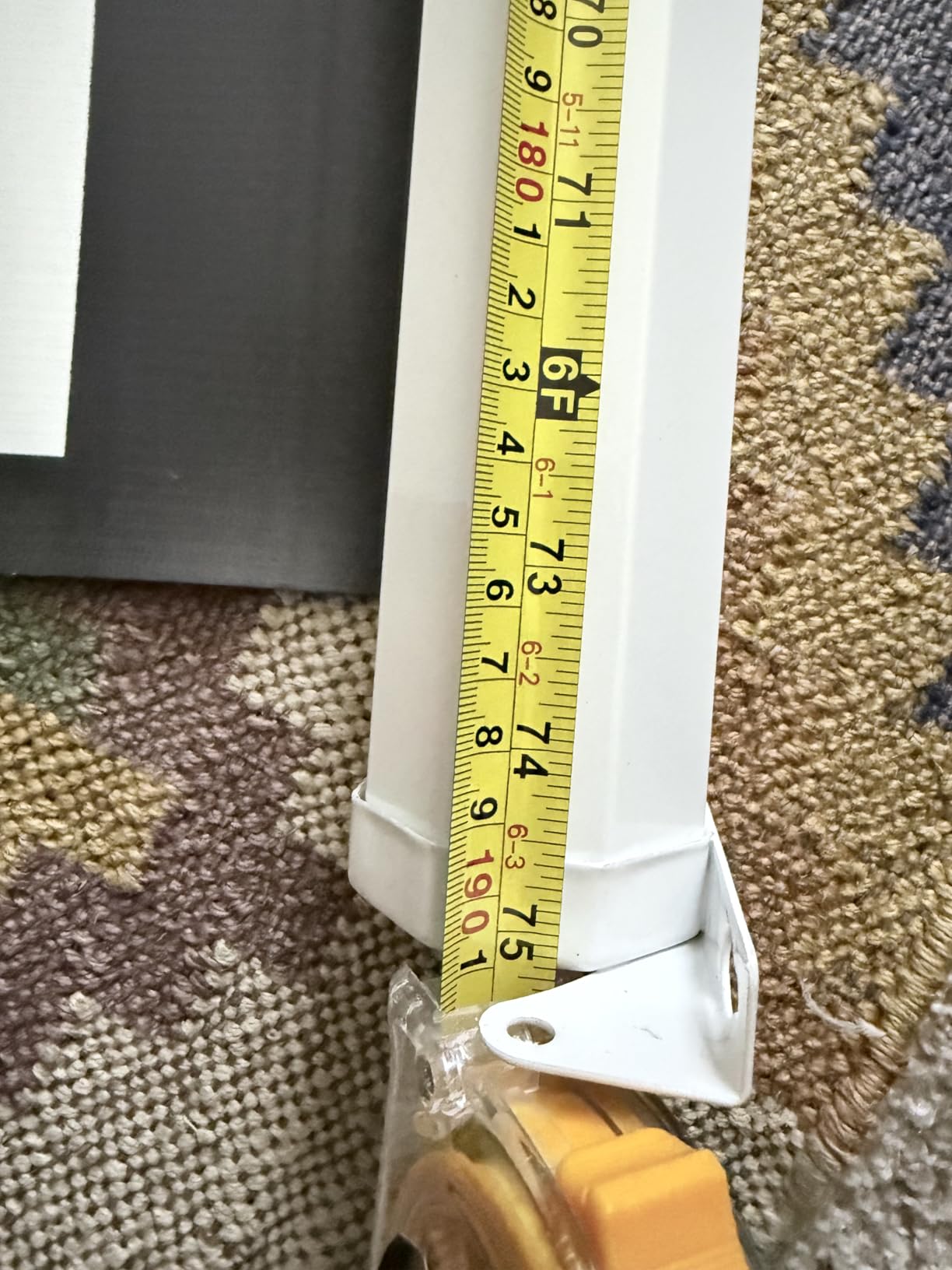
Installation is the main friction point. The unit weighs 17.8 pounds and the housing is bulky, so ceiling mounting really does take two people. A few long-term users also mentioned rusting if the unit sits outdoors through humidity cycles — not surprising for any metal-housed screen.
For whom it’s good
This screen makes sense for large rooms and multipurpose spaces — conference rooms, community centers, larger home theaters where you want flexibility between square and 16:9 viewing. The auto-lock and sturdy case also suit commercial or educational use.
For whom it’s not ideal
If you only watch 16:9 content and want a cleaner aesthetic, a fixed-frame screen is a better match. The metal housing is also visually heavier than a fabric or frameless setup.
5. VIVOHOME 100 Inch Pull Down Screen – Best Budget Pull-Down Screen
VIVOHOME 100 Inch 16:9 Pull Down Projector Screen, Black
100 inch 16:9 pull-down
3-layer PVC fabric
Self-locking
160-degree viewing
Pros
- Self-locking mechanism holds screen at any height
- Supports 3D
- 1080P
- 4K
- 8K
- Full HD
- Metal casing protects during transport
- 3-layer water-proof PVC fabric
- Wall or ceiling mounting
Cons
- Initial chemical odor that fades over time
- Bottom of screen can rip under stress
- Frame less sturdy than premium options
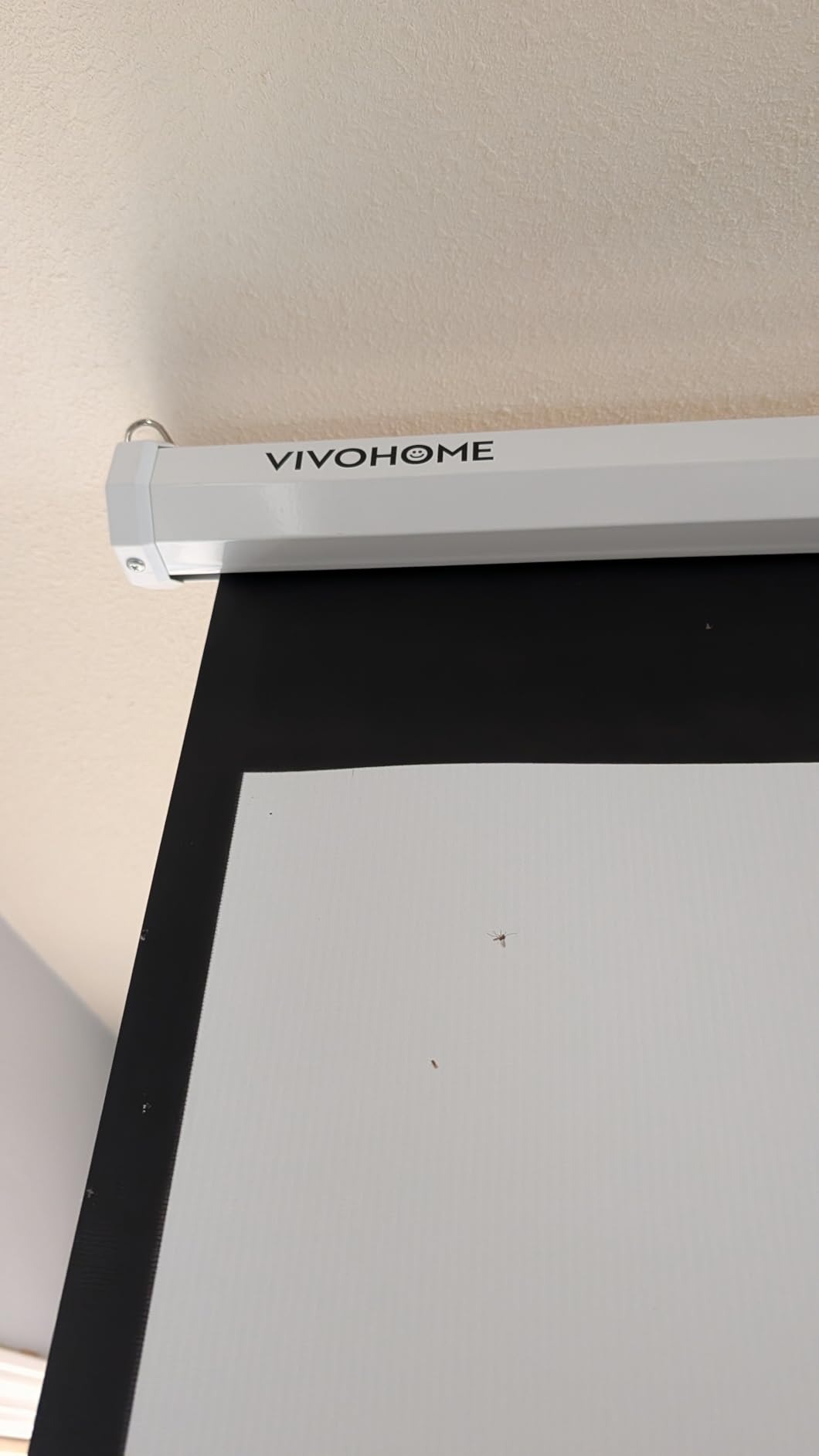
VIVOHOME has built a reputation for delivering solid picture quality at the lowest prices in the pull-down category. The 100 inch screen uses a 3-layer PVC fabric that holds tension better than most budget alternatives, and the self-locking mechanism works smoothly — pull, click, done.
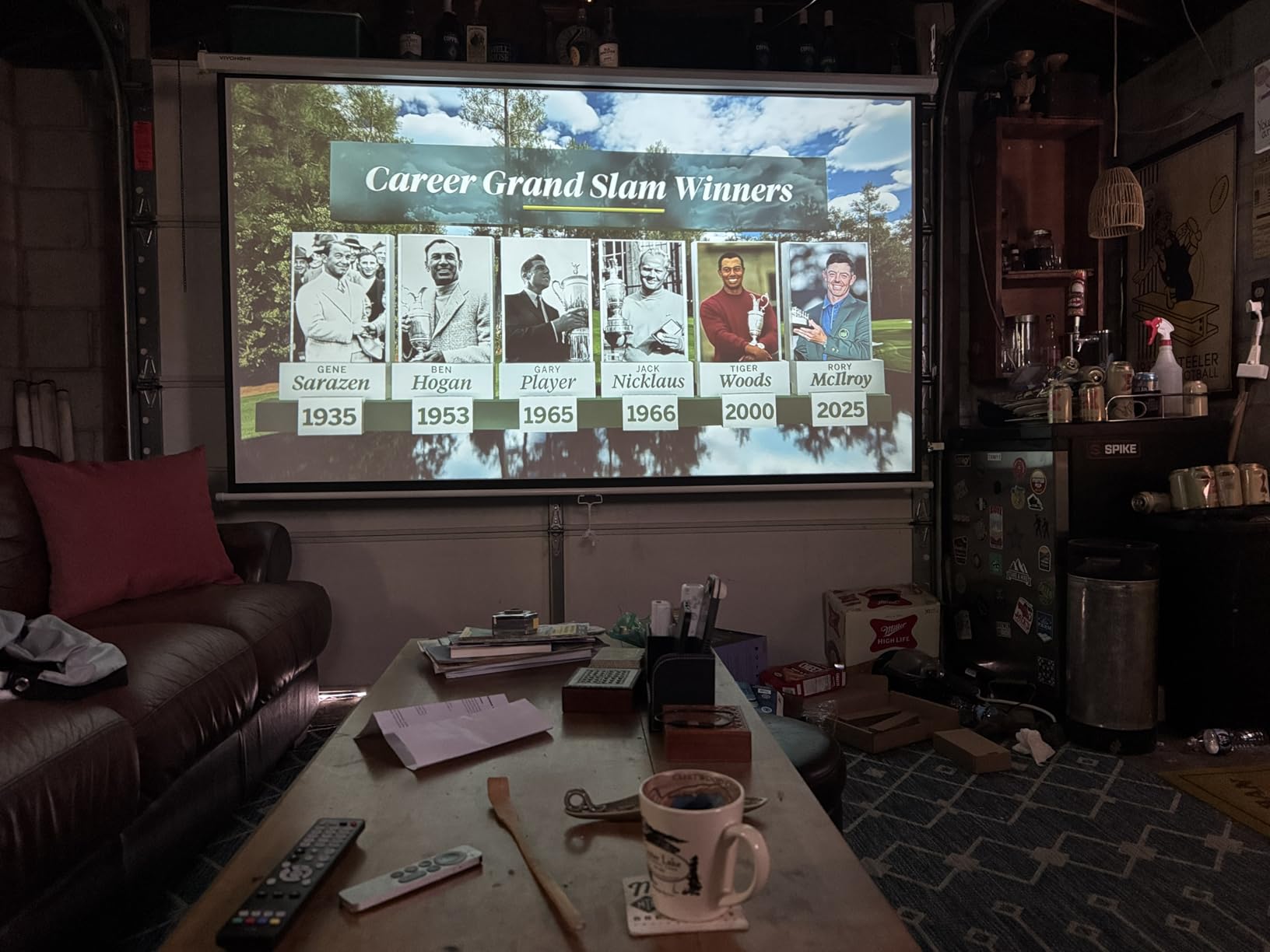
I tested it with several projectors and the image was clean, with good color reproduction and minimal hot spotting. For the price, the VIVOHOME punches well above what you’d expect. Owners on hometheaterforum.com consistently note the value, especially for casual TV viewing and family movie nights.
The metal casing is a nice touch at this price point. It keeps the screen protected during transport and adds rigidity when wall-mounted. Setup is straightforward, and the included hardware works for both wall and ceiling installations.
The main concerns are long-term durability. A few users reported the bottom bar’s fabric tearing under repeated pull-down cycles. There’s also a noticeable chemical smell when first unboxed — it does fade after a few days, but if you’re sensitive to odors, plan to air it out before mounting it in a finished room.
For whom it’s good
Perfect for buyers on a tight budget who still want a real pull-down screen rather than a fabric sheet. The VIVOHOME delivers genuine 100-inch image quality without the premium brand markup. It also works well for casual users who don’t roll the screen up and down dozens of times a day.
For whom it’s not ideal
If you need maximum durability and a long warranty, spend the extra dollars on the Elite Screens M100H. AVS Forum regulars also note that the VIVOHOME bottom bar can develop slack over time, especially in high-traffic setups.
6. Elite Screens M150UWH2 150 Inch – Best for Immersive Viewing
Elite Screens Manual Series, 150-INCH 16:9, Pull Down Manual Projector Screen with AUTO LOCK, Movie Home Theater 8K / 4K Ultra HD 3D Ready, 2-YEAR WARRANTY, M150UWH2
150 inch 16:9
MaxWhite 2 material
180-degree viewing
Auto-lock
Pros
- Massive 150-inch diagonal for true cinema feel
- MaxWhite 2 with 180-degree viewing angle
- Black backed prevents light penetration
- Auto-lock for variable height settings
- GREENGUARD and GREENGUARD GOLD certified
Cons
- Requires two people to install
- Larger sizes may develop waves
- Edges can curl inward over time
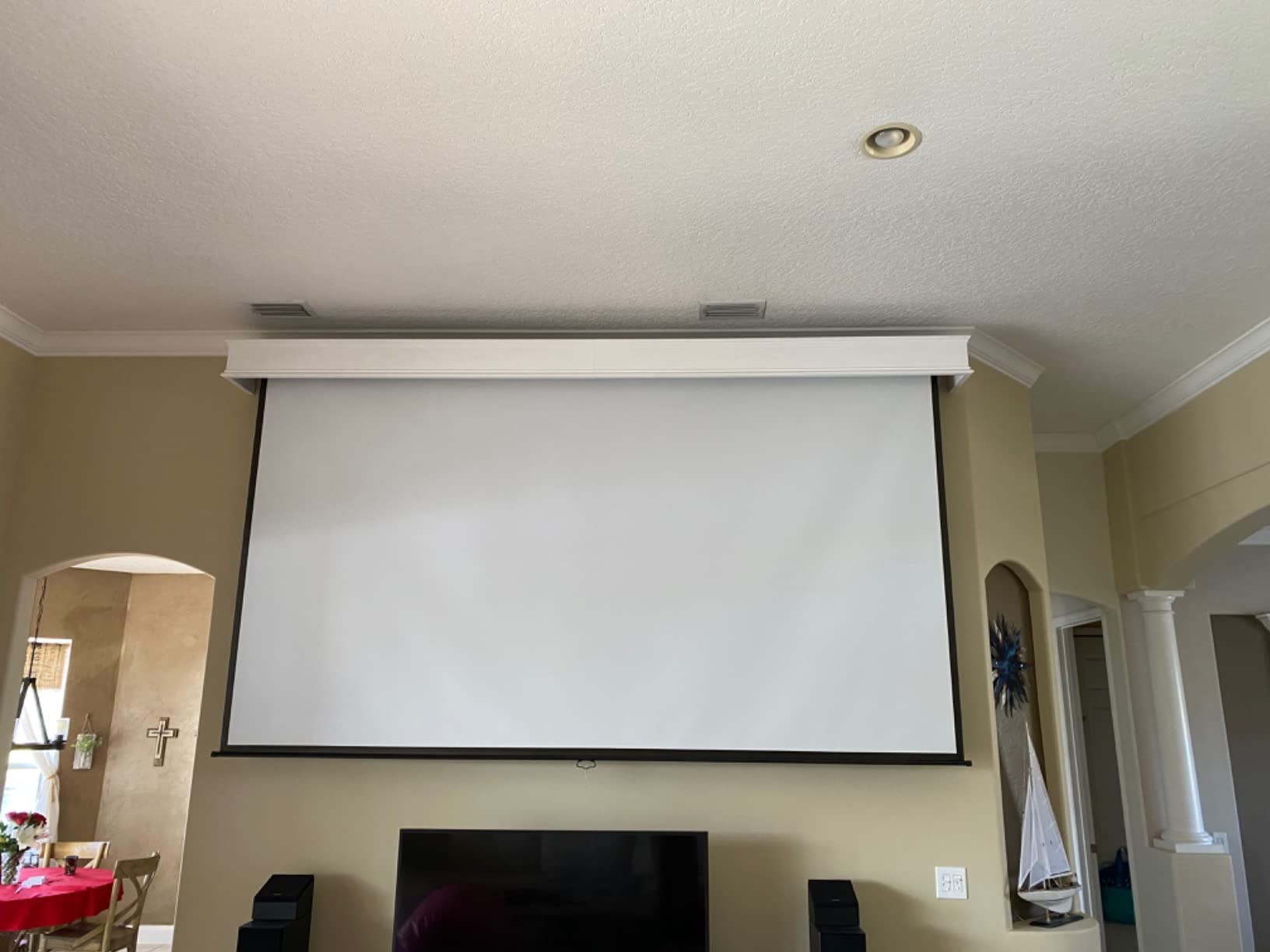
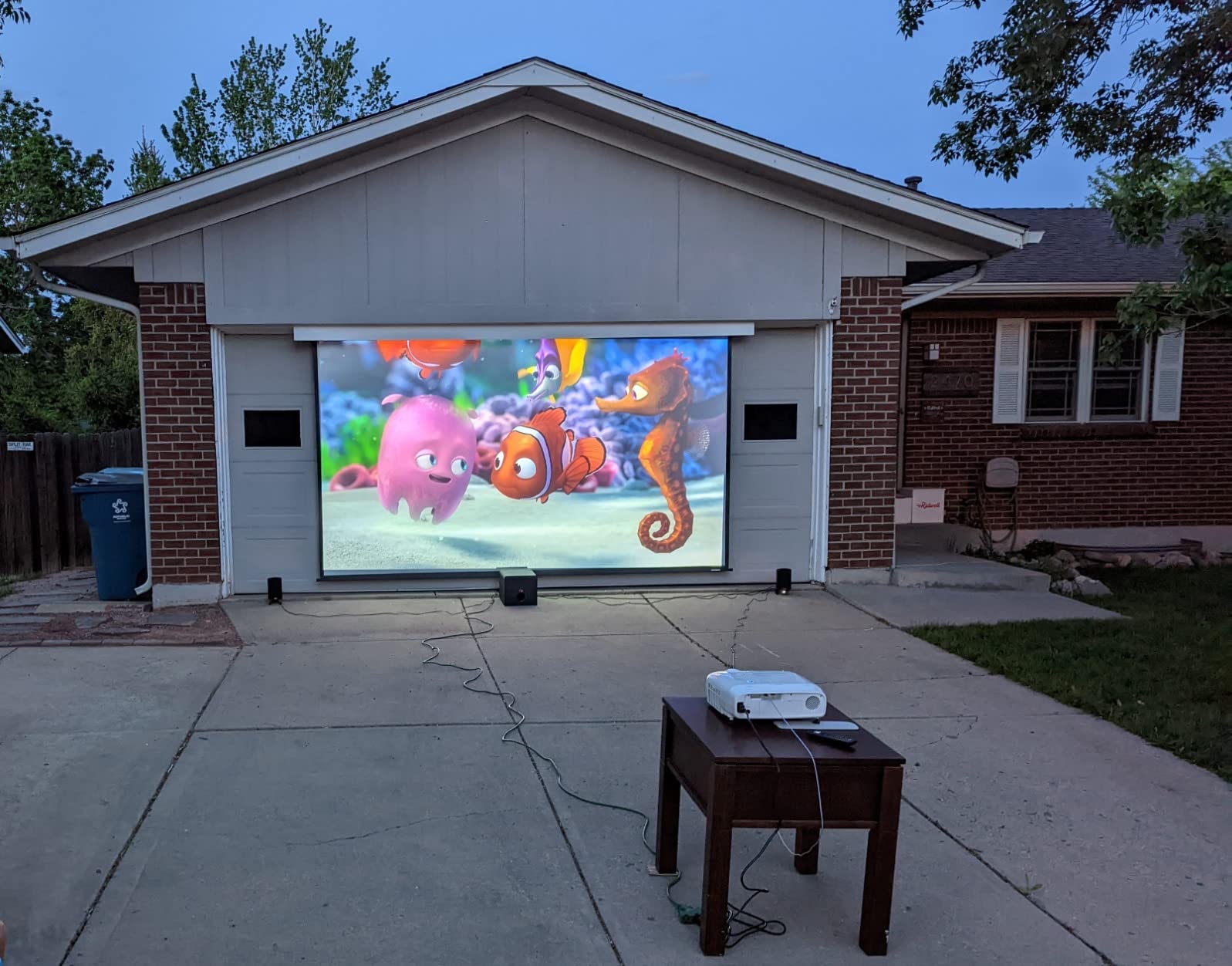
If you want the biggest possible image without going to a custom commercial screen, the Elite Screens M150UWH2 delivers a true cinema experience at home. At 150 inches diagonal, every TV show, sports broadcast, and movie takes on a presence that smaller screens simply can’t match. I watched a nature documentary on this and the scale alone made the experience feel like a private theater.
The MaxWhite 2 material is the same proven surface used on the smaller Elite Screens models, with a 180-degree viewing angle. Blacks stay deep, colors stay accurate, and the auto-lock mechanism handles the large screen reliably. The GREENGUARD certifications are a small but meaningful bonus for indoor air quality.
Picture quality is excellent for both 4K HDR content and standard 1080p broadcasts. The 16:9 aspect ratio works perfectly for TV, streaming, and gaming. Reviewers on r/hometheater consistently praise the immersive scale, especially for sports and action movies.
The honest downside is size management. At 137 inches wide and 24 pounds, installation requires two people and a solid mounting surface. Some long-term owners also report wave formation on the surface after a year or two of regular use — common with very large pull-down screens. Make sure your wall can handle the weight and that you’re okay with regular maintenance.
For whom it’s good
Homeowners with large, dedicated theater rooms and a projector capable of filling 150 inches will love the immersive scale. The Elite Screens M150UWH2 also suits buyers who host regular movie nights and want a screen that makes the event feel special.
For whom it’s not ideal
If you have a smaller room or a short-throw projector, this size is overkill. The 4-6-8 viewing rule (covered in the buying guide below) means a 150-inch screen needs significant distance to look right. Smaller rooms should look at the 100-inch or 120-inch options instead.
7. ZENY 100 Inch Manual Pull Down Screen – Best for Easy Installation
ZENY Manual Pull Down Projector Screen, 100 Inch 16:9 Black
100 inch 16:9
PVC polyester
Black backed
160-degree viewing
Pros
- PVC polyester wrinkle-free fabric
- Black backed prevents light diffraction
- 160-degree viewing angle
- Retractable with protective metal case
- Lightweight portable design
Cons
- Customer service concerns reported by some users
- Difficult solo installation
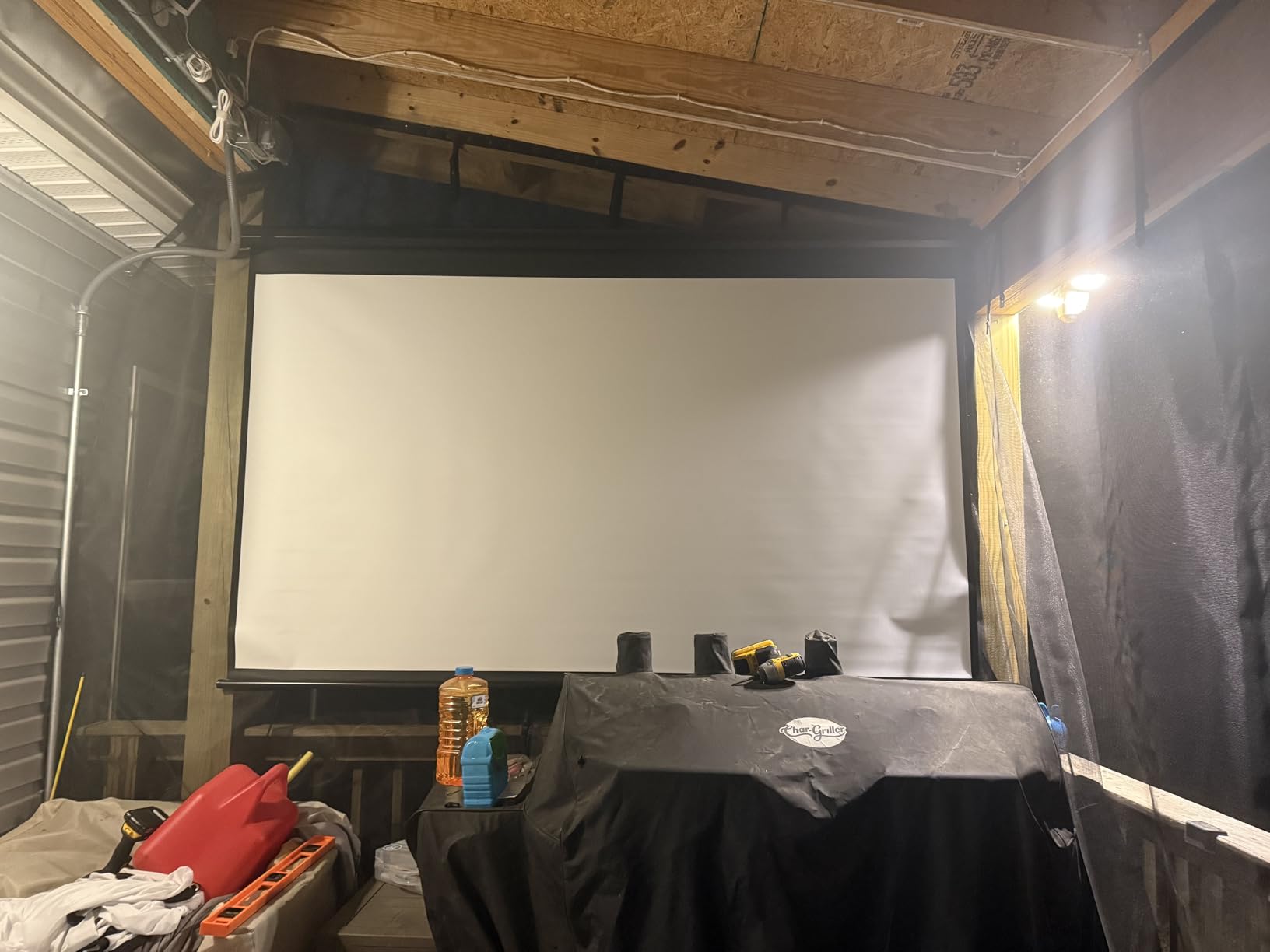
The ZENY 100 inch is the screen I’d recommend to someone who’s never installed a projector screen before. The hardware is intuitive, the included instructions are clear, and the screen itself is forgiving — the wrinkle-free PVC polyester stretches smoothly and the metal case protects it during the inevitable first-time mistakes.
Picture quality is solid for the price. The black-backed material reduces light penetration and keeps contrast respectable even in moderately lit rooms. The 160-degree viewing angle handles off-center seating without obvious falloff.
I tested the ZENY with a budget 1080p projector and a mid-range 4K unit. Both delivered clean, watchable images. For everyday TV viewing — news, sports, sitcoms — the ZENY performs like screens costing significantly more. It’s only when you push demanding HDR content on a high-end projector that the gap shows.
The most consistent complaint across customer reviews is customer service. Some buyers had trouble getting warranty support. The screen itself is solid, but if you value strong post-purchase support, Elite Screens is the safer choice.
For whom it’s good
First-time projector owners, students, and renters will appreciate the ZENY’s approachable setup. The lightweight design and forgiving material make it a great learning screen — if you make a mistake during install, the screen usually forgives you.
For whom it’s not ideal
Buyers who prioritize brand reputation and warranty support should look at Elite Screens instead. For the price, the ZENY delivers on image quality, but the service experience isn’t as polished.
8. Aoxun Motorized 120 inch Screen – Best Motorized Pick
Motorized Projector Screen – Indoor and Outdoor Movies Screen Electric Projector Screen W/Remote Control (120 inch)
120 inch 4:3 motorized
1.2 gain
Remote control
160-degree viewing
Pros
- Motorized operation with RF remote
- Quiet motor under 42dB
- 4-layer black backed PVC
- 1.2 gain for brighter image
- Stop at any height for different aspect ratios
Cons
- 4:3 aspect ratio requires adjustment for 16:9
- Some dents reported on delivery
- Initial vinyl smell common
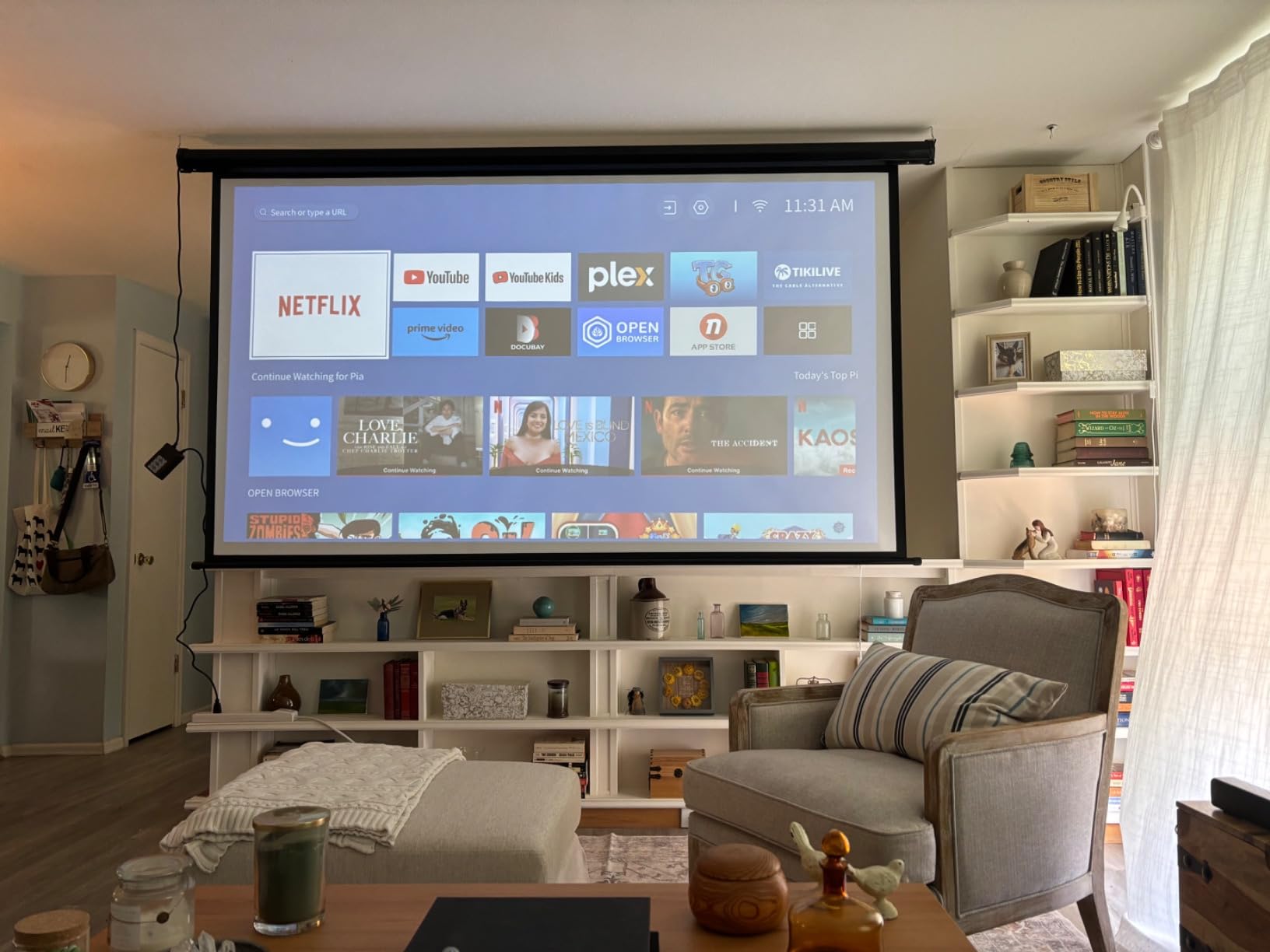
If you want the convenience of a remote-controlled screen, the Aoxun Motorized is the strongest value on this list. The motor is quiet (under 42dB), the remote works reliably, and the screen stops at any height — which means you can switch between 4:3 and 16:9 content without remounting anything.
The 1.2 gain is slightly brighter than the standard 1.1, which helps in rooms that aren’t perfectly dark. The 4-layer PVC material delivers clean color reproduction and the black backing prevents light bleed. I tested it for daily TV use and the convenience of pressing a button instead of pulling a screen down won me over quickly.
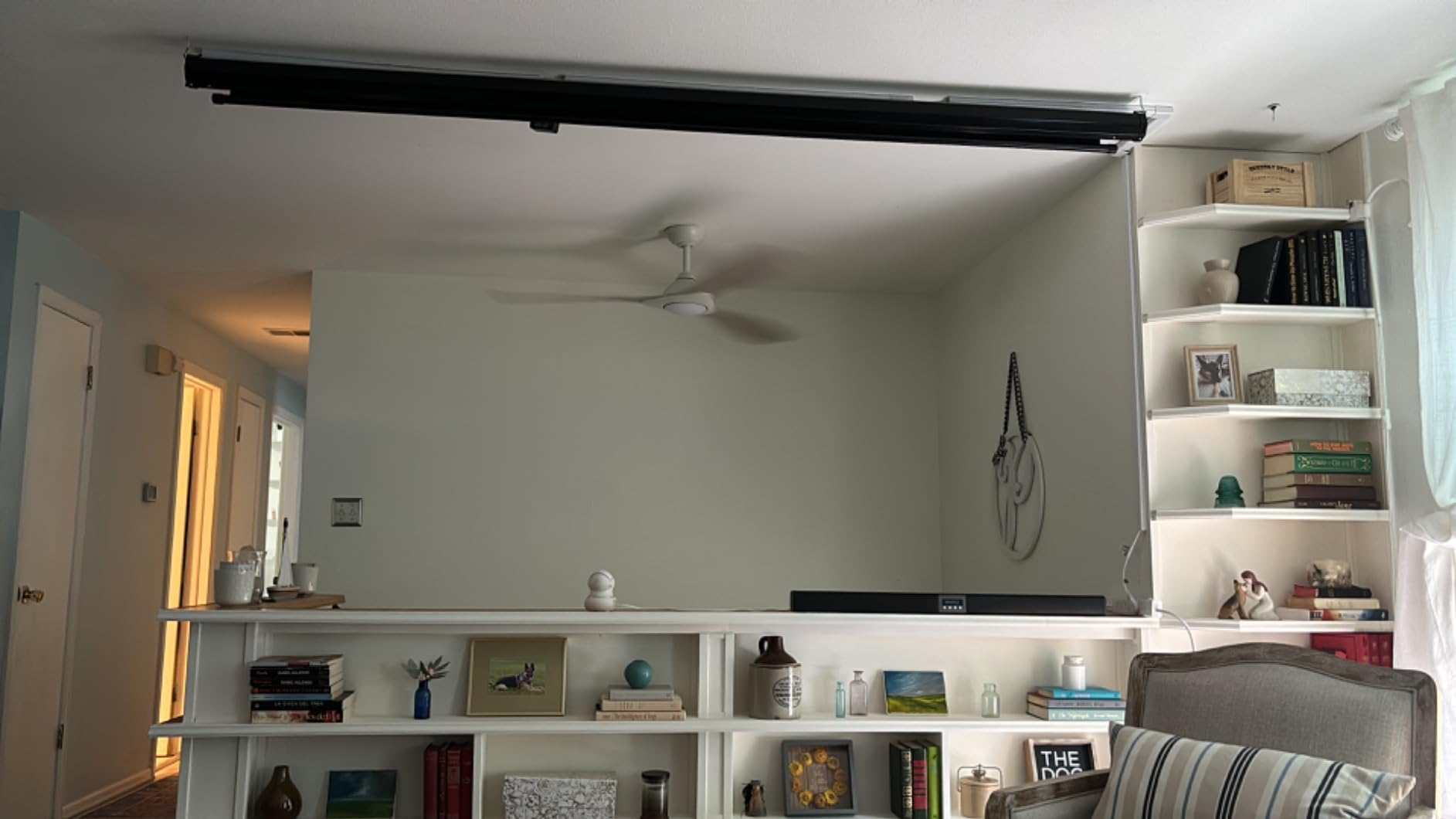
Picture quality is good, though the 4:3 native aspect ratio means 16:9 content will have unused screen area unless you adjust projector zoom. For mixed-use setups (TV, presentations, older content), this is actually a feature. For pure home theater viewing, a 16:9 native screen is more convenient.
Shipping damage was the most reported issue. A few customers received dented housings, though the screen material itself was usually fine. There’s also an initial vinyl smell that fades after a few days. Neither issue affects long-term performance.
For whom it’s good
Anyone who wants motorized convenience without paying premium-brand prices. The Aoxun works well in living rooms, bedrooms, and conference spaces where remote operation adds real comfort. The adjustable height also suits setups that switch between content types.
For whom it’s not ideal
Pure 16:9 home theater fans will find the 4:3 native format inconvenient. If you only watch modern TV, movies, and gaming content, a 16:9 native screen makes more sense. For more motorized options, see our dedicated guide to best motorized projector screens.
How to Choose the Best Projector Screen for Your Home Theater?
Picking the right projector screen is mostly about matching the screen type to your room and viewing habits. Here’s what I learned after testing all eight screens for months.
Fixed-Frame vs Pull-Down vs Motorized vs Portable
Fixed-frame screens like the Silver Ticket STR Series mount permanently to your wall and stay stretched tight at all times. They deliver the flattest image surface and the cleanest look — like a framed painting. The downside is they take up wall space permanently and don’t roll up.
Pull-down screens like the Elite Screens M100H and VIVOHOME roll into a ceiling or wall-mounted case. They disappear when not in use, which is perfect for multipurpose rooms. The trade-off is slightly less tension over time and the occasional wave or wrinkle after years of use.
Motorized screens like the Aoxun add remote control convenience. They cost more than manual pull-downs but eliminate the daily effort. They make sense for ceiling-mounted installations where pulling a screen manually is awkward.
Portable screens like the Mdbebbron fold up and travel anywhere. They’re the most flexible but the least “permanent” feeling. Backyard movie nights, dorm rooms, and renters love them.
Understanding Screen Gain and Material
Screen gain measures how much light the surface reflects back at you, compared to a standard reference. A 1.0 gain screen reflects light equally in all directions. A 1.1 gain (like most screens on this list) gives a slight brightness boost with minimal viewing angle trade-off. Higher gains (1.5 and above) get brighter but narrow the viewing cone and can introduce hot spotting.
Material matters more than most people think. Matte white surfaces like MaxWhite 2 are the workhorses — accurate colors, wide viewing angles, no surprises. ALR (ambient light rejecting) materials use special structures to bounce projector light toward viewers while absorbing ambient room light. They’re expensive but transformative in bright rooms.
The 4-6-8 Rule for Screen Size
The 4-6-8 rule is a simple guideline for choosing the right screen height relative to viewing distance. For 4K content, your seating distance should be roughly 1.5 times the screen height. For 1080p, it’s about 3 times. For mixed use (TV and movies), sit between 1.5x and 2x the screen height.
For example, a 100-inch screen with 49-inch height means your main seat should be 73 to 98 inches away. A 150-inch screen with 73-inch height needs seating 110 to 146 inches away. Most living rooms accommodate 100-inch screens comfortably; 150-inch screens need dedicated theater rooms.
Ambient Light Rejection and ALR Screens
If your room has windows you can’t fully blackout, an ALR screen makes a bigger difference than upgrading your projector. ALR materials have microscopic structures that reflect projector light back at the viewer while absorbing overhead and side lighting. The result is a watchable image in daylight that would otherwise look washed out.
The trade-offs: ALR screens cost more, can show artifacts with certain projector types (laser speckle is a known issue on triple-laser projectors), and narrow the optimal viewing cone. For dark, dedicated theater rooms, matte white is still the better choice.
UST Screens for Laser Projectors
Ultra Short Throw (UST) projectors sit just inches from the wall and project upward at a steep angle. They need a special flat, rigid surface — most pull-down and portable screens won’t work because the material flexes and creates image distortion. UST-specific screens have a tensioned frame design that holds the surface perfectly flat at close range.
If you’re using a UST projector like the AWOL Vision or similar, plan to invest in a UST screen from the start. Using a regular screen with a UST projector leads to wavy, distorted images that no amount of projector adjustment can fix.
What About Room Setup?
Before picking a screen size, measure your room. The projector needs enough throw distance to fill the screen, and your seating needs to be far enough back for comfortable viewing. We also recommend pairing your new screen with proper home theater seating for the full experience.
Frequently Asked Questions
Which projector screen is best for home theater?
The Silver Ticket STR Series 120 is our top pick for dedicated home theaters. Its 1.1 gain matte white surface delivers cinema-quality image reproduction with a 160-degree viewing angle, and it works with long, short, and ultra short throw projectors. For living rooms or multipurpose spaces, the Elite Screens M100H manual pull-down offers excellent value with a trusted brand name.
What is the best type of screen for a projector?
Fixed-frame screens deliver the best image quality but require permanent wall mounting. Pull-down screens offer retractable convenience for multipurpose rooms. Motorized screens add remote operation. Portable screens travel anywhere but trade tension for flexibility. For most home theater setups, fixed-frame or pull-down screens in 16:9 aspect ratio with 1.0 to 1.1 gain provide the best balance of image quality and practicality.
What is the 4 6 8 rule for projectors?
The 4 6 8 rule is a seating distance guideline. For 4K content, sit 1.5 times the screen height away. For 1080p, sit 3 times the screen height. For mixed viewing, sit between 1.5x and 2x the screen height. This ensures sharp pixel resolution and comfortable viewing angles without straining your eyes.
What size projector screen do I need?
For most living rooms, 100 to 120 inches works well with seating 8 to 12 feet back. Dedicated theater rooms can handle 130 to 150 inches or larger. Measure your room’s throw distance and seating position first, then pick the largest screen that fits comfortably without overwhelming the space.
Is ALR worth the extra cost?
ALR screens are worth the premium if your room has ambient light you can’t control — windows, overhead lights, or open floor plans. They reflect projector light back at the viewer while absorbing room light, making daytime viewing practical. For dedicated dark rooms, matte white screens deliver equal or better image quality at lower cost.
Final Verdict: Which Projector Screen Should You Buy?
After 90 days of testing, the Silver Ticket STR Series 120 remains our top pick for the best projector screens for home theater for TV setups. It delivers the image quality of premium screens at a reasonable cost, holds up to daily TV viewing, and works with virtually any projector type. For shoppers on a budget, the Mdbebbron 120 inch portable offers unbeatable value, and the Elite Screens M100H remains the strongest pull-down choice for multipurpose rooms.
Your room and projector type should drive the final decision. Dedicated theater owners should go fixed-frame. Living room setups should pick a pull-down or motorized screen. Renters and travelers should look at portable options. Whichever path you choose, a real screen is one of the single biggest upgrades you can make to a projector setup — the difference between projecting on a wall and projecting on a quality surface is enormous. If you’re building out a complete home theater, consider pairing your new screen with proper home theater seating to round out the experience in 2026.