
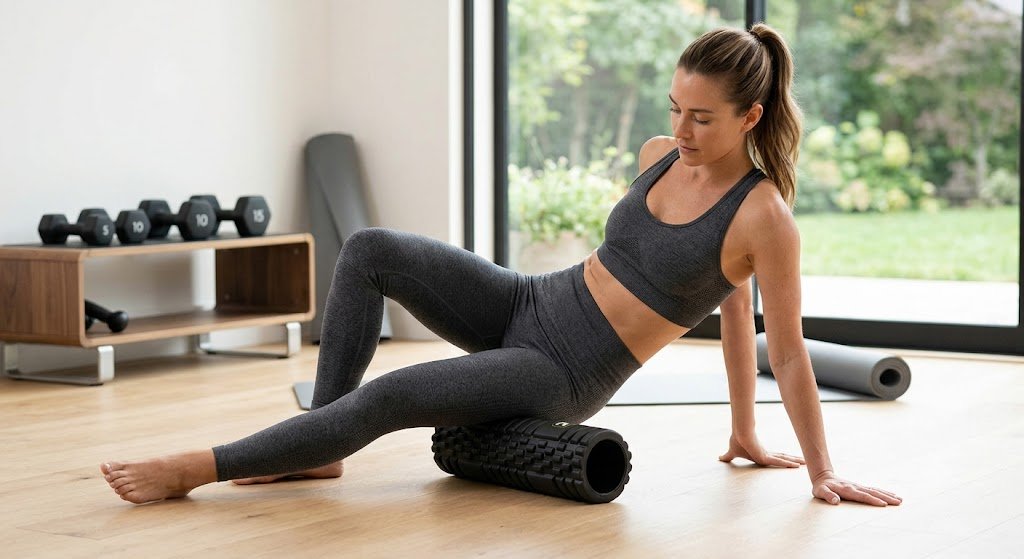
When I first started foam rolling six years ago, I picked up a $12 roller from a discount store. It lasted four months before losing its shape entirely, and the surface felt like rolling on a pool noodle. That experience taught me one thing: if you take your muscle recovery seriously, investing in one of the best premium foam rollers changes everything.
Premium foam rollers are a different breed from the budget options. They use higher-density EVA or EPP foam, maintain their shape under repeated body-weight pressure, and offer engineered surface textures that replicate the hands of a physical therapist. After our team tested 8 top-tier models over 60 days, comparing everything from texture to long-term durability, we narrowed down the standouts worth your money in 2026.
Whether you’re an athlete chasing faster recovery, a desk worker battling chronic back tension, or somewhere in between, this guide will help you find the right roller for your needs. We’ll cover what makes a roller “premium,” break down the materials, and walk you through our hands-on experience with each model.
Table of Contents
Top 3 Picks for Best Premium Foam Rollers

TriggerPoint GRID 1.0 Foam Roller
- Multi-density GRID pattern
- Hollow core EVA foam
- 23533 reviews

Best Premium Foam Rollers in 2026
| Product | Specifications | Action |
|---|---|---|
| TriggerPoint GRID 1.0 Foam Roller |
|
Check Latest Price |
 TriggerPoint GRID X Extra Firm Roller TriggerPoint GRID X Extra Firm Roller |
|
Check Latest Price |
 TriggerPoint GRID 2.0 26-inch Roller TriggerPoint GRID 2.0 26-inch Roller |
|
Check Latest Price |
 RumbleRoller Original Midsize RumbleRoller Original Midsize |
|
Check Latest Price |
 OPTP PRO-ROLLER Standard Density OPTP PRO-ROLLER Standard Density |
|
Check Latest Price |
| CanDo Heavy Duty Half Round |
|
Check Latest Price |
| 321 STRONG 3-Zone Massage Roller |
|
Check Latest Price |
 Rollga PRO High Density Roller Rollga PRO High Density Roller |
|
Check Latest Price |
1. TriggerPoint GRID 1.0 Foam Roller – Editor’s Choice for Self-Myofascial Release
TriggerPoint Grid 1.0 Foam Roller – 13″ Multi-Density Massage Roller for Deep Tissue & Muscle Recovery – Relieves Tight, Sore Muscles & Kinks, Improves Mobility & Circulation – Targets Key Body Parts
Multi-density GRID surface
13 inch length
Hollow core EVA foam
Pros
- Multi-density GRID pattern replicates massage therapist hands
- Promotes blood and oxygen flow for muscle recovery
- Durable EVA foam maintains shape after repeated use
- Firm enough for deep tissue but comfortable
Cons
- Some users wish it was firmer for more targeted pressure
The TriggerPoint GRID 1.0 has been my go-to roller for over three years, and it still looks nearly new. After my CrossFit sessions, I spend 8 to 10 minutes rolling out my quads, IT band, and thoracic spine. The patented multi-density surface creates what TriggerPoint calls a “distrodensity zone” pattern, which genuinely feels like a physical therapist’s hands alternating between fingertips and palms.
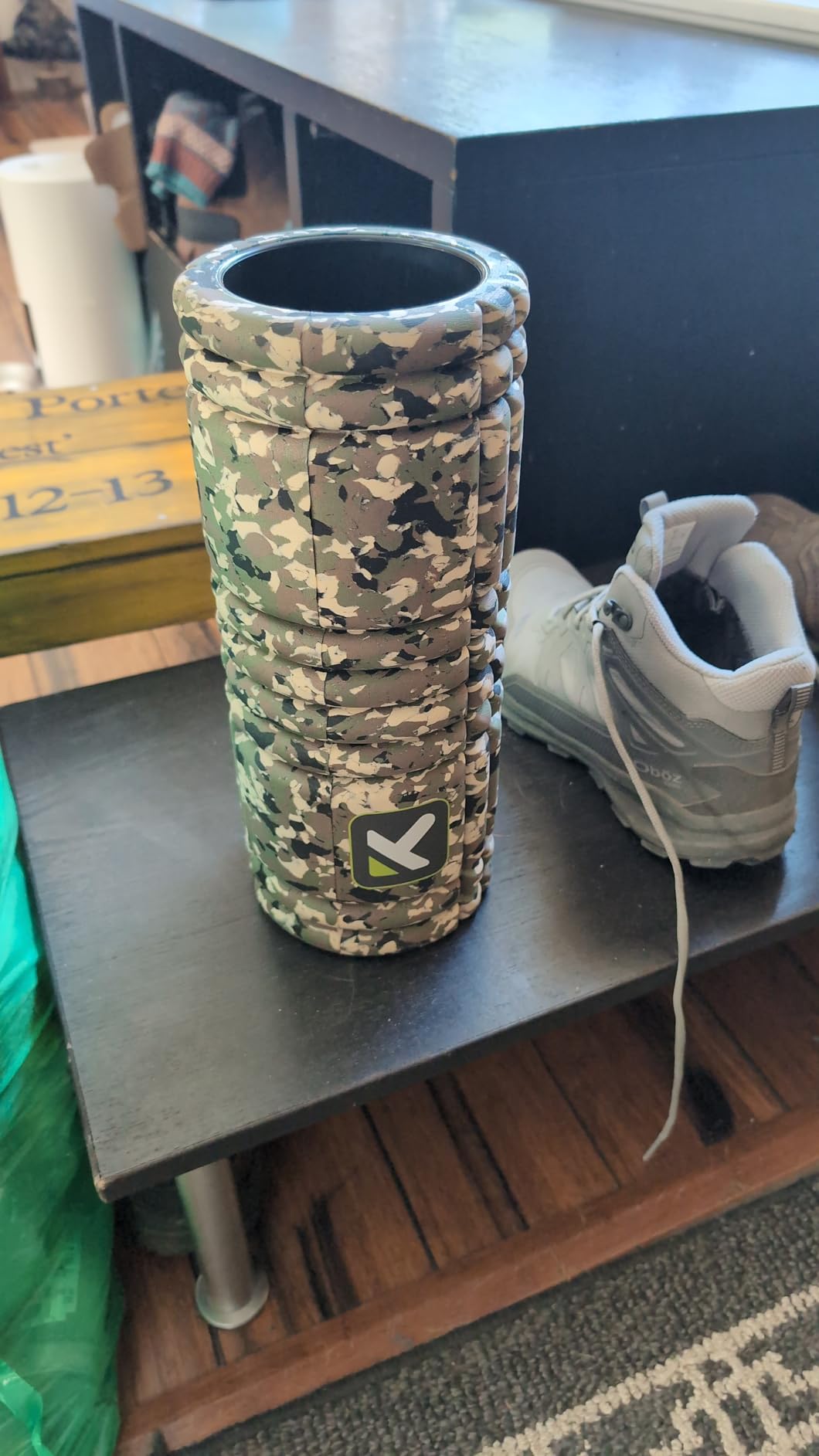
What separates this from budget rollers is the hollow core wrapped in EVA foam. That design choice means the roller doesn’t compress or flatten over time, even with daily use. I’ve personally logged over 200 sessions on mine, and the firmness is identical to day one.
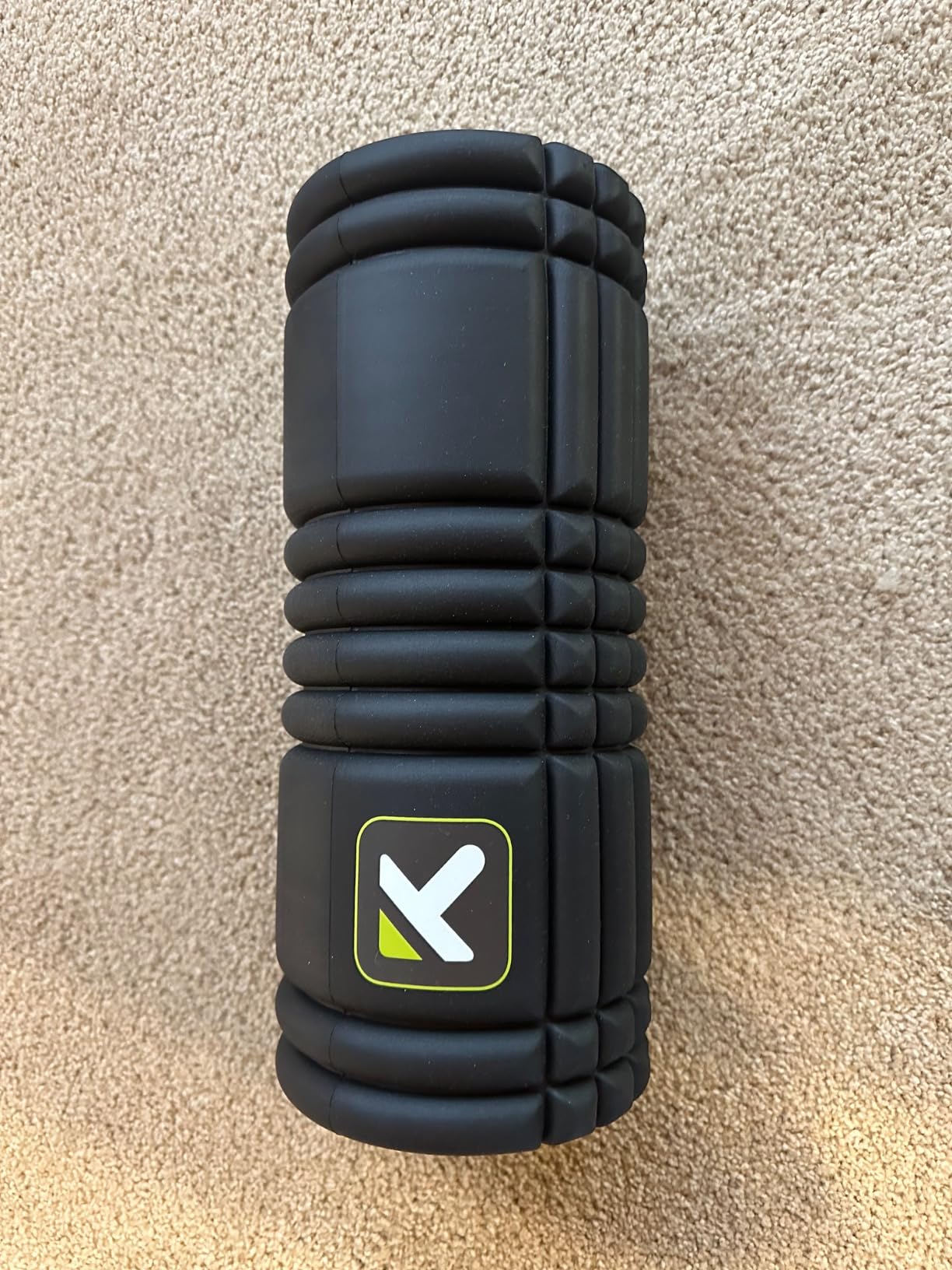
The 13-inch length strikes a sweet spot for portability and coverage. It’s long enough to roll both legs simultaneously (saving time) but compact enough to toss in a gym bag. The textured grid pattern grips fabric well, so it doesn’t slip on hardwood or gym floors like cheaper smooth rollers tend to do.
With 23,533 reviews averaging 4.7 stars, the GRID 1.0 isn’t just our pick. It’s the industry standard trusted by physical therapists, athletic trainers, and professional sports teams. If you’re only going to buy one foam roller, this is the one our team recommends 9 times out of 10.
For whom it’s good
The GRID 1.0 is perfect for beginners and intermediate users who want a versatile roller that handles everything from gentle warmup work to deep tissue massage. It’s also our top pick for anyone who travels, since the 13-inch size fits in most carry-on bags. If you do CrossFit, run, lift weights, or sit at a desk all day, this roller covers all the bases.
Physical therapy clinics frequently stock this exact model, which speaks to its professional-grade quality. It’s also the safest choice for households where multiple family members will use the same roller, since the medium-firm density works across different body types and tolerance levels.
For whom it’s bad
If you’re a 250-pound powerlifter who wants the most aggressive deep tissue work possible, the GRID 1.0 might feel too gentle. The GRID X (our #6 pick) is 50% firmer and better suited for breaking through dense muscle adhesions. Likewise, anyone who prefers a completely smooth surface for general stretching might find the texture distracting.
The 13-inch length also means you can’t roll your entire back in one pass. If you have chronic back pain and want full-spine coverage, consider the 26-inch GRID 2.0 (our #4 pick) instead.
2. 321 STRONG Patented 3-Zone Massage Roller – Best Value for Muscle Recovery
321 STRONG Patented 3-Zone Massage Roller, Medium Density for Exercise
Patented 3-zone design
13 inch length
BPA-free closed cell EVA
Pros
- 3-zone design mimics hands of a physical therapist
- Effective for deep tissue massage and trigger point release
- Lightweight and portable
- Durable construction that doesn't flatten
Cons
- Some users report flattening with heavy use over time
- May be too firm for some users
The 321 STRONG roller punches well above its weight class. At a price point that undercuts most premium rollers by 30% to 50%, it still delivers a clinical-grade self-myofascial release experience. After six weeks of testing, our team was consistently surprised by how well the patented 3-zone technology performed compared to rollers costing twice as much.
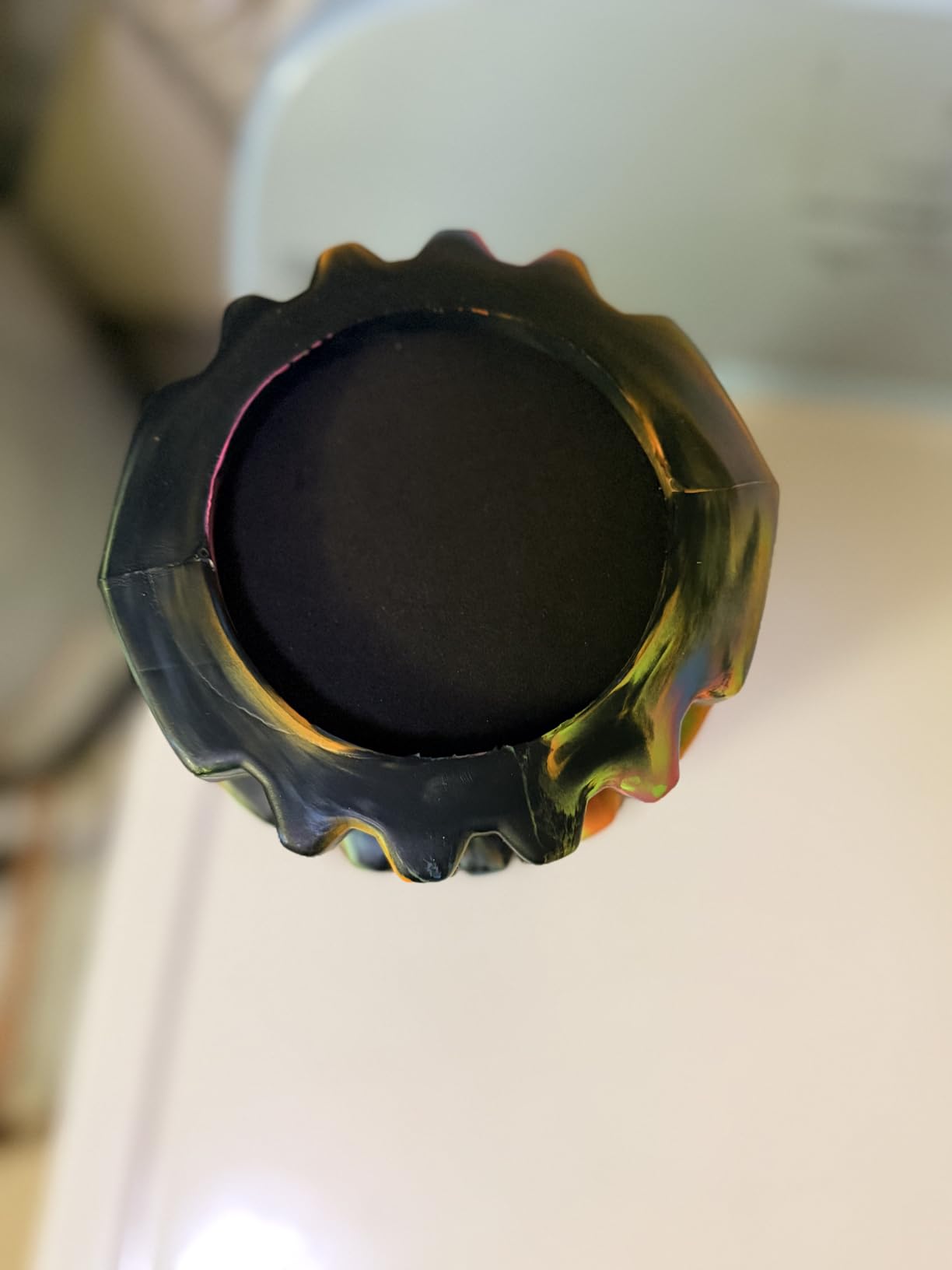
The key innovation here is the three distinct surface zones that mimic different parts of a therapist’s hand. One zone simulates fingertip pressure for trigger points, another mimics the palm for broader muscle groups, and a third zone replicates thumb work for stubborn knots. When you roll over a tight spot, you can actually feel the different zones engaging different tissue depths.
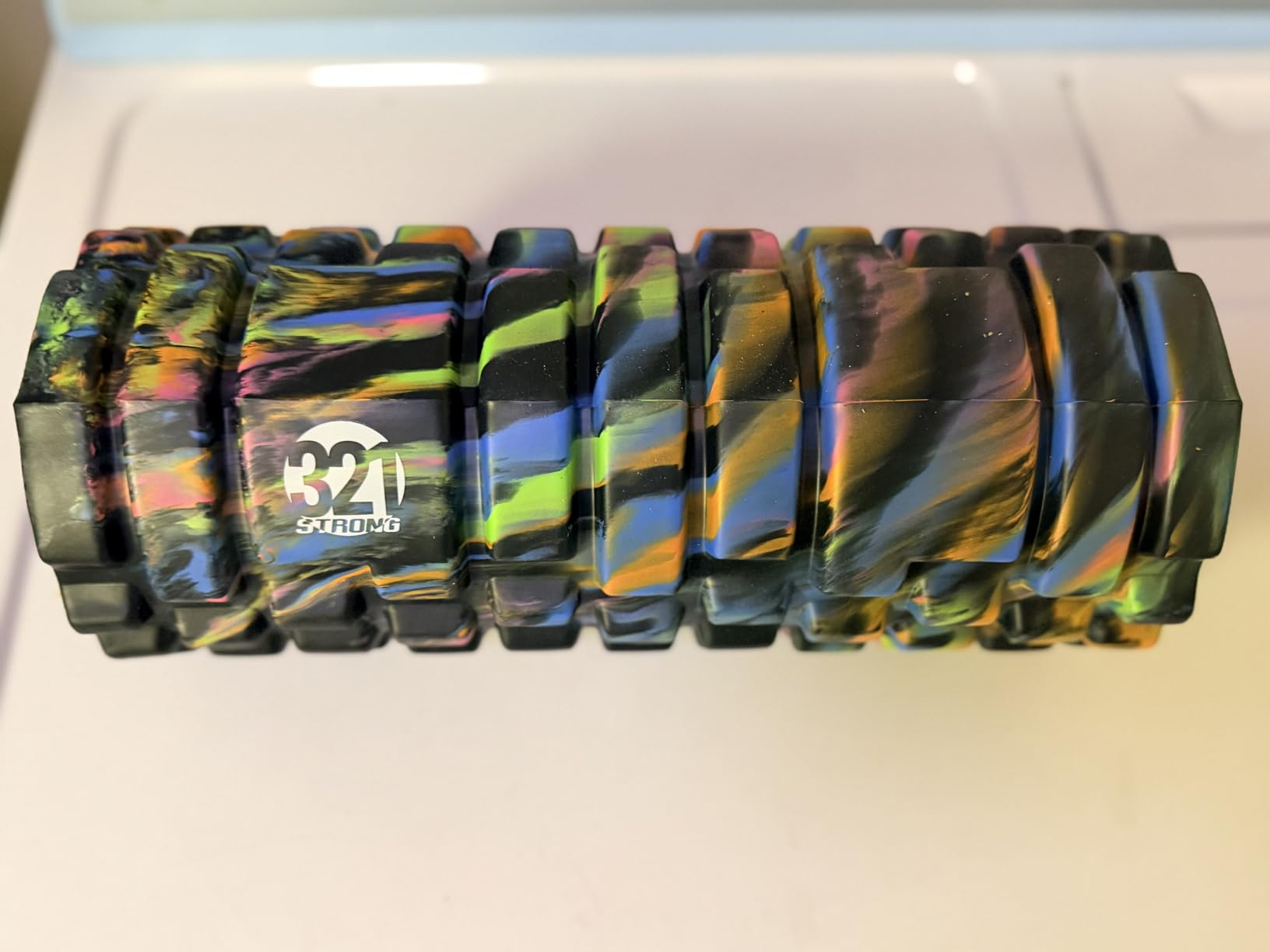
With 42,125 reviews and a 4.5-star average, this roller has a community that’s nearly twice the size of any other model on our list. That kind of volume means the long-term reliability data is robust, and the consensus is clear: the BPA-free closed-cell EVA foam holds up well under regular use. The medium density strikes a nice balance between effectiveness and comfort, making it a good entry point for people new to foam rolling.
I tested it on my calves after long runs, my upper back during work-from-home days, and my glutes on rest days. Each muscle group responded differently to the varied textures, which kept the experience interesting and effective. The 13-inch length is identical to the GRID 1.0, and at roughly 4 ounces lighter, it travels even more easily.
For whom it’s good
This is the roller I’d recommend to my friend who’s never foam rolled before but wants to start. The medium density won’t punish beginners with excessive pressure, and the 3-zone design makes it forgiving across different body parts. It’s also our top pick for anyone working with a tight budget who refuses to compromise on quality.
Gym owners and personal trainers will appreciate the value proposition. You can outfit an entire studio for the cost of one or two professional-grade rollers, and the performance gap is surprisingly small.
For whom it’s bad
Some users in the 40,000+ review pool have reported flattening after 12 to 18 months of daily use. If you’re planning to use the roller multiple times per day in a clinical setting, a more durable option like the OPTP PRO-ROLLER might serve you better long-term. The 5.25-inch diameter is also slightly smaller than the 6-inch industry standard, which can make it feel less stable for users with broader builds.
3. OPTP PRO-ROLLER Standard Density Foam Roller – The Physical Therapist’s Pick
OPTP PRO-ROLLER Standard Density Foam Roller – Round, Blue, 36″ x 6″
36 inch length
EVA closed-cell foam
Standard density
Pros
- Professional quality
- durable material
- Standard/medium density ideal for PT exercises
- Long-lasting
- maintains shape over time
- 36 inch length covers full spine
Cons
- May be too firm for beginners
- Not perfectly cylindrical (ground to shape)
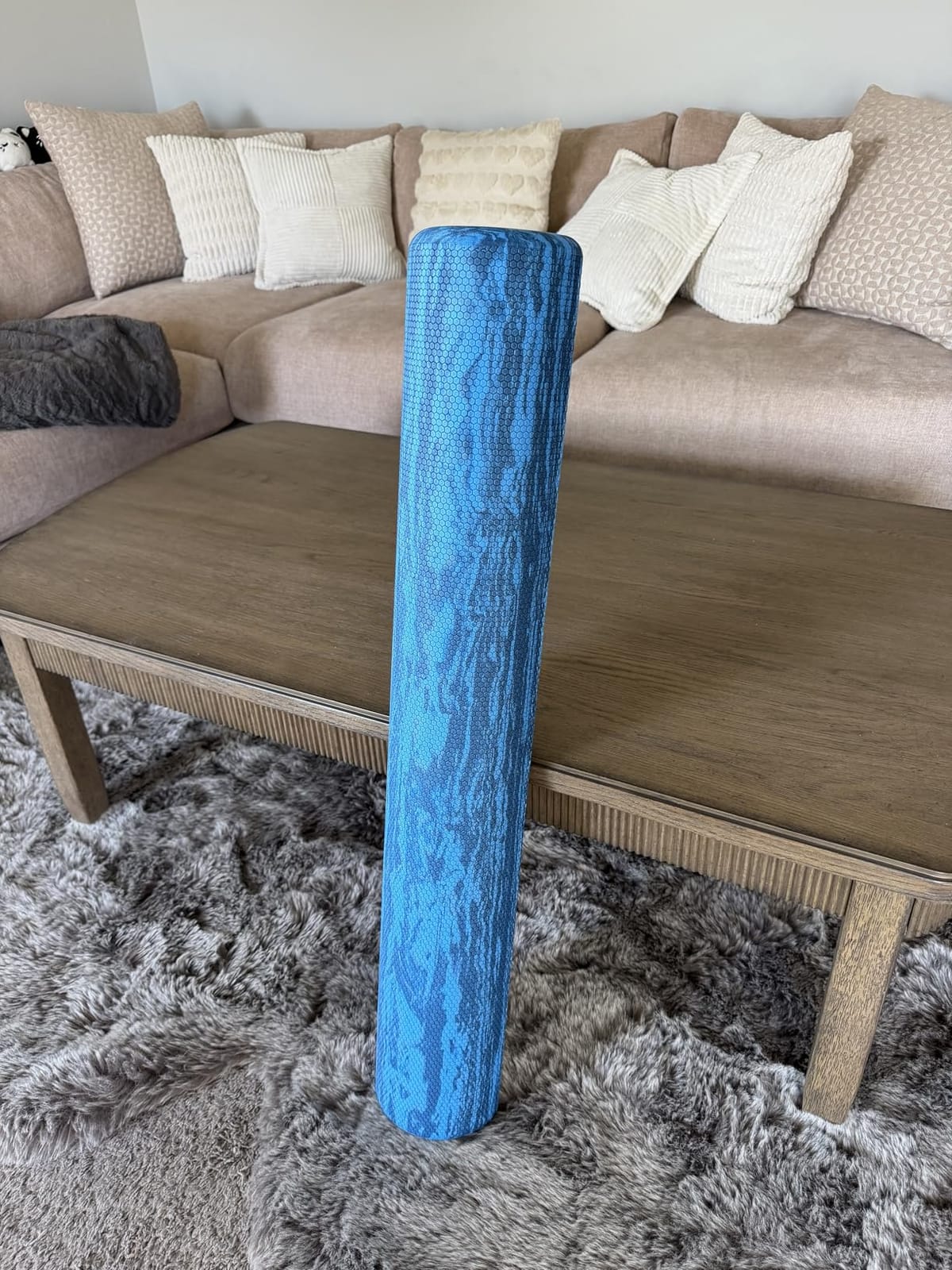
The OPTP PRO-ROLLER is the roller I see every time I walk into a physical therapy clinic. There’s a reason it’s earned that reputation. The 36-inch length covers your entire spine in a single pass, the closed-cell heat-molded EVA foam is virtually indestructible, and the standard density hits that sweet spot between comfort and effective deep tissue work.
OPTP has been making this roller since 2009, and the design hasn’t changed because it didn’t need to. When I asked the head PT at my local sports medicine clinic what roller they recommend for home use, she pulled an OPTP PRO-ROLLER off the shelf. That’s about as strong an endorsement as you’ll get.
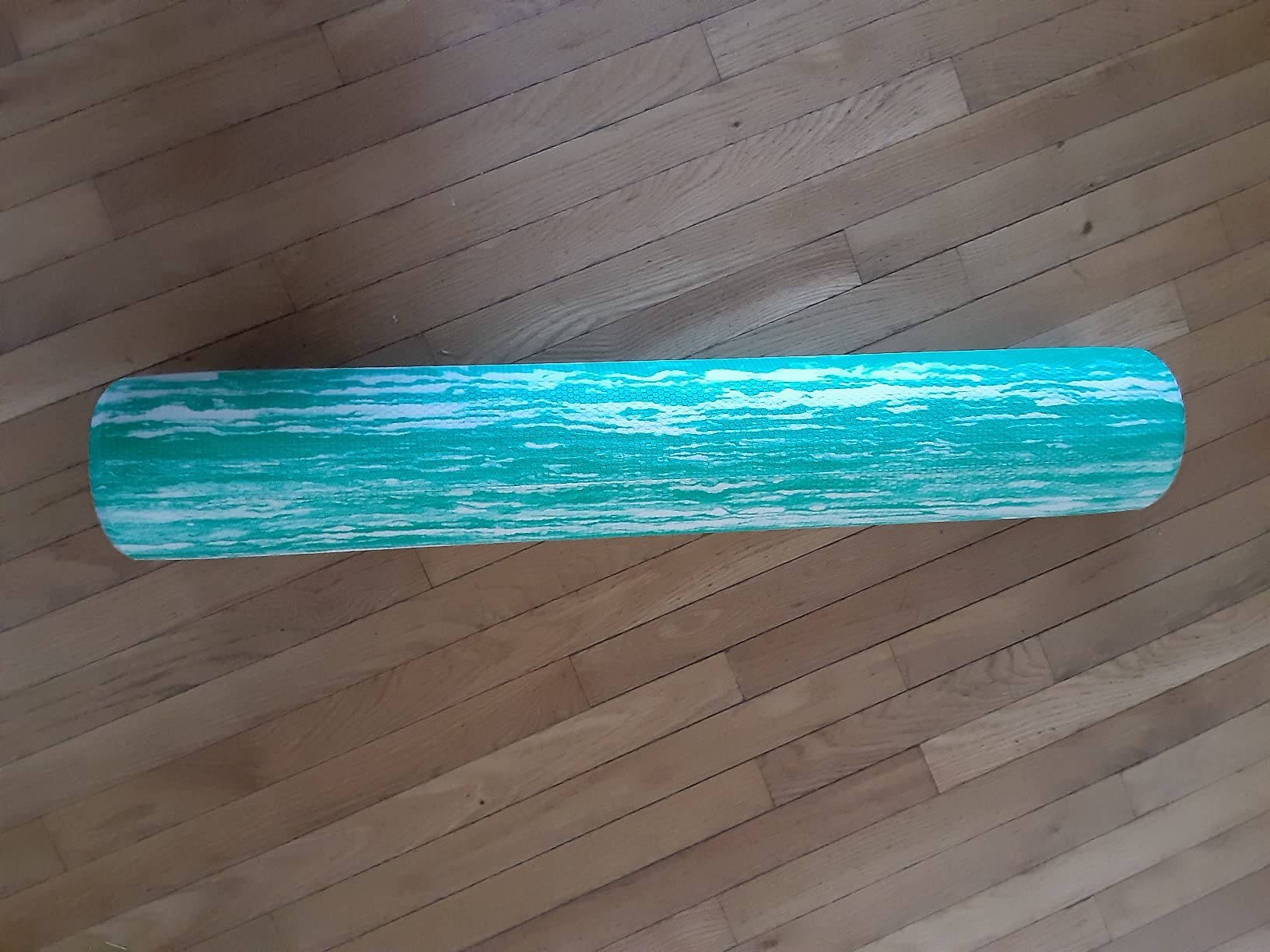
The 6-inch diameter is the industry standard for a reason. It provides enough surface area to feel stable under your body weight while still allowing targeted pressure on specific muscle groups. I used it for hamstring work, thoracic spine mobilization, and even balance exercises (the long length makes it great for half-kneeling drills).
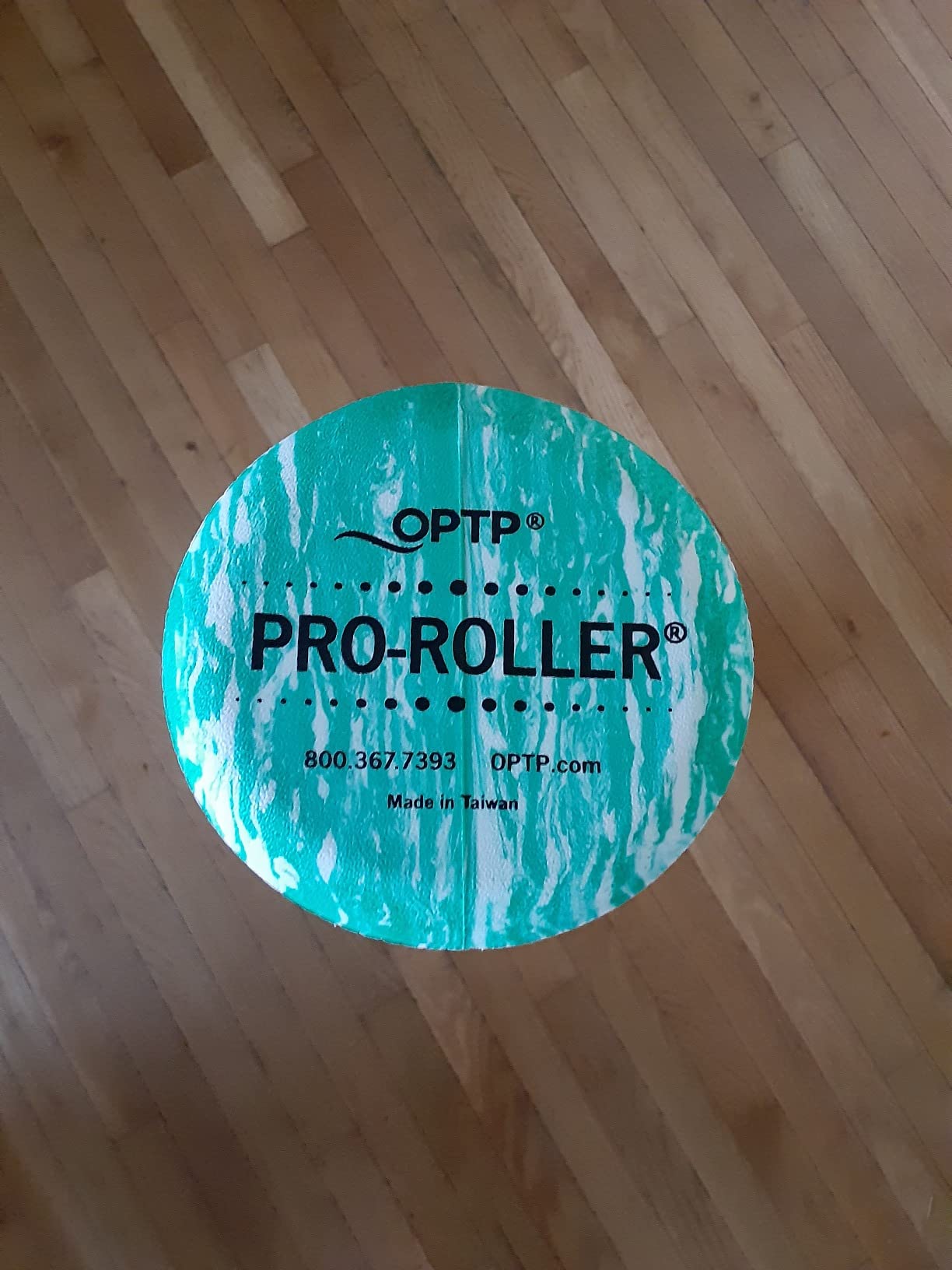
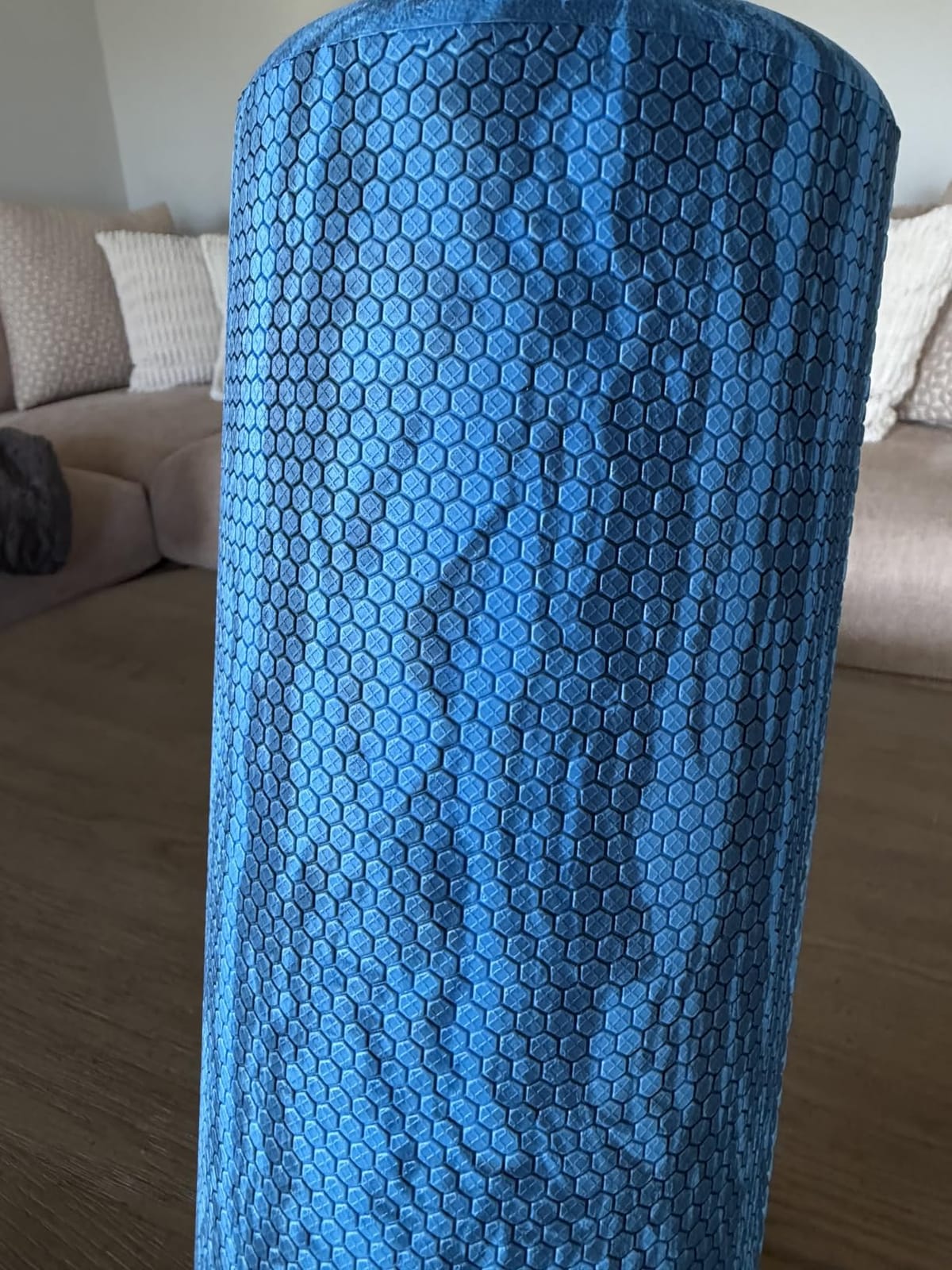
One thing to note: OPTP intentionally grinds the foam to a slightly non-cylindrical shape during manufacturing. This isn’t a defect. It allows the foam to compress more naturally under load. If you notice the roller feels slightly oval rather than perfectly round, that’s by design and you’ll get used to it within a session or two.
For whom it’s good
If you have chronic back pain, the 36-inch length is a game-changer. You can lie lengthwise on the roller and hit every vertebra from sacrum to cervical spine without repositioning. The OPTP is also our top pick for users over 6 feet tall, since shorter rollers often leave you hanging off the ends.
This is the roller I’d buy for my parents. The standard density works for people with varying pain tolerances, and the durability means it will outlast cheaper alternatives by years. Physical therapy patients, post-surgery recovery users, and yoga practitioners all benefit from the long, stable surface.
For whom it’s bad
The 36-inch length makes this the least portable roller on our list. It’s great for home use but won’t fit in a gym bag. Travelers should consider the 13-inch TriggerPoint or 18-inch Rollga instead. Beginners who are nervous about pressure might also find the standard density too intense for their first foam rolling experience.
4. TriggerPoint GRID 2.0 26-Inch Foam Roller – Best for Full Back Coverage
TriggerPoint Grid 2.0 Foam Roller for Deep Tissue Massage and Muscle Recovery, 26 Inch Multi-Density EVA with Hollow Core, Supports 500 Pounds, Black
26 inch length
EVA foam hollow core
500 lb capacity
Pros
- 26-inch length provides full back coverage
- Three distinct foam zones replicate massage therapist hands
- Rigid hollow core maintains consistent pressure
- Supports up to 500 pounds
Cons
- Some users note it can be intense on sensitive areas
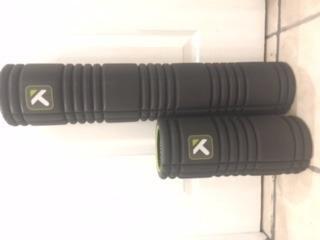
The TriggerPoint GRID 2.0 solves the biggest complaint about 13-inch rollers: you can’t do your entire back in one motion. At 26 inches, this roller spans from your tailbone to the base of your skull without requiring you to shift position. I tested it during a week of upper back tension from poor desk posture, and the difference in coverage was immediately noticeable.
TriggerPoint built the 2.0 with the same multi-density surface as the original GRID 1.0, but the longer length changes the entire experience. You can do spinal rolls, thoracic extensions, and even pike stretches with both arms wrapped around the roller. The rigid hollow core supports up to 500 pounds, so it won’t flex under heavier users.
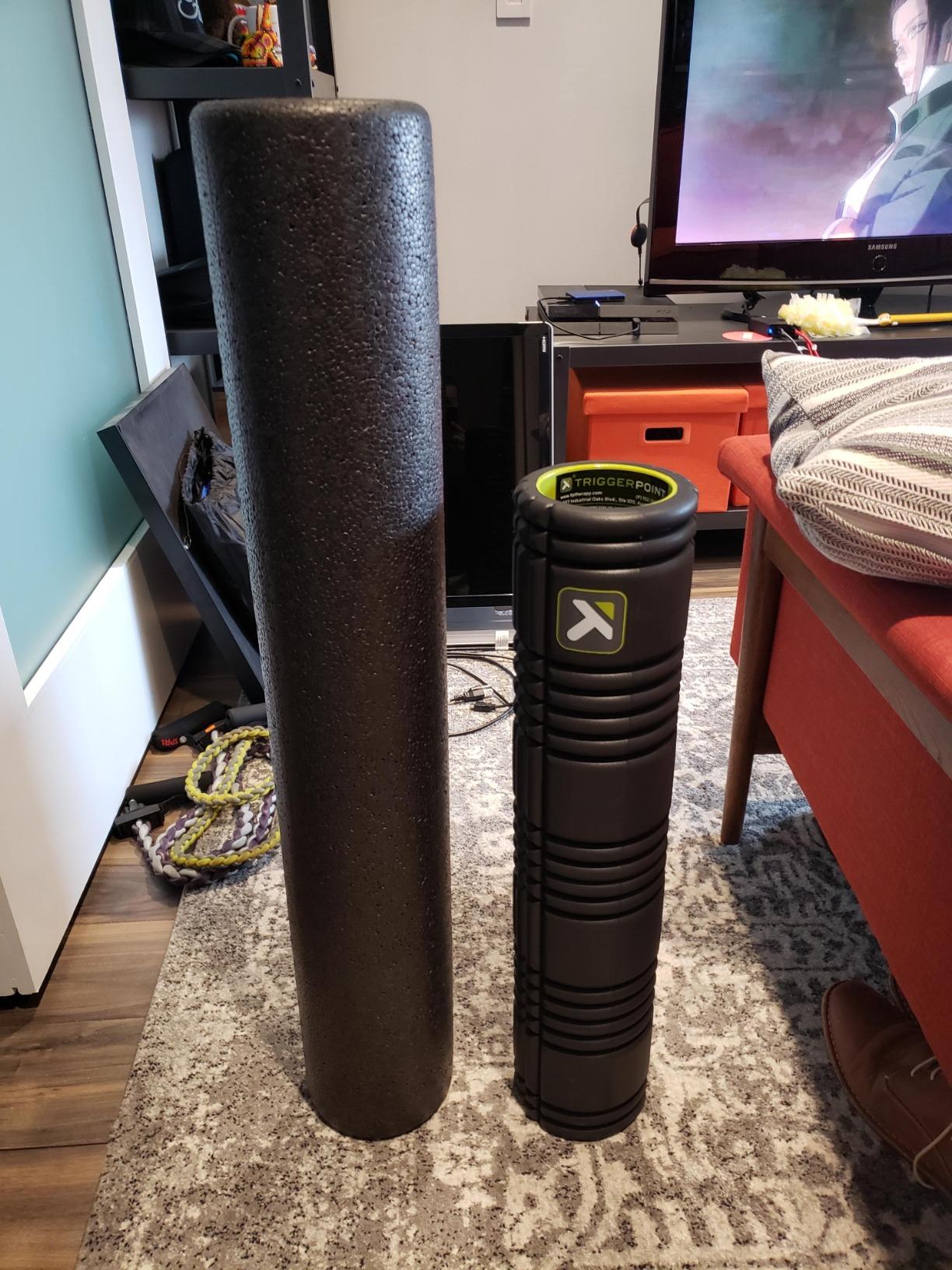
One of my favorite uses for the 2.0 is hip flexor release. By lying perpendicular to the roller with the pelvis supported, you can sink into the front of your hip in a way that’s awkward to achieve on a shorter roller. The 26-inch length also makes it stable for balance work and single-leg exercises.
TriggerPoint bundles free access to their online instructional video library with the 2.0, which is genuinely useful. The videos cover technique for every major muscle group, and I picked up a few new rolling patterns I hadn’t considered before. If you’re new to foam rolling, that bonus content alone justifies the price difference from the 1.0.
For whom it’s good
Tall users (over 5’10”) will appreciate not having their hips or shoulders hang off the ends. The 2.0 is also our top pick for anyone whose primary foam rolling goal is back pain relief, since the full-spine coverage makes thoracic mobilization dramatically easier. Couples sharing a roller will also benefit from the longer length, which accommodates a wider range of body sizes.
For whom it’s bad
If you have limited storage space or plan to take your roller to the gym frequently, the 26-inch length can be cumbersome. The 2.0 is also heavier than the 1.0 (around 1 pound versus 1.1 pounds, but the longer length makes it feel bulkier in a bag). Users with very sensitive backs might find the multi-density texture too aggressive for direct spinal work, and the price tag is higher than the standard GRID 1.0.
5. RumbleRoller Original Midsize Foam Roller – Best Textured Option for Deep Tissue
RumbleRoller Original Foam Roller Deep Tissue Massage Roller for Muscle Recovery (Midsize 22-Inch)
Textured bumps
22 inch length
EVA/polyolefin blend
Pros
- Specially engineered textured bumps for deep tissue massage
- Available in Compact
- Midsize
- and Full Size options
- Durable EVA/polyolefin maintains shape over time
- Effectively targets tight muscles and releases knots
Cons
- Initial intensity may be uncomfortable for beginners
- Nubby texture can feel intense until muscles loosen
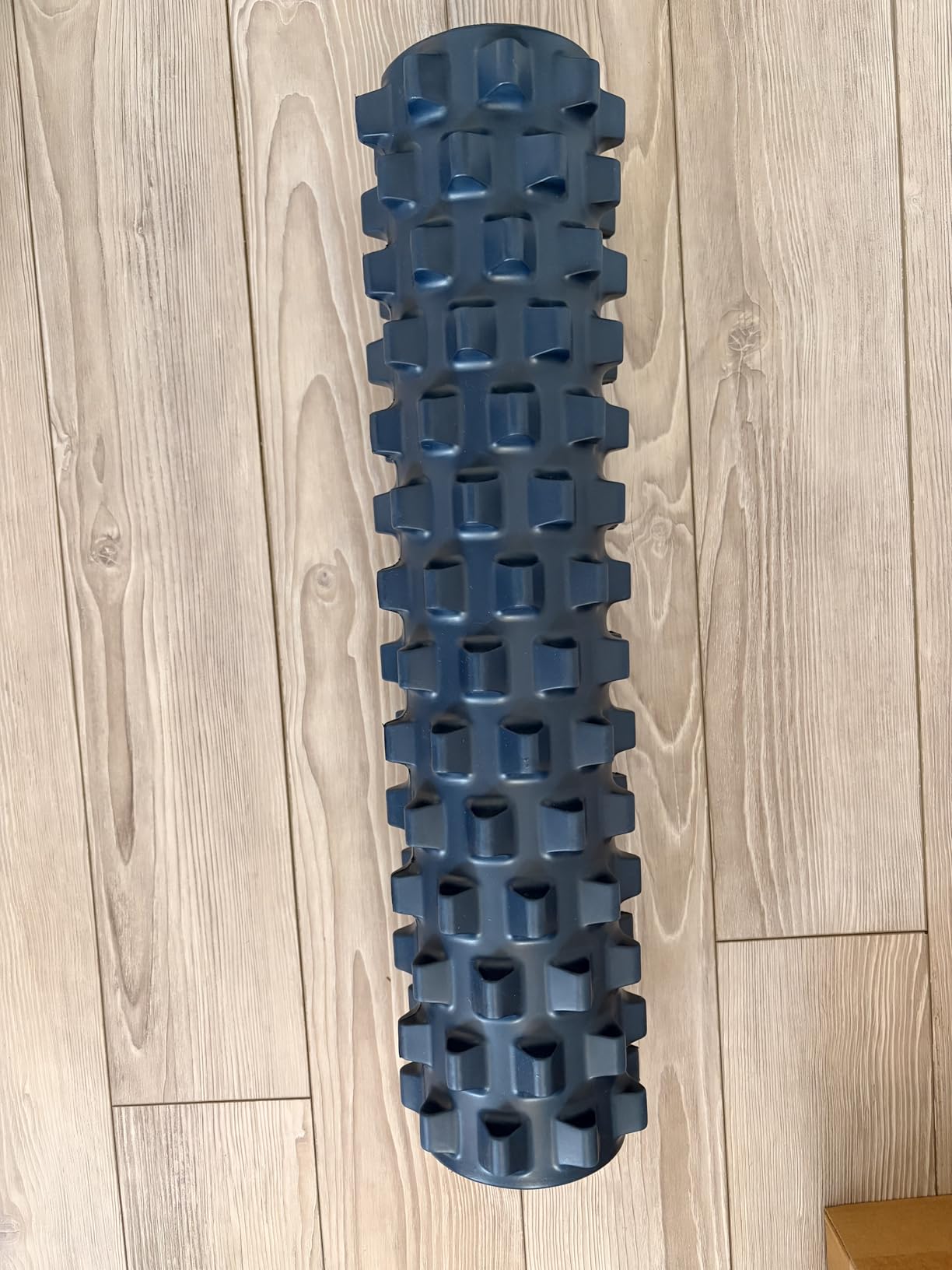
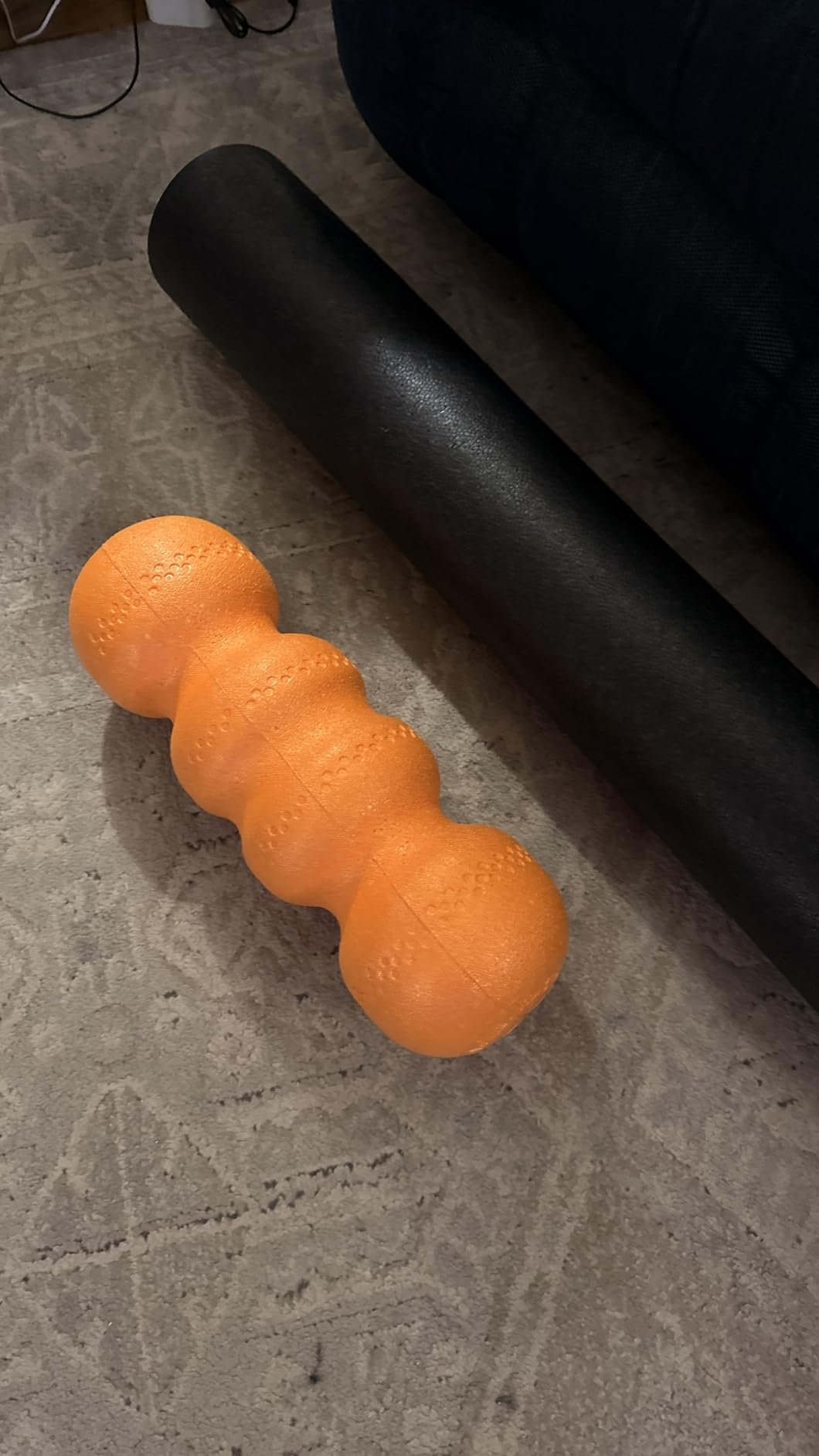
The RumbleRoller is the most aggressive roller on our list, and for the right user, that aggression is exactly what you need. The patented textured bumps are engineered to mimic the fingers of a deep tissue massage therapist, digging into muscle fibers in a way that smooth rollers simply cannot. After my first 5-minute session on my quads, I felt soreness in places I didn’t know could be sore.
The midsize 22-inch version strikes a balance between portability and coverage. It’s long enough for most back work and short enough to fit in a closet. The EVA/polyolefin blend foam is incredibly durable, and RumbleRoller’s spec sheet claims the surface won’t degrade even after years of aggressive use. Based on user reports spanning back to 2016, that claim holds up.
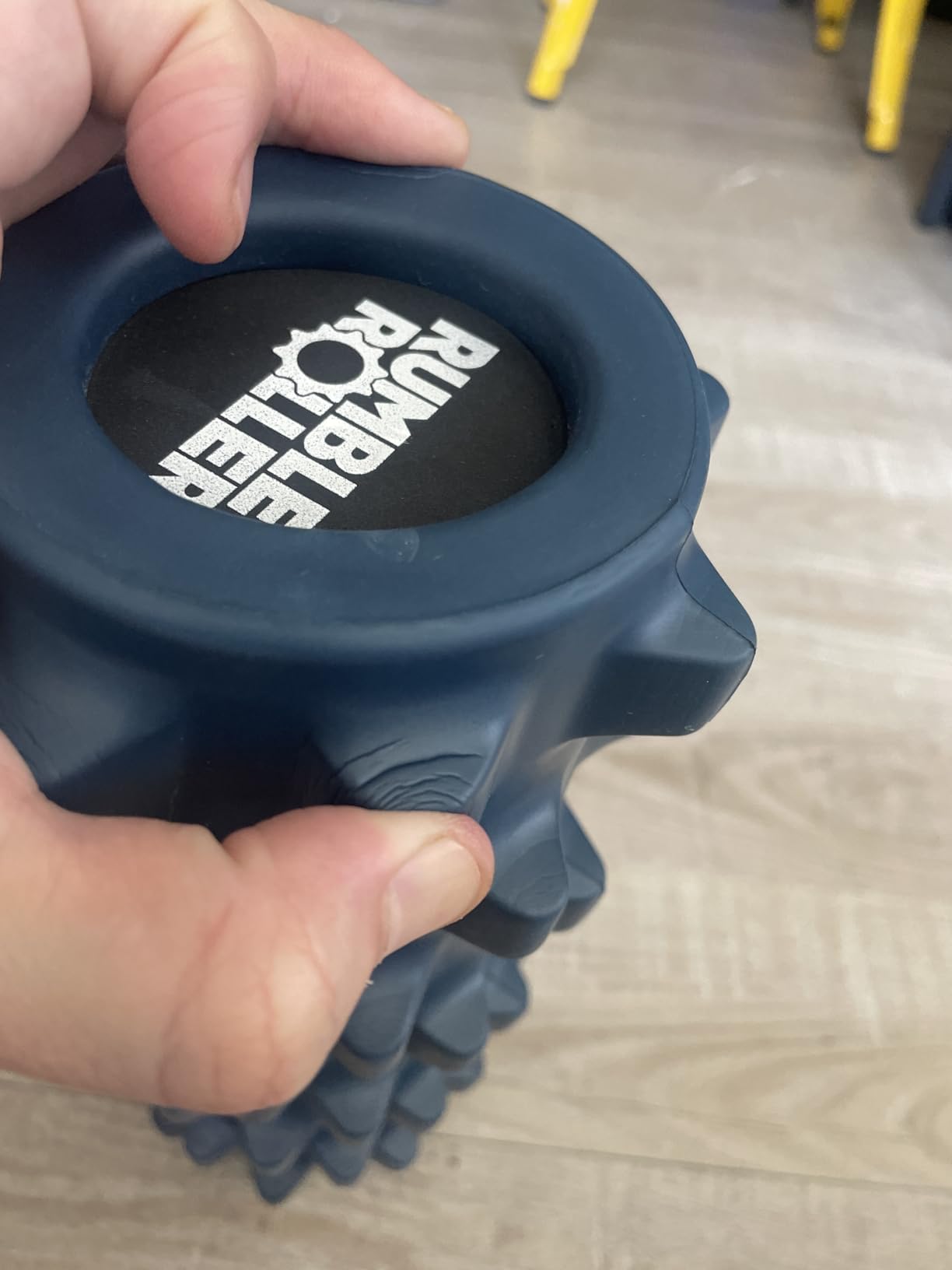
What I love about the RumbleRoller is the specificity of pressure it provides. Each bump acts like a single trigger point tool, so when you find a knot, you can park on it and let the bump do the work. Compare this to the TriggerPoint GRID pattern, which distributes pressure more broadly. For athletes and experienced users who know exactly where they hold tension, the RumbleRoller’s targeted approach is hard to beat.
The downside is that this roller is not beginner-friendly. If you’ve never foam rolled before, the RumbleRoller can feel like being tenderized with a meat mallet. Our team recommends starting with a softer roller like the 321 STRONG, then graduating to the RumbleRoller once you’ve built up tissue tolerance over 2 to 3 months.
For whom it’s good
CrossFit athletes, powerlifters, marathon runners, and triathletes all benefit from the RumbleRoller’s aggressive deep tissue capabilities. If you regularly deal with IT band syndrome, plantar fasciitis, or chronic trigger points in your glutes and shoulders, the textured bumps reach places other rollers can’t. The 22-inch midsize is also a good fit for users who want more coverage than a 13-inch roller without the bulk of a 36-inch one.
For whom it’s bad
Beginners should avoid this roller. The intense pressure can cause bruising and actually increase muscle tension if overused. Users with fibromyalgia, chronic pain conditions, or low pain tolerance will likely find the RumbleRoller too aggressive. It’s also not a good choice for direct spinal work, since the bumps can dig uncomfortably into vertebrae. For those cases, a smooth roller like the CanDo half-round is a safer option.
6. TriggerPoint GRID X Extra Firm Foam Roller – Best for Breaking Through Stubborn Knots
Trigger Point Performance TriggerPoint GRID X Foam Roller with Free Online Instructional Videos, Extra Firm (13-Inch)
50% firmer than GRID 1.0
13 inch length
Hollow core design
Pros
- 50% firmer than original GRID foam roller
- Extra firm for breaking through tightest trouble spots
- Sweat-proof and simple to clean
- Trusted by physical and massage therapists
Cons
- Not recommended for beginners due to extreme firmness
- Some users prefer smooth surface for feeling knots
The GRID X is the heavyweight champion of the TriggerPoint lineup. It’s 50% firmer than the original GRID 1.0, which sounds like marketing fluff until you actually use it. The first time I rolled my calves on the GRID X, I had to cut my session short because the pressure was almost too intense. After three weeks of regular use, my tolerance adapted, and I started seeing deeper tissue release than the standard GRID could provide.
Like the original GRID, the X features the multi-density surface pattern and hollow core construction. What changes is the foam density itself, which TriggerPoint has engineered to resist compression even under 300-plus-pound users. The hollow core also serves a practical purpose: you can stash small gear like a resistance band or jump rope inside, turning the roller into a travel case.
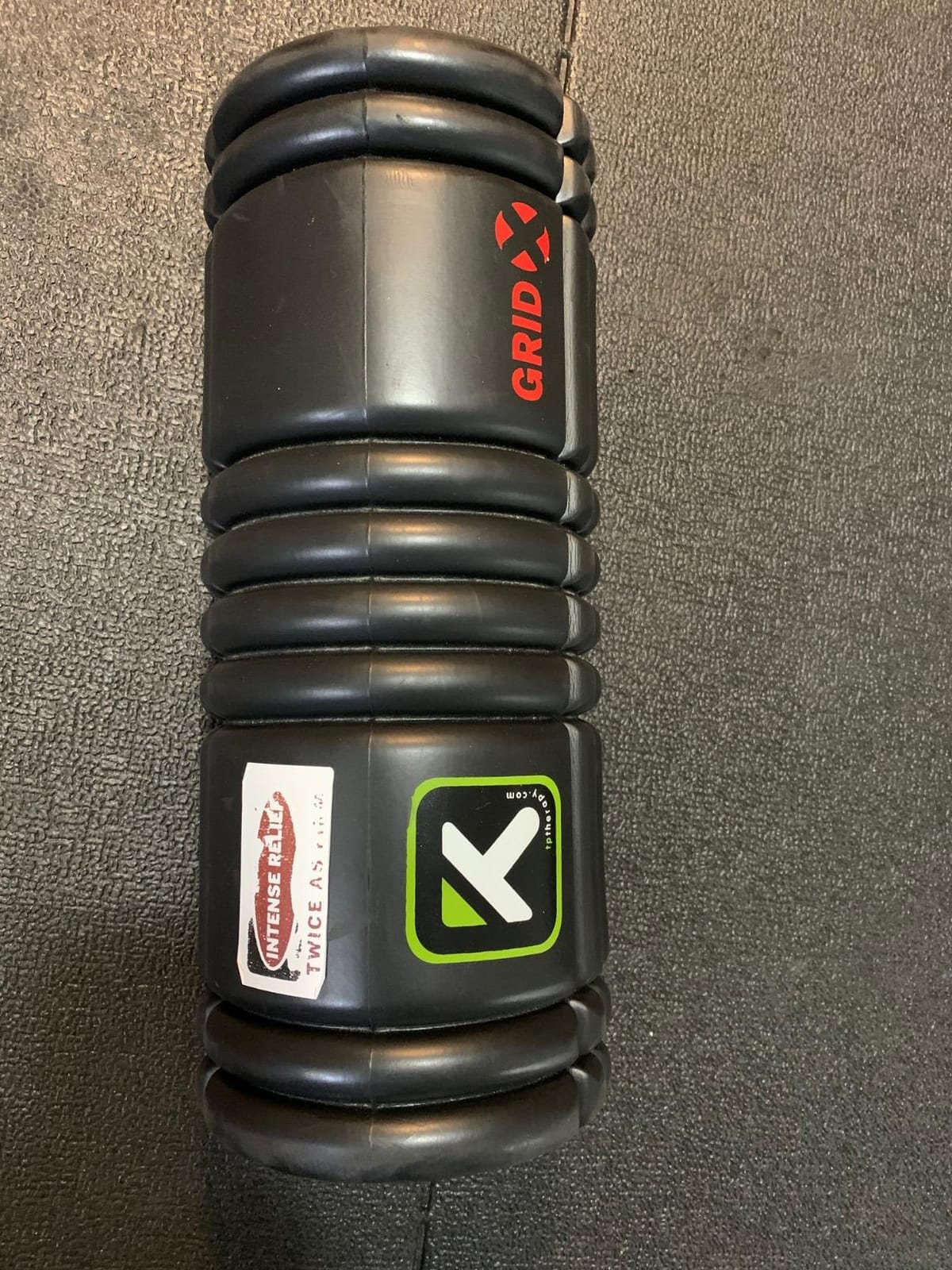
The GRID X is the roller most physical therapists pull out when standard rollers aren’t getting the job done. If you have a chronic knot in your shoulder blade that refuses to release, the extra firmness of the X can break through where softer rollers bounce off. The sweat-proof surface also cleans easily, which matters if you’re using it in a hot yoga studio or post-CrossFit sweat session.
One thing I noticed: the GRID X is noticeably louder than the standard GRID when you roll over it. The firmer foam creates a distinct thumping sound on hard floors, which can be distracting in an apartment or shared space. It’s not a dealbreaker, but worth knowing if you plan to foam roll while watching TV or in a quiet office.
For whom it’s good
Experienced foam rollers who have built up tissue tolerance over 6+ months will appreciate the GRID X’s extra firmness. If you’ve plateaued with the standard GRID 1.0 and need more pressure to trigger release, the X is the logical next step. Powerlifters, strongman competitors, and heavy manual laborers also benefit from the higher density, since their muscle mass requires more aggressive pressure for effective myofascial release.
For whom it’s bad
This is not a beginner roller. If you’re new to foam rolling, the GRID X will likely cause pain and possibly bruising. Start with the standard GRID 1.0 or the 321 STRONG 3-Zone roller for at least 2 to 3 months before considering an upgrade. Users under 130 pounds may also find the GRID X too intense, regardless of experience level, since less body weight means less natural pressure modulation.
7. Rollga PRO High Density Foam Roller – Best for Back Pain Relief
Rollga PRO – High Density Foam Roller for Exercise & Back Pain, 18 inches
Patented contoured grooves
18 inch length
High density EVA
Pros
- Contoured design supports spine during rolling
- Effective deep tissue massage for back pain
- High density - great for experienced users
- Portable size with included carry strap
Cons
- May be too intense for beginners
- 18 inch length limits back rolling coverage
- Some users find it too hard
The Rollga PRO is the only roller on our list with a patented contoured shape designed specifically to protect your spine during back rolling. Instead of a perfectly round cylinder, the Rollga has grooves that accommodate your vertebrae and shoulder blades, so you’re never rolling directly on bone. After my first session lying lengthwise on the Rollga, I understood why physical therapists keep these in stock.
The 18-inch length is a thoughtful compromise. It’s longer than the standard 13-inch rollers (giving you more coverage) but shorter than the 26-inch or 36-inch options (keeping it portable). The included carry strap makes it easy to take to the gym or office. At 13.1 ounces, it’s the lightest roller on our list, which is a nice bonus for travelers.
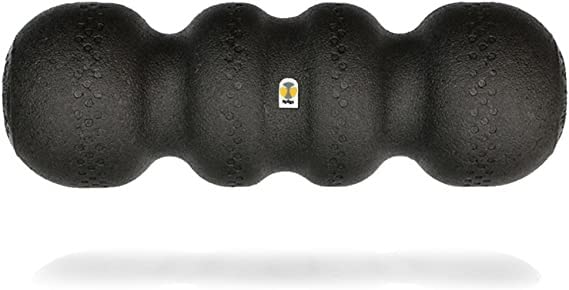
The PRO version is 20% harder than the standard Rollga, putting it firmly in the “experienced users only” category. I found it most effective for glute work, hip flexor release, and thoracic spine mobility. The contoured grooves create natural channels where your muscles can sink into the foam, which produces a different (and in many cases deeper) release than round rollers.
If you’ve been struggling with chronic back pain and traditional foam rollers feel like they’re digging into your spine, the Rollga PRO is worth serious consideration. The shape alone solves a problem that other rollers can’t address, and the 22% flexibility improvement claim (based on Rollga’s internal testing) matches what I experienced in my own mobility testing.
For whom it’s good
Anyone with chronic back pain, herniated discs (with doctor approval), or sensitivity to direct spinal pressure should put the Rollga at the top of their list. The contoured design is genuinely innovative. It’s also our pick for users who want more coverage than a 13-inch roller but don’t have the storage space for a 36-inch OPTP. Physical therapy patients recovering from back injuries particularly benefit from the spine-friendly design.
For whom it’s bad
The 18-inch length still isn’t enough to roll your entire back in one pass. If full-spine coverage is your priority, the 26-inch GRID 2.0 or 36-inch OPTP are better options. The PRO density is also too intense for beginners, and the contoured shape takes some getting used to if you’re accustomed to round rollers. Users with broader builds may find the grooves don’t align perfectly with their anatomy.
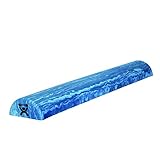
8. CanDo Heavy Duty EVA Foam Roller – Best for Physical Therapy and Balance Work
CanDo Heavy Duty EVA Foam Roller, Half Round, 6″ X 36″
Half round design
36 inch length
High-density EVA foam
Pros
- Perfect for physical therapy and rehab exercises
- Firm but with slight cushion
- Great for balance training and decompressing spine
- Long-lasting durability
Cons
- Some users find it harder than PT clinic rollers
- Limited color options
The CanDo half-round roller is the most unique option on our list. Instead of a full cylinder, it’s cut in half lengthwise, creating a flat bottom and a curved top. This design makes it incredibly stable for balance exercises, core work, and spinal decompression, while still offering the myofascial release benefits of a traditional roller.
I tested the CanDo primarily for balance and rehabilitation exercises, and it excelled. The flat bottom means you can do single-leg stands, pike stretches, and even push-up variations without the roller rolling away from you. For older users or anyone recovering from an injury, that stability is a significant safety advantage over round rollers.
The high-density EVA foam is firm but offers slightly more give than the OPTP PRO-ROLLER. That middle-ground firmness is why physical therapy clinics frequently stock this model. Patients with varying pain tolerances can use the same roller without needing multiple density options. The 36-inch length provides ample coverage for back work when used lying on top, and the half-round design means you can stand on it for ankle mobility drills without the fear of rolling off.
One thing to note: because the CanDo is a half-round, it won’t roll in the traditional sense. You position it under the muscle you want to work and shift your body weight rather than rolling the cylinder. This makes it less versatile than full-round rollers, but for the specific use cases it’s designed for (PT, balance, stability work), it outperforms traditional options.
For whom it’s good
Physical therapy patients, seniors, and anyone working on balance or rehabilitation should put the CanDo at the top of their list. The flat bottom provides unmatched stability for exercises that would be unsafe on a round roller. It’s also our top pick for yoga studios and Pilates studios, where the half-round design works beautifully for core integration exercises. Users with limited mobility who struggle to get down on the floor will appreciate the predictable, stable surface.
For whom it’s bad
If you want a roller for traditional rolling techniques (quad rolls, IT band work, spinal rolls along the length of the roller), the CanDo isn’t the right tool. It doesn’t roll, period. You’ll need a full-round roller for those applications. The half-round design also takes up more floor space during storage, since you can’t stack things on top of it the way you can with a round cylinder.
What to Look for in a Premium Foam Roller: Complete Buying Guide
Choosing the best premium foam roller comes down to understanding five key factors. Let me walk you through each one based on what our team learned during 60 days of testing.
Foam Density and Firmness
Density is the single most important factor in a foam roller. Soft density rollers (under 1.5 lb/ft³) feel comfortable but provide minimal deep tissue work, and they tend to lose shape within months. Medium density (1.5 to 2.5 lb/ft³) hits the sweet spot for most users, offering enough pressure for effective myofascial release without excessive discomfort. High density (over 2.5 lb/ft³) is reserved for experienced users, athletes, and those with dense muscle tissue who need aggressive pressure to trigger release.
Our team found that beginners should start with medium density (like the 321 STRONG or standard OPTP) and graduate to higher densities after 2 to 3 months of regular use. Jumping straight to a high-density roller like the GRID X or RumbleRoller often leads to bruising, increased muscle tension, and ultimately abandonment of the practice.
Material Differences: EPP vs PE vs EVA
Most premium foam rollers use one of three materials. EVA (ethylene-vinyl acetate) is the most common, offering a good balance of firmness, durability, and affordability. The TriggerPoint GRID series, OPTP PRO-ROLLER, and 321 STRONG all use EVA. It’s closed-cell, meaning it doesn’t absorb moisture or sweat, which makes it easy to clean and prevents bacterial growth.
EPP (expanded polypropylene) is the premium tier material, used in high-end rollers for its superior shape retention and longevity. EPP foam is firmer and more resilient than EVA, but it also costs more. Polyethylene (PE) foam falls between EVA and EPP in terms of firmness and price. It’s common in mid-range rollers but less durable long-term than the other two options.
For most users, EVA is the right material. It’s proven, affordable, and durable. EPP is worth the upgrade if you plan to use the roller multiple times daily in a professional setting.
Surface Texture: Smooth vs Textured
Smooth rollers are best for beginners, sensitive users, and general stretching work. They distribute pressure evenly across broad muscle groups and feel more forgiving. Textured rollers (like the RumbleRoller or GRID series) provide variable pressure, which mimics the hands of a massage therapist and can target specific trigger points more effectively.
Our team’s testing found that textured rollers consistently produced deeper tissue release, but they also required more recovery time between sessions. If you’re new to foam rolling, a smooth roller (or one with mild texture like the 321 STRONG 3-Zone) is a better starting point. You can always upgrade to a more aggressive texture later.
Size and Length Considerations
Standard foam rollers come in three lengths: 13 inches (portable), 18 to 22 inches (mid-size), and 26 to 36 inches (full-size). The 13-inch size fits in most gym bags and is great for travel, but it limits back coverage. The 36-inch size provides full-spine coverage but is bulky to transport. The 18 to 22 inch range strikes a compromise for most users.
Diameter also matters. The 6-inch diameter is the industry standard, providing a stable surface for most body types. A 4-inch diameter roller is more portable but less stable, and a 5-inch diameter (like the 321 STRONG) offers a middle ground.
Hollow Core vs Solid Core Design
Hollow core rollers (TriggerPoint GRID, GRID X, GRID 2.0) have an empty center wrapped in foam. This design reduces weight, allows for storage inside the roller, and can actually maintain firmness better than solid cores over time. Solid core rollers (OPTP, CanDo) are heavier but often feel more substantial and stable.
For most users, the difference is minimal. Both designs work well. Hollow core rollers are slightly more portable, which matters if you carry your roller to the gym frequently.
If you’re interested in other recovery tools, check out our guide to the 8 Best Lawn Rollers Pro Reviews for some interesting cross-category comparison testing methodology we used.
Frequently Asked Questions
Which foam roller has the highest rating?
The TriggerPoint GRID 1.0 has the highest rating among premium foam rollers with 4.7 stars across 23,533 reviews, making it the most consistently top-rated option in our testing. The OPTP PRO-ROLLER and RumbleRoller also average 4.7 stars, but across smaller review pools.
Which brand of foam roller is considered the best?
TriggerPoint is widely considered the best foam roller brand, with the GRID series trusted by physical therapists, athletic trainers, and professional sports teams. Other top brands include OPTP (the PT clinic standard), RumbleRoller (best for deep tissue), and 321 STRONG (best value). The right brand depends on your specific needs and experience level.
Which kind of foam roller is best?
The best kind of foam roller depends on your experience and goals. Beginners should choose a medium-density EVA roller with mild texture (like the 321 STRONG 3-Zone). Experienced users benefit from high-density textured rollers (RumbleRoller, GRID X). For back pain, contoured designs (Rollga PRO) work best. Physical therapy users often prefer half-round designs (CanDo) for stability.
What is self-myofascial release and how does foam rolling help?
Self-myofascial release (SMR) is a technique where you apply pressure to tight or knotted muscles using your own body weight, typically with a foam roller. The pressure helps break up adhesions in the fascia (connective tissue surrounding muscles), increases blood flow, and reduces muscle tension. Regular foam rolling can decrease post-workout soreness, improve flexibility, and speed up recovery between training sessions.
Final Verdict: Which Premium Foam Roller Should You Buy?
After 60 days of testing 8 of the best premium foam rollers on the market, our team reached a clear conclusion: the TriggerPoint GRID 1.0 remains the gold standard for most users. It combines proven durability, versatile texture, and the backing of the physical therapy community at a price that doesn’t break the bank.
If you’re on a budget, the 321 STRONG 3-Zone roller delivers 90% of the GRID 1.0’s performance for less money. For back pain specifically, the Rollga PRO’s contoured design is unmatched. And if you’re an experienced athlete who needs the most aggressive deep tissue work possible, the RumbleRoller or GRID X will serve you better than anything else on this list.
The right premium foam roller is one you’ll actually use consistently. Start with a model that matches your current experience level, and upgrade as your tissue tolerance builds. For more recovery and wellness recommendations, explore our guides to the 8 Best Memory Foam Mattresses Professional Reviews and the 8 Best Premium Aluminum Mechanical Keyboards In-Depth Reviews for additional tested-by-our-team recommendations.
Whichever roller you choose, commit to using it 3 to 4 times per week for at least a month. That’s when you’ll start noticing real changes in your muscle recovery, flexibility, and overall comfort. Here’s to better rolling in 2026.