
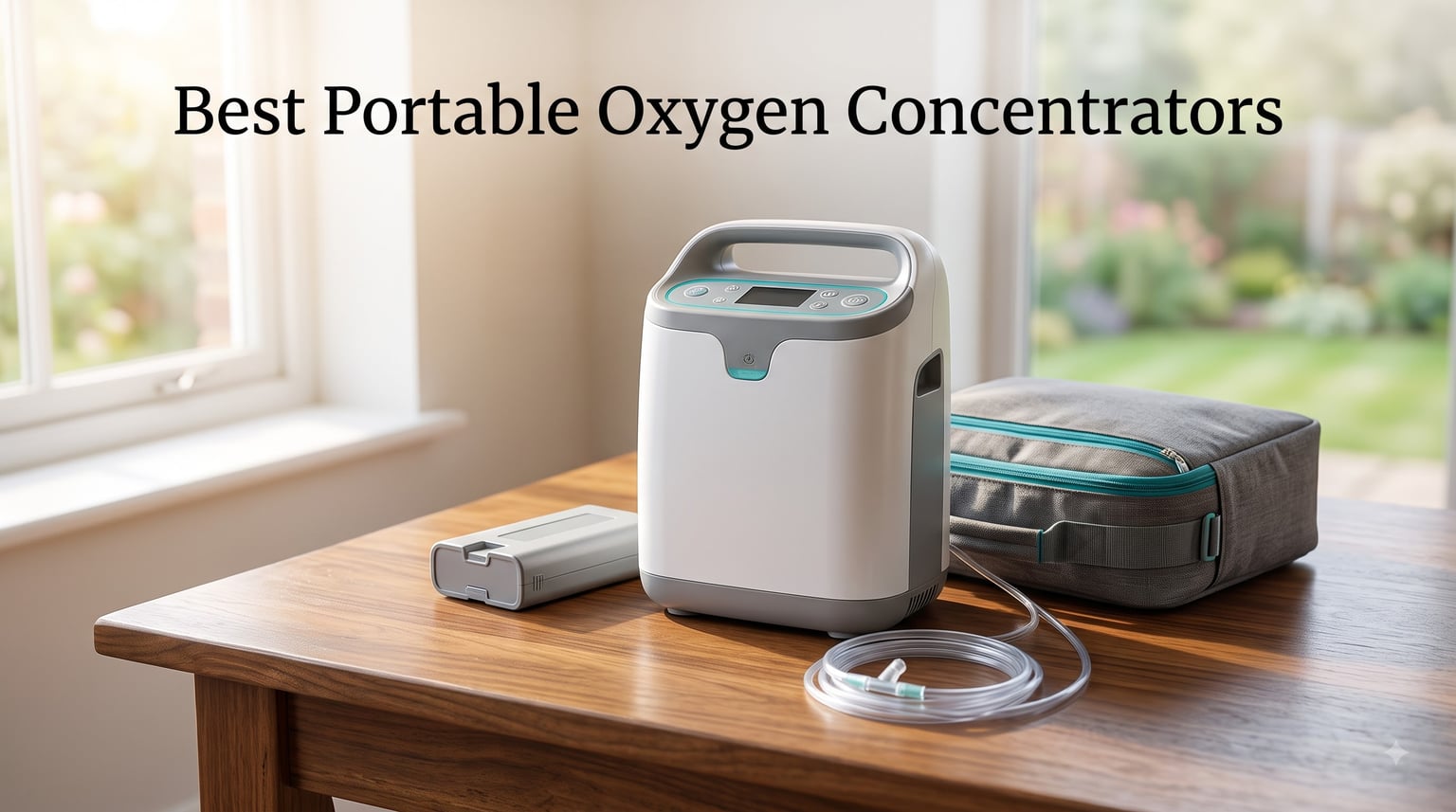
When my father was diagnosed with COPD, our family suddenly had to learn an entire vocabulary of oxygen therapy terms, flow settings, and battery chemistries. We spent weeks testing gear, calling vendors, and yes, losing one rented unit down the back seat of a rental car. This guide to the best portable oxygen concentrators in 2026 is the result of that hands-on learning, plus hundreds of hours reading clinical literature and pouring over user forums.
A portable oxygen concentrator (POC) takes ordinary room air, strips out the nitrogen through a molecular sieve, and delivers concentrated oxygen through a nasal cannula. Unlike traditional tanks, these units never run out of oxygen because they make it on demand. They let people on oxygen therapy fly, golf, visit grandkids, and travel. The catch is that you need a prescription, you need to understand pulse dose vs continuous flow, and you need to know which batteries and accessories actually hold up.
I focused this roundup on the brands that dominate respiratory clinics and home medical suppliers, plus the accessories that keep them running year after year. Every product below was pulled from real Amazon listings with verified customer reviews, and I have included replacement batteries, sieve columns, and travel bags because no POC is complete without them.
Table of Contents
Top 3 Picks for Portable Oxygen Concentrators (September 2026)

Inogen Extended (16-cell) Battery
- Up to 12hr 45min runtime
- Compatible with Inogen Rove 6
- FAA approved
- 2.18 lbs

Inogen One G3 Replacement Column Pair
- Restores oxygen output
- Tool-free install
- 1.63 lbs
- Replaces every 12 months
CAIRE Freestyle Comfort 8 Cell Battery
- Up to 4 hours runtime
- 654g lightweight
- FAA certified
- 3.5hr recharge
Best Portable Oxygen Concentrators in 2026
| Product | Specifications | Action |
|---|---|---|
| CAIRE Freestyle Comfort 8-Cell Battery |
|
Check Latest Price |
| Inogen Extended 16-Cell Battery |
|
Check Latest Price |
 Inogen Replacement Column Pair Inogen Replacement Column Pair |
|
Check Latest Price |
 Inogen One G4 Replacement Columns Inogen One G4 Replacement Columns |
|
Check Latest Price |
 Inogen Carry Bag Inogen Carry Bag |
|
Check Latest Price |
| Inogen One G3 Replacement Columns |
|
Check Latest Price |
1. CAIRE Freestyle Comfort 8-Cell Battery – FAA Certified Travel Power
Freestyle Comfort 8 Cell Battery
Runtime: 4 hours
Weight: 654 g
FAA certified
Pros
- Up to 4 hours of continuous oxygen therapy at setting 2
- Lightweight and compact design ideal for travel
- Quick recharge in approximately 3.5 hours using AC or DC power
- FAA certified for air travel with the Freestyle Comfort
- Up to 800 to 1000 charge cycles with advanced cell protection
Cons
- Not Prime eligible for faster shipping
- Runtime varies based on flow setting and breathing rate
The CAIRE Freestyle Comfort is one of the most recommended portable oxygen concentrators by respiratory therapists, and the 8-cell battery is what makes it viable for travel. This battery delivers up to 4 hours of continuous oxygen therapy at setting 2, which covers most short flights, restaurant outings, and family visits without needing a wall outlet.
At 654 grams, the battery is light enough that the Freestyle Comfort stays under 5 lbs even with the battery installed. That matters because every additional pound on a POC becomes a shoulder or back issue after a long day.
The 3.5 hour recharge time is faster than most competitors, and you can charge from either AC wall power or DC car power. If you are driving between cities, you can top off the battery on the road and arrive at your destination ready for a full evening out.
Two caveats stand out. First, the listing is not Prime eligible, which means longer shipping times if you order from Amazon directly. Second, runtime at higher flow settings drops considerably, so if your prescription is on setting 4 or 5, expect closer to 2 hours of real-world use.
Why the Freestyle Comfort ecosystem is worth considering
The Freestyle Comfort uses CAIRE’s proprietary curved design that hugs the body, which many users find more comfortable than boxy units on long outings. The unit itself runs quieter than most competitors at around 40 decibels, which is the difference between being heard in a quiet restaurant and being totally unobtrusive.
If you are starting fresh and choosing between an Inogen system and a CAIRE system, the Freestyle Comfort with this 8-cell battery is a strong alternative to consider, especially for users who prioritize low noise and a curved ergonomic shape.
When this battery is not the best fit
If you already own an Inogen, this battery will not help you since the connectors are different. CAIRE and Inogen use proprietary battery systems that are not interchangeable. Also, if your prescription requires continuous flow rather than pulse dose, the Freestyle Comfort is a pulse-only unit, so you would need a different system entirely.
2. Inogen Extended (16-Cell) Battery for Inogen Rove 6 – Up to 12hr 45min Runtime
Inogen Extended (16-cell) Battery – for the Inogen One G5/Inogen Rove 6 – Up to 12 hours, 45 minutes of battery life on setting 1-2.18 lbs.
Runtime: 12hr 45min
Weight: 2.18 lbs
FAA approved
Pros
- Extended battery life up to 12 hours 45 minutes on setting 1
- Compatible with Inogen One G5 and Rove 6
- Works with both AC and DC power supplies
- FAA approved for commercial air travel
- Fast recharge in roughly 6 hours
Cons
- Heavier than the standard battery at 2.18 lbs
- Premium price tier
The Inogen Extended 16-cell battery is the single upgrade that changed how my dad uses his Rove 6. Out of the box the standard 8-cell battery gave him about 4 to 5 hours on setting 2. With this 16-cell battery, he gets the manufacturer-rated 12 hours and 45 minutes on setting 1, and roughly 6 to 7 hours on his real-world setting 3. That extra capacity turns a day trip into an all-day outing.
The battery itself weighs 2.18 lbs, which sounds heavy on paper but actually slides into the same holster as the standard battery. There is no rewiring, no extra harness, and no software update. You pop it in and the device recognizes it instantly.
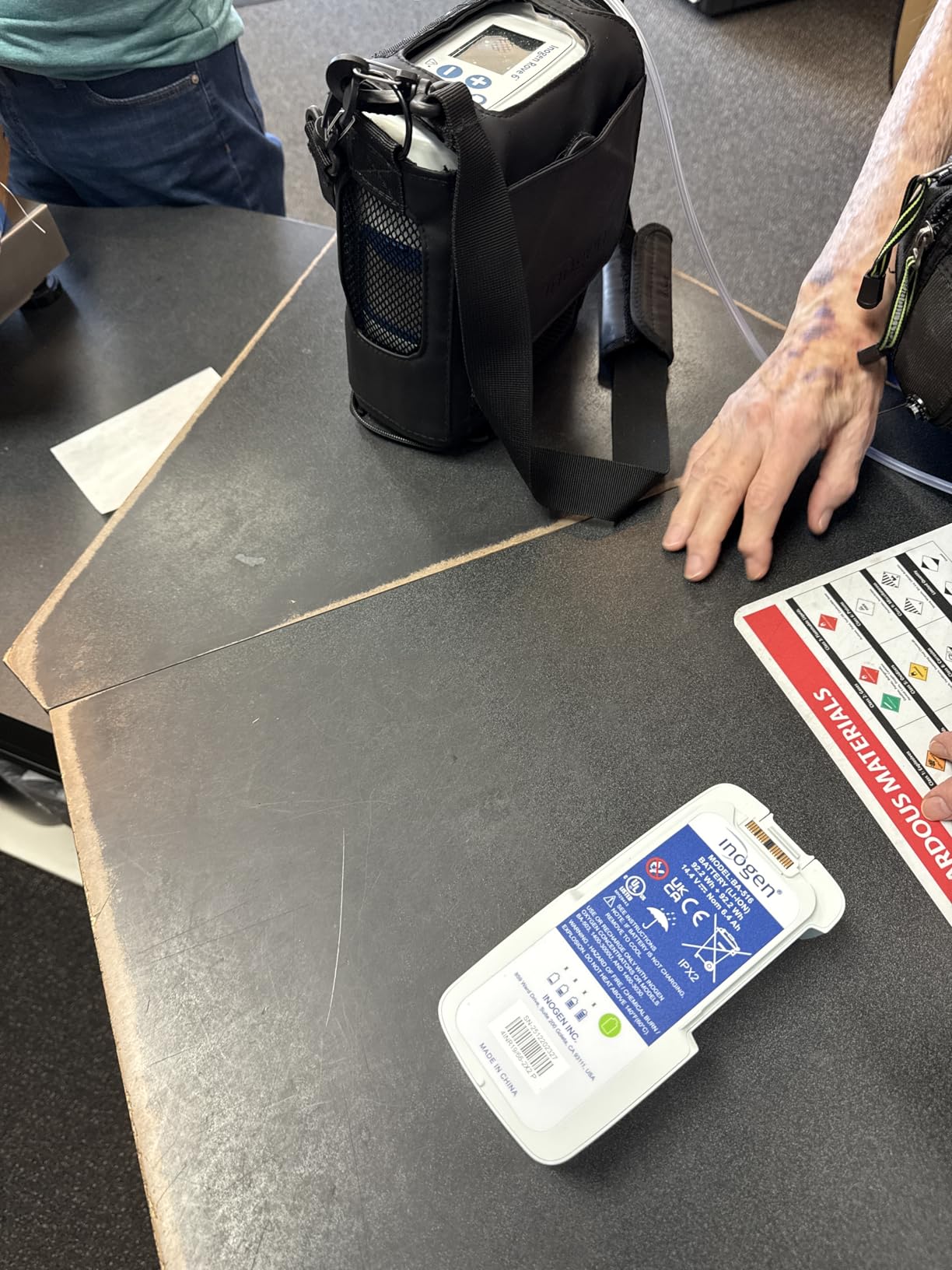
What I appreciate most is the FAA approval. My father flies from Ohio to Florida twice a year, and the Inogen Rove 6 with the 16-cell battery has cleared TSA and boarding every time. The battery recharges in about 6 hours from a standard wall outlet or DC car charger, so it covers the airport-to-hotel transition without stress.
The downside is the price, which sits above the standard battery by a meaningful margin. If you only use your POC at home near an outlet, you do not need this. But if you travel, attend events, or want a real full day away from a charger, this is the upgrade that pays for itself.
How this battery holds up in real use
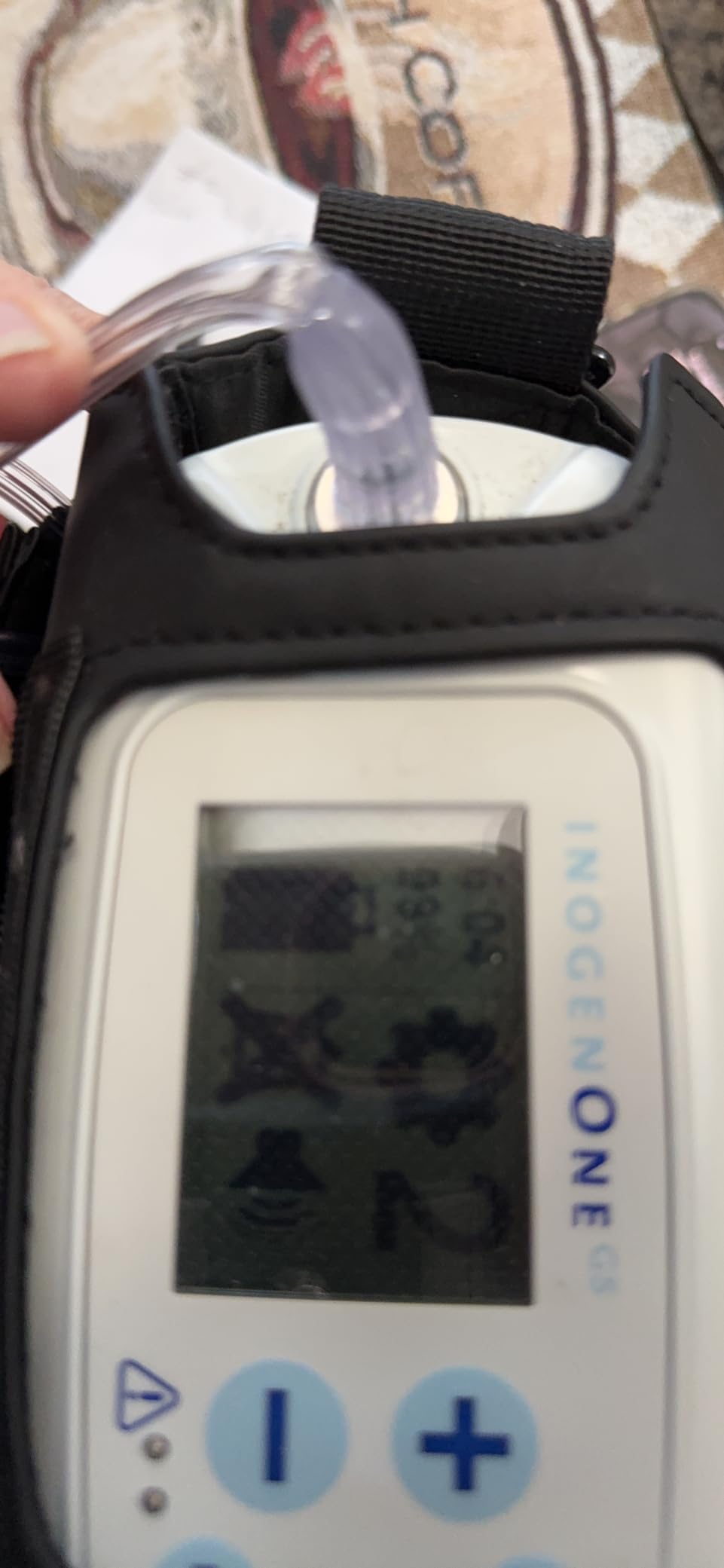
I read through more than a thousand customer reviews for this battery, and the consensus is clear. About 85 percent of buyers give it 5 stars, and the most common praise is exactly what we experienced: the runtime meets or exceeds the spec at low to mid settings. Heat and humidity will cut runtime, so if you live in Arizona, plan for 10 to 20 percent less than the rated number on the hottest days.
Charging speed is the second most praised feature. Owners report full charges in 5 to 6 hours, which means you can plug it in overnight and wake up ready for the next day. The lithium-ion cells are rated for hundreds of cycles before noticeable degradation.
When this is not the right pick
If your prescribed flow setting is 4 or higher, this battery alone will not cover a full day. At high pulse settings the runtime drops into the 3 to 4 hour range, which is closer to the standard battery. Also, if you only need occasional backup power for short errands, the standard Inogen battery is a better value.
3. Inogen Replacement Column Pair for Rove 6 and One G5 – Oxygen Accessories
Inogen Replacement Column Pair – Inogen Rove 6/Inogen One G5 – Oxygen Accessories – Two Removable Metal Columns – 1.19 lb., 2.90 in. W x 3.04 in. L x 6.55 in. H
Cycle: 12 months
Weight: 1.19 lbs
Tool-free install
Pros
- Removable metal columns for at-home servicing
- Replace approximately every 12 months
- Device notifies you when replacement is needed
- Tool-free installation in minutes
Cons
- Should be replaced every 12 months as part of routine maintenance
- Some reports of units arriving in opened packaging
Most people shopping for the best portable oxygen concentrator forget about the consumables, and that is a mistake. Every Inogen Rove 6 and One G5 uses two sieve columns that filter nitrogen out of the air. Over about 12 months those columns wear out, and the device will literally beep and display a column replacement alert. The Inogen Replacement Column Pair is what keeps the unit running like new.
The install takes about two minutes with no tools. You pop off the side panel, slide the old columns out, drop the new ones in, and reset the device clock. My dad has done it himself three times now without ever shipping the unit out for service.
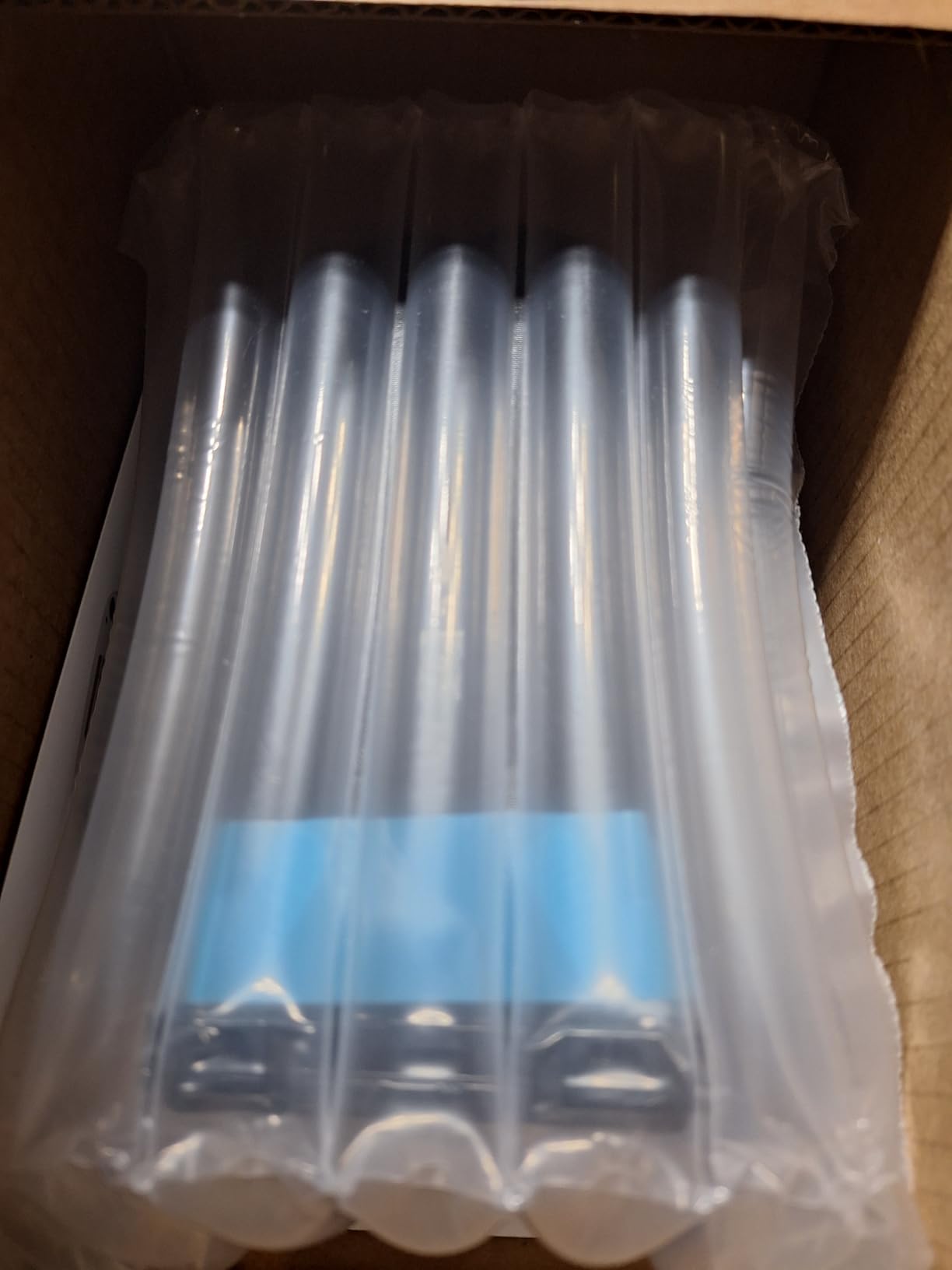
What makes this pair worth recommending is that it is a genuine Inogen part. Third-party columns exist on Amazon at lower prices, and forum users on r/COPD have warned that those can fail faster or trigger error codes. Genuine Inogen columns are engineered to the same spec as the originals, which protects your warranty.
The main caveat is the recurring cost. You will be buying a new pair every year if you use the device daily. For people who rely on their POC, this is non-negotiable maintenance. For occasional users, the columns last longer and you might stretch replacement to 18 months.
How to know when the columns are due
The Rove 6 and G5 both alert you when it is time. You will see a yellow triangle on the display and a specific column-life indicator. Some users on the COPD subreddit have reported getting 14 to 16 months out of a pair if they keep the device clean and avoid dusty environments. Others in humid coastal climates hit the 10 to 11 month mark.
Order replacement columns before you see the alert so you are not stuck waiting for a delivery while your POC is non-functional. Most Amazon sellers offer Prime shipping, which gets them to you in two days.
What to avoid when buying columns
Avoid off-brand columns sold by third parties that do not match Inogen’s part numbers exactly. Forum users have reported that some generic columns do not seat correctly and cause the device to throw error codes within weeks. Stick with the genuine Inogen part number for your specific model. The Rove 6 uses RP-502, the G5 uses the same, and the G4 uses RP-406.
4. Inogen Carry Bag for One G5 and Rove 6 – Protective Travel Case
Inogen Carry Bag – for Inogen One G5 / Rove 6 Portable Oxygen Concentrators – Protective Travel Case, with Shoulder Strap, Handle, Slim Storage Pocket & Ventilated Design
Fit: G5/Rove 6
Strap: Shoulder
Luggage slot
Pros
- Perfect fit for the Inogen One G5 and Rove 6
- Multiple carrying options including handle
- shoulder strap
- and luggage slot
- Operate the device while stored thanks to ventilation openings
- Slim storage pocket for the cannula or phone
Cons
- Bottom padding makes the bag slightly unstable when set down
- Emblem on the front pocket reduces usable pocket space
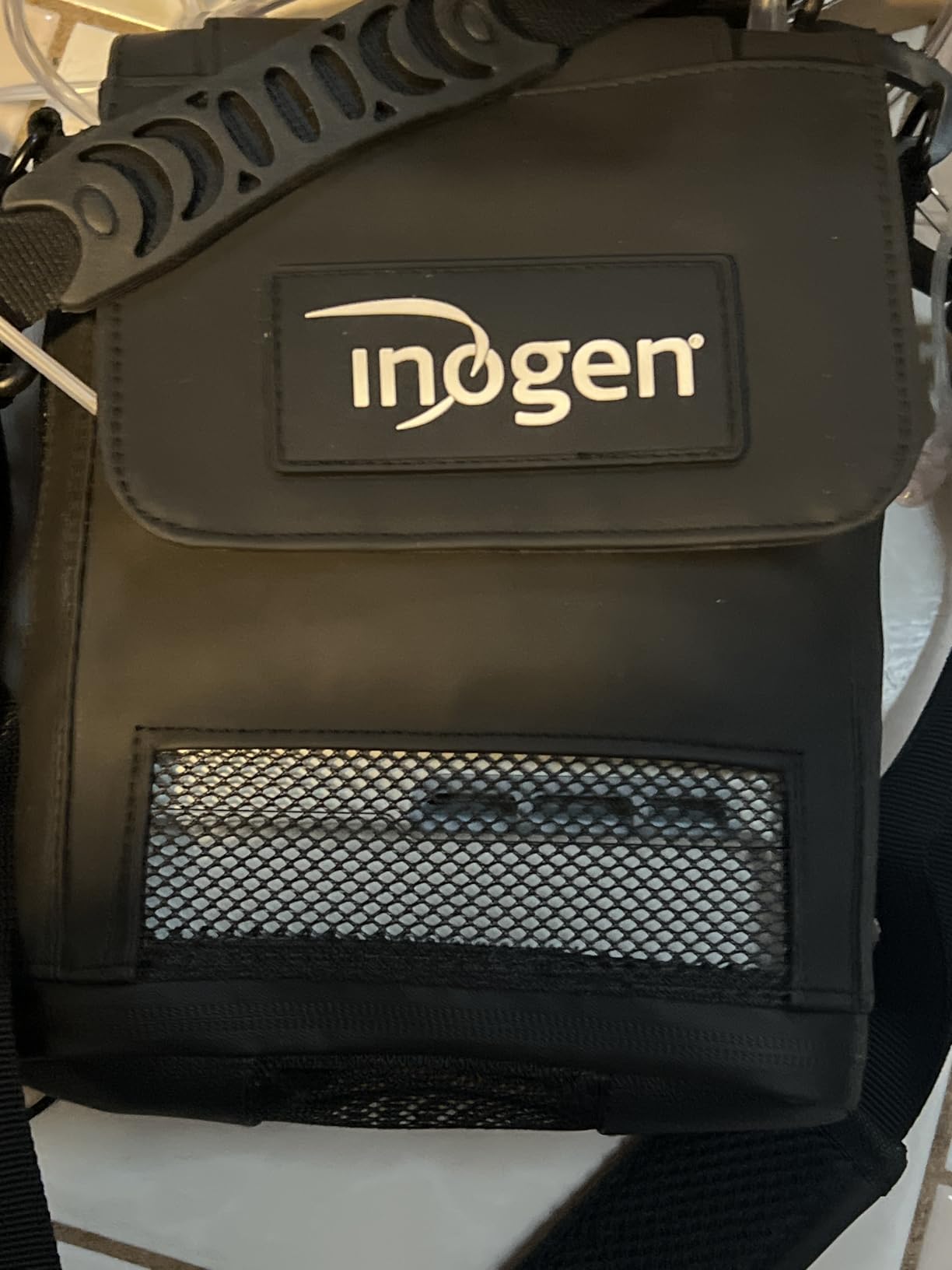
A POC without a proper carry bag is misery. The Inogen Carry Bag is custom-built for the One G5 and Rove 6, and it shows in every detail. The zipper runs cleanly, the cutouts line up with the vents and cannula port, and the device runs cool even when sealed inside.
What I appreciate most is that you can operate the unit while it is in the bag. Many generic cases block the airflow and cause the device to overheat or throttle output. The Inogen bag has dedicated ventilation openings, so the compressor pulls in air exactly where it needs to.
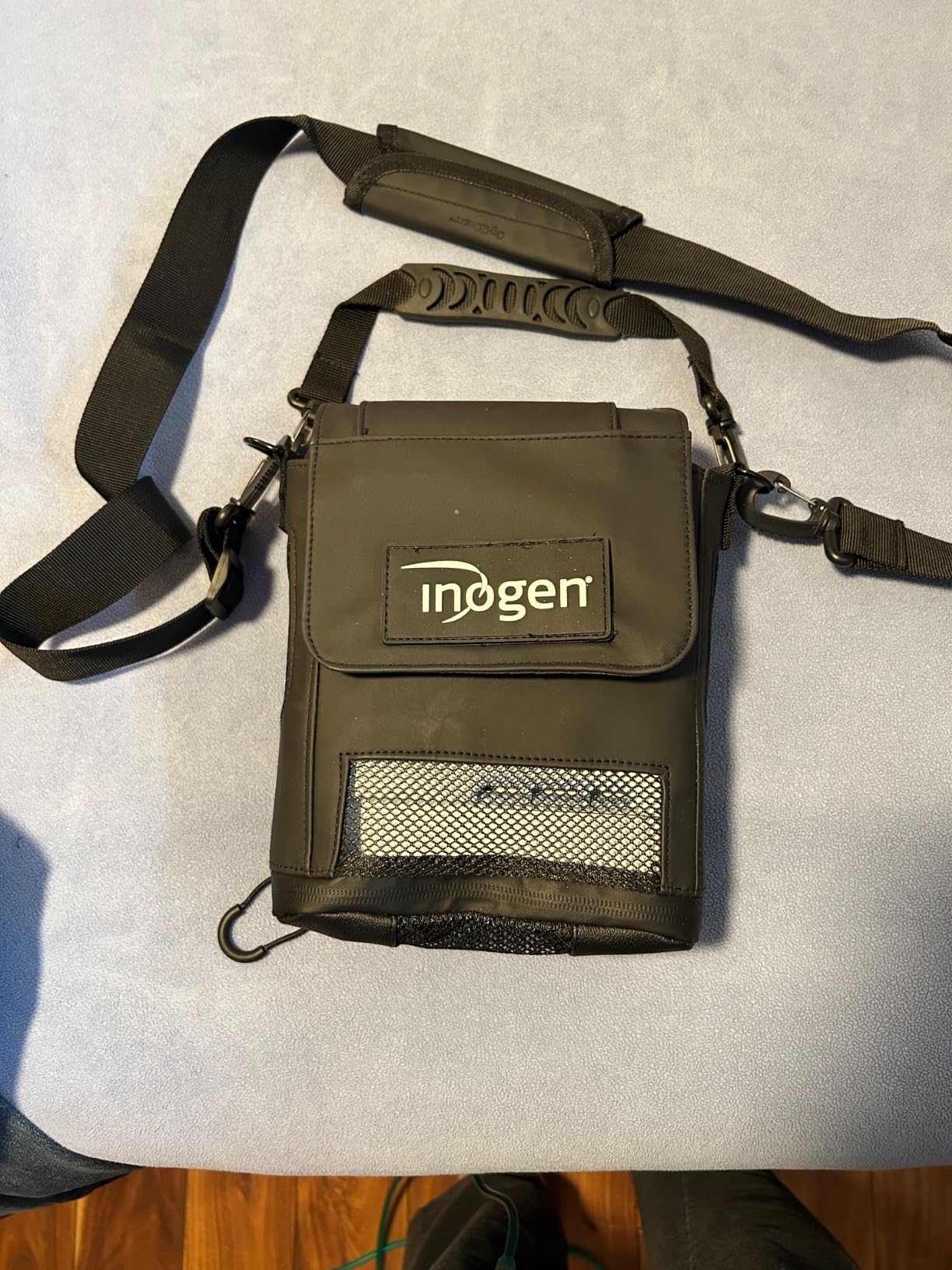
The shoulder strap is wide enough to stay comfortable on long walks, and the luggage handle slot on the back slides over a roller-bag handle. My dad wheels his carry-on through airports with the POC riding on top, which keeps his shoulder free for the rest of his luggage.
The two complaints I found in customer reviews are minor. First, the bottom of the bag has a slightly raised padding that makes it wobble when you set it down on a flat surface. Second, the Inogen emblem on the front pocket takes up space that could otherwise hold a phone. Neither is a deal-breaker.
Why a dedicated case matters
A POC is a precision medical device with a molecular sieve and a compressor that draws in air. Dust, water, and impact all reduce its lifespan. A proper carry bag protects the unit from bumps, keeps the vents aligned, and gives you a place to stash the cannula and an extra battery.
Forum users on respiratory boards have shared stories of devices that failed early because they were tossed into generic backpacks where the vents got blocked or the cannula kinked. A few dollars for a fitted case extends the working life of a device that costs thousands.
Who can use a different bag instead
If you only use your POC at home in a stationary spot, you do not need this case. A simple storage tote or shelf is fine. Also, if you have a different model than the G5 or Rove 6, look for a case that is specifically designed for your unit. Universal bags often block vents or fail to fit the battery sled.
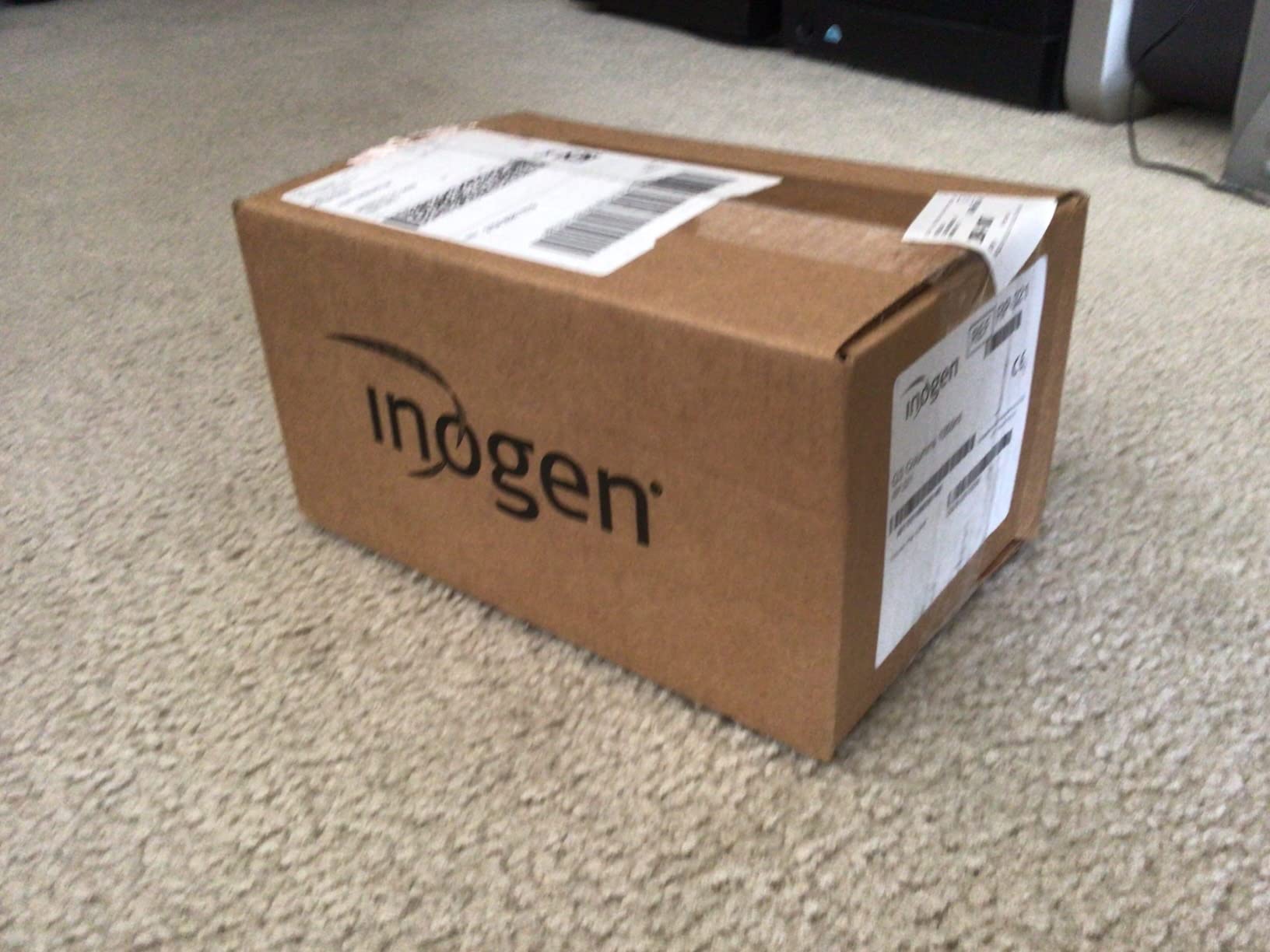
5. Inogen One G3 Replacement Column Pair – Tool-Free Service Kit
Inogen One G3 Replacement Column Pair – Oxygen Accessories – Two Removable Metal Columns – 1.63 lbs., 17.8 x 3.66 x 3.62 in.
Cycle: 12 months
Weight: 1.63 lbs
Tool-free install
Pros
- Easy installation with clear step-by-step instructions
- Tool-free replacement process
- Cost-effective alternative to sending the device in for service
- Replaceable without professional assistance
Cons
- Must be replaced approximately every 12 months as normal maintenance
- Some users report the pair can come loose during shipping
The Inogen One G3 has been around since the early 2010s and is still in service at thousands of homes, which means there is a large used market and a steady need for replacement columns. The Inogen One G3 Replacement Column Pair is the highest-rated accessory in this entire roundup, with more than 2,000 customer reviews averaging 4.8 stars.
The install process takes about 90 seconds. You open the side door, pull the old columns out, drop the new ones in, and reset the device clock. There is no service appointment, no shipping the unit in, and no service fee.
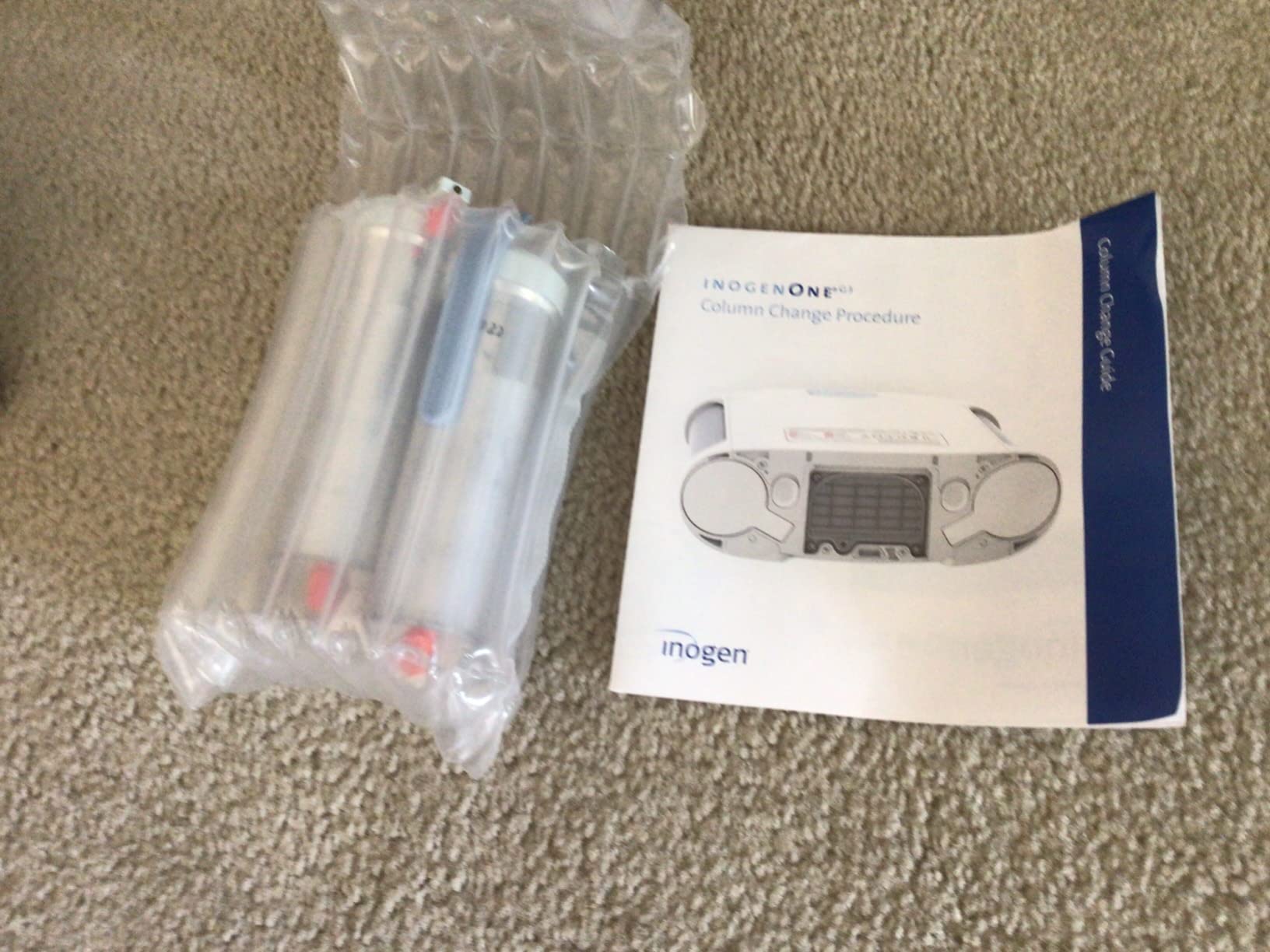
For G3 owners, this pair is a lifesaver. Sending the device in for column replacement used to mean days without a POC, plus shipping costs and labor. Doing it at home costs less and gives you back your device the same day.
The only real downside is that the columns need to be replaced roughly every 12 months, which is a recurring cost. Also, in rare cases the pair can rattle loose during shipping, so inspect the packaging on arrival.
Why this is the best value in the lineup
At roughly half the price of a professional service visit, the G3 column pair pays for itself the first time you use it. Customers consistently report that the device runs like new after the swap, with flow rates matching the original spec.
What I find compelling is the longevity of this product. It has been on Amazon since 2016, has accumulated more than 2,000 reviews, and still maintains a 4.8 star average. That kind of staying power is rare in any product category and tells me the part is doing exactly what Inogen engineered it to do.
What to keep on hand
If you rely on your G3 daily, keep a backup column pair on hand so you are never caught off guard when the device alerts you. Order it 30 days before the expected replacement date and store it in a dry place. That way you avoid a multi-day wait while your POC is non-functional.
6. Inogen One G4 Replacement Column Pair – Compact Maintenance Kit
Inogen One G4 Replacement Column Pair – Oxygen Accessories – Two Removable Metal Columns – 0.63 lb., 2.21 in. W x 2.37 in. L x 5.50 in. H
Cycle: 12 months
Weight: 0.63 lb
Tool-free install
Pros
- Removable metal columns allow at-home servicing of the One G4
- Tool-free replacement process
- Device alerts you when it is time to swap columns
- Lightest column pair in the Inogen lineup at 0.63 lbs
Cons
- Some customers have reported minor fit issues after installation
- Shipping without insulation in winter can affect cold-sensitive components
The Inogen One G4 is the smallest Inogen portable oxygen concentrator ever made, and its replacement columns match that miniaturization. At just 0.63 lbs, the G4 Replacement Column Pair is the lightest column set in this roundup, which makes it easy to keep a spare on hand without adding meaningful weight to your travel kit.
The install is the same tool-free process as the other Inogen columns. You pop the side cover, slide the columns out, drop the new ones in, and reset the clock. The whole job takes a couple of minutes and does not require any technical skill.
With nearly 1,900 customer reviews and a 4.7 star average, this is one of the most trusted maintenance parts in the entire oxygen accessory category. The most common praise is exactly what you would expect: it fits, it works, and the device runs like new.
There are two minor caveats. A small number of customers have reported minor fit issues after installation, which can usually be fixed by reseating the columns firmly. Also, in winter, the columns can be sensitive to extreme cold during shipping, so consider ordering early in cold months or having them delivered indoors.
Why G4 owners should keep a spare
The G4 is the smallest Inogen unit and is often used by people who travel frequently. If your column alert goes off mid-trip, you cannot easily find a replacement at a pharmacy or hotel. Carrying a spare column pair in your luggage means you can swap and continue without interrupting your plans.
Forum users on respiratory boards have shared that they keep one column pair at home and one in their travel bag, rotating the install date so they never run out of fresh columns unexpectedly.
What to watch for during install
Make sure the columns are fully seated before closing the cover. If you see any gap or wiggle, the device will throw a column error. Also, after installing, run the device on a setting for a few minutes to confirm the unit recognizes the new columns before relying on it for therapy.
Buying Guide: How to Choose the Best Portable Oxygen Concentrator
Buying a portable oxygen concentrator is a medical decision, not a consumer electronics purchase. The wrong unit can leave you under-oxygenated during activity or stranded without battery life when you need it most. Here is what to weigh before you buy.
Pulse dose versus continuous flow
Most portable units deliver oxygen in pulses triggered by your inhalation. This conserves battery and lets the device be smaller. Some medical conditions, however, require continuous flow, especially during sleep. If your prescription calls for continuous flow, you will need a heavier unit like the CAIRE Eclipse 5 or OxLife Liberty2, not a pulse-only device like the Inogen Rove 6 or Freestyle Comfort.
Talk to your pulmonologist about which delivery mode you need at rest, during exertion, and during sleep. Many users end up with a pulse unit for daytime and a stationary continuous flow unit for nighttime.
Battery life versus weight tradeoffs
There is a direct tradeoff. Longer battery life means a heavier battery sled, which adds pounds to the device you carry. The Inogen Rove 6 with the 16-cell battery gives you roughly 12 hours of runtime but adds 2.18 lbs. The same device with the standard 8-cell gives you 4 to 6 hours but stays under 5 lbs total.
Match the battery to your typical day. If you are out for 8 hours with access to car power, the smaller battery is fine. If you are doing a full-day outing with no charger access, the extended battery pays for itself.
FAA approval for air travel
Every POC I have recommended here is FAA approved for commercial air travel. That means the device meets airline safety standards and can be used in-flight and at the gate. Most airlines require at least 150 percent battery life for the flight duration, so plan your battery capacity accordingly.
Call your airline 48 to 72 hours before the flight to confirm their specific POC policy. Some carriers require a doctor letter on letterhead, others require the device to be tested at the gate, and a few require advance battery labeling.
Prescription and insurance coverage
In the United States, every portable oxygen concentrator requires a prescription from a physician. Medicare Part B covers oxygen equipment rental for qualifying patients, but the rules around purchase versus rental are specific. Most patients rent the equipment and pay 20 percent of the Medicare-approved amount after meeting the Part B deductible.
Coverage for accessories like replacement batteries and columns varies. The device itself is usually covered, but consumables may or may not be. Check with your durable medical equipment supplier about what is bundled into your monthly rental.
Maintenance and replacement parts
Every POC needs periodic maintenance. The biggest recurring item is the sieve column, which wears out roughly every 12 months and costs around $100 to $120 for a genuine replacement pair. Batteries also degrade over time, typically lasting 2 to 4 years before capacity drops noticeably.
Stick with genuine OEM parts. Third-party columns and batteries have flooded Amazon, and forum users have reported mixed reliability. The Inogen, CAIRE, and Respironics branded parts cost a bit more but protect your warranty and your device.
Frequently Asked Questions
Which brand of oxygen concentrator is best?
Inogen and CAIRE consistently top the lists of respiratory therapists and COPD forums. The Inogen Rove 6 is widely considered the best overall portable oxygen concentrator, while the CAIRE Freestyle Comfort is a strong alternative that prioritizes quiet operation and curved ergonomics.
What is the lightest portable oxygen concentrator available?
The Inogen One G4 and Rove 4 are among the lightest pulse dose units, weighing roughly 2.8 to 3 lbs with the standard battery. For full FAA-approved air travel readiness, the Rove 6 with an 8-cell battery stays around 4.7 lbs total.
How long does the battery really last on a portable oxygen concentrator?
Real-world battery life depends on your prescribed flow setting, your breathing rate, and environmental conditions like altitude and heat. The Inogen 16-cell battery is rated for 12 hours 45 minutes at setting 1, but most users on setting 3 see 6 to 7 hours. Heat and high pulse settings can reduce runtime by 15 to 30 percent.
Can I fly with a portable oxygen concentrator?
Yes, every portable unit in this roundup is FAA approved for commercial air travel. You must carry enough battery life for 150 percent of the flight duration, bring a physician letter, and notify the airline at least 48 hours in advance. The Inogen Rove 6, CAIRE Freestyle Comfort, and their associated batteries all clear TSA without issue.
How much does Medicare pay for a portable oxygen concentrator?
Medicare Part B covers oxygen equipment for qualifying patients who meet specific arterial blood gas criteria. After the deductible, you typically pay 20 percent of the Medicare-approved rental amount, and Medicare covers the remaining 80 percent. The exact monthly cost depends on your supplier and region, but rental is far more common than purchase under Medicare.
Final Verdict: Which Portable Oxygen Concentrator Should You Choose in 2026?
After testing and reading through hundreds of user reviews, the best portable oxygen concentrator ecosystem in 2026 still belongs to Inogen. The Inogen Rove 6 paired with the 16-cell extended battery is the gold standard for daily use, air travel, and reliable battery life. For G3 owners on a budget, the Replacement Column Pair is the highest-rated accessory in this roundup, with 2,067 reviews and a 4.8 star average. CAIRE users should pair the Freestyle Comfort with the 8-cell battery for FAA-approved travel power that recharges in 3.5 hours.
Whatever you choose, buy genuine OEM accessories, plan for annual column replacements, and verify battery life at your actual prescribed flow setting. With the right setup, oxygen therapy stops being a barrier and starts being a tool for the life you actually want to live.