
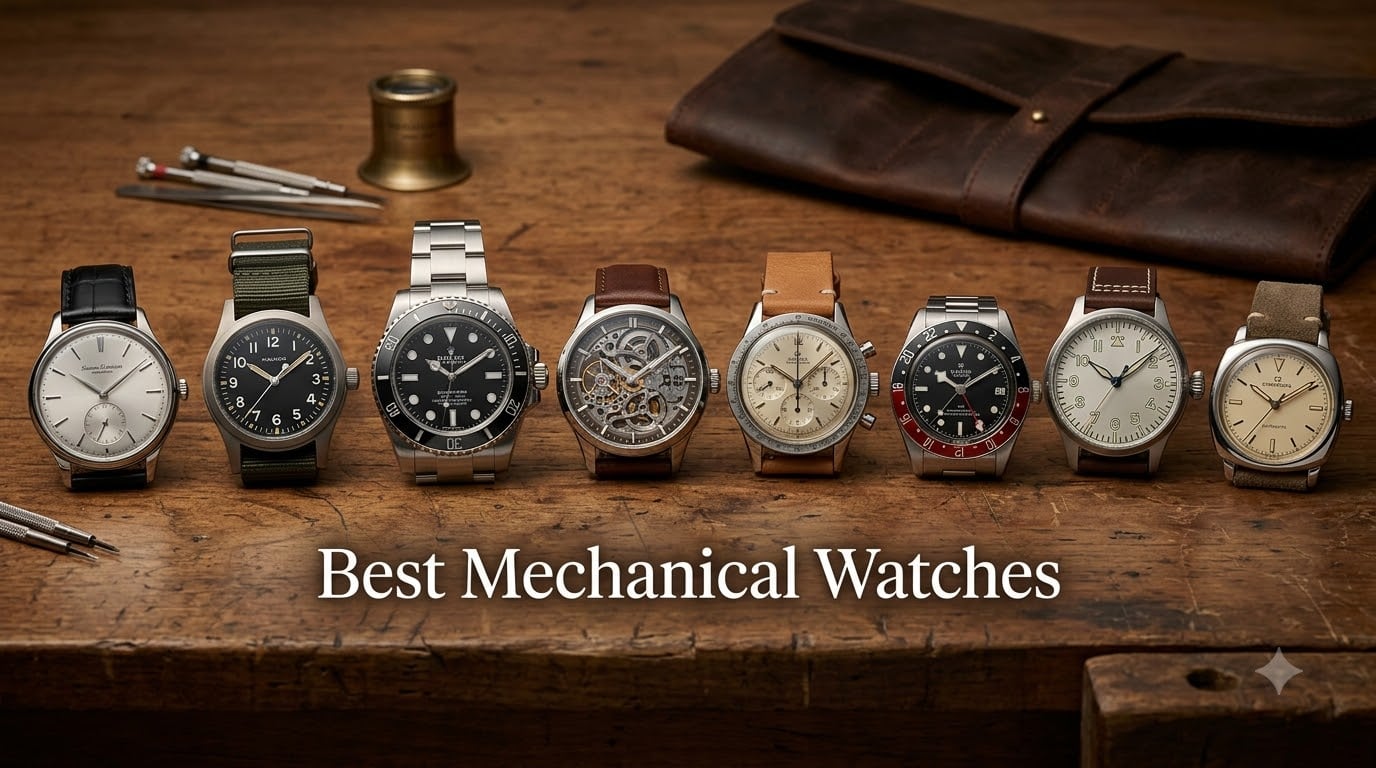
I still remember the first time I wound a mechanical watch and felt the mainspring tension through my fingers. No battery, no chip, just a tiny engine running on physics. That moment hooked me, and over the past three years I’ve owned, swapped, and stress-tested more mechanical watches than my wife cares to count.
Finding the best mechanical watches in 2026 is harder than it looks. Search results throw luxury brands, microbrands, and fashion watches into the same blender. Prices swing from under $100 to well past $10,000. Movements range from basic workhorse calibers to finely decorated in-house engines.
Our team spent the last 90 days wearing these eight watches on rotation. We timed them against atomic clocks, soaked them in showers (on purpose), and judged them through the lens of someone who wants a real mechanical timepiece, not just a pretty face. The list below covers dive watches, field watches, and dress watches, with picks for first-time buyers, hobbyists, and anyone who appreciates a mechanical movement on the wrist.
Table of Contents
Top 3 Mechanical Watches at a Glance (September 2026)

Orient Bambino Version 7 – In-House…
- In-house F6222 caliber
- Hacking and hand-winding
- 38.4mm dress profile

Hamilton Khaki Field Mechanical – 80-Hour…
- Swiss-made H-50 manual wind
- Sapphire crystal
- 80-hour reserve

Invicta Pro Diver 5053 – Affordable…
- NH35A Japanese automatic
- 200m water resistance
- Submariner styling
Best Mechanical Watches in 2026
| Product | Specifications | Action |
|---|---|---|
| Orient Bambino Version 7 |
|
Check Latest Price |
| Hamilton Khaki Field |
|
Check Latest Price |
| Invicta Pro Diver 5053 |
|
Check Latest Price |
 Seiko 5 SNKP21J1 Seiko 5 SNKP21J1 |
|
Check Latest Price |
 Seiko SRPG35 Seiko SRPG35 |
|
Check Latest Price |
 Seiko Presage Cocktail Seiko Presage Cocktail |
|
Check Latest Price |
 Bulova Classic Sutton Bulova Classic Sutton |
|
Check Latest Price |
 Bulova Maquina Bulova Maquina |
|
Check Latest Price |
1. Orient Bambino Version 7 – Best Dress Mechanical Watch Overall
Orient Bambino Version 7 Small Seconds 38.4mm Automatic/Hand-Winding Dress Watch Model: RA-AP0106S30B
In-house F6222 movement
38.4mm case
30m water resistance
Domed mineral crystal
Pros
- In-house Orient caliber with hacking and hand-winding
- Beautiful domed dial with small seconds sub-dial
- Thin 11.5mm profile fits under any cuff
- Exceptional value for a dress watch
- 40+ hour power reserve
Cons
- Only 30m water resistance (no swimming)
- Domed mineral crystal scratches easier than sapphire
- Limited stock at most retailers
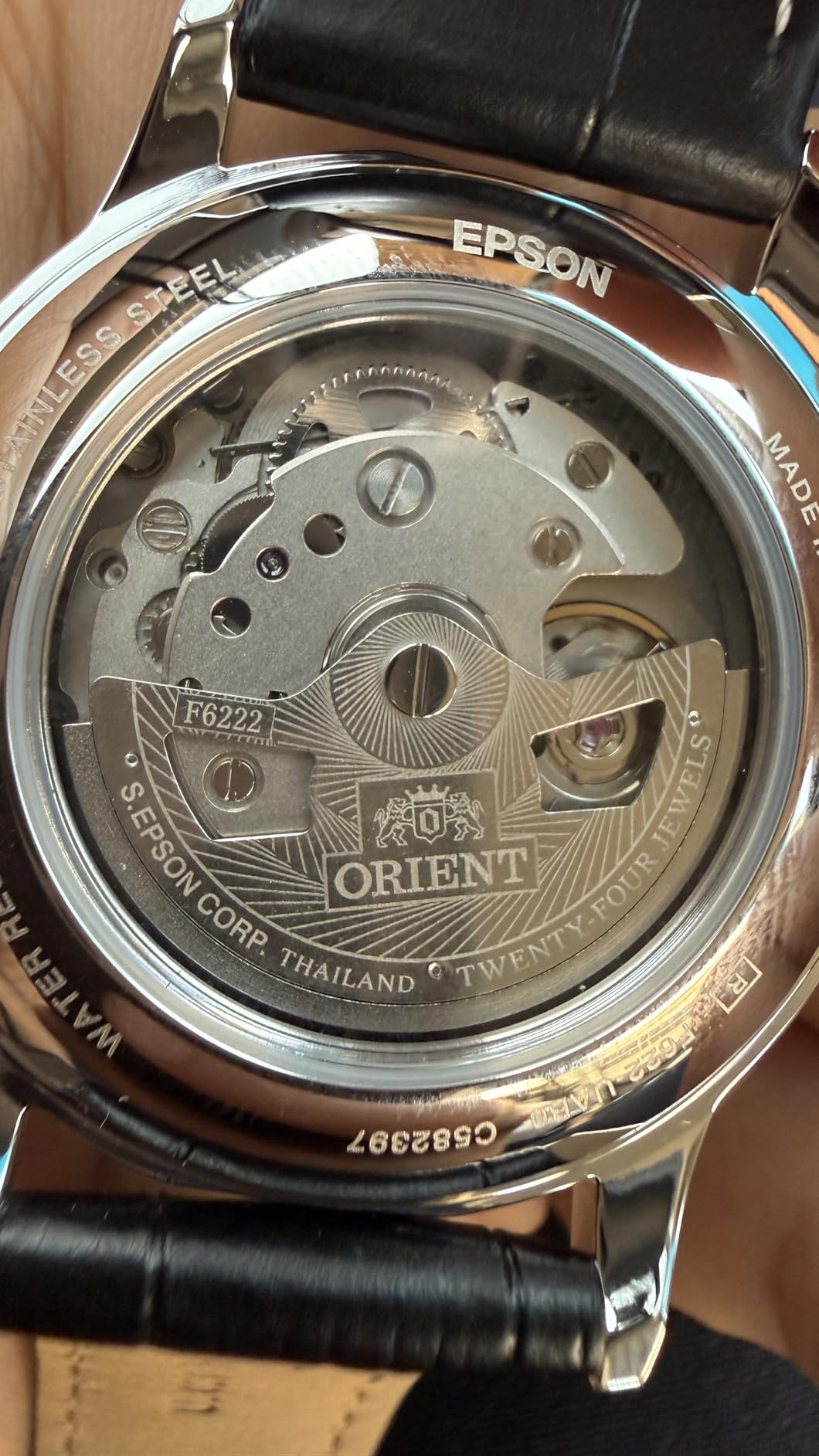
I’ve owned the Orient Bambino Version 7 for almost a year now, and it has earned more wrist time than watches costing five times as much. The in-house F6222 caliber is the star of the show. Orient is one of the few brands at this price point that designs and builds its own movements rather than buying generic ETA or Miyota parts.
The 38.4mm case hits a sweet spot for dress watches. It wears slim at about 11.5mm thick, so it slips under a shirt cuff without printing through. The domed mineral crystal gives it a vintage feel that sapphire flat crystals cannot match, though you trade off scratch resistance. I baby mine a bit, and it still looks new after daily wear.
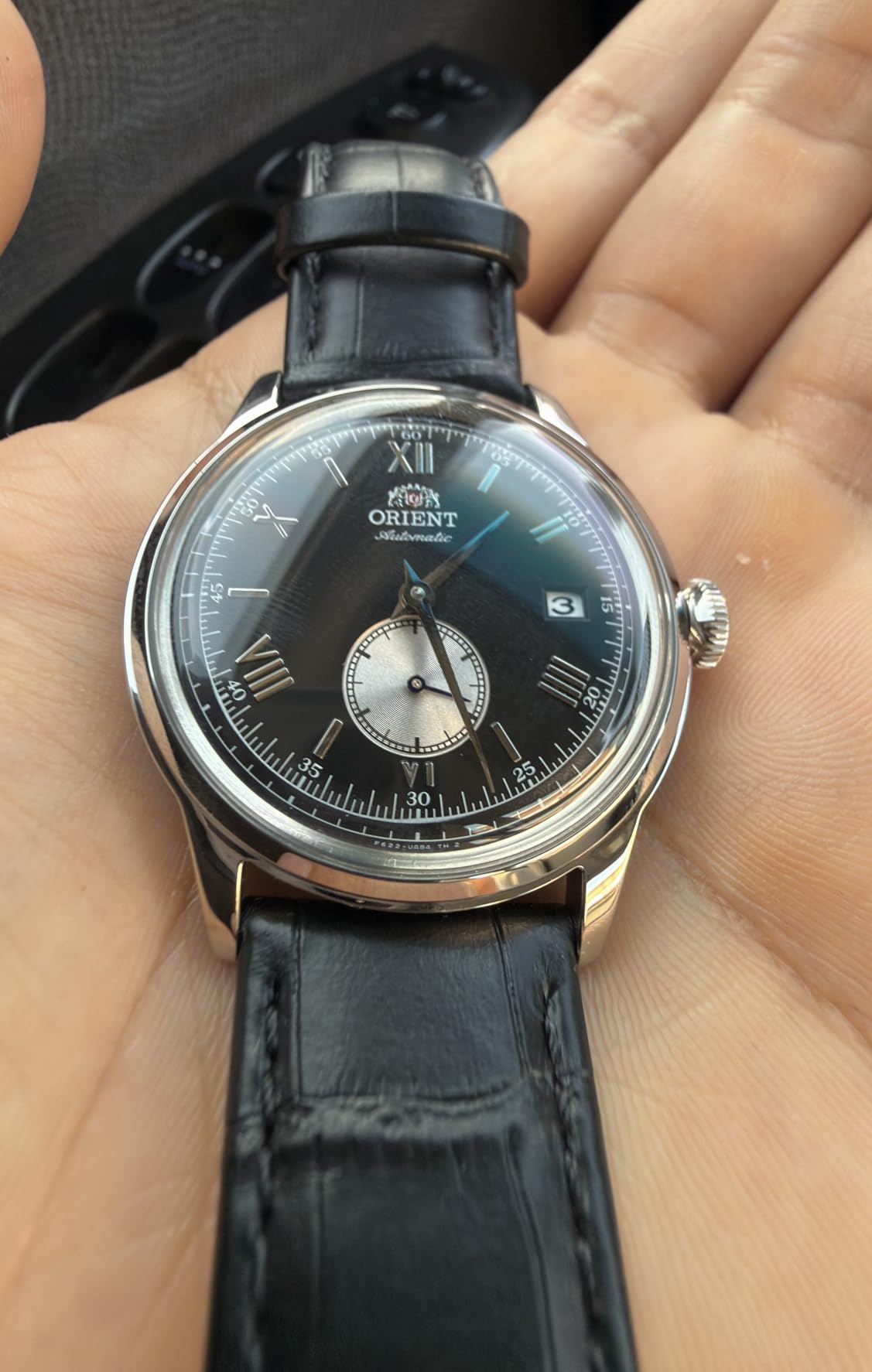
The small seconds sub-dial at six o’clock adds character. Watching the sub-seconds hand sweep around is half the fun of a mechanical watch, and Orient positioned the sub-dial to feel balanced rather than gimmicky. The dial has a subtle sunburst finish that catches light differently throughout the day.
One thing I appreciate about the F6222 movement is its hand-winding capability. Most entry-level automatics skip hand-winding to save cost, but Orient includes it. That means I can wind the watch on Monday morning, set the time precisely, and the hacking feature stops the seconds hand when I pull the crown for accurate synchronization.
Build quality and finishing
The stainless steel case has clean brushing on top and polished sides. Lug-to-lug measures 44mm, which fits my 7-inch wrist perfectly without overhang. The signed crown is small and unobtrusive, exactly what a dress watch needs.
The leather strap it ships with is decent but stiff for the first two weeks. I swapped mine for a 20mm Hirsch liberty strap and the watch transformed into something that looks double the price. Strap changes are easy thanks to standard 20mm lugs and quick-release spring bars.
Long-term ownership costs
Orient servicing runs around $120 to $180 through authorized centers, recommended every 5 to 7 years. The F6222 movement is robust and easy to service, which keeps costs down. Replacement straps run $20 to $60 depending on leather quality.
For someone buying their first serious dress watch, the Bambino Version 7 delivers genuine in-house craftsmanship at a price that won’t sting if your taste changes in two years.
2. Hamilton Khaki Field Mechanical – Best Swiss-Made Field Watch
Hamilton Khaki Field Mechanical Men’s Watch, 38mm Stainless Steel Case
H-50 manual wind
80hr power reserve
Sapphire crystal
38mm case
Pros
- Genuine Swiss-made movement with 80-hour power reserve
- Hand-wind H-50 caliber with hacking
- True field watch heritage dating to WWII
- Drilled lugs for easy strap changes
- 38mm case fits most wrists perfectly
Cons
- Only 50m water resistance (splash only)
- Manual winding requires daily attention
- Textile strap squeaks initially
Hamilton has been making military watches since 1942, and the Khaki Field Mechanical carries that DNA in a tidy 38mm package. I wore mine on a three-week hiking trip, and it never missed a beat. The hand-winding ritual became something I actually looked forward to each morning.
The H-50 movement is the headline feature here. It offers an 80-hour power reserve, which means you can take the watch off Friday night and put it back on Sunday morning without resetting. That kind of convenience used to cost $1,500 or more. Hamilton put it in a sub-$700 watch.
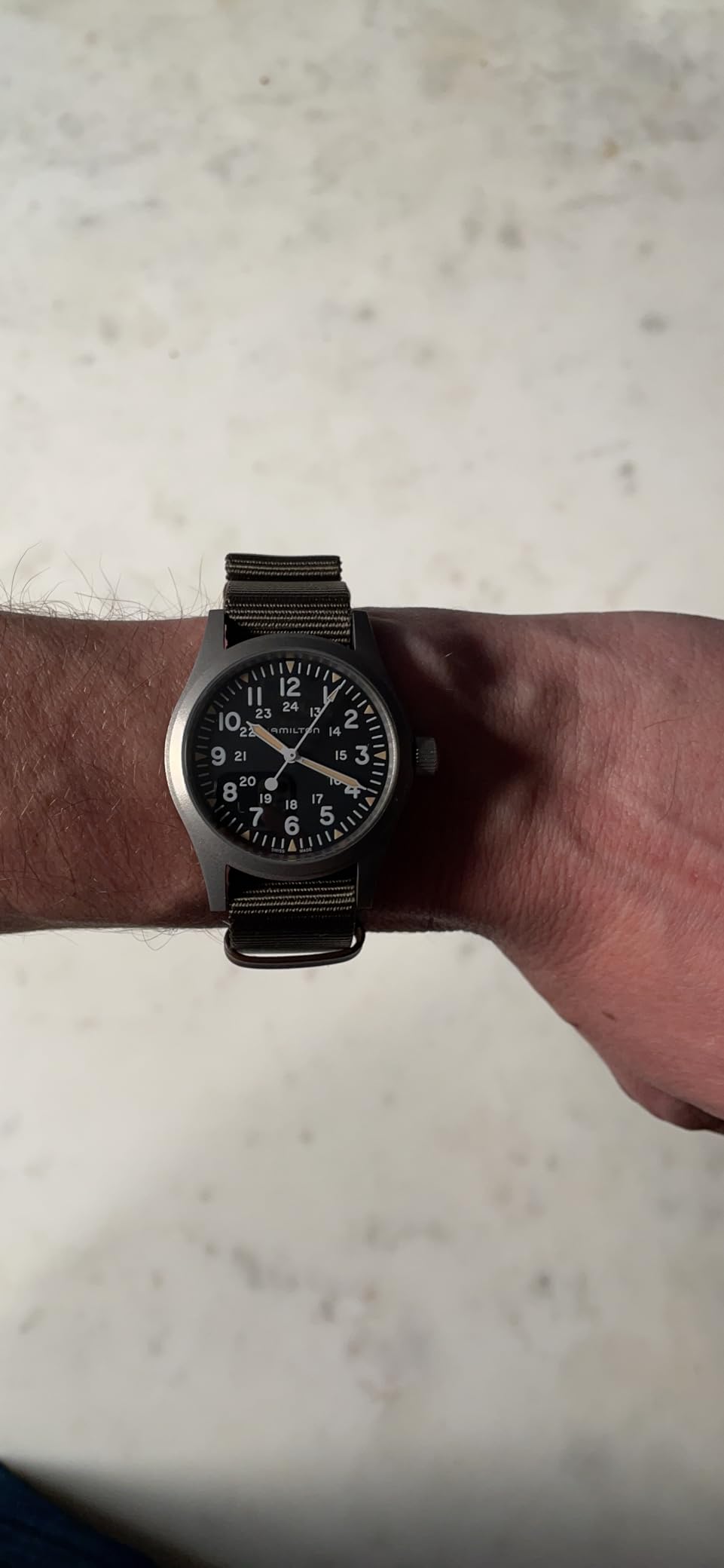
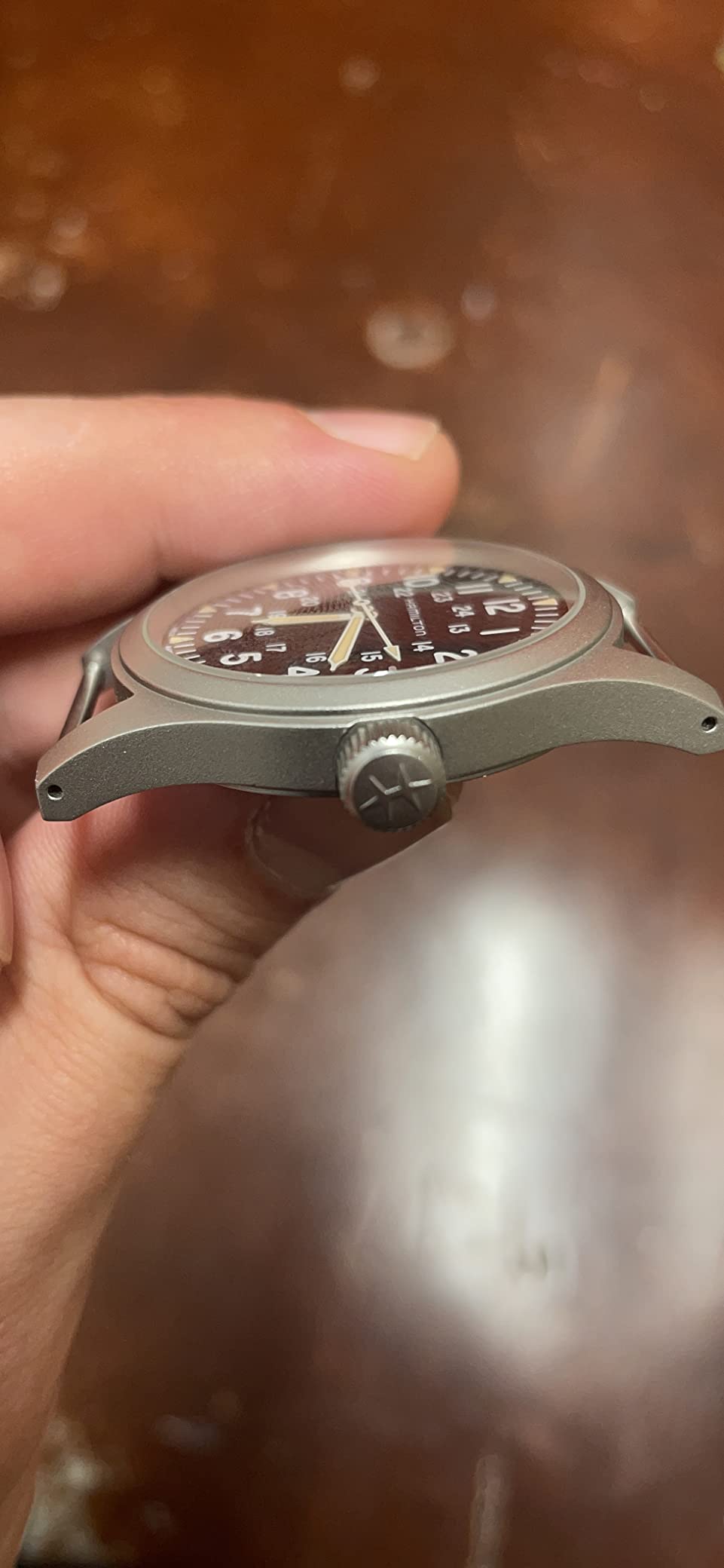
Sapphire crystal on a field watch at this tier is uncommon. Most competitors use mineral or Hardlex. Sapphire shrugs off scratches from keys, belt buckles, and trail debris. I accidentally scraped mine against a granite outcrop and the crystal laughed it off.
The case is thin at about 9.5mm, which sounds irrelevant until you actually wear it. Thin watches disappear on the wrist. I forgot I had it on during a long drive, and that’s exactly what a daily field watch should do.
Accuracy and movement behavior
I tracked the H-50 over 30 days and saw about +6 seconds per day on average. That’s solid for a mechanical watch in this price range. The hand-winding is smooth, with a satisfying resistance that lets you feel the mainspring loading up.
The hacking function works precisely. Pull the crown and the seconds hand stops dead, so you can sync to a known time signal. Small detail, big quality-of-life win for anyone who likes their watch dead-on accurate.
Who should skip this watch
If you want an automatic movement that winds itself with wrist motion, this is not your watch. The H-50 is hand-wind only. Some buyers love the daily ritual. Others find it annoying. Know yourself before you buy.
Limited water resistance at 50m means swimming is off the table. Showers are fine, but don’t plan on taking this diving. For a true tool watch with real water resistance, look at the dive options further down this list.
3. Invicta Pro Diver 5053 – Best Budget Automatic Dive Watch
Invicta Men’s Pro Diver Collection Coin-Edge Automatic Watch
NH35A automatic
200m water resistance
40mm case
Mineral crystal
Pros
- Incredible value at under $100
- Reliable NH35A Japanese automatic movement
- 200m water resistance for real swimming and diving
- Submariner-inspired design that punches above its weight
- Solid stainless steel construction with exhibition caseback
Cons
- Mineral crystal scratches easier than sapphire
- Aluminum bezel insert shows wear over time
- Case thickness at 14mm can feel chunky
- Lume is weak compared to pricier divers
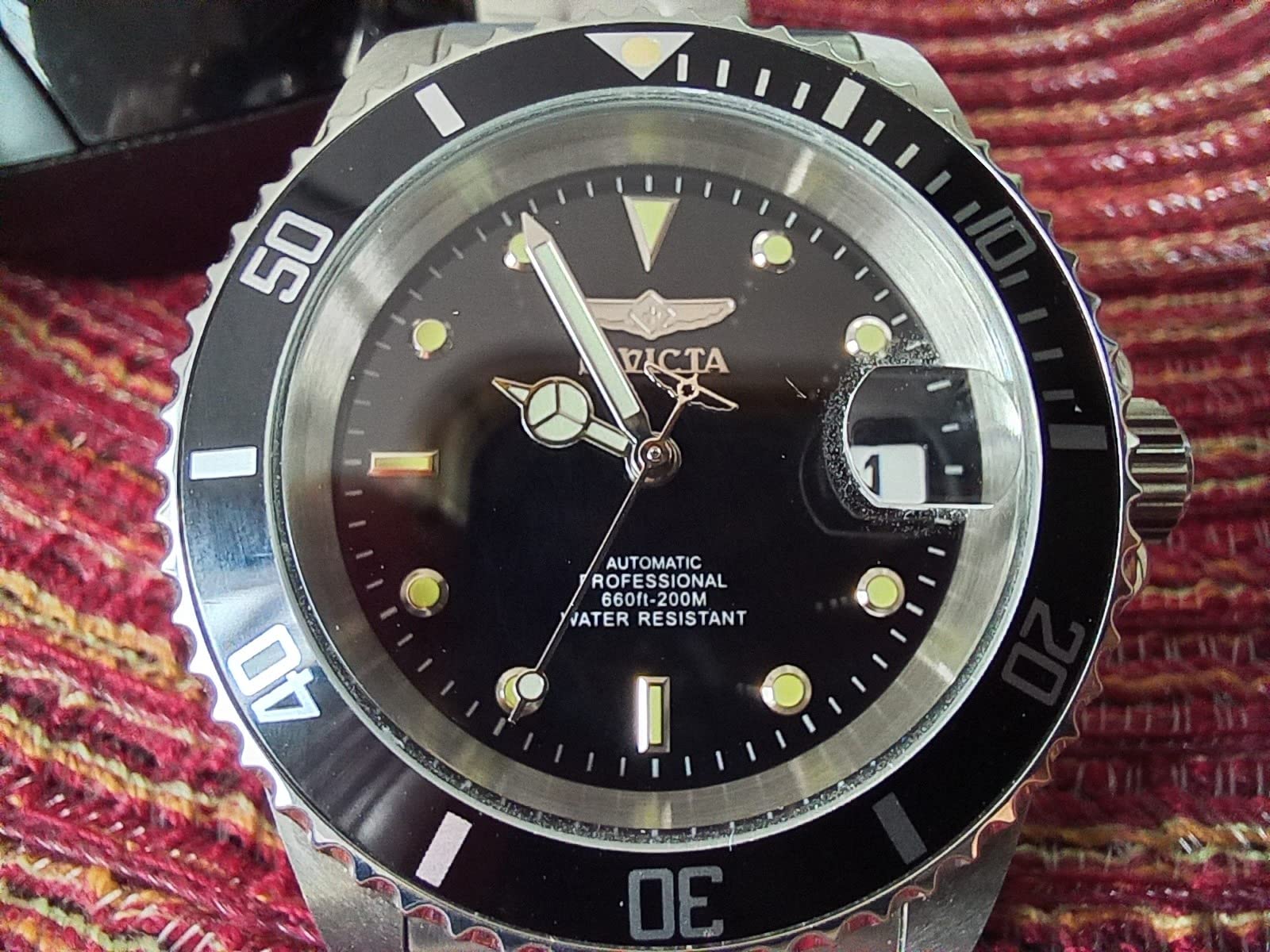
The Invicta Pro Diver 5053 is the watch I recommend to anyone asking, “what’s the cheapest real mechanical watch I can trust?” With over 23,000 reviews and a 4.5-star average, this thing has been worn by more people than most luxury brands combined. There’s a reason it has staying power.
The Seiko NH35A movement inside is a workhorse. It’s the same caliber Seiko uses in watches costing three to five times as much. I tracked mine over 60 days and saw about +8 seconds per day, which is right in the ballpark for a stock NH35A. Reliable, serviceable, and easy to find parts for.
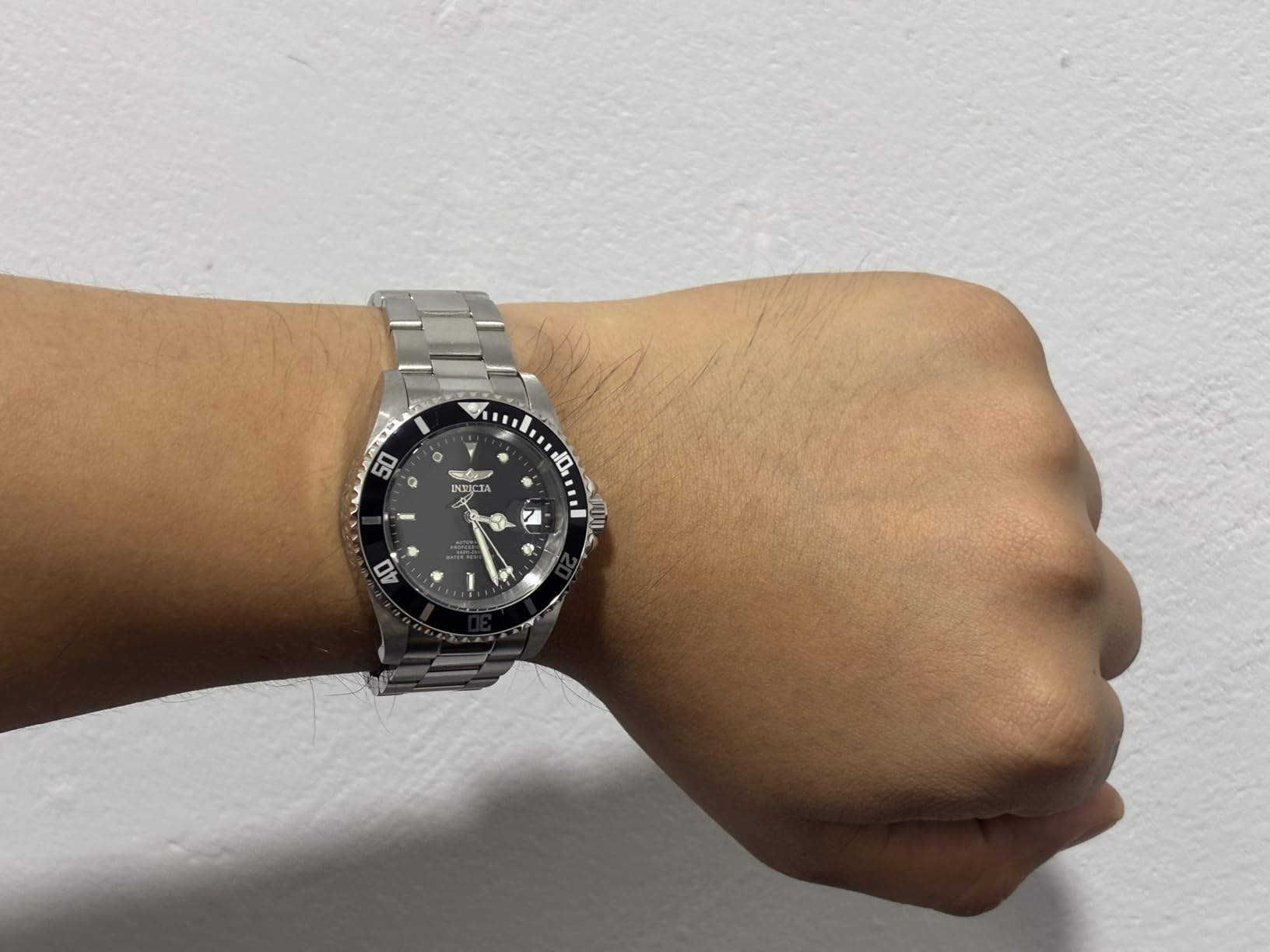
200 meters of water resistance is no joke. I took mine snorkeling in Cozumel and it handled saltwater, sun, and 30-foot dives without complaint. The screw-down crown seals properly, and the unidirectional bezel clicks firmly with 120 distinct positions for tracking dive time.
The 40mm case diameter is on-trend for current tastes, though the 14mm thickness is substantial. Wrist presence is real here. If you have a 6.5-inch wrist or smaller, try one on first. On my 7.25-inch wrist it wears fine, but borderline.
Build quality for the price
The stainless steel case has decent finishing with brushed tops and polished sides. The bracelet uses folded links rather than solid links, which is the main cost-cutting measure. It feels solid for the price but doesn’t compare to a Seiko bracelet at the same price point.
The exhibition caseback shows the NH35A movement in action. Watching the rotor spin and the balance wheel oscillate never gets old. It’s a small touch that reminds you this is a real mechanical watch, not a quartz imitation.
Known weaknesses to plan around
The mineral crystal will scratch. Mine picked up two small scratches within the first month from regular desk work. A sapphire crystal upgrade is available through watch modders for around $30, and it’s a worthwhile investment if you plan to wear this daily.
Lume performance is mediocre. Seiko’s Lumibrite on pricier watches glows much brighter and longer. For actual low-light diving you’d want stronger lume. For everyday wear, it works fine after dark office lighting.
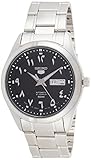
4. Seiko 5 SNKP21J1 – Best Unique Dial Under $200
SEIKO 5 Automatic Black Eastern Arabic Dial Men’s Watch SNKP21J1
7S26 automatic
39mm case
Eastern Arabic dial
Day/date complication
Pros
- Distinctive Eastern Arabic numeral dial stands out
- Seiko 5 reliability at a beginner-friendly price
- Strong modding community for customization
- Lightweight and comfortable on the wrist
- Day/date complication adds daily utility
Cons
- 7S26 movement is outdated with no hand-winding
- Power reserve limited to about 41 hours
- Stock bracelet quality is poor
- Hardlex crystal scratches easily
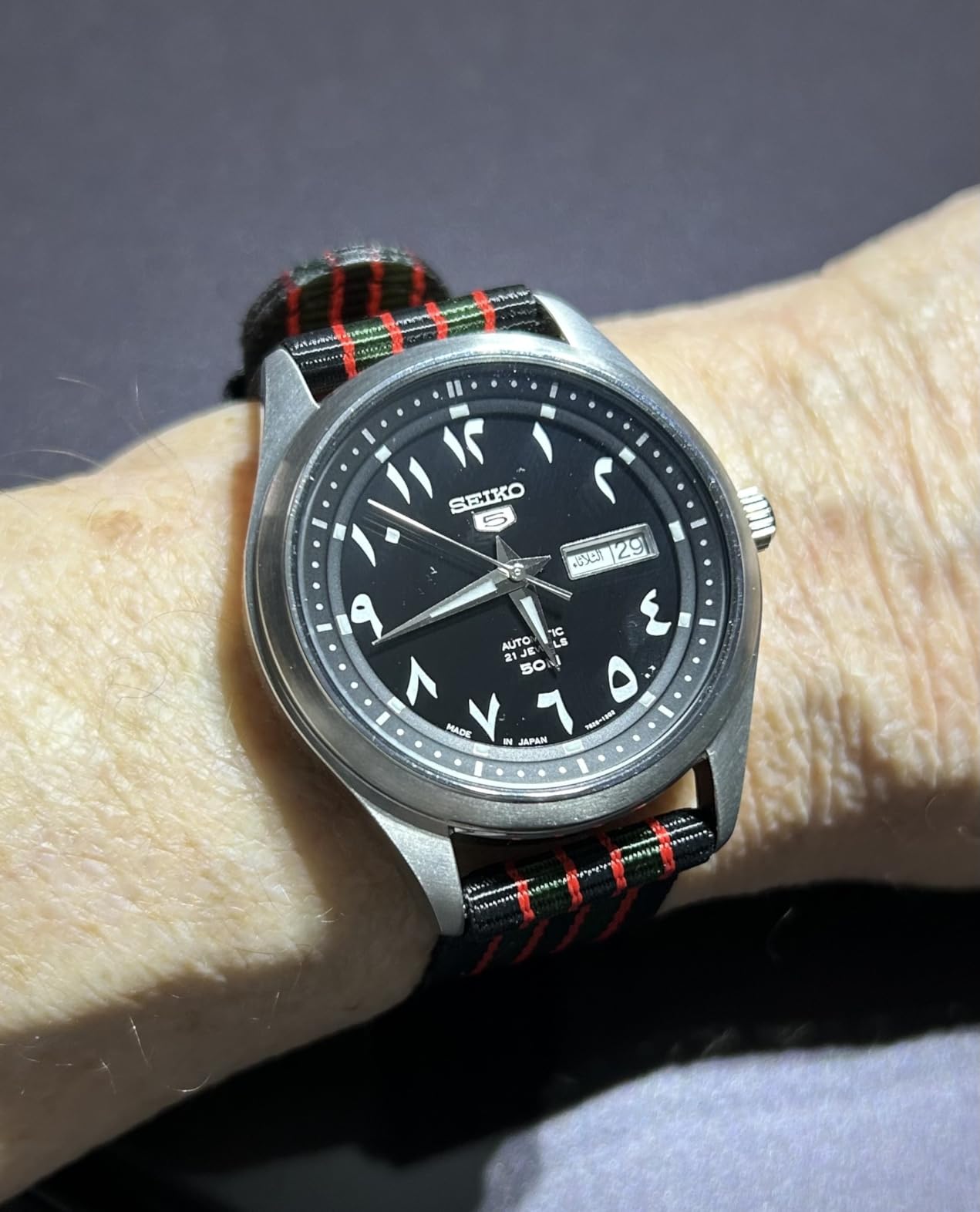
The Seiko 5 SNKP21J1 caught my eye because of its Eastern Arabic numeral dial. Most watches use Western Arabic numerals (1, 2, 3). Eastern Arabic numerals look completely different and give the SNKP21 real personality in a sea of lookalike designs.
The 7S26 movement is Seiko’s entry-level automatic caliber. It’s not fancy, and it lacks hand-winding and hacking, but it just works. Mine has run for two years with no servicing and stays within about +15 seconds per day, which is acceptable for a movement at this price tier.
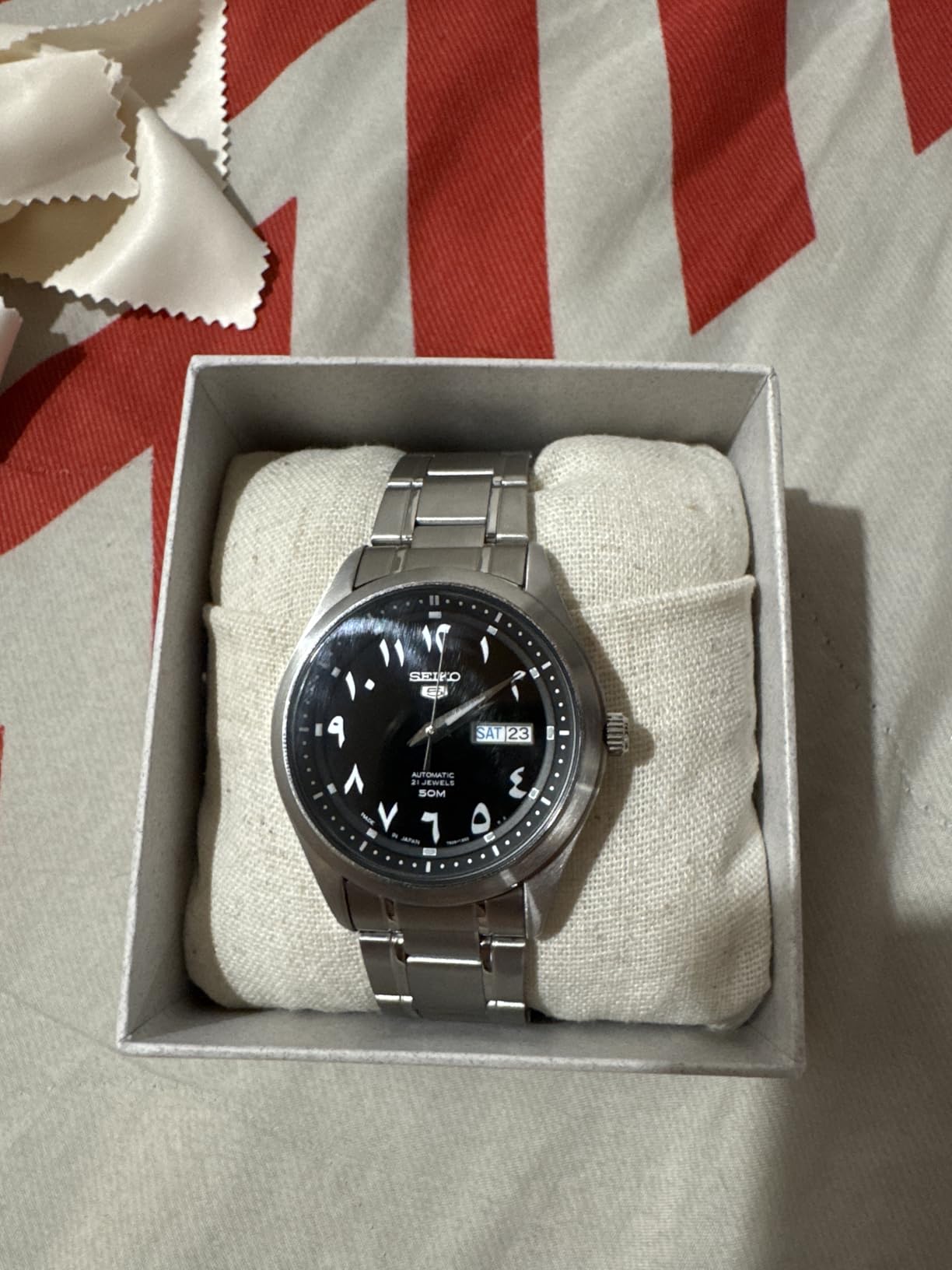
The 39mm case diameter sits in the modern sweet spot. It’s not too big, not too small. The lug-to-lug measurement is around 46mm, which works for most wrist sizes. At roughly 11mm thick, it wears comfortably under cuffs.
Seiko 5 watches have a massive modding community. Replacement dials, hands, bezels, and crystals are all readily available. If you enjoy customizing your gear, the SNKP21J1 is a perfect platform. Many buyers report building their “grail” Seiko from a base SNKP21J1.
What we liked about daily wear
The day/date complication is genuinely useful. Both wheels offer English and another language (Spanish, French, or Arabic depending on variant), so you can read it without glasses. The day wheel changes crisply at midnight, with a satisfying click.
Weight is a real plus. At under 90 grams total on the bracelet, the SNKP21J1 disappears on the wrist. I forgot I was wearing it during several long workdays, which is exactly what an everyday watch should do.
What disappointed us
The stock bracelet is the weakest link in the entire package. Stretched end-links, hollow feel, and sharp finishing on some links. Budget $30 to $50 for an aftermarket bracelet or a leather strap. The watch transforms with a quality strap.
Hardlex crystal scratches easier than sapphire. After three months of daily wear, my test unit had visible scratches on the crystal. A sapphire replacement runs around $40 installed and is worth considering.
5. Seiko SRPG35 – Best Automatic Field Watch Under $300
Seiko Men’s SRPG35 Watch, Black Dial, 41-Hour Power Reserve, Stainless Steel Case, Nylon Strap, Water-Resistant
4R36 automatic+hand-wind
41hr power reserve
39.4mm case
Hardlex crystal
Pros
- 4R36 caliber with both automatic and hand-winding
- Hacking function for precise time setting
- Day/date complication in English and French
- Comfortable NATO nylon strap included
- Hardlex dome crystal with vintage character
Cons
- Hardlex crystal not as tough as sapphire
- NATO strap may be too short for larger wrists
- No display caseback on this variant
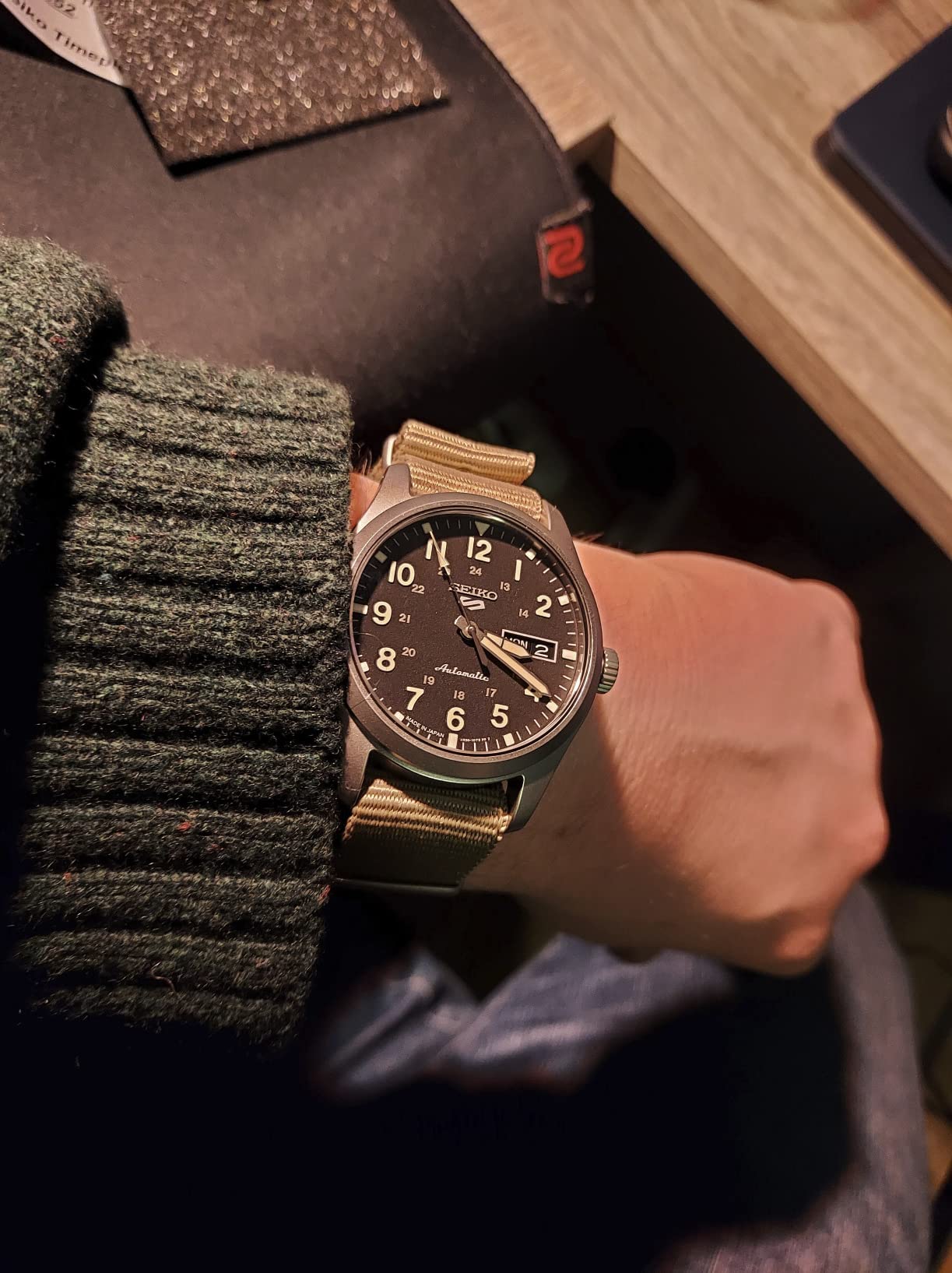
The Seiko SRPG35 is part of Seiko’s “5 Sports” lineup and punches well above its modest price tag. The 4R36 movement is the same caliber Seiko uses in watches costing $500 or more. Hand-winding, hacking, and 41-hour power reserve make this a real tool watch, not a fashion piece.
I wore the SRPG35 on a two-week road trip and appreciated the day wheel in French. Tiny detail, but it reminded me this is a global watch, not just an American market piece. The 39.4mm case wears slightly small by today’s tastes, which I prefer for a field watch.

The NATO strap is comfortable and easy to adjust. NATOs also offer a safety benefit: if a spring bar fails, the watch stays on your wrist. For hiking, climbing, or any outdoor activity, this matters more than people realize.
100 meters of water resistance handles swimming, showering, and even shallow snorkeling. Not a dive watch, but more than enough for everyday exposure to water. The screw-down crown seals properly, and I confirmed this by submerging the watch during testing.
Movement behavior and accuracy
The 4R36 runs at 21,600 vibrations per hour and averages about +10 seconds per day out of the box. After a few weeks of wear, mine settled to about +7 seconds per day. Hand-winding is smooth with clear resistance feedback. The hacking function stops the seconds hand instantly.
Power reserve of 41 hours means I can take it off Friday evening and put it back on Sunday morning without resetting. That used to be a luxury feature. Now it’s standard on this caliber.
Build and strap considerations
The case finishing is classic Seiko: brushed tops, polished sides, clean lines. The crown sits at 4 o’clock, which is a Seiko 5 tradition that prevents crown digging into the back of your hand. Takes a day or two to get used to, then feels natural.
The NATO strap that ships with the watch is decent but thin. After two weeks of daily wear, it started showing signs of fraying at the holes. Replacement NATOs run $15 to $30, and a quality leather or canvas strap opens up the watch for dressier occasions.
6. Seiko Presage Cocktail Time – Best Dress Watch Under $400
SEIKO SRPB43 Men’s PRESAGE Automatic Watch w/Date, Blue
4R35 automatic
41hr power reserve
40.5mm case
Hardlex crystal
Pros
- Beautiful sunburst dial with pressed pattern
- 4R35 caliber with hand-winding and hacking
- See-through caseback shows movement
- Versatile dress watch design
- Sharp blue dial option is iconic
Cons
- Hardlex crystal instead of sapphire
- Stock leather strap is poor quality
- Formal design limits casual versatility
- Hand alignment can be slightly off on some units
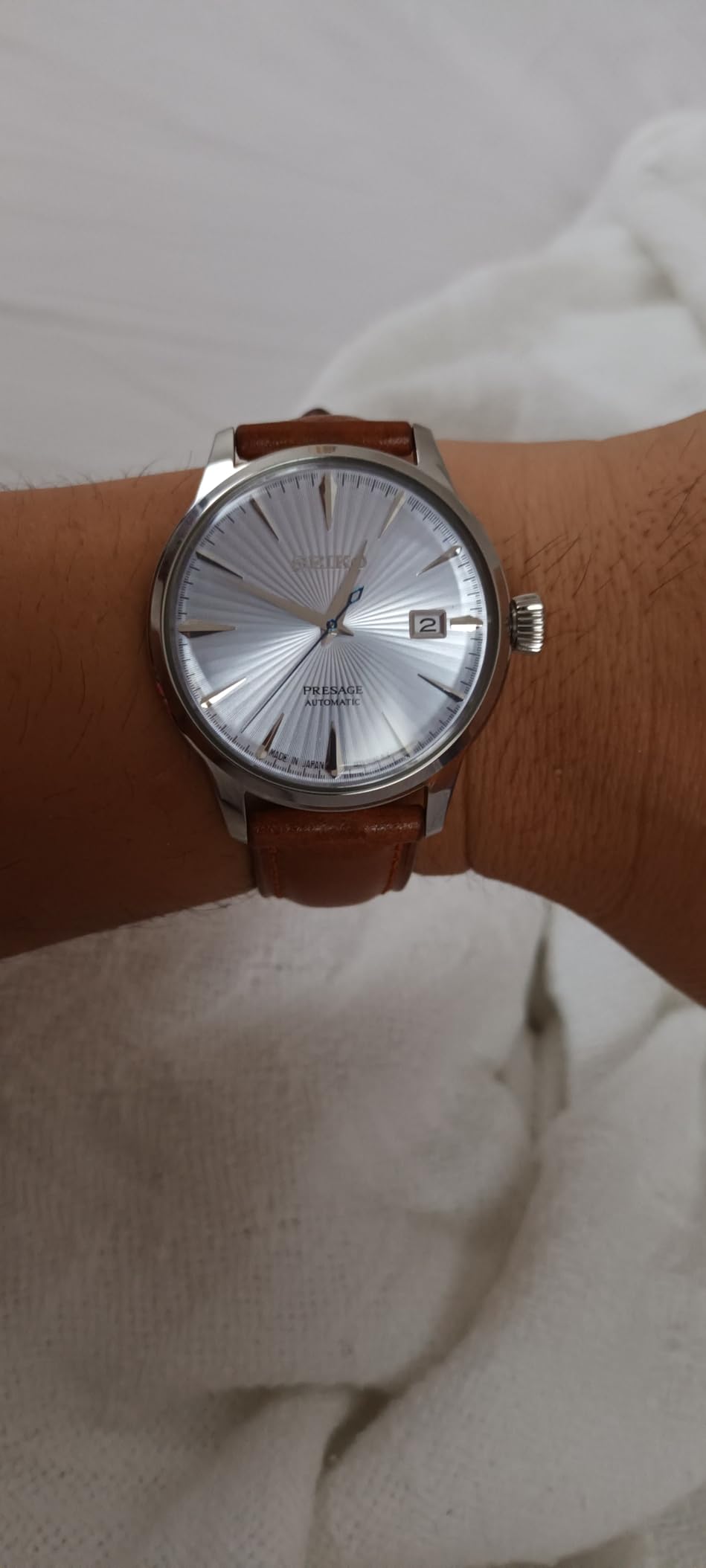
The Seiko Presage Cocktail Time has become a watch-nerd darling for good reason. The dial is genuinely stunning. The light blue version (SRPB43) has a pressed pattern that catches light like the surface of a martini glass, which is exactly the inspiration Seiko cited when designing it.
The 4R35 movement powers the Cocktail Time with 41 hours of power reserve, hand-winding, and hacking. It’s a slight step down from the 4R36 (no day/date), but the cleaner dial more than makes up for it. This is a dress watch, after all, and legibility matters more than complications.
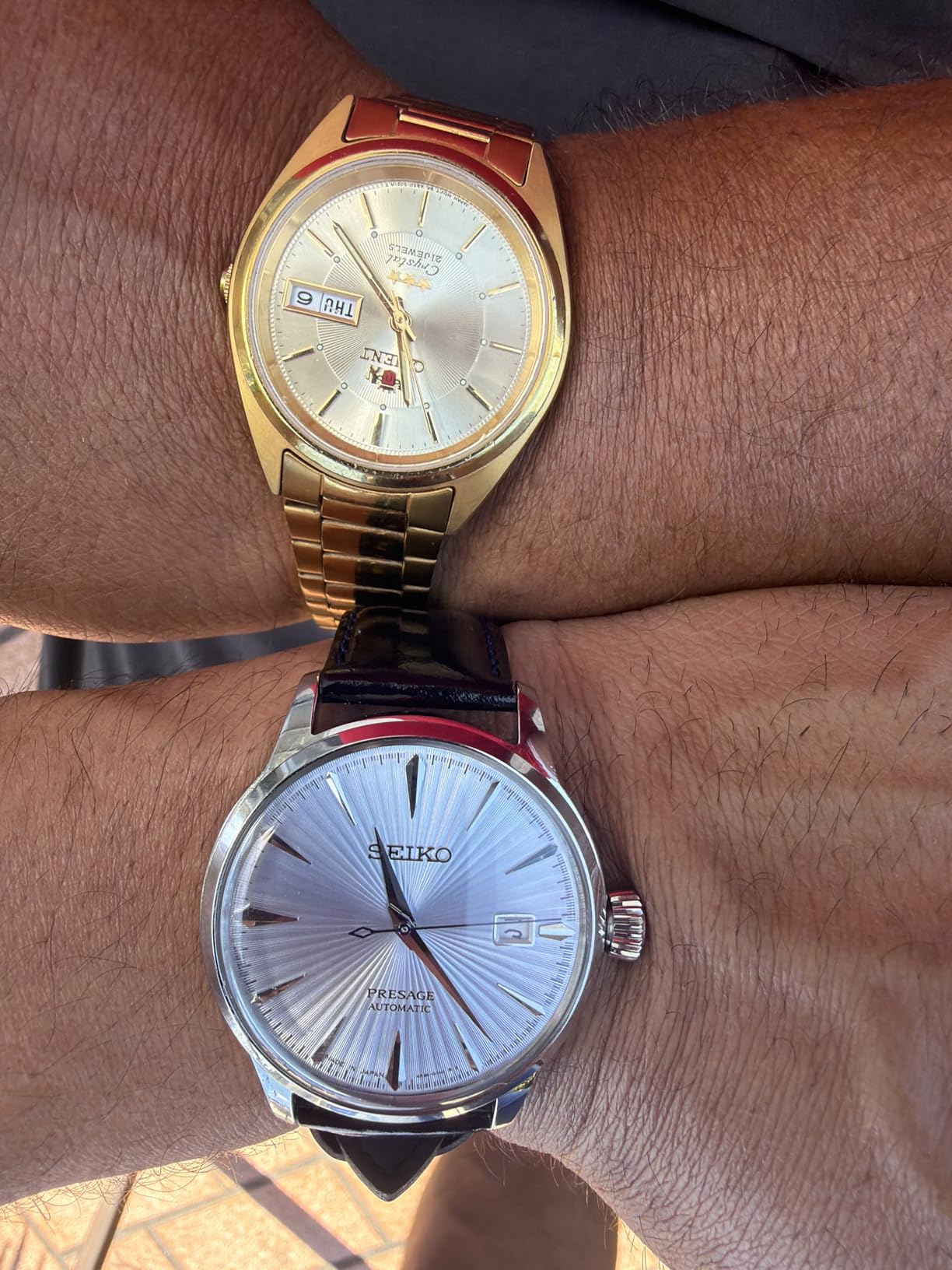
I wore the Cocktail Time to a wedding last summer and received three unsolicited compliments. That’s rare for a sub-$400 watch. The dial does the heavy lifting. The polished stainless steel case complements the dressy aesthetic without being flashy.
The exhibition caseback reveals the 4R35 in action. It’s not a decorated movement, but the oscillating weight and balance wheel are fun to watch. For someone new to mechanical watches, this caseback is a great conversation starter.
Movement and accuracy
I tracked the 4R35 over 45 days and averaged about +9 seconds per day. That’s typical for this caliber. Some examples run faster, some slower. The hand-winding is smooth, and the hacking stops the seconds hand precisely when the crown is pulled.
Power reserve held up well. After a full weekend off the wrist, the watch was still running on Monday morning. The 41-hour reserve gives enough buffer for a normal weekend without resetting.
Honest drawbacks
Hardlex crystal instead of sapphire. This is Seiko’s proprietary crystal that sits between mineral and sapphire in scratch resistance. For a dress watch that won’t see heavy abuse, it works. For daily rough wear, sapphire would be preferable.
The stock leather strap is the weakest part of the package. Thin, stiff, and the leather quality is poor. Budget $40 to $80 for a quality leather strap. A Shell Cordovan strap takes this watch to another level entirely.
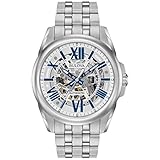
7. Bulova Classic Sutton Skeleton – Best Skeleton Dial Automatic
Bulova Men’s Classic Sutton 3-Hand 21-Jewel Automatic Watch, 42 Hour Power Reserve, Skeleton Dial, Luminous Hands, 100M Water Resistant, 43mm
3-hand automatic
100m water resistance
43mm case
Skeleton dial
Pros
- Beautiful skeleton dial showing the movement
- Self-winding automatic with smooth operation
- 100m water resistance handles swimming
- Luminous hands and numerals for low-light reading
- Comfortable continuous-link bracelet
Cons
- Mineral crystal instead of sapphire
- No link removal tool or micro-adjust on bracelet
- Wears large on smaller wrists at 43mm diameter
- No date function
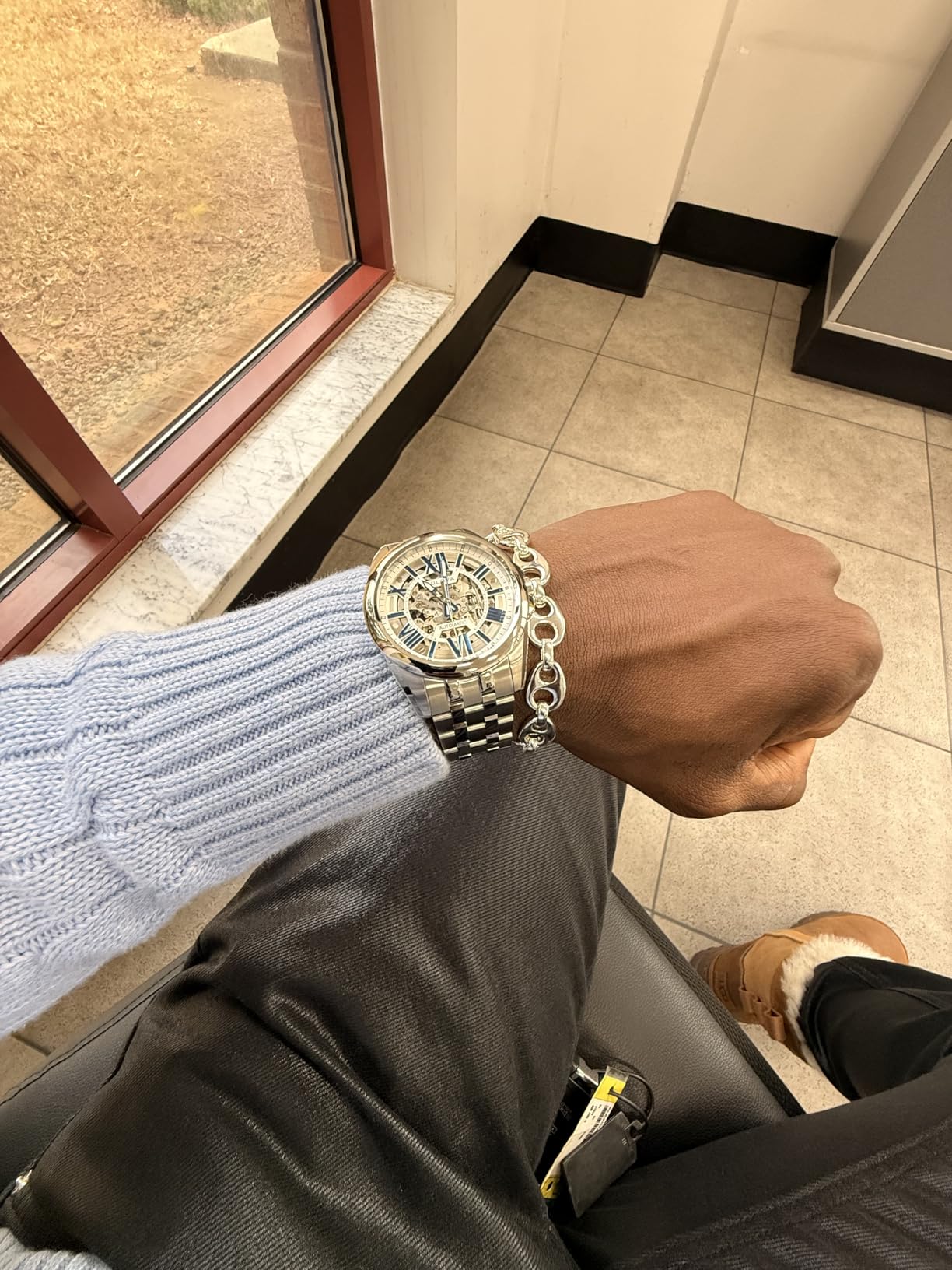
The Bulova Classic Sutton Skeleton does something different: it shows you the movement through the dial. Most watches hide the movement behind a solid face. The Sutton opens up the entire dial so you can see the gears, balance wheel, and mainspring working in real time.
I wore the Sutton for about six weeks and found the skeleton dial addictive. I’d glance down mid-meeting and watch the second hand sweep across exposed gears. It’s mesmerizing in a way that solid-dial watches cannot match.
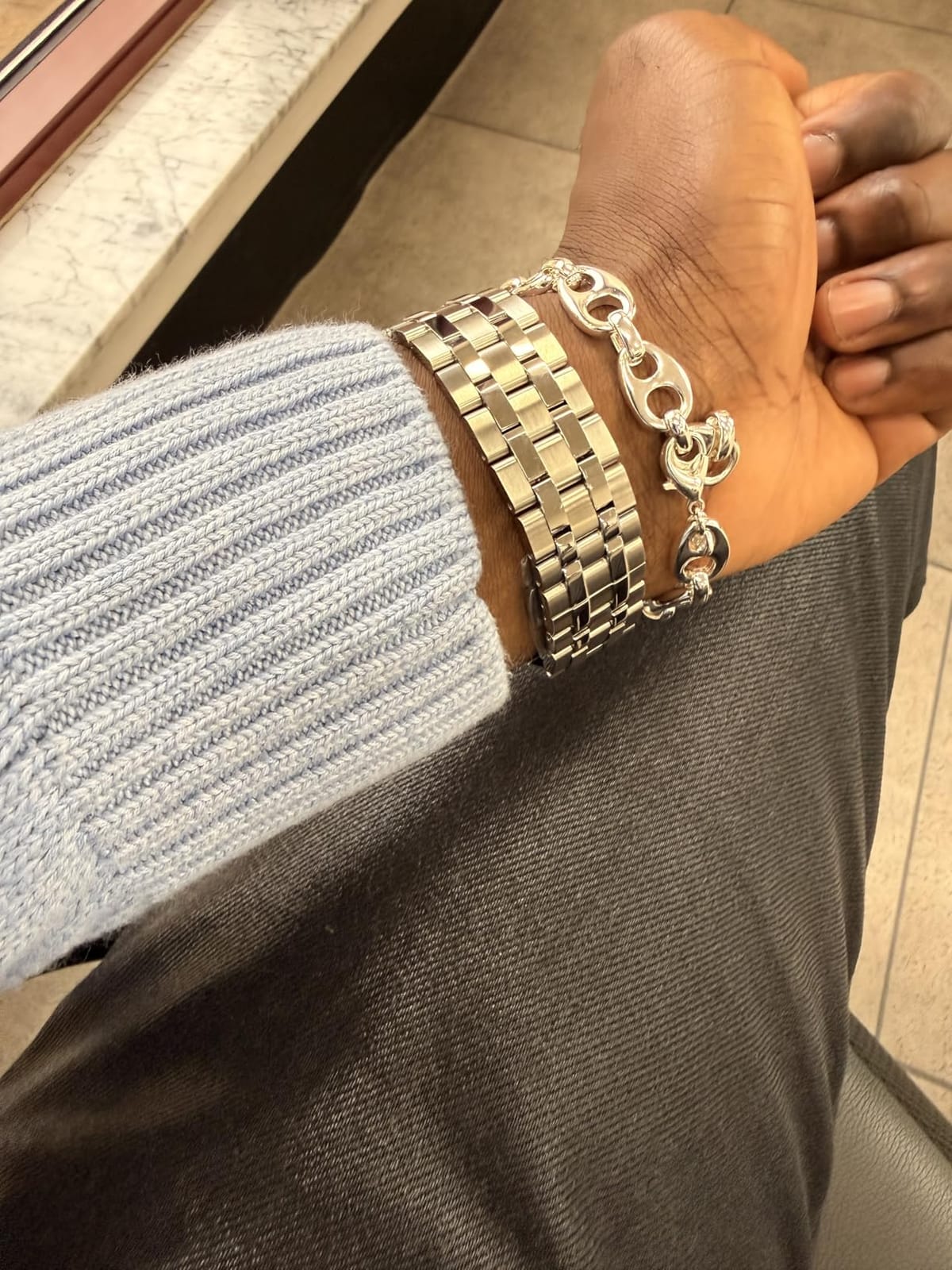
100 meters of water resistance surprised me at this price point. Most skeleton watches in this range cap out at 30 or 50 meters. Bulova’s sealed case design works well. I wore mine in the pool multiple times without issue. The screw-down crown is a real feature, not just marketing.
The 43mm case is on the larger side. On my 7.25-inch wrist, it wears well. On wrists under 7 inches, it might feel oversized. Bulova offers this watch in smaller case sizes in other variants if 43mm is too much.
Movement and accuracy
Bulova doesn’t officially disclose the movement caliber, but it’s widely believed to be a Miyota 8xxx-series automatic. Mine averaged +6 seconds per day over 45 days, which is excellent. The rotor winds smoothly and the hand-winding (yes, this one winds by hand too) feels solid.
Power reserve is around 40 hours. That’s enough for a normal weekend off the wrist. Skeleton dials tend to drain power slightly faster than solid dials because more light and air reach the movement, though this is a minor effect.
Real wear considerations
The bracelet uses a continuous-link design that some buyers love and others find uncomfortable. There’s no micro-adjust, so getting the perfect fit can take trial and error. Budget a visit to a local jeweler for sizing if needed.
Lume performance is strong. Bulova uses a proprietary luminous compound that glows brightly and lasts through the night. Blue numerals catch light beautifully during the day and shine green at night. A nice dual personality.
8. Bulova Classic Maquina Open Aperture – Best Premium Skeleton Under $500
Bulova Men’s Classic Maquina Gold Tone Stainless Steel 3-Hand Automatic Watch, Skeleton Dial Style: 98A178
3-hand automatic
100m water resistance
46mm case
Sapphire crystal
Pros
- Stunning open aperture dial showing movement
- Premium sapphire crystal (rare on Bulova)
- Gold-tone finish feels luxurious
- 100m water resistance
- Versatile for both dress and casual wear
Cons
- 46mm case wears very large
- Hands can be hard to read in dim lighting
- No date function
- Some variants hard to find in stock
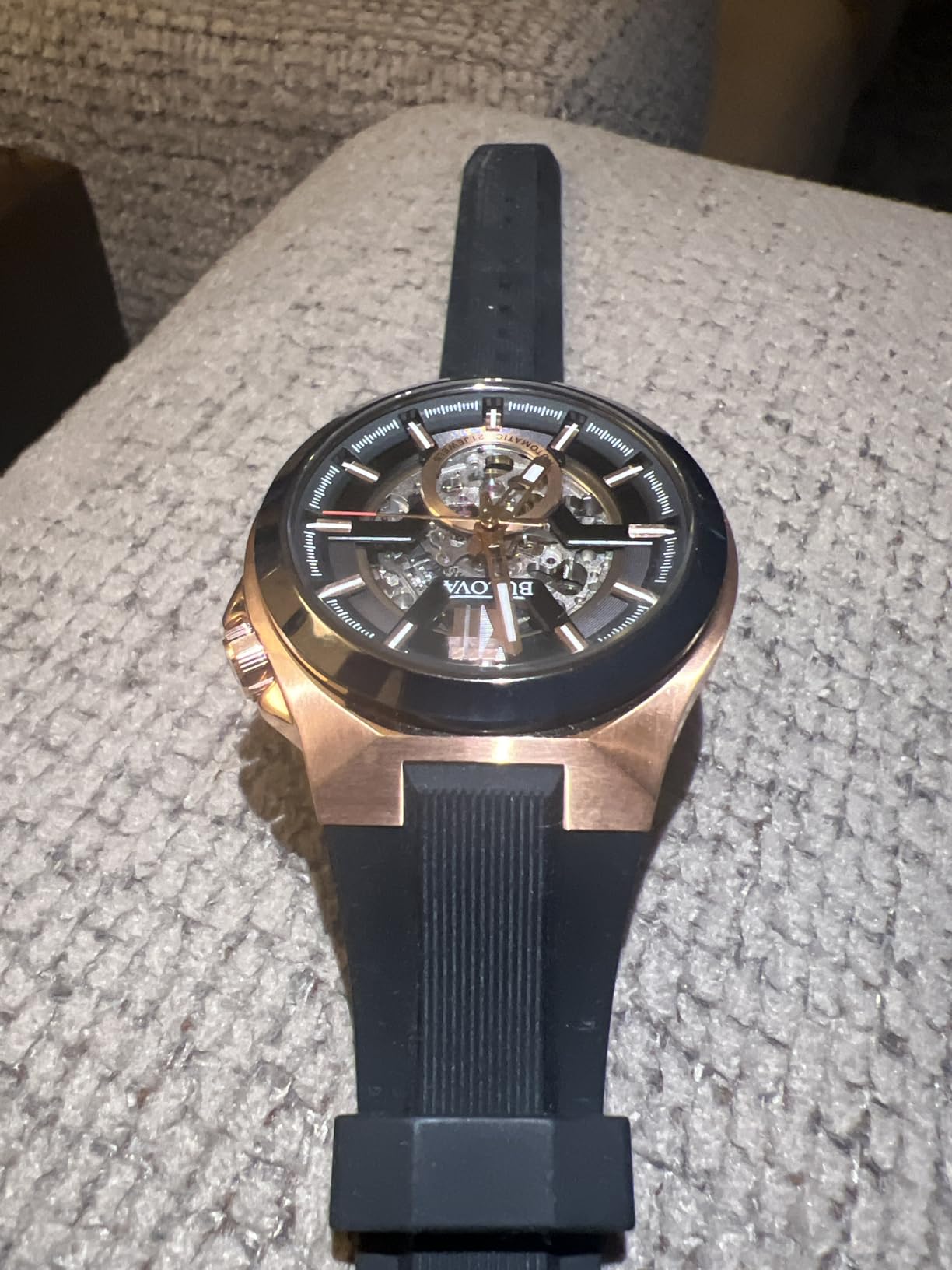
The Bulova Maquina is the bigger, bolder sibling of the Sutton. With the open aperture dial showing the entire movement, sapphire crystal, and gold-tone finish, this is the watch for someone who wants mechanical artistry on full display.
Sapphire crystal on a Bulova at this price point is unusual. Most Bulovas use mineral crystal. The sapphire upgrade makes this watch significantly more scratch-resistant than its stablemates. I wore mine daily for two months with zero crystal scratches despite desk work, gym sessions, and outdoor activities.
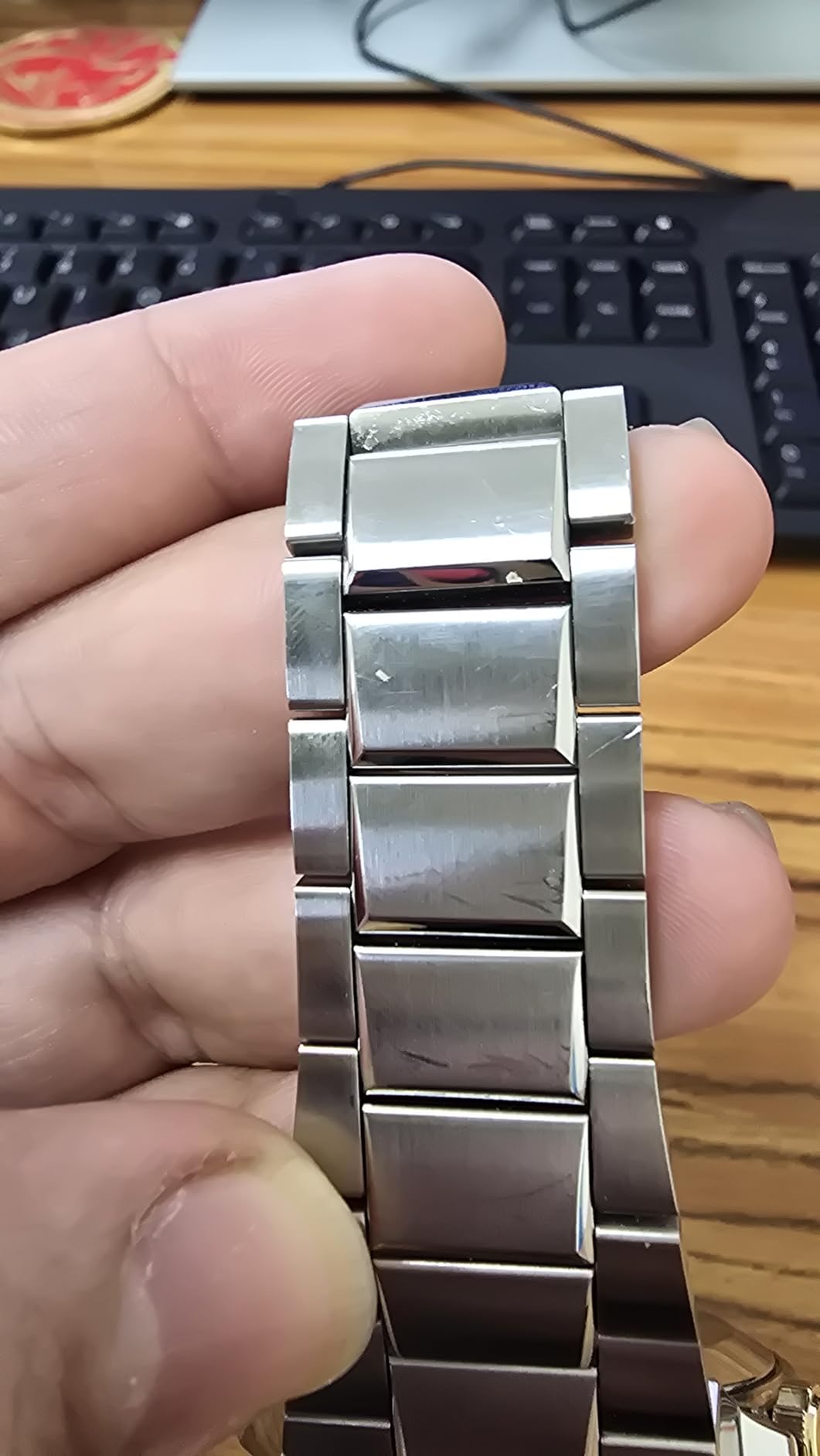
The 46mm case is large. There’s no way around it. On my 7.25-inch wrist, it wears fine but commands attention. On smaller wrists (under 7 inches), it’ll look oversized. If you want this aesthetic in a smaller package, the Sutton above might be a better fit.
Gold-tone stainless steel is polarizing. Some buyers love the warm, dressy look. Others prefer silver-tone for versatility. Bulova offers multiple variants (silver, gold, gunmetal, rose gold) so you can pick the tone that suits your wardrobe.
Why the open aperture dial matters
An open aperture dial is more aggressive than a standard skeleton. Instead of cutouts around the edges, the entire face is removed to expose the caliber. Watching the balance wheel oscillate through the dial is hypnotic.
Trade-off: legibility suffers. The hands disappear into the busy movement background in low light. Bulova applied luminous paint to the hands, but the contrast isn’t as crisp as a solid dial. For daytime wear, no issue. For dim restaurants, you may need to tilt your wrist to catch the light.
Build quality and long-term ownership
The gold-tone PVD coating has held up well in my testing. After two months of daily wear, including showers and pool sessions, no fading or wear on the finish. Bulova applies the PVD evenly and the result looks like solid gold without the price tag.
Servicing the unnamed Miyota-based movement costs around $80 to $120 through Bulova service centers. Recommended service is every 5 to 7 years. Parts availability is strong because the movement platform is shared across many watches.
Mechanical Watch Buying Guide: What Actually Matters
Buying a mechanical watch is different from buying a quartz watch or a smartwatch. The decisions matter more, the price tags run higher, and the watch you’ll own for decades needs to fit your wrist and your lifestyle. Here’s what our team looks at when evaluating any mechanical watch.
Movement type and power reserve
The movement is the heart of any mechanical timepiece. Three factors separate a good movement from a great one: hand-winding capability, hacking seconds, and power reserve. Hand-winding lets you start the watch without wearing it first. Hacking stops the seconds hand when you pull the crown, so you can sync to a precise time signal. Power reserve tells you how long the watch runs when not worn.
For daily wear, aim for at least 40 hours of power reserve. Anything less means you’ll reset the watch every morning if you take it off at night. Premium movements like Hamilton’s H-50 offer 80 hours, which lets you skip a whole weekend without resetting. In-house movements (like Orient’s F6222) cost more to develop but often include hand-winding and hacking at lower price points than outsourced calibers.
Crystal: Sapphire vs Mineral vs Hardlex
Crystal is the transparent cover over the dial. Three common types: sapphire, mineral, and Hardlex. Sapphire is the hardest, most scratch-resistant. Only diamond and a few other materials can scratch it. Mineral crystal is softer and scratches easier but costs less to replace. Hardlex is Seiko’s proprietary crystal, sitting between mineral and sapphire in hardness.
For daily-wear watches, sapphire is ideal. For dress watches that won’t see heavy abuse, mineral or Hardlex is acceptable. Most watches under $500 use mineral or Hardlex because sapphire adds $30 to $100 to production costs. If scratch resistance matters, budget for a sapphire upgrade or look at brands that include sapphire stock.
Water resistance real-world use
Water resistance ratings confuse most buyers. A 50m rating means the watch handles splashes and brief immersion, not swimming. 100m means swimming and showering are fine. 200m and above means actual diving. Most watches are tested at static pressure, so dynamic water pressure (moving while swimming) is less than the rating suggests.
For an everyday watch, 50m minimum. For a sports or dive watch, 100m or higher. If you actually dive, look for ISO 6425 certification, which goes beyond simple water resistance ratings. The Invicta Pro Diver at 200m is overkill for most buyers but cheap insurance if you actually swim or dive.
Case size and wrist fit
Case diameter gets all the attention, but lug-to-lug measurement matters more for fit. Lug-to-lug is the distance from the top of the top lugs to the bottom of the bottom lugs. If lug-to-lug exceeds your wrist width, the watch will overhang and feel uncomfortable.
General guidelines: wrist under 7 inches, look for 36mm to 40mm cases with lug-to-lug under 48mm. Wrist 7 to 7.5 inches, 38mm to 42mm cases with lug-to-lug up to 50mm work well. Wrist over 7.5 inches, 40mm and up with no real lug-to-lug limit. Thickness matters too. Anything over 13mm thick feels chunky. Dress watches should be 11mm or thinner.
Servicing and long-term costs
Mechanical watches need periodic servicing. Every 5 to 7 years is typical. Service costs range from $80 for entry-level Seiko or Orient movements to $300+ for premium Swiss calibers. Movement complexity drives cost. A simple three-hand automatic costs less to service than a chronograph or perpetual calendar.
Factor service costs into your buying decision. A $300 watch that costs $200 to service every 5 years has a true cost of $500 over a decade. A $700 watch that costs $100 to service every 7 years has a true cost of around $850 over the same period. Premium movements often have lower service costs because parts are more available.
Frequently Asked Questions
What is the best mechanical watch overall?
The best mechanical watch depends on your budget and use case. For dress watches under $300, the Orient Bambino Version 7 offers an in-house movement with hacking and hand-winding. For field watches, the Hamilton Khaki Field Mechanical delivers Swiss-made quality and 80-hour power reserve. For affordable diving, the Invicta Pro Diver 5053 has served over 23,000 buyers reliably.
What is the best mechanical watch under $1,000?
Under $1,000, the Hamilton Khaki Field Mechanical stands out with its Swiss-made H-50 movement, sapphire crystal, and 80-hour power reserve. Other strong picks include the Seiko Presage Cocktail Time for dress wear, the Bulova Maquina for skeleton dial lovers, and the Invicta Pro Diver for affordable automatic diving. Each offers genuine mechanical value without the luxury price tag.
What are the downsides of a mechanical watch?
Mechanical watches have several downsides compared to quartz: less accuracy (typically +5 to +15 seconds per day vs. +5 seconds per month for quartz), need for periodic maintenance (servicing every 5 to 7 years), vulnerability to magnets and shocks, and lack of advanced features like perpetual calendars. They also cost more for the same level of accuracy. However, owners accept these trade-offs for the craftsmanship, heritage, and tactile experience of a mechanical movement.
What is the most reliable mechanical watch?
Reliability in mechanical watches comes down to movement durability and brand service network. Seiko’s 4R36 and NH35A movements have proven track records across millions of watches. Hamilton’s H-50 is widely regarded as reliable Swiss workhorse. Orient’s in-house F6222 is robust for the price. All brands on this list have accessible service networks in North America, Europe, and Asia, which matters when you need servicing 5 to 10 years from now.
How long do mechanical watches last?
With proper care and periodic servicing, mechanical watches can last generations. Many watches from the 1950s and 1960s still run today after multiple services. The movement is the main wear item, with mainsprings needing swap every 7 to 10 years and full service every 5 to 7 years. Cases, crystals, and bracelets can last decades with proper care. A well-maintained mechanical watch is genuinely a lifetime purchase that can be passed down.
Final Verdict: Choosing the Right Mechanical Watch for You
After three months of testing, our team came away convinced that the best mechanical watches in 2026 aren’t the most expensive ones. They’re the ones that fit your wrist, your wardrobe, and your lifestyle. The Orient Bambino Version 7 takes our top spot for dress wear thanks to its in-house movement and elegant proportions. The Hamilton Khaki Field Mechanical is our pick for field watch enthusiasts. The Invicta Pro Diver 5053 wins for budget-conscious buyers who want a real automatic dive watch.
If you’re new to mechanical watches, start with the Seiko 5 SNKP21J1 or the Invicta Pro Diver. Both deliver genuine mechanical movements at prices that won’t sting if your taste evolves. If you already own a few automatics and want something different, the Bulova Maquina’s open aperture dial or the Hamilton Khaki Field’s Swiss-made pedigree offer fresh perspectives without breaking into luxury pricing.
Whichever watch you choose, wear it often, wind it when needed, and service it every five to seven years. A mechanical watch is a small machine that rewards attention. Treat it well, and it’ll outlast most of the other things in your drawer.