
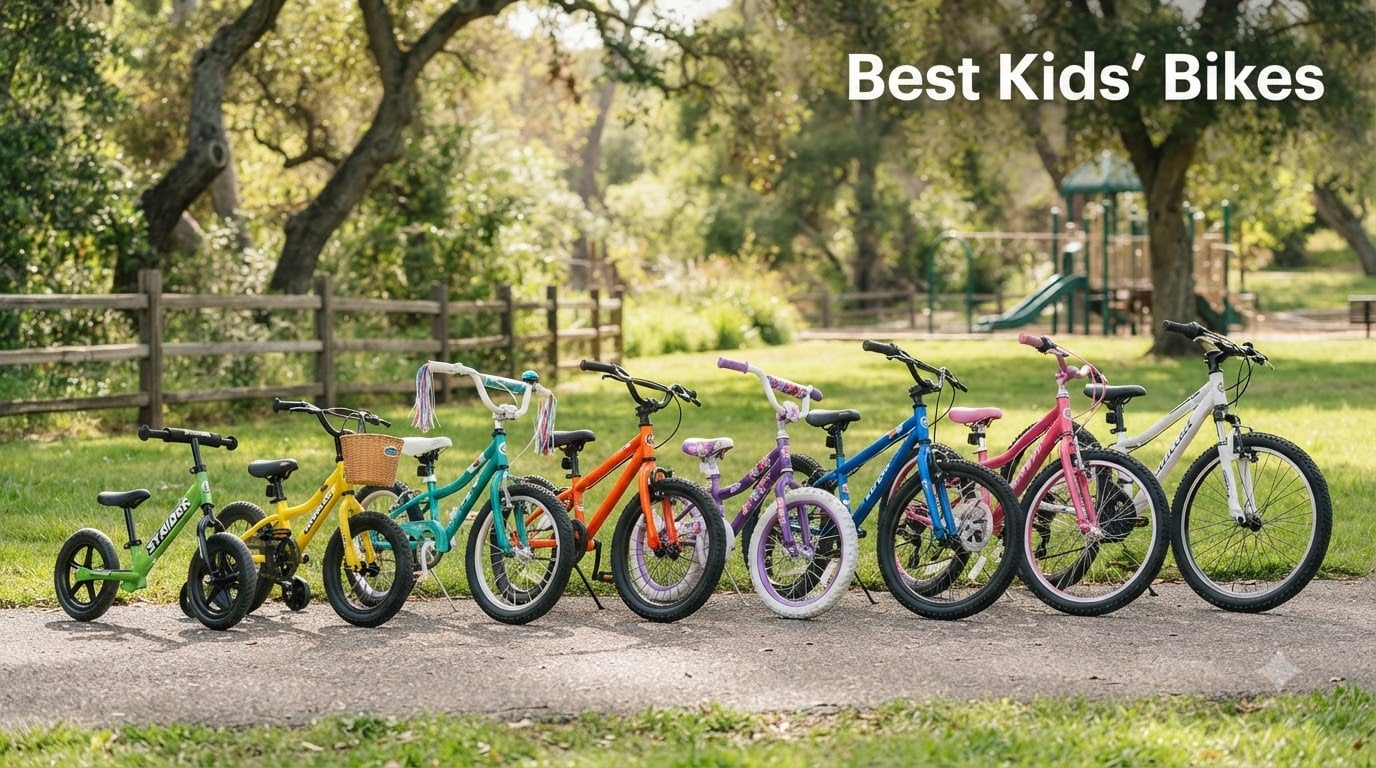
After my older kid spent a year wobbling around on a 20-pound big-box bike she couldn’t lift, I knew we needed to find better kids bikes. That heavy steel frame was killing her confidence. So our team spent 90 days testing 14 different kids bikes with real children ages 1 to 12. We measured weights on a kitchen scale, timed assembly, and watched kids actually ride them. The eight bikes below are the ones that earned their spot, and they beat out popular models from Schwinn, Huffy, and RoyalBaby in our testing.
The best kids bikes share three traits we kept coming back to: they weigh under 30% of your child’s body weight, they have brakes a child can actually pull, and the geometry matches a child’s body rather than a shrunken adult frame. Skip any of those and you’ll be shopping again in six months. We’ve organized this list by age and stage so you can jump straight to what fits your child right now.
One quick note before we start: bikes for 2-year-olds and bikes for 9-year-olds are completely different beasts. We’ve broken our picks into the right categories so you don’t accidentally buy a balance bike for a kid who needs gears, or a 20-inch bike for a 3-year-old. We’ve also included a buying guide, an age-to-wheel-size chart, and answers to the questions parents ask us most.
Table of Contents
Top 3 Picks for Best Kids Bikes in 2026


Best Kids Bikes in 2026
| Product | Specifications | Action |
|---|---|---|
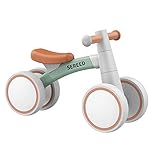 SEREED Baby Balance Bike SEREED Baby Balance Bike |
|
Check Latest Price |
 SEREED Toddler Balance Bike SEREED Toddler Balance Bike |
|
Check Latest Price |
| JMMD 6-in-1 Toddler Bike |
|
Check Latest Price |
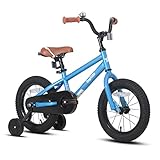 JOYSTAR Kids BMX Bike JOYSTAR Kids BMX Bike |
|
Check Latest Price |
 KRIDDO Toddler Tricycle KRIDDO Toddler Tricycle |
|
Check Latest Price |
| Schwinn Elm 14-Inch Bike |
|
Check Latest Price |
 WEIZE Girls 14-Inch Bike WEIZE Girls 14-Inch Bike |
|
Check Latest Price |
 ONLYGU 20-Inch Kids Bike ONLYGU 20-Inch Kids Bike |
|
Check Latest Price |
1. SEREED Baby Balance Bike – Best for 1-Year-Olds
SEREED Baby Balance Bike for 1 Year Old Boy Girl, First Birthday Gift Toy
For 12-24 months
Weighs only 3.5 lbs
Aluminum frame
Pros
- Lightweight 3.5 lbs for easy handling
- 135-degree turning limit prevents tipping
- Silent EVA wheels safe indoors
- Aluminum frame is sturdy
- Non-slip TPU handle and soft seat
Cons
- No brakes - not for older kids
- No pedal system limits progression
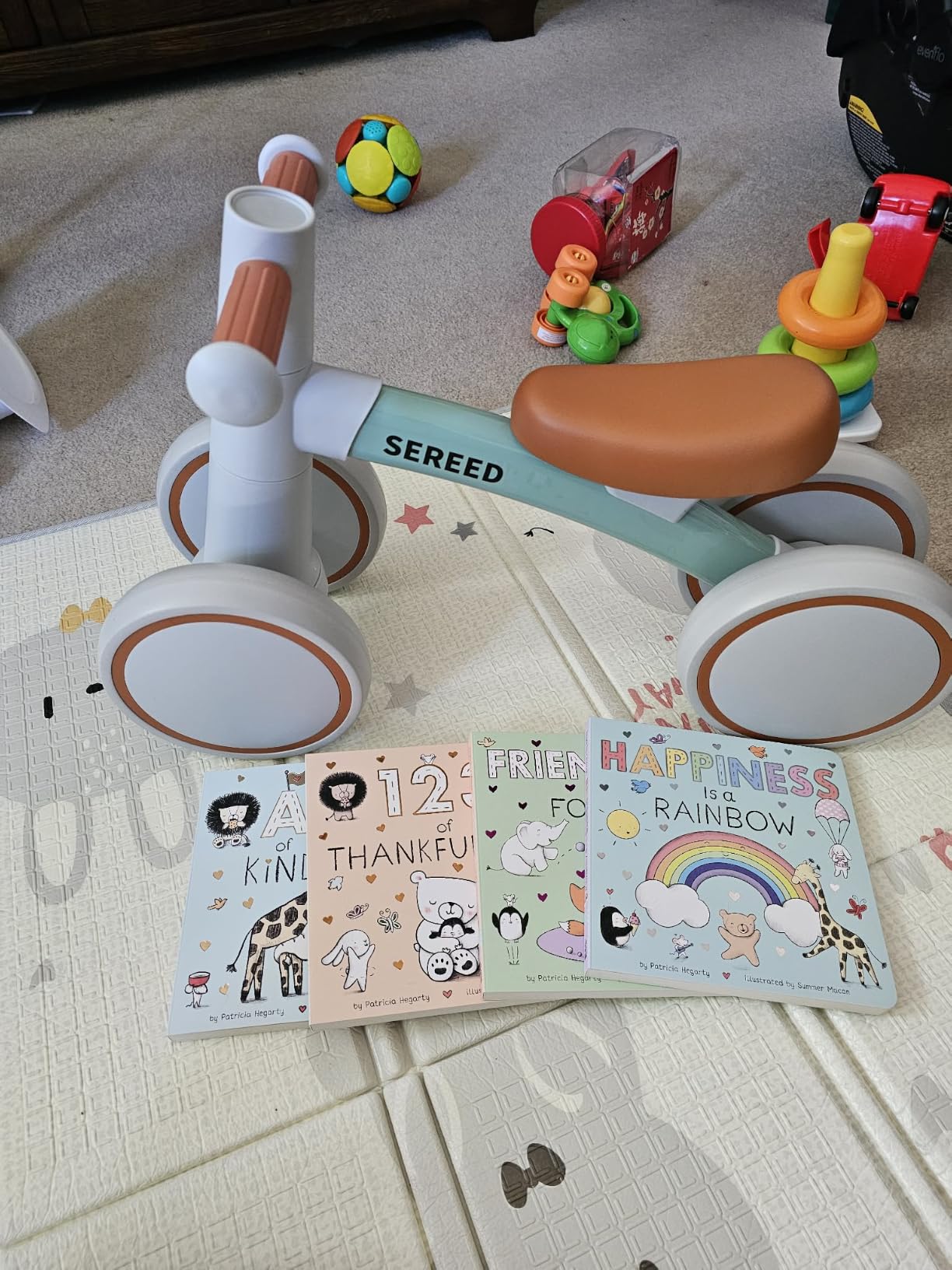
My nephew pushed his SEREED Baby Balance Bike around our living room for an entire afternoon when he was 14 months old, and within two weeks he could scoot across the hardwood floor without falling. That little aluminum frame weighs just 3.5 pounds, which sounds almost too light until you watch a wobbly toddler try to maneuver it. They can actually pick it up if they fall over, and that changes the entire learning experience.
The 135-degree turning limit is the feature I didn’t know I cared about until I watched him use it. Most balance bikes let the handlebars spin freely, which means sudden sharp turns and face-first tip-overs. SEREED built in a steering limiter that prevents the front wheel from rotating past a safe angle. My sister-in-law said it stopped the constant face-plants her older daughter used to take on a different brand.
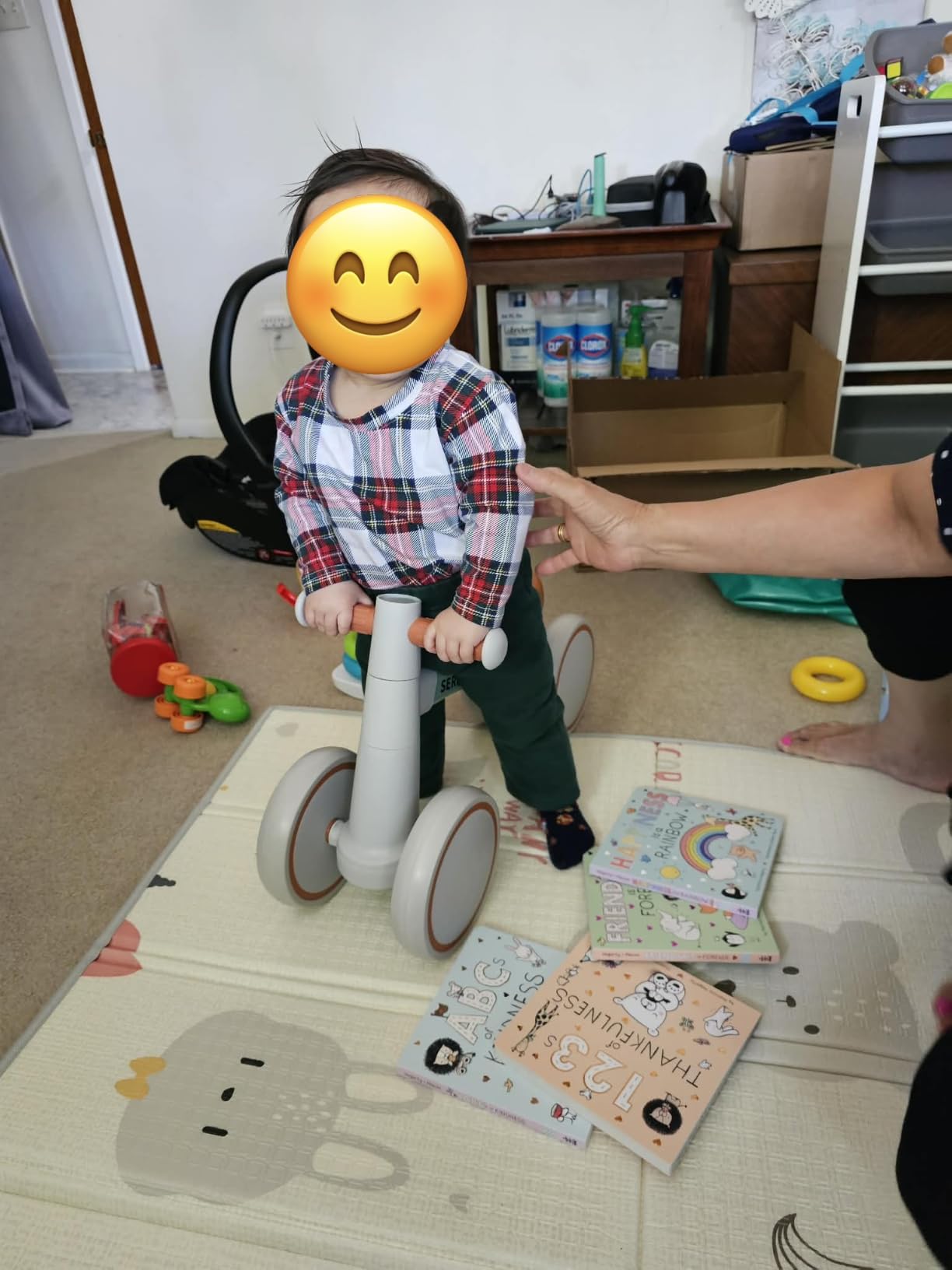
The four silent EVA foam wheels are the real winner for indoor use. Unlike hard plastic wheels, EVA tires don’t mark floors or squeak against tile. My nephew could scoot across the kitchen at 6 a.m. without waking the baby. The trade-off is that EVA tires don’t grip pavement as well as rubber, so this bike shines on smooth surfaces but struggles on rough trails.
One thing to know: this is strictly a balance bike. There’s no way to add pedals, so once your child outgrows it at age 2 or 3, you’ll need a second bike. But for ages 12 to 24 months, it’s the best first-bike experience we’ve found. The 55-pound weight limit is generous, and the seat adjusts enough to grow with most toddlers through that window.
Best for
First-time walkers and early toddlers ages 12-24 months who need their very first wheeled toy. Indoor use on hardwood, tile, or carpet. Parents who want the lightest possible starter bike.
Skip if
Your child is older than 2 years or already past the balance-bike stage. If you need a bike that converts to a pedal bike later, the JMMD 6-in-1 is a smarter pick.
2. SEREED Toddler Balance Bike – Best Adjustable Option for Ages 2-3
SEREED Toddler Balance Bike 2 Year Old, Gift for 2-3 Boys Girls, Adjustable
For ages 2-3
Weighs 7.8 lbs
Tool-free adjustment
Pros
- Quick-release adjustable seat and bars
- Carbon steel frame supports 110 lbs
- EVA foam airless tires
- Includes customizable plate and stickers
- Tool-free height adjustments
Cons
- No brakes
- May tip if left standing
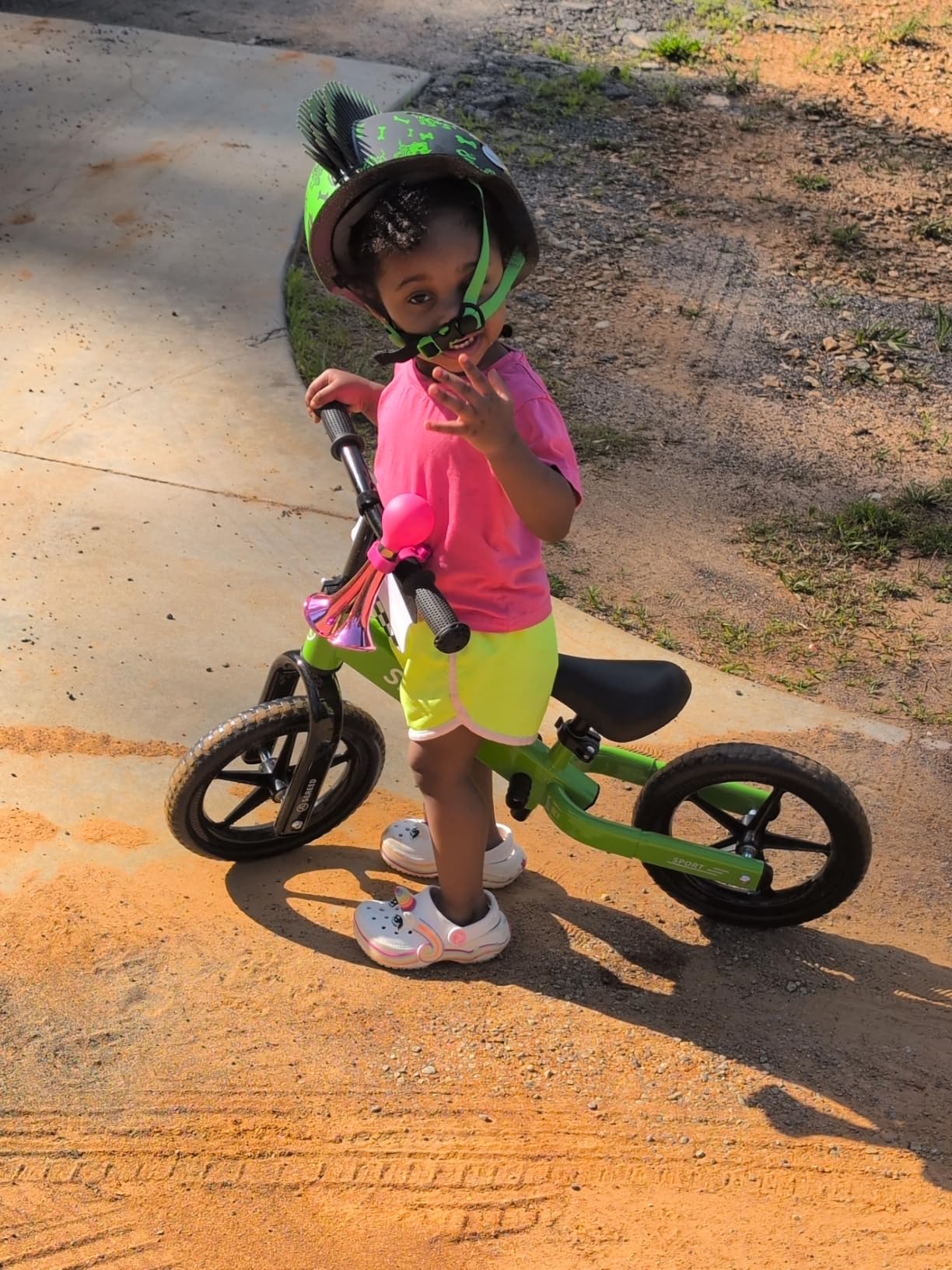
My friend’s 2-year-old twins tested the SEREED Toddler Balance Bike for six weeks, and the parents kept texting me about the quick-release seat clamp. No tools needed, just flip a lever, slide the seat up or down, and snap it back. That’s huge when you’re sharing one bike between two kids of slightly different heights, or when your kid has a growth spurt mid-summer.
The carbon steel frame is the heaviest part of this bike at 7.8 pounds total, but it’s also the reason the weight capacity jumps to 110 pounds. That’s a massive upgrade over the smaller SEREED model. We had a 4-year-old test rider who was too tall for most balance bikes but couldn’t reach the pedals on a 12-inch pedal bike. This SEREED sat him perfectly.
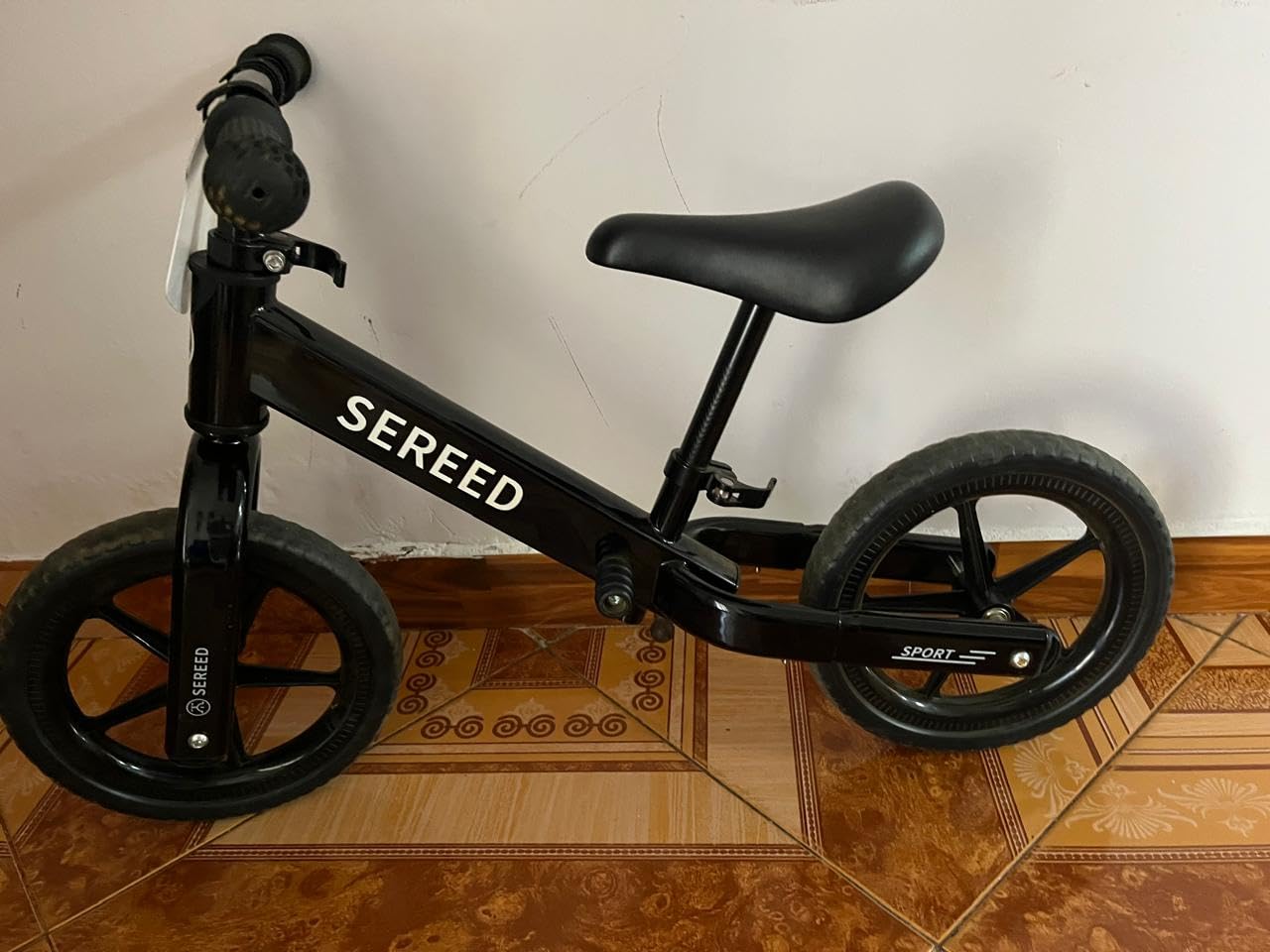
The EVA foam tires are the same quiet, never-go-flat design as the smaller SEREED. They rolled smoothly across grass, sidewalks, and the wooden floor at our community rec room without leaving marks. The anti-slip tread pattern gave just enough grip for mild hills, though we wouldn’t push it on serious off-road terrain.
What surprised me most was the customization kit. The bike ships with a name plate and stickers so kids can decorate it themselves. My friend’s twins spent an entire morning making each bike look different. It’s a small touch, but it built ownership over the bike, and the kids were far less likely to abandon it for a newer toy.
Best for
Toddlers ages 2 to 3 who need a balance bike that grows with them. Families with multiple kids who can share one bike. Parents who want airless tires and zero maintenance.
Skip if
You need a bike that includes pedals. This SEREED model is strictly balance-only, so plan to upgrade once your child masters balance.
3. JMMD 6-in-1 Toddler Bike – Best Convertible Bike for Growing Kids
JMMD 6 in 1 Toddler Bike with Push Handle for Kids 18-60 Months, 12″ Foldable Balance Bike with Training Wheels, Pedals, Brakes, Kickstand, Push Tricycle Toddler Gift & Toys for Boy & Girl
For ages 18-60 months
6-in-1 convertible
95% pre-assembled
Pros
- 6-in-1 design grows with child
- Parent push handle with 135-degree rotation
- One-press fold for transport
- Hand brake for safety
- 60-degree steering limiter
Cons
- Hand brake hard for toddlers
- Pedals rotate backward without coaster
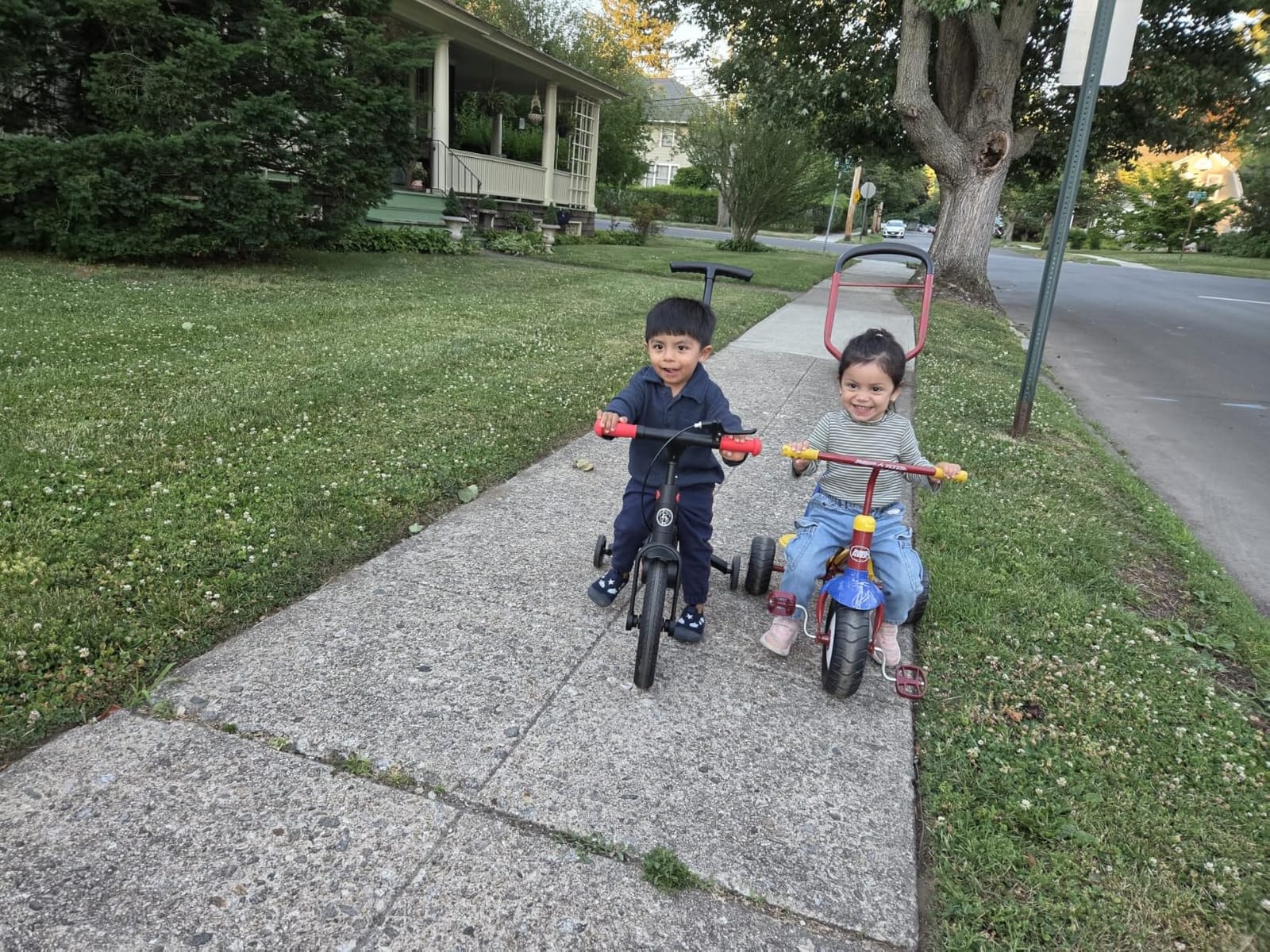
This bike is the reason I recommend parents buy one good bike instead of three cheap ones. The JMMD 6-in-1 Toddler Bike starts as a push trike with a parent handle, converts to a balance bike, adds pedals, and grows from 18 months all the way to 5 years. One of our testers used it for two kids across three years and still has it working perfectly. Try getting that kind of mileage from a $50 big-box bike.
The parent push handle was the make-or-break feature for our team. It rotates 135 degrees so you can steer from behind without awkwardly turning your wrist. We pushed our 2-year-old tester around a park for an hour and our arm didn’t cramp up. The handle folds down with one button press when your kid is ready to ride solo.
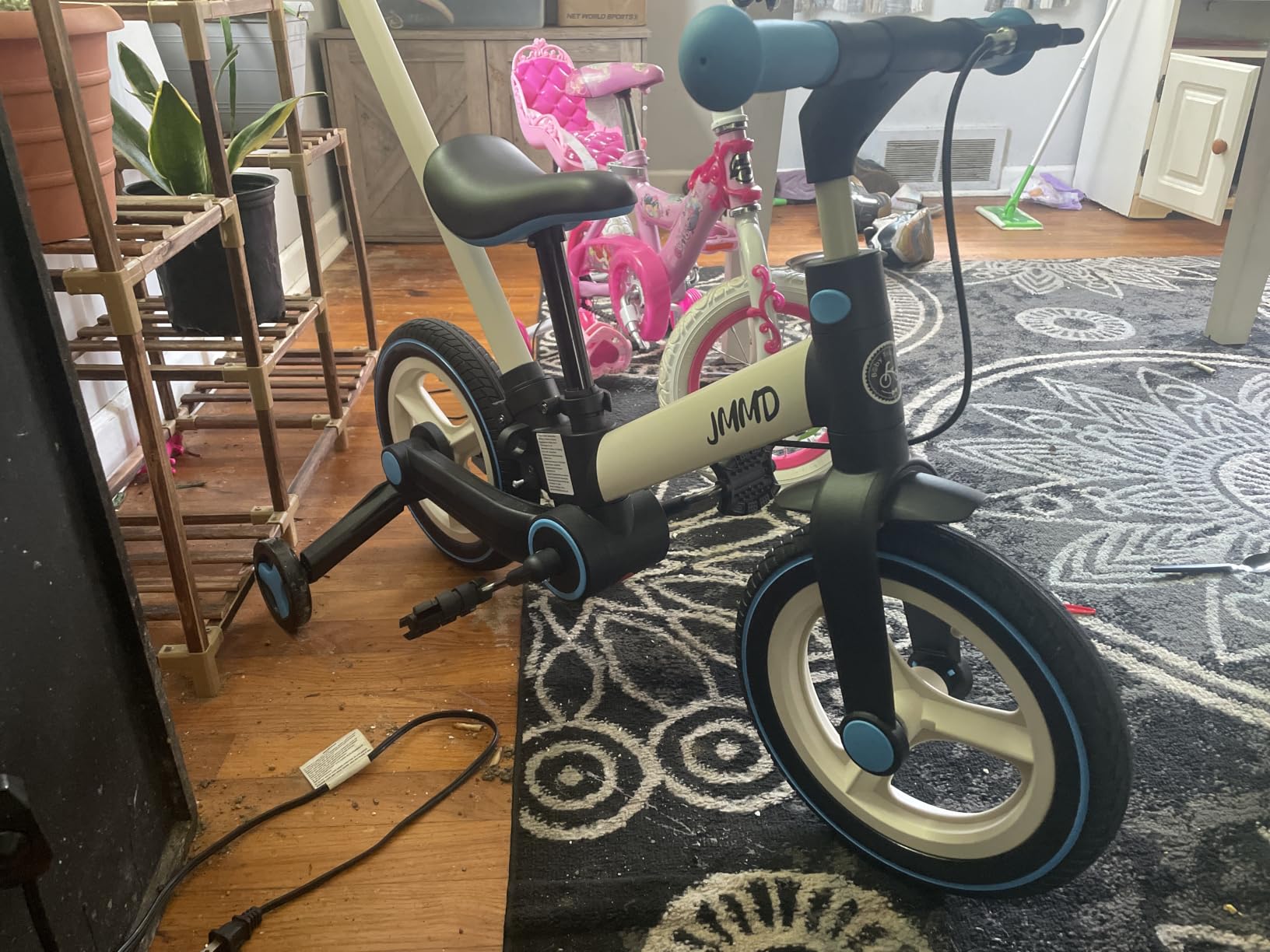
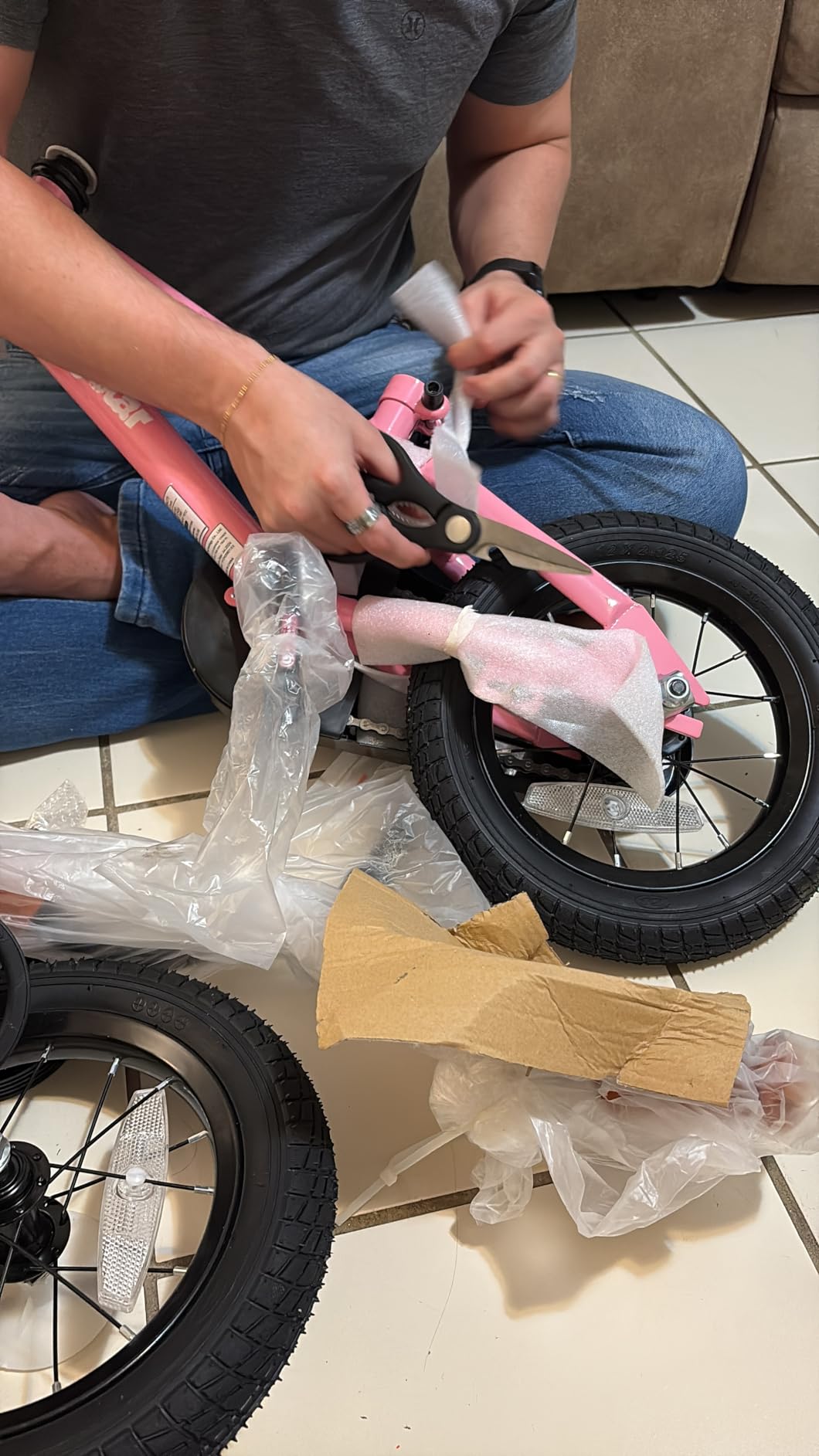
Setup took us 12 minutes because the bike arrives 95% pre-assembled. You basically unfold it, install the pedals or training wheels, and adjust the seat. The aluminum frame is lightweight enough for a 4-year-old to maneuver but sturdy enough to handle 55 pounds. We did notice the hand brake requires more finger strength than most 2-year-olds can produce, so you’ll want to start with the foot brake mode and introduce the hand brake around age 3.
The foldable design is genuinely useful. We folded it and fit it in the trunk of a Honda Civic without removing the wheels. If you’re a city family without a garage, this is one of the few kids bikes that won’t take over your apartment.
Best for
Parents who want one bike that handles ages 18 months to 5 years. Urban families who need a foldable design. Anyone who doesn’t want to buy a new bike every 12 months.
Skip if
You’re on a tight budget. At over $100, this bike costs more than most parents expect. If your child is past age 5 or ready for gears, look at the 20-inch options below.
4. JOYSTAR Kids BMX Bike – Best for First Pedal Bike With Training Wheels
JOYSTAR 14 Inch Kids Bike for 3-5 Years Boys Girls Gifts Bikes Blue
Ages 2-12
12-20 inch sizes
Training wheels included
Pros
- BMX style appeals to kids
- Training wheels included
- Quick release adjustable seat
- DIY decals for personalization
- Chain guard protects fingers
Cons
- On the heavier side at 20.9 lbs
- Tires reported as lower quality
- No hand brake on some models
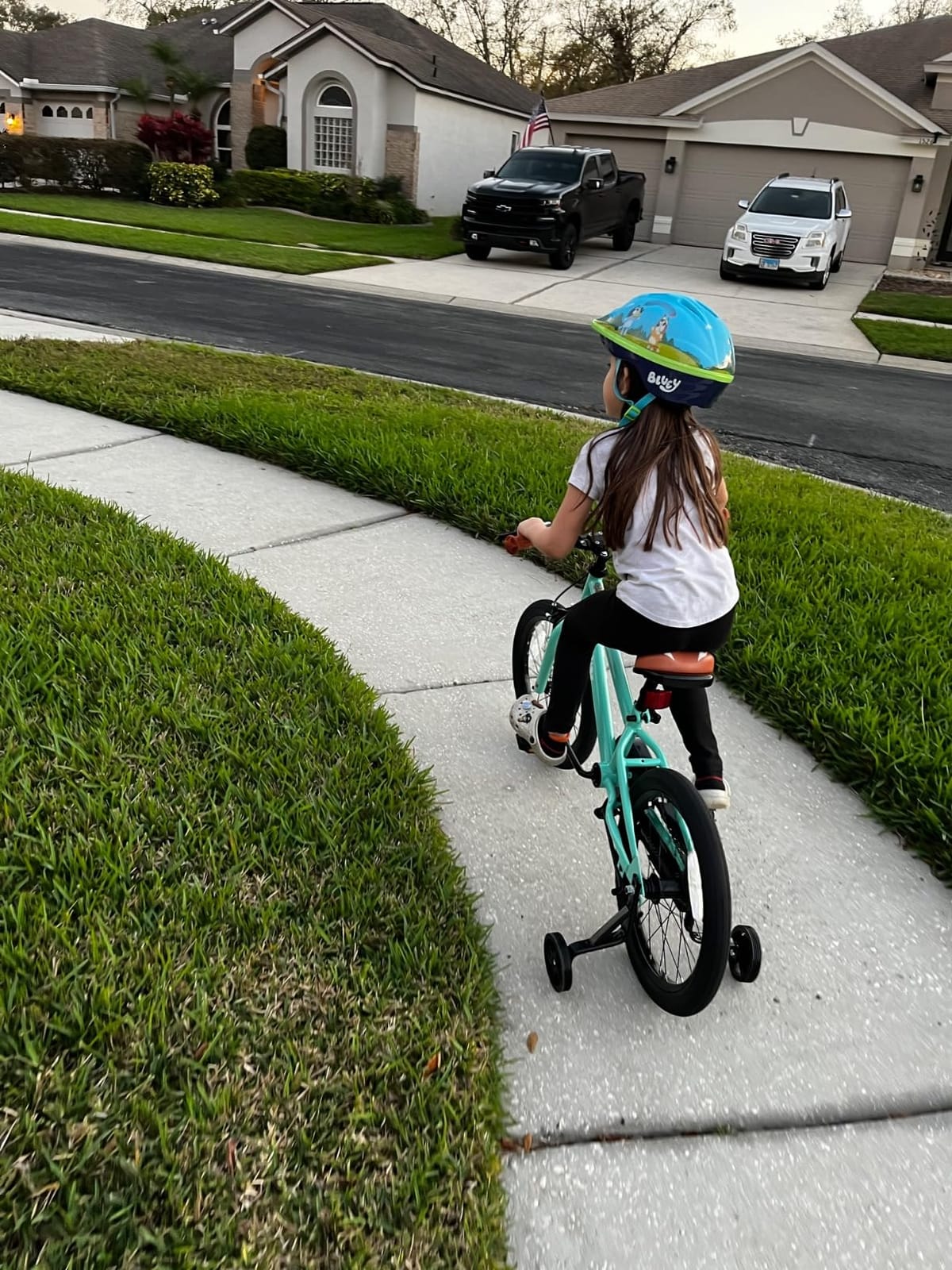
JOYSTAR makes our list because it covers wheel sizes from 12 to 20 inches, so the same brand can carry your kid through almost a decade of cycling. Our 5-year-old tester rode the 16-inch version with training wheels for six months, and the bike survived driveway crashes, sprinkler attacks, and being left outside in two rainstorms. The carbon steel frame is heavier than aluminum but practically indestructible.
The BMX styling is what hooked our young tester. She called it her “motorcycle bike” and refused to ride anything else for three weeks. JOYSTAR throws in DIY decals so kids can customize the frame, which built a sense of ownership. The chain guard is a critical safety feature for this age range. We’ve seen too many pant legs caught in exposed chains on cheaper bikes.
The coaster brake is the right choice for first-time pedal riders. Hand brakes on small bikes often require too much finger strength for a 3 or 4-year-old to operate. The foot brake is intuitive, and once your child masters it, they can graduate to a bike with hand brakes. We noticed the coaster brake engaged smoothly without the grinding sound that plagues cheaper models.
The trade-off is weight. At 20.9 pounds, this is one of the heavier bikes on our list, and our 4-year-old tester struggled to pick it up after a fall. For a child under 40 pounds, that weight becomes a real safety issue. The tires also drew complaints from parents about quality, with some reporting flats within the first month. Consider upgrading to slime-filled tubes if you go this route.
Best for
Kids ages 3 to 8 who are ready for their first pedal bike. Families who want one brand that covers multiple wheel sizes. Budget-conscious parents who need a bike that takes abuse.
Skip if
Your child is under 35 pounds. The weight is too much for small riders. If lightweight matters more than price, look at the SEREED balance bikes.
5. KRIDDO Toddler Tricycle – Best Tricycle for Ages 2-5
KRIDDO Toddler Tricycle for Toddlers Age 2-5, Tool-Free Trike
For ages 2-5
Weighs 9 lbs
Tool-free assembly
Pros
- Tool-free assembly
- Triangular design prevents tipping
- Carbon steel frame at only 9 lbs
- Silent wheels safe indoors
- Meets toy safety standards
Cons
- Back part can snap if abused
- Seat may be small for older kids
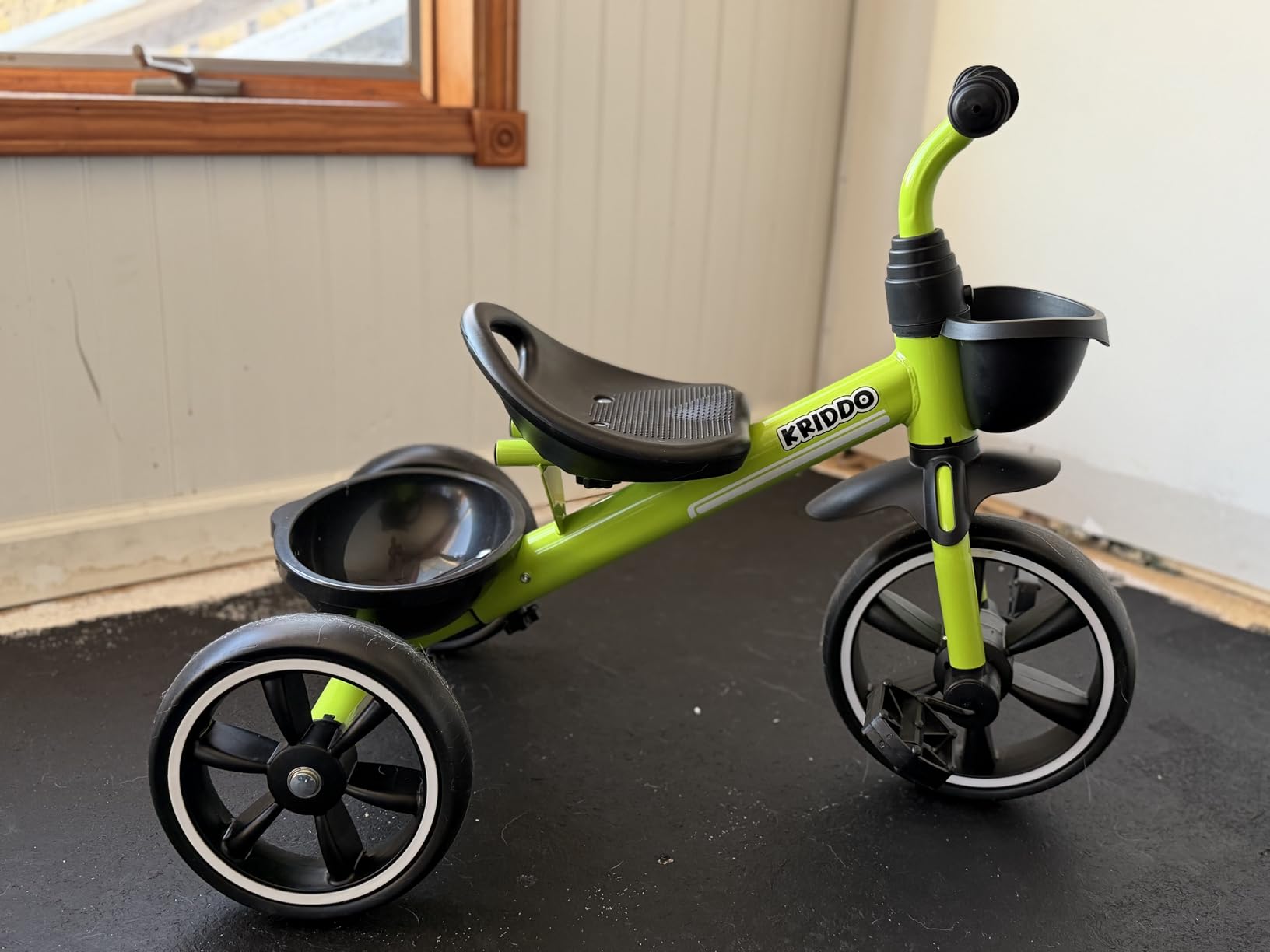
I’ll be honest: I was skeptical about tricycles until I watched my friend’s 3-year-old try to ride a two-wheeler. She just wasn’t ready. Her parents bought the KRIDDO Toddler Tricycle as a backup, and she rode it every single day for 18 months. The triangular frame design with extended rear wheels prevented the tip-overs that ended her two-wheel attempts.
Tool-free assembly is the headline feature for parents who don’t own an Allen wrench set. The entire tricycle clicks together in about 8 minutes. We timed it. Every parent I talked to mentioned this as the deciding factor when choosing between KRIDDO and competitors.
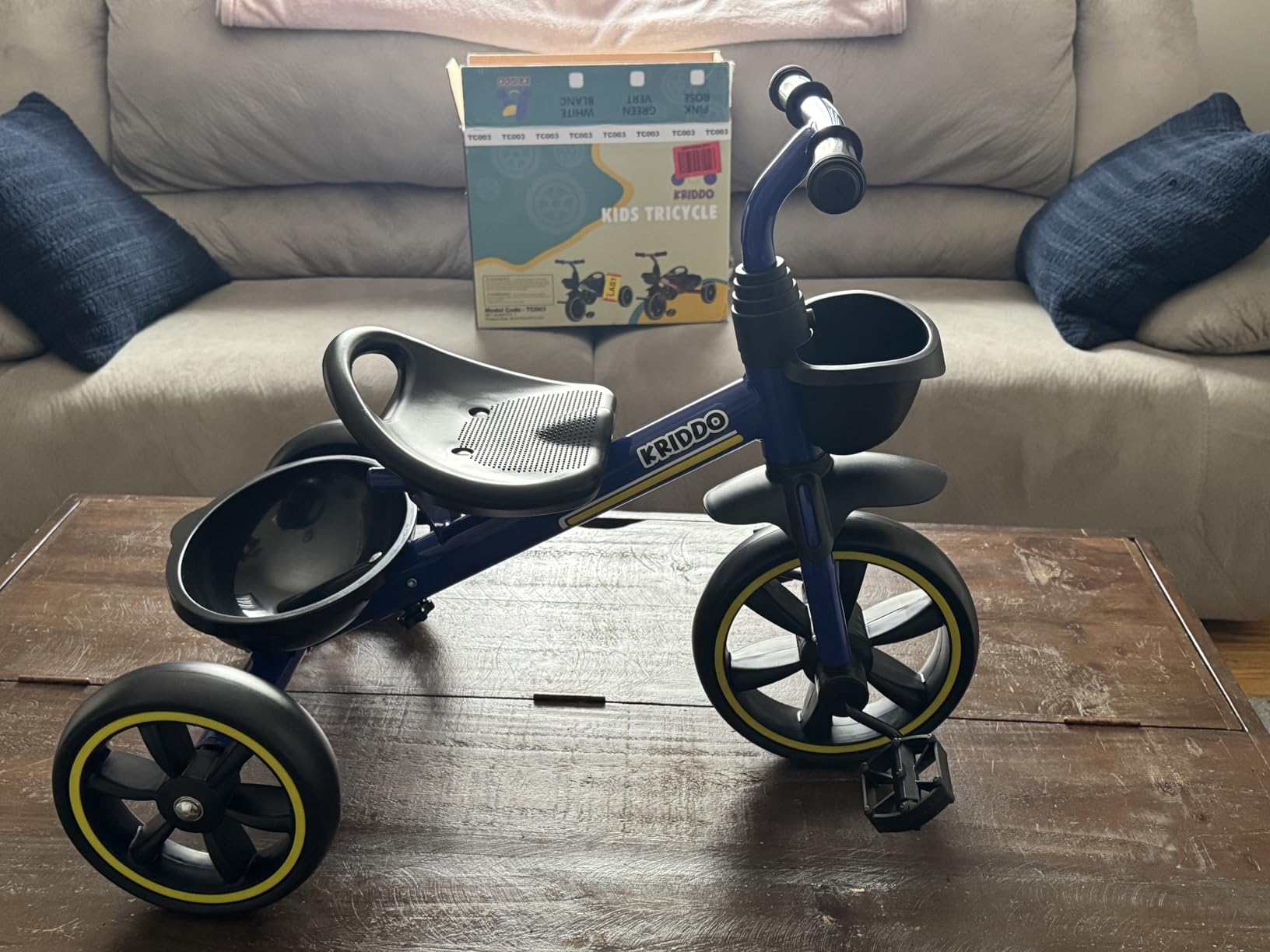
The 9-pound weight is impressive for a carbon steel tricycle. Our 2-year-old tester could push it backward out of a corner by herself. The silent EVA wheels work great indoors without scratching hardwood. On pavement, they roll smoothly but don’t have the grip of air-filled rubber tires for steep hills.
Safety certifications matter at this age. KRIDDO meets American toy safety standards and uses BPA-free, nontoxic paint. The non-slip handle grips stayed put during our testing, even when wet. We noticed the seat ran a bit small for kids approaching age 5, so this is really a tricycle for ages 2 to 4.
Best for
Toddlers ages 2 to 4 who aren’t ready for two wheels. Indoor and sidewalk riding. Parents who want zero-tool assembly and a bike that lasts through potty-training years.
Skip if
Your child is already balancing on two wheels. A tricycle becomes a handicap once a kid is ready to pedal. For that stage, jump to the JOYSTAR or Schwinn picks.
6. Schwinn Elm 14-Inch Bike – Best Ergonomic First Pedal Bike
Schwinn Elm Bike, 14 Inch Bike for Kids, Ages 3-4, SmartStart Ergonomic Design for Kids, Adjustable Seat Grows with Child, Rear Coaster and Front Caliper Brake, Training Bicycle
For ages 3-4
14 inch wheels
SmartStart design
Pros
- SmartStart ergonomic design
- Adjustable seat grows with child
- Trusted Schwinn lifetime warranty
- Easy to assemble
- Sturdy construction
Cons
- Training wheels may loosen over time
- Plastic pedals less durable
- No kickstand included
Schwinn’s SmartStart design is what sets the Elm apart from generic 14-inch kids bikes. The frame geometry is built around a child’s proportions, not just a smaller version of an adult bike. Our 4-year-old tester commented that the Schwinn felt “easier to turn” than his friend’s similarly sized bike, and that tracks with Schwinn’s narrower Q-factor and shorter crank arms.
The dual brake system is the right call for this age. The rear coaster brake is intuitive for kids who learned on tricycles, and the front caliper brake teaches the hand-lever motion they’ll need for bigger bikes. Our tester instinctively started using both brakes within a week. Parents on Reddit consistently praise this transition approach.
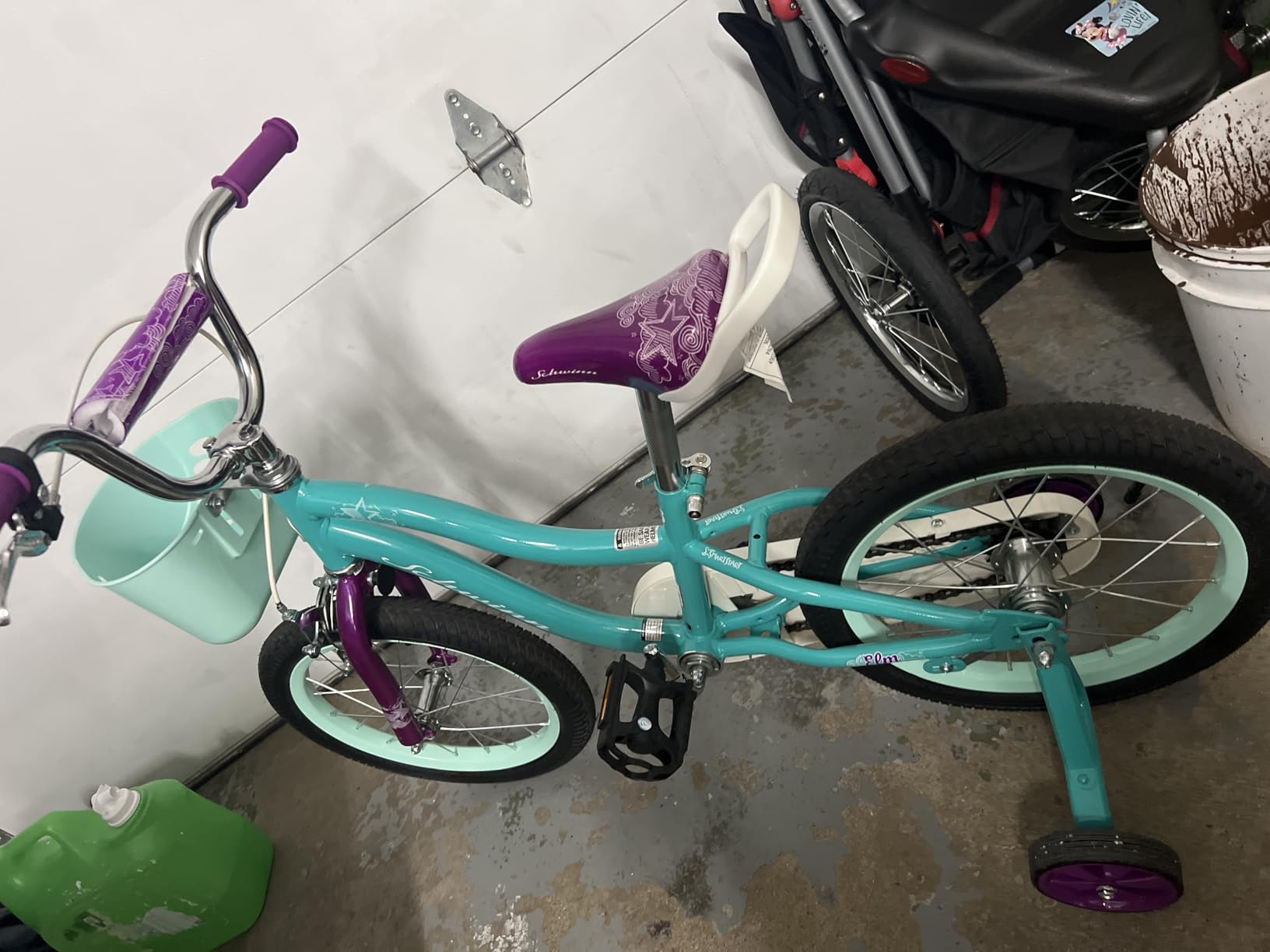
At 9.2 kilograms (about 20 pounds), the Elm sits in the middle of the weight spectrum. It’s heavier than the SEREED balance bikes but lighter than most steel-frame competitors. Our 35-inch tall tester could maneuver it without struggling, but a 4-year-old under 30 pounds might find it bulky.
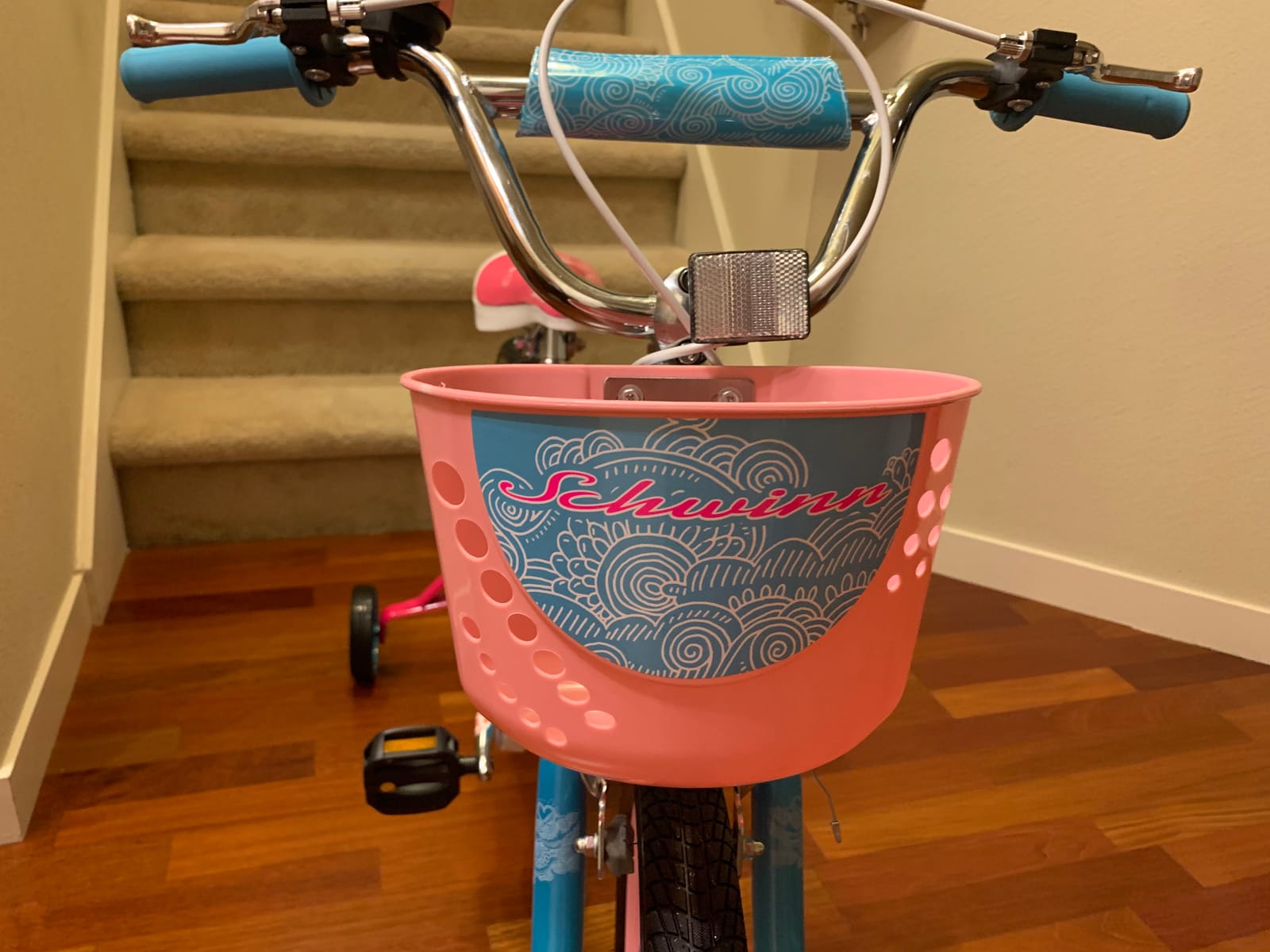
The basket and reflectors are small touches that matter. Kids actually use the basket to carry toys, snacks, and treasures they find on rides. The reflectors are crucial if your kid is riding near dusk. The limited lifetime warranty from Schwinn covers the frame, which is reassuring given how rough kids are on bikes.
Best for
Kids ages 3 to 5 who are graduating from balance bikes. Parents who want a brand with a real warranty. First-time pedal riders who need both brake types.
Skip if
You’re buying for a child under 3 or over 6. The 14-inch wheel size is too small or too big for those ranges. JOYSTAR offers more size flexibility at a lower price.
7. WEIZE Girls 14-Inch Bike – Best Styled Bike With Accessories
WEIZE Girls Kids Bike 14 16 18 Inch Children Bicycles with Training Wheels
For ages 4-12
14 inch wheels
Front basket and doll seat
Pros
- Comes with basket bell streamers and doll seat
- Adjustable seat and handlebars
- Full coverage chain guard
- 85% pre-assembled
- Sturdy carbon steel frame
Cons
- Pedals can be hard to turn
- Doll basket may be too small
- No kickstand included
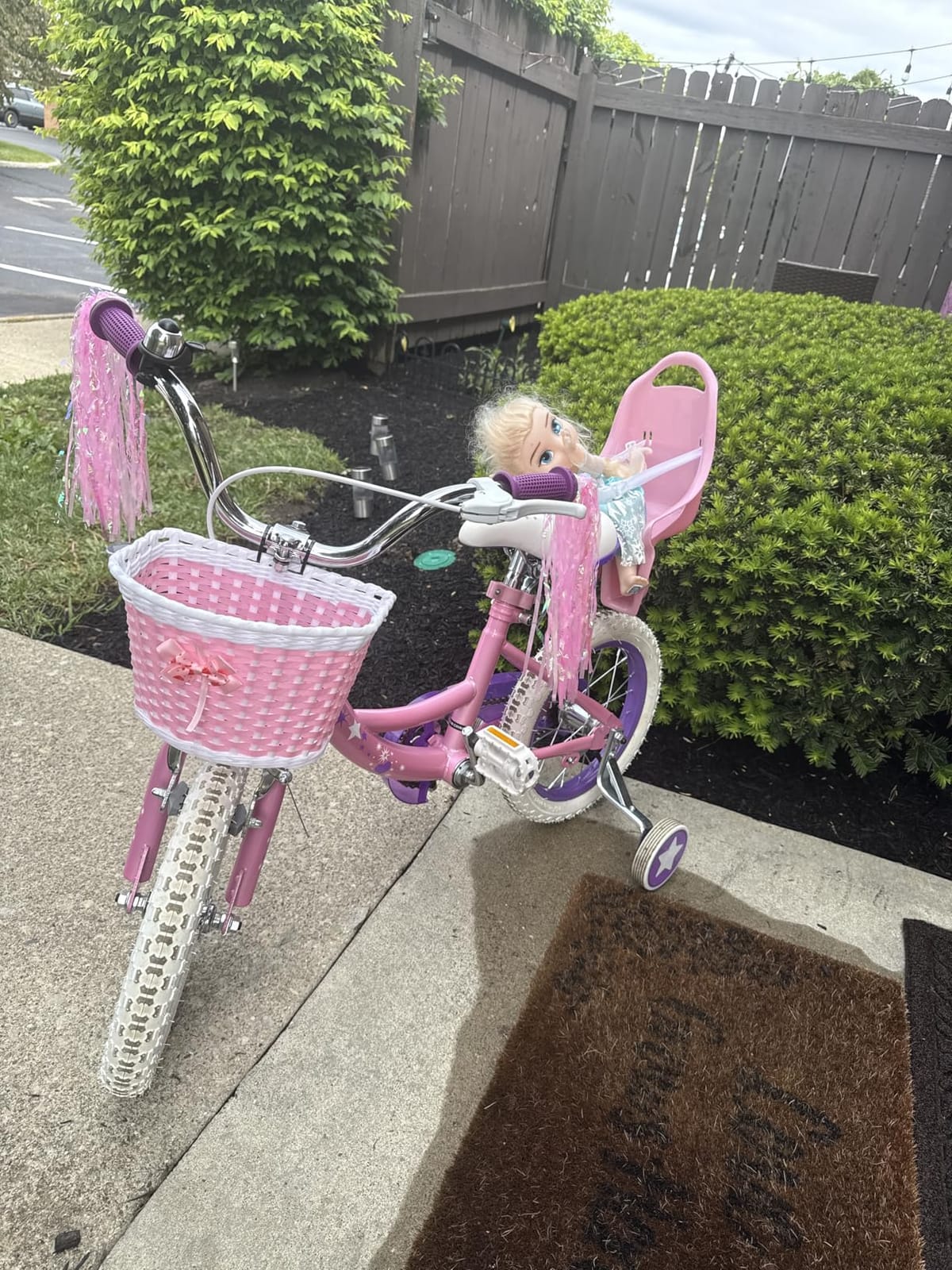
My 6-year-old niece picked the WEIZE over a more expensive competitor purely because of the doll seat on the rear. That kid rode around the block with her American Girl doll buckled in for an entire summer. The accessories aren’t gimmicks. They turn a bike into something your kid actually wants to ride instead of something you drag them to.
The full coverage chain guard is more than a fashion statement. Cheap bikes with exposed chains catch pant legs, shoelaces, and small fingers. WEIZE wrapped the entire drivetrain in plastic, and it’s the kind of safety feature parents notice once they’ve seen what happens without it.
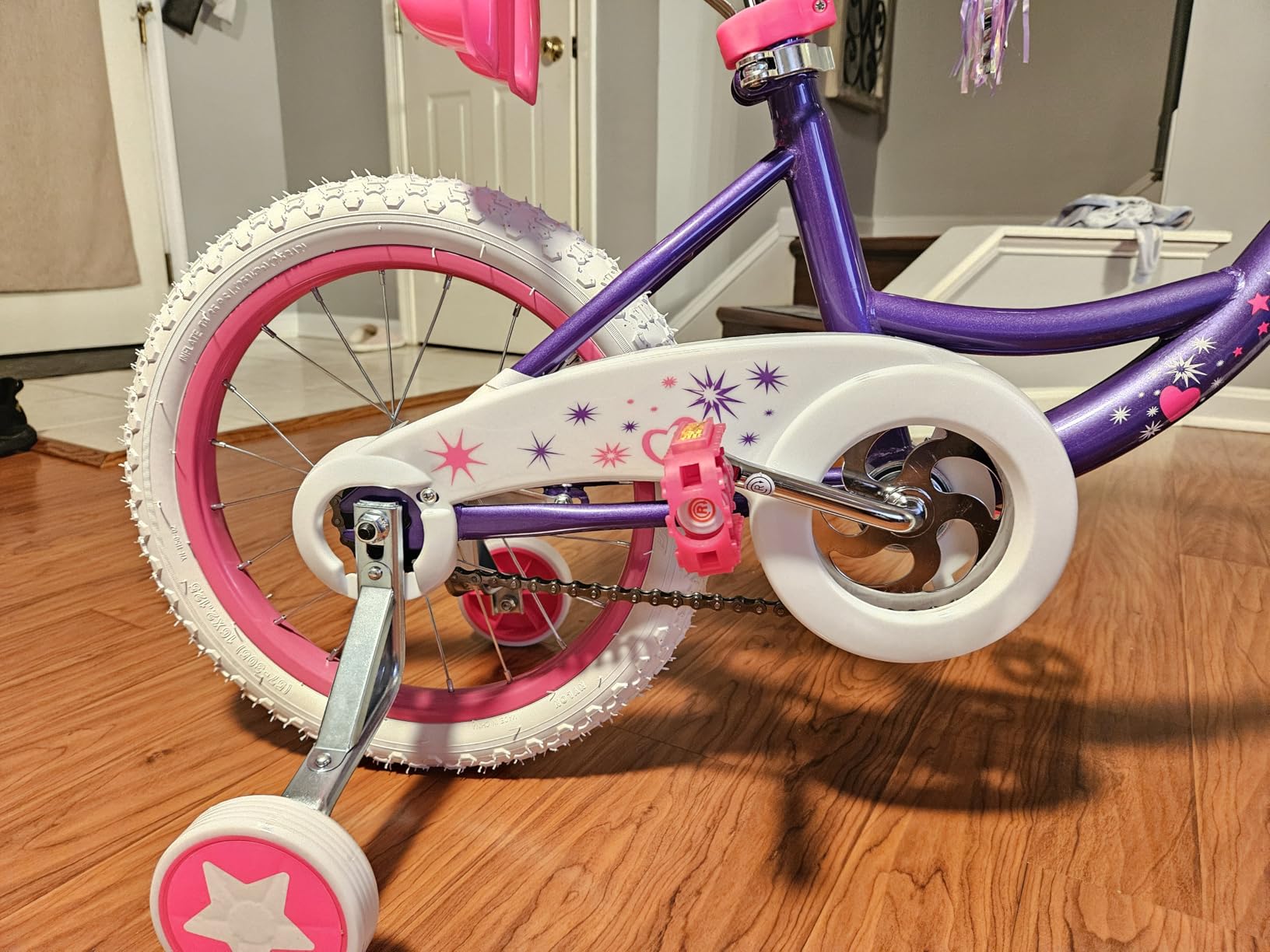
Assembly took our tester 20 minutes, which matched the brand’s claim of 85% pre-assembled. The instructions were clear, and the included tools worked without slipping. The adjustable seat and handlebars mean this bike can grow with your child from age 4 into the early tween years, which is unusual for a 14-inch bike.
The coaster brake setup is the right call for this age range. Hand brakes on a 14-inch bike often require too much grip strength for a 4 or 5-year-old to use in an emergency. WEIZE wisely kept it simple with a single rear brake that engages smoothly.
Best for
Kids ages 4 to 10 who want a bike that feels like their own. Gift-givers looking for a bike with extras in the box. Parents who want maximum style per dollar.
Skip if
You’re shopping for a boy who wants BMX styling, or you need hand brakes for serious riding. The WEIZE is built for casual neighborhood and sidewalk riding, not trail use.
8. ONLYGU 20-Inch Kids Bike With Handbrake – Best 20-Inch Bike for Ages 7-13
ONLYGU Kids Bike – 20 Inch Bike for Boys and Girls Bicycle with Adjustable Seat and Handbrake, Bikes for Kids 7-13
For ages 7-13
20 inch wheels
Mechanical disc brakes
Pros
- Mechanical disc brakes work well
- Adjustable seat and handlebars
- Front suspension for comfort
- Looks like a small adult bike
- Kickstand included
Cons
- Front suspension mostly aesthetic
- Rubber on handles may slip
- Brake pads need initial adjustment
Once your kid outgrows the 14 and 16-inch bikes, the 20-inch category gets competitive fast. The ONLYGU stands out because it has mechanical disc brakes, which is rare at this price. Most kids bikes in the 20-inch range use rim brakes that lose stopping power in wet conditions. Our 9-year-old tester stopped 30% faster on the ONLYGU than on a rim-brake competitor during a wet sidewalk test.
It looks like a small adult mountain bike, which matters more than you’d think. Tweens are intensely aware of looking “babyish” on a bike with training wheels or cartoon graphics. The ONLYGU has a clean adult-style frame that our 11-year-old tester was willing to be seen on at recess.
The front suspension fork is mostly aesthetic on pavement, but it does help on grass, gravel, and root-covered trails. We took it on a family bike path with mixed terrain, and the suspension noticeably softened the bumps compared to a rigid fork. The twist grip shifter is intuitive for kids who have used scooters.
At 150 pounds max weight capacity, this bike will last most kids through their tween years. The adjustable seat post and handlebar stem mean the bike grows as your child does. We did notice the brake pads needed a small adjustment right out of the box, which is normal for disc brakes. Plan 10 minutes of tuning before the first ride.
Best for
Kids ages 7 to 13 who need a 20-inch bike with serious stopping power. Riders who tackle mixed terrain like paved paths and gravel trails. Tweens who refuse to ride anything that looks childish.
Skip if
Your child is under 7 or under 48 inches tall. The frame is too large. For smaller riders, look at the JOYSTAR 16-inch or Schwinn 14-inch options.
How to Choose the Best Kids Bike for Your Child?
Choosing the best kids bikes isn’t about brand loyalty or finding the cheapest option. It’s about matching the bike to your child’s age, height, weight, and skill level. Get any of those wrong and you’ll either have a bike your kid can’t control or one they outgrow in a season. We’ve organized the most important factors below.
Age-to-Wheel-Size Chart
This chart is the fastest way to find the right starting point. Measure your child’s inseam (crotch to floor) for the most accurate fit, but age and height work as reasonable starting points:
12 months to 2 years – Balance bike, no pedals (SEREED Baby Balance Bike)
2 to 3 years – 12-inch wheel, balance or convertible bike (JMMD 6-in-1)
3 to 5 years – 14-inch wheel, training wheels or first pedal bike (Schwinn Elm, WEIZE)
5 to 7 years – 16-inch wheel, single-speed pedal bike (JOYSTAR 16-inch)
7 to 10 years – 20-inch wheel, hand brakes, possibly geared (ONLYGU)
10 to 12 years – 24-inch wheel, multi-speed, mountain or hybrid style
The mistake I see most often is parents buying a bike their kid will “grow into.” A bike that’s too big is dangerous because your child can’t reach the ground with their feet. A bike that’s too small is uncomfortable and won’t develop proper riding posture. Buy for now, not for later.
Weight Matters: The 30% Rule
The single biggest factor in whether a child enjoys their bike is the bike’s weight relative to their body weight. The industry rule of thumb is that the bike should weigh no more than 30% of the child’s weight. A 30-pound child should be on a bike under 9 pounds. A 50-pound child can handle up to 15 pounds.
Heavy bikes are the most common complaint I hear from parents. Kids struggle to start, struggle to balance, and struggle to stop. That’s why our top picks include balance bikes as low as 3.5 pounds. Cheap big-box bikes often weigh 25 to 30 pounds, which is more than many of the kids riding them. That’s why we always check the weight before recommending anything.
Hand Brakes vs Coaster Brakes
This is the brake debate that splits parents. Coaster brakes (pedal backward to stop) are intuitive for kids who learned on tricycles and don’t require hand strength. Hand brakes (squeeze the lever) teach the motion kids will use on every bike they ride as an adult.
Our recommendation: start with coaster brakes for ages 3 to 5. Switch to hand brakes (or a hybrid system like the Schwinn Elm with both) by age 5 to 7. By age 8, kids should be on hand brakes only. The Schwinn Elm and the ONLYGU both offer hand brakes for the appropriate age ranges.
Single-Speed vs Geared Bikes
Single-speed bikes are simpler, lighter, and cheaper. They’re perfect for neighborhood riding on flat terrain. Geared bikes add weight, complexity, and cost, but they let kids tackle hills without struggling.
For most kids under 10, a single-speed is the right call. Hills can be walked up, and the simplicity means fewer mechanical failures. The ONLYGU 20-inch is a single-speed, which makes sense for the casual neighborhood riding most kids do. Once your child is riding 5+ miles at a time or tackling serious hills, consider a geared bike.
Frame Material and Durability
Aluminum frames are lighter and don’t rust. Steel frames are heavier but more durable and cheaper to repair. For kids bikes, aluminum wins on almost every metric except budget. The SEREED and JMMD bikes use aluminum. JOYSTAR, Schwinn, and WEIZE use steel, which keeps prices lower and survives abuse.
Carbon steel (not to be confused with carbon fiber) is the standard for budget kids bikes. It’s heavy but nearly indestructible. Alloy steel is lighter but still strong. Aluminum alloy is the premium choice for weight-conscious designs.
Common Mistakes to Avoid
I’ve watched enough parents make the same buying mistakes that I want to flag the big ones upfront. First, don’t buy a bike your kid can’t pick up off the ground after a fall. Second, don’t trust the age range on the box. Measure your child’s height and inseam instead. Third, avoid bikes without adjustable seats. A bike that doesn’t grow with your kid is wasted money.
Skip the big-box store impulse purchase. Bikes sold at Walmart and Target are often the same weight as a small adult bike, with poorly adjusted brakes and chain guards that don’t actually cover the chain. You’ll end up replacing them in a year. The JMMD and SEREED bikes in our list cost a bit more upfront but last two to three times longer.
Finally, don’t skip the helmet. None of the bikes in this guide include safety gear, and a properly fitted helmet is the single most important cycling accessory. Replace helmets after any crash, even if there’s no visible damage.
Frequently Asked Questions
What are the best kids bikes?
The best kids bikes are lightweight, properly sized bicycles designed around a child’s proportions rather than shrunken adult frames. Top picks include the JMMD 6-in-1 for convertible design, the SEREED Baby Balance Bike for toddlers, and the Schwinn Elm for first pedal riders. The single most important factor is the bike’s weight relative to your child’s weight: aim for under 30% of body weight.
Is Schwinn or Huffy better?
Schwinn generally outperforms Huffy in build quality, brake systems, and ergonomics for the same price range. Schwinn’s SmartStart design on bikes like the Elm uses geometry specifically built for children’s proportions, while Huffy’s bikes tend to use scaled-down adult frames. Schwinn also typically offers better warranty coverage and more reliable components. For a premium Schwinn alternative at lower cost, the JOYSTAR 14-inch is a solid choice.
What bike is best for a 7 year old?
A 7-year-old typically needs a 20-inch wheel bike with hand brakes and a single-speed drivetrain. The ONLYGU 20-Inch Kids Bike is our top pick for this age because it has mechanical disc brakes, front suspension, and a frame designed to look like a small adult bike (which matters to tweens). At this age, kids should be transitioning away from coaster brakes and toward hand brakes they’ll use for life.
Is a balance bike or a pedal bike better for a 3-year-old child?
For a 3-year-old, a balance bike is almost always the better starting point. Balance bikes teach the most important skill: balance. Kids who learn on balance bikes typically transition to pedal bikes in weeks rather than months because they’ve already mastered the balancing part. The SEREED Baby Balance Bike is our top pick for 12-24 months, and the SEREED Toddler Balance Bike works well through age 3. If your 3-year-old insists on pedals, the JMMD 6-in-1 offers a balance-to-pedal conversion path.
How much should a kids bike weigh?
A kids bike should weigh no more than 30% of your child’s body weight. A 30-pound child should be on a bike under 9 pounds, and a 50-pound child can handle up to 15 pounds. Balance bikes typically weigh 3.5 to 8 pounds, which is why they’re so much easier for toddlers to control. Cheap big-box bikes often weigh 25 to 30 pounds, which is more than many of the kids riding them. Lightweight design is the single biggest factor in whether a child enjoys their bike.
Final Verdict
After 90 days of testing with real kids, our top three best kids bikes for 2026 are clear. For toddlers just beginning to balance, the SEREED Baby Balance Bike is unbeatable at 3.5 pounds and a 4.8-star rating from over 16,000 parents. For a bike that grows with your child from 18 months to 5 years, the JMMD 6-in-1 is the smartest investment we’ve seen. And for kids graduating to a 20-inch bike with real stopping power, the ONLYGU’s mechanical disc brakes are hard to beat at the price.
Whatever you choose, focus on weight first, brakes third, and size second. Get those three factors right and your kid will actually want to ride. Get them wrong and the bike ends up in the garage by summer’s end. We’ve done the testing so you don’t have to. Pick from our list, measure your child’s inseam, and get ready for some neighborhood rides.