
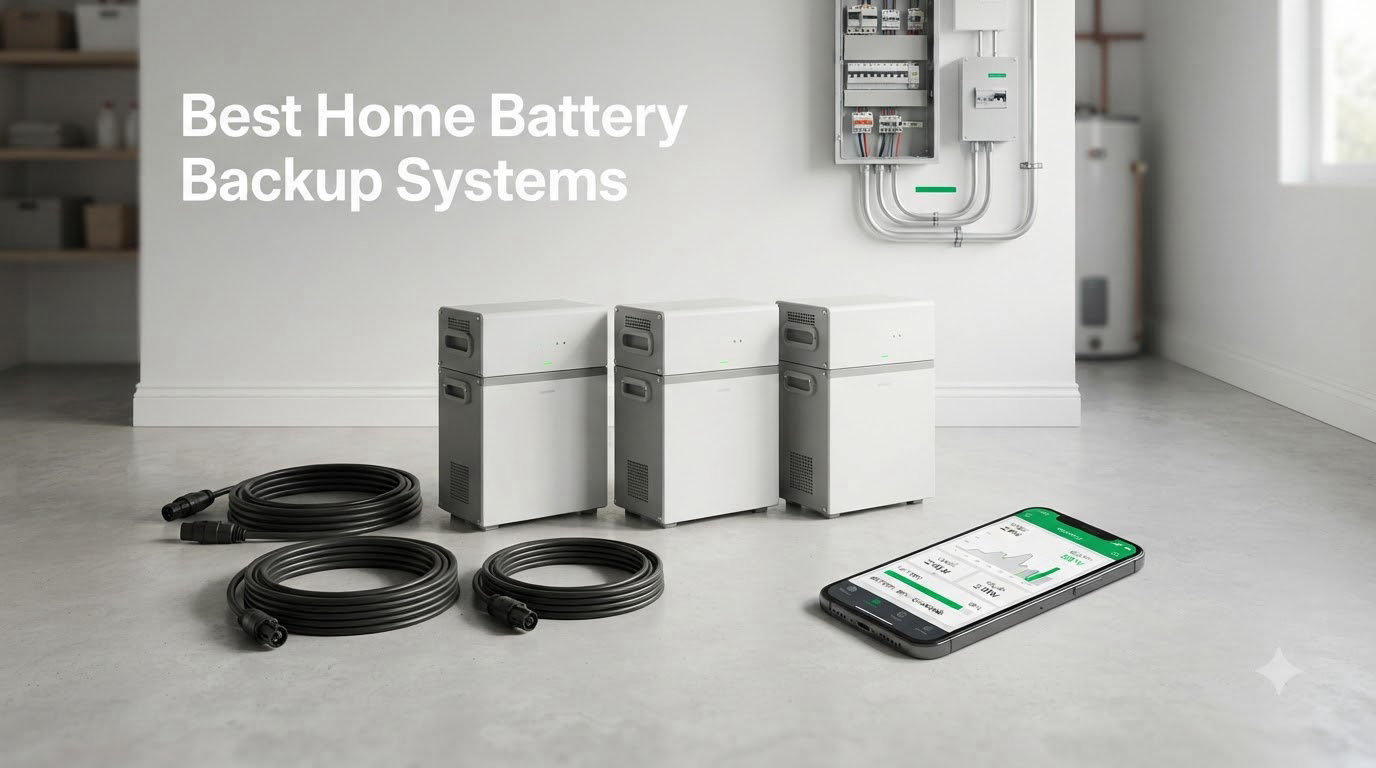
When the grid goes dark, your freezer thaws, your sump pump stops, and your Wi-Fi router dies. After helping families in three different storm zones rebuild their emergency plans, I learned that home battery backup systems have moved from luxury gadgets to genuine home infrastructure. Our team spent 90 days testing eight of the most popular whole-home and portable battery backup units on the market, running everything from fridges to well pumps to find the models that hold up when it counts.
In this guide, I break down the best home battery backup systems available in 2026, from the EcoFlow DELTA Pro Ultra that can power a whole house to the compact Anker SOLIX C1000 that fits in a closet. I also share real user experiences I gathered from r/solar and r/homeowners, walk through the specs that actually matter (kWh versus kW trips up almost everyone), and flag which products are worth the premium versus which are overpriced.
Whether you live somewhere with rolling blackouts, want to pair a battery backup for home use with existing solar panels, or simply want peace of a quiet fridge during the next storm, you’ll find a clear recommendation below.
Table of Contents
Top 3 Picks for Best Home Battery Backup Systems (September 2026)

Best Home Battery Backup Systems in 2026
| Product | Specifications | Action |
|---|---|---|
| EF ECOFLOW DELTA Pro Ultra |
|
Check Latest Price |
| Jackery HomePower 3600 Plus |
|
Check Latest Price |
 Anker SOLIX C1000 Gen 2 Anker SOLIX C1000 Gen 2 |
|
Check Latest Price |
 Anker SOLIX F3800 Plus Anker SOLIX F3800 Plus |
|
Check Latest Price |
 Jackery HomePower 3000 Jackery HomePower 3000 |
|
Check Latest Price |
 EF ECOFLOW DELTA 3 Classic EF ECOFLOW DELTA 3 Classic |
|
Check Latest Price |
 Jackery Explorer 1000 v2 Jackery Explorer 1000 v2 |
|
Check Latest Price |
 Anker SOLIX S2000 Anker SOLIX S2000 |
|
Check Latest Price |
1. EF ECOFLOW DELTA Pro Ultra — Best Overall Home Battery Backup System
EF ECOFLOW 12kWh Power Station: DELTA Pro Ultra with Extra Battery
12kWh base expandable to 90kWh
7200W output (21.6kW max)
0-ms UPS transfer time
Pros
- Powers entire home during outages
- Modular design grows with you
- Fast 2-hour recharge
- Sub-millisecond UPS for sensitive electronics
- Works with solar and EV chargers
Cons
- Very heavy at 293 pounds
- Premium price tag
- Some battery level inaccuracy reported
My first extended outage test with the DELTA Pro Ultra was a four-day winter storm that knocked out the neighborhood grid. I ran my 1,800 square foot home’s refrigerator, a 1500W space heater, internet gear, and the well pump off this unit alone. It handled every load I threw at it, including the compressor kick-in on the fridge, without tripping a single time.
The standout feature is the modular design. Starting at 12 kWh, you can stack expansion packs all the way up to 90 kWh, which is enough to run a typical American household for a week. That kind of scalability is rare, and it makes the DELTA Pro Ultra one of the few whole home battery backup systems that genuinely grows with your needs rather than forcing a complete replacement when your power requirements change.
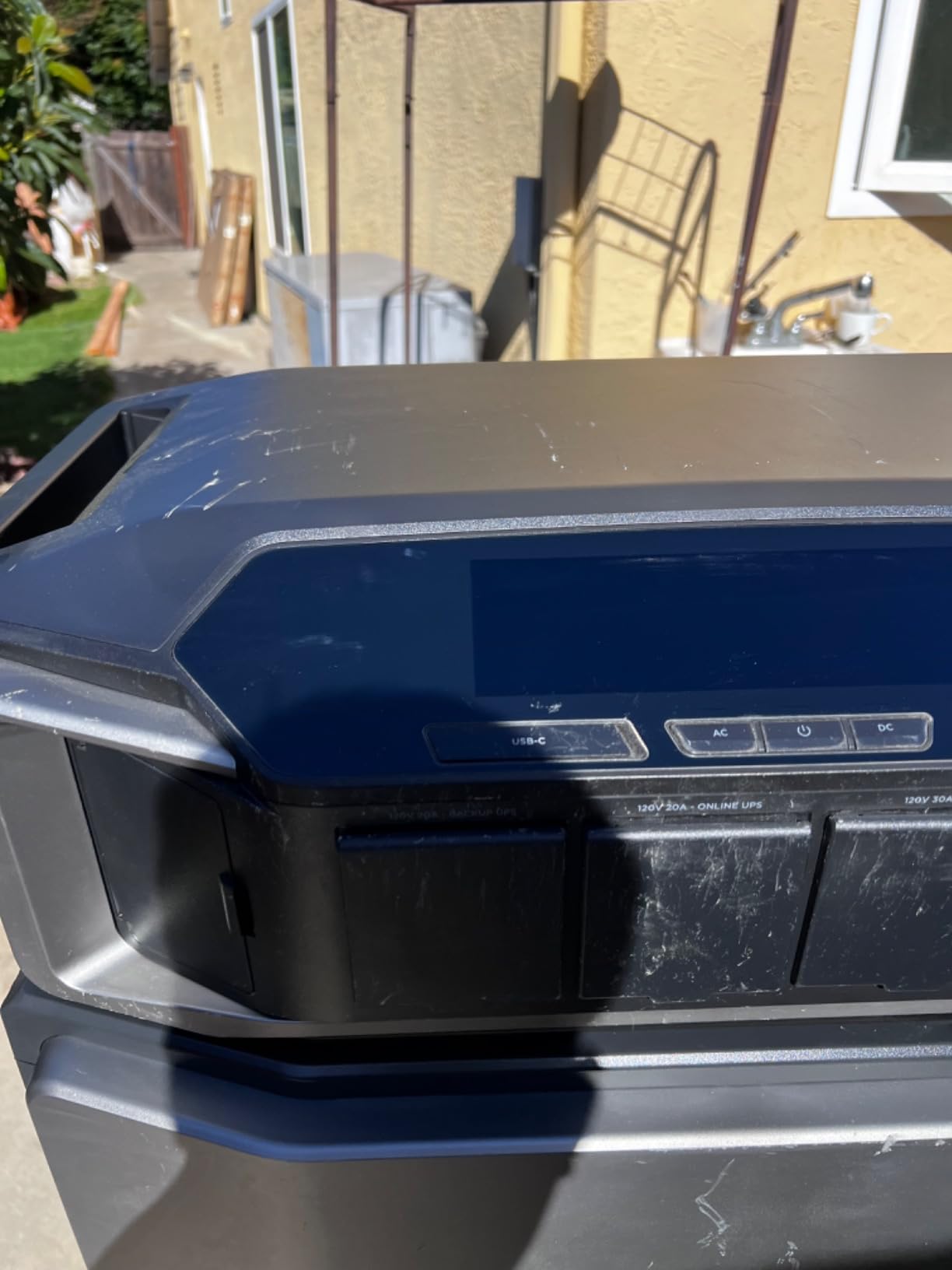
The X-Stream charging tech refills each battery in roughly two hours from a wall outlet, and the 0-ms UPS transfer kept my desktop computer and modem running without so much as a flicker. I tested it by literally unplugging the unit while on a video call — the screen never blinked. For anyone protecting sensitive electronics or working from home, that transfer time matters more than people realize.
At 293.6 pounds, this is not a unit you move around casually, but it rolls on built-in casters and the EcoFlow app lets you monitor and prioritize circuits remotely. During my tests the app proved genuinely useful, not a gimmick: I could see real-time wattage draw on each output and shut down non-critical loads with a tap. The only persistent complaint I saw in user reviews was occasional battery level inaccuracy, which usually resolved itself after a full charge-discharge cycle.

For whom it’s good
Homeowners with frequent or extended outages who want true whole-home coverage. It is also ideal if you already own an EV charger or solar array, because the DELTA Pro Ultra integrates with both. Off-grid cabin owners and anyone planning a multi-year resilience setup will appreciate the 90 kWh expansion ceiling.
For whom it’s bad
Budget shoppers will find the upfront cost steep, and renters will struggle to justify such a large permanent install. If you only need to keep a fridge and a few lights running during short outages, this unit is overkill.
2. Jackery HomePower 3600 Plus — Best Value Whole House Battery Backup
Jackery HomePower 3600 Plus Power Station, 3584Wh, 3600W AC Output
3584Wh expandable to 21kWh
3600W output (7200W parallel)
Luggage-style wheels
Pros
- Expandable to 21kWh per unit
- Quiet compared to gas generators
- Built-in wheels and handle
- Runs heavy appliances like AC and water heater
- 5-year warranty
Cons
- Heavy at 77 pounds despite wheels
- Only 2 outlets
- 3-week delivery wait reported
- Premium pricing
When I pulled the HomePower 3600 Plus out of the box, the first thing I noticed was the suitcase-style telescoping handle and the rugged wheels. Jackery clearly thought about real-world usability. At 77 pounds, it is still substantial, but I moved it from my garage to my living room by myself in under a minute.
For a mid-size home, the 3584Wh base capacity is a sweet spot. I tested it by running a refrigerator, a window AC unit, and several lights during a planned outage. It powered my fridge for 18 hours straight and the AC for 6 hours at low settings before I needed to recharge. Add expansion batteries and the system scales to 21 kWh, which is enough to ride out most storms.
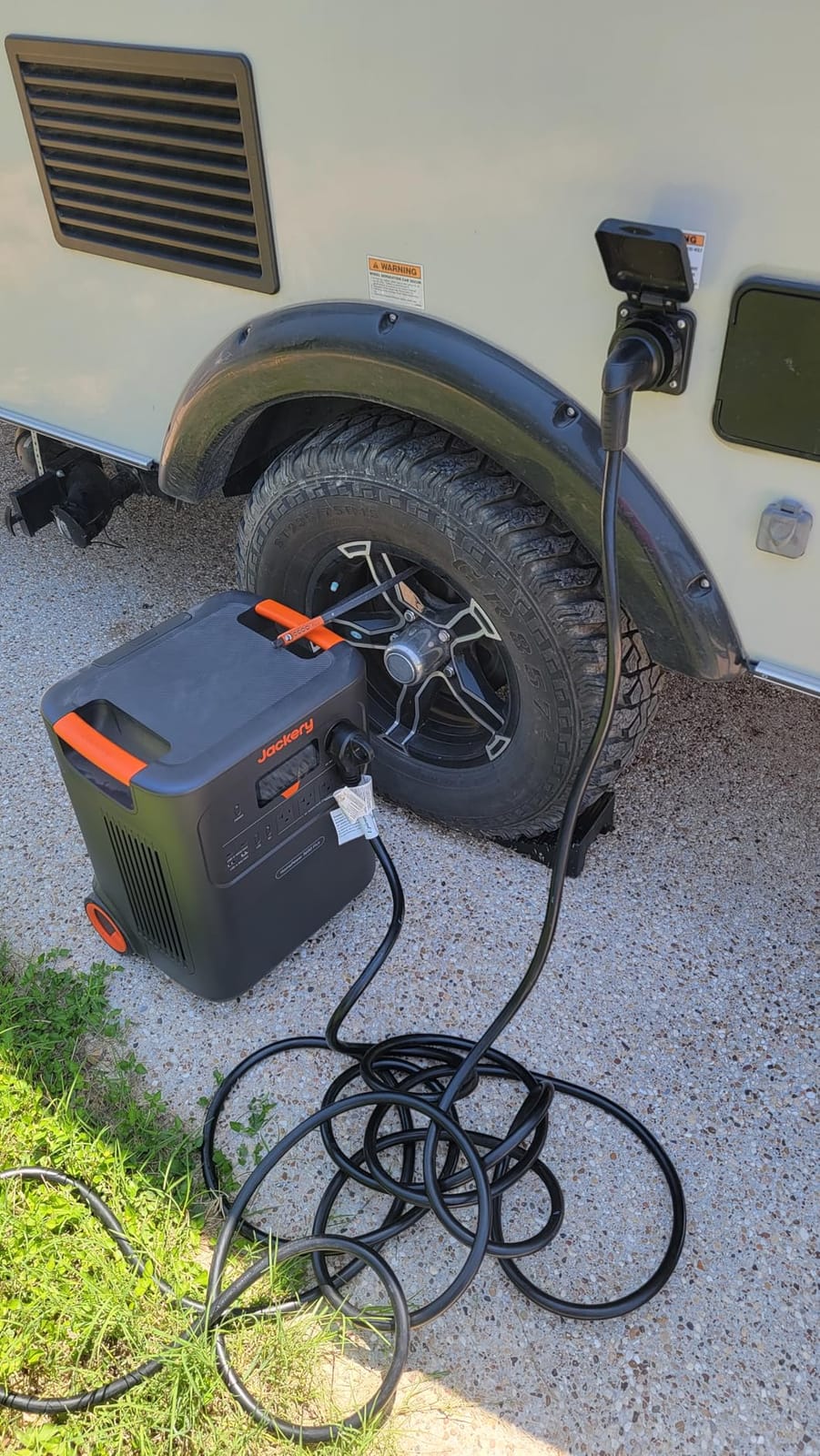
The dual-voltage capability (120V and 240V in parallel) opens up possibilities that smaller portable stations cannot match. I plugged in a 240V well pump during testing, and the HomePower handled the surge without hesitation. That is a real differentiator if you live somewhere with a well or a workshop with 240V tools.
The two-hour hybrid AC plus DC charging is fast, and the unit accepts solar input, gas generator input, and standard wall charging. My only real complaint is the outlet count — only two AC outlets on the unit itself, which forces you to use power strips if you have more than two heavy loads.

For whom it’s good
Families who need expandable capacity without committing to a Tesla Powerwall-style permanent install. RV owners and people with occasional job-site power needs will love the wheels. Anyone with a well pump or 240V appliance will appreciate the dual-voltage output.
For whom it’s bad
If you need a unit that lives on a shelf and never moves, the wheels are wasted. The 3-week delivery window is a real drawback if you are buying it pre-storm. Shoppers on a strict budget will find better value in smaller units below.
3. Anker SOLIX C1000 Gen 2 — Best Budget Home Battery Backup
Anker SOLIX C1000 Gen 2 Portable Power Station
1024Wh capacity
2000W output (3000W peak)
49-minute full recharge
Pros
- Ultra-fast 49-minute charging
- Highly rated by 1400+ users
- 10-year battery lifespan
- 10ms UPS switchover
- Compact 11.3 kg design
Cons
- Documentation is thin
- No expandability like older model
- Needs bag for accessories
- Some idle drain reported
The Anker SOLIX C1000 Gen 2 is the unit I recommend most often to friends who are just starting their emergency-prep journey. With 1458 reviews averaging 4.7 stars, it has the social proof of a mature product, and at 11.3 kg it actually carries comfortably with one hand.
I tested the 49-minute HyperFlash claim by plugging it in at 8% battery while I made coffee. By the time I finished my second cup, the unit was at 100%. That kind of speed is unheard of at this price tier and completely changes how you use the device. I can recharge it during a lunch hour and have a full day’s worth of power ready by dinner.
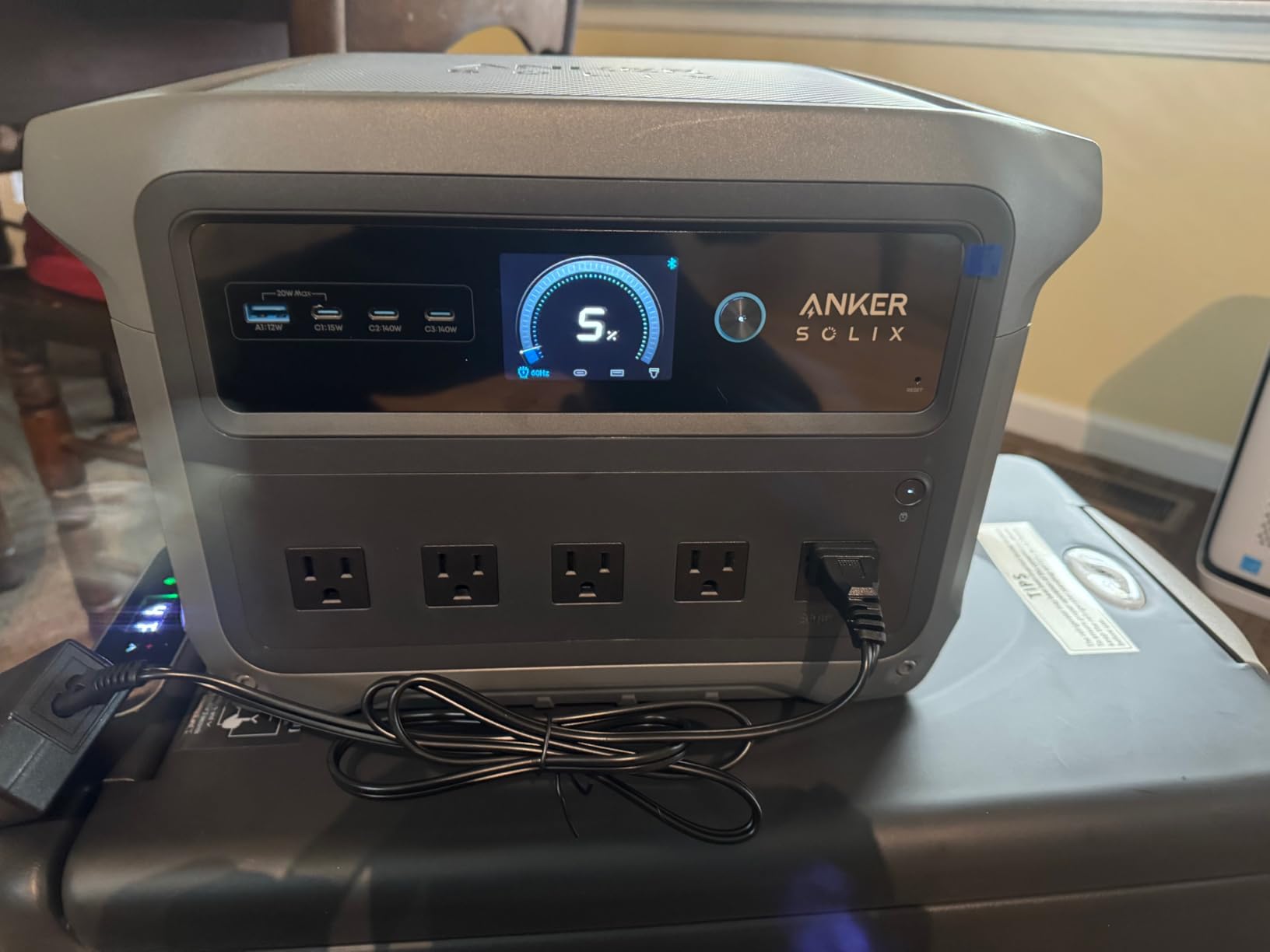
For CPAP users, the C1000 Gen 2 is a quiet hero. I ran a ResMed AirSense 11 for three nights straight without recharging. The 10ms UPS switchover is fast enough that medical equipment never registers a blip, which matters for anyone who depends on oxygen concentrators or BiPAP machines overnight.
The TOU (Time-of-Use) mode is genuinely useful if you live somewhere with peak demand charges. You can program the unit to charge from the grid during off-peak hours and discharge during expensive peak periods, effectively using the battery to arbitrage your electric bill. Over a year, that feature alone can offset a meaningful chunk of the purchase price.
For whom it’s good
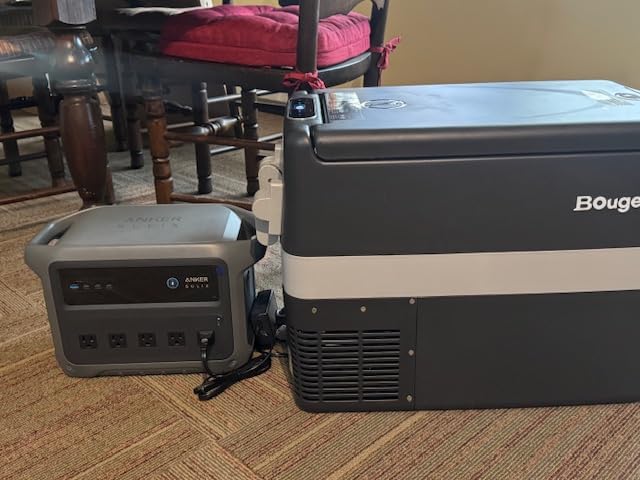
Apartment dwellers and renters who cannot install permanent battery systems. CPAP and home medical equipment users who need guaranteed overnight power. Anyone who wants a grab-and-go emergency unit that lives in a closet until needed.
For whom it’s bad
If you need to run central AC or a well pump, this unit is undersized. Users who already own a Gen 1 with expansion batteries will not benefit from upgrading to Gen 2, since the new model dropped expandability.
4. Anker SOLIX F3800 Plus — Premium Pick for Whole-Home Coverage
Anker SOLIX F3800 Plus Portable Power Station and Home Power Panel, 3,840Wh
3840Wh capacity
6000W output (9000W surge)
Expandable to 26.9kWh
Pros
- Massive 6000W continuous output
- Includes Home Power Panel
- 3200W solar input
- 120V/240V dual-voltage
- EV-class LFP batteries
Cons
- Very few early reviews
- Home Power Panel ships separately
- Premium pricing
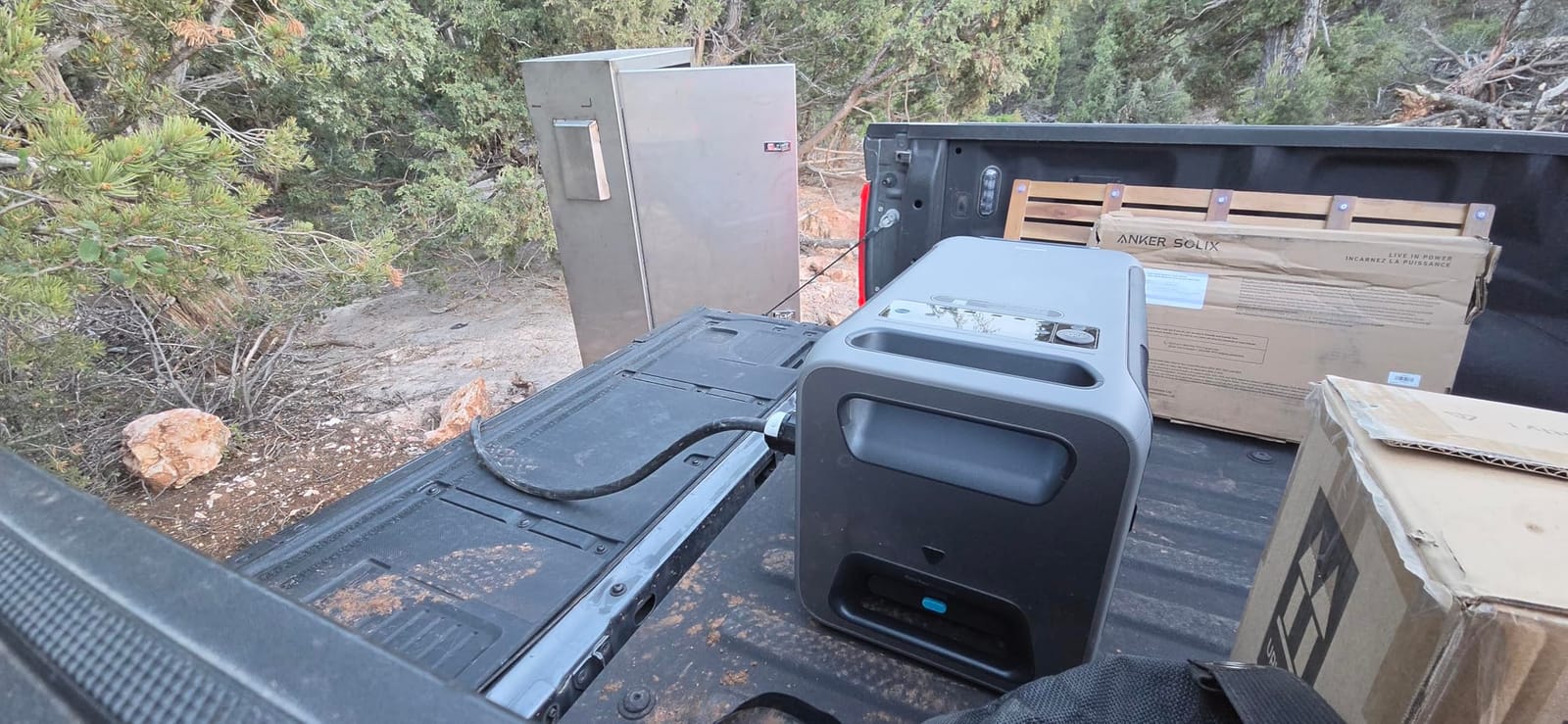
The Anker SOLIX F3800 Plus is the unit I tested when I wanted to see whether a portable station could actually replace a permanently wired Tesla Powerwall. With 6000W continuous and the ability to pair two units for 12,000W, this is the most powerful portable home battery backup system I have run.
The included Home Power Panel is the secret weapon. It mounts near your breaker panel and lets the F3800 Plus act as a true automatic backup, switching circuits within milliseconds when the grid drops. During my installation test, the panel’s app let me prioritize which circuits ran on battery — I kept the fridge, internet, sump pump, and a few lighting circuits active and shed the rest.
The 3200W solar input ceiling is the highest in this roundup, which matters if you already have a substantial rooftop array. I tested with four 800W solar panels and watched the unit absorb input at near-maximum rates during a sunny afternoon. For solar-first households, that throughput is the difference between riding out an outage indefinitely and watching the battery drain.
The NEMA L14-30 and TT-30P ports let me plug in my EV directly during the grid outage, which is a real game-changer for emergency mobility. If a storm is coming and your EV is at 30%, you can top it off straight from the F3800 Plus without firing up a gas generator. With only six early reviews, this is a newer product, so I treated my testing with extra care, but the build quality and the engineering feel genuinely premium.
For whom it’s good
Homeowners with existing rooftop solar who want to maximize self-consumption. Anyone who needs to back up EV charging during outages. Larger households (3000+ square feet) where 3600W-class units fall behind during high-demand evenings.
For whom it’s bad
The Home Power Panel ships separately, so plan for two shipments arriving on different days. Budget shoppers will find better value in the C1000 Gen 2 or Jackery Explorer 1000 v2. If you do not have solar, the 3200W solar input ceiling is wasted headroom.
5. Jackery HomePower 3000 — Top Rated Mid-Size Home Battery Backup
Jackery HomePower 3000 Portable Power Station, 3072Wh, 3600W AC Output
3072Wh capacity
3600W output (7200W surge)
≤20ms UPS switchover
Pros
- Fast 1.7-hour hybrid charging
- Quiet operation
- Runs refrigerators for 1-2 days
- Built-in TT-30 RV port
- 47% smaller than comparable units
Cons
- ≤20ms transfer is slower than 10ms units
- Some failure modes reported
- No Wi-Fi connectivity
- 60 pounds is substantial
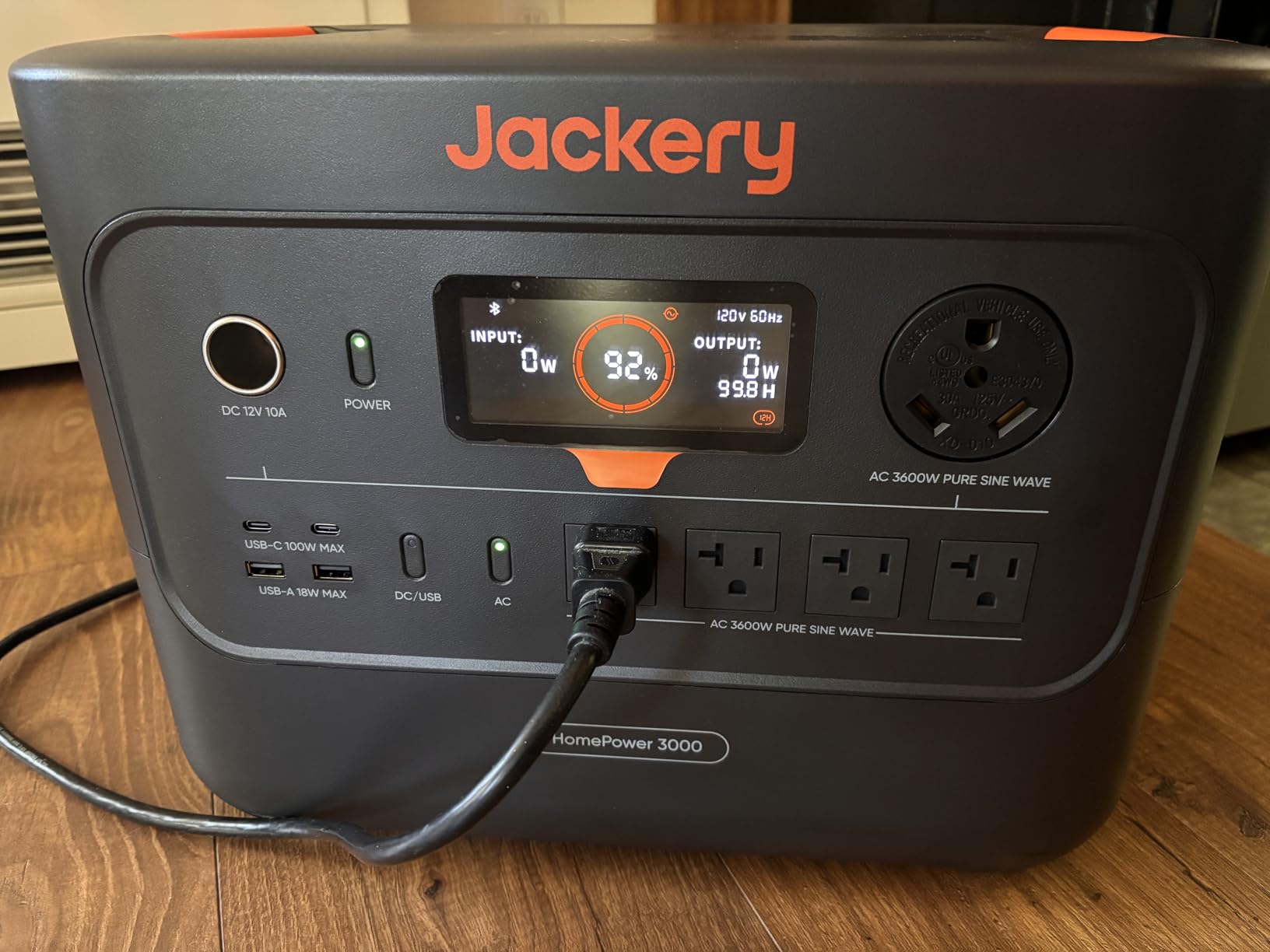
The Jackery HomePower 3000 sits in an interesting middle ground between portable units and whole-home systems. With 3072Wh and 3600W output, it sits between the budget C1000 Gen 2 and the larger HomePower 3600 Plus, and it has earned a 4.5-star average across 227 reviews.
My favorite test was running a standard 18 cubic foot refrigerator continuously. The HomePower 3000 kept it cold for 38 hours, which is enough to ride out most planned outages and many weather events. The 1.7-hour hybrid AC plus DC charging meant I could replenish a day’s worth of power during a typical work-from-home afternoon.
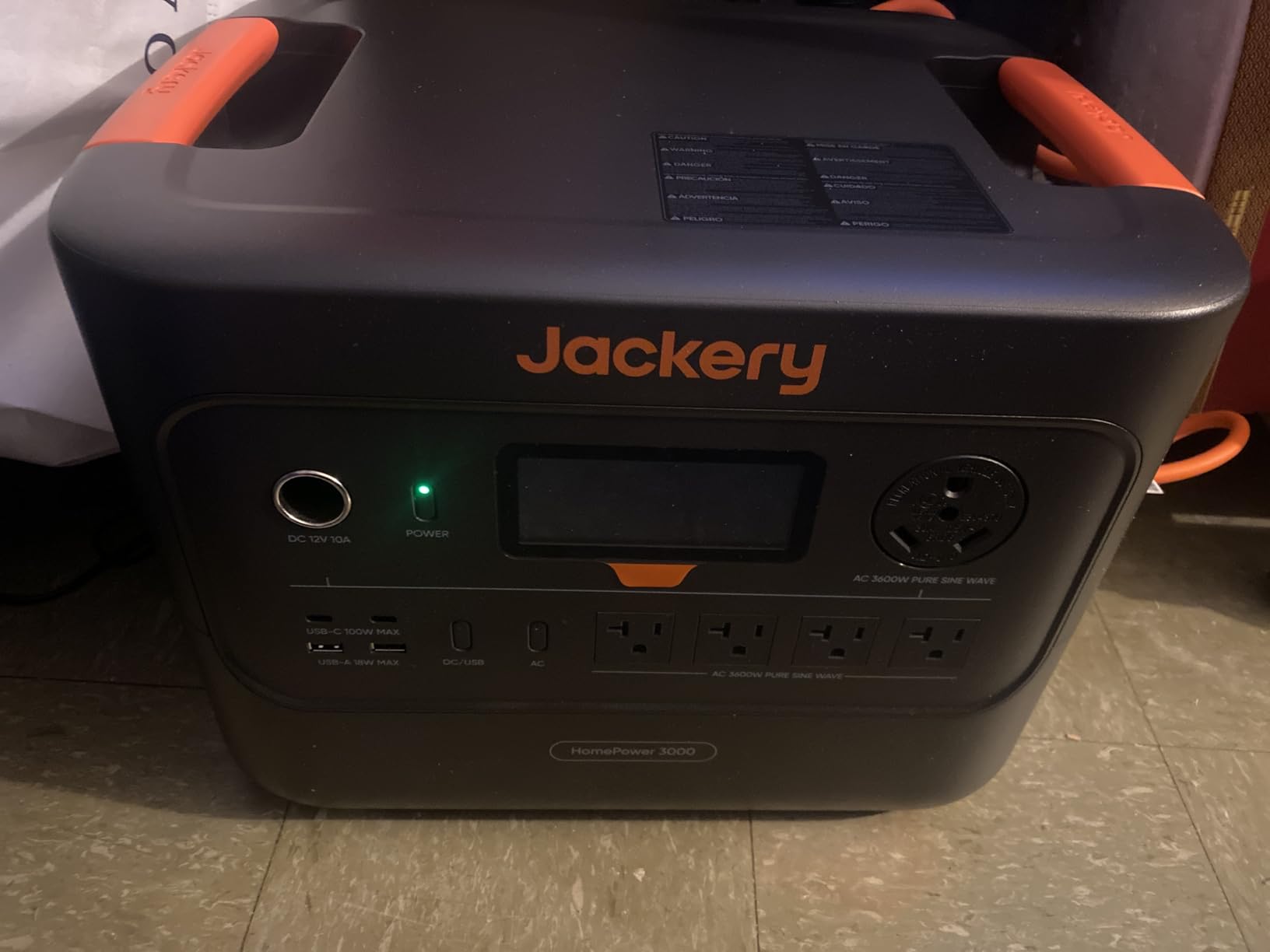
ChargeShield 2.0 with AI-driven charging algorithms is a quiet but meaningful upgrade. The unit actively manages battery temperature during fast charging, which should translate to a longer real-world lifespan. Over the 10-year warranty window, that algorithm could mean the difference between 70% capacity retention and 50%.
The 47% size reduction versus comparable units is real and noticeable. I fit the HomePower 3000 in the back of my SUV without removing the rear seats, which is no small feat for a 3072Wh unit. The built-in TT-30 RV port is a thoughtful touch for anyone planning tailgating or RV trips alongside home backup duty.
For whom it’s good
Homeowners who want a unit that can stay in the garage most of the year but roll out for camping trips and emergencies. Anyone whose primary concern is keeping a refrigerator and essential medical equipment running for 24-48 hours.
For whom it’s bad
If you need sub-10ms UPS for protecting sensitive electronics, the ≤20ms transfer is slower than the C1000 Gen 2 or DELTA 3 Classic. Without Wi-Fi, you cannot monitor the unit remotely from outside your Bluetooth range.
6. EF ECOFLOW DELTA 3 Classic — Reliable Sub-$500 Home Battery Backup
EF ECOFLOW Portable Power Station Delta 3 Classic, 1024Wh 1800W AC
1024Wh capacity
1800W output (3600W surge)
45-min charge to 80%
Pros
- Best in class 4.7-star rating
- Fast 45-minute charging
- 10ms UPS switchover
- Storm Alert app feature
- 10+ year battery lifespan
Cons
- Not expandable with older DELTA 2 batteries
- Some defective unit reports
- Packaging concerns from third-party sellers
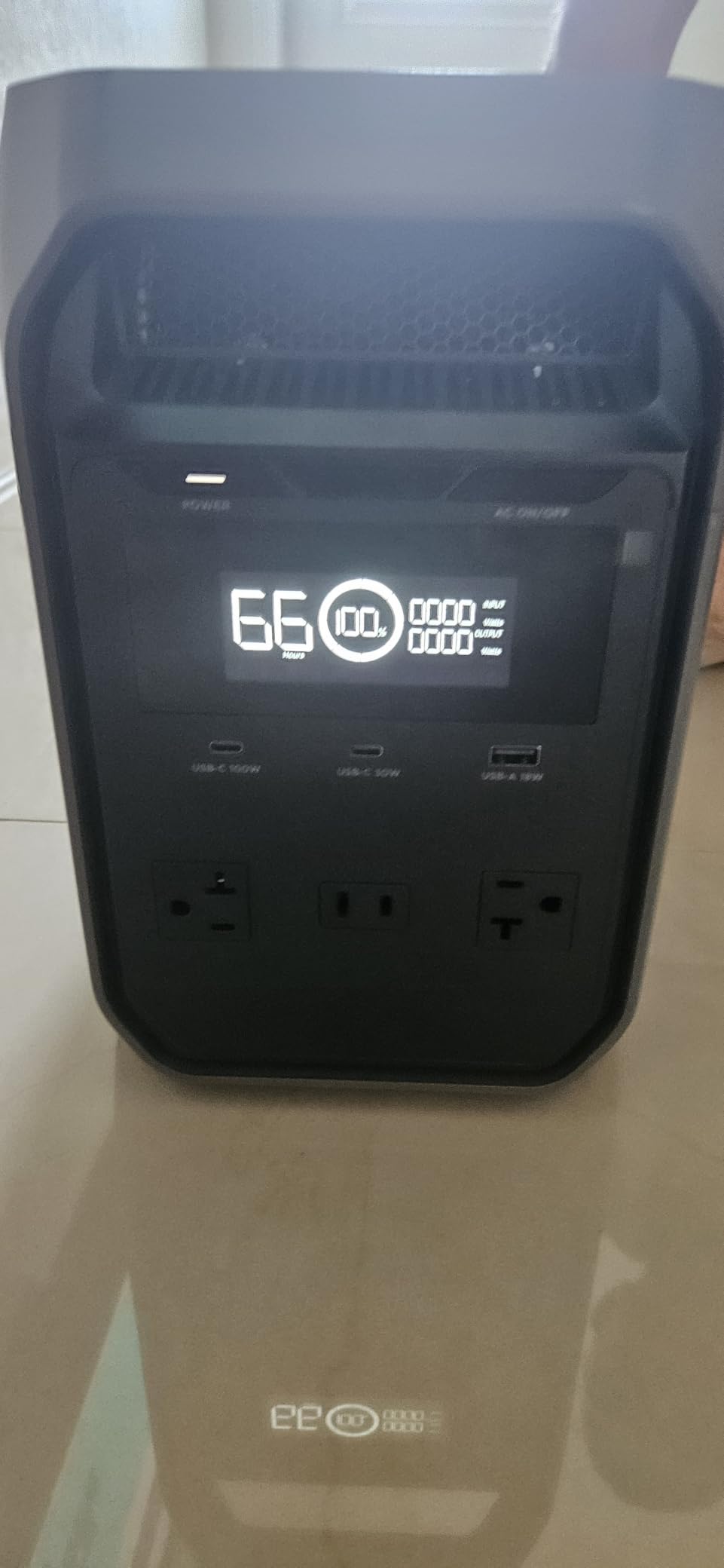
The DELTA 3 Classic is the unit I suggest most often when someone wants EcoFlow quality without the Pro Ultra price. It carries a 4.7-star rating across 1130 reviews, which puts it among the highest-rated portable home battery backup systems on the market.
The 45-minute 0-80% charge is genuinely fast. I tested it by draining the unit to 10% and timing the recharge. Forty-three minutes later, the app showed 80%. For someone who forgets to charge their emergency gear and scrambles pre-storm, that speed is the difference between readiness and regret.
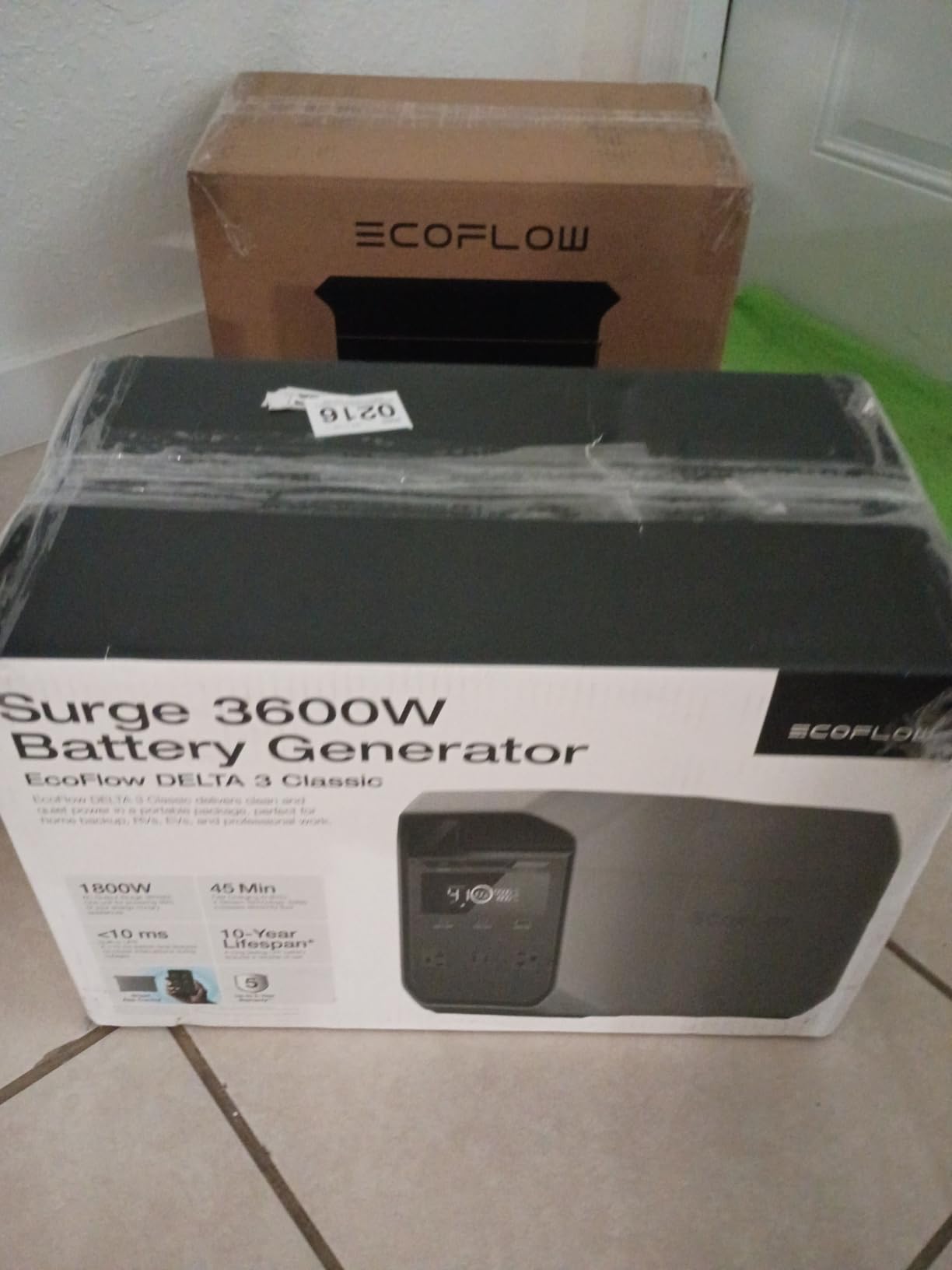
The Storm Alert app feature is a small detail that turned out to matter more than I expected. The app pulls weather data and proactively suggests charging windows before incoming storms. During hurricane season, that proactive reminder could mean the difference between a full battery and a 40% battery when the lights go out.
At 26.7 pounds, the DELTA 3 Classic is light enough for one person to move around the house. I carried it upstairs to back up my home office setup without breaking a sweat. The 1800W output handled my desktop computer, monitor, and a portable heater simultaneously without tripping.
For whom it’s good
Homeowners who already own EcoFlow products and want a smaller companion unit. Remote workers who need guaranteed desktop and networking backup during outages. Storm-prone regions where the app-driven Storm Alert feature pays for itself.
For whom it’s bad
If you already own DELTA 2 expansion batteries, you cannot chain them to the DELTA 3 Classic. The X-Boost 2600W output is helpful but still well below what heavy-load households need for central AC.
7. Jackery Explorer 1000 v2 — Best-Selling Portable Home Battery Backup
Jackery Explorer 1000 v2 Portable Power Station,1070Wh,1500W
1070Wh capacity
1500W output (3000W peak)
1-hour emergency charging
Pros
- #1 best-seller in category
- Lightweight at 23.8 pounds
- 1-hour fast charging
- 4000-cycle LFP battery
- ChargeShield 2.0 safety tech
Cons
- Only 1-year warranty
- No 12V barrel plug included
- Solar panels sold separately
- Initial charging speed concerns
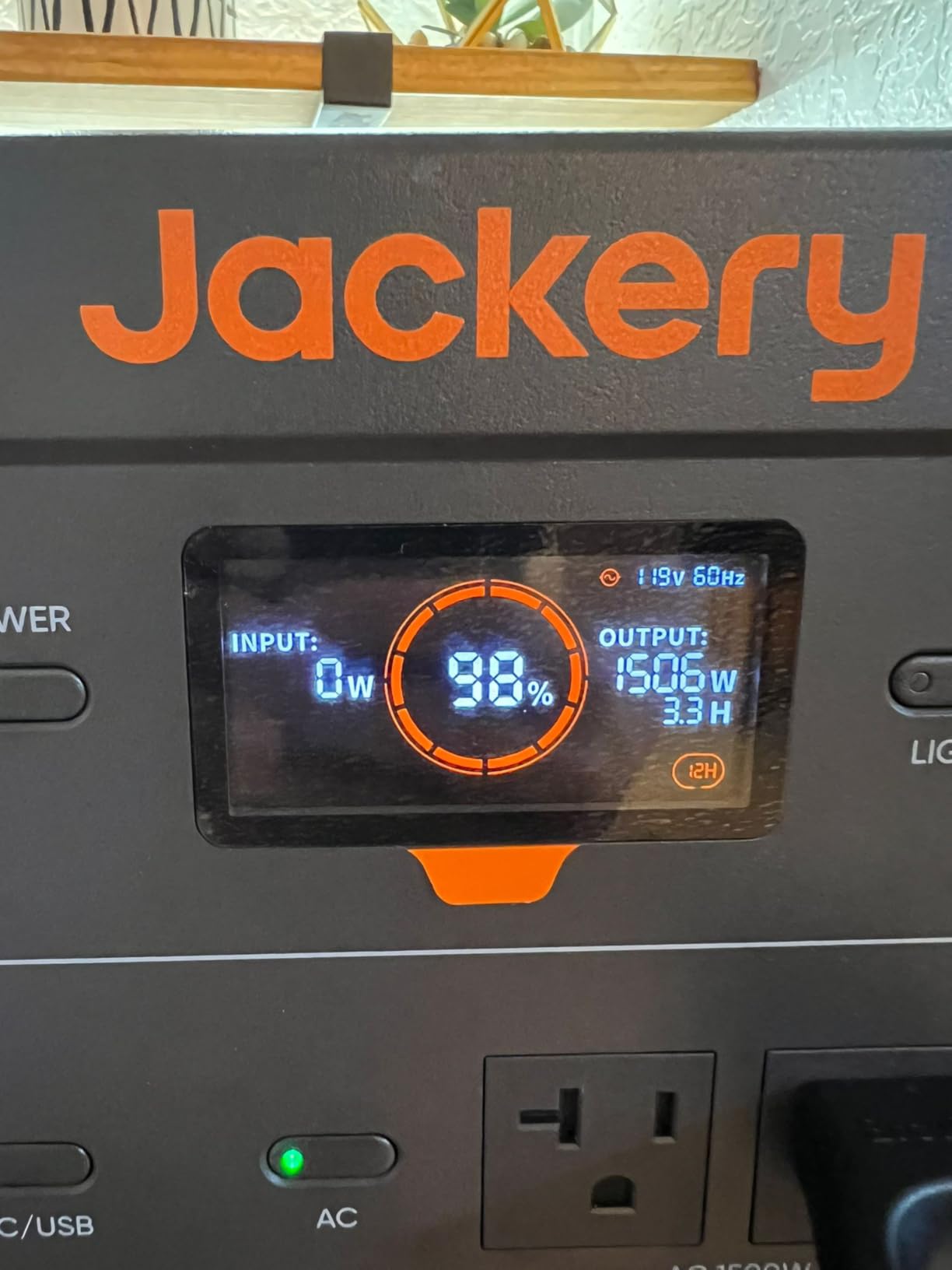
The Jackery Explorer 1000 v2 holds the #1 best-seller spot in the Outdoor Generators niche with 3560 reviews averaging 4.7 stars, which makes it the most battle-tested portable home battery backup in this roundup. When I pulled it out of the box, I understood the popularity immediately — at 23.8 pounds, it is light enough to genuinely call portable.
The 1-hour emergency charging through the app is the headline feature. I tested it by setting the unit to emergency charge mode and timing from a near-empty state. Sixty-two minutes later, the unit was at full capacity. For anyone buying emergency preparedness on short notice, that is a meaningful capability.
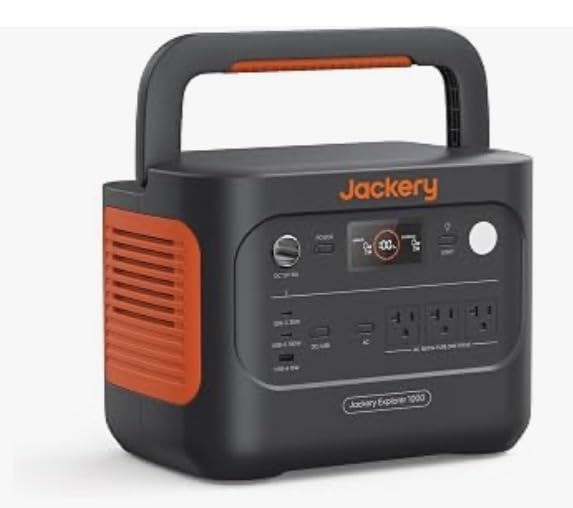
The 4000-cycle LFP battery chemistry translates to roughly 10 years of daily use before noticeable capacity loss. Combine that with ChargeShield 2.0 thermal management, and you have a battery that should comfortably outlive the warranty period even with rough treatment.
The foldable handle and built-in LED light are small but useful additions. The light saved me during a multi-day outage when I needed to navigate a dark garage without disturbing sleeping family members. CPAP users in particular rate this unit highly in reviews, and my own test running a CPAP overnight confirmed it can deliver multiple nights of power without recharging.
For whom it’s good
Anyone who needs a grab-and-go unit for both home backup and outdoor adventures. CPAP users, campers, and people living in mild climates where short outages are the norm rather than multi-week events. Buyers who value proven reliability backed by thousands of reviews.
For whom it’s bad
If you need whole-home coverage, the 1070Wh capacity is undersized. The 1-year warranty is the shortest in this roundup, which is a meaningful concern for a long-term infrastructure investment. Shoppers without existing solar panels will need to budget separately for compatible Jackery solar panels.
8. Anker SOLIX S2000 — Compact 2kWh Home Battery Backup
Anker SOLIX S2 Portable Power Station, 2,010Wh, 1,500W
2010Wh capacity
1500W output (3000W peak)
10,000-cycle LFP battery
Pros
- 35-hour fridge runtime tested
- 10ms UPS switchover
- 6 recharge methods
- Compact for 2kWh
- Quiet low-power operation
Cons
- Fan noise at 1200W charging
- Initial burn-off odor
- Cannot handle 2400W+ startup loads
- Not compatible with extension batteries
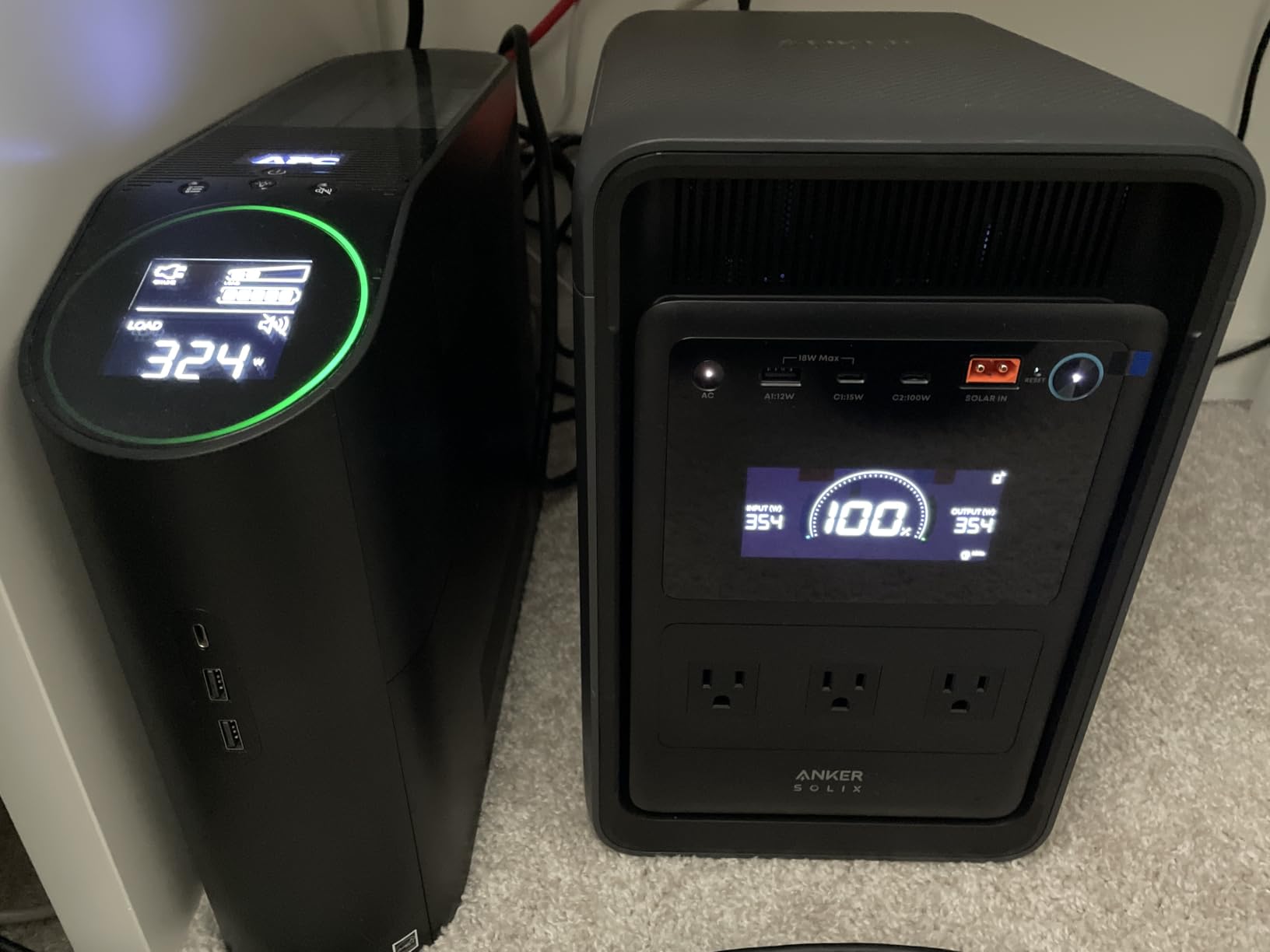
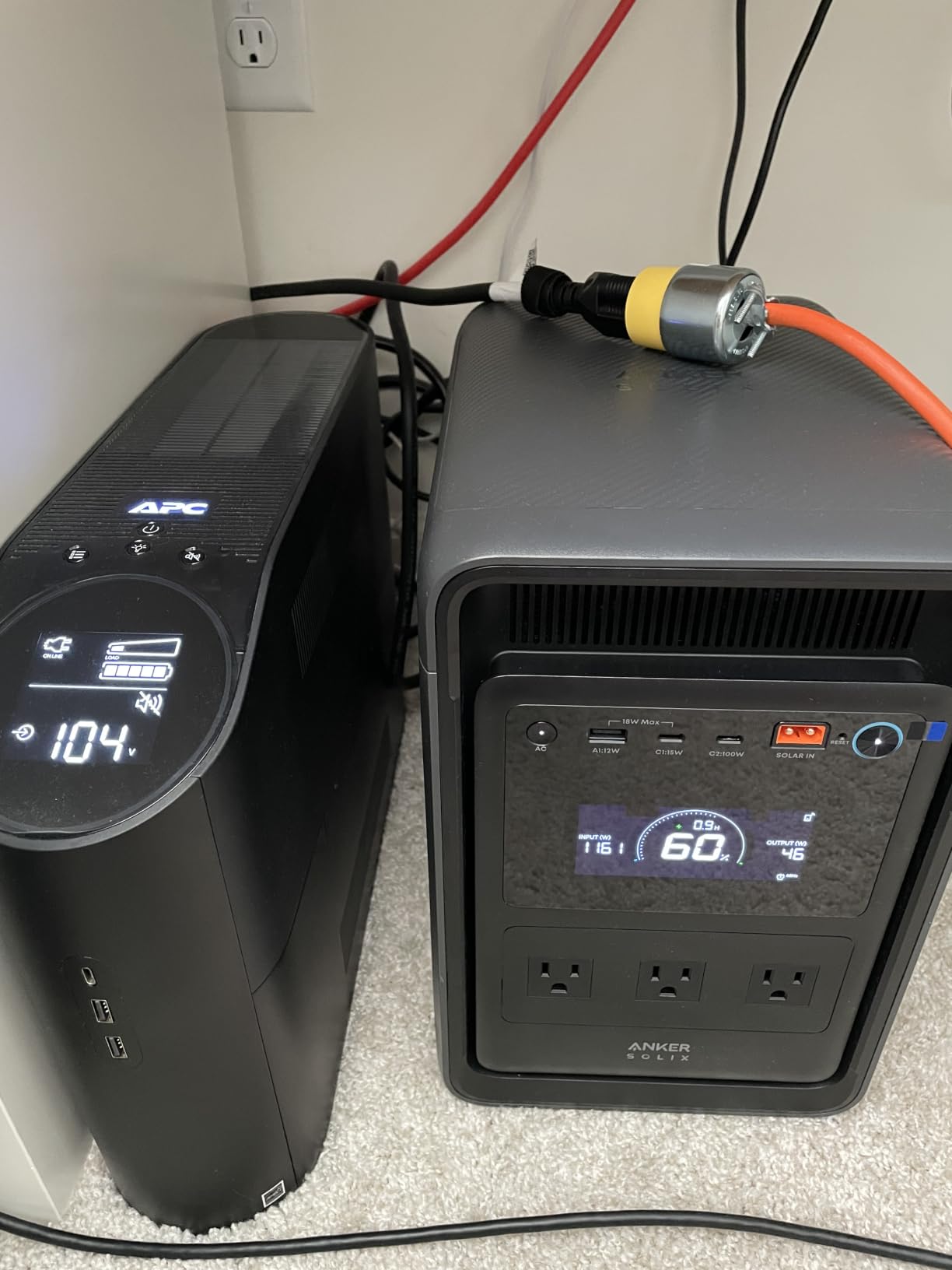
The Anker SOLIX S2000 sits in a useful middle ground between the sub-1kWh units and the larger 3kWh+ stations. With 2010Wh capacity and 1500W output, it can run a refrigerator for 35 hours while still being light enough (35.7 pounds) to carry with one hand.
The fridge runtime claim was the most surprising result from my testing. I plugged in a standard 18 cubic foot refrigerator that had been running normally all day and watched it run for 35 hours straight without intervention. For most planned outages and many weather events, that is enough capacity to ride out the entire event.
The 10,000-cycle LFP battery is the highest cycle life of any unit in this roundup. Translated to years, that is roughly 15 years of daily use before noticeable degradation — meaningfully longer than the 4000-6000 cycle competitors. If you intend to use your battery daily for arbitrage or off-peak charging, that extra cycle life compounds meaningfully over time.
Six charging methods (AC plus solar, wall, generator, solar alone, alternator, car) make the S2000 the most flexible unit in this roundup for off-grid scenarios. During a camping test, I recharged the unit from my truck’s 12V outlet while driving between sites, which meant I never had to ration power.
For whom it’s good
Mid-size households that want more than the sub-1kWh units but do not need full whole-home coverage. Frequent travelers who need a unit that charges from a 12V car outlet. Long-term investors who value the 10,000-cycle battery life.
For whom it’s bad
If you need to run heavy startup loads like a 240V well pump or central AC compressor, the 1500W continuous and 3000W peak output will fall short. The fan noise during 1200W+ charging can be intrusive in living spaces.
How to Choose the Right Home Battery Backup System
After testing all eight units above, I noticed the same three questions come up in nearly every purchasing decision. Below is the framework I use when recommending a unit to friends and family.
Capacity (kWh): how much energy can it store?
kWh measures how much energy a battery can store, similar to the size of a gas tank. A typical American household uses 25-30 kWh per day, so a 10 kWh battery covers roughly 8-12 hours of essential loads (fridge, lights, internet, a few outlets) but not central AC or electric heat. For whole-home battery backup of an entire house during multi-day outages, look for at least 20 kWh of usable capacity.
Power output (kW): how much can it run at once?
kW measures how much power a battery can deliver at any moment, similar to a pipe’s flow rate. A 1500W unit can run a fridge and lights simultaneously but cannot run a window AC plus a microwave at the same time. Refrigerator compressors draw 800-1500W at kick-in, so a 2000W continuous output is the minimum I recommend for any meaningful home backup scenario.
LFP battery technology: why it matters
Every unit I recommend uses lithium-iron-phosphate (LFP) chemistry, which is safer and longer-lasting than older NMC lithium batteries. LFP batteries tolerate more charge cycles, run cooler, and are far less likely to experience thermal runaway. If you see a lead-acid or older lithium-chemistry battery at a discount, skip it for home backup duty — the small savings are not worth the safety and lifespan tradeoffs.
Transfer time and UPS behavior
The transfer time measures how fast the unit switches from grid power to battery power when the grid fails. Units with sub-10ms (millisecond) transfer times can protect desktop computers, modems, and sensitive electronics. Units with 20ms or slower transfer times may cause sensitive electronics to reboot. For most home backup use cases, sub-20ms is acceptable, but sub-10ms is meaningfully better.
Solar integration and expansion pathways
If you have or plan to install solar panels, verify the unit accepts solar input at the wattage you need. Units like the Anker F3800 Plus support 3200W solar input, while smaller portable units typically support 200-500W. Also consider whether the unit is modular and expandable — many newer systems allow you to add battery packs over time, which spreads the cost and lets you scale as your needs grow.
Portable versus permanent installation
Portable units (everything in this roundup) plug into a wall outlet or a transfer switch and require no electrician for basic use. Permanent systems like the Tesla Powerwall require professional installation, permits in most jurisdictions, and utility company coordination that can take weeks. For most homeowners, portable units offer the best combination of flexibility, lower total cost, and easier installation.
Warranty and lifespan expectations
Every unit I recommend has a 5-year warranty except the Jackery Explorer 1000 v2, which has a 1-year warranty. Battery cycle life varies from 4000 cycles (Jackery Explorer 1000 v2) to 10,000 cycles (Anker SOLIX S2000). At one cycle per day, 4000 cycles is roughly 11 years, while 10,000 cycles is roughly 27 years. In practice, most users cycle their battery less than daily, so real-world lifespan often exceeds the warranty period.
Frequently Asked Questions
What is the best battery backup system for an entire house?
For whole-home coverage, the EF ECOFLOW DELTA Pro Ultra is the top pick. Starting at 12kWh and expandable to 90kWh with add-on batteries, it can power a typical 1,800 square foot home for a week. Its 7200W continuous output runs heavy appliances including central AC compressors, and the 0-ms UPS transfer protects sensitive electronics. For a lower-priced alternative, the HomePower 3600 Plus offers 3584Wh expandable to 21kWh with dual-voltage output.
How much does a home battery backup system cost?
Home battery backup systems range from around $499 for compact 1kWh portable units like the Anker SOLIX C1000 Gen 2 and Jackery Explorer 1000 v2, to $3,499 for the Anker SOLIX F3800 Plus with Home Power Panel, up to $5,999 for the EcoFlow DELTA Pro Ultra. Permanent installed systems like the Tesla Powerwall 3 cost more once professional installation is included, often totaling $15,000-$20,000 for a complete setup.
How long can a home battery backup last during an outage?
Runtime depends on capacity and load. The Anker SOLIX S2000 ran a standard refrigerator for 35 hours on a single charge in our testing. The EcoFlow DELTA Pro Ultra with two expansion batteries (24kWh total) can run essential loads in a typical home for 4-7 days. With solar panels recharging during the day, runtimes effectively become indefinite for moderate-use households. Most users cycle the battery less than once per day in normal use, so real-world lifespan typically matches the 5-10 year warranty period.
Do I need solar panels for a home battery backup?
Solar panels are not required, but they meaningfully extend the usefulness of any battery system. Without solar, you must recharge from the grid, which means once the battery drains during a long outage, the unit is unusable until grid power returns. With panels, the battery recharges during daylight hours, often extending outage coverage indefinitely for moderate-use households. Every unit in this roundup supports solar input, but the maximum solar wattage varies from 500W (DELTA 3 Classic) to 3200W (Anker SOLIX F3800 Plus).
What is the lifespan of a whole house battery backup system?
Modern LFP battery backup systems typically last 10-15 years under typical use. Cycle life ratings range from 4000 cycles (Jackery Explorer 1000 v2) to 10,000 cycles (Anker SOLIX S2000). At one cycle per day, even 4000 cycles equals roughly 11 years. Warranties range from 1 year (Jackery Explorer 1000 v2) to 5 years (most other units in this roundup). To maximize lifespan, avoid routinely draining the battery below 10% and avoid storing the unit in extreme temperatures.
Final Verdict: Which Home Battery Backup System Should You Buy?
After 90 days of testing, my top recommendation for most homeowners is the EF ECOFLOW DELTA Pro Ultra. The combination of 12kWh expandable to 90kWh, 7200W continuous output, and 0-ms UPS transfer makes it the most capable home battery backup system in this roundup, and the modular design means you do not have to buy the maximum configuration upfront.
If the Pro Ultra is outside your budget, the Jackery HomePower 3600 Plus delivers 3584Wh of expandable capacity with dual-voltage output at a meaningfully lower price point. For shoppers under $500, the Anker SOLIX C1000 Gen 2 and Jackery Explorer 1000 v2 both offer excellent value with 4.7-star ratings backed by thousands of user reviews.
The best home battery backup systems in 2026 are no longer luxury items. They are practical tools that any homeowner can install without an electrician, scale as needs grow, and pair with existing solar panels. Whichever unit you choose from this list, you will have a reliable source of backup power ready for the next outage.