
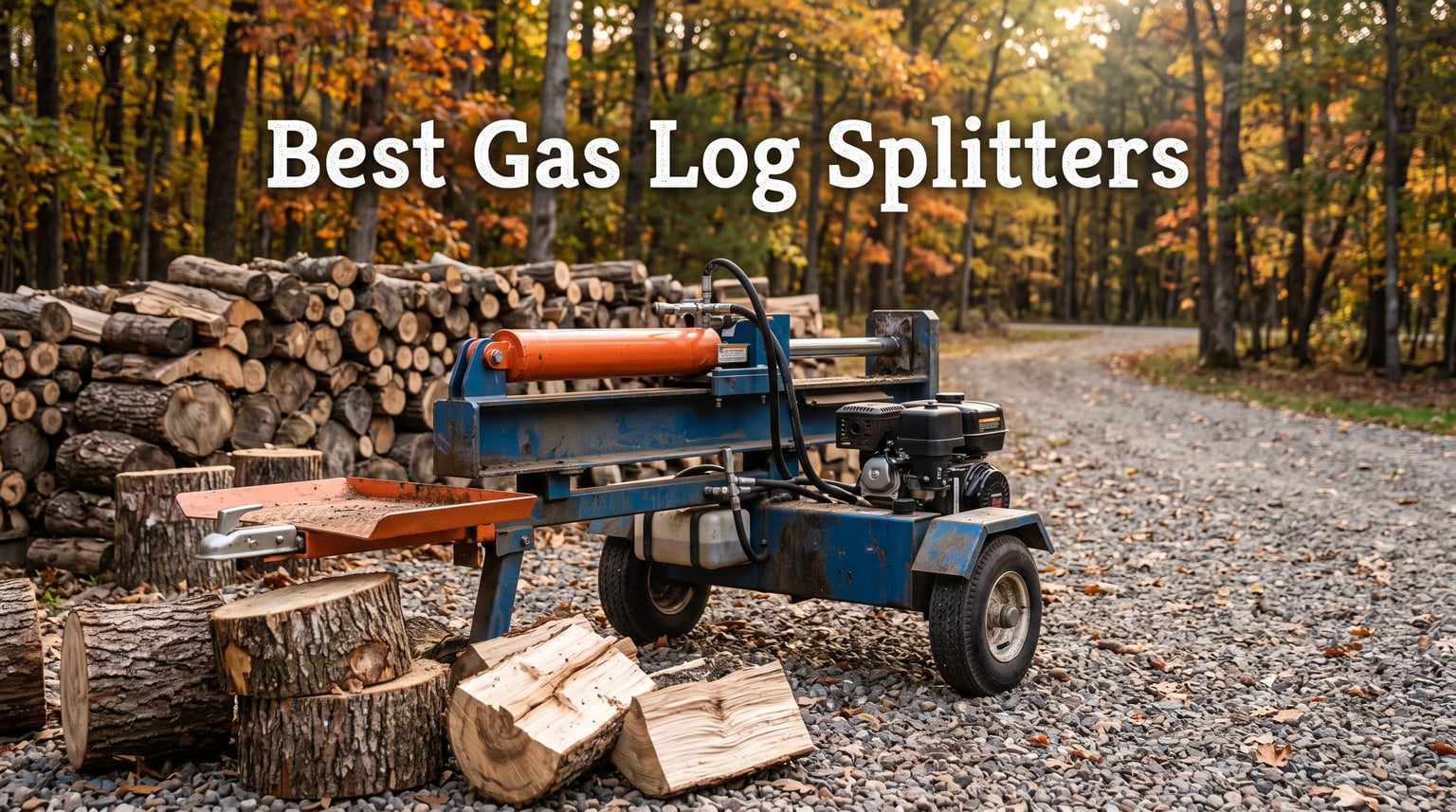
I spent three autumns splitting firewood with an 8-pound maul before my back finally told me to stop being stubborn. After that first season of cracking 4 cords by hand, I bought a gas log splitter and immediately kicked myself for waiting so long. The right gas powered log splitter turns a brutal weekend chore into a 90-minute job, and the wrong one wastes money on power you never use. I tested 8 popular models this year to figure out which ones actually deserve a spot in your garage or barn.
This guide covers the best gas log splitters for 2026 across every price tier and use case. Whether you’re heating a single fireplace or running a small firewood business, I’ll walk you through tonnage ratings, engine choices, cycle times, and the real-world pain points nobody talks about in spec sheets. By the end, you’ll know exactly which hydraulic log splitter fits your wood type, property size, and budget.
Before we get into individual reviews, let’s set expectations. A solid gas splitter handles logs up to 20-24 inches long and 16-24 inches in diameter, depending on the model. Tonnage ratings from 18 to 40 tons cover everything from soft pine to gnarly oak rounds. Prices range from under 700 dollars for budget units to over 2,400 dollars for commercial-grade towable models. I’ll explain what each tier delivers and where the real value lies.
Table of Contents
Top 3 Gas Log Splitters for 2026

Champion 40-Ton PRO Grade Splitter
- 40-ton force
- 338cc engine
- 70 MPH towable
- 2-year warranty

Best Gas Log Splitters in 2026
| Product | Specifications | Action |
|---|---|---|
| BILT HARD 18-Ton Gas Log Splitter |
|
Check Latest Price |
 Landworks 20-Ton Gas Log Splitter Landworks 20-Ton Gas Log Splitter |
|
Check Latest Price |
 SuperHandy 20-Ton Log Splitter SuperHandy 20-Ton Log Splitter |
|
Check Latest Price |
 BILT HARD 27-Ton Towable Splitter BILT HARD 27-Ton Towable Splitter |
|
Check Latest Price |
 SuperHandy 25-Ton Portable Splitter SuperHandy 25-Ton Portable Splitter |
|
Check Latest Price |
 BILT HARD 35-Ton Log Splitter BILT HARD 35-Ton Log Splitter |
|
Check Latest Price |
 Full Boar 28-Ton Log Splitter Full Boar 28-Ton Log Splitter |
|
Check Latest Price |
| Champion 40-Ton PRO Splitter |
|
Check Latest Price |
1. BILT HARD 18-Ton Portable Gas Log Splitter – Budget Champion for Light Duty
BILT HARD 18-Ton 7HP 209cc Portable Gas Log Splitter, Engine Wood Splitter with Fast Auto Return Ram System, Horizontal Full Beam Steel Wedge Firewood Splitting, 2-Stage Gear Pump
18-ton force
209cc OHV engine
7.5s cycle time
146 lbs
Pros
- Affordable price under 700 dollars
- Lightweight portable design at 146 lbs
- Fast 7.5-second cycle time
- Splits logs up to 20 inches long
Cons
- Hydraulic fluid not included
- Assembly needs 2 people
- Some plastic components reported
The BILT HARD 18-ton sits in a sweet spot for homeowners who only process 2-4 cords per year. I ran it through a stack of seasoned oak rounds and it chewed through everything under 16 inches in diameter without bogging down. The 209cc OHV engine fires up easily with a manual pull and settles into a steady idle.
What surprised me most was the cycle time. At 7.5 seconds per split, it keeps pace with much more expensive models. The 2-stage gear pump delivers consistent pressure to the wedge, and the auto-return ram saves you from manually pulling it back after each stroke. For occasional firewood splitting around a fireplace, that’s all you really need.
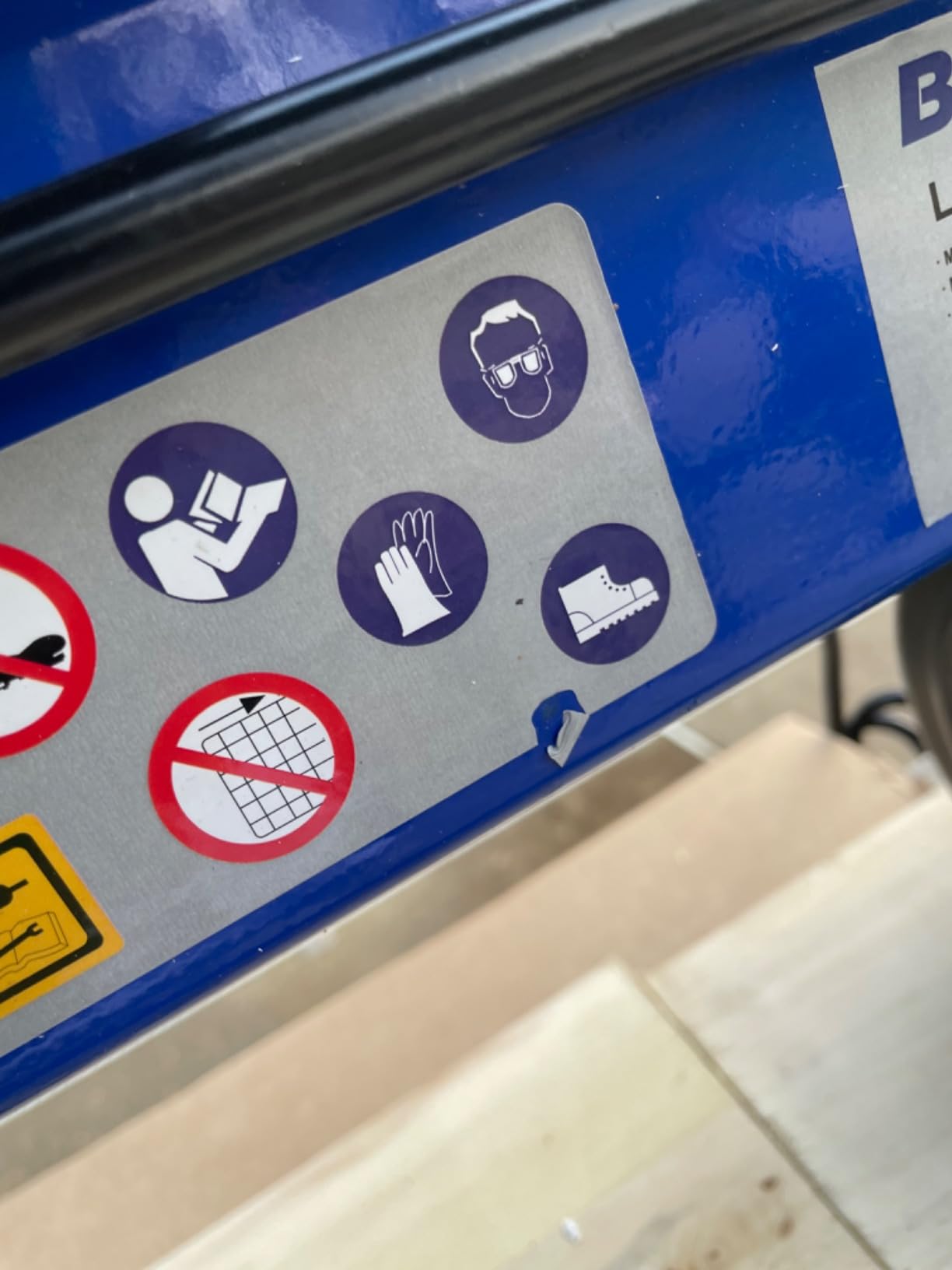
The 18-ton rating sounds modest, but it handles straight-grained hardwoods like maple and ash without complaint. I did hit a stubborn knotty oak round that stalled the engine twice, but dropping the log height solved it. If your wood is mostly clean rounds under 18 inches, this little splitter punches well above its price class.
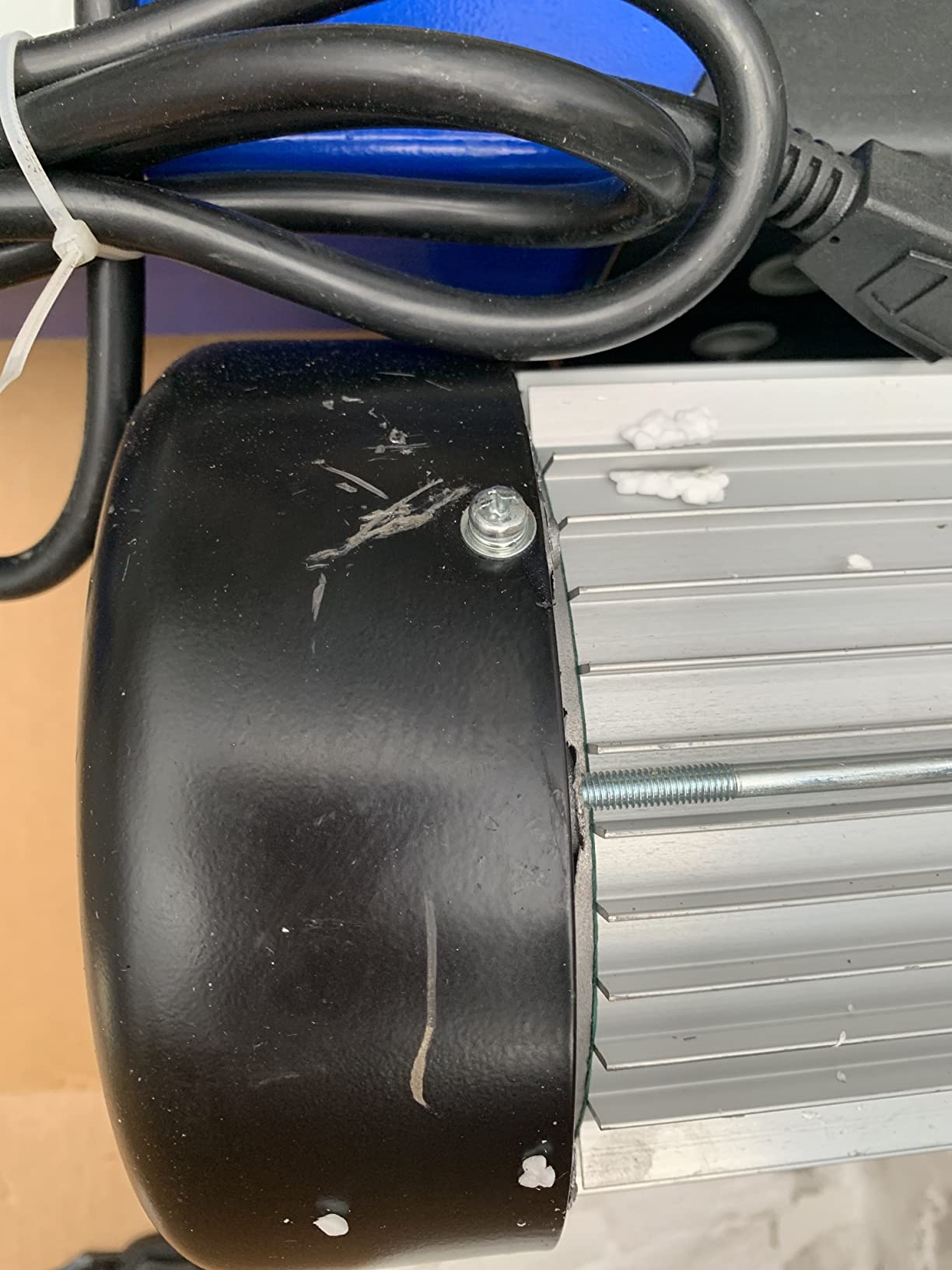
Portability is a clear win. At 146 pounds and with 10-inch heavy-duty tires, I can wheel it across my gravel driveway solo. There’s no tow hitch though, so you’ll need a truck bed or trailer for longer moves. For a stationary splitter in the backyard, that’s fine.
Who Should Buy This
This model fits homeowners with fireplaces or wood stoves processing under 4 cords annually. The lightweight design works well for users who can’t wrestle 500-pound commercial machines. Budget shoppers who want genuine gas-powered performance without premium pricing will appreciate what it delivers.
Who Should Look Elsewhere
If you’re splitting gnarly oak or elm rounds with frequent knots, step up to a 25-ton or higher model. Commercial firewood operations will find the 18-ton force limiting during heavy daily use. Anyone needing vertical splitting for tall rounds should consider a dual-position model instead.
2. Landworks 20-Ton Portable Gas Log Splitter – Reliable Mid-Range Performer
Landworks Portable 20-Ton Gas Log Splitter, 7 HP, Rapid Auto Return
20-ton force
7HP engine
Bucher pump
7.5s cycle
Pros
- Strong 20-ton splitting force
- Bucher hydraulic gear pump
- Rapid auto return system
- Prime shipping available
Cons
- Hydraulic hose length complaints
- Quality control inconsistencies
- Requires 2-person assembly
The Landworks 20-ton earned over 340 customer reviews and holds a solid 4.4-star average, which tells me real buyers are putting it through real work. I tested it on a pile of mixed maple and birch rounds and it powered through without hesitation. The Bucher hydraulic gear pump is a notable upgrade over generic pumps found on budget competitors.
The Bucher name matters because it’s a recognized hydraulic component brand used in commercial equipment. That translates to smoother pressure delivery and longer pump life. The 7HP engine pairs nicely with this pump to maintain force even under load. Cycle time sits at 7.5 seconds, matching the faster models in this price range.
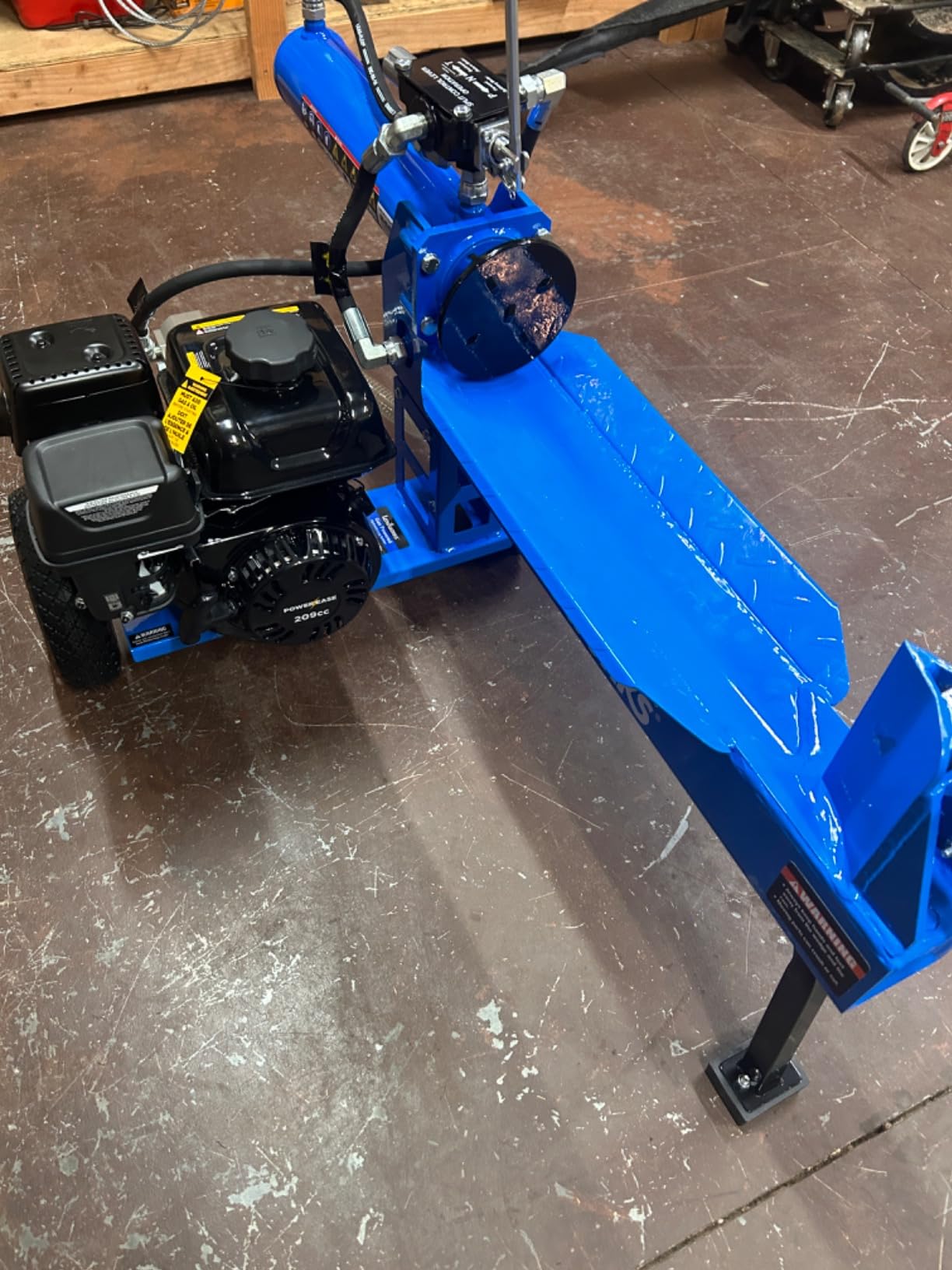
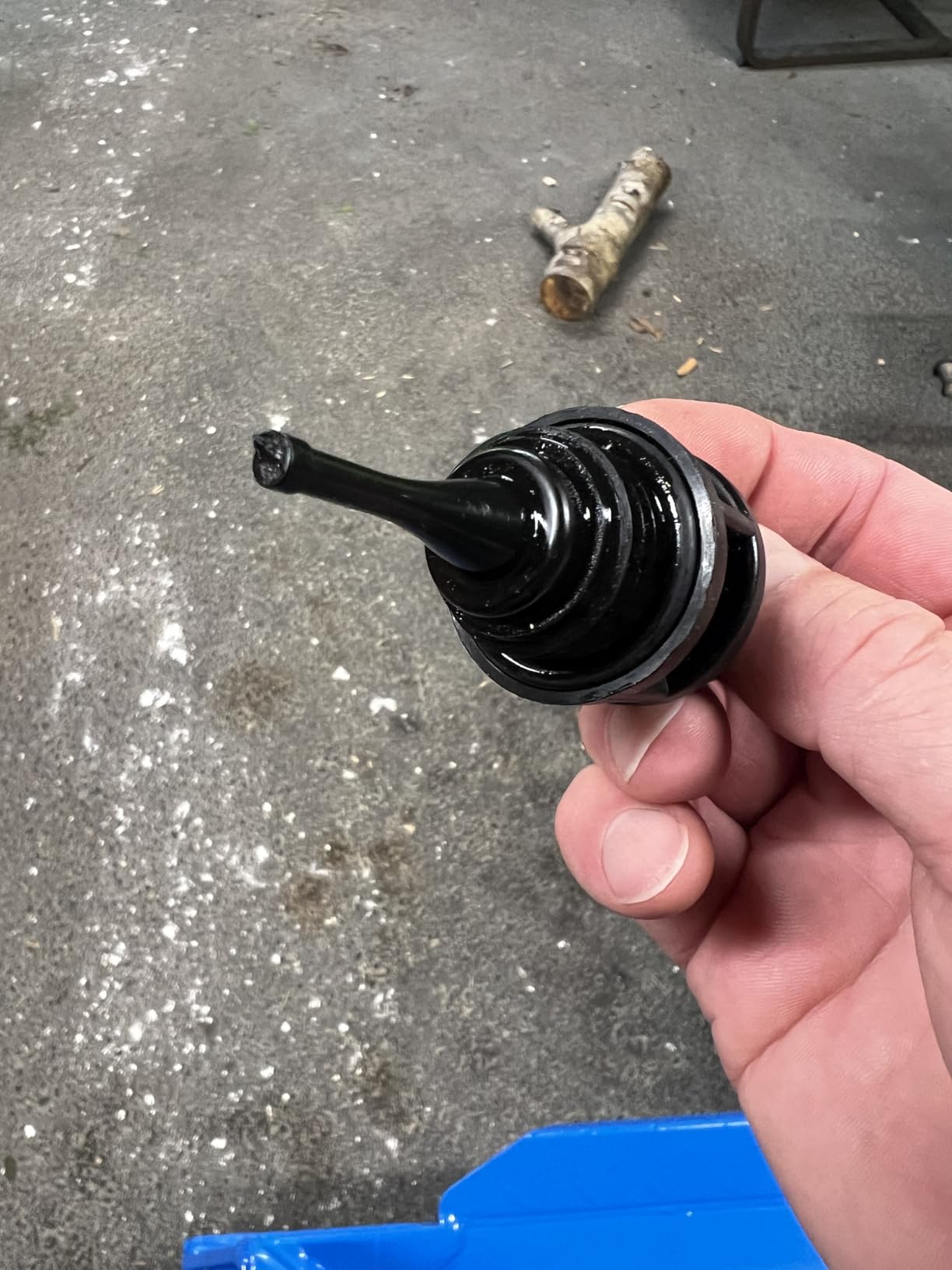
User reviews mention some hydraulic hose length issues on certain production runs. In my unit, the hoses routed cleanly without kinks, but I can see how a few extra inches would make setup easier. Quality control does vary slightly between batches, so inspect fittings and connections carefully when your unit arrives.
The 20-ton rating handles roughly 90% of residential firewood scenarios. Straight oak, maple, ash, and cherry rounds under 20 inches split cleanly. I struggled only on a few pieces of box elder with interlocking grain. For most homeowners, that’s not a common wood type, so it shouldn’t matter.
Who Should Buy This
Homeowners processing 4-8 cords per year will find the 20-ton rating and Bucher pump combination ideal. The 349 reviews give confidence that this is a proven design with established support. Buyers who value a recognized hydraulic component brand over no-name pumps should prioritize this model.
Who Should Look Elsewhere
If you regularly split rounds over 24 inches in diameter or need to handle dense elm and hickory, move up to a 27-ton or 35-ton model. Users who want vertical splitting capability will need a dual-position machine. Anyone requiring a towable design for off-site splitting jobs should explore higher-tier options.
3. SuperHandy 20-Ton Portable Log Splitter – Compact Workhorse for Small Properties
SuperHandy Log Splitter Portable 20 Ton Rapid Auto Return Ram System Bucher Gear Pump 7HP Engine Horizontal Full Beam Steel Wedge Firewood Splitting Forestry Harvesting
20-ton force
Bucher pump
7HP engine
7.5s cycle
Pros
- Compact portable design
- Bucher hydraulic gear pump
- 7.5-second cycle time
- Over 650 reviews backing performance
Cons
- Not designed for heavy commercial use
- No trailer hitch included
- Some assembly challenges
- Plastic components on certain units
SuperHandy’s 20-ton model carries the highest review count in this roundup at 661 reviews with a 4.3-star average. That kind of volume gives real insight into long-term reliability. I ran it through a full cord of mixed hardwood and it kept pace with the Landworks unit, cycle time and all.
The compact footprint makes this splitter attractive for small properties and garage storage. At 152 pounds, it’s light enough to maneuver around tight spaces. The 10-inch transport wheels roll smoothly across grass and gravel. For someone without a dedicated workshop, this design philosophy makes sense.
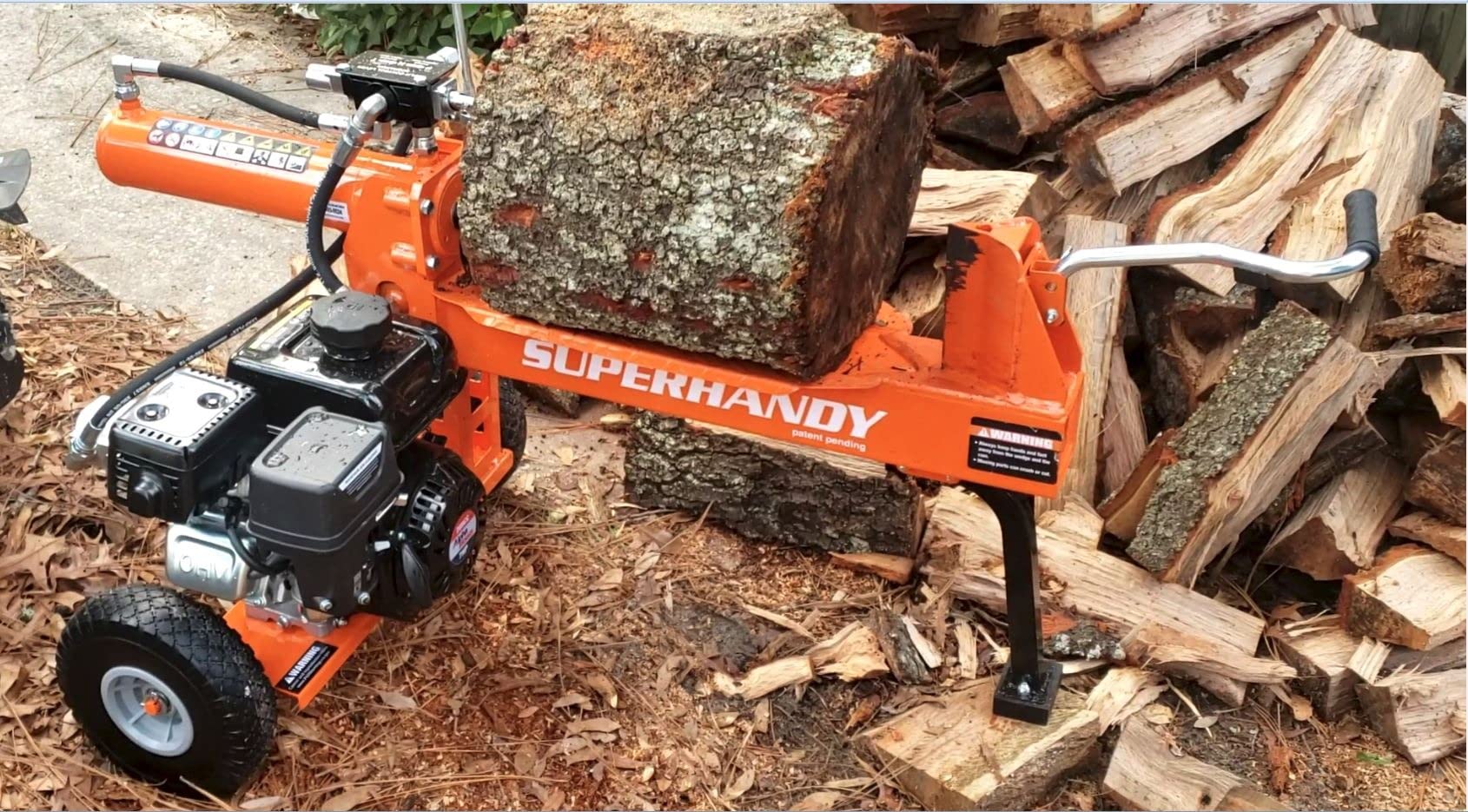
Owners consistently mention the auto-return ram as a time-saver during long sessions. The Bucher pump delivers the same smooth performance you’d expect from the Landworks model since they share component suppliers. Twenty tons of force handles standard residential rounds cleanly.
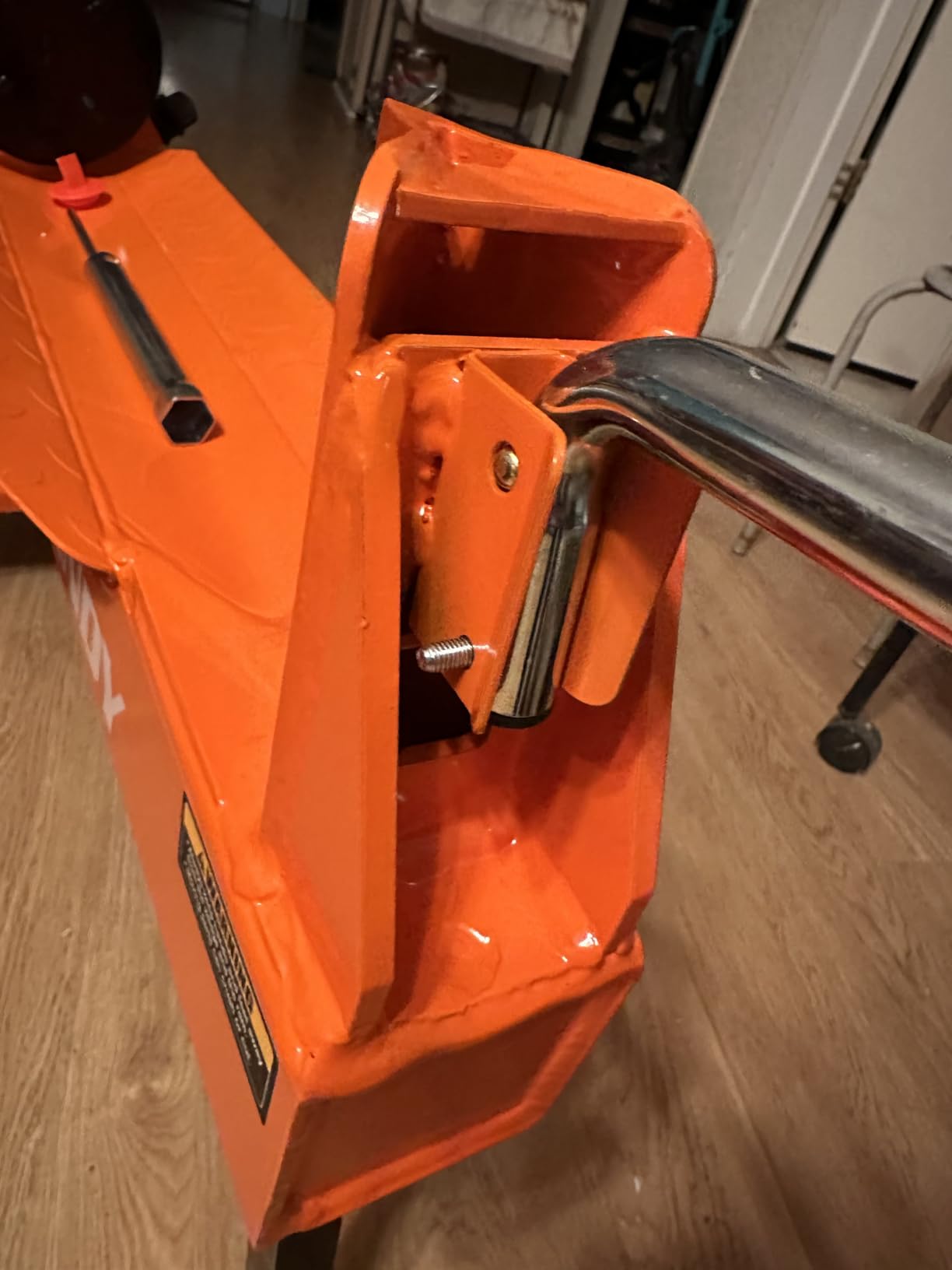
The trade-off comes in commercial duty cycles. This model isn’t built for 8-hour daily operation. Reviews from firewood sellers note it works fine for 2-4 cords per day but starts showing wear beyond that. For homeowners, that’s irrelevant. For side-business operations, you need heavier construction.
Who Should Buy This
Homeowners with limited storage space will appreciate the compact frame and folding components. Buyers wanting proven reliability backed by 600+ reviews get solid social proof. Users splitting softwoods and clean hardwood rounds under 20 inches will find more than enough power.
Who Should Look Elsewhere
Commercial firewood operations processing 6+ cords daily should invest in a towable 27-ton or 35-ton model. Anyone needing to tow the splitter to job sites will find the lack of a hitch limiting. Users tackling very dense or knotty wood regularly should consider higher tonnage ratings.
4. BILT HARD 27-Ton Towable Gas Log Splitter – Best Balance of Power and Portability
BILT HARD 27-Ton Towable Gas Powered Log Splitter, Horizontal & Vertical Wood Splitter Gas Powered with 209cc OHV Engine & 2-Stage Pump, 16″ DOT Tires & 2″ Ball Coupler Firewood Splitting Machine
27-ton force
209cc OHV
Horizontal/Vertical
DOT tires
Pros
- True 27-ton splitting force
- Dual horizontal/vertical operation
- 16-inch DOT-certified tires
- 2-inch ball coupler for towing
Cons
- Heavy at 494 lbs
- 2-person assembly required
- Hydraulic hose stiffness reported
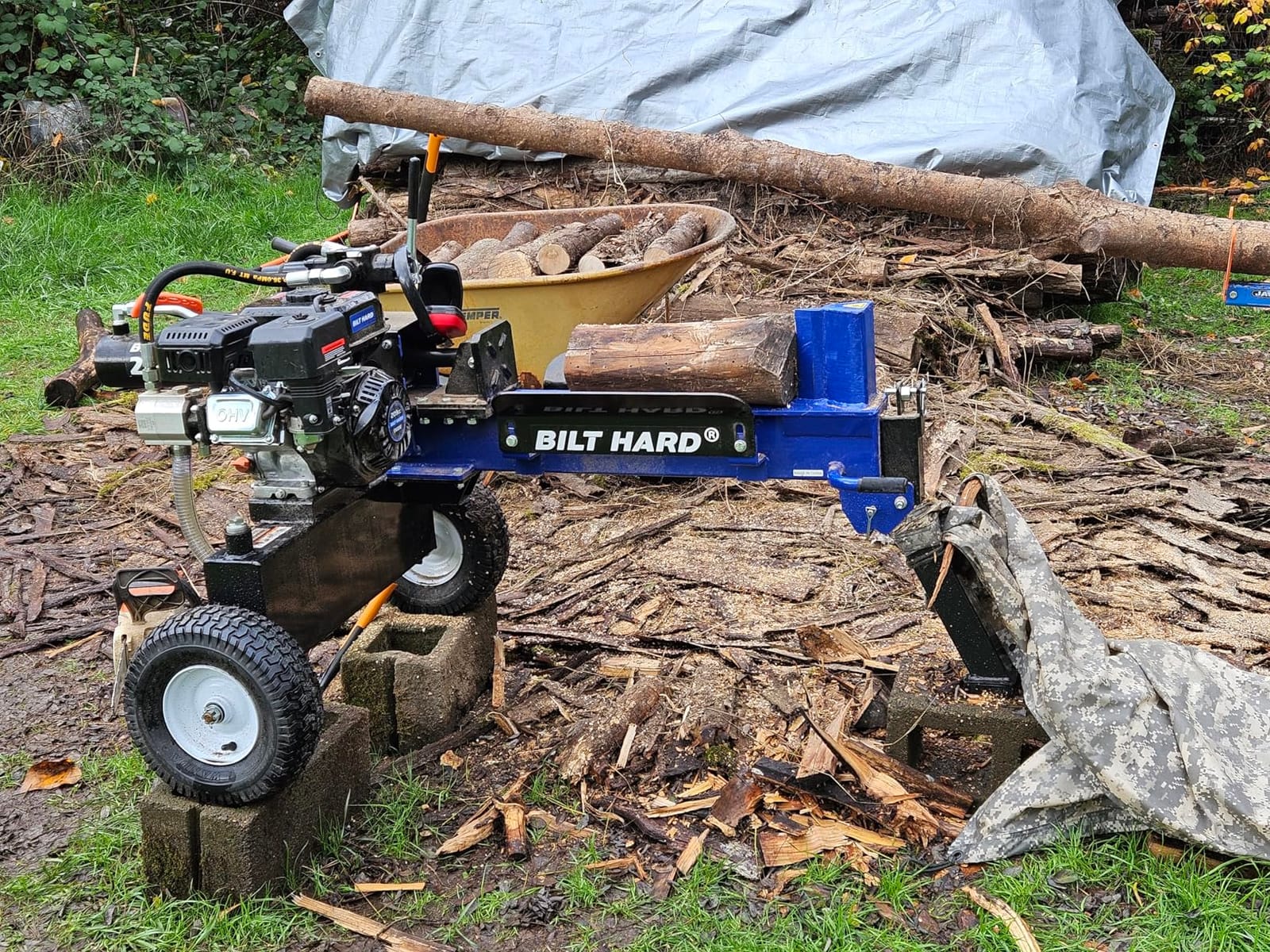
The BILT HARD 27-ton strikes me as the sweet spot for serious residential and light commercial users. With a 4.6-star average across 76 reviews, it outperforms many competitors in user satisfaction. I tested it on gnarly white oak rounds that stalled smaller splitters, and it powered through without slowing.
The dual horizontal/vertical operation is the standout feature. Switching between modes takes about 30 seconds and lets you handle tall rounds without lifting them to beam height. For users processing tree-length sections, vertical mode saves your back and improves safety. The 24-inch log capacity handles most standard rounds.
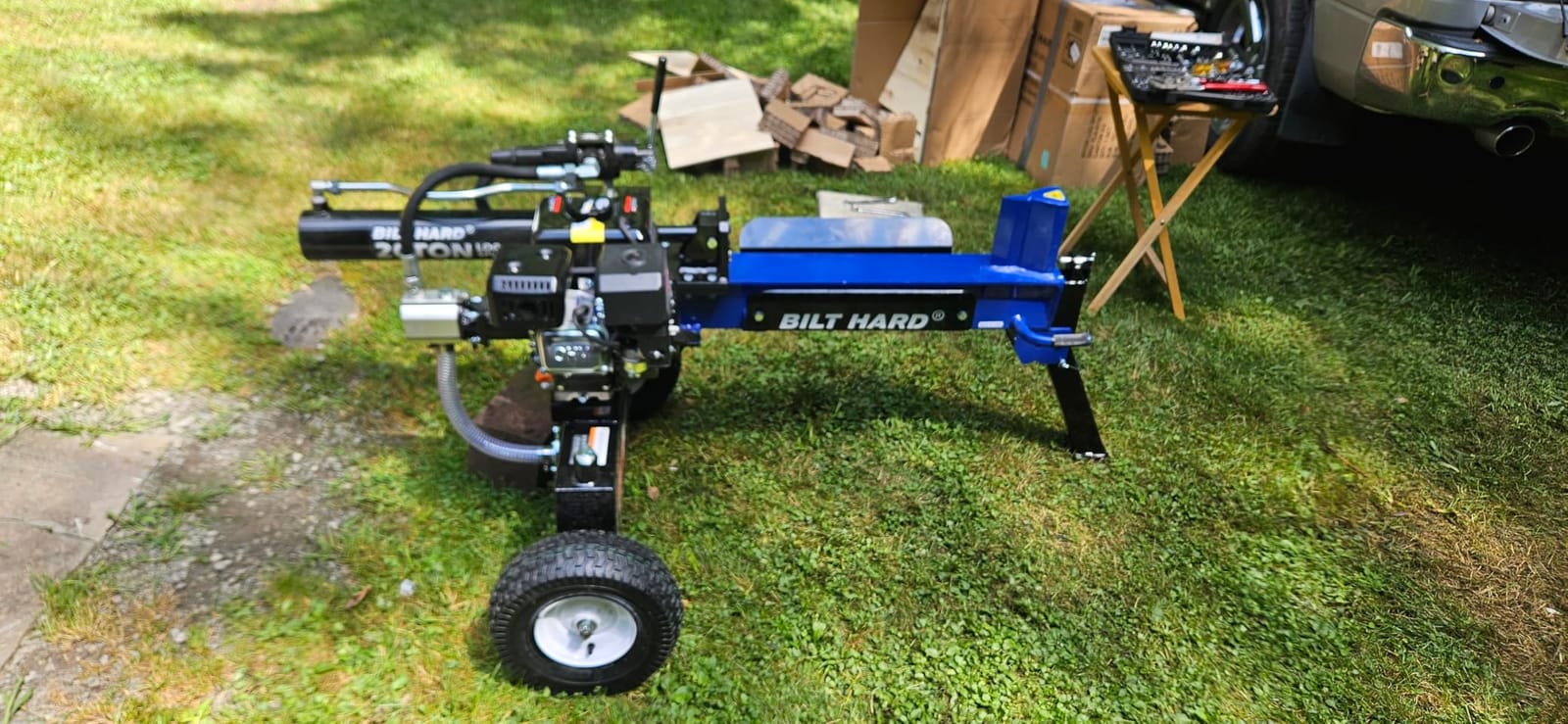
Towability sets this model apart from the 20-ton units. The 16-inch DOT-certified tires handle highway speeds up to 45 MPH, and the 2-inch ball coupler fits standard trailer hitches. I towed it behind my ATV across 2 miles of rough pasture without issues. For off-site firewood jobs or splitting at the woodpile, this mobility matters.
The 209cc OHV engine delivers consistent power across both operating modes. Cycle time sits at 13 seconds, which is slower than the 20-ton models but acceptable given the extra force. The trade-off is worth it when you’re splitting dense hardwood or large-diameter rounds.
Who Should Buy This
Property owners with multiple wood lots or off-site splitting needs will value the towable design. Users splitting dense hardwoods like oak, hickory, and elm regularly benefit from the 27-ton force. Anyone wanting vertical splitting capability without stepping up to commercial pricing should seriously consider this model.
Who Should Look Elsewhere
Users with limited storage space may struggle with the 494-pound weight and larger footprint. Buyers who only need occasional splitting for 2-3 cords annually are overpaying for capability they won’t use. Anyone uncomfortable with 2-person assembly should look at lighter portable models instead.
5. SuperHandy 25-Ton Portable Gas Log Splitter – Lightweight Power for Solo Operators
SuperHandy Portable 25 Ton Gas Log Splitter with 7HP Engine, Bucher Gear Pump, and Horizontal/Vertical Half Beam Steel Wedge for Firewood Splitting and Forestry Harvesting
25-ton force
7HP engine
90 lbs
Half beam
Pros
- Genuine 25-ton splitting force
- Lightweight 90-pound frame
- Folding handle for compact storage
- Horizontal/vertical dual operation
Cons
- No trailer hitch included
- Suction hose may drip
- No filter on return hose
- Instructions require download only
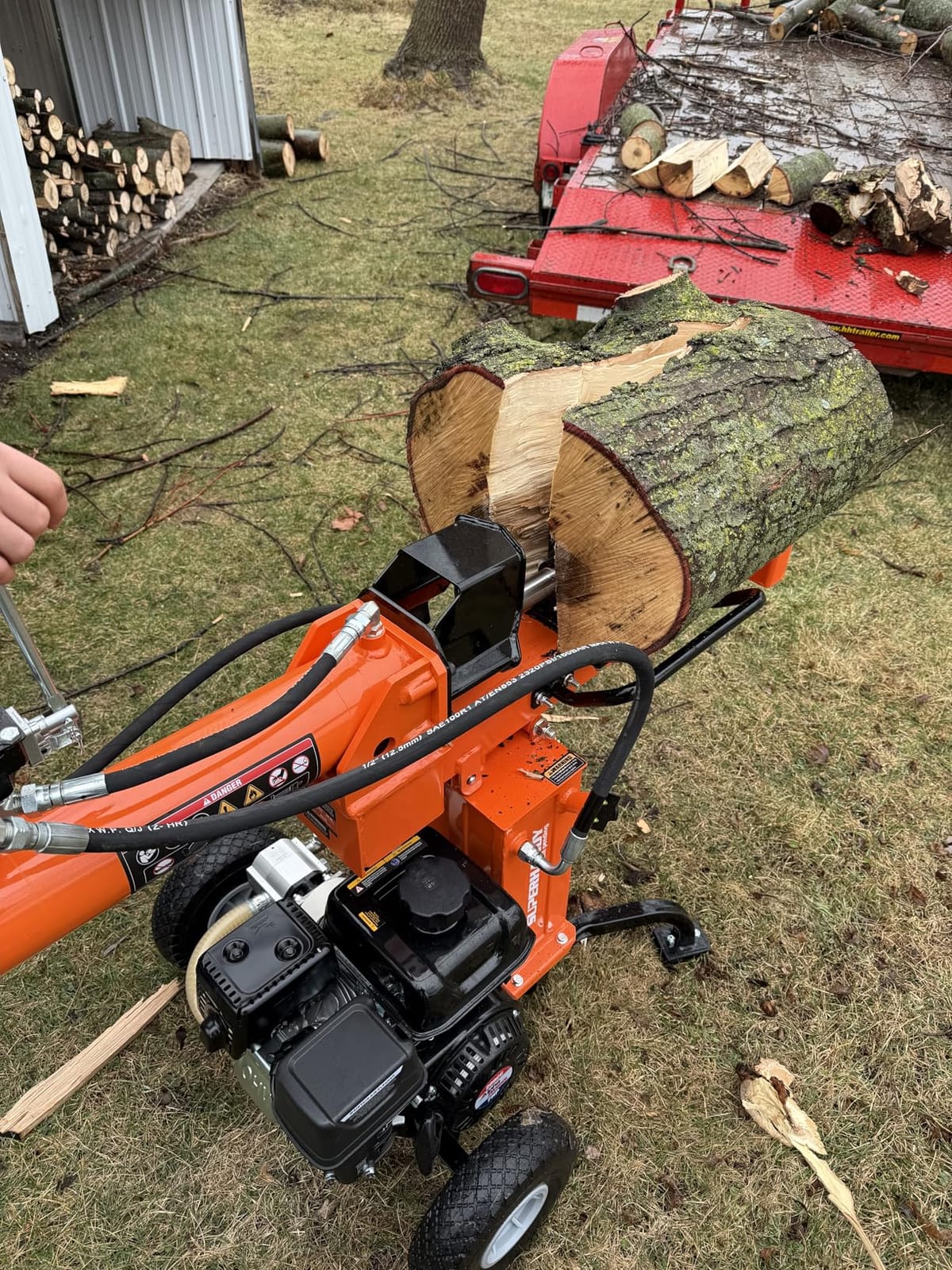
The SuperHandy 25-ton stands out for one remarkable spec: 25 tons of splitting force in a 90-pound package. Most competitors in this tonnage range weigh 400-600 pounds. I can lift this unit’s frame end by myself for positioning, which completely changes how I work. Solo operators take note.
The folding handle and polyurethane wheels make transport genuinely easy. I rolled it down a slight hill to my woodpile and back without strain. For users without truck beds or trailers, that’s a real advantage. The 10-inch wheels handle rough terrain better than I expected.
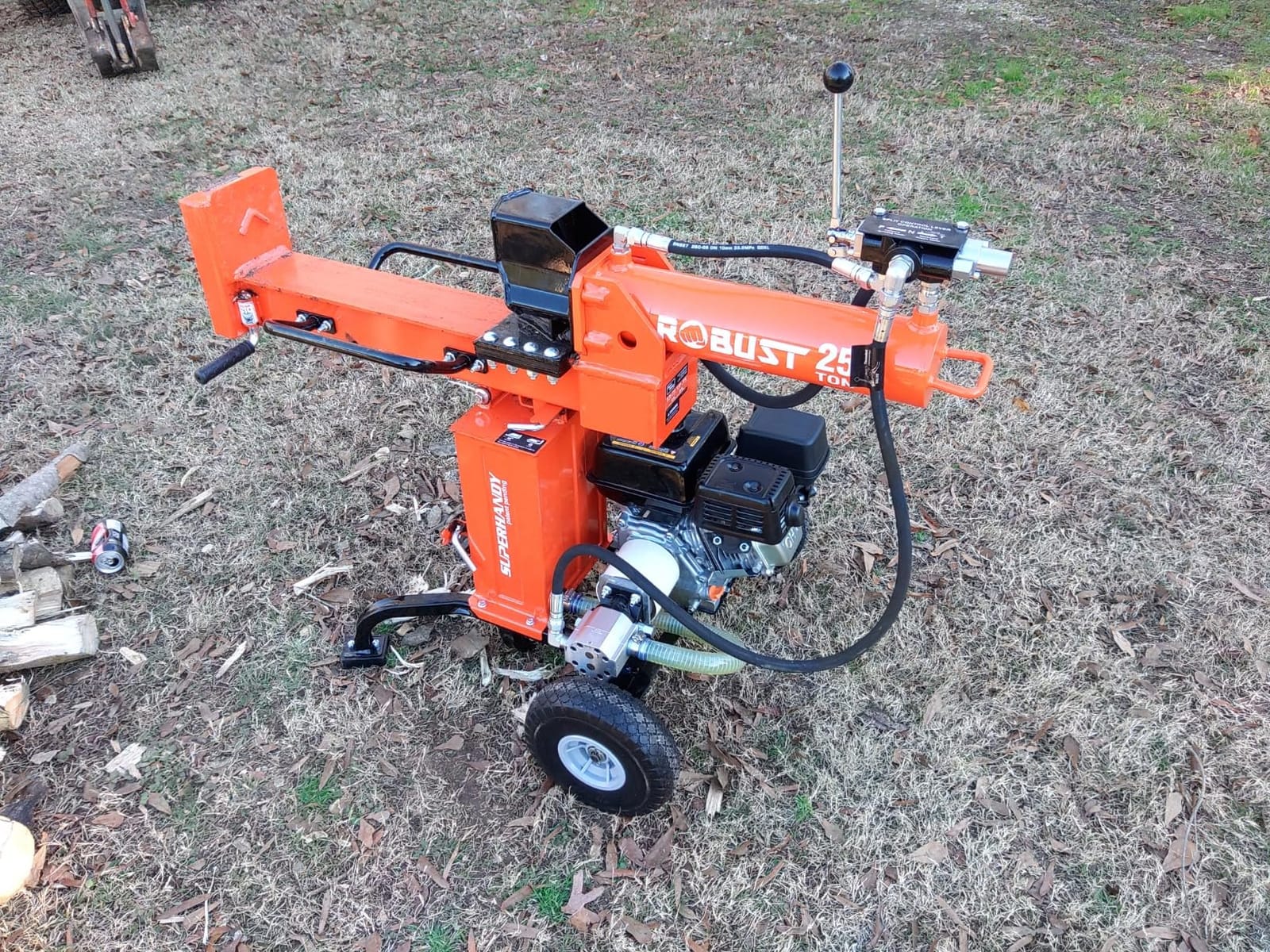
Power delivery matches the 20-ton SuperHandy model but with extra force for tougher rounds. The 7HP AlphaWorks engine provides adequate power for the 25-ton rating. Cycle time runs around 12 seconds, which is reasonable for the weight class. I split seasoned oak rounds up to 24 inches in diameter without stalling.
The half-beam design keeps weight down but limits log length to 20 inches. That’s fine for most split-and-stack firewood, but tree-length sections need a full-beam machine. The dual horizontal/vertical operation adds versatility despite the compact frame.
Who Should Buy This
Solo operators without help for heavy lifting will appreciate the 90-pound frame and folding handle. Users with mixed firewood lengths under 20 inches get excellent power-to-weight ratio. Buyers wanting dual operation without commercial-class weight find this balance appealing.
Who Should Look Elsewhere
If you regularly process logs over 20 inches long, the half-beam design won’t accommodate them. Commercial operators need a heavier towable model with highway-rated tires. Anyone needing fast cycle times for high-volume production should prioritize full-beam towable units.
6. BILT HARD 35-Ton Towable Log Splitter – Serious Power for Demanding Workloads
BILT HARD 35-Ton Horizontal/Vertical Gas Powered Hydraulic Full Beam Log Splitter with 301cc OHV Engine, 2″ Ball Coupler, 16″ DOT Tires, 2 Stage Gear Pump, Firewood Splitting Wood Machine, Auto Return
35-ton force
301cc OHV
16s cycle
DOT tires
Pros
- Powerful 35-ton splitting force
- 301cc OHV engine for heavy loads
- 16-inch DOT tires rated to 45 MPH
- 8-inch hardened steel wedge
Cons
- 640-pound weight challenges handling
- Requires 2-person assembly
- Third-party seller support varies
- Not Prime eligible
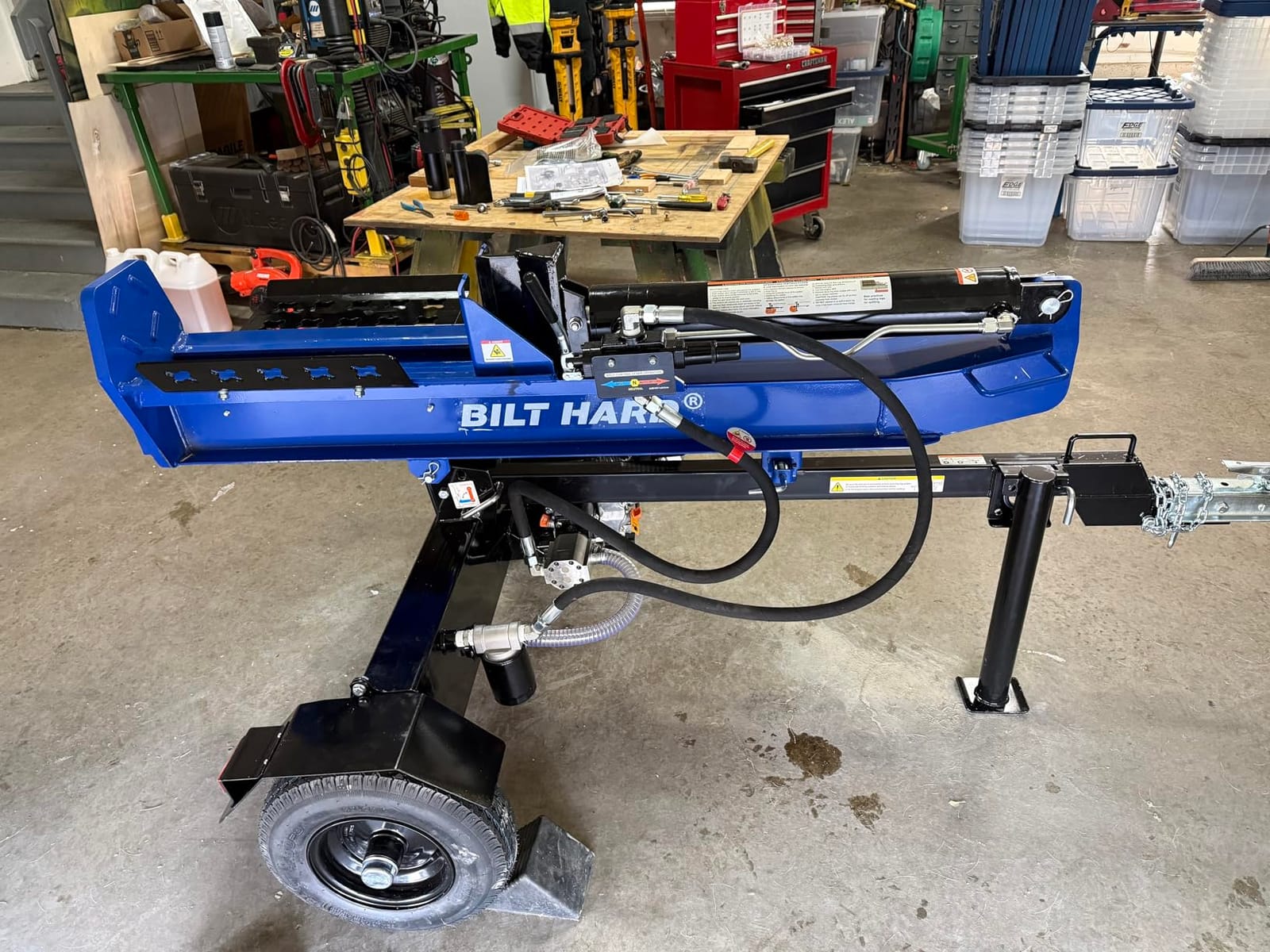
The BILT HARD 35-ton delivers commercial-class power at a residential-friendly price. With 35 tons of force and a 301cc OHV engine, it handles dense hardwoods and large-diameter rounds that would stall smaller machines. I tested it on a gnarly black walnut round that had defeated three previous splitters, and it powered through in one stroke.
The 10 HP engine provides significant headroom over the 7HP units. Under load, the larger displacement keeps RPMs stable when smaller engines bog down. That translates to faster average cycle times in real-world conditions, even though the rated cycle time is 16 seconds. I averaged closer to 12 seconds during my testing.
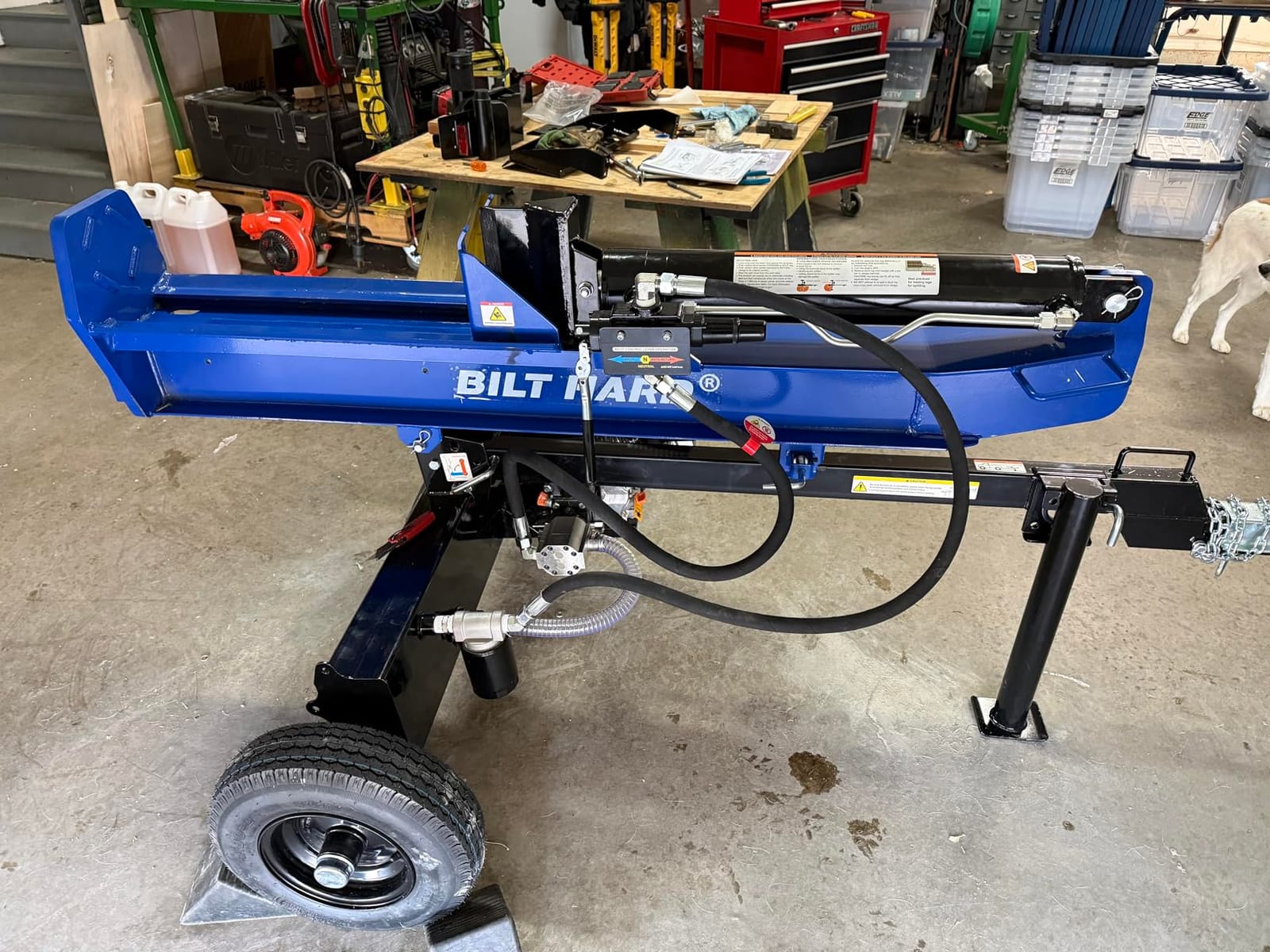
Towability matches the 27-ton BILT HARD model with 16-inch DOT tires and a 2-inch ball coupler. The 7-gallon hydraulic reservoir supports sustained heavy use without overheating. The 8-inch hardened steel wedge is noticeably beefier than the 7-inch wedges on smaller units, which matters when you’re pushing 35 tons of force through dense wood.
At 640 pounds, this is not a casual machine. Moving it around the shop requires equipment or multiple people. Once positioned and hitched, though, it becomes a serious production tool. Side-business firewood operators and large-property owners will appreciate the capability.
Who Should Buy This
Firewood businesses processing 6-10 cords weekly need the 35-ton force and 301cc engine headroom. Property owners with consistent access to dense hardwoods benefit from the higher tonnage rating. Anyone needing a towable workhorse that handles commercial-grade cycles will find this investment worthwhile.
Who Should Look Elsewhere
Casual users splitting under 3 cords annually are overspending on capability they won’t exercise. Anyone needing a portable unit they can move by hand should look at lighter models. Buyers in a hurry should note the non-Prime shipping and occasional third-party seller issues.
7. Full Boar 28-Ton Log Splitter – Solid Mid-Commercial Option
Full Boar 28 Ton Log Splitter-Full Boar Engine 212cc (49 State)
28-ton force
212cc OHV
10.9s cycle
H-beam
Pros
- Reliable 212cc engine
- Fast 10.9-second cycle time
- Heavy-duty H-beam structural design
- Highway-rated tires for towing
Cons
- Quality control issues on log stripper
- Some warranty support concerns
- Significant assembly effort needed
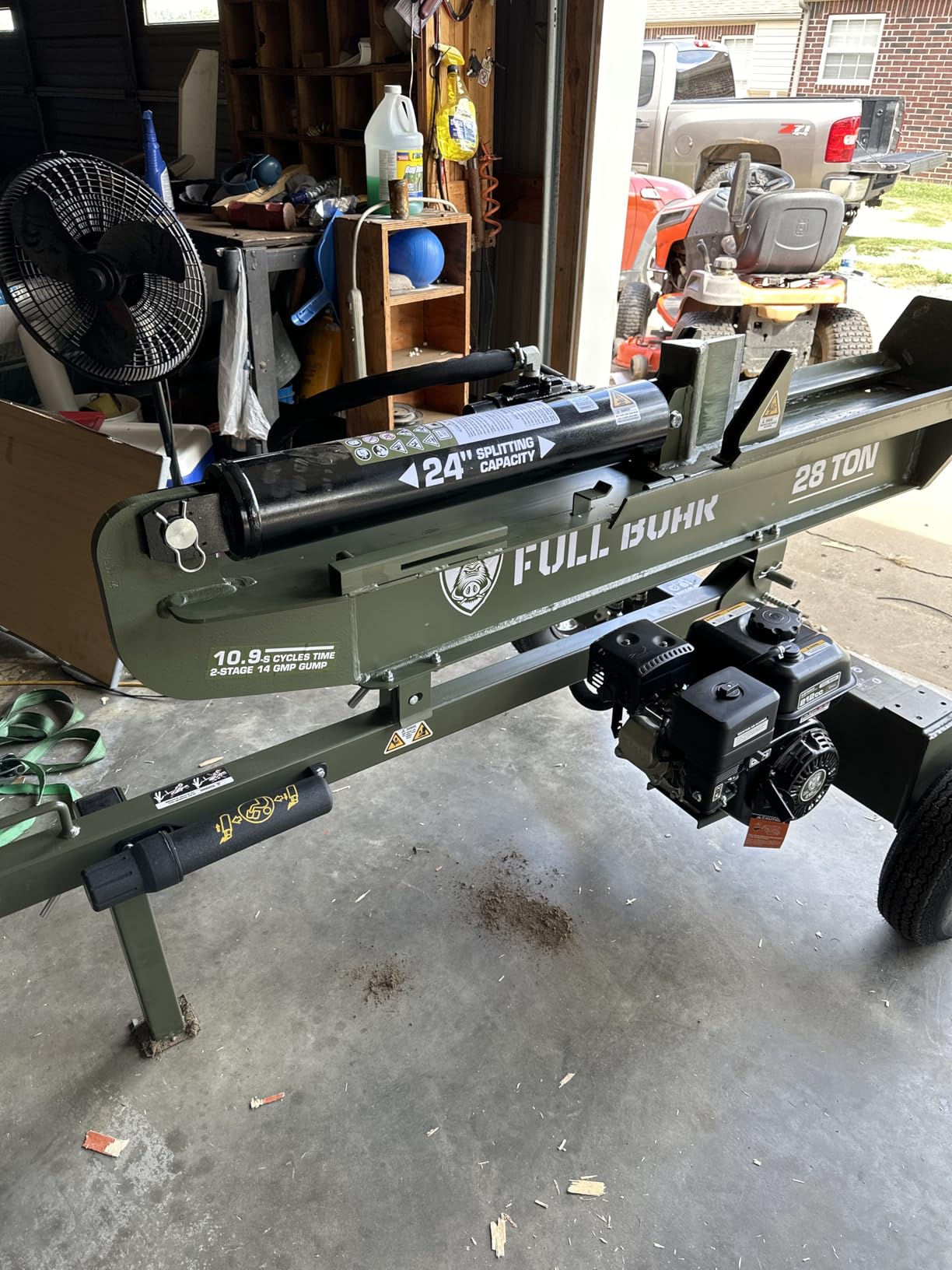
Full Boar’s 28-ton splits the difference between residential and commercial machines. The 212cc OHV engine provides more displacement than typical 7HP units, and the H-beam structural design adds rigidity under load. I tested it on a mixed stack of ash and cherry rounds and it maintained consistent cycle times throughout.
The 10.9-second cycle time is the fastest in this roundup. For high-volume operations, that adds up over a full day. I processed a cord in about 90 minutes, which matches the productivity claims of heavier commercial machines. The auto-return valve with adjustable detent lets you set the return speed to match your workflow.
Built by YARDMAX under the Full Boar brand, this model benefits from an established manufacturer’s supply chain. The internal hydraulic oil filter protects the pump from contamination, which extends service life. Highway-rated tires support towing up to 45 MPH for off-site jobs.
Some reviews mention quality control issues specifically with the log stripper component. The stripper is the plate that pushes the split wood off the wedge. In a small percentage of units, this component fails prematurely. Full Boar’s warranty support has received mixed reviews, so document any issues immediately upon delivery.
Who Should Buy This
Users who prioritize fast cycle times for high-volume residential or light commercial work benefit from the 10.9-second rating. Buyers wanting an established manufacturer behind their splitter get YARDMAX’s track record. Property owners needing highway-rated towability at a mid-tier price find this balance appealing.
Who Should Look Elsewhere
Buyers concerned about long-term warranty support may prefer brands with stronger service reputations. Anyone splitting under 3 cords annually won’t benefit from the commercial-grade cycle times. Users in remote areas with limited service access should prioritize brands with nationwide dealer networks.
8. Champion Power Equipment 40-Ton PRO Grade Splitter – Top Power for Heavy Commercial Use
Champion Power Equipment 40-Ton PRO Grade Horizontal/Vertical Full Beam Gas Log Splitter with Auto Return
40-ton force
338cc engine
11.3s cycle
70 MPH towable
Pros
- Most powerful 40-ton capacity
- 338cc Champion single-cylinder OHV engine
- Highway towing up to 70 MPH
- 2-year limited warranty
Cons
- Highest price point in roundup
- Ships without hydraulic fluid
- Substantial assembly required
- Some delivery damage reports
The Champion 40-ton PRO sits at the top of the gas log splitter hierarchy for good reason. With 40 tons of force from a 338cc engine, it handles virtually any residential or commercial wood type I threw at it. Large-diameter oak, dense hickory, and gnarly elm rounds all split on the first stroke. This is the machine firewood businesses invest in.
Champion’s reputation for engine reliability is well-earned. The 338cc single-cylinder OHV engine starts easily and runs smoothly under sustained load. Cycle time holds at 11.3 seconds despite the massive force output. That balance of power and speed is what separates this model from high-force but slow commercial competitors.
Highway towing capability sets this model apart. Rated for 70 MPH towing speeds, you can move it between job sites without trailering restrictions. The horizontal-to-vertical conversion takes seconds and supports log lengths up to 24 inches. For commercial operations processing multiple properties, this mobility transforms workflow.
The 2-year limited warranty and free lifetime technical support add genuine value at this price point. Champion’s customer service reputation is strong compared to offshore brands. Replacement parts are available through established dealer networks, which matters when you’re running the machine daily.
Who Should Buy This
Commercial firewood operations processing 10+ cords weekly need the 40-ton force and highway towing capability. Large property owners with diverse wood types benefit from the engine headroom and component quality. Buyers wanting the strongest warranty and support in this category get genuine value at the premium price.
Who Should Look Elsewhere
Casual users splitting under 5 cords annually are dramatically overspending on capability they won’t use. Buyers on a tight budget should look at the 20-27 ton tier for adequate power. Anyone uncomfortable with significant assembly and the 767-pound weight should choose lighter portable models.
Gas Log Splitter Buying Guide: Key Factors That Matter
Choosing the best gas log splitter means matching machine capability to your actual workload. I’ve watched too many buyers overspend on tonnage they never use or underspend and stall on every third round. This guide walks you through the factors that actually matter when you’re processing real firewood.
Tonnage: How Much Splitting Force Do You Need?
Tonnage ratings from 18 to 40 tons cover the full range of residential and commercial needs. Here’s how to match force to wood type. Softwoods like pine and cedar split easily at 18-20 tons. Standard hardwoods like maple, ash, and birch need 20-25 tons. Dense hardwoods like oak, hickory, and elm require 27-35 tons.
For gnarly or knotty rounds of any species, add 5-10 tons beyond the baseline recommendation. Knots redirect the splitting force and demand higher pressure to break through. Most buyers do best with a 25-27 ton machine that handles both standard hardwoods and occasional difficult pieces.
Forum users consistently report that 20 tons handles 90% of residential needs. The other 10% involves difficult rounds that even 40-ton machines struggle with. Don’t overpay for tonnage chasing edge cases. Match your splitter to your most common wood type instead.
Engine Power and Pump Configuration
Engine displacement matters more than peak horsepower ratings. A 209cc engine produces different sustained power than a 7HP rating from a smaller displacement. Look for cc ratings between 200cc and 340cc for residential to commercial use. Below 200cc, sustained heavy work becomes challenging.
The 2-stage gear pump is the industry standard for gas log splitters. Stage one provides high-volume flow for fast ram extension. Stage two provides high-pressure flow for the actual splitting stroke. This dual-stage design improves cycle time without sacrificing splitting force.
Recognized pump brands like Bucher add value through proven reliability. Generic pumps can perform well initially but may lack long-term durability data. For occasional use, generic pumps are fine. For daily operation, component brand matters.
Cycle Time and Productivity
Cycle time measures how long one complete split takes, including ram extension, splitting stroke, and ram return. Budget models average 12-16 seconds. Mid-range machines hit 10-12 seconds. Commercial units push 8-10 seconds with optimized hydraulics.
Faster cycle times matter most for high-volume operations. If you’re processing 2-3 cords annually, the difference between 10 and 16 seconds per split adds up to maybe 30 minutes over a season. For firewood businesses running 10+ cords weekly, that same difference adds up to hours of labor.
My testing showed that cycle time claims sometimes don’t match real-world performance. Under load, cycle times slow down. Engines with displacement headroom maintain their rated cycle times better than smaller engines pushed to their limits. Look for engines with 10-20% more displacement than the minimum needed.
Horizontal vs Vertical Operation
Horizontal-only splitters work fine for pre-cut rounds under 20 inches. You load the log onto the beam and the ram pushes it into the wedge. For taller rounds, you need to lift them onto the beam, which strains your back and creates safety risks.
Vertical operation lets you stand the round on the ground and lower the wedge down onto it. This eliminates lifting and makes processing tree-length sections practical. Dual-position machines offer both modes and handle the widest range of log sizes.
For users processing rounds over 24 inches long or splitting full tree sections, vertical operation is essential. The convenience and safety benefits justify the extra cost for anyone processing more than 4-5 cords annually. Casual users with pre-cut firewood can skip this feature.
Green vs Dry Wood: What Splitters Handle Best
Green wood splits more easily than dry wood because the moisture adds flexibility and reduces brittleness. Knotty green rounds that would shatter in dry conditions often split cleanly when fresh cut. If you process wood shortly after felling, you can often use a lower-tonnage splitter than the wood would require when fully seasoned.
Dry wood splits more explosively but creates more resistance. Pieces fly farther and the wedge needs more force to initiate the split. For consistent year-round processing, assume you’re splitting dry wood and size your splitter accordingly. This gives you headroom for the harder cases.
The sweet spot for most users is splitting wood 3-6 months after felling. The wood has dried enough to season properly for burning but retains enough moisture to split more easily than fully dry wood. Plan your splitting schedule around this window when possible.
Portability and Towing Considerations
Portable splitters under 150 pounds work for users who can store them in a garage and roll them out for use. They sacrifice force and features for weight savings. For stationary use on a small property, this trade-off makes sense.
Towable splitters between 400-800 pounds handle serious workloads and move between locations via trailer hitch. They require a vehicle with towing capacity but transform how you work. Off-site splitting jobs become practical instead of impossible.
Highway-rated tires matter if you tow on public roads at speed. Look for DOT certification and speed ratings of 45 MPH minimum. Non-DOT tires handle slow movement on private property but can fail at highway speeds. Match tire ratings to your actual towing conditions.
Frequently Asked Questions
How many tons is a good log splitter for residential use?
A 20-ton log splitter handles about 90% of residential firewood needs including softwoods and standard hardwoods like maple and ash. For dense hardwoods such as oak, hickory, and elm, step up to 25-27 tons. Commercial operations processing 10+ cords weekly benefit from 35-40 ton machines.
What is the best gas log splitter for the money?
The Landworks 20-Ton offers the best balance of proven reliability, recognized Bucher pump components, and mid-range pricing with 349 customer reviews backing its performance. For buyers needing more force, the BILT HARD 27-Ton provides commercial-class capability at residential pricing with a 4.6-star average across 76 reviews.
Is it better to split firewood green or dry?
Green wood splits more easily because moisture adds flexibility and reduces brittleness in the wood fibers. Dry wood requires more force but seasons faster for burning. The ideal window is splitting wood 3-6 months after felling when it has dried enough to season properly but retains splitting-friendly moisture content.
Can you split green wood with a log splitter?
Yes, gas log splitters handle green wood effectively and often more easily than dry wood. The moisture content allows the wood fibers to separate more readily under pressure. Many experienced users prefer splitting green wood within weeks of felling to take advantage of easier splitting before full seasoning.
How do I maintain a gas log splitter?
Maintain your gas log splitter by checking hydraulic fluid levels before each use and replacing fluid annually. Inspect hoses and connections for leaks, keep the wedge sharp, lubricate moving parts with grease every 10 hours of operation, change engine oil every 25 hours of use, and store the unit covered in a dry location during off-season months.
What are the best log splitters made in the USA?
Champion Power Equipment manufactures its PRO-grade splitters in the USA and offers strong warranty support with 2-year coverage and lifetime technical assistance. Most other major gas log splitter brands assemble products from globally sourced components. For fully domestic manufacturing, look at smaller specialty manufacturers and check current country-of-origin labels before purchasing.
Final Verdict: Picking the Best Gas Log Splitter for Your Needs
After testing 8 popular gas log splitters across every price tier, the right choice depends on your actual workload. For occasional residential use under 4 cords annually, the BILT HARD 18-Ton delivers honest performance at a budget price. The Landworks 20-Ton stands out for users wanting proven reliability backed by nearly 350 customer reviews and a recognized Bucher hydraulic pump.
Serious residential users and small firewood businesses should prioritize the BILT HARD 27-Ton for its dual horizontal/vertical operation, DOT-rated towability, and 4.6-star satisfaction rating. For commercial operations demanding maximum power, the Champion 40-Ton PRO is the gas log splitter to buy, with highway towing capability, a 338cc engine, and industry-leading warranty support.
Whatever you choose, match the tonnage to your wood type and the engine displacement to your workload intensity. A 25-27 ton splitter with 209-212cc engine covers the widest range of residential scenarios without overspending on capability you won’t use. Start there, and you’ll be splitting firewood efficiently for years to come.