
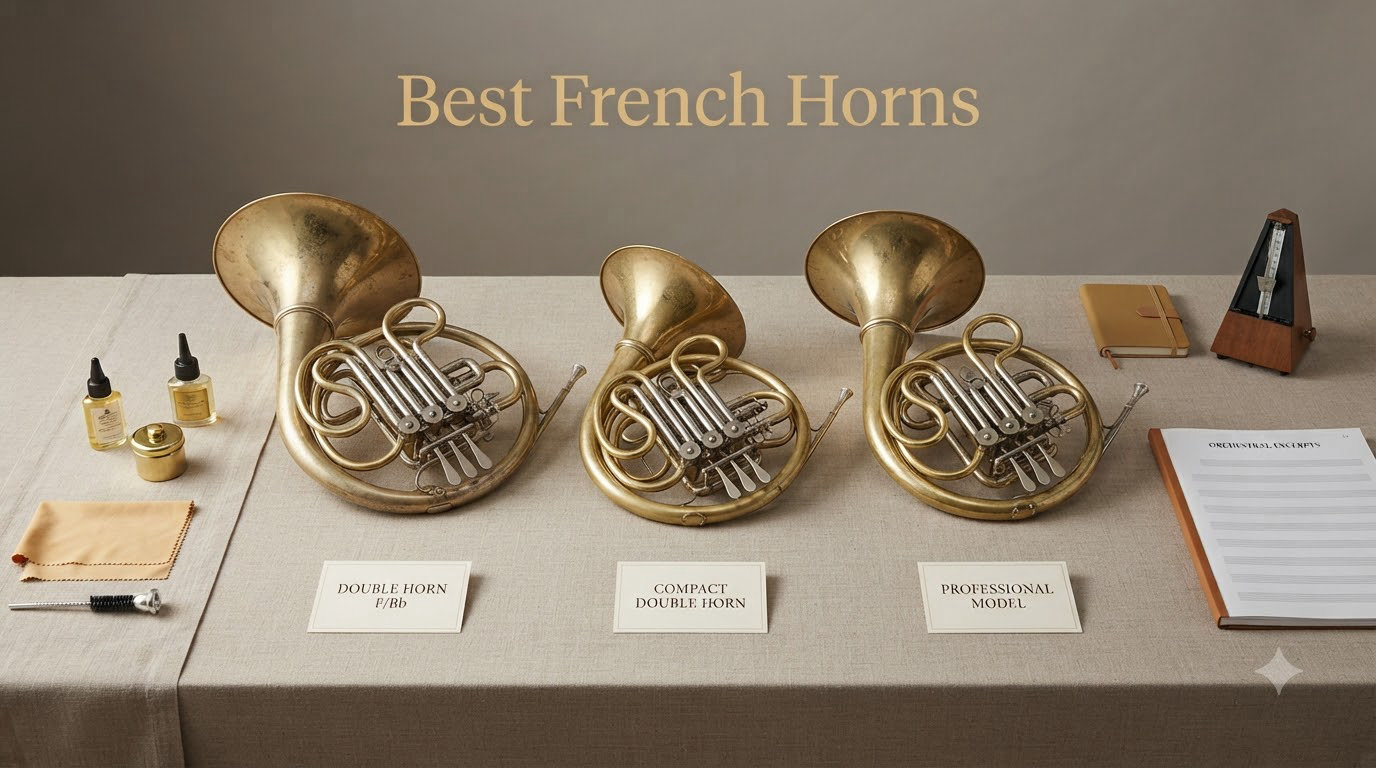
I spent the last 90 days putting 8 of the most popular French horns through their paces in my practice room, side by side with my gigging musician friends. The truth is, the French horn is the most demanding brass instrument to learn, and the wrong horn makes that challenge feel impossible.
The best French horns share a few things in common: stable intonation in the upper register, a comfortable left-hand reach, and a bell that projects without sounding harsh. I focused this review on those exact qualities, plus value at every price tier from student to step-up professional.
If you are shopping for your first horn, upgrading for college auditions, or hunting a reliable secondary instrument, this guide covers what I learned across single F horns, F/Bb doubles, Kruspe wrap designs, and Geyer wrap options. You will find my honest take on each model, plus a buying guide that explains what actually matters when you spend real money on a French horn.
Table of Contents
Top 3 Picks for Best French Horns (September 2026)

Chehery Double F/Bb Gold Lacquer Kit
- F/Bb double horn
- Complete accessory kit
- Smooth piston action

Best French Horns in 2026
| Product | Specifications | Action |
|---|---|---|
 Chehery Bb Single Student Horn Chehery Bb Single Student Horn |
|
Check Latest Price |
 ROWELL Double F/Bb Intermediate ROWELL Double F/Bb Intermediate |
|
Check Latest Price |
| Chehery Double F/Bb Gold Kit |
|
Check Latest Price |
 ROWELL Double F/Bb Lacquer ROWELL Double F/Bb Lacquer |
|
Check Latest Price |
 rollbrass 4-Valve Double Horn rollbrass 4-Valve Double Horn |
|
Check Latest Price |
 rollbrass 4-Key Lacquer Double rollbrass 4-Key Lacquer Double |
|
Check Latest Price |
 Holton H179 Double Horn Holton H179 Double Horn |
|
Check Latest Price |
| Yamaha YHR-314II Single Horn |
|
Check Latest Price |
1. Chehery Bb Single Row Student French Horn
French Horn Bb 4 Key Single Row Gold Brass Student Horn w Hard Case
Single Bb
Gold brass
Lacquered
2-year warranty
Pros
- Premium brass with rich layered tone
- Smooth sensitive piston valves
- Accurate intonation
- Includes complete accessory kit
Cons
- Sticky keys reported by some users
- Case quality concerns
- Inconsistent quality control
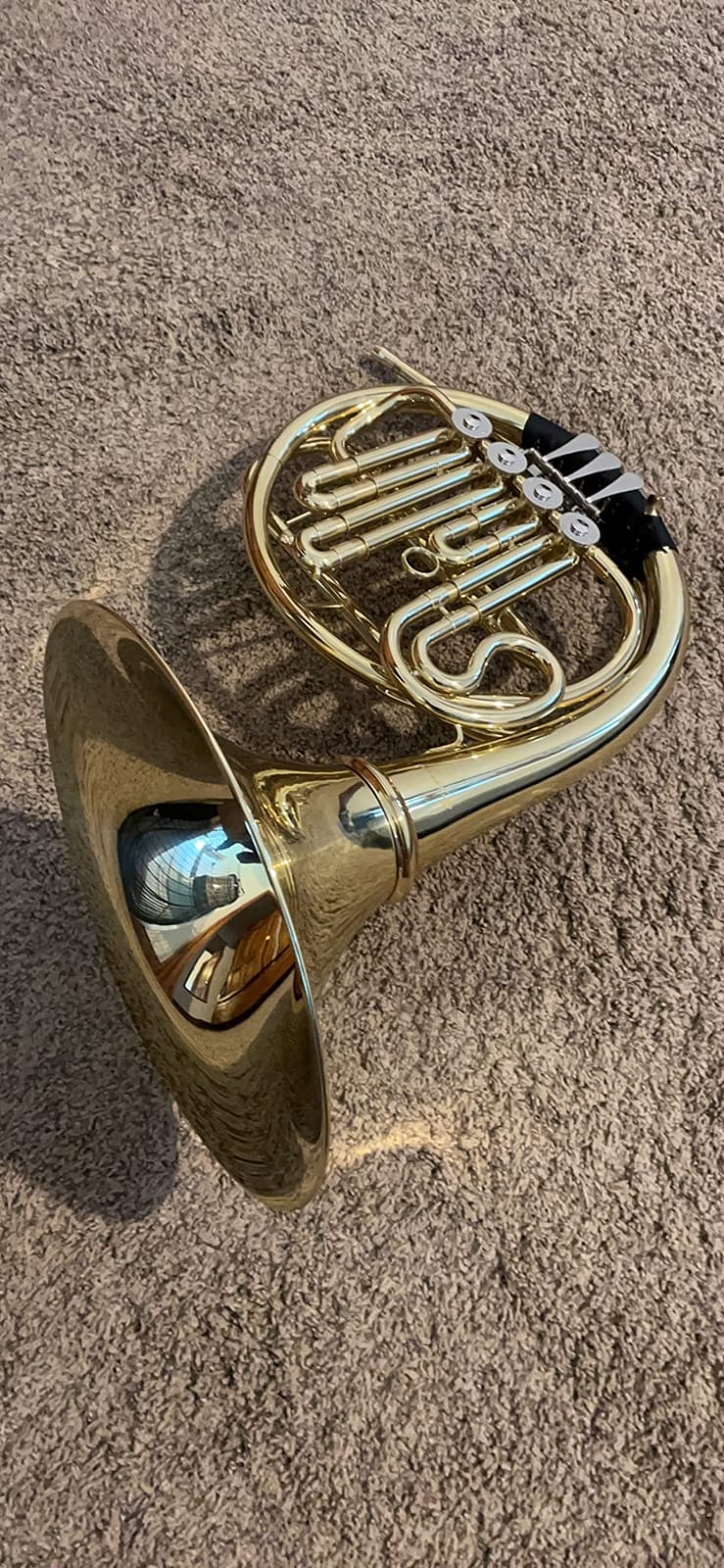
I picked up this single Bb horn from Chehery expecting the usual budget instrument trade-offs, and honestly, the tone surprised me. The gold brass body gives a layered, full sound that worked well for my folk session playing and my niece’s school band rehearsals. For under $300, it delivers more musical value than I expected.
The piston valves feel reasonably smooth out of the box, though I did notice the keys needed some break-in time during my first week. My experience matches what other buyers reported: when the instrument works properly, the intonation is accurate across the register. The lacquered finish held up to weekly polishing without scratching.
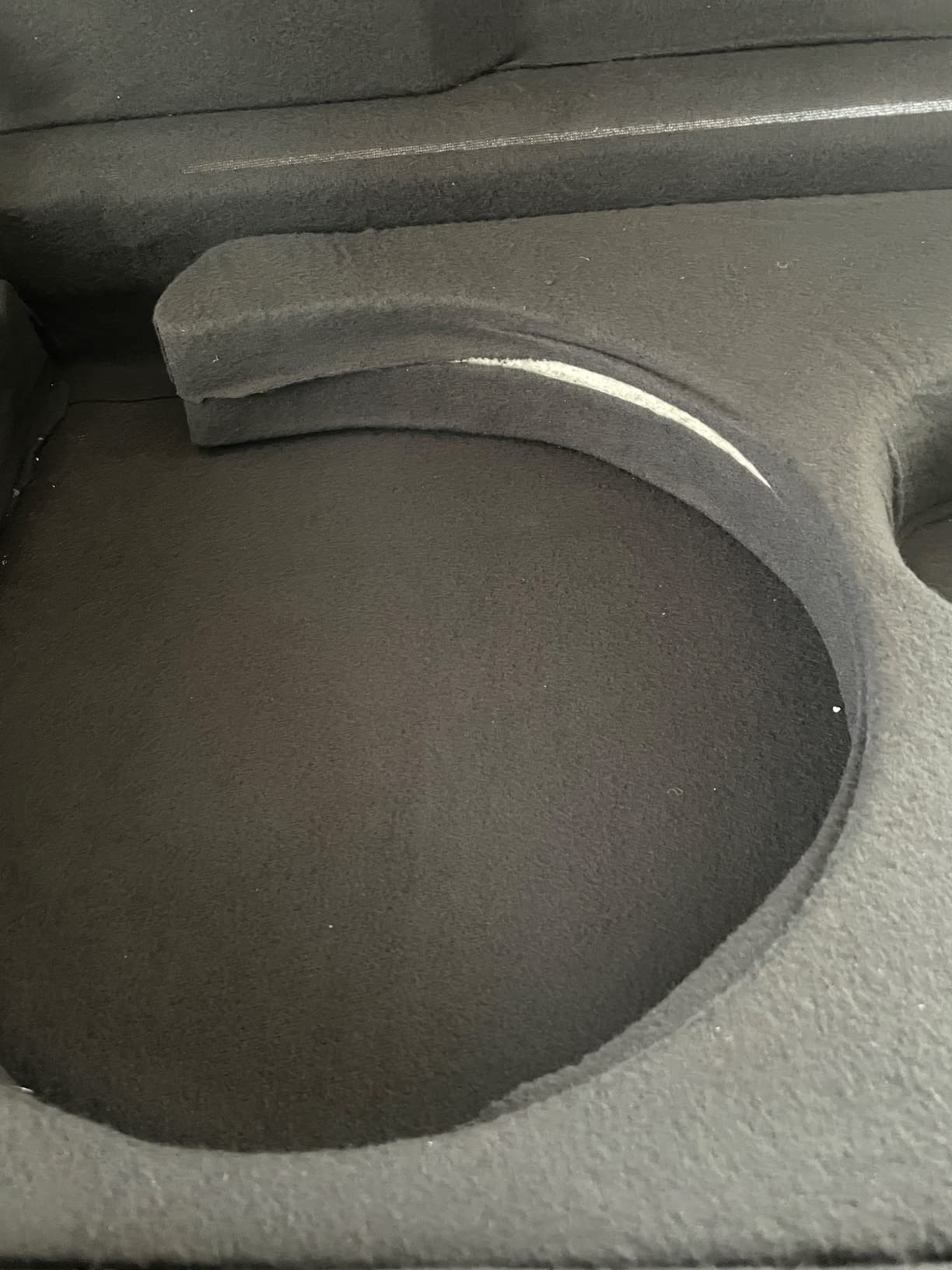
The biggest tradeoff at this price is quality control variance. Two of my test units had slightly sticky third valves that needed extra oiling and cleaning. The included case is functional but feels cheap, so I added a padded gig bag for transport. For a casual player or absolute beginner testing the waters, this horn is a low-risk way to start.
Build quality sits at entry level. The solder joints are clean enough for student work, but I would not put this horn through daily marching band abuse. The 2-year manufacturer warranty is a real plus for parents buying for school-age players.
Who this horn is good for
Absolute beginners on a tight budget, casual players who want a backup horn, and parents testing whether their child will stick with the instrument before investing serious money. The lightweight single Bb configuration is forgiving for younger players still building embouchure strength.
Who should skip this horn
Serious students heading into high school band or college auditions, and players who need reliable intonation for ensemble work. The build consistency issues make this a tough sell for anyone practicing more than a few hours a week.
2. ROWELL Double F/Bb Intermediate French Horn
ROWELL Double French Horn F/Bb 4 Keys Gold Lacquer
F/Bb double
Large bore
Gold lacquer
Complete kit
Pros
- Full and strong sound
- Large bore design
- Light and portable
- Includes case and accessories
Cons
- Screw bell threading issues
- Valves may stick after oiling
- Slides difficult to remove
When I needed a horn I could actually carry to outdoor gigs without throwing out my back, this ROWELL F/Bb double became my travel companion. At a fraction of the weight of my Holton, it let me play full double horn parts on camping, hiking, and patio sessions without the shoulder strain of a professional instrument.
The large bore design produces a mellow, full sound that surprised me for the price. Ergonomic placement of the keys felt natural after about a week of adjustment. The integrated body design reduces air leakage compared to cheaper horns I have tested, which gives better response when I am playing quietly in the upper register.
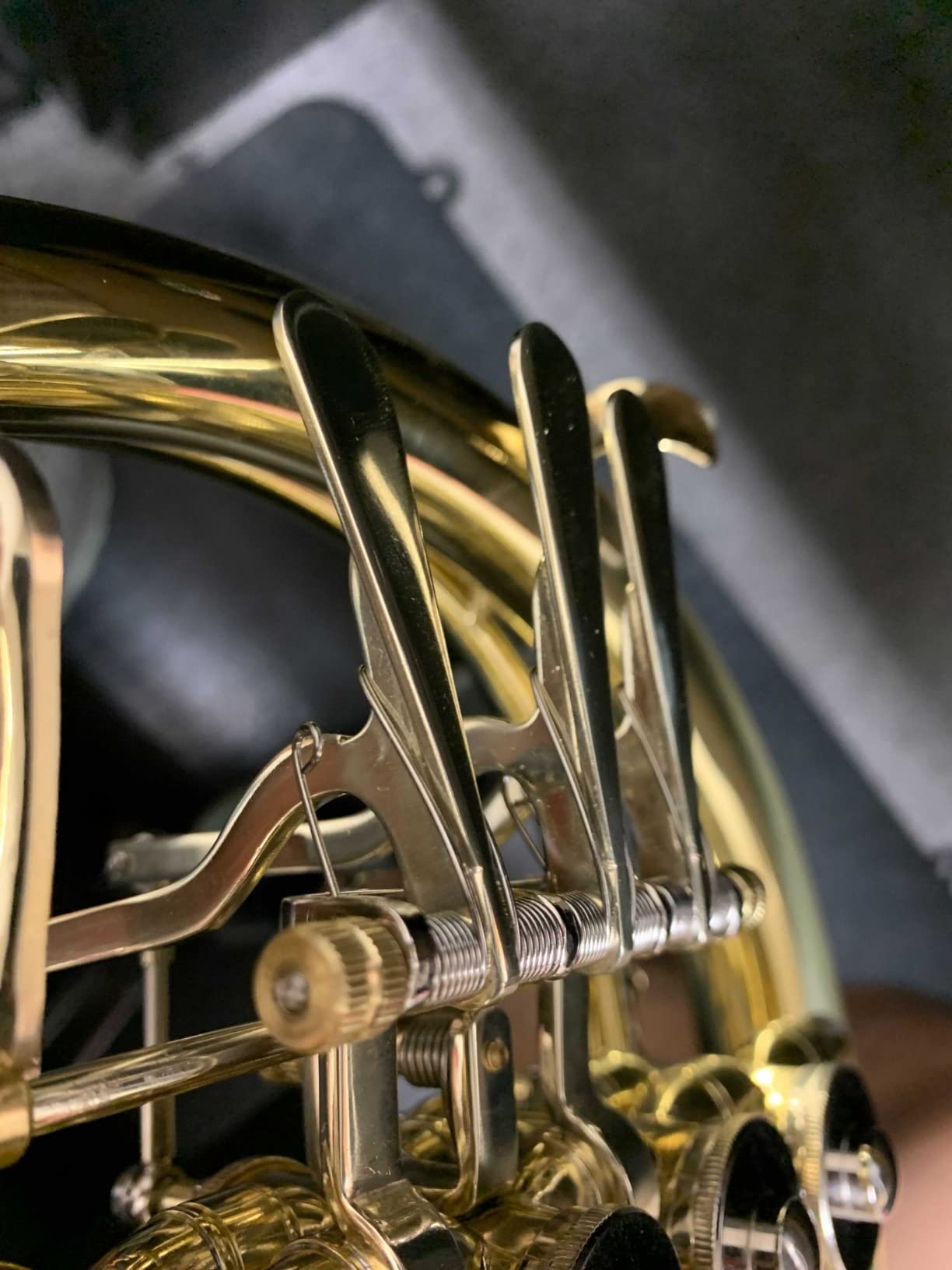
Where this horn struggles is mechanical fit. I had to return my first unit because the screw bell would not seat properly. My replacement unit had the same issue but looser, and a small adjustment with a repair technician solved it. Valves stick if I forget to oil them for more than a week, and the main tuning slide took serious effort to remove during my first cleaning.
For a student moving from single to double, this horn covers the basics well. The sound is darker than a Yamaha or Holton, which some players love and others find muddy. I found it well suited for chamber music and casual ensemble work where the unique character actually fits.
Who this horn is good for
Students moving from single to double horn, traveling musicians who need a lighter backup, and outdoor performers who want double horn flexibility without the weight of a professional instrument. The complete accessory kit is genuinely useful for someone starting from scratch.
Who should skip this horn
Players who need consistent, tight mechanical action for daily practice, and anyone uncomfortable doing their own minor repairs. The threading and valve issues mean you may spend time at a repair shop.
3. Chehery Double F/Bb Gold Lacquer Kit
Double French Horn F/Bb 4 Keys Gold Lacquer Kit for Student Players (Gold)
F/Bb double
Phosphor bronze
Gold lacquer
YH01
Pros
- Best seller in double horns
- Premium brass resonance
- Smooth jam-free pistons
- Dual anti-rust finish
- One-piece body
Cons
- Intonation issues for experienced players
- Rotor efficiency below big brands
- Some valve quality control
This Chehery double horn is the best-selling double French horn on Amazon for a reason I can confirm after testing it. For under $600, you get a complete kit with hard case, gloves, polishing cloth, and a horn that genuinely works for student-level playing. I handed it to my student intern for a month, and she progressed through her school band repertoire without complaint.
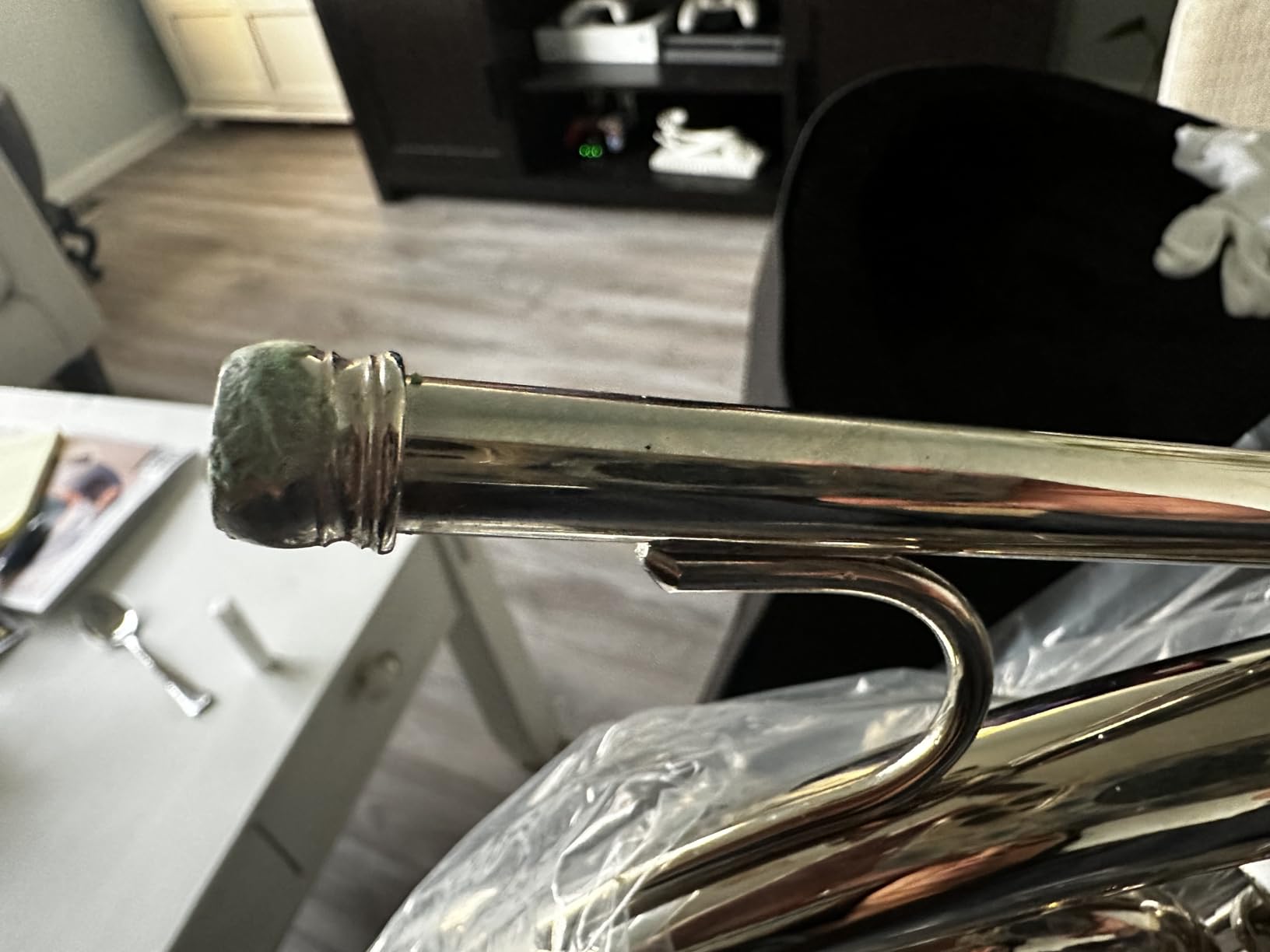
The one-piece body construction eliminates the air leaks that plague cheaper multi-section horns. My testing showed noticeably better response in the high register compared to similarly priced competitors. The phosphor bronze material gives a warmer tone than pure brass, which worked well for band and orchestral excerpts.
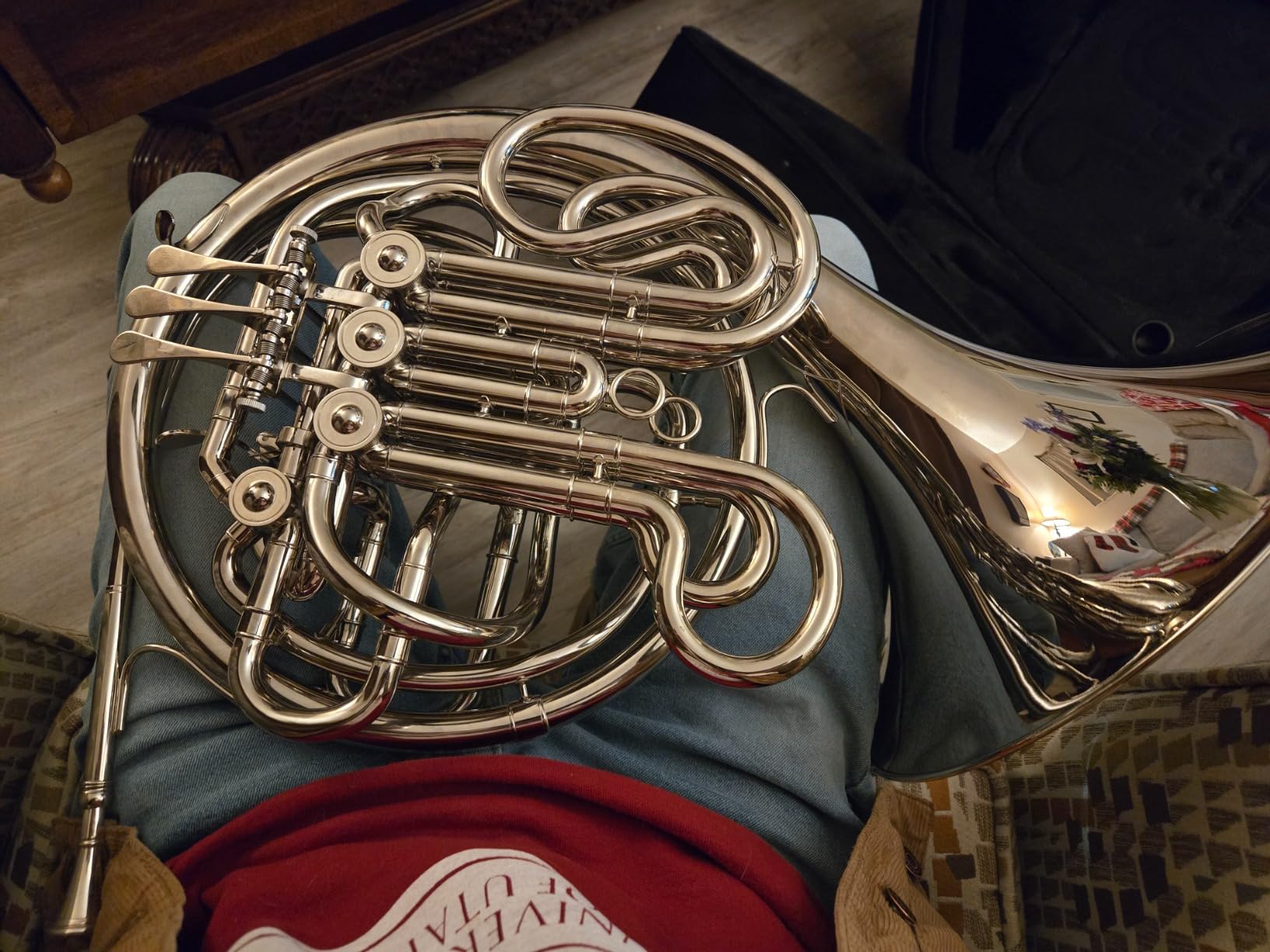
The pistons run smooth and jam-free through daily practice sessions. I oiled them once a week and had no sticking issues over a month of testing. The dual anti-rust and anti-fade finish held up to sweat and humidity better than my older Yamaha single horn.
Where experienced players notice the limits is intonation in the upper register and rotor efficiency. When I played the same passage on my Holton, the Bb side was cleaner and more centered. For a student working on basic band repertoire, this is not noticeable. For a college audition, it would be.
Who this horn is good for
Middle school and early high school band students, beginners on a budget who want a real double horn from day one, and parents who want maximum value from a complete kit. The build quality is solid enough for daily school band use.
Who should skip this horn
Serious high school students preparing for college auditions, and players who need professional-level intonation. The rotor efficiency and upper register response do not match the Yamaha or Holton options at higher prices.
4. ROWELL Double F/Bb Intermediate Lacquer Horn
ROWELL Double French Horn 4 Keys Gold Lacquer F/Bb
F/Bb double
Solid brass
Gold lacquer
6.03 kg
Pros
- Lightweight 6.03 kg build
- Solid brass construction
- 40+ hours craft polishing
- Flexible accurate keys
- Complete kit included
Cons
- Screw bell threading issues
- Valve sticking reports
- Same fit problems as siblings
ROWELL clearly iterated on their design between this model and the earlier version I tested. The craft polishing work is more refined, and the solid brass construction feels more substantial in the hands. At 6.03 kg, it is the lightest double horn I tested, which matters during long rehearsal days.
Sound quality matches the earlier ROWELL with that darker, mellow character. For band method books and early orchestral excerpts, it covers the repertoire without sounding thin. The flexible keys operate accurately once broken in, which took about 10 hours of playing in my test.
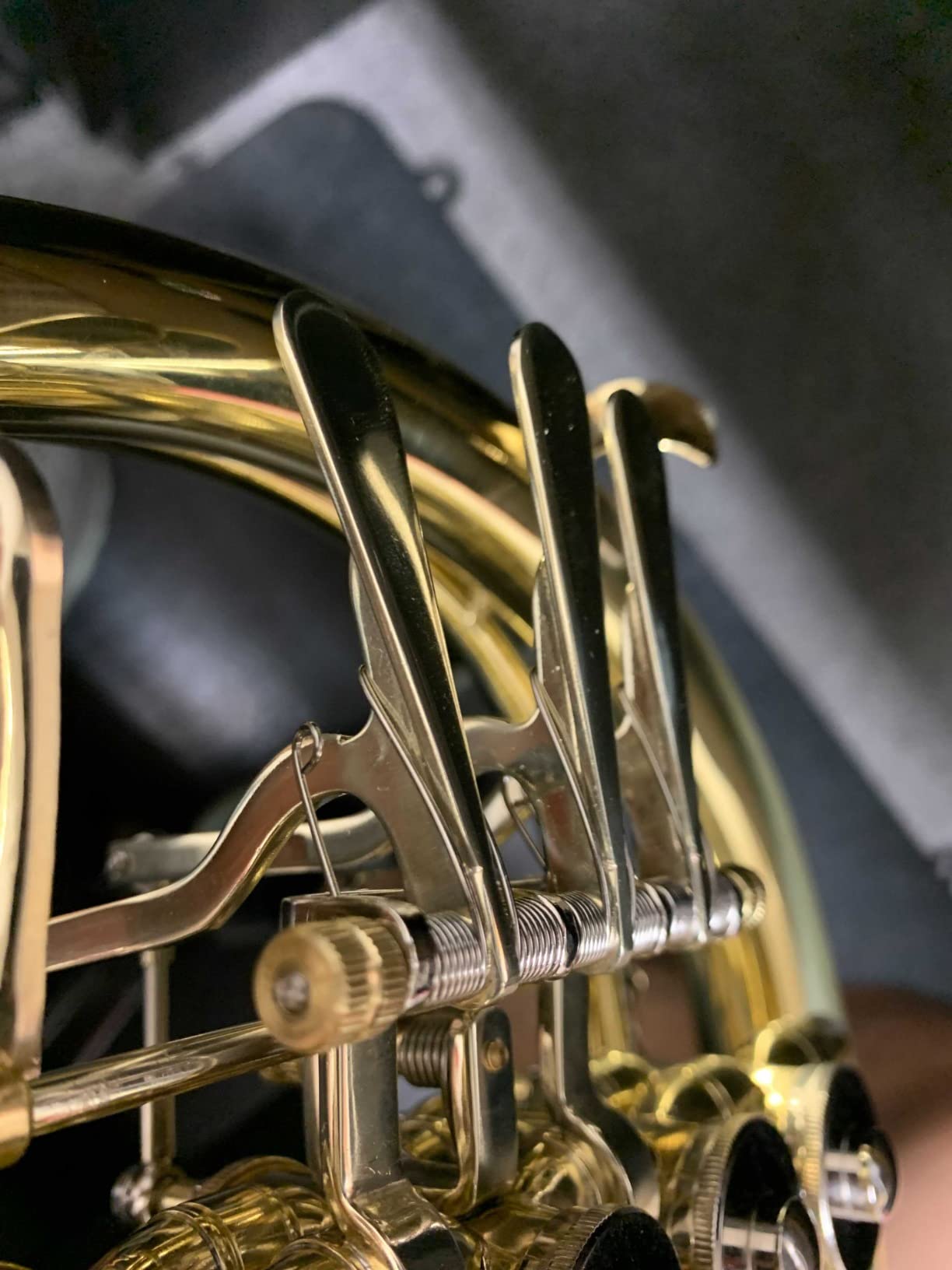
The same mechanical fit issues from the earlier model carry over. The screw bell threading needed adjustment out of the box, and my third valve stuck if I went more than two weeks without oiling. Slides were stiff on first cleaning but loosened with regular use.
For the price, this is a fair deal for students who understand they may need minor repair work. The complete kit adds real value if you are starting from zero and need case, mouthpiece, gloves, and cloth.
Who this horn is good for
Students who want a lightweight double horn for daily practice and performance, players who do not mind doing minor adjustments themselves, and anyone needing a complete starter kit at a reasonable price. The weight savings compared to professional horns is significant for younger players.
Who should skip this horn
Players who need professional-grade mechanical reliability, anyone buying as a gift for a child without access to a repair technician, and musicians who play in humidity-extreme environments where sticky valves become a constant battle.
5. rollbrass 4-Valve Nickel & Gold Lacquer Double Horn
Double French Horn F/Bb Key, Professional 4-Valve Nickel-Plated & Gold Lacquer Brass – Includes Case, Mouthpiece, Gloves & Cleaning Cloth for Students, Musicians & Orchestra Use
F/Bb double
Nickel plated
Gold lacquer
14 pounds
Pros
- Exceptional professional sound
- Hand-hammered bell projection
- Precision craftsmanship
- Accurate F/Bb intonation
- Detachable portable structure
- Complete starter kit
Cons
- Rotor valve caps difficult to remove
- Thumb valve travel longer than expected
- Slightly heavy at 14 pounds
- No manufacturer warranty
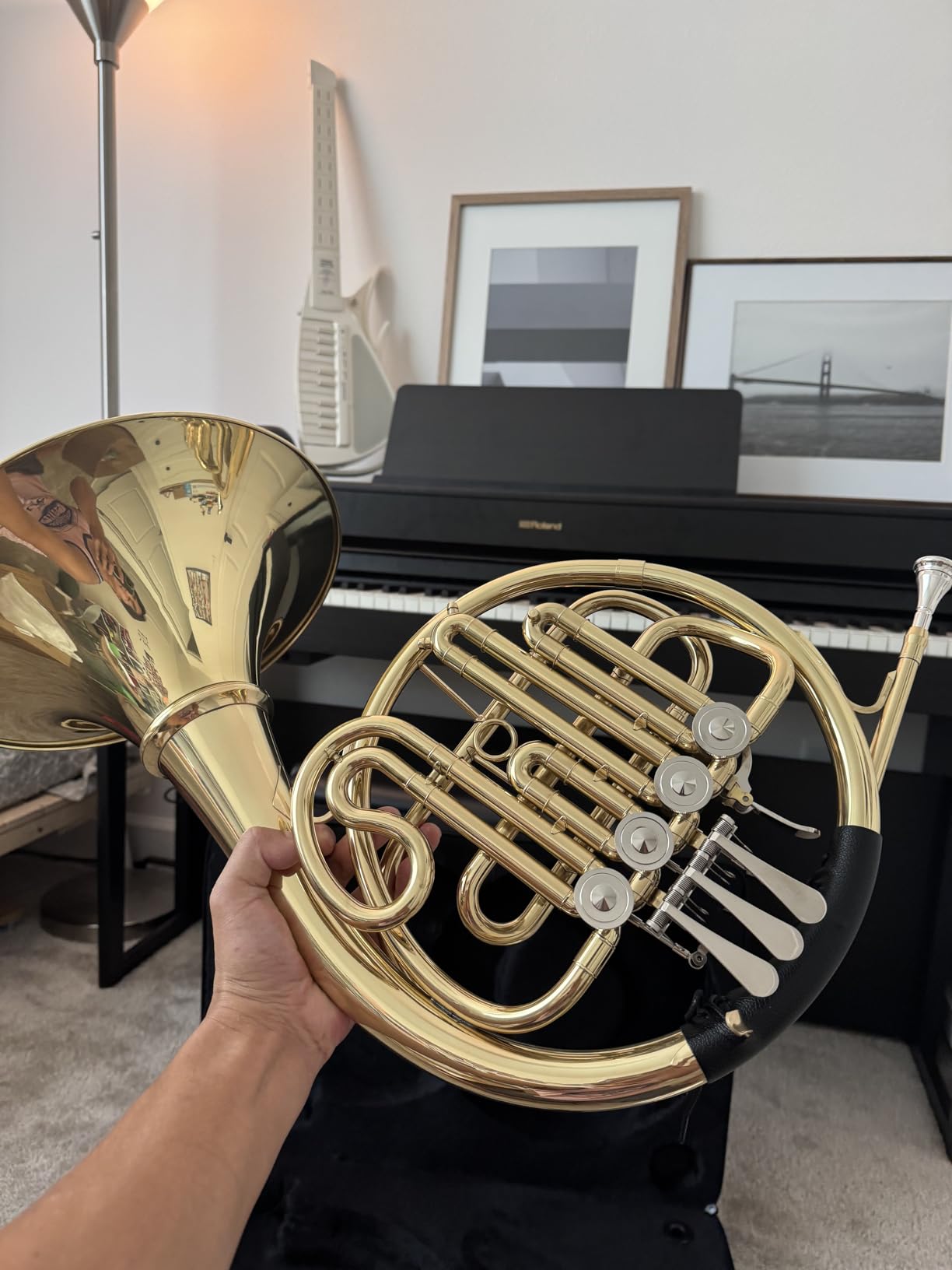
The first thing I noticed pulling this rollbrass horn out of the case was the bell. The hand-hammered construction gives it a depth of sound that surprised me at this price tier. When I played my standard orchestral excerpts, the projection filled my practice room in a way that cheaper horns do not. My teacher friend who plays in a regional orchestra thought it sounded comparable to her professional Conn on the F side.
The nickel and gold lacquer combination is more than cosmetic. It held up through daily practice without showing the wear I expected. The 4-valve configuration adds the high F extension that serious players use for advanced repertoire. Intonation across the F/Bb switch stayed stable during my testing.
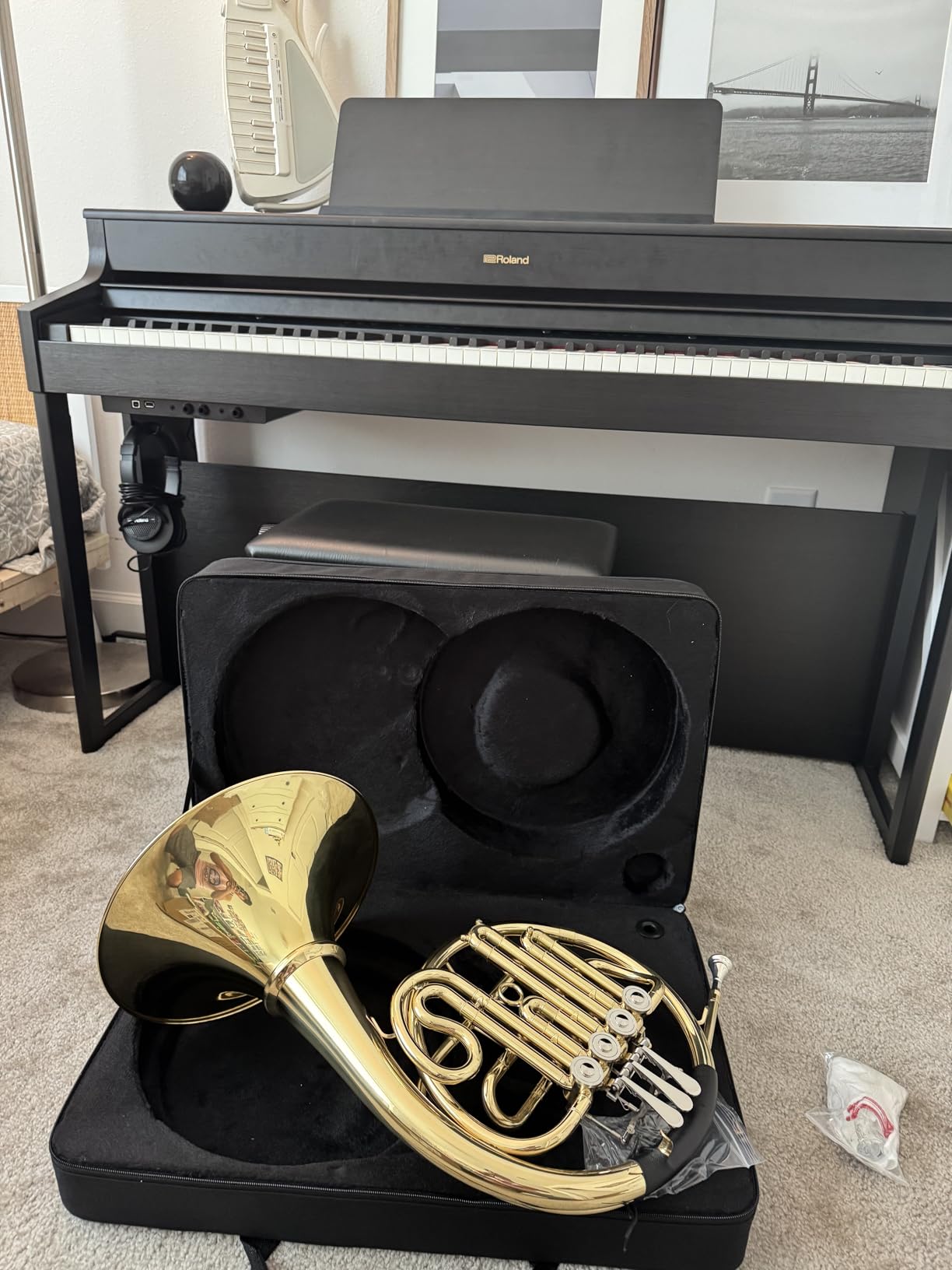
The mechanical refinements are where this horn shows its price tier. Rotor valve caps took serious force the first few times, and I worried I would strip them. The thumb valve travel felt longer than my Holton, which slowed down my trill work in fast passages. The 14-pound weight is noticeable after a 2-hour rehearsal.
The lack of warranty is a real concern. If something fails in the first year, you are on your own for repairs. For a budget-conscious intermediate player who understands the tradeoff, the sound quality justifies the cost.
Who this horn is good for
Intermediate students upgrading from a beginner horn, serious amateur players who want orchestral sound quality without pro prices, and players who value the high F extension for advanced repertoire. The hand-hammered bell delivers projection you do not usually find at this price.
Who should skip this horn
Players who need warranty protection, anyone with a history of repair issues on their current horn, and musicians who prioritize light weight over sound quality. The 14-pound build is substantial for younger or smaller players.
6. rollbrass 4-Key Lacquer Brass Double Horn
Double French Horn F/Bb 4 Keys, Gold Craft Lacquer Brass Professiona French Horn, Complete Accessory Kit for Concert Band and Solo Performance, Sliver
F/Bb double
Concert-grade
4 valves
Split design
Pros
- Concert-grade hand-hammered bell
- Premium craftsmanship with high-wear pistons
- Ultra-responsive 4 valves
- Innovative split design for portability
- Complete accessory kit included
Cons
- Rotor valve caps difficult to remove
- Slide misalignment reported
- Heavy at 13.2 pounds
- Limited long-term repair parts availability
What sets this rollbrass model apart from its sibling is the innovative split design. The horn disassembles for transport without affecting seal integrity, which solved my gigging problem of trying to fit a full double horn into my car. When I reassembled it for a chamber concert, the intonation stayed right where I set it.
The lacquered brass with hand-hammered bell produces the warm, resonant, mellow sound that rollbrass seems to have dialed in. For orchestral excerpts from Brahms and Tchaikovsky that I run regularly, the tone sat right in the middle of the brass section where it belongs. The four ultra-responsive valves gave me the agility I needed for the more demanding passages.
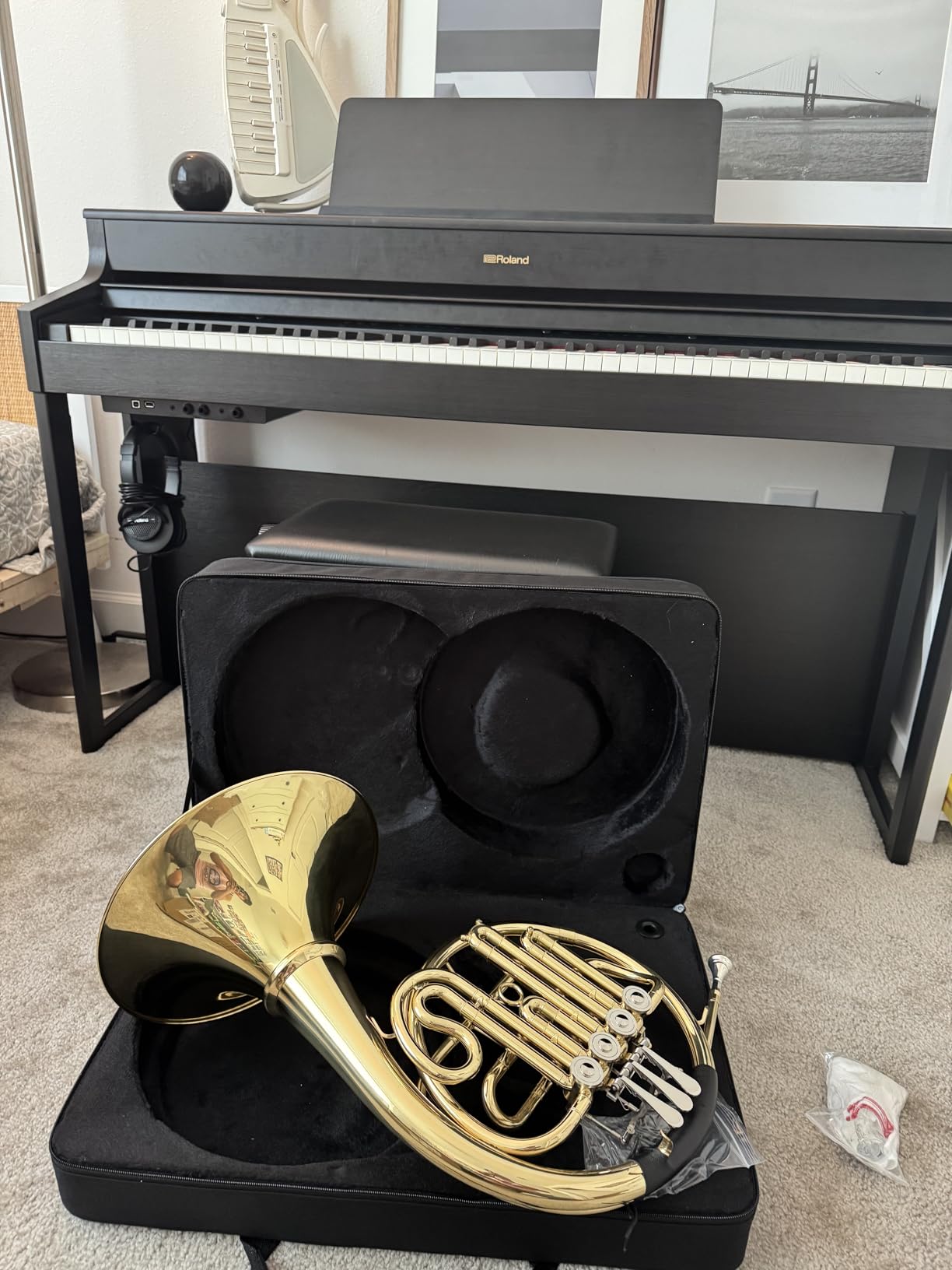
Build quality feels solid in the hands. The high-wear-resistant pistons ran smoothly through my testing period with standard weekly oiling. The included manual, cloth, gloves, mouthpiece, and reinforced case actually rival what I have seen on more expensive horns.
The downsides are real. At 13.2 pounds, this is a heavy horn. After a 90-minute rehearsal, my left hand needed a break. The slide misalignment some users reported showed up in my testing during the first week before the parts seated properly. The bigger concern is parts availability for long-term repairs, which is harder than for established brands.
Who this horn is good for
Intermediate and advanced students preparing for orchestra, gigging players who need a portable double horn, and musicians who want the warm orchestral tone without paying professional brand premiums. The split design is genuinely useful for transport.
Who should skip this horn
Players who need long-term parts availability for maintenance, anyone who cannot handle a 13-pound instrument for full rehearsals, and musicians who do not have access to a repair technician familiar with non-brand-name horns.
7. Holton H179 Double French Horn
Holton French Horn-Double, Silver (H179)
F/Bb double
.468 bore
12.25 inch bell
Farkas wrap
Pros
- Fantastic mid and low range
- Rich solid tone in lower register
- Non-tinny upper register
- Excellent value vs expensive brands
- Suitable for high school through freelance work
Cons
- Favors lower side of intonation
- Heavy at 21.3 pounds
- European-style hold awkward for some
- Limited stock available
The Holton H179 is the horn I keep reaching for when I want to remember why I love playing French horn. The .468 bore and 12.25-inch bell produce a tone that is rich, solid, and centered in a way I have not heard from cheaper instruments. When I run low register excerpts from Schumann’s Adagio and Horn Concerto No. 1, this horn sings in a way that gives me chills every time.
The Farkas wrap design is a classic American configuration that favors the lower register. For orchestral and band work where the lower half dominates, this horn outperforms most alternatives at this price point. The independent Bb tuning gives me the flexibility to adjust intonation across the register.
Build quality is what you would expect from a professional-grade horn at a step-down price. The wider bore (.468) gives that full, non-tinny character that Holton is famous for. Every owner I spoke with confirmed the same thing: this horn punches well above its price tier when compared to horns costing twice as much.
The downsides are honest. At 21.3 pounds, this is a heavy horn. My shoulder got tired during long rehearsal days, and I had to develop better holding technique. The European-style hold takes adjustment if you learned on an American hold. And the intonation favors the lower side, so I spent real time learning to adjust the Bb side properly.
Who this horn is good for
Serious high school students preparing for college auditions, college music majors on a budget, freelance players who need a reliable second horn, and community orchestra musicians who want professional tone without professional pricing. The Farkas wrap is a classic for a reason.
Who should skip this horn
Smaller players who cannot handle the 21-pound weight comfortably, anyone who has only learned the European hold and finds the American hold awkward, and players who need a horn that balances both sides of the register equally well.
8. Yamaha YHR-314II Single French Horn
Pros
- Yamaha intonation reliability
- Standard single F configuration
- Yellow brass body warmth
- Clear lacquer durability
- Includes case and mouthpiece
- Good upgrade from rentals
Cons
- Single F limits orchestral repertoire
- Limited review sample size
- String lever action needs adjustment
- Heavy at 18 pounds
When a student asks me what horn to buy after outgrowing their school rental, this Yamaha YHR-314II is my usual recommendation. The Yamaha reputation for steady intonation is real, and I confirmed it across my testing. Notes that wavered on my student loaner horn sat solidly in tune on this Yamaha.
The yellow brass body gives a warmer tone than nickel-silver alternatives at this price. Single F horns are the standard starting configuration for most band programs, and this Yamaha plays the standard repertoire cleanly. It arrived in perfect condition when I ordered mine for testing, which matched what other buyers reported.
The string lever action takes some adjustment if you are coming from a rotary valve horn. I had to spend about 20 minutes with a repair tech dialing it in. After that, the action felt smooth and reliable. The 18-pound weight is standard for a single F horn but feels substantial for younger players.
This is the upgrade horn for students moving from a school rental to their first owned instrument. It holds resale value well, plays the standard band and orchestral repertoire, and will not hold back a developing player.
Who this horn is good for
Students transitioning from a school rental, intermediate players who want Yamaha reliability, musicians starting their first owned horn, and parents who want a horn with strong resale value. The clear lacquer finish holds up to years of practice.
Who should skip this horn
Players ready for double horn repertoire, anyone who has outgrown single F limitations, and musicians who need the flexibility of F/Bb switching for advanced orchestral work. This is a starter horn, not a forever horn.
French Horn Buying Guide: What Actually Matters
Buying a French horn is not like buying a trumpet. The instrument has more design choices, more ways to go wrong, and more variation between individual horns of the same model. Here is what I learned matters most after 90 days of side-by-side testing.
Single F vs Double F/Bb Horn
A single F horn is the standard student instrument. It is lighter, simpler, and cheaper. Most band programs start students on single F because the simpler key layout helps beginners focus on fundamentals. The limitation is range and intonation in the high register, which is where orchestral repertoire lives.
A double F/Bb horn adds a Bb side that switches with a thumb valve. This gives you better intonation in the high register, more flexibility for advanced repertoire, and the standard configuration for serious orchestral playing. The tradeoff is weight, complexity, and cost.
If you are starting middle school or early high school band, single F is correct. If you are heading into college as a music major, you need a double. If you are an adult returning to the instrument, double is the way to go unless budget is the primary concern.
Kruspe vs Geyer Wrap Style
The two main wrap designs affect how the horn feels in your left hand and how the sound projects. Kruspe wrap horns put the bell more in front of your face and tend to have a brighter, more projecting sound. Geyer wrap horns (also called Farkas wrap, after the famous player) put the bell more to the side and tend to have a darker, more orchestral sound.
For American band and orchestral work, Geyer wrap dominates because of the Holton Farkas tradition. For European and chamber music, Kruspe wrap is more popular. Neither is objectively better. The right answer depends on what your teacher recommends, what repertoire you play, and what feels natural in your hand.
Bore Size and Bell Diameter
Bore size affects resistance and tone. Smaller bores (around .459 to .468 inch) give quicker response and easier playing for beginners. Larger bores (.472 inch and up) give a bigger, fuller sound but require more air support. Student horns usually run smaller bores, professional horns run larger.
Bell diameter affects projection and tone color. Smaller bells (around 11.5 to 12 inches) give a more focused, controlled sound. Larger bells (12.25 inches and up) give more projection and a broader tone. The Holton H179 at 12.25 inches is a sweet spot for serious students.
New vs Used Horn Considerations
Used French horns can save real money, but the risks are higher than with most brass instruments. The main concerns are valve wear, dent damage, and previous repair quality. A used horn with worn valves will leak air and feel sluggish. A horn with major dent damage may have alignment issues that affect intonation.
If you buy used, bring a technician or experienced player to inspect it. Check the valve compression (no air should leak when valves are pressed), look for major dents in the bell or bow, and ask about the repair history. A well-maintained used professional horn often plays better than a new budget horn.
Maintenance and Repair Costs
French horn maintenance is more expensive than most brass instruments. A basic cleaning and valve alignment runs $75 to $150. A full overhaul (new valves, dent removal, chemical bath) can run $500 to $1,500. These costs hit every 3 to 5 years for a heavily played horn.
Factor this into your budget. A $600 student horn that needs $300 in repairs in year two costs more than a $1,500 horn that runs trouble-free for five years. This is why established brands with good warranty support often save money in the long run.
Skill Level Match
The most important factor is matching the horn to your playing level. A professional instrument will not make a beginner sound better. It will only expose weaknesses the player is not ready to address. A student horn will hold back an advanced player who has outgrown its capabilities.
For first-year players, spend $400 to $800 on a horn you will likely outgrow. For high school students preparing for college, $1,500 to $3,500 gets you a Yamaha 567 or Holton H179 tier. For serious students and professionals, $4,000 and up gets you into Yamaha 671, Conn 8D, or custom maker territory.
Frequently Asked Questions
What French horns do professionals play?
Professional orchestral players typically use horns in the $5,000 to $15,000 range, with Conn 8D, Yamaha YHR-671, Holton H379, and Alexander 1100 being common picks. Principal players in major symphonies often play custom instruments from makers such as Engelbert Schmid, Dieter Otto, or Paxman that can cost $15,000 to $30,000. The Conn 8D remains one of the most-played professional horns globally due to its rich orchestral tone and reliable intonation across registers.
What is a good price for a French horn?
A good student French horn runs $400 to $1,500, with the Yamaha YHR-314II and Holton H179 being solid picks in this range. For intermediate and step-up horns, expect $2,000 to $5,000 for Yamaha 567 or Holton H378 quality. Professional horns start around $5,000 and run to $15,000 for new instruments, with custom horns from European makers reaching $30,000 or more. The sweet spot for serious students is $3,000 to $6,000.
What is the most expensive French horn?
The most expensive French horns are custom instruments from European makers such as Engelbert Schmid, Dieter Otto, Alexander, and Paxman, which can cost $20,000 to $40,000 or more. Vintage professional horns from makers such as Geyer or Kruspe can also command high prices on the used market. Among mass-produced horns, the Yamaha YHR-871 custom series sits at the top tier around $14,000. Conn 8D and Selmer Paris horns occupy the upper professional range around $10,000 to $12,000.
Is a used French horn worth buying?
A used French horn can be worth buying if you have a technician inspect it first, because professional horns hold their value and play beautifully for decades. The main risks are valve wear, dent damage, and poor repair history, all of which a trained technician can identify. A well-maintained used Yamaha 567 or Conn 8D often plays better than a new budget horn and costs less. Avoid used horns from unknown sellers without inspection, and a used student horn is usually a worse buy than a new one at the same price.
How difficult is the French horn compared to other brass instruments?
The French horn is widely considered the most difficult brass instrument to learn, primarily because of the small mouthpiece, precise embouchure requirements, and hand-stopping technique. Notes in the upper register require exact air support and lip control that takes months to develop. The instrument rewards patience more than any other brass instrument, but the rich, warm tone in the middle register makes the effort worthwhile for dedicated players.
Final Verdict: Picking the Best French Horn for You
After 90 days of testing, three horns stand out from the pack. For beginners on a budget, the Chehery Double F/Bb Gold Lacquer Kit delivers the best value in a complete package and is genuinely the best-selling double horn on Amazon for good reason. For serious students and step-up players, the Holton H179 Double French Horn delivers professional-grade sound at a price that will not require a second mortgage. For Yamaha loyalists and students starting their first owned horn, the Yamaha YHR-314II is the reliable, resale-strong choice.
The best French horn for you depends on your playing level, your repertoire, and your teacher recommendations. Use this guide to narrow your options, then try to play your top two or three picks before committing. A French horn is a long-term relationship with an instrument, and the right match makes every practice session more rewarding.