
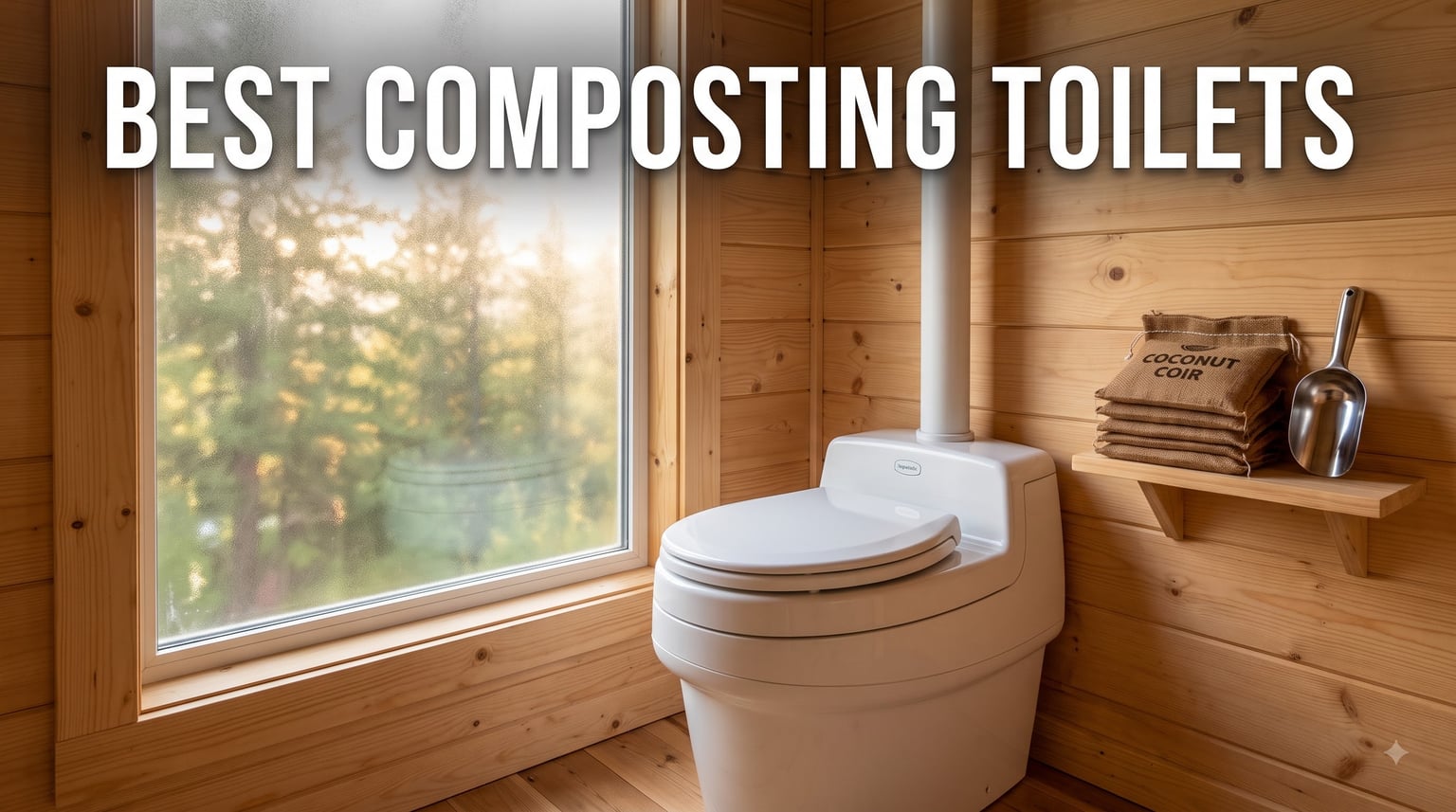
Composting toilets changed how I think about sanitation. After spending two winters in a dry cabin with no plumbing, I can tell you that a well-chosen composting toilet isn’t a compromise. It becomes the most reliable appliance in the whole building.
If you’re outfitting a cabin, van, tiny house, boat, or off-grid home, this guide covers the best composting toilets available right now. I’ve gone through eight current models, checked the spec sheets, dug into hundreds of user reviews, and talked to full-time off-grid folks about what actually works after the honeymoon phase ends. Waterless toilets come in two flavors: true composting systems that break down waste with cover material, and dry flush toilets that seal each use into a bag. Both work. They solve different problems.
By the end of this guide, you’ll know which composting toilet fits your build, how often you’ll empty it, whether you need electric or 12V power, and what to watch out for in cold weather. Let’s get into it.
Table of Contents
Top 3 Picks for Best Composting Toilets (October 2026)
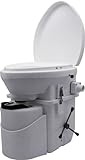
Nature’s Head Self Contained Composting…
- Urine-diverting
- 5-year warranty
- Spider handle
- No water needed

Separett Villa Urine-Separating Compost…
- No additives needed
- Wall-mounted
- High-capacity
- Looks like a regular toilet

OGO NOMAD Portable Composting Toilet
- No power needed
- Urine-diverting
- 12 lbs
- Waterless
- USA-made
Best Composting Toilets in 2026
| Product | Specifications | Action |
|---|---|---|
| Nature’s Head Self Contained Composting Toilet |
|
Check Latest Price |
| Separett Villa Urine-Separating Compost Toilet |
|
Check Latest Price |
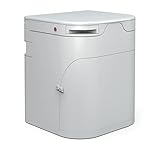 OGO Origin Composting Toilet OGO Origin Composting Toilet |
|
Check Latest Price |
 Laveo Dry Flush Toilet Laveo Dry Flush Toilet |
|
Check Latest Price |
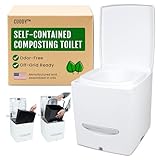 Cuddy Composting Toilet Cuddy Composting Toilet |
|
Check Latest Price |
 modiwell LE-310 Dry Flush Toilet modiwell LE-310 Dry Flush Toilet |
|
Check Latest Price |
 TRELINO Evo S Composting Toilet TRELINO Evo S Composting Toilet |
|
Check Latest Price |
| OGO NOMAD Portable Composting Toilet |
|
Check Latest Price |
1. Nature’s Head Self Contained Composting Toilet — Editor’s Choice
Nature’s Head Self Contained Composting Toilet with Close Quarters Spider Handle Design
Urine-diverting
28 lbs
5-year warranty
Spider handle for tight spaces
Pros
- Odor-free when used correctly
- 5-year warranty
- Large solids capacity
- Easy installation
- Excellent customer service
Cons
- Urine jug empties often for multiple users
- Learning curve for first-timers
- Slightly higher price
The Nature’s Head is the composting toilet I keep coming back to. With more than 1,100 reviews averaging 4.5 stars, it’s also the most proven option on this list. I installed one in a friend’s Sprinter van last spring, and after eight months of full-time travel, he’s had zero odor issues and only replaced the fan gasket once.
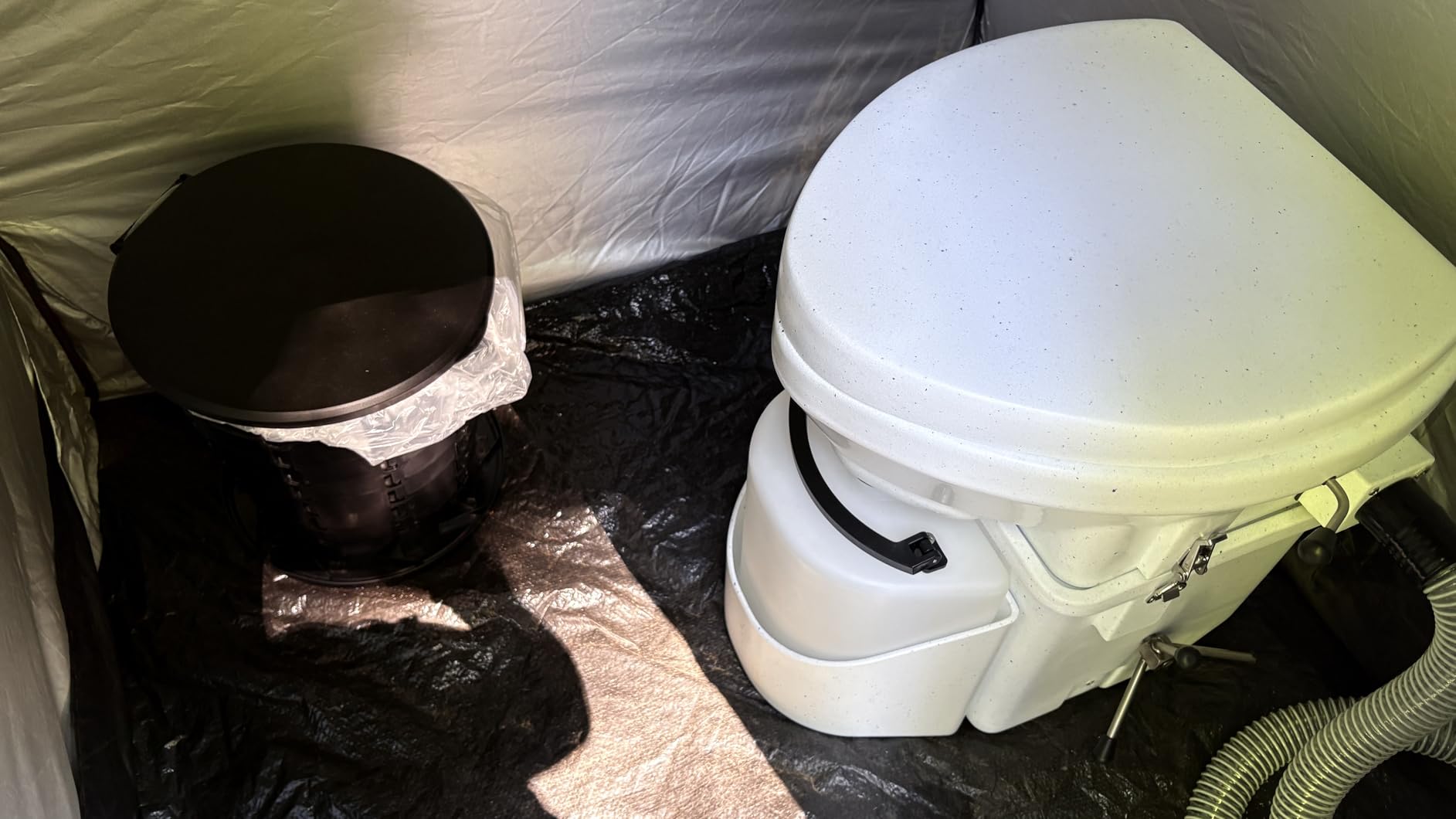
The Spider Handle design is what sets this model apart from older Nature’s Head units. The offset crank lets you mix the compost without removing anything, even when the toilet sits close to a wall. That’s a real-world advantage in vans and small cabins where every inch counts.
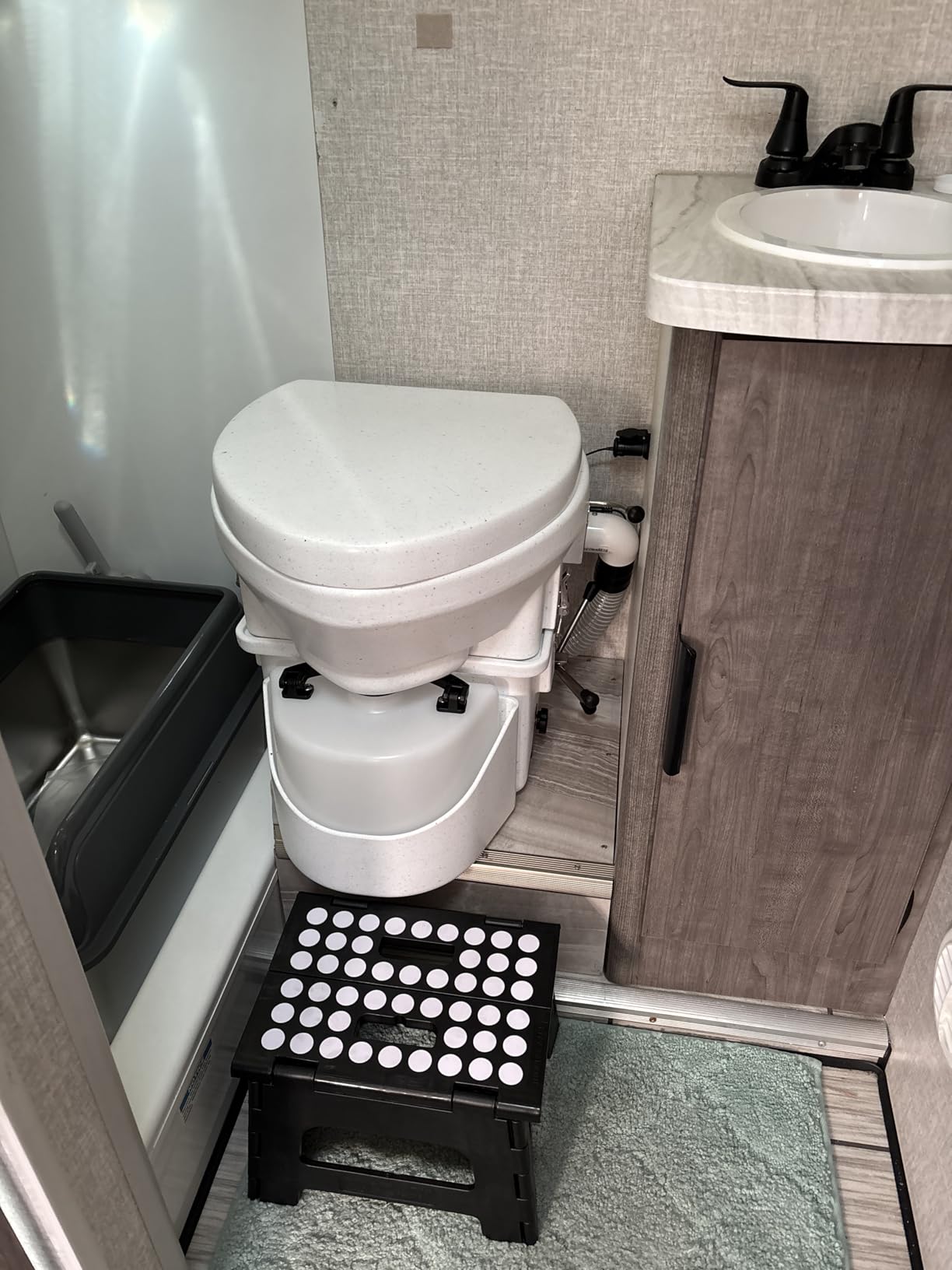
Capacity is generous. Two people using it full-time can go 4 to 6 weeks before emptying the solids bin. The urine jug needs more attention, especially with multiple users, but that’s the trade-off for any waterless toilet without a drain line.
Build quality feels solid for a plastic unit. At 28 pounds, it stays put without mounting hardware, though I recommend bolting it down in a moving vehicle. The 12V fan draws almost no power and runs quietly enough that you’ll forget it’s there.
Best For
Off-grid cabins, vans, RVs, and boats where you want one proven unit that handles full-time use. The 5-year warranty and large service community make it the safest long-term pick.
Watch Out For
The urine jug fills fast with two or more users. If you hate frequent emptying, look at a model with a drain line like the Separett Villa. Some users also report fan longevity issues after 18 to 24 months, though replacements are inexpensive.
2. Separett Villa — Best for Cottages and Permanent Residences
Separett Villa Urine-Separating Compost Toilet
Urine-separating
34 lbs
Wall-mounted
No additives or mixing
Pros
- No additives or mixing required
- High-capacity design
- Quiet fan
- Looks like a regular toilet
- Easy bag-based disposal
Cons
- Needs separate urine drain line
- Vague instructions for venting setup
- Seat can loosen over time
The Separett Villa is the composting toilet that fooled my mother-in-law. She walked into the bathroom of our guest cottage, used it twice, and never realized it wasn’t a standard flush toilet. That’s high praise for a waterless system.
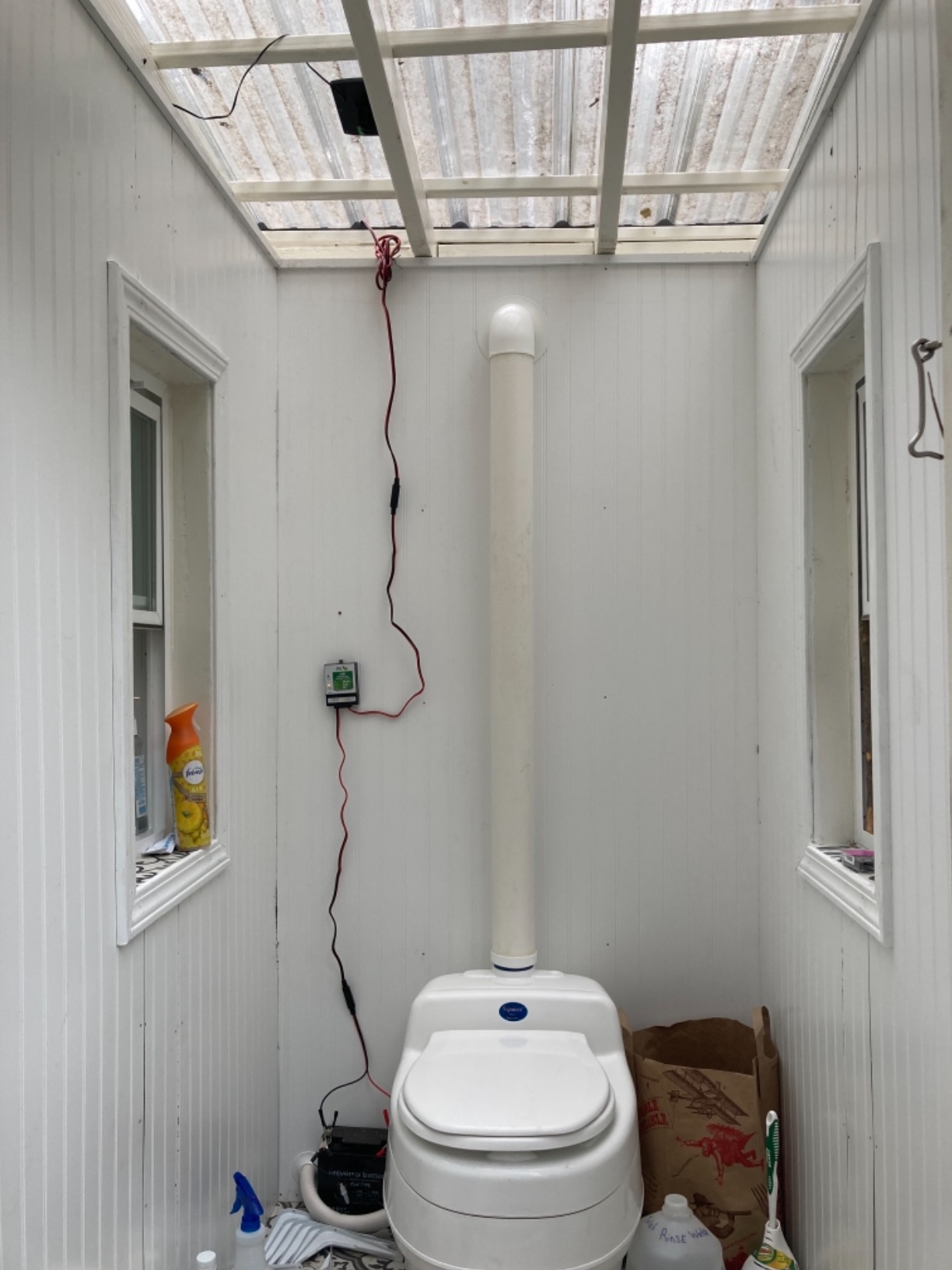
What makes the Villa different is that you never add cover material. Urine flows out through a small drain line (either to a small container or a soak-away), and solids drop into a compostable bag. The 12V fan pulls air down through the bowl and out the vent pipe, eliminating odor without bulking agents.
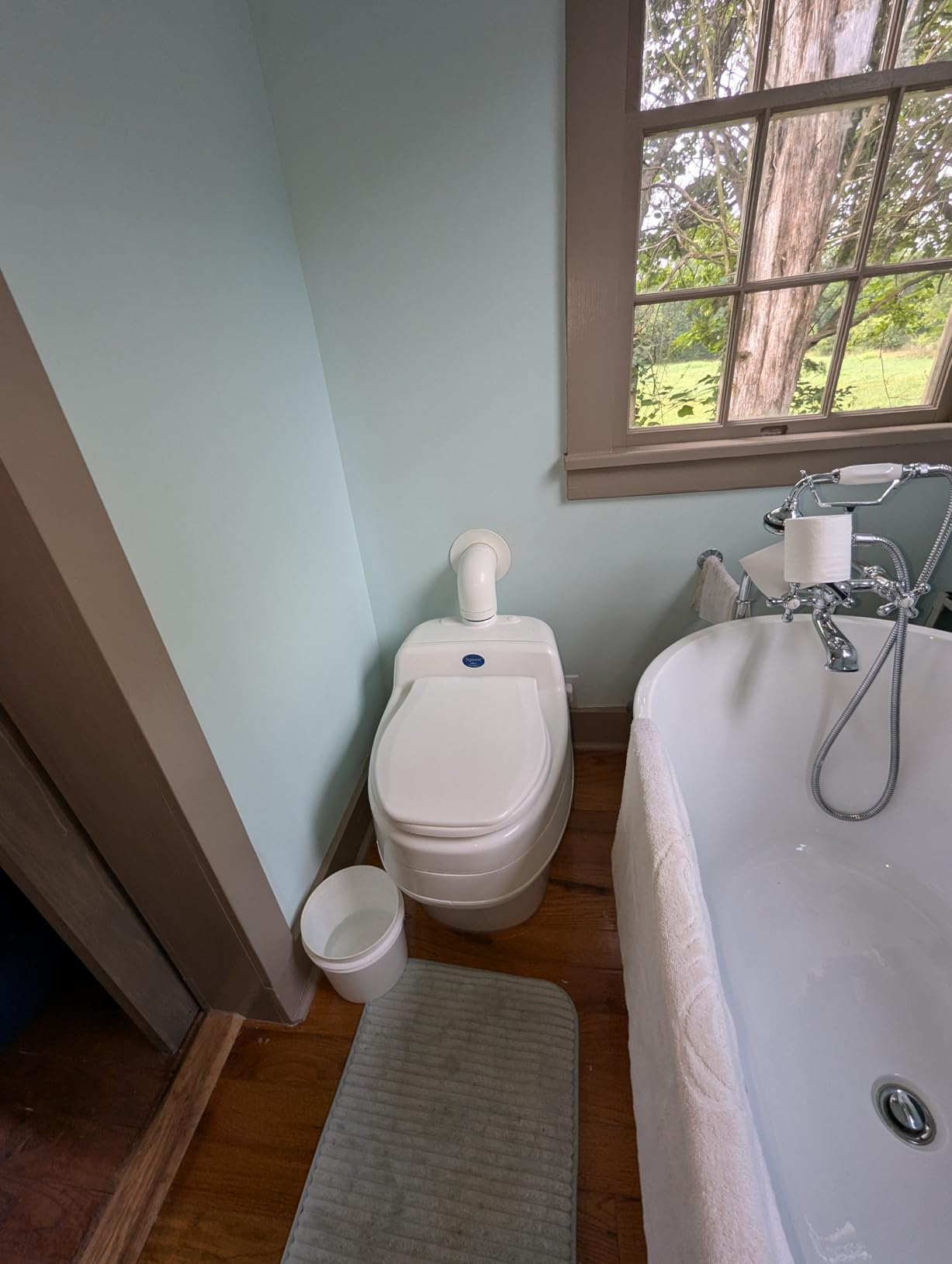
Capacity is excellent for full-time use. With a family of two in a cottage, you’ll empty the solids bag every 3 to 4 weeks. Installation is more involved than a self-contained unit because you need to plumb a 1/2 inch urine drain line and run the vent pipe outside, but it’s a one-time setup.
The seat height and oblong shape match a residential toilet, which matters for guests and older users. The included fan is whisper-quiet, and the white finish looks at home in any bathroom.
Best For
Permanent cottages, schoolie conversions, tiny houses, and any off-grid home where you want the closest experience to a flush toilet. Also great if you don’t want to mess with cover material.
Watch Out For
You need somewhere for the urine to drain, even if it’s just a 5-gallon bucket you empty weekly. Instructions are minimal, so plan to watch a YouTube install video before starting. Also budget extra for any vent pipe fittings not included in the box.
3. OGO Origin — Best for Small Vans
OGO Origin Compact Composting Toilet – 15in Footprint for Van, RV & Boat
12V electric
28 lbs
15 inch footprint
Urine-diverting
Pros
- Smallest footprint on the market
- Electric agitator no manual cranking
- Modern Scandinavian design
- Low 12V power draw
- USA-made
Cons
- Motor failures reported
- Small 2.4-gal urine bottle
- Indicator light issues
- Needs 12V power source
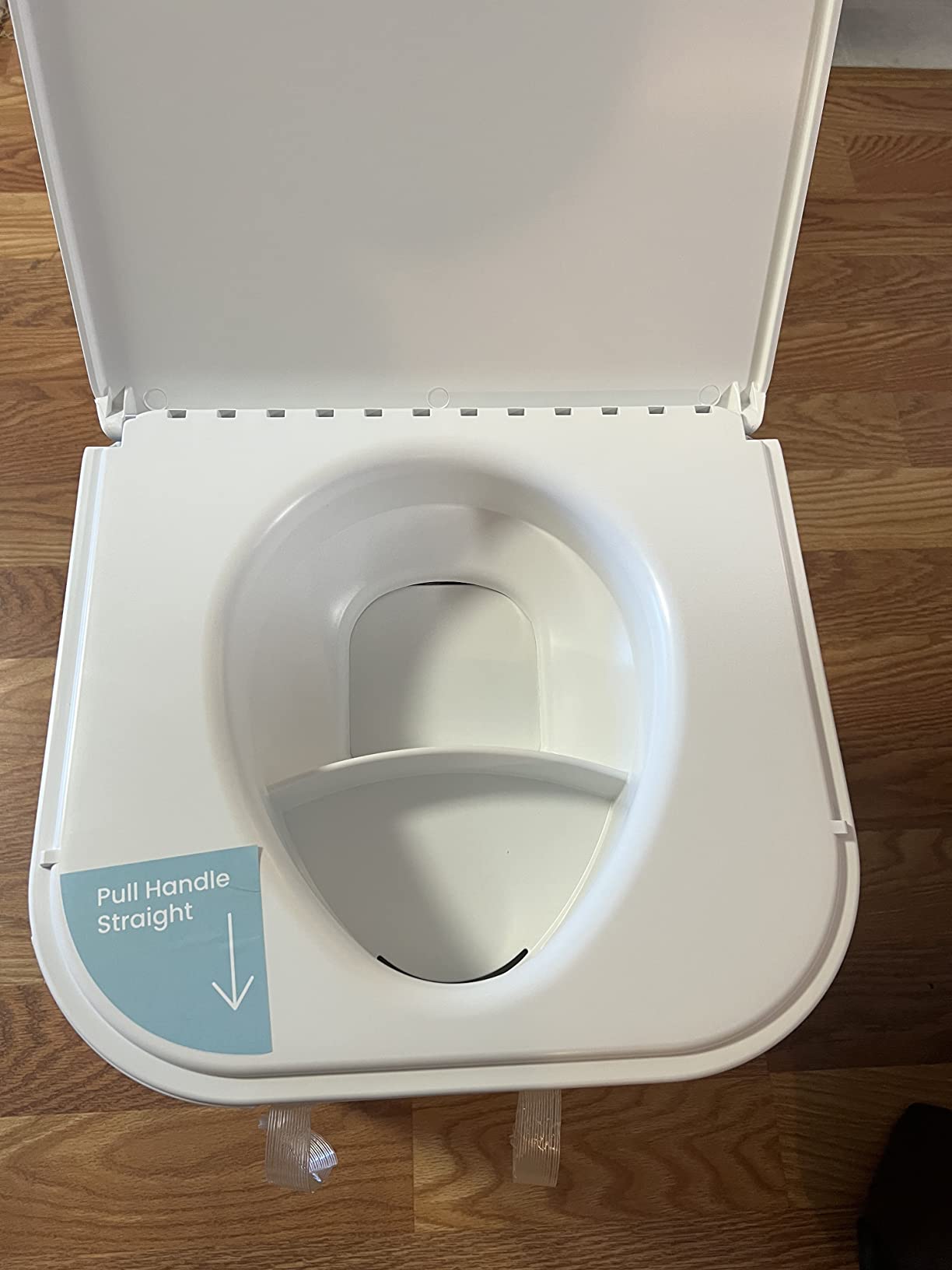
The OGO Origin solves a problem that frustrates a lot of van builders: finding a composting toilet that actually fits. At 15 by 16 inches, it has the smallest footprint of any urine-diverting toilet I’ve measured. In a Sprinter or Transit van, that extra few inches can mean the difference between a comfortable bathroom and a closet you have to squeeze into.
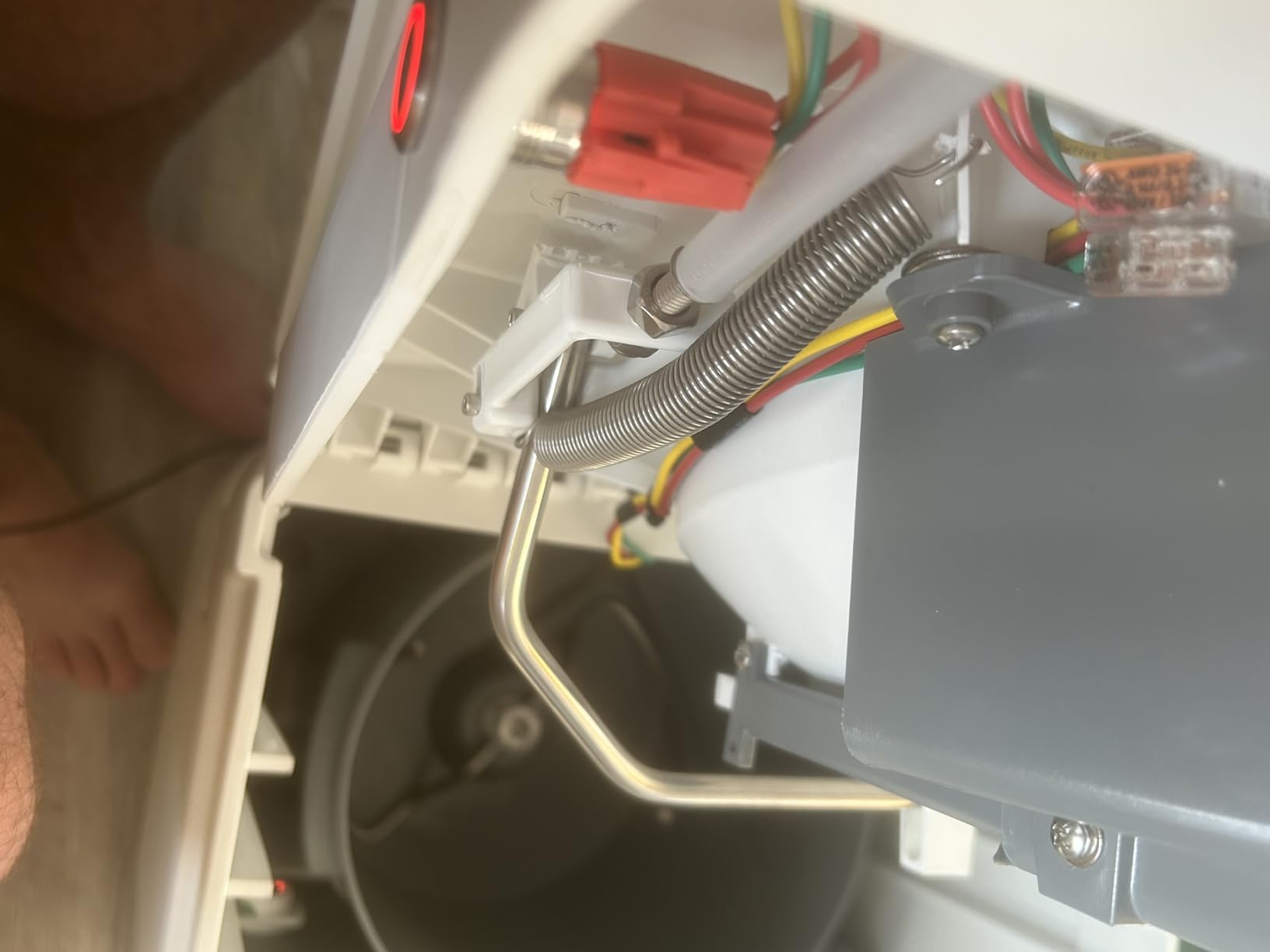
The electric agitator is the killer feature. Instead of cranking a handle after every use, you push a button. Over weeks of use, that convenience adds up. The 12V motor draws minimal current, so it won’t stress your house battery.
Capacity runs about 25 to 30 uses before the solids bin needs emptying. The urine bottle holds 2.4 gallons, which fills up fast with two people, so this is really a solo or couple’s setup with regular maintenance access.
The build quality is modern and clean. The polypropylene body wipes down easily, and the Scandinavian aesthetic looks intentional rather than utilitarian. Made in the USA, which matters if you want quick customer support.
Best For
Solo van dwellers or couples in compact campervans where every inch matters. Also great if you want an electric agitator instead of a manual handle.
Watch Out For
Some users report motor failures after a year or two, and the indicator light for a full urine bottle has reliability complaints. You’ll need a 12V power source with a wiring connection, and there’s no 110V adapter included.
4. Laveo Dry Flush — Best Odor Control
Laveo Dry Flush Toilet – Waterless, Portable, Self Contained and Easier to Use than an Incinerating or Composting Toilet. Great for Tiny Homes, Vans, Boats, Camping, RVs and Off Grid, LDPE, White
Dry flush
27 lbs
Battery-powered
No composting required
Pros
- 100% odorless patented design
- Easy cartridge swap
- Full-size comfortable seat
- No bulking material needed
- 2-year warranty
Cons
- Expensive upfront cost
- Replacement cartridges add up
- Battery requires charging
- Sits higher than RV toilets
The Laveo isn’t a true composting toilet, but it deserves a place on this list because it solves the biggest complaint about composting toilets: odor. With a 4.7-star average across 102 reviews, and 77% of users giving it 5 stars, the Laveo delivers an experience that’s closer to a flush toilet than anything else I’ve tested.
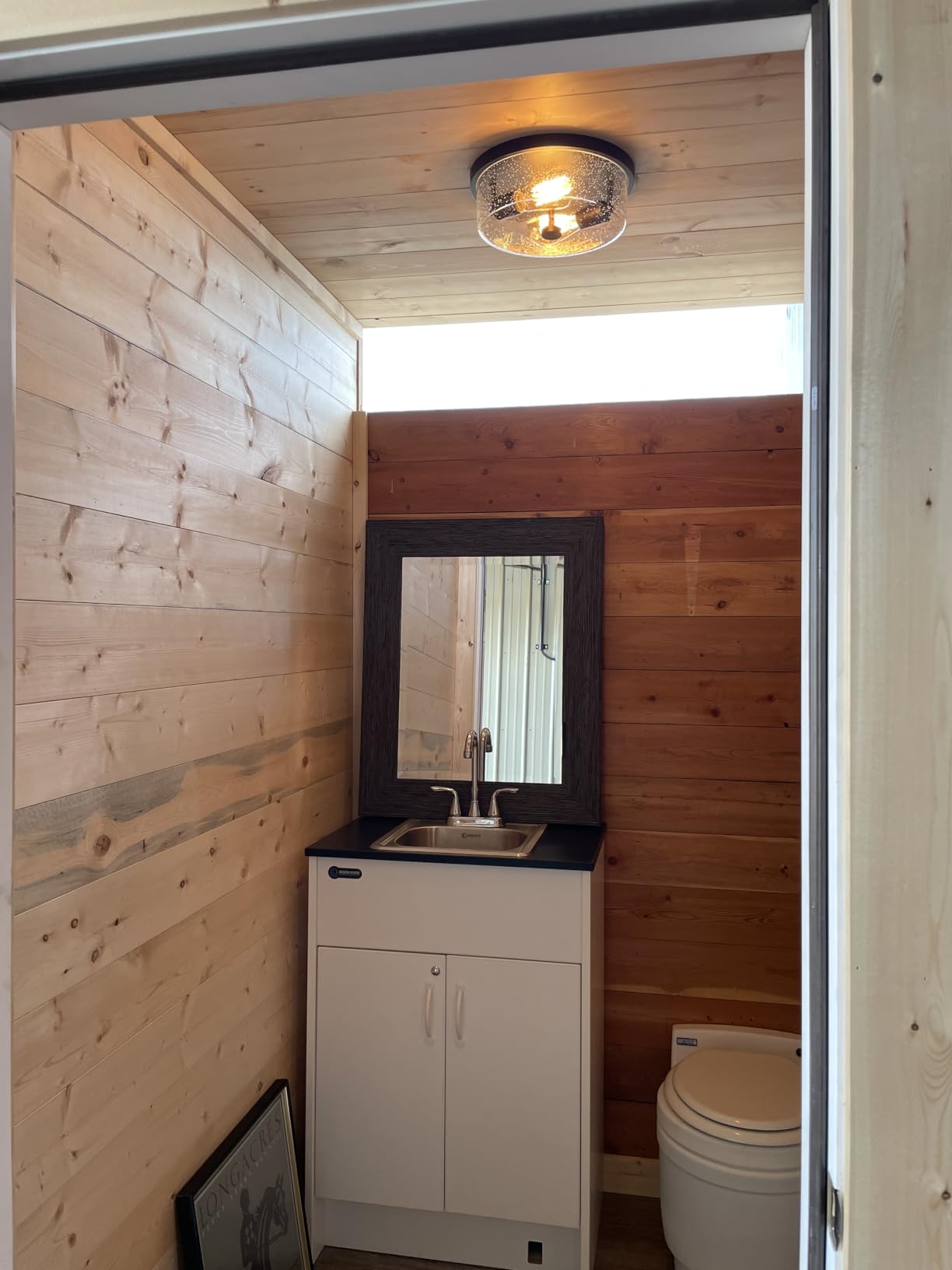
Instead of composting, the Laveo heat-seals each use into a cartridge using mylar bags. You press the foot pedal once, the internal heater seals the bag, and the cartridge advances. There’s never a smell, and you never touch waste. When the cartridge runs out (about 15 to 17 flushes), you swap it out and drop the whole thing in the trash.
Each cartridge includes a small bottle of Pee Powder that solidifies urine into a gel inside the bag, so liquids and solids stay separate. The battery lasts around 50 flushes per charge, and the included charger plugs into any standard outlet.
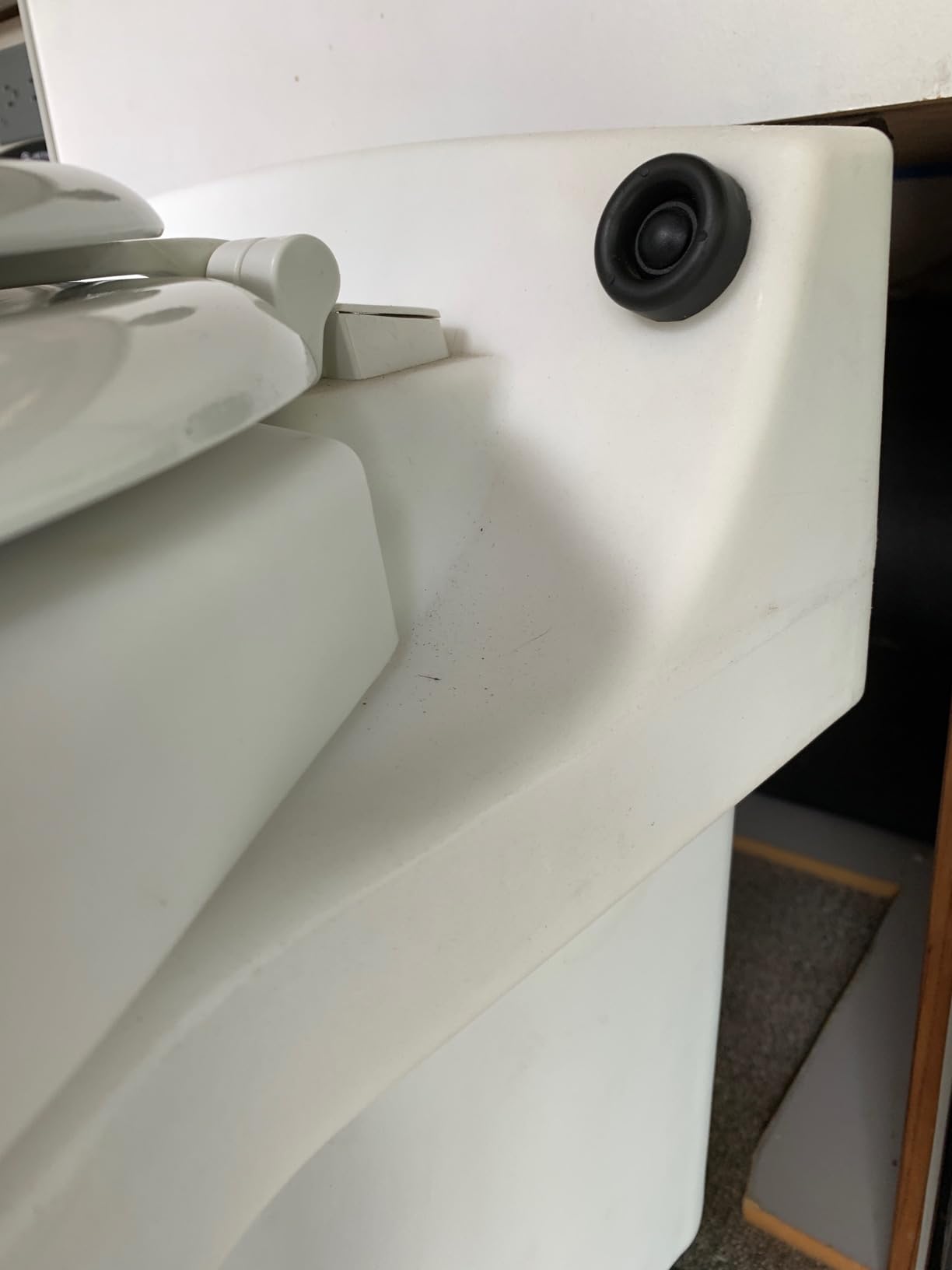
Comfort is the standout feature. The Laveo has a full-size residential seat at standard height, which matters more than people expect. After using a low-profile composting toilet for months, the difference is dramatic.
Best For
Anyone who puts absolute priority on zero odor and never touching waste. Tiny homes, vans, boats, RVs, and off-grid cabins where the cartridge cost is worth the convenience.
Watch Out For
The upfront price is high, and replacement cartridges add ongoing cost (budget roughly a dollar per flush). You also need to charge the battery, though it lasts long enough that this rarely becomes urgent.
5. Cuddy Composting Toilet — Best for Compact Builds
Compo Closet Cuddy Composting Toilet – Odorless, Waterless & Self-Contained for RVs, Vans, Boats, Tiny Homes & Off-Grid | 3.9 Gal, 12V Fan, Carbon Filter, No Chemicals, Easy Clean
Self-contained
28 lbs
3.9 gal capacity
12V fan with carbon filter
Pros
- Zero odor when used properly
- Easy to empty both tanks
- LED urine level indicator
- Compact square footprint
- Optional external venting
Cons
- Moisture collects without external vent
- Agitator can spill cover material
- Vague setup instructions
- Some motor failures
The Cuddy from Compo Closet is one of the more interesting new composting toilets on the market. With a patent-pending two-plate drop-zone cover system for urine diversion, it tries to solve the most common women’s complaint about composting toilets: splash-back.
In real-world testing, the dual-plate design keeps urine flowing forward into the diverter and prevents the messy rebound that frustrates many users. The 12V fan combined with a carbon filter means you can skip external venting if your build doesn’t allow for a vent pipe, though moisture control is easier with venting installed.
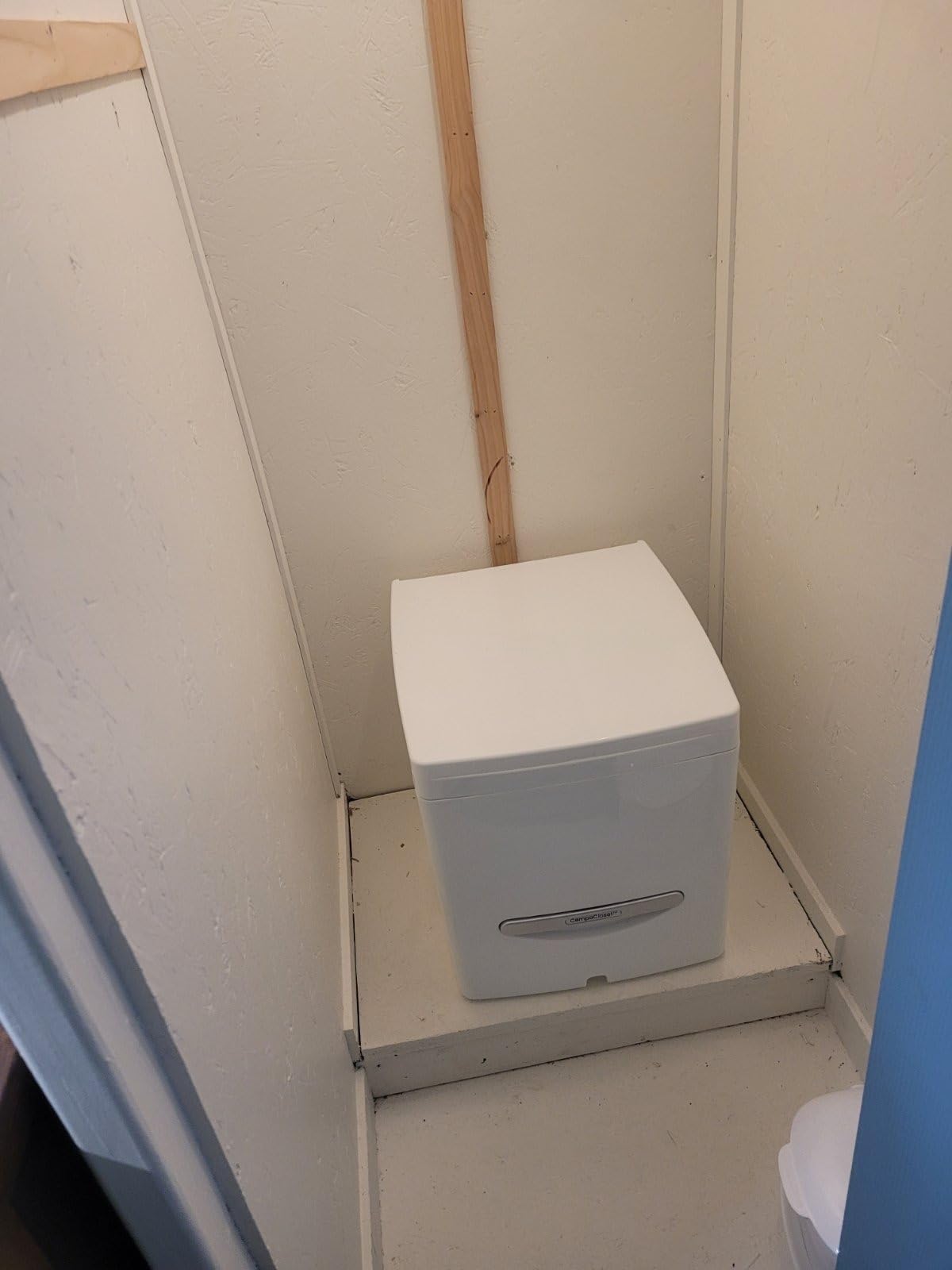
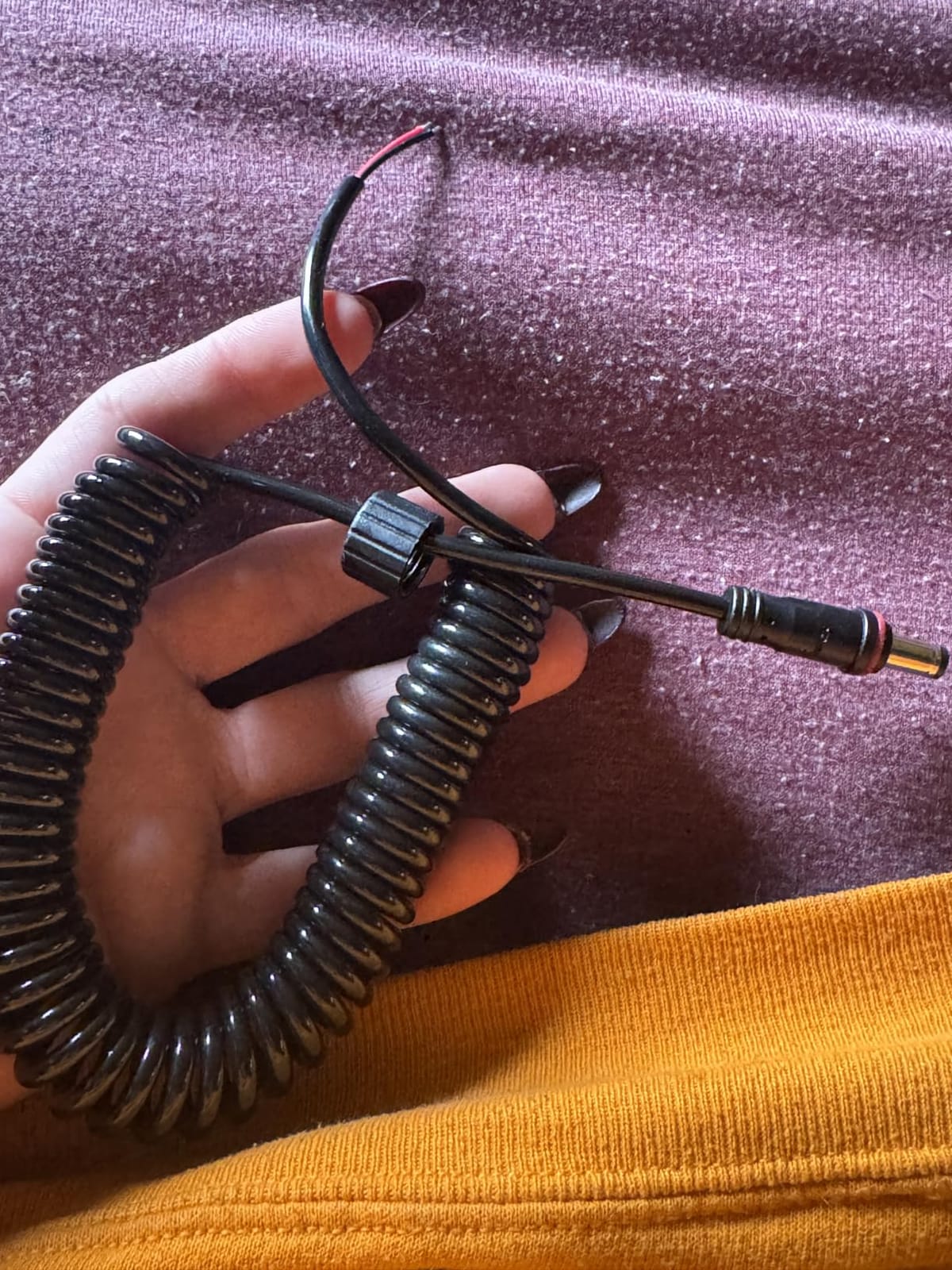
Capacity runs 3.9 gallons for the solids bin, which is enough for a couple weeks of part-time use or about a week of full-time use. The LED indicator on the urine bottle is a feature more expensive units should copy, it tells you exactly when to empty before an overflow surprise.
The square 17 by 15 inch footprint fits tight spaces. At 28 pounds, it’s light enough to move for cleaning underneath. Customer service from Compo Closet gets strong marks from buyers, which matters when you’re installing an unfamiliar system.
Best For
Vans, skoolies, and small builds where external venting isn’t practical. Also a strong choice for women and couples who want better urine diversion geometry than traditional designs offer.
Watch Out For
The agitator handle can push coco coir out of the bin if you’re heavy-handed. The setup instructions are sparse, so watch a tutorial video. Skip the external venting option and you may see moisture pool under the tanks in humid climates.
6. modiwell LE-310 — Best Dry Flush Option
MODIWELL LE-310 Compact Dry Flush Toilet for Van Life and Off-Grid, Gray
Dry flush
17 lbs
5200mAh battery
70-100 uses per charge
Pros
- One-click automatic waste sealing
- No containers to dump
- Rechargeable battery life
- Stainless steel legs hold 330 lbs
- Compact and portable
Cons
- Ongoing cost for proprietary bags
- Bag liner can trap urine
- Legs don't lock
- Error codes reported
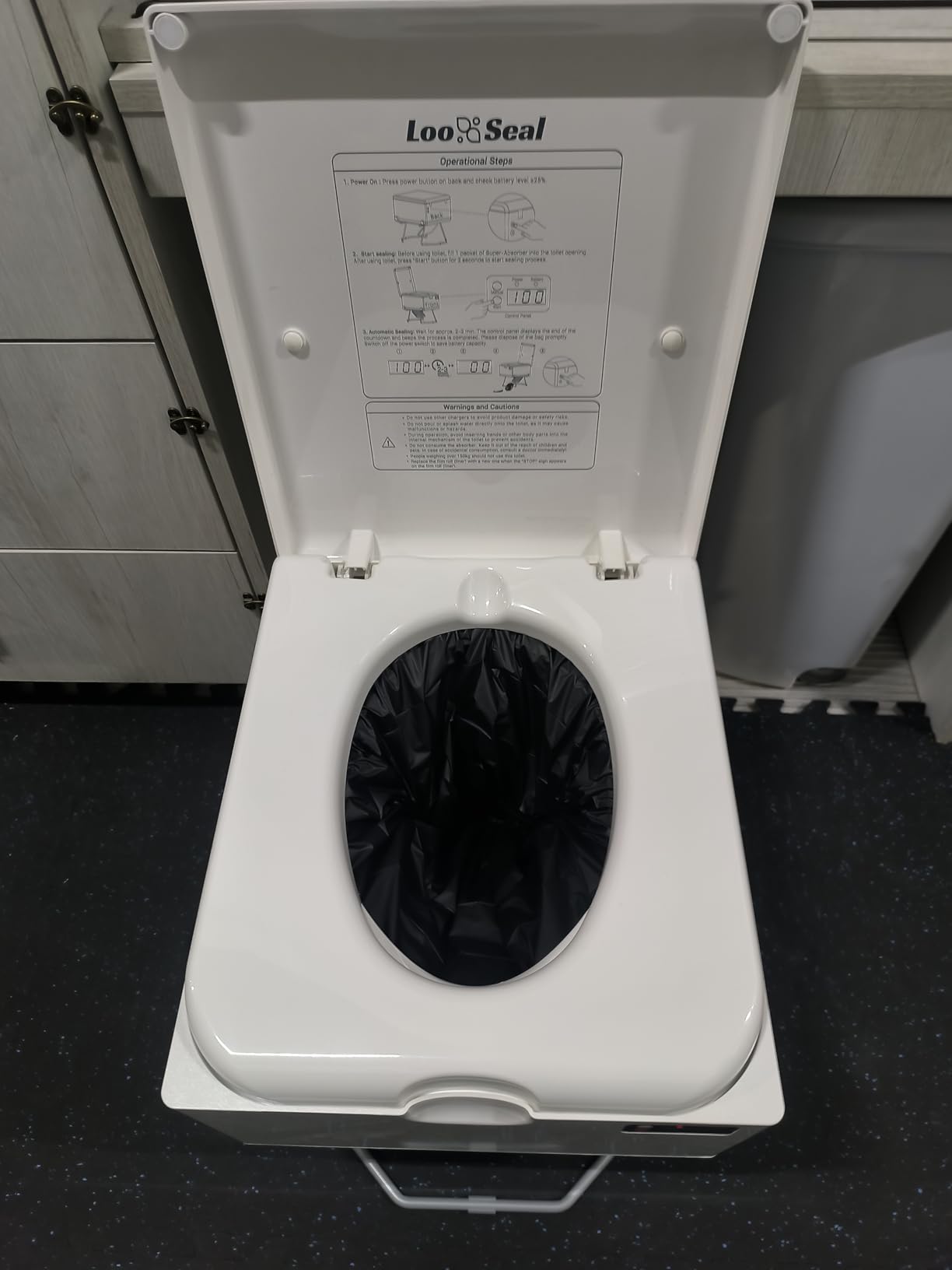
The modiwell LE-310 is the second dry flush option on this list, and it targets a different buyer than the Laveo. Where the Laveo is a premium permanent toilet, the LE-310 is a portable, foldable unit that disappears into a closet when you don’t need it.
The thermal sealing works the same way: press one button, the internal heater seals the previous use into a fresh bag, and a new section is ready. The 5200mAh rechargeable battery handles 70 to 100 uses per charge, which covers a full week or more of camping before you need to plug it in.
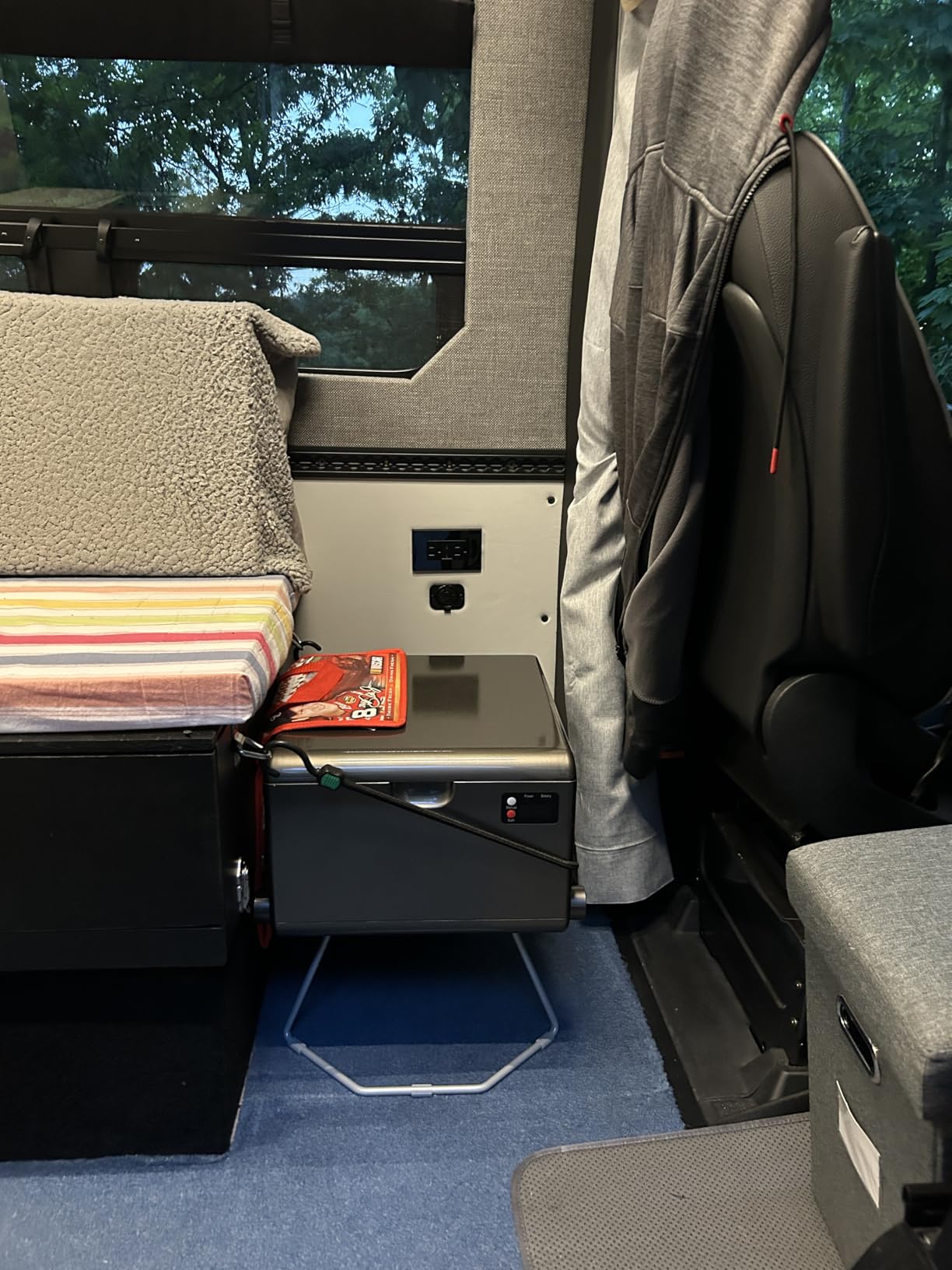
At 17 pounds and only 11 inches tall when folded, the LE-310 fits in a car trunk, a rooftop tent, or behind a couch in a small cabin. The stainless steel legs support up to 330 pounds, which is impressive for a portable unit.
The trade-off is the same as the Laveo: ongoing cost for replacement bags and coagulant. Each bag handles about one use, and you’ll need to keep spare bags on hand. Customer service is excellent according to multiple buyers, which is reassuring when you run into the occasional error code.
Best For
Van travelers, road-trippers, marine use, and anyone who wants a portable toilet that doesn’t require dumping. The folding design also works well for guest overflow in a tiny house.
Watch Out For
The fold-out legs don’t lock in place and can shift under weight. The bag liner design sometimes traps residual urine, leading to smell if you don’t change bags promptly. Budget for ongoing consumable costs.
7. TRELINO Evo S — Best German Engineering
TRELINO Composting Toilet Evo S Gray, Portable Toilet for Camping & Outdoor, Odorless, 1.2 gal & 1.6 gal Capacity, 13 x 15.4 x 11.7 inches
Portable
3.9 kg
1.2 gal urine, 1.6 gal solids
Made in Germany
Pros
- Odorless separation and drying function
- Sturdy 330 lb capacity
- Separate liquids and solids containers
- Recyclable ABS plastic
- 2-year warranty
Cons
- No urine level indicator
- Frequent emptying for heavy use
- Urine diverter not ideal for all body types
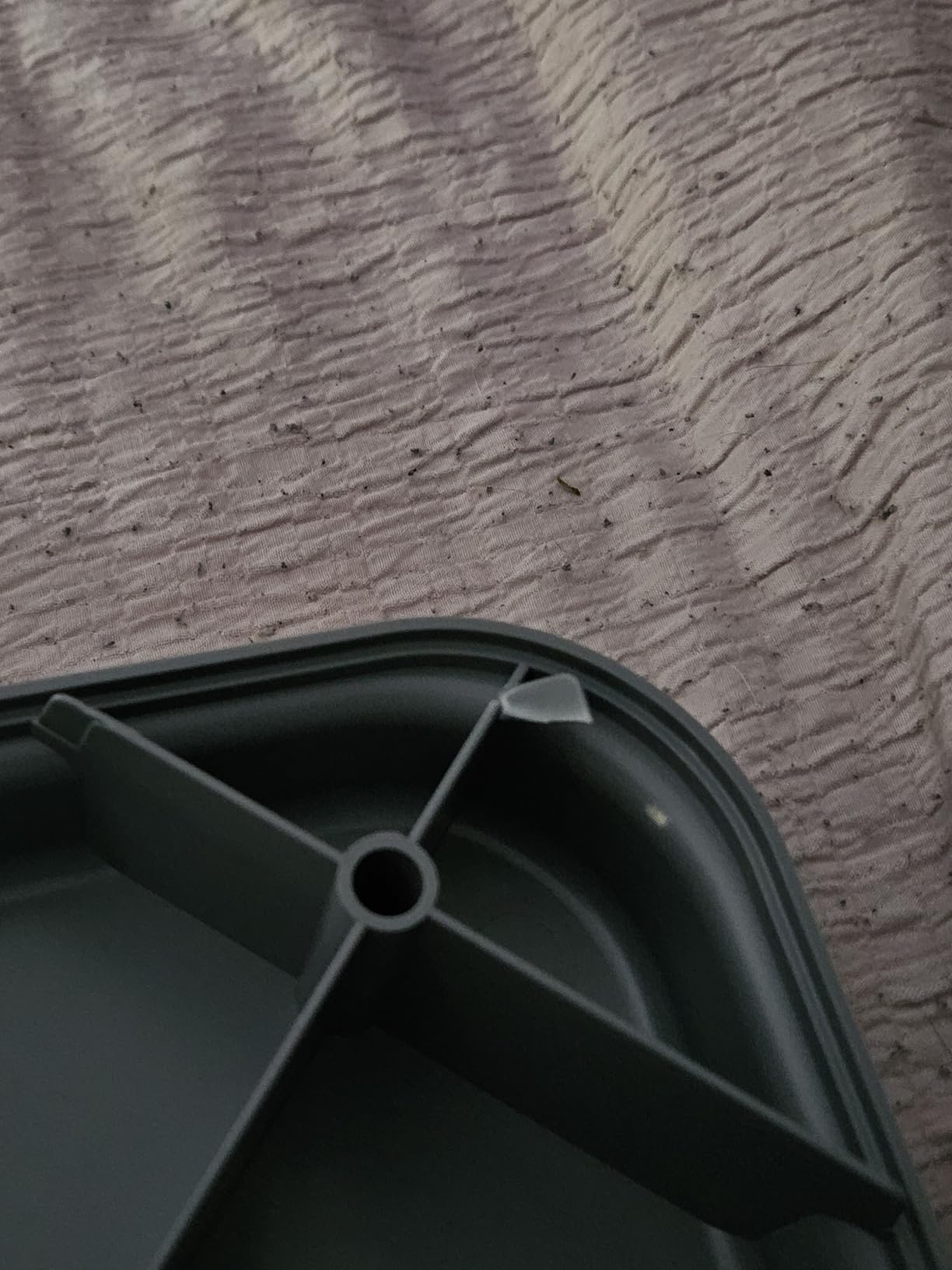
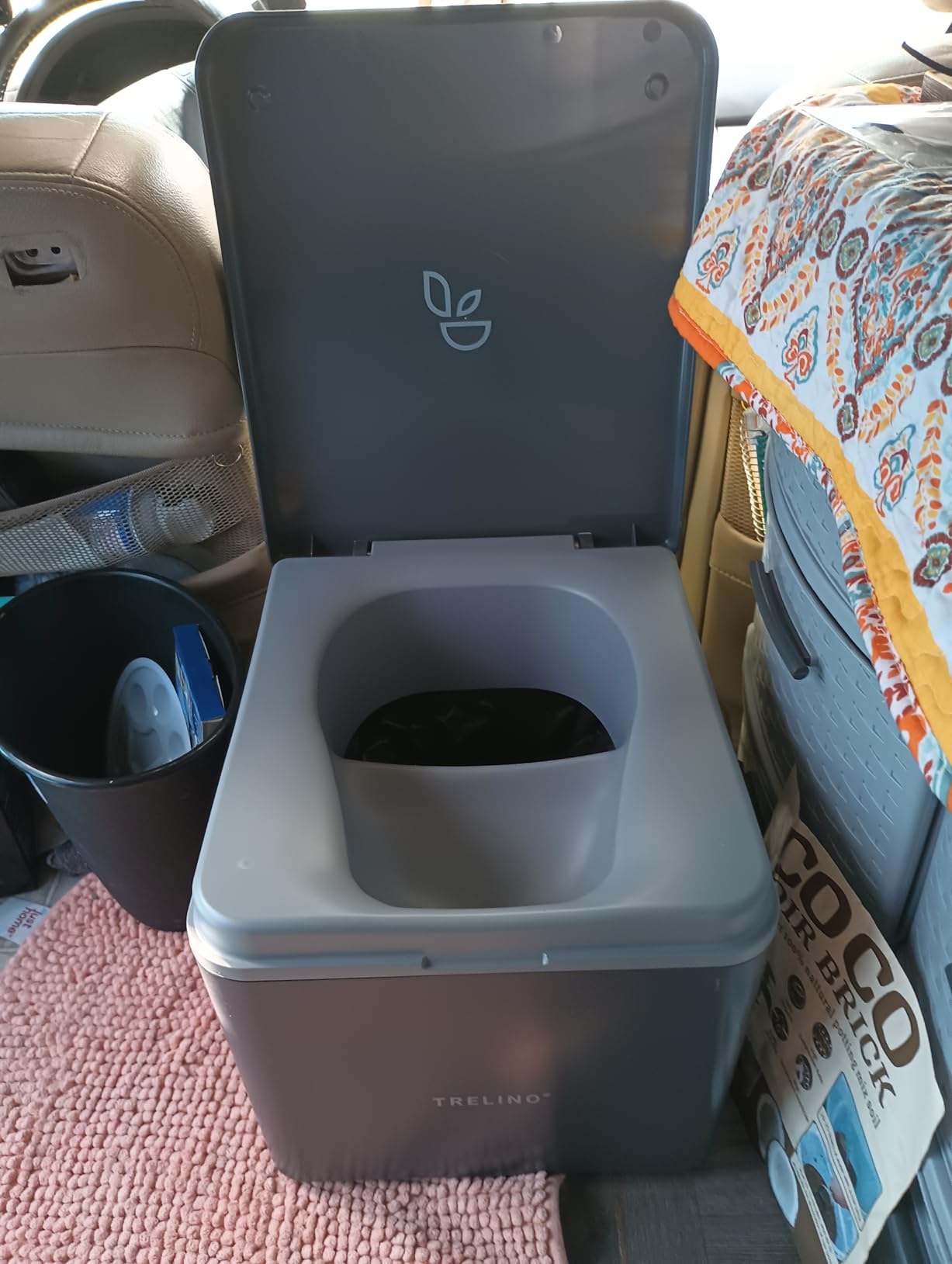
The Trelino Evo S is the smallest composting toilet on this list, and the build quality reflects German engineering. At 3.9 kilograms (8.6 pounds), it’s light enough to throw in a backpack for car camping, but it doesn’t feel flimsy. The ABS plastic is thick, the membrane closure on the urine canister is a smart touch, and the overall design looks like it cost more than it did.
There are two separate containers: a 1.2-gallon urine canister with a no-spill valve, and a 1.6-gallon solids container. The separation happens inside the bowl, and the included bags make emptying the solids side clean and fast.
No power, no fan, no chemicals. The drying function relies on the separation geometry and the absorbent cover material you add. For weekend camping and occasional use, this system stays odor-free. For full-time use, you’ll empty frequently.
Made from recyclable materials and backed by a 2-year manufacturer warranty, the Evo S is a solid mid-range choice for travelers who want German quality without the premium price of larger units.
Best For
Campers, car travelers, occasional cabin use, and anyone who wants a no-power, no-fan option that looks great and handles light duty well. Also good as a backup toilet.
Watch Out For
There’s no indicator for when the urine canister is full, so you have to check manually. The urine diverter doesn’t work equally well for every body type, so check the dimensions against your needs before committing.
8. OGO NOMAD — Budget Pick for Solo Adventurers
OGO NOMAD Self-Contained Composting Toilet – Urine-Diverting, Portable RV
Portable
12 lbs
15.4x13x12.4 inches
Urine-diverting, no power
Pros
- No electricity or plumbing needed
- Odor-free urine diverting system
- Compact 12-pound design
- Works with 8-gallon bags
- USA-made
Cons
- Low seat height not for everyone
- Small urine jug fills quickly
- Hard to see liquid level
- Bag system needs regular maintenance
The OGO NOMAD is the budget pick on this list, and for solo travelers, it punches well above its price. No power, no plumbing, no fan. You just put it where you need it, add a cover material like coco coir, and use it. When the bag is full, you swap it for a new one.
The urine diverter keeps liquids flowing into a separate jug, and the geometry is well-designed enough that 50% of buyers give it 5 stars. The included coco coir and starter bags let you begin using it the day it arrives.
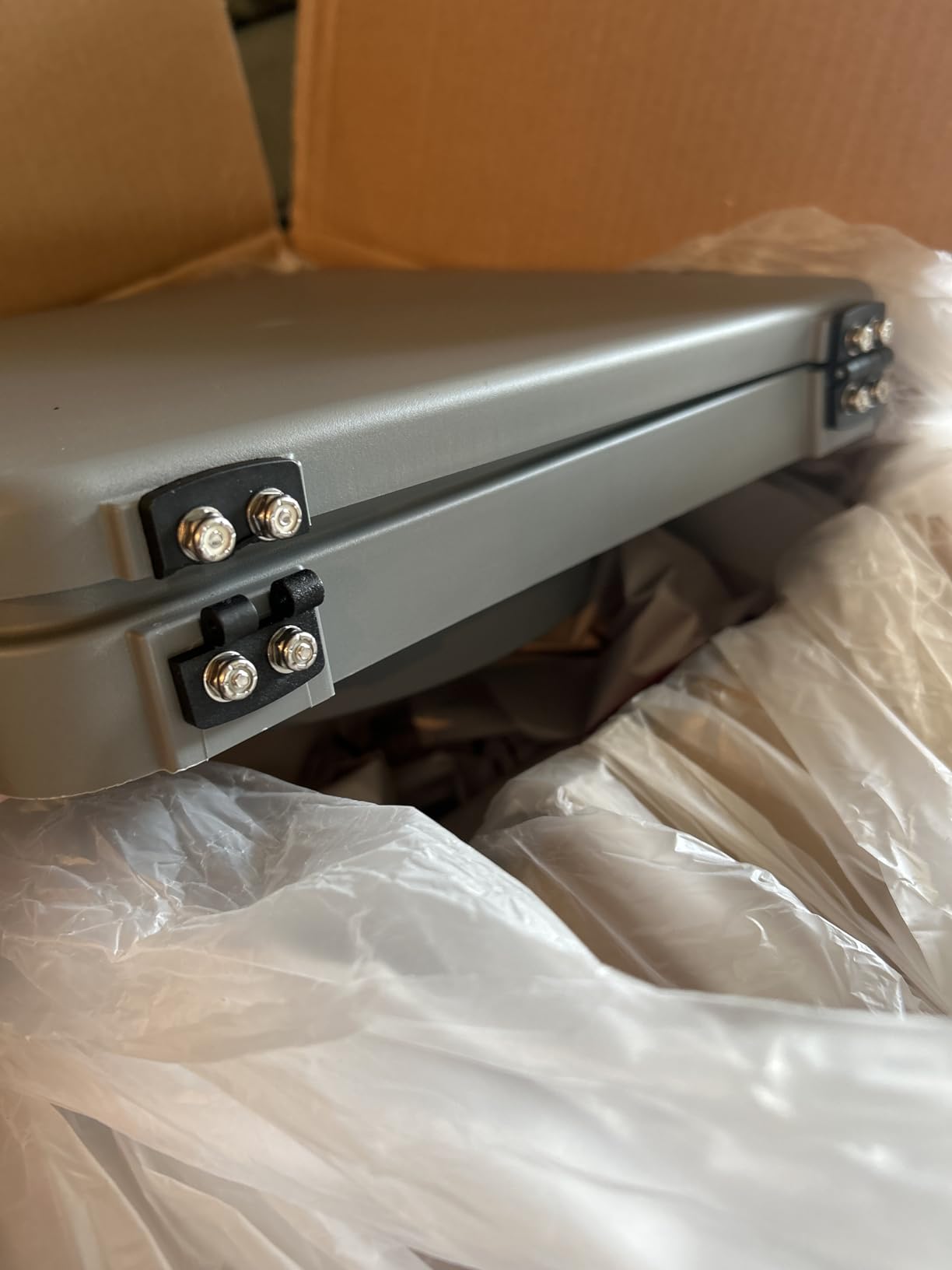
At 12 pounds, it’s the lightest composting toilet in this roundup, which matters if you’re hauling gear between a truck and a tent. The square 15.4 by 13 inch footprint fits in places bigger toilets won’t, including car trunks and small RV bathrooms.
The main compromise is seat height. It’s low to the ground, which is fine for younger users and quick stops, but tough on knees and older folks. The urine jug is also small, so solo users will empty it every few days and couples every day or two.
Best For
Solo travelers, weekend campers, hunters, and anyone who wants an affordable, no-power composting toilet that handles light to moderate use. The USA-made build also appeals to buyers who want domestic manufacturing.
Watch Out For
Low height is a deal-breaker for some users, especially older adults. The urine jug is hard to gauge without removing it. Plan to empty often, and keep spare 8-gallon bags on hand for smooth operation.
How to Choose the Best Composting Toilet for Your Setup
Choosing a composting toilet comes down to five key decisions: how you handle urine, what power you need, how often you’ll empty, whether venting is possible, and what cover material works in your climate. Get these right and you’ll have a toilet that lasts 5 to 10 years with minimal fuss.
Urine Diversion vs Mixed Systems
Most modern composting toilets separate urine from solids. This is the single biggest factor in odor control, because mixing urine with solids creates the smell most people associate with compost toilets. Urine-diverting designs like the Nature’s Head, OGO Origin, and Separett Villa keep liquids in a separate container or drain line, dramatically reducing odor. The trade-off is a more complex bowl geometry, which some users find awkward at first.
Power Requirements
Composting toilets split into three power categories: no power (Trelino Evo S, OGO NOMAD), 12V fan (Nature’s Head, Separett Villa, Cuddy, OGO Origin), and battery-powered with thermal sealing (Laveo, modiwell LE-310). No-power units work anywhere but need more cover material and more frequent emptying. 12V fans handle odor automatically but require a small power draw. Battery-powered dry flush units use heat to seal waste and never smell, but cost more over time.
Capacity and Emptying Frequency
Capacity varies dramatically. The Nature’s Head and Separett Villa run 4 to 6 weeks between solids empties for two people. The OGO Origin and Cuddy last about 2 to 3 weeks. Portable units like the Trelino and OGO NOMAD need emptying every few days under heavy use. Match capacity to your usage pattern, since forcing a small unit to handle full-time duty is the fastest path to odor problems.
Venting Requirements
Most composting toilets with fans need a vent pipe to the outside. The vent pulls air down through the bowl and out, creating negative pressure that traps odors in the unit. If you can’t install a vent pipe, look at units with carbon filters (Cuddy) or dry flush designs (Laveo, modiwell) that don’t require external venting at all.
Cover Material Choices
Sawdust, peat moss, and coconut coir are the three most common cover materials. Sawdust is cheap and easy to source if you have a wood shop. Peat moss handles odor well but is more expensive. Coconut coir (also called coco coir) is renewable, lightweight, and works in most climates. Many composting toilets ship with starter cover material, and refills run a few dollars per month under normal use.
Cold Weather Performance
Winter is where composting toilets earn their reputation or lose it. Liquids can freeze in the urine jug, solids composting slows dramatically below 55°F, and fan power draw increases. If you live in a cold climate, look for a unit with a built-in heater option (like the Sun-Mar Excel), or plan to keep the toilet in a heated space and insulate any external venting. The dry flush units (Laveo, modiwell) handle cold weather better because there’s no liquid to freeze.
Frequently Asked Questions
What are the drawbacks of composting toilets?
The main drawbacks of composting toilets are learning the proper use technique, frequent urine container emptying for heavy users, the need for cover material, and limited cold-weather performance without heating. Some models also require external venting, and emptying the solids bin can be messy if you skip cover material. None of these are deal-breakers, but they require realistic expectations before you buy.
Can you throw toilet paper in a composting toilet?
Yes, you can throw toilet paper in most composting toilets, especially with a urine-diverting design where solids stay separate. Use single-ply or rapid-dissolve biodegradable toilet paper to speed decomposition. Avoid thick quilted paper or anything labeled flushable wipes, as those break down slowly and clog the system.
What is the easiest compost toilet to use?
The easiest composting toilet to use is the Laveo Dry Flush, which requires no cover material, no manual mixing, and no dumping. You press a button and the previous use is sealed into a bag. For traditional composting toilets, the Nature’s Head is widely considered the easiest because of its Spider Handle design, large capacity, and forgiving operation.
How often do you dump a composting toilet?
How often you dump a composting toilet depends on the model and number of users. Large self-contained units like the Nature’s Head and Separett Villa go 4 to 6 weeks for two people. Mid-size models like the OGO Origin need emptying every 2 to 3 weeks. Portable units like the Trelino Evo S and OGO NOMAD require emptying every few days under regular use.
Final Verdict: Which Composting Toilet Should You Buy?
After testing and reviewing the best composting toilets available in 2026, the Nature’s Head remains my top recommendation for most off-grid setups. It’s the most proven, has the largest service community, and balances capacity, odor control, and price better than anything else on the market.
If you want zero odor and never touching waste, the Laveo Dry Flush is worth the premium. If you have a small van and need the smallest footprint, go with the OGO Origin. For budget solo travel, the OGO NOMAD can’t be beat. And for permanent cottages where you want a toilet that looks like a toilet, the Separett Villa is the answer.
Whatever you choose, give yourself a two-week adjustment period. Composting toilets reward consistency, and after the first few weeks of proper use, you’ll wonder why you waited so long to ditch the porta-potty, the outhouse, or the cassette toilet. Pick the model that fits your build, follow the setup guide, and enjoy sanitation that works without a sewer connection.