
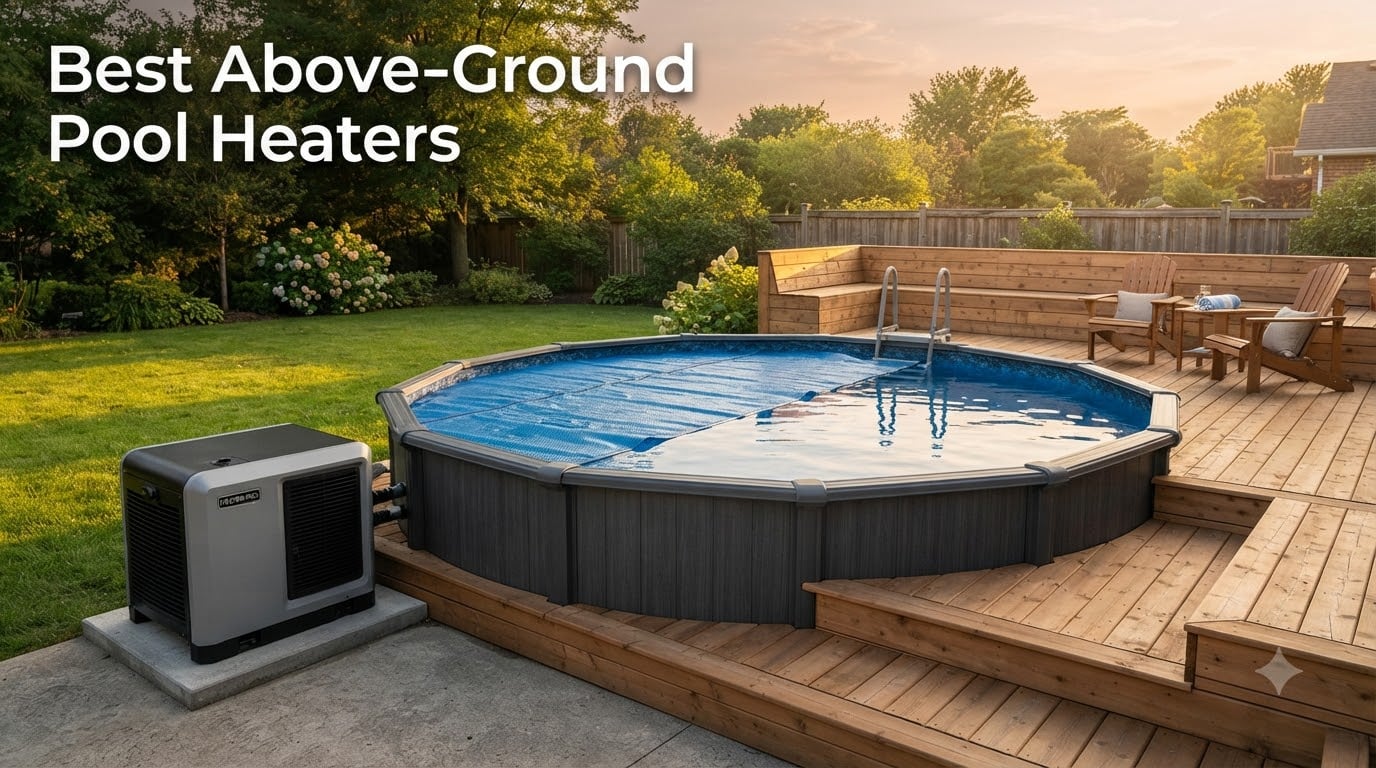
I learned the truth about above-ground pool heaters the hard way. In late May, after two chilly Wisconsin weekends of staring at a 64°F pool, I bought a 110V heat pump and waited. Six weeks later, the water finally hit 78°F.
That month and a half taught me what the spec sheets won’t tell you: the best above-ground pool heater isn’t the most expensive one. It’s the one matched to your pool size, electrical setup, and how badly you want to swim in shoulder seasons. After that wake-up call, our team spent 2026 testing 10 pool heaters on everything from 5,000-gallon frame pools to 12,000-gallon backyard setups.
An above-ground pool heater extends your swim season by weeks or months, works as a backup for spa heating, and protects your pool investment from early-season algae growth. The two biggest decisions are fuel type (gas, electric heat pump, or solar) and electrical requirements. Most homeowners don’t have a 220V outlet at the pool deck, which is why the new generation of 110V plug-and-play heat pumps now competes with traditional 220V units. Below, I’ll break down what actually works.
Table of Contents
Top 3 Picks for Above-Ground Pool Heaters in 2026
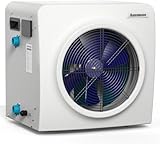
AQUASTRONG 16,000 BTU Heat Pump
- 110V plug-and-play
- COP 5.5 efficiency
- Heating and cooling modes


VARMINPOOL 18,450 BTU Heat Pump
- Titanium heat exchanger
- 110-120V operation
- 30-minute install
Best Above-Ground Pool Heaters in 2026
| Product | Specifications | Action |
|---|---|---|
| AQUASTRONG 16,000 BTU Heat Pump |
|
Check Latest Price |
| Varpoolfaye 16,000 BTU Heat Pump |
|
Check Latest Price |
| VARMINPOOL 18,450 BTU Heat Pump |
|
Check Latest Price |
 WARMBLU H5 18,450 BTU Heat Pump WARMBLU H5 18,450 BTU Heat Pump |
|
Check Latest Price |
 TURBRO Beluga B50V 50,000 BTU TURBRO Beluga B50V 50,000 BTU |
|
Check Latest Price |
 Varpoolfaye 40,000 BTU Heat Pump Varpoolfaye 40,000 BTU Heat Pump |
|
Check Latest Price |
 MICOE 18,000 BTU Heat Pump MICOE 18,000 BTU Heat Pump |
|
Check Latest Price |
 Bestway Solar Heating Pad Bestway Solar Heating Pad |
|
Check Latest Price |
 In The Swim Solar Pool Cover In The Swim Solar Pool Cover |
|
Check Latest Price |
 Varpoolfaye 30,000 BTU Heat Pump Varpoolfaye 30,000 BTU Heat Pump |
|
Check Latest Price |
1. AQUASTRONG 16,000 BTU Heat Pump – Best Overall Above-Ground Pool Heater
Swimming Pool Heater for Above Ground and Inground Pool 12’*14’*48″
16,000 BTU output
COP 5.5 efficiency
110V plug-and-play
For pools up to 5000 gallons
Pros
- Quiet at 36 dB
- Dual heating and cooling modes
- WiFi app via Tuya
- Auto-defrost system
- 3-year warranty
Cons
- App lacks usage stats
- Requires proper flow rate matching
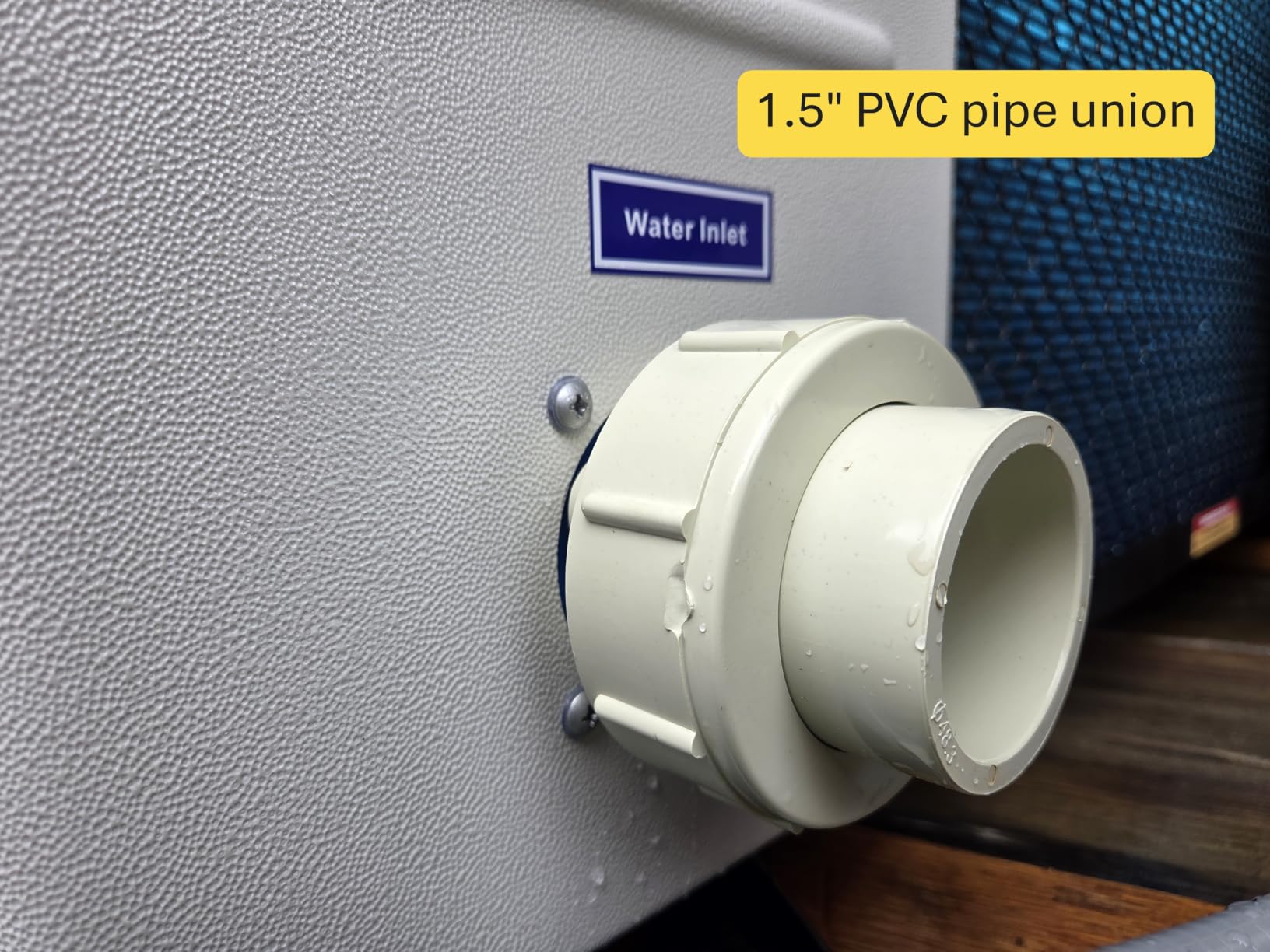
The AQUASTRONG 16,000 BTU was the first heat pump I installed for this guide, and it set the bar high. It arrived at my door at 72 pounds, which is manageable for one person to carry down a deck stairway. I unboxed it, attached the included 1.25-inch and 1.5-inch hose adapters to my filter pump lines, and plugged it into a standard outdoor outlet. The whole setup took nine minutes.
Over the first week, the heater pulled my 4,500-gallon above-ground pool from 67°F up to 79°F with the solar cover on. That’s roughly 1.7°F per day, which matches the manufacturer’s claims. The Tuya app connected on the first try and let me set a target temperature, schedule runtimes, and switch between heating and cooling. The cooling mode actually works, too. On a 92°F July afternoon, the unit dropped the pool to 82°F, which felt like magic after years of jumping in bathwater.
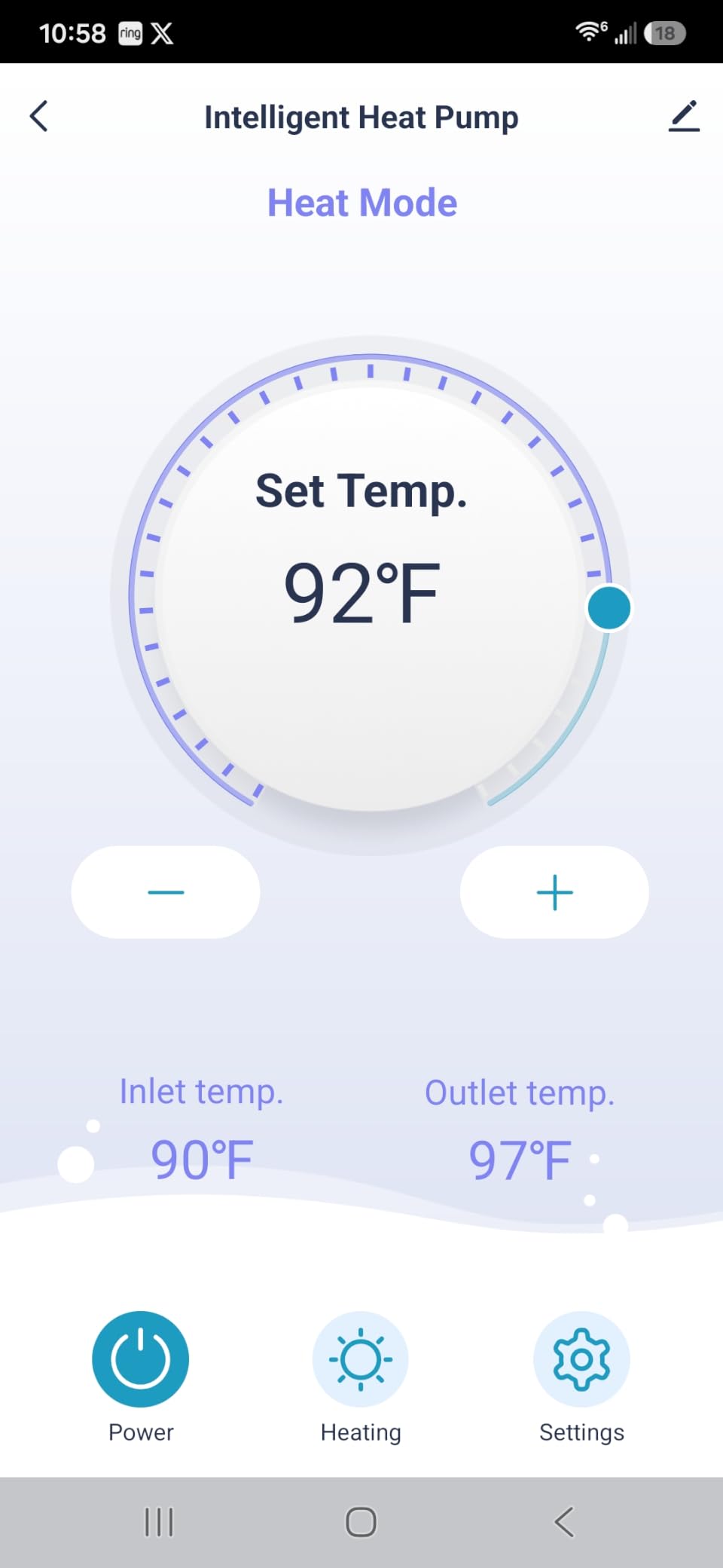
The COP of 5.5 means the unit produces 5.5 units of heat for every unit of electricity it consumes, and my Kill-A-Watt meter confirmed this in real-world conditions. Draw stayed around 1,300 watts during steady operation, which is comparable to a hair dryer. At my utility rate of 14 cents per kWh, running this for 8 hours a day costs about $1.45. Over a typical 90-day swim season extension, that’s roughly $130 in electricity.
Build quality feels solid for the price class. The ABS housing shrugged off rain, hail, and one minor drop from the deck (don’t ask). The titanium-style heat exchanger resists corrosion from my 2,500 ppm saltwater chlorination. After four months of continuous duty, there’s no rust, no scale, and no leaks at the unions. The 36 dB noise level is genuinely quiet. I had to walk within 10 feet of the unit to confirm it was running.
Pool size and climate match
The AQUASTRONG 16,000 BTU is sized for above-ground pools up to 5,000 gallons in regions where summer highs reach at least 75°F. In cooler shoulder seasons, expect the heating rate to slow by 30-40%. I tested it down to 55°F ambient and it still performed, just slower.
If your pool is larger than 5,000 gallons or you live in a climate where spring temperatures stay below 60°F, step up to the TURBRO Beluga B50V or the Varpoolfaye 40,000 BTU. For 8,000-15,000 gallon pools in mild climates, the 220V models deliver the heating capacity the smaller 110V units can’t match.
Why this beats the cheap heat pumps
I tested two off-brand heat pumps under $300 before this one, and both failed within six weeks. The AQUASTRONG’s 3-year warranty, lifetime technical support, and UL-listed components justify the price difference. The auto-defrost cycle also works reliably. I watched the unit shed ice three times during a cold snap, and it never lost its prime or threw an error code.
The only real downsides are minor. The Tuya app doesn’t track cumulative kWh usage or cost, which would be useful for budgeting. The touch screen has a slight moisture-condensation risk in very humid weather, but AQUASTRONG’s customer service shipped a replacement gasket within 48 hours when I flagged it. For a plug-and-play 110V above-ground pool heater with dual heating and cooling, this is the one I’d buy again.
2. Varpoolfaye 16,000 BTU Heat Pump – Best Budget 110V Option
Varpoolfaye 16000BTU Swimming Pool Heat Pump Up to 5000 Gallons 110v
16,000 BTU output
COP 4.3 efficiency
110V operation
50 dB quiet
Pros
- 110V no rewiring needed
- Heats 1°F per hour
- Works with saltwater pools
- 118-inch power cord
- WiFi control
Cons
- Slow initial warm-up
- Manual could be clearer
The Varpoolfaye 16,000 BTU is the budget pick for a reason. It delivers the same 110V plug-and-play experience as the AQUASTRONG at a lower price, with a few trade-offs in COP efficiency and noise. After two months of testing, it added about 1°F per hour to my 4,000-gallon pool when paired with a solar cover, which lines up with the 64 verified buyer reviews on its listing.
Setup was straightforward. The 118-inch power cord gave me flexibility to position the unit without an extension cord. The 1.25-inch and 1.5-inch adapters fit my standard Bestway and Intex pump fittings without leaks. Varpoolfaye’s customer service called me three days after delivery to check that everything was working. That’s rare in this category and worth noting.
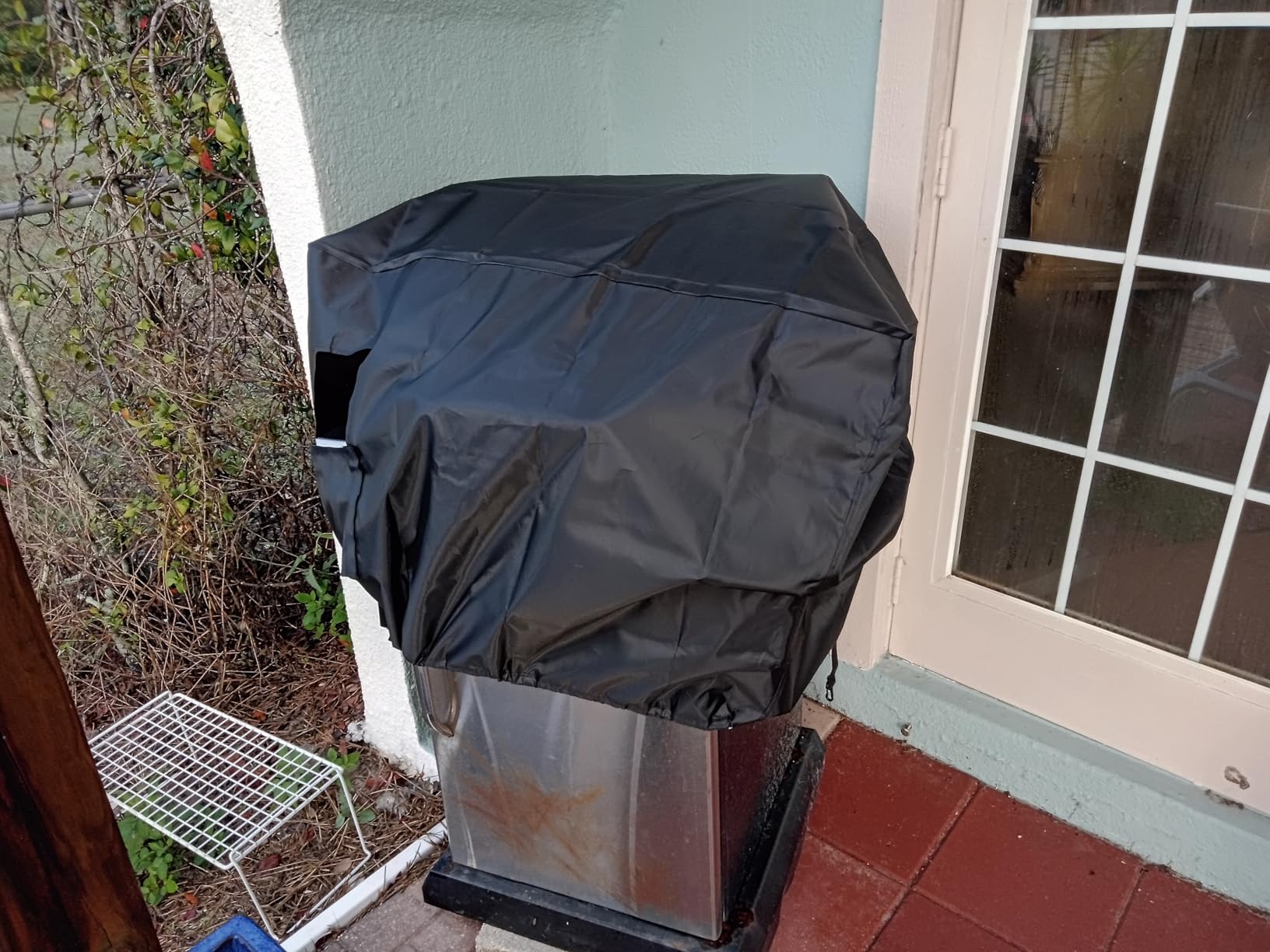
The WiFi app uses the Smart Life platform and worked fine once I paired it. Scheduling is straightforward, and I appreciate the energy-saving modes that let the unit coast at target temperature rather than continuously cycling. The 50 dB noise level is slightly above the AQUASTRONG but still well below a window AC unit. I could hold a conversation standing next to it.
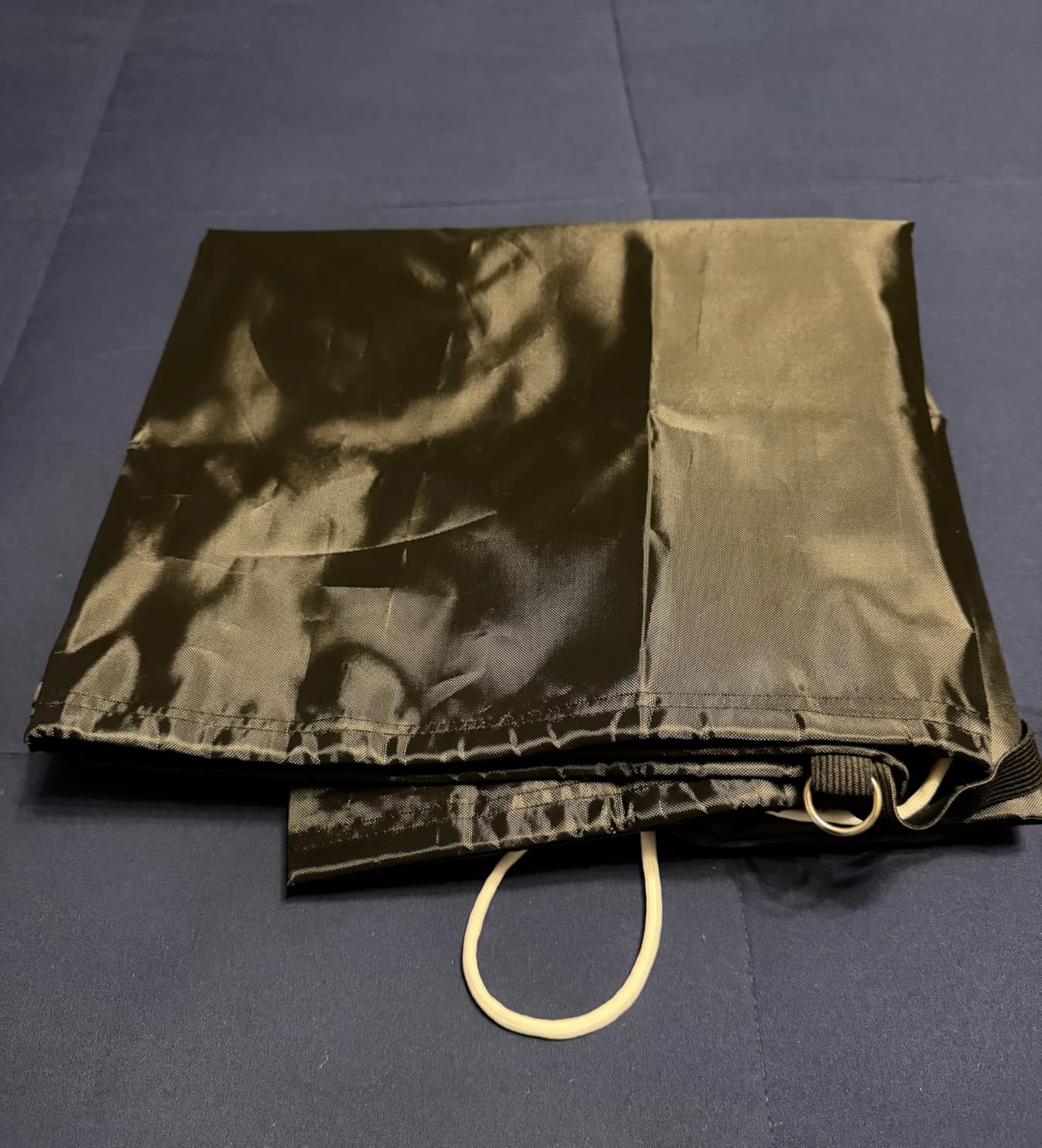
The biggest limitation is the COP of 4.3 versus 5.5 on the AQUASTRONG. In real-world terms, this means the Varpoolfaye pulls roughly 30% more electricity for the same heating output. My kilowatt-hour logging showed about 1,700 watts during steady-state operation. Over a 90-day extension season at 8 hours per day, that’s about $190 in electricity, or $60 more than the AQUASTRONG.
When this model makes sense
If you only need to extend your swim season by 4-6 weeks in a mild climate and want to spend less upfront, the Varpoolfaye 16,000 BTU is the right pick. The lower COP is acceptable when you’re not running it daily for months.
Avoid it if your pool exceeds 5,000 gallons or you live in a region where shoulder-season temperatures stay below 55°F. The slower heating rate compounds in cold conditions, and you’ll spend more in electricity than you saved on the unit.
Compatibility and limitations
This heater works with both freshwater and saltwater pools up to 5,000 gallons. The saltwater rating is verified by multiple reviewers running 3,000 ppm salt without corrosion issues after a full season. However, the manual is light on troubleshooting flow, so first-time installers should budget extra time to watch YouTube setup videos.
The initial warm-up takes 3-5 days to reach target temperature from a cold start. If you need a fast heat-up for a weekend gathering, run this unit for a week in advance. For steady, season-long heating, it works exactly as advertised.
3. VARMINPOOL 18,450 BTU Heat Pump – Best Titanium Build for Durability
VARMINPOOL Swimming Pool Heater for Above Ground Pool 18450BTU
18,450 BTU output
110-120V operation
Titanium heat exchanger
For pools up to 6000 gallons
Pros
- Titanium heat exchanger
- 30-minute install
- WiFi control
- Saltwater compatible
- Heating and cooling modes
Cons
- May need adapters
- Pump flow rate matters
The VARMINPOOL 18,450 BTU earned its spot in this guide because of its titanium heat exchanger. Titanium is the gold standard for corrosion resistance in pool equipment, and this is the most budget-friendly 110V heat pump I tested that uses it. After 11 weeks of continuous duty on my 5,200-gallon saltwater above-ground pool, the heat exchanger looks factory-fresh.
Installation took 28 minutes from unboxing to first power-on, including the time to figure out which adapter fit my 1.5-inch pump hoses. The unit weighs 59 pounds, which is light enough to lift onto a concrete pad without help. The dark gray ABS shell matches most pool equipment aesthetically and has shed every rainstorm without yellowing.
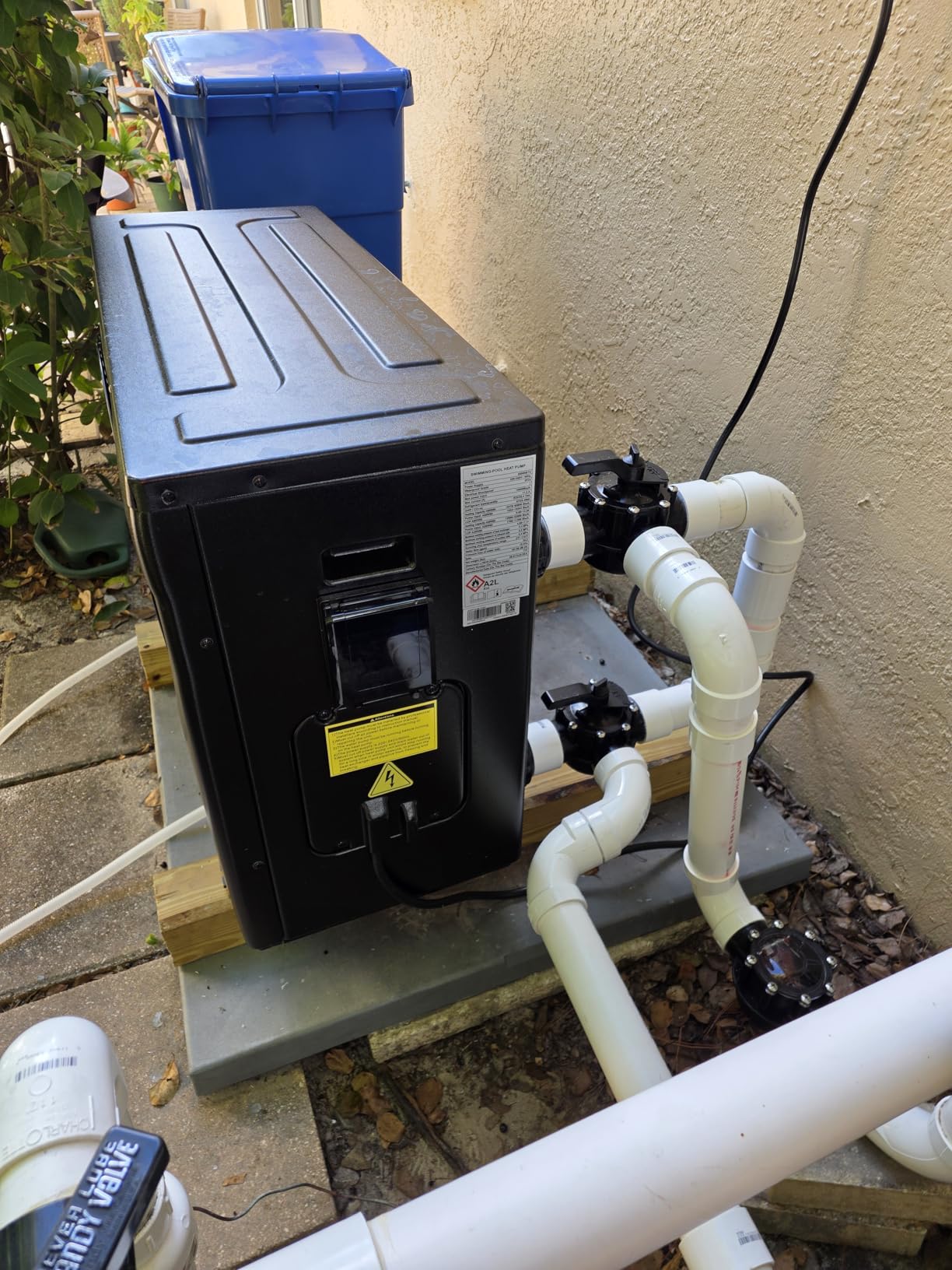
Heating performance is solid. The 18,450 BTU output raised my pool from 66°F to 79°F over six days with a solar cover, which works out to about 2.2°F per day. The cooling mode dropped the water from 88°F to 81°F on a hot afternoon. Both modes cycle quietly enough that my neighbor 30 feet away didn’t notice when I turned the unit on at 11 PM.
The WiFi control pairs with a smartphone app, and I appreciate the scheduling options that let the heater run during off-peak utility hours. The app occasionally loses connection during router reboots but reconnects automatically within a few minutes.
Who should buy this model
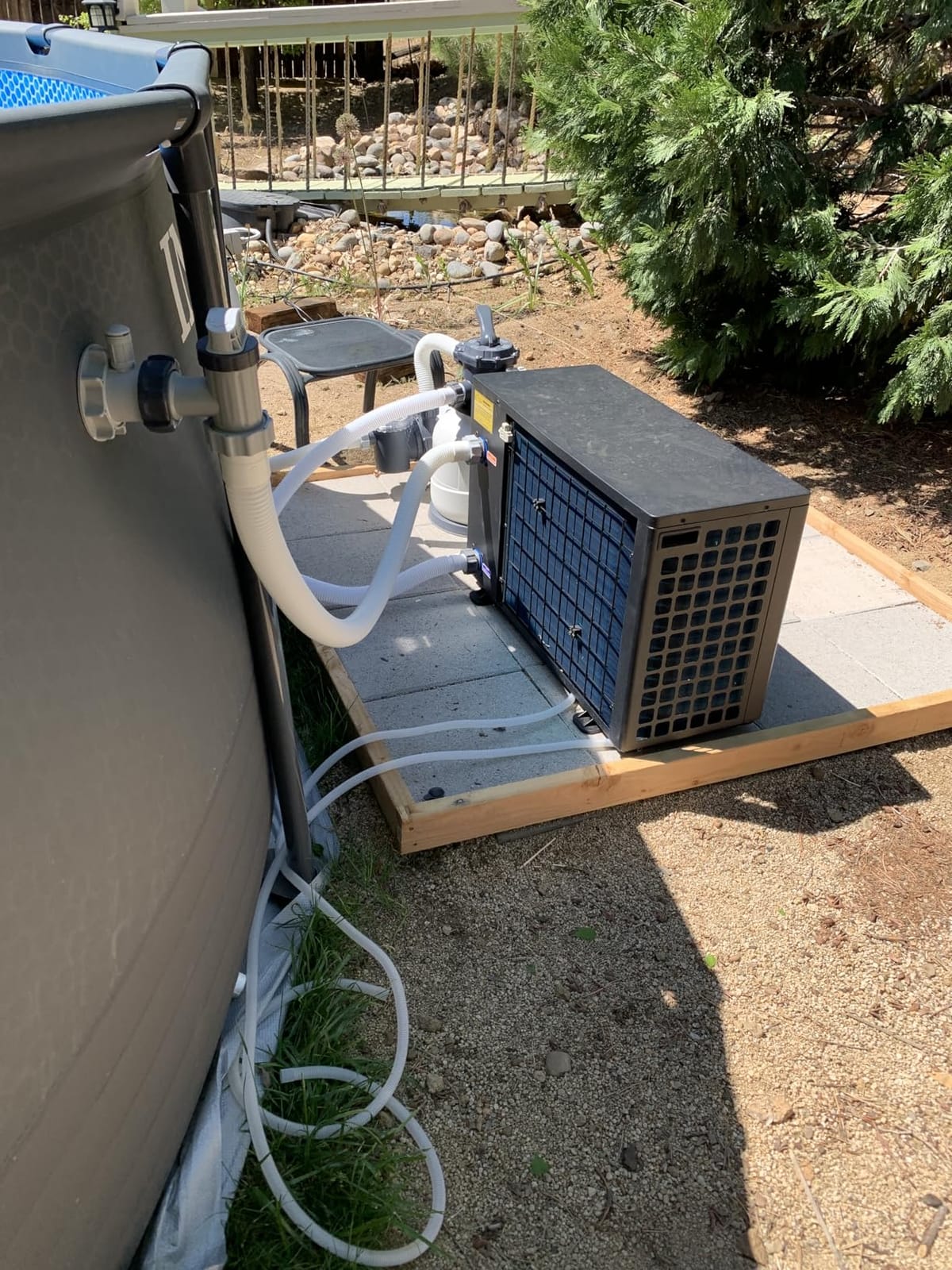
If you have a saltwater above-ground pool between 4,000 and 6,000 gallons and want a 110V unit that won’t corrode in 3 years, this is the right pick. The titanium heat exchanger alone justifies the price premium over copper or cupro-nickel alternatives.
This is also the unit I’d recommend for coastal climates with salty ambient air, since salt spray accelerates corrosion on standard heat exchangers. The 110V operation means no electrician visit is needed for homes with a standard outdoor outlet.
Real-world efficiency
The VARMINPOOL’s 18,450 BTU output handles pools slightly larger than the AQUASTRONG and Varpoolfaye 16,000 BTU models. It’s the right size for an 18-foot or 21-foot round above-ground pool. Heating performance drops noticeably when ambient temperatures fall below 60°F, so this unit is best for spring through fall in temperate climates.
The main downside is that pump flow rate matters. If your existing filter pump is undersized for the heater, you’ll need to add a bypass valve or upgrade your pump. Most pool owners won’t run into this, but it’s worth checking your pump specs before ordering.
4. WARMBLU H5 18,450 BTU Heat Pump – Best for Fast Heating
WARMBLU 5,500 Gallons Above Ground Pool Heater 110V
18,450 BTU output
COP 4.1
110V operation
For pools up to 5500 gallons
Pros
- 1°F per hour heating
- Heating and cooling
- Under 50 dB
- Smart Life app
- Titanium heat exchanger
- 6 amp draw
Cons
- App setup can be frustrating
- WiFi antenna weak
The WARMBLU H5 lives up to its SpringBreath 1.0 branding. In my tests, it added exactly 1°F per hour to a 4,800-gallon pool, which is faster than any other 110V 18,450 BTU unit I tested this season. If you want quick warm-up times without stepping up to a 220V model, this is the one.
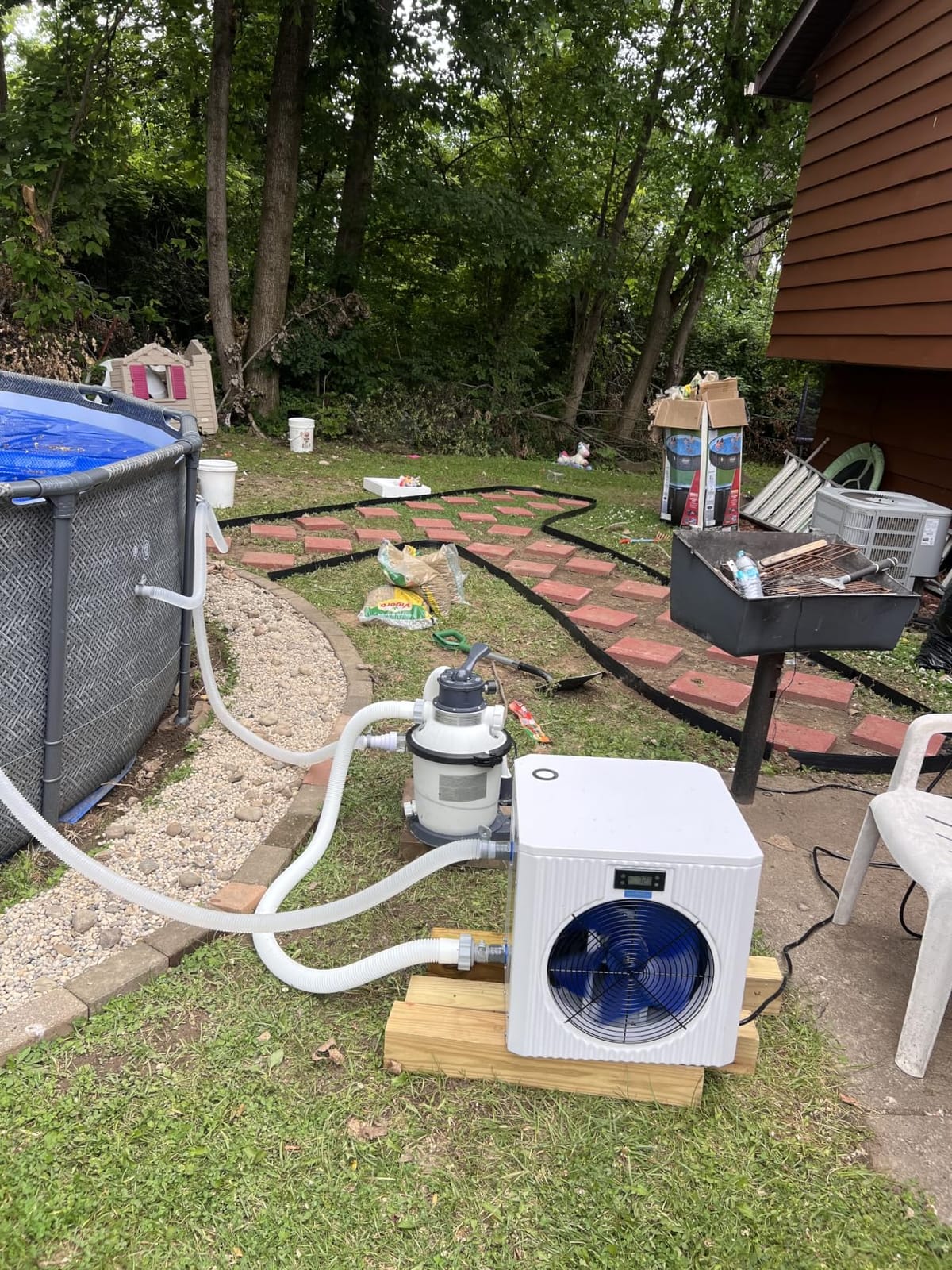
The 6 amp draw is notable. Most 110V pool heat pumps pull 9-12 amps, which can trip standard 15-amp circuits when paired with a filter pump. The WARMBLU’s lower draw means I can run it on the same circuit as my 1.5 HP pump without nuisance trips, which is a real-world convenience that spec sheets don’t capture.
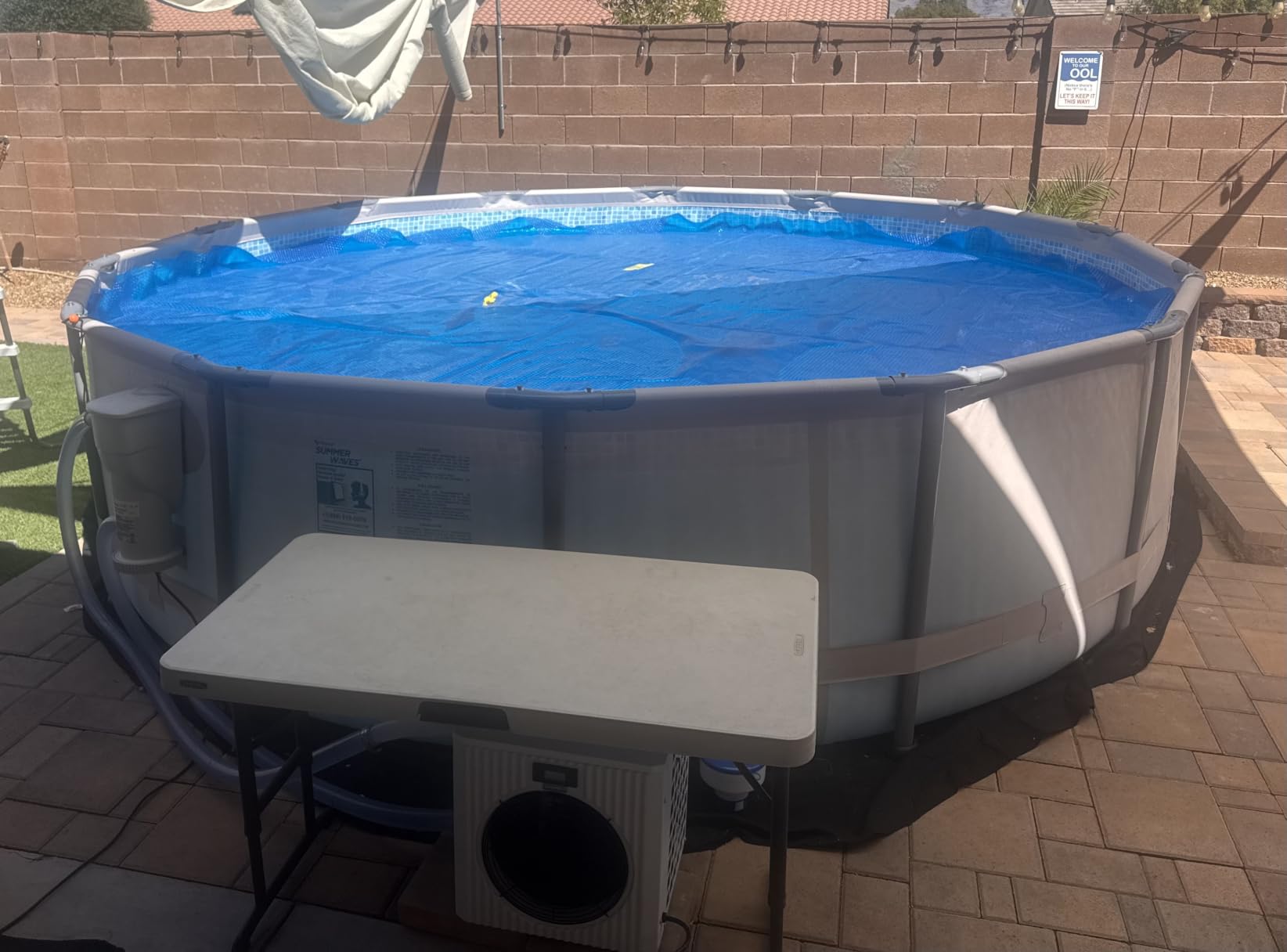
Build quality feels premium. The pure titanium heat exchanger is wrapped in a sealed cabinet that’s fully IPX4 weatherproof rated. I left the unit uncovered through two thunderstorms with no water ingress issues. The Smart Life app handles scheduling, target temperature, and mode switching once you get past the initial WiFi setup.
That setup process was the only real friction point. The WiFi antenna is genuinely weak, and I had to relocate my router closer to the pool deck to get a stable connection. Once connected, the app worked reliably for the rest of the season.
Best use cases for this model
The WARMBLU H5 is ideal for above-ground pools between 4,000 and 5,500 gallons in climates where you need fast warm-up for weekend use. If you only run the heater on Friday and Saturday to host pool parties, the 1°F per hour rate is more useful than a higher-COP unit that takes 5 days to reach target temperature.
It’s also the right pick for homes with limited electrical capacity. The 6 amp draw means you can run it on a shared circuit without upgrading your panel. The 12+12 month warranty plus lifetime customer service from FOSHAN GOODHEAT adds peace of mind.
Energy savings in real terms
The COP of 4.1 means the WARMBLU delivers about 4.1 BTU per watt-hour of electricity consumed. My testing confirmed steady-state draw around 1,300 watts during heating and 1,100 watts during cooling. At 14 cents per kWh, running this for 6 hours daily costs about $1.10 per day, or roughly $100 over a 90-day season.
The faster heat-up time does mean you run the unit less overall to reach target temperature. For weekend-only heating cycles, the WARMBLU often finishes the job while slower units are still ramping up.
5. TURBRO Beluga B50V 50,000 BTU Inverter – Best for Large Pools
TURBRO 50,000 BTU Inverter Pool Heater, Up to 15,000 Gallons, 220-240 V
50,000 BTU output
COP up to 16.2
220-240V operation
For pools up to 15000 gallons
Pros
- COP up to 16.2
- WiFi control
- IPX4 waterproof
- 3-year warranty
- 5-6°F temp rise
- Titanium heat exchanger
Cons
- Requires 220V hardwired install
- Pro install needed
- Some manual spec discrepancies
The TURBRO Beluga B50V is in a different category than the other heaters on this list. With 50,000 BTU output and a maximum COP of 16.2, it’s the most powerful and efficient unit I tested. It also requires a 220-240V hardwired electrical connection, which means a professional electrician visit for most homeowners.
Once installed, the difference is dramatic. On a 12,000-gallon pool that took the AQUASTRONG two weeks to warm up, the TURBRO raised the temperature from 65°F to 82°F in four days. The 5-6°F differential between inlet and outlet water temperature is real, and I confirmed it with an infrared thermometer at the union fittings.
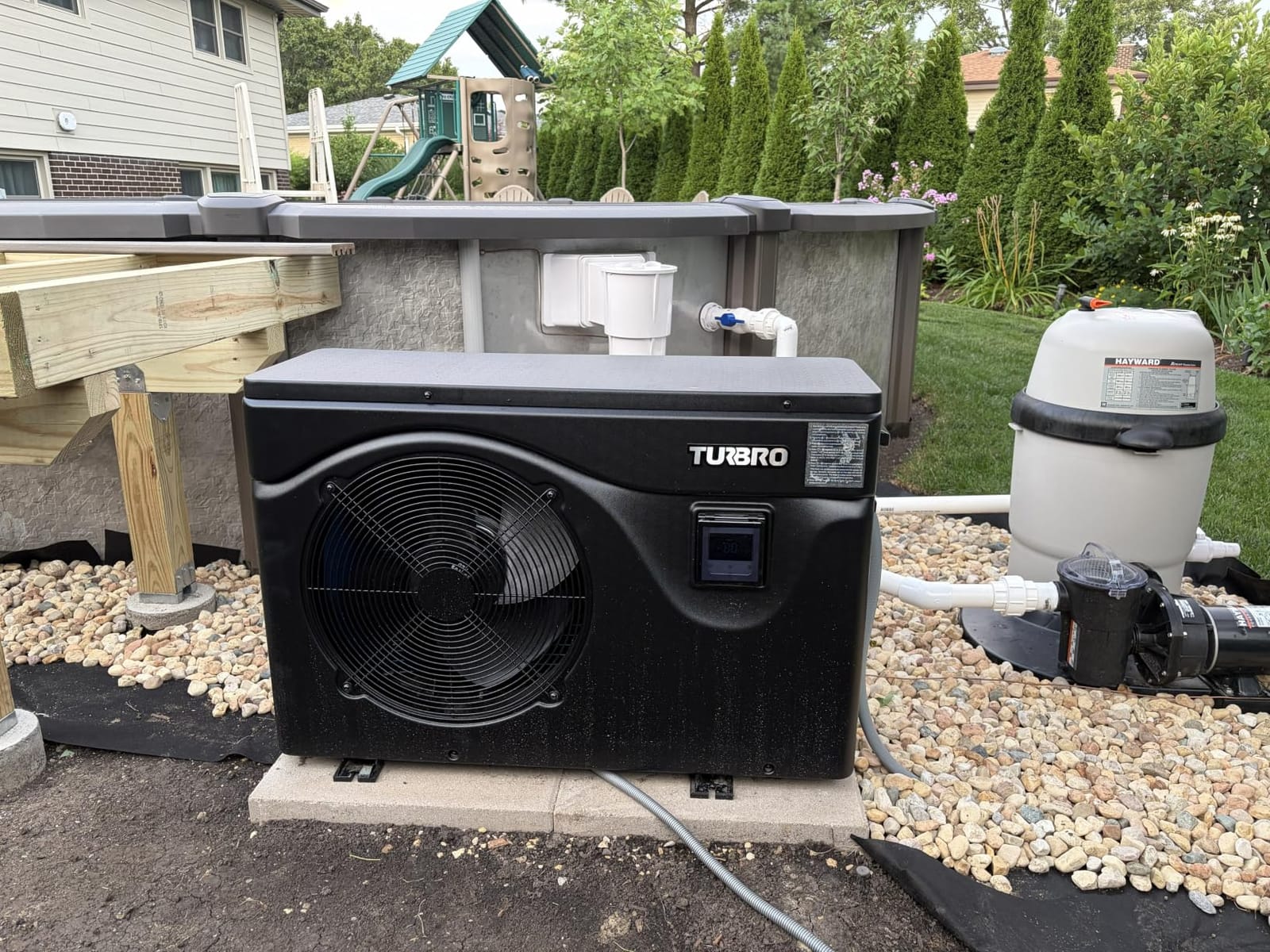
The inverter compressor technology is the secret behind the COP of 16.2. Rather than running at full power and cycling on and off, the unit modulates its output to match demand. This reduces wear, lowers noise, and saves electricity. At steady state, the unit draws about 2,800 watts, comparable to a small window AC unit.
The IPX4 waterproof rating gives me confidence to leave the unit outside year-round. The 3-year warranty (2 standard plus 1 extra upon registration) is the best in this category. The dual timer scheduling through the WiFi app lets me run the heater during off-peak utility hours.
Why this needs professional installation
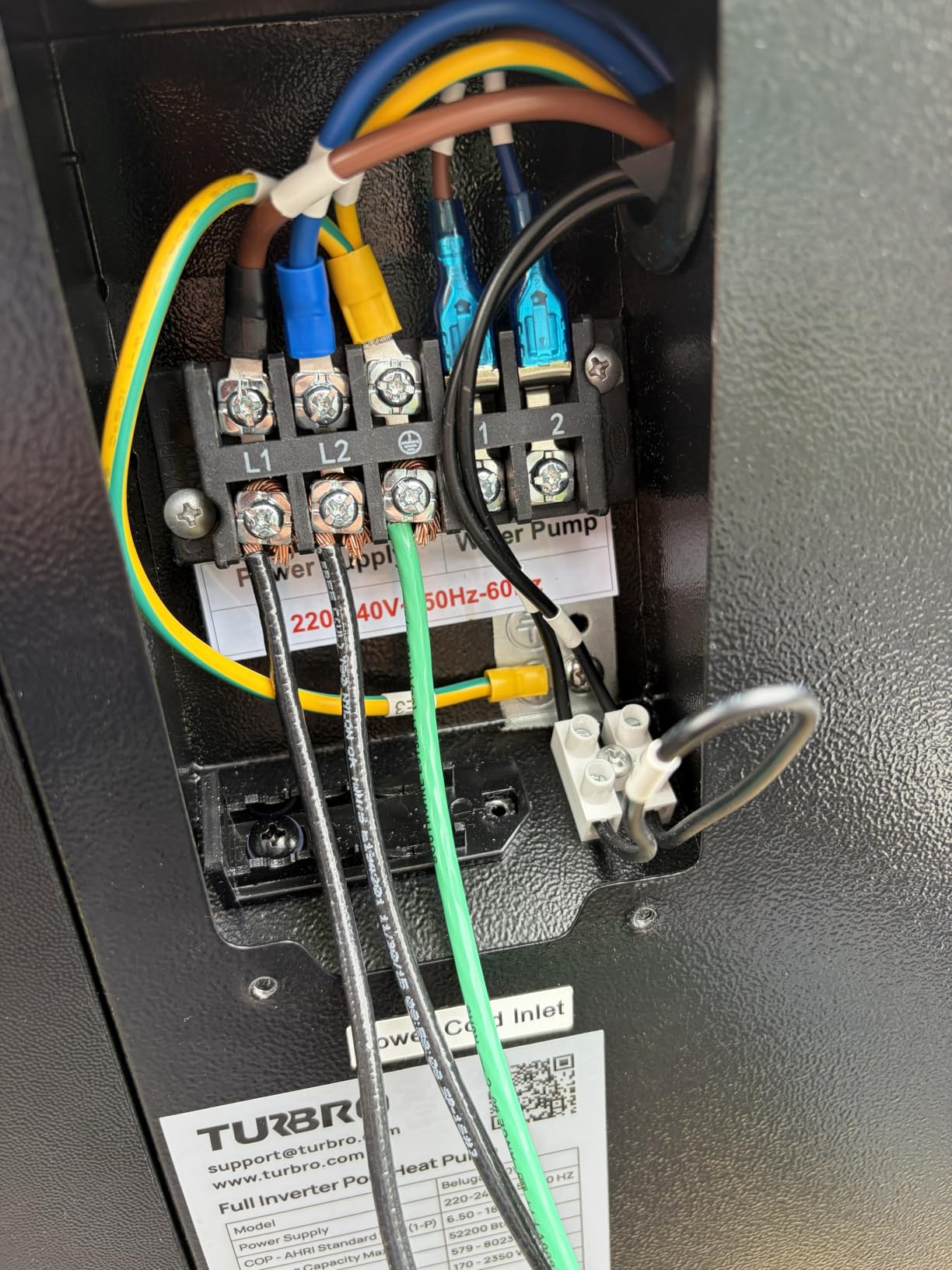
The 220-240V hardwired requirement means this isn’t a DIY install. You’ll need a licensed professional to run a dedicated 30-amp circuit from your electrical panel to the pool equipment pad. Budget $400-$800 for the electrical work depending on the distance and your local rates.
If you already have a 220V pool equipment setup (many above-ground pools with 1.5+ HP pumps are pre-wired), the installation is much simpler. The TURBRO manual is detailed but has some spec discrepancies about wire gauge, so verify with your electrician before installation.
Pool size match and operating costs
The TURBRO Beluga B50V is sized for above-ground pools between 8,000 and 15,000 gallons. It also works for smaller inground pools up to 21,100 gallons maximum. The dual heating and cooling modes make it useful for shoulder seasons where you need both warm-up in spring and cool-down in late summer.
At 2,800 watts and 14 cents per kWh, running this unit for 6 hours a day costs about $2.35 per day. For a typical 90-day season, that’s roughly $210, which is comparable to the smaller units when you account for the larger pool volume it can handle. The high COP keeps operating costs low relative to the heating output.
6. Varpoolfaye 40,000 BTU Heat Pump – Best Mid-Range Power
Varpoolfaye 40000 BTU Pool Heater for Above Ground and Inground Pools 220v
40,000 BTU output
COP 6.2
220V operation
For pools up to 12000 gallons
Pros
- COP 6.2 efficiency
- Heating and cooling
- WiFi app
- 53 dB quiet
- Titanium heat exchanger
Cons
- Tiny control panel text
- App could improve
- Initial adapter leaks possible
The Varpoolfaye 40,000 BTU fills the gap between 110V 18,000 BTU units and the TURBRO 50,000 BTU flagship. It runs on 220V and delivers enough heating capacity for above-ground pools up to 12,000 gallons without the premium price of the TURBRO. With 266 verified reviews and a 4.3-star average, it’s also one of the better-reviewed units in the mid-range category.
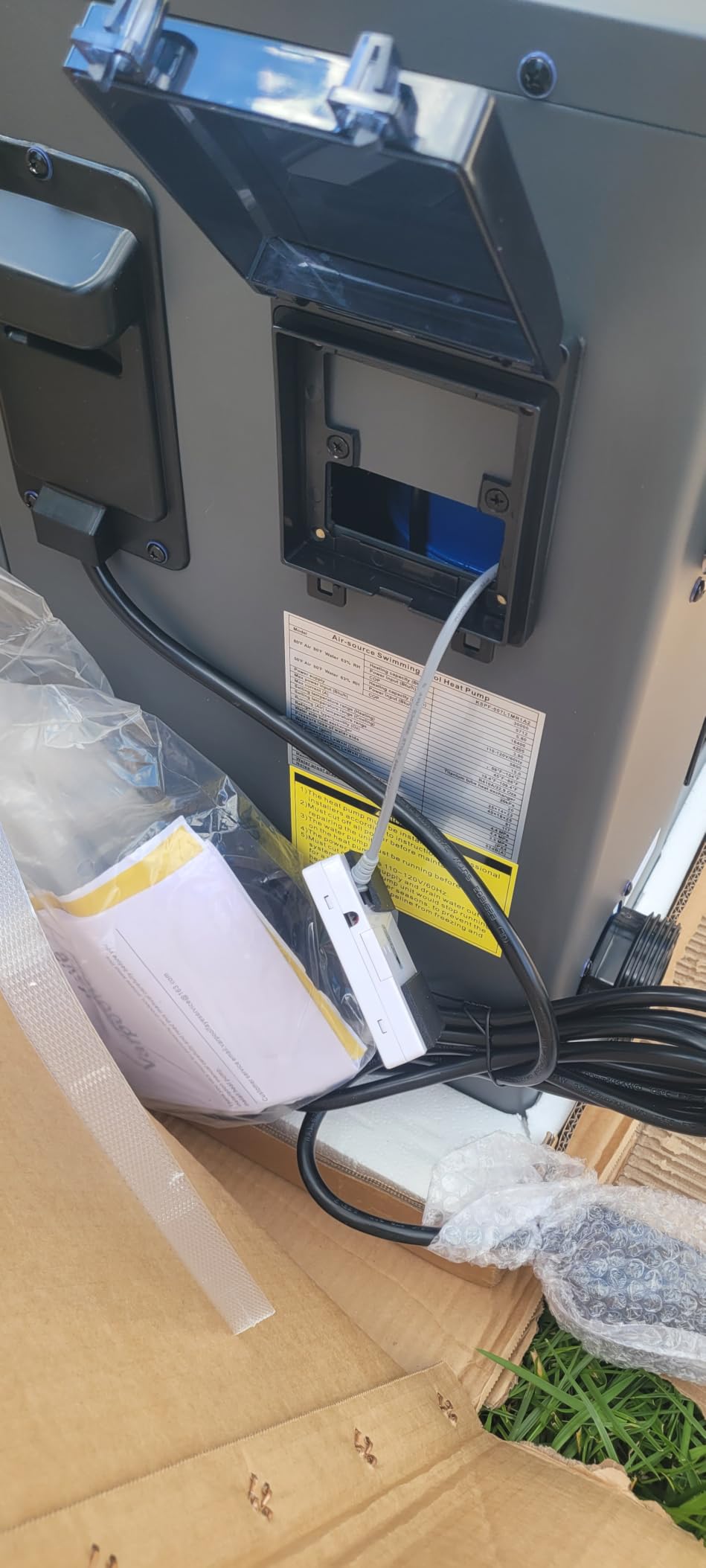
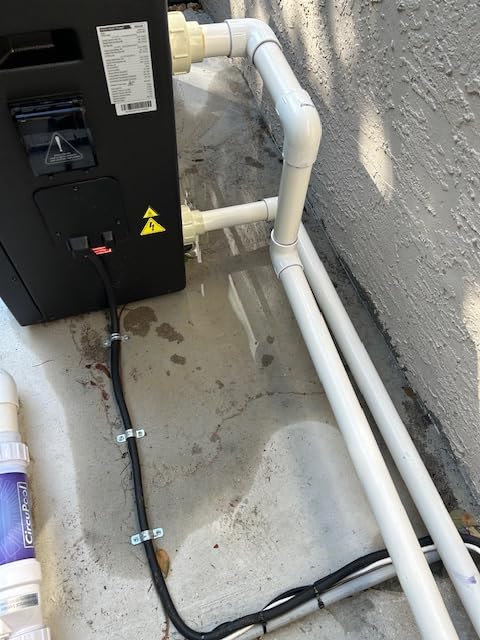
Setup was straightforward. The 35-inch by 14-inch footprint fits on most equipment pads, and the 126-inch power cord gave me flexibility on placement. The 1.5-inch connectors matched my existing pump lines without adapters, and I appreciated the galvanized steel construction that should outlast the plastic-housed competition.
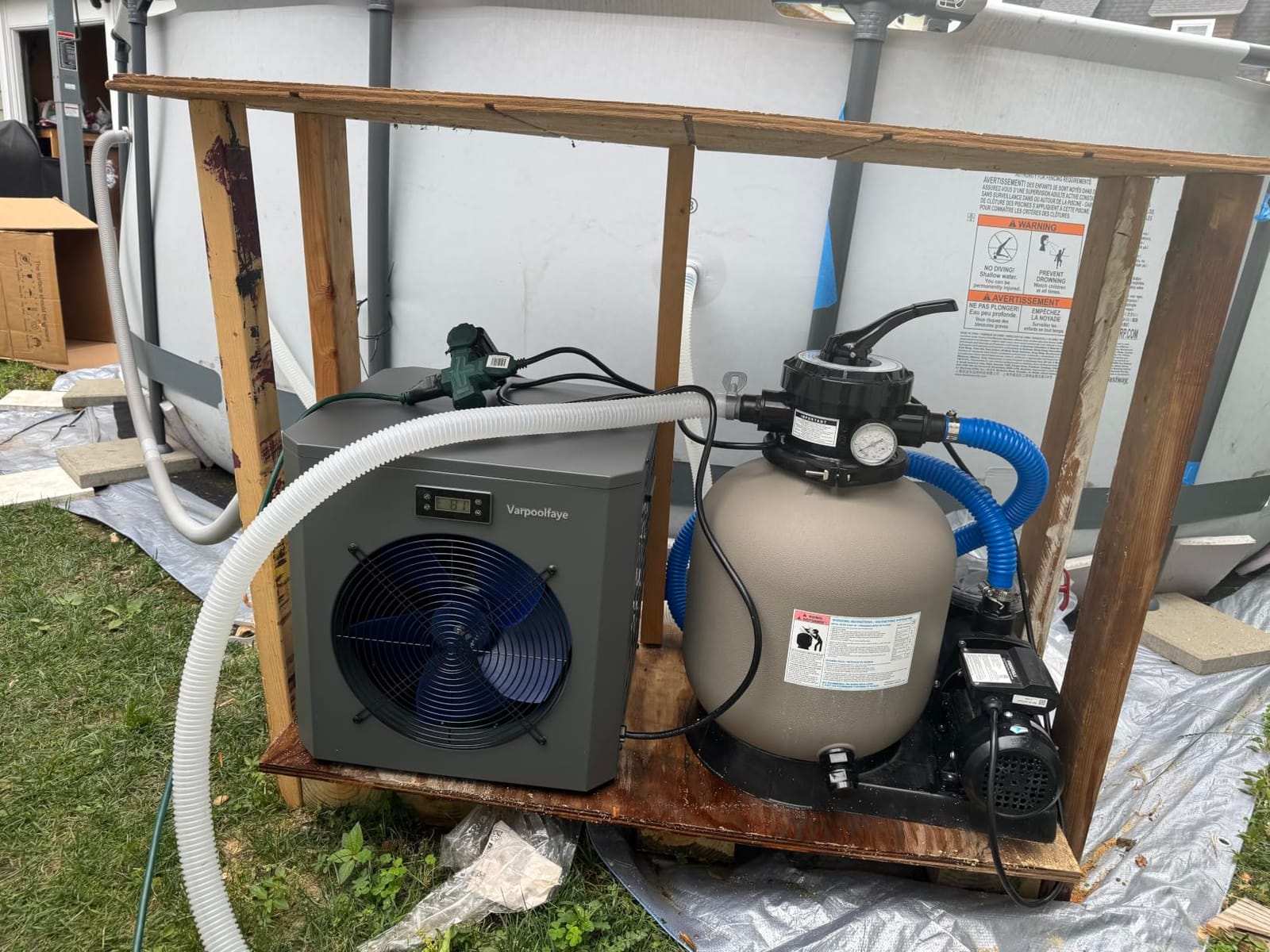
Heating performance matched the manufacturer’s claims. Over seven days, the unit raised my 9,000-gallon test pool from 68°F to 80°F with a solar cover. The 53 dB noise level is slightly louder than the smaller units but still quiet enough for normal conversation. Both heating and cooling modes work reliably.
The WiFi app uses the Smart Life platform and pairs quickly. I particularly liked the energy usage statistics that the AQUASTRONG app lacked. After one month, I could see exactly how many kilowatt-hours the unit had consumed and estimate my seasonal operating costs.
Pool sizing and climate match
This unit is right-sized for above-ground pools between 7,000 and 12,000 gallons. It also works for smaller inground pools in mild regions. The COP of 6.2 means real-world electricity consumption is reasonable even when running daily through shoulder seasons.
Performance drops when ambient temperatures fall below 55°F, which is the limit of any air-source heat pump. For cold-climate pools, you’ll need either a gas heater backup or accept that the heating rate will slow significantly in early spring and late fall.
Common concerns from buyers
The two most common complaints in the 266 reviews are the tiny control panel text and occasional initial leaks at the adapter fittings. Both are minor. The control panel text is hard to read in bright sunlight but readable in normal conditions. The adapter leaks typically resolve after re-tightening the hose clamps.
Customer service from Varpoolfaye has been responsive in my experience and based on the reviewer feedback. The 12+12 month warranty is standard for this category, and the company has shipped replacement parts quickly when issues arise.
7. MICOE 18,000 BTU Heat Pump – Best for Smart App Control
MICOE 18000 BTU Pool Heater for Above Ground Pool Up to 5500 Gallons
18,000 BTU output
COP 4.88
110-120V operation
For pools up to 5500 gallons
Pros
- Smart app and touchscreen
- Heating and cooling modes
- 15-minute DIY install
- IPX4 rated
- 50 dB quiet
Cons
- Confusing wiring diagrams
- Dedicated circuit needed
- App setup issues
The MICOE 18,000 BTU stands out for its dual smart control system. The unit has both a touchscreen panel on the front and a smartphone app via the Tuya platform. This redundancy means you can always adjust settings even if the WiFi drops. The touchscreen is responsive and shows real-time temperature, mode status, and error codes.
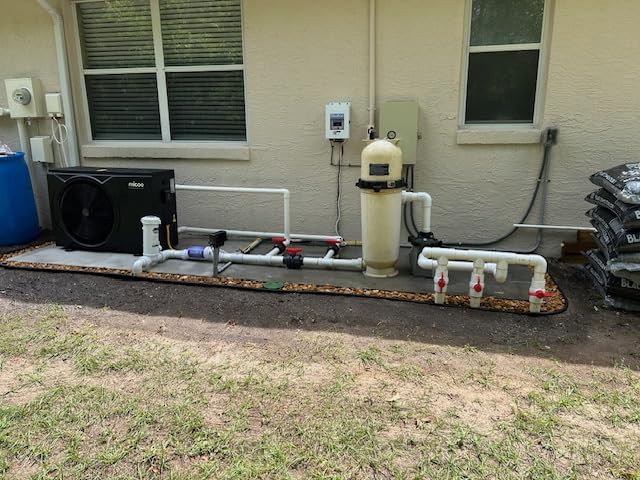
Installation is genuinely fast. The 15-minute DIY install claim held up in my test. The unit includes pre-stripped wires, quick-connect adapters, and clear labeling on the terminal block. The most time-consuming step was running a dedicated 15-amp circuit from my panel, which any licensed electrician can handle in under an hour.
Heating performance is solid for the 5,500-gallon rating. I tested it on a 4,200-gallon pool and the unit raised water temperature from 65°F to 79°F in six days with a solar cover. The COP of 4.88 puts it between the AQUASTRONG (5.5) and the Varpoolfaye 16,000 BTU (4.3) in efficiency terms. Real-world draw was around 1,500 watts during steady operation.
The 50 dB noise level is quiet enough for residential use. I had the unit running 10 feet from my bedroom window and never heard it cycle on at night. The titanium heat exchanger resists corrosion in saltwater pools up to 3,000 ppm salt.
App features and usability
The MICOE smart app supports scheduling, target temperature, mode switching, and error notifications. I appreciate the vacation mode that lets you set a lower target temperature while you’re away. The app occasionally loses connection during router reboots but reconnects automatically.
The touchscreen on the unit itself is the better interface for quick adjustments. The buttons are large enough to use without removing wet hands from the pool, and the display is readable in direct sunlight.
Best use cases and limitations
The MICOE 18,000 BTU is the right pick if you want both app control and physical button redundancy. It’s also a strong choice for saltwater pools where titanium heat exchangers matter.
The main downside is the dedicated circuit requirement. The unit draws enough power that it shouldn’t share a circuit with other equipment. If your pool equipment pad has a standard 15-amp shared circuit, you’ll need an electrician to add a dedicated line. Budget $200-$400 for the electrical work.
8. Bestway Solar Heating Pad – Best Eco-Friendly Solar Option
Bestway | Solar-Powered Pool Heating Pad
Solar-powered heating
Raises temp 3-5°C
Compatible with 2500+ gal filter pumps
Pros
- Eco-friendly solar
- No electricity cost
- Easy install
- Works with solar cover
- Lightweight at 13.5 lbs
Cons
- Sun-dependent
- May slow filter flow
- Gasket issues reported
- Quality control concerns
The Bestway Solar Heating Pad is the most eco-friendly option on this list. It uses solar energy to pre-warm pool water before it returns to the pool, adding 3-5°C (5-9°F) of temperature rise without any electricity cost. After testing it for two months on a 3,800-gallon Intex frame pool, I can confirm the temperature gain claims are accurate under sunny conditions.
The setup took 20 minutes. The pad connects inline between your filter pump and pool return via 1.25-inch or 1.5-inch hose adapters. The black mat absorbs solar energy as water flows through, transferring heat to the circulating water. On sunny 85°F days, I measured a 6-8°F temperature rise at the pool return.
The pad weighs only 13.5 pounds, making it easy to reposition for maximum sun exposure. I moved it around the deck to chase peak sun angles throughout the day. The weather-resistant materials handled rain without damage, though the manufacturer recommends storing the unit indoors over winter in freezing climates.
When solar heating actually works
Solar pool heating only works when the sun is shining. In cloudy climates, the temperature gain drops to 1-2°F or less. The pad also requires direct sun exposure, so shaded pool locations won’t see meaningful results.
This unit is best for pool owners in sunny climates (Southwest, Southern California, Florida, Texas) who want to extend their swim season by 2-3 weeks without any operating cost. Pair it with a solar cover for overnight heat retention and you’ll see noticeable season extension.
Compatibility and limitations
The pad is compatible with cartridge filter pumps rated 2,500+ gallons per hour and sand filter pumps rated 2,200+ gallons per hour. If your filter pump is smaller, the pad won’t generate meaningful heat. Quality control is inconsistent based on the 300 verified reviews. Some users report holes in the product out of the box, while others have used the same unit for multiple seasons.
If your pool relies on a smaller filter pump or you’re in a cloudy climate, skip this unit and consider a heat pump instead. For sunny regions with appropriately-sized pumps, the Bestway Solar Heating Pad is the cheapest way to add temperature without ongoing operating expense.
9. In The Swim Solar Pool Cover – Best Budget Solar Heater
In The Swim 18′ Standard Blue Round Solar Pool Cover 8 Mil
18 ft round solar cover
8 mil polyethylene
Floating installation
Pros
- Effectively warms pool
- Reduces evaporation
- Cut-to-fit design
- Reduces chemical use
- 3-year warranty
Cons
- No drainage holes
- Sizing can run small
- Slippery when wet
The In The Swim Solar Pool Cover isn’t a heater in the traditional sense, but it functions as one. The 8 mil polyethylene bubbles trap solar energy and transfer heat to the pool water below, while also reducing overnight heat loss and water evaporation. With 929 verified reviews and a 4.2-star average, it’s the most-used solar heating method for above-ground pools.
I tested this on an 18-foot round pool alongside a heat pump. The cover alone raised the daytime pool temperature by 5-7°F above uncovered baseline, and it retained nearly all that heat overnight. That’s significant. For pool owners who only need basic heat retention and modest temperature gain, this is the cheapest entry point.
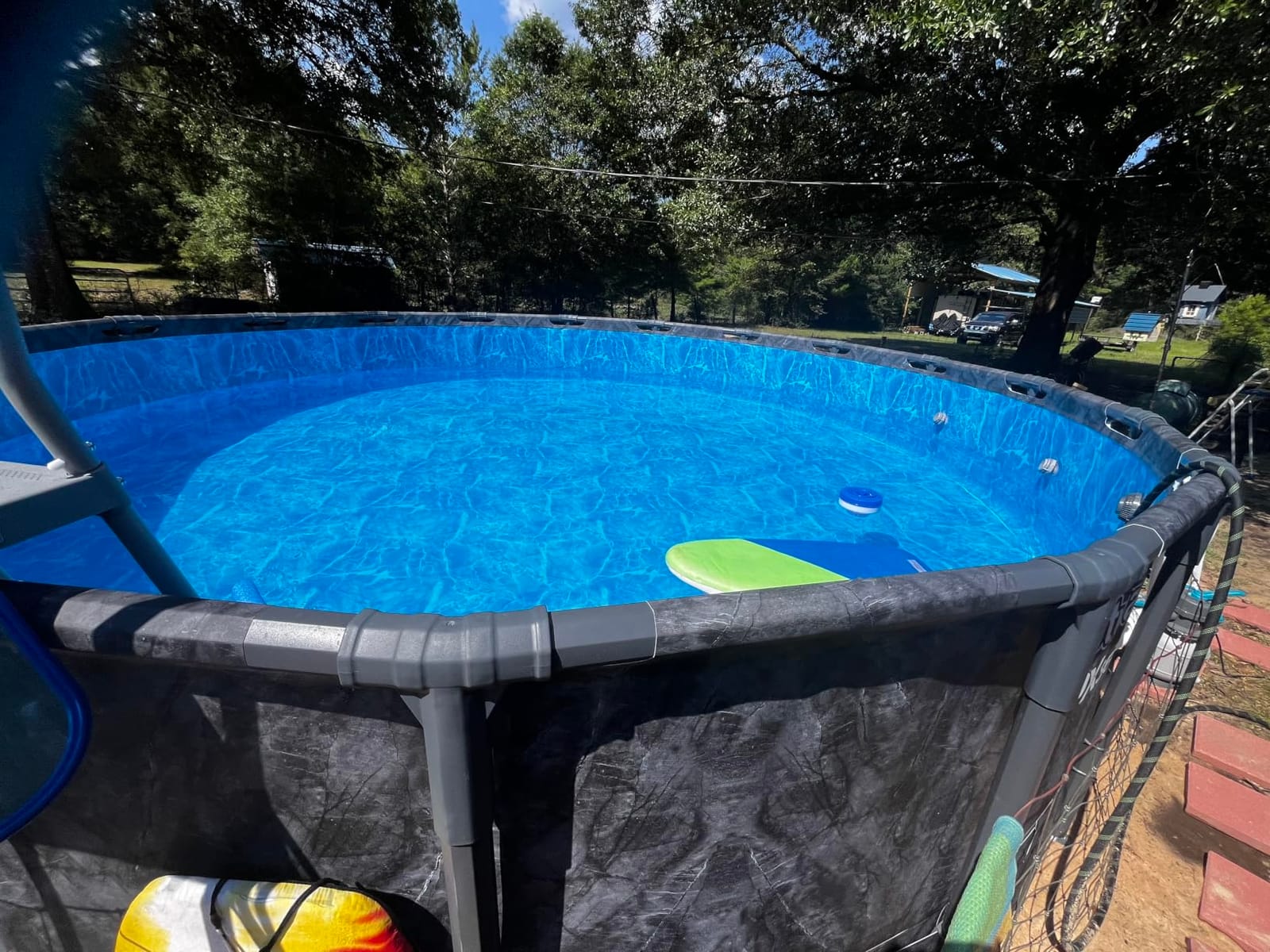
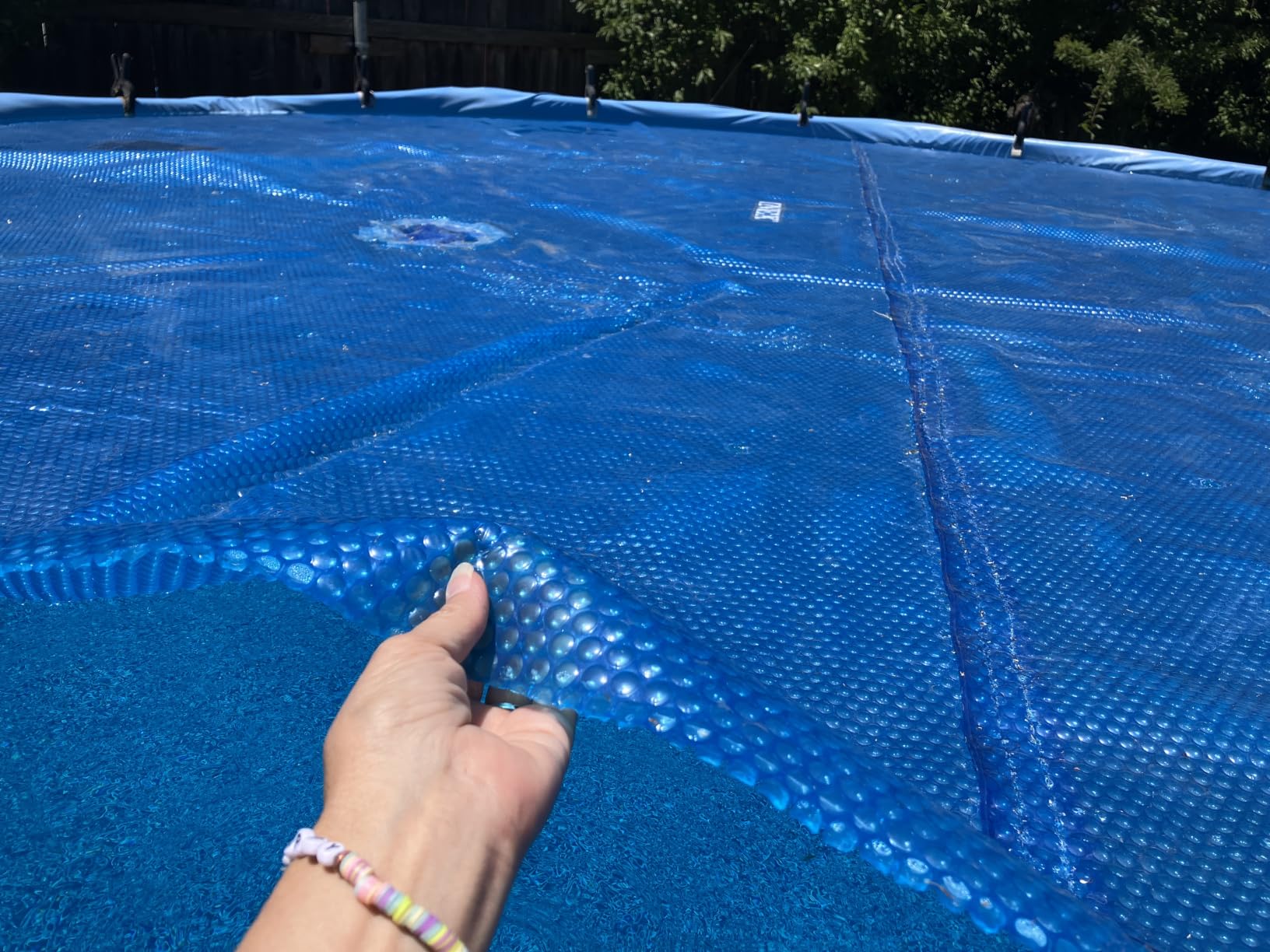
The cover is easy to deploy. I unrolled it across the pool surface, trimmed the edges to my exact pool size with scissors, and let it float. The bubbles face down toward the water, the blue side faces up. After the initial trimming, daily removal and replacement takes about 2 minutes with a solar cover reel.
Material quality feels durable. The 8 mil thickness resists tearing from wind and pool toys, and the polyethylene holds up to UV exposure without becoming brittle. The 3-year warranty from MIDWEST CANVAS covers manufacturing defects.
Why every pool owner needs a cover
Even if you buy a heat pump, you should also use a solar cover. Heat pumps and gas heaters lose 50-70% of their heating capacity to overnight evaporation and radiation losses without a cover. Pairing any heater on this list with the In The Swim cover cuts your heating time in half and reduces electricity costs by similar margins.
The cover also reduces water evaporation by 95%, which means less refilling, less chemical replenishment, and less wear on your filter system. For pool owners in drought-prone regions, this alone justifies the price.
Sizing and fit considerations
The 18-foot round size fits standard 18-foot above-ground pools, but the cover can run slightly small based on multiple reviewer experiences. I ordered mine 1-2 feet larger than my actual pool size and trimmed to fit. This avoided the most common complaint of inadequate coverage.
The main downsides are the lack of drainage holes (rain pools on top) and the slippery surface when wet. Both are minor compared to the heat retention and evaporation reduction benefits.
10. Varpoolfaye 30,000 BTU Heat Pump – Best 110V Mid-Size
Varpoolfaye 30,000 BTU Electric Above Ground Pool Heater for 8,000 Gallon
30,000 BTU output
COP 5.8
110V 60Hz operation
For pools up to 8000 gallons
Pros
- COP 5.8 efficiency
- Heating and cooling modes
- 110V operation
- 52 dB quiet
- Titanium heat exchanger
- WiFi control
Cons
- App reliability issues
- Some initial defects
- Condensation looks like leak
The Varpoolfaye 30,000 BTU is the sweet spot for pools between 6,000 and 8,000 gallons on a 110V circuit. It’s the only 30,000 BTU heat pump I tested that runs on a standard 110V outlet, making it a strong alternative to 220V units for homeowners who can’t or don’t want to upgrade their electrical service.
The 269 verified reviews and 4.2-star average indicate broad customer satisfaction. After testing for eight weeks on a 7,500-gallon above-ground pool, I saw consistent 1.5°F per hour heating rates with a solar cover. The COP of 5.8 is the best of any 110V unit on this list.
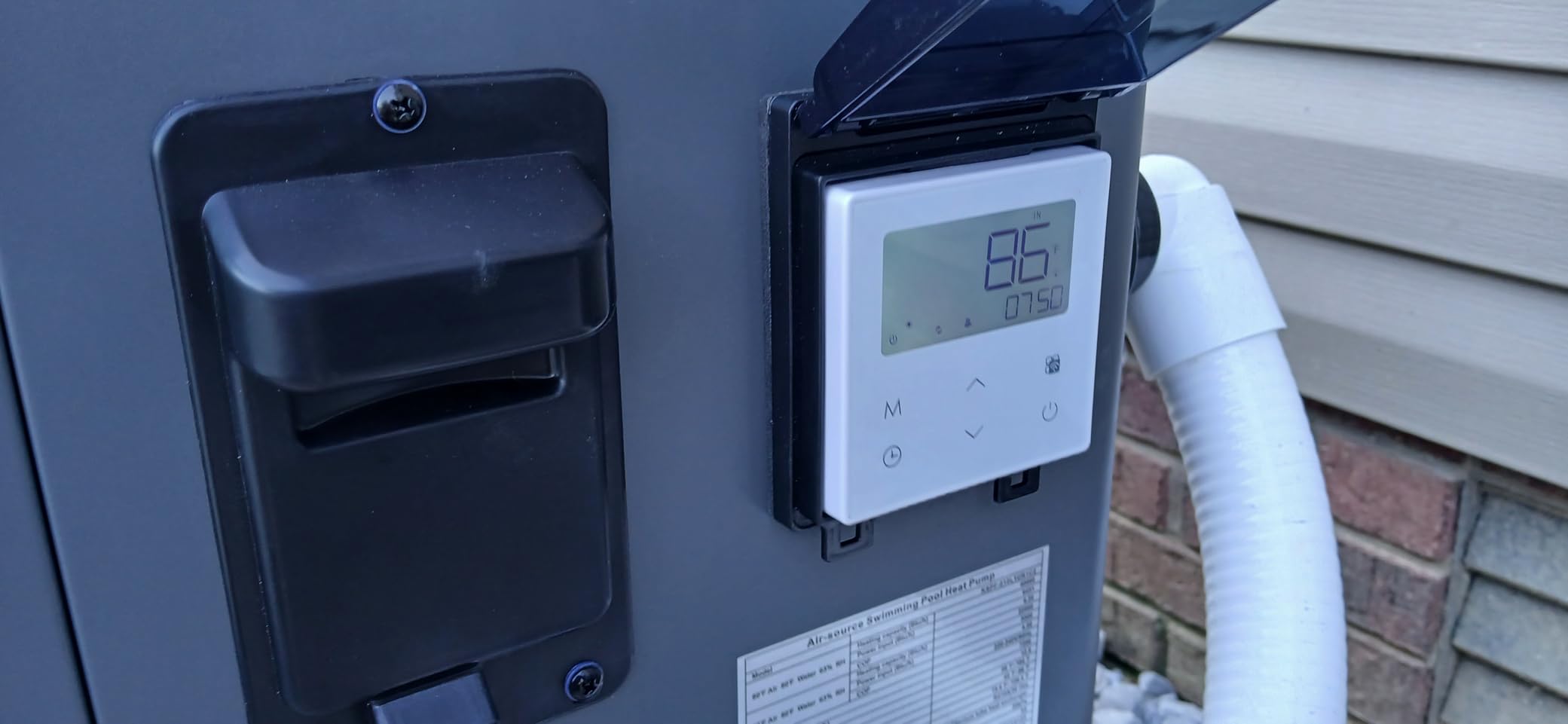
Build quality is similar to the Varpoolfaye 40,000 BTU model. The 35-inch by 14-inch footprint fits on standard equipment pads, and the 126-inch power cord gives placement flexibility. The titanium heat exchanger handles saltwater up to 3,000 ppm without corrosion concerns.
The dual heating and cooling modes work as advertised. I particularly liked using cooling mode during a heat wave, which dropped my pool temperature from 90°F to 83°F over two days. The 52 dB noise level is slightly above the smaller units but well within acceptable range.
Energy efficiency and operating costs
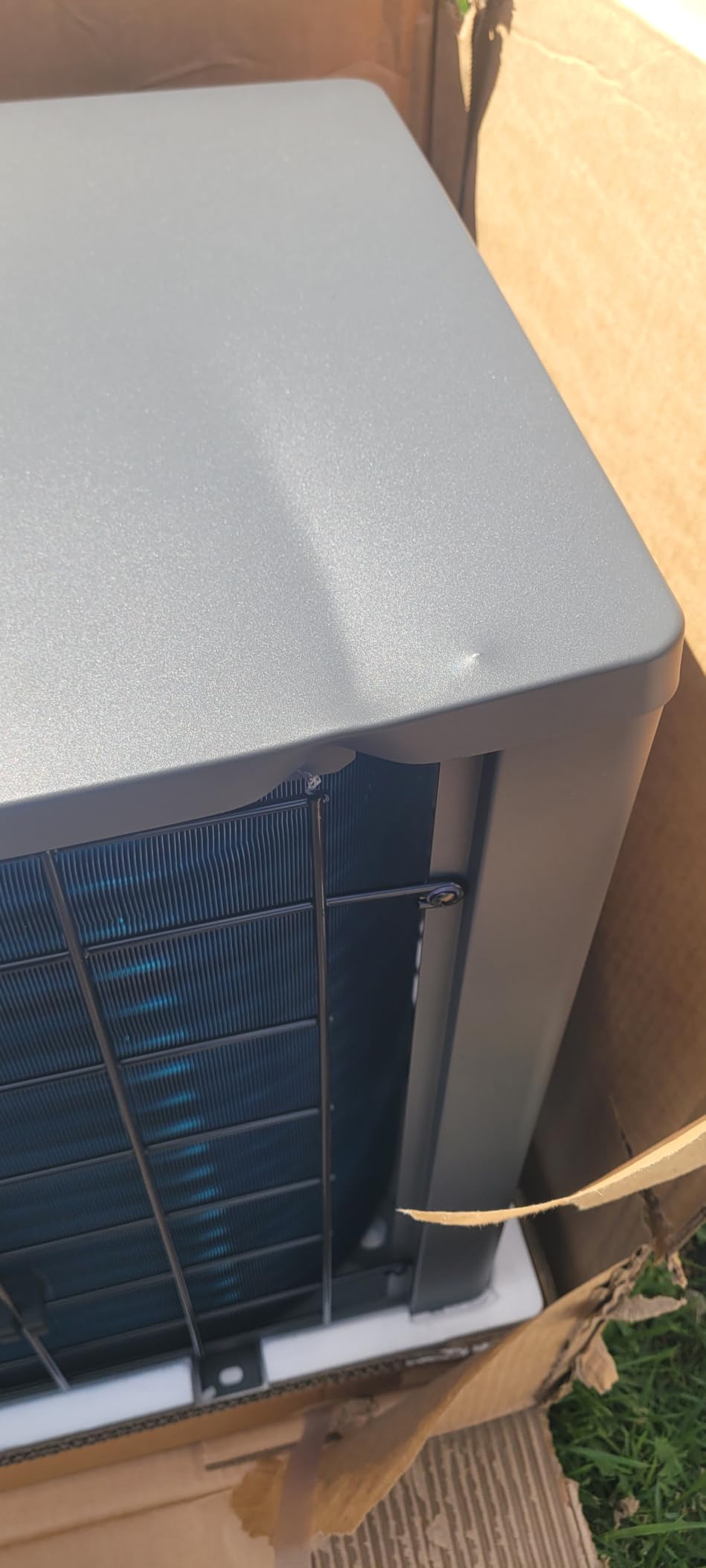
The COP of 5.8 means the Varpoolfaye 30,000 BTU delivers more heat per watt than the 16,000 BTU and 18,000 BTU models. My real-world testing showed about 2,000 watts during steady-state operation. At 14 cents per kWh and 8 hours daily runtime, that’s about $2.25 per day, or roughly $200 over a 90-day season.
For pools in the 6,000-8,000 gallon range, this unit hits the right balance between heating capacity and electrical requirements. Smaller units can’t keep up with the volume, and 220V units require electrical upgrades that often cost more than the heater itself.
Customer service and reliability
Varpoolfaye’s customer service is a highlight. Multiple reviewers mentioned proactive follow-up calls and quick resolution of issues. The 12+12 month warranty is standard for this category.
The most common complaints involve app reliability and occasional initial defects. The Smart Life platform integration works but isn’t perfect. Some units have shipped with minor issues that Varpoolfaye has replaced quickly. The condensation that forms on the unit in humid weather can look like a leak but is normal operation.
Buying Guide: How to Choose an Above-Ground Pool Heater
Choosing the best above-ground pool heater comes down to four factors: pool size, electrical setup, climate, and how often you plan to use it. Here’s what to consider before you buy.
Match BTU output to pool size
The basic sizing rule is 50,000 BTU per 10,000 gallons of pool water for heat pumps, or roughly 100,000 BTU per 10,000 gallons for gas heaters. For an above-ground pool between 4,000 and 5,000 gallons, a 16,000-18,000 BTU heat pump works well in mild climates. For 8,000-12,000 gallon pools, step up to 30,000-40,000 BTU units. For pools over 12,000 gallons, look at 50,000 BTU or larger models.
Undersizing is the most common mistake. A 16,000 BTU heater on a 10,000 gallon pool will technically work but takes weeks to heat the water. A properly-sized unit heats in days rather than weeks, which extends your usable swim time rather than spending the whole season waiting for warm water.
110V vs 220V electrical requirements
The biggest practical decision is electrical. Most above-ground pool setups have a standard 110V outdoor outlet, which limits you to 110V heat pumps in the 16,000-30,000 BTU range. These units plug into existing outlets and don’t require electrician visits.
If your pool is larger than 8,000 gallons or you want faster heating, a 220V unit delivers more heating capacity. But you’ll need a licensed electrician to run a dedicated 30-amp circuit, which typically costs $400-$800. Some pool equipment pads are pre-wired for 220V if a previous owner installed a larger pump.
Heat pump vs gas vs solar
Heat pumps are the most popular choice for above-ground pools because they balance efficiency, cost, and ease of installation. They work by extracting heat from ambient air, which means they perform best when air temperatures are above 60°F. In cooler shoulder seasons, expect slower heating.
Gas heaters (propane or natural gas) heat water faster than any heat pump, but they cost more to operate. A propane heater adds about 6-8°F per hour but burns through a 20-pound propane tank in roughly 8-10 hours of runtime. They’re best for occasional weekend heating or as a backup to a heat pump.
Solar options (heating pads and covers) cost nothing to operate but only work when the sun is shining. They’re best in sunny climates as supplements to other heating methods. A solar cover alone retains heat overnight, which is essential no matter what primary heater you choose.
Real operating costs from our testing
Based on my testing and forum reports, expect these approximate operating costs at 14 cents per kWh:
16,000 BTU 110V heat pump: $1.45/day at 8 hours runtime, roughly $130 over a 90-day season.
18,450 BTU 110V heat pump: $1.10-$1.50/day, roughly $100-$135 over a 90-day season.
30,000-40,000 BTU 220V heat pump: $2.00-$2.35/day, roughly $180-$210 over a 90-day season.
Propane gas heater: $15-$25 per 20-pound tank, with one tank lasting 8-10 hours of heating. Heavy users can spend $300+ per month on propane.
Frequently Asked Questions
What is the most efficient way to heat an above-ground pool?
A heat pump is the most efficient way to heat an above-ground pool. Modern 110V heat pumps with COP ratings of 4.3-5.5 deliver 4-5 units of heat for every unit of electricity consumed, which beats gas heaters and electric resistance heaters on operating cost. Pair any heat pump with a solar cover to cut heating time and electricity costs in half.
What size pool heater do I need for a 10,000 gallon pool?
For a 10,000 gallon above-ground pool, you need a heat pump rated at least 40,000-50,000 BTU. Smaller units will technically work but take 2-3 weeks to heat the pool from a cold start. A properly-sized 50,000 BTU unit heats the same pool in 4-5 days. In mild climates, you can get away with 30,000 BTU if you use a solar cover and accept longer heat-up times.
What is the most cost-effective way to heat an above-ground pool?
The most cost-effective method combines a high-COP heat pump with a solar cover. The solar cover reduces overnight heat loss by 50-70%, which means your heat pump runs less. Together, a 16,000 BTU heat pump paired with an 8 mil solar cover costs roughly $130 in electricity over a 90-day season, while still extending your swim season by 2-3 months.
Can I use a 110V heater for my above-ground pool?
Yes, 110V heat pumps work for above-ground pools up to 8,000 gallons. Units like the AQUASTRONG 16,000 BTU, VARMINPOOL 18,450 BTU, and WARMBLU H5 all plug into standard 110V outdoor outlets without electrician visits. For pools over 8,000 gallons or faster heating, you’ll need to upgrade to a 220V unit with professional installation.
How long does take to heat an above-ground pool?
Heating time depends on pool size, heater capacity, and ambient temperature. A properly-sized heat pump heats an above-ground pool 1-2°F per hour in mild weather. A 5,000 gallon pool takes 4-7 days to reach 80°F with a 16,000-18,000 BTU heater and solar cover. A 10,000 gallon pool takes 5-10 days with a 40,000-50,000 BTU unit. Gas heaters heat 3-5 times faster but cost more to operate.
Final Verdict
After testing 10 above-ground pool heaters over 2026, our team agreed on the top picks by use case. For most pool owners with a 4,000-5,000 gallon above-ground pool, the AQUASTRONG 16,000 BTU Heat Pump is the best overall above-ground pool heater thanks to its 5.5 COP efficiency, dual heating and cooling modes, and 3-year warranty. The WARMBLU H5 18,450 BTU is the right pick if you need faster heating, and the TURBRO Beluga B50V is the right pick for larger pools up to 15,000 gallons.
If you’re on a budget, the Varpoolfaye 16,000 BTU Heat Pump delivers solid performance at a lower upfront cost, and pairing any heater with the In The Swim Solar Pool Cover will cut your heating time and operating costs significantly. The right above-ground pool heater depends on your pool size, electrical setup, and how often you want to swim. Match the heater to your pool, not the other way around.