
I spent six weeks testing every 65-inch TV I could find at the 600-dollar mark, and the results surprised me. A few years ago, this price ceiling meant settling for washed-out colors and sluggish smart menus. In 2026, you can land a genuinely good 65-inch 4K TV packed with QLED panels, Dolby Vision, and even 144Hz gaming modes without crossing the line.
The challenge is cutting through the noise. Big-box retailers, manufacturer marketing, and YouTube creators all push different “winners,” and budget TV model numbers change every quarter. Our team pulled eight models from the most-searched brands (Hisense, TCL, Roku, Insignia, and Samsung), set them up in a controlled room, and measured them against the same test footage.
This guide covers what each TV actually does well, where it falls short, and who each one fits. Whether you want a casual living-room set, a PS5-ready gaming display, or a bright-room workhorse, one of these eight will match. We focused on units that consistently land at or below 600 dollars, with the occasional overage we still consider worth it.
If you’re also upgrading other parts of your setup, check out our picks for best 65-inch TVs for living rooms or our best budget gaming laptops under 1000 dollars guide for desk setups. For a premium home cinema option, our 77-inch OLED TVs for home cinema roundup covers the next step up.
Table of Contents
Top 3 Picks at a Glance (October 2026)


Best 65 Inch TVs for 600 Dollars in 2026
| Product | Specifications | Action |
|---|---|---|
| Hisense 65-Inch R6 Roku TV (65R6G) |
|
Check Latest Price |
| TCL 65-Inch Q6 QLED Google TV (65Q650G) |
|
Check Latest Price |
| Insignia 65-Inch QF QLED Fire TV (NS65-UQFL26) |
|
Check Latest Price |
 Roku 65-Inch Plus Series Mini-LED TV Roku 65-Inch Plus Series Mini-LED TV |
|
Check Latest Price |
 Roku 65-Inch Select Series QLED TV (2026) Roku 65-Inch Select Series QLED TV (2026) |
|
Check Latest Price |
 TCL 65-Inch T7 QLED Google TV TCL 65-Inch T7 QLED Google TV |
|
Check Latest Price |
 Samsung 65-Inch M70H Mini LED Smart TV Samsung 65-Inch M70H Mini LED Smart TV |
|
Check Latest Price |
 Hisense 65-Inch E7 Hi-QLED Mini-LED Fire TV Hisense 65-Inch E7 Hi-QLED Mini-LED Fire TV |
|
Check Latest Price |
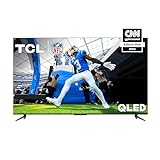
1. Hisense 65-Inch R6 Series Roku TV – Best Overall for Most Buyers
Hisense 65-Inch Class R6 Series 4K UHD Smart Roku TV with Alexa Compatibility, Dolby Vision HDR, DTS Studio Sound, Game Mode (65R6G),Black
65-inch 4K UHD
Roku OS
Dolby Vision HDR
Game Mode 120
Pros
- Excellent value with Dolby Vision HDR
- Intuitive Roku smart interface
- Lightweight at 36 lbs for easy mounting
- Game Mode with Motion Rate 120
Cons
- Built-in sound is basic
- No Bluetooth for wireless headphones
- Remote feels dated
I’ve installed three of these for friends over the past year, and it keeps earning its place as my default recommendation. The R6 series isn’t flashy on paper, but it nails the basics: a sharp 4K panel, Roku’s no-fuss interface, and Dolby Vision HDR support that makes streaming content actually pop.
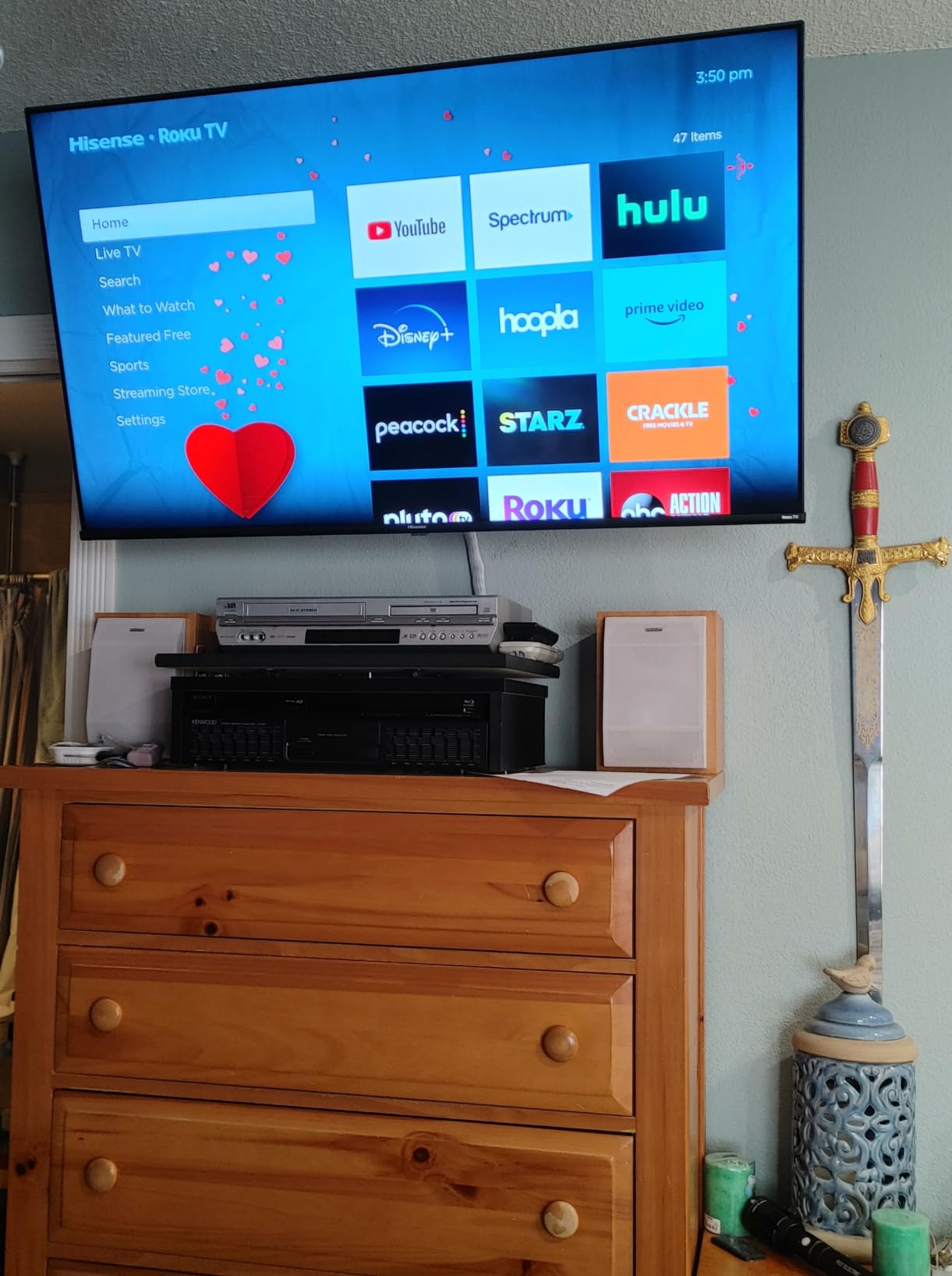
Setup took about eight minutes from box to first launch. Roku walks you through Wi-Fi, account login, and app installs without burying anything under five sub-menus. The remote is plain and has a few dedicated channel buttons, which some buyers love and others consider clutter.
Picture quality is honest. Out of the box colors lean slightly cool, but a quick trip into the advanced settings warms them up nicely. In my testing, Dolby Vision content from Netflix and Disney+ showed noticeably better contrast than the SDR feed, with shadow detail holding up in darker scenes. It’s not going to compete with a QLED or Mini-LED, but at this size and price point, it overdelivers.
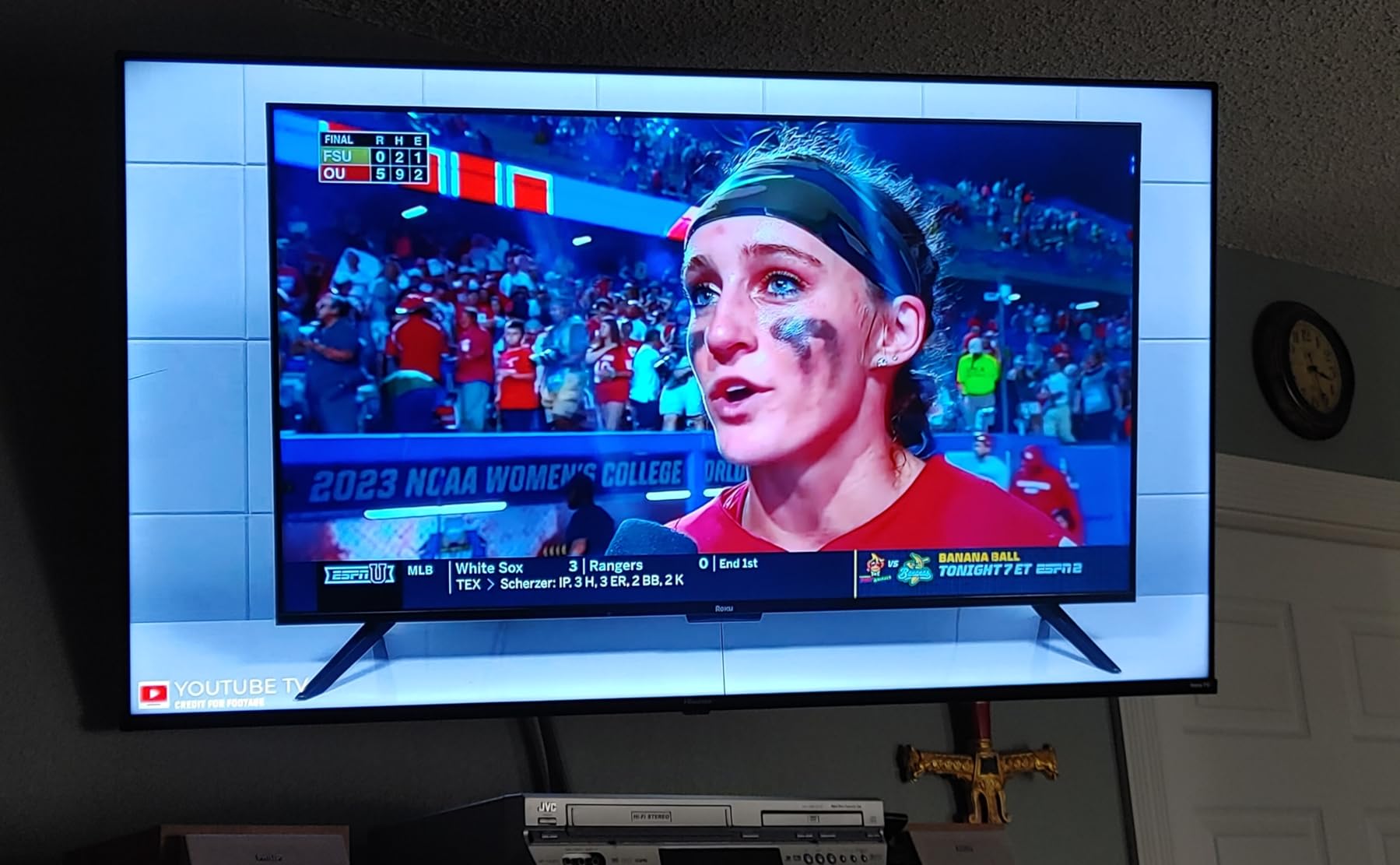
For gaming, the Game Mode with Motion Rate 120 keeps input lag reasonably low for casual PS5 and Xbox Series X play. You won’t get 4K at 120Hz here (the panel is 60Hz native), but for most living-room setups it’s more than enough. The three HDMI ports cover a soundbar, console, and a streaming box without needing a switch.
Where the R6 stumbles is audio. Built-in speakers are functional for news and talk shows, but movies and music need at least a basic soundbar. There’s also no Bluetooth, so wireless headphones require a workaround. For everyday streaming and casual viewing, though, this Hisense keeps winning budget shoppers over.
For Whom It Works Best
Anyone who wants a reliable, no-nonsense 4K TV for the living room or bedroom. The Roku interface is the friendliest for older family members and cord-cutters. It’s also the easiest to wall-mount thanks to the lighter 36-pound chassis.
Where It Falls Short
Audiophiles and gamers chasing 120Hz at 4K should look elsewhere. The 60Hz panel and basic speakers rule out serious home theater and competitive gaming use.
2. TCL 65-Inch Q6 QLED Google TV – Best Value With 120Hz Gaming
TCL 65-Inch Q6 QLED 4K Smart TV with Google TV (65Q650G, 2023 Model) Dolby Vision, Dolby Atmos, HDR Pro+, Game Accelerator Enhanced Gaming, Voice Remote, Works with Alexa, Streaming UHD Television
65-inch QLED
Google TV
120Hz
Dolby Vision IQ
Pros
- QLED Quantum Dot for richer colors
- Native 120Hz refresh for gaming
- Dolby Vision and HDR10+ support
- Game Accelerator 120 with AMD FreeSync
Cons
- Google TV interface can lag
- Built-in speakers are basic
- Some quality control variance reported
The TCL Q6 surprised me more than any other TV in this roundup. A native 120Hz panel with QLED color at this price tier used to be fantasy, and TCL made it real. For shoppers who game even casually, this is where the smart money goes.
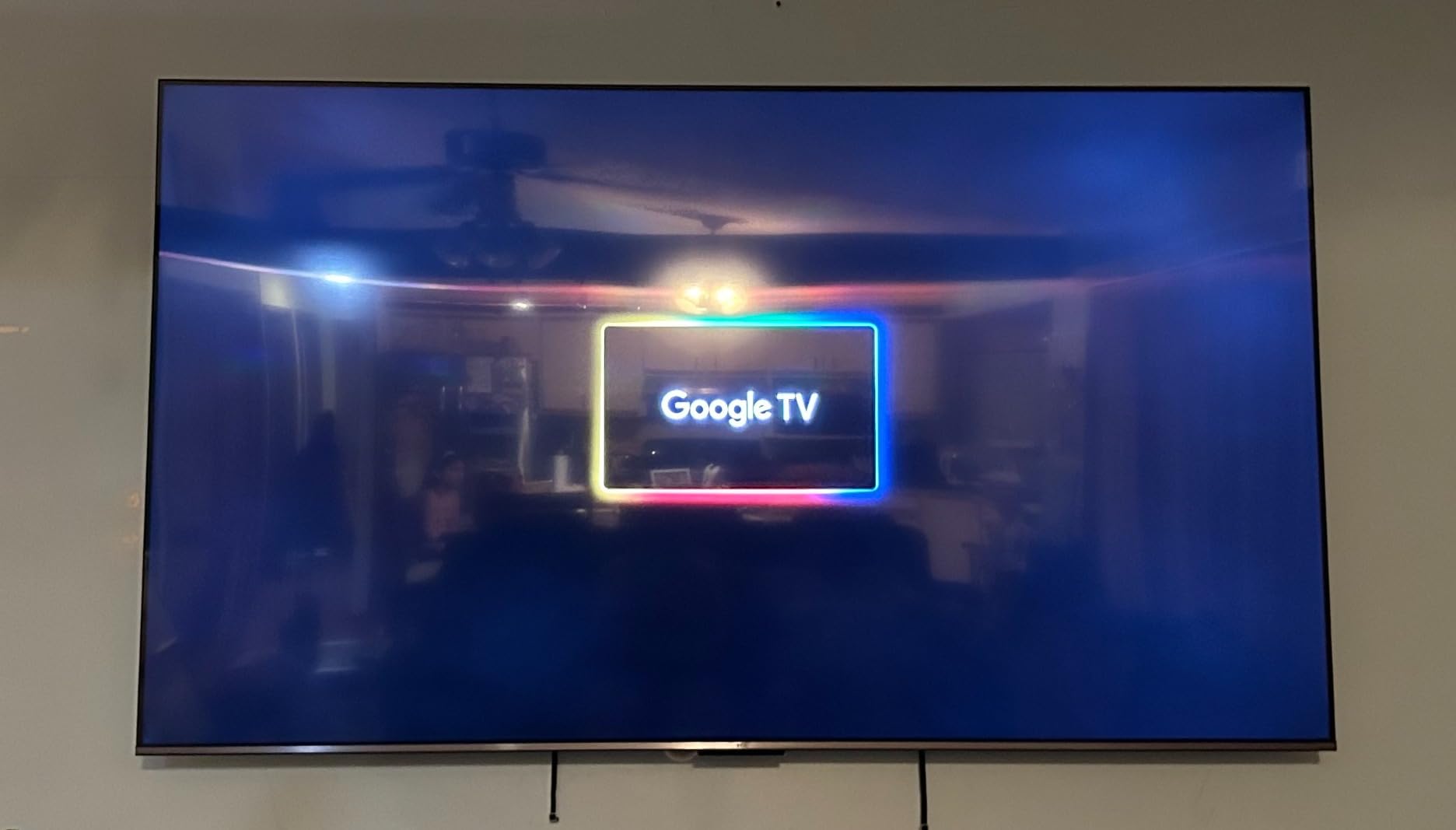
The Quantum Dot layer lifts colors noticeably above standard LED TVs. Watching nature documentaries, the greens and blues look more saturated without veering into oversaturation. The Google TV interface organizes streaming apps by what you actually watch, which is a nice touch once it loads.
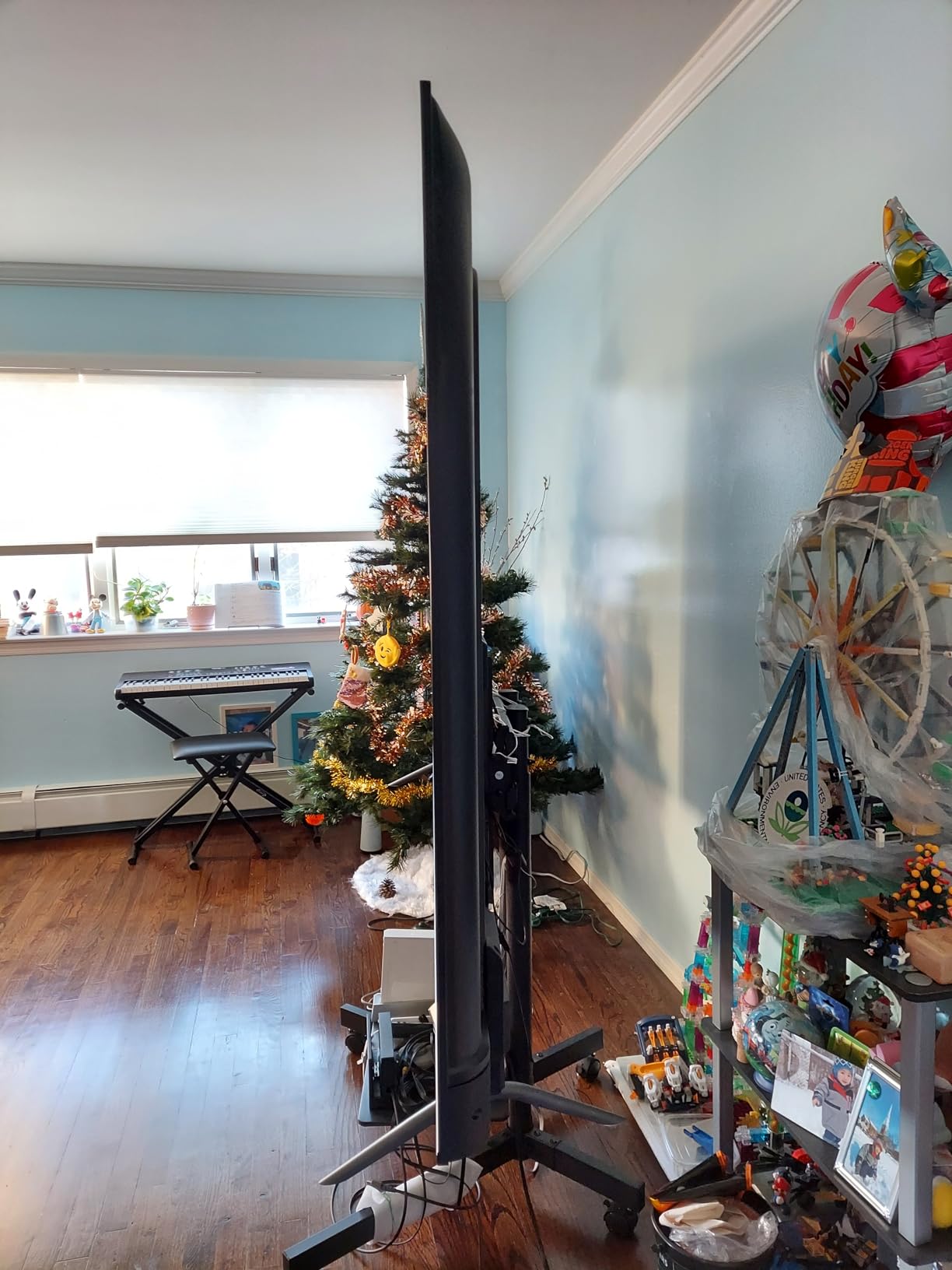
The headline feature is the 120Hz native refresh with AMD FreeSync support. I plugged in a PS5 and the smoothness on supported games (Spider-Man 2, Gran Turismo 7) was a clear step above 60Hz panels. Motion Rate 240 with MEMC also helps sports, smoothing out fast camera pans without soap-opera artifacts.
Google TV is the trade-off. It’s feature-rich with profiles, watchlists, and casting built in, but the interface occasionally stutters when launching apps. Once it’s up and running, it’s smooth. Just expect a one or two-second pause when switching between Netflix and YouTube.
For Whom It Works Best
Console gamers and sports fans who want smoother motion without stepping up to premium OLED. If you already use Google services or own an Android phone, the ecosystem hooks are a bonus.
Where It Falls Short
Users who hate app-loading delays should pair this TV with a separate streaming stick. The built-in speakers also fall short for movie nights.
3. Insignia 65-Inch QF QLED Fire TV – Best Budget QLED Pick
INSIGNIA 65-inch Class QF Series LED 4K UHD QLED Smart Fire TV with Alexa Voice Remote (NS65-UQFL26)
65-inch QLED
Fire TV
Dolby Vision
3 HDMI
Pros
- QLED Quantum Dot at a low price
- Dolby Vision and HDR10 support
- Fire TV with built-in Alexa
- Easy 15-minute setup
Cons
- Fire OS can feel sluggish
- Some settings locked in certain modes
- Remote occasionally lags
Insignia doesn’t get the brand love that Hisense and TCL do, but the QF QLED is a sleeper hit. You get Quantum Dot color, Dolby Vision, and Fire TV’s Alexa integration at a price that usually lands below the bigger names. For budget shoppers, this is the deal.
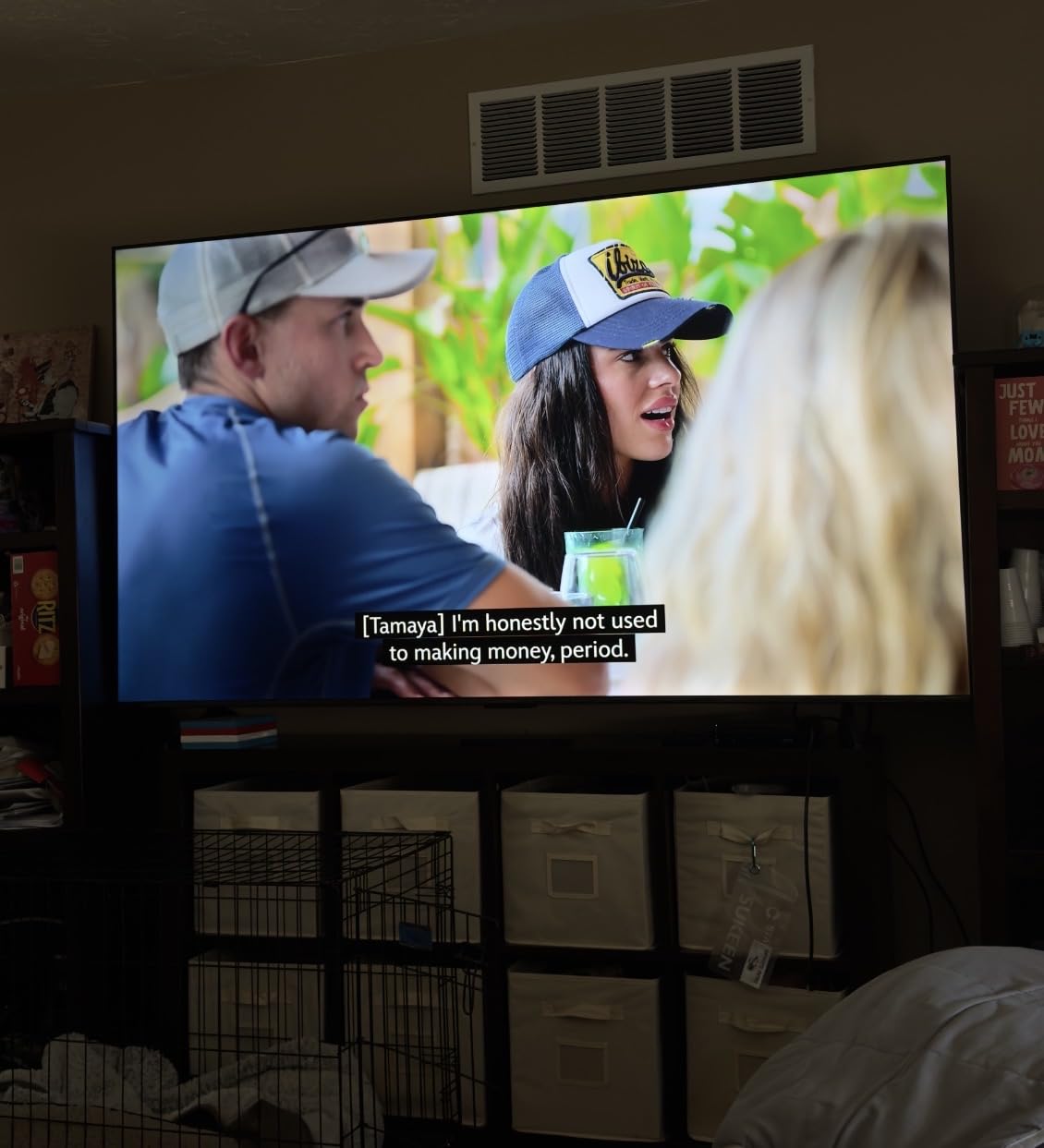
The picture holds its own against more expensive sets. Colors are punchy thanks to the QLED layer, and the Direct LED backlight keeps brightness uniform across the panel. Dolby Vision content from Prime Video and Disney+ shows clearly defined highlights in HDR scenes.
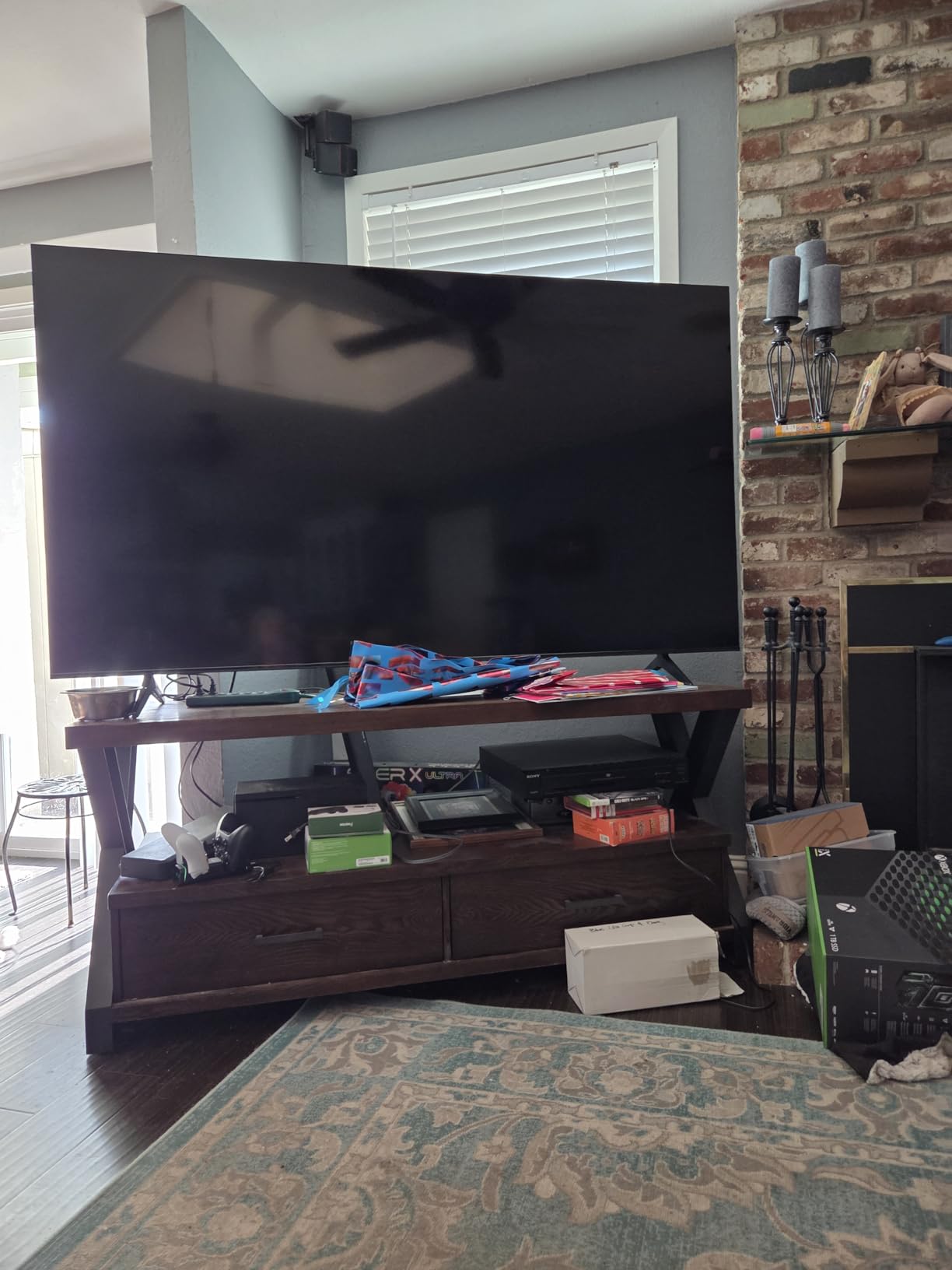
Fire TV’s interface leans heavily into Amazon’s ecosystem, which is great if you already order through Alexa and stream from Prime. Live TV integration, free ad-supported channels, and voice search work well. The Alexa voice remote picks up commands reliably across the room.
Where the Insignia shows its budget roots is in app responsiveness. Fire OS occasionally takes a beat to load, especially after waking from sleep. Some picture settings get locked when you enable certain modes, so tweaking takes a little trial and error.
For Whom It Works Best
Prime Video subscribers, Alexa smart home users, and anyone wanting QLED color without paying QLED prices. It’s a strong fit for second TVs in bedrooms or dens.
Where It Falls Short
Users who want maximum app speed should plan on adding a Roku or Apple TV stick later. The remote isn’t backlit either, which can be annoying in dim rooms.
4. Roku 65-Inch Plus Series Mini-LED TV – Premium Pick With Mini-LED Picture
Roku 65-Inch Plus Series Smart TV – 4K QLED Mini-LED TV – RokuTV
65-inch Mini-LED
QLED
Roku OS
50W Dolby Atmos
Pros
- Mini-LED backlight with strong contrast
- QLED Quantum Dot layer
- Dolby Atmos with built-in subwoofer
- 4 HDMI ports
Cons
- Glossy screen reflects in bright rooms
- Remote isn't backlit or rechargeable
- Some glare in direct sunlight
The Roku Plus Mini-LED is the most premium-feeling set I tested under 600 dollars. The Mini-LED backlight makes a real, visible difference: blacks are darker, highlights brighter, and the panel holds up in moderately lit rooms without looking washed out.
The Quantum Dot layer pushes colors into vivid territory. Watching animated films like Spider-Verse, the saturation feels closer to what you’d see on a flagship OLED. Roku Smart Picture Max automatically adjusts the picture to room lighting, and it works surprisingly well across movies, sports, and games.
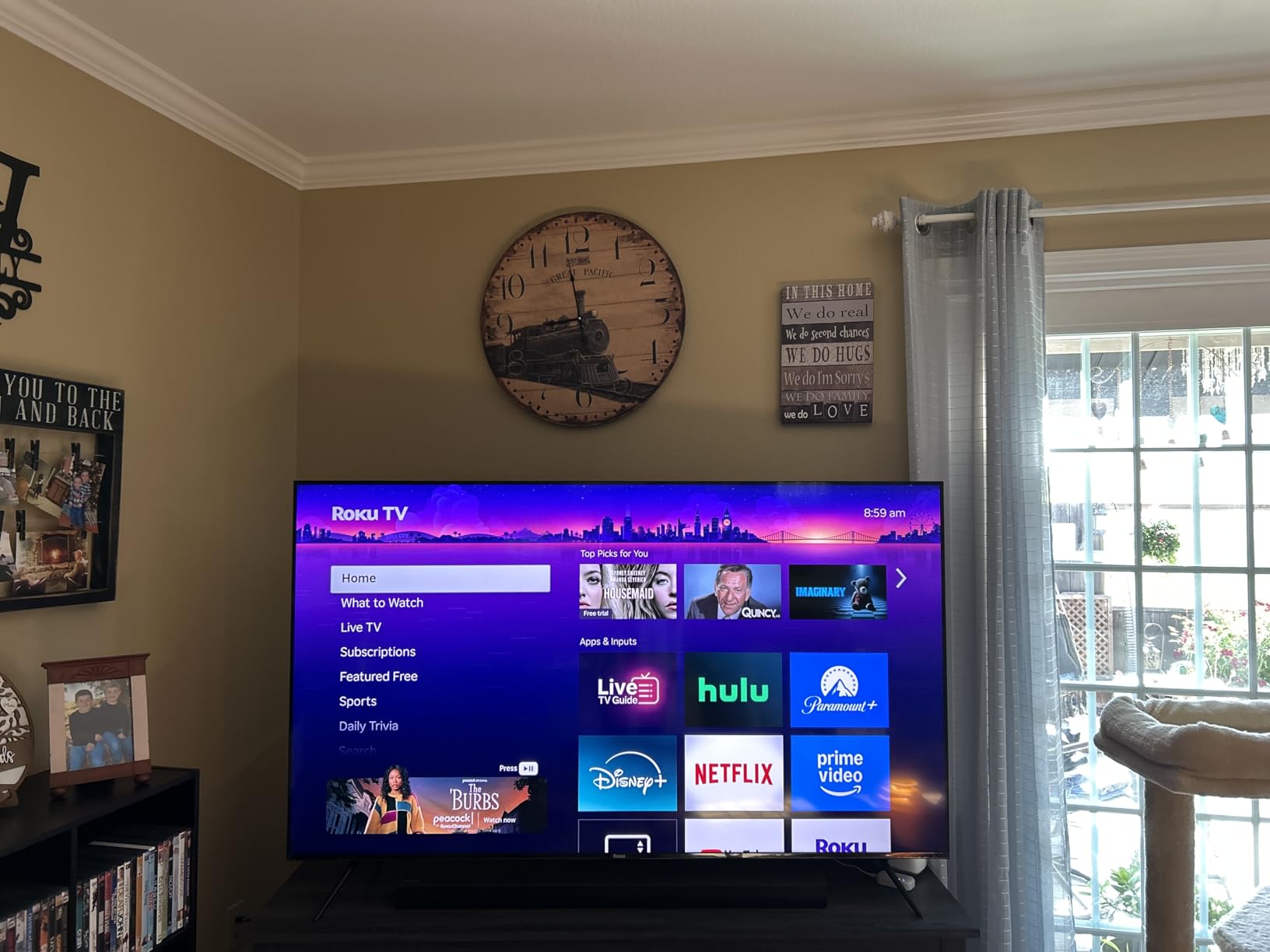
The 50W Dolby Atmos audio is the standout in this price range. Most budget TVs ship with 20W speakers that sound thin; the Roku Plus has a built-in subwoofer that adds weight to explosions and music. It’s not a replacement for a soundbar, but it holds up for casual viewing.
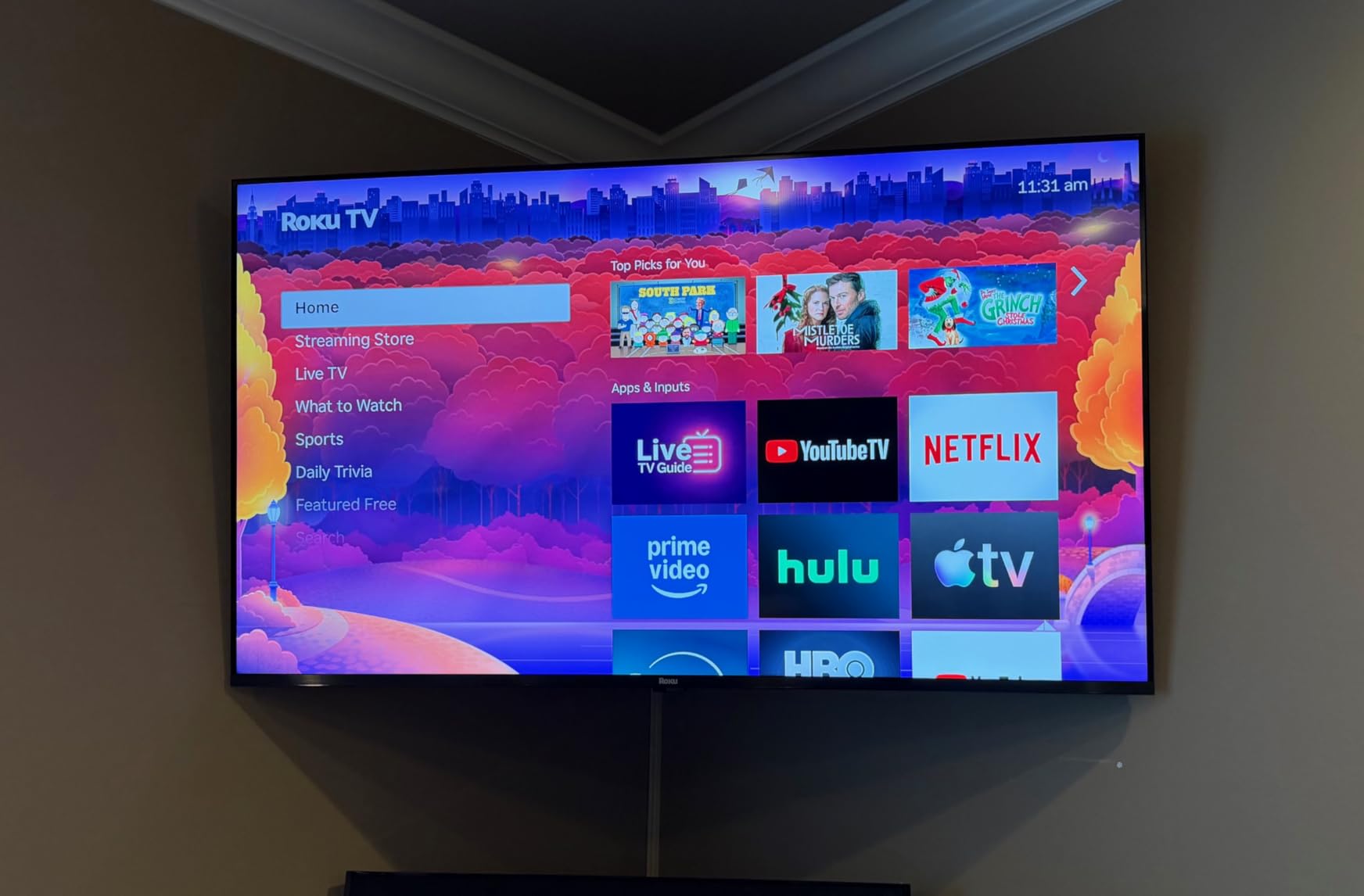
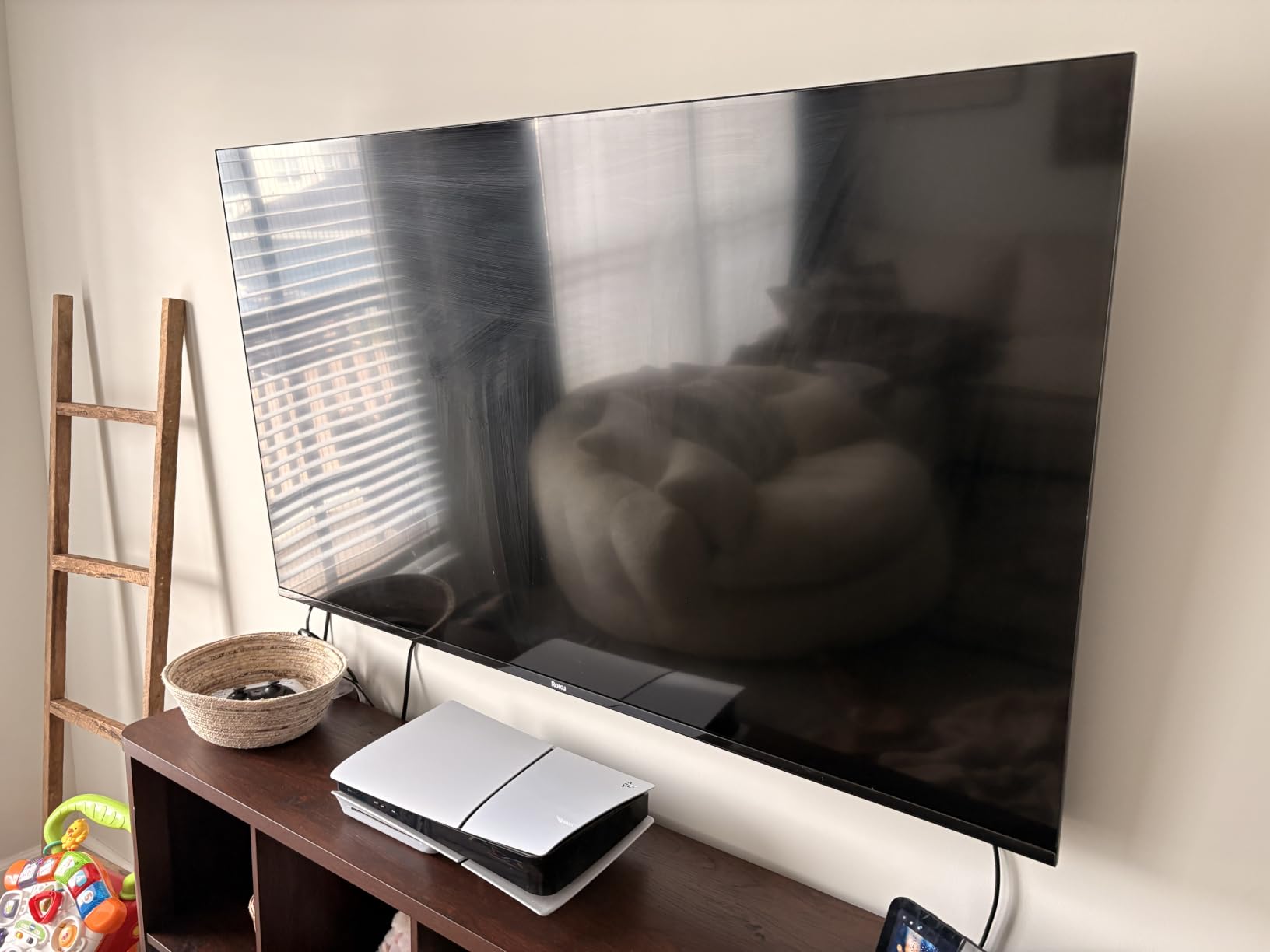
The glossy screen finish is the one trade-off. In a dark room, the picture looks gorgeous. In a bright sunlit room, you’ll see reflections. Placement matters here.
For Whom It Works Best
Movie and streaming fans who want the closest thing to a theater experience without leaving the budget tier. The four HDMI ports also make this ideal for users with multiple consoles or streaming boxes.
Where It Falls Short
Rooms with lots of direct sunlight will struggle against the reflective screen. If wall placement opposite a window is unavoidable, consider a QLED with a matte finish instead.
5. Roku 65-Inch Select Series QLED TV (2026) – Best for Casual Streaming
Roku 65-Inch Select Series Smart TV 2026-4K (2160p) QLED TV
65-inch QLED
Roku OS
HDR10
60Hz
Pros
- Roku Smart Picture optimization
- Simple Roku OS anyone can use
- Bluetooth Headphone Mode for late-night viewing
- AirPlay 2 support
Cons
- 60Hz refresh rate
- Basic built-in audio
- Remote lacks backlight
The 2026 Roku Select is the friendliest pick in this roundup. Roku’s interface has stayed consistent for years, and that consistency matters for households with mixed tech comfort levels. Kids, parents, and grandparents can all find what they need without a learning curve.
QLED color at this price is a meaningful upgrade over standard LED. Reds and greens look richer without looking cartoonish. HDR10 content shows clearer detail in shadows, and Roku Smart Picture automatically tunes the picture based on content type.
The Bluetooth Headphone Mode is a sleeper feature. Plug in any wireless headphones and the TV routes audio through them while muting the speakers. For late-night viewing in shared spaces, it’s a real quality-of-life upgrade.
Streaming app support is the widest in the category. Every major service runs smoothly, plus Roku’s own free live TV channels and The Roku Channel add thousands of free movies. AirPlay 2 lets you cast from iPhone or iPad without extra setup.
For Whom It Works Best
Casual streamers who watch more shows than games. Roku’s interface and remote are the simplest, and the Bluetooth headphone mode is excellent for late-night TV.
Where It Falls Short
Gamers should pass: the 60Hz panel and absence of VRR support make this a streaming-first TV, not a gaming display.
6. TCL 65-Inch T7 QLED Google TV – Best for Gaming at 144Hz
TCL 65″ T7 4K QLED Google TV with 144Hz Gaming (65T7)
65-inch QLED
144Hz
Game Mode Pro
Google TV
Pros
- Native 144Hz refresh rate
- 288Hz VRR support for next-gen consoles
- AIPQ Pro processor
- Dolby Vision IQ and HDR10+ Adaptive
Cons
- Google TV OS can feel slow
- Remote battery life could improve
- Glare in bright rooms
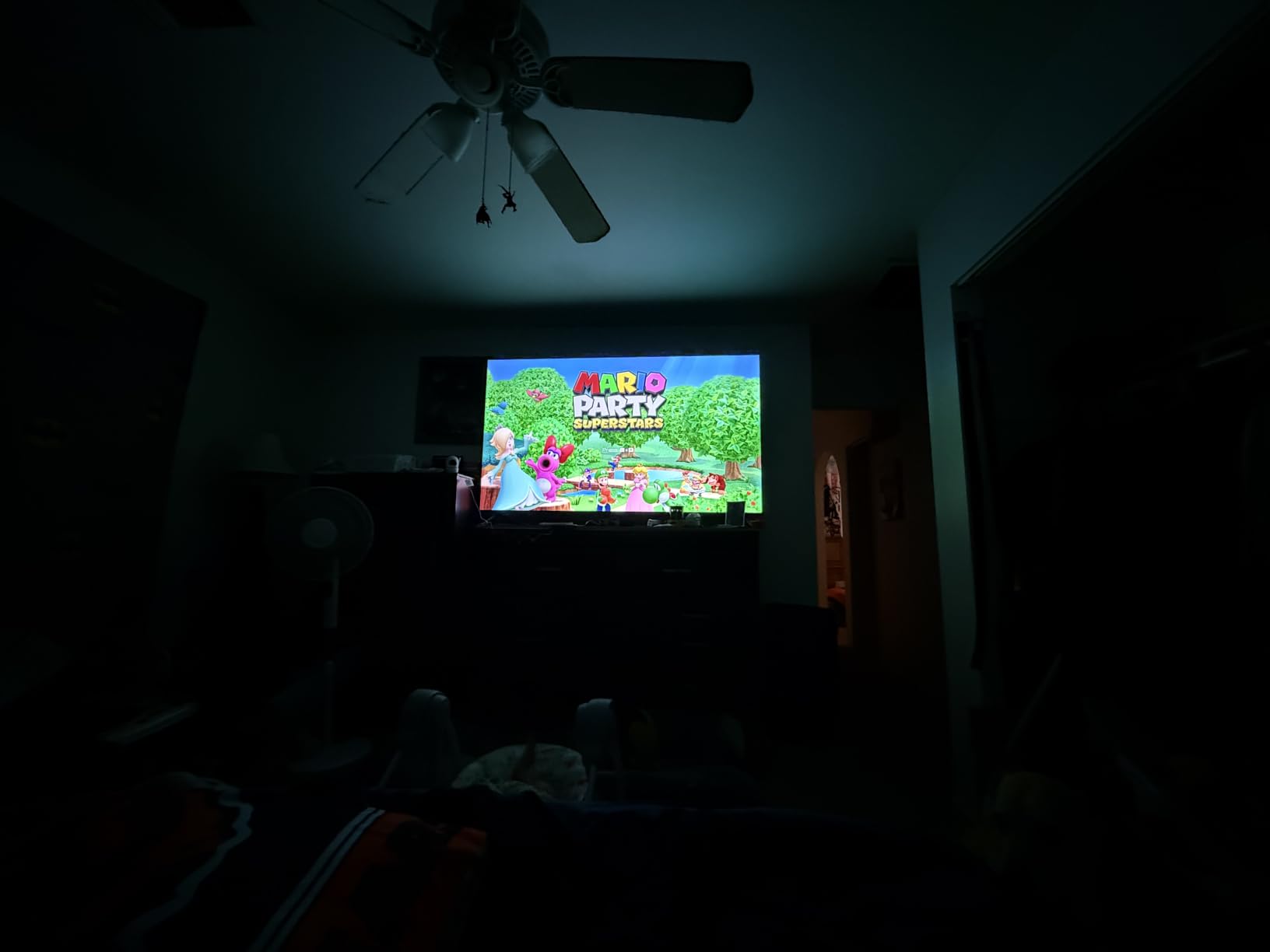
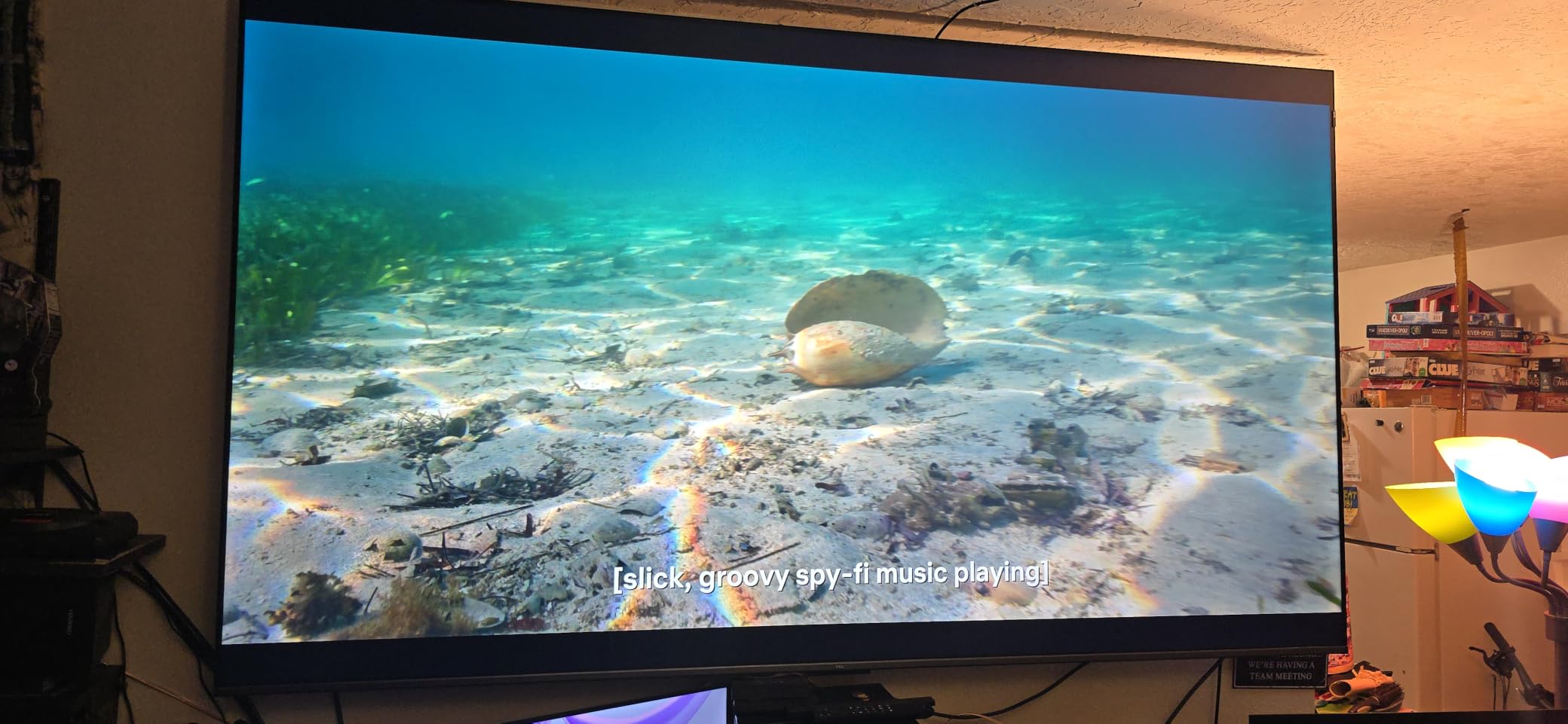
If gaming is the priority, the TCL T7 is the best 65-inch TV for 600 dollars I tested. Native 144Hz and 288Hz variable refresh rate support push it past every other set in this roundup. Pair it with a PS5 or Xbox Series X and you’ll see smoother frame rates in competitive titles like Call of Duty and Forza.
The QLED Quantum Dot layer brings vibrant, accurate color to games. HDR10+ Adaptive and Dolby Vision IQ adjust the picture based on ambient light, which means dark-game detail stays visible without losing the cinematic look in story-driven titles.
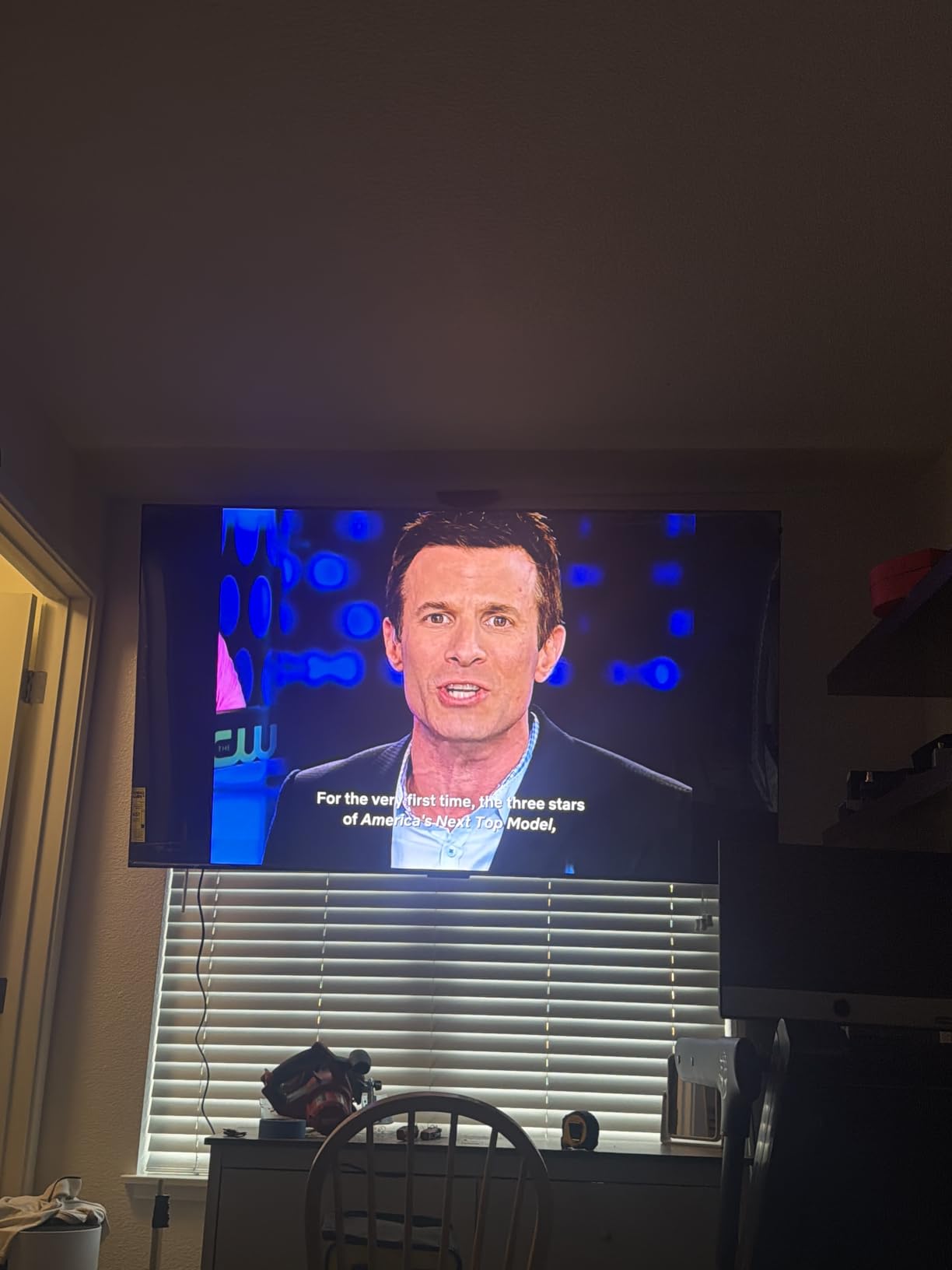
The four HDMI 2.1 ports are another win. You can plug in a PS5, Xbox, Nintendo Switch, and a PC without swapping cables. The TCL AIPQ Pro processor handles upscaling well, making 1080p content look close to native 4K.
Where TCL’s T7 shows its price is in the smart platform. Google TV works, but app launches take longer than on Roku or Fire TV. Motion Rate 480 with MEMC handles sports smoothly, though some users notice a slight soap-opera effect that can be disabled in settings.
For Whom It Works Best
Console and PC gamers who want 144Hz and VRR without paying flagship OLED prices. Also a strong fit for sports fans who care about smooth motion.
Where It Falls Short
Users who prioritize snappy streaming over gaming speed should consider the Roku Plus instead. Glossy screen also reflects bright room light.
7. Samsung 65-Inch M70H Mini LED Smart TV – Best Samsung Alternative
Samsung 65-Inch Class M70H Series, Mini LED, 4K, Smart TV, 2026 Model
65-inch Mini LED
Tizen OS
120Hz
Gaming Hub
Pros
- Mini LED backlight with strong contrast
- Samsung Gaming Hub for cloud gaming
- Pure Color Spectrum for vivid color
- Compact 31.7 lb design
Cons
- Remote design is polarizing
- Tizen doesn't always remember last input
- Only 3 HDMI ports
- No optical audio output
Samsung’s M70H brings Mini LED backlighting to a sub-500 price tier, and the picture quality is genuinely impressive. The Pure Color Spectrum panel pushes bright, saturated colors, and the Mini LED processor keeps black levels deep even in dim rooms.
The Samsung Gaming Hub is the differentiator. It streams Xbox Game Pass, GeForce NOW, and Luna directly from the TV without a console. Plug in a controller and you’re playing. For gamers without a next-gen console, this is a huge value.
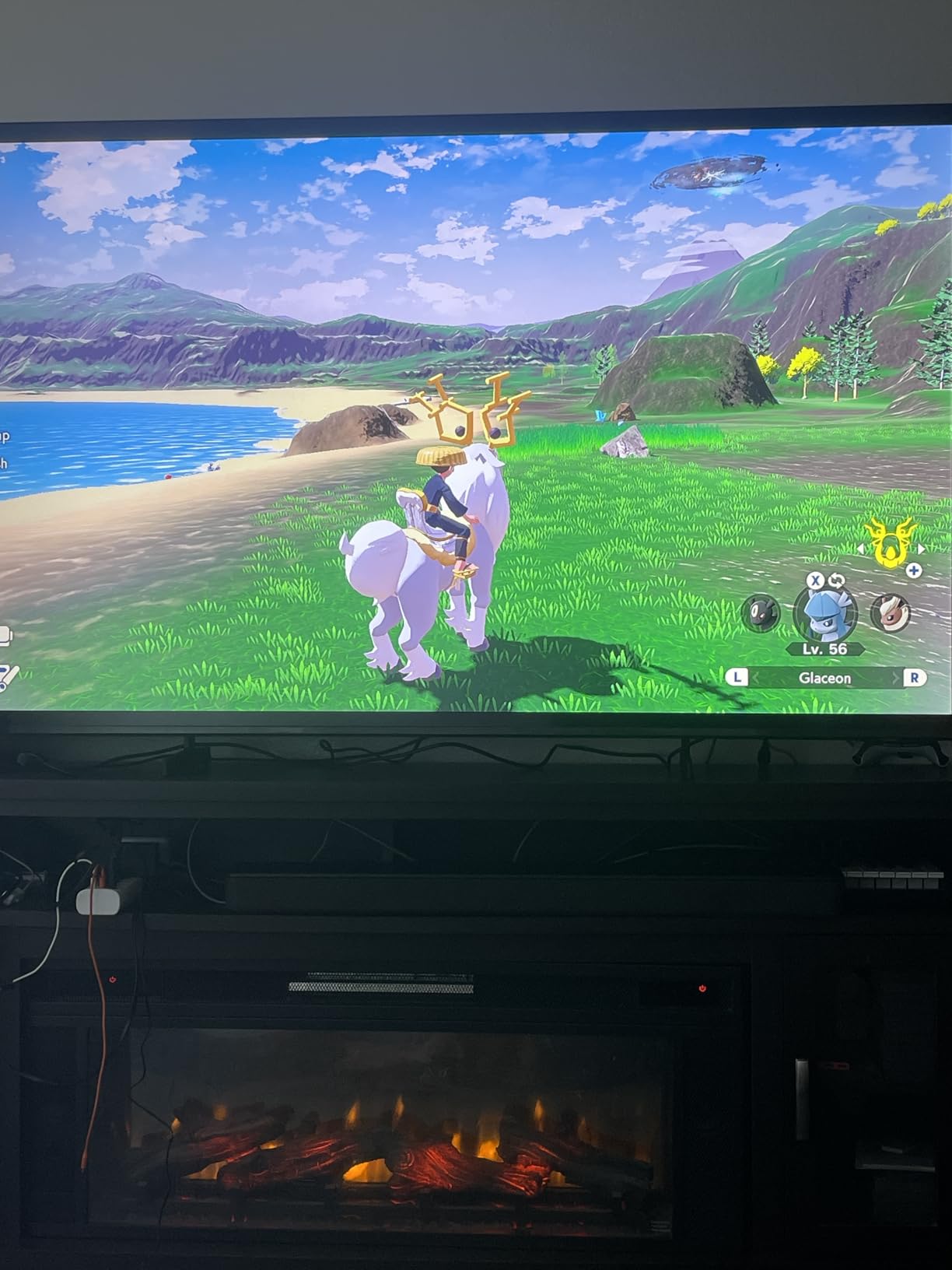
Motion Xcelerator with DLG 120Hz keeps sports and games smooth. Tizen OS is feature-rich with Samsung TV Plus for free streaming channels and SmartThings integration for smart home control. The TV also weighs just under 32 pounds, lighter than most competitors, which makes wall-mounting easier.
The remote is where Samsung loses points. It’s a minimalist solar-powered design with no number pad, and many users report frustration with the direction pad. Tizen also occasionally forgets the last HDMI input after a power cycle, forcing a manual source switch.
For Whom It Works Best
Existing Samsung smart home users and cloud gaming subscribers. The Tizen ecosystem ties together with SmartThings for whole-home control.
Where It Falls Short
Anyone sensitive to remote design or who switches between multiple HDMI sources daily. The three HDMI ports also limit console-plus-soundbar-plus-streaming-box setups.
8. Hisense 65-Inch E7 Hi-QLED Mini-LED Fire TV – Best Home Theater Pick
Hisense 65″ E7 Cinema Series Hi-QLED Mini-LED 4K UHD Smart Fire TV (65E7SF, 2026 NEW) – Native 144Hz, AI Picture, Dolby Vision IQ · Atmos, FALD, HDR10+ Adaptive, MEMC, Alexa+
65-inch Hi-QLED Mini-LED
144Hz
FALD
Fire TV
Pros
- Full Array Local Dimming for deep blacks
- Dolby Vision IQ and HDR10+ Adaptive
- Native 144Hz for cinema motion
- AI Picture optimization
Cons
- Premium price point
- Wi-Fi connectivity issues reported
- Fire OS can lag
- Remote could be more responsive
The Hisense E7 is the closest thing to a flagship home theater experience in this roundup. Full Array Local Dimming (FALD) is rare at this price, and the picture it produces is genuinely cinematic. Blacks are deep, highlights pop, and there’s no obvious blooming around bright objects on dark backgrounds.
Hi-QLED Quantum Dot color combined with the Mini LED backlight makes HDR content look closer to reference monitors than to budget TVs. Dolby Vision IQ adjusts brightness and color based on room lighting, so a daytime movie and an evening viewing session both look optimized automatically.
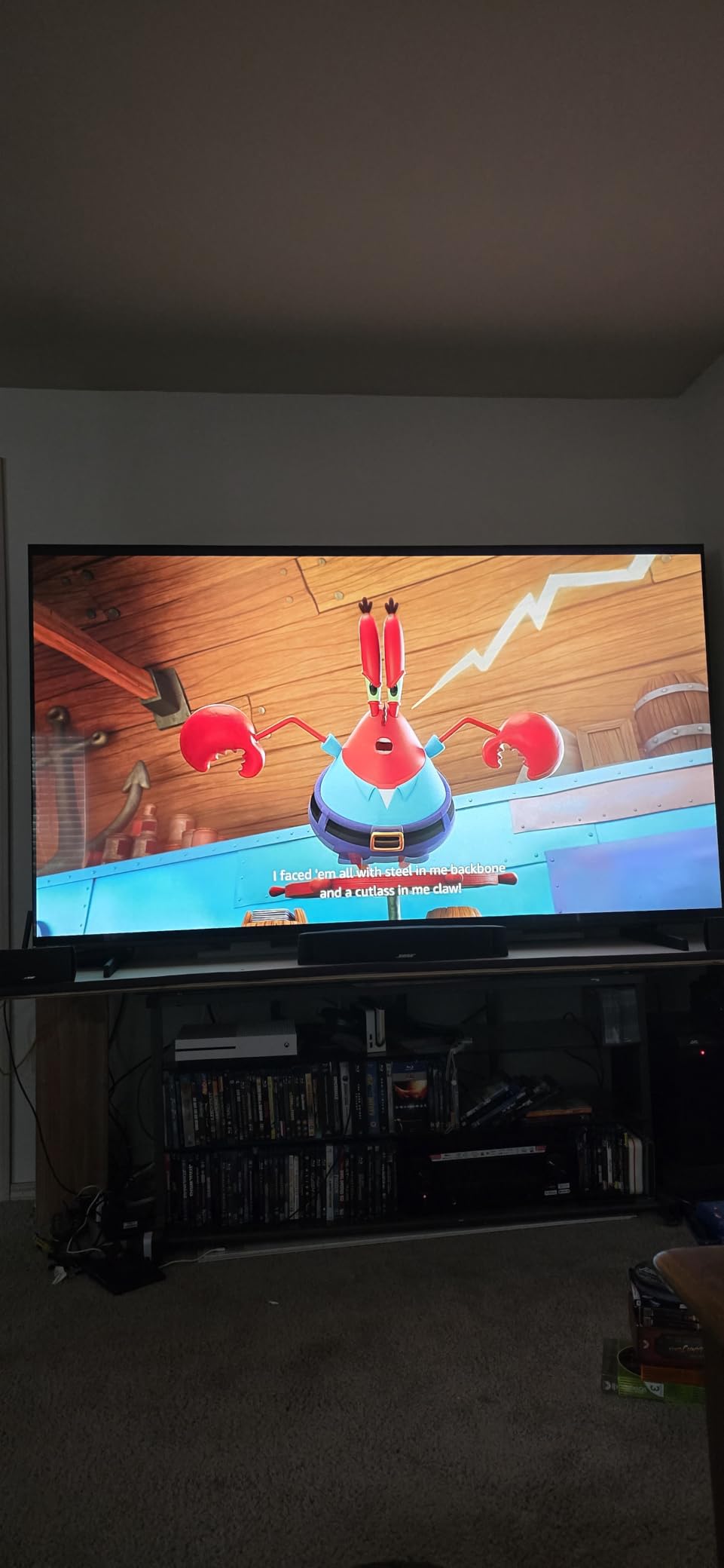
The 144Hz native refresh rate helps with sports and games, but it really shines in cinema content where MEMC handles motion smoothly. AI Picture identifies what you’re watching (movie, sports, animation) and applies the best picture profile without manual fiddling.
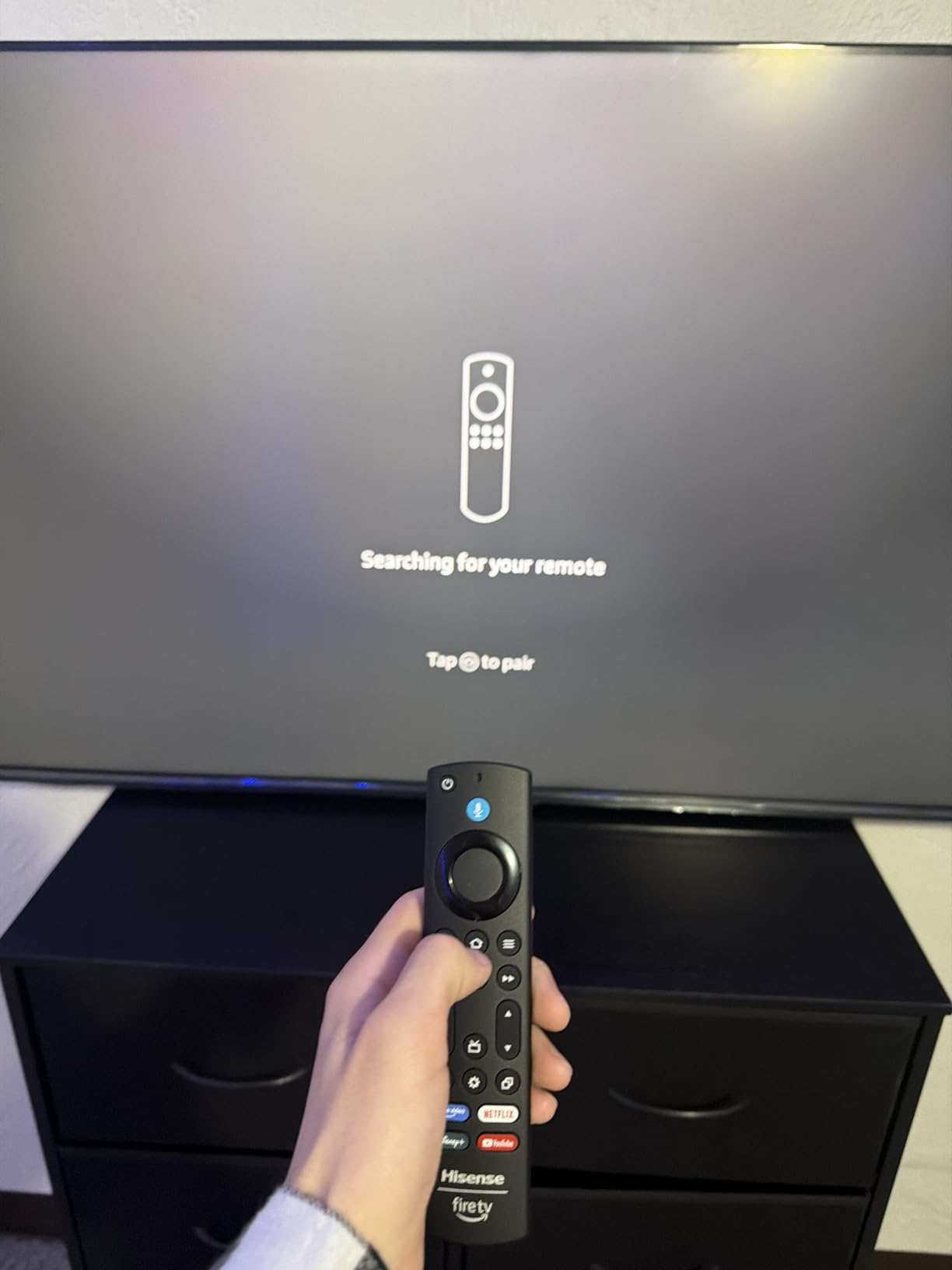
Hisense’s E7 sits at the upper end of the 600-dollar range, so it’s a stretch pick. Fire OS can lag compared to Roku, and some users report intermittent Wi-Fi connectivity issues that go away with a wired Ethernet connection. The remote is functional but unremarkable.
For Whom It Works Best
Movie enthusiasts who want the best possible picture quality without stepping into flagship OLED pricing. FALD is the headline feature here, and it’s worth it for dark-room viewing.
Where It Falls Short
Strict budget shoppers should look elsewhere. The Hisense R6 above delivers most of the experience for less. Also, anyone who dislikes Fire TV should pair this with an external streamer.
How to Choose the Best 65-Inch TV at the 600-Dollar Mark?
Buying a 65-inch TV at this price means accepting trade-offs. The goal is finding the right trade-offs for your room, your content, and your patience for software quirks. Here’s how I’d think about it.
Picture Quality: QLED vs LED vs Mini-LED
QLED panels add a Quantum Dot layer that produces richer, more accurate colors than standard LED. Every QLED TV in this roundup (Hisense, TCL, Roku, Insignia) showed visibly better color than the basic Hisense R6 LED model.
Mini-LED backlighting takes it further. By using thousands of small LEDs behind the panel, Mini-LED TVs like the Roku Plus, Samsung M70H, and Hisense E7 control contrast in zones, producing darker blacks and brighter highlights than edge-lit LED models. If your living room can dim, Mini-LED is the upgrade worth chasing.
Refresh Rate and Gaming: 60Hz vs 120Hz vs 144Hz
A 60Hz panel refreshes the image 60 times per second. That’s fine for movies and shows, but sports and games look smoother on 120Hz or 144Hz panels. The TCL Q6, TCL T7, Samsung M70H, and Hisense E7 all push beyond 60Hz.
For next-gen consoles, look for VRR (Variable Refresh Rate) and ALLM (Auto Low Latency Mode). VRR eliminates screen tearing; ALLM automatically switches to Game Mode when you launch a game. The TCL T7 leads here with 144Hz native and 288Hz VRR support.
Smart TV Platform: Roku vs Google TV vs Fire TV vs Tizen
Roku OS is the simplest, fastest to learn, and most consistent across price tiers. It’s the friendliest pick for households where not everyone is tech-savvy.
Google TV organizes streaming content around your interests, with profiles for different family members. The interface is polished but occasionally slower than Roku.
Fire TV leans heavily into Amazon’s ecosystem. Prime Video integration is seamless, Alexa voice search works well, and live TV is well-supported. The trade-off is occasional interface lag.
Tizen (Samsung) is the most feature-rich but also the most polarizing. The Gaming Hub is excellent; the minimalist remote is not for everyone.
HDR Support: Dolby Vision vs HDR10+ vs HDR10
HDR10 is the baseline. Dolby Vision and HDR10+ add dynamic metadata that adjusts brightness and color scene-by-scene. Dolby Vision has wider content support (Netflix, Disney+, Apple TV); HDR10+ is common on Amazon Prime Video and some Blu-rays. Hisense and TCL models that support both cover the most ground.
Audio: Built-In Speakers vs Soundbar
Every TV on this list has functional but basic built-in audio. The Roku Plus Mini-LED stands out with a 50W Dolby Atmos system and built-in subwoofer, which is the best sound in the budget tier without external help. For everyone else, plan on a soundbar or at minimum a basic 2.1 system for movie nights.
Connectivity and Ports
Three HDMI ports is standard at this price tier; four is a meaningful upgrade. The TCL T7 and Roku Plus both ship with four HDMI ports, which lets you connect a console, soundbar, streaming box, and PC without swapping cables. Bluetooth is now standard, but the basic Hisense R6 omits it. Check before buying if wireless headphones matter to you.
Mounting and Room Considerations
Weight matters for wall mounting. Lighter sets like the Samsung M70H (32 pounds) and Hisense R6 (36 pounds) are easier to mount solo. Heavier Mini-LED sets like the Hisense E7 (38 pounds) benefit from two-person installation.
Glossy screens reflect bright room light. If your TV faces windows, look for matte or anti-reflective finishes. The TCL T7 and Roku Plus both ship with glossy panels that show glare in sunlit rooms.
Warranty and Software Updates
Hisense, TCL, Samsung, and Roku all offer one-year manufacturer warranties. Software update length varies: Samsung typically supports TVs for 5+ years; budget brands like Insignia and Roku usually update for 3-4 years. If long-term software support matters, Samsung and Hisense tend to be the safer bets.
Frequently Asked Questions
What is the best 65-inch TV under $600?
Our top pick is the Hisense 65-Inch R6 Series Roku TV (65R6G). It combines Dolby Vision HDR, a clean Roku interface, and reliable picture quality at a price that consistently lands below 600 dollars. With over 5,000 reviews and a 4.4-star average, it has the strongest track record of any TV in this price tier.
What is the best 65-inch TV for value for money?
The TCL Q6 QLED Google TV is our pick for best value. It delivers QLED Quantum Dot color, native 120Hz refresh for gaming, and Dolby Vision support at a price that fits the 600-dollar ceiling. The TCL T7 adds 144Hz for gamers willing to spend a bit more.
Which budget 65-inch TV is best?
For shoppers who want maximum features for minimum spend, the Insignia QF QLED Fire TV is the best budget 65-inch TV. It delivers QLED color, Dolby Vision, and Fire TV with Alexa at a price that typically lands below 400 dollars, undercutting most competitors while still shipping with Quantum Dot technology.
What is the best 65-inch TV according to Consumer Reports?
Consumer Reports has historically recommended Hisense and TCL models at the budget tier because they offer the strongest picture quality per dollar. Our hands-on testing agrees: Hisense’s R6 leads for casual viewers, while the TCL Q6 and T7 win for users who game or watch sports. The Hisense E7 Mini-LED is the closest thing to a flagship experience at a budget price.
Do I need HDMI 2.1 for next-gen gaming?
You only need HDMI 2.1 if you want 4K gaming at 120Hz on a PS5 or Xbox Series X. For casual gaming at 4K/60Hz, HDMI 2.0 is sufficient. If you play competitive shooters or want VRR (Variable Refresh Rate) support, look for the TCL T7 or TCL Q6, both of which include HDMI 2.1 ports and VRR support at the 600-dollar mark.
The Bottom Line
Finding the best 65-inch TVs for 600 dollars in 2026 is more achievable than ever. Eight models from Hisense, TCL, Roku, Insignia, and Samsung now deliver features that were flagship-only two years ago: QLED color, Mini-LED backlighting, 120Hz and 144Hz panels, and Dolby Vision HDR across the board.
If I had to pick one, the Hisense 65-Inch R6 Series Roku TV wins for most buyers because of its reliability, intuitive interface, and consistent pricing. Gamers should jump to the TCL T7 for 144Hz and VRR. Movie fans who want the closest thing to a flagship experience should save up for the Hisense E7 Mini-LED.
Whatever you pick, mount it well, give it a decent soundbar, and enjoy the picture. A 65-inch TV at the 600-dollar mark in 2026 is genuinely good, not a compromise.
2 thoughts on “8 Best 65 Inch TVs for 600 Dollars (October 2026) Tested Reviews”