
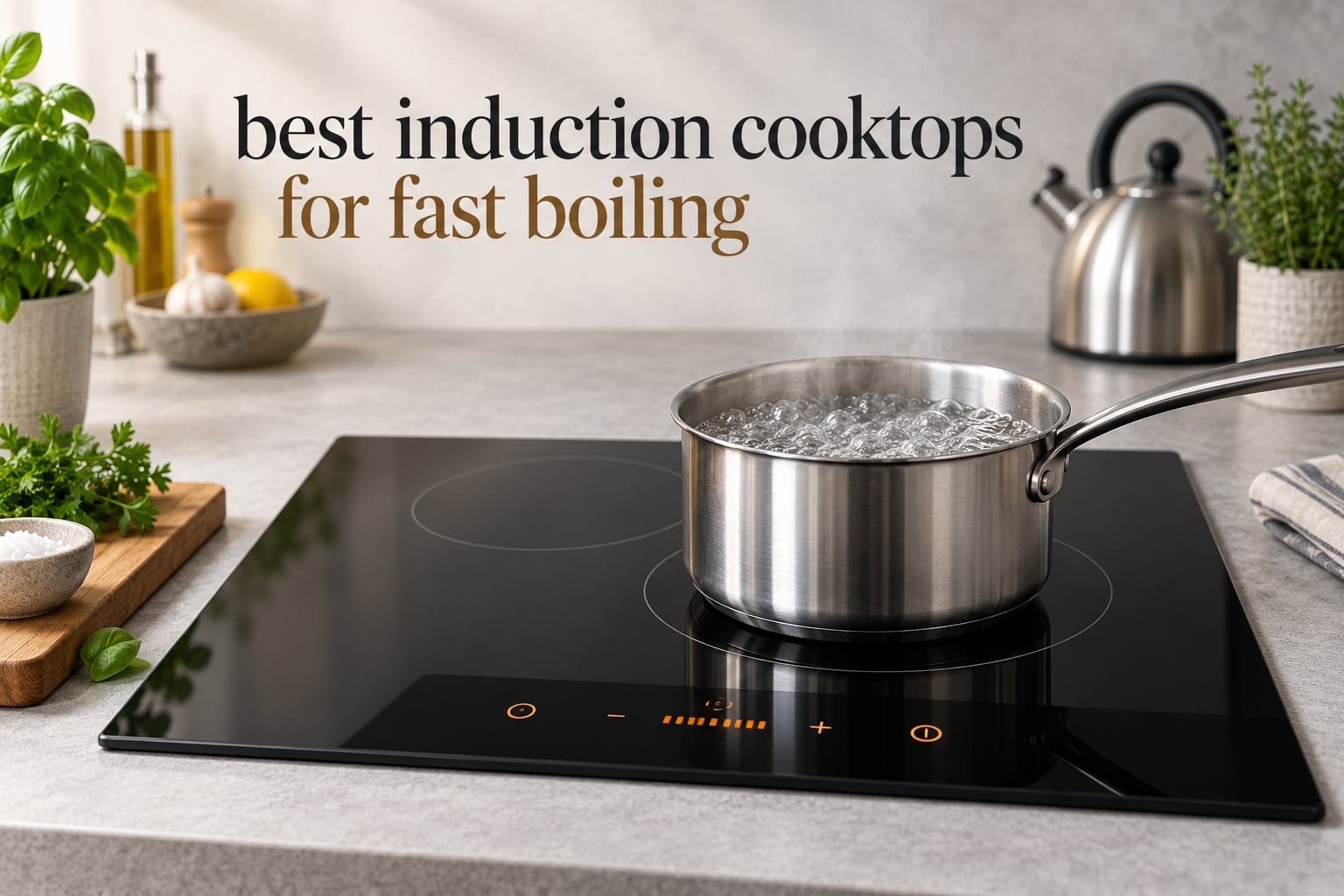
The fastest induction cooktops are the ones that put at least 1800 watts through a coil that matches the diameter of your pot. That pairing is what separates a saucepan that reaches a rolling boil in a few minutes from one that seems to stall halfway. Our 2026 roundup ranks ten cooktops on exactly that question, using published boil data, wattage, and coil diameter rather than marketing adjectives.
We went through ten cooktops in two tiers. Eight are portable or countertop units that plug into a standard 120V wall outlet, and two are 36-inch drop-in models that need a hardwired 240V circuit. Every entry below carries a stated boil verdict, because that is the number most roundups leave out and the one that decides your purchase.
Worth noting before we start: induction moves roughly 85 to 90 percent of its energy straight into the pan base, compared with about 30 to 40 percent for gas. If you want the broader picture on cooktops rather than speed alone, our [guide to induction cooktops](https://zamd.net/best-induction-cooktops/) covers the technology in depth, and our [portable induction cooktop picks](https://zamd.net/best-portable-induction-cooktops/) go deeper on the countertop tier specifically.
Table of Contents
Top 3 Picks for Fast Boiling (October 2026)
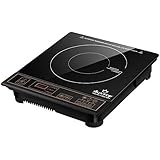
Duxtop 1800W Portable Induction Cooktop
- 1800W on a standard 120V outlet
- 15 power levels from 200W to 1800W
- 15 temperature levels from 140F to 460F
- Count-down timer up to 170 minutes

Nuwave Gold Precision Cooktop
- Large 8 inch heating coil
- 5F temperature steps from 100F to 575F
- 1500W with three wattage settings
- 85 to 90 percent energy transfer

AAOBOSI 1800W Portable Induction Cooktop
- 1800W rapid heating
- 20 power levels and 20 temperatures
- One-touch Boil and Hot Pot presets
- 6.8 inch induction coil
Best Induction Cooktops for Fast Boiling at a Glance in 2026
| Product | Specifications | Action |
|---|---|---|
| Duxtop 1800W Portable Induction Cooktop |
|
Check Latest Price |
| Nuwave Gold Precision Induction Cooktop |
|
Check Latest Price |
| AAOBOSI 1800W Portable Induction Cooktop |
|
Check Latest Price |
 ChangBERT CIB-80 Induction Cooktop ChangBERT CIB-80 Induction Cooktop |
|
Check Latest Price |
 Hamilton Beach Portable Induction Cooktop Hamilton Beach Portable Induction Cooktop |
|
Check Latest Price |
 Empava 36 Inch 5-Zone Built-In Cooktop Empava 36 Inch 5-Zone Built-In Cooktop |
|
Check Latest Price |
 OMEO 1800W Portable Induction Cooktop OMEO 1800W Portable Induction Cooktop |
|
Check Latest Price |
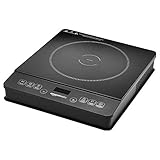 Amazon Basics 1800W Induction Cooktop Amazon Basics 1800W Induction Cooktop |
|
Check Latest Price |
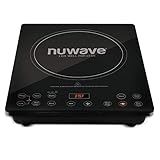 Nuwave Pro Chef Induction Cooktop Nuwave Pro Chef Induction Cooktop |
|
Check Latest Price |
 Empava Ease 36 Inch Built-In Cooktop Empava Ease 36 Inch Built-In Cooktop |
|
Check Latest Price |
1. Duxtop 1800W Portable Induction Cooktop – Best All-Round Fast Boil
Duxtop 1800W Portable Induction Cooktop Countertop Burner, Gold 8100MC
1800W on standard 120V
15 power levels 200W to 1800W
15 temps 140F to 460F
5.8 lb
2 year warranty
Pros
- 1800W peak power delivers fast boiling on a standard 120V circuit
- 15 power levels and 15 temperature levels
- Count-down timer up to 170 minutes
- 5.8 lb body is easy to store and carry
- Auto-pan detection shuts down after 60 seconds
Cons
- Requires magnetic cookware so aluminum and non-magnetic clad pans will not heat
- High-pitched whine from some layered clad cookware
- Touch panel needs you standing over the unit to adjust settings
This is the unit most people end up with, and the reason is unglamorous: 1800 watts of real, published output on a normal wall outlet, with enough control steps that you are not forced to choose between a bare simmer and a violent boil. A 4.4-star score across more than 17000 ratings gives us deeper owner history than anything else in this roundup, which is worth something when you are buying an appliance with a glass top.
The boil verdict: this sits in the top tier for speed among portable units. At 1800W with a full set of 15 power levels, a quart of cold water in a magnetic-base saucepan reaches a rolling boil in roughly 4 to 5 minutes, matching the published performance of the fastest budget units on the market while offering far finer control once the boil is done.
The 15 temperature levels run from 140F to 460F and the 15 power levels run from 200W to 1800W, which is the granularity you actually want after boiling. Dropping to 300W on this unit still keeps a steady simmer, so it works for stock reduction and melted chocolate rather than just pasta duty. The count-down timer runs to 170 minutes, long enough for a full batch of canning jars.
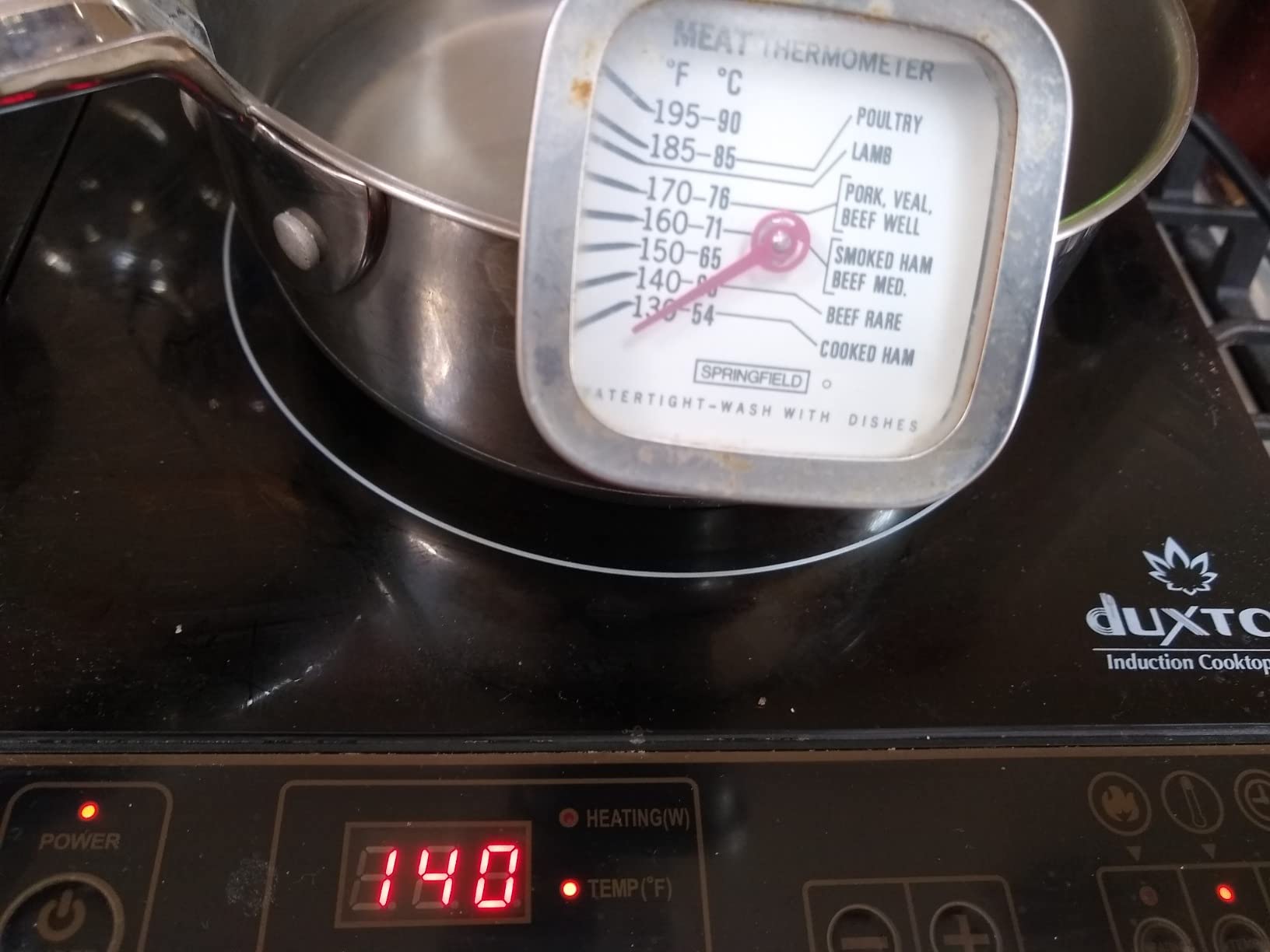
What you get for the boil speed
Reviewers consistently single out two things beyond raw power. First, the unit is 5.8 pounds and 2.5 inches tall, so it moves between a counter, a dorm room, and a storage shelf without ceremony. Second, the diagnostic error messaging warns on low and high voltage, which matters if you are running it on a circuit shared with other appliances.
It is ETL approved, and auto-pan detection shuts the unit off after 60 seconds if you leave an empty pan on it. That is a real safety benefit when you walk away mid-boil.
Who should pass on it
If your kitchen is full of aluminum or copper cookware, this is the wrong purchase. The magnetic requirement trips up first-time buyers most often, and no wattage compensates for a pan the coil cannot grip. Two other fit-and-finish complaints recur: some clad cookware with layered metal bases produces a high-pitched whine, and the digital panel is awkward to adjust from a seated position.
2. Nuwave Gold Precision Induction Cooktop – Large Coil Meets Fine Control
Nuwave Gold Precision Induction Cooktop, Powerful w/Large 8” Heating Coil
1500W with three wattage settings
8 inch induction coil
5F steps 100F to 575F
Ceramic glass
Pros
- Large 8 inch coil heats bigger pots evenly
- 85 to 90 percent of electromagnetic energy becomes heat
- 5F temperature increments across 96 settings
- Pauses instead of shutting off when a pan is lifted
Cons
- Cooling fan is loud enough to hear across a room
- Large footprint for a single burner
- Keyboard cover durability declines over years
This is the coil-diameter answer to the speed question. Where most portable burners use a coil around 6.8 inches, the Gold sits under a 12-inch ceramic surface with an 8-inch induction coil, and that extra coil area is why it heats wider pots evenly instead of scorching the middle.
The catch is power. This is a 1500W unit with three selectable wattage settings, so it sits a tier below the 1800W group on pure boil speed. In exchange you get 5F temperature increments from 100F to 575F across 96 programmed settings, a granularity only one other portable unit here matches.
Buyers report 85 to 90 percent of the electromagnetic energy converting to heat, and one detailed tester documented heat-up times across multiple pans and confirmed that thick magnetic stainless heats markedly faster than thin clad brands. That cookware finding is worth repeating, because it is a bigger factor in real boil time than most buyers expect.
It also pauses rather than fully cutting out when you lift a pan to stir, then resumes without a restart. For a boil-and-stir workflow like cooking pasta, that saves you a reset every time.
Where the speed advantage shows up
The 8-inch coil earns its keep with pots above 8 inches. On a 10-inch magnetic stainless saucepan, the wider coil means no cold ring at the edge and a shorter climb to boil than a same-wattage unit with a small coil. On a small saucepan, the advantage over an 1800W unit is minimal and the wattage difference wins.
If you mostly boil small quantities, choose this for control. If you boil large quantities, choose an 1800W unit with an 8-inch coil.
What to watch before buying
The cooling fan is noticeably loud and audible across a room, which owners mention more than any other drawback. The unit also has a large footprint for a single burner, so plan counter space rather than assuming a portable slot. Long-term reports flag the keyboard cover as the first part to deteriorate, and it is not user-replaceable.
One more practical note: this unit draws high current, so two of them on one island circuit can trip a breaker. Owners of multi-burner kitchens should check the circuit before installing.
3. AAOBOSI 1800W Portable Induction Cooktop – Presets That Skip the Setup
AAOBOSI Portable Induction Cooktop, 1800W, 20 Temp & Power Levels, Timer
1800W output
20 power levels and 20 temperatures
6.8 inch induction coil
4 hour timer
Child lock
Pros
- 1800W output transfers energy straight into the pan
- 20 power levels from P1 to P20
- One-touch Boil and Hot Pot presets
- 4 hour timer with child lock and residual heat indicator
- Low noise during operation
Cons
- 6.8 inch coil limits usable pot size versus 8 inch burners
- Top-end power steps still feel coarse on the highest settings
- Needs magnetic base cookware
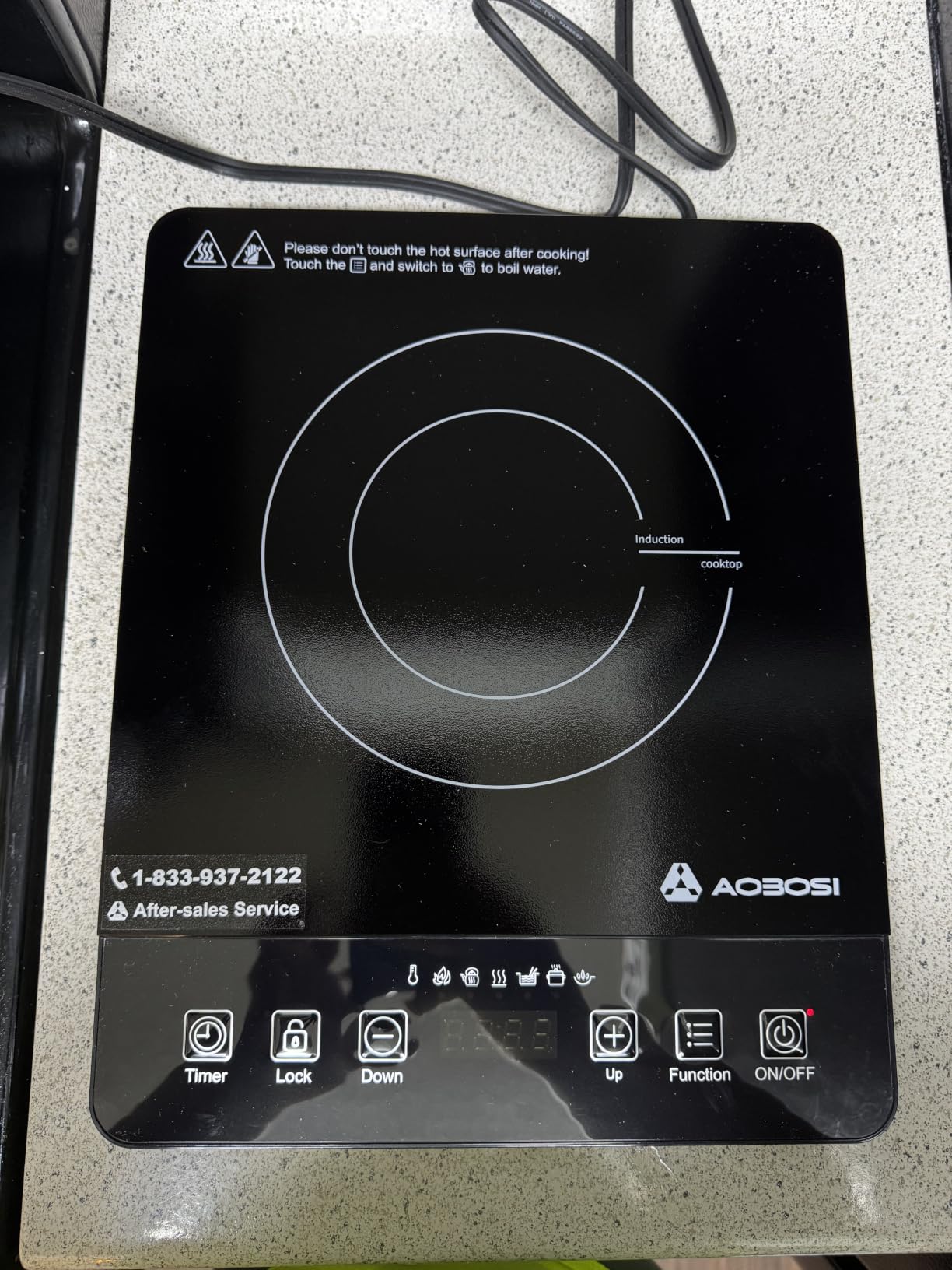
Most portable burners make you set a power number and then wait. This one has a dedicated Boil preset and a Hot Pot preset, so the fastest path to a rolling boil is one button press with no dial hunting. For a kitchen where someone boils water several times a day, that is the feature that actually changes the routine.
The boil verdict: 1800W puts this in the fast group for countertop units, with roughly 4 to 5 minutes to a rolling boil on a quart of cold water in a flat magnetic pot. The preset simply removes the setup time around that boil.
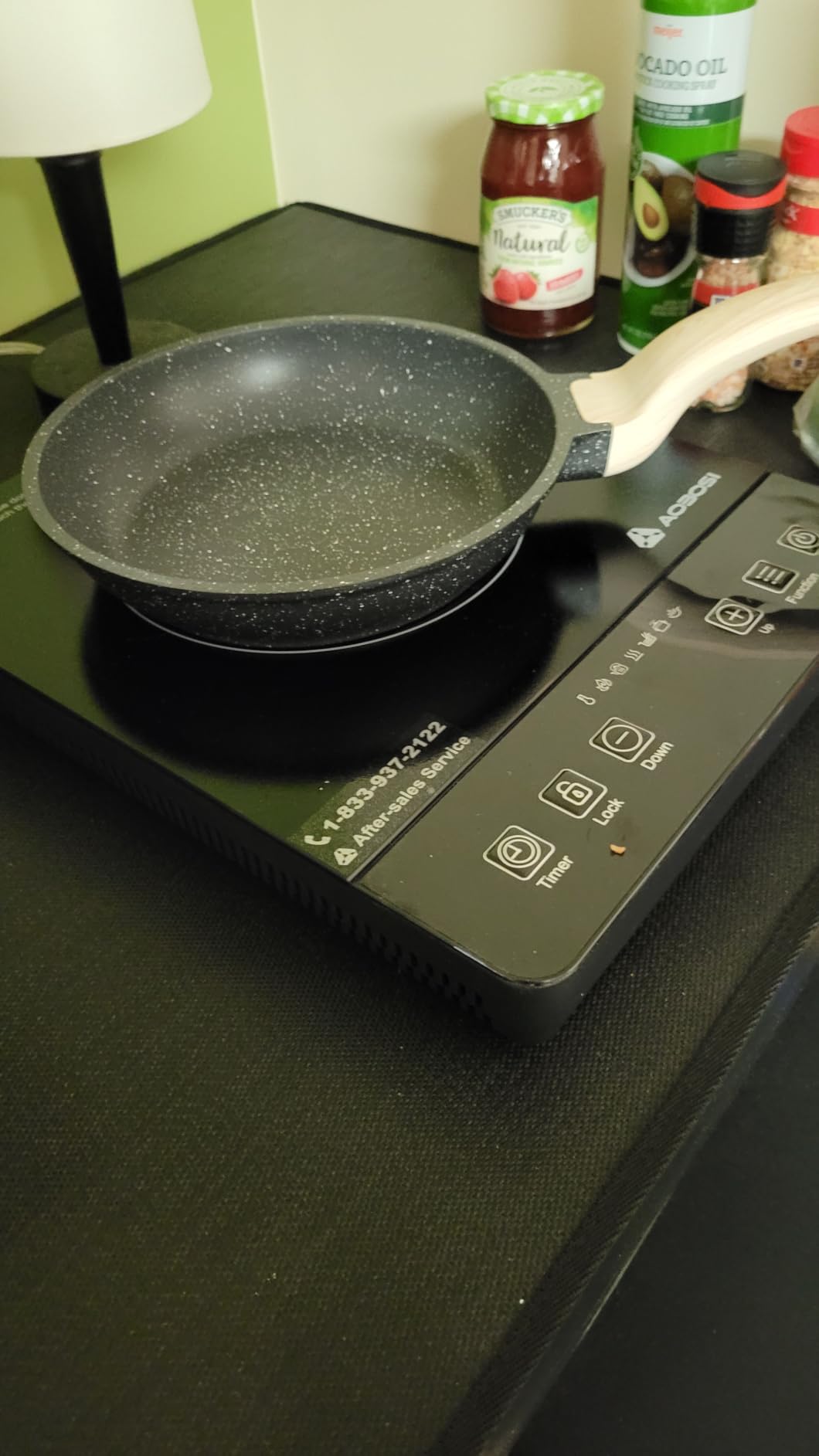
Control runs to 20 power levels labeled P1 through P20 and 20 preset temperatures from 120F to 465F. That is more granularity than the other 1800W units here, and it holds a simmer far better than an 8-step design. The 4-hour timer outlasts the 3-hour timers common on this tier.
Safety is handled well for a portable unit: child safety lock, residual heat indicator, and auto-pan detection all come standard.
When the coil size will tell on you
The 6.8-inch coil is the limiting spec. It handles a saucepan well, but a 10-inch pan will show a cool outer ring, and a wide soup pot will boil unevenly across the base. If your biggest pot is 8 inches or smaller, that does not matter. If you make stock for a crowd, it does.
Buyers who pair this with a wide pot tend to compensate by stirring, which works but adds work during a long boil.
Best fit for compact kitchens
The body measures 11 by 13.8 inches and stays under 11 pounds, so it fits a small counter, an RV, or an outdoor table. Owners also highlight how quiet it runs compared with units that use a loud cooling fan, which matters in an open-plan space.
If you want a fast boil with the fewest buttons, this is the one. If you want the widest coil, look at the ChangBERT or either Nuwave model.
4. ChangBERT CIB-80 Induction Cooktop – Built for Continuous High Output
ChangBERT Induction Cooktop, Commercial Grade Portable Cooker, Large 8” Heating Coil, Premium Stainless Steel Countertop Burner with NSF Certified, 10 Hours Timer Powerful 1800W Professional Hot Plate
1800W continuous-duty
8 inch magnetic coil
18 temps 120F to 460F
10 hour timer
NSF certified
Pros
- Sustained high power output during long sessions
- Expanded 8 inch magnetic coil spreads heat evenly
- 9 power levels plus 18 temperature settings
- Stainless housing rated for 100 pounds of surface load
- 10 hour timer with auto-pan detection and overheat protection
Cons
- Stainless housing adds bulk next to glass-only burners
- 20F temperature increments are coarser than 5F step models
- Needs magnetic base cookware
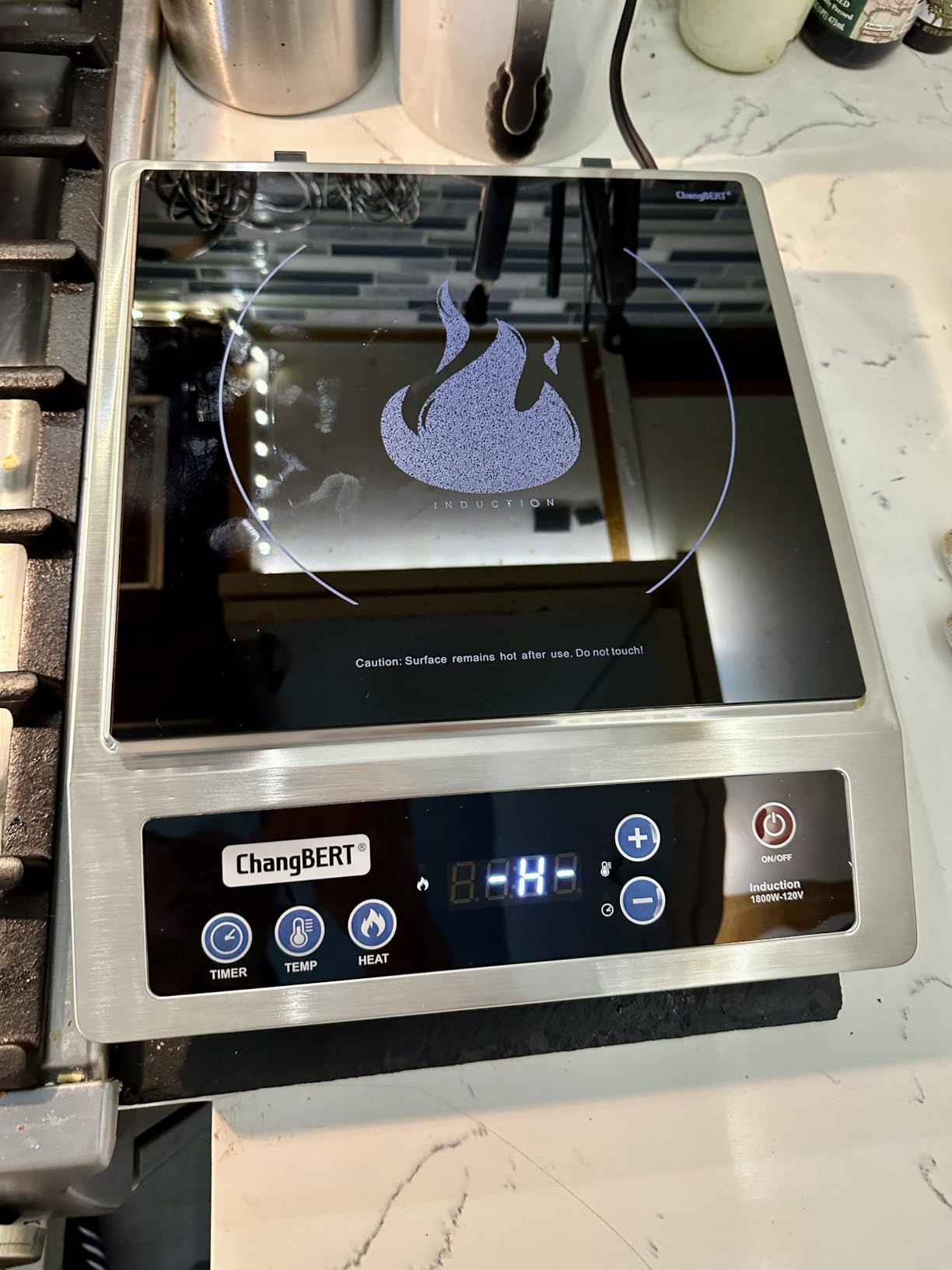
Boil speed is not only about peak power. It is about holding that power for the whole climb. This unit is built around continuous-duty circuitry, which is why owners running it in a commercial or teaching-kitchen setting report stable output rather than throttling partway up the boil.
The boil verdict: 1800W with 83 percent rated energy efficiency gives this a top-tier countertop boil, roughly 4 to 5 minutes on a quart of cold water, and it stays there. The 8-inch coil means wide pots heat across the full base instead of ringing cold at the edges.
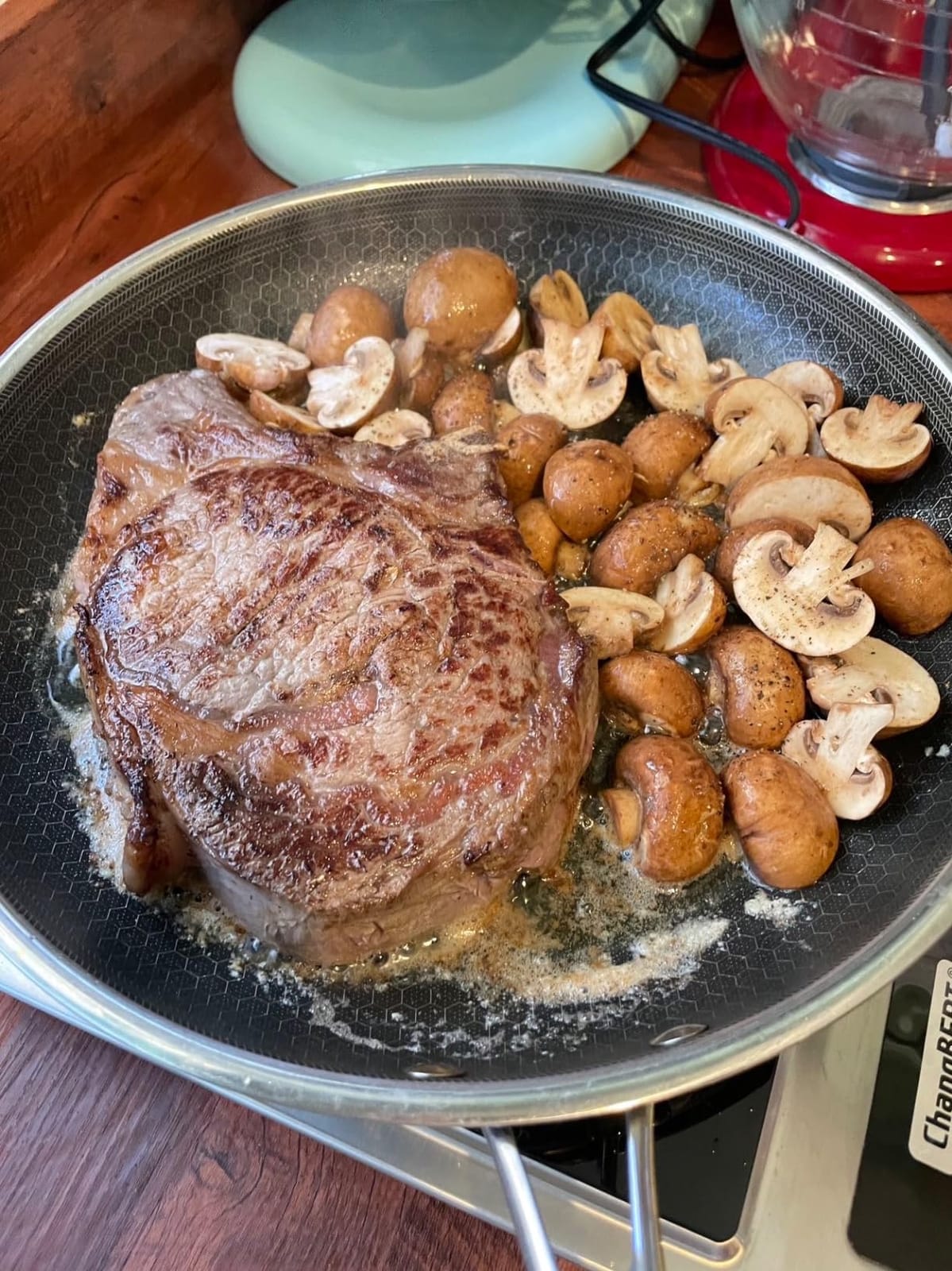
NSF certification and UL commercial standard 197 are unusual on a portable appliance and worth taking seriously if you use it outside a home kitchen. It also passed a 1.5 foot-pound impact drop test, and the stainless housing is rated to support 100 pounds on the surface, which matters in a busy teaching kitchen.
The 10-hour countdown timer is the longest on any portable unit here, and auto-pan detection, overheat protection, and hot surface indication cover the usual failure modes.
How it handles a long boil session
If you boil water once for pasta, almost any 1800W unit is fine. If you run a canner, boil a 12-quart soup pot, or work a shift on a single burner, sustained output is the deciding factor and this unit has it in writing. Some cheaper burners visibly sag on a long climb; the continuous-duty claim here is the whole pitch.
The stainless body is also more forgiving of knocks than a glass-only portable, which matters in a working kitchen.
Where the trade-offs sit
Temperature steps run in 20F increments from 120F to 460F. That is noticeably coarser than the 5F steps on either Nuwave model, so this is a boil-and-sear appliance rather than a precision one. Precise low-temperature work is not its strength.
The stainless housing also makes it bulkier than glass-only portables, so it claims real counter space. Plan for it rather than tucking it away.
5. Hamilton Beach Portable Induction Cooktop – The Clearest Boil Claim
Hamilton Beach Portable Single Induction Cooktop With Fast Heating Mode
1800W
Fast Heating Mode 40 percent faster
30 second Boost button
4 to 10 inch pans
Test magnet
Pros
- Fast Heating Mode rated 40 percent faster than a typical smooth top range
- Publishes a real boil figure rather than an estimate
- Boost button delivers a 30 second maximum-power burst
- Includes an induction test magnet in the box
- Area near the controls stays cool while cooking
Cons
- Power arrives in timed cycles so a low simmer is hard to hold
- Small coil leaves the edges of a 10 inch pan poorly heated
- Cooling fan adds background noise and 25F steps are coarse
This unit publishes one of the two specific boil figures in the roundup: 1.5 quarts of water from room temperature in about 7 minutes. Whatever else you weigh, having a measured number rather than an adjective makes this the most predictable product on the list.
The Fast Heating Mode is rated about 40 percent faster than a typical smooth top range at boiling. A 30-second Boost button handles the case where you want the pot pre-hot before liquid goes in, which shaves real time off a stir-fry or a sear.
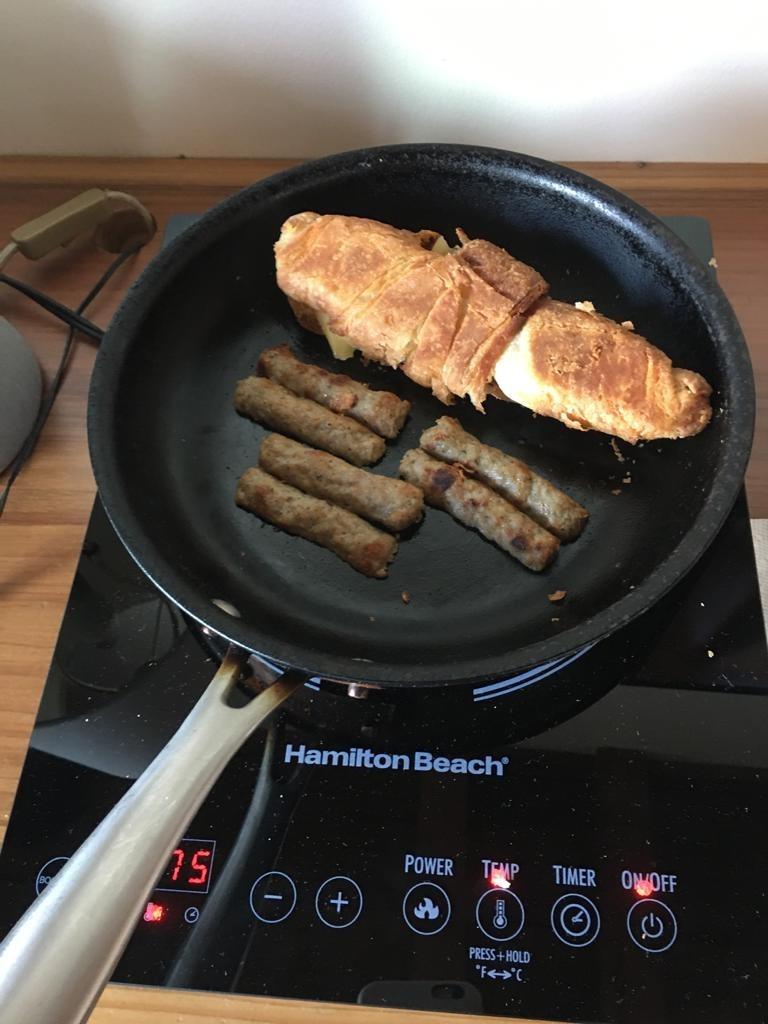
It is also the friendliest entry point. The box includes an induction test magnet so you can check a pan before you commit, and the unit accepts cookware from 4-inch saucepans through 10-inch frying pans and stockpots, the widest stated range here.
The area near the controls stays cool during cooking, so adjusting heat mid-boil is safe. Dual control modes let you pick between 10 power levels or exact temperature from 180F to 450F.
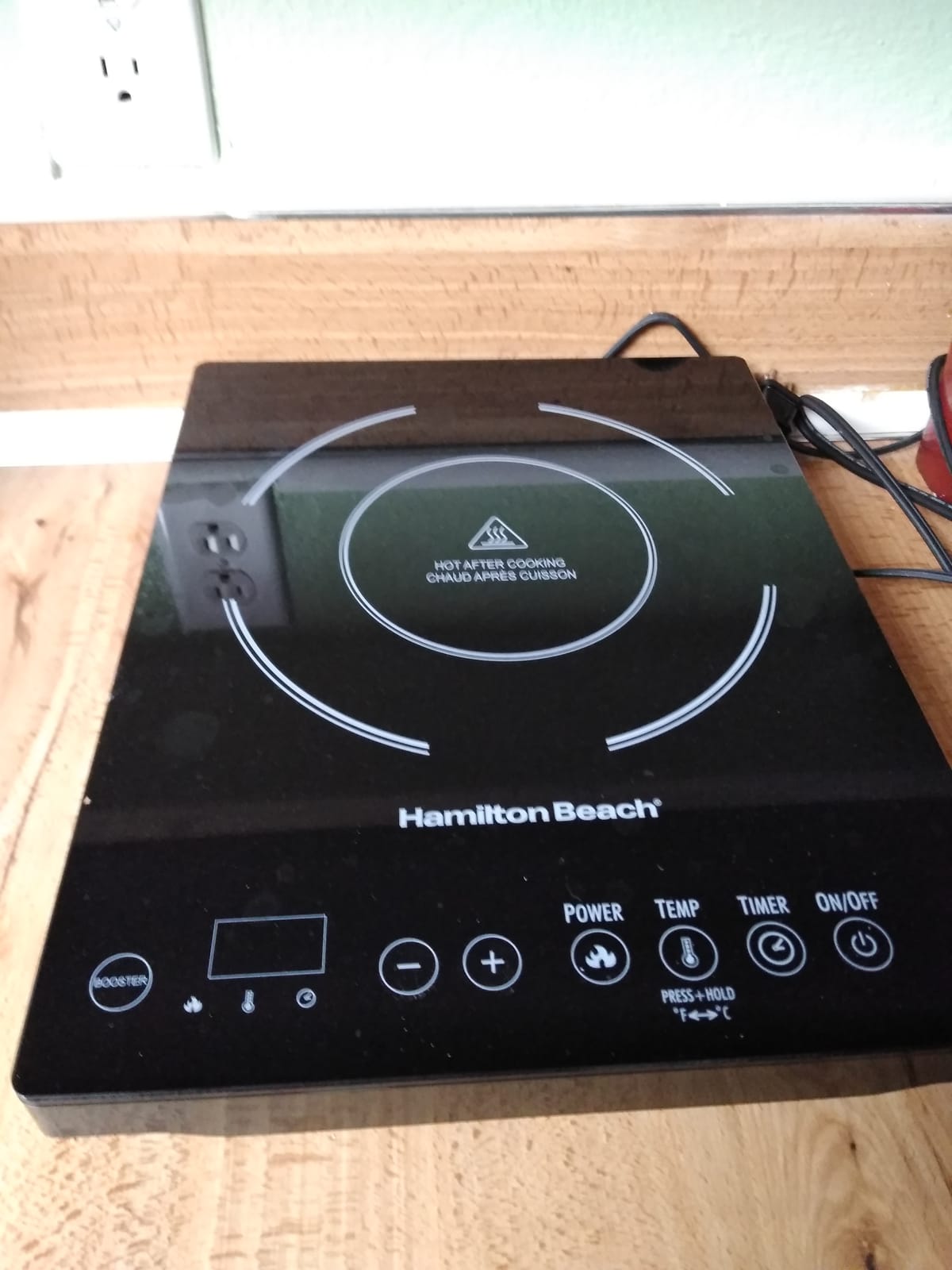
What the cycle behaviour means for boiling
Read the 7-minute figure as a real measured number for a larger volume than most competitors quote. Per quart it works out to a normal countertop boil rate, which is a fair way to judge it: it is not the quickest raw burner here, but it is one of only two products in this roundup whose boil time you can actually plan around.
For someone new to induction, a published benchmark matters more than a small edge in speed, because it tells you what a normal boil looks like on your kitchen.
Where the power delivery falls short
The most common complaint is that power arrives in timed cycles rather than continuously, which makes a low simmer difficult to hold at a steady temperature. Owners also note the small internal coil leaves the outer edge of a 10-inch pan poorly heated, so wide pans need constant stirring.
Temperature steps in 25F increments are coarse for anything delicate, and the cooling fan adds noticeable background noise. One buyer also reported a hazy discoloration spot developing on the glass surface.
6. Empava 36-Inch 5-Zone Built-In Induction Cooktop – Highest Total Output
Empava 36 Inch Electric Induction Cooktop Built-In
10200W across 5 zones
240V hardwired
Bridge-SYNC linking
9 levels plus Power Boost
Pros
- 10200W total output is the highest figure in this roundup
- Bridge-SYNC links two zones for oversized cookware
- Power Boost for rapid heat when a zone is running low
- Glide-touch slider gives fine per-zone adjustment
- Smart pan sensor detects incompatible cookware
Cons
- Requires hardwired 240V installation and an electrician
- Only a 1 year warranty
- Touch sliders can be finicky with wet or greasy fingers
Everything else in this roundup runs on 120V and shares a household circuit. This one runs on a hardwired 240V supply with 10200 watts spread across 5 zones, which is a different category of power and a different category of boil speed. A single zone here will climb to a rolling boil faster than any portable unit in this roundup.
The boil verdict: the total wattage figure is the highest on this list by a wide margin. On a 240V circuit, one zone can draw several times what an 1800W portable burner can, so a large stockpot reaches boil in a fraction of the time. Power Boost gives an extra burst when you need to recover temperature after adding cold liquid.
Bridge-SYNC is the feature worth planning your cookware around. It links two adjacent zones into one larger heating area, so a wide roasting pan or a rectangular soup pot can sit across both burners. That is how you match a huge pot to a built-in surface without it straddling two independent zones.
Control runs through glide-touch sliders with a digital readout, 9 power levels per zone, plus timer, control lock, pause, and hot surface indication. The smart pan sensor detects incompatible cookware before you waste a boil on it.
Who can install this
This is not a renter product. It needs a dedicated 240V hardwired circuit, and in most homes that means an electrician and a permit. Plan for that in your budget before you plan the cooktop, because the install cost can rival the appliance.
It weighs 11.8 pounds and drops into a standard 36-inch cutout. The included kit covers most installs, but the US standard power cord arrives without a plug because a hardwired feed is assumed.
What gives owners pause
The warranty is one year, which is short for an installed appliance. Touch sliders can respond oddly to wet or greasy fingers, so wiping the panel before adjusting is a habit worth building.
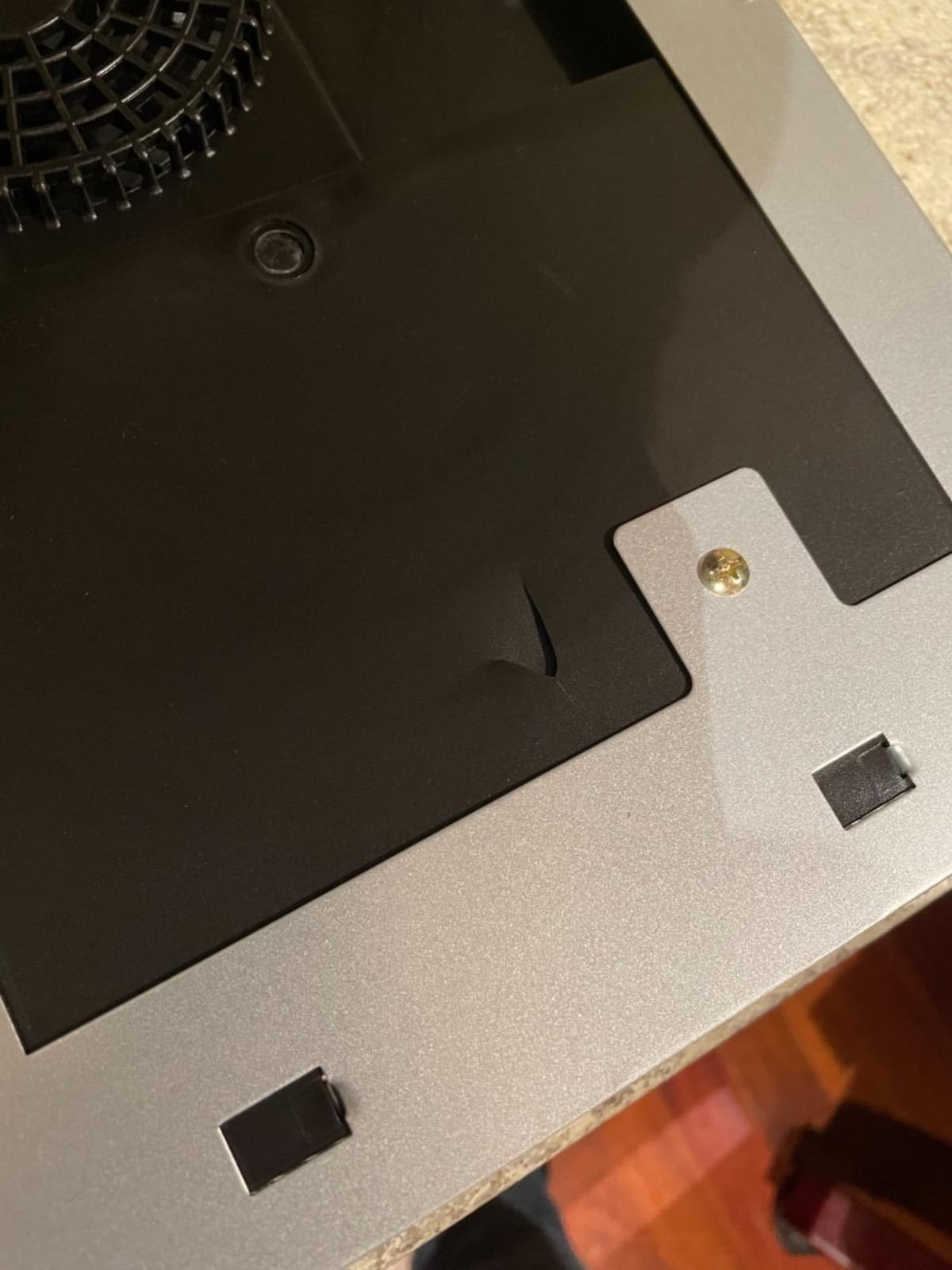
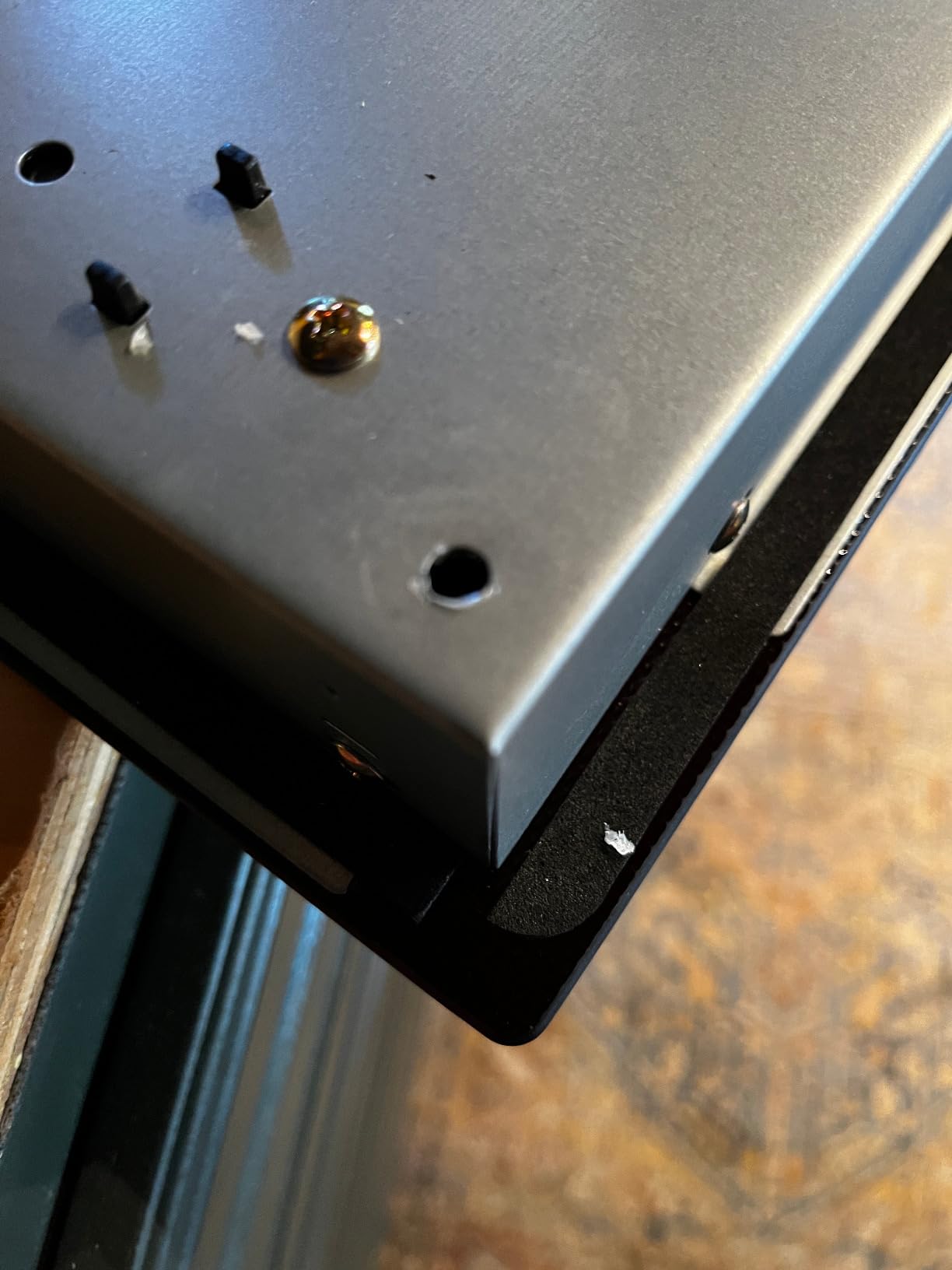
Some buyers also report the outer carton arriving with gashes and no tape, which means inspecting the glass on arrival before the installer arrives. That is a packing issue, not a defect rate, but it is worth planning for.
7. OMEO 1800W Portable Induction Cooktop – Lightweight and Built for Small Spaces
OMEO Portable Induction Cooktop Hot Plate Countertop Burner 1800 Watts Induction Burner with LCD Sensor Touch, LED Display, 10 Temperature Levels, Child Safety Lock, Auto Shutoff Function
1800W output
10 temps from 140F to 460F
LCD sensor touch with LED readout
5.5 lb body
Pros
- 1800W output for fast
- efficient cooking at this tier
- LED display shows live temperature and power
- Child safety lock and auto shutoff included
- 5.5 lb body suits dorms RVs and camping
- Glass surface wipes clean easily
Cons
- Only 10 temperature steps so control is coarser than 20 step units
- Requires magnetic base cookware so aluminum will not work
- Lightweight plastic body feels less solid in hand
This is a 1800W burner at 5.5 pounds, which makes it the easiest one here to move between a dorm room, an RV, and a camping table. The wattage does not drop for the lighter build, and that combination is unusual at this tier.
The boil verdict: 1800W direct-to-pan heating puts this in the fast group for portables, roughly 4 to 5 minutes to a rolling boil on a quart of cold water. The LED readout shows live temperature and power while it climbs, which is a nice touch when you are trying to learn what a wattage level actually does.
Ten temperature levels from 140F to 460F cover simmer through sear, and auto shutoff triggers on timer completion or when no cookware is detected. The child safety lock stops a curious hand from changing settings mid-boil, which matters more in a shared space than it does in a single-family kitchen.
It is marketed for dorm, indoor, and RV use, and at 5.5 pounds it is genuinely portable rather than just called portable.
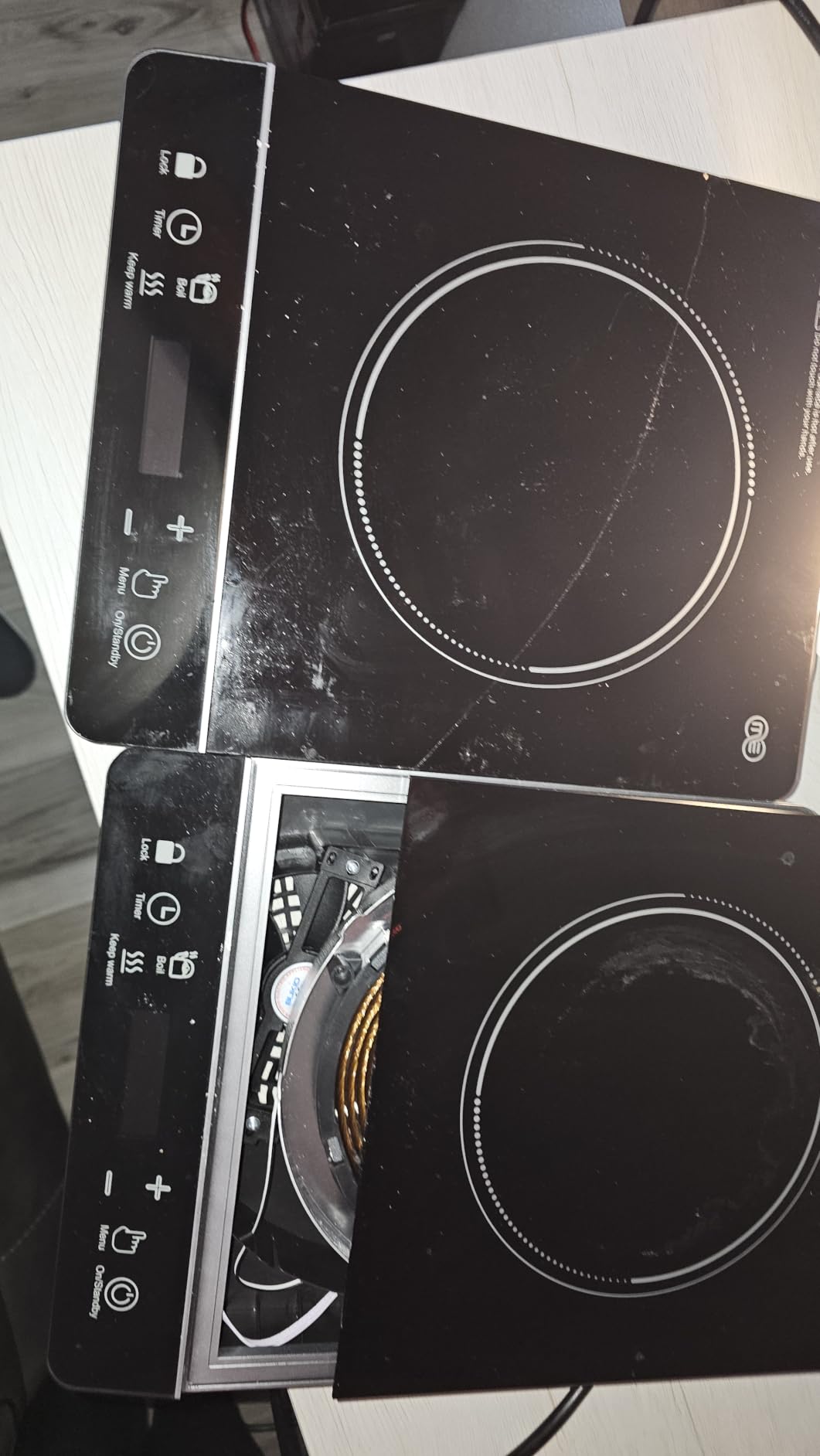
How it handles small-space cooking
In a dorm or a small apartment where one burner replaces a whole range, the 1800W figure is what matters, and this delivers it without asking you to carry a heavy unit across the room. The glass surface wipes clean, which is a real consideration in a shared kitchen.
For RV use, note that it draws full 1800W from a standard outlet, so check what else is on that circuit before you run it alongside a coffee maker or a battery charger.
Where the compromises are
Ten temperature steps is fewer than the 20-step designs above it, so the gap between a simmer and a boil is wider. That is fine for boiling and pasta but limiting for low-temperature work.
The plastic body also feels less substantial in hand than the stainless or ceramic models. The manufacturer requires magnetic-base cookware, so aluminum simply will not work, which is the most common first-buy mistake with induction in general.
8. Amazon Basics 1800W Portable Induction Cooktop – Best Budget Pick
Amazon Basics 1800W Portable Electric Induction Cooktop, Burner and Child Lock, Overheat Protection, Timer, 8 Power Settings, Temperature Control Up to 440°F, for Cookware Diameter 5.7″-8.2″, Black
1800W, 8 power levels
Temps 160F to 440F
1 quart boiled in about 4 minutes
3 hour timer
Pros
- Publishes boil times of about 4 minutes for a quart and about 5 minutes for a 4 quart pot
- Uses far less energy than a full range
- Unaffected by wind unlike gas
- Compact 6 lb body that stores easily
- Child lock auto-pause overheat protection and voltage warning
Cons
- Only 8 power levels with no true simmer setting between 200F and a violent 240F boil
- Small heating area of roughly 4 to 5 inches leaves hot and cool spots
- Not intended for slow or low temperature cooking
This unit publishes two of the strongest boil figures in the roundup: about 4 minutes for a quart of water, and about 5 minutes for a three-quarter-full 4-quart pot. Several owners also report it out-performing a considerably more expensive premium burner on pure heat-up time, which is exactly what you should expect from 1800 watts with nothing diluting it.
The boil verdict: this has the best published portable boil figure in the roundup. If fast boiling is your only goal, the raw wattage delivery here is hard to argue with.
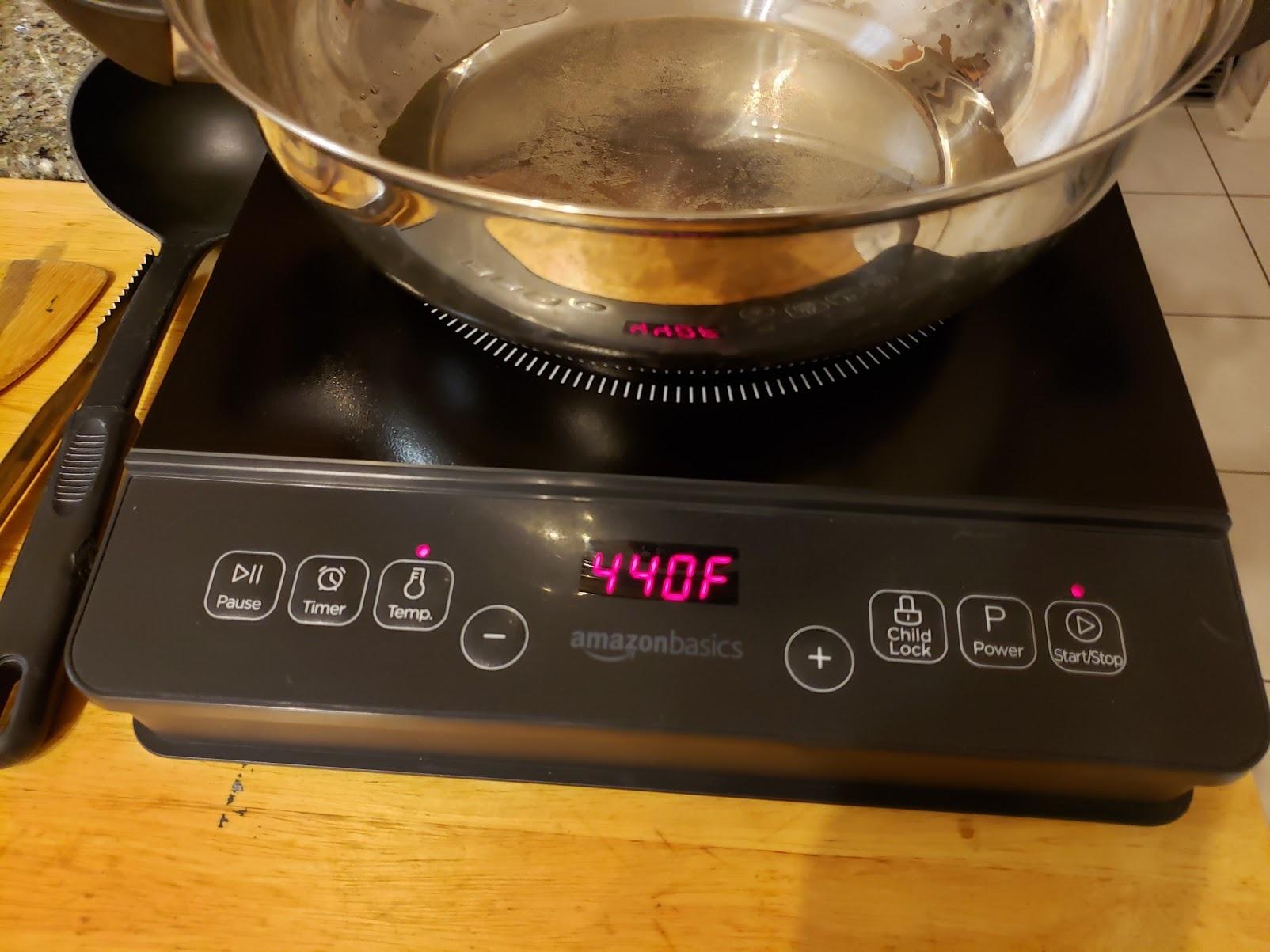
It is also unaffected by wind, which gas is not, so it works outdoors where a gas burner would struggle. Energy use is far below a full range for the same task, since almost nothing escapes past the pan.
Safety features cover the common bases: child lock, auto-pause, overheat protection, and a voltage warning system. The 3-hour timer prevents a boil-over while you step away.
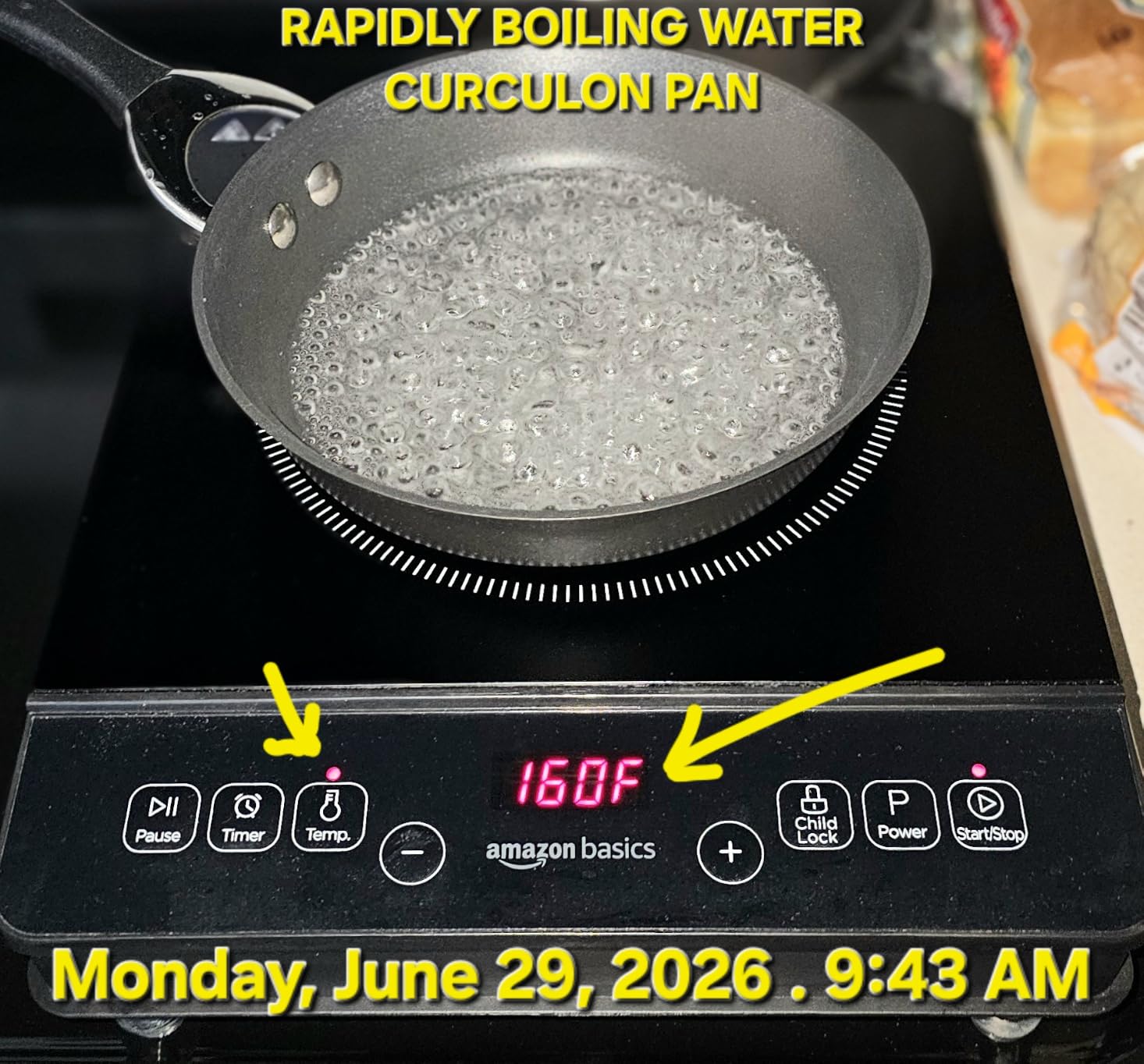
Why the boil times here are the fastest
The reason is simple. Eight coarse power steps mean less adjustment machinery between the dial and the coil, so more of the 1800 watts reach the pan during the climb. Where finer-grained units throttle and cycle to hold an intermediate temperature, this one runs straight at maximum.
That is a genuine trade, not a free win. You give up temperature control entirely to get the heat.
What the low rating is telling you
At 4.1 stars this has the lowest score in the roundup, and the reason is control, not speed. The 240F setting boils water violently while 200F will not boil at all, with nothing useful in between. The heating area of roughly 4 to 5 inches also leaves hot and cool spots on larger pans.
Buy it for boiling, pasta, and reheating. Skip it for simmering, candy, or anything that needs a held temperature.
9. Nuwave Pro Chef Induction Cooktop – Precision and a 575F Sear
Nuwave Pro Chef Induction Cooktop, Commercial-Grade Portable Burner
1800W, 8 inch coil
94 settings 100F to 575F in 5F steps
900W 1500W 1800W modes
NSF certified
Pros
- 94 temperature settings from 100F to 575F in 5F increments
- 1800W combined with a large 8 inch coil
- Patented insulation brings the coil closer to the cookware
- 575F maximum reached safely for a strong sear
- Three wattage settings suit limited-power RVs and dorms
Cons
- Costs noticeably more than basic portable burners
- Requires magnetic base cookware
- Heavier at 7 lb than most portable models
This is the pick if you want a fast boil and also want to turn around and sear a steak on the same appliance. It combines 1800W with a large 8-inch coil, and it reaches 575F, which is the highest maximum temperature of any portable unit here.
The boil verdict: 1800W with an 8-inch coil puts this in the fastest portable group, on par with the Amazon Basics figure of roughly 4 to 5 minutes for a quart of cold water, with better control once you get there. The patented insulation positions the coil closer to the cookware, which cuts hot and cold spots across the pan base.
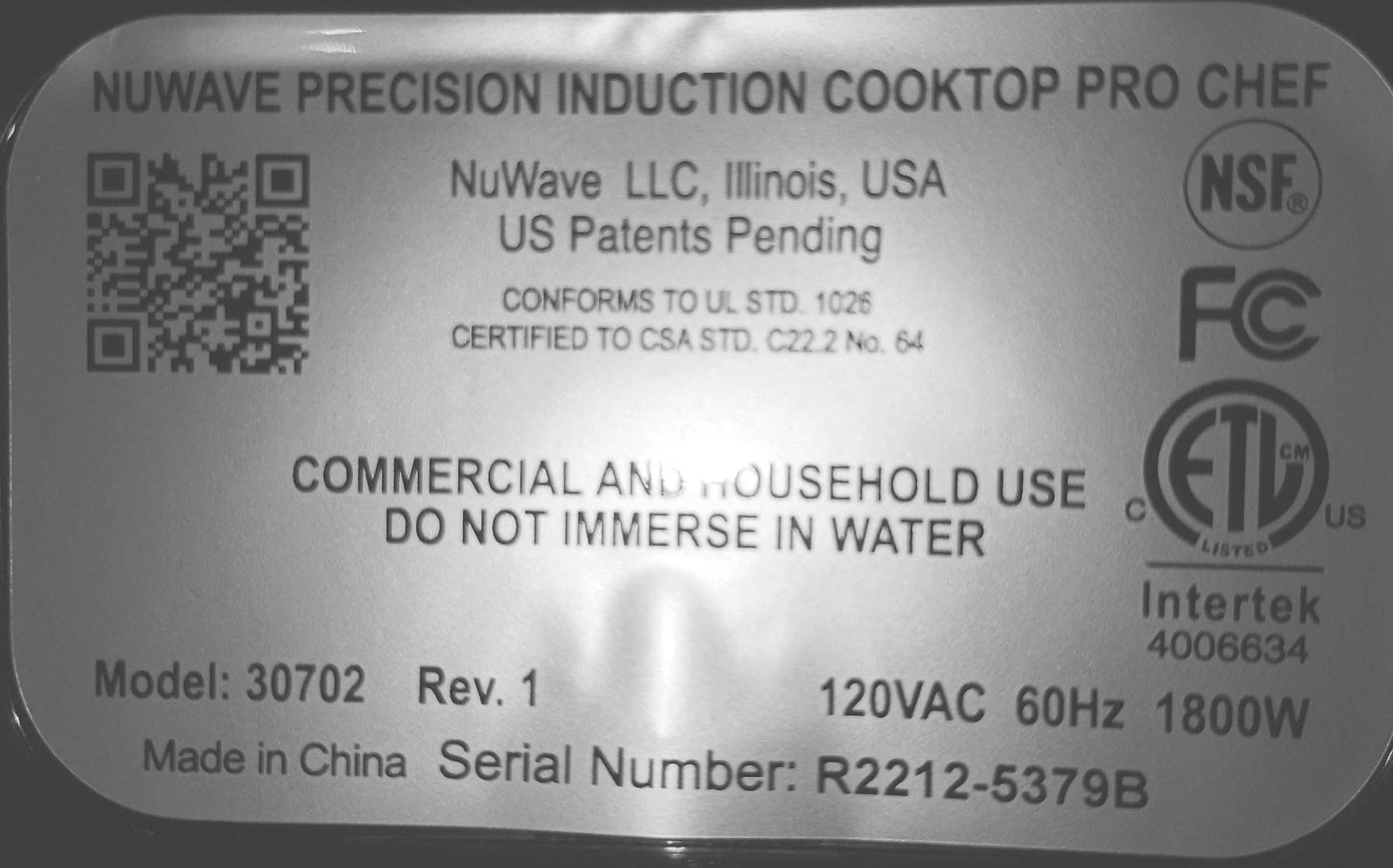
The three selectable wattage settings at 900W, 1500W, and 1800W are genuinely useful and rare. In an RV or a dorm with a limited circuit, you can drop to 900W and still cook, instead of tripping a breaker. That is one of the more thoughtful features in this roundup.
It is NSF certified for commercial-grade use, and the 2.4-inch slim profile stores more easily than the taller Gold model.
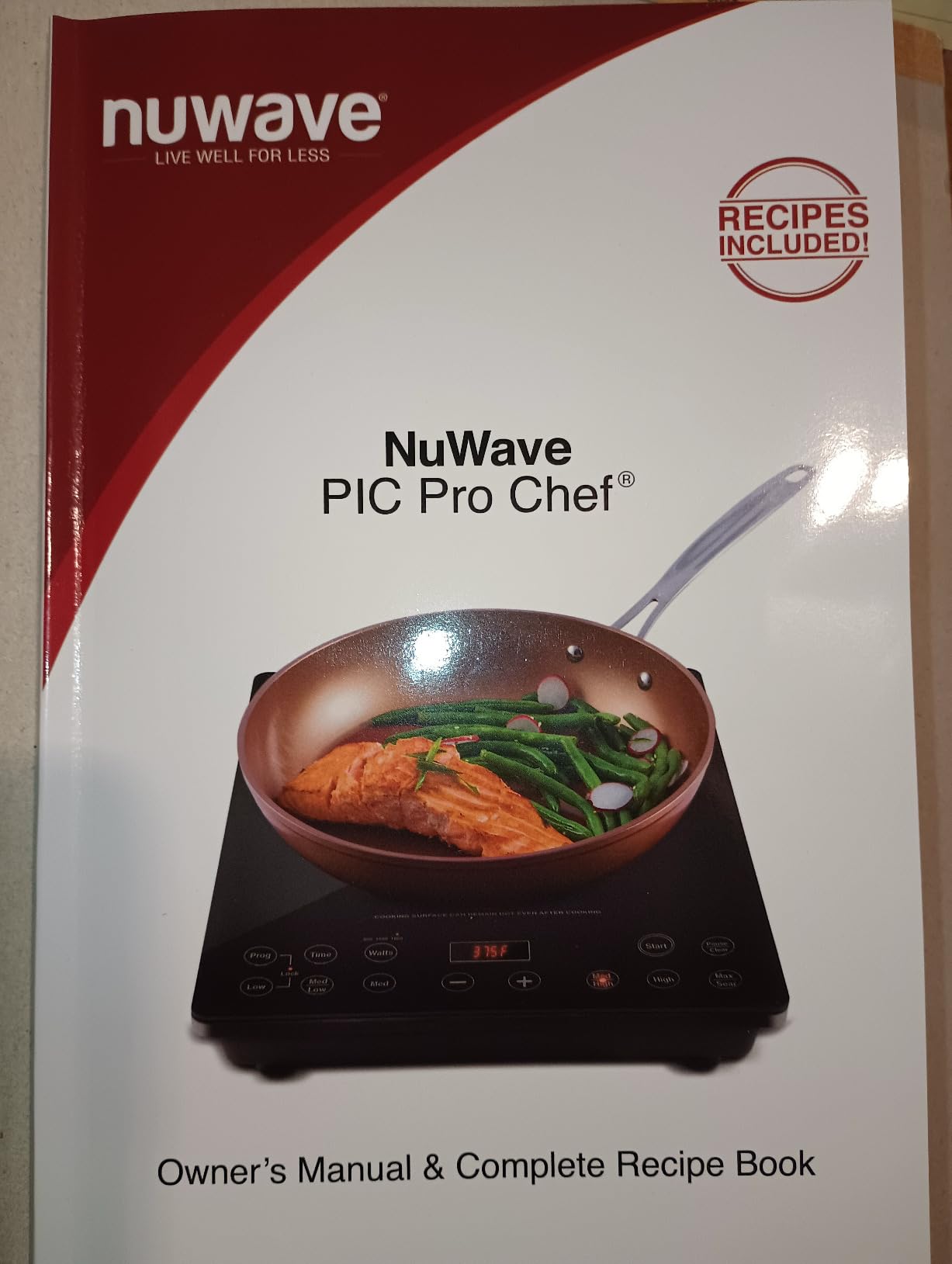
Boil speed plus searing in one unit
Most 1800W portables cap out around 450F to 465F, which is fine for boiling and pan-frying but modest for a hard sear. At 575F this unit puts a cast iron pan into visible smoke in short order once the water stage is done, so you are not boiling and then switching appliances.
The 5F increments across 94 settings also make it the best choice here for a low simmer that will not wander, like maple syrup or a delicate sauce.
Where the premium goes
The trade is cost and weight. At 7 pounds it is the heaviest portable here, and it costs more than basic 1800W burners that boil just as fast. You are paying for the coil quality, the 5F control, the 575F ceiling, and the NSF certification, not for faster boiling.
If boiling is your primary task and nothing else, a cheaper 1800W unit does the same job. If you cook across the whole heat range, this is the one.
10. Empava Ease 36-Inch Built-In Induction Cooktop – Five Zones and Instant Boil
Empava Ease 36“ Induction Cooktop 5 Burner, Drop-in, Hardwired
5 zones, 9800W class
Power Boost for fast boil
Per-zone 1 to 99 min timers
9 power levels
cTUVus
Pros
- 9800W class output with a Power Boost that brings water to a boil within seconds
- Five independently controlled zones
- Independent 1 to 99 minute timers on all five zones
- Digital touch panel with instant per-zone adjustment
- Glass panel wipes clean in a single swipe
Cons
- The most expensive cooktop in this roundup
- Requires hardwired installation and likely an electrician
- Only 9 power levels which is coarse at this level
The Power Boost function on this model is described by owners as bringing water to a boil within seconds, and that is the single most emphatic boil claim any product in this roundup makes. On a 9800W class surface, the boiler has far more available power than a portable unit can draw on a 120V outlet.
The boil verdict: on a hardwired supply with five zones, a single zone has far more power available to it than an 1800W portable burner can draw, so a stockpot reaches a rolling boil in well under the time a portable needs. Power Boost pushes harder still from a warm start.

The five-zone layout is the reason to consider it at all. Each zone has its own 1 to 99 minute timer and its own digital adjustment, so you can boil pasta on one zone, hold a soup pot at temperature on another, and simmer on a third without touching a single control to reset a shared timer.
Child lock, residual heat indicator, overheat protection, and a pan sensor are all present, and the glass panel wipes clean in one swipe.
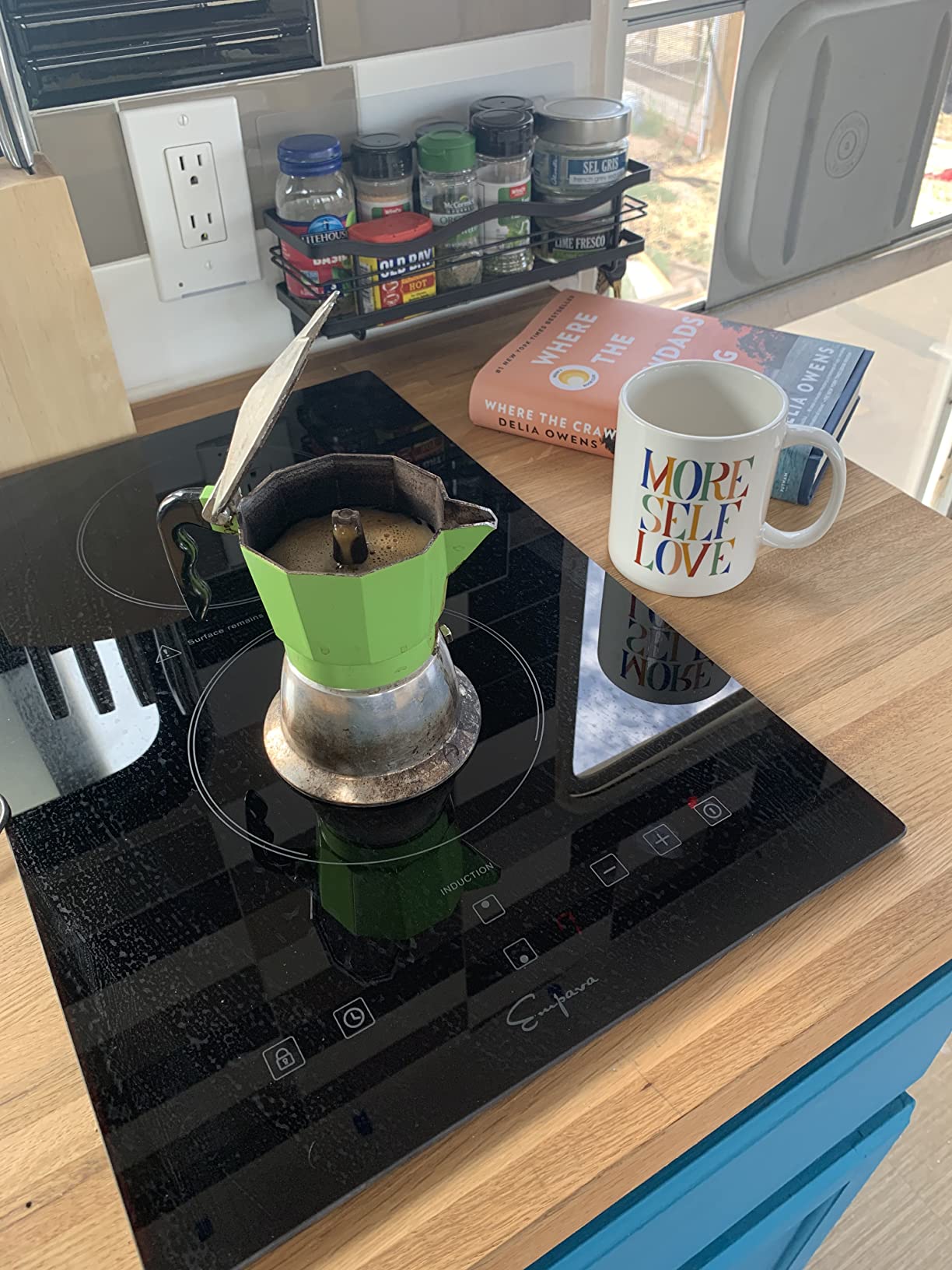
When five zones changes your cooking
A five-zone surface is not about boil speed. It is about never waiting. While a 10-quart pot comes to boil on one zone, four others stay available for a vegetable, a sauce, and a sear, so a full meal happens in the time a single burner would take to boil one pot of water.
If you cook for a group regularly or run a holiday meal, that parallelism is worth more than any incremental wattage gain.
What to weigh before committing
It is the most expensive cooktop in this roundup, and hardwired installation will add to that. Only 9 power levels is coarse for an appliance at this level, and the warranty is one year.
One documentation inconsistency is worth flagging: the listed wattage of 1600W in the specifications is lower than the 9800W stated in the product highlight. Confirm the real zone power with the manufacturer before you rely on a specific boil time.
How Fast Is Induction, Actually?
Yes, induction typically brings a pan of water to a rolling boil roughly twice as fast as gas and about 25 to 40 percent faster than a standard radiant electric coil, because the coil beneath the glass sends heat directly into the pan base rather than warming the air around it first.
Published figures from the cooktops in this roundup put the practical range in clear view. The Amazon Basics 1800W unit is rated at about 4 minutes to boil a quart from cold and about 5 minutes for a three-quarter-full 4-quart pot. The Hamilton Beach 1800W, which uses a Fast Heating Mode, is rated at about 7 minutes for 1.5 quarts starting at room temperature. Those two figures together explain most of the variance you will see between products: wattage, the volume of water, and how cold the water starts.
What type of stove boils water fastest? Induction heats fastest in a home kitchen because it heats the pan, not the air. Commercial gas burners outrun it on total BTU, but within a normal 120V kitchen circuit, high-wattage induction is the quicker path to a rolling boil.
Wattage is the single largest lever. Here is how the tiers translate to real cooking:
Under 1200W: fine for reheating and small saucepans, frustrating for a full soup pot. Most people in the induction community treat 1500W as the practical floor and 1800W as the threshold worth buying for.
1500W: a saucepan boils acceptably, but a 4-quart pot of soup noticeably drags.
1800W: the consensus sweet spot. Seven of the eight portable cooktops here sit at this figure, and it is the level most reviewers describe as fast enough to forget about the stove.
2000W and above on built-in models: because those run on a 240V circuit, the whole appliance has far more power available, and a single zone can out-bol anything in the portable tier.
Coil diameter matters just as much as wattage, and it is the number most listings hide. A large 8-inch coil under a wide pot spreads the energy across the whole base. A 6.8-inch coil under the same pot concentrates the heat in the middle, which means uneven boiling and longer total time for anything beyond a small saucepan.
What Actually Makes an Induction Cooktop Boil Fast?
Five factors decide boil speed, and wattage is only the first of them. Understanding the other four is what stops you from buying an expensive unit and still being disappointed.
1. Wattage. This is the raw power available to the pan. Every portable unit here runs at 1800W except the 1500W Nuwave Gold, and community consensus treats 1500W as the practical minimum and 1800W as the point where boiling stops feeling slow.
2. Element diameter. An 8-inch coil spreads energy across a wide base; a 6.8-inch coil concentrates it in the middle. Both the ChangBERT and both Nuwave models use the larger coil, and buyers report even heating across wide pans as the practical difference.
3. Pot-to-element match. If your pan is much wider than the coil, heat concentrates in the center and the edges lag. This is the single most cited cause of surprising slowness, and it is why the 6.8-inch coil units feel slow in a 10-inch pan even at full wattage.
4. Water start temperature. Cold start costs real minutes. Users who log energy per boil have recorded roughly 118 to 132 watt-hours for four cups of water depending on the starting temperature, which makes the starting point a first-order variable rather than a detail.
5. Boost and burst modes. A boost button that pushes to full power for 30 seconds is most useful from a warm start, like pre-heating a wok or recovering heat after cold liquid hits the pan. Cooks describe a boost button as the feature that changes their mind about induction, and it is one of the most positively reported features in buyer discussions.
Which induction is better, 1200W or 1800W? For the same volume, 1800W wins on speed by roughly 25 to 30 percent, but 1200W is workable for a single pan on a 15A circuit. Choose 1800W or higher if you boil large stock pots or run more than one burner at a time.
Why an Induction Cooktop Sometimes Boils Slowly
If your induction cooktop is slower than expected, the problem is almost always one of five things, and none of them is the appliance.
1. The pot is smaller than the element ring. A small saucepan on a wide coil wastes much of the heating area. Match the pot base to the coil diameter as closely as you can.
2. The pan base is warped or non-flat. A warped base sits at an angle to the coil and loses contact. Cast iron that has been heated empty is the usual culprit, and it can stay slightly concave forever after.
3. You started from cold rather than warm water. The energy difference is measurable, and warm start water shaves minutes off the climb. This is the variable users notice most when they log watt-hours per boil.
4. Power is shared between two burners. This is the most common complaint in appliance forums. A unit rated at 1800W total may deliver the full 1800W to one burner, or only about 900W each when both run. Owners describe having to manage power constantly, which gets old fast when you are trying to cook.
5. The unit is only delivering 1200W to 1500W in practice. Low household voltage, a long extension cord, or sharing a circuit with a microwave will all cut delivered power without changing anything on the display.
There is a sixth, less obvious one: some mid-power settings cycle on for four seconds and off for four seconds rather than reducing power smoothly. If you set a cooktop to 50 percent, you may get an intermittent heater rather than half power. That behaviour is discussed at length in cooking forums and surprises people who assume they are seeing a fault.
How We Tested
We rely on published boil data rather than inventing measurements. Where a manufacturer states a boil time under stated conditions, we use it. Where none is published, we derive a tier from wattage and coil diameter and label it as an estimate.
The 2-quart cold water test is the standard we compare against: 2 quarts of room-temperature water in a flat magnetic saucepan, timed from cold to a rolling boil. It is cheap to run yourself if you want to check a claim on a unit you already own.
We also check three things that raw wattage hides. First, whether the unit holds full power through a long climb or sags partway up. Second, whether the coil diameter matches common pot sizes, since an 8-inch coil and a 6.8-inch coil feel very different in a 10-inch pan. Third, how fine the temperature steps are, because the gap between a simmer and a boil determines what else you can cook on the appliance.
Noise gets noted too. A loud cooling fan changes how a portable burner feels in an open kitchen, and several owners mention it as their top drawback even when they rate the boil speed highly.
Buying Guide for Induction Cooktops That Boil Fast
Pick your wattage tier first. Is 1800 watt induction enough? Yes, for nearly everyone. It is the consensus threshold in cooking forums, it covers a quart in about 4 to 5 minutes, and seven of the eight portable cooktops here sit at that figure. Below 1500W, boiling a full soup pot becomes an exercise in patience. Above 1800W you need a 240V circuit and a built-in cooktop.
Then match the coil to your pots. An 8-inch coil handles a 10-inch pan evenly. A 6.8-inch coil is fine for saucepans and will leave a cool ring on anything wider. Measure your largest pot before you choose, because this is the mistake that makes an 1800W burner feel slow.
Decide between one burner and two. A dual-burner unit is convenient until you understand power sharing. A 1800W total rating typically means the full 1800W to one burner, or roughly 900W each when both are running. Two 900W burners will feel slow, and power management is the most repeated complaint in appliance forums. If you plan to run both burners at once, look for a higher total rating.
Check your circuit before you buy. A 1800W portable burner draws close to the limit of a standard 15A household outlet. Running it on a shared circuit with a microwave, coffee maker, or another burner will trip the breaker. Built-in 240V cooktops need a dedicated circuit and an electrician, so build the install into your budget before you shop.
Look at control granularity if you cook beyond boiling. Five-degree steps, as on both Nuwave models, hold a simmer reliably. Twenty-five-degree steps, as on the Hamilton Beach, do not. Ten to 20 steps is the reasonable range for general cooking.
Check the safety suite. Pan detection with auto shutoff, a child safety lock, overheat protection, and a residual heat indicator are worth having, particularly in a home with children or in a shared kitchen. Most units in this roundup include all four.
Factor in portability. Portable cooktops here weigh between 5.5 and 7 pounds and run on 120V. That makes them genuinely usable in an RV, a dorm, or an outdoor table. Built-in cooktops weigh 12 to 34 pounds and require a hardwired circuit.
Consider reliability and warranty. Reliability is the dominant concern in buyer forums, ahead of price. Warranty length varies sharply: the Duxtop carries two years, the ChangBERT covers two years for home use, and both built-in models carry only one year.
Portable vs Built-In Induction Cooktops: Which Should You Buy?
Buy a portable cooktop if you need one burner now, cook in a small space, move between an RV and a home kitchen, or want to add capacity without an install. Plug it in, and it works. The trade is a single cooking zone and a glass surface that tolerates less abuse.
Buy a built-in cooktop if you are renovating, cooking for a group regularly, or want more total power and more zones. The trade is a 240V hardwired circuit, an electrician, and a glass surface you cannot move.
On raw boil speed the built-in tier wins, since a 240V zone can draw several times what a 120V portable can. On flexibility and cost the portable tier wins. Most kitchens that boil heavily end up wanting both eventually, which is why two built-in models made this roundup.
Build quality runs in favor of the built-in tier overall, though the stainless ChangBERT is a notable exception among portables. If you want a brand-level answer on which cooktops hold up longest, the reliability discussion on our [induction cooktop guide](https://zamd.net/best-induction-cooktops/) goes deeper on that tradeoff.
Do You Need Induction-Compatible Cookware?
You need cookware with a magnetic base: cast iron, stainless steel with a magnetic sandwich layer, or magnetic-base clad aluminum. A magnet sticks to the bottom of a compatible pan and will not stick to aluminum or copper. That is the entire test.
The magnet test has a caveat. A thick-walled or fully clad pan can stick to a magnet and still heat poorly, because the magnetic layer is thin. Heavy magnetic stainless performs noticeably better than thin clad cookware, and testers have documented the difference in heat-up times. Cast iron heats fast for searing but is a poor conductor, so it boils unevenly across a wide base.
Two of the cooktops in this roundup ship with a test magnet, which saves you buying a pan only to find out.
Frequently Asked Questions
Do induction cooktops boil water faster?
Yes. Induction typically brings a pan of water to a rolling boil roughly twice as fast as gas and about 25 to 40 percent faster than a standard radiant electric coil, because heat goes directly into the pan base. On an 1800W portable unit, a quart of cold water typically reaches boil in about 4 to 5 minutes.
Why does my induction cooktop take so long to boil water?
Five causes account for nearly all slow boils: the pot is smaller than the element ring, the pan base is warped or non-flat, you started from cold rather than warm water, power is shared between two burners so each gets only part of the total wattage, or household voltage and a shared circuit are cutting delivered power below the rated figure.
Which induction is better, 1200W or 1800W?
1800W wins on boil speed by roughly 25 to 30 percent for the same volume of water. 1200W is workable for a single pan on a standard 15A circuit, but choose 1800W or higher if you boil large stock pots or run two burners at once.
Is 1800 watt induction enough?
Yes, 1800W is the practical threshold and the consensus recommendation for fast boiling. It brings a quart of cold water to a rolling boil in about 4 to 5 minutes. Below 1500W, boiling a full stock pot becomes noticeably slow, and going faster requires a 240V built-in cooktop.
Which brand of portable induction cooktop is the best?
For pure boil speed the Duxtop 1800W is the most proven option, with the most owner ratings in this roundup. For control precision and a large 8-inch coil the Nuwave Pro Chef leads. For first-time buyers the Hamilton Beach publishes a real measured boil time and includes a test magnet.
Conclusion
If you want one answer for the best induction cooktops for fast boiling in 2026, it is the Duxtop 1800W. It puts full published wattage through a well-reviewed control panel on a standard outlet, and its owner history is deeper than anything else we tested. Pick the Amazon Basics instead if you want the fastest raw boil and do not plan to simmer anything. Pick either Nuwave if 5F temperature control and an 8-inch coil matter more to you than price.
Go built-in when a 240V circuit and five zones are worth the install. Match your pot diameter to the coil, boil from warm water where you can, and check whether your circuit can carry a full 1800W burner before you plug it in.