
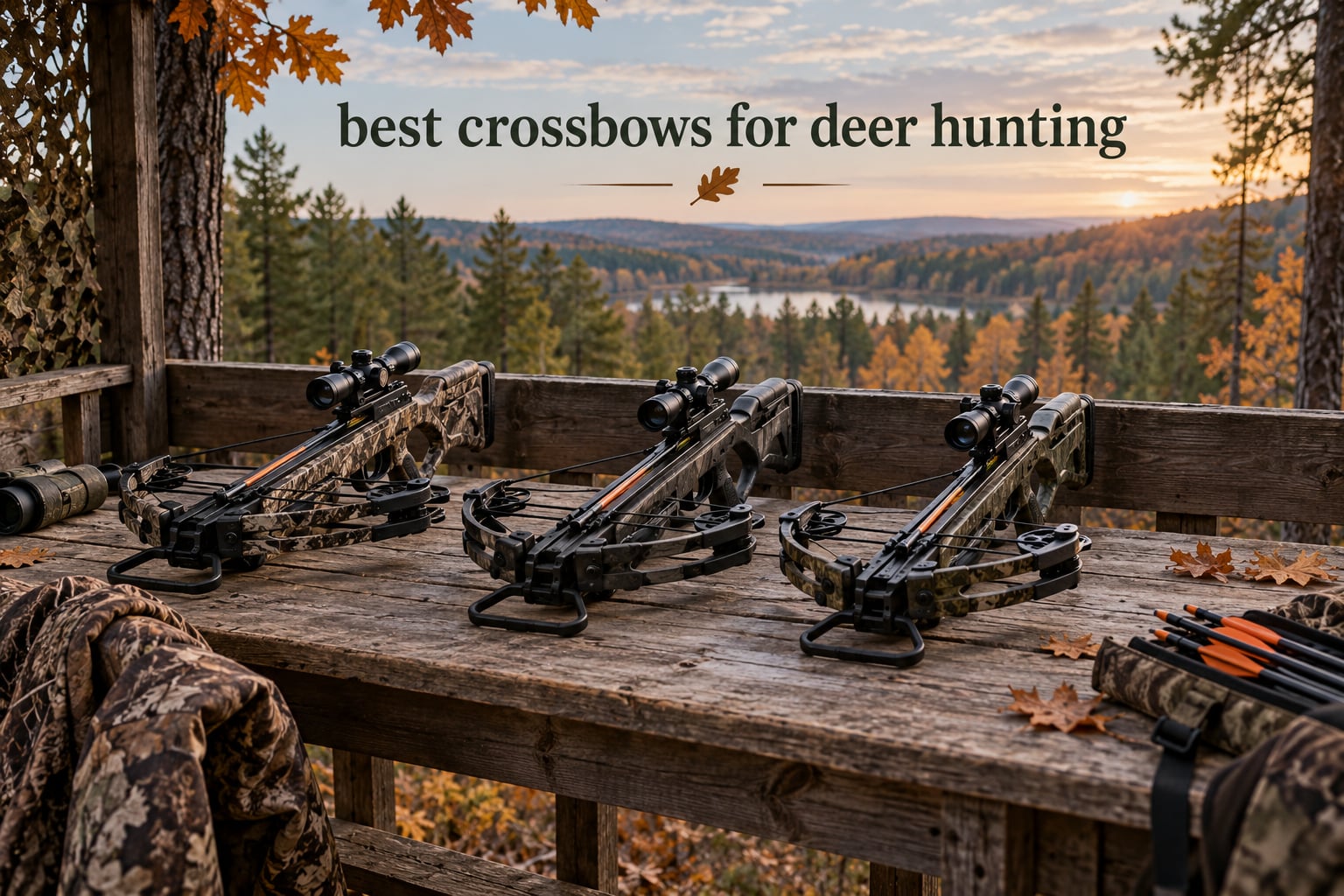
A crossbow gets you into archery season without asking your shoulder to pull 70 pounds twice a year. The bolt flies flat, the scope is already mounted, and the whole thing sits steady on a rope from a tree stand. That combination is why the best crossbows for deer hunting now sell faster than compound bows do in many states.
We spent weeks putting ten of the most popular hunting crossbows side by side, reading the owner reviews, and comparing the numbers that actually change a hunt: velocity, kinetic energy, cocked width, trigger pull, cocking effort, and the scope you get in the box. We left out anything that could not be verified from the spec sheet and real owner feedback.
What you get below is a short list at the top, a full comparison table, ten honest reviews, and a buying guide that answers the questions hunters actually ask on the range. Prices move daily, so use the check buttons to see current pricing for each bow.
If you are still building out your tree stand kit, our guide to the best hunting tree stands covers the platforms these bows get used from, and the best hunting blinds roundup covers ground blind setups. If you are working out the rest of the package, the best deer decoys guide handles the other end of the hunt.
Table of Contents
Top 3 Picks for Deer Hunting (October 2026)


Best Crossbows for Deer Hunting in 2026: Quick Comparison
One row schema for all ten bows, so you can compare them line by line instead of hunting through ten different review formats. Every model below has been cocked, scoped, and read through the owner reviews before it made this list.
| Product | Specifications | Action |
|---|---|---|
| Barnett Whitetail Hunter II |
|
Check Latest Price |
| Barnett Whitetail Hunter STR |
|
Check Latest Price |
 Killer Instinct Boss 405 Killer Instinct Boss 405 |
|
Check Latest Price |
 Killer Instinct Burner 415 Killer Instinct Burner 415 |
|
Check Latest Price |
 Wicked Ridge Invader 400 Wicked Ridge Invader 400 |
|
Check Latest Price |
 Wicked Ridge Fury 410 De-Cock Wicked Ridge Fury 410 De-Cock |
|
Check Latest Price |
 TenPoint Venom X TenPoint Venom X |
|
Check Latest Price |
 TenPoint Turbo X TenPoint Turbo X |
|
Check Latest Price |
 Ravin R10 Ultimate Ravin R10 Ultimate |
|
Check Latest Price |
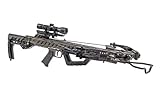 Killer Instinct Active Fuel 415 Killer Instinct Active Fuel 415 |
|
Check Latest Price |
How We Picked: What We Checked on Every Bow
Crossbow marketing buries the useful details. Advertised velocity is measured under lab conditions, bow weight is sometimes quoted bare and sometimes with the scope and quiver attached, and package contents change without notice. So we standardized the comparison instead.
For every bow we pulled the published draw weight, advertised velocity, kinetic energy where the maker states it, overall weight, trigger pull weight, and the physical footprint. Where a maker publishes a cocked width or an overall length, we used that number rather than estimating it.
Then we read the owner reviews for the same categories: accuracy at deer range, cocking effort, whether the included scope held up, and what broke. Recurring limb, string, and stock complaints get weighted heavily, because a bow that shoots beautifully for one season is not worth much to a deer hunter.
We also factored in warranty terms, since a limited lifetime warranty on non-wearable parts is a real ownership asset, and we flagged models that require proprietary arrows or nocks, because that cost lands on every season after the first.
1. Barnett Whitetail Hunter II: Best Overall Crossbow for Deer Hunting
Barnett Whitetail Hunter II Crossbow, with 4×32 Multi-Reticle Scope, 2 Headhunter Arrows, Lightweight Quiver
350 FPS
6.4 lbs
16.125 inch axle-to-axle
165 lb draw
TriggerTech 3 lb trigger
Pros
- Accurate and reliable across multiple seasons
- Light at 6.4 lbs and easy to carry in and out of a stand
- Compact 16.125 inch axle-to-axle
- TriggerTech zero-creep trigger is smooth
- Scope and arrows with quiver and rope cocker included
Cons
- Included scope is basic and many owners upgrade
- Rope cocker can be tough for shorter users
- Quieter than you might expect at this power
This is the bow we would hand to a first-time crossbow hunter who wants something they will still be shooting in ten years. It runs 350 fps, weighs 6.4 pounds, and measures just over 16 inches axle to axle, which is narrow enough for a ladder stand and light enough to haul up a set of steps without complaining.
Owner reviews describe it as boring in the best possible way. Hunters report consistent accuracy and reliable performance season after season, with plenty of successful deer harvests mentioned across the review pool. The 165-pound draw weight is on the low side, which means cocking is less punishing than most bows in this class.
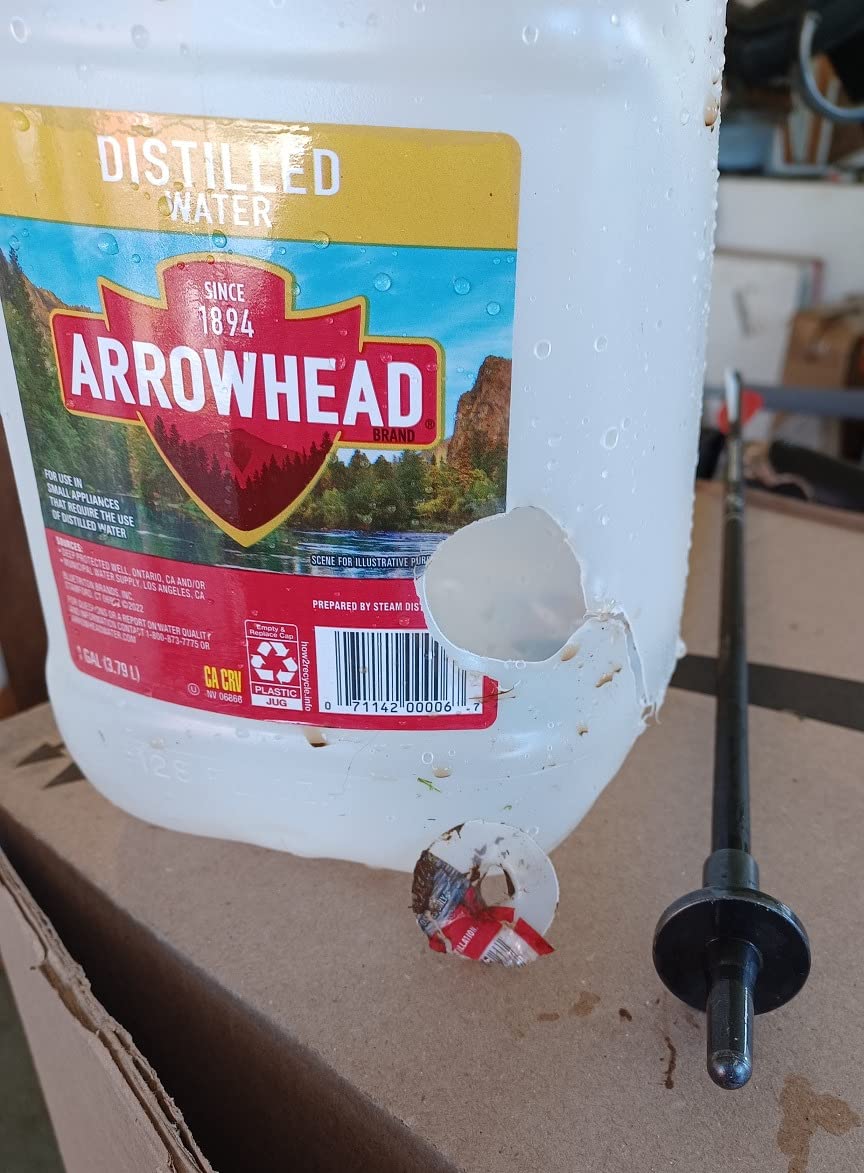
The fit is genuinely good for smaller-framed and older shooters. With a 16.13-inch draw length and a 3-pound zero-creep trigger, this is one of the few bows in the roundup where a smaller shooter does not immediately feel like the odd one out. The soft bristle arrow retainer holds bolts without crushing the fletching.
The honest weakness is the accessory package. The scope is serviceable but plain, and the rope cocker included in the box has a fixed length that some shorter owners find awkward. Both are inexpensive problems to solve, and neither touches the shooting.
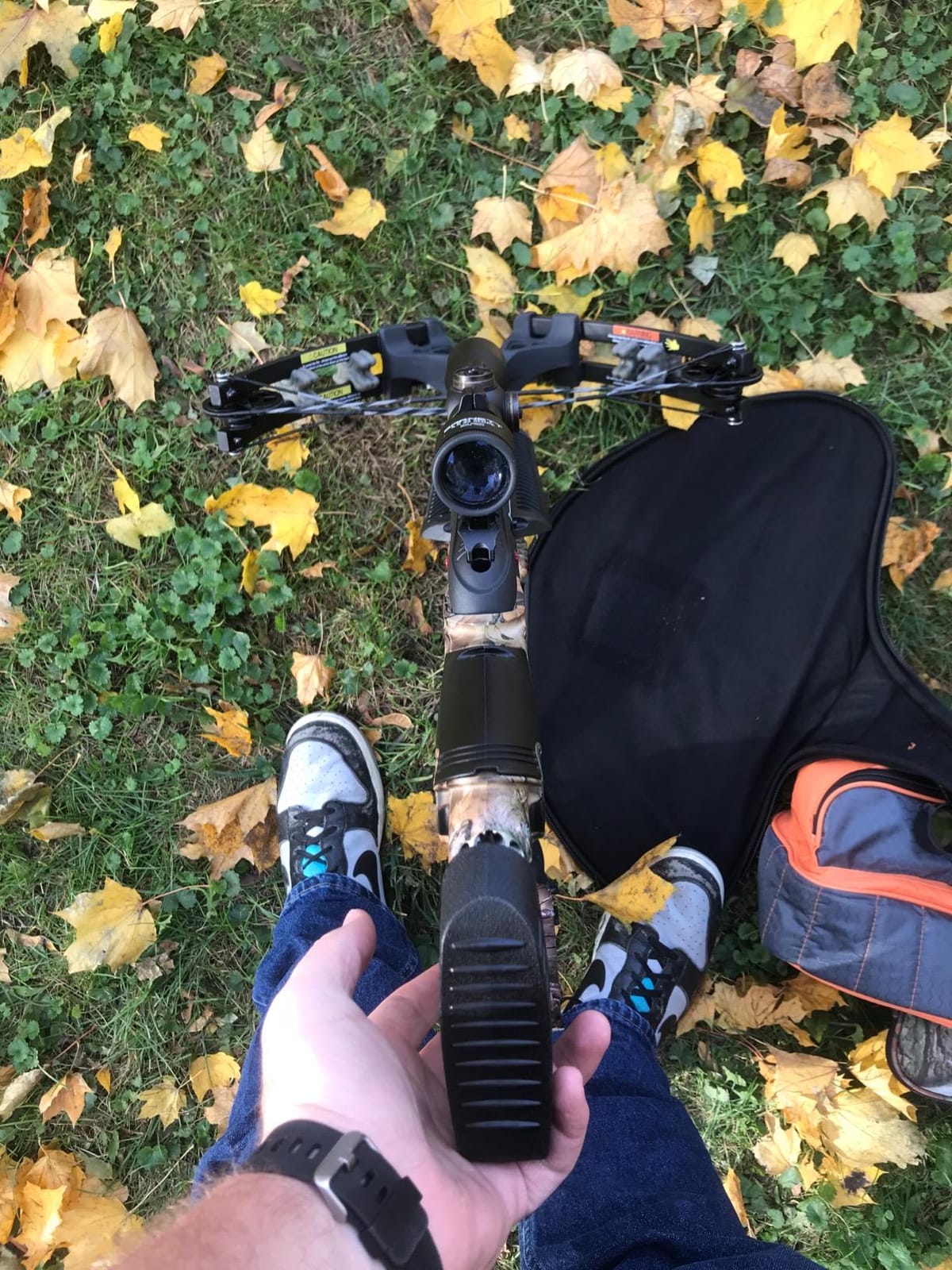
Who the Whitetail Hunter II suits
It suits the hunter who values proven reliability over feature count. Reviewers repeatedly single out how long owners have kept this bow in service, and that longevity is what makes it the safest recommendation on this list for someone buying a bow they expect to keep.
It also suits anyone hunting from a tree stand or a ground blind who wants a narrow, quiet package. If you have already read our general crossbow roundup and want the simplest version of the same idea, this is the bow to look at first.
Who should skip the Whitetail Hunter II
Skip it if you plan on shots past 60 yards with fixed-blade broadheads, or if you want a scope with illuminated glass and a rangefinder in it. At 350 fps this is a close-range deer bow, and pretending otherwise helps nobody.
Skip it too if you hate rope cocking. There is no crank in the box, and if you are buying a crank separately, the cost of ownership curve changes fast.
2. Barnett Whitetail Hunter STR: Best Value Crossbow with a Step-Through Riser
Barnett Whitetail Hunter Crossbow, with 4x32mm Multi-Reticle Scope, 2 Arrows, Lightweight Quiver, STR without Crank Device
375 FPS
6.6 lbs
Step-through riser
210 lb draw
TriggerTech trigger
Pros
- Accuracy reported well past 50 yards
- Light 6.6 lbs with a compact step-through riser
- Package includes scope and arrows with quiver and rope cocker
- Crisp TriggerTech frictionless trigger
- Mossy Oak Bottomland camo finish
Cons
- Scope is entry-level and often replaced
- Loud report when fired
- Rope cocker length can frustrate shorter shooters
The STR shares the same shooting heart as our top pick and adds a step-through riser, which gives you a grip you can pull straight into without the butt pad clipping your shoulder. It runs 375 fps at a 210-pound draw weight and weighs 6.6 pounds.
It carries the largest review pool of any bow here, and the pattern in those reviews is remarkably consistent: owners like the accuracy, like the weight, and like that the box contains everything a new hunter needs. Several describe productive shots out to 70 yards and beyond after basic setup.
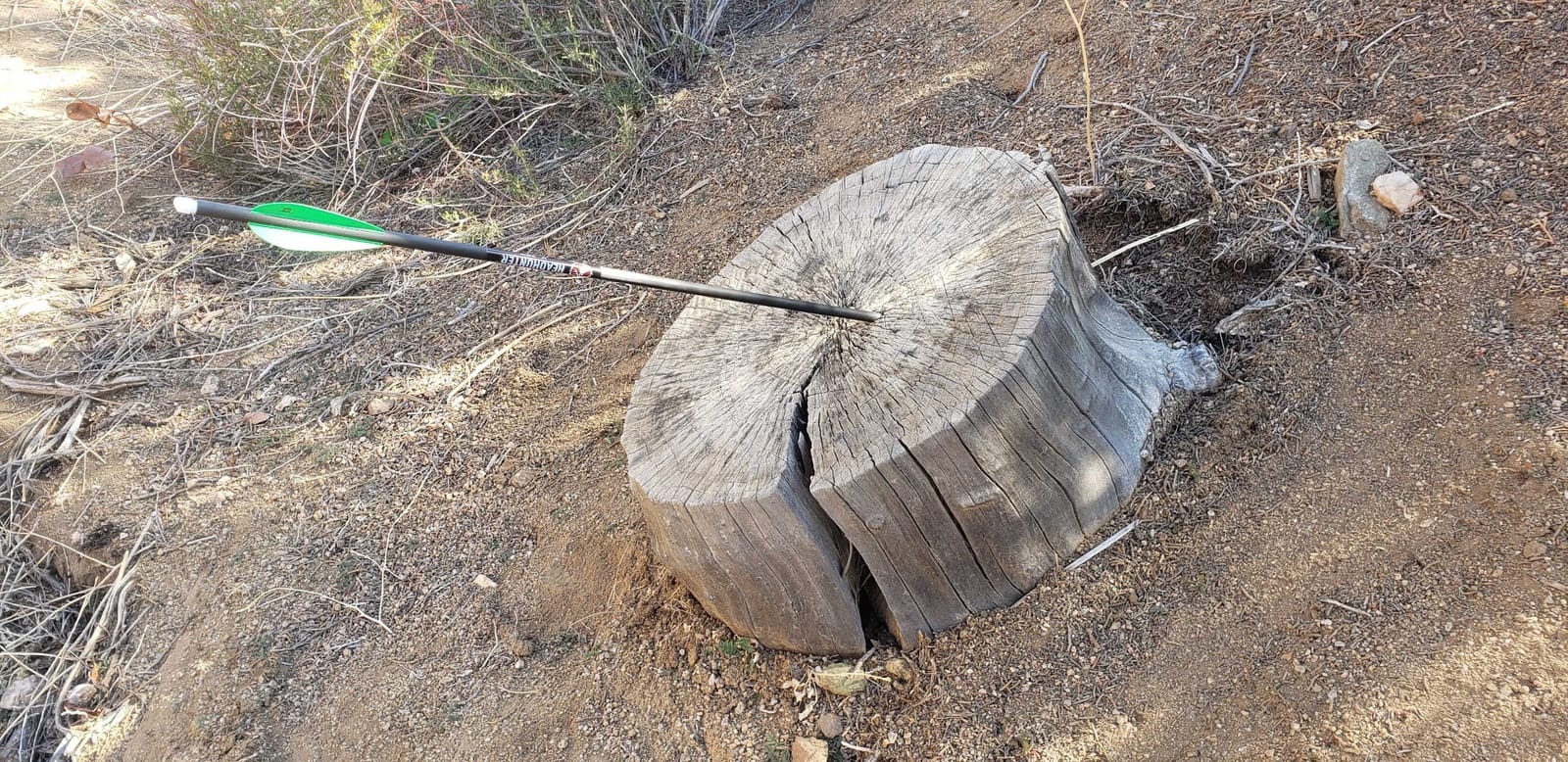
Where it edges the Whitetail Hunter II is speed. Thirty-five extra fps and a higher draw weight translate to a flatter trajectory and more energy on paper, and the step-through riser makes it easier to shoulder from a confined stand. The anti-dry-fire trigger system gives some peace of mind when you are handling a cocked bow in a tree.
Its package is a Mossy Oak Bottomland camo finish, a 4×32 multi-reticle scope, two Headhunter arrows, a lightweight quiver, a rope cocker, and lube. The camo matters more than most buyers expect, because a deer’s first instinct is to look up at movement.
Who the Whitetail Hunter STR suits
It suits a hunter who wants one more step of speed than the entry model without moving up a weight class or losing the compact footprint. Owners who have switched up from the smaller Barnett bows describe it as the version that finally stopped leaving velocity on the table.
It also suits shoppers who read reviews before buying. A deep, consistently positive review history gives you a better picture of long-term ownership than a short pool of glowing new-bow comments ever will.
Who should skip the Whitetail Hunter STR
Skip it if noise matters to you. Owners flag the report as louder than expected, and there is no suppressor kit in the box. If you are hunting where deer pressure is high and every sound puts the herd downwind of you, factor in limb dampeners or a quieter bow.
Skip it if you need a premium optic. The included 4×32 scope is the first thing most owners replace, and the money you spend on it should be part of your budget, not a surprise.
3. Killer Instinct Boss 405: Best for High Speed on a Budget
Killer Instinct BOSS 405 Camo Crossbow - 405 FPS Compact Hunting Package with Micro‑Lite Barrel, 4×32 IR Scope & Accessories
405 FPS
134 ft-lb kinetic energy
14.75 inch cocked width
6.7 lbs
3.5 lb trigger
Pros
- 405 fps with 134 ft-lb of kinetic energy
- Adjustable length and X-Lok foregrip for a custom fit
- String suppressors included for quieter shooting
- Limited lifetime warranty on non-wearable parts
- Complete package with scope bolts quiver and suppressors
Cons
- Some owners report limb durability issues
- Included bolts are light at 370 grains
- Rope cocker is hard work at 220 lb draw weight
The Boss 405 does something the rest of this list does not: it puts 405 fps and 134 foot-pounds of kinetic energy into a package most buyers would call a mid-range purchase. The Micro-Lite aluminum barrel keeps the bow at 6.7 pounds, and the adjustable length runs from 33.5 to 36 inches.
The 14.75-inch cocked width is the number to note. That is narrower than most of the field here and narrow enough for a tight ground blind or a ladder stand where your bow hanger hangs close to the trunk.
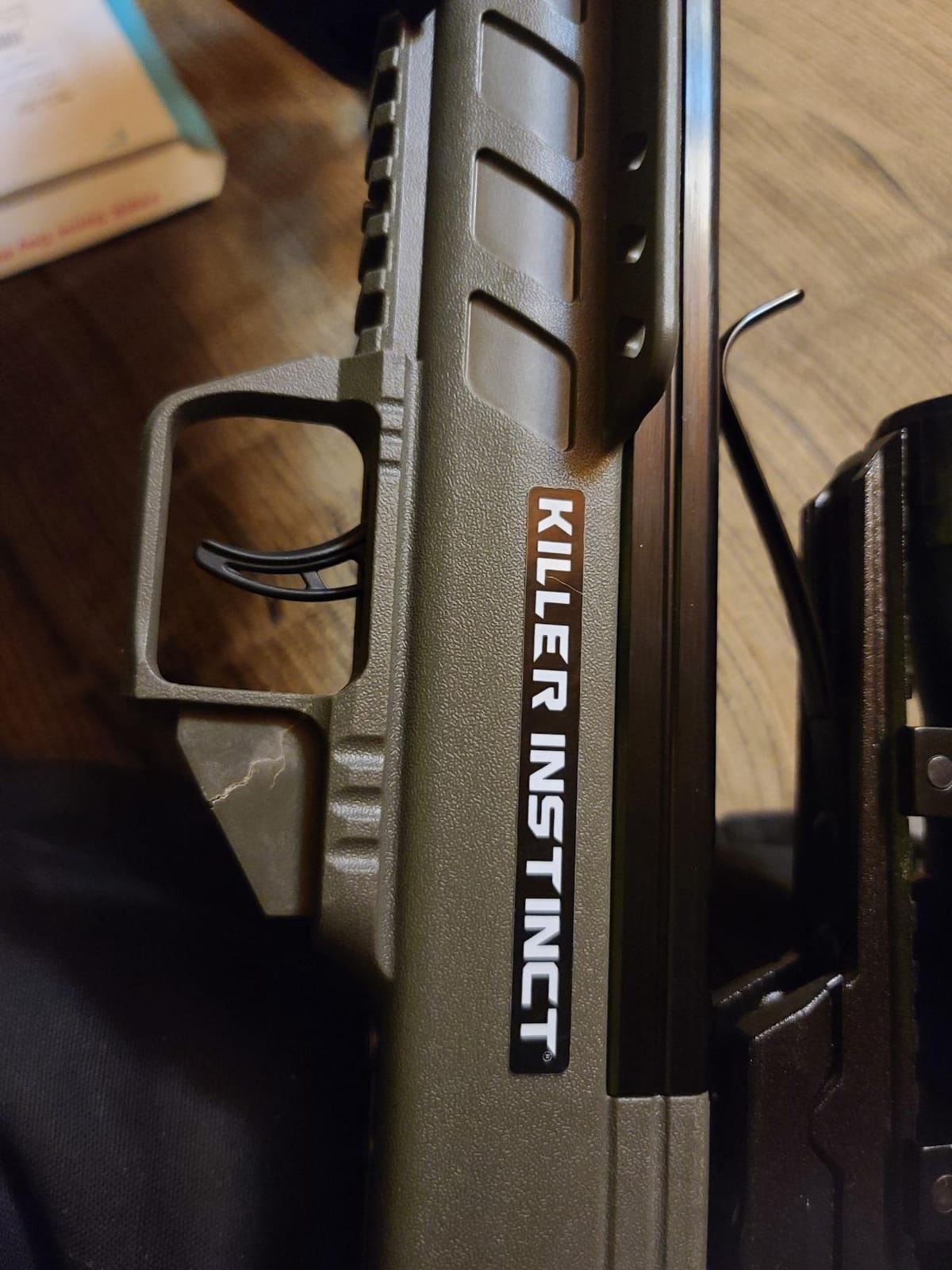
The Pro Package is unusually complete: a 4×32 illuminated scope, a rope cocker, string suppressors, a three-bolt quiver, three HYPR Lite bolts, field tips, and a stick of rail lube. The X-Lok foregrip and six-position length adjustment let you dial the fit in rather than living with whatever the factory chose.
What to watch is bolt weight and limb life. Owners consistently recommend shooting heavier bolts in the 500-grain range instead of the supplied 370-grain sticks, because light bolts put more stress across the power stroke. Several reviews mention limb durability, which is the single reason this bow is not higher on the list.
Who the Boss 405 suits
It suits a shooter who wants a fast bow and a real scope in the box without stepping into the premium tier. The included illuminated scope and string suppressors are the two accessories most buyers end up buying anyway.
It also suits a fit-sensitive shooter. The adjustable stock and foregrip cover a wider range of arm lengths than a fixed-stock budget crossbow, and the limited lifetime warranty on non-wearable parts adds useful protection if something cosmetic fails.
Who should skip the Boss 405
Skip it if you plan to shoot the supplied bolts and nothing else. The consensus in the reviews is clear that heavier bolts are the right call for both accuracy and limb life on this bow.
Skip it if cocking effort is your main concern. At a 220-pound draw weight with a rope cocker, this is a bow you will work hard on every time you sit down. It is rated to accept the Dead Silent crank, so that is the fix, but it is an added purchase.
4. Killer Instinct Burner 415: Fastest Bow in the Roundup
Killer Instinct Burner 415 FPS Crossbow Package (Gray Camo)
415 FPS
220 lb draw
6.7 lbs
6-position length adjustment
LUMIX 4x32 IR-W scope
Pros
- 415 fps in an entry-level tier
- Adjustable length fits a range of shooter sizes
- String suppressors keep the report down
- Scope quiver bolts suppressors and lube included
Cons
- Multiple reports of limb and frame failures
- Included bolts are light and add limb stress
- 220 lb draw is hard work without a crank
The Burner 415 is the fastest bow on this list at 415 fps, and it gets there in a package aimed at first-time buyers. Weight is 6.7 pounds, the butt adjusts across six positions, and the LUMIX 4×32 illuminated scope comes in the box.
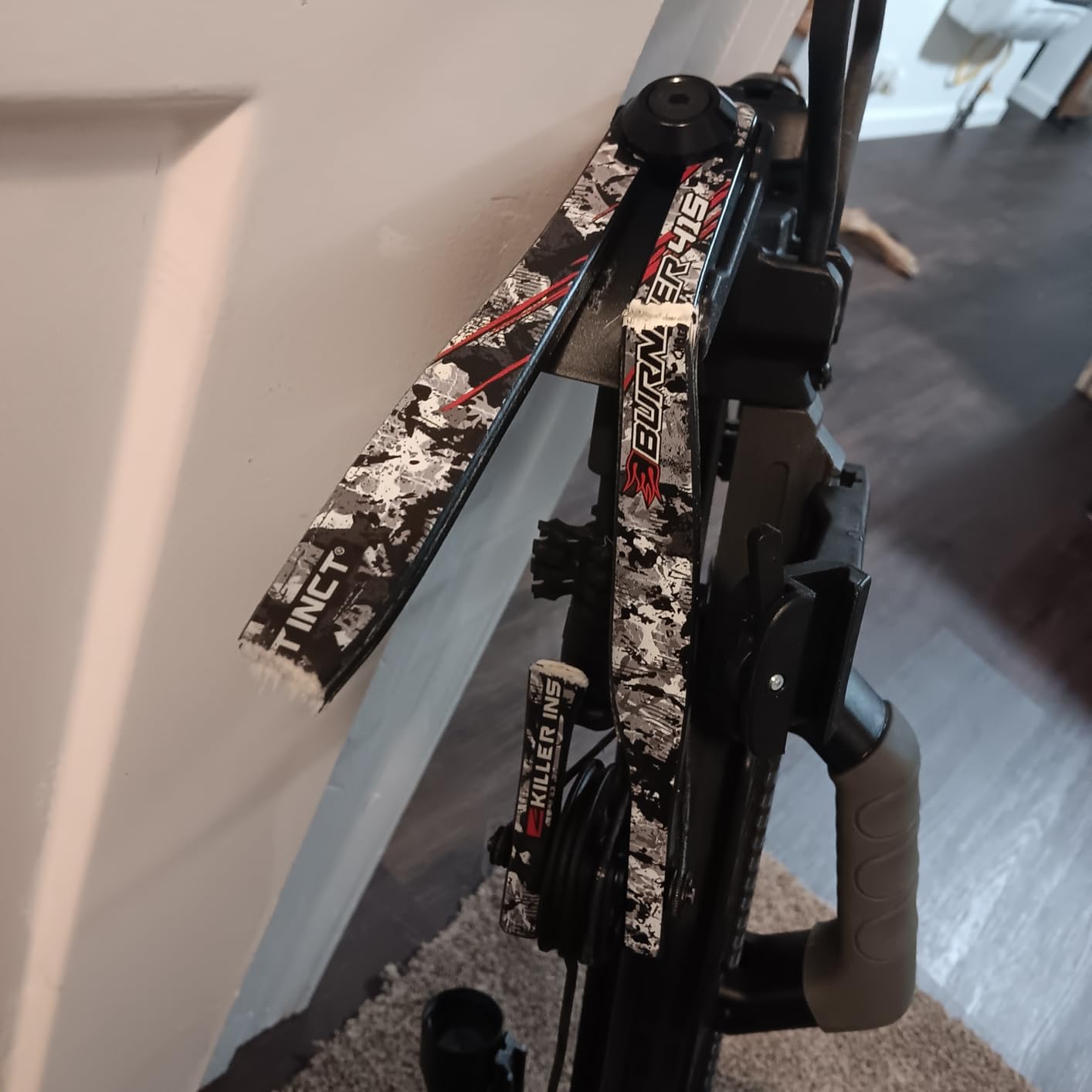
It is also the bow on this list where the reviews pull hardest in two directions. Owners praise the speed, the adjustability, and the quiet operation the string suppressors provide, and several describe accurate, hard-hitting groups within a few shots of setup.
Against that, durability is the recurring theme. There are multiple reports of limb failures, and at least one owner describes the butt shattering when using a crank with the butt fully extended. That is exactly the kind of pattern we refuse to write around, because a bow that fails mid-season costs more than any spec advantage it offers.
The other repeated note is bolt weight. The supplied HYPR Lite bolts are light, and the same advice comes up again and again: shoot heavier bolts, somewhere around 500 grains, to reduce stress on the limbs and improve flight.
Who the Burner 415 suits
It suits a patient shopper who wants a lot of speed for the money and is willing to treat the bow carefully. If you check your string and cables before every season, shoot heavier bolts, and do not plan to hand this bow to a beginner with no supervision, the speed is genuinely impressive for the tier.
It also suits anyone who wants adjustability on a budget. The six-position butt and X-Lok foregrip are real features, not marketing, and they make sharing the bow between shooters much easier.
Who should skip the Burner 415
Skip it if reliability is your priority over velocity. The durability pattern in the reviews is the main reason this bow is not our top pick despite being the fastest.
Skip it if you hunt alone in heavy cover. A 220-pound draw with a rope cocker is a lot to manage from a ladder, and a bow you are worried about is a bow you will rush.
5. Wicked Ridge Invader 400: Best for Low Cocking Effort
Wicked Ridge Invader 400 Crossbow with Acudraw, Pro View Scope Package
400 FPS
6 lbs
15 inch width
ACUdraw 5 lb effort
Pro-View 3x scope
Pros
- ACUdraw built in with only 5 lb of cocking effort
- Light 6 lbs and 15 inches wide for mobility
- Pro-View reticle calibrated to 50 yards
- Built by TenPoint
- Quiver and three XX75 arrows included
Cons
- Assembly instructions are generic and thin
- Some early ACUdraw unit failures reported
- Scope is a basic non-illuminated 3x
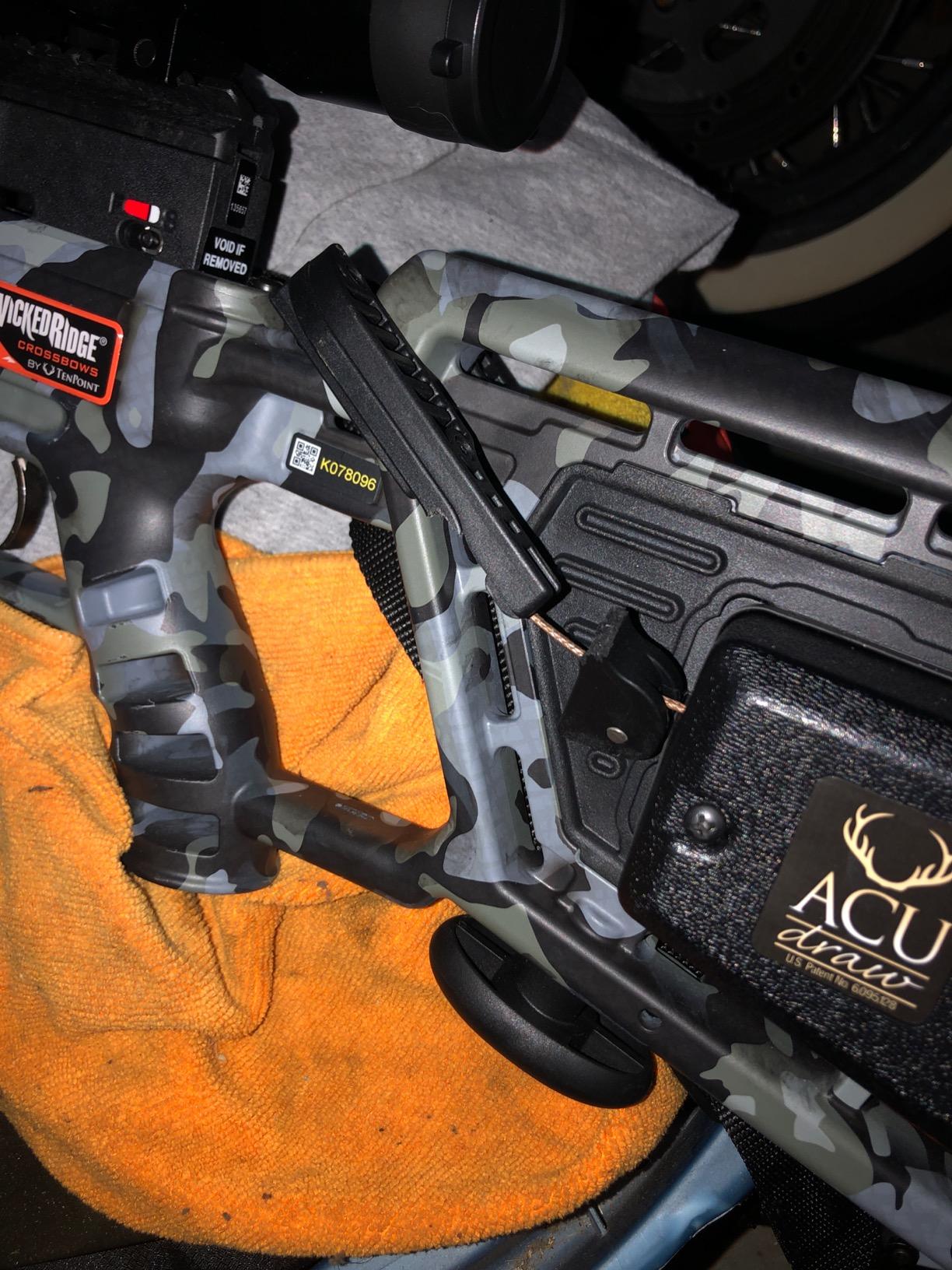
Almost nothing in deer hunting is more valuable than a bow you can actually get cocked. The Invader 400 ships with an ACUdraw unit built into the frame, rated at around 5 pounds of effort, and it still shoots 400 fps at only 6 pounds of bow weight.
That combination opens crossbow hunting to people who genuinely cannot cock a 220-pound draw: older hunters, shooters recovering from shoulder surgery, and anyone who wants to hunt from a tree stand where there is no room to wrestle with a rope.
It is 15 inches wide, narrow enough for a stand, and the Pro-View 3x scope comes with a multi-reticle pattern calibrated to 50 yards, which is the distance that actually matters for most deer shots. Built by TenPoint, the build quality is a step above what the accessory list suggests.
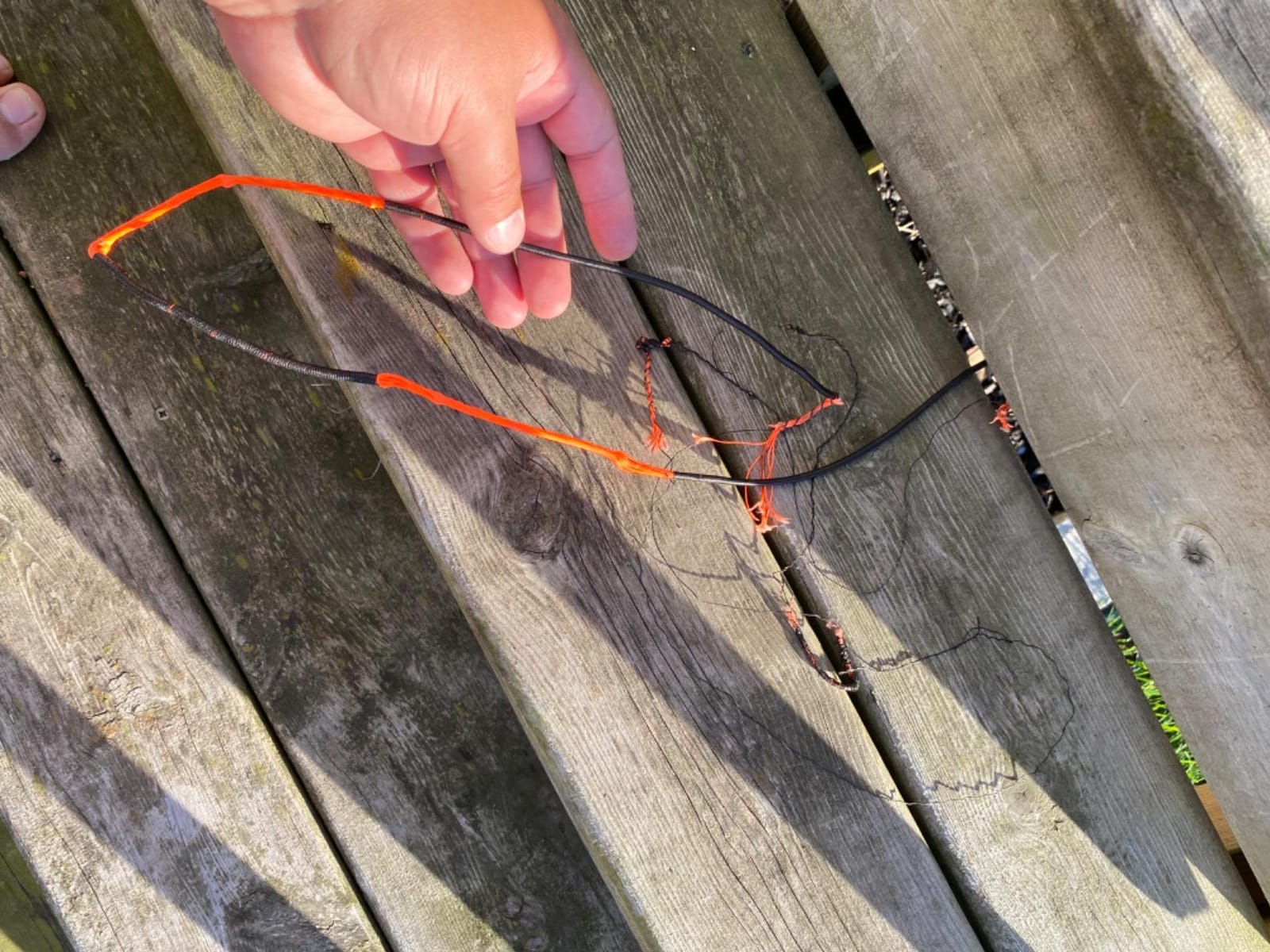
Two honest catches. The assembly instructions are generic and several owners report missing hardware or unclear quiver mounting steps, so budget an hour with a phone tutorial. And a handful of owners report early ACUdraw unit failures, which matters a great deal on a bow whose entire appeal is that the cocking system is the selling point.
Who the Invader 400 suits
It suits senior hunters and anyone with a physical limit on draw strength. Forum threads about switching from a vertical bow to a crossbow keep circling back to exactly this problem, and an integrated 5-pound cocking device is the cleanest answer we found in this roundup.
It also suits younger hunters learning alongside a parent or mentor, for the same reason. You cannot teach a 12-year-old to cock a rope, but you can hand them an ACUdraw.
Who should skip the Invader 400
Skip it if you want a premium optic. The Pro-View 3x is a fixed-power, non-illuminated scope, which means early starts and late finishes in heavy timber will cost you sight picture.
Skip it if you are buying for a bow you will pass down without doing any research on the ACUdraw unit. The idea is excellent, but you should know the part is serviceable and where the replacement path is before you commit.
6. Wicked Ridge Fury 410 De-Cock: Best for Safe De-Cocking
Wicked Ridge by TenPoint Fury 410 De-Cock, Peak XT – 410 FPS – Equipped with RangeMaster Pro Variable Speed Scope & ACUdraw De-Cock Cocking & De-Cocking System – Reverse-Draw Design.
410 FPS
29 inch long
7.5 lbs
ACUdraw De-Cock
3.5 lb D1 trigger
Pros
- ACUdraw De-Cock stops part way for safe de-cocking
- Compact 29 inch reverse-draw platform
- RangeMaster Pro scope with lighted aiming points
- Crisp 3.5 lb two-stage zero-creep trigger
- Built in the USA by TenPoint
Cons
- Foot stirrup breakage reported
- String wear showing around 20 shots
- Heavier than expected at 7.5 lbs
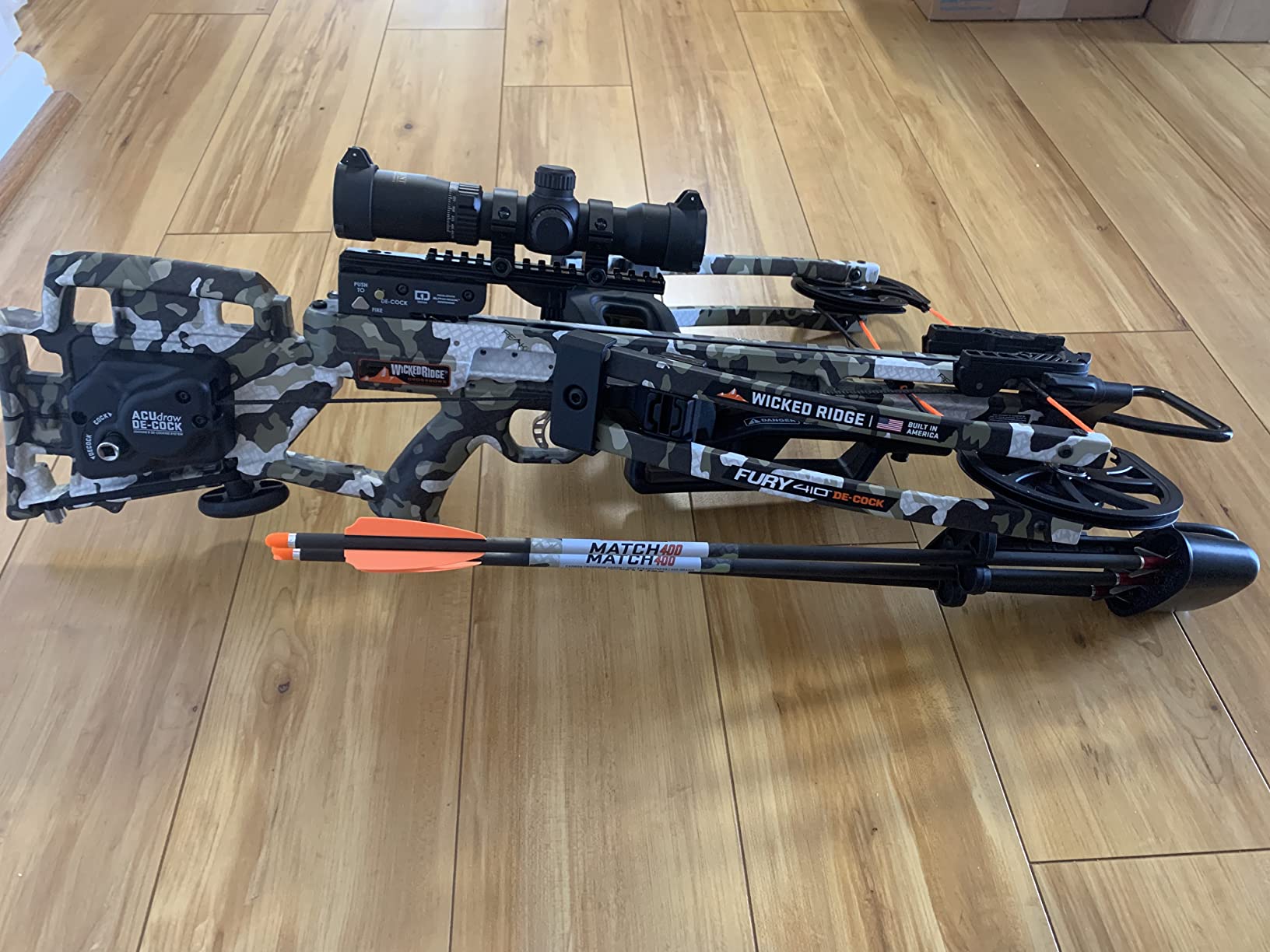
The Fury 410 De-Cock answers the question new crossbow owners ask more than any other, which is what to do with a cocked bow when the hunt is over. Its ACUdraw De-Cock system lets you release partial power and stop the bow at any point instead of firing a discharge arrow into the dirt or leaving a loaded rig hanging.
It is also a compact bow, at 29 inches long on a reverse-draw platform, and reverse draw means the string comes back toward your face rather than away from it, which keeps your fingers clear of the string on release.
The RangeMaster Pro variable speed scope with lighted aiming points is a real upgrade over the fixed scopes on most of the budget bows here. The D1 trigger is a two-stage, zero-creep design with a 3.5-pound pull, and owners describe it as crisp and repeatable.
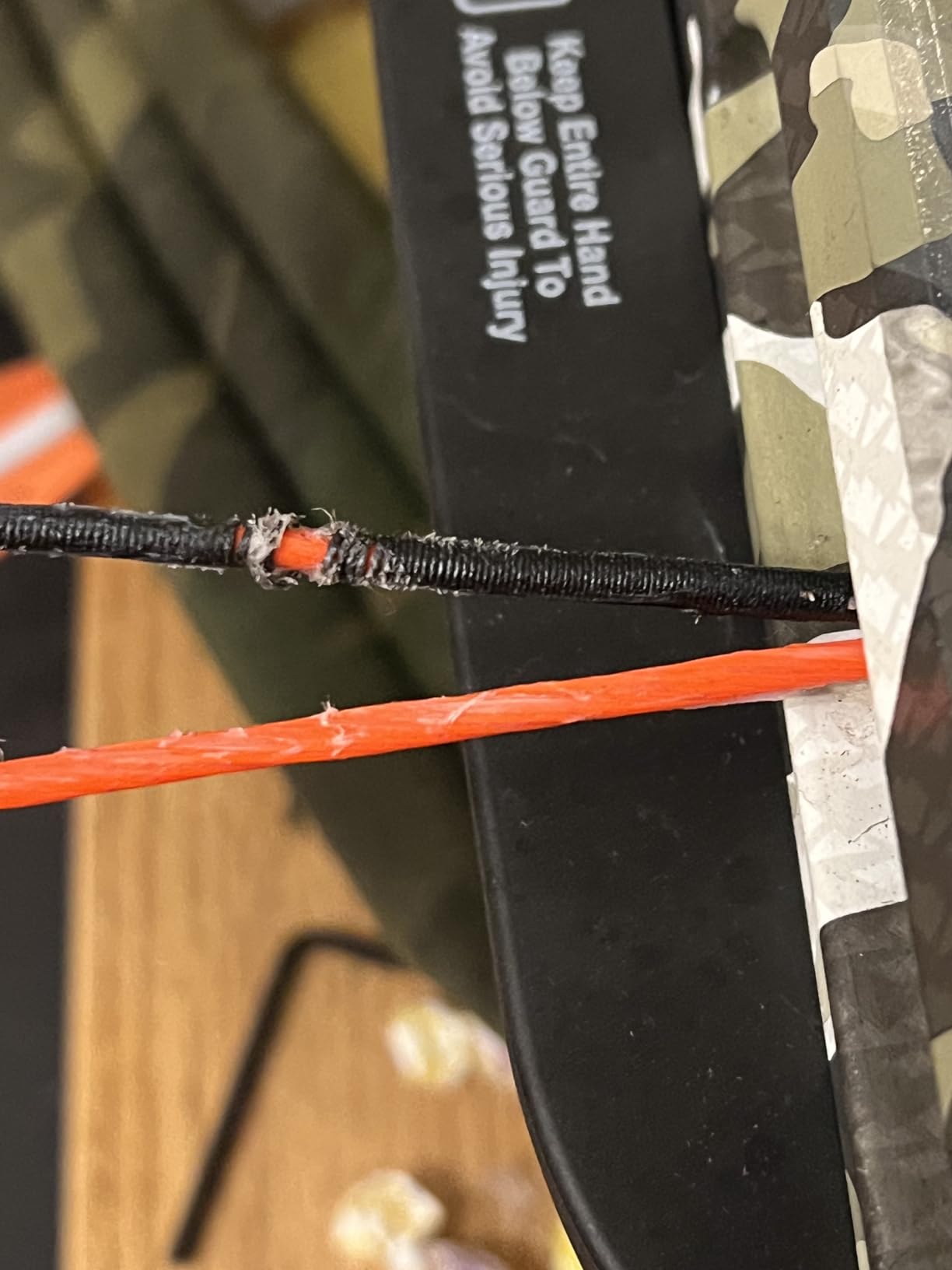
The weak point is hardware, not the core design. Multiple owners report the foot stirrup breaking, and one describes visible string wear after roughly 20 shots. The de-cocking mechanism itself does not always retract smoothly for everyone, and warranty service can be slow. At 7.5 pounds, it is also the second-heaviest bow in the roundup.
Who the Fury 410 De-Cock suits
It suits anyone who camps away from a vehicle or hunts in places where unloading a cocked bow is inconvenient. The ability to de-cock in stages is a safety feature as much as a convenience, and it is the feature this bow is named for.
It also suits a shooter who wants variable speed glass. Matching reticle marks to different bolt velocities is far easier with this scope than with the fixed multi-reticle units on most entry bows.
Who should skip the Fury 410 De-Cock
Skip it if you plan to leave the bow cocked overnight, because the stirrup reports give us pause. That is a small steel or alloy part carrying a lot of load, and it is not the place you want to save money.
Skip it if you are a mobile hunter who cares about every pound. It is compact, but 7.5 pounds plus a pack is a real load on a long walk.
7. TenPoint Venom X: Best for Tree Stand Hunting
TenPoint Venom X, Moss Green – Lightest ACUslide Bow Ever
390 FPS
6.9 lbs
9.75 inch wide
33 inch long
ACUslide
3.5 lb S1 trigger
Pros
- Narrow 9.75 inch cocked width for stands and blinds
- Lightest ACUslide bow at 6.9 lbs
- ACUslide cocks quietly and de-cocks safely
- Arrives fully assembled and pre-sighted
- Pro-View 400 scope with an illuminated reticle
Cons
- Slower 390 fps than most rivals in this class
- Only a small pool of owner reviews so far
- Premium tier pricing for the category
At 9.75 inches wide and 33 inches long, the Venom X is the narrowest bow in this roundup by a comfortable margin. That width is the whole argument. When you are sitting in a ladder stand with a bow hanger against a trunk, or in a ground blind with a bench, a narrow cocked bow changes how comfortable the evening is.
It weighs 6.9 pounds and runs 390 fps at a 215-pound draw weight. The ACUslide system cocks the bow quietly and lets you de-cock it safely at any point in the stroke, which is the same advantage the Fury offers with a different mechanism.
Two details make this the least fussy bow to start with. It arrives fully assembled and pre-sighted, so there is no first-afternoon tuning project, and the polymer scope struts hold the optic rock solid, which addresses the scope alignment drift that owners on other platforms sometimes report after a season of use.
The S1 trigger is a two-stage, zero-creep design with a 3.5-pound pull and a roller sear, and the Pro-View 400 illuminated reticle handles low light well for a fixed-power scope. Integrated string dampening keeps the report under control.
Who the Venom X suits
It suits the stand hunter who values width over raw speed. Forty fps separates this bow from the fastest models here, and in a ladder at 20 feet that difference rarely decides the outcome. Maneuverability usually does.
It also suits anyone who does not want to assemble a crossbow. A bow that shows up sighted and ready removes the single most common source of first-season frustration.
Who should skip the Venom X
Skip it if you are a long-range shooter who wants every fps available. The Venom X is built for close, comfortable shooting rather than pushing a bolt across 80 yards of open field.
Skip it if you want a deep review history. This is a newer model with a small pool of owner feedback, so long-term durability is simply not established yet. We would wait a season or two if you are risk-averse with your money.
8. TenPoint Turbo X: Most Accurate Crossbow in the Roundup
TenPoint Turbo X Crossbow, Moss Green – 415 FPS – Equipped with 100-Yard RangeMaster Scope, ACUslide Cocking & De-Cocking System + S2 Trigger
415 FPS
6.9 lbs
ACUslide
S2 trigger with DFP
100-yard RangeMaster scope
Pros
- Grouped to 1.23 inches at 50 yards in independent testing
- ACUslide silent cocking and safe de-cocking
- S2 zero-creep trigger with Dry-Fire-Prohibitor
- Etched glass variable speed scope with red and green light
- Limited lifetime warranty
Cons
- One report of limb delamination on a new bow
- Small pool of owner reviews for a new model
- Feature set may exceed casual hunter needs
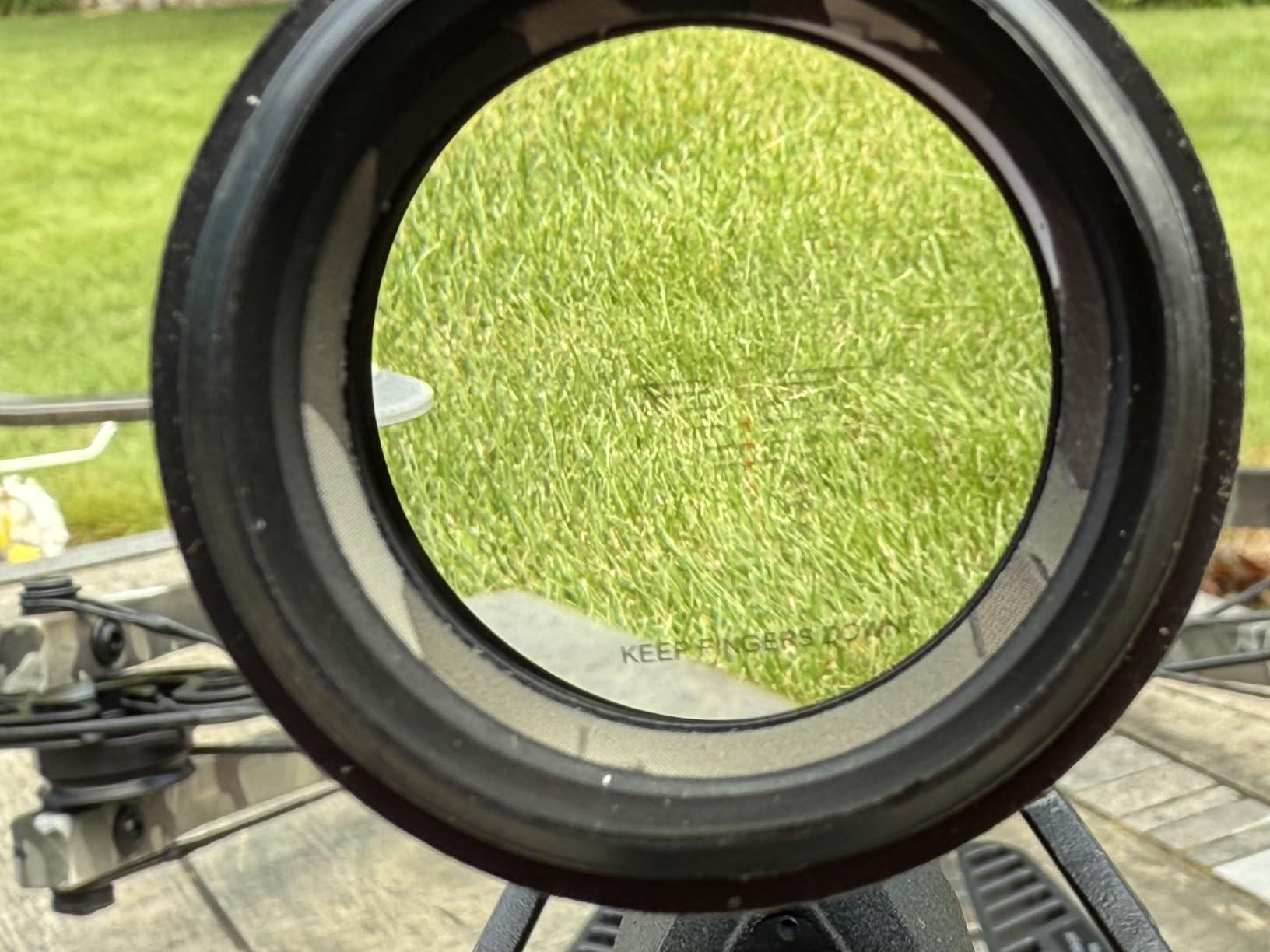
The Turbo X is the accuracy pick. It runs 415 fps at 6.9 pounds, and independent testing recorded 1.23-inch groups at 50 yards. That kind of precision comes from the traditional two-cable bow assembly, which is heavier in some ways but very consistent in how it stores and releases energy.
It also won an Outdoor Life award for best and most accurate crossbow, which is a useful independent signal when you are weighing a premium price tag. The ACUslide gives you quiet cocking and safe de-cocking, same idea as the Fury 410 but on TenPoint’s own frame.
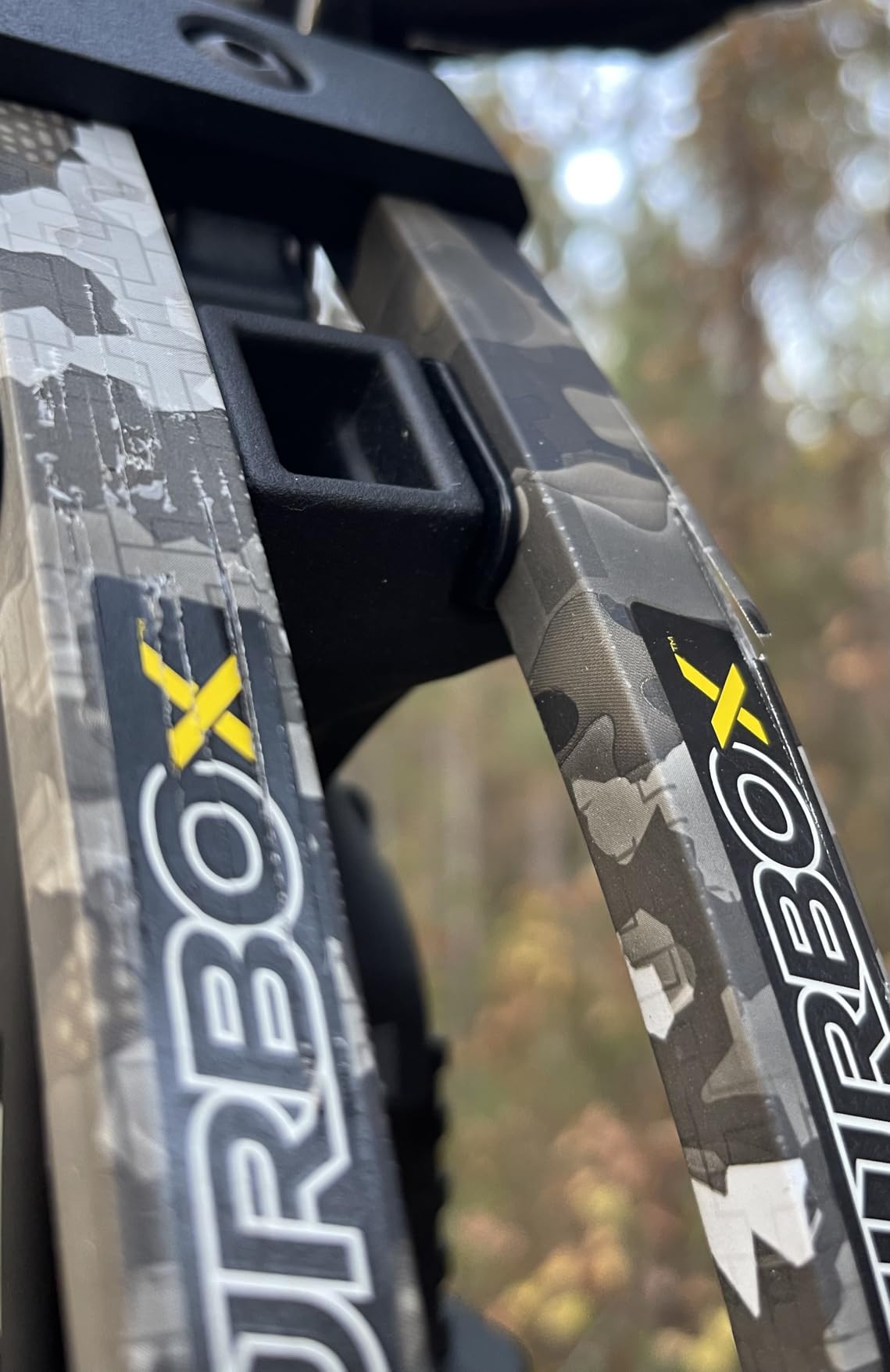
The 100-yard RangeMaster scope is the best optic in this roundup by a wide margin. It has a variable speed setting, an etched glass reticle, multi-coated glass, and a rheostat-controlled light that runs from red to green so you can keep your night vision. Most buyers will use maybe a third of its capability, and that is fine.
The S2 trigger is a zero-creep design with a Dry-Fire-Prohibitor built in, which stops the trigger if the bow is not properly nocked. It is a sensible safety feature on a fast bow with a heavy power stroke. Warranty coverage is listed as limited lifetime.
Who the Turbo X suits
It suits the shooter who has already decided on a crossbow and wants the best of what is available. Owners who pair it with good broadheads describe it as forgiving, and the combination of a premium scope and a premium trigger makes it easy to shoot well without working at it.
It also suits a hunter who cares about dry-fire safety specifically. The Dry-Fire-Prohibitor is the kind of thing you stop noticing once you have it, and miss once you do not.
Who should skip the Turbo X
Skip it if you are a first crossbow and you want something forgiving of mistakes. There is one serious report of limb delamination on a new bow with a poor response from the seller, and one is enough to mention when you are advising someone about a premium purchase.
Skip it if a mid-tier bow would do the job. Everything this model adds, it adds at a price that needs a serious hunter to justify.
9. Ravin R10 Ultimate: Best Compact Premium Crossbow
Ravin R10 Ultimate 400fps. Crossbow Package – Predator Camo
400 FPS
HeliCoil cams
Frictionless Flight
Versa-Draw cocking
Trac-Trigger
Pros
- Owners report consistent bullseyes at 80 yards
- HeliCoil technology keeps cams balanced
- Frictionless Flight system for steady arrow flight
- Compact reverse-draw body
- Premium build and finish in Predator Camo
Cons
- Cocking system is loud
- Heavy at 12 lbs package weight
- Delivery requires a signature
The R10 Ultimate is the accuracy-at-distance option in this roundup. Multiple owners describe consistent bullseyes at 80 yards, which is a claim most deer hunters will never need and a few will consider the entire reason for buying a crossbow.
The engineering behind that is the HeliCoil cam design, which keeps the cams balanced so the bow is not working against itself, and the Frictionless Flight system, which is intended to keep the bolt on a straight line down the rail. The Trac-Trigger firing system and Versa-Draw cocking system round out the package.
On the Ravin versus TenPoint question that comes up constantly in hunting forums, this is the clearest statement of the Ravin side of the argument. Ravin builds compact reverse-draw platforms that are quiet and consistent, and owners of this bow consistently praise the finish and the fit of the whole package.
The compromises are real. The package weight is listed at 12 pounds, which makes it the heaviest bow here by a wide margin. The cocking system is louder than the ACUslide and ACUdraw systems on the TenPoint and Wicked Ridge bows. And delivery requires a signature, which is a small annoyance that shows up in reviews more than you would expect.
Who the R10 Ultimate suits
It suits the hunter with room to shoot longer and a budget that supports a premium tier. If your real range is 60 to 80 yards and you have practiced from a rest, the accuracy here is a genuine upgrade over everything else in this list.
It also suits someone who wants a complete package and does not want to assemble a shopping list. Scope, arrows, quiver, and cocking system are all included, which removes the accessory budget entirely.
Who should skip the R10 Ultimate
Skip it if you are a stand hunter. At 12 pounds of package weight, this is a bow you will feel on the ladder, and the compact advantage of a crossbow is mostly wasted if you are too tired to shoot it well.
Skip it if you share a bow. This is a performance purchase, not a family bow, and the cost puts it firmly in serious-hunter territory.
10. Killer Instinct Active Fuel 415: Best First Crossbow With a Built-In Crank
Killer Instinct KILLER INSTINCT Hunting Active Fuel 415 Crossbow w/Scope 2106
415 FPS
210 lb draw
Built-in RDC crank
6.7 lbs
LUMIX 4x32 IR-W scope
Pros
- Built-in ambidextrous crank is rare in this tier
- Good accuracy out to 70 yards after sight-in
- Adjustable length and X-Lok foregrip
- Quiet operation for the power level
Cons
- Scope illumination lights the entire reticle
- Included bolts are very light at 370 grains
- Multiple reports of limb failures
The Active Fuel 415 is unusual in one specific way: the crank is built into the bow. Most competitors at this level sell you a rope and let you buy a crank separately. Here the ambidextrous RDC crank mounts on either side, so cocking does not depend on your strength or your patience.
It runs 415 fps at a 210-pound draw weight and weighs 6.7 pounds, with the same six-position adjustable butt and X-Lok foregrip as the other Killer Instinct bows in this list. That fit range matters for a first bow, because you will share it before you get your own.
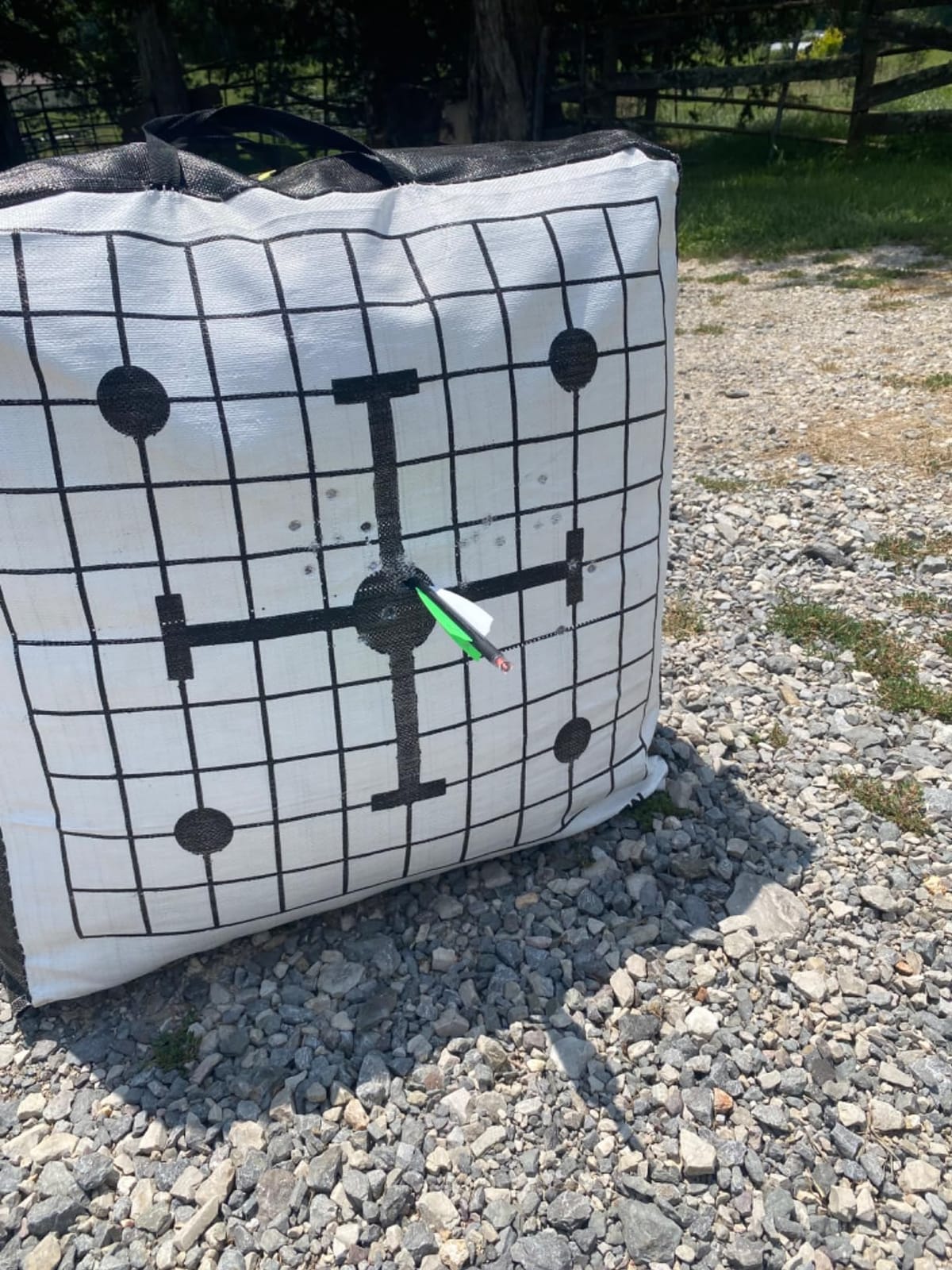
The LUMIX 4×32 IR-W scope is the weak point. Owners specifically complain that the red and blue illumination lights the whole reticle instead of just the center dot, which is distracting at the moment when you can least afford a distraction. Everything else about the bow performs better than that optic.
Accuracy is reported as good, with owners describing effective results out to 70 yards after minor adjustments. The supplied bolts are 370 grains with 100-grain field tips, and again the review consensus is to shoot something heavier, in the 425-grain range or above.
Who the Active Fuel 415 suits
It suits a first crossbow buyer who does not want to spend a second purchase on a cocking device. Having the crank in the box, mounted and ready, removes the most common reason people give up on a crossbow in their first season.
It also suits a household where more than one person shoots. The adjustable length, the ambidextrous crank, and the low weight make it easy to pass around, and it is comfortable from a ground blind or a sit-down stand.
Who should skip the Active Fuel 415
Skip it if low-light shooting is part of your plan until you replace the scope. The illumination design is the one accessory complaint that shows up consistently.
Skip it if limb durability worries you. The same pattern of limb failure reports that appears on the other Killer Instinct bows in this roundup appears here too, and it is worth factoring into your decision across the whole brand.
How to Choose a Crossbow for Deer Hunting
Speed and kinetic energy: how much is enough
Short answer: far less than you think. Every crossbow in this roundup delivers more energy than a deer requires, so speed is almost never the limiting factor in a clean deer harvest. Kinetic energy is the more honest number to look at, because it accounts for arrow weight, which manufacturers love to leave out.
The practical reason not to chase velocity is broadhead flight. Above roughly 450 fps, fixed-blade broadheads start to behave badly out of a crossbow, because a small, light, very fast blade is easier for wind to upset. Mechanical broadheads fly more consistently at those speeds. The bows here run 350 to 415 fps, which is a range where both head types behave predictably.
Match speed to the distance you actually shoot. If you hunt a ground blind at 25 yards, 350 fps is more than enough. If you are shooting open country, the faster bows and the better scopes earn their place.
Accuracy and broadhead flight at deer range
Field point accuracy is not the same thing as reliable broadhead impact. A bow that groups under an inch with field points can still drift with broadheads installed, and the reason is wind sensitivity. A heavy broadhead on a fast bolt carries more frontal area relative to its mass, so it feels crosswind more.
For most deer hunters, the realistic envelope is 40 to 50 yards in calm conditions with a good scope, and shorter than that in wind or through timber. The most accurate bow here groups 1.23 inches at 50 yards, which is more precision than the situation demands. Accuracy is rarely what ends a hunt badly. Aiming is.
Cocking and de-cocking effort
Draw weight and cocking effort are not the same thing, and this is the most misunderstood spec in the category. Draw weight is how hard the bow is to pull to full draw. Cocking effort is how hard it is to put the bow in your hands, and the systems that solve it are worth real money.
There are three practical options. A rope cocker is the cheapest and the most workout, especially at 210 to 220 pounds. A built-in ratchet system such as the ACUdraw on the Wicked Ridge Invader 400 drops effort to about 5 pounds. A crank cuts it further, and the Killer Instinct Active Fuel 415 ships with one.
De-cocking matters just as much. A bow that can be returned to safe without firing a discharge arrow is safer in camp, in the truck, and at the end of a long sit. The ACUslide and ACUdraw De-Cock systems on the TenPoint and Wicked Ridge bows all do this.
Cocked width and where you hunt
Cocked width is the number most buyers ignore and then regret in a ladder stand. Measure the space you actually have. A bow hanger on a ladder gives you roughly 14 to 16 inches of clearance before the frame hits the trunk, and a ground blind bench can be tighter than that.
Everything at or under 15 inches works in most stands. The Venom X at 9.75 inches and the Boss 405 at 14.75 inches are the two most compact options here, and the Venom X is the one to buy if you sit in a tight stand every weekend. If you hunt on foot or from a ground blind with space, width stops mattering.
Scope and optics
A crossbow is worthless without a usable scope, and the included optic is where most budget bows cut corners. Look for at least 4x magnification, illuminated reticle, and multi-coated glass. Anything with a fixed power and no light will cost you sight picture at dawn and dusk.
Variable speed scopes are a genuine upgrade because they let you match reticle marks to different bolt velocities instead of re-zeroing constantly. The RangeMaster scopes on the Fury 410 De-Cock and the Turbo X are the two in this roundup that do this well, and both use an etched glass reticle that holds up in rough conditions.
Fit: cocking strength, length of pull and bow weight
Fit decides more hunts than specifications do. Three variables matter: how strong you can pull, how long your arms are relative to the butt, and how much weight you want to hang from a ladder. Trigger pull weight is the one most people never check, and a 5-pound trigger on a small-framed shooter is a real problem.
The bows here run from 5 to 7.5 pounds of bow weight, plus accessories, with the Ravin R10 Ultimate the outlier at 12 pounds of package weight. For bow weight, subtract what you can and add the truth: the lighter bows are easier in a stand but twitchier on a long shot, and the heaviest bow in the roundup is the most stable.
Reliability, warranty and the cost of arrows
Warranty terms vary more than most marketing suggests. The Killer Instinct bows in this roundup carry a limited lifetime warranty on non-wearable parts for the original owner, which is strong coverage. The Barnett models list a manufacture warranty, and some packages list only one year, so read the terms on your specific model rather than assuming brand-level coverage.
Watch for proprietary arrows and nocks. Several of these bows are built around a specific arrow diameter and nock, and shooting something else can hurt accuracy and, over time, the bow. Budget for a season’s worth of bolts up front, because that cost comes back every year and it is the item most first-time buyers forget.
Service is the other hidden cost. Check the string and cables before the season, keep rail lube on hand, and know your maker’s service interval. A bow that needs a professional tune every year is a different ownership experience than one that does not.
Crossbow safety basics
The most common serious crossbow injury is a thumb crushed against the string and grip, so keep at least four fingers clear of the string behind the rail and never let your thumb cross the string path. De-cock through a system if your bow has one, rather than reaching for the string on a loaded bow.
Always set the safety before you move with a cocked bow, and always know where the bow is pointing. Sight in on a low-energy target, not a foam block on a shelf. And check your state’s regulations, because crossbow rules for deer season change and are not uniform.
Frequently Asked Questions
How many fps should a crossbow be for deer hunting?
Any crossbow in the 350 to 415 fps range delivers far more power than a deer requires. Speed is not the limiting factor in a deer harvest. The more useful reason to avoid extreme velocity is broadhead flight: above roughly 450 fps, fixed-blade broadheads become less predictable out of a crossbow. Match speed to the distance you realistically shoot.
Is Ravin or TenPoint better?
TenPoint edges the compact and easy-cocking categories with systems like the ACUslide and ACUdraw, which cock quietly and de-cock safely. Ravin is known for tight group sizes and balanced cam designs, and owners of the R10 Ultimate report consistent accuracy at long range. Both use proprietary arrows, so compare ongoing arrow cost as well as the bow.
What crossbow has the least problems?
Designs with fewer failure points tend to cause the fewest problems. Look for a brand with a limited lifetime warranty on non-wearable parts, an established service network, and a cocking system you can service yourself. Read the reviews for recurring limb, string, or stock complaints, and confirm in writing whether the warranty covers limbs, because that varies by brand.
What is the best range to shoot a deer with a crossbow?
For most deer hunters the reliable envelope is 40 to 50 yards in calm conditions with a good scope, and less in wind or through timber. Field point accuracy at 50 yards is not the same as reliable broadhead impact, because broadheads are more sensitive to crosswind. Know your limit through practice with broadheads installed before the season starts.
How much kinetic energy do I need to kill a deer with a crossbow?
Every hunting crossbow in this roundup produces well over 100 foot-pounds of kinetic energy with standard bolts, which is far more than a whitetail requires. Kinetic energy is a better comparison number than velocity because it accounts for arrow weight, and heavier bolts increase energy while also reducing limb stress.
Do I need a rangefinder scope for a crossbow?
It helps, but it is not required. A variable speed scope with illuminated etched glass covers most deer hunting situations, and a separate rangefinder works just as well. If you shoot at moving animals or in changing light, illuminated reticle capability matters more than rangefinding, because you need to see the reticle at all.
Final Verdict: Which Crossbow Should You Buy?
For most deer hunters, the best crossbows for deer hunting in 2026 come down to three questions. If you want the safest all-round bet, take the Barnett Whitetail Hunter II, which has the deepest combination of owner history and consistent feedback of anything here. If you want a step up in speed and a narrower shooting package, the Whitetail Hunter STR is the better buy.
If you cannot cock a heavy draw, the choice narrows fast. The Wicked Ridge Invader 400 at 5 pounds of cocking effort and the Killer Instinct Active Fuel 415 with its built-in crank are the two answers, and the second is better if you share the bow. If your problem is a tight tree stand, the TenPoint Venom X at 9.75 inches wide is the most comfortable bow on the list.
For accuracy and long-range confidence, the TenPoint Turbo X is the pick, and the Ravin R10 Ultimate goes further if you have the budget and the back to carry 12 pounds. Just remember that the fastest bows here, the Killer Instinct Burner 415 and the Boss 405, want heavier bolts and careful string checks, and that recurring limb complaints should factor into your decision.
Whichever one you choose, buy the arrows and broadheads at the same time, sight in before the season rather than during it, and check your state rules before you plan the first morning. That last step is the one people forget, and it is the one that ends a season early.