
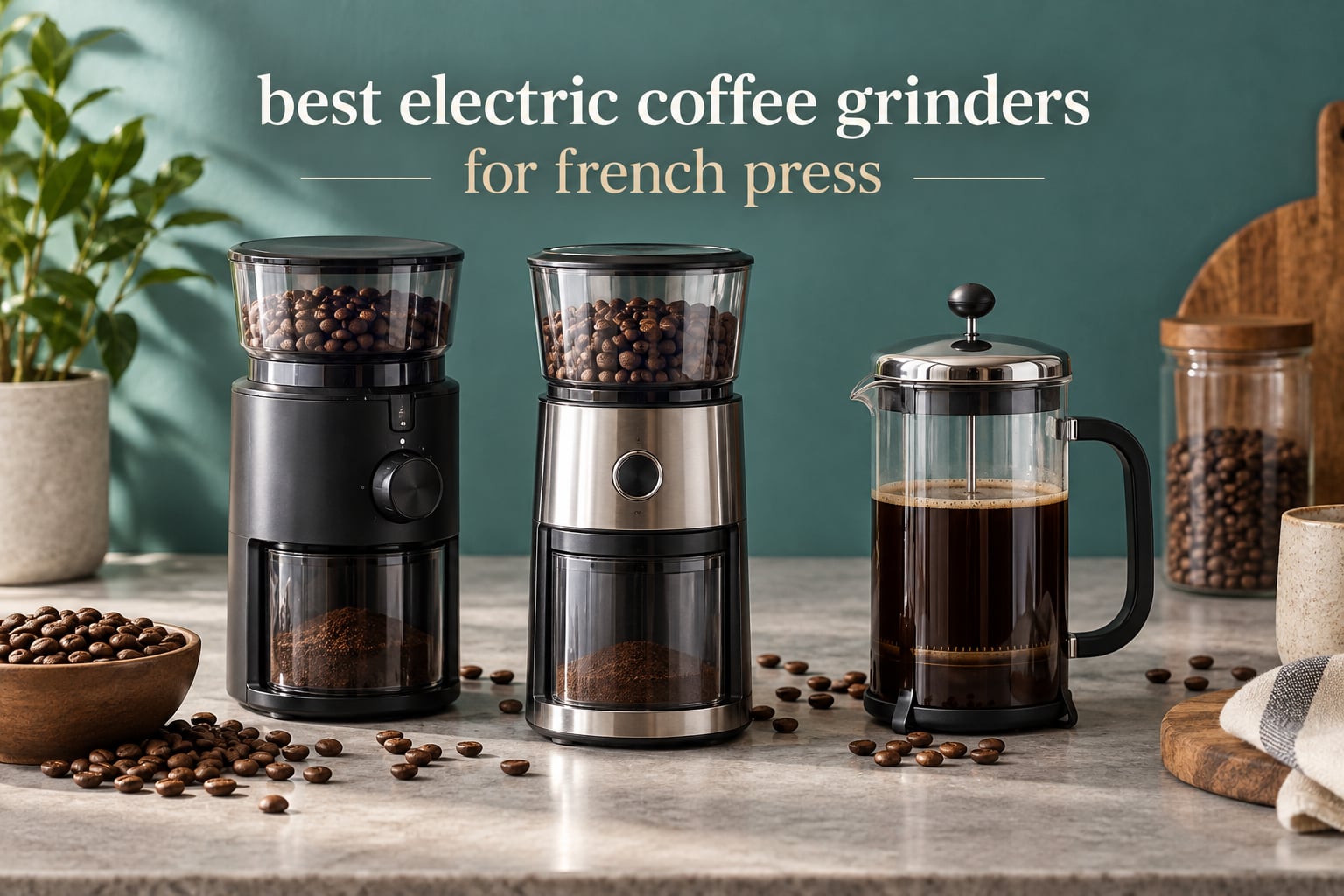
A French press makes almost no demands on you. There is no pressure to manage, no temperature curve to chase, and no basket to dose into. Yet the cup you end up with is decided almost entirely by the grinder, because immersion brewing magnifies every flaw in the particle size it receives.
Here is the problem. French press sits the grounds in hot water for four minutes and then pushes the plunger down. Fine dust created during grinding sinks to the bottom of the pot and over-extracts into a bitter, silty layer. Coarse chunks sitting near the top under-extract and leave the cup thin. What you want in between is the even, medium-coarse grind that lets water move through the bed without being blocked by it.
That is the filter we used to build this list of the best electric coffee grinders for French press in 2026. We did not rank these machines by espresso capability or by how many grind settings the box claims. We ranked them by what actually lands in the pot: how coarse the coarsest real setting goes, how much fine powder the burrs generate at that setting, and whether the machine can handle a full press without making a mess of your counter.
Ten models made the cut, from a compact burr grinder that disappears into a cabinet to a full-size conical machine with a stainless grounds cup that barely clings to anything. If you want the wider picture on burr grinders for other brew methods, our burr coffee grinder roundup covers espresso and pour over in more depth.
Table of Contents
Top 3 Picks for French Press in 2026


OXO Brew Conical Burr
- 40mm stainless conical burrs
- 15 settings plus 43 micro-adjustments
- Static-resistant steel grounds cup
What grinder is best for French press?
For most people, the best grinder for French press is a conical burr machine with a genuine coarse end and low fines output. The Baratza Encore is our first choice because its 40 settings actually reach a proper medium-coarse grind, its 40mm conical steel burrs stay consistent, and it holds a coarse setting well enough for cold brew too. If you brew a full pot every morning and want hands-free dosing, the Cuisinart DBM-8P1 covers more cups per cycle. If static mess is the thing that annoys you most, the OXO Brew Conical Burr has a stainless grounds cup that almost nothing sticks to.
What you should not do is buy an espresso-first grinder that claims to reach coarse but never really gets there. Forum discussion across r/Coffee and home-barista.com keeps circling the same lesson: a settings count is marketing, a real coarse setting is not.
Best Electric Coffee Grinders for French Press (October 2026)
| Product | Specifications | Action |
|---|---|---|
| Baratza Encore Coffee Grinder |
|
Check Latest Price |
| Cuisinart Electric Burr Grinder DBM-8P1 |
|
Check Latest Price |
| OXO Brew Conical Burr Grinder 12 oz |
|
Check Latest Price |
 KRUPS Precision Burr Grinder KRUPS Precision Burr Grinder |
|
Check Latest Price |
 SHARDOR Electric Burr Grinder 2.0 SHARDOR Electric Burr Grinder 2.0 |
|
Check Latest Price |
 Secura Electric Burr Grinder 12 cup Secura Electric Burr Grinder 12 cup |
|
Check Latest Price |
 Hamilton Beach Burr Grinder 16 oz Hopper Hamilton Beach Burr Grinder 16 oz Hopper |
|
Check Latest Price |
 Ollygrin Burr Grinder 30 Settings Ollygrin Burr Grinder 30 Settings |
|
Check Latest Price |
 Aromaster Conical Grinder 48 Settings Aromaster Conical Grinder 48 Settings |
|
Check Latest Price |
 OXO Brew Compact Conical Burr Grinder OXO Brew Compact Conical Burr Grinder |
|
Check Latest Price |
1. Baratza Encore Coffee Grinder – the most reliable coarse grind
Baratza Encore Coffee Grinder ZCG485BLK, Black
40 grind settings
40mm conical hardened steel burrs
5.6 lb, 13.4 inch tall
Pros
- 40 settings span espresso through French press
- 40mm commercial-grade conical burrs stay consistent
- Compact footprint suits small kitchens
- Front pulse button plus on/off switch
- 1 year warranty and strong brand support
Cons
- Costs more than generic burr grinders
- Plastic body and hopper show wear over years
- Static cling in the plastic grounds receptacle
This is the grinder I recommend to anyone who just wants a full press to come out right every time. The adjustment ring runs through 40 positions, and the coarsest of those genuinely produces a coarse, loose grind rather than a medium one pretending to be coarse. That range is exactly what forum regulars mean when they call the Encore the default first electric grinder.
Grind consistency comes from the 40mm commercial-grade conical hardened steel burrs, which is the same basic burr family you would find on machines costing several times more. Beans sit in a small footprint body that measures just over 13 inches tall, so it stores easily between uses.
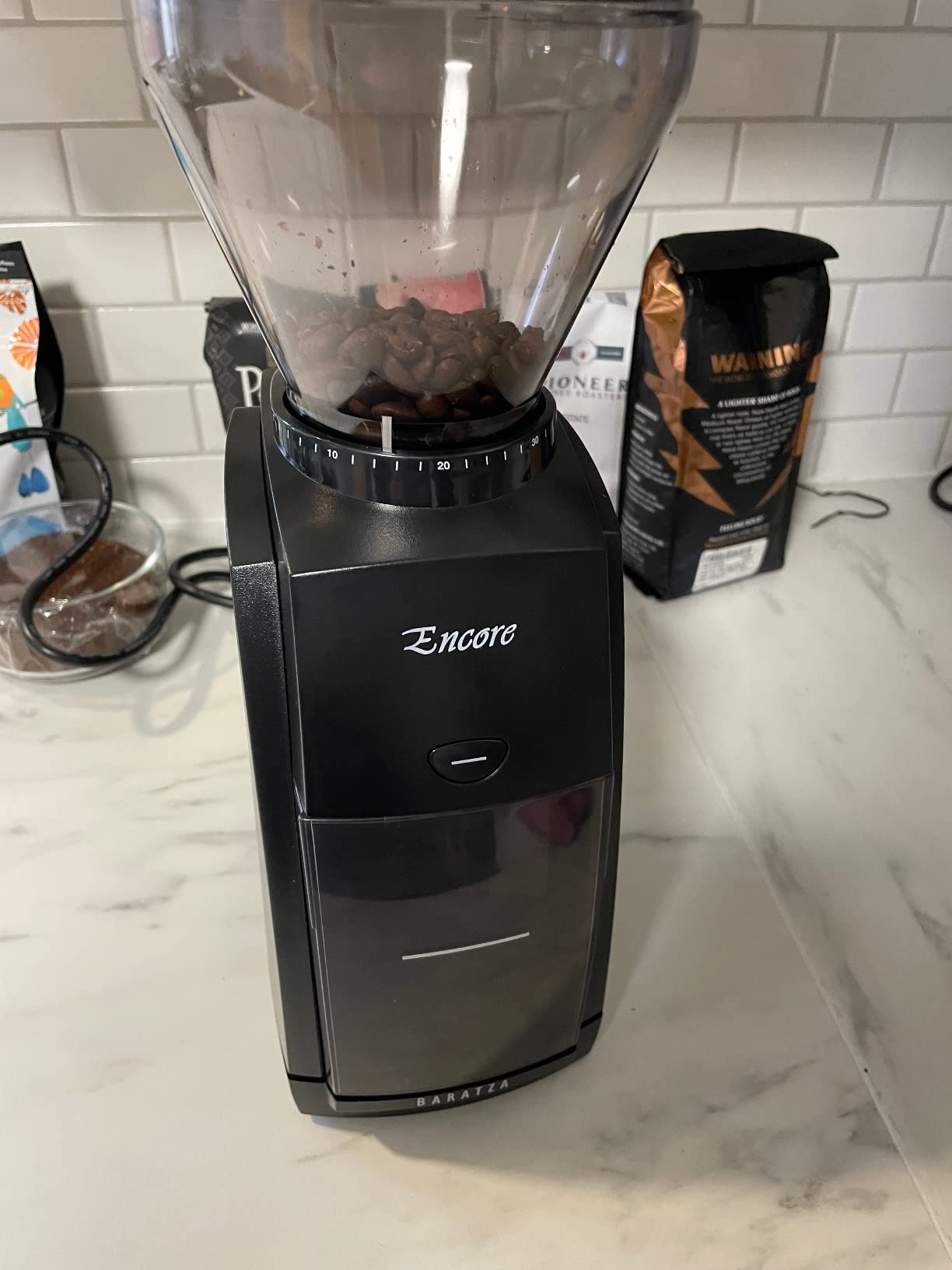
The one behaviour you have to plan around is static. Grounds cling to the inside of the plastic receptacle and spill a little when you tip it out. A quick tap on the side of the bin before opening drops most of it back where it belongs, which is a small habit to build for a machine that otherwise asks nothing of you.
There is also a little grounds retention between grinds, so when you switch beans, run a short dose of the new coffee through and discard it. Once that is understood, the Encore does what it does every single time.
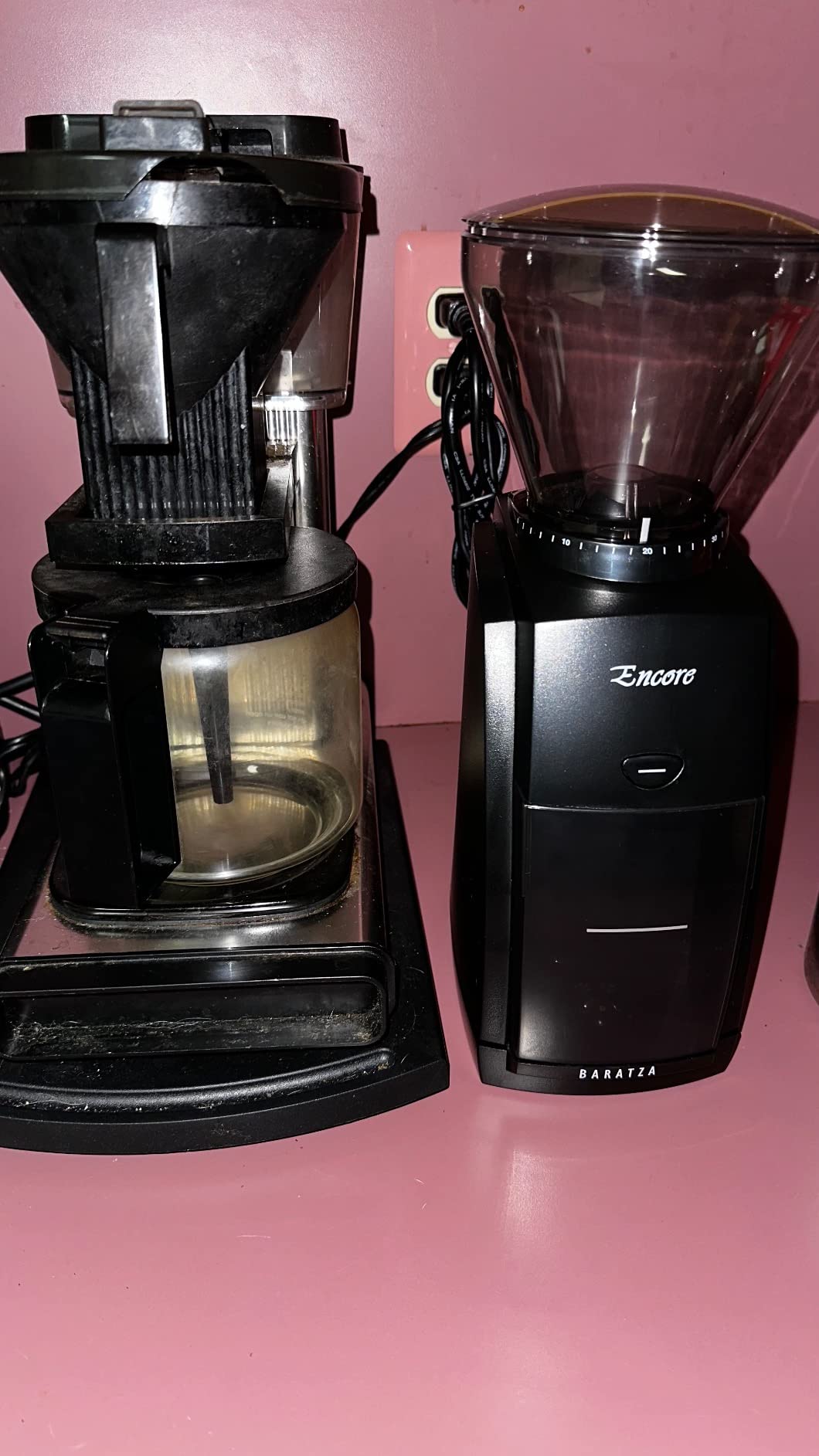
How coarse does the Encore actually go?
Coarse enough for a full 32 oz press and coarse enough for cold brew, which few grinders in this group manage. The setting spread is continuous enough that you can step one notch finer when a bean tastes thin at the coarse end.
It also holds its coarse setting when you change beans, which matters more than people expect. Many machines need two or three re-dials after a bean change; the Encore needs one, sometimes none.
Where the Encore falls short
The plastic body and hopper are the parts most likely to age out first, and reviewers with years of ownership note wear on the hopper shroud. If you grind oily beans daily, clean the burrs more often than the manual suggests.
It also cannot reach espresso quality, despite what the 40-setting range implies. That is fine for this list, since espresso is not the goal, but do not buy it as a two-birds grinder.
2. Cuisinart DBM-8P1 Electric Burr Grinder – the best for large batches
Cuisinart Electric Burr Coffee Grinder, 18 Settings, 4-18 Cups, DBM-8P1
18-position slide dial
Removable 8 oz hopper
Grinds for 4 to 18 cups
Pros
- 18 settings from ultra-fine to extra-coarse
- Removable hopper and grind chamber
- Bigger chamber covers a full 36 oz press
- Owners report 5 to 10 year lifespans
- One-touch automatic dispensing
Cons
- Noted as loud during operation
- Coarsest setting can fall short for immersion brews
- Plastic grind bin collects static
If your household drinks a full press pot every morning, the grind chamber on the Cuisinart DBM-8P1 is the reason to pick it. It holds enough grounds for 4 to 18 cups, so you can grind a whole press in one cycle instead of grinding three times and hoping the timer behaves.
The burr mechanism gives you a far more consistent result than a blade grinder at the same money, and the 18-position slide dial is genuinely coarse at the top of its range. Many owners report a decade of service, which is unusual for the price tier.
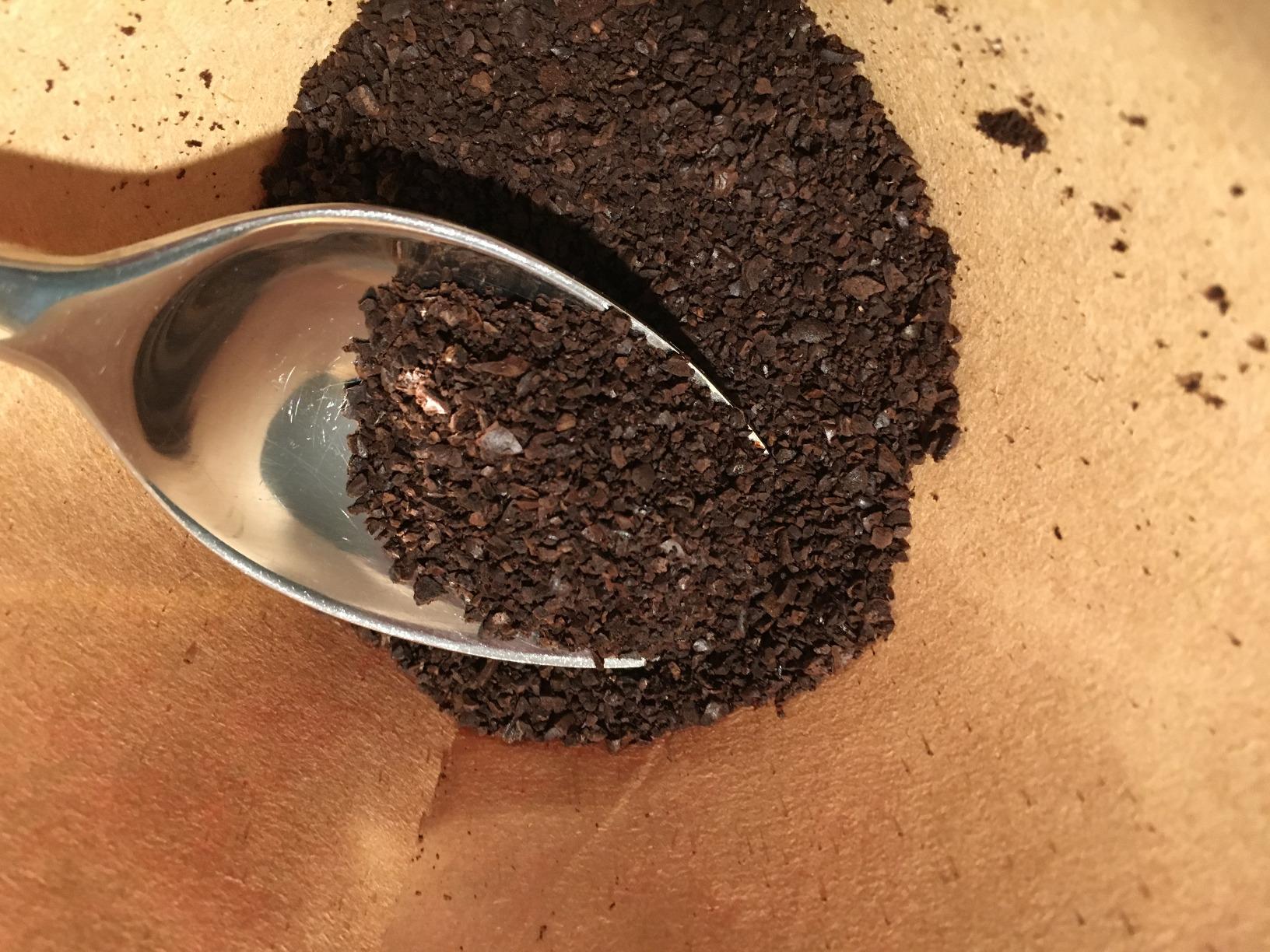
The trade-offs are predictable. The machine is loud during operation, and the plastic grind bin picks up static and fine dust that needs periodic cleaning. The coarsest end is described as a touch short of true immersion coarseness by some reviewers, so expect to sit at the extreme of the dial.
The cup-count timer is not always accurate. Measure your first two doses by hand and you will have your own numbers to work from from then on.
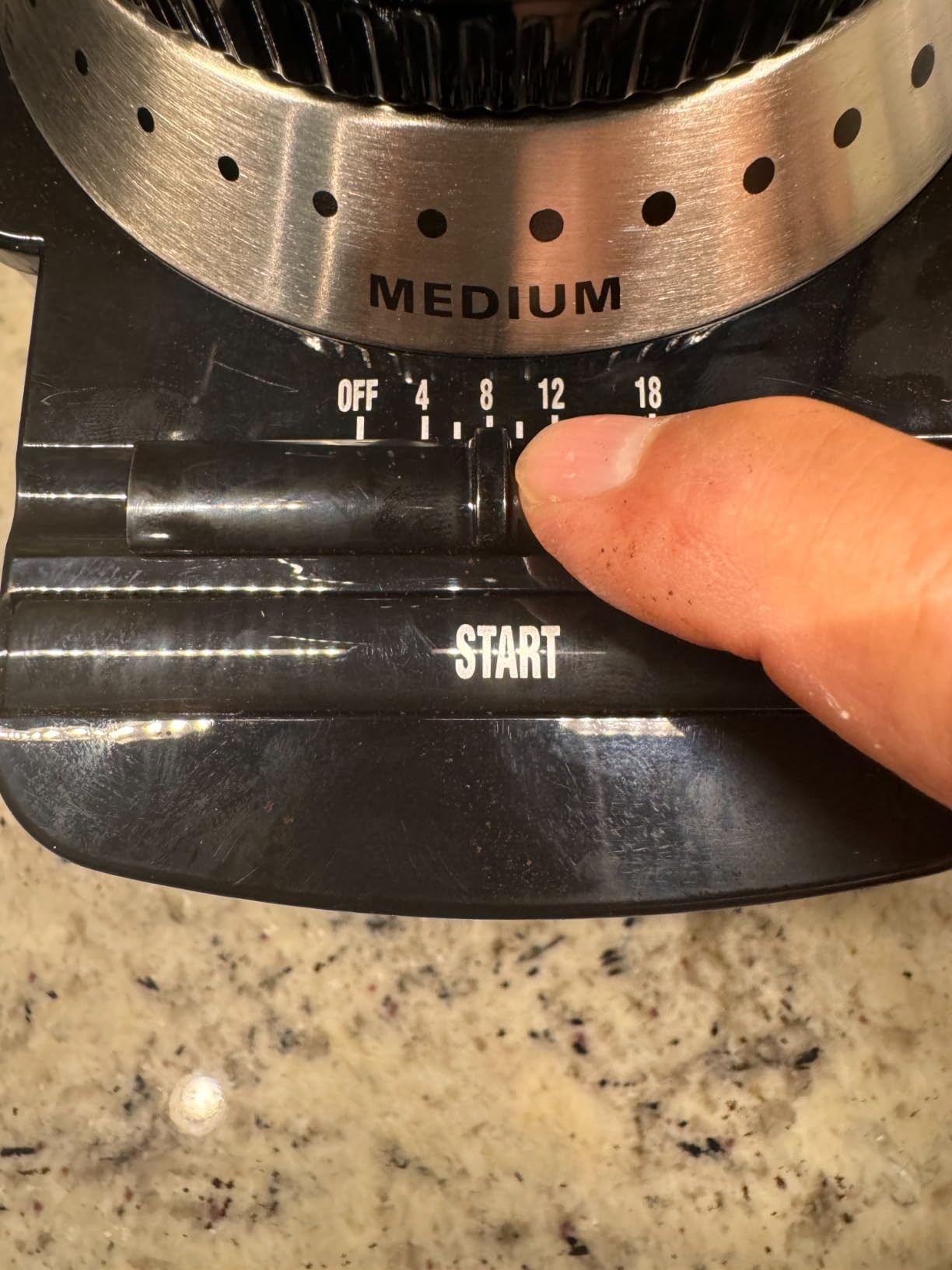
Is the coarsest setting fine enough for a 32 oz press?
Yes for most beans, and reviewers regularly use it for French press and cold brew without complaints about graininess. If a light roast tastes thin at the top of the range, that is a bean roast level issue more than a grinder limit.
The chamber capacity is the real story. Nothing else in this group grinds a full press pot in one pass, which saves you from combining three separate doses of slightly different particle size.
Who should skip it
Anyone brewing before sunrise in a small apartment will find the noise genuinely annoying. There is no soft-start and no gear reduction to soften the motor tone.
Also skip it if you change beans weekly and care about the very first cup. Retention between grinds means your freshest beans get partly spent on the machine floor.
3. OXO Brew Conical Burr Grinder – the cleanest on the counter
OXO Brew Conical Burr Electric Coffee Bean Grinder – 12 Oz, Silver
40mm stainless conical burrs
15 settings plus 43 micro-adjustments
Two-year warranty
Pros
- Stainless grounds cup resists static cling
- 43 micro-adjustments make coarse dialing easy
- Quiet fast grind
- One-touch start recalls last setting
- Long-term owners run it daily for years
Cons
- Grounds cup needs force to seat
- Bottom burr is not removable for a wash
- Some oily beans cause intermittent jamming
The OXO Brew Conical Burr solves the problem that ruins most immersion brewing setups: static. Its stainless steel grounds cup barely holds onto anything, so you tip the grounds straight into your press without a cloud of dust or a counter full of stray particles.
Dialling in is where the 43 micro-adjustments pay off. Where most machines give you a coarse notch and leave it there, OXO lets you walk fine one micro-step at a time until the flow through the press bed feels right.
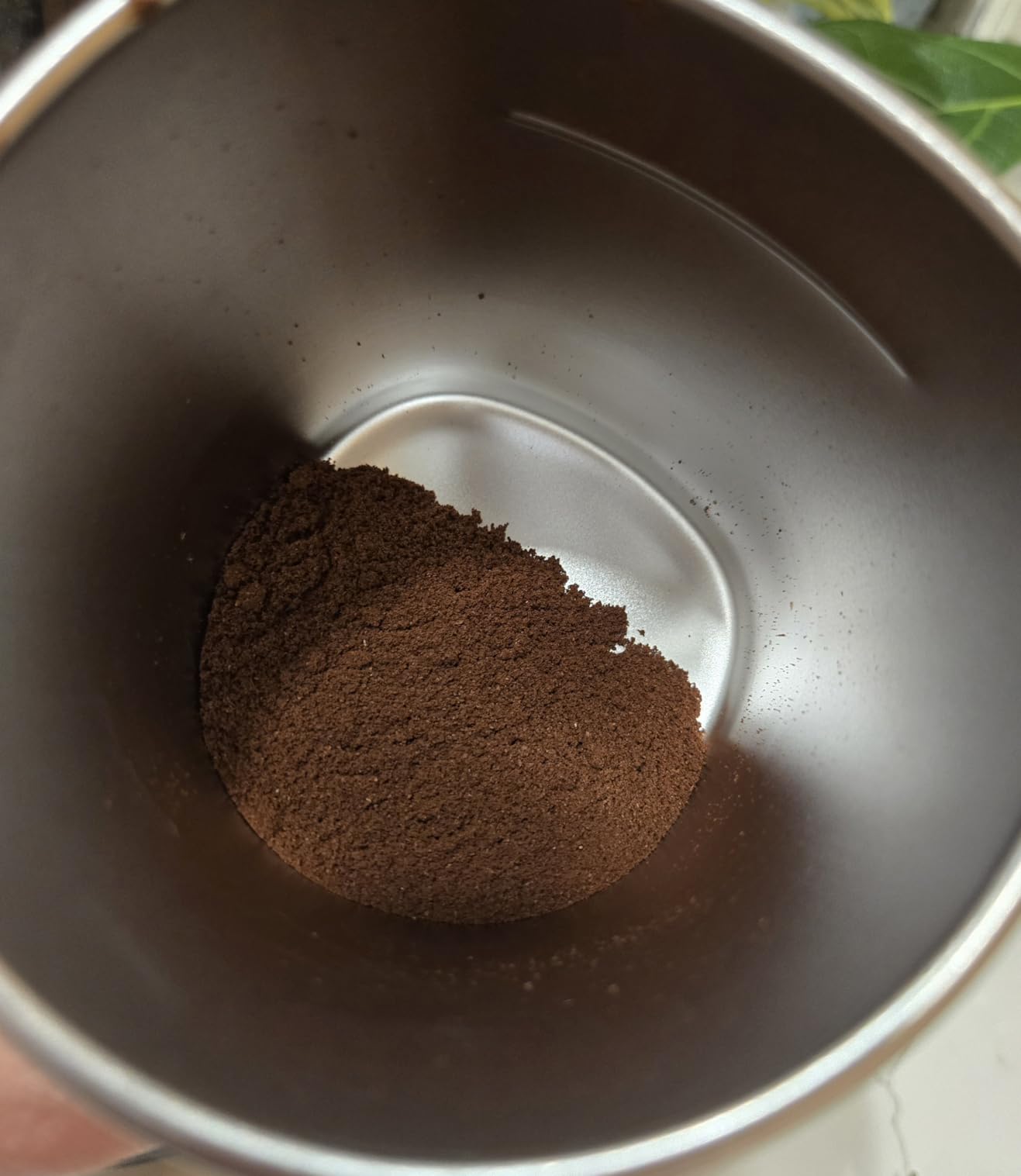
Removal for cleaning is partial, and that is the main compromise. The bottom burr does not come out, so you clean what you can reach with the included brush and accept that fines will accumulate at the base over time. Oily beans can jam the chamber occasionally, so purge the machine if you are switching to a dark oily roast.
The hopper is not airtight either. Beans left inside for a week go stale, which matters if you only brew on weekends.
Why does the stainless grounds cup matter for French press?
Because fines are the enemy of a clean immersion brew, and fines cling hardest to plastic. A steel cup means fewer particles left behind and less dust in the air when you open the bin. On a machine like this, that translates directly into less grit at the bottom of your pot.
It is also the single most-upgraded part on many budget grinders. Owners swap the whole body rather than the burrs when moving up.
Where it falls short
The grounds cup latch is fiddly and needs real force to click into place. If you are not careful, an unseated cup dumps grounds onto the base, which is more mess than the static problem it solves.
For espresso the range stops short of what a dedicated machine delivers, which is another reason to treat this as an immersion-focused pick.
4. KRUPS Precision Burr Grinder – the best step up from a blade grinder
KRUPS Precision Burr Coffee Grinder: 12 Settings, 8 oz Capacity for Drip, French Press, Espresso, Pour Over, Cold Brew – Stainless Steel, 110W, Auto-Stop, Easy Clean – Coffee Grinders for Home Use
12 grind settings
Flat metal burrs
Removable top burr
Pros
- Consistent grind from flat metal burrs
- Removable top burr allows a deep clean
- Compact footprint
- 12 settings cover press pour over and cold brew
- Easy and accurate adjustment
Cons
- Plastic grind bin causes static cling and spills
- Cup-count dial over-grinds
- Fine powder appears even on coarse settings
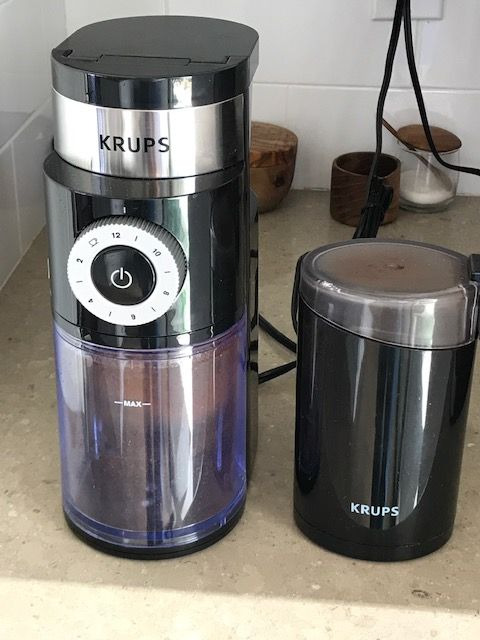
The KRUPS Precision Burr is the machine I recommend to someone whose current setup is a cheap blade grinder. For a modest step up in cost, the flat metal burrs replace chopped, inconsistent fragments with a real grinding mechanism, and the difference in the pot is immediate.
Twelve settings cover coarse through fine, so a French press grind sits comfortably inside the range. The removable top burr and grind chamber are the standout feature here, and one owner credits a deep clean with reviving a unit that had stopped grinding.
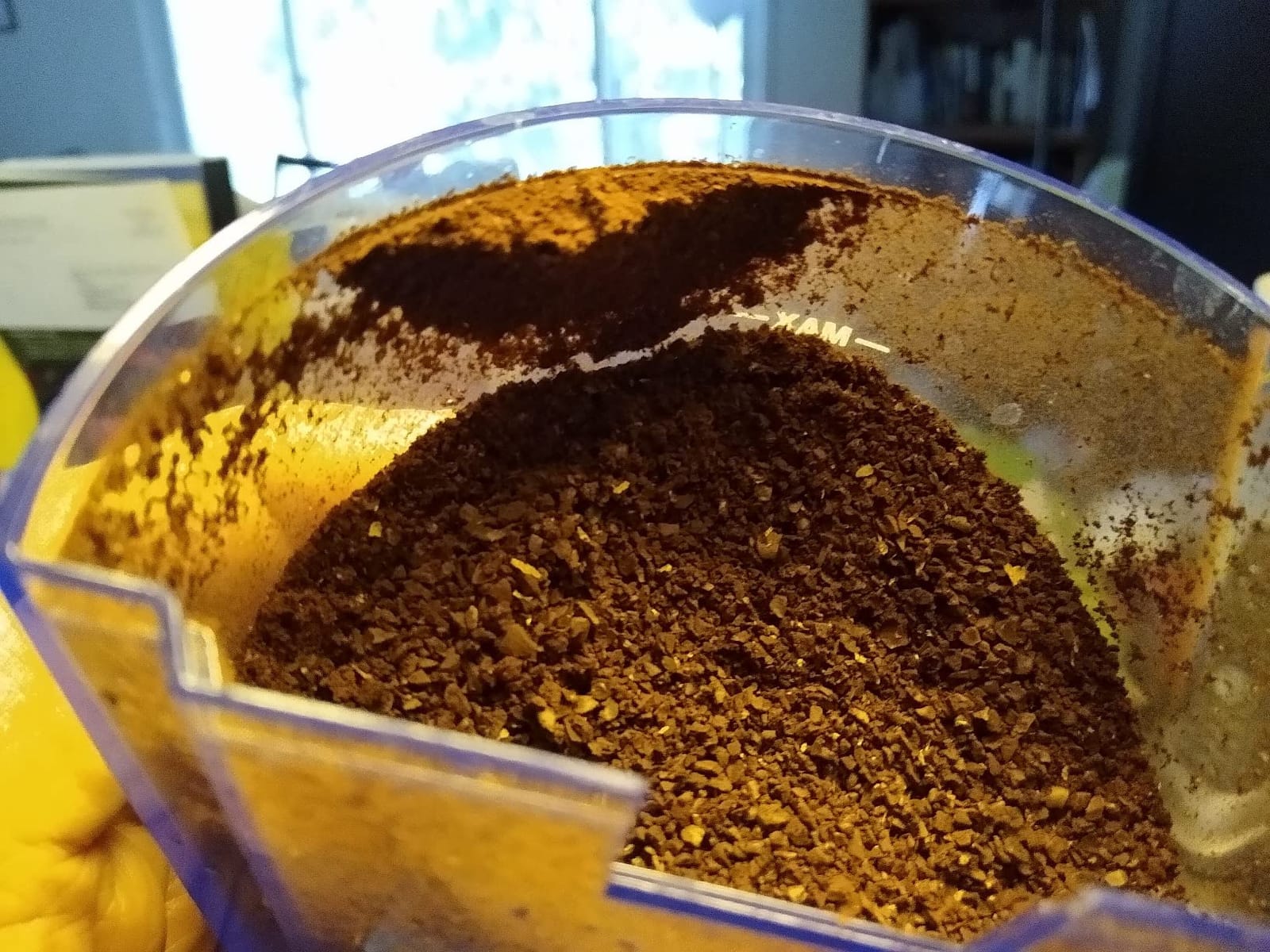
The plastic grind bin is the weak point. Static cling and spilled grounds when emptying are the most common complaints, and the flat exit port lets a little dust accumulate on the machine base every time you grind.
Be careful with the cup-count dial. Owners report it dispensing far more than the selected number of cups implies, so treat it as a rough timer and dose by weight instead.
Is 12 settings enough for French press?
Yes, because you only need the coarse third of that range for immersion brewing. The extra settings are useful if you also make pour over or cold brew, but they are not why you would buy this machine.
The real reason is the burr mechanism. Twelve settings on blades would still produce inconsistent particles; twelve settings on burrs do not.
Where the KRUPS disappoints
Fine powder still appears even at coarse settings, which is exactly what causes the grit some buyers report. Budget flat burrs in this class generate more dust than conical burrs of similar cost.
Oilier beans can clog the exit chute and strain the motor. If your daily beans are dark and oily, pick a conical burr model instead.
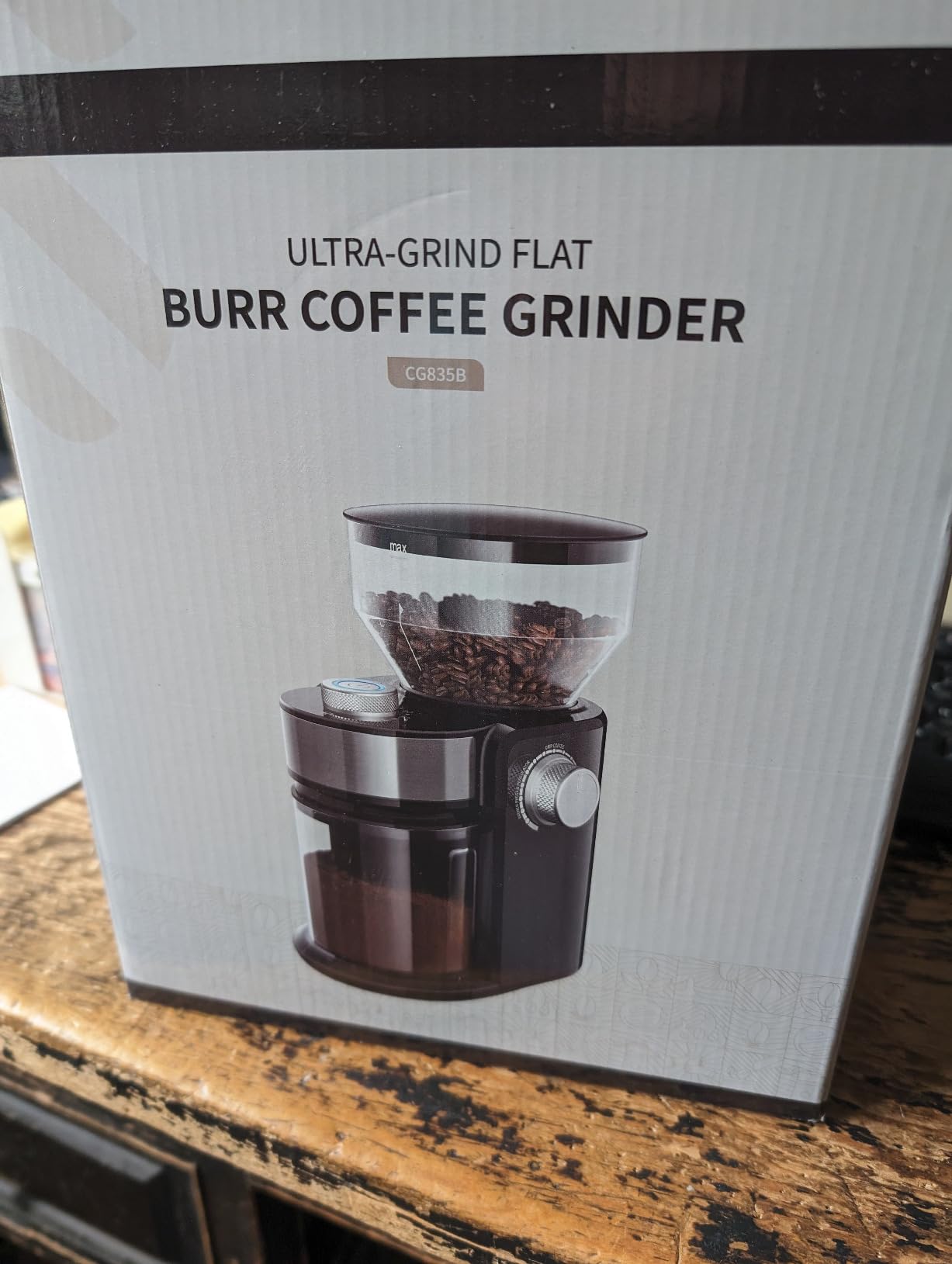
5. SHARDOR Electric Burr Grinder 2.0 – the most compact timed doser
SHARDOR Electric Burr Coffee Grinder 2.0, Automatic Coffee Bean Grinder for Home Use, Adjustable Burr Mill with 16 Precise Settings for Espresso & French Press, Silver
16 micro-adjusted settings
Metallic flat burr mill
2 to 14 cup auto-stop dial
Pros
- 16 settings span espresso to French press
- Timer grinds a measured dose hands-free
- Comes apart completely for cleaning
- Compact stable body suits small counters
- Handles oily beans without trouble
Cons
- High percentage of fine powder at every setting
- Grinds spill onto the counter
- Selector can stick and motors jam within months
The SHARDOR 2.0 is the pick if your counter is small and your mornings are fast. At under 10 inches tall it takes up almost no space, and the 2 to 14 cup auto-stop dial means you can set a dose and walk away.
Disassembly is the underrated feature. It comes apart completely, burrs included, which makes a deep clean straightforward and lets you see exactly where fines are building up.
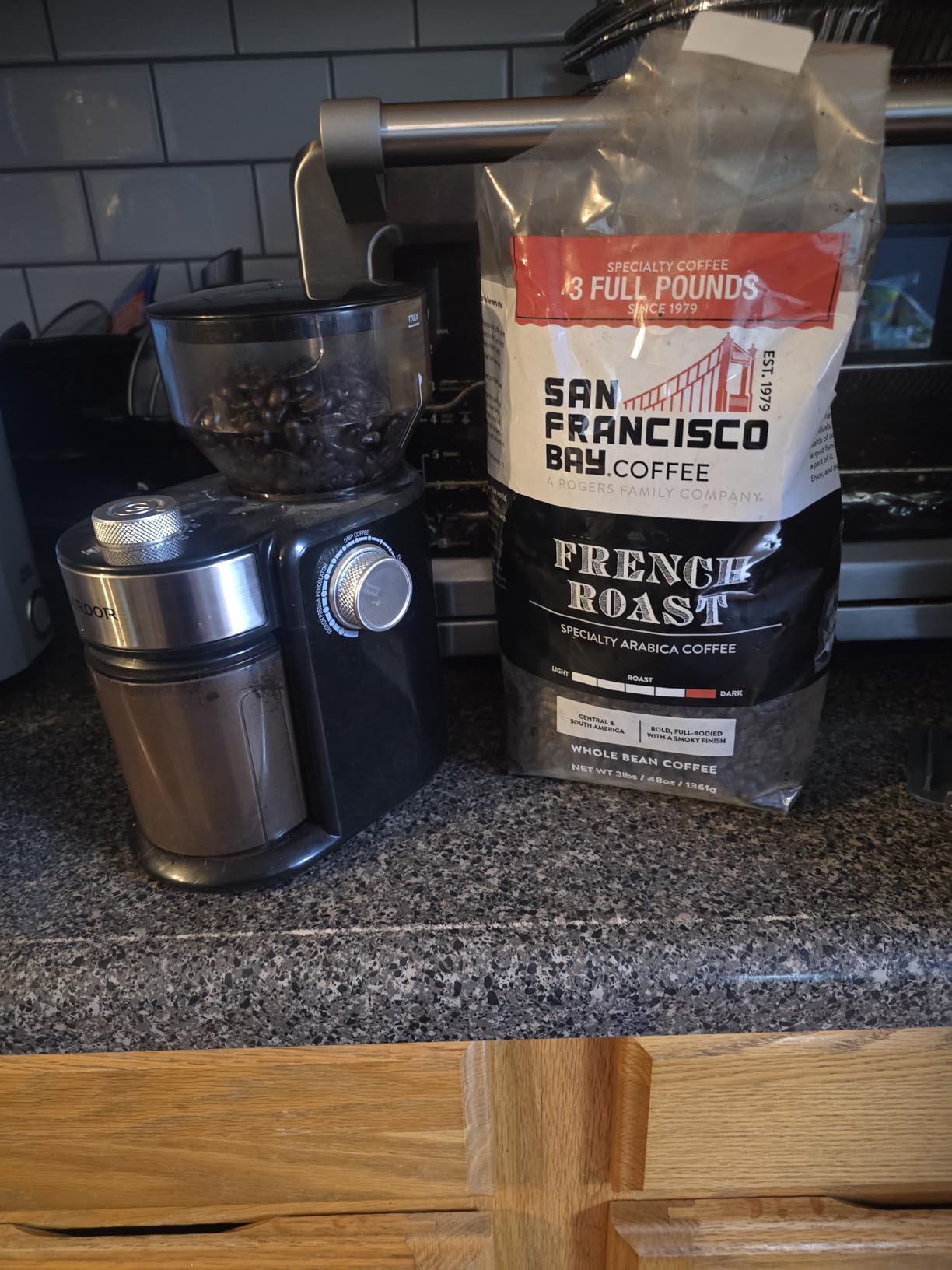
The problem is fines, and reviewers are blunt about it. A high percentage of fine powder is produced regardless of the setting you choose, which makes the machine messy and lets fines slip through metal reusable filters into the cup.
There is also a calibration quirk. The grind selector must be turned fully to the locked position or the output is irregular, and a few owners report the selector sticking or the motor jamming within months.
How does the compact size affect a full press?
For a standard 8 to 12 cup press, the timing dial covers it easily and the small chamber refills quickly. For a 32 oz batch with a fine coarse grind, the dose is light enough that you will run two cycles.
Because it is so small, the hopper refills often. Keeping beans in a sealed container on the counter and pouring in what you need keeps them fresher.
Who should skip it
Skip it if grit in the bottom of your cup bothers you. The fines rate is the recurring complaint and it directly contradicts what immersion brewing rewards.
Also skip it if you will be the only user and you grind daily for years. Motor and selector longevity is where the budget tier shows.
6. Secura Electric Burr Grinder – the smallest real burr machine
Secura Electric Burr Coffee Grinder Mill, Adjustable Cup Size, 17 Fine to Coarse Grind Size Settings for Drip, Percolator, French Press and Turkish Coffee Makers, Black,12 cups
17 grind size selections
2 to 12 cup quantity dial
6 x 4 inch body
Pros
- 17 settings reaching coarse French press range
- Burr mechanism preserves aroma
- Very compact footprint
- 2 to 12 cup dial with auto shutoff
- Cleaning brush and manual included
Cons
- Entry-level burrs make more fines than conical models
- Limited chamber and hopper capacity
- 120V only and not suitable for 230V mains
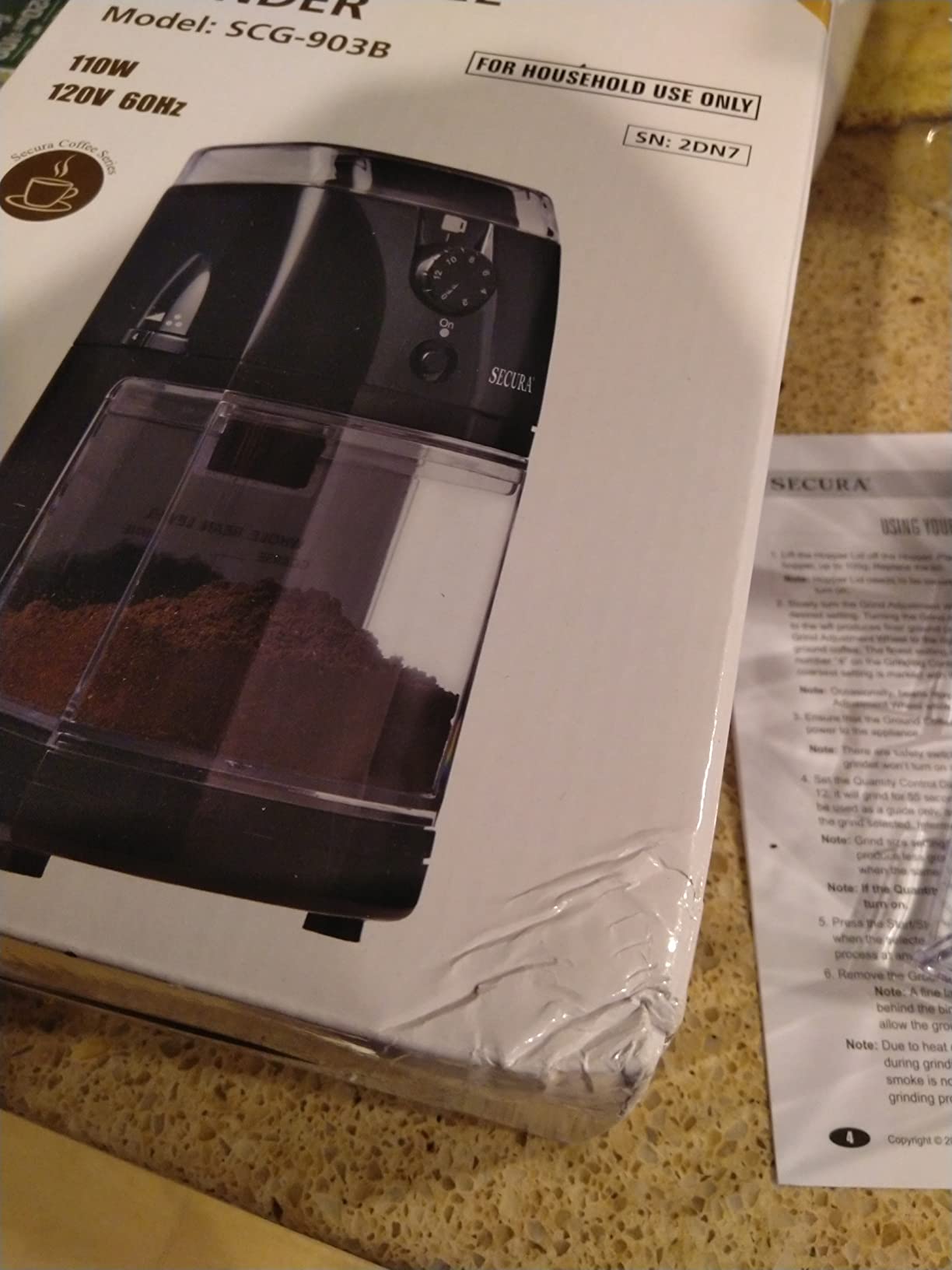
The Secura is the answer for someone who wants burr grinding without a big appliance on the counter. At 6 by 4 inches it is the smallest machine in this list, and 17 grind size selections give it a coarse end that genuinely covers French press.
For a first step away from blades, it does the important thing right: it uses a burr mechanism that grinds uniformly and keeps more of the aroma than chopping would.
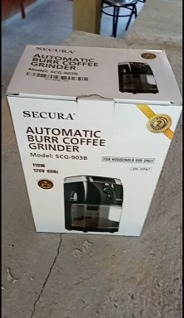
The burrs are entry-level, and owners are candid that they produce more fines and less uniformity than conical burr models. The chamber and hopper are small relative to the rest of the group, so a full press means more than one cycle.
One practical note before you buy: this is a 120V unit for North American mains only. In Europe it needs a transformer, which changes the value calculation considerably.
Is the coarse end real or marketing?
It is real. Several 17-step budget grinders stop at a medium grind, and this one reaches the coarse range that immersion brewing needs. That is the single reason it earns a place here.
What is not real is refinement. Expect more variation in particle size than a 40mm conical burr machine gives you.
Where it falls short
Uniformity. Entry-level burrs mean more fines, and fines mean more sediment in the pot and more bitterness at the base.
Capacity is the other limit. If you brew a full 32 oz press daily, the refill count adds friction that a larger chamber would remove.
7. Hamilton Beach Burr Grinder – the biggest hopper in the group
Hamilton Beach Electric Burr Coffee Grinder with Large 16 oz. Hopper
18 precision grind settings
16 oz bean hopper
2 to 14 cup selector
Pros
- 18 settings from extra-fine to coarse
- 2 to 14 cup dose selector
- Snap-on lid reduces spills when pouring
- Top burr removes in a few turns
- Containers and lids are dishwasher safe
Cons
- Lowest average rating in this group
- Flat burrs produce more fines than conical models
- Grind consistency is only adequate
- 200 watt motor is comparatively loud
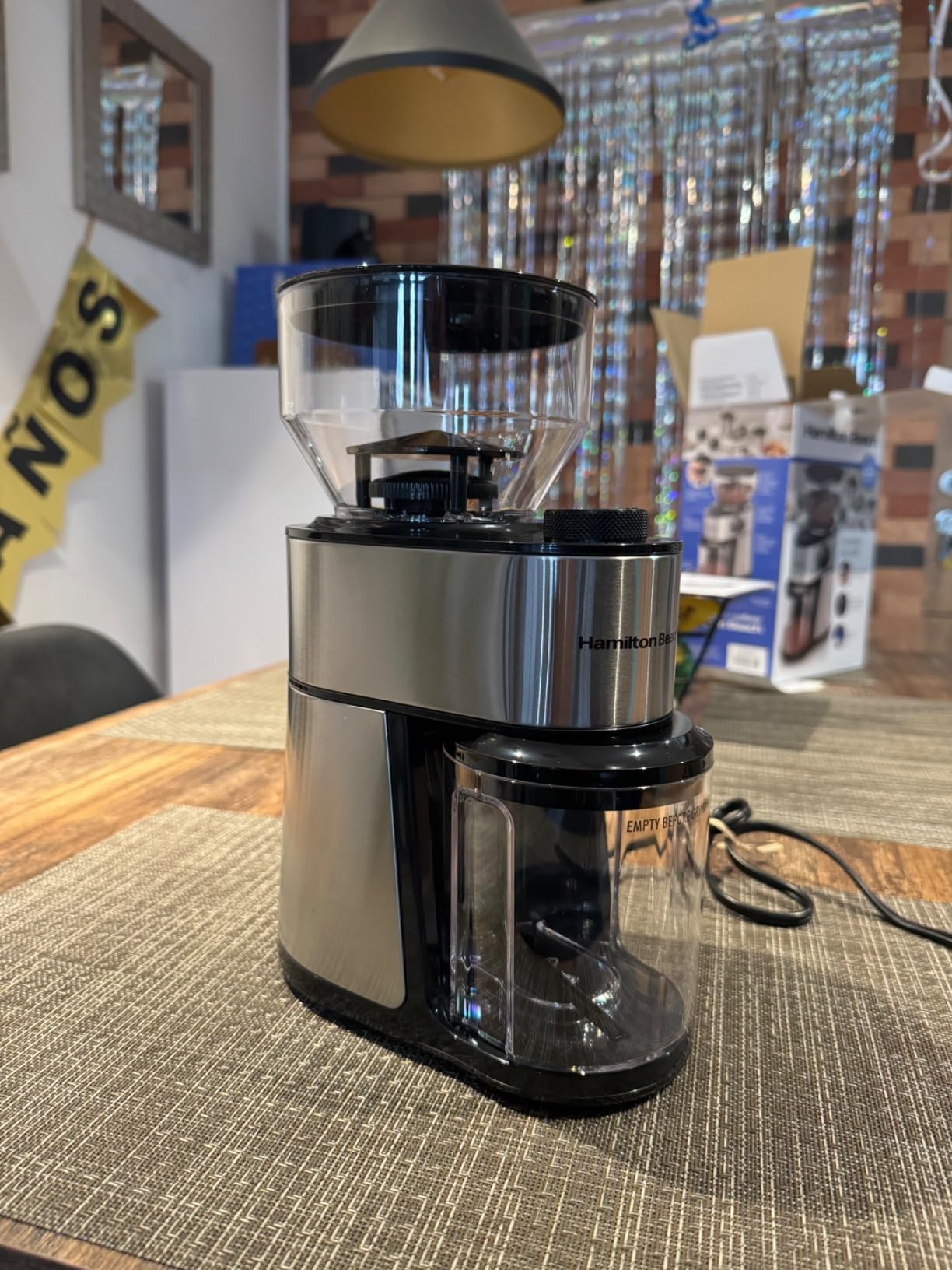
The Hamilton Beach 80385 wins on one specific thing: a 16 ounce hopper. That is roughly two cups of beans held at a time, so if you buy coffee in bulk or brew for several people every day, you fill it once and forget about it.
The 18-step dial covers extra-fine through coarse, and the 2 to 14 cup selector lets you grind only what you need rather than dumping a full chamber into a small press.
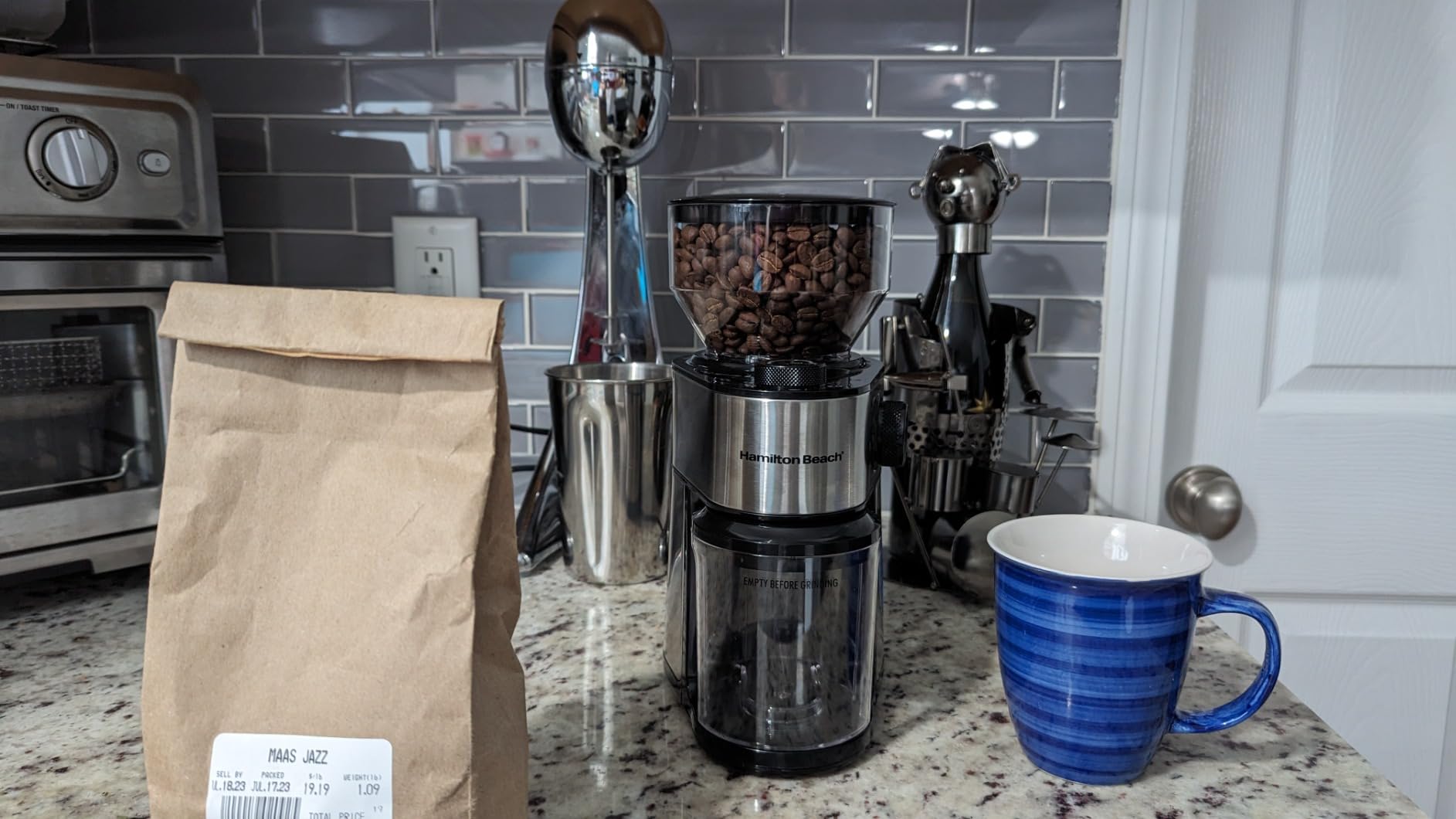
Cleaning is straightforward. The top burr removes in a few quick turns with the included soft bristle brush, and the containers and lids go in the dishwasher.
The snap-on grounds lid is a genuinely good idea for immersion brewing, since it stops grounds from bouncing out when you tip the container into the press.
Is a large hopper worth anything for French press?
Only if you brew frequently. For a single 32 oz press a week, hopper size is irrelevant and you should judge this machine on burr quality instead, which is where it scores lowest in this group.
Beans sitting in a large hopper for weeks also go stale, so the capacity only helps if you actually use them.
Where it falls short
Flat burrs produce more fines and less uniformity than conical burr grinders, and reviewers describe the grind consistency as adequate rather than good. In an immersion brew that shows up as sediment.
It also carries the lowest average rating in this roundup, with a heavier share of one-star reviews, and the 200 watt motor is noticeably loud. If your priority is a clean, low-fines press, choose a conical burr machine instead.
8. Ollygrin Burr Grinder – the slowest grind and fewest fines
Ollygrin Burr Coffee Grinder, Electric Conical Coffee Bean Grinder With 30 Adjustable Grind Settings For 2-12 Cups, Sliver & Black
40mm stainless conical burrs
30 grind settings
Gear-reduction motor
Pros
- Gear-reduction motor produces very few fines
- 40mm stainless conical burrs for even particles
- 30 settings from espresso to press coarse
- Runs quietly for a conical burr grinder
- Straight-through path keeps static low
- 10 oz hopper with auto-locking lid
Cons
- Finest setting is not quite fine enough for espresso
- Timer occasionally overshoots and overflows
- Included cleaning brush is softer than ideal
Slow grinding is the entire point of the Ollygrin. Its gear-reduction motor turns the burrs slowly enough to avoid the friction heat and the fine dust that faster flat-burr machines generate, and owners consistently credit that with a noticeably cleaner French press pot.
The burrs are 40mm stainless steel conical, the same size and style as the leaders in this group, and 30 settings give you comfortable room to walk the coarse end finer or coarser.
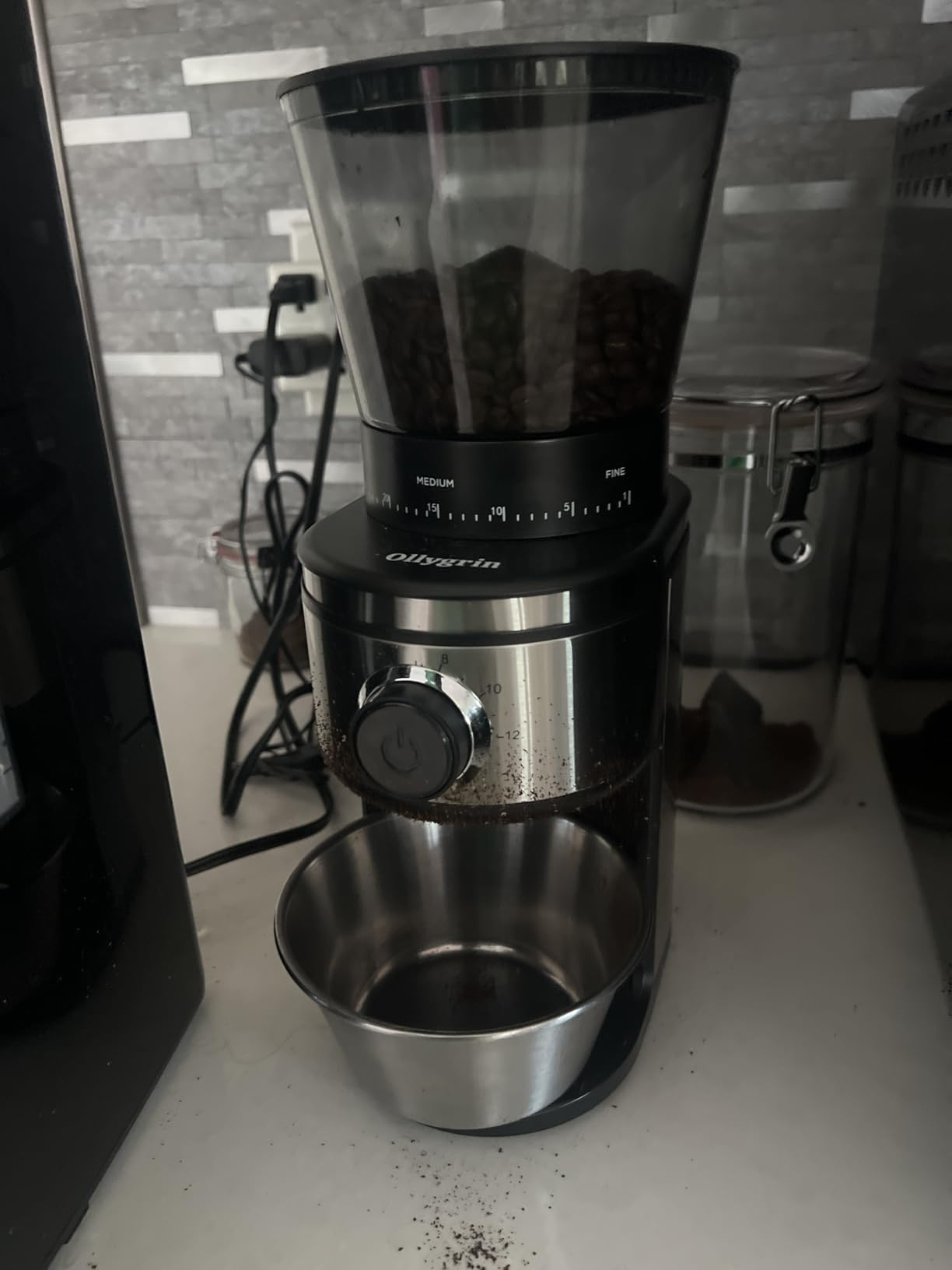
The straight-through grounds path is worth noting for anyone who hates mess. Because grounds fall straight down rather than through a chute, cleanup is quick and the container holds less static than plastic bins usually do.
Reviewers also describe it as quiet for a conical burr machine, which matters if you are grinding before the house wakes up.
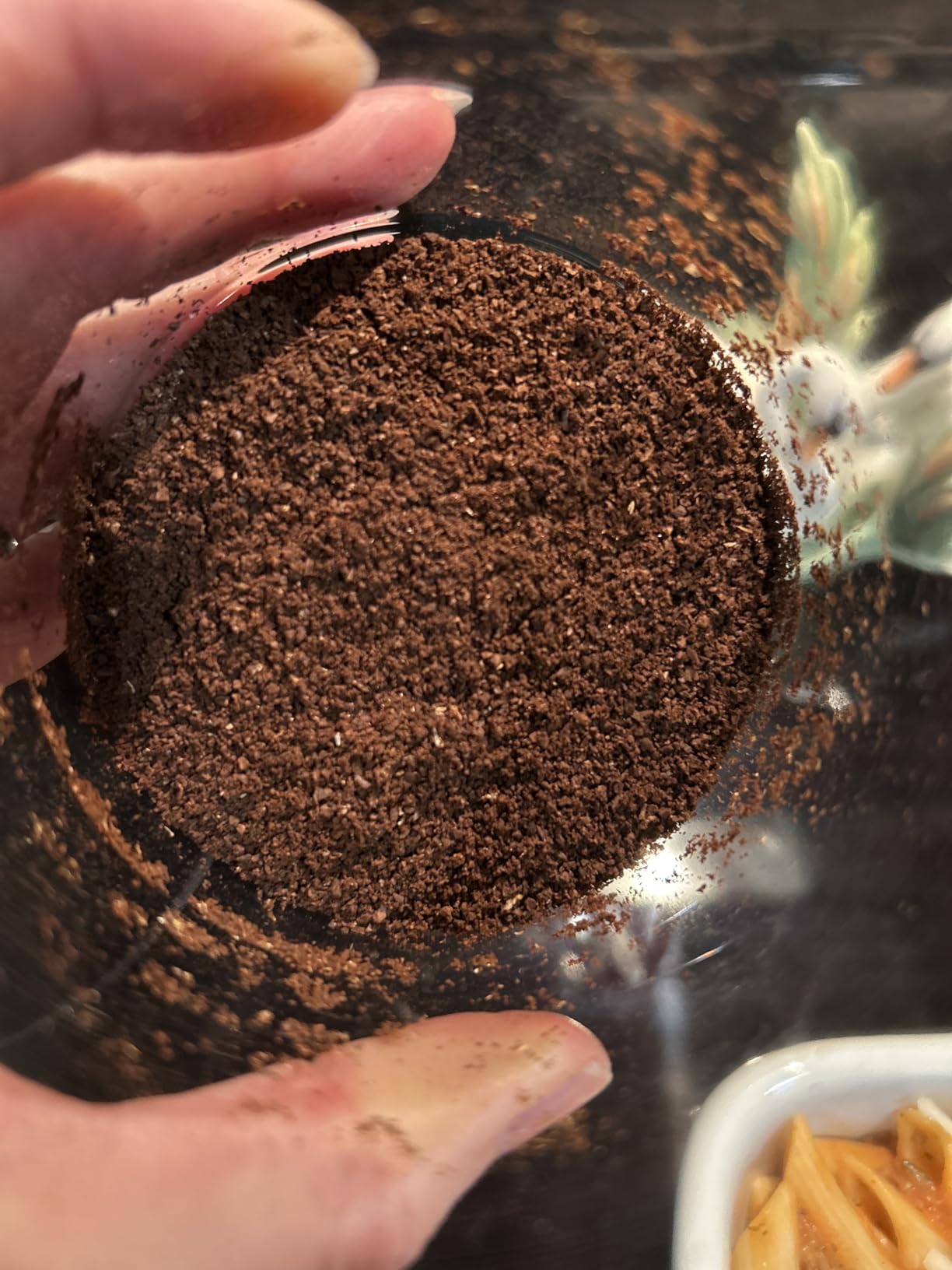
Does a slower motor really reduce sludge?
Yes, and this is the clearest case in the group. Slow burr rotation generates less heat and less friction, which means fewer particles broken down into powder. Fewer fines means less sediment at the base of the press and less bitterness in the cup.
If gritty sludge is the problem you are trying to solve, the motor design matters as much as the burr type.
Where it falls short
The fine end of the range does not go far enough for picky espresso work. That does not affect French press at all, but it means this is a single-purpose immersion and brew machine rather than an all-rounder.
The timer can also overshoot the selected cup setting and spill onto the counter, so verify the first couple of doses by hand.
9. Aromaster Conical Grinder – the anti-static champion
Aromaster Conical Coffee Bean Grinder, 48 Settings, Anti-Static, Sliver
48 grind settings
Anti-static technology
Removable ring burr
Pros
- Anti-static design keeps the counter clean
- 48 settings give fine incremental control
- Runs quieter than most in this class
- Consistent grind across the range
- Small stable footprint that does not vibrate
- Responsive customer service with photo support
Cons
- Mid-range setting is finer than expected
- Burr assembly is not intuitive to remove
- Anti-static anodes stop working if buried under dust
- Plastic hopper and container feel thin
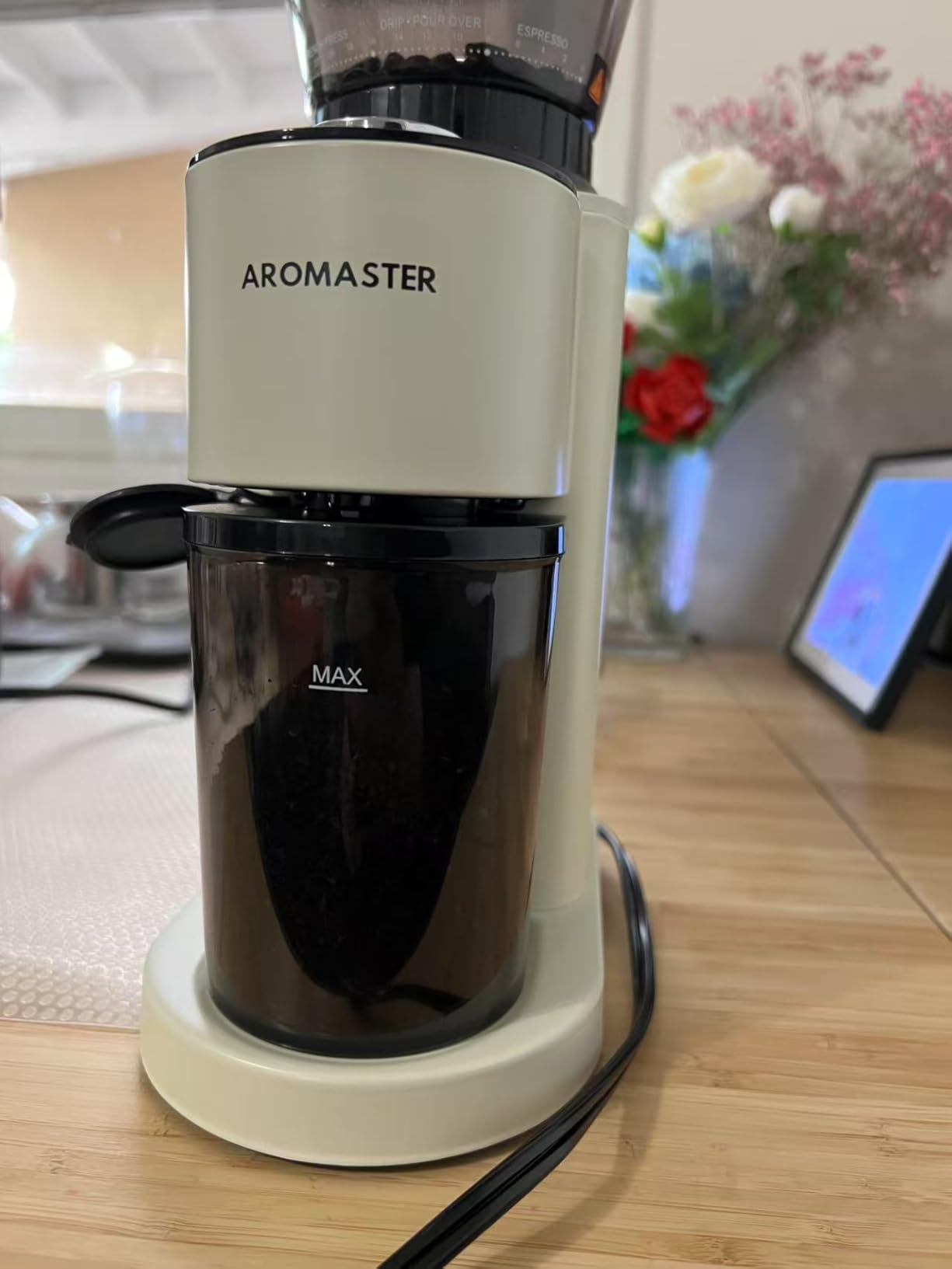
The Aromaster’s anti-static system is the engineering feature that separates it. Multiple owners describe it as genuinely keeping the countertop clean and the bin easy to empty, which is exactly the complaint we hear most often about grinders in this price range.
Forty-eight settings is the highest count in the group, and unlike some machines the increments are usable rather than decorative. The burrs grind evenly and slowly to reduce heat.
One calibration warning matters here. The mid-range suggested setting is finer than users expect, and can even plug an espresso basket, so treat the labelled middle as fine rather than medium.
There is a maintenance condition for the anti-static system as well. If dust buries the anodes or you overfill the bin, the effect stops working until you clean them out.
Is anti-static worth paying extra for?
For immersion brewing, yes, because the alternative is a plastic bin that throws dust into the air and onto every surface you wipe down. Combined with 48 settings, it gives you both fine control and a clean kitchen.
You can also reduce static yourself by adding a drop of water to the beans before grinding, which works on any machine in this list.
Where it falls short
The burr assembly is not intuitive to remove. If it jams, opening it up is a frustrating job rather than a quick twist.
The plastic hopper and grounds container feel thin next to the stainless steel on the OXO and Cuisinart machines. That is a durability trade you accept for the anti-static system.
10. OXO Brew Compact Conical Burr Grinder – the smallest full-featured option
OXO Brew Compact Conical Burr Electric Coffee Bean Grinder – 50g Capacity
15 settings plus 29 micro-adjustments
50g capacity
11 inch tall body
Pros
- Consistent conical burr grind in a small body
- 44 total grind adjustments cover press coarse
- Very compact at 11 inches tall
- Both upper and lower burrs remove for cleaning
- 50g capacity suits a typical press batch
Cons
- 50g hopper needs refilling for larger batches
- Fewer reviews than the full-size OXO
- Plastic body rather than stainless steel
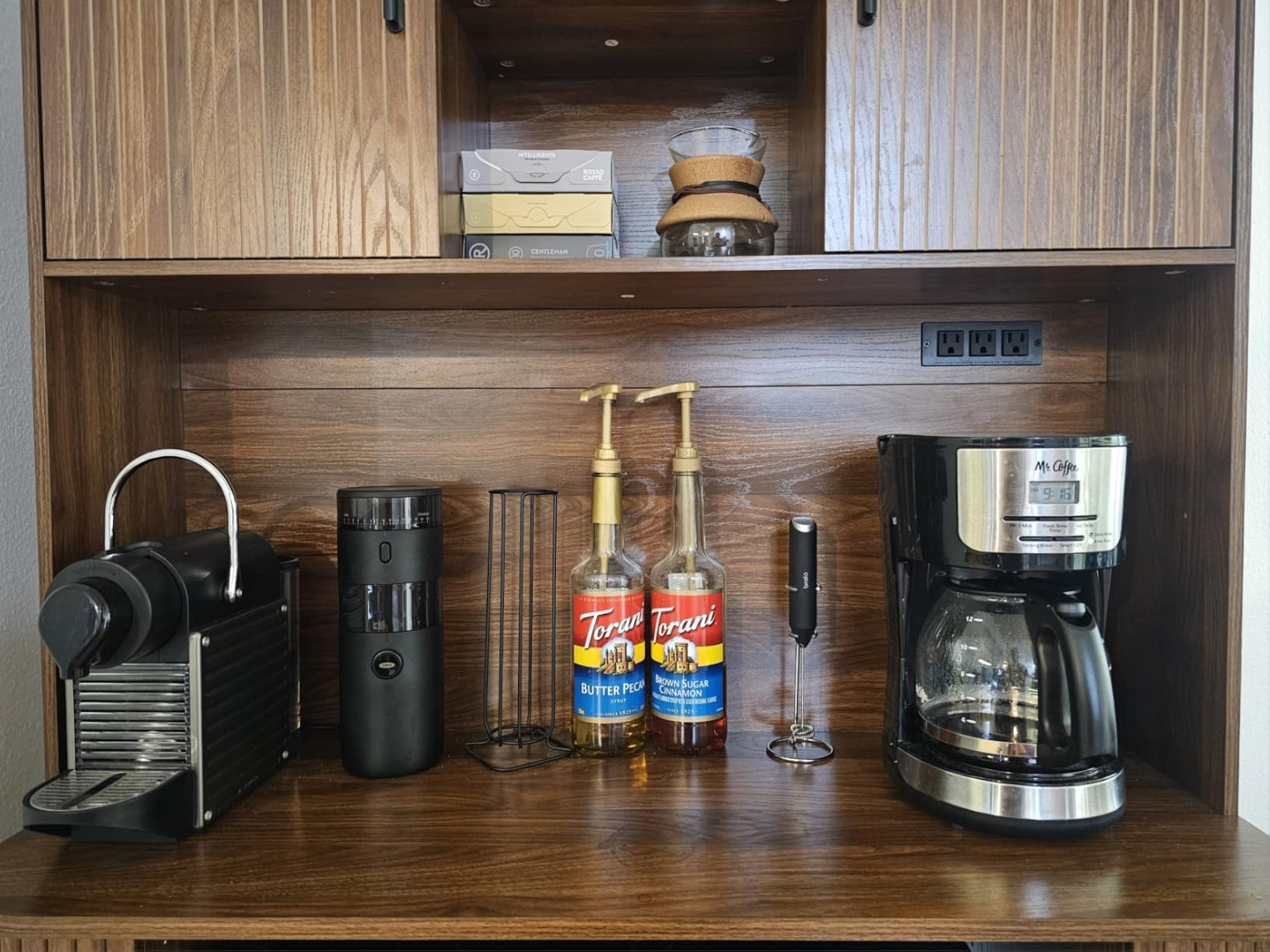
The OXO Compact solves a problem the full-size OXO creates. It keeps the stainless steel conical burrs and the micro-adjustment system in a body that stands 11 inches tall and 4 inches wide, so it lives happily in a cabinet between uses.
Fifteen settings plus 29 micro-adjustments gives you the same kind of fine control at the coarse end that makes the bigger machine so easy to dial in.
The cleaning design is better than its larger sibling. Both the upper and lower burrs remove for a thorough clean, which the full-size model does not allow.
Reviewers note the plastic body rather than stainless steel, and it is a newer model with a much smaller review base than the standard OXO burr grinder.
Is 50g enough for a French press?
It covers up to about 6 cups or 30 ounces of coffee, which is most single-batch brewing. A larger 32 to 36 oz pot means refilling the hopper mid-brew.
For one or two people brewing daily, that is a fair trade for the counter space you get back.
Where it falls short
The small hopper is the obvious limit. Frequent refills also mean handling beans more often, which is where static comes back into the picture.
And the review base is thin. A 4.3 rating from a much smaller pool tells you less about long-term durability than the ratings on the machines above it.
How to dial in a medium-coarse French press grind
The target is a grind that feels like coarse sea salt or damp breadcrumbs. It should look sandy rather than dusty, and when you press the plunger down, the bed should resist evenly with no pockets and no easy collapse.
Start at the coarsest setting your grinder has and grind a test dose. Rub a few particles between your fingers. If they feel like sand you are close. If they turn to powder between your fingers, step down one setting and repeat.
Then judge the brew, not the grinder. Steep for four minutes, plunge slowly, and pour the top down first before pressing the last of it. If the cup is thin and sour, go one step coarser. If it is bitter with grit at the base, go one step finer and shorten the steep to three and a half minutes.
Two adjustments often fix more than a third setting change. Add a drop of water to the beans before grinding to knock down static, and reduce the steep time rather than grinding finer when the coffee tastes harsh.
Fines, sludge and sediment: the real French press problem
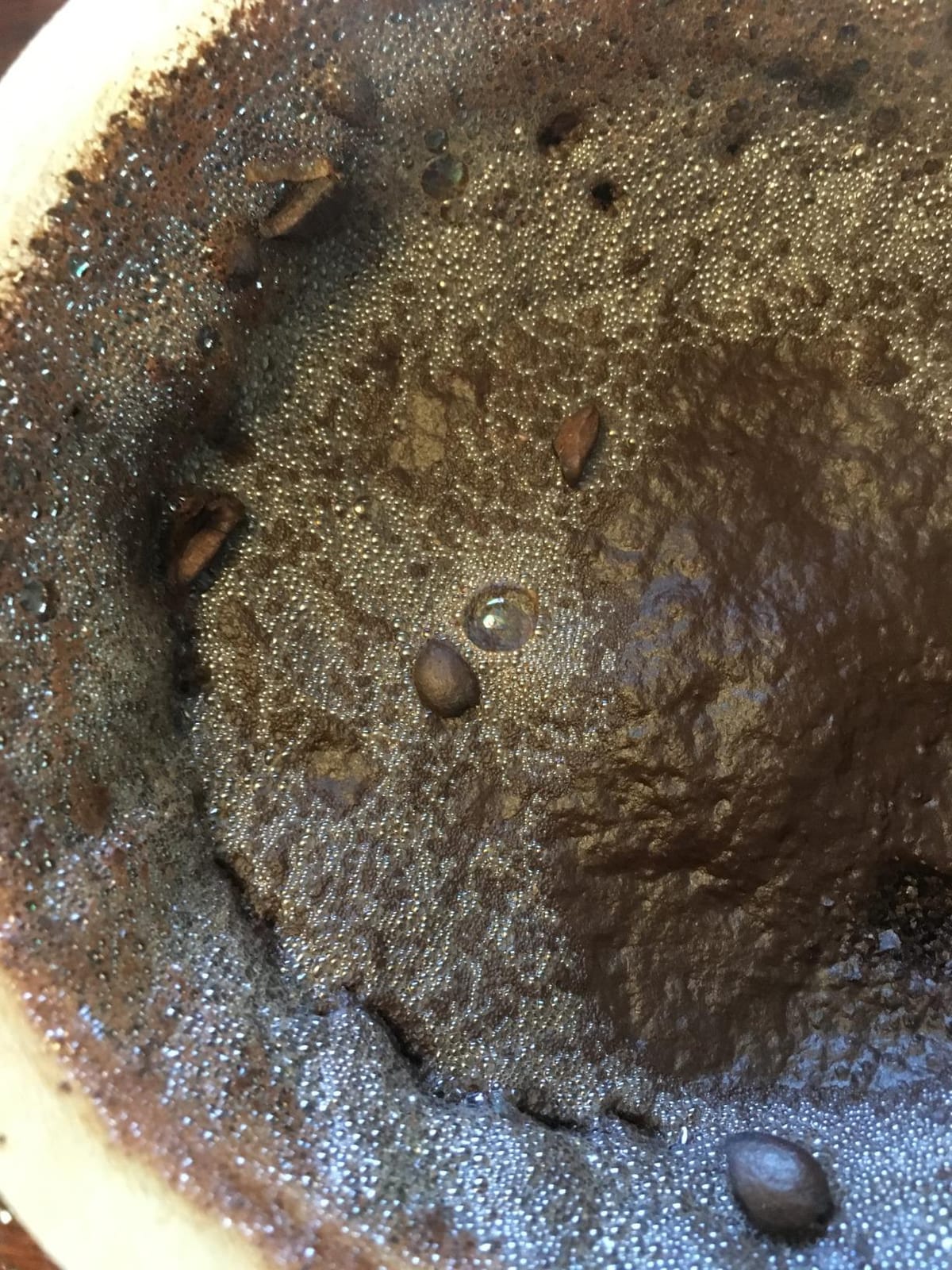
Sludge at the bottom of the press is the complaint that comes up most often in enthusiast forums, and it is a particle size problem rather than a technique problem. Fines pass through the filter mesh, sink, and sit in the cup as a bitter silty layer.
Four things reduce it. First, use the coarsest setting that still tastes balanced to you, since every step finer multiplies the fines produced. Second, grind just before you brew so the grounds have less time to settle and clump.
Third, add a single drop of water to the beans and toss before grinding. The Ross Droplet Technique works on any grinder here and cuts airborne dust immediately. Fourth, settle for a slightly shorter steep, around three and a half minutes, which limits how much the fines at the base extract.
You can also skim the top of the brew before plunging and rinse your filter with hot water first, which removes trapped fines before they ever reach the pot. None of these tricks substitute for a low-fines grinder, but together they turn a gritty pot into a clean one.
Burr vs blade: flat vs conical burrs for French press
Burr grinders crush beans between two machined surfaces with a controlled gap. Blades chop, which produces boulders and dust in the same batch and no way to dial either one out. For French press, burr is not an upgrade, it is the minimum.
Between burr types, conical burrs are the better choice for immersion brewing in most kitchens. They run slower, generate less heat and fewer fines, and their adjustment rings tend to hold a coarse setting more reliably.
Flat burrs give more uniformity at fine settings, which matters for espresso, and several budget machines here use them well. At the coarse end, though, the slower conical machines on this list produce cleaner pots.
Blade grinders are the exception. Forum users repeatedly ask whether a cheap blade grinder is acceptable for French press, and the honest answer is that it works for occasional brewing with pre-ground beans and falls apart the moment you grind fresh whole beans yourself.
Buying guide: what to look for in an electric grinder for French press
Start with the coarsest setting, not the finest. Test whether the top of the range produces something loose and sandy. A machine advertising 40 or 48 settings but stalling at medium is a common disappointment, and this is the single criterion that eliminates most of the field.
Next look at burr type and burr size. Conical burrs around 40mm are the sweet spot for home immersion brewing: large enough to move beans without generating dust, simple enough to clean. Flat burrs are fine if you also care about uniformity elsewhere.
Then consider how the machine handles static. A stainless steel grounds cup, an anti-static system, or a straight-through fall path all reduce the dust problem. A plastic bin plus a chute outlet is the worst combination, and that is the setup on several budget machines here.
Noise matters if you brew early. Gear-reduction motors and slower conical grinders run noticeably quieter than high-wattage flat burr machines, and reviewers repeatedly single out quietness on the Ollygrin and OXO.
Capacity depends on your batch size. A 50g hopper suits a single press, an 8 to 10 ounce hopper suits a 32 oz pot plus refills, and a 16 ounce hopper suits a large household. Cleanability decides how long that capacity stays pleasant, so check whether the burrs remove rather than just the top chamber.
Our full burr grinder comparison goes deeper on burr sizes and adjustment systems if you want to compare beyond French press.
Maintenance and cleaning schedule for immersion brewing
Daily, tip the grounds out and wipe the base of the machine. Most of the mess in this category is dust that settles around the outlet, and it takes ten seconds to deal with while you wait for water to boil.
Weekly, remove the top burr and brush out the fines with the included brush. On machines with removable lower burrs, take those out too. This is the single most important task, because fines that stay in the chamber become stale and start affecting the next batch.
Monthly, wash the hopper, grounds container, and lids. Take the containers off the machine first, since water near the motor housing is what causes failures.
Every few months, run a dry cycle with no beans for around 20 seconds to clear the last of the fines from the burr path, and check that the adjustment ring still moves freely. If the ring has become stiff, the burrs are coated and need a proper clean before anything else.
Electric vs manual: who should skip the electric grinder
A hand grinder is the better choice if you brew one or two cups at a time and enjoy the process. A manual conical burr grinder has no fines problem from heat, costs a fraction of any machine here, and adds nothing to your noise level at six in the morning.
Skip the electric if you brew espresso. Machines here reach a French press coarse end well but stop well short of a proper espresso grind, so you would still need a dedicated machine for that.
Buy the electric if you brew a full pot several times a week, value repeatability over ritual, or want one machine that also handles cold brew and pour over without a second appliance.
Frequently Asked Questions
What grinder is best for French press?
A conical burr grinder with a genuine coarse end and low fines output. The Baratza Encore is the top pick here because its 40 settings reach a real medium-coarse grind and the 40mm steel burrs stay consistent. For large batches the Cuisinart DBM-8P1 grinds enough for 4 to 18 cups in one cycle, and for the least counter mess the OXO Brew Conical Burr has a stainless grounds cup that resists static.
Do I need a burr grinder for French press or is a blade grinder fine?
You need a burr grinder. French press is immersion brewing, so it exposes every inconsistency in the particle size. A blade grinder chops beans into boulders and dust at the same time, and the fines sink and over-extract into a bitter layer at the base of the pot. A burr grinder with a real coarse setting is the minimum, not an upgrade.
Are flat or conical burrs better for French press?
Conical burrs are usually better for immersion brewing. They turn slower, generate less friction heat and fewer fines, and hold a coarse setting more reliably, which directly reduces sludge. Flat burrs give better uniformity at fine settings and are worth having if you also make espresso, but at the coarse end the slower conical machines produce cleaner pots.
How coarse should French press grounds be?
Aim for coarse sea salt or damp breadcrumbs, a sandy texture rather than a dusty one. Start at the coarsest setting your grinder offers and step finer only if the cup tastes thin. If the cup is bitter with grit at the base, step coarser and shorten the steep to about three and a half minutes instead of grinding finer.
Why is my French press coffee gritty and full of sludge?
Grit and sludge come from fine particles, not from your technique alone. Grind one step coarser, grind immediately before brewing, add a single drop of water to the beans before grinding to knock down static, and settle for a slightly shorter steep around three and a half minutes. A low-fines grinder such as one with a gear-reduction motor or a stainless grounds cup fixes the source rather than the symptom.
How many grind settings do I need for French press?
You need a range that reaches genuinely coarse, and the count matters far less than the endpoint. Twelve to eighteen settings is plenty if the coarsest is loose and sandy. Settings above that add useful control for switching to pour over or cold brew, but they are not what makes a French press cup good.
Conclusion
The best electric coffee grinders for French press are not the machines with the most settings or the most espresso capability. They are the ones that reach a genuine coarse grind, generate few fines, and give you grounds that pour cleanly into the pot without a dust cloud.
Our pick is the Baratza Encore. Its 40 settings and 40mm conical steel burrs deliver a repeatable medium-coarse grind, and the compact body is a genuine advantage in a small kitchen. Brew a full press with the Cuisinart DBM-8P1 if batch size matters more than anything else, and pick the OXO Brew Conical Burr if static is the battle you are fighting.
Whichever you choose, grind fresh, start at the coarse end, and adjust the steep before you adjust the setting. That habit alone fixes most gritty pots.