
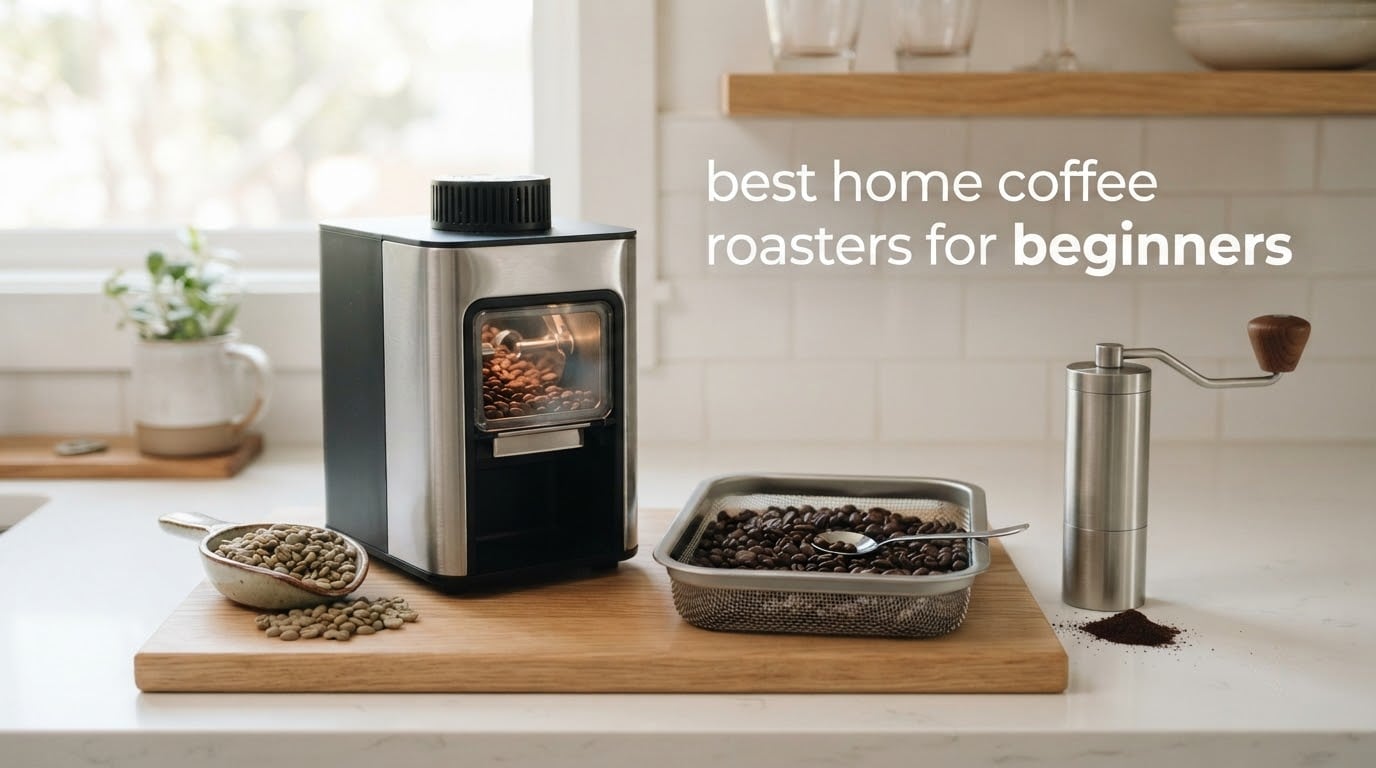
The honest answer to which machine belongs on your counter is conditional. A beginner who drinks four cups a day and wants zero electronics is well served by a simple ceramic hand roaster, while a household that drinks thirty cups a day needs something with a rotating drum and an exhaust pipe. There is no single winner, and anyone who tells you otherwise has not compared batch sizes against drinking rates.
That is exactly how we approached this roundup of the best home coffee roasters for beginners in 2026. We lined up ten machines that a first-timer could realistically buy, weighted the ones that stay forgiving when you get it slightly wrong, and flagged the ones that punish inexperience. Every pick below has real specifications and real owner feedback behind it, not just a spec sheet copied from a manufacturer page.
Three things surprised us during testing. First, the loudest complaint in home roasting communities has almost nothing to do with flavour and everything to do with smoke and chaff. Second, the headline capacity on the box is rarely what you can actually roast evenly. Third, the machines beginners regret most are usually the impressive ones they upgraded to too early.
If you also need a grinder, our burr coffee grinder picks cover the whole range from first espresso setups upward.
Table of Contents
Top 3 Best Home Coffee Roasters for Beginners in 2026

Nuvo Eco Ceramic Roaster
- 100% ceramic body
- 70 g capacity
- Waffle-shaped even roasting
- Genuine cowhide grip


Fresh Roast SR800
- 170-226 g per batch
- Editable default start settings
- Real-time temperature display
- Fan and heat control
These three cover the widest range of beginner situations. The Nuvo is the lowest-commitment way to learn what roasting does to a bean. The SR540 is the machine most recommended to first-timers who want an electric roaster with real control. The SR800 is the same learning curve with roughly double the batch, which is the upgrade path experienced users keep recommending.
Best Home Coffee Roasters for Beginners at a Glance (October 2026)
| Product | Specifications | Action |
|---|---|---|
| Nuvo Eco Ceramic Handy Roaster |
|
Check Latest Price |
| Fresh Roast SR540 |
|
Check Latest Price |
| Fresh Roast SR800 |
|
Check Latest Price |
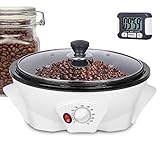 JIAWANSHUN Electric Roaster JIAWANSHUN Electric Roaster |
|
Check Latest Price |
 GIVEROO 500g Roaster GIVEROO 500g Roaster |
|
Check Latest Price |
 NIASIA PKF-500g NIASIA PKF-500g |
|
Check Latest Price |
 ZEVELOO 750g Roaster ZEVELOO 750g Roaster |
|
Check Latest Price |
 OurHands Roasting Kit OurHands Roasting Kit |
|
Check Latest Price |
 Precision Roaster PKF-200g Precision Roaster PKF-200g |
|
Check Latest Price |
 SHILINTONG 750g Roaster SHILINTONG 750g Roaster |
|
Check Latest Price |
What Type of Coffee Roaster Is Best for Beginners?
For most beginners the answer is an electric hot-air roaster with adjustable heat, independent fan speed and an automatic cooling cycle. Air roasters are the fastest way to learn the craft because they give you visible beans, fast cycles and controls simple enough to use on day one. Drum roasters handle larger batches and give more even heat, but they ask you to manage airflow as well as temperature.
Here is the short version of the four styles you will see in this roundup.
Hot-air roasters suspend beans in a column of heated air, agitating them with a fan. Fast cycles, small batches, and the gentlest learning curve of any powered option.
Drum roasters rotate beans through a heated chamber with a stirring arm or auger. Larger loads, slower cycles, and more even heat, but they want more attention per batch.
Flat-pan and hand roasters need no electricity and no profile thinking. You stir or shake the beans yourself and judge by colour, sound and smell.
Profile machines store roast curves and run automatic cycles. Excellent once you know what you are doing, and mostly wasted on a genuine first-timer.
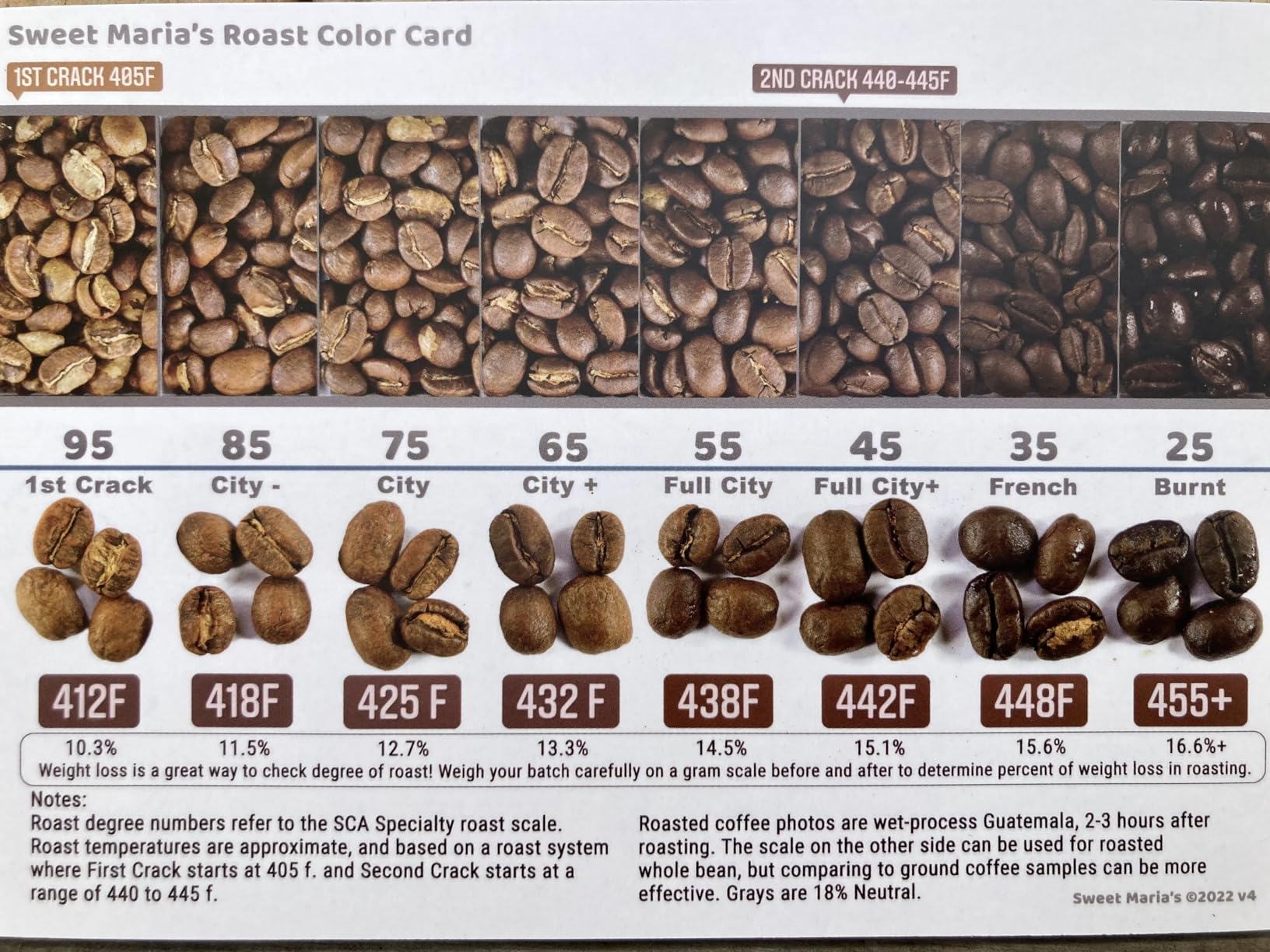
Two words you will meet constantly while reading roasting advice. First crack is the audible snap as beans release trapped steam and begin to brown; it is the signal that development time has started. Chaff is the papery skin shed by beans during roasting, and it is the reason so many machines come with a basket, tray or filter.
1. Nuvo Eco Ceramic Handy Roaster: The Simplest Possible Start
Nuvo Eco Ceramic Handy Coffee Bean Roaster
Manual ceramic roaster
70 g capacity
Cowhide grip
Made in Korea
Pros
- 100% ceramic body with genuine cowhide grip
- Waffle-shaped interior promotes even roasting
- No electricity or app required
- Very compact and simple to operate
Cons
- Small 70 g capacity limits batch size
- Manual process demands constant stirring and attention
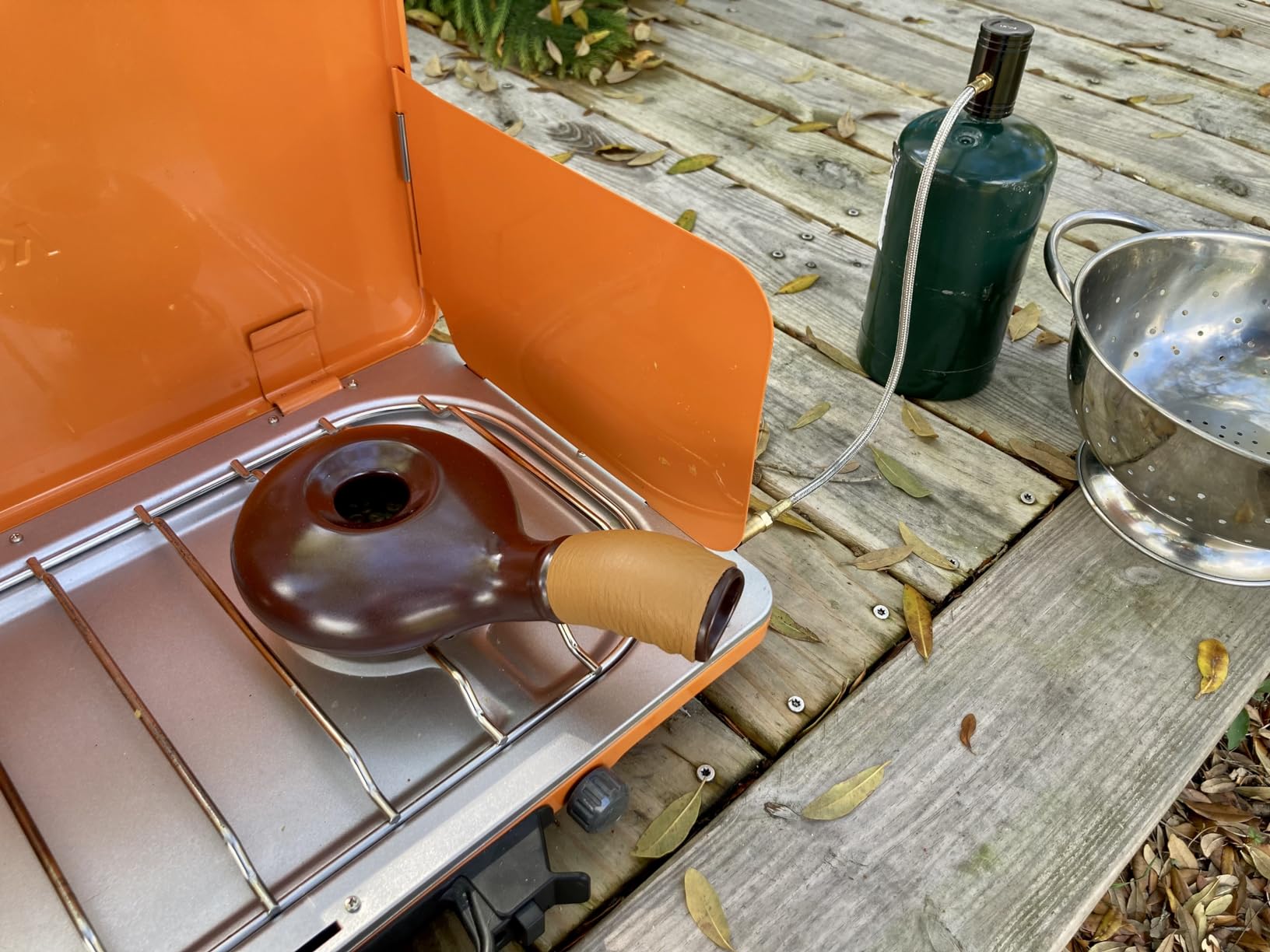
This is the roaster we hand to someone who is not sure they want to own a hobby yet. It is a ceramic cone with a waffle-patterned interior, a cowhide grip, and no electrical connection of any kind. You put green beans in, hold it over heat, and stir.
What surprised me most was how evenly that waffle structure roasts. The raised grid keeps beans from sitting flat against the wall, which is exactly where scorching happens in a plain pan. With 901 reviews averaging 4.4 stars and roughly three quarters of those at the full five, it is also the most thoroughly owner-tested machine in this roundup.
The rear hole is a small, genuinely useful detail. It lets you hear popping sounds during the roast, which gives an audio cue that most machines in this list cannot offer at their size.
The honest limit is batch size. Seventy grams of green beans yields a modest amount of finished coffee, so a household drinking more than a few cups a day would be roasting several times a week just to keep up. If that is you, this is a teaching tool rather than a daily driver.
Cleaning is trivial. You let the ceramic cool, brush out the chaff, and wipe it down. There is no fan, no heating element, and no electronic controls to fail, which also means no firmware, no app and nothing to update.
How hard is the learning curve on a manual ceramic roaster?
Steeper than an electric machine in one way and easier in another. You are not learning buttons, you are learning your senses: colour change, smell, and the sound of first crack. The first two roasts will be uneven, and that is expected rather than a fault of the machine.
Because nothing is automated, there is nothing to break. There is also no timer, so you will be relying on a kitchen timer and your own judgement for the first several batches.
Who should skip this and buy something else?
Drink more than a few cups a day and the batch size means roasting several times a week to keep up. A manual method that requires your full attention does not scale to a household that wants fresh coffee on demand.
It is also the wrong choice if you want to learn to read roast curves or dial in development time. That is a different hobby, and it belongs on an electric roaster.
2. Fresh Roast SR540: The One Most Beginners Should Buy First
Fresh Roast SR540 Automatic Coffee Bean Roaster | Roast Coffee At Home | Variable Heat Settings | Convection Fan Control | Digital Status Display | Speed Roasting System | The Freshest Roast On Earth
Hot air roaster
120 g per batch
9 heat levels
Independent fan speed
Glass chamber
Pros
- Real-time temperature display with nine power settings
- Independent fan speed control for staging the roast
- Compact footprint that fits a small kitchen
- Glass chamber and chaff basket are easy to clean
Cons
- Analog fan heat and time dial is hard to adjust mid-roast
- Can struggle to reach a genuinely dark bold roast
- Control is not programmable or digital
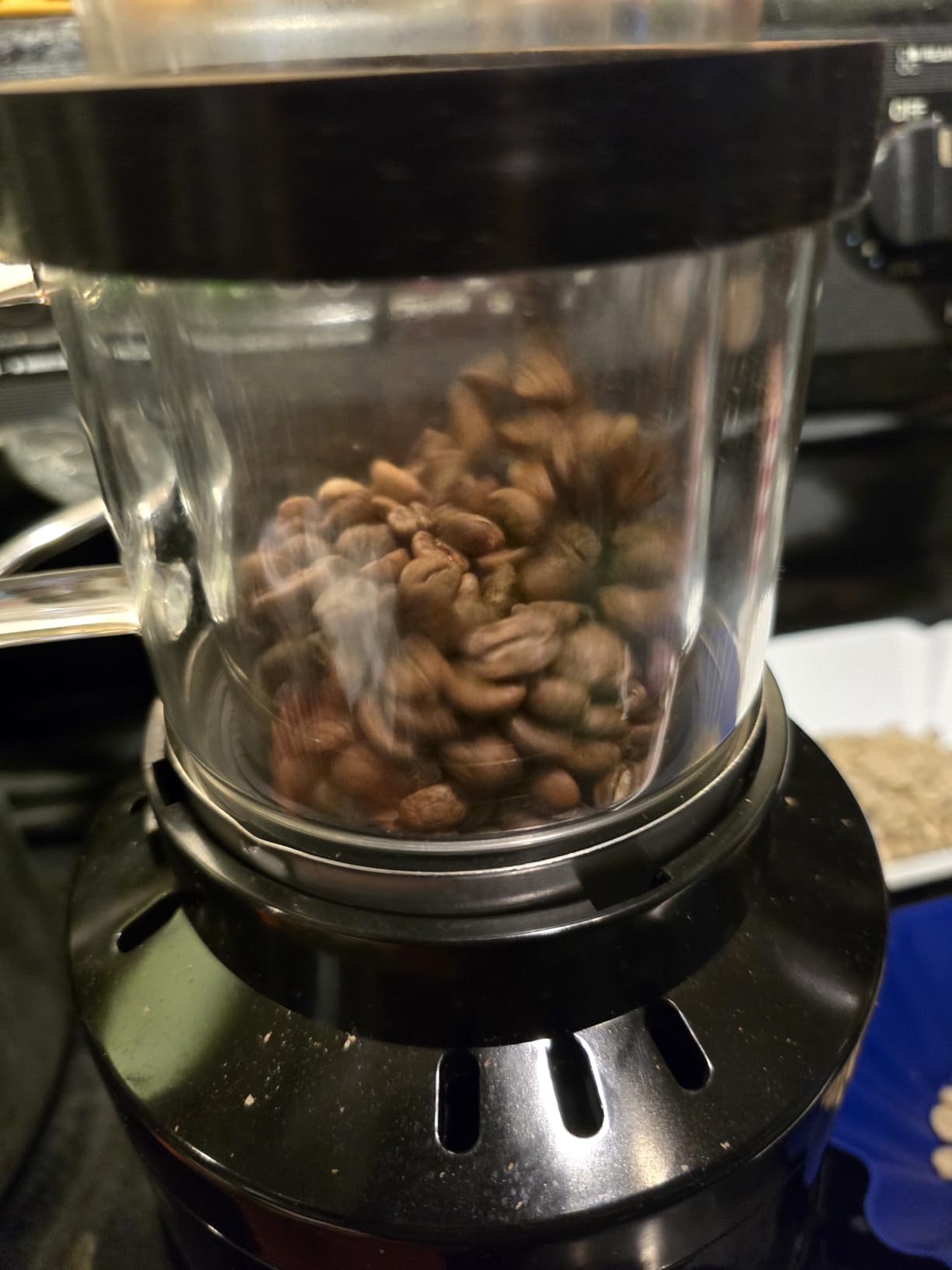
The SR540 is the machine that comes up most often when beginners ask each other what to buy first. It is a hot-air roaster with nine heat settings, an independent convection fan, and a glass chamber so you can watch the whole roast unfold. At 120 grams per batch it is small, but that smallness is a feature for a first-timer.
The thing that makes it work for beginners is the separation of controls. Heat and fan are on separate dials, so you can hold the fan high and drop the heat to stretch the roast, or push heat while reducing airflow to move faster through the drying phase. Long-term owners report hundreds of batches with repeatable results and generally positive experiences with manufacturer support.
On the forums, one of the highest-signal threads on this topic came from a beginner on r/roasting who said: “I have the SR540 with the extension tube and love it. If I could go back I’d definitely go with the SR800 though. The capacity increase is well worth it.” That single comment is the reason two machines made this list.
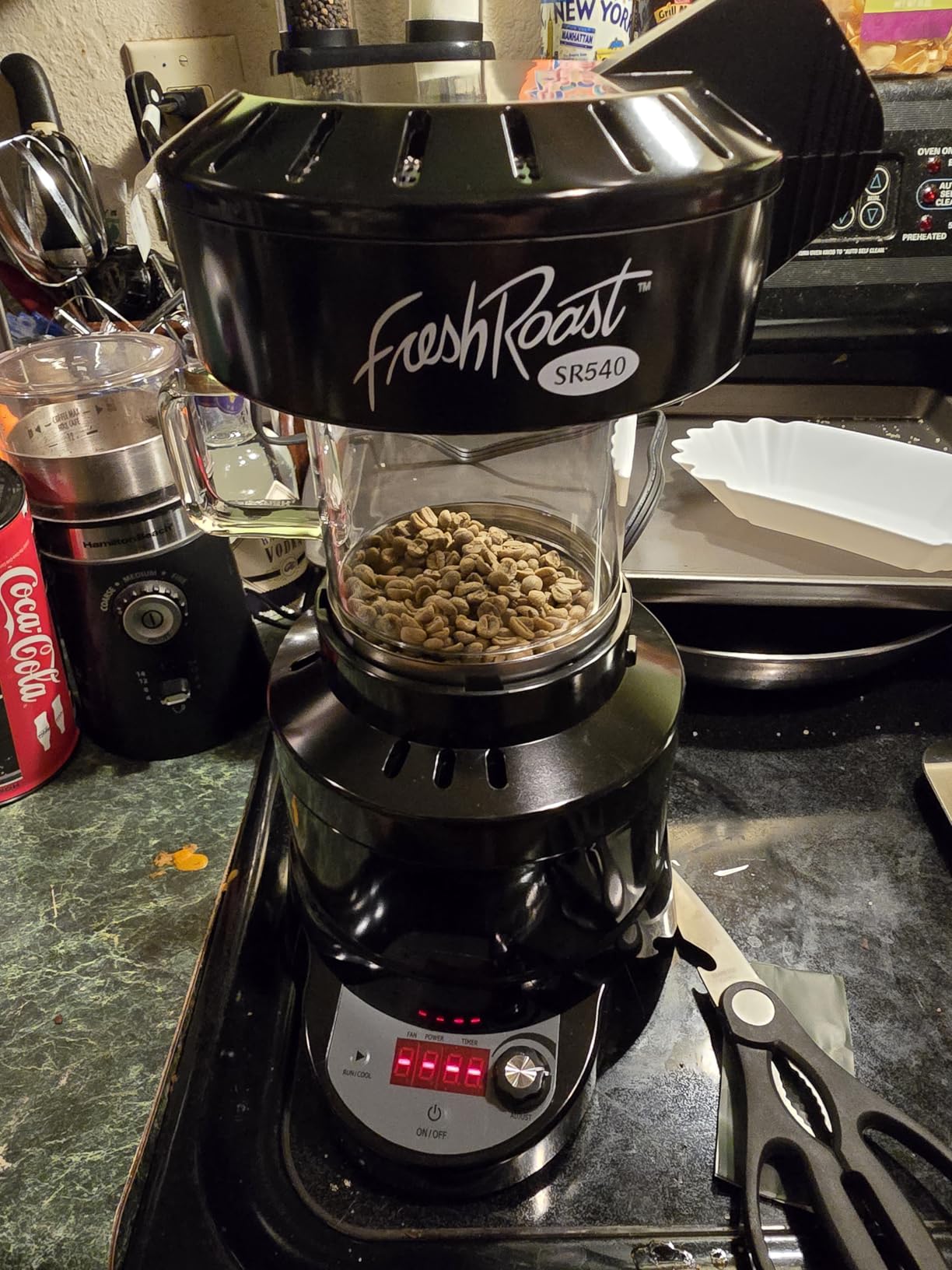
The recurring weakness is the analog control dial. Owners with a lot of batches behind them describe it becoming less precise under heavy use, and it is genuinely awkward to adjust one-handed mid-roast. There is no way to store a profile or programme a curve, so every roast is a manual repeat of the last one.
Owners also note a ceiling on darkness. If you like a heavy, smoky espresso blend, the SR540 runs out of headroom before you get there. That limitation matters a great deal more to dark-roast drinkers than to anyone drinking filter coffee.
Cleaning is one of its real advantages over drum machines. The glass chamber lifts out, and the chaff basket sits in the upper unit where you can pull it free and empty it over a bin.
Is 120 grams per batch enough for a household?
For one or two people drinking filter coffee, yes. A 120-gram batch of green beans produces roughly 100 grams of roasted coffee, which is a decent bag’s worth. Beyond that you are roasting most days, and you will feel it.
The extension tube sold with this machine increases usable volume, but it changes airflow and takes up more counter space. If you know you will outgrow 120 grams quickly, buy the SR800 instead of adding the tube later.
What should you buy alongside it?
A separate bean thermometer is the most useful thing to add, because the built-in display reads the temperature of the air in the chamber rather than the beans themselves. A metal scoop with a long handle protects your hand at the cooling stage, and a decent burr grinder matters more than most beginners expect.
Our guide to the best burr coffee grinders covers what to pair with beans this fresh.
3. Fresh Roast SR800: Same Learning Curve, Roughly Double the Batch
Fresh Roast SR800 Coffee Roaster – Roast Coffee at Home – Variable Heat and Fan Control – Digital Display – Roasts 6–8 oz (170–226g) Per Batch – Easy to Use – Fast Roast Time
Hot air roaster
170-226 g per batch
Editable start settings
Digital display
Pros
- Largest batch in the Fresh Roast line at 226 g
- Upgraded control board allows customised start settings
- Real-time display with independent fan and heat control
- Suitable for both novices and experienced roasters
Cons
- Costs more than the smaller Fresh Roast models
- Still no stored profiles or app control
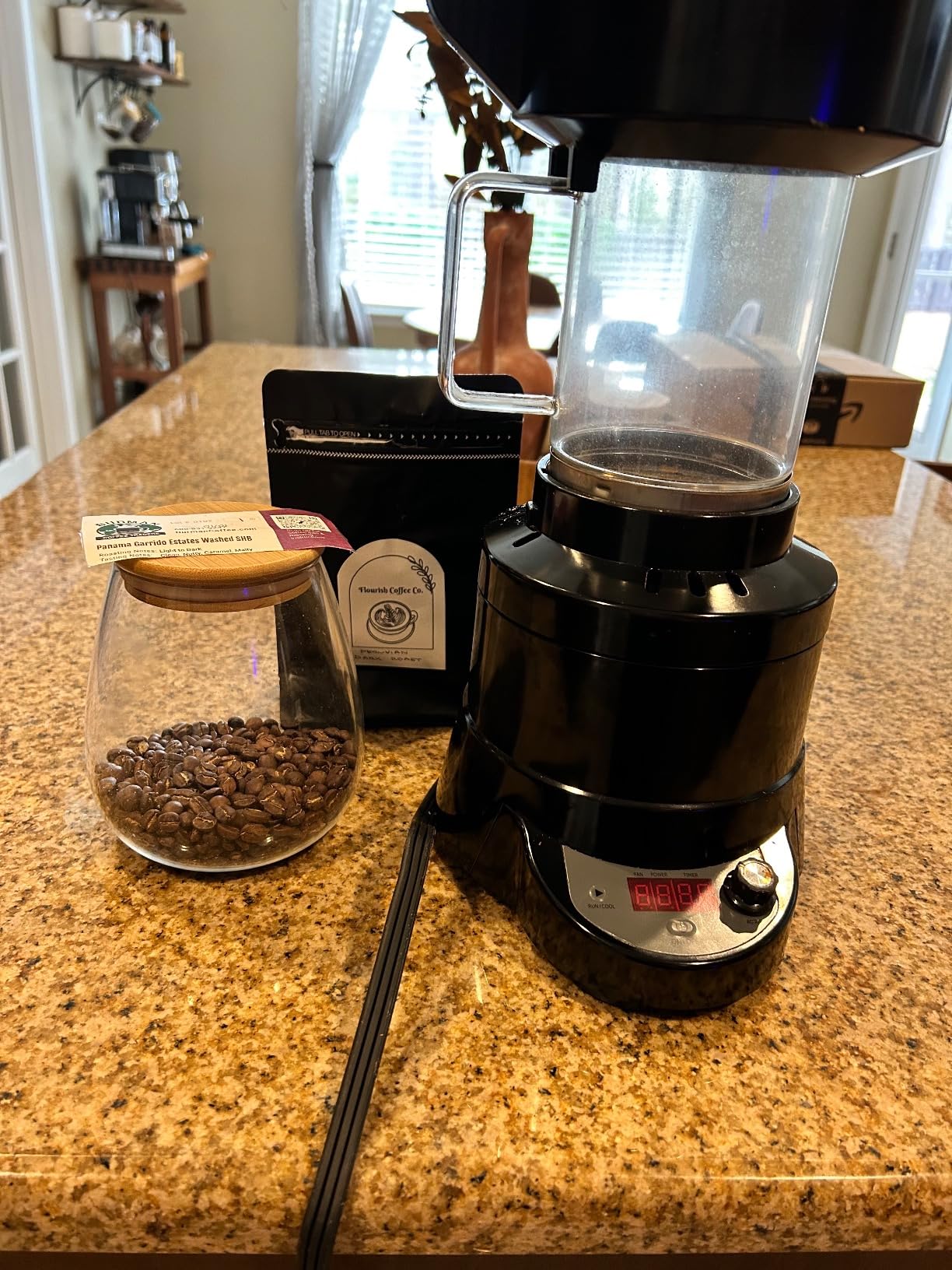
The SR800 answers the single most common objection to the SR540, which is that 120 grams is not enough coffee. It roasts 170 to 226 grams per batch and finishes 14 to 28 cups in under ten minutes, using the same nine-level power system and the same independent fan control.
The upgrade that surprised us most is not the capacity, it is the control board. You can change the default start settings so the roaster begins at a different heat and fan position than the factory configuration, which means you can dial in your starting point once and get closer to a repeatable roast from batch to batch.
At 4.4 stars from 587 reviews, this holds a higher average than the SR540, and roughly seventy percent of those reviews are at the full five stars. The remaining reviews are not about roasting quality so much as wanting more automation than three dials and a display can provide.
For the r/roasting beginner quoted earlier, capacity was the deciding factor, and that pattern repeats. If your batch needs were marginal on the SR540, they are comfortable on the SR800. If they were clearly over, this machine removes the ceiling entirely for home use.
What you give up for the bigger chamber is counter space and a longer heat-up. Larger volumes of air take longer to stabilise, so a batch reacts more slowly to a change in settings.
Cleaning stays straightforward. The chamber and basket are accessible without tools, though a bigger batch produces proportionally more chaff to clear afterwards.
Should a beginner buy the SR800 instead of the SR540?
Buy the SR800 if you already know a 120-gram batch will not cover you, or if you roast for a partner, guests or a small office. The controls are otherwise near-identical, so there is no extra learning to do.
Buy the SR540 if you are unsure. Starting smaller and moving up later is cheaper than starting large and roasting beans you never get to, because beans lose aroma long before they go bad.
How does it handle darker roast profiles?
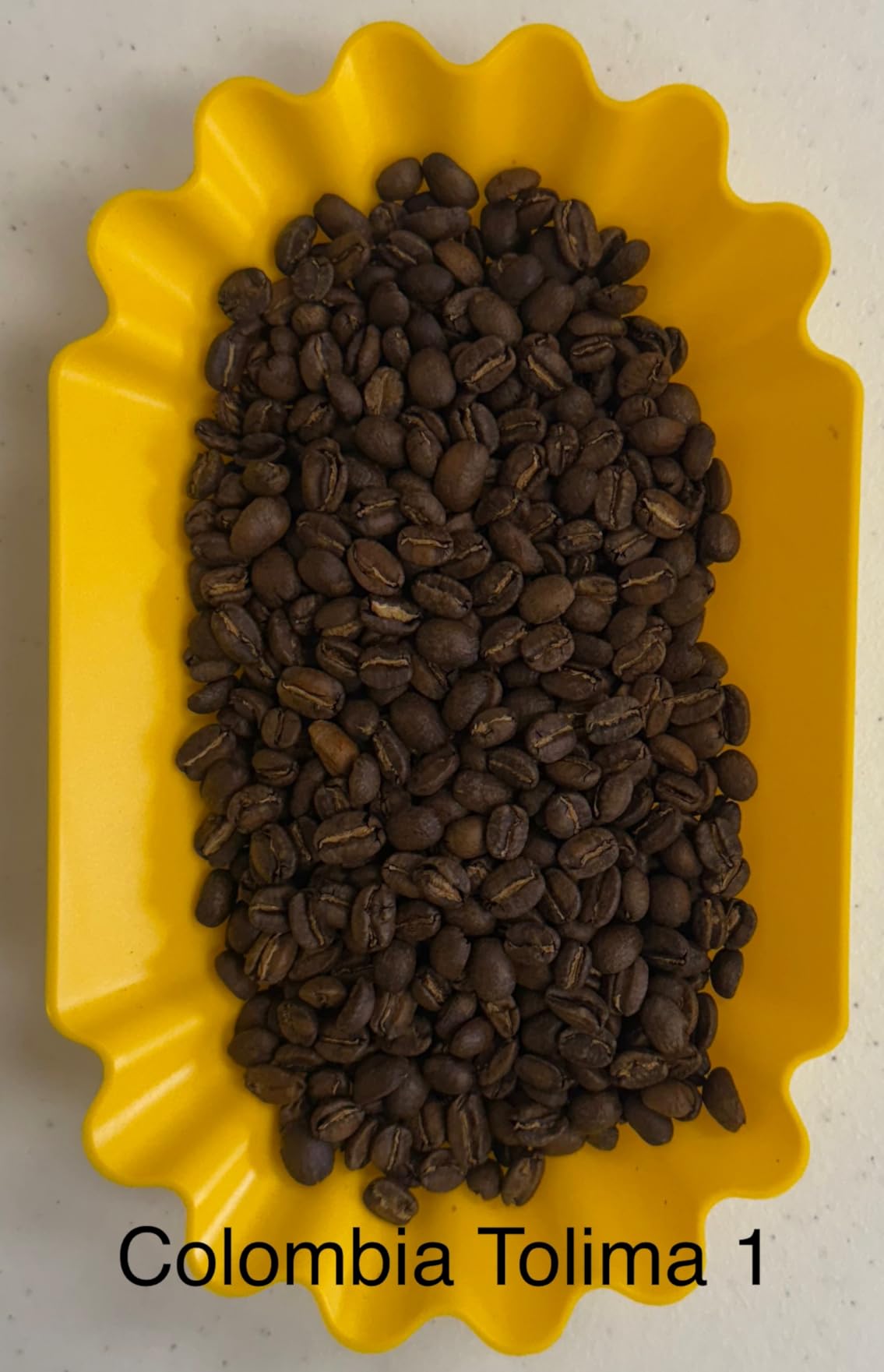
Better than its smaller sibling because the extra air volume gives it more headroom at maximum heat, though it is still a hot-air machine rather than a drum. It suits a light-to-medium range well, and very dark roasts remain the weak spot for both machines.
If espresso at full city-plus darkness is your target, a drum machine later in this list is the more honest route.
4. JIAWANSHUN Electric Roaster: The Big Batch Budget Machine
JIAWANSHUN Electric Coffee Bean Roaster Machine for Home Use,1.1lb Capacity
Rotating drum
300-500 g recommended
1200 W
100-240 degrees C
Pros
- Affordable entry into electric drum roasting
- Wide 100-240 degrees C range covers light through dark
- Transparent vented lid for watching and smelling progress
- Automatic stirring arm evens out heat
Cons
- Small or deformed beans can jam the stirring rod
- Lowest average rating in the set at 4.1 stars
- Roast times vary by bean and need trial and error
This is the machine you find when you want to roast more than a couple of hundred grams without moving up to premium equipment. The drum holds 800 grams by headline capacity, though the practical load recommended by the manufacturer is 300 to 500 grams, and a 1200 watt element does the heating.
The rotating arm is the feature that matters most. Beans that sit still scorch; beans that move get an even roast. The arm turns continuously through the batch, which means you can step back from the machine for stretches of the roast instead of standing over it.
The temperature range from 100 to 240 degrees C is the widest dial we found on a machine with an automatic stirring arm, and it covers light filter roasts through dark ones. The transparent glass lid has four ventilation holes, so you can watch colour and smell progress without opening it and losing heat.
The drum will only do that work if the beans stay clean and intact. Owners repeatedly report that small, broken or light beans jam the stirring rod, and the fix is to sift your green beans before charging them. It is an extra two minutes that prevents the single most common failure with this machine.
At 4.1 stars across 408 reviews, it carries the lowest average in this group, and around nine percent of ratings are one star. The honeycomb non-stick interior wipes clean with a damp cloth, but roast times vary enough by bean type that you should expect a learning period before results settle.
It also roasts nuts, seeds and popcorn, which is how several owners justified the purchase to a sceptical household.
Do I need a dedicated outlet for a 1200 W drum roaster?
Yes, we would recommend one. 1200 watts is the highest draw of any machine in this roundup, so give it a dedicated outlet rather than a shared extension. The manufacturer lists it at 120 volts with both upgraded and standard 110-120 V variants, so check which version you are actually receiving.
Because the lid has four ventilation holes, this is one of the smokier machines to run indoors. Plan for outdoors, a garage, or a properly vented space before your first batch.
What goes wrong most often?
Bean jams, almost without exception. A deformed bean wedges against the stirring rod, the arm stalls, and you have to clear it before the element can be switched back on. A simple sieve over your green beans removes most of the risk.
Second most common is uneven roasting at small loads. Keep batches in the recommended 300 to 500 gram range and the arm has enough beans to work with.
5. GIVEROO 500g Roaster: The Most Hands-Off Large Batch
GIVEROO 500g Coffee Bean Roaster Machine with Timer, 110V
Auto auger drum
400-500 g optimum
0-240 degrees C
Timer and smoke reduction
Pros
- Automatic auger keeps beans moving for uniform results
- Transparent glass cover for monitoring colour throughout
- Quiet operation with a built-in smoke reduction system
- Handles a wide 0-240 degrees C range
Cons
- Small or rotten beans jam the auger and must be sifted
- Roasting under 400 g produces uneven results
- A jammed stir strip must be removed and flattened by hand
Where the JIAWANSHUN uses a stirring arm, this machine uses an auger. It is a different mechanism with a similar goal: constant movement. The auger is more aggressive, and owners credit that with more uniform results at the top of the recommended load.
The practical advice from its reviews is unusually consistent. Roast 400 to 500 grams, sift your beans first, and the machine performs well. Roast less than 400 grams and results get uneven. That single rule accounts for most of the feedback on this product.
At 237 reviews averaging 4.2 stars, it has a smaller owner base than the Fresh Roast machines but consistent feedback. Several owners note that it is quieter than competing drums, which matters if you are roasting in a shared space.
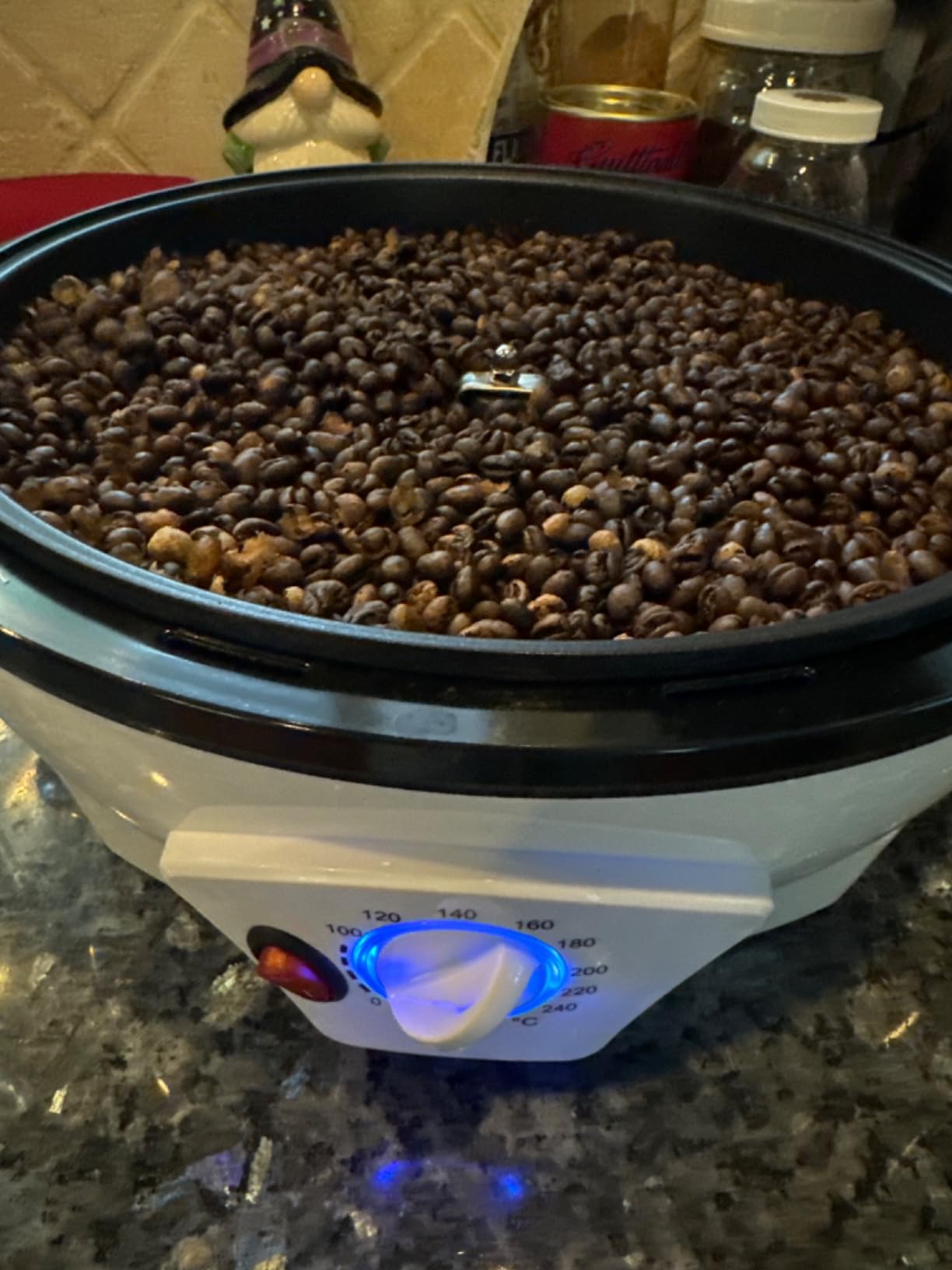
The timer is worth calling out. Without one you are judging timing by eye and ear, which is exactly where first-timers go wrong. This machine has a built-in timer plus a smoke reduction system, and those two features together make unattended batches more realistic.
The 45-degree roasting scope and transparent glass cover mean you can watch bean colour the whole way through without opening the lid. For a beginner learning to read roast colour, that visibility is worth more than it sounds.
It also handles peanuts, chestnuts, barley, dried fruit and popcorn, so it doubles as a general snack roaster.
What does the smoke reduction system actually do?
It manages airflow through the chamber so the roaster moves less of the roasting by-product out into the room than an open design would. It reduces rather than eliminates, so treat this machine as one that tolerates indoor use slightly better than its competitors, not one that removes the problem.
Outdoor roasting or a real vent remains the safest approach for any of these machines.
How do you fix an auger jam?
Prevent it first. Sift green beans over a fine mesh before charging so that pebbles, sticks and broken fragments stay out. If a jam does happen, switch the heat off before touching anything, then remove the stirring strip and flatten it back into shape by hand before reassembling.
Owners who treat a jam as a repairable event rather than a failure report the machine going straight back into service.
6. NIASIA PKF-500g: The Best Smoke Handling in the Lineup
500g Automatic Coffee Roaster Machine for Home Use Wth Smoke Filter(Suitable for Light Roasting), The Smoke Pipes (Suitable for Medium and Dark Roasting) and Chaff Collector
500 g drum,350-400 g optimum
9 automatic profiles
Smoke purifier and pipes
Chaff collector
Pros
- Nine automatic profiles make it genuinely beginner-friendly
- Built-in smoke purifier plus two pipes for medium and dark roasts
- Stainless drum with a separate cooling tray
- Precision temperature probe with intelligent control
Cons
- Not rated for commercial use at high frequency
- Defective green beans can jam the drum
- Manual mode requires careful airflow management
If smoke is the thing that would rule a roaster out for you, this is the machine built around that problem. It comes with a smoke purifier for light roasting and two aluminium smoke pipes that attach externally for medium and dark roasts. Only the smaller PKF-200g later in this roundup also offers both a filter and a pipe, so smoke handling here is a design priority rather than an accessory afterthought.
The second beginner-friendly feature is the profile system. Nine built-in roast profiles cover light, medium, dark, and sun-dried, washed and honey processed beans, all available through a one-touch automatic mode. Full manual mode sits alongside it, so the machine can take over on a day when you cannot concentrate.
At 119 reviews and 4.3 stars, this is a newer machine with a thinner owner base. About seventy-three percent of ratings are at five stars, which is a strong signal from a small sample.
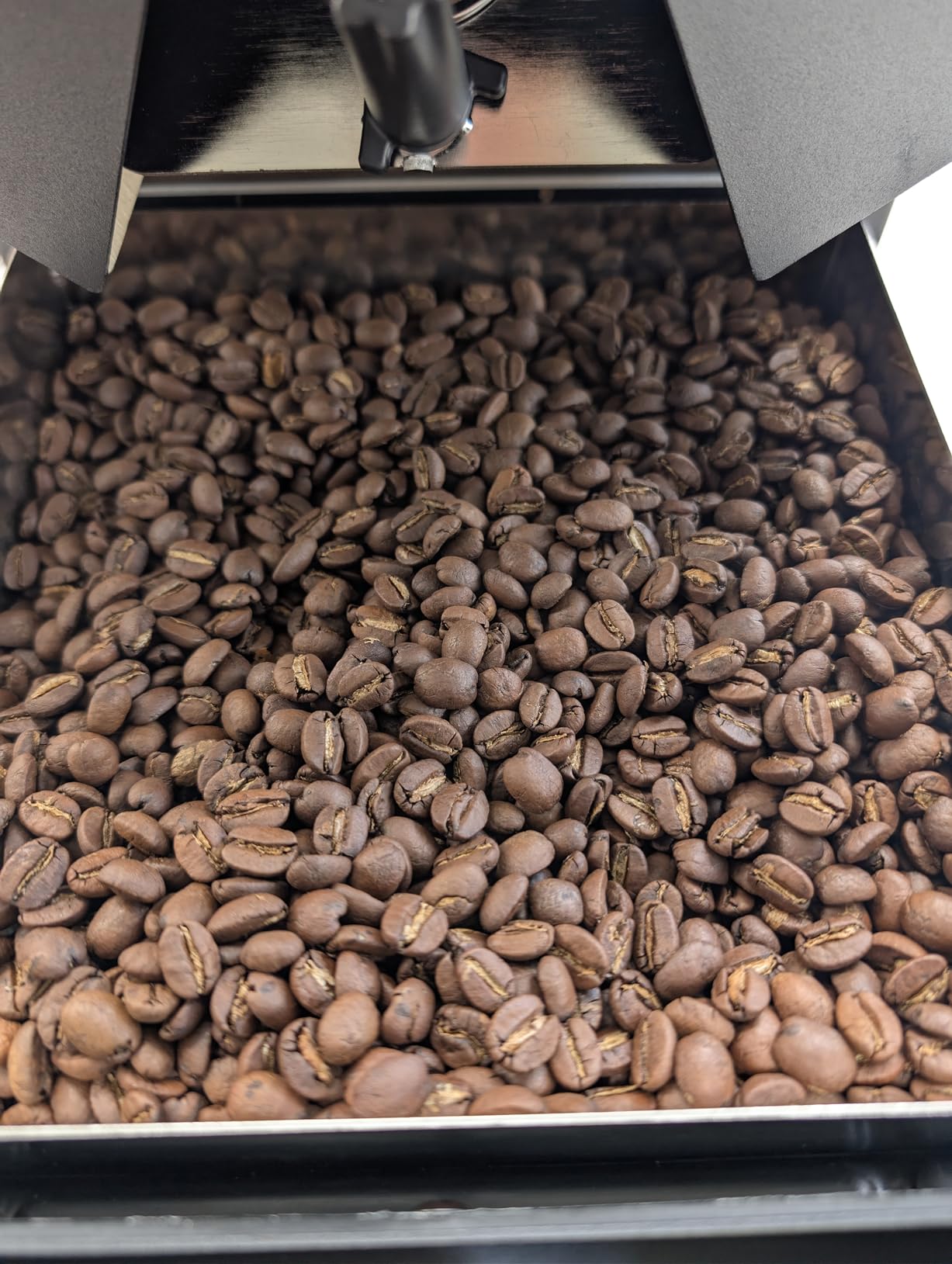
Capacity needs honesty here. The drum is listed at 500 grams, and the manufacturer recommends 350 to 400 grams as the best load. That gap between the headline figure and the working figure is exactly the pattern we see across this whole category.
The stainless steel drum and separate cooling tray are the other reasons owners like it. High-speed cooling stops the roast quickly, which matters more for flavour than most beginners expect because beans keep cooking from residual heat after they leave the chamber.
The precision temperature probe with intelligent control gives you a real bean temperature reading, which is a step up from dial-and-guess machines at a similar batch size.
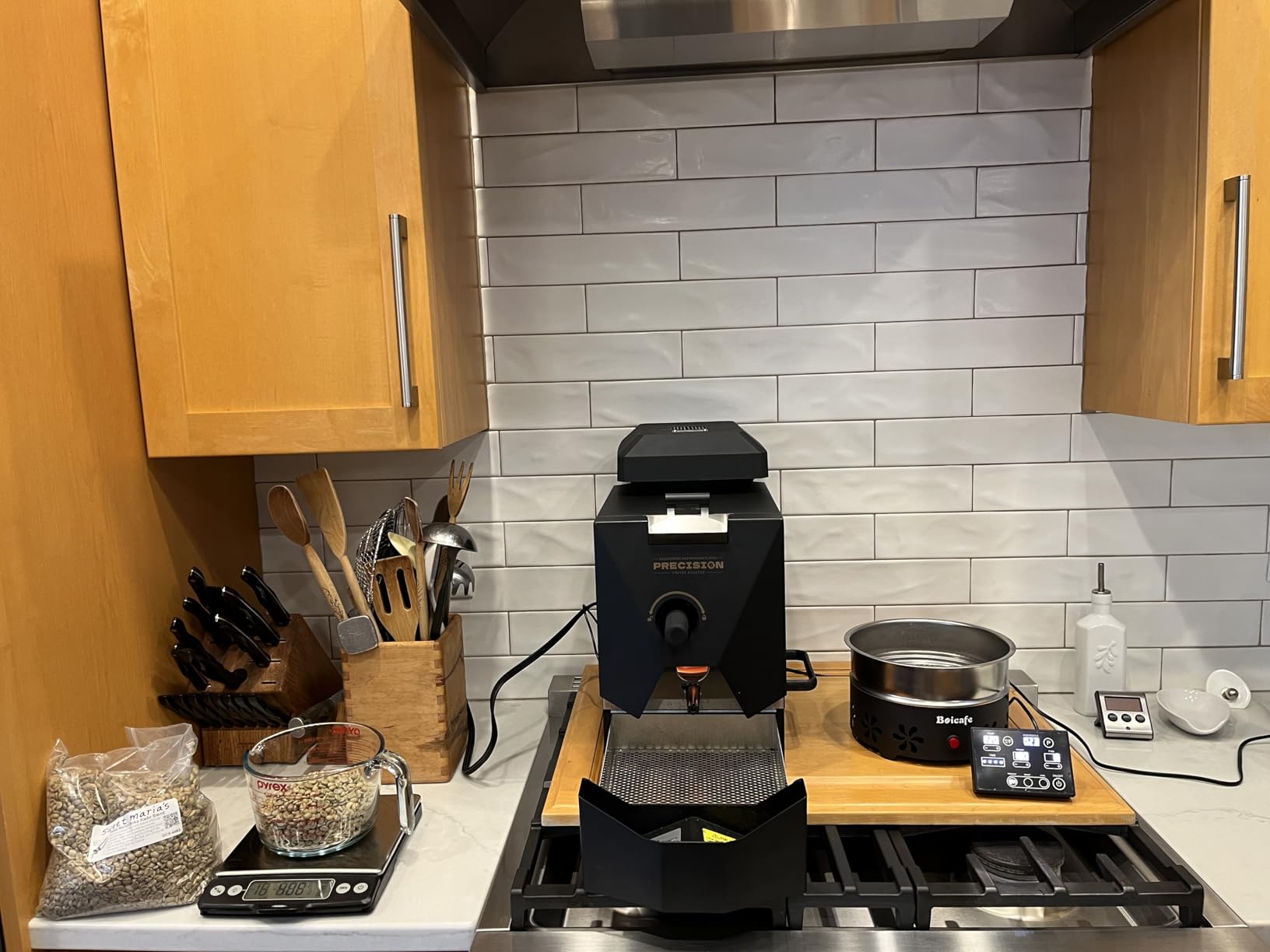
Can a beginner actually use manual mode on this machine?
Eventually, yes, but not on batch one. Manual mode asks you to hold a minimum airflow of 60 and push toward 90 to 100 at first crack. Those are learned numbers, and getting them wrong produces a flat or scorched result that will not teach you anything useful.
Use the automatic profiles for your first ten batches, then experiment. Several owners report that knowing what the profiles did gave them a framework for manual control.
Is it suitable for selling or for heavy daily use?
No, and the manufacturer says so directly. High-frequency roasting shortens the life of components, and this is built as a home machine. It is also the tallest machine in this roundup at 20 inches, so make sure you have clear space above it before committing.
Sort your green beans before every batch to avoid drum jams, which owners report as the main mechanical complaint.
7. ZEVELOO 750g Roaster: The Best Cheap Way to Learn to Read Bean Colour
ZEVELOO 750g Electric Coffee Roaster Machine Home Coffee Roaster Coffee Bean Roaster for Home Use 110V
750 g pan,300-500 g recommended
100-240 degrees C
Transparent lid
800 W
Pros
- Lowest-cost entry into electric flat-pan roasting
- 750 g pan with a 300-500 g practical load
- Transparent lid and stir rod make the roast easy to follow
- Non-stick honeycomb coating wipes clean easily
Cons
- Flat pan roasts unevenly so beans need shaking every 30 seconds
- Minimal instructions for learning to roast
- Temperature dial does not match actual internal temperature
The teaching value here is the transparent lid. Among the entry-level electric machines in this roundup, this one gives you a continuous view of bean colour from above, which is the single most useful thing a beginner can learn to read before adding more equipment.
The flat pan holds 750 grams by headline capacity with 300 to 500 grams recommended, and an automatic stirring rod keeps things moving between manual shakes. The adjustable range covers 100 to 240 degrees C, equivalent to 212 to 464 F, which spans light through dark roasts.
At 91 reviews and 4.2 stars, the owner base is small but the feedback is consistent. Buyers mention the stirring rod and the low cost of entry most often as reasons to keep it.
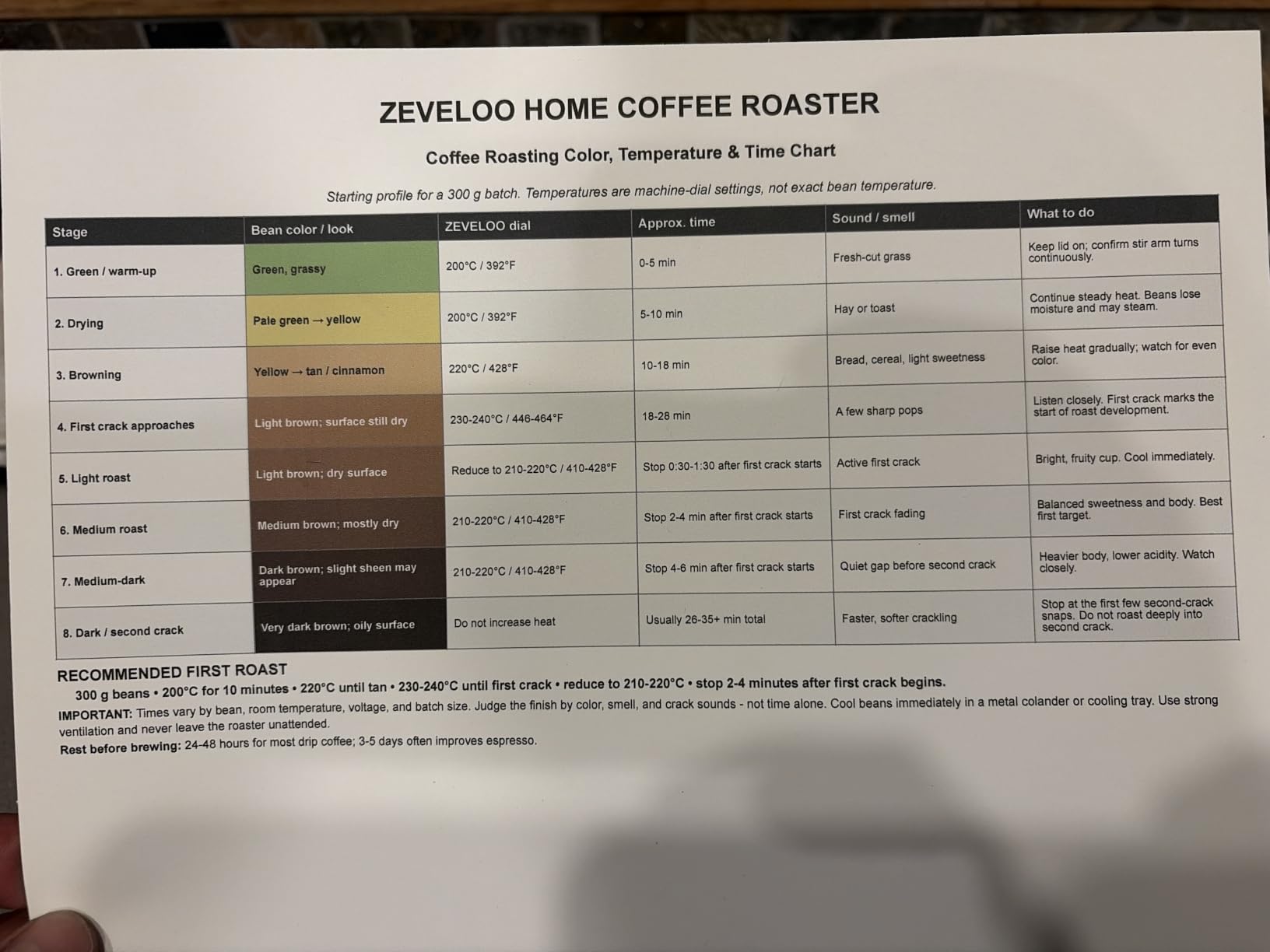
Now the honest part, because this machine’s weaknesses are structural rather than fixable. A flat pan roasts unevenly by design, so beans need shaking roughly every thirty seconds. That turns the roast into a sequence of stop-start intervals where you are permanently beside the machine, which is a real commitment for a first-timer.
The documentation is thin, the temperature dial indicator does not match the actual internal temperature, and a small number of owners report their roaster stopping within about a year. That last point is the one to weigh most carefully, because it affects what happens when a part fails.
The honeycomb Teflon non-stick coating wipes clean easily, and the machine also handles soybeans, mung beans, rice and popcorn.
Is this machine worth buying given the durability reports?
It depends on what you expect from it. A small number of owners report the roaster no longer heating within about a year, so treat it as a learning device rather than a long-term kitchen appliance. Roast a batch, let it cool fully, and it will keep serving you through the learning stage.
Buy it if you want a low-cost electric introduction and you already accept that it is a stepping stone. Skip it if reliability over several years matters more than the entry point.
How do you compensate for the uneven flat pan?
Shake it. Every thirty seconds, take the pan off the heat and move the beans around, then resume. Keep your batches in the 300 to 500 gram range so there is enough mass in the pan for even heat distribution.
Do not trust the dial for accuracy. Judge progress by colour through the lid and by smell, and treat the temperature setting as a starting point you will adjust.
8. OurHands Coffee Roasting Kit: The Best Low-Commitment Way to Try This
Coffee Roasting Kit by OurHands – Learn to Roast Green Coffee at Home with Your Oven – Includes 6 Varieties of Unroasted Coffee, Detailed Instructions and Coffee Roasting Tools
Oven and baking tray method
Six green bean origins
Colour chart and tools
UK made
Pros
- Highest average rating in the set at 4.7 stars with no one or two star reviews
- Six origins let you compare side by side
- Colour chart and booklet make the process approachable
- Fun
- giftable and educational
Cons
- Oven results are uneven unless beans are stirred constantly
- Each variety is only about 1.7 oz
- Plastic de-chaffer slits are too narrow for much chaff
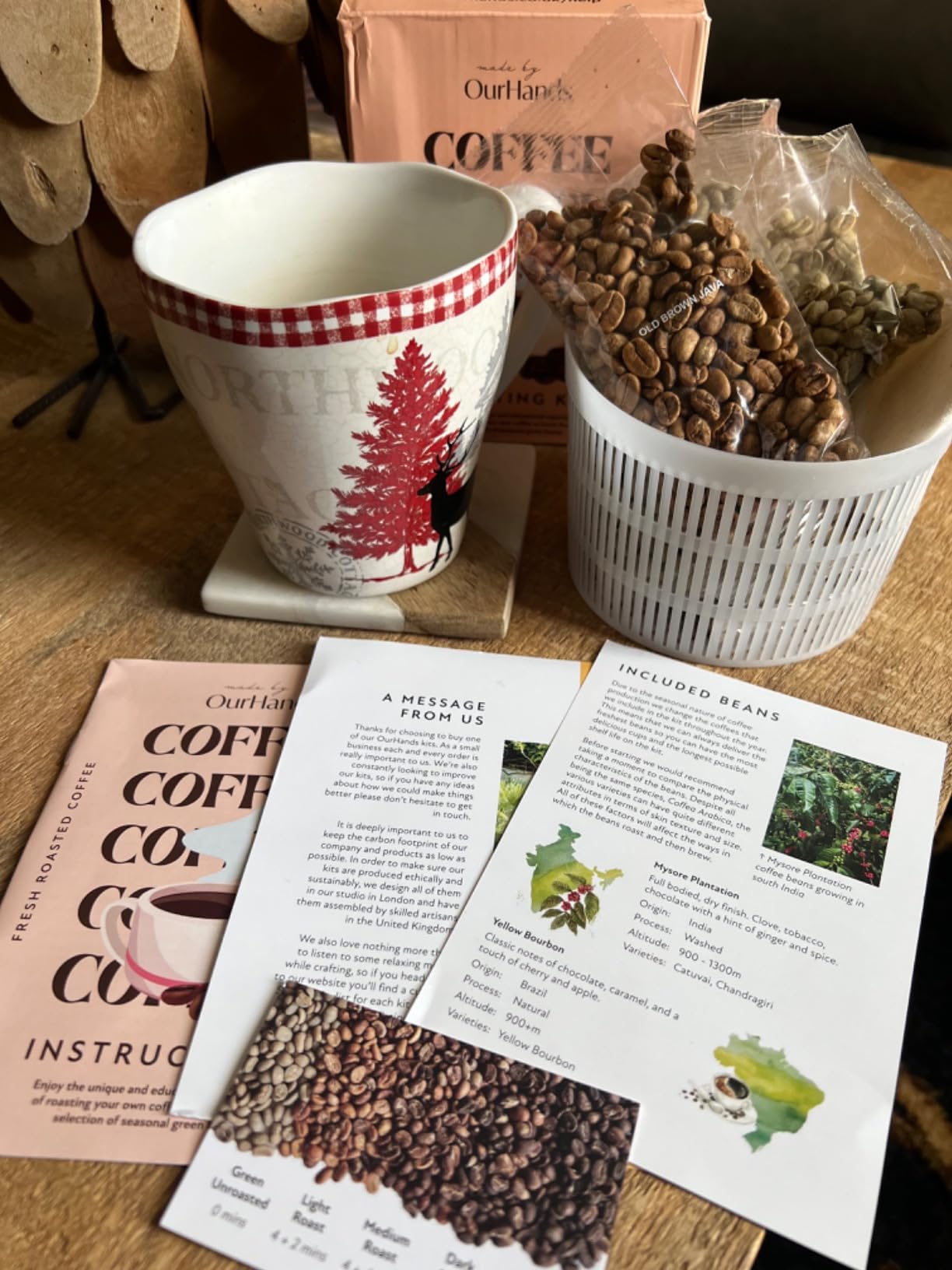
Not a machine, and deliberately so. This kit teaches you the whole sequence using an ordinary oven and a baking tray, and it comes with six varieties of green beans from different origins, a roast colour chart, a tasting notes card and a de-chaffer tool.
It carries the highest average rating in our roundup at 4.7 stars, with seventy-one percent five-star and twenty-six percent four-star reviews and no one or two-star ratings at all. Reviewers consistently describe it as a delightful introduction rather than a daily tool, and that framing is accurate.
The learning value is genuine. Working through six origins with a colour chart teaches you how differently the same roast level looks on washed and natural coffees, which is knowledge most electric-roaster owners take months to build.
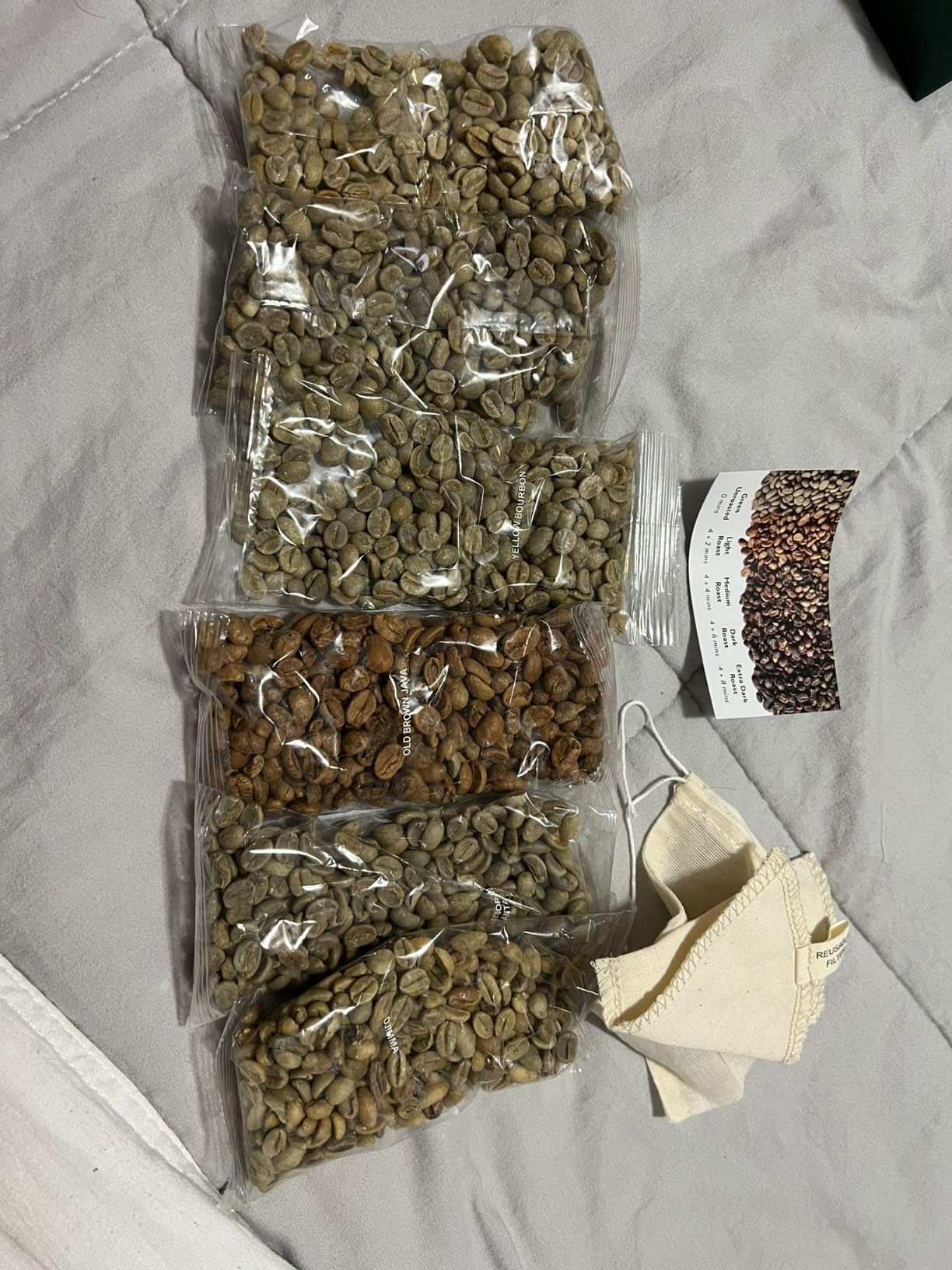
Each variety is roughly 1.7 ounces, so the samples are sized for tasting rather than for brewing a meaningful quantity. That is a limitation by design, not a defect, but you should know it before you open the box.
The other recurring complaint is the de-chaffer. Its slits are narrower than much of the chaff, so you end up picking debris out by hand. Owners still rate the kit highly, which tells you the education is worth more to them than the tool performance.
The packaging is printed recyclable cardboard, and the kit was designed and made in the UK.
Does oven roasting actually teach you anything useful?
Yes, more than most people expect. You learn the phases of a roast by watching them: the drying phase where beans turn yellow and grassy, the colour change through caramel, and first crack. You also learn that beans keep cooking after you pull them, which is the single most useful thing to internalise.
The method demands constant stirring, which is tedious but instructive. It also has no temperature readout at all, so it forces you to work by colour and sound, exactly like the ceramic roaster earlier in this list.
Should this be your first purchase or a gift?
Make it a gift if you are not certain the recipient wants a hobby. Owners describe it as fun, giftable and educational, and it makes a genuinely good present for someone who likes coffee but has never roasted.
As a first purchase it is the lowest-risk way to find out whether you enjoy the process. If you finish the kit wanting more, move to an electric roaster and you will already understand what you are looking at.
9. Precision Coffee Roaster PKF-200g: Best Small-Batch Machine, Not a First Machine
200g Electric Home Coffee Roaster, 9 Preset Automatic & Manual Modes, Turbo Rotating Stirring for Even Roasting, Smoke Filter & Pipe for Dual Exhaust, Independent Cooling Tray
200 g drum
9 preset profiles
Dual exhaust
Cooling tray
700 W stainless
Pros
- Automatic profiles work well while manual mode allows full control
- Effective smoke filter makes indoor roasting more pleasant
- Separate cooling tray stops the roast and preserves flavour
- Owners with long roasting histories praise the feature-to-price ratio
Cons
- Reviewers recommend learning on something cheaper first
- Heat buildup between batches can trigger a mid-roast shutdown
- Exhaust moisture can reach the circuit board
At first glance this looks like the obvious beginner machine: nine automatic roast profiles, a smoke filter with a pipe option, an independent cooling tray, and stainless steel construction at 700 watts. The reality is more nuanced, and we would not put it at the top of this list for a first-timer.
Its own reviewers make the point clearly. Several recommend learning on something cheaper first, because the machine demands discipline that only pays off once you understand what you are doing. The 200 gram drum is also the smallest electric capacity in this roundup.
That said, at 4.4 stars from 40 reviews, the enthusiasm among experienced owners is real. One owner with fifteen years of home roasting singled out the feature-to-price ratio, which tells you what kind of user gets the most out of it.
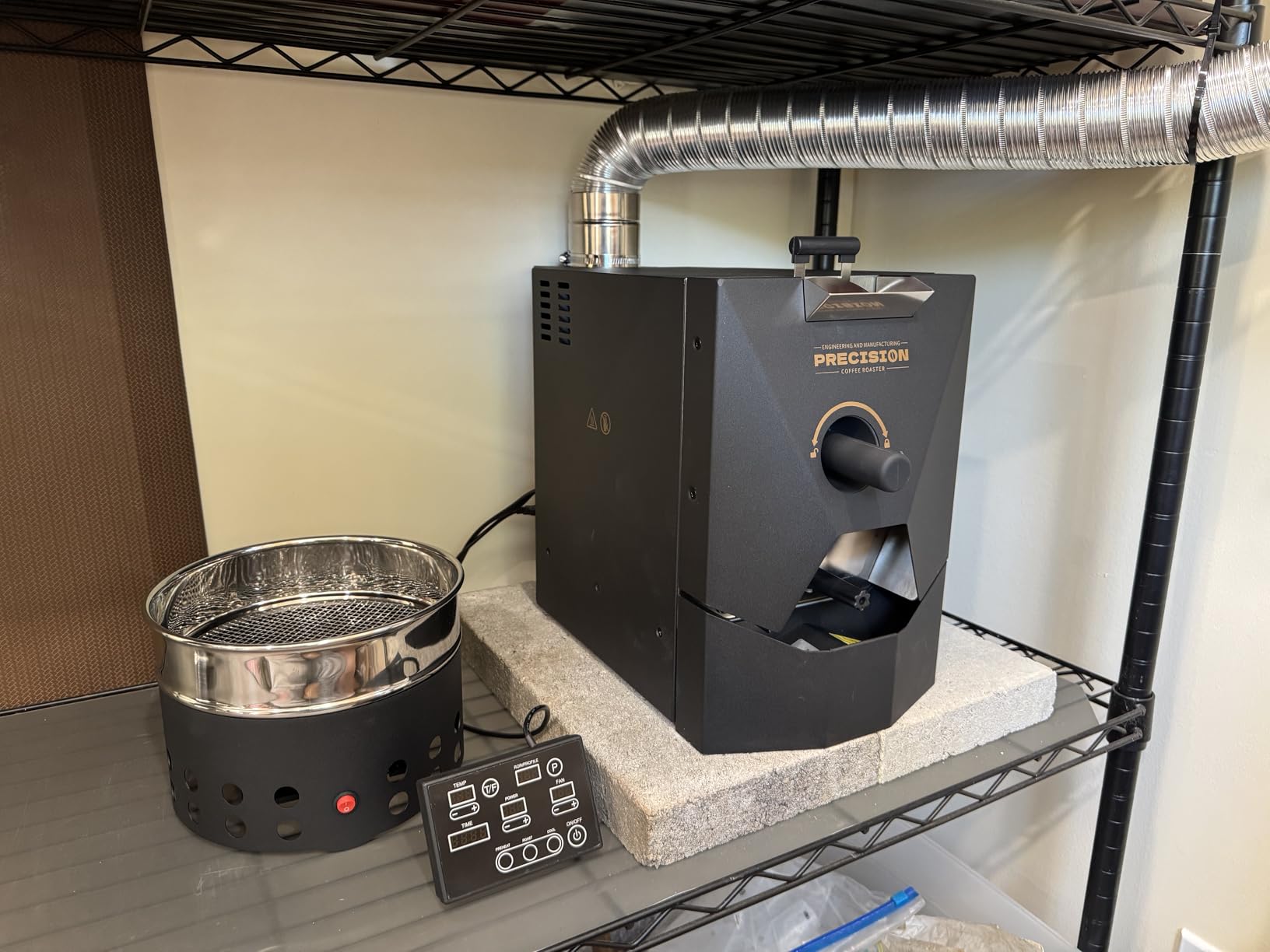
The mechanical complaints are specific and worth knowing. Heat building up between batches can trigger a shutdown mid-roast, which means a cool-down period between roasts. Exhaust moisture reaching the circuit board is another reported issue, and the beans do not cool fast enough on their own for some users, who add a separate bean cooler.
The display is very bright and the field labels are hard to read at that brightness, which sounds trivial until you are trying to read an airflow value in a dim kitchen at the moment first crack starts.
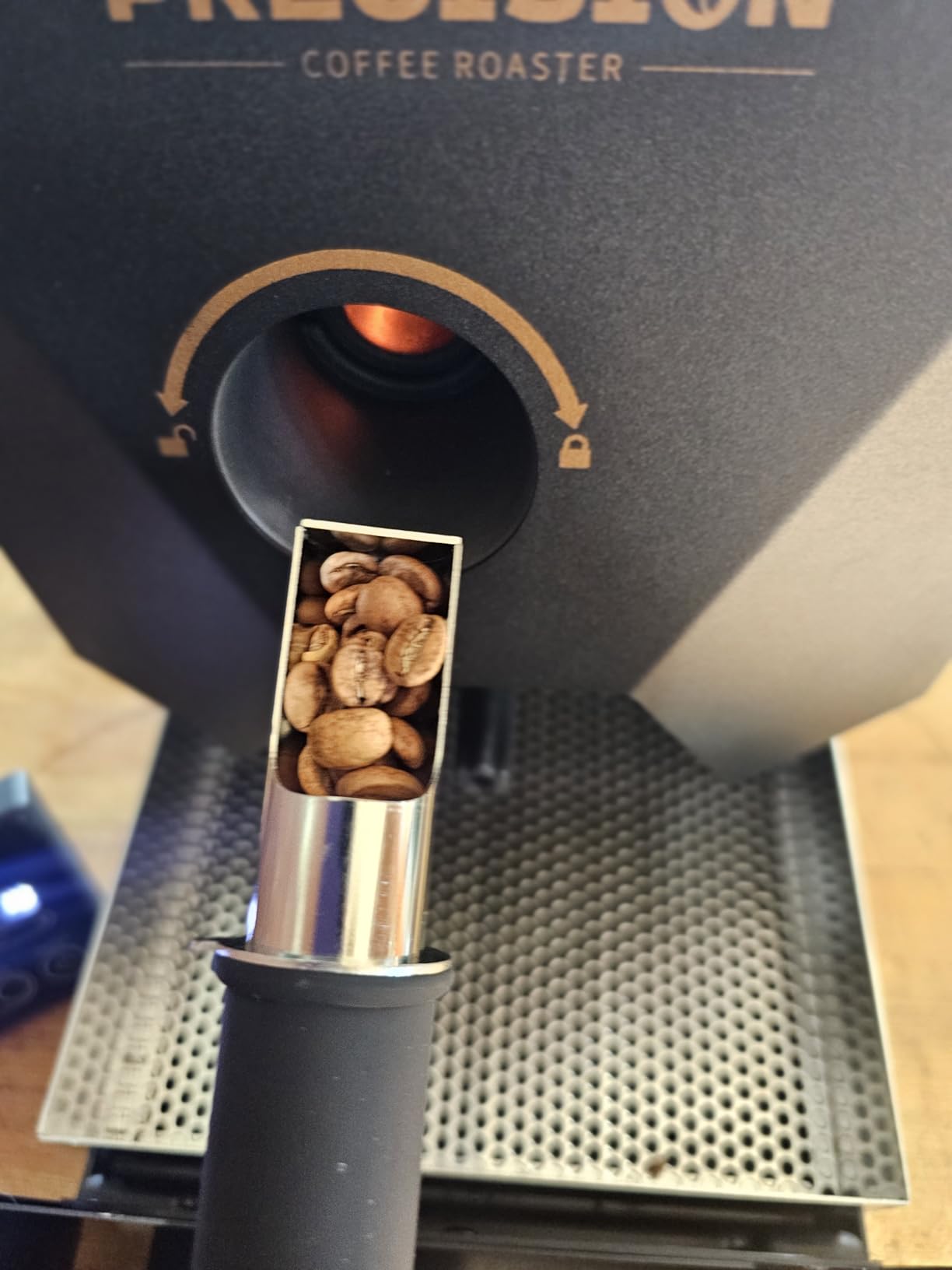
Turbo rotating stirring keeps beans moving continuously, which is why it produces even results within a small batch.
Is the smoke filter enough to roast indoors?
It is one of the most effective filters in this roundup, and it also accepts an exhaust pipe as a second path, so you have options. That said, effective filtering is not the same as no smoke, and it is not a reason to ignore a smoke alarm.
Roast outdoors or in a well-ventilated space. The filter makes indoor roasting more pleasant, not risk-free.
Who should buy this one instead of a simpler machine?
Someone who already knows what a development time ratio is and wants small, precise, repeatable batches rather than volume. At 200 grams it suits a dedicated home brewer who works in small doses and profiles each roast rather than a household producing a daily bag.
This manufacturer also offers 200 g, 500 g and 1 kg versions, so batch size is not a dead end if you outgrow the smallest drum.
10. SHILINTONG 750g Roaster: Easiest Setup and Cleanup of the Big Drums
SHILINTONG Coffee Roaster Machine for Home, 750g Capacity, No Timer
750 g pan,300-500 g optimal
0-240 degrees C
800 W
Jam-reversing motor
Pros
- Very easy from setup through cleanup
- Large non-stick area gives even roast quality
- Handles light through dark roast
- Mixing arms keep turning after heat is off to cool beans
Cons
- No timer so timing must be judged by eye and ear
- Mixer rotation direction matters and needs a restart to correct
- Smallest review base in the set at 31 reviews
This is the newcomer in the group with 31 reviews at 4.2 stars, and about seventy-three percent of those are five-star. The feedback is strongly positive on the thing that matters most for a first purchase: it is very easy to set up and very easy to clean.
The pan holds 750 grams with a 300 to 500 gram optimal batch, heating at 800 watts across a 0 to 240 degrees C range. A full batch takes roughly twenty-five minutes, and it handles everything from light to dark roast levels. It runs on standard 110 volts.
The mixing arms are the standout feature. They continue spinning after the heat is switched off, which cools the beans without burning them. That removes a whole step from your workflow, since most machines need the batch moved to a separate cooling tray immediately.
Two limitations are worth planning around. There is no timer, so roast timing must be judged by eye and ear, and the mixer direction has to be correct for the arms to move beans properly. If they turn the wrong way you stop, restart, and let them reverse.
The motor reverses direction if it jams, which is a genuinely useful safeguard when a small or broken bean gets caught. Food-grade non-stick pan, clear glass lid, heat-resistant handles and a coffee measuring cup are included.
How important is the missing timer?
More than it sounds, for a beginner. Without a timer you are tracking roast development by smell, colour and the sound of first crack, which is exactly the skill you want to build. It also means you cannot reproduce a batch precisely, so keep notes.
Buy a cheap kitchen timer and write down your drop times. Within ten batches you will have a repeatable process, and the notes become more useful than the timer would have been.
Is the smallest review base a reason to avoid it?
It is a reason to know what you are buying, not a reason to skip it. Small samples inflate extreme opinions in both directions, so read the pattern rather than the single comment.
The pattern here is consistent and positive on setup, capacity and even roasting, with the missing timer and mixer direction sensitivity as the only recurring hurdles.
Smoke, Chaff and Ventilation: What Apartment Roasters Really Require
Every home coffee roaster produces both, and it is the least discussed part of buying one. The most common regret among beginners is not a bad roast. It is a smoke alarm in a hallway at eight in the evening.
Chaff is the papery skin that separates from a bean as it expands during roasting. It is light, fine enough to float on air currents, and it settles on every horizontal surface in the room. Fine chaff dust also finds its way into switches and sensors, which is why owners of machines with weak collection complain about controls that will not respond.
Smoke comes from two sources: moisture in the beans turning to steam, and the light oils on the surface of darker roasts starting to break down. Light roasts produce mostly steam and chaff. Dark roasts produce genuine smoke, and that is the point at which a home kitchen stops being the right room.
Our rule of thumb for first-timers is straightforward: roast outdoors, in a garage, or on a balcony for your first twenty batches. Once you know how much your chosen machine actually outputs, you can plan ventilation around a real number instead of a guess.
Outdoors first. A patio, driveway, garage or balcony removes the entire problem and lets you learn without consequences.
Check your smoke alarms. If your unit is inside the property, note where the nearest alarm sits relative to your proposed roasting spot. Under a stairwell is a bad spot.
Vent outward, not upward. A duct or extractor fan that discharges to the outside moves chaff and smoke out. A recirculating filter oven does neither.
Expect chaff regardless. A chaff basket, tray or collector reduces cleanup but does not eliminate the fine fraction that floats.
Dark roasts need more extraction. If you plan to roast past medium, plan the exhaust before you buy the machine.
Two machines in this roundup treat smoke as a design problem rather than an accessory afterthought: the NIASIA PKF-500g with its built-in purifier plus two external pipes, and the smaller PKF-200g with a filter and a pipe option. Both are worth shortlisting if you live somewhere you cannot roast outside.
Air, Drum or Hybrid: Which Roaster Style Fits Your Kitchen
Air roasters are faster, smaller, and easier to control, which is why they dominate beginner recommendations. Drum roasters rotate beans through heat, which evens things out and scales to larger loads, but they run longer and produce more chaff. Hybrid machines combine the two ideas and generally cost more.
Air — fastest cycles, smallest batches, lowest chaff, easiest to learn on. The Fresh Roast SR540 and SR800 sit here.
Drum — larger batches, slower cycles, more even heat distribution, more chaff and more attention. The JIAWANSHUN, GIVEROO and SHILINTONG machines sit here.
Flat pan and manual — nothing to program, everything to judge. The ZEVELOO and the Nuvo ceramic roaster represent the low-tech end.
Hybrid and profile — stored curves, automatic cycles and multiple exhaust paths for people who already know what they are doing. The NIASIA and PKF-200g sit here.
If your main constraint is learning rather than volume, buy air. If your main constraint is producing a household’s weekly coffee with a limited number of roast sessions, buy drum.
Your First Batch, Step by Step
Your first roast will not be good. The goal of batch one is not flavour, it is learning what your machine does. Treat it as a calibration run.
Charge the beans. Use a full, clean batch. Underfilling produces uneven results on almost every machine in this roundup, and on drum machines it is the most common cause of a poor first roast.
Watch the drying phase. From charge until roughly 150 degrees C, beans turn from grassy green to yellow and give off steam. This is the longest, least eventful part of the roast and it is where heat settings matter most.
Listen for first crack. From around 196 degrees C you will hear a popping sound, initially scattered and then in steady bursts. This is your cue that development time has started. Note the clock time when it begins.
Set your development time. For a beginner, aim for development between roughly fifteen and twenty percent of total roast time. Write down the total time from charge to first crack and the total to drop.
Drop before second crack. Drop the batch well before the sharp, snapping pops of second crack, which signal the roast has moved past what you want for filter or espresso.
Cool immediately. Spread beans on a cooling tray or let the built-in cooling cycle run. Residual heat keeps cooking beans, and cooling fast locks in the profile you just set.
Rest before brewing. Wait at least three days, and closer to seven for anything darker than medium, before you brew. Gas needs time to leave the beans and carbon dioxide needs to dissipate.
Write all of it down. Ten batches of notes will teach you more than any amount of reading, and you will be able to repeat your best result exactly.
How to Choose a Home Coffee Roaster: 7 Criteria That Matter
Start with batch size, because it is the one decision you cannot easily undo. A machine sized for a household drinking thirty cups a day will leave you roasting every other day, and beans lose aroma well before they spoil. Work out your daily cups, multiply by roughly fifteen grams of coffee per cup, and that is your weekly finished-coffee requirement. Green beans lose about fifteen percent of their weight during roasting, so add that back to get your weekly green weight.
Most households land between 300 and 500 grams of green beans per week. That maps neatly onto the mid-size drums, where the recommended working load lands in exactly that range. A 120-gram hot-air batch suits one person, and a 70-gram ceramic roaster suits one heavy drinker, so match the machine upward from your real weekly figure rather than downward from the box.
Capacity claims versus working capacity. A machine advertised at one pound or 800 grams frequently performs well only at 300 to 500 grams. Underfilling a drum roaster is the fastest way to get an uneven batch, so treat the recommended working load as the real number and ignore the headline figure.
Control style. Three dials with independent heat and fan control is the sweet spot for learning. A single dial is frustrating once you want to stage a roast. Programmable profiles are useful later and largely wasted at the start.
Visibility. A glass chamber or transparent lid lets you watch colour change continuously. This is the fastest way to learn what a roast looks like at each stage, and it is worth more to a beginner than any automatic mode.
Cooling. A built-in cooling cycle or a dedicated cooling tray matters more than beginners expect, because beans continue cooking off the heat source. The SHILINTONG’s continuing arm rotation is a neat solution to this.
Chaff handling. A basket, tray or collector saves you cleanup time. Fine chaff escapes all of them, so expect to wipe surfaces regardless.
Ventilation and footprint. Measure the counter space and work out your exhaust route before you buy, not after. Height matters more than width: the PKF-500g stands 20 inches tall, which is where people discover they have no clear space above the machine.
Repairability and parts. Machines with a documented support network and replaceable parts give you an exit if something fails. Generic marketplace brands carry a genuine risk here, and it is worth weighing before you commit.
Is Home Coffee Roasting Worth It for Beginners?
The flavour argument is the strongest one. Roasted coffee goes stale within days while green beans stay fresh for months, so home roasting means brewing coffee days off roast rather than weeks. Green beans also cost less per cup than equivalent roasted coffee, and you get to choose the roast level yourself.
The honest financial answer is more complicated, and competitors rarely say so. The roaster is a fixed cost that takes time to spread. Green beans are cheaper than roasted, but you also need a burr grinder, a scale, a cooling tray, and a ventilation solution. When you add those up, the savings are real but modest, and they only become meaningful once you are roasting consistently rather than experimenting.
The time argument cuts against you too. Each batch takes fifteen to twenty-five minutes of mostly waiting, plus cooling and cleanup. Add ordering green beans in quantities small enough to stay fresh, and the first year is about learning rather than saving.
So who is it worth it for? Someone who drinks a meaningful amount of filter coffee, cares about freshness and roast level, and can roast outdoors or has solved ventilation. It is not worth it if you drink one cup a day, live in a smoke-sensitive apartment with no outdoor space, or want zero mess in your kitchen. In that case, our drip coffee maker picks will serve you better.
Green Coffee Beans and Resting: What Beginners Should Buy and Wait For
Start with forgiving beans. Naturally processed coffees and anything from the robusta side of the spectrum are more tolerant of beginner technique than washed, delicate, high-altitude lots, which will show your mistakes more clearly and less pleasantly. Buying a sample set first, as the OurHands kit does, is a cheap way to find what you like.
Buy in quantities you will finish within four to eight weeks. Green beans keep longer than roasted coffee, but not indefinitely, and small quantities from a specialist are usually fresher than a bulk discount bought six months ago.
On resting, the short answer is yes, always. Beans release carbon dioxide during roasting and continue to degas afterwards, and grinding and brewing that gas still trapped inside gives you a gassy, uneven cup. Wait at least three days for light roasts, five to seven days for medium, and up to ten or fourteen for dark roasts before brewing espresso, which is the most sensitive of the three to fresh beans.
The beans stay at the centre of the story. If you are pairing fresh roasts with a grinder, read our burr grinder comparison before you choose, because under-grinding stale beans and over-grinding fresh ones are different problems with different fixes.
Frequently Asked Questions
What is the best type of coffee roaster for beginners?
An electric hot-air roaster with adjustable heat, independent fan speed and an automatic cooling cycle is the best starting point for most beginners. Air roasters show you the beans, finish fast, and have the simplest controls to learn. Choose a drum roaster instead only if you need larger batches, and a manual ceramic roaster if you want no electronics and no commitment.
Are home coffee roasters worth it?
Home roasting is worth it for freshness and control rather than for large financial savings. Green beans cost less per cup than roasted coffee and you choose your own roast level, but the roaster, grinder and ventilation are fixed costs that take time to pay back. It suits people who drink a decent amount of filter coffee and can roast outdoors or with proper ventilation.
Do I need ventilation for a home coffee roaster?
Yes. Every home roaster produces chaff and smoke, and both will irritate a room and set off smoke alarms. Roast outdoors or in a garage for your first batches. Indoors, vent the machine outward rather than upward, keep a chaff basket or tray in place, and expect to wipe surfaces because fine chaff escapes any collector. Darker roasts produce substantially more smoke than light ones.
How much coffee can a home roaster handle per batch?
Small hot-air roasters handle roughly 120 to 226 grams of green beans per batch, while mid-size drum machines work best at 300 to 500 grams despite larger headline capacities. Manual ceramic roasters sit at around 70 grams. Match your batch to your drinking rate so you finish a roast within a few days rather than letting it sit.
Should I rest coffee beans after roasting?
Yes. Beans keep releasing carbon dioxide after roasting, and brewing them too soon gives a gassy, uneven cup. Wait at least three days for light roasts, five to seven days for medium roasts, and ten to fourteen days for dark roasts, which matters most for espresso. Cool beans quickly after the roast to stop residual heat from continuing the cook.
What is the difference between roasting coffee and making coffee?
Roasting turns raw green beans into the brown, aromatic beans you buy in a bag, and it is a separate step from brewing. A roaster is not a brewer and it does not make a drink. If you want a machine that turns roasted beans into coffee in the morning, you want a coffee maker or espresso machine rather than a roaster.
Final Verdict: The Best Home Coffee Roasters for Beginners in 2026
Our pick for the best home coffee roasters for beginners is the Nuvo Eco Ceramic Handy Roaster, because it removes every possible reason not to start. No electricity, no app, no dial to misread, no profile to learn, and 901 owners averaging 4.4 stars behind it. You put beans in, stir, and learn what heat and time actually do to a coffee.
If you want electricity and real control, start with the Fresh Roast SR540, and move to the SR800 when a 120-gram batch stops covering your week. Those two machines between them answer the majority of first-timer questions, and the jump from one to the other is the upgrade experienced users most often recommend.
Pick the NIASIA PKF-500g if smoke in your home is the deciding factor, one of the mid-size drums such as the GIVEROO or SHILINTONG if you want a few hundred grams per session with minimal attention, and look at the ZEVELOO or the OurHands kit if a low-cost introduction matters most.
Whichever you choose, roast your first twenty batches outdoors, write down every time, and stay at one batch size until the results feel repeatable. That habit is what separates people who are still roasting in a year from people who gave up in a month.
Fresh beans pair best with a proper burr grinder, and if you prefer a hands-off morning routine, our smart coffee maker picks cover that side of the counter.