
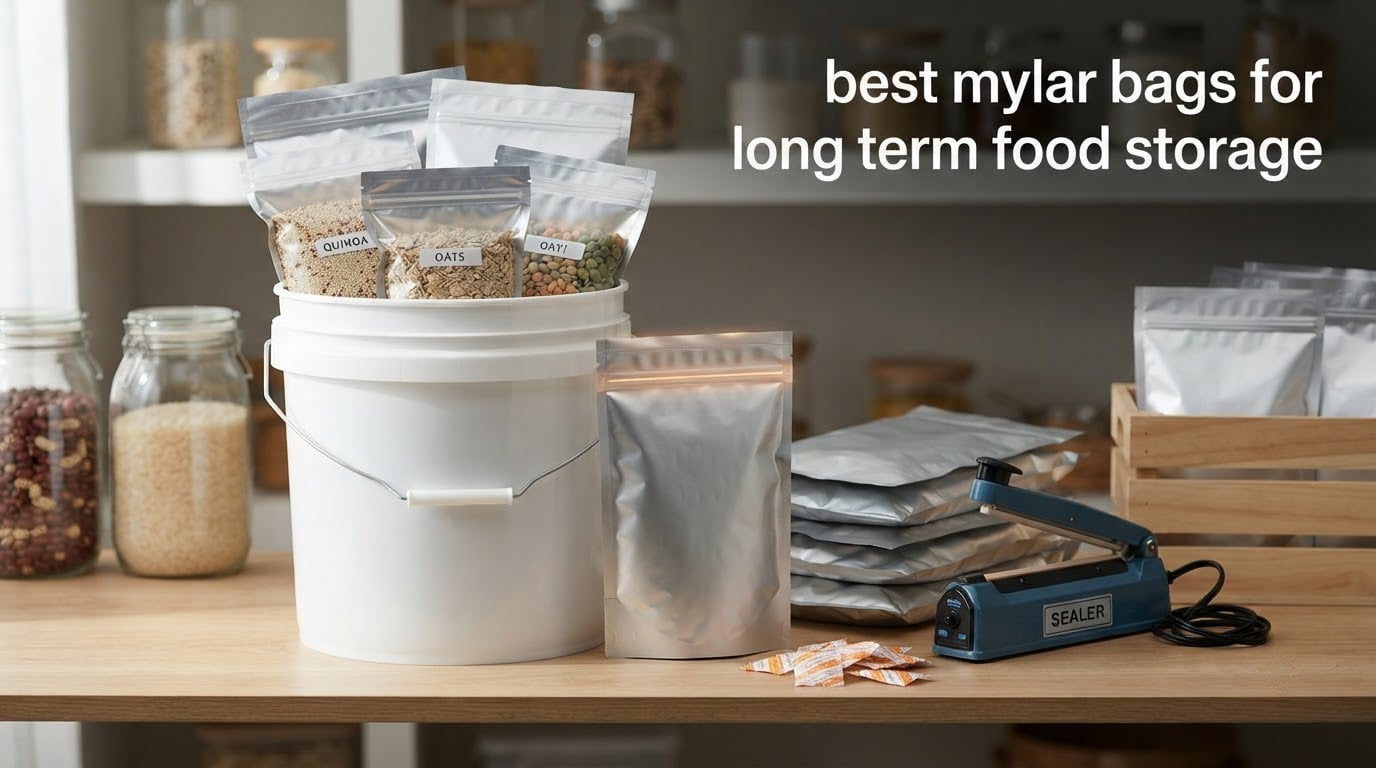
A mylar bag earns the label long-term food storage through three things: a multi-layer metallized polyester and aluminium construction, a correctly sized oxygen absorber, and a real heat seal. For the best mylar bags for long term food storage, aim for 5 mil total thickness as the bare minimum, 7 mil or more for sharp grains like rice or for bags that will be stacked in buckets, and a food-grade bag that is BPA free and lightproof.
That is the honest version of the answer, and it is narrower than most marketing copy. A zipper alone is not a long-term seal. Neither is a thin bag with a big window in it. Once a bag is filled, the air pushed out is what a seal holds and an absorber then scrubs the remaining oxygen.
We worked through ten bags and kits that cover the whole range of use: bulk 5 gallon liners for buckets, multi-size sets for portioning, and heavy-wall pouches for freeze-dried output. Everything below reflects what the spec sheets, the included accessories, and thousands of buyer reviews actually show. The kits that win are the ones where the absorber count roughly matches the bag count and the wall thickness claim holds up in the spec listing.
Table of Contents
Top 3 Best Mylar Bags for Long-Term Food Storage In 2026


Wallaby 5 Gallon Mylar Bags
- 15 bag 3-in-1 bundle
- Internal aluminium layer
- BPA free
- 2500 cc absorbers
Best Mylar Bags for Long-Term Food Storage (October 2026)
| Product | Specifications | Action |
|---|---|---|
| Home Sensei 5 Gallon 10 Mil Mylar Bags |
|
Check Latest Price |
| Wallaby 5 Gallon Mylar Bags 15 Pack |
|
Check Latest Price |
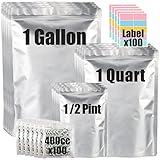 SHXWELL 100 Pack 12 Mil Multi-Size Set SHXWELL 100 Pack 12 Mil Multi-Size Set |
|
Check Latest Price |
 Leboduo 120 Mylar Bag Set Leboduo 120 Mylar Bag Set |
|
Check Latest Price |
 SYMYNELEC 100 Pack Mylar Bags SYMYNELEC 100 Pack Mylar Bags |
|
Check Latest Price |
 SHXWELL 50 Pack 1 Gallon Mylar Bags SHXWELL 50 Pack 1 Gallon Mylar Bags |
|
Check Latest Price |
 SHXWELL 10 Pack 5 Gallon Mylar Bags SHXWELL 10 Pack 5 Gallon Mylar Bags |
|
Check Latest Price |
 ROYLO GLOBE 120 Mylar Bag Set ROYLO GLOBE 120 Mylar Bag Set |
|
Check Latest Price |
 Vosaplk 100 Pack 1 Quart Mylar Bags Vosaplk 100 Pack 1 Quart Mylar Bags |
|
Check Latest Price |
 Opalpros 60 Pack 14 Mil Mylar Bags Opalpros 60 Pack 14 Mil Mylar Bags |
|
Check Latest Price |
How We Compared These Bags
Every bag in this list was judged on the same five things, so the ranking is at least consistent.
Seal integrity came first: what the listed thickness actually is, whether there is an internal aluminium layer, and whether the side seams are described as reinforced. Buyers repeatedly report that thin seams and pinholes, not the face of the film, cause failures.
Kit contents came second. A bag set that includes absorbers and labels saves you a second order, and a kit where the absorber count is in the same ballpark as the bag count works far better than one that ships a token amount.
Absorber matching mattered third. We checked whether the supplied absorber capacity suits the bag sizes in the pack, since 300 cc packets in a 1 gallon bag or 400 cc packets in a half-pint pouch are both wasted capacity or wasted money.
Sizing flexibility was fourth, because most households need three or four sizes running at once rather than fifty identical bags.
Finally we normalised value by counting bags, absorbers and labels per pack instead of trusting the pack name, and we read the buyer reviews for the same complaints. Puncture reports, seal temperature complaints, and bags that will not sit properly in a standard bucket show up repeatedly and reliably.
1. Home Sensei 5 Gallon 10 Mil Mylar Bags – Best Overall for Bucket Storage
10pcs 5 Gallon Mylar Bags for Food Storage – 10 Mil Thick – Extra large bags 5 Gallon with Oxygen Absorbers 2500cc – Zipper Resealable Milar Bags – Bolsas Mylar 5 Galones
10 mil total
5 mil per side
17 x 27 inch
2500 cc absorbers
Pros
- 10 mil total thickness with three reinforced layers
- Absorbers genuinely high capacity
- Fits standard 5 gallon buckets
- U-shaped tear notch for easy opening
- Resistant to punctures
Cons
- Bags do not shrink like vacuum bags
- Absorber count does not always match bag count in every variant
- Absorbers are physically small despite rated capacity
This is the kit we would build a first bucket with. The spec sheet claims 10 mil total, 5 mil on each side, across three layers with aluminium reinforcement, and that figure sits comfortably above the 5 mil floor for long-term storage.
What stands out is the 2500 cc absorbers, supplied individually vacuum packed. That is the correct capacity for a 5 gallon bag rather than the small packets that get bundled in with cheaper liners, and each packet stays usable until you break it.
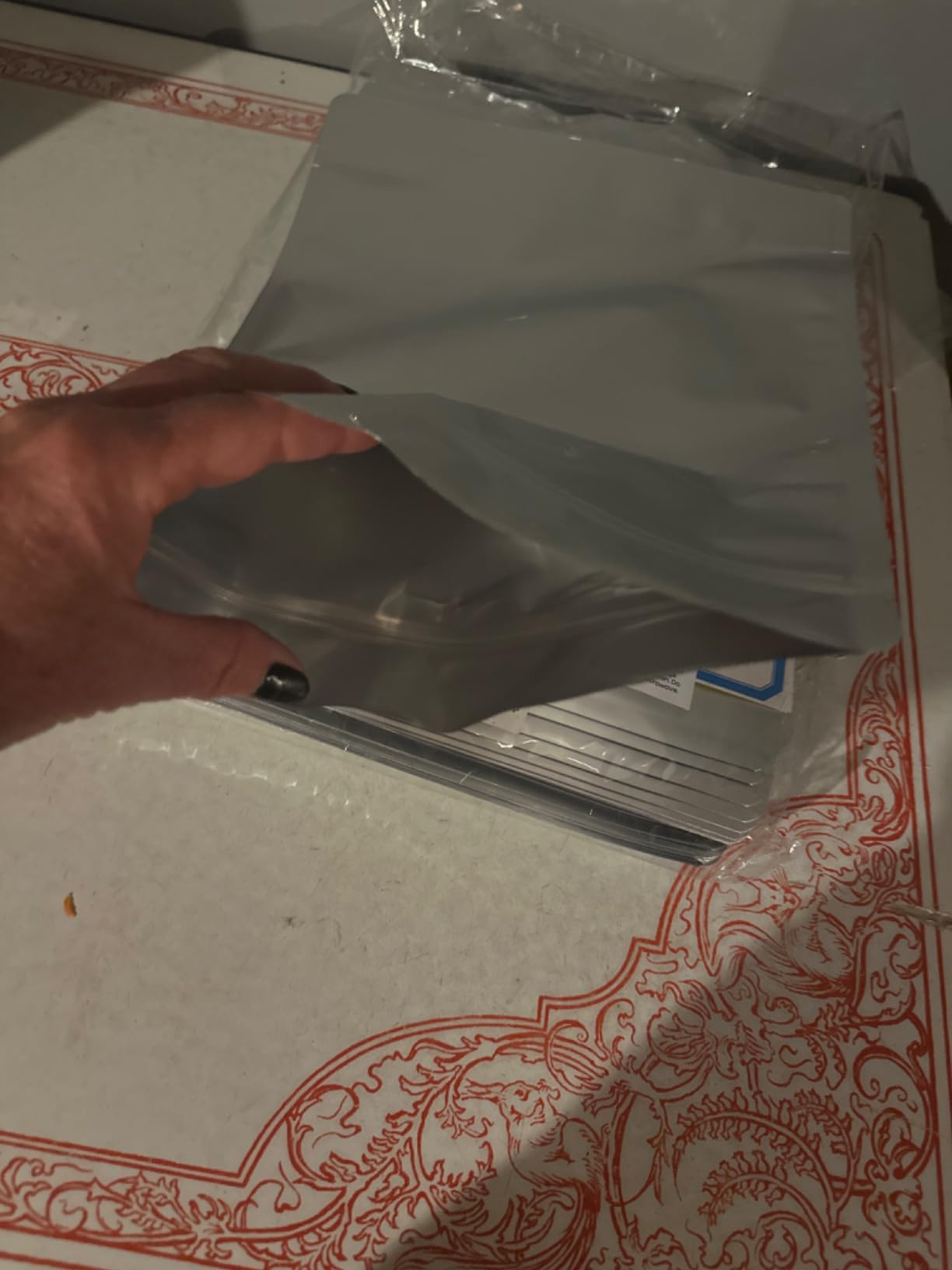
Buyer reviews describe exactly what we look for in a liner: solid seals, real puncture resistance, and a bag that drops into a standard 5 gallon bucket without a fight. At 4.6 stars across 3924 reviews, this is the largest sample of real pantry use in the group we tested.
The one recurring misunderstanding is expectation setting. Mylar bags do not visibly collapse like vacuum bags, because an absorber strips oxygen rather than pumping out the air volume. Owners sometimes read that as a failed seal when nothing has failed at all.
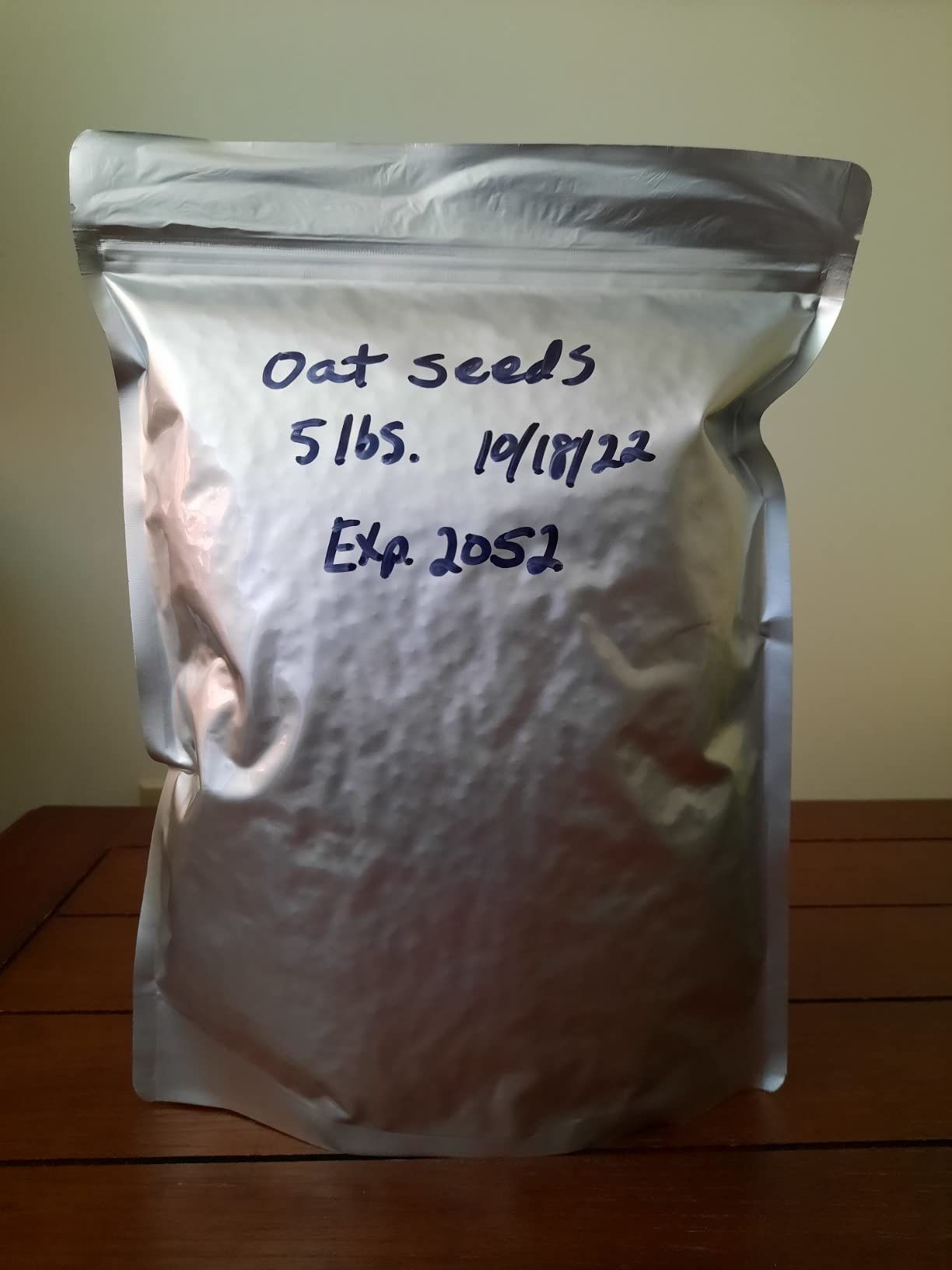
Why it suits a first bucket
A 5 gallon bucket of rice weighs far more than the bag it sits in, and the liner takes that load all year. The U-shaped tear notch also matters more than it sounds, because digging a knife into a 10 mil wall risks exactly the puncture the bag was built to prevent.
If you already own a heat sealer and food-grade buckets, this is the lowest-friction way to convert bulk staples into long-term storage.
Where it falls short
This is a single size pack, so snack and portion bags have to come from somewhere else. Reviewers also note that in some size variants the number of absorbers does not line up one for one with the number of bags, so buy a separate batch of 2500 cc packets before you fill a whole stack.
The U-shaped tear notch and zipper make it tempting to treat these as resealable pantry bags. Heat sealing is still the step that makes them long term.
2. Wallaby 5 Gallon Mylar Bags – Best Branded 5 Gallon Bundle
Wallaby 5-Gallon Zipper 10 Mil Mylar Bags, Oxygen Absorbers (15-Pack)
5 mil per side
15 bag 3-in-1 bundle
2500 cc absorbers
BPA free
Pros
- 3-in-1 bundle with bags absorbers and labels
- Internal aluminium layer adds puncture resistance
- Blocks light and air better than thin alternatives
- Individually sealed absorber packets
- BPA free food grade materials
Cons
- Bags do not shrink when oxygen is removed
- Only a fraction of air volume is removed regardless of absorber count
Wallaby is the brand name preppers mention most often in threads about which bags have held up over years, alongside PackFreshUSA and Harvest Right. Reviewers on r/HarvestRight put it directly: 5 mil and up is fine for long-term work, and they have used both Wallaby and PackFreshUSA without problems.
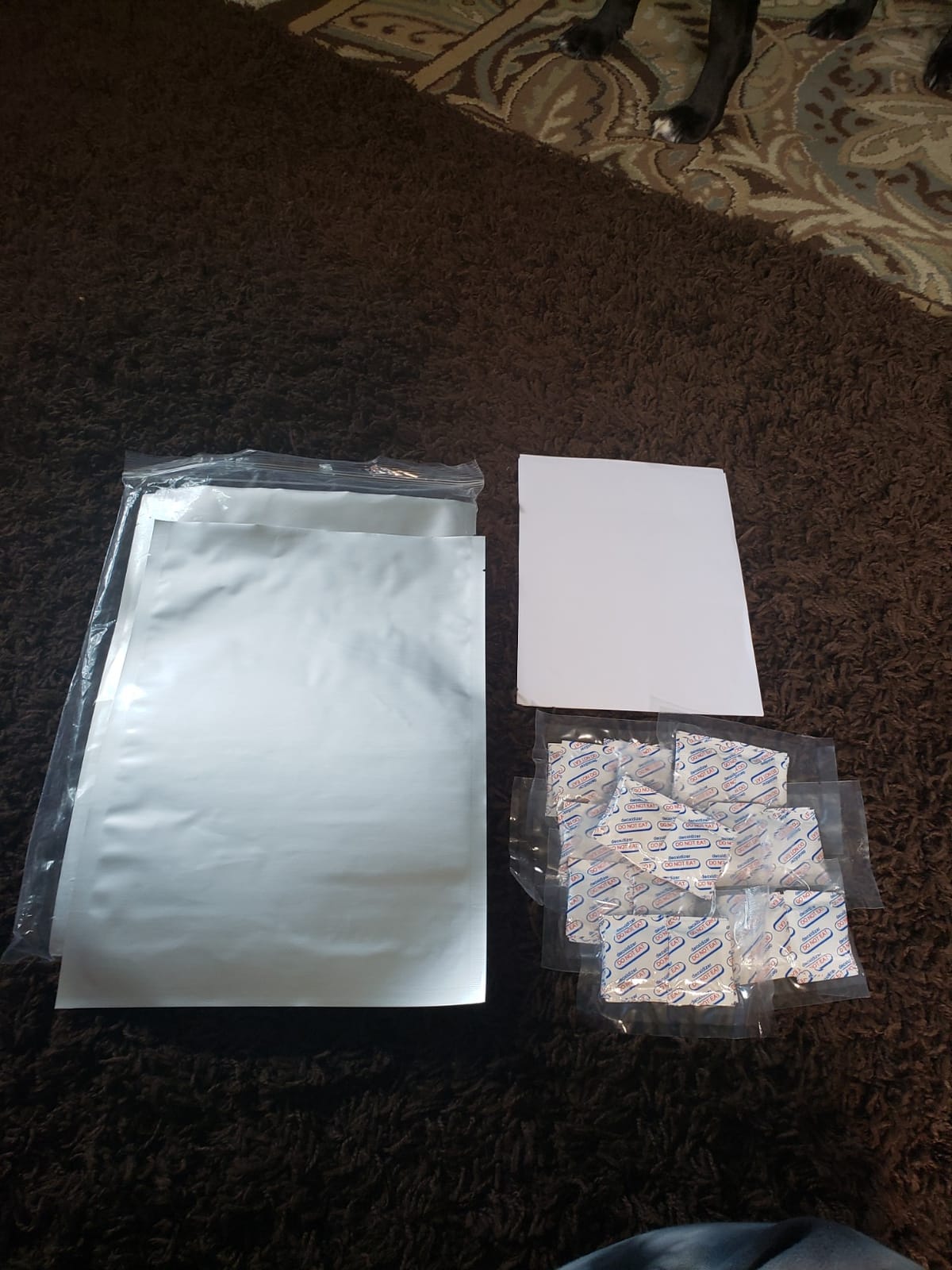
This particular bundle is 15 bags, 20 oxygen absorber packets and 20 identification labels in one pack, at 5 mil thickness with an added internal aluminium layer. The extra absorbers beyond the bag count mean you can add a second packet to bags holding dense food.
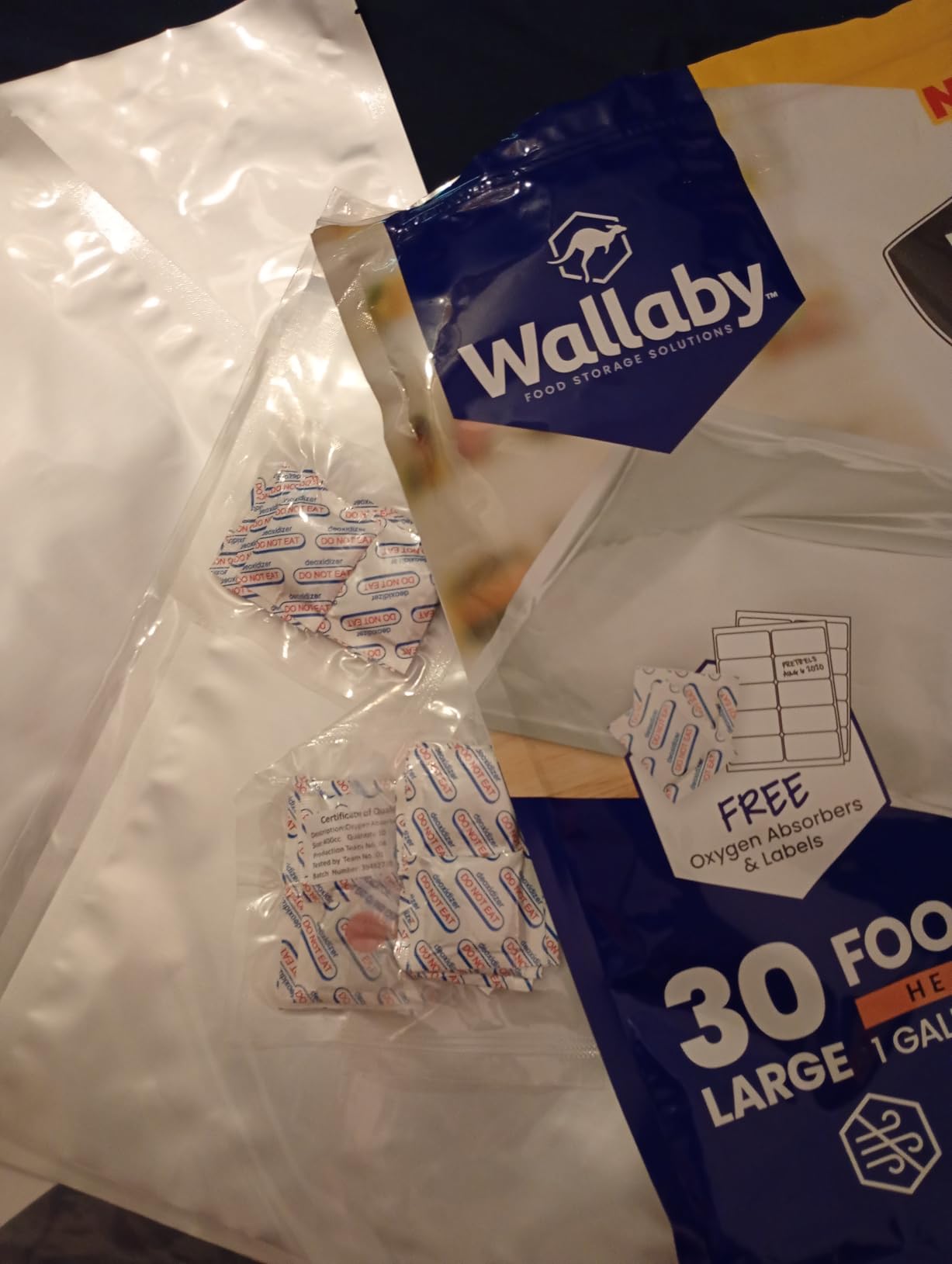
The stated load capacity of 645 pounds tells you how the manufacturer expects these to be used, and BPA free food-grade materials address the question preppers ask most about anything that touches stored food.
Buyer sentiment is overwhelmingly positive on light blocking and airtight sealing in 5 gallon pantry storage, with the same expectation-setting caveat as every other mylar bag: no vacuum collapse.
Why it suits a branded buyer
You get a support contact and a warranty path if a bag is defective, which matters when you are sealing a decade of food. PackFreshUSA and Wallaby both draw repeat mentions in forums specifically for customer service and defect replacement, and that is a real difference from an anonymous listing.
Where it falls short
One size only, at 5 gal, means this is a bucket product rather than a pantry product. It is also the thicker cash outlay per bag in the group, so a household that wants portion sizes as well should pair it with a multi-size kit.
At 5 mil per side this is the thinner wall of the two bucket bags here. For rice and beans in a cool room, that is fine. For stacking heavy buckets long term, thicker is calmer.
3. SHXWELL 100 Pack 12 Mil Mylar Bags – Best Value Multi-Size Set
100pcs Mylar Bags for Food Storage 12 Mil Thick with 150x400cc Oxygen Absorbers & Labels, 3 Sizes (1 Gallon, 1 Quart, 1/2 Pint) – Stand-Up, Resealable & Heat Sealable for Long Term Food Storage
12 mil total
6 mil per side
Three sizes
150 absorbers
Pros
- Three sizes cover bulk staples and small quantities
- 12 mil total with internal aluminium layer
- Colour coded labels included
- Absorbers and labels in the same pack
- No punctures or leaks reported
Cons
- Absorbers have no effectiveness indicator
- Absorbers are not marked by bag size
- Thicker material needs care when heat sealing
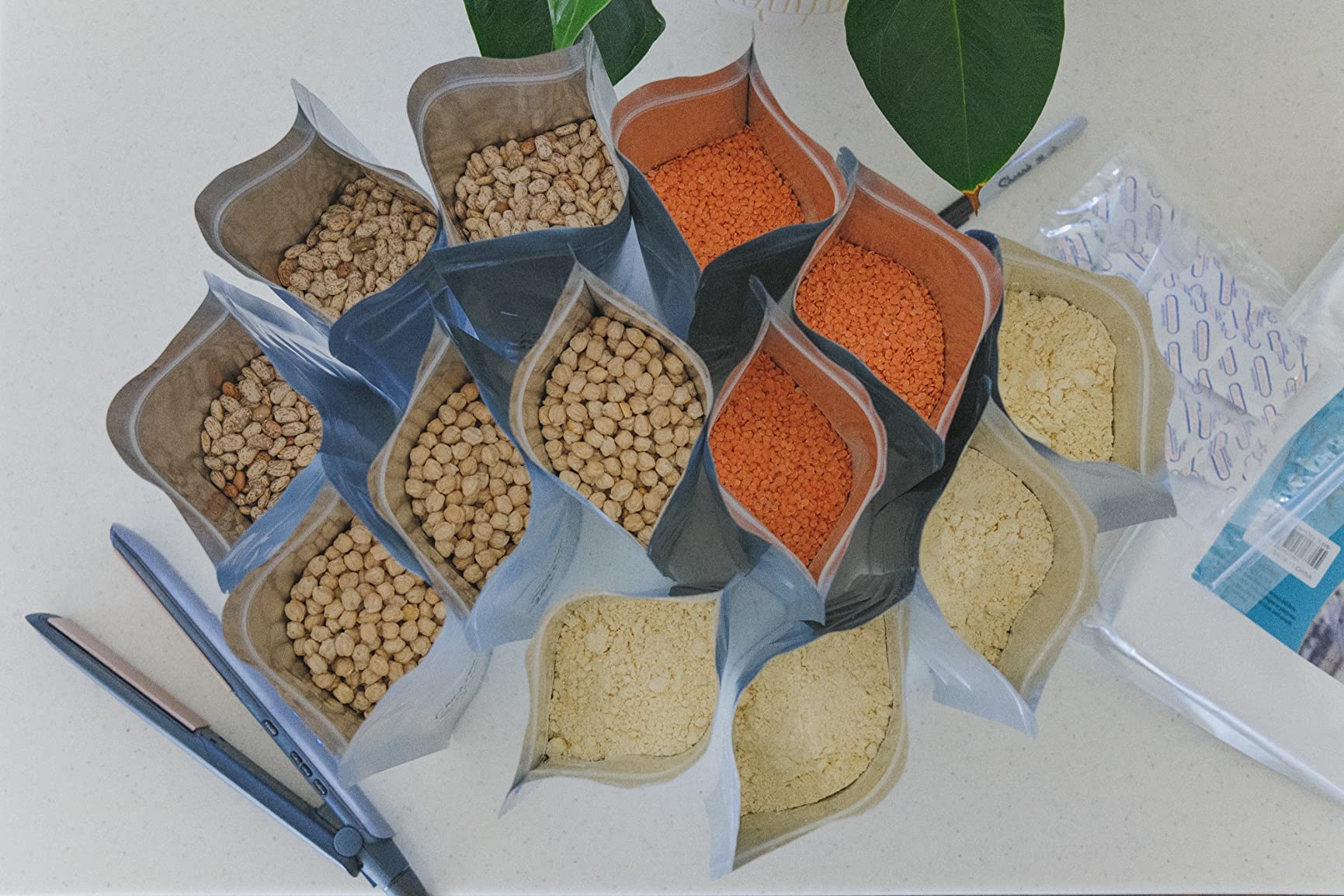
This is the set we would hand to someone building a first pantry, because it removes the sizing decision entirely. You get 1 gallon, 1 quart and half-pint bags in one pack, so dry beans go in gallon bags, spices and seeds go in the small ones.
Thickness is listed at 12 mil total, 6 mil per side, with an extra internal aluminium layer over a PET, foil and PE build. That is double the bare minimum for long-term storage, which buys real margin against seam abrasion and rodent-adjacent gnawing.
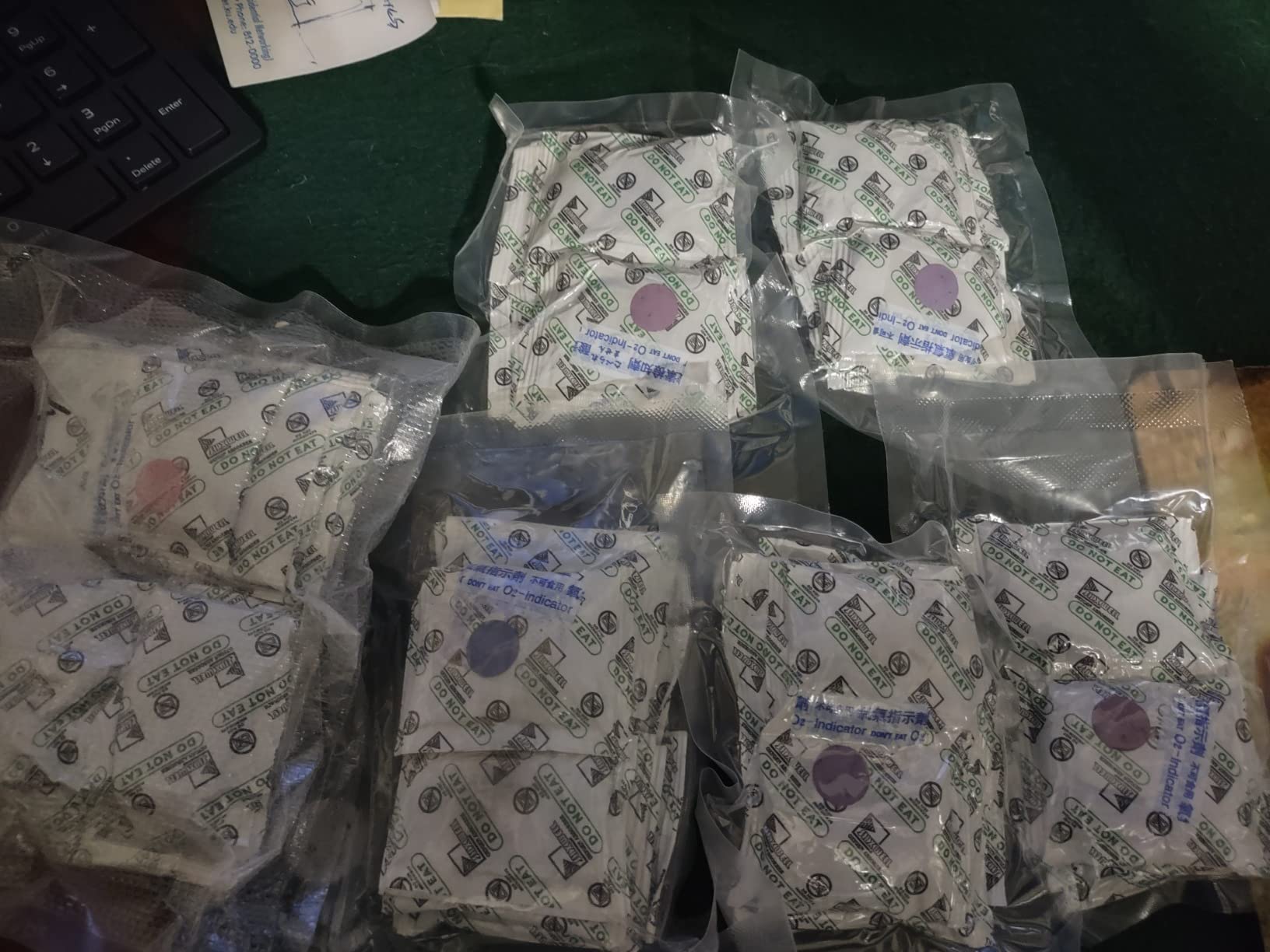
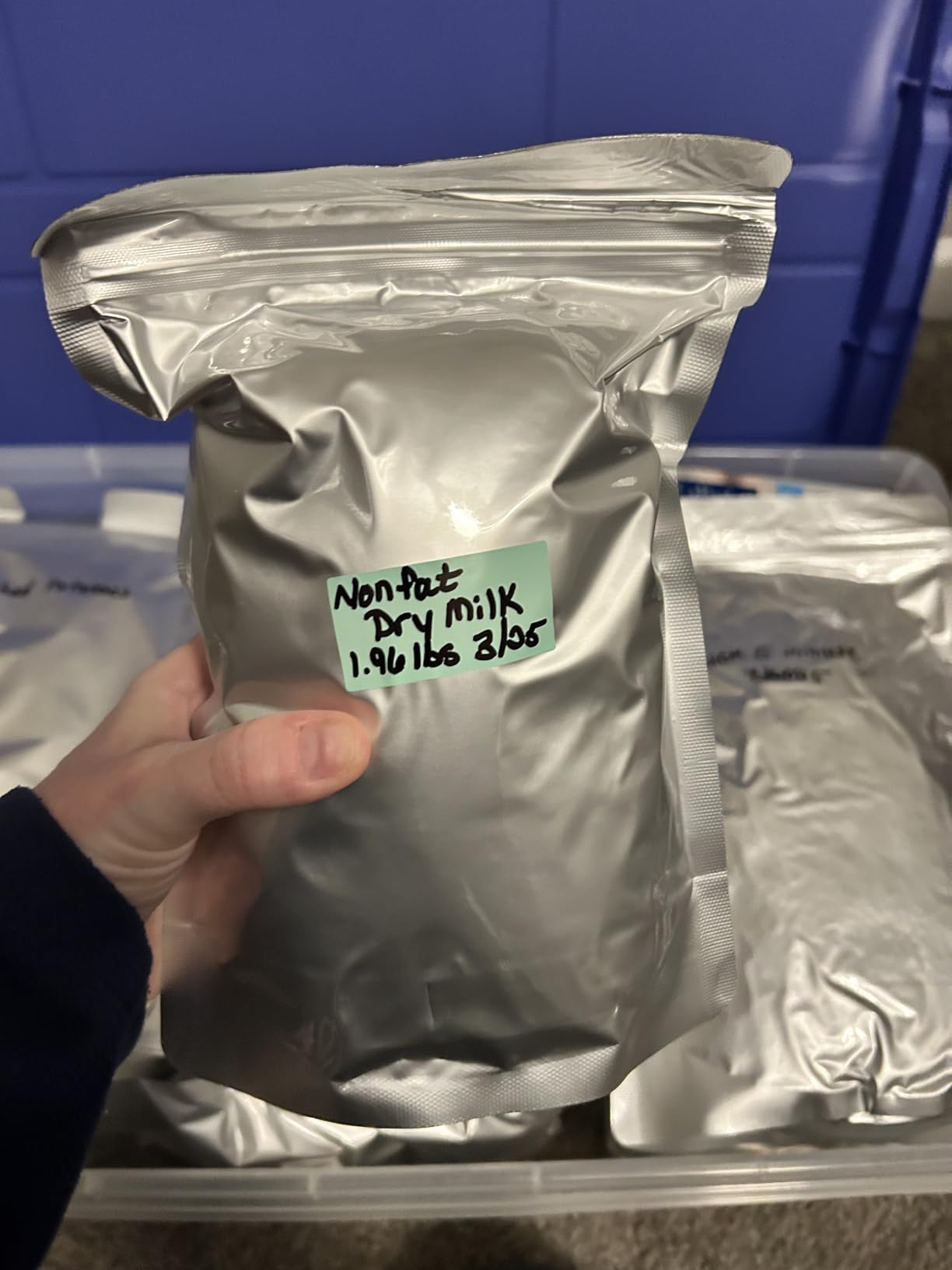
The 150 x 400 cc absorbers are vacuum sealed ten to a pouch, and 100 labels are included. Colour-coded labels make an inventory list worth keeping, because a five-gallon bag of grain is not much help if you cannot identify it in three years.
Long-term buyers describe this as their go-to bulk dry-goods set, with hundreds used without a single leak. The most common complaint is not quality but dosing, since the absorbers carry no effectiveness indicator and no bag-size marking.
Why it suits most households
Working out absorber size by bag is the most common stumbling block for new preppers. One 400 cc packet per quart-to-gallon bag is a reasonable default that matches the guidance in our sizing section below, and 150 of them is enough to cover the whole pack plus spares.
Where it falls short
Six mil per side is thick, and thick film needs a proper seal. Users report needing more care and more heat than with 5 mil material, and a weak seal that looks fine while cool can fail later in storage.
It is not a bucket liner set. For 5 gallon buckets you need a separate purchase, and 1 gallon bags will never fill a bucket on their own.
4. Leboduo 120 Mylar Bags – Best for Mixed Portion Sizes
Lebodu 120 Mylar Bags with 120 x 300cc Oxygen Absorbers for Food Storage
Up to 8 mil total
Four sizes
120 x 300 cc absorbers
180 day warranty
Pros
- Four sizes in one pack
- Free of BPA BPS PVC latex and phthalates
- Zipper reuses for frequently opened food
- Seals with iron hair straightener or vacuum sealer
- 180 day brand warranty
Cons
- Thinner at 8 mil than several competing sets
- Bags do not shrink when oxygen is removed
- Unused absorbers need sealing to stay effective
Leboduo is the widest size spread we found in a single pack: 20 x 1 gallon, 25 x 2 quart, 35 x 1 quart and 40 x half-pint, with 120 x 300 cc absorbers and 125 labels. That four-size layout is the reason this set works for portioning snacks, leftovers and small dry goods, not just bulk staples.
Build is three layers of PET, aluminium and PE, with total thickness up to 8 mil. That is above the long-term minimum, though it is the thinnest of the ten kits we compared and the reason the 4.5 rating sits a notch below the leaders.
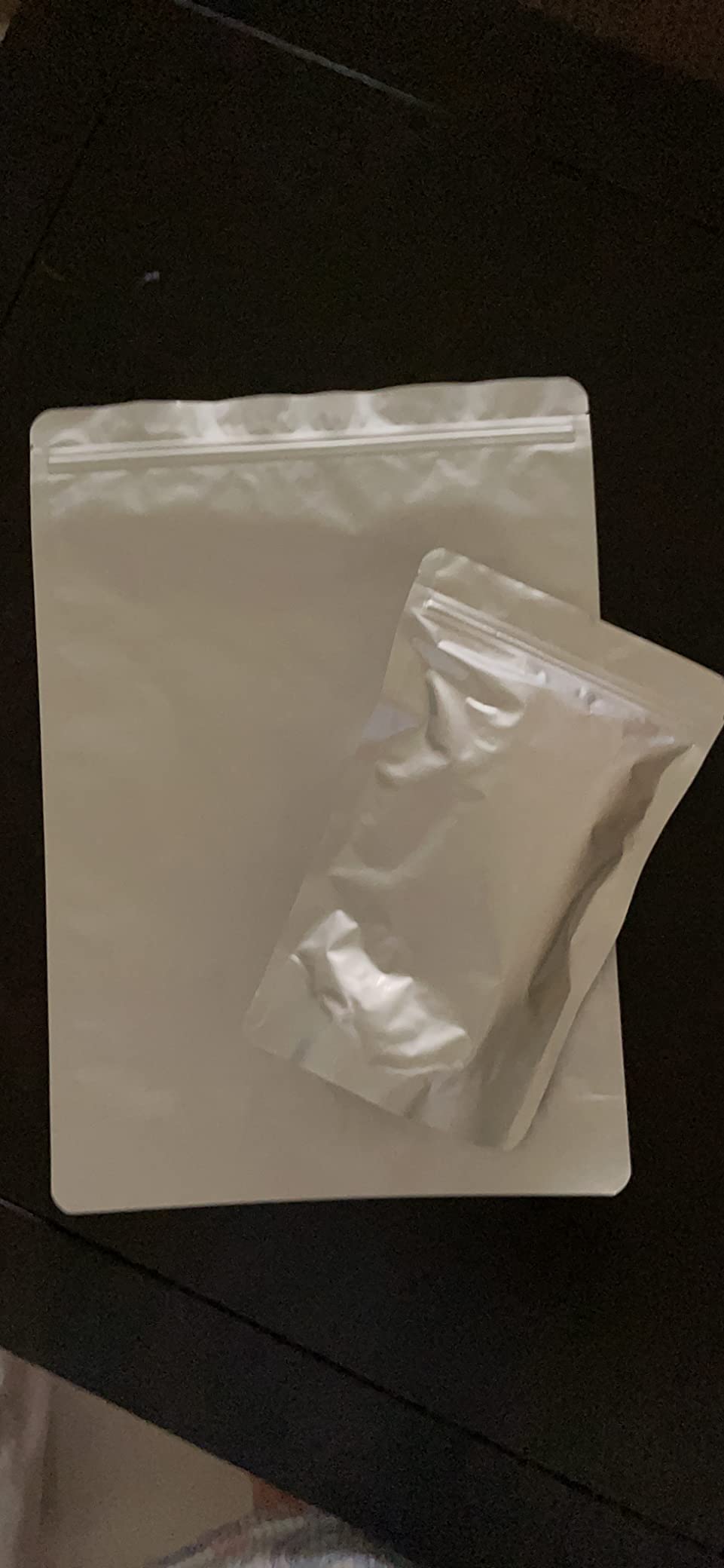
The materials list is unusually thorough on free-from claims, covering BPA, BPS, PVC, latex, vinyl, phthalates, mercury, lead and chloride. If your household is cautious about plastics touching stored food, that is checked in writing rather than implied.
Owners value the sheer count for everyday dry storage and the reusable zipper for food you open often. The recurring complaint is thickness, plus the same confusion about bags not deflating after oxygen absorption, which the brand itself explains in the listing.
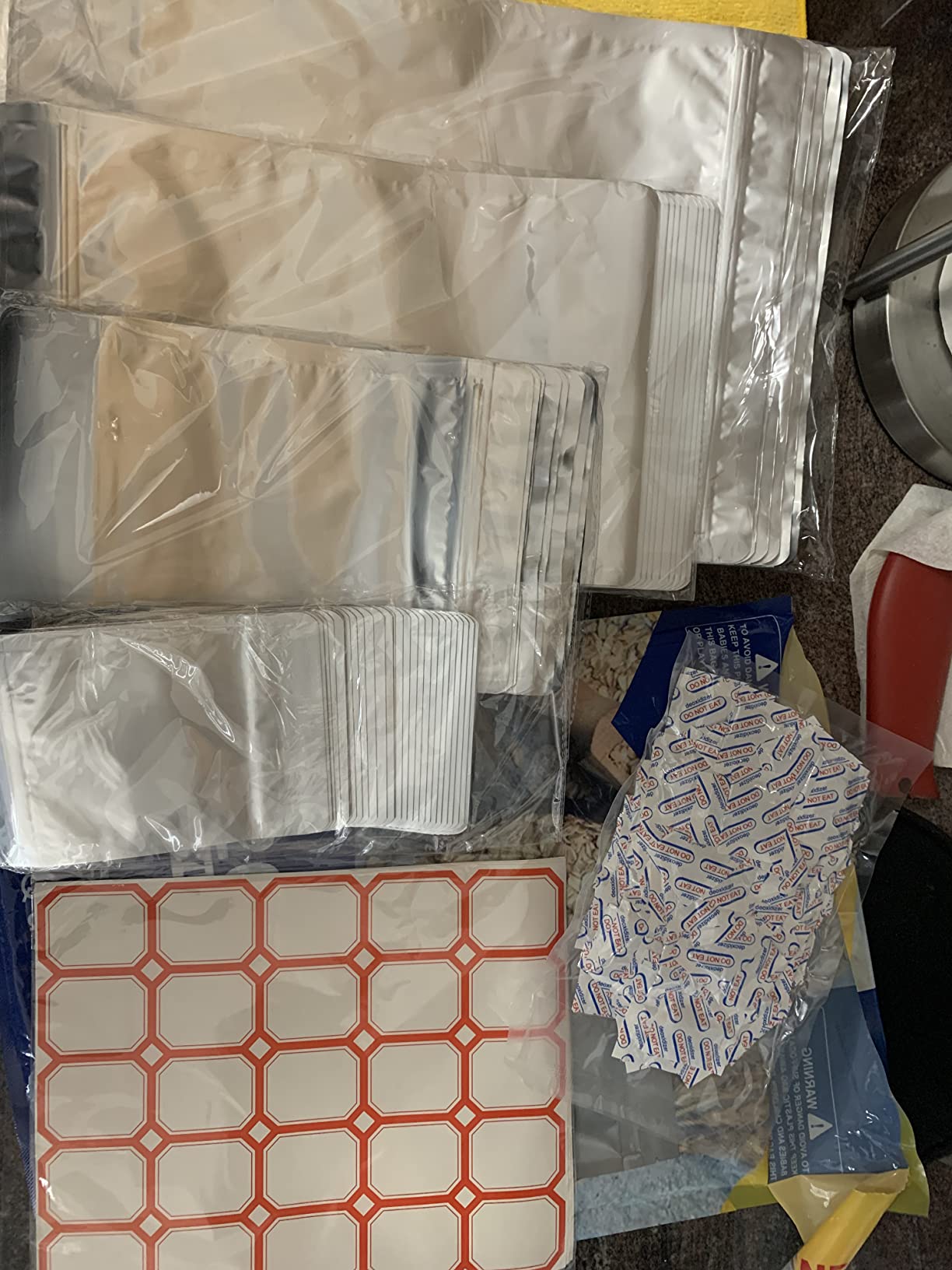
Why it suits portioning households
Forum users repeatedly ask for quart and half-pint bags rather than only 5 gallon liners, because that is how real eating happens. A pantry built from half-pint and quart bags is one you will actually open, inspect and rotate.
The 180 day warranty is short, but it is a warranty, and the brand names 20 years of factory production experience behind the material claims.
Where it falls short
Eight mil total is adequate rather than reassuring. If your bags will sit in a garage, an attic that warms up, or a stack of buckets, thicker film from a different kit is the better trade.
Every absorber in a 300 cc packet is not a packet for a 1 gallon bag, so the four-size pack creates a small bookkeeping job. Sort them before you start filling.
5. SYMYNELEC 100 Pack Mylar Bags – Best for First-Time Buyers
SYMYNELEC 100-Pack Mylar Bags with 400cc Oxygen Absorbers for Food Storage
11.8 mil on gallon bags
Three sizes
55 x 400 cc absorbers
112 labels
Pros
- 400 cc absorbers pull oxygen quickly
- Extra internal aluminium layer resists punctures
- Three usable sizes plus 112 labels
- Free of BPA BPS lead PVC and phthalates
- Airtight freezer safe and stand-up
Cons
- Only 55 absorbers for 100 bags
- Heat sealing still requires an iron or sealer
SYMYNELEC is a good first kit for a household that has never sealed food before. It gives you 35 x 1 gallon, 45 x 1 quart and 20 x half-pint bags, which is a realistic starter spread without committing to a full bulk programme on day one.
Thickness varies by size here, listed at 11.8 mil on the 1 gallon bags and 4.7 mil per side, over a PET, foil and PE build with an added internal aluminium layer. The other two sizes are listed at 9.4 and 9 mil.
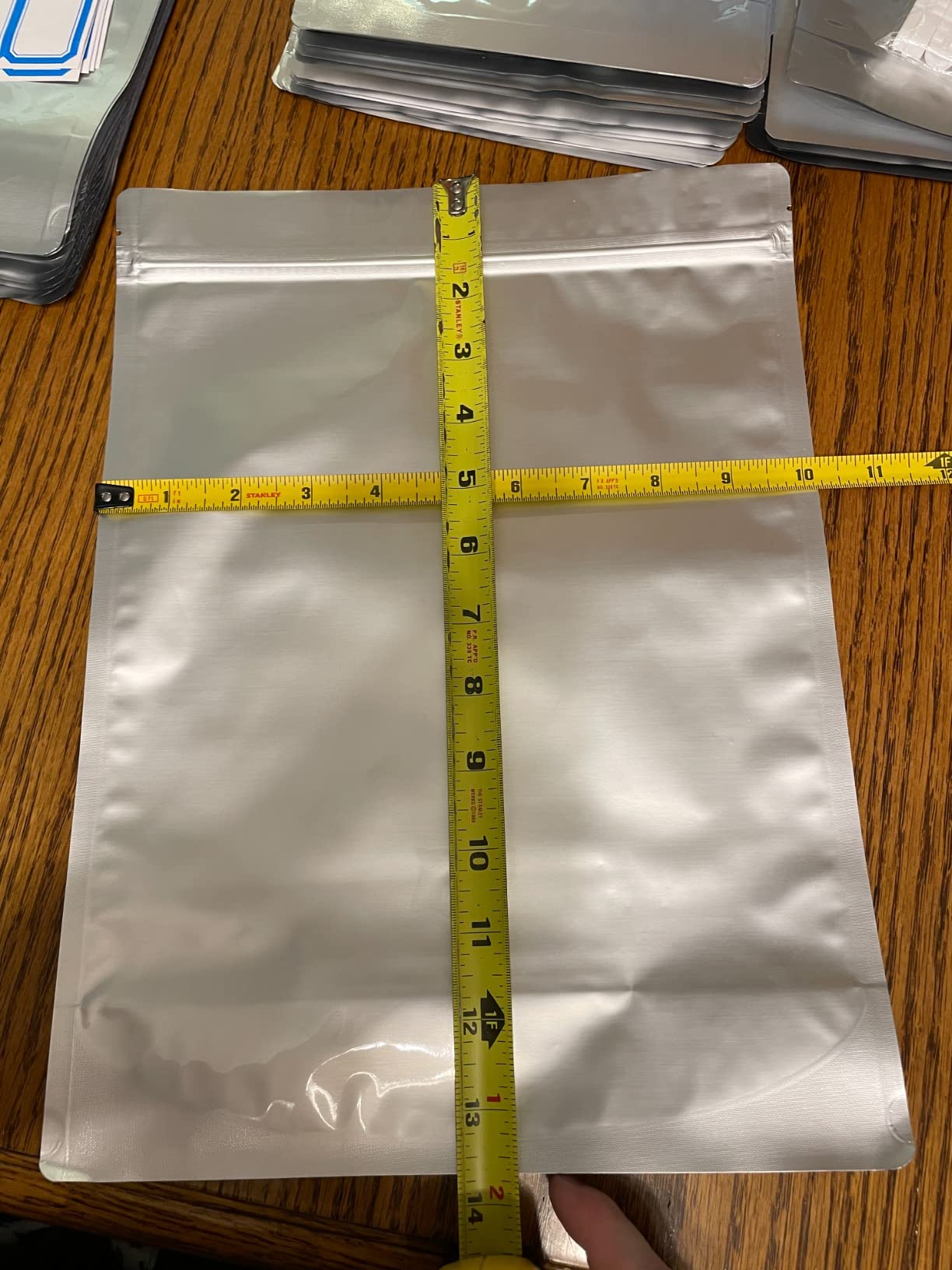
The 400 cc absorbers are the feature buyers single out most, because the larger packets clear the residual oxygen in a gallon bag faster than the small ones that ship in cheaper kits. They arrive vacuum sealed in pouches of five, so unused ones stay usable.
Rated 4.7 across 1529 reviews, with consistent praise for the range of sizes and the freezer-safe, smell-proof stand-up build. One prepper on r/prepping puts the order of operations well: build a deep pantry first, then add mylar, so the sealing step does not create a false sense of security.
Why it suits new preppers
Nothing here needs a special technique beyond an iron or a sealer, and the labels mean you can record contents and dates from the very first bag. That is exactly the habit that makes a food supply worth having in five years.
Where it falls short
Fifty-five absorbers against 100 bags is the real limitation. Half your bags will need absorbers bought separately, so factor that into your first order rather than discovering it mid-project.
Zipper closure and stand-up gusset are for convenience. Multi-year storage still depends on the heat seal step, and the listing does not pretend otherwise.
6. SHXWELL 50 Pack 1 Gallon Mylar Bags – Best for Heavy Dry Goods
50pcs 1 Gallon Mylar Bags for Food Storage, 10 Mil 10″x14″ Stand-Up Zipper Pouches Resealable and Heat Sealable Bags for Long Term Food Storage(10″x14″, Extra Thick)
10 mil total
5 mil per side
10 x 14 inch
Stand-up gusset
Pros
- Noticeably thicker than cheaper bags
- Zippers hold heavy flour sugar and salt
- Extra material above the zip allows resealing
- Stand-up base simplifies filling
- Seals reliably with an iron or sealer
Cons
- Single size in this pack
- Heavy fills can split the seams if handled roughly
Dense dry goods are the hardest test for any pouch. Flour, sugar and salt are heavy, abrasive and powdery, and they punish weak side seams faster than rice does. This 10 mil stand-up gallon pouch is the pick for exactly that workload.
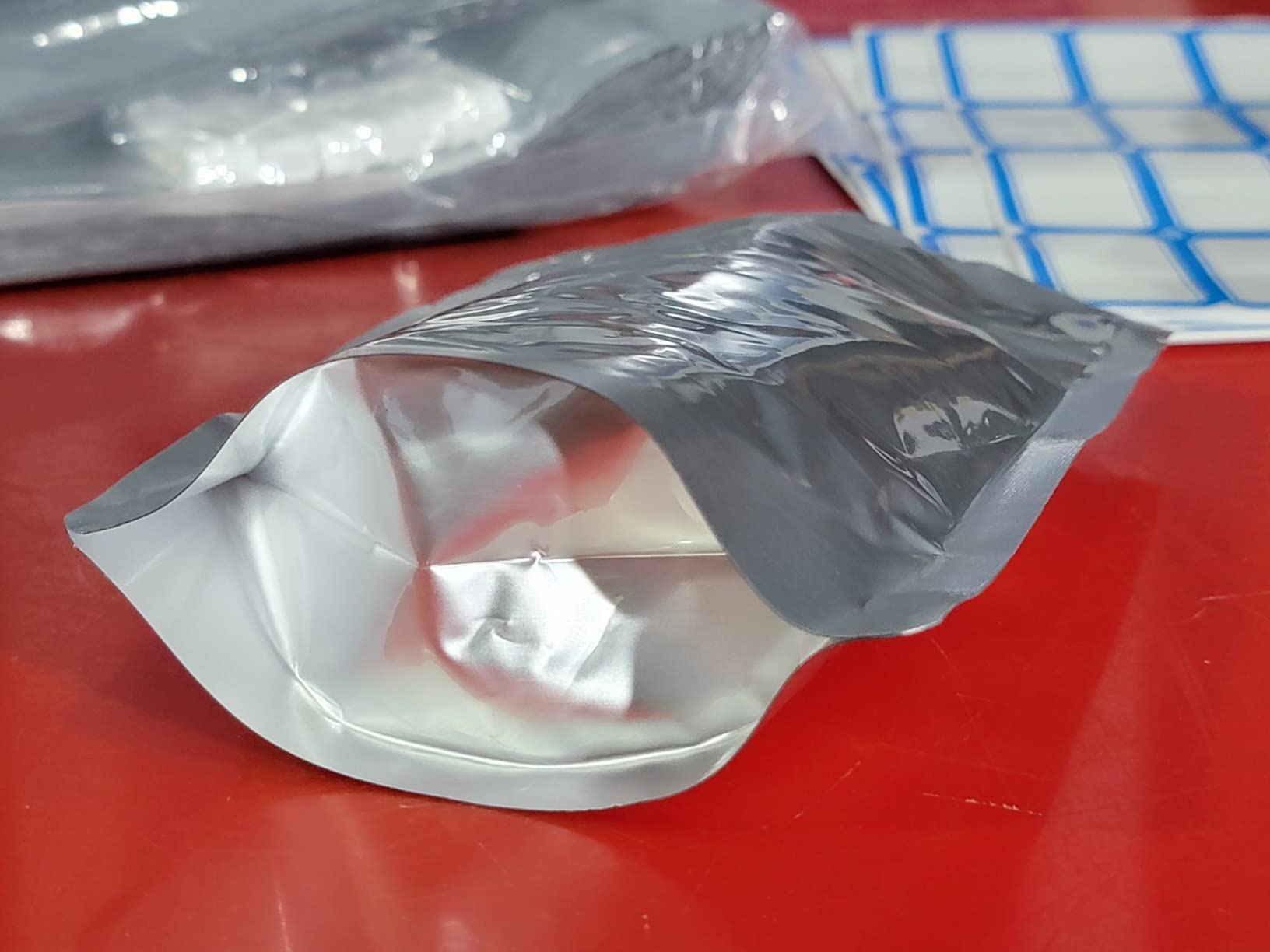
It is 50 bags at 10 mil total, 5 mil per side, with an added internal aluminium foil layer described as improving durability and puncture resistance. The stand-up gusset means you can fill it on a counter rather than holding it open over a sink.
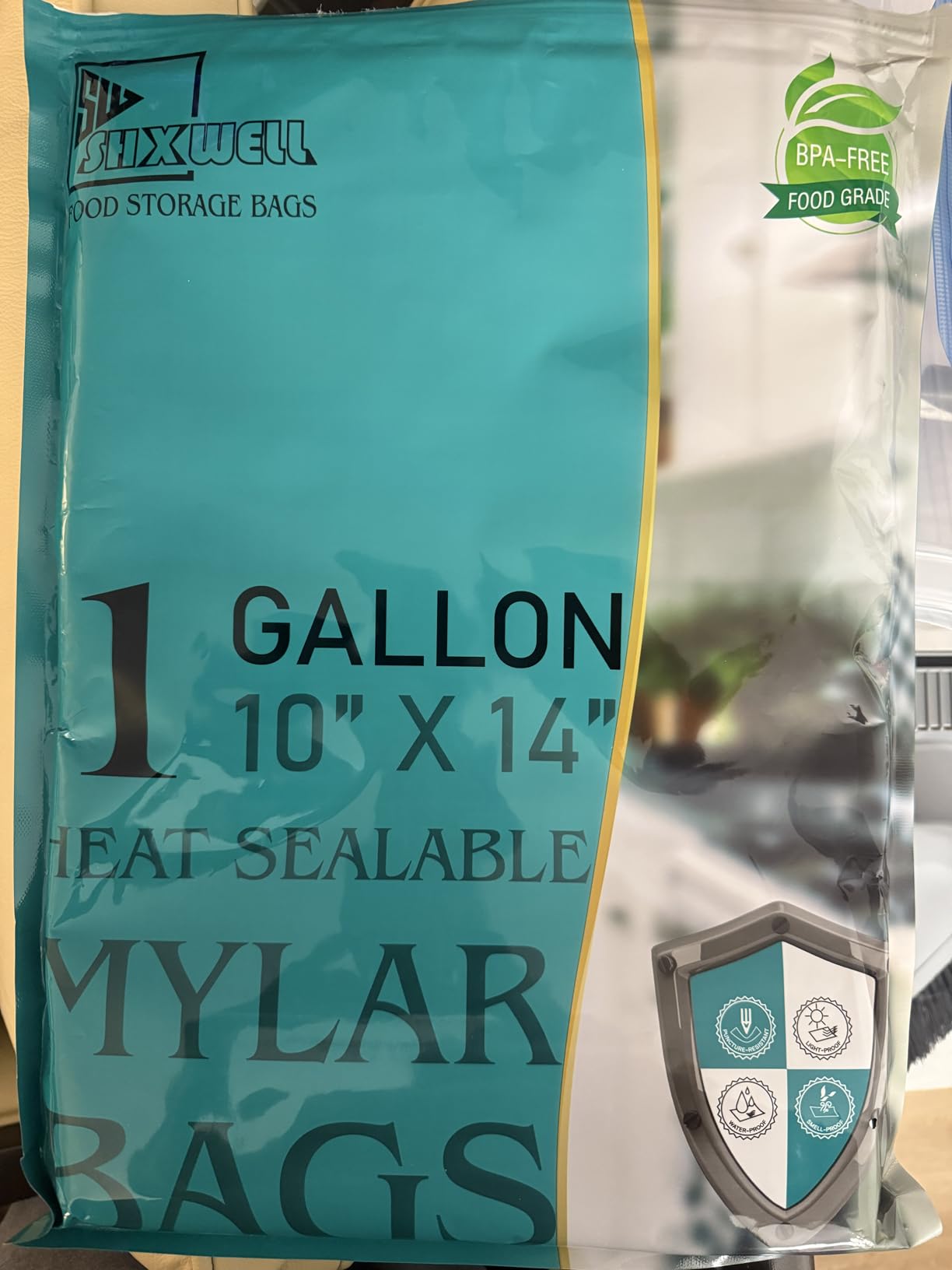
Farmers and home preservers describe this pouch as noticeably more substantial than bags from other sellers, and reviewers who compared it against brands that fill from the bottom rate it well above them on seal and tear strength.
The detail that gets singled out most is the extra material above the zipper, which allows the bag to be resealed two or three times while you scoop smaller portions out of a shared fill.
Why it suits heavy staples
A zip that stays closed under a heavy fill is a safety issue, not a convenience one. Reviewers using this bag for baking staples report it holding where lighter bags have sprung open and spilled powder across a shelf.
It is also a straightforward bulk purchase for anyone splitting a large supermarket sack of flour or sugar into storage quantities rather than measuring out each use.
Where it falls short
One size only, so portioning requires a second purchase. And the pouch is 10 mil, which resists splitting but is not indestructible, so lifting a full bag of sugar by the zipper rather than the body will still find the weak point.
Absorbers are included with the pack but are not described with a specific capacity in the specification, so check what arrives before you fill fifty bags.
7. SHXWELL 10 Pack 5 Gallon Mylar Bags – Best for 5 Gallon Buckets
10PCS 5 Gallon Mylar Bags with 2500CC Oxygen Absorbers and Labels, Zipper Resealable Pouches Heat Sealable Bags for Long Term Food Storage
12 mil total
6 mil per side
17 x 27 inch
2500 cc absorbers
Pros
- 12 mil wall with internal aluminium layer
- Absorbers arrive in factory vacuum sealed pouches
- Reusable zipper plus heat seal option
- Free of BPA BPS PVC latex vinyl and lead
Cons
- Single size in the pack
- Requires a heat sealer or iron for long term storage
If your plan is to line food-grade buckets, this is the dedicated bucket pack from the same maker as our value set. Ten pouches at 17 x 27 inch, 12 mil total with 6 mil per side, which is the thickest wall among the 5 gallon options we reviewed.
The build is three layers with an extra internal aluminium foil layer, and the free-from list is the broadest we saw, covering BPA, BPS, PVC, latex, vinyl, mercury, lead, chloride and phthalates. That matters if you are storing food in a container you will also handle bare-handed.
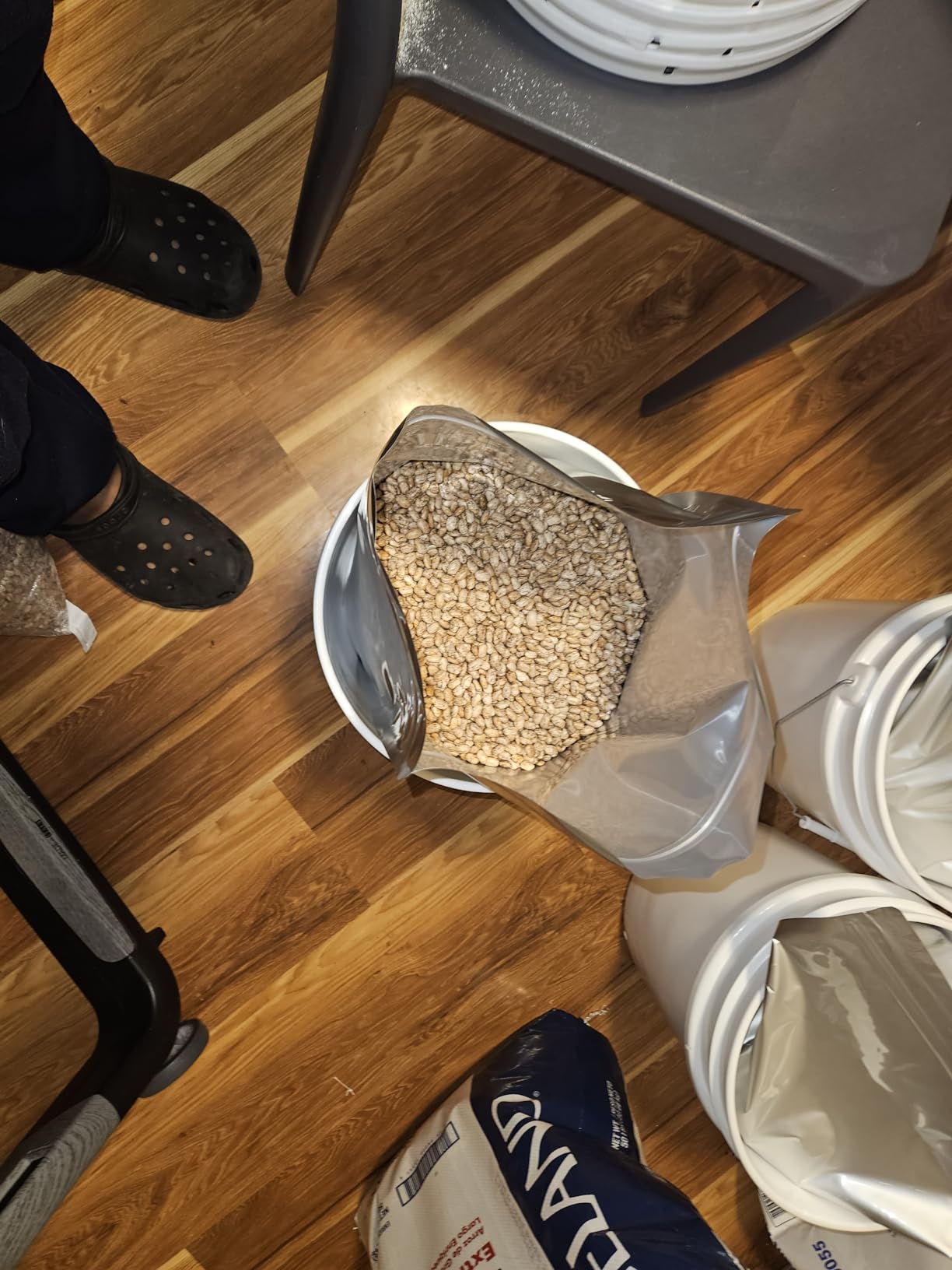
2500 cc absorbers arrive in factory vacuum-sealed pouches, which is the correct capacity for a 5 gallon bag and the right packaging to prevent unused packets from going inert on the shelf.
This bag is bought mainly for bucket-based emergency and pantry storage, and reviewers rate the 12 mil wall highly for durability while keeping the bag light enough to handle. The criticism is practical: one size only, and heat sealing is a separate step.
Why it suits bucket stores
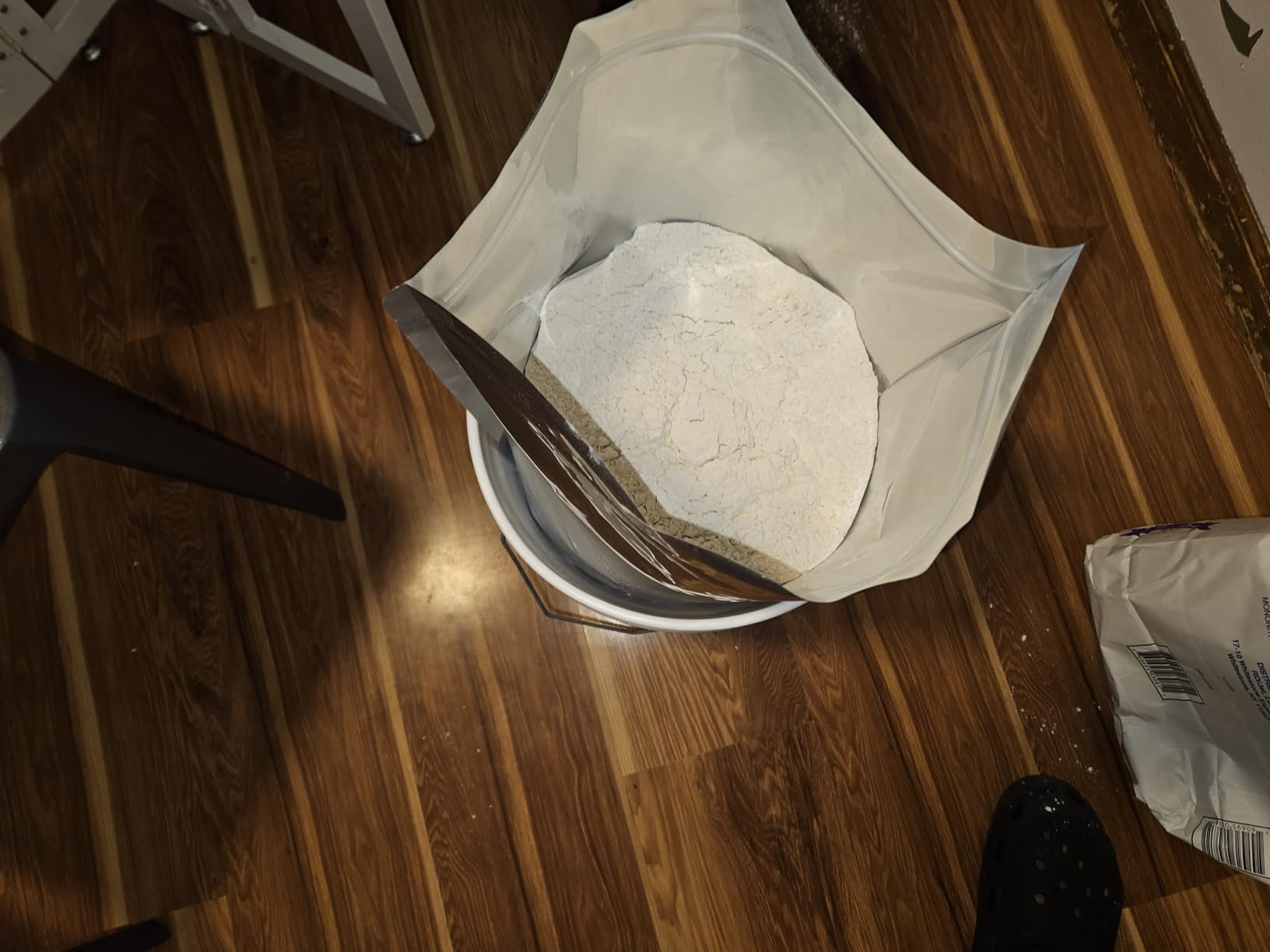
A liner is only useful if it can take the weight and the movement of a full bucket being dragged across a floor. Six mil per side is a genuine buffer against the abrasion that wears thinner liners through at the corners.
Pair it with a properly rated food-grade bucket and the mylar liner gives you both gas and light protection and a physical layer the rodent cannot easily get through. Users on r/SelfSufficiency describe sealed mylar bags inside good storage buckets as the go-to combination.
Where it falls short
Ten bags is a small run for a large household, and every other size has to be bought elsewhere. The zipper is a convenience closure; a heat sealer or iron is still a required extra for multi-year storage.
The square shape is less tidy on a shelf than a flat-backed liner, and the free-from claims cover the film rather than any printed label.
8. ROYLO GLOBE 120 Mylar Bags – Best for Labelled Pantry Sets
120 Mylar Bags with 150 Oxygen Absorbers-168 Labels & Stand-Up Reusable
8.5 to 10.5 mil
Four sizes
150 absorbers
168 labels
Pros
- Very generous bag and label count
- Stand-up design simplifies filling
- Resealable top allows partial use
- Four sizes cover most storage needs
- Seals well with an iron or sealer
Cons
- Needs more heat than expected for a strong seal
- Cheap sealers struggle with this material
- Absorber capacities vary between 400 cc and 500 cc
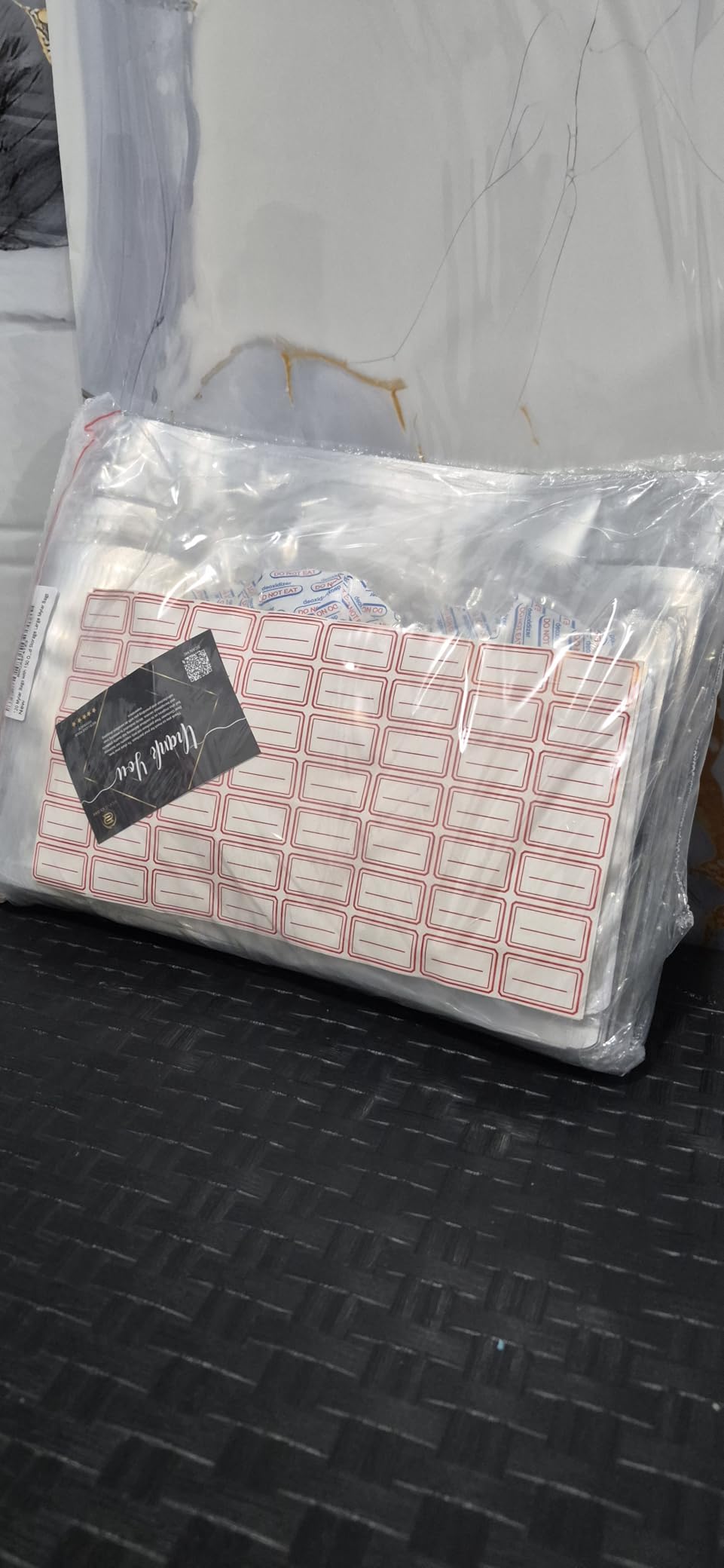
Labels are the unglamorous feature that decides whether a pantry is usable in five years, and this set ships 168 of them alongside 15 clips. That is the most labelling support in any pack we reviewed, and it turns a stack of anonymous foil bags into an inventory.
You get 120 bags across four sizes, with thickness listed at 10 mil for the gallon, 10.5 mil for the half gallon, 10 mil for the quart and 8.5 mil for the smallest. Triple-layer PET, foil and PE throughout.
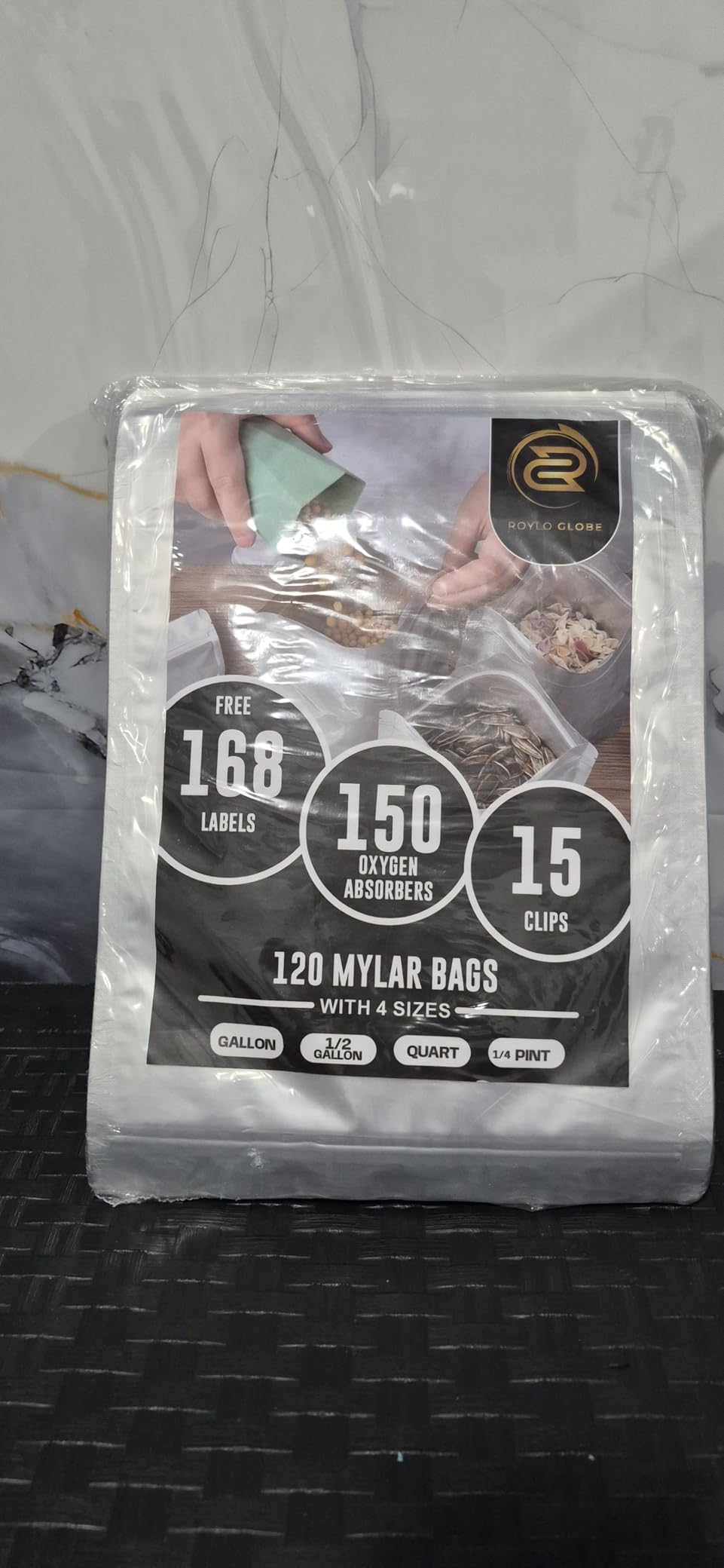
Absorbers are the interesting detail: 150 supplied as 100 x 400 cc in packs of ten plus 50 x 500 cc, so the larger capacity covers the gallon bags and the 400 cc packets cover everything smaller. That is closer to correct sizing than most kits manage.
Owners cite strong flavour retention over months, including one review reporting day-200 dried fruit tasting like day one. The practical guidance in reviews is that the 10 mil walls need a real heat sealer running hotter than cheap machines deliver.
Why it suits an organised pantry
A four-size spread means you can portion a bulk buy into a sensible weekly stock and still have the small bags for spices, seeds and snacks. The resealable top suits food you will open and close repeatedly rather than once and forget.
Clips are included, which is a small thing that genuinely helps when you have already heat sealed a bag and want to hang a label on it.
Where it falls short
Two absorber capacities means sorting before you start, and a pouch of ten is a commitment, so a household storing two or three bags will have most of a packet go unused unless you seal the remainder in a small mylar bag.
If you only own a budget heat sealer, expect to need two passes. Cheap machines often will not fuse this material in one go, and a cool-looking seal that has not fully bonded is the failure mode to watch for.
9. Vosaplk 100 Pack 1 Quart Mylar Bags – Best for Freeze-Dried Food
100pcs Mylar Bags 1 QUART – Thick 9.4 Mil – 7″x10″ Airtight Vacuum Sealing Sealable Mylar Bags for Long Term Food Storage, Odor Free Heat Resistant – Light and Moisture Proof Fresh Saver Packs (100)
9.4 mil thickness
7 x 10 inch
4 layer build
FDA standard lining
Pros
- Heavy duty walls that hold a seal over hundreds of uses
- Gusseted base adds capacity and stands upright
- Very low oxygen and moisture permeability
- Reliable with crimp and commercial sealers
- Blocks light odour and humidity
Cons
- Cheap vacuum sealers cannot seal this material
- Some bags arrive heavily creased
- Rare zipper detachment from the bag wall
- Single size only
Freeze-dried food is the most demanding thing you will put in mylar, because the output is bone dry and light and every bit of residual oxygen matters. Freeze-dryer owners treat these bags as the standard pairing, and Vosaplk is the one they come back to.
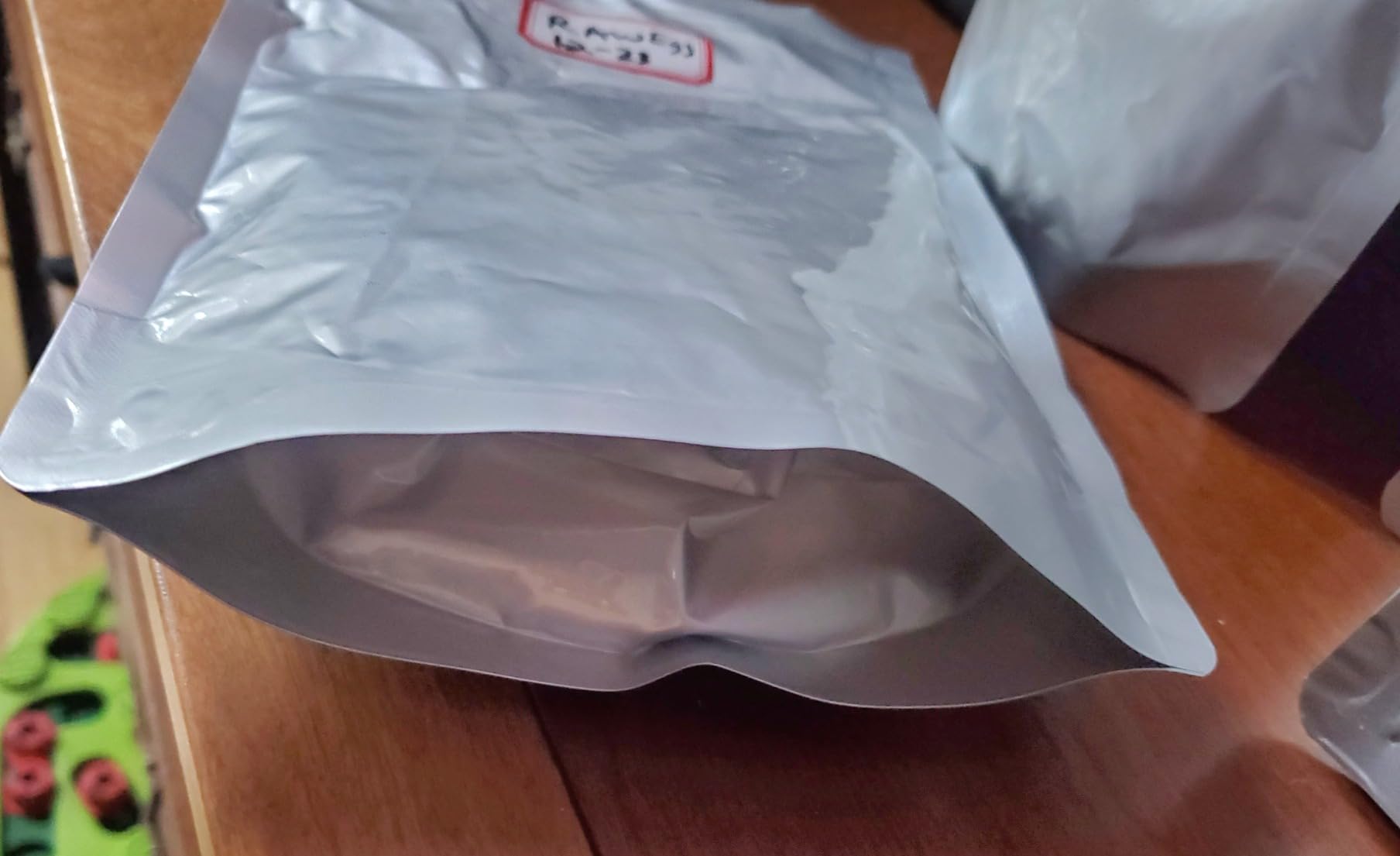
Construction is 4-layer aluminium foil at 9.4 mil, one more layer than typical bags, with a low oxygen transmission rate and a low moisture vapour transmission rate. The lining materials are stated to meet FDA standards, and the 7 x 10 inch size is a proper quart.
Freeze-dryers report going through this bag for years with no seal failures, which is a stronger endorsement than any lab spec. The gusseted base adds usable capacity and lets the pouch stand upright while you load it, which matters when you are portioning small trays.
The U-shaped tear notch and reusable vertical zipper make it easy to open a single bag without cutting into the film. Reviewers confirm it blocks light, odour and humidity reliably.
Why it suits freeze-dried output
Vacuum sealing mylar directly is a common misconception, and the workaround is to put the mylar pouch inside a vacuum-sealer bag and seal that. Even then, a 9.4 mil wall defeats most consumer vacuum sealers, so freeze-dryers reach for a crimp sealer or an iron.
If you batch freeze-dried fruit, vegetables or meals, 100 quart bags is a serious working volume, and the odour blocking keeps strong flavours, like tomato or curry, from migrating between bags.
Where it falls short
It is a single size pack, so a full pantry build needs at least one other kit. Rare reports of the inner zipper track detaching from the bag wall are worth knowing about if you plan to open and reseal the same pouch many times.
Some bags arrive heavily creased. The creases did not compromise airtightness in those reports, but a folded wall is a weak spot for a future puncture, so flatten before filling.
10. Opalpros 60 Pack 14 Mil Mylar Bags – Best for Thick-Wall Storage
60-Pack 14 Mil Mylar Bags with Oxygen Absorbers, Gusseted 5 Gallon(10), 1 Gallon(20) & 1 Quart(30) Bags with 2500cc, 500cc & 300cc OA – Resealable Mylar Bags for Food Storage with Colourful labels
14 mil total
3 layer build
Three sizes
Matched absorbers
Pros
- 14 mil walls resist puncture better than thinner bags
- Absorbers separated in packs of 10
- Three sizes from spice size to 5 gallon
- Colour coded labels included
- Seals with an iron straightener or sealer
Cons
- Gusseted 5 gallon bags sit loose in standard buckets
- Absorbers arrive shrink-wrapped in groups
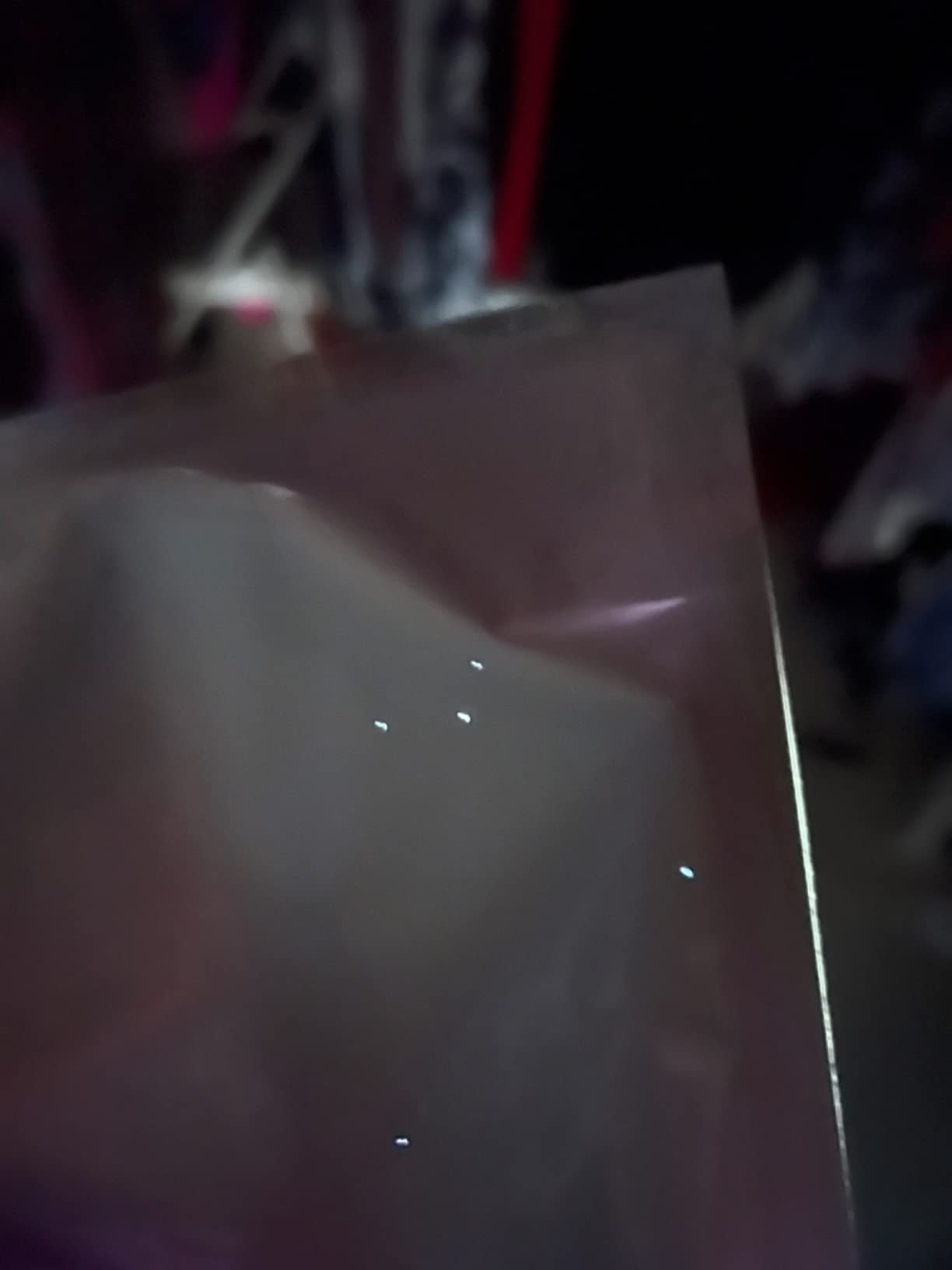
- One reviewer reported micro-perforations on a light test
- A small number of bags arrived with defects
This is the thickest film in the group at 14 mil total, across a 3-layer PE, PET and aluminium build, and most reviewers call it the most puncture-resistant mylar they have used. If you want maximum margin and do not mind a bulk order, that is the reason to choose it.
Sizing is genuinely useful: 10 x 5 gallon, 20 x 1 gallon and 30 x 1 quart, with 70 colour-coded labels and absorbers supplied in matched capacities of 2500 cc, 500 cc and 300 cc, packaged in sets of ten.
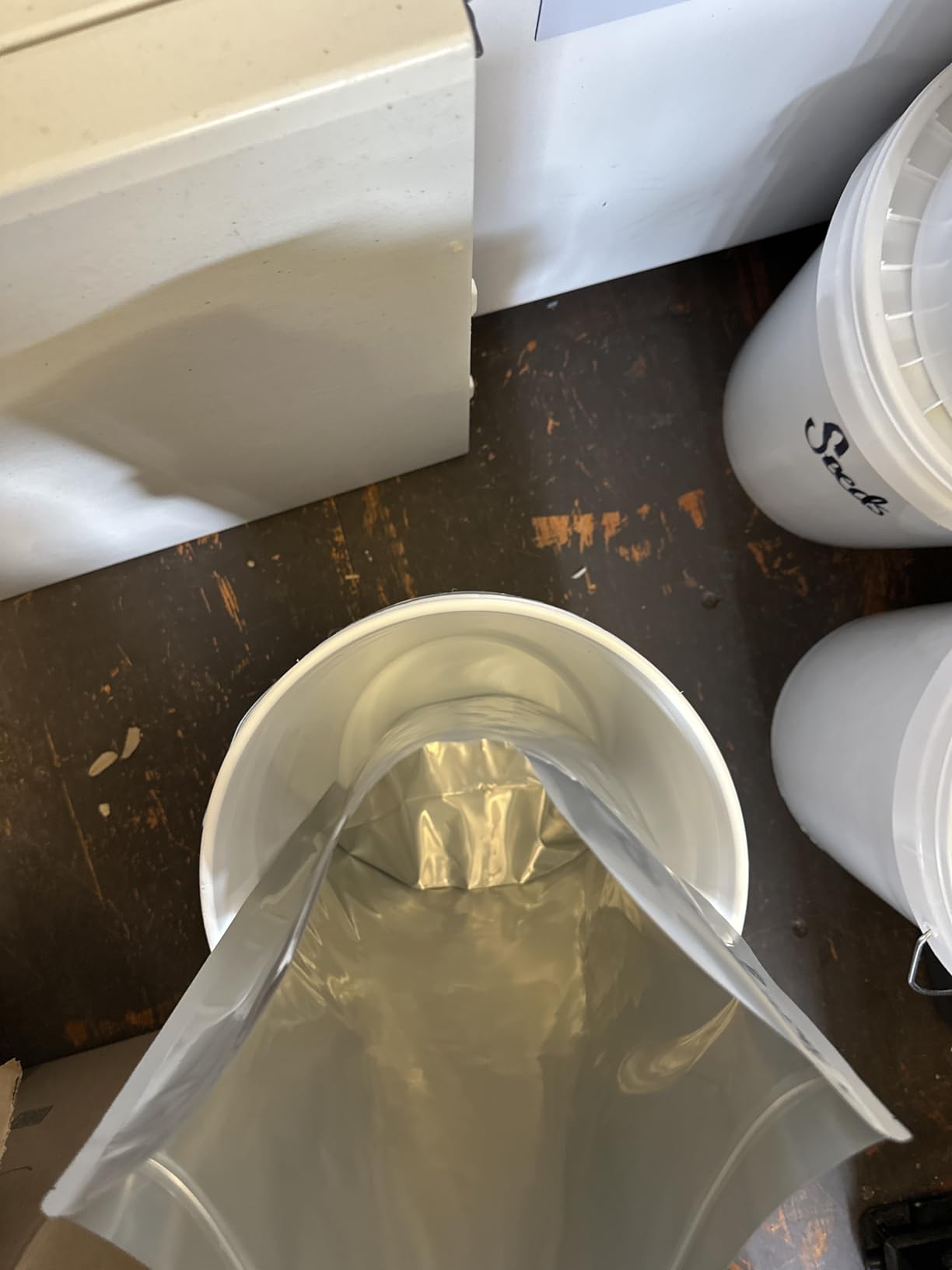
Matched absorber capacity per bag size is the quiet strength here. Most kits make you work that out yourself, and getting it wrong wastes a packet or under-protects a bag. The dual seal design lets you zip for daily use and heat seal later when the food is finished.
Customer service draws specific praise, with buyers reporting defective units and a missing absorber replaced without friction. That is a real advantage when you are committing a large quantity of food to a bag.
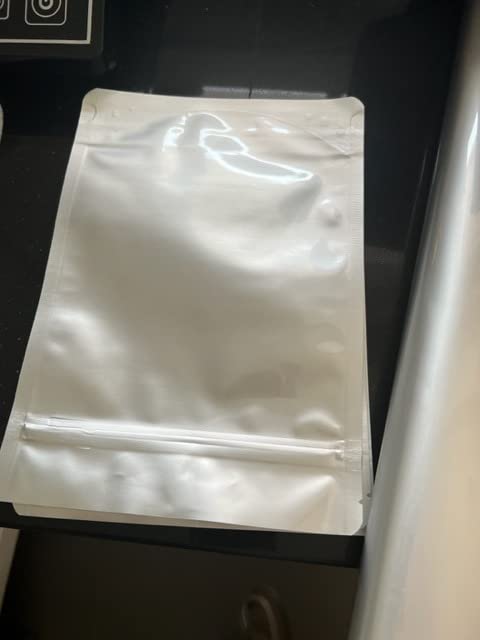
Why it suits the thick-wall buyer
Fourteen mil is meaningful in a garage, a shed, or a stack of buckets where bags rub against each other over years. Reports of years of freshness come from owners who compared it against thinner name brands and found the difference in handling.
Three sizes in one pack also means one purchase can cover bulk, mid-size and spice quantities, which is unusual at this wall thickness.
Where it falls short
The gusseted 5 gallon bags measure 15.5 x 22.5 inch and sit loose in a standard bucket compared with flat-bottom liners, leaving a gap at the top. Plan for a liner that fills the bucket rather than assuming a snug fit.
Absorbers come shrink-wrapped in groups of ten to fifteen rather than individually sealed, so seal the unused portion in a small mylar bag with a desiccant or they will be less effective. One light test also turned up micro-perforations, which is a reminder to check a sample bag before you rely on a whole pack.
Mylar Bag Thickness: How Many Mils Do You Need?
For long-term food storage, 5 mil total is the bare minimum and 7 mil is the sensible default, with 7 mil or more for sharp grains, beans, or bags stacked in buckets. Buy 5 mil for standard dry goods like rice and oats, and step up for anything heavy, sharp, or stored in a garage.
Mil is a thousandth of an inch, and the confusion starts there. Most listings quote total thickness across both walls, so a bag described as 10 mil is 5 mil per side. That is a real barrier, but it is not the same as 10 mil of film on each face.
Use this as your guide:
Rice, oats, pasta, sugar, salt: 5 mil total is enough when the bag will sit in a cool, dark, stable room.
Beans, lentils, grains with sharp ends: 7 mil or more, because the ends abrade the seam over years.
Buckets stacked more than one high: 7 mil minimum, and 10 mil or more if the stack will be moved.
Flour, sugar, heavy powders: 8 mil and above, filled with care so you do not stress the seams.
Freeze-dried food: 9 mil and above, with four layers preferred, because the food is bone dry and unforgiving.
The recurring complaint from forum readers is that vendors understate thickness in some listings, so check the spec block rather than the marketing title. If a listing says 3.5 mil, that is not a long-term bag no matter how the rest of the description reads.
Oxygen Absorbers: How to Size Them and Where to Put Them
Oxygen absorbers do the actual preservation work. The foil bag holds back light and moisture, and the absorber scrubs the oxygen that sealing left behind, which is what stops oxidation, insect hatching and mould.
Sizing follows the volume of the bag:
Half pint and pint bags: one 100 cc to 200 cc absorber.
1 quart bags: one 300 cc absorber.
1 gallon bags: one 400 cc to 500 cc absorber.
2 gallon bags: two 500 cc absorbers.
5 gallon bags: one 2500 cc absorber.
More is not better. An absorber works by reacting with the oxygen available, and an oversized packet in a small bag does not extend the storage life, it just adds weight. A desiccant is a different product: it pulls moisture rather than oxygen, which matters for dry powders rather than grains.
Unused packets matter. Once a group of absorbers is out of its vacuum pouch they start reacting, so seal the remainder in a small mylar bag of their own. That is a cheap habit, and it is the reason kits with individually sealed single packets are worth a look.
How to Seal a Mylar Bag So the Seal Actually Holds
A seal fails for a handful of predictable reasons, and every one of them is avoidable at the counter.
Fill the bag with completely dry, cool food. Moisture in the seam area is the single most common cause of a poor bond, and hot food drives condensation straight into the top of the bag.
Add the correctly sized absorber, then expel the air. Squeeze from the bottom up and roll the top down to push the air out before the last fold.
Fold the top over cleanly, wipe the seal area free of food dust, and heat it with an iron, a hair straightener or an impulse sealer. A slow pass on a folded-over top fuses far better than a fast pass across a flat, wrinkled one.
Let the bag cool before you handle it. The film is still settling while it is warm, and pulling a seal while it cools can open a channel you cannot see.
Label it with the contents and the date while the bag is still warm. A dual-seal, meaning two passes along the same top, adds margin cheaply and is worth doing for anything you expect to keep for years.
What Not to Store in Mylar, and Where the Bags Belong
Mylar is for dry, low-moisture, low-fat food. Rice, beans, wheat, oats, flour, sugar, salt, pasta, powdered eggs, whole spices, dehydrated and freeze-dried produce all work well.
It is not for anything wet or oily. Moist, low-acid foods carry a botulism risk in any sealed bag, and high-fat items such as whole nuts and oils oxidise long before the bag fails. Freeze-dry moist foods instead and store them dry, which is why our food dehydrator guide pairs naturally with this one.
Mylar bags are not rodent proof. A determined mouse chews through foil, so a liner is only as good as the container around it. Put sealed bags inside properly rated food-grade buckets, and never reuse a bucket that held paint, oil or chemicals. If you plan the volumes, our food processor picks help you turn bulk dry goods into portions before sealing.
On the alternatives: glass jars with head space and a vacuum sealer are genuinely good, but jars break and they need a cool, dark room. Vacuum-sealed plastic bags are excellent for short and medium-term storage but the plastic is not a sufficient long-term oxygen barrier. Plastic zipper bags are for food you will eat in a week. That leaves foil mylar as the only one of the four that combines a true light and gas barrier with a long shelf life and a low cost per pound of food stored.
Store filled bags in a cool, dark location, away from a garage wall or a window where temperature swings work at the film. A warm room shortens everything, and a cold room with a fluctuating temperature is worse than a stable one.
If you also want to keep hot meals moving through a crisis, the food warmers we tested cover the other half of the plan.
Frequently Asked Questions
Are Mylar bags good for long-term food storage?
Yes, when the bag is food-grade, at least 5 mil thick, paired with a correctly sized oxygen absorber, and heat sealed. Mylar blocks light, oxygen and moisture far better than plastic zipper or vacuum bags, which is why dry staples packed this way last far longer.
How thick do Mylar bags need to be for long-term food storage?
At least 5 mil total, with 7 mil or more recommended. Use 5 mil for standard dry goods like rice and oats, and 7 mil and above for sharp grains, beans, heavy powders, or bags stacked in buckets.
Do mylar bags need oxygen absorbers?
Yes, for multi-year storage. The bag provides the light and moisture barrier, but only an oxygen absorber removes the residual oxygen left after sealing. Without one, dry goods still oxidise and insect eggs can hatch.
Why did Amazon ban Mylar bags?
Amazon tightened its listing rules for food-contact bags after a wave of unbranded and mislabelled mylar listings, so many generic bags were delisted rather than formally banned. Buy bags that name a brand, state a thickness in mil, and describe food-grade or BPA-free materials.
What’s better than Mylar bags?
Nothing beats mylar for long-term dry storage, but each alternative has a role. Glass jars are best for foods you will eat within a few months, vacuum-sealed plastic for short-term use, and mylar for multi-year storage of dry staples.
Can you vacuum seal a mylar bag?
Not reliably, because a 7 mil to 14 mil wall defeats most consumer vacuum sealers. Put the mylar pouch inside a vacuum-sealer bag and seal that, or use a crimp sealer, an iron, or a hair straightener on the mylar top.
Are mylar bags rodent proof?
No. A determined rodent can chew through foil, so sealed bags belong inside food-grade buckets. Mylar handles gas, light and moisture, while the bucket handles the physical threat.
The Verdict: Which Mylar Bags to Buy First
Start with the Home Sensei 5 Gallon 10 Mil bags if your plan is bulk storage, because the wall thickness, the individually packed 2500 cc absorbers and the 4.6 star average across 3924 reviews make them the most dependable bucket liner we worked through. Add a multi-size kit such as the SHXWELL 100 Pack 12 Mil set for portioning, and a quart pouch such as the Vosaplk pack for freeze-dried output.
Whatever you choose, buy the bags, an impulse sealer and a batch of correctly sized absorbers in the same week, then start with the food you eat most. A sealed pantry that is well labelled and partly full beats a perfect one you never begin.