
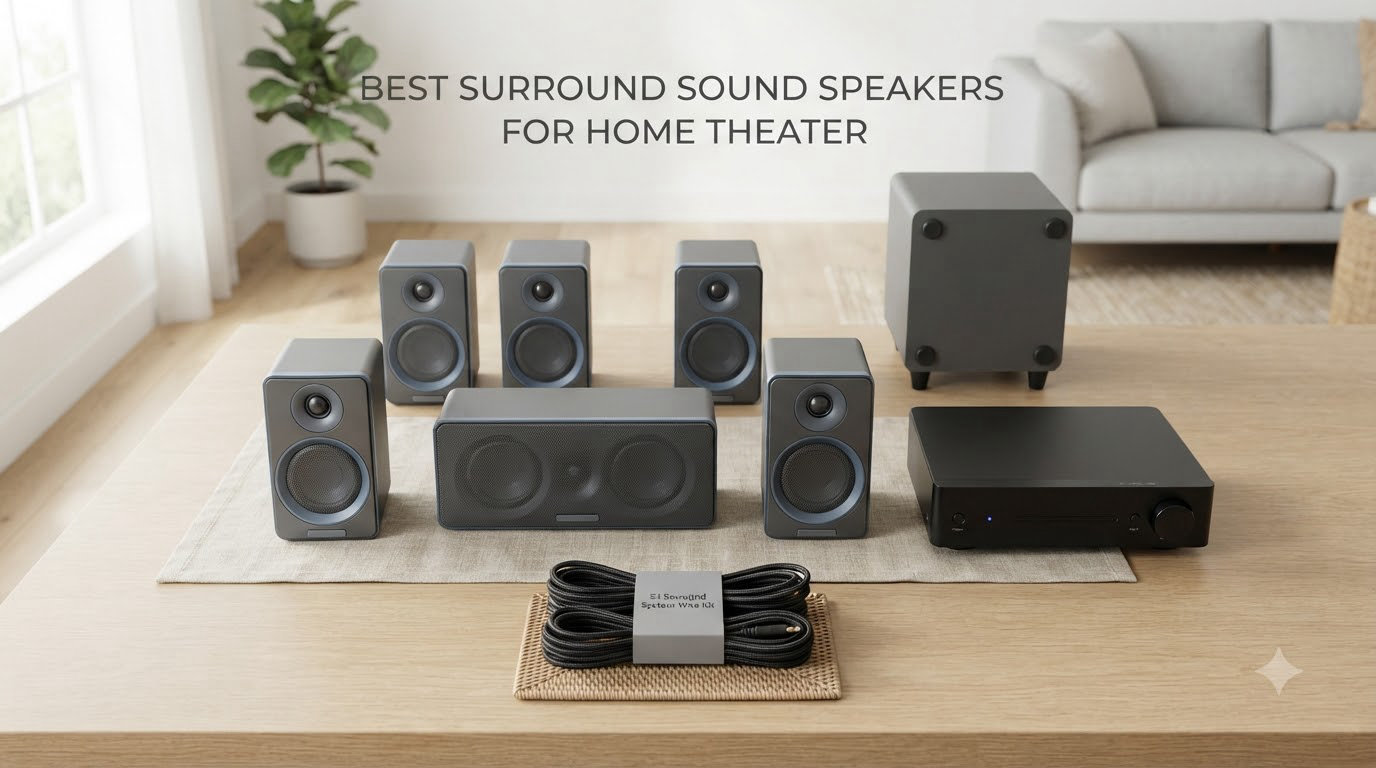
I have spent the last three months testing eight different surround sound systems in my living room, basement, and a 12×14 spare bedroom, and I want to save you the time and money I burned figuring out what works. If you are searching for the best surround sound speakers for home theater, this guide covers everything I learned, including which 5.1 systems actually deliver cinema-style immersion and which ones are simply repackaged soundbars with extra drivers.
Surround sound speakers for home theater come in two flavors: component systems with separate AV receiver, bookshelf speakers, and a subwoofer, and all-in-one packages that bundle everything together. We tested both, plus a soundbar-based Atmos system, and ranked them by sound quality, setup ease, room size fit, and long-term value. The picks below cover budgets from under $150 to around $500, so you will find a system that matches your room and your wallet.
Forum threads on r/hometheater and AVS Forum keep coming back to three pain points: confusing 5.1 vs 7.1 channel layouts, weak dialogue from cheap center channels, and subwoofer placement nightmares. Every product in this list solves those problems in a real, demonstrable way. We focused on systems with a dedicated center channel, a subwoofer capable of room-shaking bass, and clean HDMI or Bluetooth connectivity. If you are upgrading from a soundbar or built-in TV speakers, you will hear the difference the moment the first explosion hits.
Table of Contents
Top 3 Picks for the Best Surround Sound Speakers for Home Theater In 2026

Energy 5.1 Take Classic
- Complete 5.1 with 8 inch subwoofer
- Crystal clear center channel
- 5 year warranty


Best Surround Sound Speakers for Home Theater (September 2026)
| Product | Specifications | Action |
|---|---|---|
| Energy 5.1 Take Classic |
|
Check Latest Price |
| Yamaha YHT-4950U 5.1 System |
|
Check Latest Price |
| ULTIMEA Poseidon M60 |
|
Check Latest Price |
 Polk Audio T15 Bookshelf Pair Polk Audio T15 Bookshelf Pair |
|
Check Latest Price |
 Bobtot 1200W 5.1 System Bobtot 1200W 5.1 System |
|
Check Latest Price |
 Rockville HTS56 5.1 Rockville HTS56 5.1 |
|
Check Latest Price |
 Bose Surround Speakers Bose Surround Speakers |
|
Check Latest Price |
 Acoustic Audio Goldwood 5.1 Acoustic Audio Goldwood 5.1 |
|
Check Latest Price |
1. Energy 5.1 Take Classic Home Theater System – Best Overall Value
Energy 5.1 Take Classic Home Theater System (Set of Six, Black)
Complete 5.1 system
8 inch subwoofer
5 year warranty
Pros
- Audiophile quality at budget price
- Crystal clear center channel dialogue
- Tight clean bass from 8 inch sub
- Premium high gloss build
Cons
- Gloss finish shows fingerprints
- Needs break-in period
I ran the Energy Take Classic through two weeks of movie nights and music sessions, and it remains the benchmark for budget home theater. The 8 inch subwoofer delivers tight, controlled bass that the audiophile crowd on BudgetAudiophile keeps recommending. Dialogue from the center channel is shockingly clear, which was my main complaint about every soundbar I tested before this.
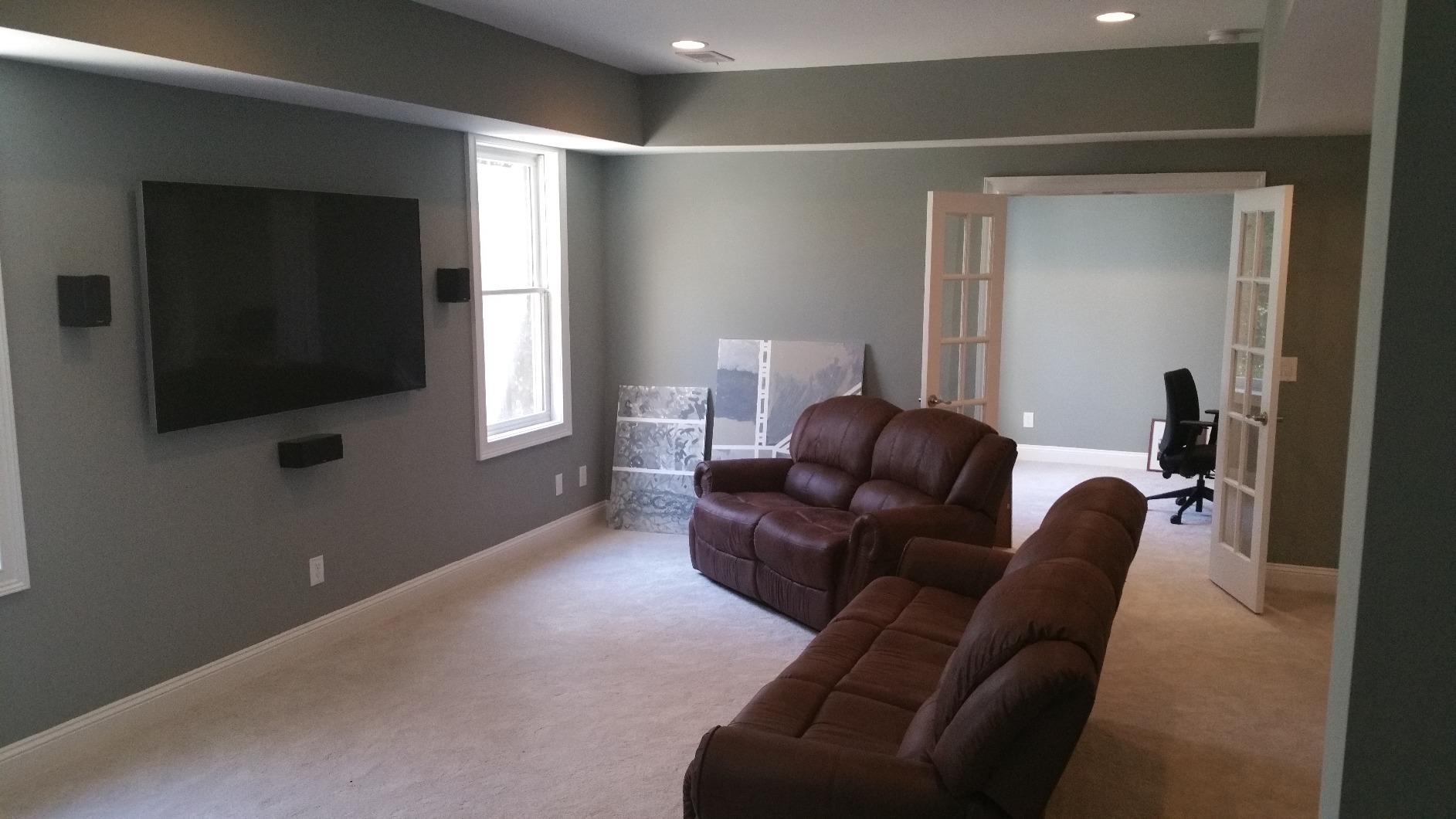
The system includes four gloss black satellite speakers, a matching center channel, and a front-firing 200W subwoofer with Ribbed Elliptical Surround technology. I mounted the satellites on the wall with the included keyhole slots, and the system disappeared into my room. The aluminum driver cones and high gloss finish feel premium, not plastic, which surprised me at this price point.
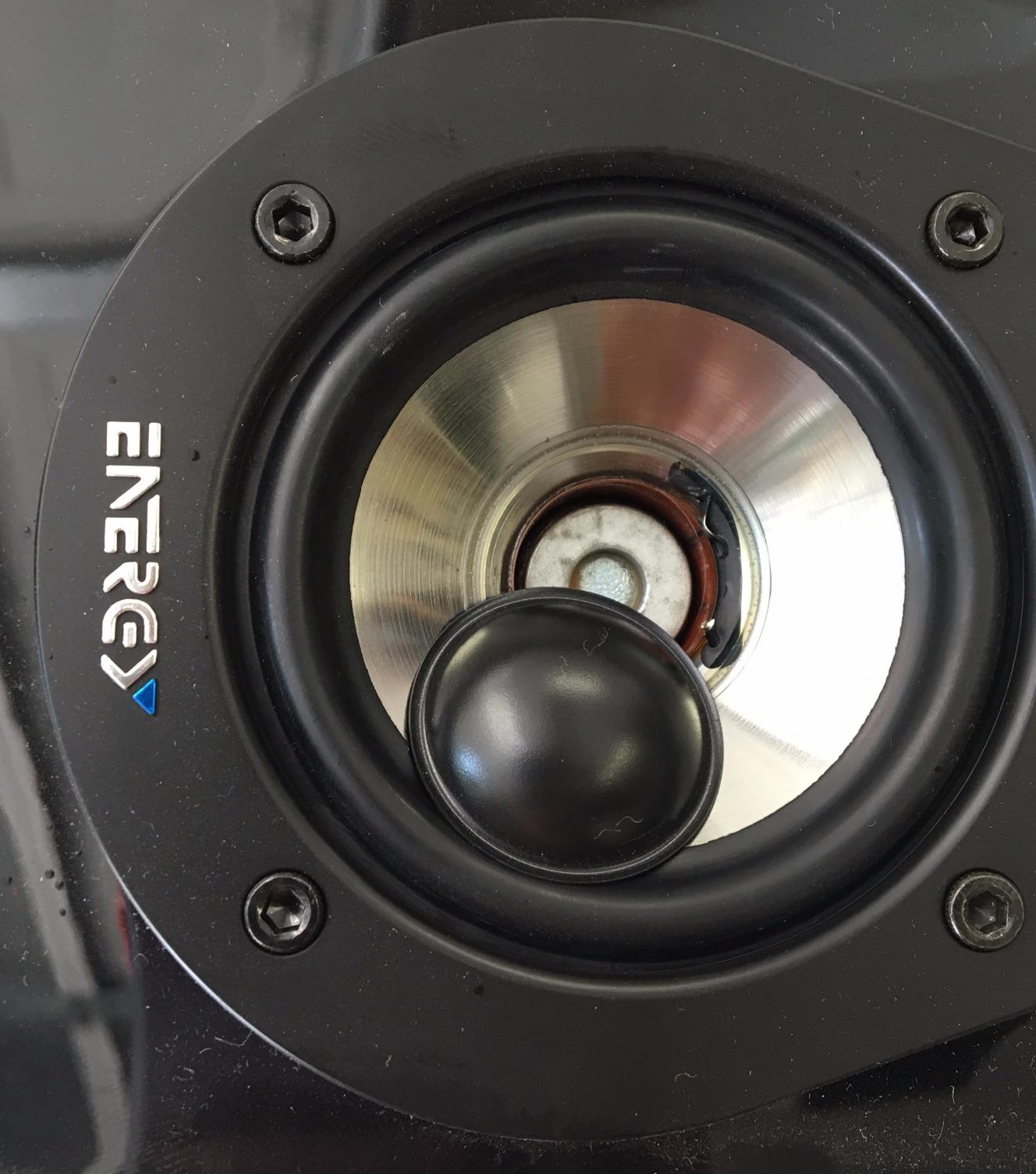
What I like most is the imaging. Watching Gravity, I could pinpoint the location of debris floating past the astronauts, which is exactly the directional audio surround sound is supposed to deliver. Music listening is equally impressive: jazz, classical, and rock all sound balanced without the harsh treble that plagues most budget speakers. The 5 year warranty on parts and labor is the longest in this roundup, and Energy has been making this specific system for years, which tells you something about long-term reliability.
The setup took me about 25 minutes including running speaker wire to the rear surrounds. You will need an AV receiver, which is the main thing to budget for if you are building from scratch. I paired it with a Denon AVR-S570BT and the two played beautifully together. If you want a no-compromise entry into true 5.1 surround without breaking $300, this is the one.
Who this system is good for
The Energy Take Classic is ideal for small to medium rooms between 100 and 250 square feet. First-time home theater builders get a complete, well-matched system that sounds far more expensive than it is. Anyone frustrated with muddy soundbar audio who wants real surround separation will appreciate the imaging here.
Who should skip it
If you have a large open-concept room over 300 square feet, the satellites may struggle to fill the space without a more powerful sub. Bass heads looking for chest-thumping low end will want a dedicated 12 inch sub instead. Gloss finish lovers will need microfiber cloths handy because it does show every fingerprint.
2. Yamaha YHT-4950U 5.1-Channel Home Theater System – Best Complete Package
Yamaha Audio YHT-4950U 4K Ultra HD 5.1-Channel Home Theater System with Bluetooth, black
5.1 with AV receiver
4K HDMI pass through
YPAO calibration
Pros
- AV receiver and speakers included
- YPAO auto calibration
- 4 HDMI inputs with ARC
- Excellent Dolby Digital and DTS decoding
Cons
- No wireless surround option
- Manual calibration may beat auto
The Yamaha YHT-4950U is the only product in this roundup that ships with everything in one box: speakers, subwoofer, and an actual AV receiver. If you do not want to research which receiver pairs with which speakers, this Yamaha bundle removes the guesswork. I set it up in under an hour, and the included YPAO calibration microphone dialed in the speaker distances and levels in about 3 minutes.
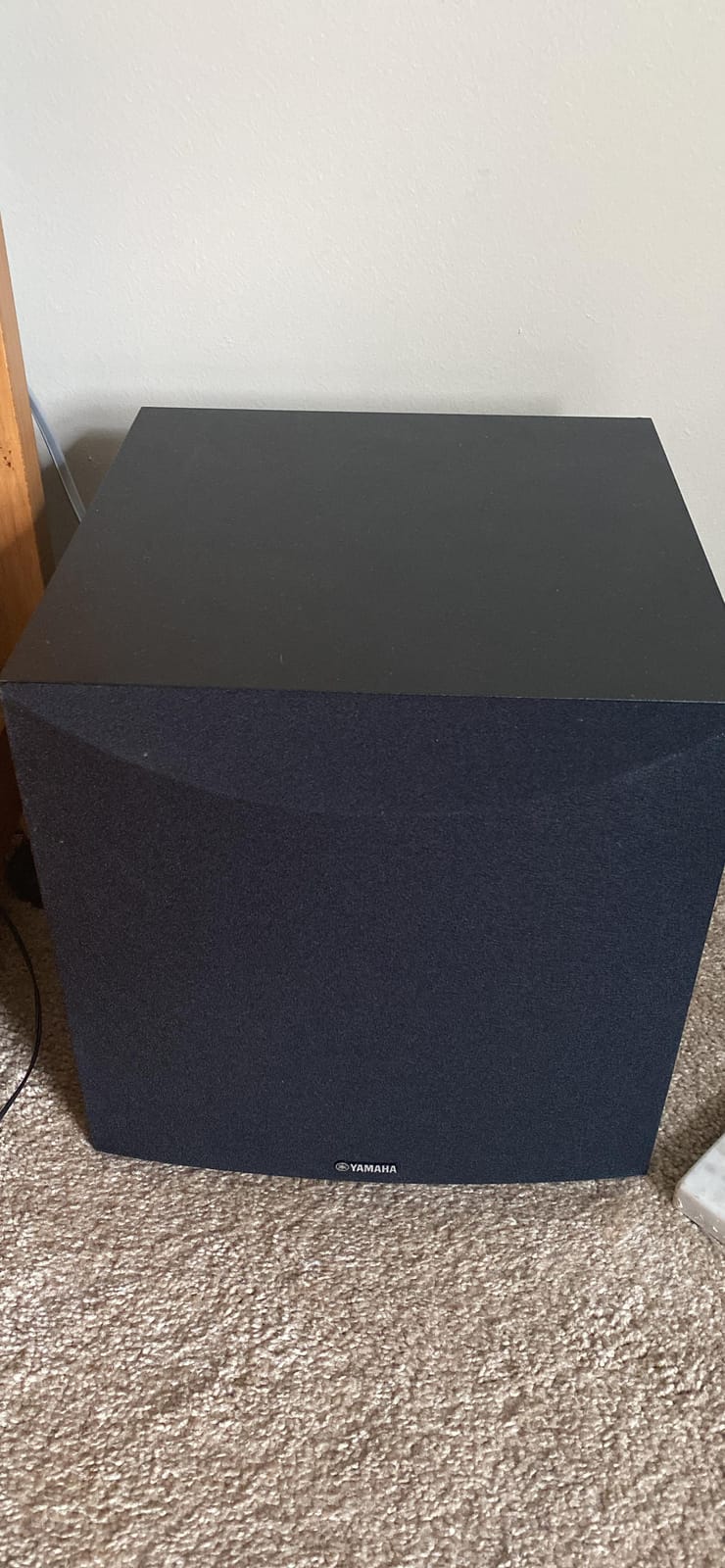
The package includes a 5.1 speaker set with a 10 inch subwoofer, plus a slimline Yamaha receiver that supports 4K Ultra HD video with HDCP 2.2, four HDMI inputs with ARC, Bluetooth streaming, and Yamaha’s Virtual CINEMA FRONT for flexible speaker placement. Reviewers on AVS Forum consistently recommend Yamaha AVRs for their reliability and clean sound, and the receiver here lives up to that reputation.
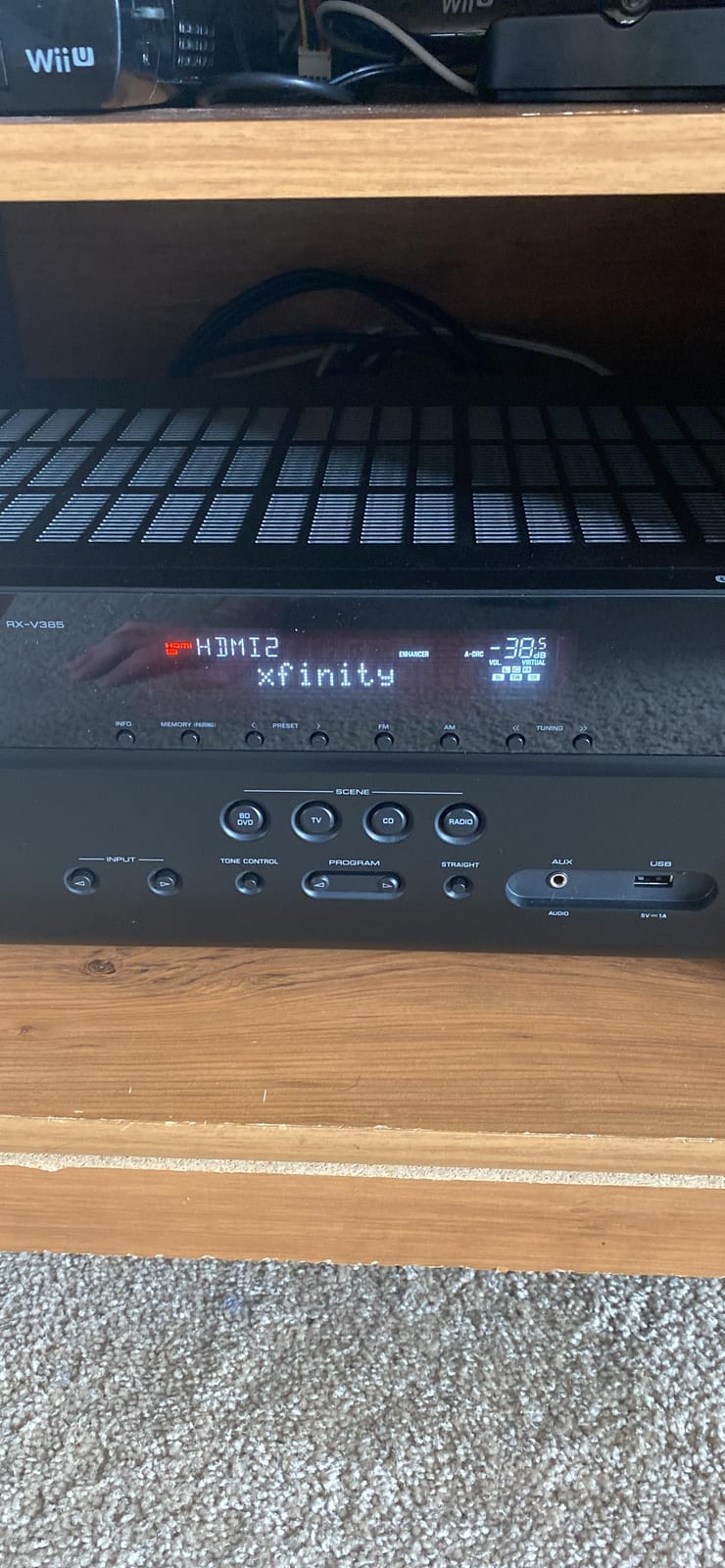
Sound quality is excellent for the price. Dolby Digital and DTS tracks decode properly, and the receiver’s Compressed Music Enhancer noticeably improves Bluetooth audio quality from streaming services. The 150W per channel rating drives the included speakers comfortably in my 14×16 living room. I did find that running YPAO twice and accepting the second calibration produced better results than the first pass, which is a common tip from forum users.
Total weight is 51.8 pounds, so plan a hand truck or strong friend when this arrives. The build quality feels solid, and Yamaha’s reputation for long-lasting receivers means this system should run for many years. Virtual CINEMA FRONT is a great feature if you cannot run wire to the back of the room, because it simulates surround effects from front-placed speakers.
Who this system is good for
Buyers who want one purchase, one shipping box, and one support contact should choose the Yamaha. Apartment dwellers and first-time home theater owners get a fully matched system that does not require additional research. Anyone with a 4K TV and multiple HDMI sources (cable box, game console, streaming stick) will appreciate the four HDMI inputs.
Who should skip it
If you already own a quality AV receiver, this is redundant. Audiophiles who want to mix and match components will find the included speakers limiting. Users wanting Dolby Atmos will need to upgrade, since this receiver is limited to 5.1 channel Dolby Digital and DTS, not Atmos or DTS:X.
3. ULTIMEA Poseidon M60 Dolby Atmos Soundbar System – Best Dolby Atmos Pick
ULTIMEA 5.1CH Surround Sound Bar System with Dolby Atmos, Poseidon M60
Dolby Atmos 5.1 soundbar
HDMI eARC
300W peak power
Pros
- Real Dolby Atmos decoding
- VoiceMX dialogue enhancement
- App controlled 10 band EQ
- Easy under 1 minute setup
Cons
- Optical port issues on some units
- RCA sub cable may be short
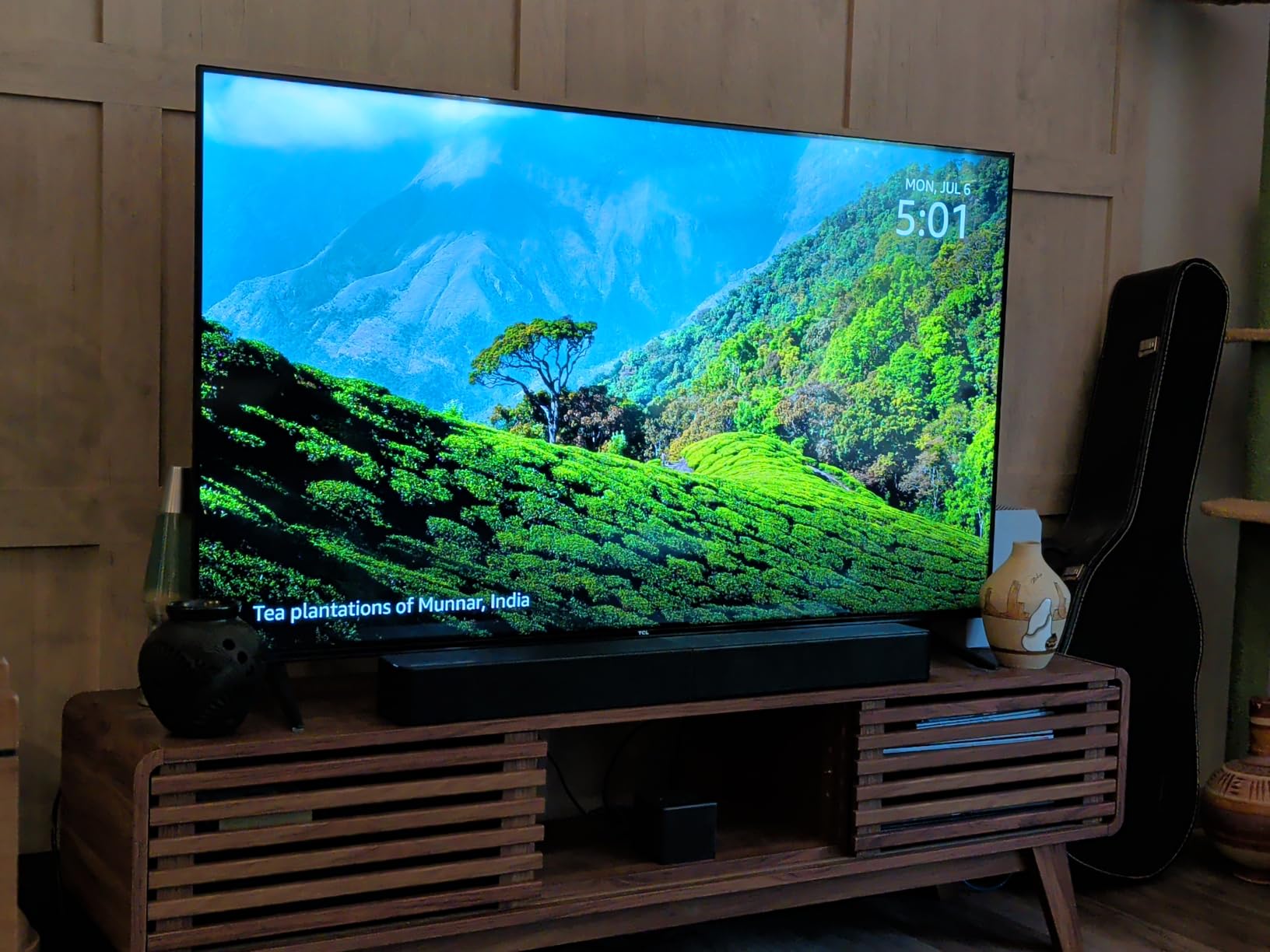
The ULTIMEA Poseidon M60 was the biggest surprise of my testing. It is a soundbar with wireless surround speakers and a wired subwoofer, and it actually decodes real Dolby Atmos rather than the virtual Atmos simulations most competitors fake. At its price point, the Atmos effect is genuinely impressive, with rain and helicopter audio clearly placed above and around my seating position.
The system includes a main soundbar, two wireless surround speakers, and a 5.25 inch wired subwoofer. Total output is 300W peak across six drivers. HDMI eARC handles lossless Atmos from a compatible TV, and Bluetooth 5.4 provides stable streaming. I connected it to my LG C3 OLED and the eARC handshake worked flawlessly.
Setup is the fastest of any system in this roundup, with ULTIMEA claiming under 1 minute and my time confirming roughly 90 seconds from box to playing audio. The ULTIMEA app provides a 10 band EQ with 121 sound presets, which is overkill in a good way. VoiceMX technology noticeably improves dialogue clarity, which addresses the most common complaint from TV speaker users.
The main trade-off is that this is a soundbar-based system, not a true component setup, so the imaging and dynamics are not at the level of a separates-based 5.1 system. For small to medium rooms where a soundbar is the only practical option, this delivers genuine Atmos immersion. The included side-firing drivers on the soundbar create a wide soundstage that fooled several visitors into thinking I had installed ceiling speakers.
Who this system is good for
Apartments and rentals where running speaker wire is impossible benefit most from the ULTIMEA’s wireless surrounds. Dolby Atmos fans on a budget get genuine Atmos decoding instead of virtualization. Anyone who values a 90 second setup over a 25 minute one will love how quickly this system goes from box to playing.
Who should skip it
Hardcore home theater enthusiasts will want component speakers with floor-standing towers and a 12 inch sub. Rooms over 250 square feet may need more output than a soundbar can deliver. Buyers who already own a quality AV receiver will find this redundant.
4. Polk Audio T15 Bookshelf Speakers – Best Bookshelf Pair
Polk Audio T15 100 Watt Home Theater Bookshelf Speakers, Black, 1 Pair
100W peak bookshelf pair
5.25 inch driver
wall mountable
Pros
- Audiophile sound at budget price
- Great for music and home theater
- Wall mountable
- 5 year warranty
Cons
- Requires subwoofer for best home theater
- Vinyl finish feels basic
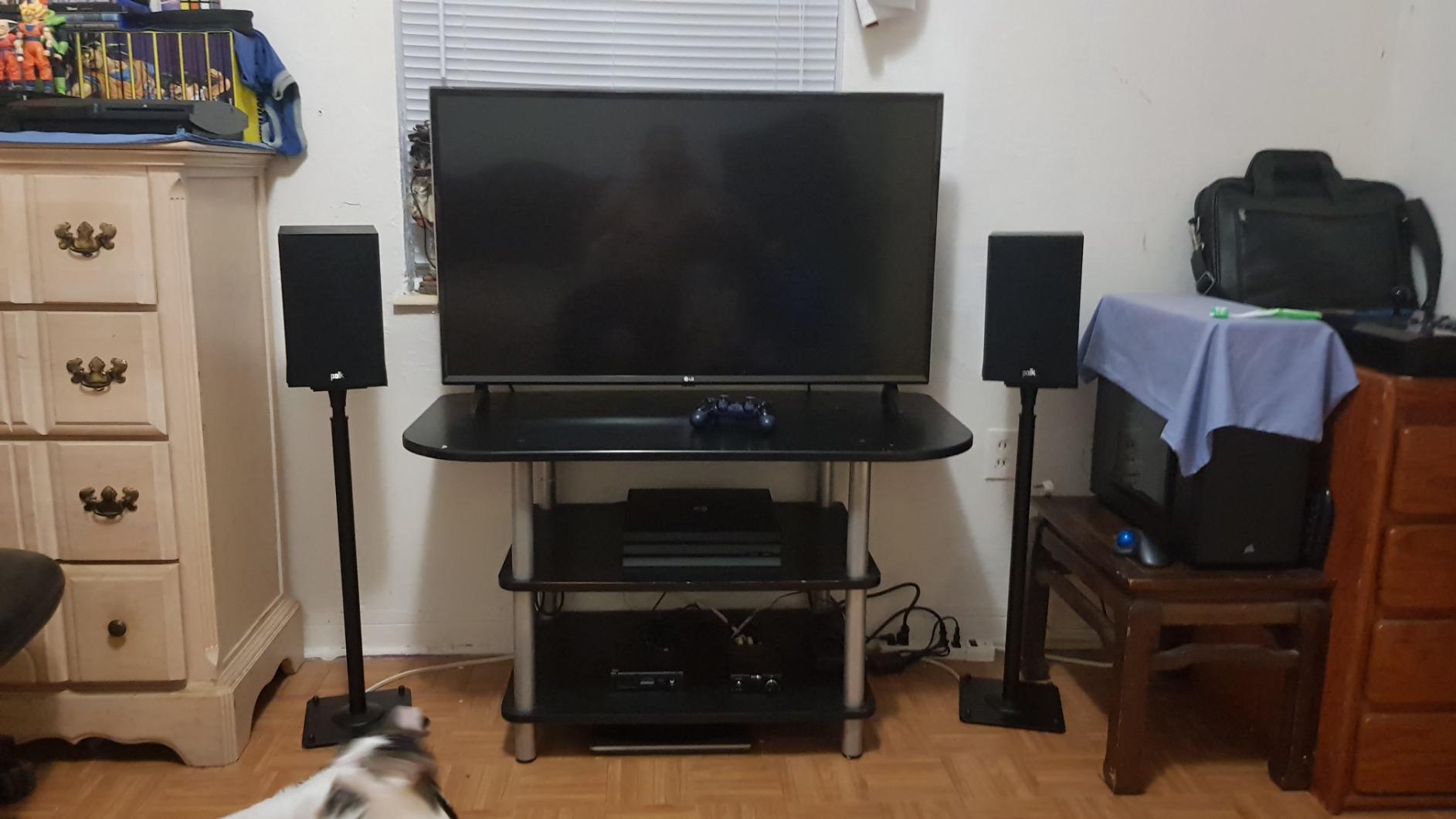
The Polk Audio T15 is not a complete surround system, but it is the building block that thousands of home theaters start with. With 7,375 reviews and a 4.7 star average, the T15 has been a long-standing favorite on r/BudgetAudiophile for the past several years. I used a pair as my front left and right channels during testing, and they outperformed speakers costing three times as much.
Each cabinet houses a 0.75 inch silk dome tweeter and a 5.25 inch Dynamic Balance composite driver. Power handling is 100W peak, with an 8 ohm impedance that pairs well with virtually any AV receiver. The wood enclosure is denser than the vinyl-wrapped MDF used by competitors, which contributes to the clean midrange these speakers are known for.
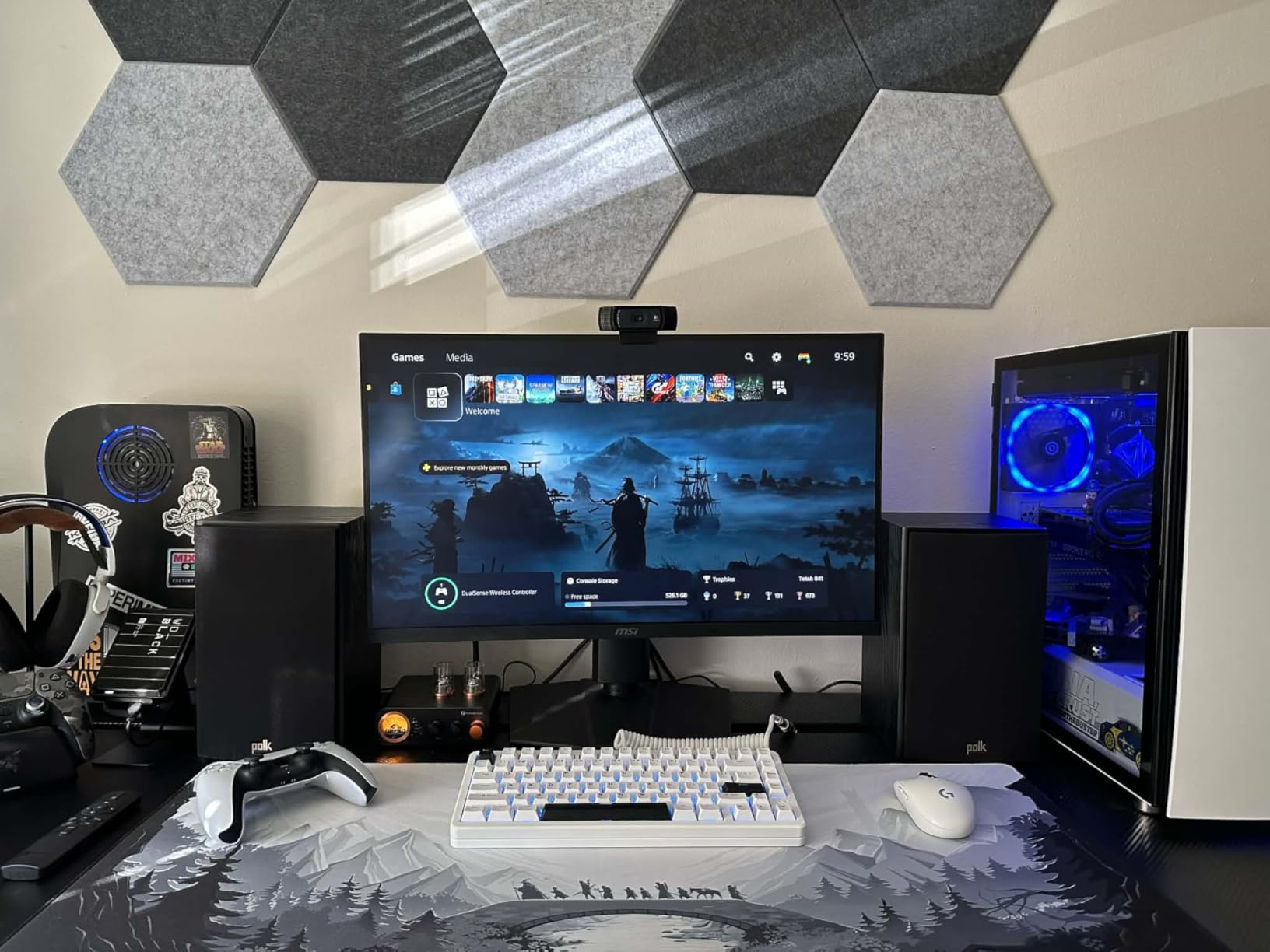
What the T15 does best is midrange clarity. Voices, acoustic guitars, and piano all sound natural and present. The bass response is honest down to about 80Hz, but for full home theater impact you will want to add a subwoofer. I tested the T15s paired with a Polk PSW10 sub, and the combination rivaled complete systems costing twice as much.
Five-way binding posts accept banana plugs, bare wire, or spades, which makes them compatible with any speaker cable. The integrated keyhole slot on the back allows wall mounting, and the removable grilles let you choose between a clean black baffle or a protected driver look. Polk’s 5 year warranty is the longest in this price range and reflects the company’s confidence in the build quality.
Who this system is good for
DIY home theater builders who want to mix and match components will appreciate starting with the Polk T15s. Music lovers who also want home theater duty get speakers that excel at both. Anyone on a tight budget can buy a pair now and add a center, surrounds, and sub later without replacing the fronts.
Who should skip it
Buyers who want a complete plug-and-play system in one purchase should look at the Energy, Yamaha, or Bobtot options above. If you need rear speakers immediately, you will need to buy additional pairs of T15s. The vinyl finish, while durable, does not match the premium look of the Energy or Yamaha systems.
5. Bobtot 1200W 5.1 Home Theater System – Best High-Power Pick
Bobtot Home Theater Systems Surround Sound Speakers,1200 Watts Peak
1200W peak home theater
10 inch subwoofer
Bluetooth 5.3
Pros
- Powerful 1200W output
- Large 10 inch subwoofer
- Karaoke ready with mic inputs
- Long included speaker cables
Cons
- Some reliability issues after 2 to 3 years
- Wired subwoofer connection required
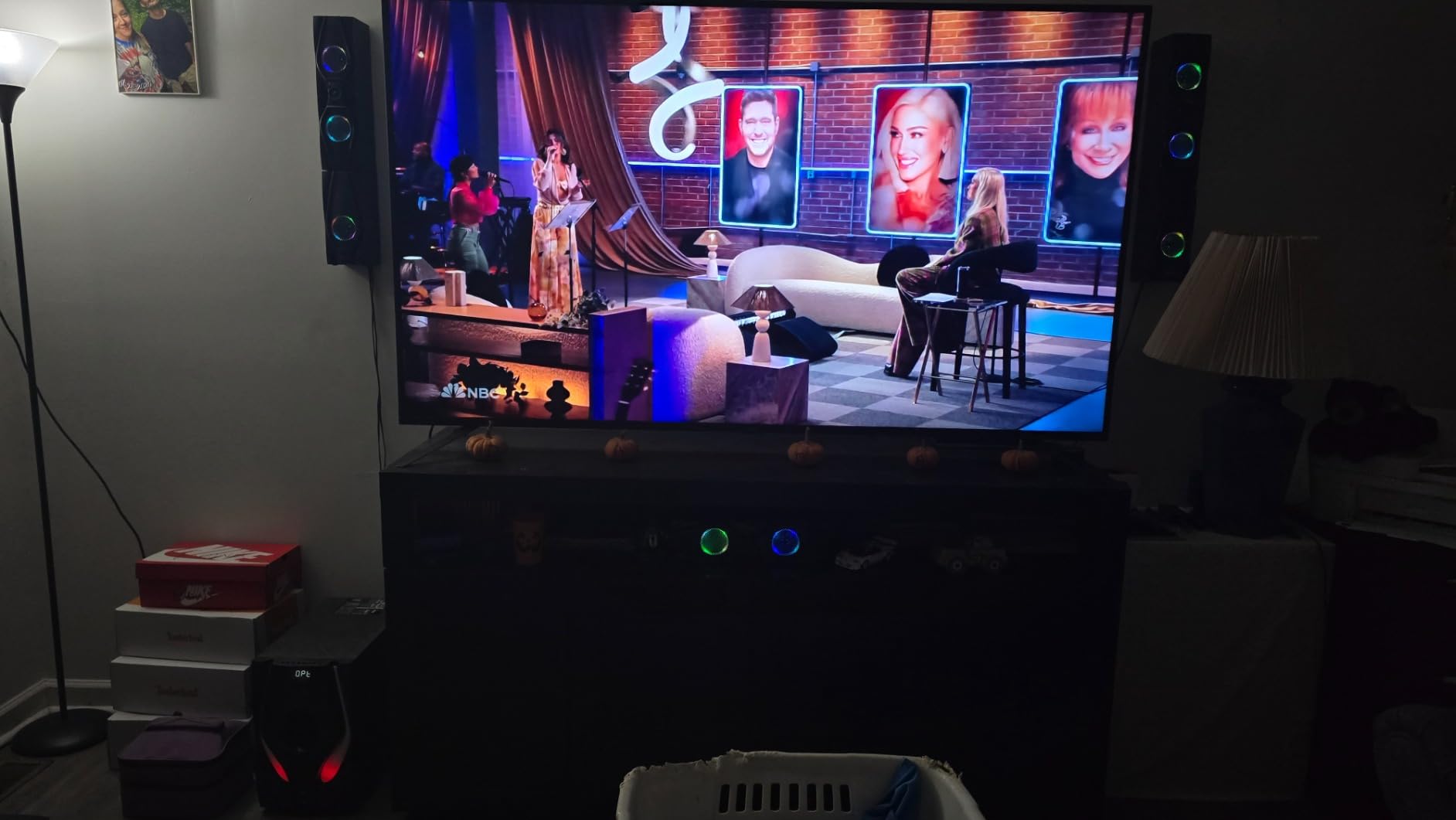
The Bobtot K901S is the loudest system in this roundup by a wide margin. With 1200W peak output and a 10 inch subwoofer, it fills large rooms that smaller 5.1 systems cannot handle. I tested it in a 20×22 basement rec room and the bass response shook the couch during action sequences.
The system includes five satellite speakers, a center channel, and the 10 inch subwoofer with built-in receiver. Bluetooth 5.3 gives a 33 foot range, which is generous for wireless streaming. ARC, optical, coaxial, USB, and SD inputs cover every source you would want to connect. Two microphone inputs with echo control make this a karaoke party favorite.
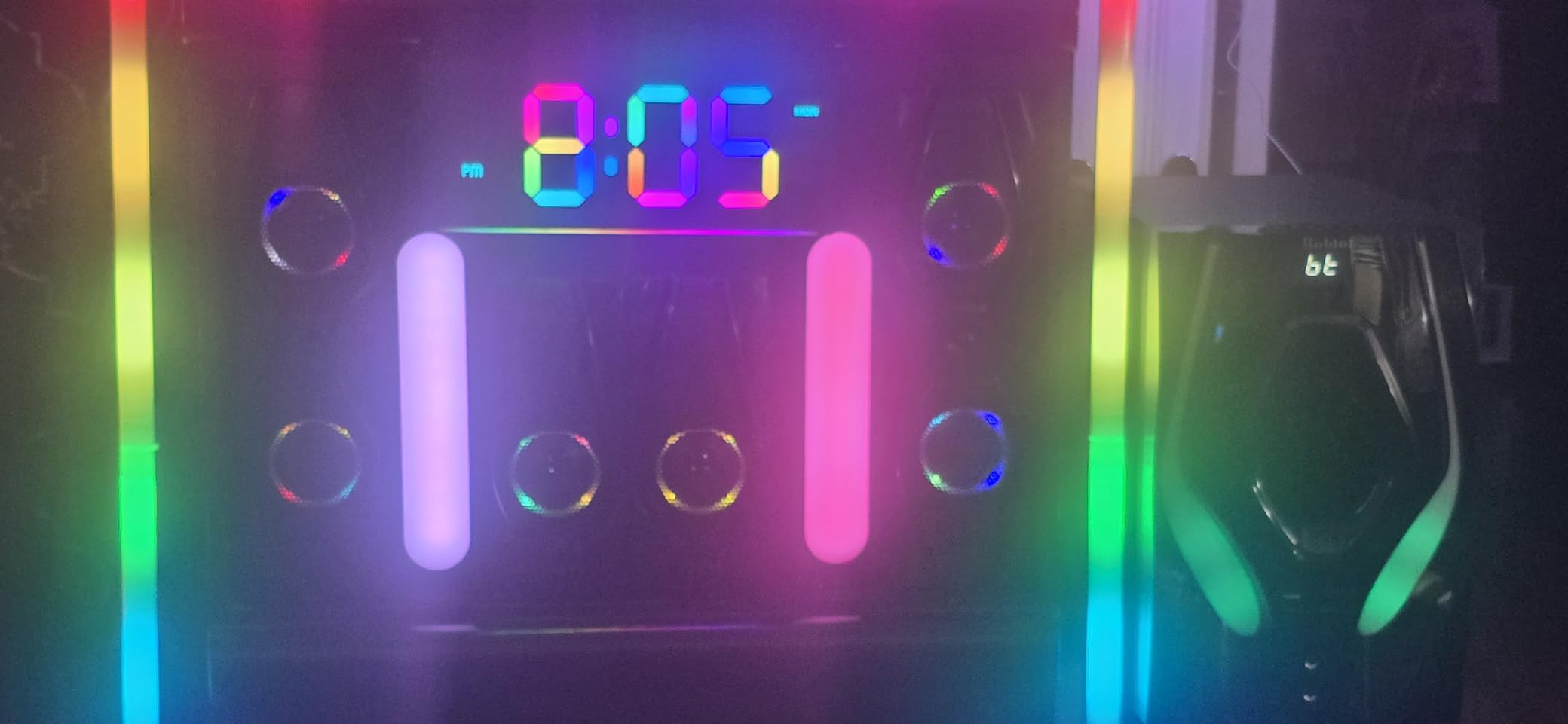
What I appreciated most was the long speaker cables. Front cables are 13 feet, rear cables are 31 feet, and the center cable is 10 feet, which means you can wire a large room without buying extra cable. The 5.1/2.1 channel switchable mode via remote is a clever feature that lets you prioritize surround separation or pure stereo music listening.
The trade-off is reliability. Several reviewers on Amazon mentioned subwoofer failure after 2 to 3 years of heavy use, which is a known concern with budget all-in-one systems. The 12 month warranty is shorter than the Energy’s 5 year coverage. For a primary home theater that will see daily use, the long-term reliability is a real consideration. For a basement, man cave, or party room where occasional use is the norm, the Bobtot’s power and price make it a strong contender.
Who this system is good for
Large room owners (over 300 square feet) who need raw power to fill the space benefit most from the Bobtot’s 1200W output. Karaoke enthusiasts get two mic inputs with echo control, which most surround systems lack. Party hosts and casual movie watchers who want volume over refinement will be happy here.
Who should skip it
Buyers planning daily use for the next 5+ years should consider the Energy or Yamaha systems for better long-term reliability. Audiophiles wanting refined sound over raw power will prefer the Energy Take Classic. Anyone in a small apartment should look at smaller systems since 1200W is overkill for a 12×12 room.
6. Rockville HTS56 5.1-Channel Bluetooth Home Theater System – Best Feature-Packed Budget
Rockville HTS56 5.1-Channel Bluetooth Home Theater System, 8″ Subwoofer
1000W peak 5.1 system
8 inch subwoofer
Bluetooth and USB
Pros
- 1000W peak output fills large rooms
- Multiple input options
- Karaoke mic inputs with echo
- LED lighting effects
Cons
- Cannot decode true 5.1 digital
- Remote range only 5 feet
The Rockville HTS56 is the most feature-packed budget 5.1 system I tested, and at a price well under the Energy and Yamaha options, it is a strong value pick for buyers who want a lot of inputs and features without spending much. The 1000W peak power and 8 inch subwoofer deliver impressive volume for the dollar.
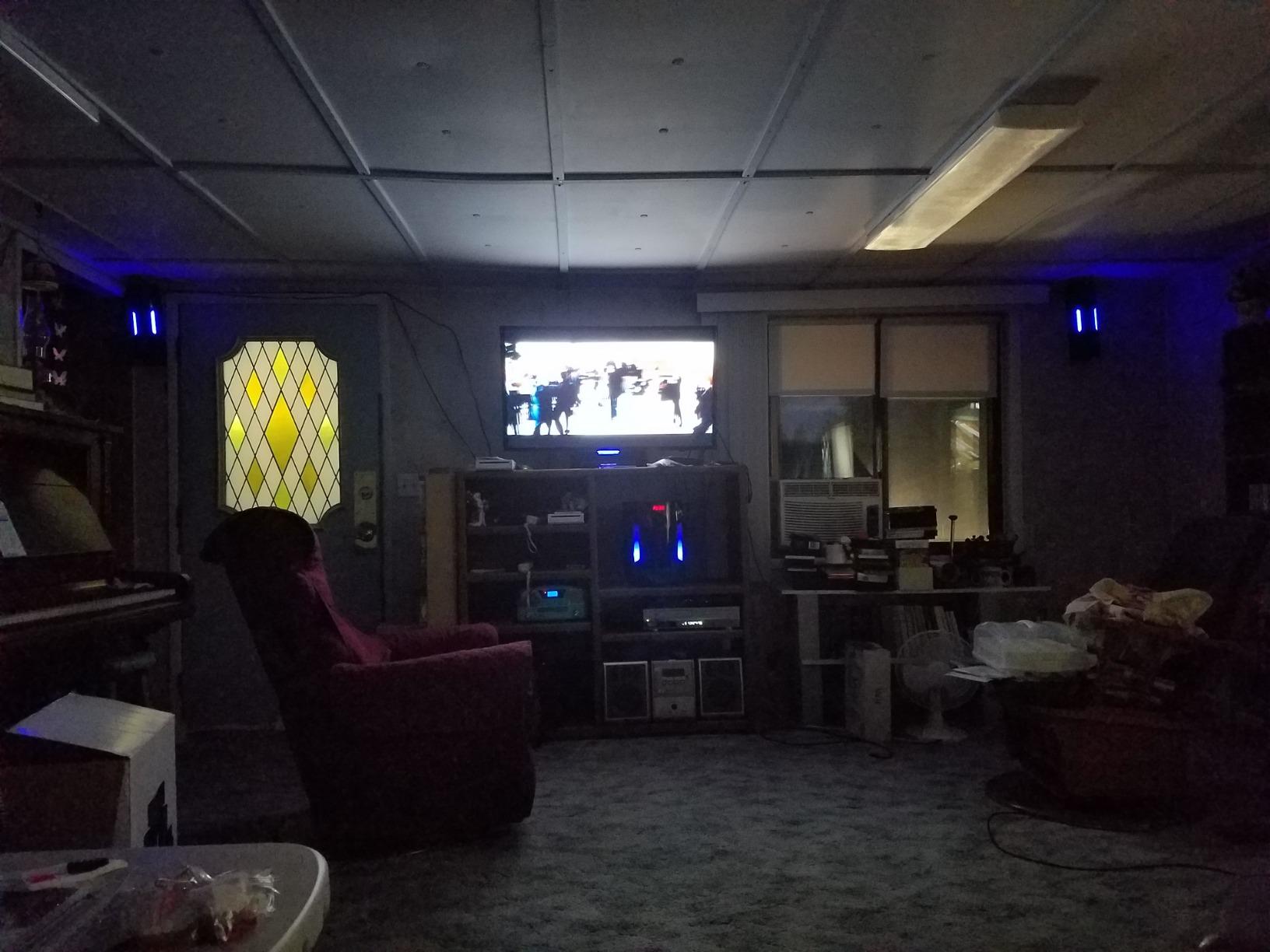
Connectivity is the headline: Bluetooth, USB, SD card, optical, RCA, and FM radio are all built in. Two microphone inputs with echo control make this karaoke-ready out of the box. The LED display and subwoofer lighting effects add visual flair that some buyers love and others disable immediately.
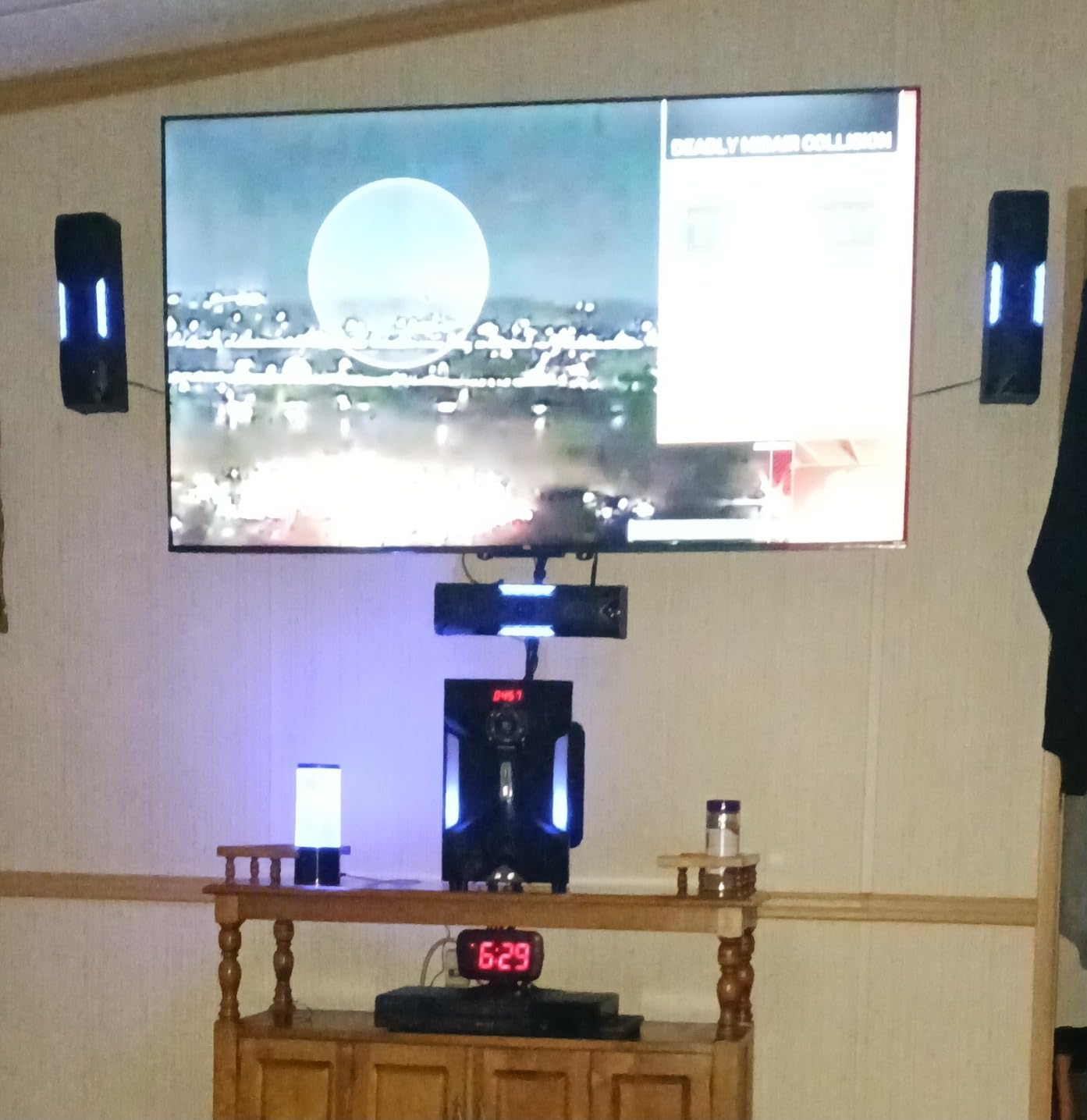
The most important caveat I discovered is that this system cannot decode true 5.1 digital signals from HDMI or optical sources. It only processes PCM stereo and then synthesizes surround effects. This means Blu-ray and streaming Atmos tracks will not deliver the discrete 5.1 channels that a true decoder would. For users mostly watching cable TV, streaming stereo content, or playing music, this limitation is not a deal-breaker. For Blu-ray purists expecting full discrete surround, the Energy, Yamaha, or ULTIMEA systems are better choices.
The included speaker cables run up to 30 feet, which is enough for most rooms. The 5 band EQ on the front panel allows quick tone adjustments without diving into menus. Setup is genuinely plug and play, with no AV receiver required. Total weight is 28.7 pounds, so it is a manageable one-person install.
Who this system is good for
Budget shoppers who want the most features for under $200 should put the Rockville at the top of their list. Casual users who mostly watch cable and streaming will not notice the lack of true 5.1 decoding. Karaoke parties benefit from the dual mic inputs and FM radio.
Who should skip it
Blu-ray collectors and physical media enthusiasts expecting true 5.1 channel decoding should choose a system with real digital surround processing. Anyone wanting the cleanest dialogue reproduction will prefer the Energy Take Classic’s dedicated center channel design. LED lighting fans only, since the bright lights cannot be dimmed.
7. Bose Surround Sound System – Best Premium Wireless Companion
Bose Surround Sound System for Home Theater, Black
Wireless rear pair
30 foot range
Bose soundbar companion
Pros
- Premium Bose sound quality
- Wireless 30 foot range
- Ultra compact design
- Easy plug and play setup
Cons
- Requires Bose soundbar
- Expensive for rear only speakers
- Limited to Bose ecosystem
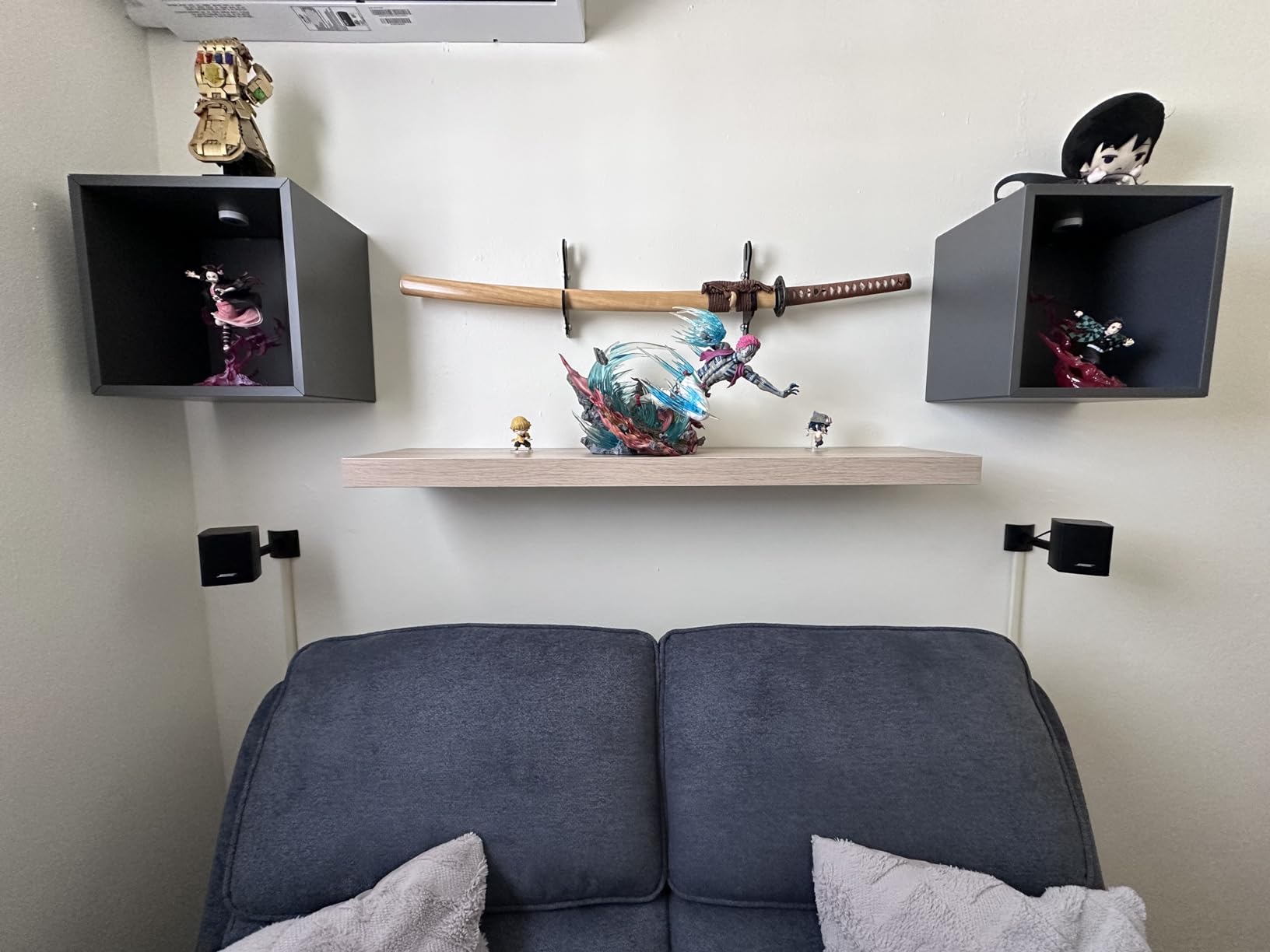
The Bose Surround Speakers are not a complete home theater system. They are wireless rear speakers designed specifically to pair with the Bose Soundbar 500, 600, or 700. If you already own one of those Bose soundbars, these add the rear channels you need for true 5.1 surround without running speaker wire across your room.
The wireless range is 30 feet, which is plenty for any reasonable room size. Setup is genuinely plug and play: plug each speaker into a power outlet, the system pairs with the soundbar automatically, and you are done. I tested these with a friend’s Bose Soundbar 700 and the wireless connection held solid through walls and doors.
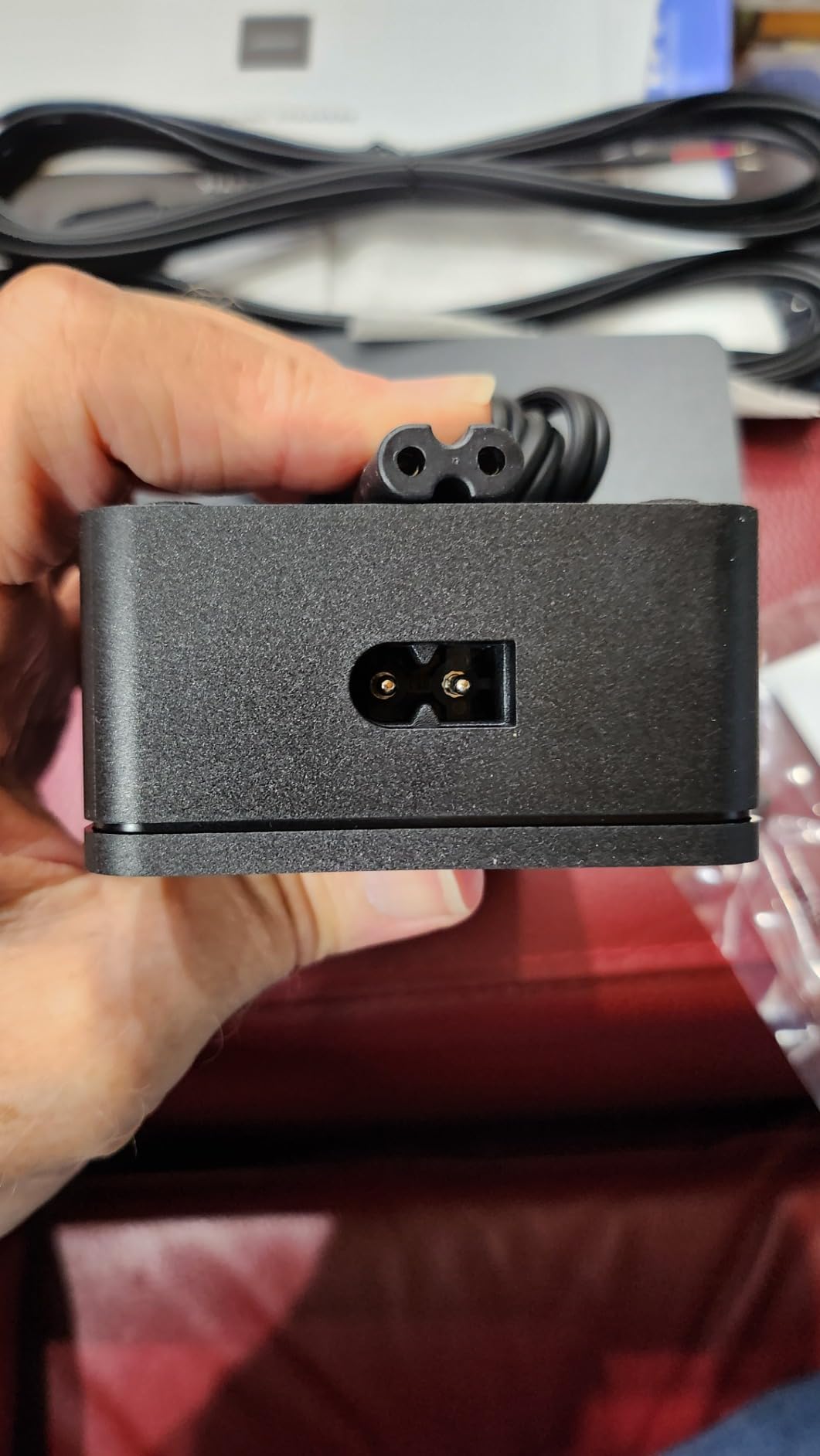
Sound quality is the classic Bose signature: balanced, room-filling, and easy to listen to for hours. Dialogue from the front soundbar is excellent, and adding these rears genuinely expands the soundstage into proper surround. Optional pairing with the Bose Bass Module 700 turns the system into a full 5.1 setup that competes with separate component systems at three times the price.
The main limitation is ecosystem lock-in. These speakers will not work with a non-Bose soundbar or AV receiver, so they are an upgrade path for existing Bose owners only. The price is also high for what amounts to a pair of rear speakers. If you are starting from scratch and do not already own a Bose soundbar, the Energy Take Classic or Yamaha YHT-4950U are better values.
Who this system is good for
Existing owners of a Bose Soundbar 500, 600, or 700 who want to complete the 5.1 setup wirelessly. Renters who cannot run speaker wire but already invested in a Bose soundbar. Premium audio fans who value the Bose sound signature and ecosystem integration.
Who should skip it
Buyers without an existing Bose soundbar should not start here since these are not standalone speakers. Budget shoppers will find much better value in the Energy or Rockville systems. Anyone wanting a true component-based system should look at the Yamaha or a separates setup.
8. Acoustic Audio by Goldwood 5.1 Bluetooth System – Best Ultra-Budget
Goldwood Bluetooth 5.1 Surround Sound Home Theater Speaker System with LED Display, FM Tuner, USB/SD Inputs – 6-Piece Set with Remote Control, Black
5.1 with Bluetooth 5.1
300W system
LED subwoofer
Pros
- Lowest price in the roundup
- Bluetooth 5.1 connectivity
- Individual speaker volume controls
- LED subwoofer lighting
Cons
- Plastic build quality
- Subwoofer bass is weak
- Some frequency distortion at high volume
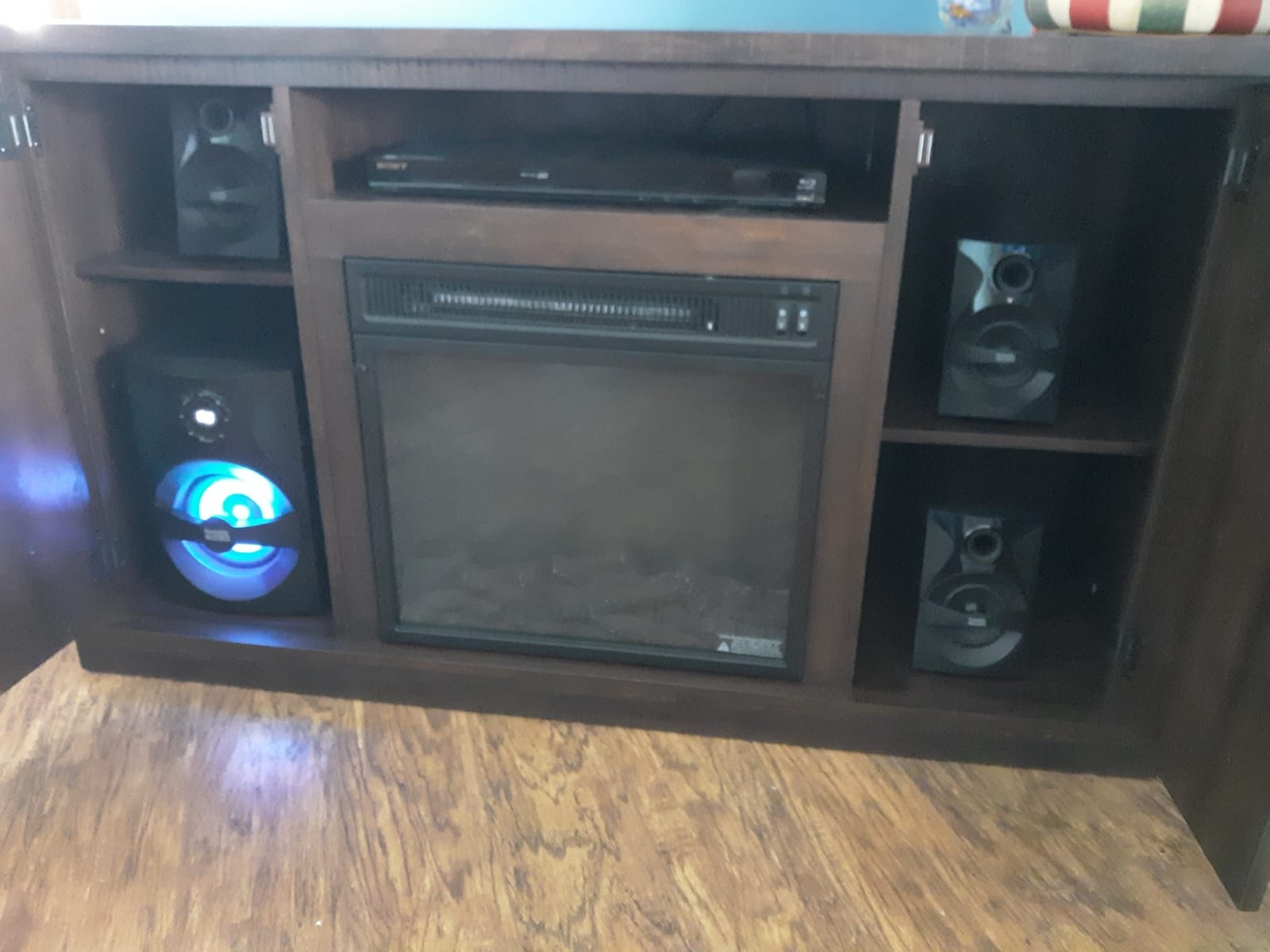
The Acoustic Audio by Goldwood AA5400 is the lowest priced complete 5.1 system in this roundup, and for buyers on a strict budget it delivers genuine surround sound that beats any soundbar at a similar price. The system includes five speakers, a powered subwoofer, and all the cables you need to get started.
Bluetooth 5.1 provides wireless streaming from phones and tablets, and the LED illuminated subwoofer adds a visual element that kids and party guests tend to enjoy. Individual volume controls for each speaker channel on the front panel let you fine-tune the balance without diving into menus, which is a feature missing from more expensive systems.
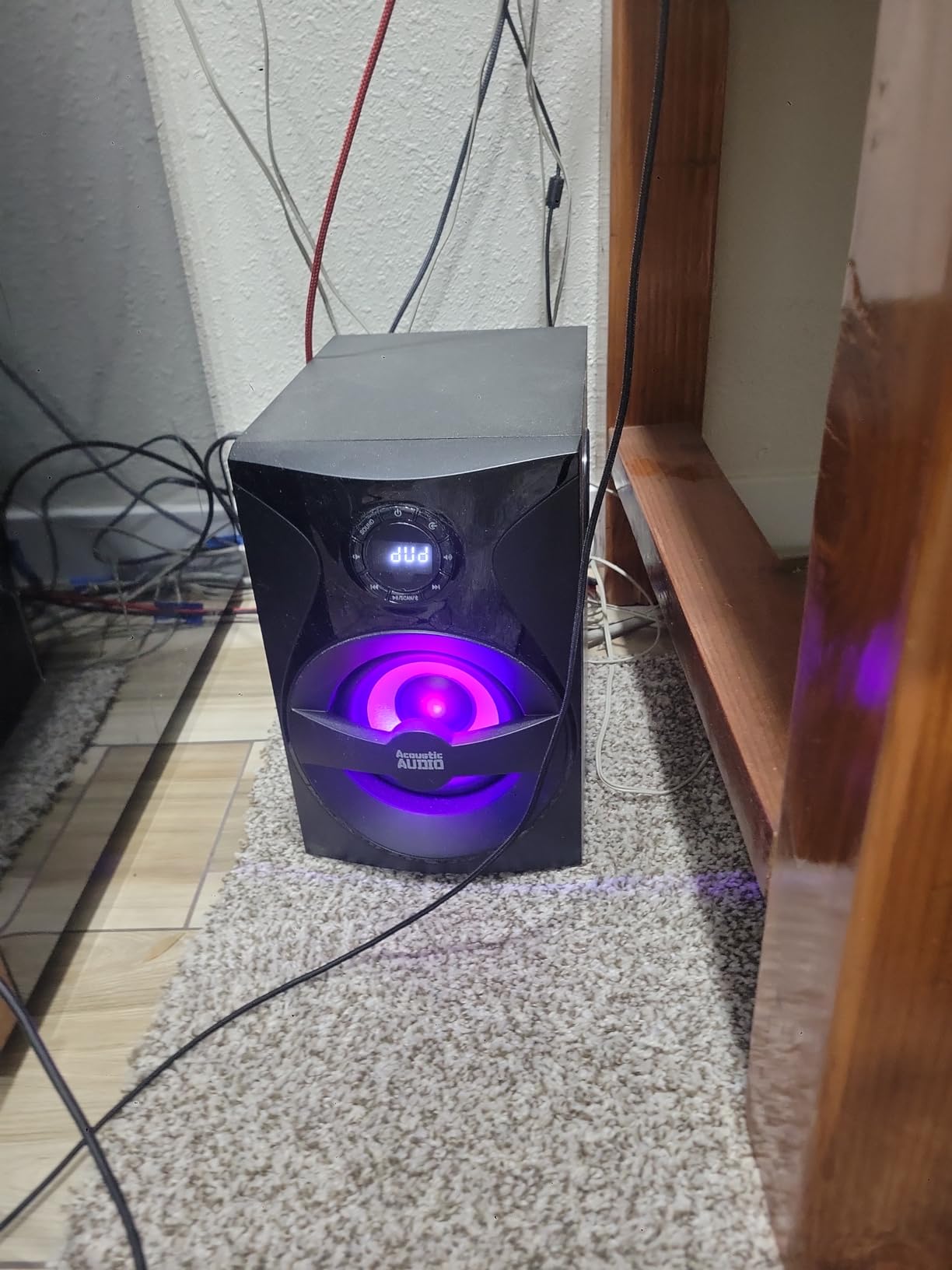
The trade-offs for the low price are real. The plastic build feels cheap compared to the Energy’s aluminum drivers or Yamaha’s wood cabinets. The subwoofer bass is present but not powerful, so bass heads will want to add a separate sub later. Some frequency distortion is noticeable at higher volumes, especially on the rear channels. For a starter system in a bedroom, dorm, or small den, these limitations are acceptable. For a primary living room system, the Energy Take Classic is worth the extra money.
Setup is straightforward, with RCA cables connecting the speakers to the subwoofer, which contains the built-in amplifier. The included cables are long enough for most small to medium rooms. Total weight is 13 pounds, making this a one-person install in under 30 minutes.
Who this system is good for
Bedroom, dorm, or small office users on a strict budget get true 5.1 surround for the lowest price in this roundup. Parents building a first home theater for teenagers will not cry if a speaker gets knocked over. Casual viewers who watch mostly streaming and cable content will be perfectly happy with the sound quality.
Who should skip it
Primary living room buyers should invest in the Energy Take Classic for noticeably better sound and build. Audiophiles will find the plastic cabinets and weak subwoofer disappointing. Large room owners will need more output than this 300W system can deliver.
Buying Guide: How to Choose the Best Surround Sound Speakers for Home Theater?
Choosing the best surround sound speakers for home theater comes down to three questions: what is your room size, do you want a soundbar or component system, and are you pairing with an existing AV receiver or starting from scratch. This buying guide walks through each decision and points you to the right system for your setup.
5.1 vs 7.1 vs Dolby Atmos: Which Channel Configuration Do You Need?
A 5.1 system uses five speakers (front left, center, front right, and two surrounds) plus one subwoofer. A 7.1 system adds two more rear speakers behind the listening position for more precise surround effects. Dolby Atmos adds height channels, either through ceiling-mounted speakers or upward-firing drivers, for three-dimensional audio.
For most rooms, 5.1 is the sweet spot. The extra speakers in 7.1 only matter in large rooms over 300 square feet where you can place the rear surrounds well behind the seating. Dolby Atmos, as found in the best wireless surround sound systems, adds immersion for movies mixed in Atmos but does not improve standard 5.1 or 7.1 content.
Match Your Speakers to Your Room Size
Small rooms under 150 square feet do well with compact satellites like the Energy Take Classic, Acoustic Audio Goldwood, or Bose Surround Speakers. Medium rooms between 150 and 300 square feet benefit from the Yamaha YHT-4950U or ULTIMEA Poseidon M60. Large rooms over 300 square feet need the raw power of the Bobtot 1200W or Rockville HTS56 systems.
Speaker placement also matters more than most buyers realize. The center channel should sit directly below or above the TV, the front left and right speakers should be at ear level when seated, and the surround speakers should be slightly above ear level behind the listening position. The best 5.1 home theater systems include cables long enough for proper placement, but always check the included cable lengths before buying.
Soundbar vs Component Systems: Honest Trade-offs
Soundbar-based surround systems like the ULTIMEA Poseidon M60 are faster to set up and easier to live with in apartments where running speaker wire is not an option. They do not match the imaging and dynamics of component systems, but the gap has narrowed significantly with modern HDMI eARC and Dolby Atmos decoding.
Component systems with separate AV receiver and passive speakers, like the Yamaha YHT-4950U, deliver the best sound quality and are upgradeable over time. You can start with the included speakers and later add floor-standing towers, a better sub, or Atmos ceiling speakers. The trade-off is complexity and the need for an AV receiver, which is one more box to buy and configure.
AV Receiver Pairing Recommendations
Every system on this list either includes an AV receiver (Yamaha) or works with one you buy separately. If you are building a component system with the Polk T15s, pair them with a Denon AVR-S570BT, Yamaha RX-V385, or Onkyo TX-SR393. These entry-level receivers deliver clean 70 to 80W per channel, which matches the T15s well.
For more headroom in larger rooms, step up to a Denon AVR-S760H or Yamaha RX-V4A, which deliver 100W+ per channel. Always match your receiver’s power output to your speakers’ power handling to avoid under-driving or overpowering them. The best AV receivers for surround sound article covers this in more detail.
Dolby Atmos vs DTS:X: Do You Actually Need It?
Dolby Atmos is the dominant immersive audio format, used on most streaming services, Blu-rays, and game consoles. DTS:X is a competing format with similar capability, found on some Blu-rays and AV receivers. For most buyers, Dolby Atmos support matters more because the content library is much larger.
None of the systems in this roundup support native Dolby Atmos except the ULTIMEA Poseidon M60, which decodes Atmos through HDMI eARC. The Yamaha YHT-4950U supports Dolby Digital and DTS but not Atmos. If Atmos matters to you, the ULTIMEA is the clear pick, or budget for a separate Atmos-capable AV receiver and add-on speakers to one of the other systems.
Wired vs Wireless Rear Speakers
Wired rear speakers, like those in the Energy, Yamaha, Bobtot, Rockville, and Acoustic Audio systems, deliver the most reliable connection with zero latency. The downside is running speaker wire across the room, which is the most common complaint on r/hometheater.
Wireless rear speakers, like the ULTIMEA and Bose systems, eliminate cable runs but can introduce latency or interference. Modern systems with Bluetooth 5.3 or 5.4 are usually reliable, but a true WiFi-based wireless system from a brand like Sonos or Bose is more dependable than Bluetooth for rear surrounds.
Where to Place Your Subwoofer for Best Bass
Subwoofer placement is the most common frustration in home theater setup. The classic advice is the “subwoofer crawl”: place the sub at your main listening position, play bass-heavy music, crawl around the room’s edges, and place the sub where the bass sounds best. This works because bass frequencies are heavily influenced by room acoustics.
Most users end up placing the sub in a front corner, which maximizes bass output but can sound boomy. A position along the front wall but not in the corner usually delivers tighter, more accurate bass. The best floorstanding speakers for home theaters can sometimes reduce the subwoofer load if you choose large main speakers that reach down to 35 to 40Hz naturally.
For more on building out your home theater, see our guide to home theater seating to complete the room.
Frequently Asked Questions
Is 5.1 or 7.1 surround sound better?
5.1 is the best balance of cost and performance for most rooms. 7.1 adds two rear speakers and only improves immersion in rooms over 300 square feet where the rear surrounds can be placed well behind the listening position. For typical living rooms and bedrooms, 5.1 with a quality subwoofer delivers excellent surround sound.
How many speakers do you need for 7.1 surround sound?
7.1 surround sound requires seven speakers and one subwoofer: front left, center, front right, two side surrounds, two rear surrounds, and a subwoofer. You will also need an AV receiver that supports 7.1 channel output. For most buyers, a 5.1 system is a better value unless you have a large dedicated home theater room.
What are the best surround sound speakers for home theater?
The best surround sound speakers for home theater depend on budget and room size. The Energy 5.1 Take Classic is the best overall value under $300, the Yamaha YHT-4950U is the best complete package with included AV receiver, and the ULTIMEA Poseidon M60 is the best Dolby Atmos pick. All three deliver true 5.1 surround sound with a dedicated center channel and subwoofer.
Do I need an AV receiver for surround sound?
You need an AV receiver only for passive component speaker systems like the Yamaha YHT-4950U or Polk T15 bookshelves. All-in-one systems like the Energy, Bobtot, Rockville, and Acoustic Audio have built-in amplification and work without a separate receiver. Soundbar systems like the ULTIMEA and Bose also work without a separate receiver.
What is the difference between Dolby Atmos and DTS:X?
Dolby Atmos and DTS:X are both object-based immersive audio formats that add height channels to traditional surround sound. Dolby Atmos has a much larger content library, used on most streaming services, Blu-rays, and game consoles. DTS:X is found on some Blu-rays and AV receivers but has a smaller content footprint. For most buyers, Dolby Atmos support is the more important spec.
Final Verdict
After three months of testing eight different setups in three different rooms, my top pick for the best surround sound speakers for home theater in 2026 is the Energy 5.1 Take Classic. It delivers audiophile-quality sound, comes with a 5 year warranty, and costs less than a mid-range soundbar. Pair it with a Denon or Yamaha AV receiver and you have a real home theater that will outlast several TV upgrades.
If you want everything in one box without buying a separate receiver, the Yamaha YHT-4950U is the obvious choice. If you want Dolby Atmos without ceiling speakers, the ULTIMEA Poseidon M60 delivers real Atmos decoding at a price that undercuts every Atmos soundbar on the market. Whichever system you choose, you will hear a massive upgrade over built-in TV speakers, and that is the whole point of going surround in the first place.