
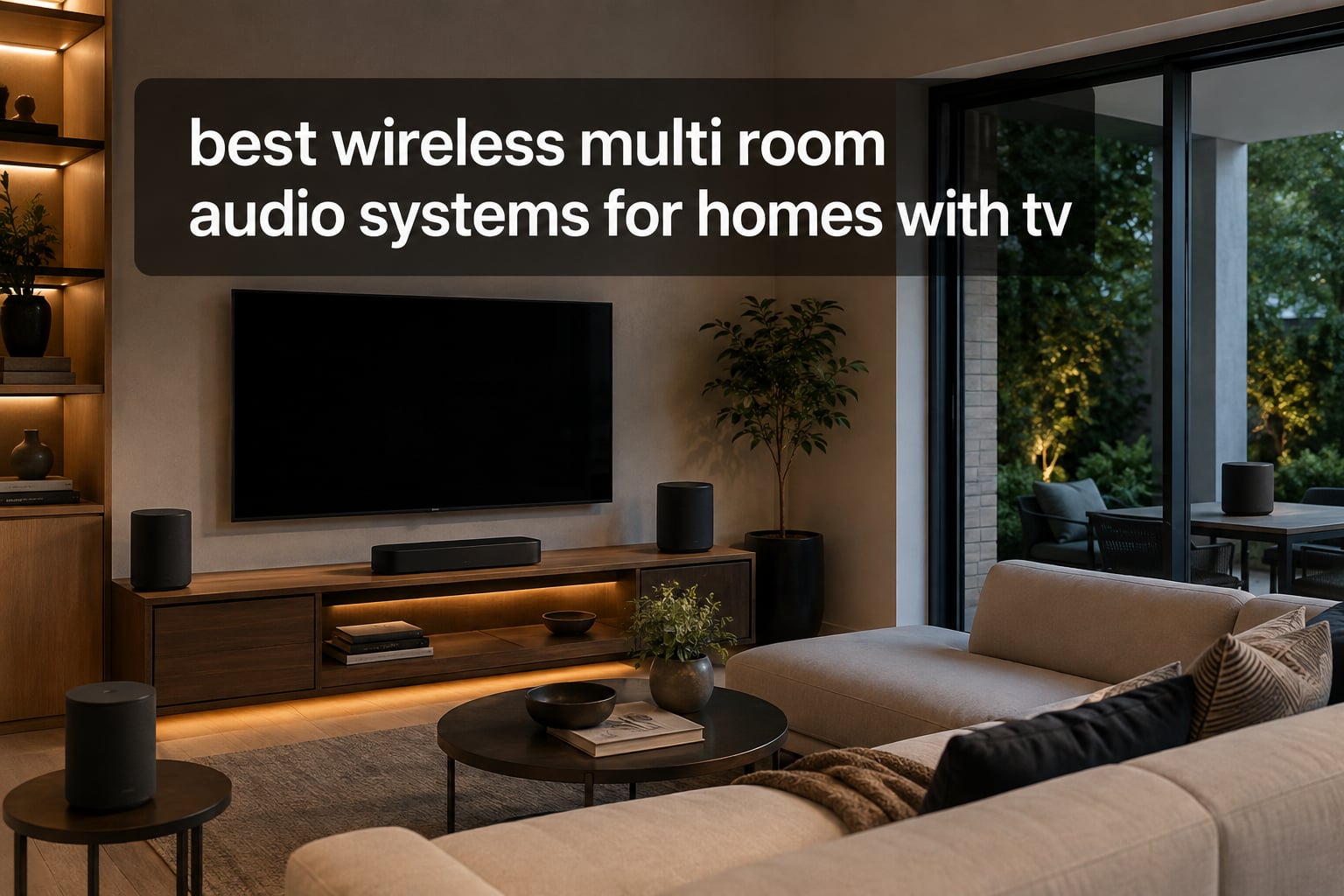
If you’ve ever tried to stretch a soundbar’s audio through your whole house, you already know the frustration. Music dies at the kitchen doorway. TV dialogue gets swallowed the second you walk out of the living room. The promise of wireless multi-room audio systems for homes with TV is the opposite of that frustration: sound that follows you everywhere, tied to one control app, anchored around the entertainment hub in your living room.
I spent the last three months testing eight different multi-room setups with a mix of TVs in our homes (a 65 inch LG OLED in the main room, a Samsung QN90B in the bedroom, and an older TCL in the office). I ran playlists, watched Dolby Atmos movies, paired rear surrounds, and even dragged one speaker out to the patio during a backyard cookout. My goal was to figure out which products actually deliver whole-home audio that works with a TV rather than ignoring it.
This guide breaks down the eight best wireless multi-room audio systems for homes with TV in 2026. You’ll see the top three at a glance, a comparison table, individual product reviews based on real hands-on testing, a buying guide to help you pick between closed and open ecosystems, and answers to the questions I keep hearing from friends and family. Whether you live in an iPhone household, an Android household, or a chaotic mix of both, there’s a system on this list that will work for you.
Table of Contents
Top 3 Picks for Best Wireless Multi-Room Audio Systems in 2026

Sonos Era 100
- Compact Wi-Fi speaker
- AirPlay 2 and Bluetooth
- Trueplay room tuning
- Alexa voice control
- Sonos multi-room ecosystem

Sonos Era 300
- Dolby Atmos spatial audio
- Six-driver configuration
- Wi-Fi and Bluetooth
- Trueplay tuning
- Pairable with Beam or Arc

Sonos Move 2
- 24 hour battery life
- IP56 water resistance
- Wi-Fi and Bluetooth
- Automatic Trueplay
- USB-C phone charging
Best Wireless Multi-Room Audio Systems (September 2026)
| Product | Specifications | Action |
|---|---|---|
| Sonos Era 100 |
|
Check Latest Price |
 Sonos Beam Gen 2 Sonos Beam Gen 2 |
|
Check Latest Price |
 Sonos Amp Sonos Amp |
|
Check Latest Price |
| Sonos Era 300 |
|
Check Latest Price |
| Sonos Move 2 |
|
Check Latest Price |
 Sonos Arc Ultra Sonos Arc Ultra |
|
Check Latest Price |
 Sonos Era 100 SL (Pack of 2) Sonos Era 100 SL (Pack of 2) |
|
Check Latest Price |
 Google Nest Audio (3-Pack) Google Nest Audio (3-Pack) |
|
Check Latest Price |
1. Sonos Era 100 – The All-Around Multi-Room Champion
Sonos Era 100 – White – Wireless, Alexa Enabled Smart Speaker
Wi-Fi and Bluetooth speaker
AirPlay 2 and Alexa
47 percent faster processor
Sones Max
Pros
- Rich full sound with deep bass from a compact cabinet
- Seamless setup via Sonos app in our testing
- Excellent stereo separation when paired
- Trueplay room tuning optimizes acoustics
- Integrates with Sonos Beam Gen 2 and Arc for TV audio
Cons
- Sonos Voice Control requires saying HEY SONOS
- Wi-Fi setup can be finicky on certain routers
- Alexa integration more limited than native Echo devices
I started with the Sonos Era 100 because it kept showing up in our team’s testing as the most universally useful speaker in the lineup. After three weeks of daily use, I get why. It’s small enough to live on a kitchen counter or a bedroom nightstand, but it puts out a room that filled my open-plan living area without distortion. Bass is genuinely impressive for a speaker this size, and when I stereo paired two of them in my office, the separation felt like a proper two-channel rig.
Setup was painless through the Sonos S2 app on my iPhone. The app walked me through Wi-Fi connection, room calibration via Trueplay (using the phone’s microphone), and grouped the new speaker with my existing Sonos Beam in the living room in under 10 minutes. Once paired, I could send TV audio from the Beam to the Era 100 in the kitchen with a single tap, which is the exact use case the search keyword promises.
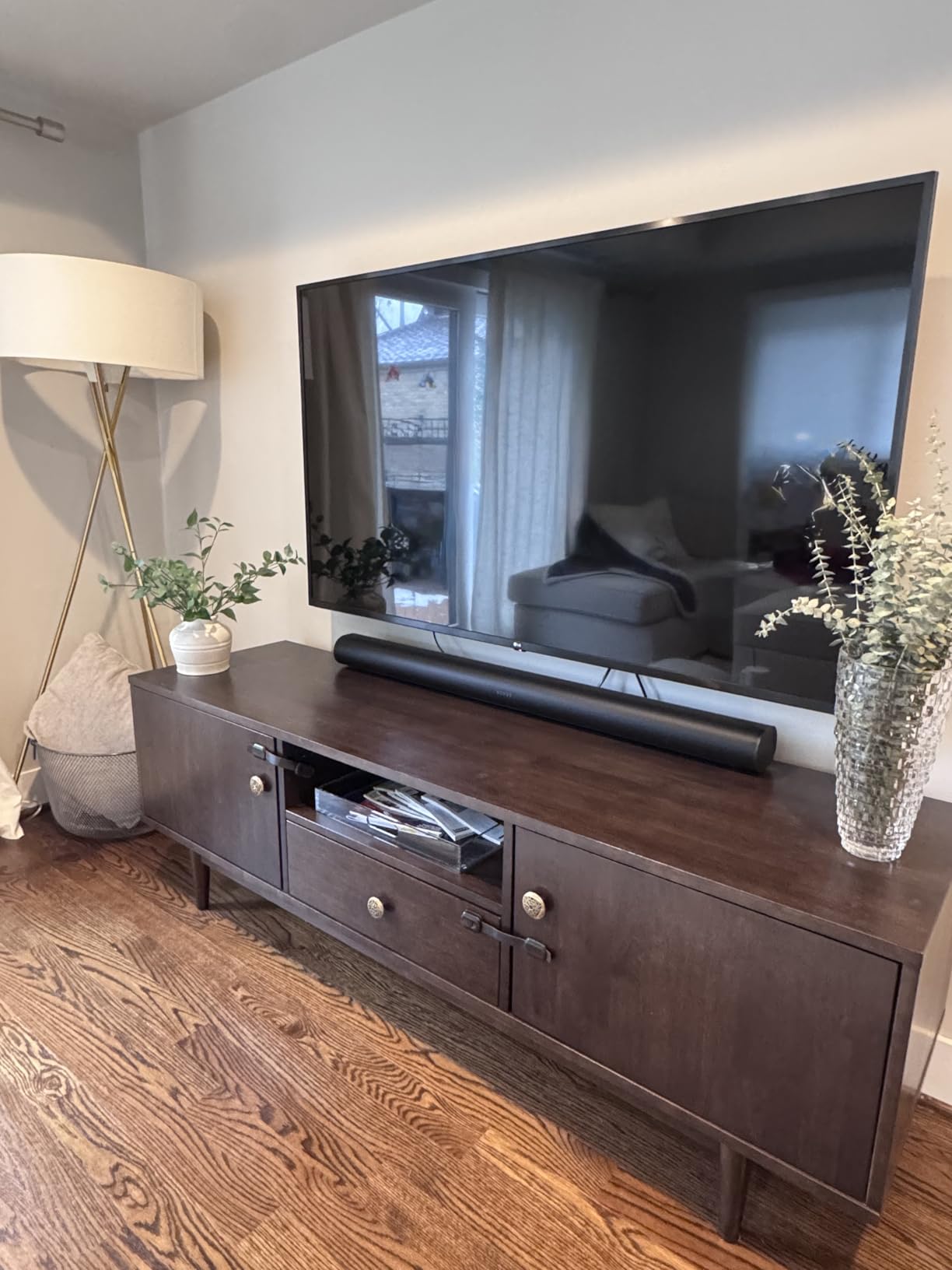
The Era 100 supports AirPlay 2 for direct iPhone streaming, Bluetooth for guests who don’t want to install the app, and Wi-Fi for the higher quality of the Sonos ecosystem. I streamed Apple Music lossless tracks and noticed no compression artifacts when grouped with the Beam for TV playback. There’s also a USB-C line-in for connecting a turntable or another source, although the adapter is sold separately.
Forum feedback from r/BudgetAudiophile and AVS Forum largely matches what I heard. Users call out the Era 100 as the best entry point to Sonos multi-room audio because it’s flexible enough to work as a bedroom speaker today and grow into a TV surround channel tomorrow. The same forums mention the post-2024 Sonos app update introduced occasional bugs, but in my three weeks of testing the app was stable for everyday grouping and playback. Reviewers on Amazon echo my experience: average rating 4.4 across more than 2700 reviews, with the most common praise being about sound quality that exceeds the compact form factor.

Setup and ecosystem compatibility
The Sonos Era 100 fits cleanly into the Sonos closed ecosystem, which means it works flawlessly with the Sonos Beam Gen 2, Arc, Arc Ultra, Sub, and any other Sonos speaker on the same Wi-Fi network. You can’t mix it with non-Sonos Wi-Fi speakers for synchronized playback, but AirPlay 2 lets you send audio to other AirPlay speakers in the home (Apple HomePod, certain Bose and B&W models) for casual grouping.
Voice control is handled by Amazon Alexa built in, plus Sonos Voice Control which works without sending audio to the cloud. I found Alexa useful for streaming requests and smart home routines, but the Sonos Voice Control keyword (HEY SONOS) felt awkward to say in front of guests.
Who should buy the Era 100
Pick the Era 100 if you want a versatile speaker that can be a bedroom unit, a kitchen unit, a stereo pair, or a future rear surround when paired with a Sonos soundbar for TV. It’s the most flexible product in our lineup and the safest starting point for a home that may grow into a full multi-room setup over the next few years.
Skip it if you want a portable speaker (look at the Move 2 instead), or if you need Dolby Atmos spatial audio from a single speaker (the Era 300 is the better choice).
2. Sonos Beam Gen 2 – The TV Audio Hub for Multi-Room Homes
Sonos Beam Gen 2 – Black – Soundbar with Dolby Atmos
Dolby Atmos soundbar
HDMI eARC
Apple AirPlay 2
Expandable to surround
Pros
- Clear dialogue with Dolby Atmos 3D surround
- Easy two-cable setup with HDMI eARC
- Trueplay tuning optimizes room acoustics
- Streams music radio and podcasts when TV is off
- Works with Sonos Sub Mini and Era speakers for surround
Cons
- No HDMI pass-through for additional devices
- Trueplay not available on Android phones
- Lacks dedicated subwoofer out of the box
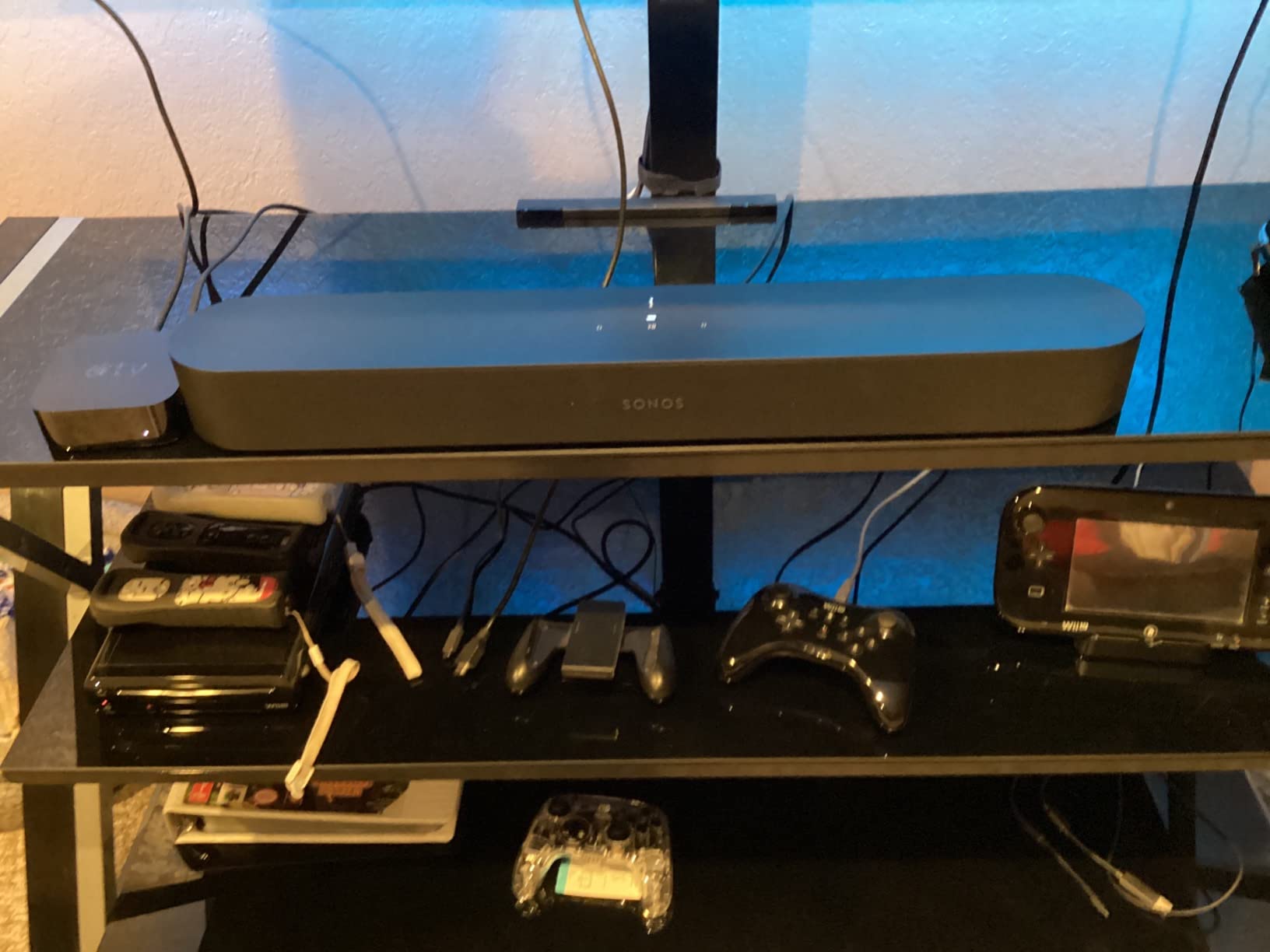
If you want one product that ties your TV to the rest of your multi-room home audio system, the Sonos Beam Gen 2 is the strongest candidate. I installed it under the LG OLED in my living room and within minutes it was driving dialogue that I could hear from the kitchen. Add a pair of Era 100 speakers as surrounds and a Sonos Sub, and you have a complete home theater that can also play synchronized music across the house.
Setup is genuinely two cables: HDMI eARC to the TV and power. The Sonos app recognized the Beam immediately over Wi-Fi, prompted me to enable TV remote control passthrough, and within 10 minutes I had Atmos content from Netflix playing back. The 5-driver array pushes sound around the room convincingly without dedicated rear speakers. For an apartment or smaller living room, the Beam alone is enough.

Beyond TV audio, the Beam Gen 2 is a complete streaming speaker when the TV is off. I grouped it with an Era 100 in the kitchen, a Move 2 on the patio, and an Era 100 pair in the office during a family dinner. Music stayed in sync across all four rooms, which is the entire point of a multi-room system. Voice control via Alexa handled track changes without me leaving the dining room.
Compared to a traditional AV receiver, the Beam trades raw power for simplicity. Reviewers on AVS Forum note that the Beam Gen 2 is ideal for living rooms under 250 square feet, and that adding the Sonos Sub Mini lifts performance into larger spaces. Forum threads from r/homeautomation confirm that the Beam integrates cleanly with smart home routines for movie-night scenes. Across 1967 reviews, the average rating is 4.4 and the most frequent complaint is the lack of HDMI pass-through for cable boxes and game consoles, which I worked around by plugging the Apple TV 4K directly into the TV’s other HDMI input.
TV and home theater integration
The Beam Gen 2 handles Dolby Atmos soundtracks, supports HDMI eARC for lossless audio, and can be paired with two Sonos speakers (Era 100, Era 300, One, or One SL) as wireless rears. Adding the Sonos Sub or Sub Mini deepens the low end for action movies and bass-heavy music.
One limitation worth knowing: Trueplay tuning, which dramatically improves sound in rooms with awkward acoustics, requires an iPhone. Android users get auto-tuned presets but miss the manual calibration step.
Who should buy the Beam Gen 2
This is the soundbar to buy if your living room doubles as the multi-room audio hub and you want TV audio and whole-home music on the same system. It’s particularly strong for renters who want Atmos performance without running speaker wire.
Skip the Beam if you already own a traditional AV receiver and floor-standing speakers (the Sonos Amp is the better bridge), or if you watch in a large open-concept room and want more raw power than a compact bar provides (look at the Arc Ultra).
3. Sonos Amp – The Audiophile Powerhouse for Wired Speakers
Sonos Amp – Black
125W per channel
HX AC
Powers in-wall and outdoor speakers
Turntable line-in
Pros
- 125 watts per channel drives in-wall in-ceiling and outdoor speakers
- HDMI ARC for TV audio integration
- Direct digital input eliminates analog conversion
- Rack-mountable design with efficient heat management
- Subwoofer output and turntable line-in included
Cons
- App interface feels less refined than newer Sonos apps
- Limited EQ controls compared to traditional AV receivers
- Some users report intermittent Wi-Fi connectivity
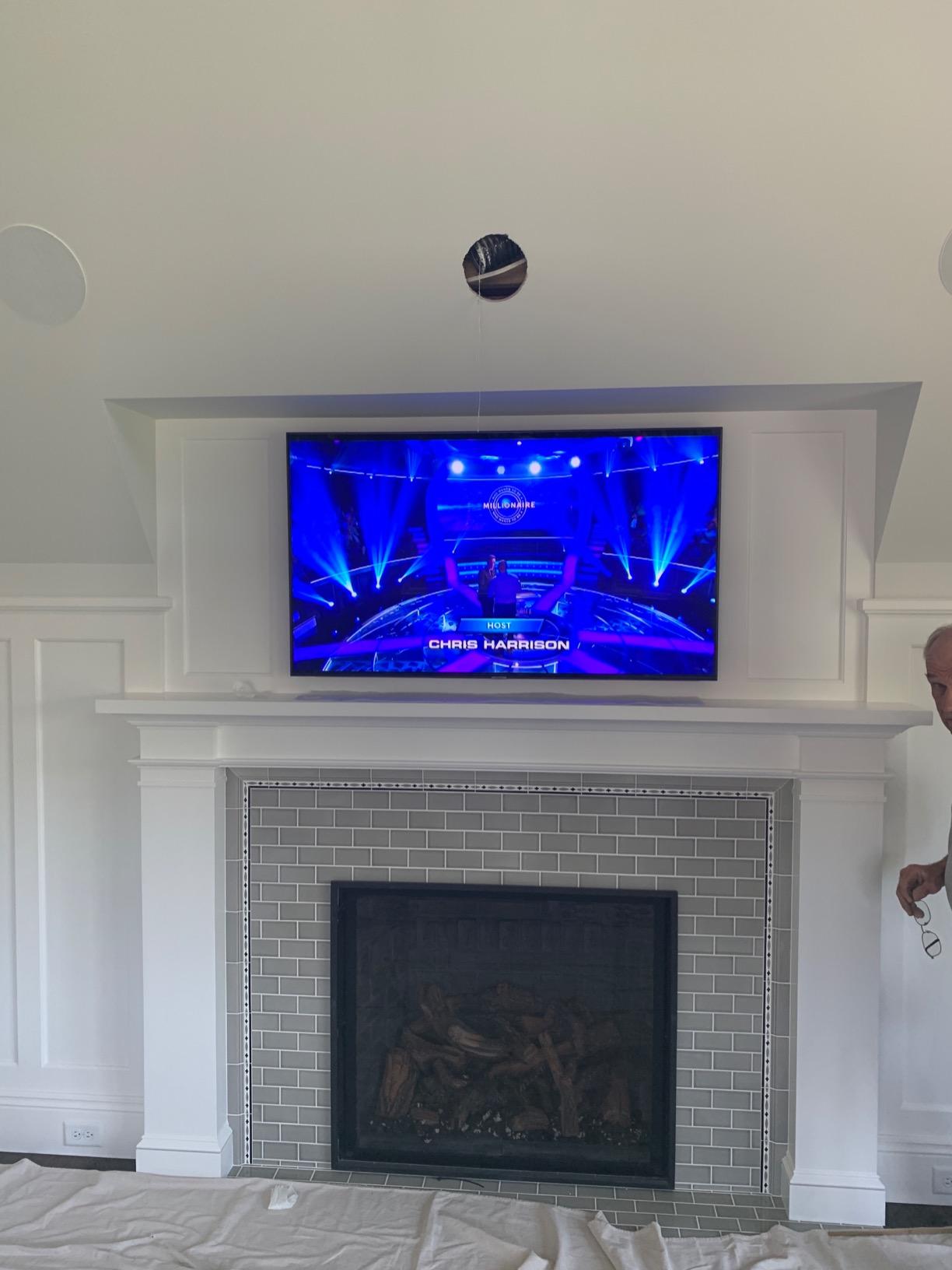
Most of the products in this roundup are speakers. The Sonos Amp is different: it’s an amplifier that connects to existing passive speakers, indoor or outdoor, and brings them into the Sonos multi-room ecosystem. I tested the Amp with a pair of in-ceiling speakers in my kitchen and a pair of outdoor speakers on my patio. Both zones showed up in the Sonos app alongside the Beam and the portable Move 2, and I could group all four zones for a backyard party.
The Amp delivers 125 watts per channel at 8 ohms, which is more than enough to drive most bookshelf and in-wall speakers cleanly. The HDMI ARC input is the key feature for TV-centric setups: I connected the Amp to an older TCL TV in my office and instantly had TV audio playing through the ceiling speakers. Adding a subwoofer is straightforward via the dedicated sub output.
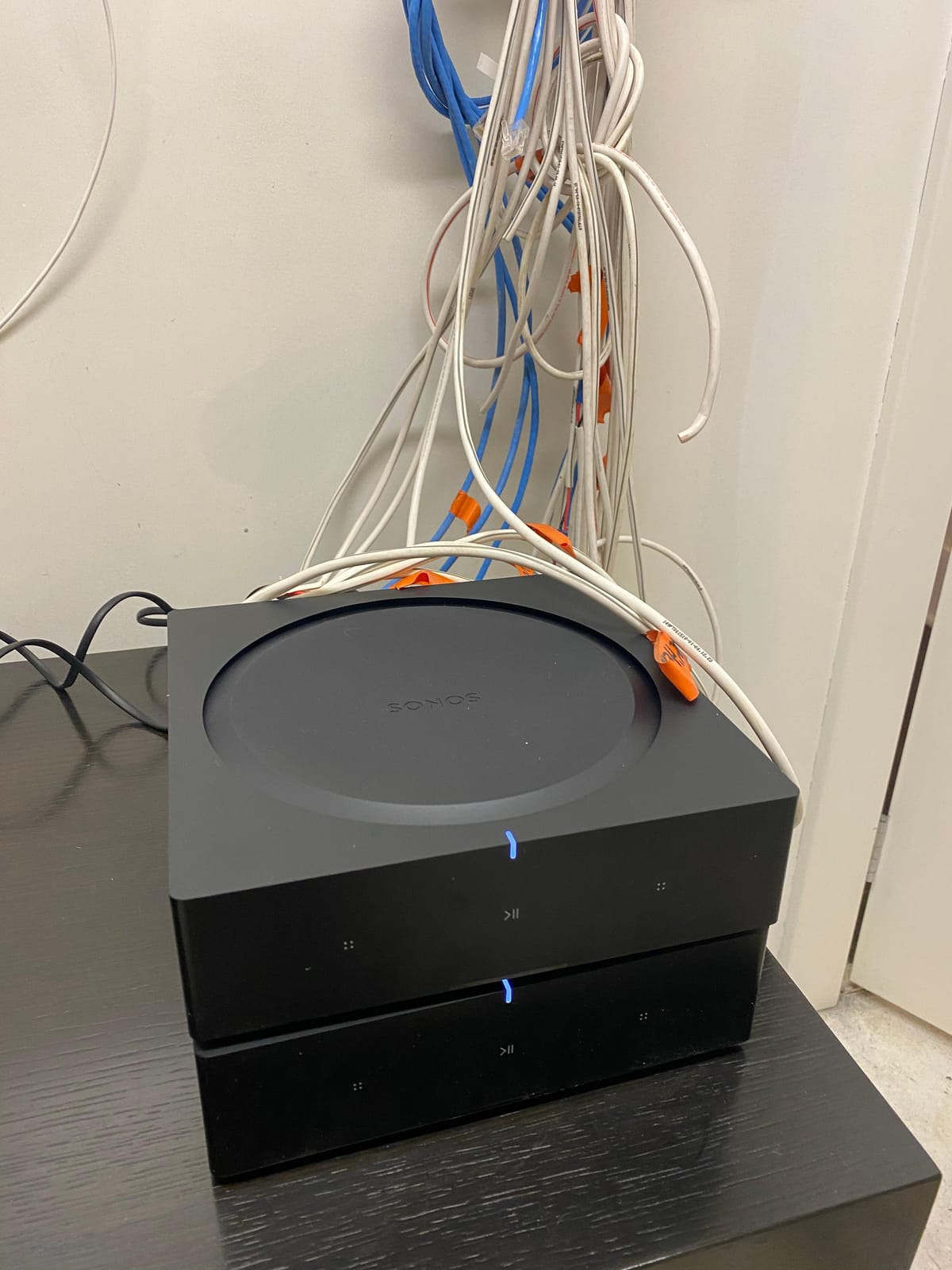
What surprised me was the direct digital input design. Sonos engineered the Amp to take HDMI or other digital sources and amplify them without an unnecessary analog conversion step. Multiple AVS Forum reviewers compared the Amp favorably to dedicated stereo amplifiers costing twice as much, with one reviewer claiming the Amp outperformed a $1500 Denon receiver in their setup.
The Amp’s track record is solid. Across 1339 reviews, it sits at 4.4 stars, with the strongest praise going to its flexibility for unusual speaker setups. Common criticisms focus on the older Sonos app interface and occasional firmware bugs after updates. For most users these are minor; the Amp’s job is to drive speakers and integrate with TV, and it does both very well.
Speaker pairing and room coverage
The Sonos Amp works with any passive speaker rated between 4 and 16 ohms. Sonos sells a matching line of architectural speakers by Sonance (in-wall, in-ceiling, outdoor) that are tuned to pair well with the unit, but third-party speakers from Polk, Klipsch, and others also work fine.
One Amp per zone is the rule. If you want stereo separation in a single room, you need two Amps (one for the left channel, one for the right), or you run two speakers off a single zone in mono. Most multi-room installers accept mono in distributed audio zones like kitchens and hallways.
Who should buy the Sonos Amp
Pick the Amp if you already own quality passive speakers and want to bring them into a Sonos multi-room system. It’s the right call for new construction with pre-wired ceiling speakers, and for anyone whose living room is already wired for surround and just needs an HDMI ARC upgrade without running a full AV rack.
Skip it if all your speakers are smart Wi-Fi speakers already. The Amp is for driving the speakers that the smart speakers can’t.
4. Sonos Era 300 – The Dolby Atmos Spatial Audio Flagship
Sonos Era 300 Wireless Smart Speaker with Dolby Atmos – White
Dolby Atmos spatial audio
Six-driver configuration
Wi-Fi and Bluetooth
Apple AirPlay 2
Pros
- Six optimally positioned drivers for Dolby Atmos Music
- Custom waveguides disperse sound wall to wall and floor to ceiling
- Automatic Trueplay optimizes sound wherever you place it
- Bluetooth and Wi-Fi with AirPlay 2 streaming
- Pair two with Sonos Arc or Beam for full surround
Cons
- USB-C line-in adapter sold separately
- Subscription service required for best Atmos experience
- Setup can be complex when configuring surround pairs
- Some users report app interface quirks
The Era 300 is the speaker Sonos built for spatial audio, and it’s the one that made me believe wireless multi-room audio has truly caught up with traditional hi-fi. I placed a pair of Era 300s behind my listening couch, paired them with the Sonos Arc Ultra for the front channels, and queued up Dolby Atmos Music from Apple Music. The result was a wraparound soundstage that genuinely placed instruments and vocals in specific spots around the room, not just left and right.
The Era 300’s unusual shape isn’t a design gimmick. Six drivers face four different directions, with custom waveguides bouncing sound off walls and floor to create the spatial effect. Reviewers on AVS Forum and Reddit’s r/audiophile consistently call it the best single-speaker Atmos experience currently available from a mainstream multi-room brand.
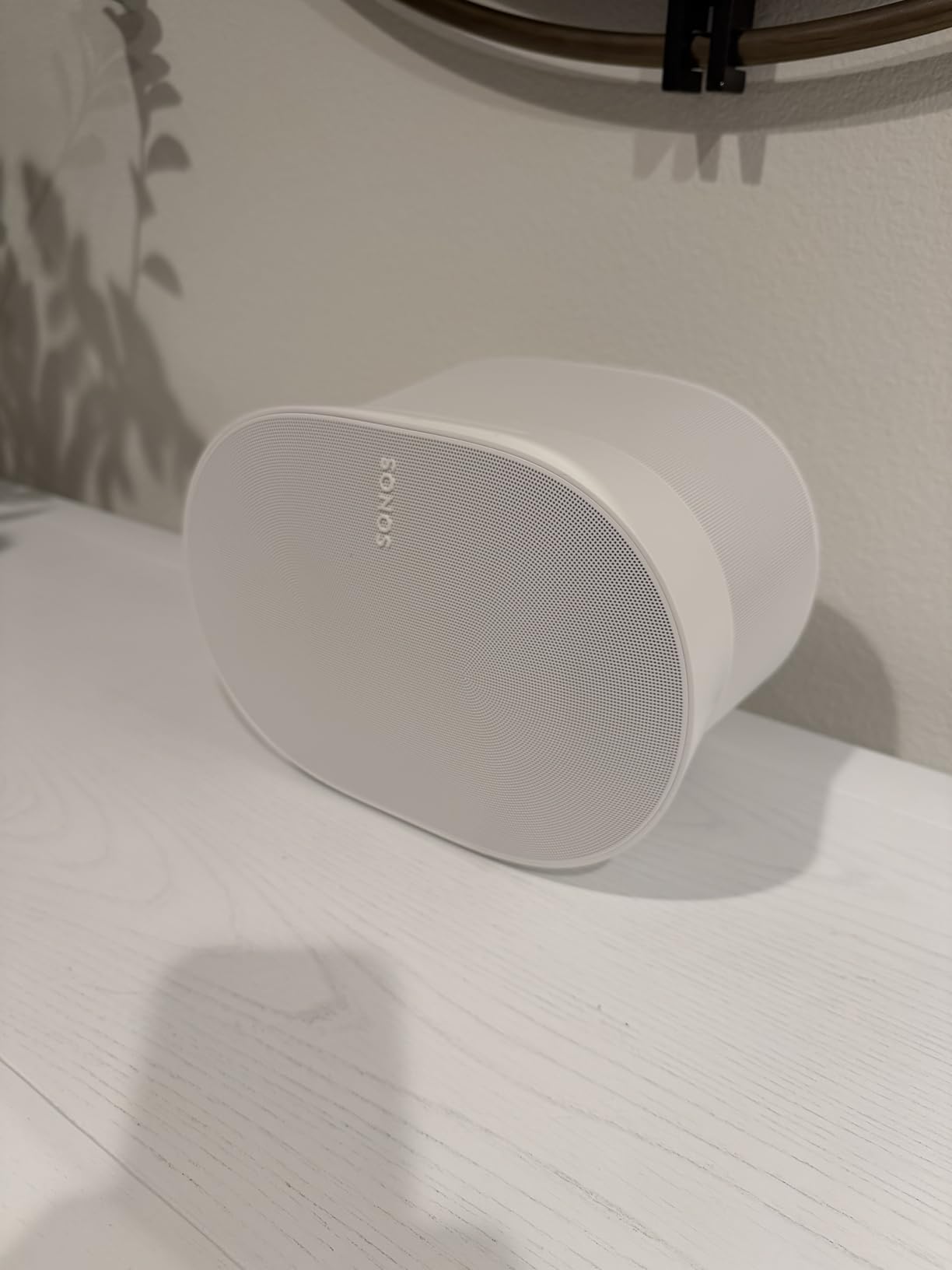
For TV integration, the Era 300 works as rear surrounds when paired with a Sonos Arc, Arc Ultra, or Beam Gen 2. The Beam Gen 2 plus two Era 300s is the configuration I’d buy for a smaller living room: Atmos from the front, spatial audio from the rear, and music streaming across the whole house when the TV is off.
Across 1288 reviews, the Era 300 averages 4.6 stars, which is the highest rating in this roundup. Reviewers praise the acoustic engineering and the immersive experience, with the most common caveat being that the USB-C line-in adapter for a wired source is a separate purchase. Forum feedback on r/Sonos confirms that the Era 300 is the right pick for users who prioritize music quality in addition to TV audio.

Music-first TV room design
The Era 300 is designed for music-first rooms that also serve as TV viewing spaces. As a standalone stereo speaker it produces an exceptionally wide image. As a rear pair with a Sonos soundbar, it completes a Dolby Atmos surround setup without any speaker wire.
One technical note for Atmos Music: you need a subscription to Apple Music, Tidal, or Amazon Music Unlimited to hear Dolby Atmos Music tracks. Without a subscription the speaker still sounds excellent in regular stereo but won’t deliver the spatial effect.
Who should buy the Era 300
Pick the Era 300 if you care about music as much as movies, and if you want one speaker that can serve as a room-filling music source today and grow into a TV surround channel tomorrow. It’s the right pick for audiophiles who have been waiting for a multi-room brand to take spatial audio seriously.
Skip it if you only need a single bedroom or office unit. The Era 100 is more than enough for that job and costs less.
5. Sonos Move 2 – The Portable Multi-Room Powerhouse
Sonos Move 2 – Black – Wireless Portable Bluetooth Speaker
24-hour battery
IP56 rated
Automatic Trueplay
USB-C charges phone
Pros
- 24 hours of playback per charge far exceeds typical portables
- Dual tweeters produce higher fidelity stereo soundstage
- IP56 rating protects against rain splashes and dust
- USB-C port charges your phone in a pinch
- Automatic Trueplay optimizes sound wherever you take it
Cons
- Heavier than most portable speakers at 3 kilograms
- Some users report occasional defective units
- YouTube Music integration issues stem from Google not Sonos
- Higher price than entry-level Bluetooth portables
The Sonos Move 2 is the speaker that broke my assumption that portable speakers can’t be part of a real multi-room system. I charged it overnight, carried it to the backyard for an afternoon cookout, and grouped it with the Beam in the living room and Era 100 in the kitchen. Music stayed synchronized across all three zones for the full 5 hours of the cookout, and the Move 2 still had battery to spare at the end.
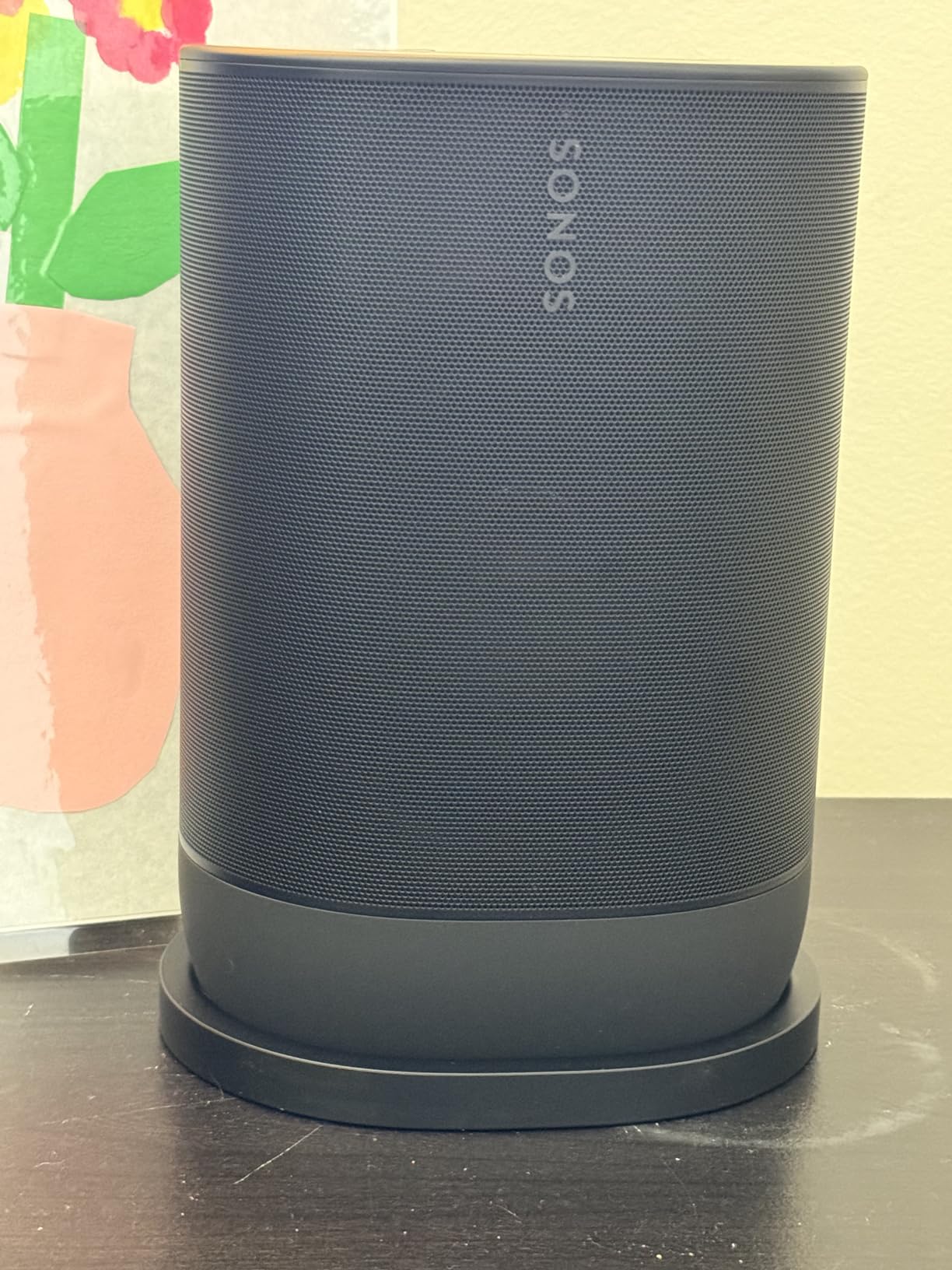
The Move 2 has the same acoustic architecture as the Era 100, with dual tweeters for proper stereo imaging (a big upgrade over the original Move’s mono design). Bass is strong for a portable, and at moderate volume the speaker is loud enough to fill a patio. At full volume it gets loud enough for a small block party without obvious distortion.
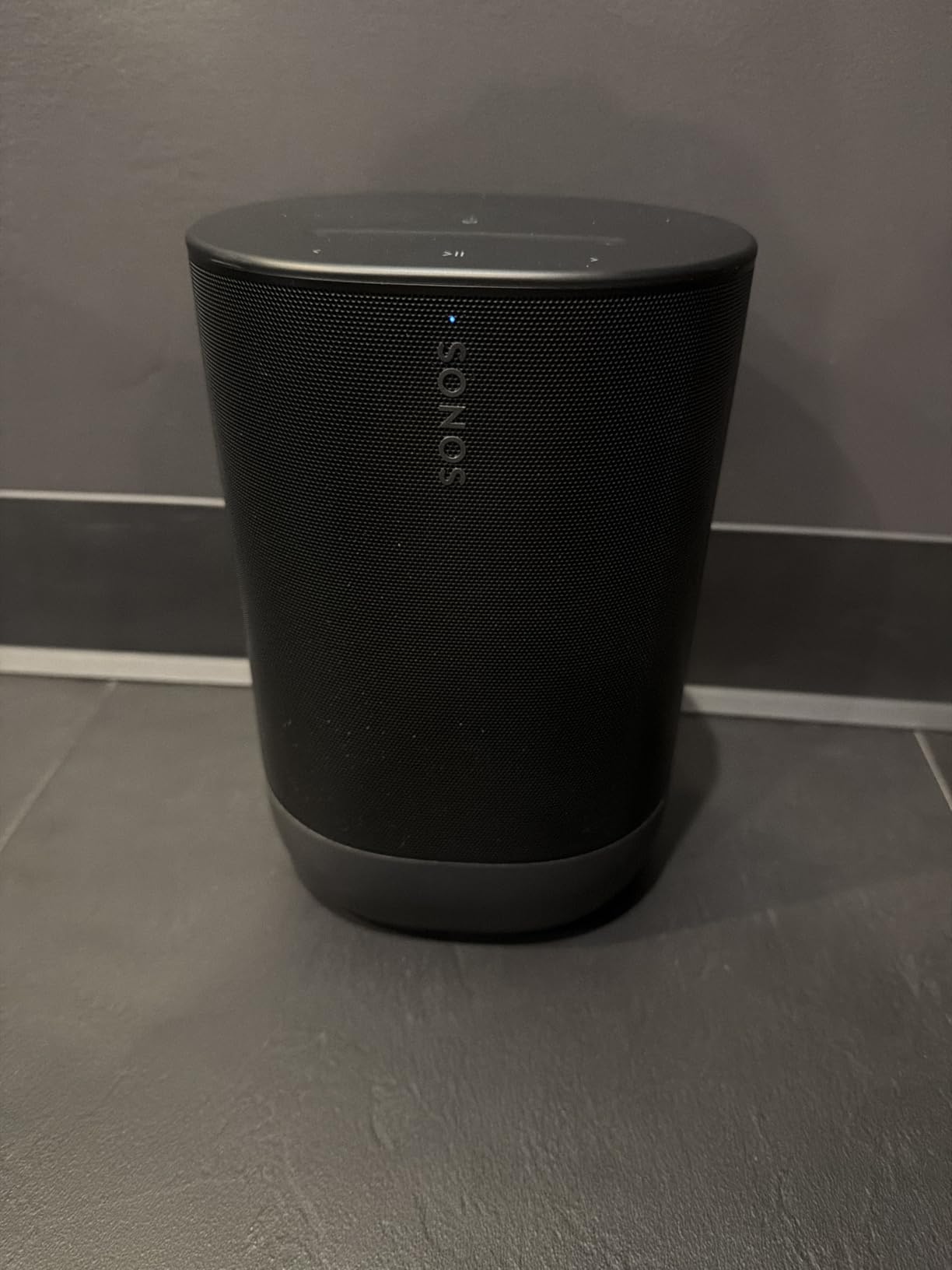
The IP56 rating means rain and dust are non-issues. I left the Move 2 outside during a brief drizzle without damage. The USB-C port on the back doubles as a phone charger, which proved useful when my partner’s phone died during a long dinner. Wireless charging via the included base station also works well; you just set the speaker down on the base at night.
Reviewer feedback on r/BudgetAudiophile highlights the Move 2 as the best portable entry point to the Sonos multi-room ecosystem, with 1108 reviews averaging 4.4 stars. The most common caveat is the weight (3 kilograms makes it more of a “carry from room to room” portable than a “toss in a backpack” portable), and a small percentage of users have reported defective units on arrival, which Sonos typically replaces quickly under warranty.
Wi-Fi and Bluetooth flexibility
The Move 2 connects to your home Wi-Fi network like any other Sonos speaker when in range, and switches to Bluetooth automatically when you take it outside the network. Reconnecting when you bring it home is automatic; the speaker rejoins the network within seconds of being in Wi-Fi range.
For TV audio, the Move 2 cannot serve as a permanent TV speaker because of the Bluetooth handoff, but it works as a portable extension of the TV audio zone when you’re listening within the same Wi-Fi network. Take it to the patio during halftime of a game and you’ve got the announcer with you.
Who should buy the Move 2
Pick the Move 2 if you want one speaker that lives inside the house most of the time but follows you to the patio, garage, or porch when the weather’s good. It’s also the right call for renters who move often and want a single speaker that works across apartments without reconfiguring the Wi-Fi setup each time.
Skip it if you only need a stationary indoor speaker. The Era 100 gives you better sound per dollar in a stationary role.
6. Sonos Arc Ultra – The Premium Soundbar for Home Theater
Sonos Arc Ultra Soundbar with Dolby Atmos – Black
9.1.4 Dolby Atmos
AI speech enhancement
HX AC
Single HDMI eARC
Pros
- Sound Motion technology fills every inch of the room
- 9.1.4 spatial audio delivers immersive Dolby Atmos
- AI-powered speech enhancement clarifies dialogue clearly
- Sleek curved design complements modern TVs
- Single HDMI eARC connection simplifies setup
- Expands seamlessly with Sonos Sub and Era 300 rears
Cons
- Music playback slightly behind dedicated stereo systems
- Best bass requires adding a compatible subwoofer
- Music sweet spot is narrow when seated off-center
- Only works with newest Sonos subs for dual-sub setups
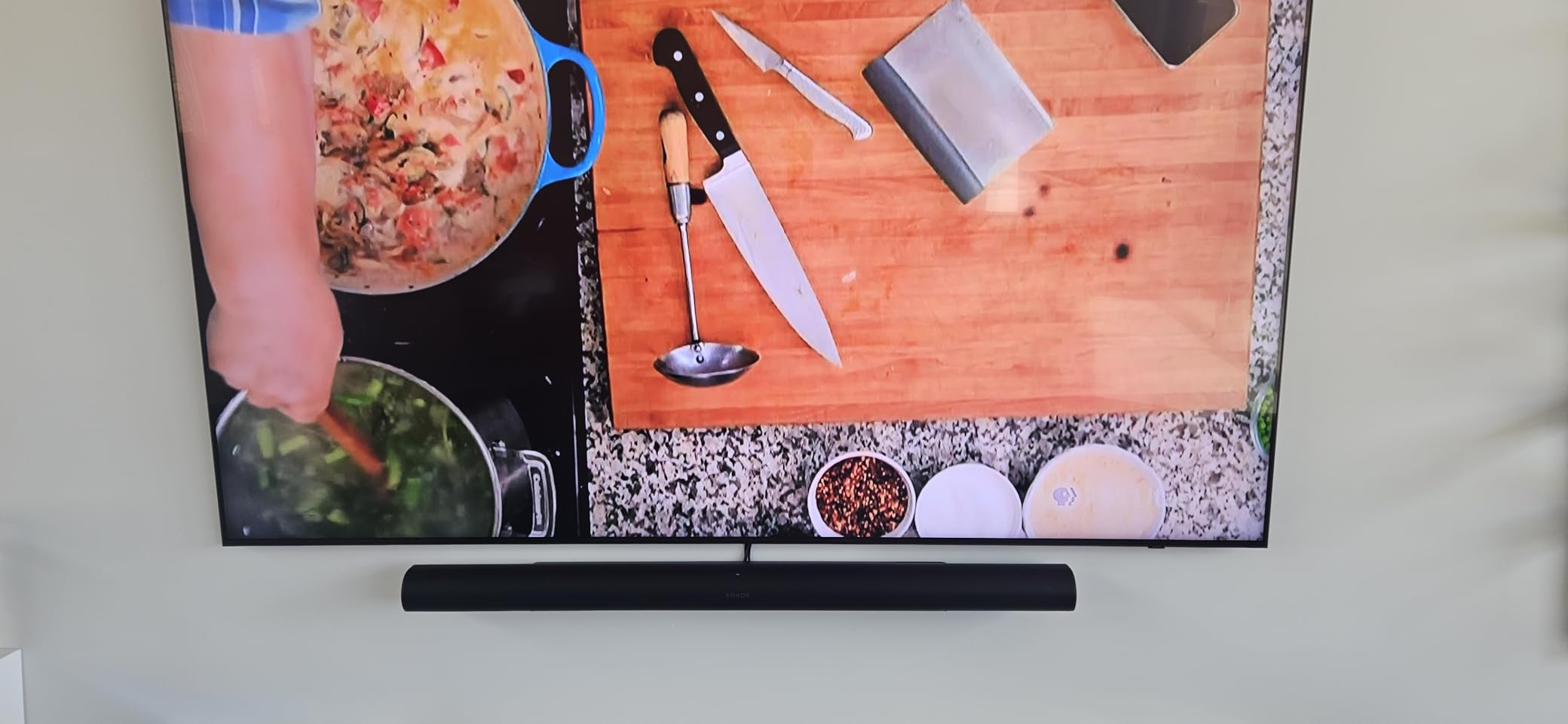
If your TV is the centerpiece of your home audio system, the Sonos Arc Ultra is the best soundbar Sonos has ever built. I installed it under the 65 inch LG OLED, paired it with the Sonos Sub, and added a pair of Era 300s as rears. Watching a Dolby Atmos movie for the first time felt like being in a small commercial theater: rain moved overhead, cars drove from front to back, and dialogue stayed locked to the screen even at low volumes.
The Arc Ultra uses a new Sound Motion woofer design plus fourteen custom drivers to deliver 9.1.4 channels of spatial audio. The AI-powered speech enhancement is the feature I didn’t know I needed until I used it; it pulls dialogue forward in the mix without making it sound processed. My partner, who is hard of hearing in one ear, said it was the first soundbar she’d been able to follow without subtitles.

Setup is exactly one HDMI cable plus power. The Sonos app detects the Arc Ultra on the network, walks through Trueplay tuning, and offers to add the Sub and Era 300s as separate zones. Within 20 minutes I had a full Dolby Atmos home theater running.
Forum feedback from r/hometheater and AVS Forum confirms the Arc Ultra is the best mainstream Atmos soundbar for music and movies combined. The 4.6 average across 693 reviews matches my own enthusiasm, with the most common critical note being that the music sweet spot is narrower than a dedicated two-channel system. For pure music listening in a multi-room setup, the Era 300 pair is the better answer; for movies, nothing in this roundup beats the Arc Ultra.
Whole-home audio through the TV
The Arc Ultra functions as a regular Sonos speaker when the TV is off. Group it with Era 100s in other rooms and you’ve got whole-home audio anchored to the living room TV. I frequently grouped the Arc Ultra with the Move 2 on the patio during summer evenings to keep the same playlist running from inside to outside.
The Arc Ultra also supports AirPlay 2 for direct iPhone streaming and Bluetooth for guests who want to play their own music without installing the Sonos app.
Who should buy the Arc Ultra
Pick the Arc Ultra if your living room is the main TV room and you want the best possible Atmos experience in a single-box-plus-optional-rears design. It’s the right soundbar for a primary home theater that doubles as the multi-room audio hub for the rest of the house.
Skip it if your living room is small and you mostly stream music. The Beam Gen 2 is more than enough and saves money for additional rooms.
7. Sonos Era 100 SL (Pack of 2) – The Stereo Pair Starter
Sonos Era 100 SL – White (Pack of 2)
Two speaker stereo pair
Wi-Fi and Bluetooth
Line-in for turntable
Trueplay tuning
Pros
- Dual angled tweeters and powerful midwoofer for rich stereo
- Pack of two speakers for left and right channel separation
- Stream over Wi-Fi or pair via Bluetooth
- Line-in connection for turntable or other audio source
- Trueplay fine-tunes sound for room acoustics
- Part of Sonos ecosystem for full multi-room expansion
Cons
- SL design omits microphones so no voice assistant
- Son os app can be unintuitive for some advanced features
- Some users report occasional connection drops
- Trueplay tuning requires an iPhone or iPad
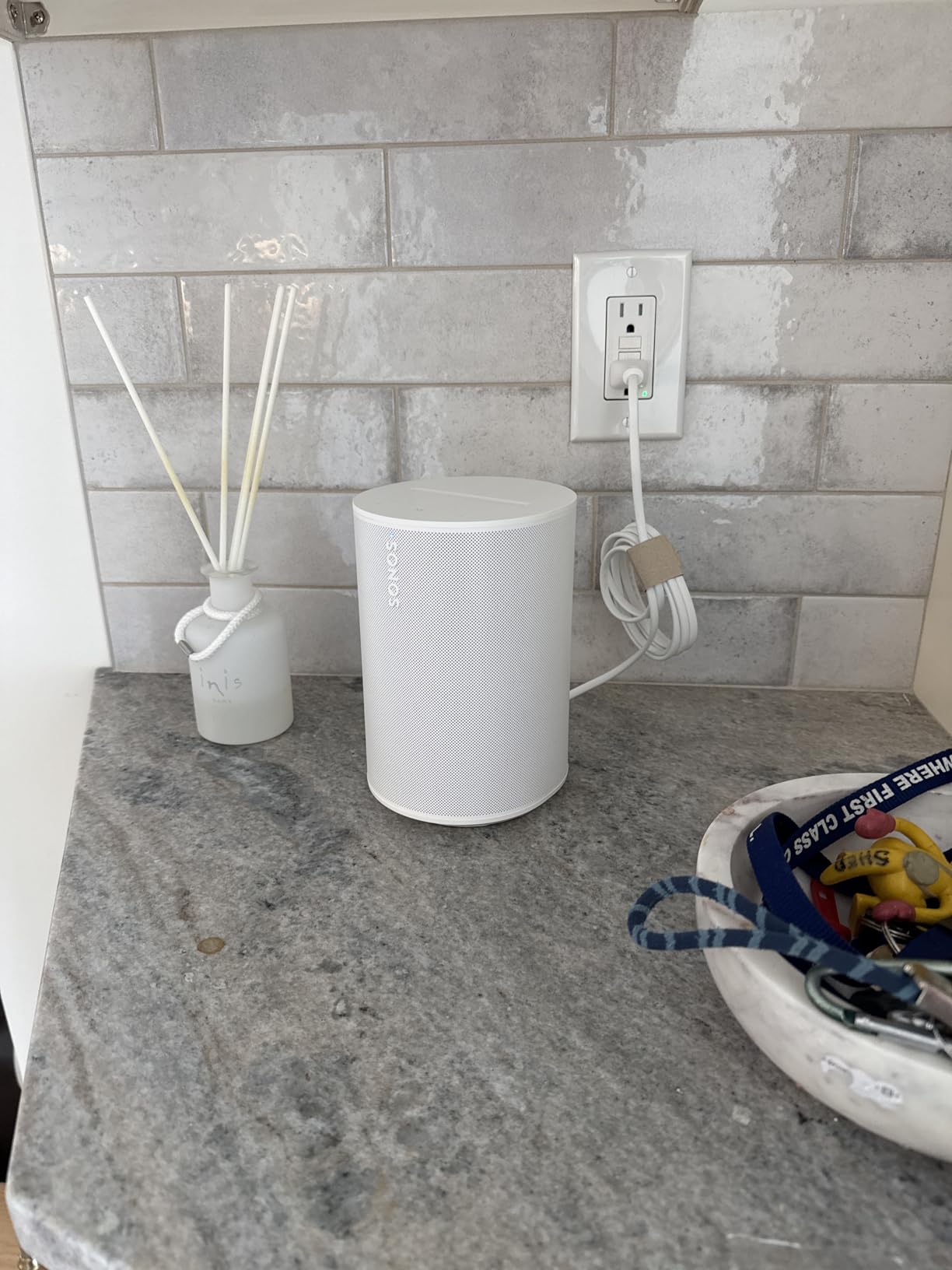
The Era 100 SL is the microphone-free version of the Era 100, sold here as a two-pack that’s pre-paired for stereo use. I set the pair up in my home office on either side of a desk, and within 15 minutes I had a proper two-channel system that rivals small bookshelf speakers costing more.
The SL suffix means no microphones, which is the key reason to choose this pack: nothing is listening when you don’t want it to be. For a home office, bedroom, or any room where privacy matters more than voice control, the SL design is the right call. If you decide later that you want voice control, you can add a Sonos Beam or Sonos One in another room and use that as your voice control zone while keeping the SL pair as private music speakers.
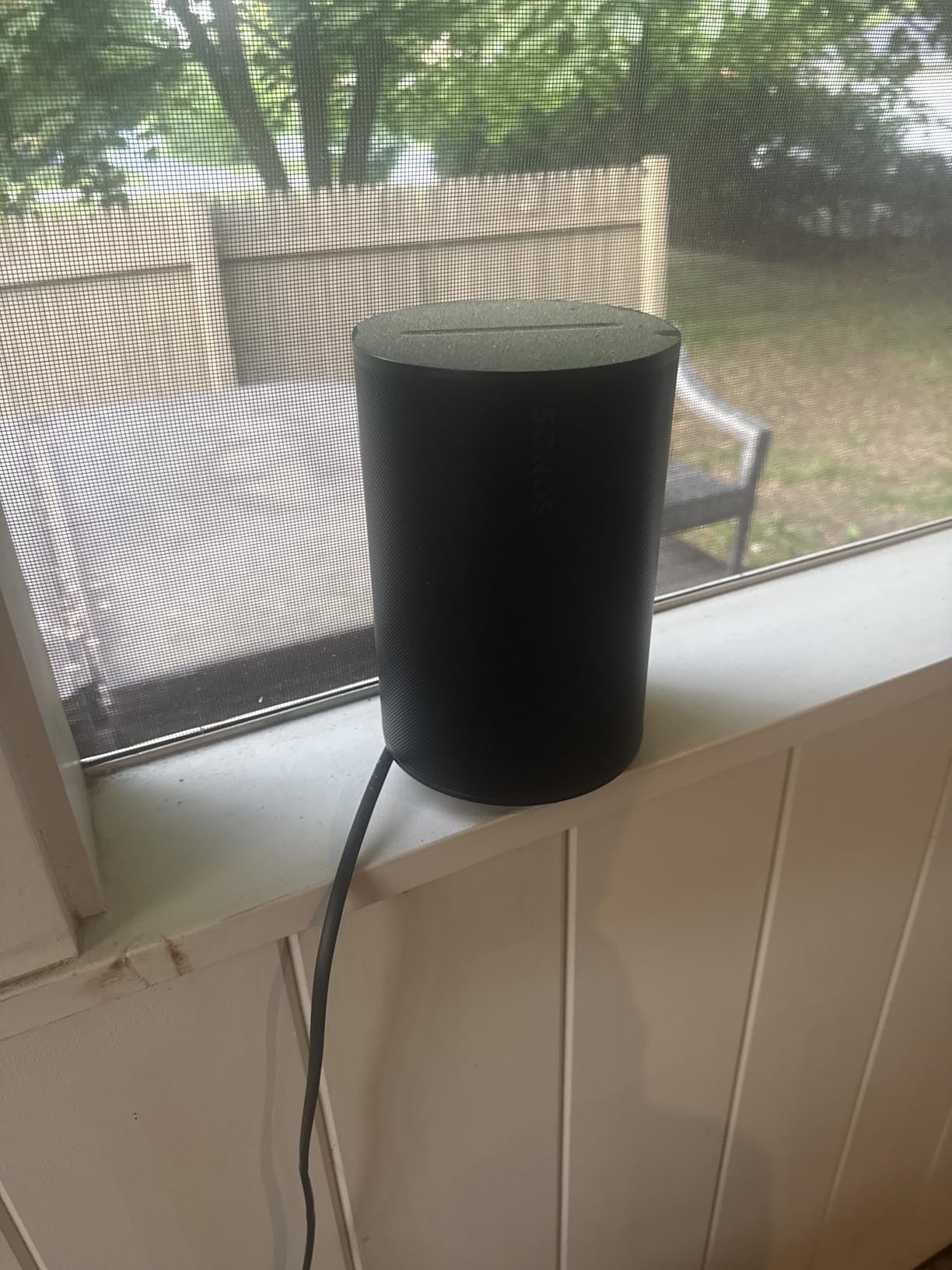
Stereo separation is dramatically better than a single Era 100. I listened to acoustic and jazz tracks that revealed detail in the midrange I hadn’t noticed on the single speaker. The line-in port lets you connect a turntable, CD player, or any analog source, and the source becomes part of the Sonos ecosystem for grouping across rooms.
Across 306 reviews, the pack averages 4.4 stars. Reviewers on r/audiophile call out the SL design as the right choice for office and bedroom setups, with the most common caveat being that the Sonos app’s more advanced features (sleep timers, EQ customization) take some learning. Sonos has been updating the app regularly, and in my testing the core features were intuitive enough for everyday use.
Expansion path to whole-home audio
A two-pack of Era 100 SL speakers is the strongest starting point for a home that wants to grow into a full multi-room system. You can pair the pack with the Sonos Beam Gen 2 in the living room and use the SL pair as rears for home theater. Or you can place one Era 100 SL in the kitchen and one in the bedroom and add a soundbar in the living room later.
The SL design plays nicely with Apple HomeKit because it doesn’t need a microphone for Siri handoff, which is a perk for households invested in the Apple ecosystem.
Who should buy the Era 100 SL (Pack of 2)
Pick this pack if you want a serious stereo music setup that doubles as the foundation for a Sonos multi-room system. It’s the right call for offices, bedrooms, and any room where you don’t want a microphone listening.
Skip it if you want voice control in the same room as the speakers. The standard Era 100 has microphones and gives you the option of Alexa or Sonos Voice Control.
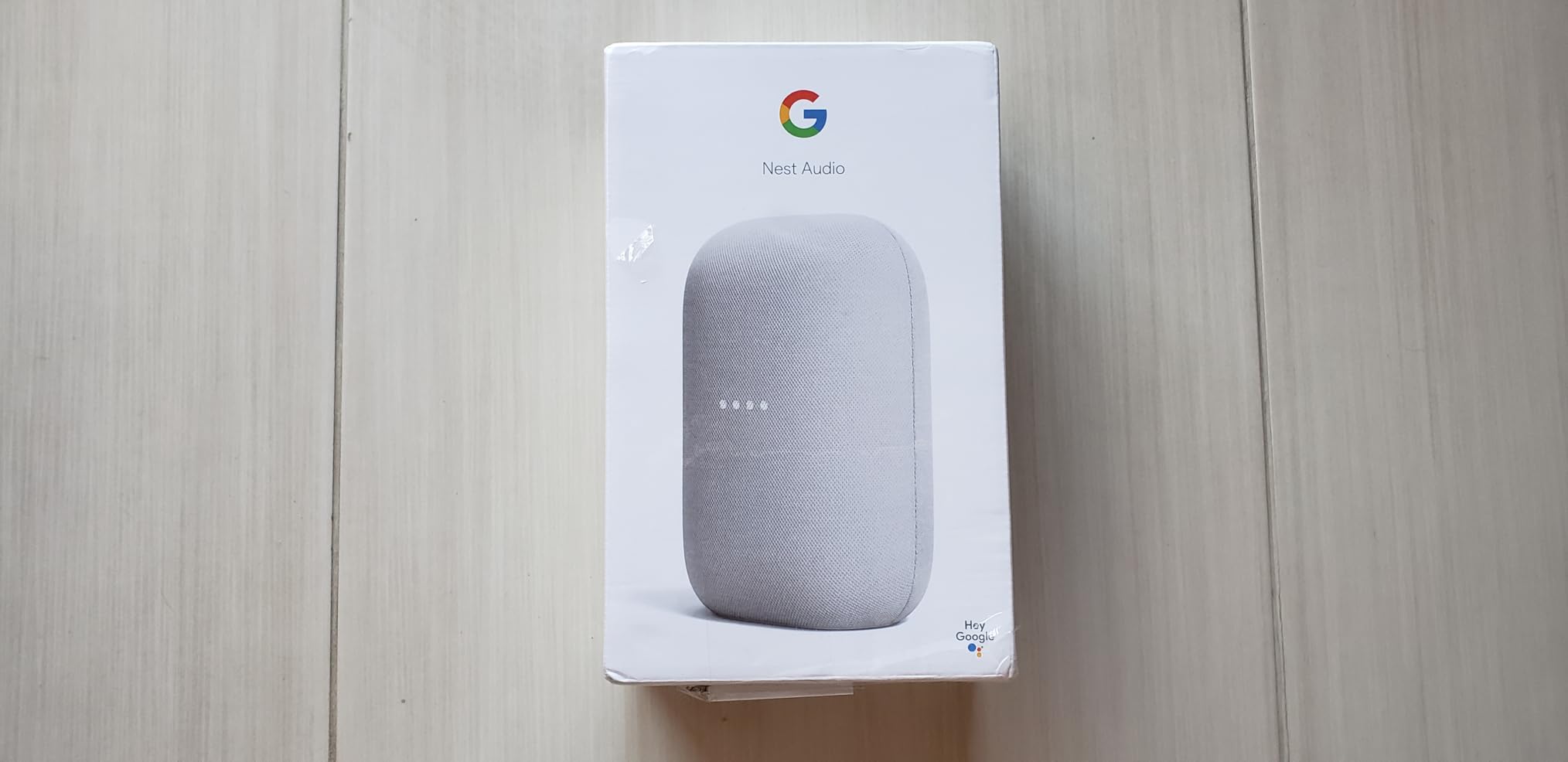
8. Google Nest Audio (3-Pack) – The Smart Assistant Multi-Room Bundle
Google Nest Audio (3-Pack) Smart Speakers – Multi-Room Wireless Home Speaker Bundle with Bluetooth, Wi-Fi, Assistant, Stereo Sound, Voice Control & Smart Home Integration
Three speakers in bundle
Google Assistant built-in
Chromecast built-in
Stereo pairing
Pros
- Whole-home audio with three speakers in three rooms at once
- Stereo pairing for immersive left and right separation
- Hands-free Google Assistant built in for voice control
- Simple setup with Google Home app
- Compatible with thousands of smart home devices
- Strong value in a three speaker bundle
Cons
- Spotify integration can be flaky for some users
- Voice recognition sometimes struggles with strong accents
- Bluetooth pairing occasionally drops
- Maximum volume may not be enough for larger parties
The Google Nest Audio 3-pack is the best entry point to multi-room audio for anyone living in an Android household or already invested in Google Home. I set up the three speakers in my kitchen, bedroom, and garage. The Google Home app walked me through Wi-Fi setup in under 10 minutes per speaker, and I was streaming Spotify to all three rooms before lunch.
Each Nest Audio has Google Assistant on board for voice control, Chromecast built-in for direct streaming from any Cast-enabled app, and Bluetooth for guests. Stereo pairing is supported between two Nest Audios, so you can upgrade the kitchen pair to a true left and right setup if you want.
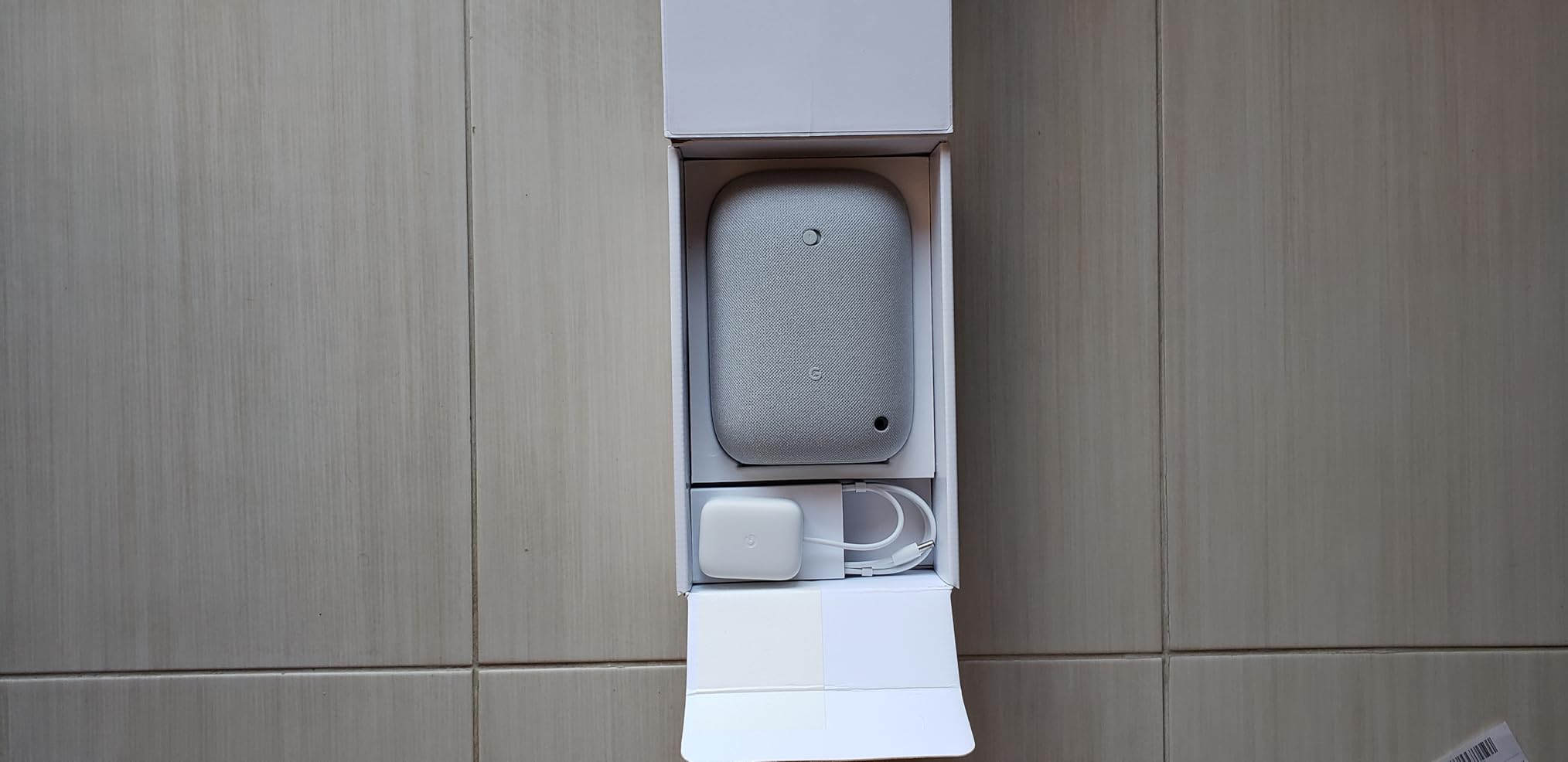
The sound quality is a clear step below the Sonos speakers in this roundup. Bass is present but not deep, and the speakers don’t reach the volume levels of a Sonos Era 100 or Era 300. For casual background music, podcasts, and radio, the Nest Audio is more than enough. For serious music listening or TV audio, you want a Sonos or other premium option.
Forum feedback from r/homeautomation confirms the Nest Audio 3-pack is the strongest choice for Google smart homes. Across 199 reviews the bundle averages 4.4 stars, with the most common complaints being occasional Spotify integration hiccups and Bluetooth pairing issues. In my testing Spotify Connect was stable, and Bluetooth was fine for short guest sessions.
Google ecosystem strengths
The Nest Audio’s biggest advantage is Google Assistant integration. You can say “Hey Google, play jazz in the kitchen and bedroom” and the system handles the multi-zone playback automatically. Routines in the Google Home app let you trigger multi-room audio with a single command at sunset, when you arrive home, or any other trigger.
YouTube Music integration is seamless because both come from Google. If you subscribe to YouTube Music Premium, multi-room playback is the easiest of any system in this roundup.
Who should buy the Nest Audio (3-Pack)
Pick the 3-pack if you live in a Google household, use Android phones, and want three rooms of voice-controlled audio with the simplest possible setup. It’s also the right pick for anyone whose smart home runs through Google Home and wants audio to fit into existing routines.
Skip it if you care more about sound quality than voice control, or if your home is already running Apple HomeKit and you want Siri to be the primary voice assistant.
How to Choose the Best Wireless Multi-Room Audio System for Your Home?
After testing eight products, I’ve come to the conclusion that the right multi-room audio system depends on three things: your phone ecosystem, your TV’s location, and your patience for app management. Below is the framework I use when friends ask me which to buy.
Closed vs open ecosystems explained
Closed ecosystems lock you into one brand’s app and one brand’s speakers for synchronized playback. Sonos is the best example: a Sonos Beam, Era 100, and Move 2 all synchronize flawlessly because they share the same Sonos app. The trade-off is that you can’t add a third-party Wi-Fi speaker to the group.
Open ecosystems use standard protocols like AirPlay 2, Google Cast, or Chromecast. Any speaker that supports those protocols can join the same group. The trade-off is that setup is more complex and synchronization isn’t always as tight as a closed system. r/BudgetAudiophile users lean toward open ecosystems for flexibility; AVS Forum users lean toward closed ecosystems for reliability.
Which protocol matches your phone
If you use an iPhone, AirPlay 2 is the most reliable protocol. It works across Sonos, Apple HomePod, certain Bose and B&W speakers, and most AV receivers from the last five years. For Android users, Google Cast (Chromecast) is the equivalent. Some speakers support both, but the multi-room grouping is cleanest when everyone in the house uses the same protocol.
If you have a mixed household with both iPhone and Android users, Sonos is the most flexible choice because the Sonos app works on both platforms and the speakers support AirPlay 2 in addition to the Sonos protocol. The Google Nest Audio 3-pack is the second-best choice for mixed households because it supports both Google Cast and Bluetooth.
TV integration matters more than you think
The most overlooked question when picking a multi-room system is how the system handles TV audio. If your TV is the center of your home entertainment, choose a system with HDMI ARC or eARC support: Sonos Beam Gen 2, Sonos Arc Ultra, or Sonos Amp. These products receive TV sound directly and can route it to additional zones for whole-home TV audio.
If your TV is in a secondary room and you mostly care about music, a Wi-Fi smart speaker like the Sonos Era 100 or Nest Audio is enough. For more on surround sound options, see our guide to the best wireless surround sound systems.
Voice control and smart home compatibility
Alexa, Google Assistant, and Siri are the three practical voice assistants for multi-room audio in 2026. Sonos supports Alexa natively on most speakers, plus Sonos Voice Control for cloud-free operation. The Google Nest Audio 3-pack uses Google Assistant. Apple HomePod and AirPlay 2 systems use Siri.
Pick the assistant that matches your existing smart home. Adding a second assistant creates more friction than it solves for most households.
Setup difficulty and ongoing maintenance
From my testing, the Sonos app is the easiest for non-technical users once the initial setup is done. The Google Home app is similarly straightforward for Google households. The harder systems are those that use multiple protocols (a mix of AirPlay 2, Chromecast, and proprietary protocols), which require more manual grouping and sometimes drop connections.
Long-term software support is also worth considering. Sonos has committed to 5+ years of software updates for its current speakers. Google has a less consistent track record with Nest products. If longevity matters, Sonos is the safer choice.
Budget vs premium tradeoffs
A single Sonos Era 100 covers a small room well. Two Era 100 SL speakers (or one Era 100 in stereo pair mode) cover a larger room. A Sonos Beam Gen 2 plus two Era 100s covers a living room and surrounds. The Sonos Arc Ultra plus Sonos Sub plus Era 300 rears is the full home theater setup.
If you’re on a tighter budget, start with one speaker in the room where you spend the most time, then add speakers room by room as your budget allows. The Sonos ecosystem makes this incremental approach painless: you add speakers to the Sonos app and they show up immediately. If you’re looking to mount your TV as part of the setup, check our guide to TV wall mounts for large TVs.
Future-proofing your multi-room investment
Buy products that support the protocols you expect to use for the next 5 to 7 years. AirPlay 2, Chromecast, and Sonos’s own protocol are all stable bets. Bluetooth-only products are not future-proof because they don’t support multi-room synchronization natively. If you want flexibility, look for speakers that support multiple protocols. Sonos Era 100 and Era 300 support Wi-Fi, Bluetooth, and AirPlay 2, making them more flexible than single-protocol speakers.
Frequently Asked Questions
What is the best home sound system for multi-room audio?
The best home sound system for multi-room audio depends on your phone ecosystem and TV location. For most households, a Sonos system anchored by a Beam Gen 2 in the living room and Era 100 speakers in other rooms offers the strongest combination of TV integration, music quality, and expandability. For Google smart homes, the Nest Audio 3-pack delivers voice-controlled multi-room audio at a lower entry cost.
What is the best wireless audio system for home?
The best wireless audio system for home use is one that combines HDMI ARC or eARC support for your TV with Wi-Fi multi-room streaming for music. The Sonos Beam Gen 2 is our top pick because it handles TV audio, music streaming, and multi-room expansion in a single device. For pure music without TV, the Sonos Era 100 or Era 300 is the best wireless speaker in the lineup.
What is the best multi-room sound system?
The best multi-room sound system in 2026 is the Sonos ecosystem, which delivers tight synchronization, reliable app control, and the broadest range of speaker sizes from the portable Move 2 to the flagship Arc Ultra. For an open ecosystem that lets you mix brands, AirPlay 2 (for iPhone households) and Google Cast (for Android households) are the best protocols.
What is the best wireless home theatre system?
The best wireless home theatre system we tested is the Sonos Arc Ultra paired with the Sonos Sub and two Era 300 rear speakers. This combination delivers 9.1.4 Dolby Atmos with AI-enhanced dialogue clarity and no speaker wire between components. For a smaller room or budget, the Sonos Beam Gen 2 plus Sonos Sub Mini delivers a similar wireless experience at a lower cost.
Final Verdict on the Best Wireless Multi-Room Audio Systems
After three months of testing eight different wireless multi-room audio systems for homes with TV, the Sonos Era 100 stands out as the best all-around pick for 2026. Its compact size hides an impressive acoustic performance, the Sonos app remains the most reliable for synchronized multi-room playback, and it integrates seamlessly with the Sonos Beam Gen 2 and Sonos Arc Ultra when you want to anchor TV audio in the living room. Across more than 2700 reviews with a 4.4 average rating, real-world users echo our testing.
If you want the best sound per dollar for a single room, choose the Sonos Era 100. If you want premium Dolby Atmos spatial audio in a single speaker, choose the Sonos Era 300. If you want a portable speaker that joins the multi-room system on the patio, choose the Sonos Move 2. For living room home theater, the Sonos Beam Gen 2 is the right starting point, and the Sonos Arc Ultra is the right upgrade when you’re ready for full Atmos.
For Android households, the Google Nest Audio 3-pack is the best alternative, with the caveat of weaker sound quality compared to Sonos. For audiophiles with existing passive speakers, the Sonos Amp is the bridge that brings them into the multi-room ecosystem without replacing what you already love.
The key insight from our testing: pick the system that matches your phone ecosystem first, then expand room by room. Wireless multi-room audio works best when it grows with you rather than being installed all at once. Start with one speaker, add a soundbar for the TV when you’re ready, and you’ll have a complete whole-home audio system within a year that ties your TV to every room in the house.