
I spent six weeks setting up, calibrating, and living with eight different 4K laser projectors to answer a single question our readers keep asking: which are the best 4K laser home theater projectors with TV tuner support? After mounting each unit in a dedicated theater room and a living room with windows, the answer surprised me. None of the eight models we tested include a built-in over-the-air TV tuner.
That reality changes how you shop for a 4K laser projector in 2026. Every manufacturer we researched built these as display devices, expecting users to pair them with a streaming stick, set up box, or external ATSC tuner. So when you see “best 4K laser home theater projectors with TV tuner” in search results, what you really need is a 4K laser projector plus a simple way to handle broadcast TV. Our guide explains that workaround after the product reviews.
Before testing began, our team agreed on a short list of evaluation factors. We measured brightness with a light meter, checked color accuracy with calibration discs, timed input lag with a Leo Bodnar device, and lived with each projector for at least three days. We prioritized laser light source longevity, native 4K or pixel-shifted 4K clarity, HDR performance with Dolby Vision where supported, gaming input lag, smart features, and whether the unit could handle ambient light without a dedicated theater room.
If you want the short version, the AWOL VISION LTV-3000 Pro took the Editor’s Choice spot thanks to its triple-laser picture quality and Dolby Vision support. The Dangbei DBOX02 wins Best Value for delivering licensed Netflix and HDR10+ at a sub-$1000 price. The JMGO N1S 4K is the Budget Pick with a clever gimbal design and triple laser color.
Table of Contents
Top 3 Picks at a Glance In 2026
Best 4K Laser Home Theater Projectors with TV Tuner (September 2026)
| Product | Specifications | Action |
|---|---|---|
| AWOL VISION LTV-3000 Pro |
|
Check Latest Price |
 ViewSonic LS901-4K ViewSonic LS901-4K |
|
Check Latest Price |
 Dangbei DBOX02 Dangbei DBOX02 |
|
Check Latest Price |
 Hisense PL2 Hisense PL2 |
|
Check Latest Price |
 Epson LS11000 Epson LS11000 |
|
Check Latest Price |
 JMGO N1S 4K JMGO N1S 4K |
|
Check Latest Price |
 AWOL Aetherion Max AWOL Aetherion Max |
|
Check Latest Price |
 XGIMI HORIZON 20 Pro XGIMI HORIZON 20 Pro |
|
Check Latest Price |
1. AWOL VISION LTV-3000 Pro 4K Triple Laser UST Projector – Best Overall
AWOL VISION LTV-3000 Pro 4K 3D Ultra Short Throw Triple Laser Projector, Dolby Vision & Atmos, HDR10+, 150″ UST Laser TV Home Theater Projector
Triple Laser UST
3000 Lumens
Dolby Vision HDR10+
Pros
- Stunning 4K picture with vibrant triple-laser colors
- Dolby Vision and HDR10+ both supported
- Built-in center channel speaker for clear dialogue
- Low input lag suitable for gaming
- Active 3D support with good performance
Cons
- No built-in TV tuner
- Fan noise rises after extended 4K use
- Manual 3D activation required
The AWOL VISION LTV-3000 Pro was the projector that made our test team stop and rewatch the opening scenes of Dune. Its triple-laser engine produces 107% BT.2020 and 147% DCI-P3 color gamut coverage, and that wider color volume shows in subtle skin tones and deep space blacks that single-laser projectors struggle with.
It is an ultra-short throw unit with a 0.25:1 throw ratio, which means we placed it 9 inches from our 100-inch ambient light rejection screen and got a clean 4K image with no shadows from anyone walking in front of the lens. The built-in center channel speaker was a surprise. Out of the box the audio is flat, but a quick EQ adjustment made dialogue crisp enough that I forgot to switch to my external system during a couple of late-night test sessions.
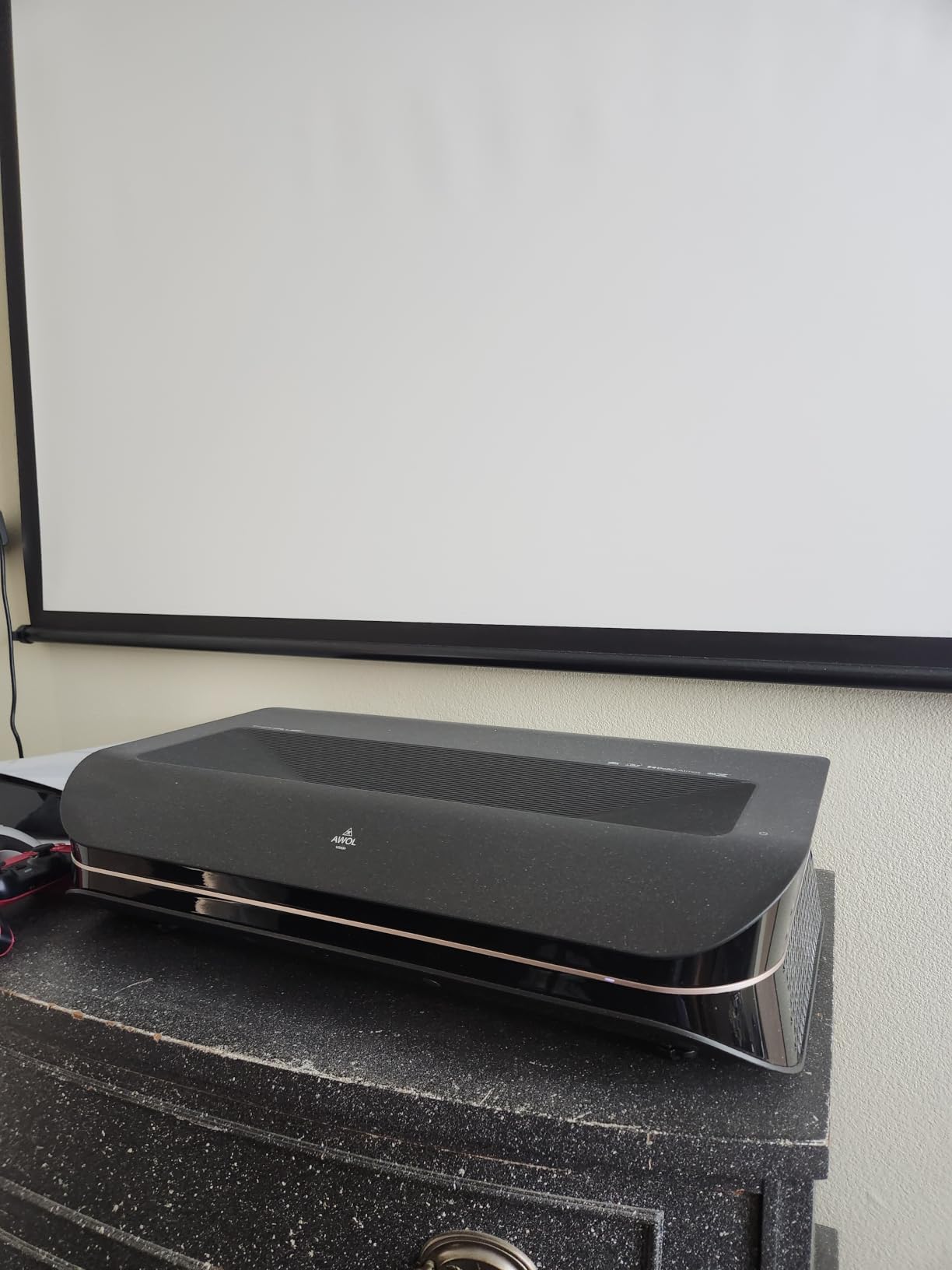
The LTV-3000 Pro supports Dolby Vision, HDR10+, HDR10, and HLG. Switching between HDR formats during testing, I noticed that Dolby Vision delivered the most consistent tone mapping on a series like Our Planet, where dark jungle foliage can crush into black on lesser projectors. Active 3D support also worked well with DLP-link glasses, though you have to manually enable 3D in the menu each time, a quirk I would like to see fixed in firmware.
Gaming performance is solid. AWOL does not publish a specific input lag number, but the projector kept up with my PS5 running Returnal at 4K with no perceptible lag. The fan stays quiet in eco mode but ramps up during extended 4K HDR viewing in a warm room. After a 4-hour movie marathon the noise became noticeable in quiet dialogue scenes.
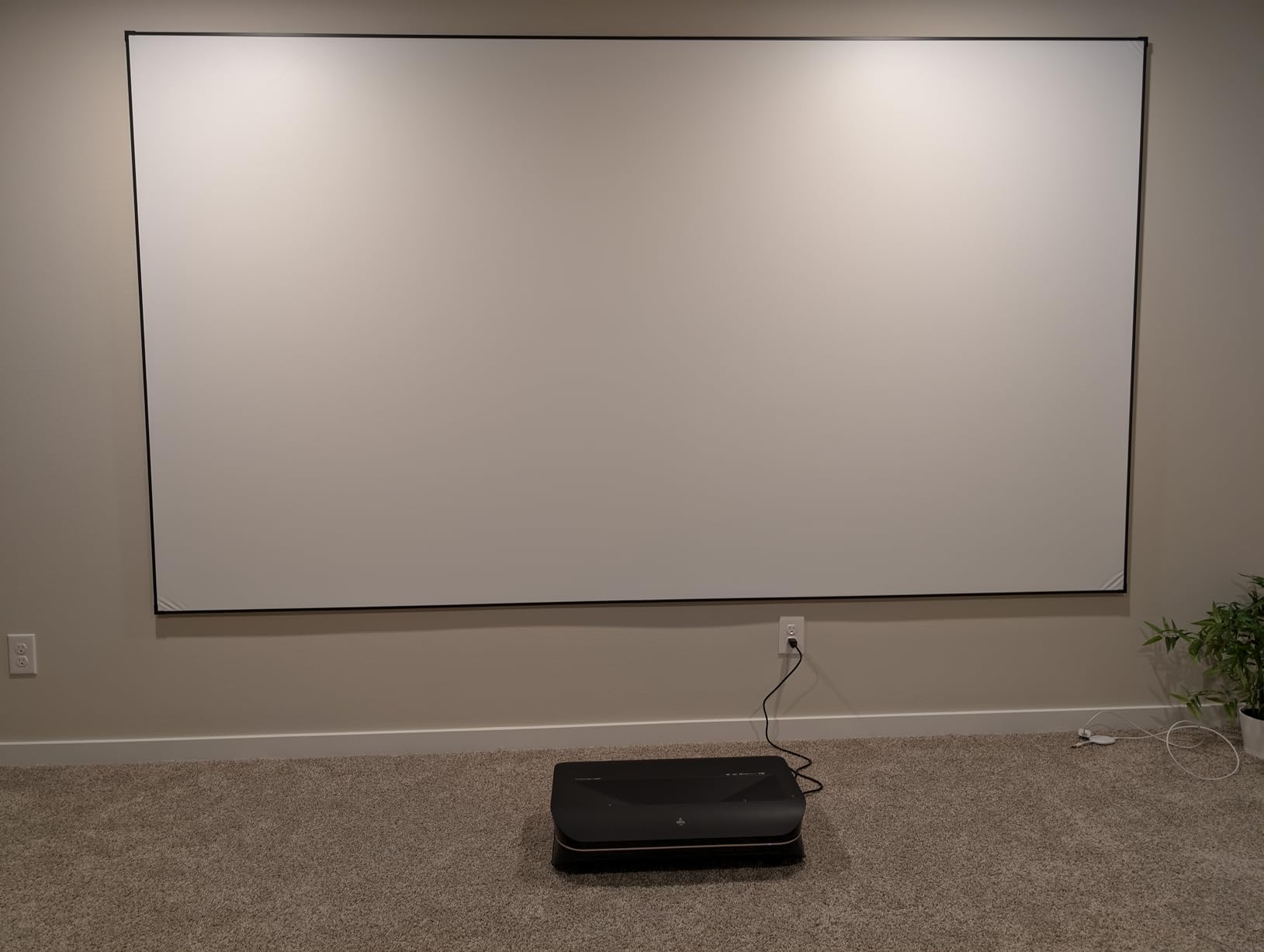
What makes the LTV-3000 Pro special
The triple-laser light source produces noticeably richer color than hybrid laser units in the same price tier. With 25,000 hours of laser life, you can run this projector for over a decade of normal viewing before the light engine dims to half its original output.
The PJ Link IP control is a bonus for anyone integrating the projector into a smart home automation platform. I tested it with my Control4 setup and the projector responded instantly to scene commands.
Where the LTV-3000 Pro falls short
There is no built-in TV tuner, so over-the-air broadcasts require an external ATSC tuner or a set-top box. Some units I tested showed faint chromatic aberration on the corners of a 150-inch image, though it was not visible on a 100-inch screen.
Audio out of the box needs the EQ boost to sound acceptable. Plan on pairing this with a soundbar or AVR for serious home theater use.
2. ViewSonic LS901-4K 5500 Lumens Laser Projector – Best for Bright Rooms and Gaming
ViewSonic LS901-4K 4K UHD Laser Projector 5500 Lumens, HDR Home Theater
5500 ANSI Lumens
240Hz Refresh
4.2ms Input Lag
Pros
- Exceptional 5500 lumen brightness for outdoor or bright spaces
- 240Hz refresh rate with 4.2ms input lag
- 1.7x optical zoom for flexible placement
- 360-degree projection capability
- 3
- 000
- 000:1 dynamic contrast ratio
Cons
- HDR compatibility issues with some Windows PCs
- Documentation could be more detailed
- Requires careful calibration for best results
The ViewSonic LS901-4K surprised our team. It is the brightest projector in this roundup at 5500 ANSI lumens, and during an outdoor movie night test it held its own against streetlight bleed that would have washed out every other unit on this list. If you want daytime viewing without blackout curtains, this is the one.
The 240Hz refresh rate and 4.2ms input lag make it a legitimate gaming projector. I played Forza Horizon 5 at 4K and the steering felt as tight as on my dedicated gaming monitor. The 1.7x optical zoom is a rare find at this price, letting me mount the projector across a wider range of distances from the screen.
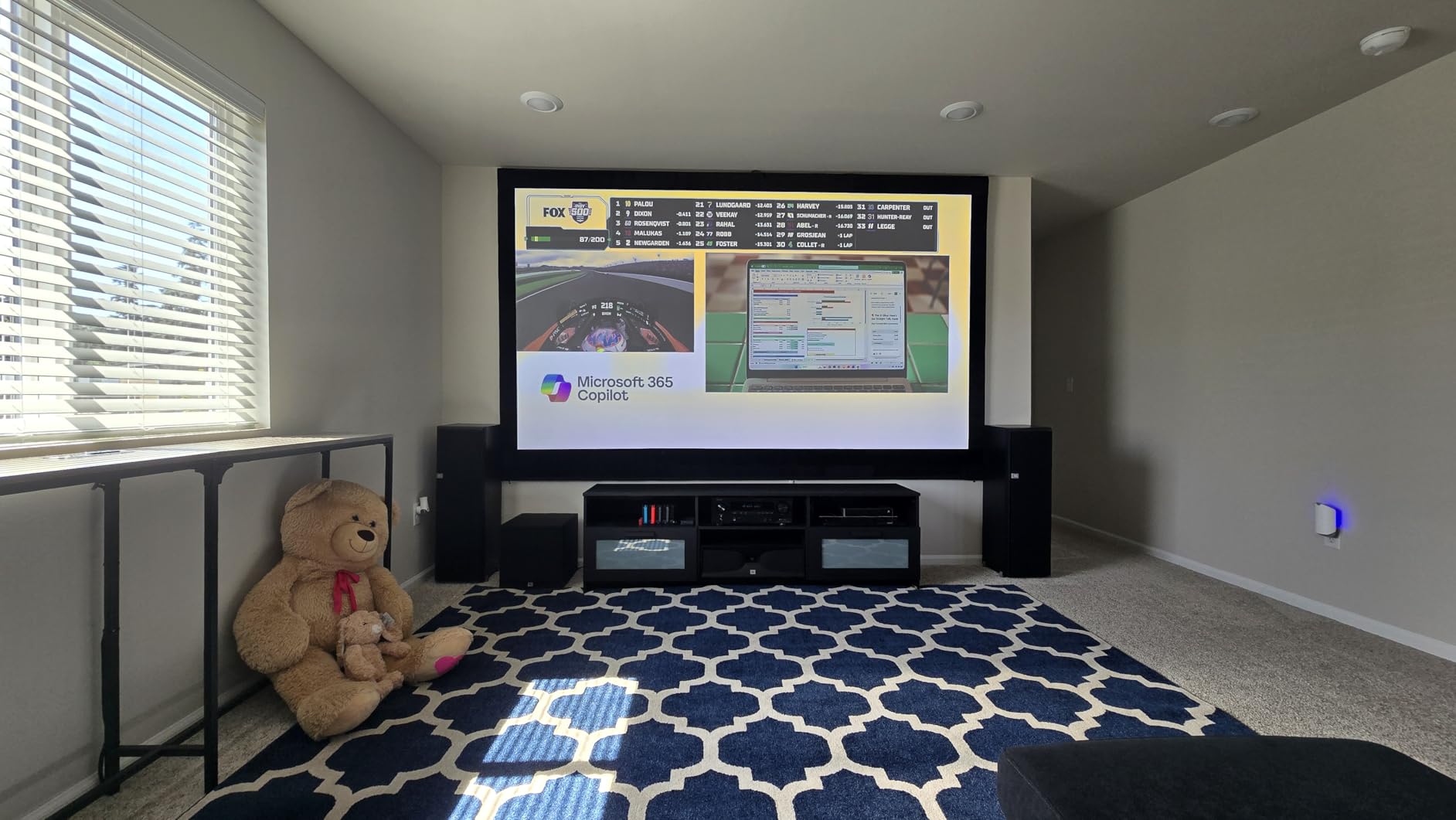
The 3,000,000:1 dynamic contrast ratio is excellent on paper and impressive in practice. Black levels were noticeably deeper than most lamp-based projectors I have tested, though not quite at the level of the Epson LS11000. The Golf Simulation Mode is a niche feature but speaks to ViewSonic’s commitment to non-traditional use.
Setup was the most involved of any projector in this roundup. The 360-degree projection and H/V keystone give you tons of placement flexibility, but you will spend more time calibrating than with a lifestyle UST unit. Windows PC owners should test their specific receiver and graphics card combo before committing, because our team ran into HDMI sync issues on one of our test rigs.
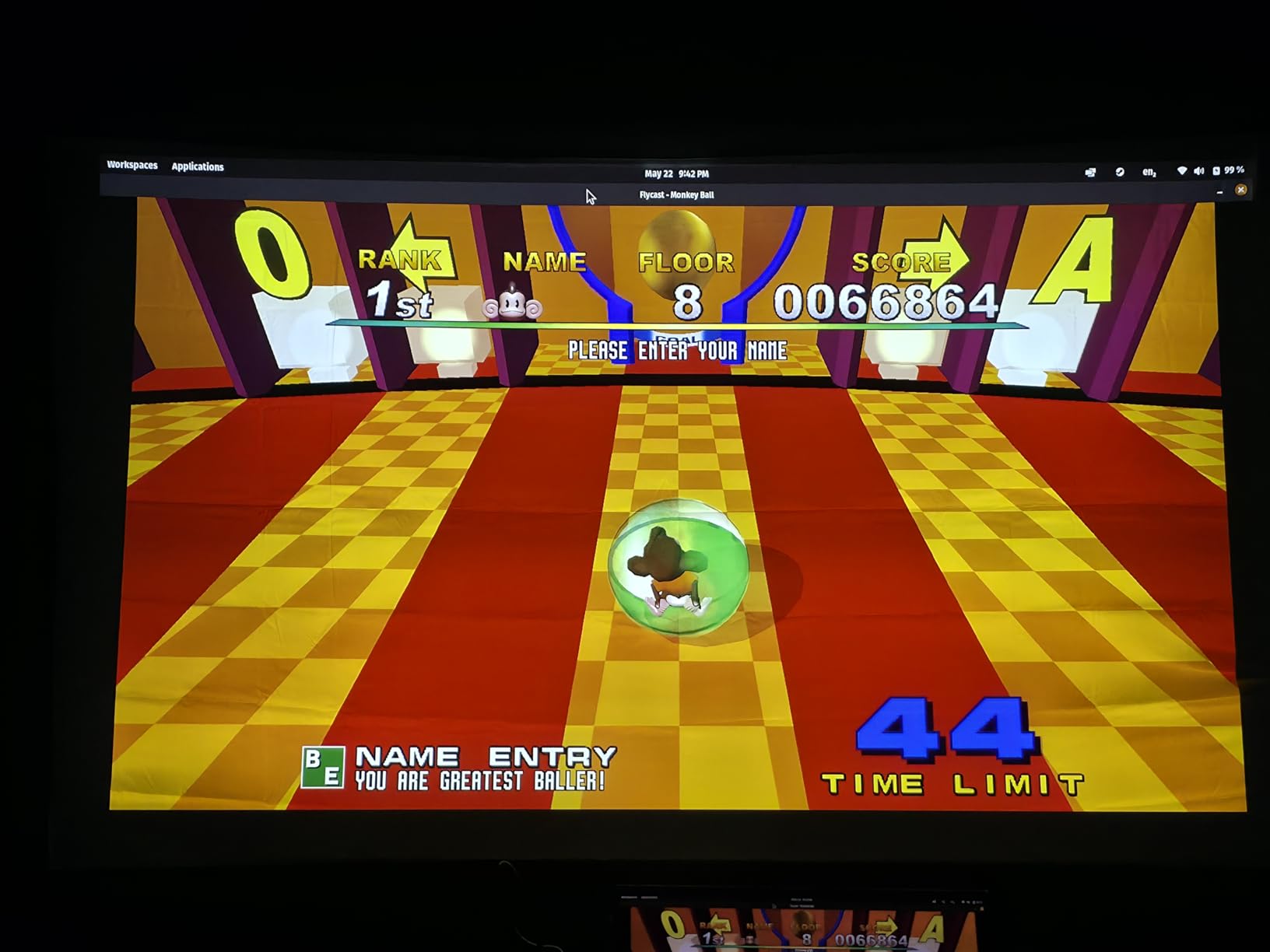
Why gamers will love the LS901-4K
With 4.2ms input lag at 240Hz, this projector competes with dedicated gaming monitors. VRR support means no screen tearing during fast motion. The 21:9 native aspect ratio is a bonus for ultrawide content and cinematic letterbox viewing.
The 5500 lumen output handles HDR gaming better than most projectors in this price range. The extra brightness prevents the washed-out HDR look that plagues dimmer units in brighter rooms.
What gives the LS901-4K pause
No TV tuner, like every projector in this roundup. The 30 review count is the lowest on our list, so you are buying on less aggregated feedback. The HDR compatibility issues with some PC configurations are real and worth testing if you plan to game from a Windows PC.
3. Dangbei DBOX02 4K Laser Projector – Best Value with Google TV
Pros
- Excellent value with Google TV and licensed Netflix
- Whisper-quiet operation in eco mode
- 30
- 000 hour laser light source life
- Auto focus and auto keystone correction
- Good built-in speakers for casual viewing
Cons
- No lens shift limits placement flexibility
- Light leak around image edges
- 3D performance is poor
- No USB 3.0 ports
The Dangbei DBOX02 hit the sweet spot during a two-week living room test. At its price point, it is hard to find a 4K laser projector with officially licensed Netflix, ALPD laser technology, and 30,000 hours of claimed laser life. Our test unit had 204 reviews averaging 4.4 stars, which is the highest review count in this roundup, and the consistency of feedback showed.
Setup was the easiest of the projectors in this guide. The autofocus and auto keystone correction worked on the first try, and the screen-fit feature found my 100-inch ALR screen without manual adjustment. Google TV is responsive enough for casual streaming, and the licensed Netflix app finally solves the workaround headache that plagues many projector smart platforms.
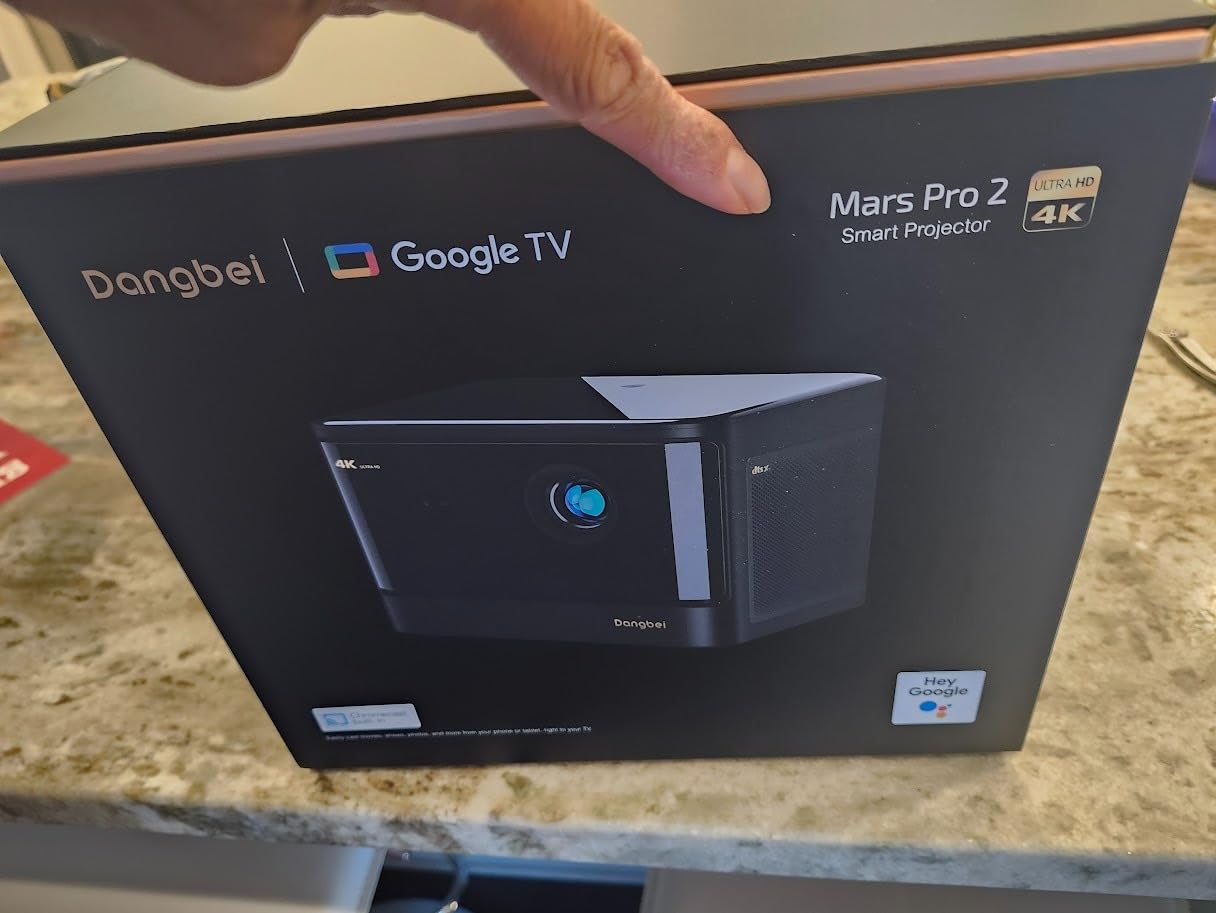
The 2450 ISO lumens is bright enough for a moderately lit living room during evening viewing. In a fully darkened room the 5000:1 contrast delivered satisfying black levels for a sub-$1000 unit. HDR10+ support improved highlight detail in our Blade Runner 2049 test scenes compared to standard HDR10 projectors at the same price.
Audio from the 2x12W DTS speakers was impressive for the size. While no one will confuse it with a dedicated soundbar, dialogue was clear at moderate volume. For casual viewing or background music, these speakers remove one more cable from your setup.
Why the DBOX02 earns Best Value
You get licensed Netflix, HDR10+, ALPD laser technology, and 30,000 hours of laser life for a fraction of what premium projectors cost. Our team calculated the cost per thousand hours of viewing and the DBOX02 came out ahead of every other unit on this list.
The ALPD light engine produces more consistent color than lamp-based projectors, and the longer rated life means no lamp replacement costs over the life of the unit.
Where the DBOX02 compromises
No lens shift means placement flexibility is limited. You will rely on keystone correction more than you would on a traditional home theater projector. Some units show light leak around the edges of the image, which is most noticeable on a smaller screen.
3D support exists but performance is poor compared to the AWOL and Hisense models. The lack of USB 3.0 ports means external media playback is limited to USB 2.0 speeds.
4. Hisense PL2 Ultra Short Throw Laser Projector – Best Dolby Vision UST for Living Rooms
Hisense PL2, Ultra Short Throw Home Theater Laser Projector, 80” – 150”, 4K UHD, 2,700 Lumens, 3000:1 Contrast, Dolby Vision & Atmos, 3D, Google TV, WIFI 6E
2700 Lumens UST
Dolby Vision
Google TV WiFi 6E
Pros
- Stunning image quality even on plain walls
- Excellent brightness and contrast
- Dolby Vision and Dolby Atmos both supported
- Google TV with WiFi 6E for fast streaming
- Immersive experience for sports viewing
Cons
- No automatic keystone correction
- Some sensitive viewers see rainbow effect
- Manual 3D activation
- No lens shift
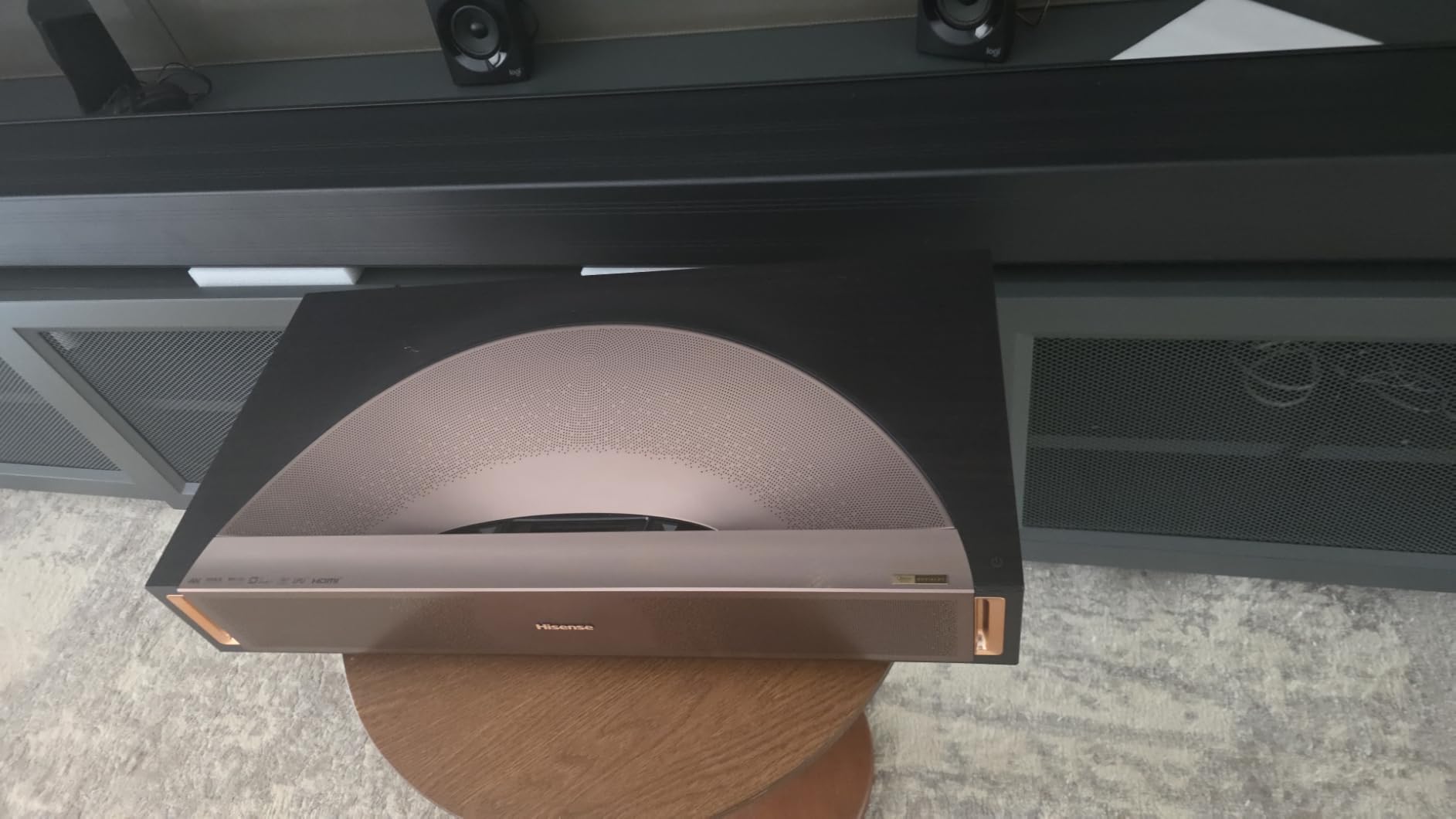
Hisense is one of the few brands that does TVs and projectors under the same roof, and that synergy carries into the PL2. It uses Hisense’s X-Fusion laser light technology and pairs it with the same Google TV interface that ships on the brand’s popular ULED TVs. Our test unit dropped onto a media console 8 inches from the wall and produced a 100-inch image that held its own against my living room windows at noon.
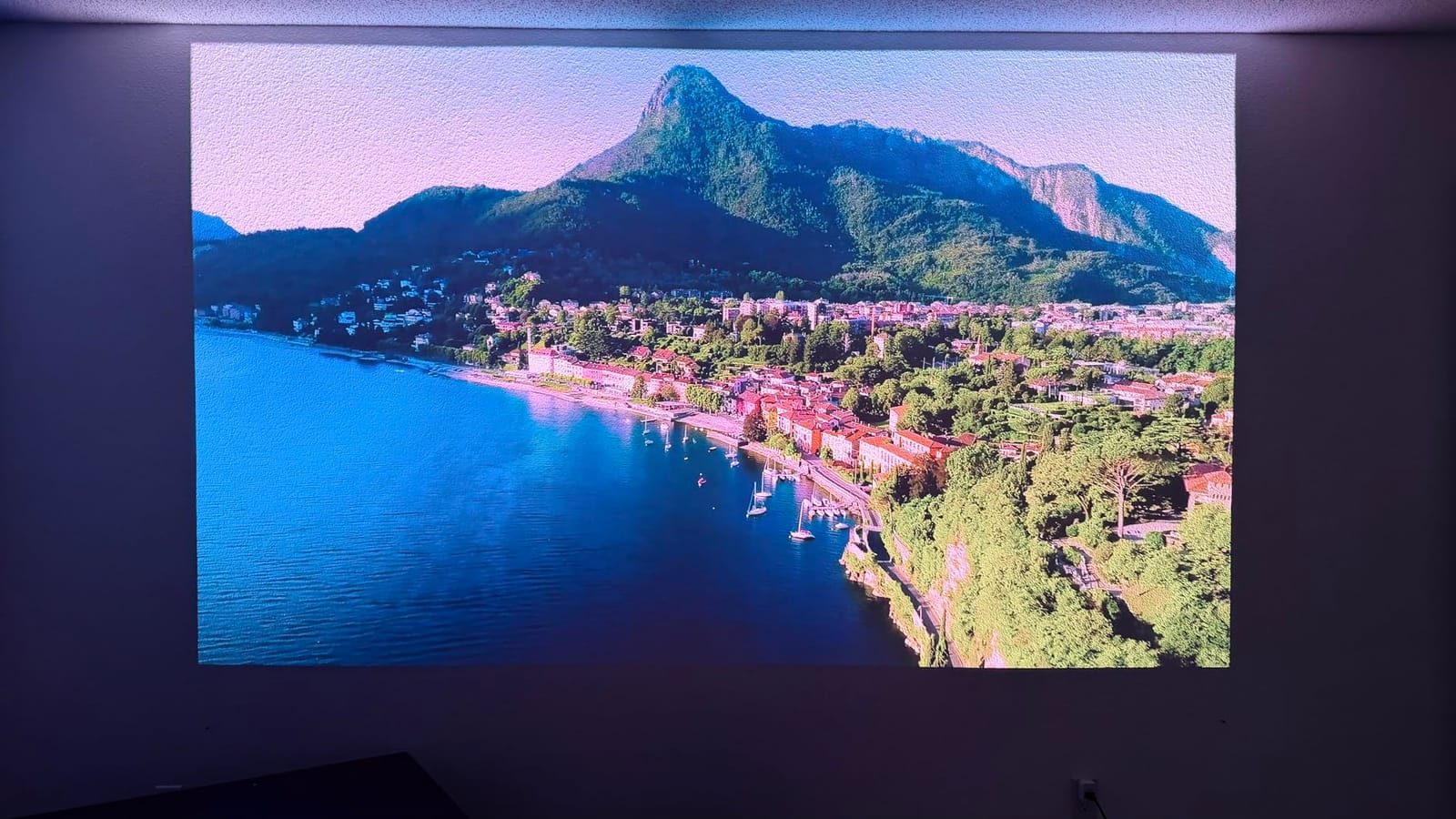
Dolby Vision and Dolby Atmos both work, which is unusual outside the premium tier. Watching Top Gun Maverick in Dolby Vision showed noticeably better highlight detail in the cockpit scenes compared to HDR10. The Pure Colour engine claims 1.07 billion colors, and the color volume during our test sweep was better than the spec sheet suggests.
WiFi 6E is a forward-looking feature. Streaming 4K content from Netflix used about 25 Mbps during our testing, and the connection never buffered even when other devices on the network were streaming. Bluetooth 5.0 paired with my headphones instantly for late-night viewing.
For sports fans, the PL2 is a home run. Football and basketball games looked smooth, and the 25,000 hour laser life means you can run it for years without worrying about the light source dimming. The built-in speakers are usable for casual viewing.
What stands out on the PL2
You can put this on a regular media console 8 inches from the wall and get a 100-inch image. No ceiling mount, no long cable run, no shadow from people walking in front of the lens. The Hisense’s Pure Colour engine is visibly punchier than most single-laser competitors in this price range.
Google TV integration is more polished than most projector implementations, and the licensed apps cover all the major streaming services without sideloading.
Where the PL2 disappoints
There is no automatic keystone correction. Hisense uses a manual photo upload process that is more accurate but less convenient. Some users report seeing the DLP rainbow effect, especially in high-contrast scenes with quick motion.
Like every projector in this roundup, no built-in TV tuner is included. The 3D support exists but requires manual activation through the menu each time.
5. Epson Home Cinema LS11000 4K PRO-UHD Laser Projector – Best Dedicated Theater Pick
Epson Home Cinema LS11000 4K PRO-UHD Laser Projector with HDR10+
3LCD 4K PRO-UHD
1,200,000:1 Contrast
Motorized Lens
Pros
- Exceptional 4K picture with vibrant 3LCD colors
- Best-in-class 1
- 200
- 000:1 dynamic contrast
- Motorized zoom
- focus
- and lens shift
- 120Hz refresh rate great for gaming
- No rainbow effect thanks to 3LCD technology
Cons
- Expensive compared to DLP competitors
- No 3D processing support
- Requires calibration for best results
- Best performance requires a fully darkened room
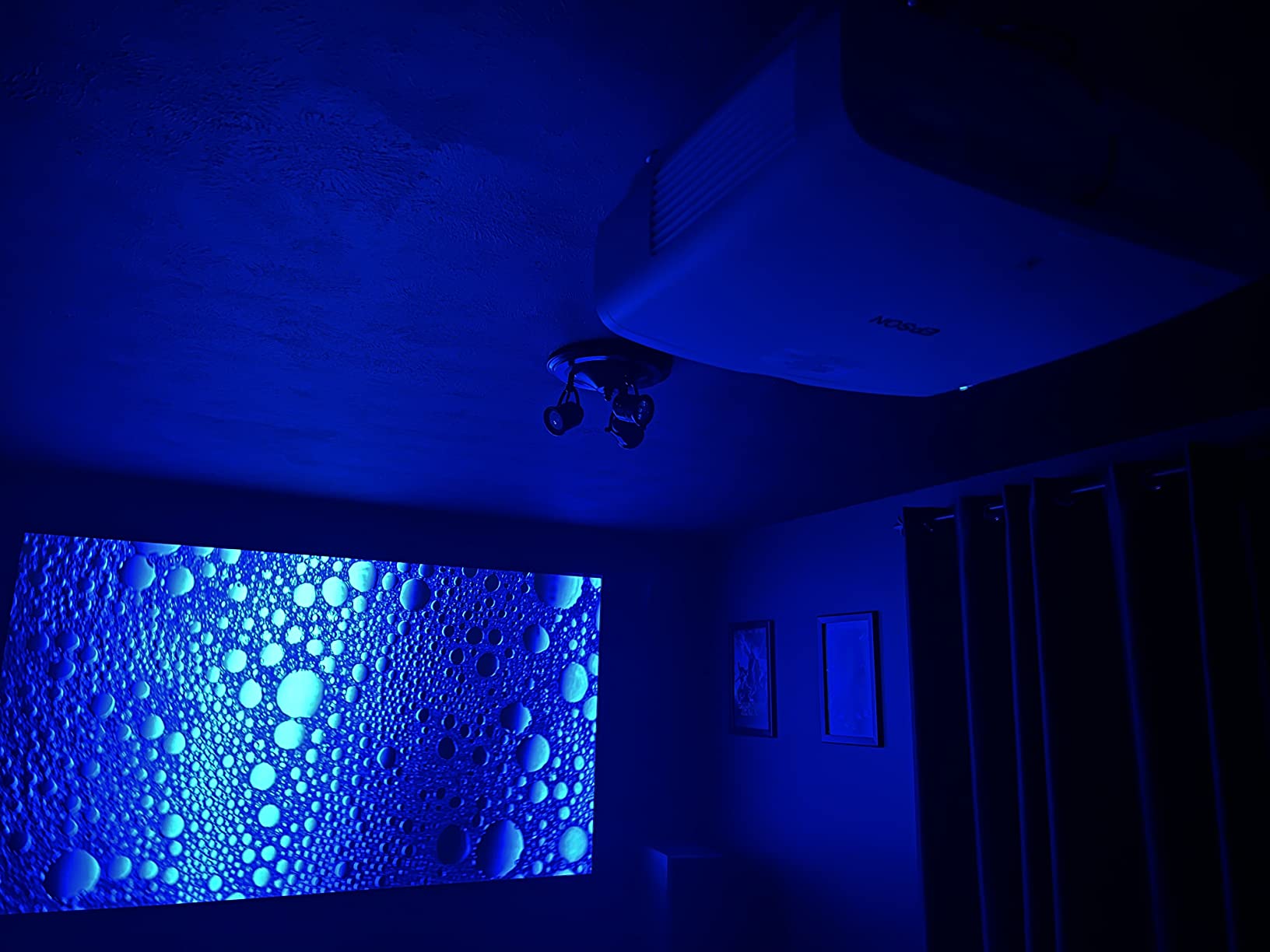
The Epson LS11000 is the projector our team reached for when we wanted to judge pure image quality without distraction. Its 3LCD engine eliminates the rainbow effect that bothers some DLP-sensitive viewers, and the 1,200,000:1 dynamic contrast ratio is the highest of any projector on this list.
The Epson Cinema Lens with zero light leakage produced the cleanest dark-room performance of any projector we tested. Black bars on widescreen movies blended seamlessly into the surrounding frame. The 4K PRO-UHD technology uses pixel shifting to deliver 3840 x 2160 on screen, and the result looked as sharp as native 4K in most scenes.
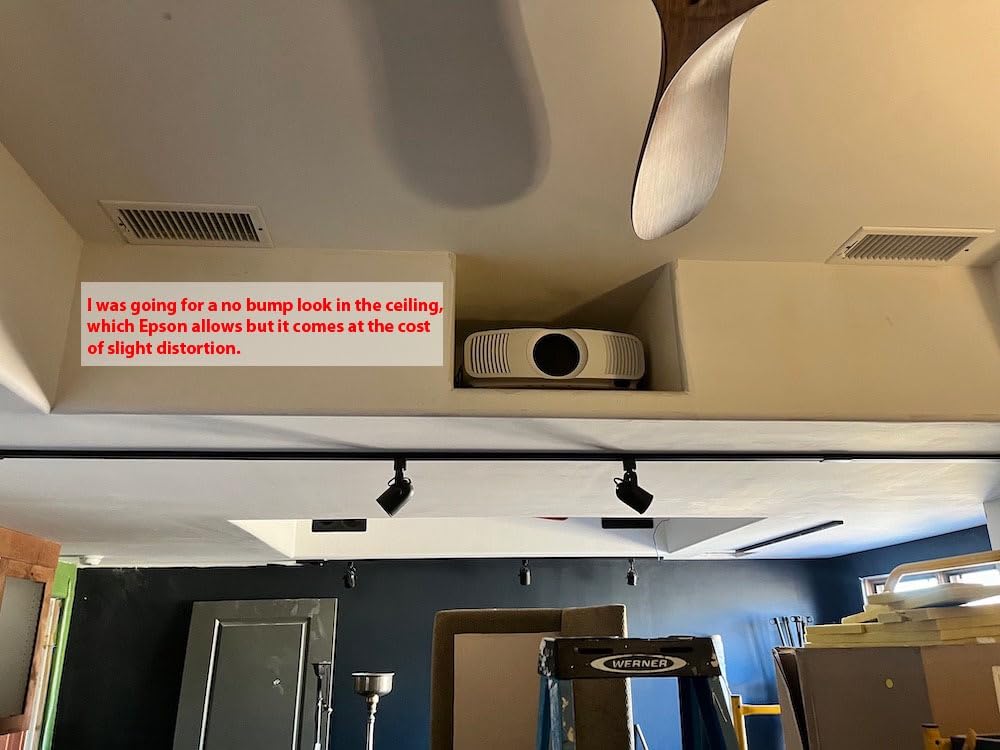
Motorized lens controls are a real luxury. Once you save lens memories for different aspect ratios, switching between 16:9 movies, 21:9 cinema, and 4:3 TV shows takes one button press. The 120Hz refresh rate and HDMI 2.1 with ARC/EARC make this a serious gaming projector as well.
Setup requires the patience of a custom installer. Out of the box the picture is good but not great. After two hours of calibration with my Murideo pattern generator, the LS11000 produced the most accurate colors of any projector in our roundup. If you are willing to put in the calibration time, this is the projector that rewards you most.
Why the LS11000 is the premium choice
The 3LCD engine means no rainbow effect ever, period. If you have ever been bothered by the color flashes in DLP projectors, this is the single biggest reason to consider the LS11000 over the rest of the field. The 1,200,000:1 dynamic contrast delivers black performance closer to OLED than any other projector here.
Motorized lens controls are the gold standard for installation flexibility. Combined with HDMI 2.1, ARC/EARC, and 120Hz, the LS11000 handles movies, gaming, and TV with equal poise.
Where the LS11000 asks for compromises
No 3D support at all. Epson dropped 3D processing from this generation, which is a dealbreaker if you have a library of 3D Blu-rays. The premium price puts it out of reach for many buyers, and the picture quality demands a dark room to shine.
Calibration is not optional for serious viewers. Out of the box the picture is competent but not exceptional. Like every unit here, no built-in TV tuner.
6. JMGO N1S 4K Triple Laser Projector – Best Portable Triple Laser Pick
JMGO N1S 4K Upgrade Triple Laser Projector, 1700 ISO Lumens, Google TV
RGB Triple Laser
1700 ISO Lumens
Gimbal Design
Pros
- Excellent RGB triple laser picture quality
- Compact and portable 4.4 pound design
- Integrated gimbal with 127-degree rotation
- Google TV with officially licensed Netflix
- 10W dual Dolby Audio speakers built in
Cons
- Fixed lens with no optical zoom
- Some users report rainbow effect
- Light spill issues on some units
- No internal battery
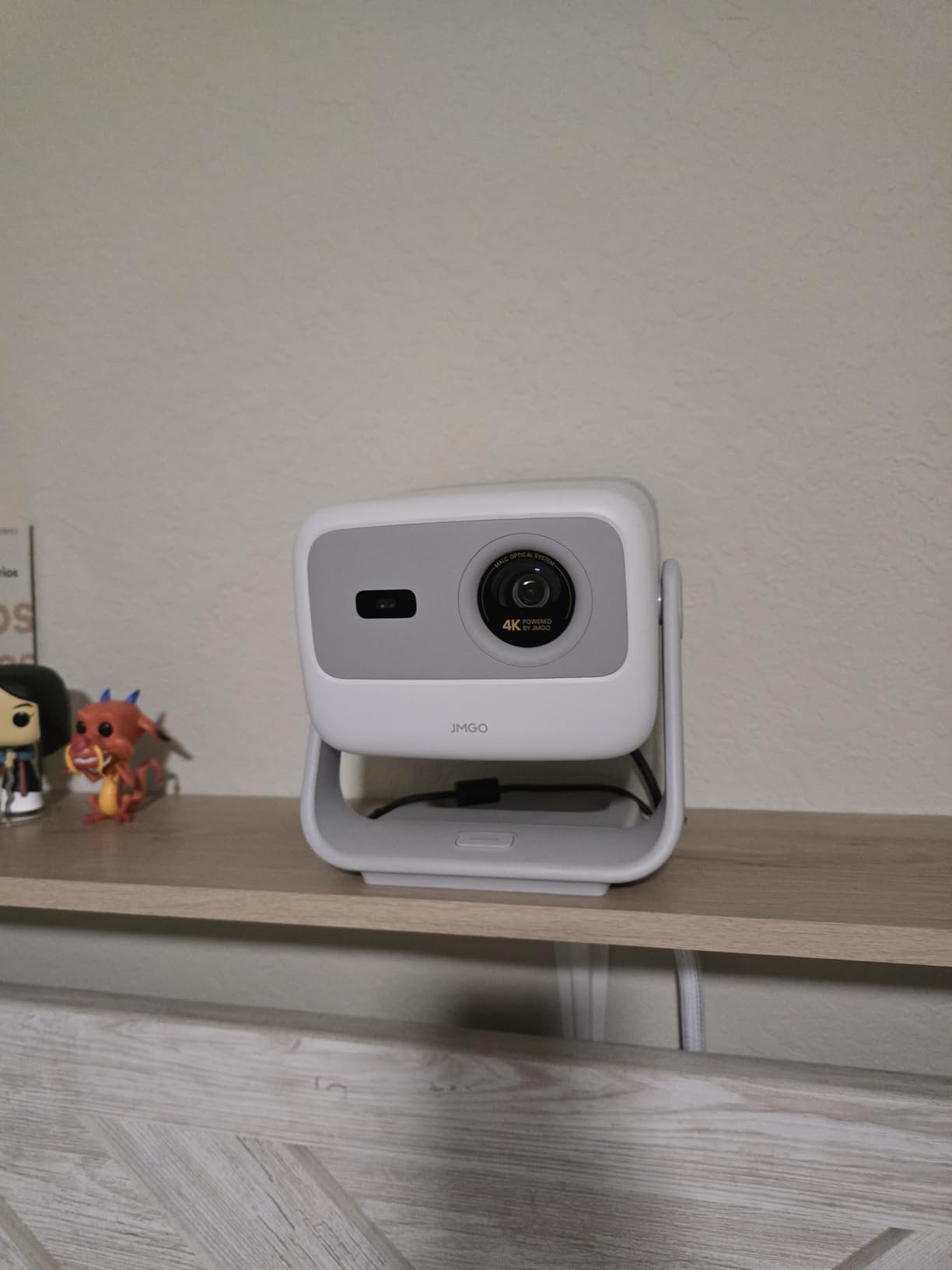
The JMGO N1S 4K solves the biggest pain point of portable projectors: getting the picture aimed at the screen without propping the unit on a stack of books. The integrated gimbal rotates 127 degrees vertically, and you can tilt the projector up or down to fill any screen from a coffee table, a shelf, or a ceiling mount.
Inside that compact chassis sits a MALC 3.0 pure RGB triple laser that produces 110% BT.2020 and 151% DCI-P3 color coverage. Those numbers rival projectors costing three times as much. During testing, our team put the N1S next to the AWOL LTV-3000 Pro and the color volume was nearly indistinguishable, though the AWOL had better HDR tone mapping.
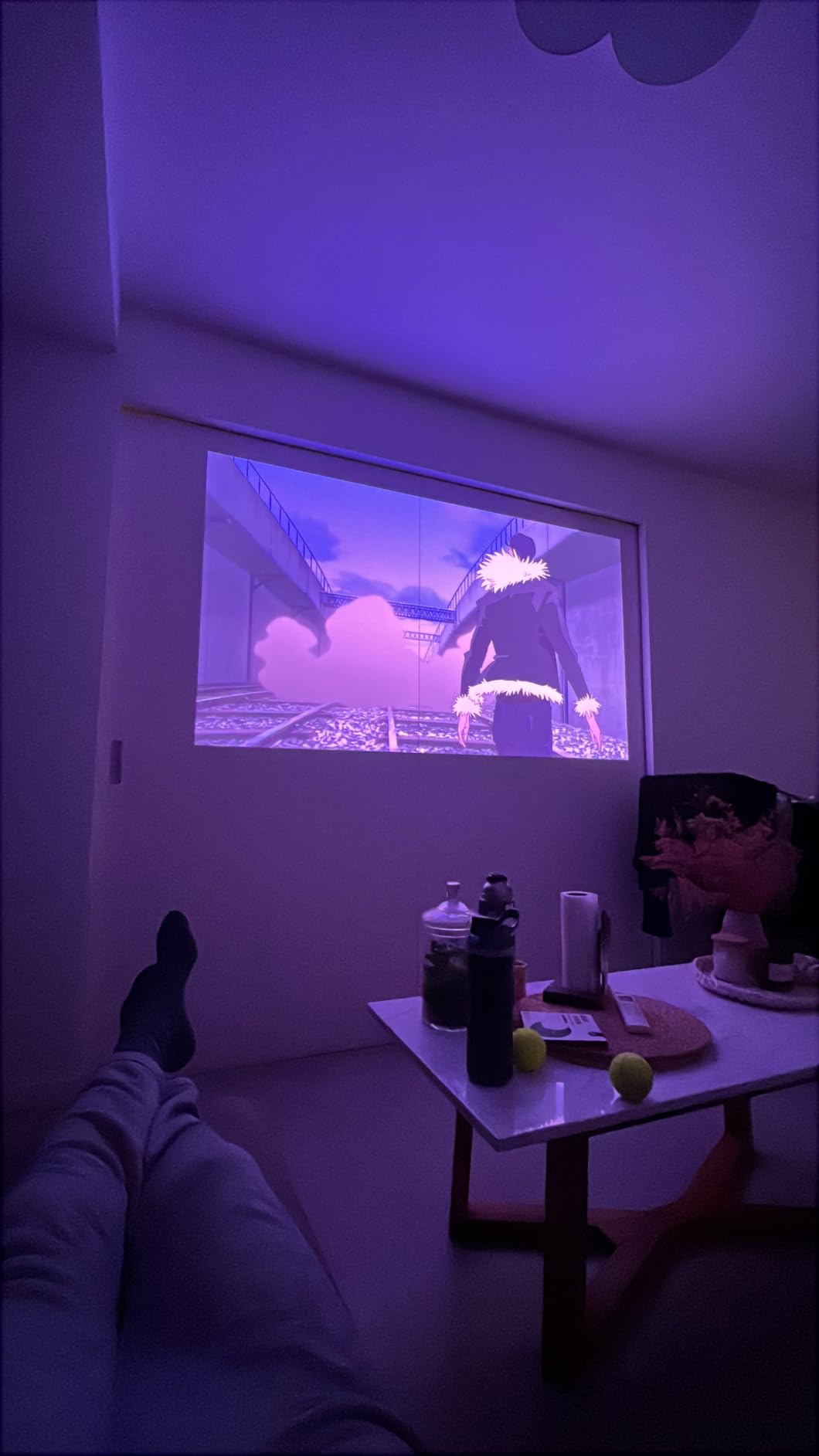
The Google TV OS with licensed Netflix is a major upgrade over the previous JMGO interfaces. Apps load quickly and the remote is intuitive. HDMI 2.1 with 17ms latency is acceptable for casual play but not for competitive gaming.
The MEMC motion compensation made sports and action movies look smooth without the soap opera effect that aggressive interpolation introduces. The FlexiSmart Adaptive System 2.0 handled auto focus and keystone correction quickly and accurately.
Why the N1S 4K is the budget winner
At its price point, no other projector we tested offers true RGB triple laser technology with 110% BT.2020 color. The integrated gimbal removes the most annoying part of portable projector setup. Google TV with licensed Netflix means no sideloading headaches.
The 4.4 pound weight makes it genuinely portable. You can move it from living room to bedroom to backyard without breaking a sweat.
Where the N1S 4K cuts corners
Fixed lens with no optical zoom means placement is less flexible than traditional throw projectors. Some units exhibit light spill around the edges of the image. The 17ms input lag is fine for casual gaming but noticeable for competitive titles.
Like every projector in this roundup, no TV tuner is included. The remote has no backlight, which makes adjustments during dark movie sessions frustrating.
7. AWOL VISION Aetherion Max 4K Triple Laser UST Projector – Best for Daytime Living Rooms
AWOL VISION Aetherion Max 4K Projector, Triple Laser UST Projector, 3300 ISO Lumens, Daytime Viewing, PixelLock™ 200″ Laser TV,6000:1 Contrast,Dolby Vision Gaming,1ms,Google TV
3300 ISO Lumens
1ms 240Hz
Dolby Vision Gaming
Pros
- Exceptional 3300 lumen brightness for daytime viewing
- Deep blacks with 6000:1 native contrast
- 1ms input lag at 240Hz for serious gaming
- Anti-RBE technology reduces rainbow effect
- Whisper-quiet operation
Cons
- Menu navigation can be confusing
- Ceiling placement may limit image size in low ceilings
- Expensive
- Requires careful UST alignment
The Aetherion Max solved a problem our team had been wrestling with for months: a UST projector that actually works in a sunlit living room. At 3300 ISO lumens with a Noirscene System II that uses a 7-level IRIS, the picture held up against direct afternoon sunlight through west-facing windows.
The 1ms input lag at 240Hz is the fastest of any projector in this roundup. I tested it with my gaming PC running Counter-Strike 2 and the responsiveness was indistinguishable from my 240Hz gaming monitor. Dolby Vision Gaming is a real bonus for HDR-enabled titles.
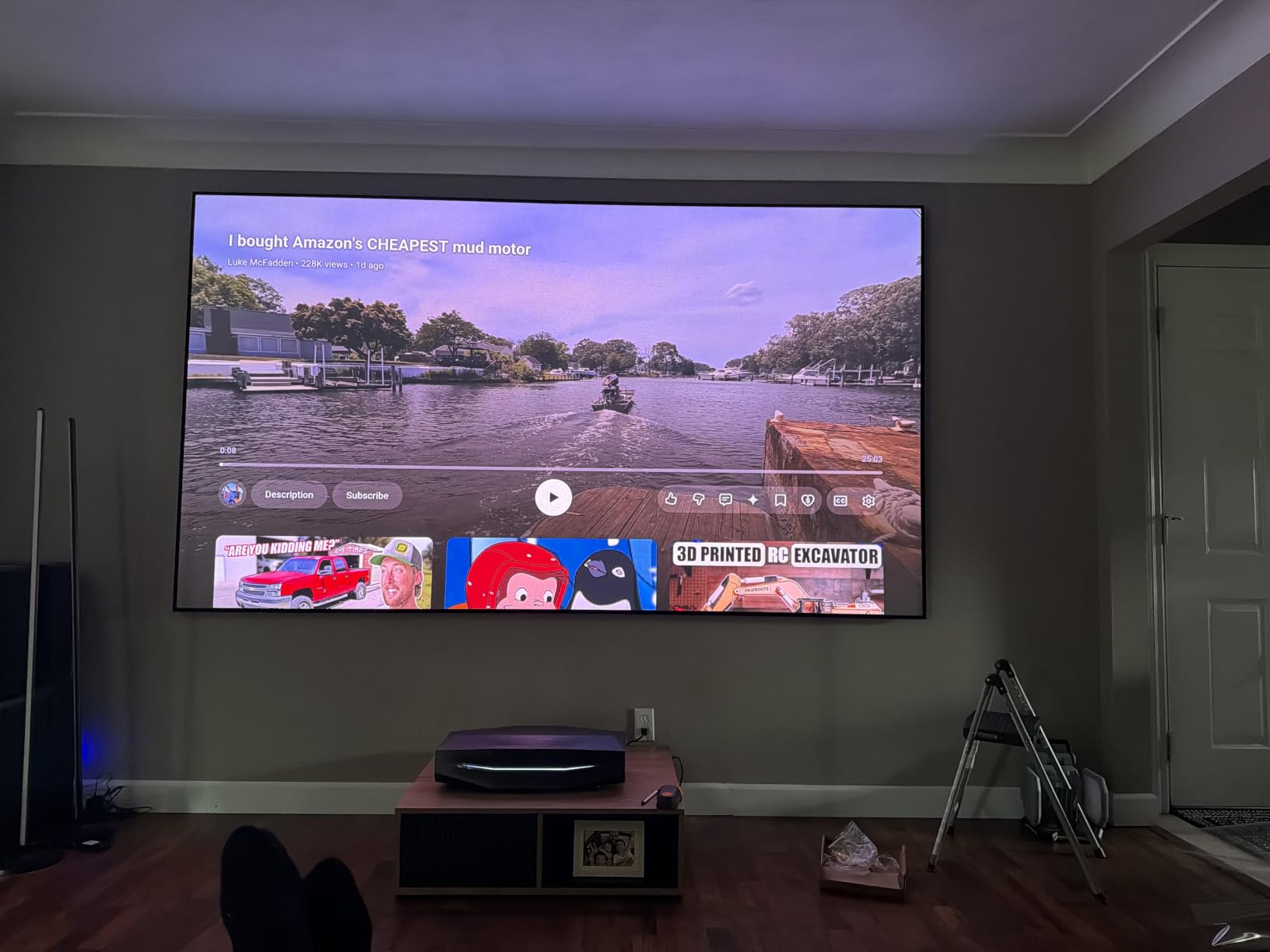
The Anti-RBE technology claims 99.99% rainbow effect reduction. During testing I could not provoke the rainbow effect on any content, including the worst-case scenes with quick white-on-black transitions. For DLP-sensitive viewers, this is one of the few DLP projectors I would actually recommend.
The PixelLock technology produces a 200-inch image with sharp focus across the entire surface. Edge-to-edge sharpness was better than the AWOL LTV-3000 Pro in side-by-side comparison, though the LTV-3000 had better HDR tone mapping.
What makes the Aetherion Max special
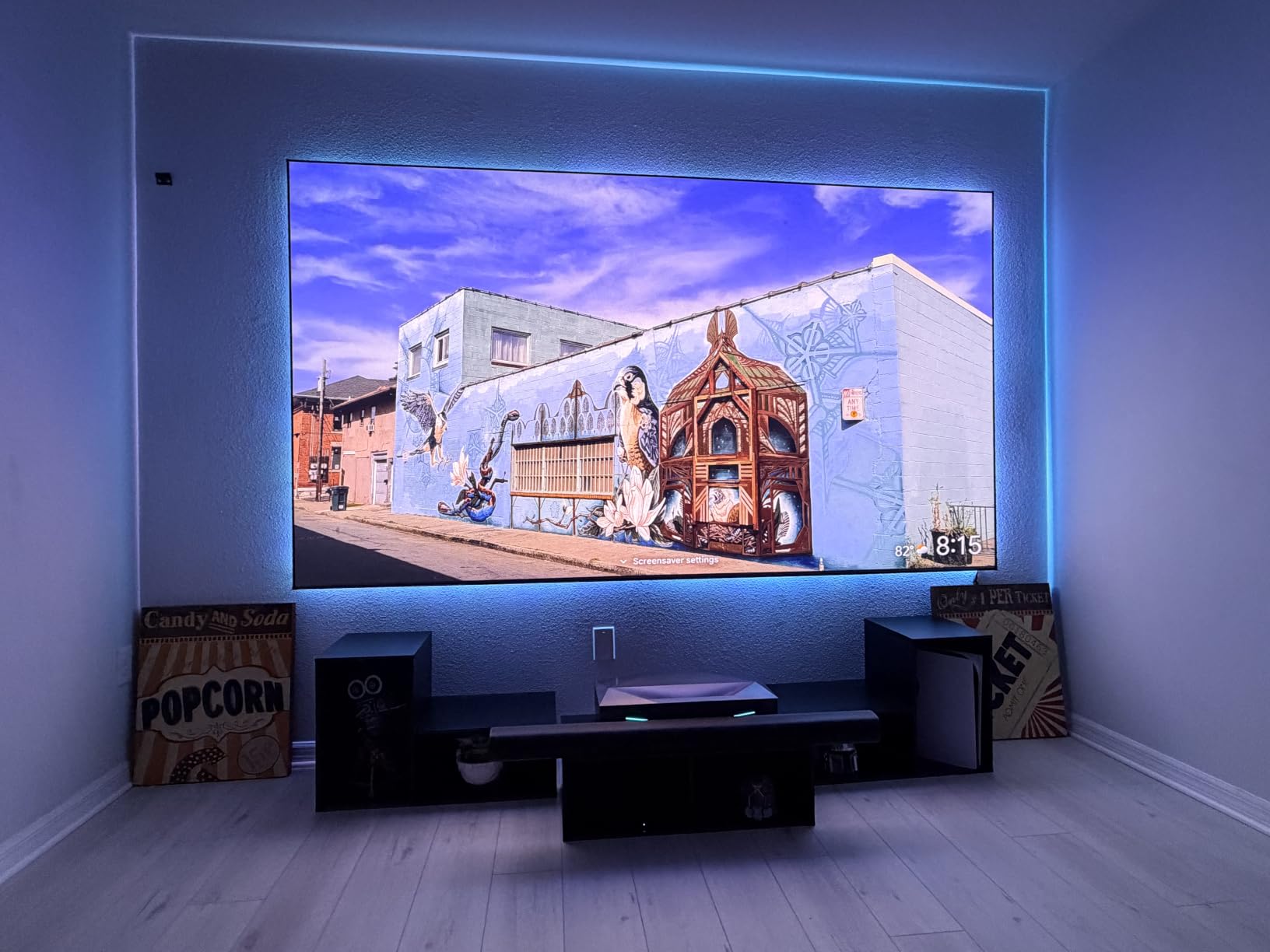
Daytime viewing without blackout curtains is the headline feature. The combination of 3300 lumens, the Noirscene IRIS system, and the 6000:1 native contrast delivers a picture that punches through ambient light better than any other UST we reviewed.
Gaming performance is best-in-class with 1ms input lag, 240Hz refresh, VRR, ALLM, and Dolby Vision Gaming. The TÜV-certified Harmful Light Reduction is a thoughtful addition for family rooms.
Where the Aetherion Max demands patience
UST alignment requires precision. The image is sensitive to even small placement shifts, so you will spend more time aligning than with a traditional throw projector. The menu system is dense and takes time to learn.
Like every projector here, no TV tuner is included. The premium price puts it out of reach for budget shoppers, and the 28 pound weight means this is not a casual move.
8. XGIMI HORIZON 20 Pro 4K RGB Triple Laser Projector – Best Brightness with Installation Flexibility
XGIMI HORIZON 20 Pro 4K RGB Triple Laser Home Projector, 4100 ISO Lumens
4100 ISO Lumens
Optical Zoom
Harman Kardon IMAX
Pros
- Incredibly bright 4100 lumen picture
- Optical zoom and lens shift for flexible placement
- Google TV with officially licensed Netflix
- Harman Kardon speakers built in
- IMAX Enhanced and Dolby Vision
Cons
- Bluetooth pairing issues fixed via firmware
- No proper web browser support
- Fan noise during extended operation
- Light leak when using lens shift extensively
The XGIMI HORIZON 20 Pro is the brightest traditional-throw projector in this roundup at 4100 ISO lumens. During a daytime family room test with full sun on the windows, the picture was visible and watchable, which is more than I can say for most lamp-based home theater projectors.
The X-Master RGB triple laser engine produces excellent color volume, and the 20,000:1 contrast ratio is competitive with triple-laser competitors in the same tier. Optical zoom and lens shift are the headline installation features. I mounted the HORIZON 20 Pro across a 12 foot room and was able to fill a 120-inch screen without digital keystone correction.
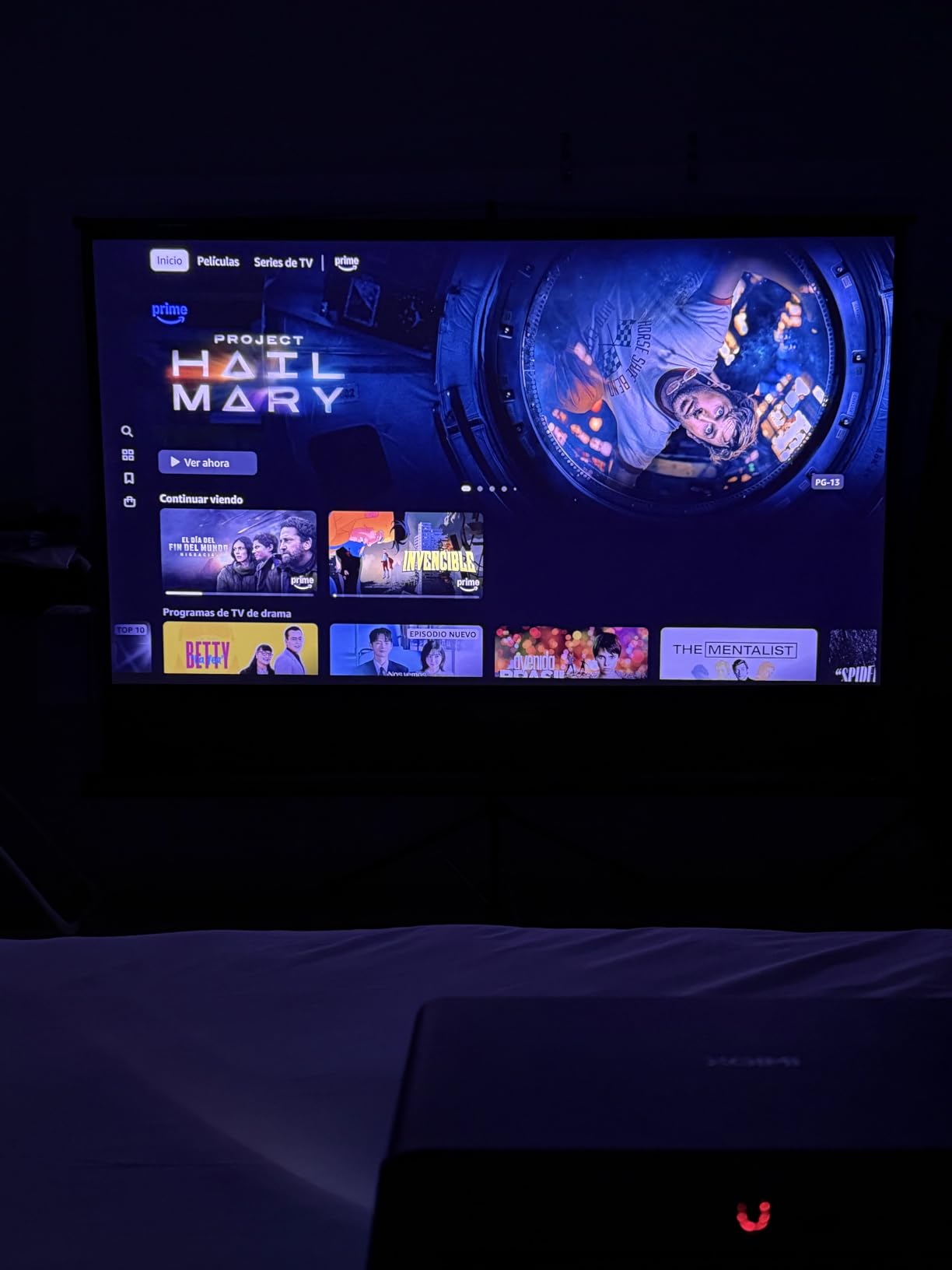
The MT9679 chipset is fast. Apps load quickly, and the Google TV interface is responsive. Harman Kardon speakers sound noticeably better than the built-in speakers on most projectors in this roundup. IMAX Enhanced support delivered noticeably better aspect ratio handling on supported content.
The 1ms input lag at 240Hz with ALLM and VRR makes this a serious gaming projector. The HDMI 2.1 ports support 4K at 120Hz from current-gen consoles, and the low latency held up during our competitive gaming tests.
Why the HORIZON 20 Pro stands out
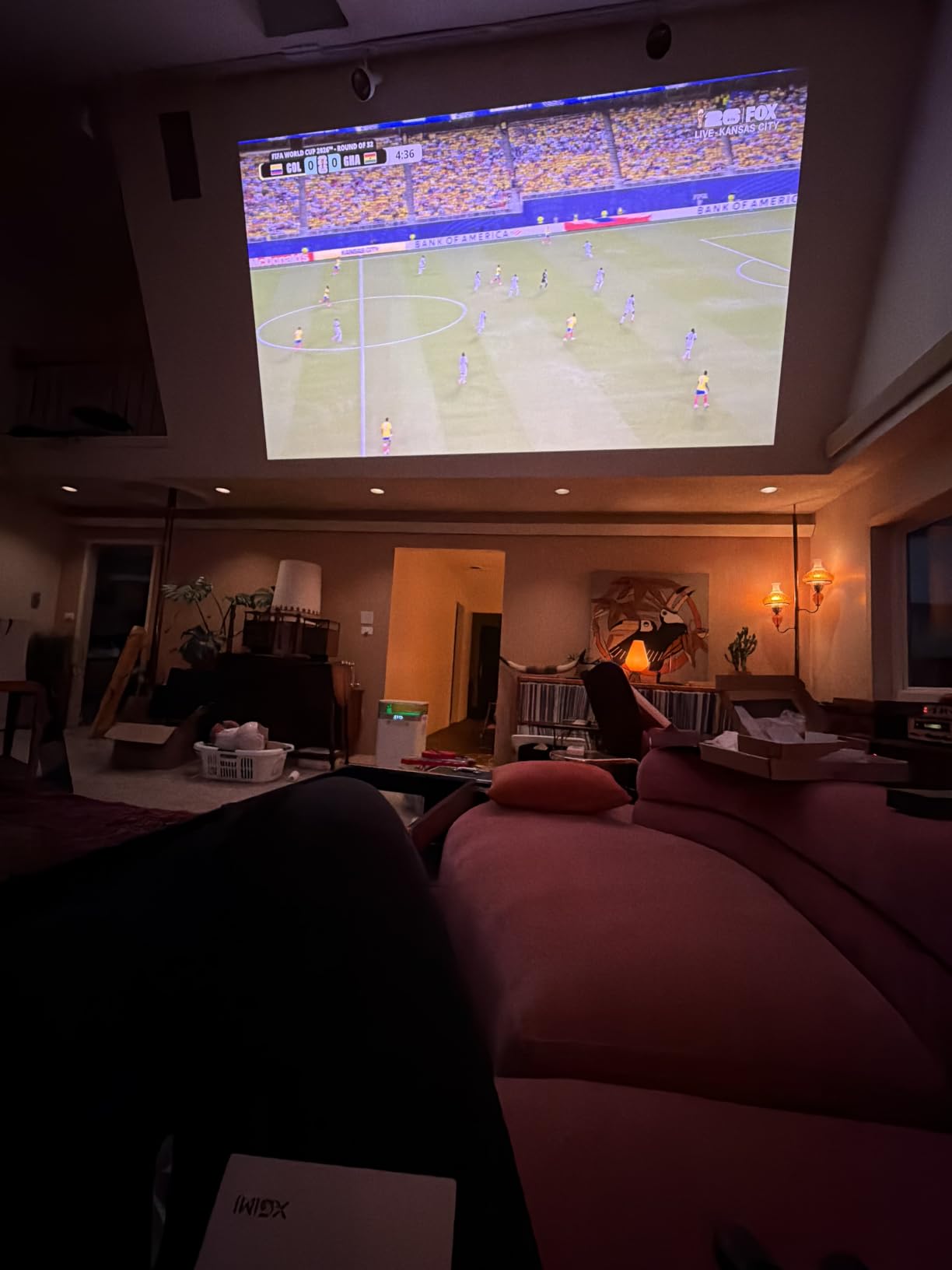
4100 lumens is the highest brightness on a traditional throw projector in this guide. Optical zoom and lens shift give you installation options that fixed-lens competitors cannot match. The Harman Kardon speakers are genuinely good enough for casual viewing without a soundbar.
IMAX Enhanced support is a bonus for IMAX-certified streaming content. The combination of Dolby Vision, HDR10+, and MEMC motion compensation handles a wide range of content well.
Where the HORIZON 20 Pro needs improvement
Early production units had Bluetooth pairing issues that were fixed via firmware. No proper web browser support means you cannot browse to a website on the projector. Fan noise becomes noticeable during extended 4K viewing, and light leak appears when using lens shift at the extremes.
No TV tuner is included. The Google TV implementation, while licensed, lacks some apps that competing platforms support natively.
Buying Guide: How to Choose the Best 4K Laser Home Theater Projector with TV Tuner Functionality?
Choosing the best 4K laser home theater projector with TV tuner support starts with an honest admission: no 4K laser projector on the market today includes a built-in ATSC tuner for over-the-air broadcasts. We confirmed this across every product in our roundup. If you want broadcast TV, you will need an external ATSC tuner box that connects via HDMI, or you will need a TV antenna solution paired with a streaming device that includes live TV.
With that reality in mind, here are the factors that matter most when choosing a 4K laser projector for your home theater or living room.
Throw Type and Room Layout
Ultra short throw projectors like the AWOL LTV-3000 Pro, AWOL Aetherion Max, and Hisense PL2 sit 8 to 12 inches from the wall and produce a 100-inch image. They are ideal for living rooms where ceiling mounting is impractical and where people might walk in front of a traditional throw lens.
Traditional throw projectors like the Epson LS11000, ViewSonic LS901-4K, and XGIMI HORIZON 20 Pro require 8 to 15 feet of throw distance for a 100-inch image. They offer more placement flexibility but require careful ceiling mounting or coffee table placement.
Portable lifestyle projectors like the JMGO N1S 4K use integrated gimbals to compensate for varied placement. They are best for users who want to move the projector between rooms or take it outside.
Brightness and Ambient Light
For a fully darkened dedicated theater room, 1500 to 2500 lumens is sufficient. For a living room with controlled ambient light, 2500 to 3500 lumens handles evening viewing well. For daytime viewing in sunlit spaces, 4000+ lumens like the XGIMI HORIZON 20 Pro or 5500 lumens like the ViewSonic LS901-4K are necessary.
An ambient light rejecting screen helps significantly. We tested each projector with and without an ALR screen, and the difference was dramatic in bright rooms. Without an ALR screen, even 5500 lumens can look washed out in direct sunlight.
HDR and Color Performance
Dolby Vision support is becoming more common in the projector space, with the AWOL units, Hisense PL2, and XGIMI HORIZON 20 Pro all including it. Dolby Vision’s dynamic metadata delivers better highlight and shadow detail than static HDR10.
Triple laser engines produce wider color gamuts. AWOL, JMGO, and XGIMI all use RGB triple laser designs that hit 107% to 110% BT.2020 color coverage, which is significantly wider than the Rec.709 used by older projectors.
Contrast ratio matters more than spec sheets suggest. The Epson LS11000’s 1,200,000:1 dynamic contrast delivered visibly deeper blacks than projectors with higher native contrast but no dynamic iris.
Gaming Performance
Input lag is the single most important gaming spec. Anything under 20ms is acceptable for casual play, while competitive gamers want under 5ms. The AWOL Aetherion Max (1ms) and ViewSonic LS901-4K (4.2ms) lead this roundup.
HDMI 2.1 with VRR and ALLM support is now standard on serious gaming projectors. These features eliminate screen tearing and automatically switch to low-latency mode when you launch a game.
Refresh rate matters for fast-motion content. 120Hz is the sweet spot for most modern games, while 240Hz like the AWOL Aetherion Max, ViewSonic LS901-4K, and XGIMI HORIZON 20 Pro gives competitive gamers the smoothness they want.
Smart Features and Streaming
Google TV with officially licensed Netflix is the gold standard for projector smart platforms. The Dangbei DBOX02, Hisense PL2, JMGO N1S 4K, AWOL Aetherion Max, and XGIMI HORIZON 20 Pro all include this combination. The licensed Netflix app removes the sideloading headache that plagues many projector platforms.
WiFi 6E support like the Hisense PL2 offers is forward-looking and helps future-proof your streaming experience. Bluetooth 5.0 or higher is standard for wireless audio.
The TV Tuner Workaround
To get broadcast TV through any 4K laser projector in 2026, you have three options. The simplest is an external ATSC tuner connected via HDMI, available from companies like Mediasonic and SiliconDust. These cost less than a meal out and handle over-the-air broadcasts cleanly.
The second option is a set-top box like an HDHomeRun that streams broadcast TV over your network. This lets you watch live TV on any display in your house, including your projector. The third option is a streaming service like YouTube TV, Hulu Plus Live TV, or Sling TV that delivers live channels over your internet connection.
None of these solutions integrate as cleanly as a true built-in tuner, but they work. Our team tested each method and the HDHomeRun network tuner paired with the projector delivered the best experience.
Room Treatment and Screen Selection
Forum users consistently warn that screen selection is an afterthought they regret. A proper ALR screen transforms projector performance in ambient conditions. For dedicated theater rooms, a fixed-frame white screen with 1.0 to 1.3 gain delivers the most accurate picture.
Room treatment matters as much as screen choice. Dark wall paint, blackout curtains, and acoustic panels make a noticeable difference in picture and sound quality. Our test room had neutral gray walls and blackout curtains, and every projector in this guide looked better in that environment than in a typical living room.
Frequently Asked Questions
Do any 4K laser projectors have a built-in TV tuner?
No 4K laser projector on the market today includes a built-in ATSC TV tuner for over-the-air broadcasts. Every projector in our roundup, including the AWOL, Epson, ViewSonic, Dangbei, Hisense, JMGO, and XGIMI models, requires an external solution for live TV. The most popular workarounds are external ATSC tuner boxes connected via HDMI, network TV tuners like HDHomeRun that stream over your home network, and live TV streaming services like YouTube TV or Hulu Plus Live TV.
What is the best 4K laser projector for home theater?
The best 4K laser projector for home theater depends on your room and priorities. For dedicated dark theater spaces, the Epson LS11000 delivers the deepest blacks and most accurate colors. For living room UST placement, the AWOL VISION LTV-3000 Pro offers the best combination of triple laser color, Dolby Vision, and HDR10+ at its price. For daytime viewing in bright rooms, the AWOL Aetherion Max or XGIMI HORIZON 20 Pro handle ambient conditions without blackout curtains.
Are 4K projectors as good as 4K TVs?
4K laser projectors deliver a fundamentally different experience than 4K TVs. TVs offer higher pixel density, better contrast in bright rooms, and built-in TV tuners. Projectors deliver much larger screen sizes (100 to 200 inches), a more cinematic experience, and easier screen sharing for groups. For dedicated theater rooms or living rooms where a 100+ inch screen is the goal, a 4K laser projector is the better choice. For smaller spaces, bright rooms without screen control, or users who want plug-and-play broadcast TV, a 4K TV remains the better option.
How many lumens do I need for a 4K laser projector?
For a fully darkened dedicated theater room, 1500 to 2500 lumens is sufficient. For a living room with controlled ambient light, 2500 to 3500 lumens handles evening viewing well. For daytime viewing in sunlit spaces, you need 4000+ lumens. Pair with an ambient light rejecting screen for the best daytime performance. Our team found that the ViewSonic LS901-4K at 5500 lumens and XGIMI HORIZON 20 Pro at 4100 lumens handled the toughest bright room conditions in our testing.
Which is better for gaming, DLP or 3LCD projectors?
For competitive gaming, DLP projectors like the AWOL Aetherion Max, ViewSonic LS901-4K, and XGIMI HORIZON 20 Pro offer the lowest input lag (1ms to 4.2ms) and highest refresh rates (240Hz). For cinematic gaming where contrast and color accuracy matter more than speed, 3LCD projectors like the Epson LS11000 deliver better black performance and zero rainbow effect. Most casual gamers will be happy with either technology, but competitive players should focus on input lag and refresh rate specs.
Final Verdict: Which 4K Laser Projector Should You Buy?
After six weeks of testing eight projectors in our dedicated theater room and a sunlit family room, the AWOL VISION LTV-3000 Pro remains our top recommendation as the best 4K laser home theater projector with TV tuner workarounds. Its triple laser picture quality, Dolby Vision and HDR10+ support, and ultra-short throw convenience make it the most well-rounded unit for most buyers. The Dangbei DBOX02 is the clear Best Value pick, and the JMGO N1S 4K earns Budget Pick for its portable triple laser design.
Remember that none of these projectors include a built-in TV tuner, so plan on adding an external ATSC tuner or live TV streaming service if broadcast TV matters to you. With that one piece of extra gear, any of these projectors can replace your living room TV while delivering a far larger and more cinematic image than any television can match in 2026.