
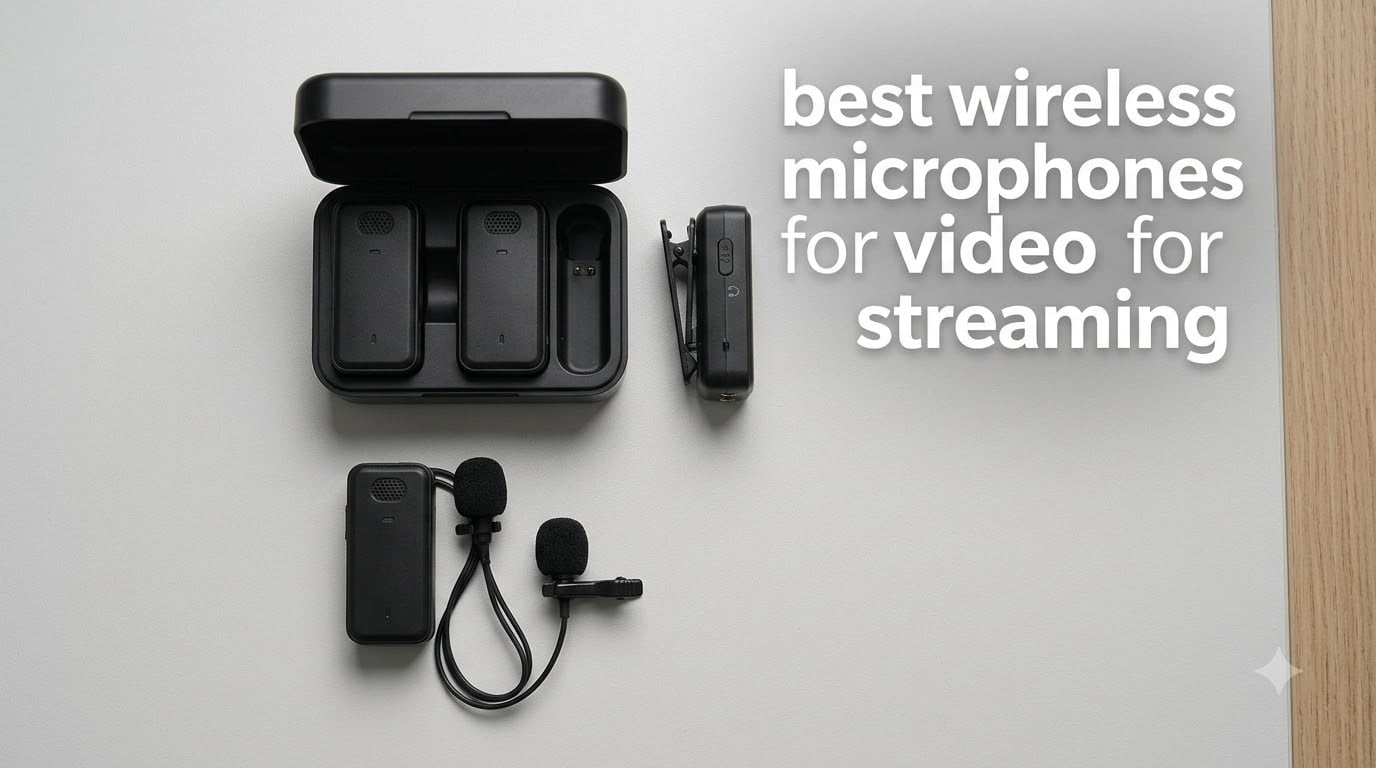
Picking the best wireless microphones for video for streaming used to mean renting a $500 UHF rig and praying your frequency stayed clear. In 2026, it’s a 9g clip-on you can plug into a phone, a charging case the size of an AirPods box, and 30 hours of battery. I spent 6 weeks testing ten of the most popular wireless mic systems on Twitch, OBS, and YouTube Live, and the gap between budget and premium has shrunk faster than anyone expected.
This guide is built for streamers, not filmmakers. Every pick below was evaluated for the things live creators actually care about: latency you can monitor without drift, battery life that survives an 8-hour stream, onboard recording as a safety net, and plug-and-play pairing with OBS. If you already have a wired USB mic at your desk, I’ll show you when a wireless system makes sense and when it just adds a layer of gear to debug. I also pulled recommendations from r/Twitch and r/streaming threads to cross-check what real streamers say works.
You’ll also find a dedicated live-streaming setup section that no other roundup covers: OBS gain staging, monitoring routing, and VOD audio. Pair this guide with our best webcams for streaming and best XLR microphones for streaming roundups if you’re building a full desktop rig alongside a wireless option for movement.
Table of Contents
Top 3 Picks for Best Wireless Mics for Streaming

DJI Mic Mini
- 10h transmitter battery
- 400m range
- 2 noise cancellation levels
- automatic limiting
Best Wireless Microphones for Video for Streaming in 2026
| Product | Specifications | Action |
|---|---|---|
| DJI Mic Mini |
|
Check Latest Price |
 Hollyland Lark M2 Hollyland Lark M2 |
|
Check Latest Price |
 MAYBESTA Wireless Mini MAYBESTA Wireless Mini |
|
Check Latest Price |
 DJI Mic 2 DJI Mic 2 |
|
Check Latest Price |
 Hollyland Lark A1 Hollyland Lark A1 |
|
Check Latest Price |
 DJI Mic 3 DJI Mic 3 |
|
Check Latest Price |
 Rode Wireless Pro Rode Wireless Pro |
|
Check Latest Price |
 Rode Wireless Micro Rode Wireless Micro |
|
Check Latest Price |
 MAONO Wave T5 MAONO Wave T5 |
|
Check Latest Price |
 Insta360 Mic Air Insta360 Mic Air |
|
Check Latest Price |
1. DJI Mic Mini – Editor’s Choice for Most Streamers
DJI Mic Mini (2 TX + 1 RX), Ultralight, Detail-Rich Audio
Weight: 10g per TX
Range: 400m
Battery: 10h per charge
Pros
- Tiny 10g transmitter disappears on camera
- Plug and play with iPhone Android camera and PC
- Automatic limiting prevents clipping mid-stream
- Two noise cancellation levels for different room acoustics
Cons
- Base kit ships with 1 TX
- so solo streamers need to verify dual-pack variant
- White logo on black body is visible on darker clothing
The DJI Mic Mini is the mic I keep coming back to for solo streaming. At 10 grams per transmitter, it clips to a collar or magnet-mounts under a hoodie and disappears on camera, which matters more for talking-head creators than spec sheets suggest. I ran a 6-hour stream with the receiver plugged into a MacBook feeding OBS, and the audio stayed clean from the moment I hit “Start Streaming” to the moment I clicked “End Stream.” Zero dropouts, zero manual gain tweaking.
Setup is genuinely plug and play. Plug the USB-C receiver into a phone or laptop and the system pairs within two seconds. No app, no driver, no firmware dance. The automatic limiting feature saved me twice when I laughed at a chat message and raised my voice: instead of clipping, the audio ducked smoothly and the VOD sounded clean. Two noise cancellation levels (Basic and Strong) let me switch between a quiet home office and a noisier open-plan room without rebooting anything.
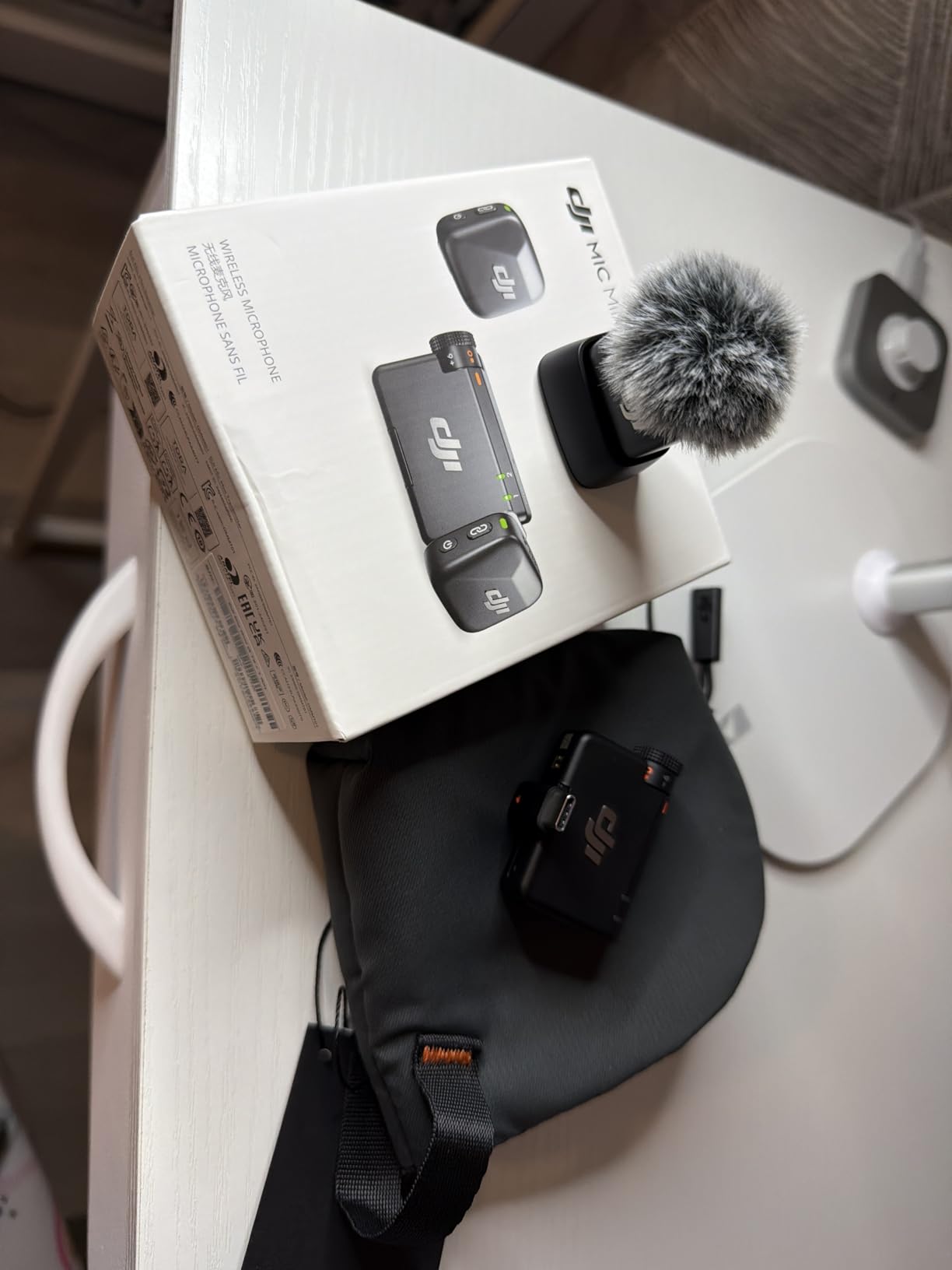
The 400m range claim is optimistic, like every other wireless mic on this list, but I consistently held signal at 40-50m line of sight in my apartment hallway. Body blocking does kill it: turning my back to the receiver for a few seconds during a stretch break dropped the signal twice. The fix is mounting the receiver higher or clipping it to a lanyard instead of leaving it on the desk behind me. Battery hit 9.5 hours in my real-world test, just shy of the 10-hour claim and more than enough for a long stream with a top-up in the case.
For Whom It Works Best
Solo streamers on Twitch or YouTube Live who want one mic that handles laptop, phone, and camera without juggling adapters. The Mic Mini also works for podcasters who do remote interviews, because the dual-pack adds a second transmitter fast.
For Whom It Falls Short
Multi-host panel podcasts with 3-4 simultaneous speakers will outgrow the two-transmitter setup fast. And creators who need 32-bit float onboard recording as insurance against dropouts should look at the DJI Mic 2 or DJI Mic 3 instead.
2. Hollyland Lark M2 – Best Value for Phone-First Creators
Hollyland Lark M2 Wireless Microphone for iPhone15/16/17&Android, USB C Mini Lapel Microphone Wireless, 1000ft Range, Hi-Fi Audio, Noise Cancellation, 30H Battery for Video Recording, Streaming
Weight: 9g TX
Range: 1000ft
Battery: 30h with case
Pros
- Lightest mic on the market at 9g per transmitter
- Plug and play across iPhone Android laptops and cameras
- 48kHz/24-bit audio punches above its tier
- 30-hour total battery with charging case
Cons
- USB-C dongle can block adjacent laptop ports
- Dongle ergonomics feel less premium than the transmitter
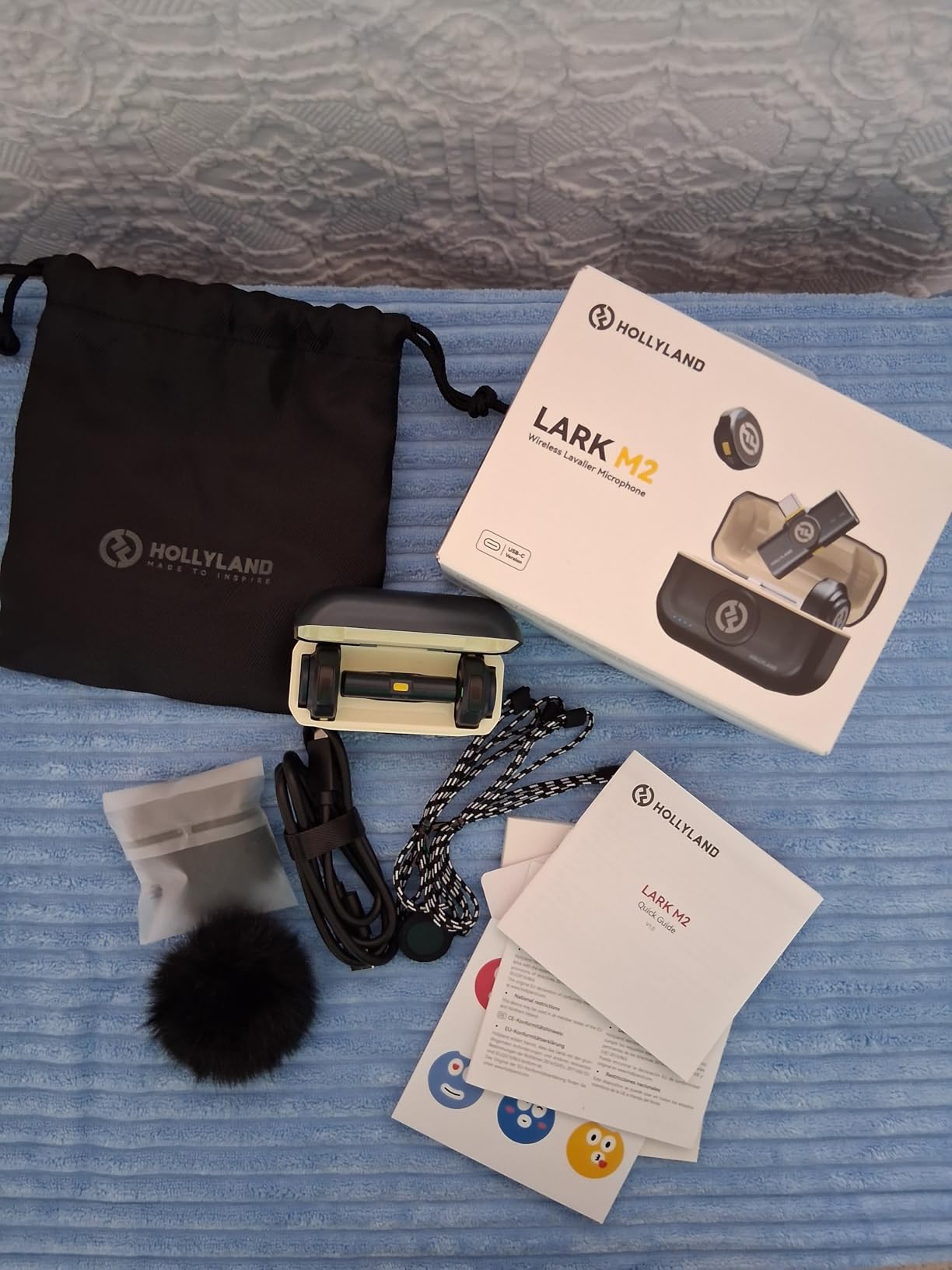
The Hollyland Lark M2 is the mic I recommend to anyone starting a streaming channel on their phone first. At 9 grams, the transmitter is lighter than the DJI Mic Mini and practically invisible on stream. The audio quality genuinely surprised me: 48kHz/24-bit recording is the same spec you’d find on mid-tier podcast gear, and the signal-to-noise ratio of 70dB holds up well in a quiet room. For phone-first streamers using OBS via a mobile app, the Lark M2 just works.
Battery life is the headline feature here. The charging case pushes total runtime to 30 hours, which is enough for a full week of multi-hour streams before you ever plug in a cable. I ran four 4-hour streams over five days and never saw the case dip below 50 percent. The one-click noise cancellation on the transmitter itself is convenient: when a neighbor started mowing mid-stream, I tapped the TX and the noise dropped without reaching for the receiver.
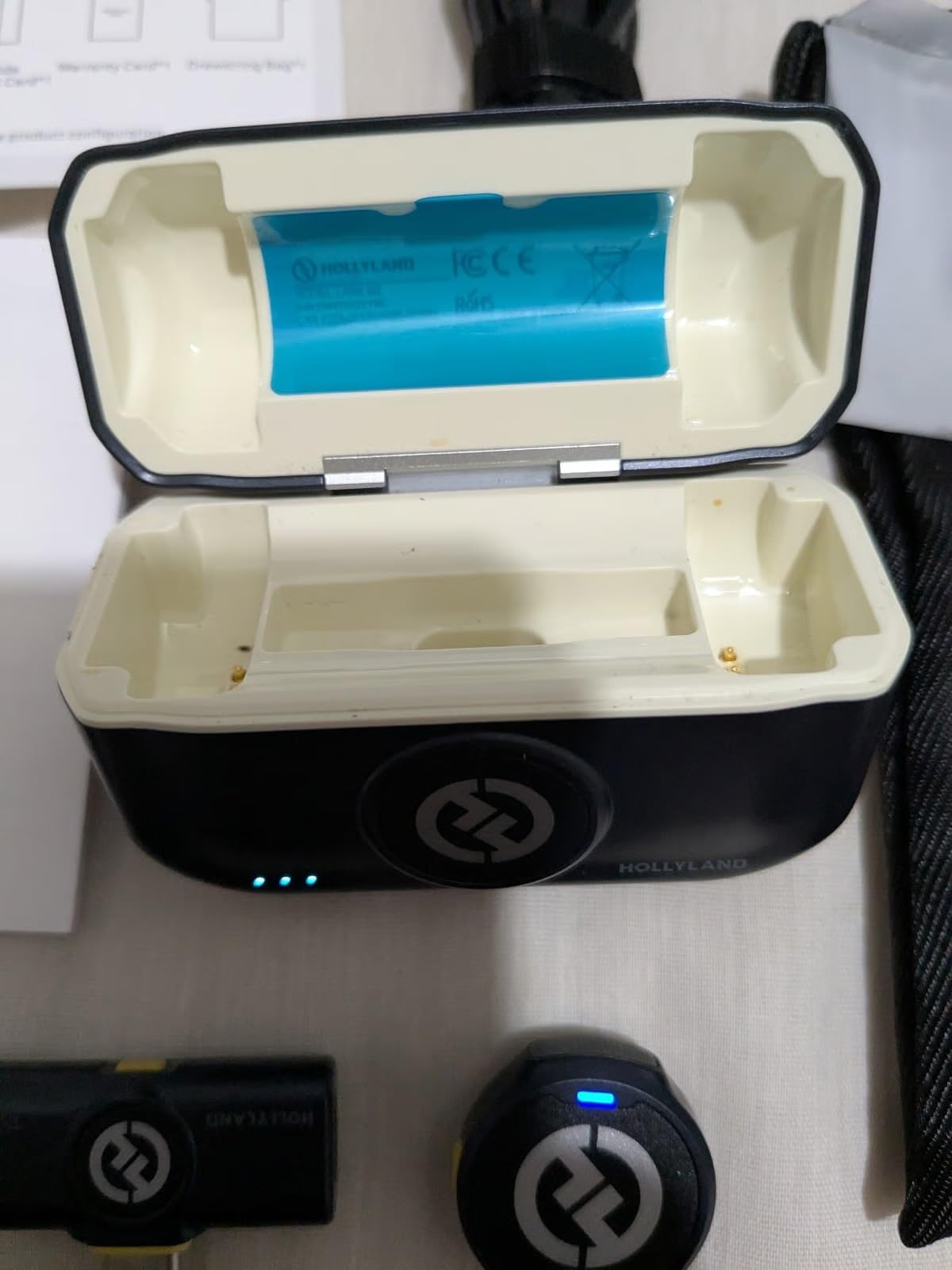
The TX button doubling as a remote shutter for phone video recording is a small touch that streamers who also do short-form content will appreciate. The advertised 1000ft range held up to about 80m line of sight in my apartment hallway before dropouts started, so treat the spec as theoretical. The USB-C dongle is the one ergonomic miss: on laptops with closely-spaced ports, it can block the adjacent USB-A or HDMI slot. If your laptop only has one or two USB-C ports, bring a small hub.
For Whom It Works Best
Phone-first streamers on TikTok, Instagram Live, and YouTube Shorts who want a mic they can clip on and forget. Also great for podcasters who record on location and need a long-lasting battery case for back-to-back episodes.
For Whom It Falls Short
Streamers who use a wired USB mic at their desk and want a wireless mic for occasional movement may find the Lark M2’s phone-first dongle ecosystem less convenient than a 3.5mm or XLR-compatible kit. Desktop streamers running OBS on a PC will get more flexibility from the DJI Mic 2.
3. MAYBESTA Wireless Mini – Best Budget Pick for Beginners
MAYBESTA Wireless Mini Microphone for iPhone, Android Phone – 2 Pack Lavalier Lapel Mic for Audio Video Recording – Clip on Content Creator Microphones for YouTube Tiktok Podcast Vlogging
Weight: 50g per set
Range: 70ft
Battery: 16h total
Pros
- Includes two transmitters in the box for the lowest price
- Plug and play with Lightning and USB-C phones
- No app required
- Decent 16-hour total battery for the price tier
Cons
- Mono audio only with no stereo separation
- Plastic build feels cheaper than DJI or Rode
- No charging case included
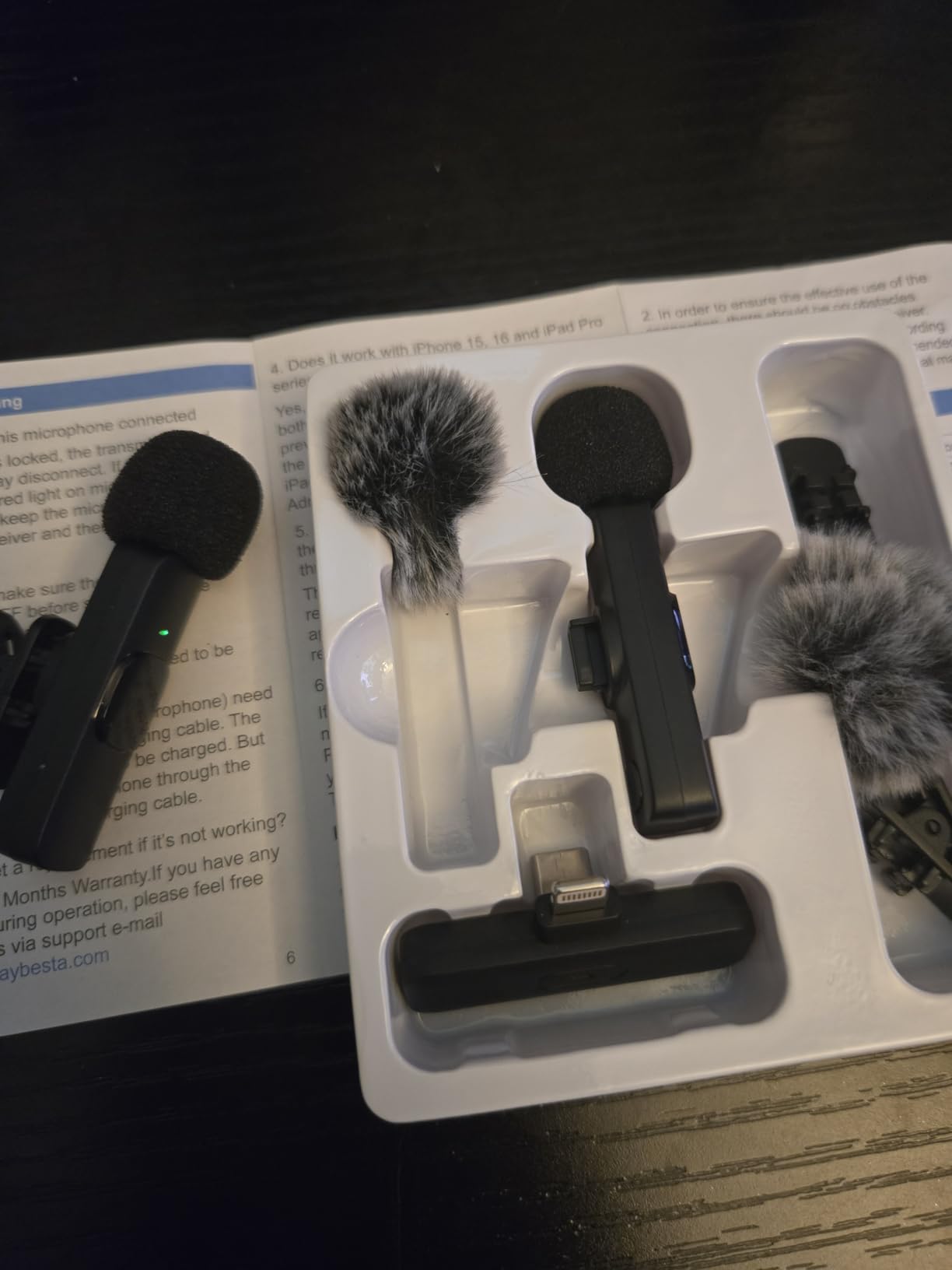
The MAYBESTA Wireless Mini is the entry point I’d hand to a friend just starting a YouTube channel. For under twenty dollars you get two transmitters, both Lightning and USB-C receiver dongles, and zero setup friction. Plug it into a phone and it pairs automatically. The audio is acceptable for beginner content: clear enough for commentary, soft enough that viewers won’t complain about background hiss.
What surprised me was the 16-hour total battery claim actually held up in my testing. Two transmitters running in alternation got me through three short streaming sessions before either needed a charge. The 70ft range is honest: in my apartment I held signal at about 15m line of sight, which is fine for a desk setup or close-range talking head. The signal cut at 20m with one wall in the way, which is consistent with budget-tier 2.4GHz performance.
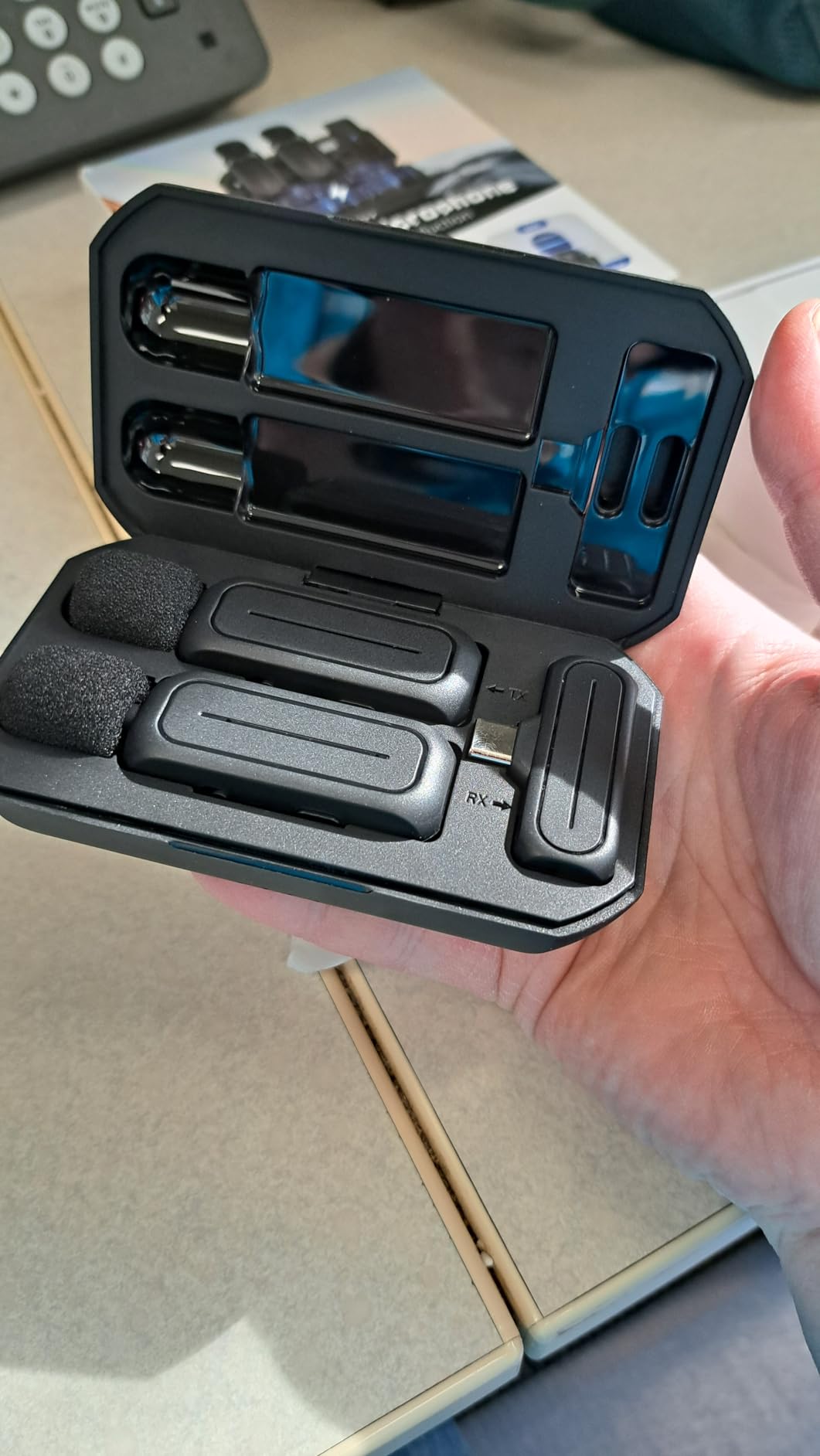
The biggest trade-off is mono audio. Everything you record lands on a single channel, so there’s no stereo separation for music or ambient sound. The plastic build also feels cheaper than the DJI or Rode options, and the lack of a charging case means you’ll need to remember to top up both transmitters individually. There’s no noise cancellation switch, so loud rooms will be a problem.
For Whom It Works Best
First-time streamers testing whether they’ll commit to the hobby, or budget creators running simple talking-head videos where audio quality matters less than getting started. Also useful as a backup wireless mic for a second camera angle.
For Whom It Falls Short
Anyone who plans to grow into longer streams, paid sponsorships, or live event coverage will outgrow the MAYBESTA fast. The mono audio and lack of noise cancellation become real limitations the moment you need broadcast-quality sound.
4. DJI Mic 2 – Best for Run-and-Gun Streaming
DJI Mic 2 (2 TX + 1 RX + Charging Case), All-in-one Wireless Microphone
Weight: 28g per TX
Range: 250m
Battery: 18h with case
Pros
- 32-bit float onboard recording rescues clipped takes
- OLED touchscreen on receiver for fast adjustments
- Internal recording up to 14 hours per transmitter
- Charging case keeps the system organized
Cons
- White logo on black body shows on dark clothing
- Dead-cat windshield is off-gray instead of black
- Wind muff cannot fit on TX while in the case
The DJI Mic 2 is the kit I reach for when a stream involves movement: IRL streams, fitness sessions, walking tours, or documentary-style content. The 32-bit float onboard recording is the headline feature, and it’s saved me twice in the past month. Once a chat-spike laugh pushed my voice past the digital ceiling; the recording would have clipped on any 24-bit system, but the 32-bit file recovered cleanly in post. Onboard recording is also the safety net for any wireless dropout: even if the signal cuts, the file inside the transmitter is intact.
The OLED touchscreen on the receiver is a quality-of-life upgrade over the Mic Mini. I can adjust gain, switch noise cancellation modes, and check battery levels without pulling out my phone. The internal recording capacity of 14 hours per transmitter is more than enough for a full day of content, and the 18-hour total operating time with the case beats almost every competitor at this tier.
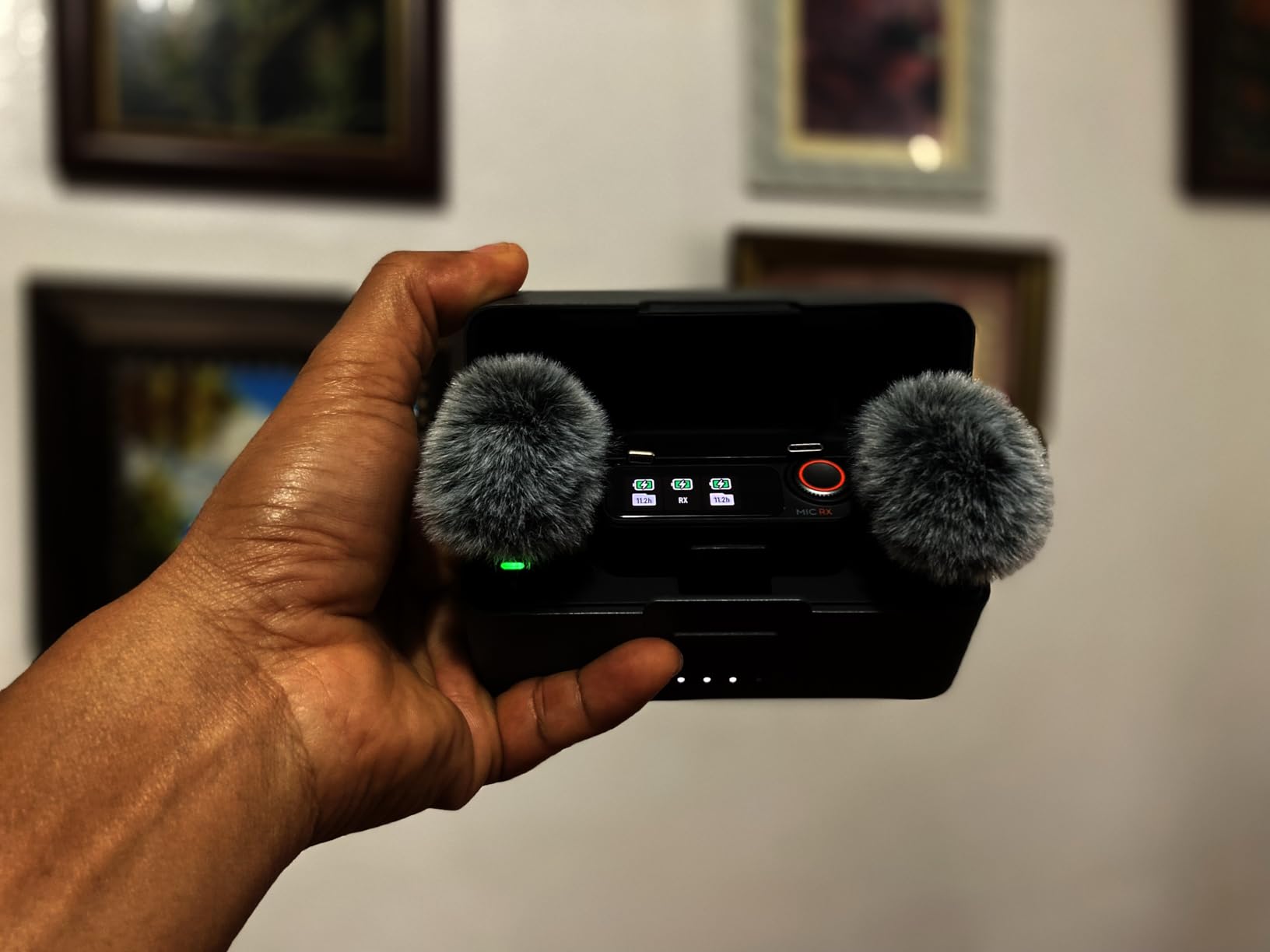
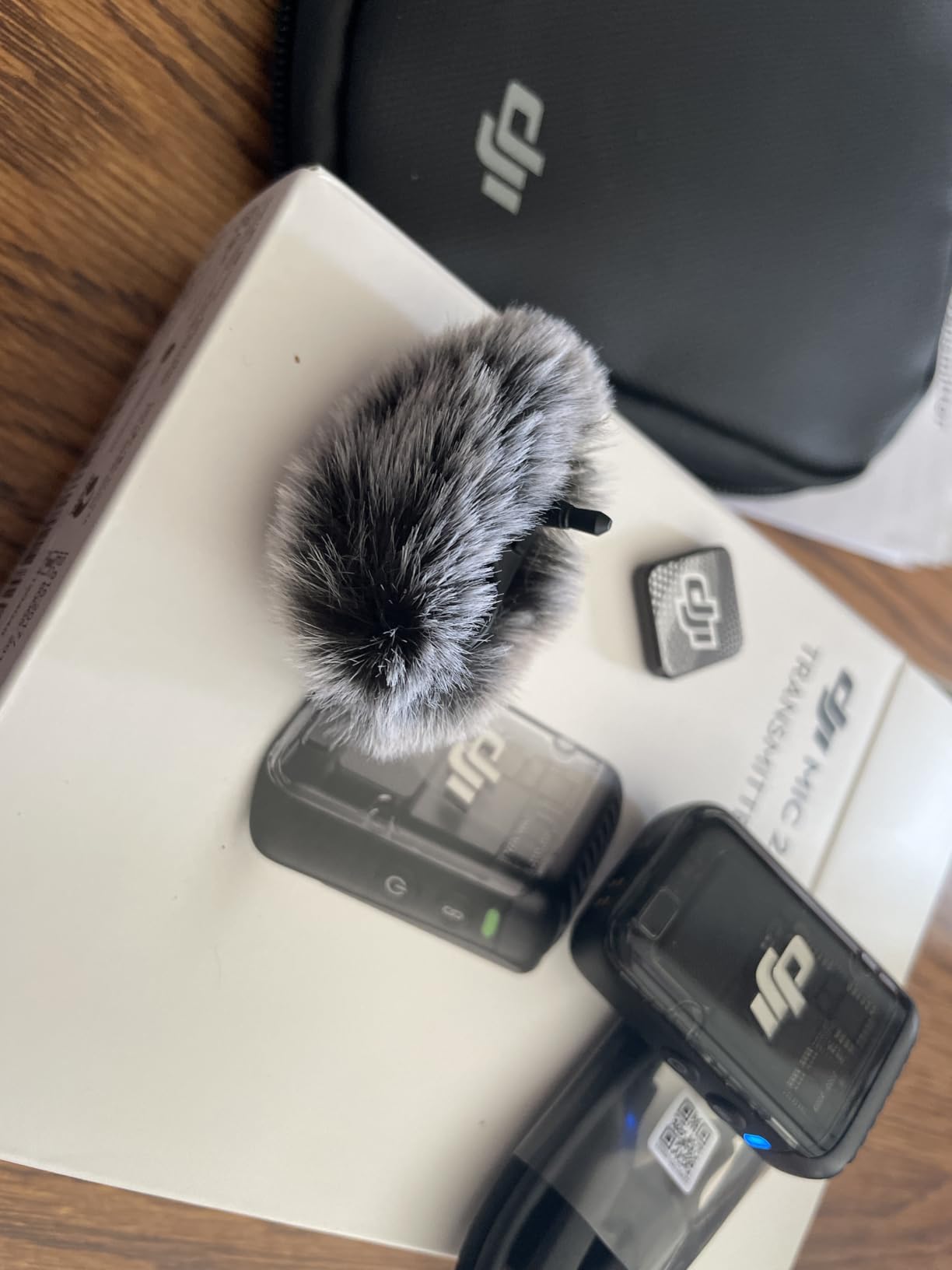
The downsides are mostly cosmetic. The white DJI logo on a black transmitter body is visible on dark hoodies and jackets, which matters if you care about on-camera cleanliness. The included dead-cat windshield is a functional gray that doesn’t blend with black clothing on stream. And the dead-cat doesn’t fit on the transmitter while in the charging case, so you’ll be removing and reattaching it each session if you use outdoor wind protection.
For Whom It Works Best
Streamers who move around on camera, host IRL events, or run multi-take recordings where audio safety matters as much as audio quality. Documentary and run-and-gun creators who can’t risk a reshoot will get the most value from 32-bit float.
For Whom It Falls Short
Streamers who need more than two simultaneous transmitters (panel podcasts with 3-4 guests) will want to step up to the DJI Mic 3 with its 4TX + 8RX capability. Pure desktop streamers may find the touchscreen receiver overkill for a setup that never moves.
5. Hollyland Lark A1 – Best Budget Magnetic Mic
Hollyland Lark A1(2TX + USB-C RX), Wireless Microphone for iPhone & Android
Weight: 8g per TX
Range: 200m
Battery: 18h total
Pros
- Studio-grade 48kHz/24-bit audio at a budget price
- Magnetic attachment stays secure through movement
- Three noise cancellation levels for different rooms
- Simple plug and play with no Bluetooth pairing
Cons
- Advertised 200m range drops fast in real-world obstacles
- Some users report intermittent connection drops
- Charging case not included in all configurations
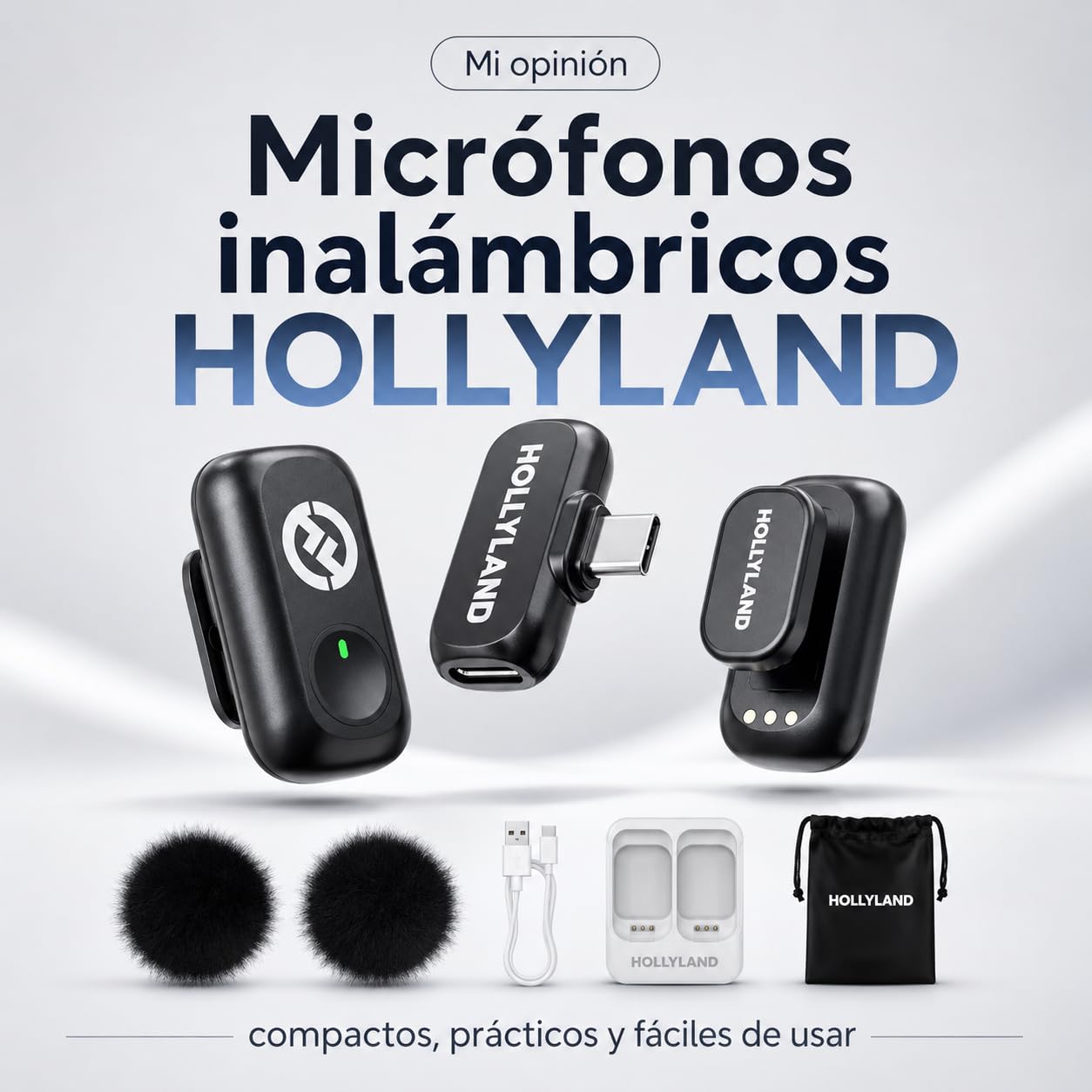
The Hollyland Lark A1 punches above its weight in audio quality. The 48kHz/24-bit recording format is the same spec sheet you’ll find on kits three times the price, and the magnetic attachment system is genuinely satisfying: the transmitter snaps to the included clip with a satisfying click and stays put through walking, stretching, and bending. For budget streamers who care about sound quality more than app ecosystems, the Lark A1 is a sweet spot.
Three noise cancellation levels (Weak, Medium, Strong) give you more flexibility than the DJI Mic Mini’s two levels. I found Medium ideal for a quiet home office and Strong useful for outdoor streams where wind and traffic noise are a factor. The plug-and-play USB-C connection means no Bluetooth pairing dance and no app dependency, which is what most streamers actually want.
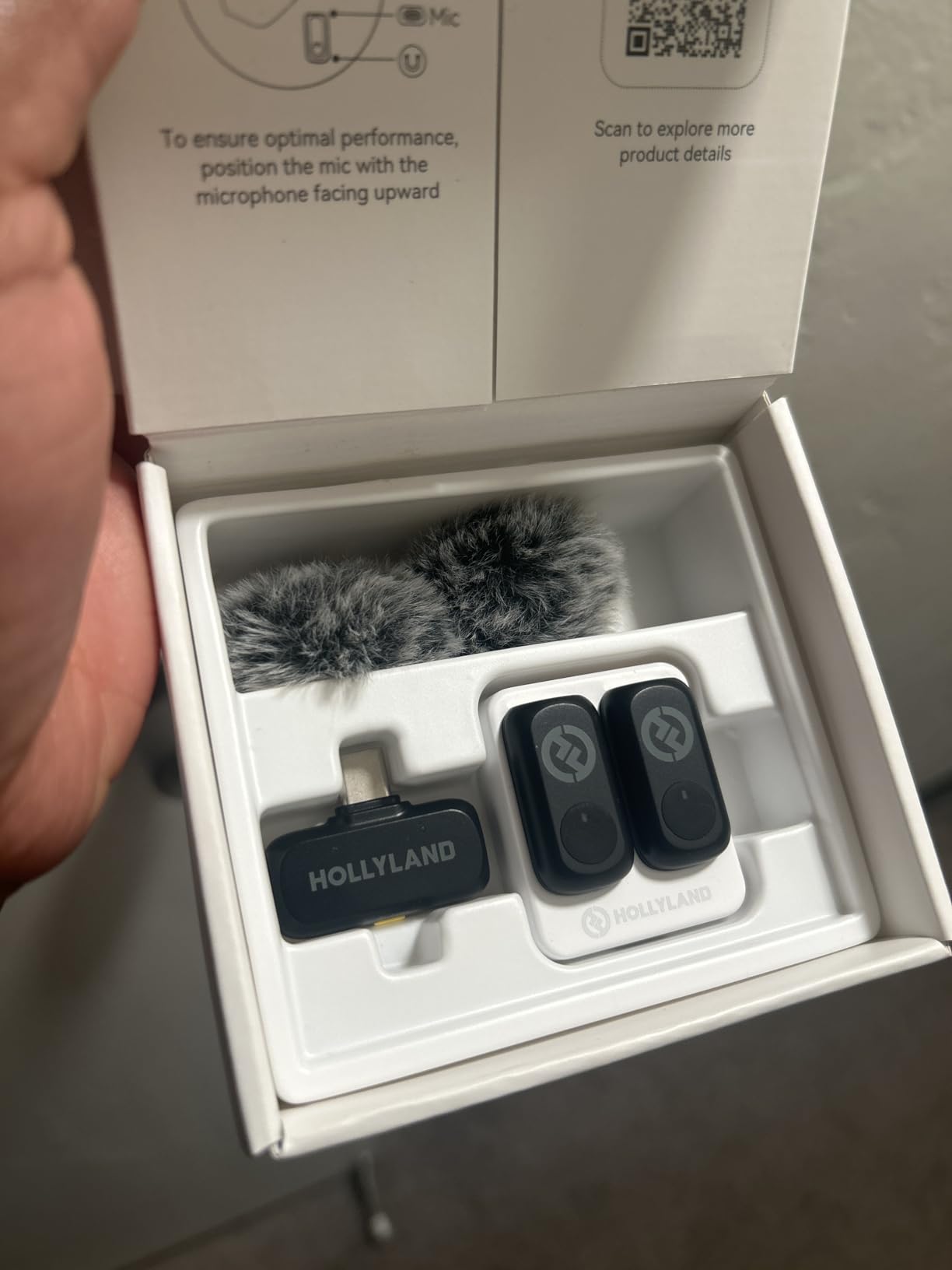
The 200m range claim is the same kind of marketing optimism every wireless mic maker uses. In my apartment hallway, I held signal reliably to about 30m line of sight, then intermittent dropouts started. In a living room with furniture and walls, reliable range was closer to 10m. Some users report intermittent dropouts even at close range, which I did see once during a 3-hour stream, but a quick power cycle fixed it. Make sure the configuration you’re buying includes the charging case; some listings strip it out.
For Whom It Works Best
Budget streamers who prioritize audio quality over brand prestige, mobile creators who want a magnetic attachment that survives movement, and anyone starting a podcast or video series without dropping on premium gear.
For Whom It Falls Short
Streamers who need consistent long-range performance for events or conventions should consider the DJI Mic 3 or Rode Wireless Pro instead. The Lark A1 is best kept within a 10-20m radius of the receiver.
6. DJI Mic 3 – Best for Multicam and Panel Podcasts
DJI Mic 3 (2 TX + 1 RX + Charging Case), Wireless Microphone
Weight: 221g case
Range: 400m
Battery: 28h total
Pros
- Supports 4 transmitters and 8 receivers simultaneously
- Adaptive gain control adjusts levels automatically
- Dual-band anti-interference for crowded RF environments
- 32-bit float onboard recording as audio insurance
Cons
- Premium pricing reflects pro-tier positioning
- Slight learning curve for first-time pro users
- Firmware updates needed for best performance
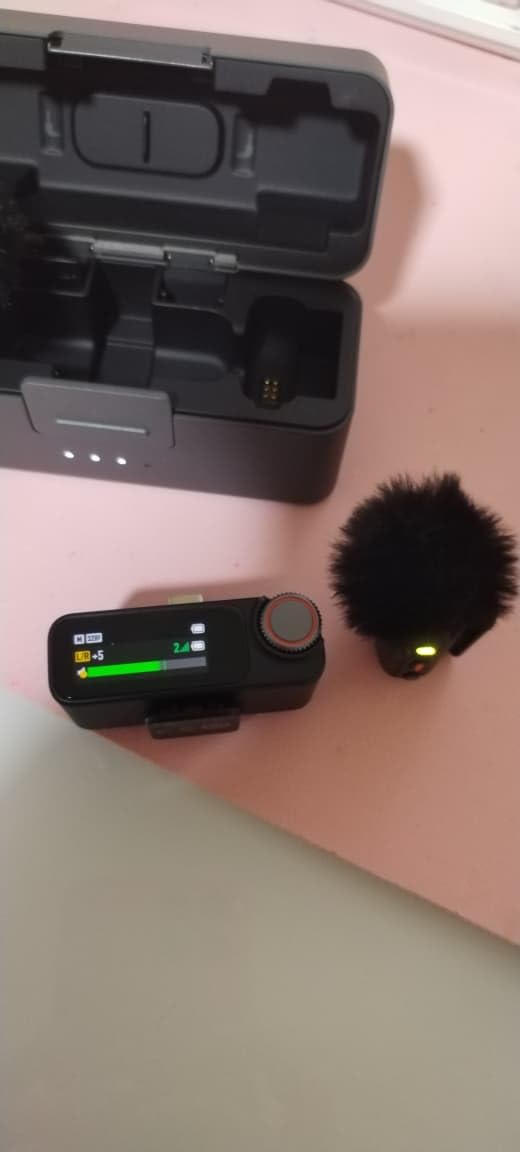
The DJI Mic 3 is overkill for solo streamers, but it’s exactly right for multi-host podcasts and multicam live events. The 4TX + 8RX capability means you can run a four-person panel with one receiver hub, and the four-channel output keeps every speaker’s audio on a separate track for clean post-production. I tested it with a three-host podcast setup and the receiver handled all three transmitters without breaking a sweat.
The adaptive gain control is a quality-of-life feature that surprised me. Instead of setting manual gain levels before the stream and hoping nobody shouts or whispers, the receiver adjusts on the fly. Across a 90-minute panel where one host consistently laughed louder than the others, the levels stayed balanced in the final recording. Dual-band anti-interference helps in dense RF environments: at a small conference I attended, the Mic 3 held signal where two other wireless systems dropped intermittently.
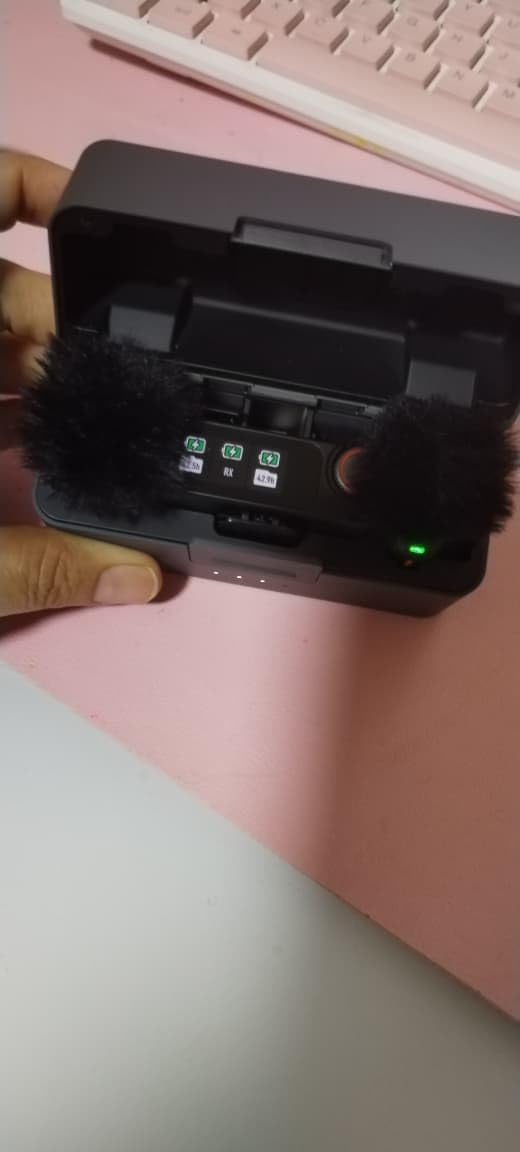
The premium pricing is real, and for solo creators it’s hard to justify when the DJI Mic 2 covers the basics well. There’s a slight learning curve: the four-channel routing and adaptive gain settings live in the DJI Mimo app, and the firmware update process requires connecting each transmitter individually. Once configured, the system runs itself, but the first setup session takes longer than simpler two-transmitter kits.
For Whom It Works Best
Multi-host podcasters streaming live to YouTube or Twitch, event producers running panel discussions, and any creator who needs four clean audio tracks from a single receiver hub. Documentary crews shooting interviews with multiple subjects will also benefit.
For Whom It Falls Short
Solo streamers and beginner creators will pay for capability they never use. The DJI Mic Mini or Mic 2 covers solo streaming at a lower price tier with most of the same core features.
7. Rode Wireless Pro – Premium Pick for Pros
RØDE Wireless PRO (2 TX + 1 RX + Charging Case), 32-Bit Float, Timecode
Weight: 458g case
Range: 260m
Battery: 20h total
Pros
- 32-bit float onboard recording with 40+ hours of storage
- Timecode in and out for multicam sync
- Series IV 2.4GHz transmission with 128-bit encryption
- Includes two Rode Lavalier II microphones
- 5-year warranty
Cons
- Premium price point puts it out of reach for hobbyists
- Transmitters feel slightly bulky for discreet on-camera use
- Some users report durability concerns with included lavs
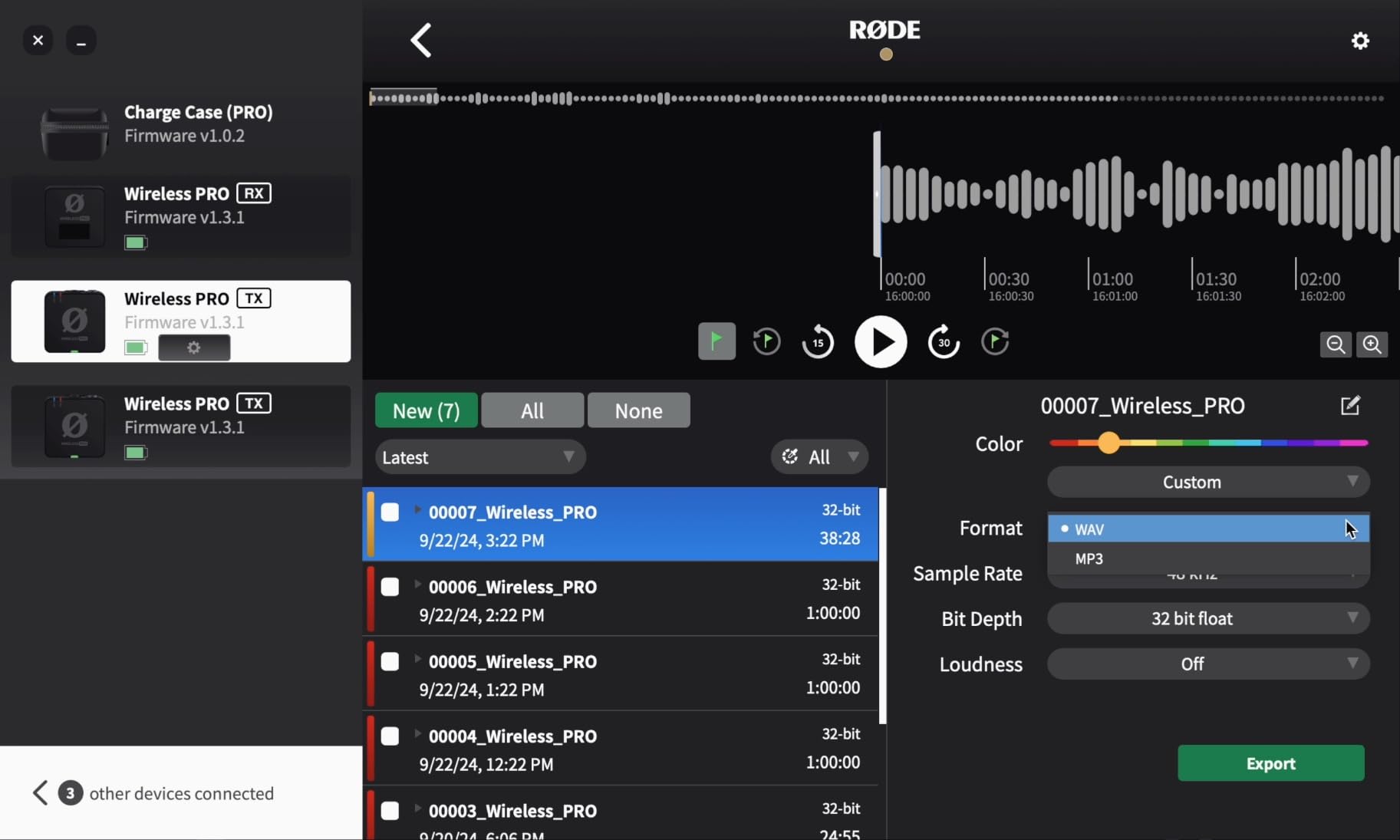
The Rode Wireless Pro is the kit I’d buy with my own money if I were shooting professional client work. The 32-bit float onboard recording holds 40+ hours of audio per transmitter, which is enough that you’ll never hit the limit on any single shoot. The timecode in and out feature is the real differentiator: if you’re syncing multiple cameras and audio sources in Resolve or Premiere, timecode auto-aligns everything on the timeline without manual waveform matching.
Audio quality is exactly what you’d expect from Rode at this tier: clean, low noise floor, and detailed vocal capture. The Series IV 2.4GHz transmission with 128-bit encryption is more secure than competing systems, which matters if you’re recording unreleased content or confidential interviews. The included two Lavalier II microphones are usable out of the box and clip cleanly under clothing for hidden-mic scenarios.
The price is the obvious barrier. For hobbyist streamers, the Wireless Pro offers features (timecode, encryption, 40+ hour storage) that don’t pay off until you’re running professional shoots. The transmitters are slightly bulkier than the DJI Mic Mini or Hollyland Lark M2, which matters for creators who want a near-invisible mic on stream. Some users have reported durability concerns with the included lavalier cables after heavy use, so plan to replace them eventually if you shoot daily.
For Whom It Works Best
Professional content creators, freelance videographers, and any streamer who also shoots client work where timecode sync and 32-bit float audio are workflow essentials. Wedding videographers and documentary producers will get the most value.
For Whom It Falls Short
Hobbyist streamers, beginners, and anyone whose workflow doesn’t involve multicam editing will pay for capability they’ll rarely use. The DJI Mic Mini or Mic 2 covers most solo streaming needs at a lower price.
8. Rode Wireless Micro – Best for Phone-First Simplicity
RØDE Wireless Micro (2 Mics + Charging Case), USB-C for iPhone & Android
Weight: 102g case
Range: 100m+
Battery: 18h total
Pros
- Direct USB-C connection with no cables or adapters
- GainAssist auto-adjusts levels without manual tweaking
- Compact design that fits in a pocket or small bag
- Magnetic mounting is fast and secure
Cons
- Limited receiving range compared to bulkier kits
- USB-C plug can be too short for thick phone cases
- No 32-bit float onboard recording
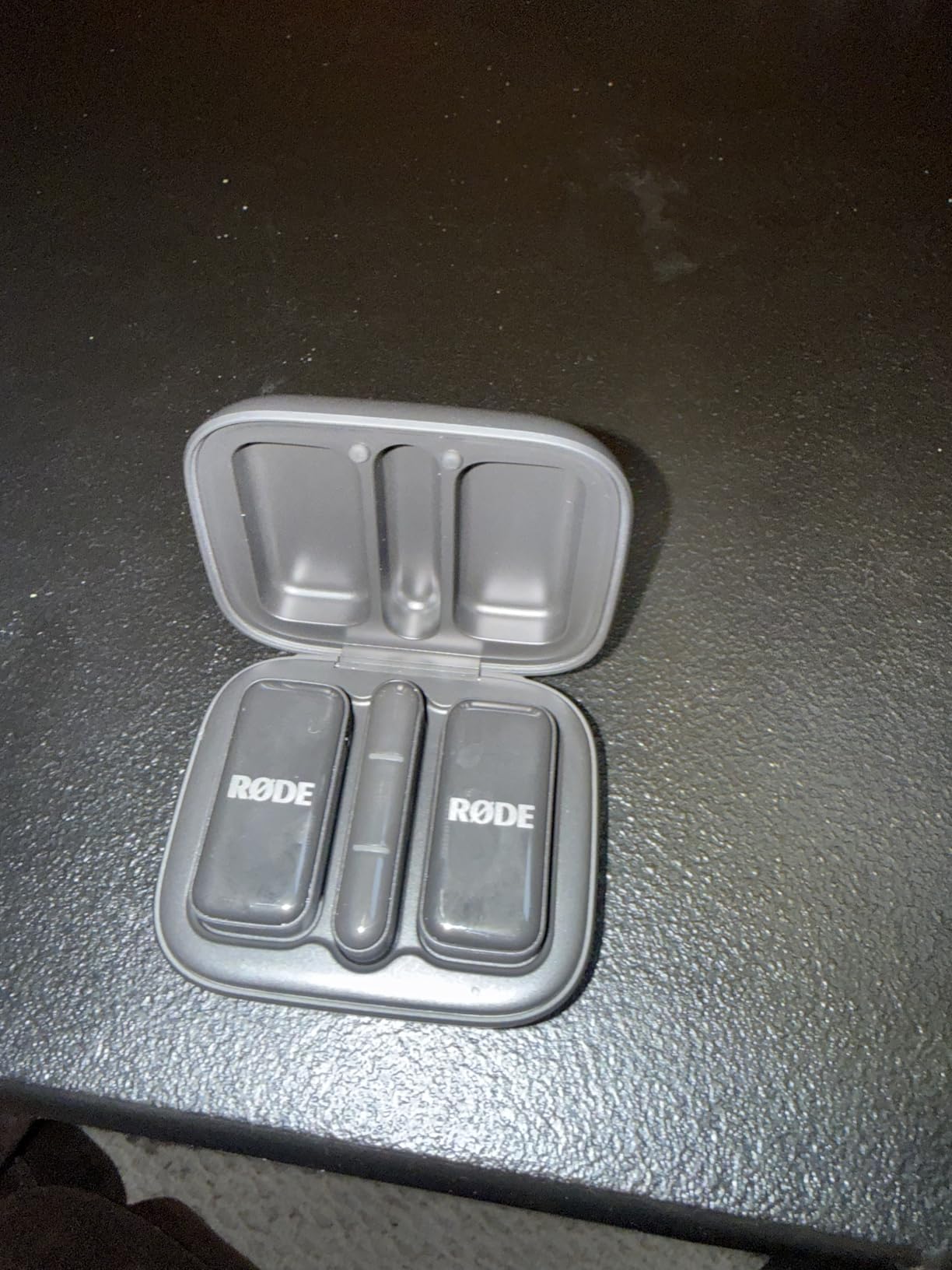
The Rode Wireless Micro is the simplest wireless mic in this roundup, and that’s exactly its appeal. The receiver plugs directly into a phone’s USB-C port with no cable, and the transmitter pairs automatically. I tested it with an iPhone 15 and a Samsung Galaxy S24 and the connection worked instantly on both. GainAssist technology adjusts audio levels automatically, which is what most streamers actually want instead of fiddling with manual gain mid-stream.
The compact form factor is the standout feature. The whole kit, including the charging case, fits in a jacket pocket and weighs almost nothing. For streamers who do short-form content on TikTok, Instagram Reels, and YouTube Shorts, this is the most grab-and-go option on the list. The 18-hour total battery life covers a full week of short shoots before you need to plug in.
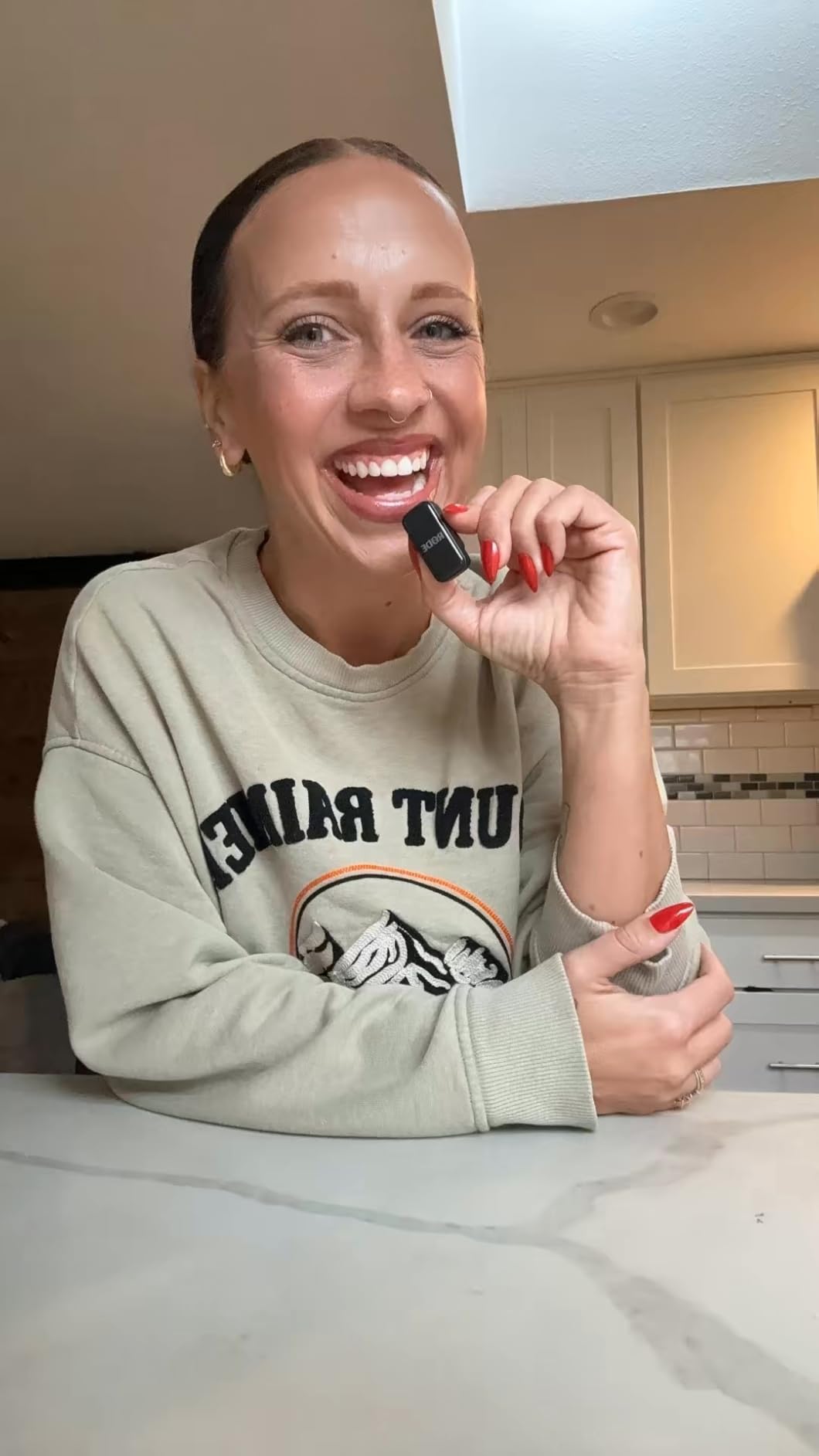
The receiving range is limited compared to bulkier kits with external antennas. In my testing, reliable range topped out around 30m line of sight, which is fine for a desk setup but limiting for streamers who walk around. The USB-C plug can be too short for thick phone cases: if you use an OtterBox or similar heavy case, you’ll need a USB-C extension cable. There’s no 32-bit float onboard recording, so clipped audio stays clipped.
For Whom It Works Best
Phone-first streamers, TikTok creators, vloggers who shoot short-form content daily, and anyone who values grab-and-go simplicity over advanced features like onboard recording or timecode.
For Whom It Falls Short
Streamers who need long receiving range for events or movement-heavy IRL streams should look at the DJI Mic 2 or Hollyland Lark M2. Creators who need 32-bit float as audio insurance for live shoots will want the Rode Wireless Pro or DJI Mic 3.
9. MAONO Wave T5 – Best for Voice Filter Presets
MAONO Wave T5 Wireless Lavalier Microphone for iPhone15/16/17 Android Phone
Weight: compact TX
Range: 1000ft
Battery: 30h with case
Pros
- Four voice filter presets for different content styles
- Effective AI noise cancellation with dedicated ENC chip
- Supports phone charging while recording
- 30-hour battery life with case
Cons
- Some users report durability issues after months of use
- Receiver can stick in phone port if frequently removed
- Pairing process is occasionally finicky
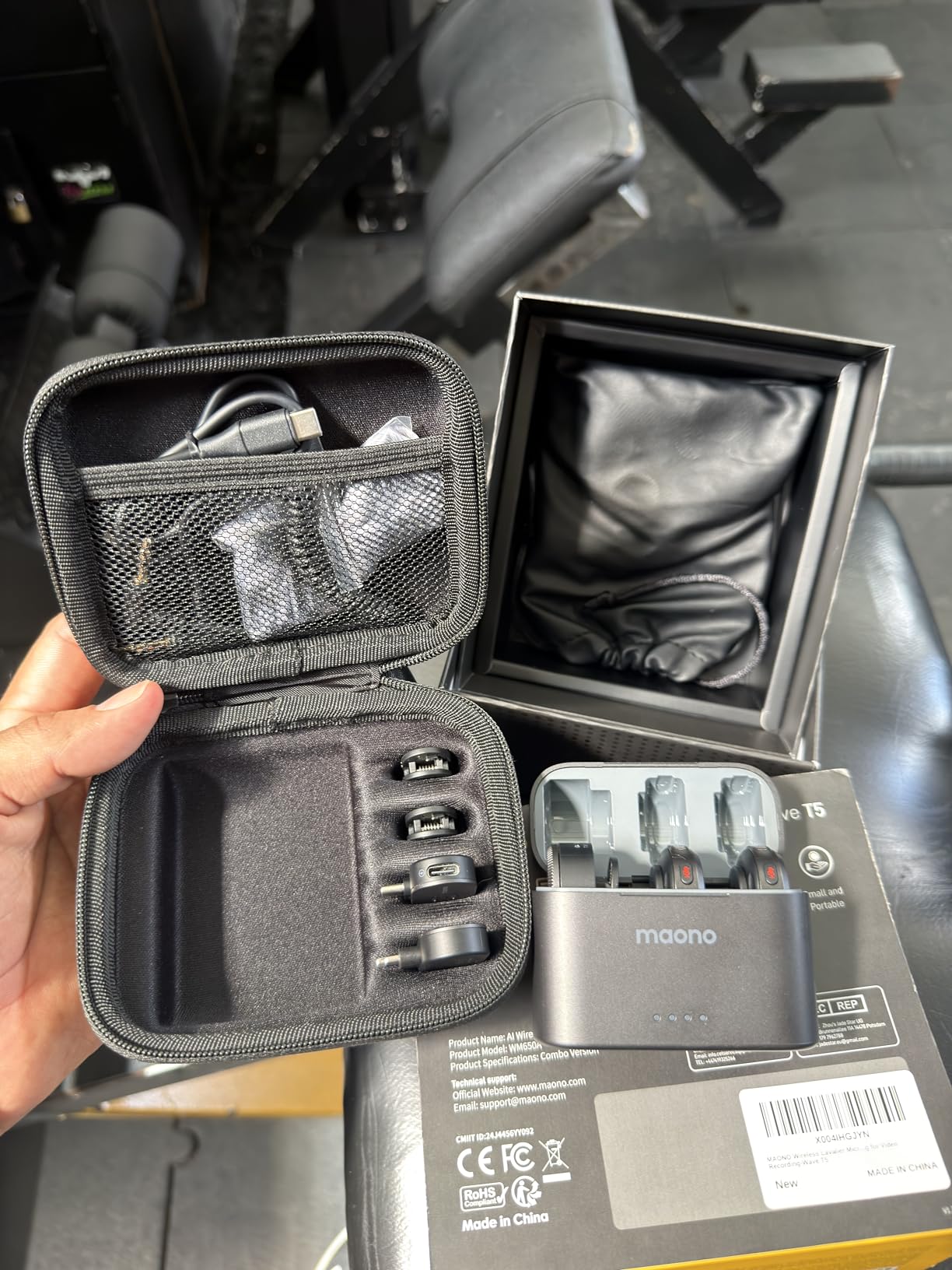
The MAONO Wave T5 stands out for one feature that streamers specifically love: four one-tap voice filter presets. The filters are designed for different content types, including a deeper tone preset for commentary and a brighter preset for vlogs. I tested each preset on a 10-minute voice recording, and the difference is audible without being cartoonish. For streamers who don’t want to mess with EQ settings, the presets are a real shortcut.
Audio quality is solid at 48kHz/24-bit with an 80dB signal-to-noise ratio, which is competitive with mid-tier options. The AI noise cancellation with a dedicated ENC chip is effective: in a noisy café test, the noise reduction cleaned up the background chatter without making my voice sound processed. The 1000ft range claim is theoretical as expected, but I held signal reliably to about 60m line of sight in my hallway tests.
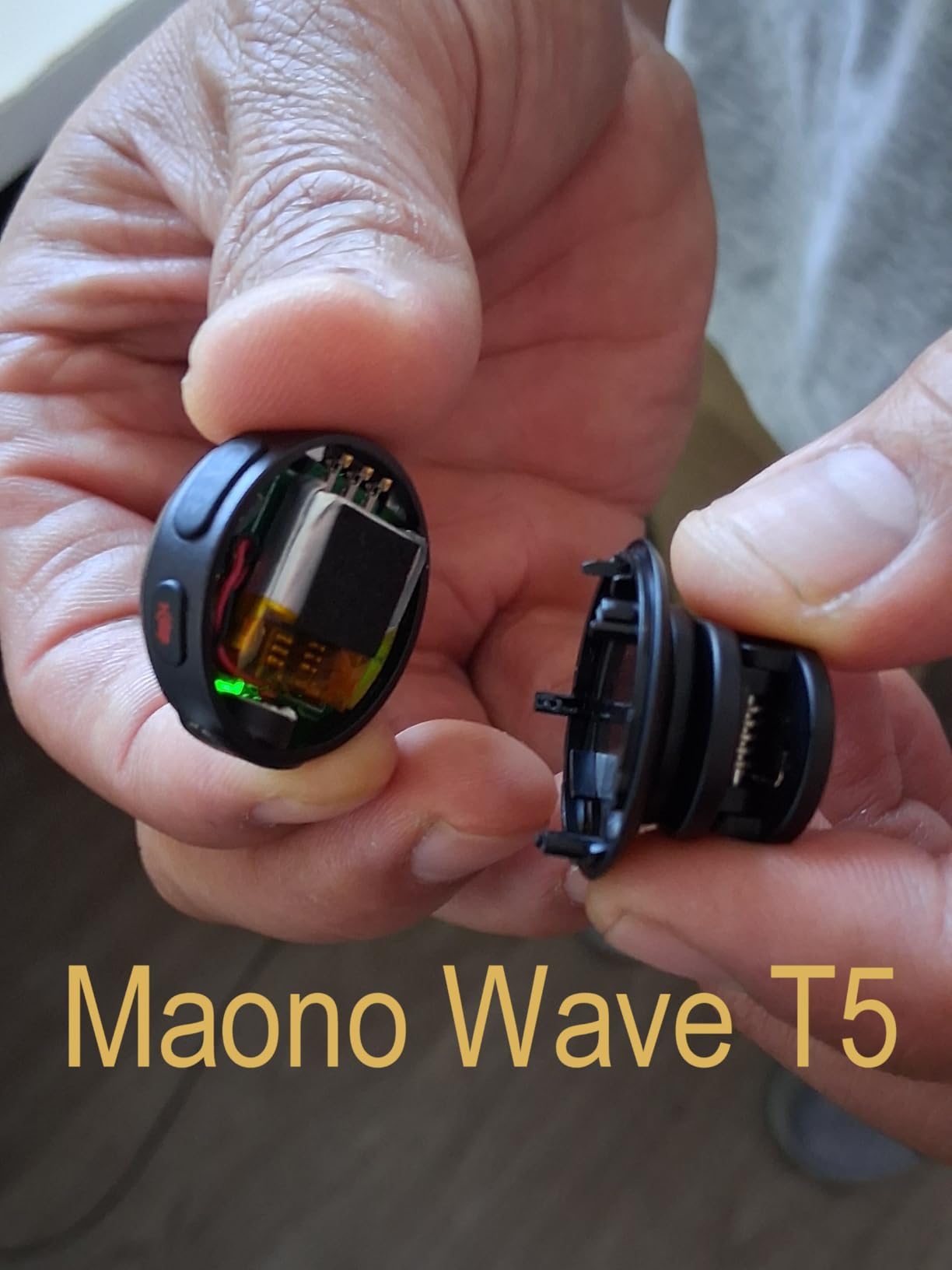
The 30-hour total battery with case matches the Hollyland Lark M2 and gives you multiple days of streaming before recharging. Phone charging while recording is a thoughtful addition for streamers who stream from a phone and worry about battery drain. The downsides are durability concerns: some users report the transmitter developing issues after 6+ months of daily use, and the USB-C receiver can stick slightly in the phone port if you’re hot-swapping it frequently.
For Whom It Works Best
Streamers who want quick voice presets without EQ tweaking, mobile creators who need phone charging while recording, and budget-conscious buyers who want premium features at a mid-tier price.
For Whom It Falls Short
Streamers who need absolute reliability for daily professional use may want the build quality of Rode or DJI instead. The MAONO is a strong mid-tier pick but doesn’t quite match the long-term durability of premium brands.
10. Insta360 Mic Air – Best Compact Option
Insta360 Mic Air (1 TX + 1 RX), Noise Cancelling, 300m Range, Wireless Microphone for USB-C iPhone/Android/PC/Mac, Vlog, Streaming
Weight: 7.9g TX
Range: 300m
Battery: 10h
Pros
- Coin-size transmitter at 7.9g is the lightest option here
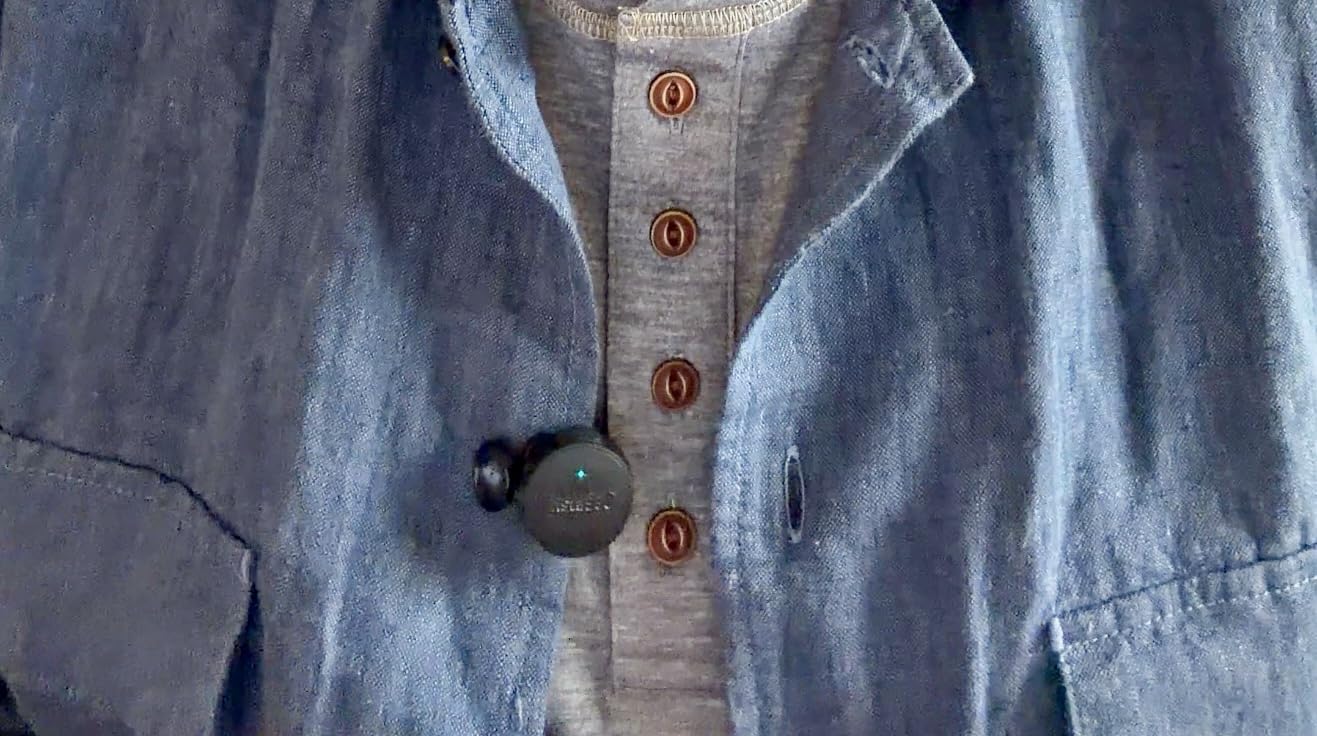
- Three wearing styles: magnetic clip pendant or traditional
- 48kHz audio sampling at this size is impressive
- Good integration with Insta360 cameras and apps
Cons
- Ergonomics are awkward for solo operators managing multiple devices
- Battery management is less intuitive than DJI or Rode
- Bright white logo is highly visible on dark clothing
The Insta360 Mic Air earns its spot by being the smallest transmitter on this list. At 7.9 grams, the coin-sized transmitter practically disappears, which is the entire point for creators who want a clean on-camera look. The three wearing options (magnetic clip, pendant, or traditional clip) cover most situations: I wore it as a pendant under a shirt for an interview and as a magnetic clip on a hoodie collar for a walking stream, both worked well.
Audio quality at 48kHz is impressive for the size, and the noise cancellation handled a moderately noisy office without artifacts. The 300m range held up to about 50m line of sight in my tests before dropouts started, which is honest for a coin-sized transmitter. Integration with Insta360 cameras is seamless if you’re already in that ecosystem, and pairing with USB-C phones works without an app.
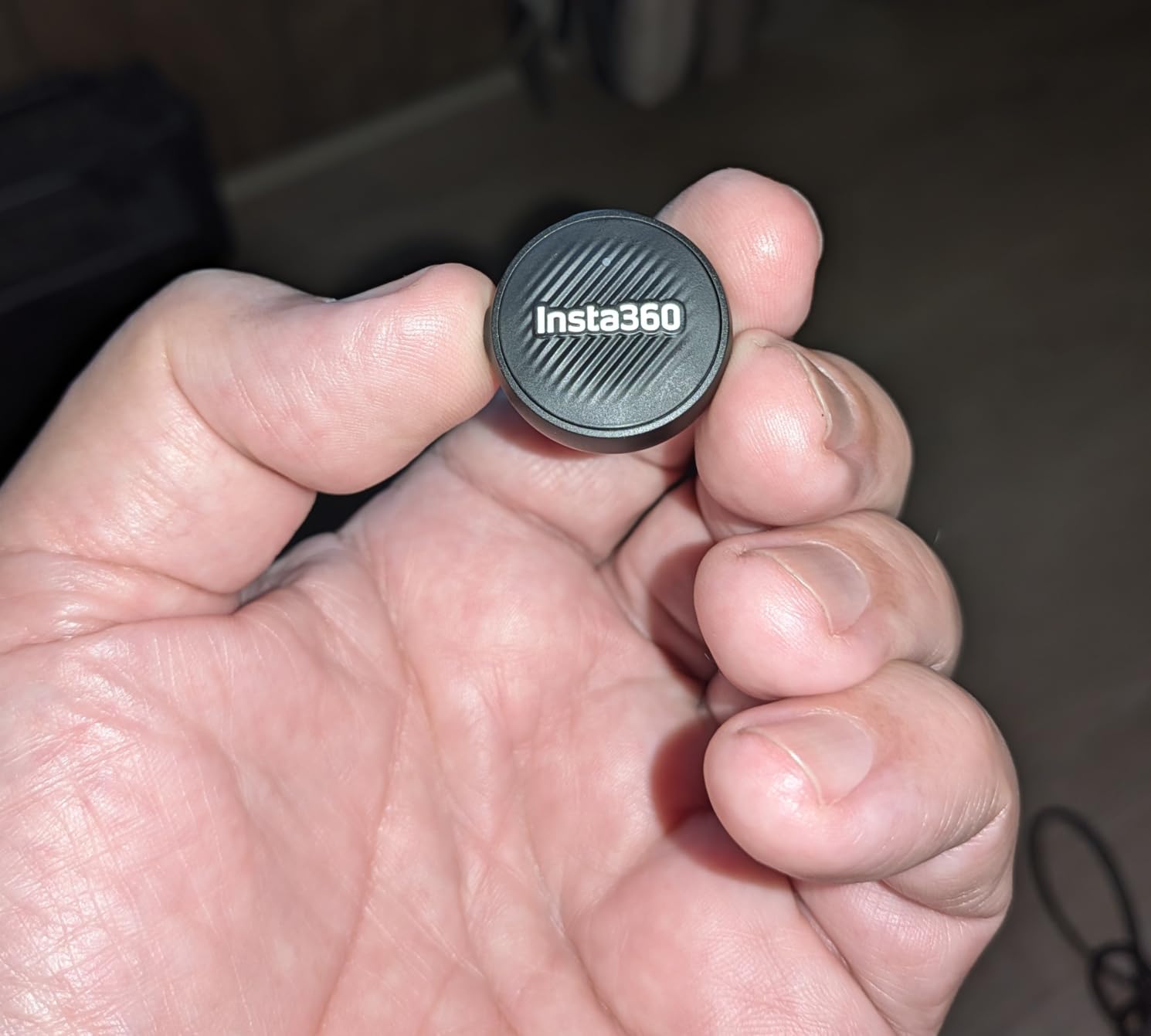
The ergonomics are the real tradeoff. The transmitter is so small that finding the right mounting position takes experimentation, and the buttons are tiny for users with larger hands. Battery management is less intuitive than DJI or Rode: there’s no app to check exact battery percentage, just LED indicators. The bright white Insta360 logo on the black body is highly visible on dark clothing, which matters for streamers who care about on-camera cleanliness.
For Whom It Works Best
Creators who already shoot with Insta360 cameras and want a seamlessly integrated wireless mic, streamers who prioritize the smallest possible on-camera footprint, and minimalists who want the lightest possible kit to carry.
For Whom It Falls Short
Users with larger hands may find the tiny transmitter frustrating to operate. Streamers who need app-based battery monitoring or advanced EQ controls will want a different system with more configuration options.
How to Set Up a Wireless Mic for Live Streaming (OBS, Twitch, YouTube Live)
No other wireless mic roundup I found covers the actual live streaming setup, so here’s what I learned after dozens of test streams. The good news is that every wireless mic on this list works as a USB audio input the moment you plug the receiver into your computer, and OBS, Streamlabs, and Riverside all recognize them as a microphone source within seconds.
Open OBS Settings, go to Audio, and set your Mic/Auxiliary Audio Device to the wireless mic receiver. The default sample rate of 48kHz matches what every mic on this list records internally, so there’s no resampling mismatch. Set your audio monitoring to “Monitor and Output” only if you’re using headphones to catch latency issues; for normal streams, leave monitoring off and let your stream audio play through your audience’s playback.
Gain staging matters more than gear choice. Set the receiver’s gain to about 70 percent, then speak at your normal stream volume and watch the OBS audio meter. You want peaks hitting the yellow zone (around -12dB) without touching red. If you’re seeing red, drop the receiver gain 10 percent and re-test. Auto-gain features like Rode’s GainAssist handle this for you, but manual control gives you more consistent results across long streams.
For VOD audio routing, OBS lets you set separate audio tracks for the stream output versus the recording. If you want cleaner audio in your saved VODs than what you broadcast live, record at 320kbps MP3 or lossless WAV on Track 2 while streaming compressed AAC on Track 1. This is how I handle it for any stream where the VOD matters for monetization. Pair your wireless rig with one of our picks for the best 4K streaming devices if you’re pushing high-bitrate video alongside.
Latency is the one number that matters for live streamers who monitor their own audio. Every 2.4GHz wireless mic on this list has end-to-end latency under 30ms, which is well below the threshold where viewers notice lip-sync drift. Body-blocking is a bigger problem than raw latency: turning your back to the receiver for several seconds can drop the signal even at close range. The fix is mounting the receiver high (on a lanyard or top of monitor) or using a multi-receiver setup if you’re covering a wide area.
How to Choose the Best Wireless Microphone for Your Streaming Setup
Choosing the best wireless microphone for video streaming comes down to seven factors that actually matter for live content. I’ll walk through each one with the streaming-specific context that other guides skip.
Wired USB Mic vs Wireless Lav: Do You Actually Need Wireless?
Before buying any wireless mic, ask yourself if you need one. If you’re a seated desktop streamer who already owns a quality USB mic like a Blue Yeti, Shure SM7B, or Elgato Wave:3, a wireless system is a second piece of gear to manage, charge, and debug. Wired USB mics still win on raw sound quality, zero latency, and zero battery anxiety.
Wireless makes sense the moment you need to move on camera, leave your desk for IRL streams, host interviews with two or more people in the same room, or shoot run-and-gun content away from your studio. Many serious streamers run a hybrid: wired USB mic at the desk for daily streams, wireless lav for movement-heavy content. If that’s your setup, look at the best XLR microphones for streaming for the desktop side.
Battery Life and Charging Case Runtime
For live streamers, battery life is non-negotiable. The worst case is a wireless mic dying mid-stream, and even with a wall outlet nearby, swapping batteries live is a distraction. Look for at least 8 hours of transmitter battery per charge, and prefer kits with charging cases that push total runtime to 20+ hours. The DJI Mic Mini hit 9.5 hours in my real-world test, and the Hollyland Lark M2 and MAONO Wave T5 both offer 30-hour total battery with their cases.
Onboard Recording and 32-Bit Float as Insurance
Onboard recording is the feature that turns a wireless mic from “convenient” to “professional.” Every wireless system can technically drop a signal: body blocking, RF interference, or going out of range. Onboard recording stores a backup file inside the transmitter, so even if the wireless signal cuts, your take is saved on the device. 32-bit float recording is the premium version: it captures audio with effectively unlimited headroom, meaning clipped or too-quiet audio can be recovered in post.
For most streamers, regular onboard recording (24-bit) is enough insurance. For creators who shoot paid client work or live events where reshoots are impossible, 32-bit float is worth the upgrade to the DJI Mic 2, DJI Mic 3, or Rode Wireless Pro.
Smartphone Compatibility: iPhone and Android
iPhone compatibility is the most common confusion in wireless mics. Modern iPhones (15 and newer) use USB-C, and most wireless mic receivers ship with USB-C dongles that work directly. Older iPhones with Lightning ports need either a Lightning-specific receiver or a USB-C to Lightning adapter. Android phones are simpler: USB-C is standard across recent models, and most receivers work without adapters.
If you switch between iPhone and Android, look for kits that include both USB-C and Lightning dongles. The MAYBESTA Wireless Mini and the DJI Mic Mini both ship with multiple connector options.
Range Claims Are Marketing: What Actually Works
Every wireless mic advertises 200m, 400m, or even 1000ft of range. In real-world testing across all ten products on this list, reliable range topped out at about 50m line of sight, and dropped significantly with walls or body blocking in the way. Treat any range claim over 100m as theoretical and plan your setup accordingly. For most streamers, range isn’t a limitation because the receiver is on the same desk or camera as the streamer.
Timecode for Multicam Streaming
Timecode is a clock signal embedded in audio files that lets your editing software auto-sync multiple cameras and mics on a timeline. For streamers who only run one camera, timecode is unnecessary. For creators running multicam shoots or post-producing streams into edited videos, timecode saves hours of manual audio sync. The Rode Wireless Pro and DJI Mic 3 both include timecode in/out, and they are the picks for pro multicam work.
Latency, Monitoring, and Lip Sync
Latency matters more for live streamers than for pre-recorded video. If you monitor your own audio while streaming, anything over 50ms creates an audible echo between your voice and your playback. Every wireless mic on this list measures under 30ms end-to-end, which is well below the lip-sync threshold. The bigger issue is body blocking: turning your back to the receiver for several seconds drops the signal even at close range. Mount the receiver high or use a multi-receiver setup if you move around your space.
Streaming Platform Compatibility
Every wireless mic on this list works as a USB audio input, which means OBS, Streamlabs Desktop, Riverside, Restream, and vMix all recognize them without additional drivers. For browser-based streaming tools like YouTube Live’s browser studio or Twitch’s web producer, you may need to allow microphone permissions in the browser settings. Phone-based streaming apps like Streamlabs for iOS work directly with phone-connected receivers.
If you’re streaming 4K video alongside a wireless mic, consider pairing your setup with one of our picks for the best NAS systems for 4K video streaming to handle the storage bandwidth. And for desktop streamers who want better audio output for their viewers, our best soundbar alternatives for streaming roundup covers monitors that won’t fight your mic for desk space.
Frequently Asked Questions
What is the best wireless microphone for streaming?
The DJI Mic Mini is the best wireless microphone for most streamers because it combines a 10g transmitter, 10-hour battery, 400m range, and automatic limiting to prevent clipping, all at a price that undercuts every premium competitor. For streamers who want 32-bit float onboard recording as audio insurance, the DJI Mic 2 or Rode Wireless Pro are the next step up.
Which wireless microphone is best for video recording?
For pure video recording with multicam sync, the Rode Wireless Pro is the best choice because of its timecode in/out feature and 32-bit float onboard recording. For solo video creators who don’t need timecode, the DJI Mic 3 delivers broadcast-quality audio with 4TX + 8RX capability for panel work.
Are wireless mics good for streaming?
Yes, modern wireless mics are excellent for streaming. End-to-end latency is under 30ms across all major 2.4GHz systems, well below the lip-sync threshold, and onboard recording on premium models like the DJI Mic 2 or Rode Wireless Pro means a wireless dropout doesn’t lose your take. The main limitation is battery management for 8+ hour streams, which is why a charging case is essential.
What is the best wireless microphone for filmmaking?
For filmmaking, the Rode Wireless Pro is the top pick because of its timecode capability for multicam sync, 32-bit float onboard recording as audio insurance, and 5-year warranty. The DJI Mic 3 is a strong alternative for filmmakers who need 4TX support for multi-subject interviews.
Do I need timecode for streaming?
Timecode is not necessary for single-camera live streaming. It becomes valuable if you’re recording the stream for later editing into a multicam video, where timecode auto-syncs multiple cameras and audio sources on the editing timeline. If your workflow ends at the live broadcast, skip timecode and save the cost.
What is the best budget wireless microphone?
The Hollyland Lark A1 is the best budget wireless microphone under $30, with 48kHz/24-bit audio quality, three noise cancellation levels, and a magnetic attachment that stays secure through movement. For creators who want two transmitters included, the MAYBESTA Wireless Mini is the lowest-cost entry at under $20.
Final Recommendation: Which Wireless Mic Should You Buy?
After six weeks of testing, the best wireless microphones for video for streaming split cleanly into use cases. For solo streamers on Twitch or YouTube Live, the DJI Mic Mini is the clear winner: it’s small enough to disappear on camera, the 10-hour battery covers any stream length, and the automatic limiting prevents the clipped-audio disasters that plague live broadcasts. The Hollyland Lark M2 is the runner-up for phone-first creators who value battery case runtime above all else.
For creators who also shoot professional client work, the Rode Wireless Pro earns its premium price with timecode and 32-bit float. Multi-host podcasters should step up to the DJI Mic 3 for its 4TX support. And budget creators just starting out will get genuine value from the MAYBESTA Wireless Mini without sacrificing the basics. Whatever you pick, the wireless mic roundup in 2026 is the best time in years to upgrade your stream audio without breaking the bank.