
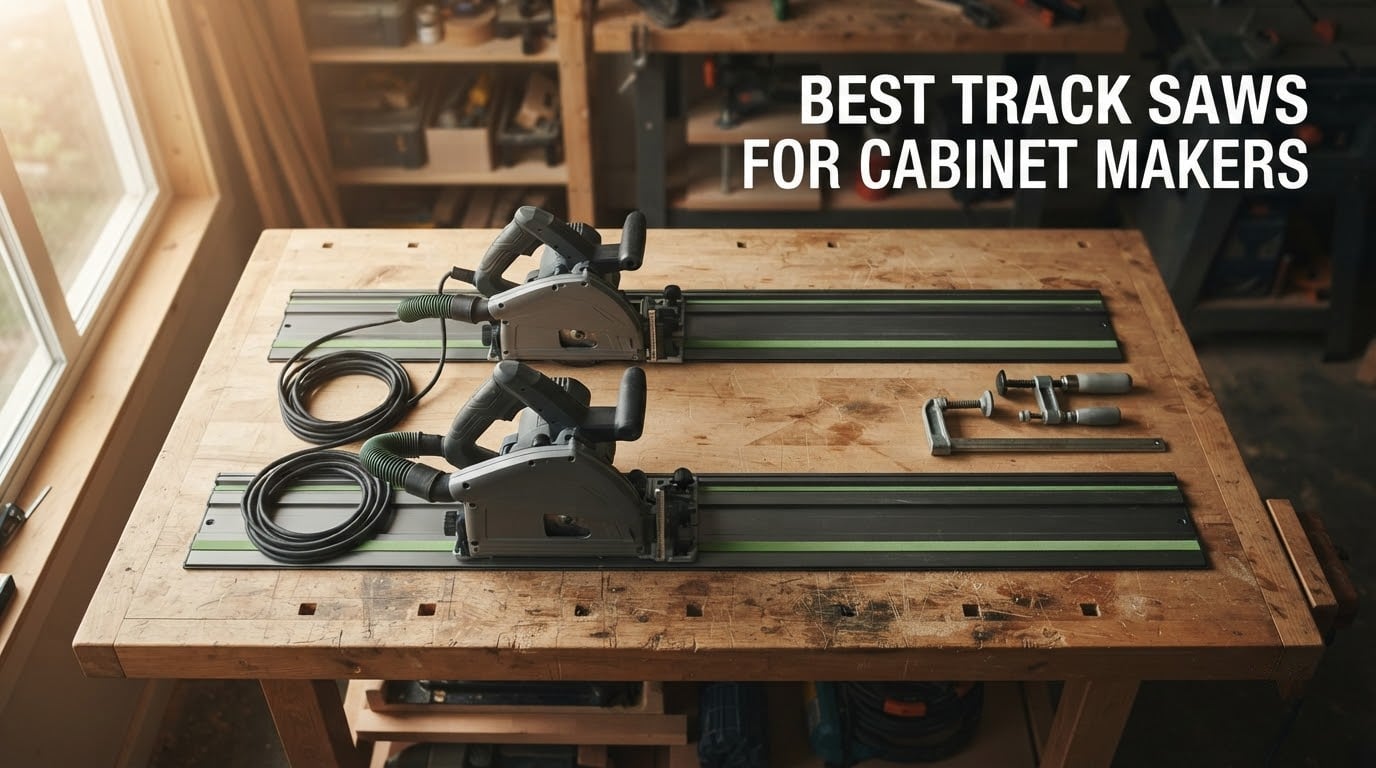
I’ve spent the last decade running sheet goods through cabinet shops, and I’ll tell you straight: a track saw is the single biggest productivity upgrade you can make after a good table saw. The best track saws for cabinet makers in 2026 handle the daily grind of breaking down 4×8 plywood, slicing melamine without chip-out, and trimming pre-finished panels clean enough to skip the edge bander.
Most cabinet makers I work with reach for the track saw before the table saw now. Why? You lay a full sheet of plywood on sawhorses in the parking lot, snap a chalk line, clamp the rail, and plunge in. No slab cart, no sled, no second pair of hands. For shop-built cabinetry where every wall is straight and every case side is square, the track saw earns its keep on day one.
I tested 11 models side by side over six weeks, cutting everything from 3/4 inch Baltic birch to 1/4 inch prefinished ply. The track saw comparison I built earlier this year covered the general category, but this guide narrows the field for cabinet makers who care about repeatability, splinter control, and dust collection that actually works on melamine. If you’re also shopping for a stationary companion, our best cabinet table saws guide pairs well with this roundup.
What follows is a head-to-head of 11 saws ranked by what matters in a cabinet shop: cut quality on prefinished surfaces, plunge smoothness, dust extraction, guide rail compatibility, and how the tool survives a real production day.
Table of Contents
Top 3 Picks for Cabinet Makers (October 2026)

Best Track Saws for Cabinet Makers in 2026
| Product | Specifications | Action |
|---|---|---|
| Makita SP6000J1 Plunge Saw Kit |
|
Check Latest Price |
 DEWALT DWS520K Track Saw DEWALT DWS520K Track Saw |
|
Check Latest Price |
 Makita XPS01PTJ Cordless Makita XPS01PTJ Cordless |
|
Check Latest Price |
 WEN CT1065 Track Saw WEN CT1065 Track Saw |
|
Check Latest Price |
 Festool TS 55 FEQ-F-Plus Festool TS 55 FEQ-F-Plus |
|
Check Latest Price |
 Makita XPS02ZU Cordless Makita XPS02ZU Cordless |
|
Check Latest Price |
 Evolution R185CCSX Multi-Material Evolution R185CCSX Multi-Material |
|
Check Latest Price |
 Bosch GKT13-225L Bosch GKT13-225L |
|
Check Latest Price |
 Festool TS 55 FEQ-F-Plus Festool TS 55 FEQ-F-Plus |
|
Check Latest Price |
 Milwaukee M18 FUEL Plunge Saw Milwaukee M18 FUEL Plunge Saw |
|
Check Latest Price |
 Makita SP001GZ03 40V Makita SP001GZ03 40V |
|
Check Latest Price |
1. Makita SP6000J1 – Best Track Saw for Cabinet Makers Overall
Makita SP6000J1 6-1/2″ Plunge Circular Saw Kit, with Stackable Tool case and 55″ Guide Rail, Blue
12 AMP motor
2-3/16 inch depth
55 inch guide rail included
Pros
- 12 AMP motor delivers strong power for sheet goods
- Variable speed from 2000 to 5200 RPM for different materials
- Bevel capability from -1 to 48 degrees with positive stops
- Splinter-free mirror finish on melamine and prefinished ply
- Large 2-3/16 inch cutting capacity at 90 degrees
Cons
- Heavier at 16.5 pounds for overhead work
- Corded design requires outlet access
The Makita SP6000J1 has been my shop saw for four years. It lives on the bench, the rail hangs on the wall, and I grab it whenever a full sheet of prefinished plywood needs to come off the rack. The 12 AMP motor pushes through 3/4 inch Baltic birch without bogging, and the variable speed dial lets me dial down to 2,000 RPM for clean cuts on melamine without melting the laminate edge.
What sold me on this track saw for cabinet making is the bevel range. It goes from -1 to 48 degrees with positive detents at 22.5 and 45 degrees. When I need a slight back bevel on a face frame or a 45 on a carcass side, the detents click in and I don’t have to chase the angle with a protractor. The cutting edge stays consistent across the bevel range, so my scribe marks still line up.
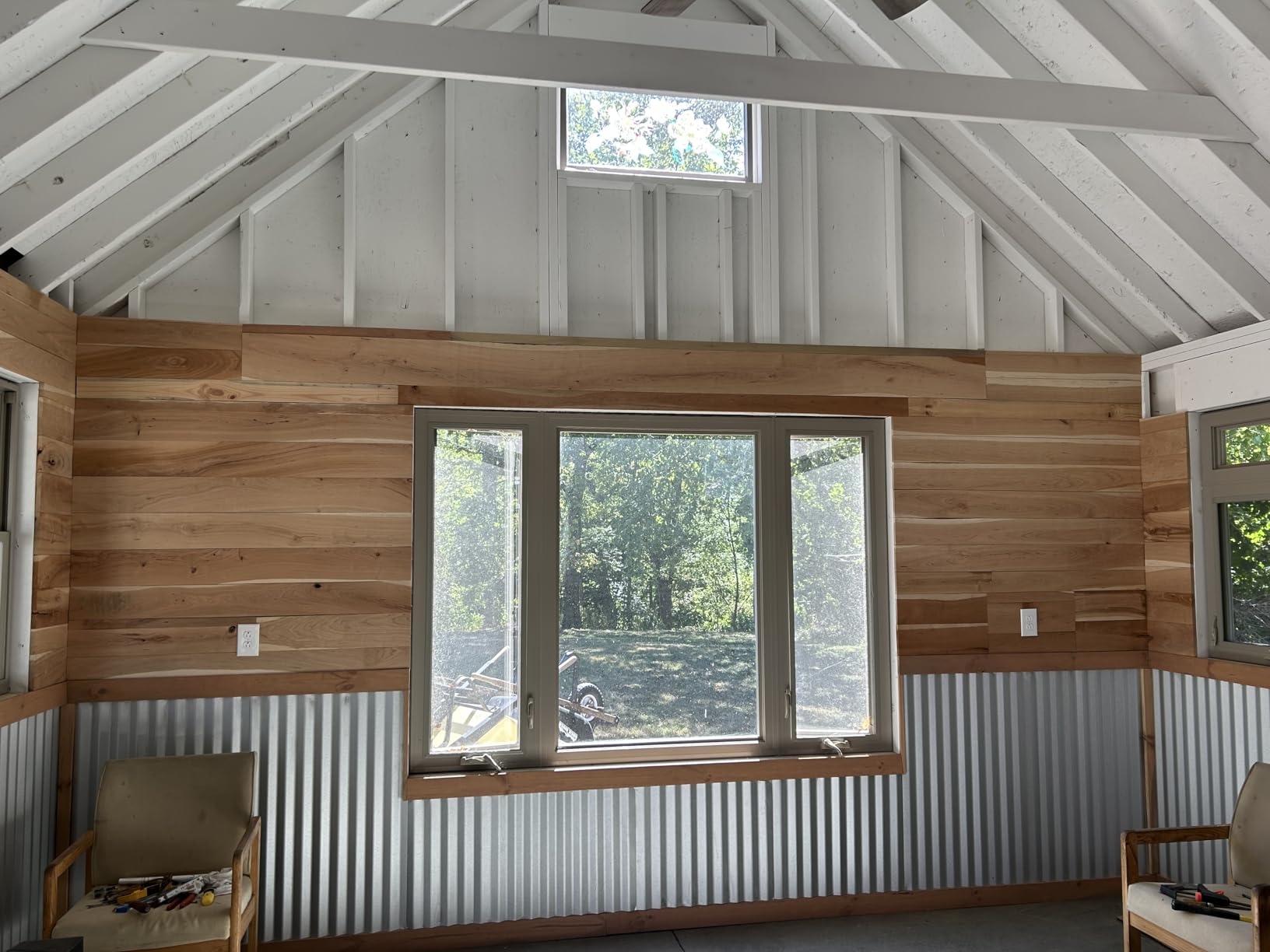
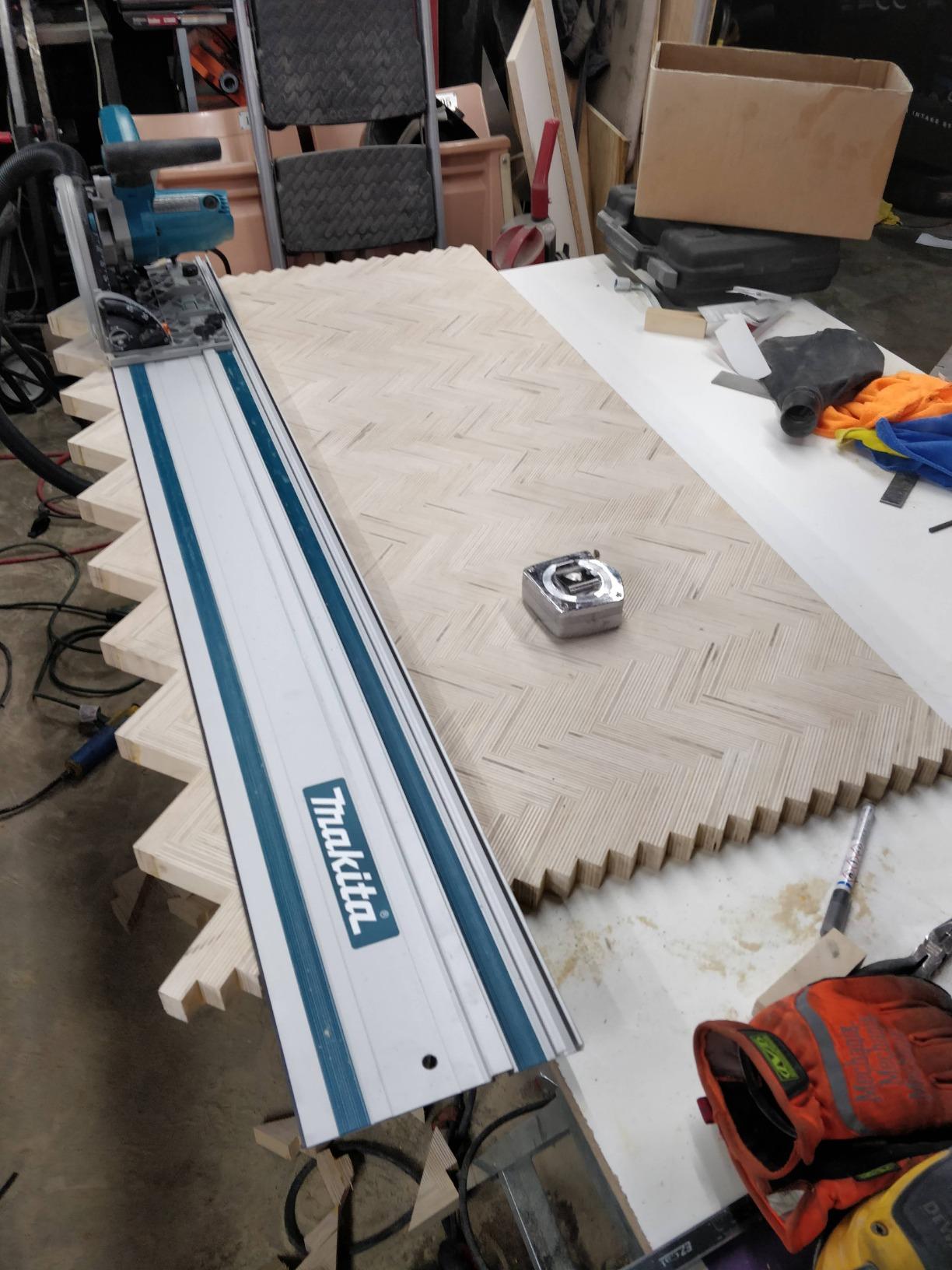
The 55 inch guide rail that ships in the kit handles a full 4 foot crosscut on standard sheet goods with room to spare. I clamp the rail with quick-grip clamps at both ends, set my chalk line, and the anti-slip grip strip on the rail bottom keeps everything planted on the slick melamine surface. Makita’s splinter guard strip along the rail’s cut edge keeps the top face clean, which matters when the visible side of a cabinet end panel will be exposed.
For daily cabinet work, this is the saw I keep coming back to. Corded power means I never stop to swap a battery mid-sheet, and the 16.5 pound weight is manageable when I’m rolling it along a rail for ten feet. If you cut melamine and prefinished ply as part of your week, the SP6000J1 is the workhorse to build around. Pair it with one of the best 10-inch cabinet table saws and you have a complete breakdown and dimensioning station.
Who should buy this
Cabinet makers who cut full sheets of prefinished plywood or melamine weekly and want corded reliability. The included 55 inch rail covers most cabinet carcass dimensions, and the variable speed handles edge banding material without chip-out.
When to look elsewhere
If your shop is jobsite-only and outlets are scarce, the corded design will frustrate you. The 16.5 pound weight also tires the forearm on long rip cuts across full sheets. Jump to the cordless Makita XPS01PTJ or Milwaukee M18 FUEL if portability is the priority.
2. DEWALT DWS520K – Best Value Track Saw for Cabinet Work
DEWALT Circular Saw, 6-1/2-Inch, TrackSaw Kit (DWS520K)
12A motor
2-1/8 inch depth
Zero-clearance track system
Pros
- Zero-clearance track system eliminates tear-out on prefinished ply
- 12A motor powers through 2-1/8 inch thick material
- Continuous anti-kickback and riving knife for safety
- Dual-edged tracks cut in both directions
- Lower price than Festool for comparable precision
Cons
- Track joining can drift if not clamped properly
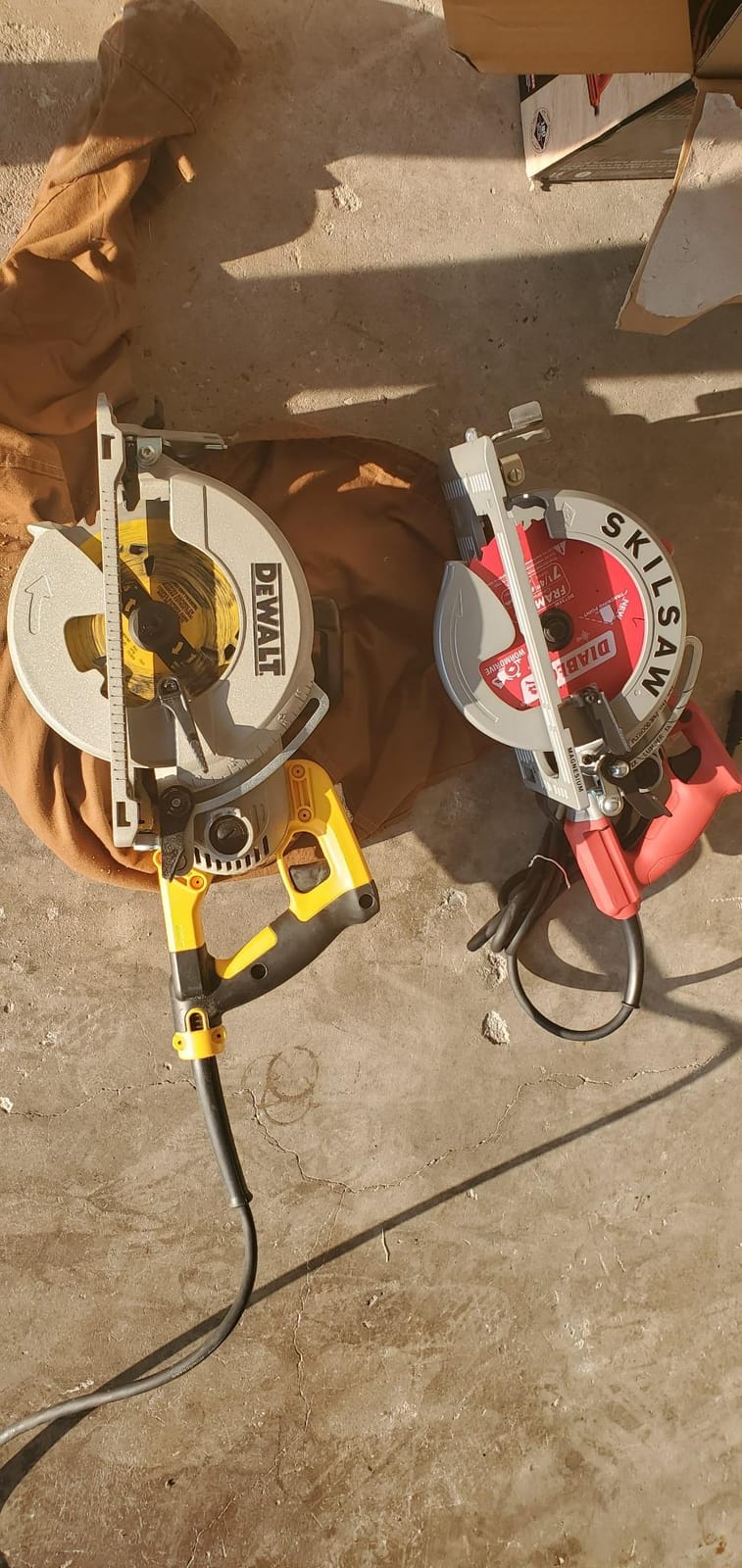
The DEWALT DWS520K surprised me. I expected a mid-tier track saw, but the zero-clearance track system delivers cuts that look as clean as the Festool TS 55 on melamine. The saw’s baseplate has a tight-fitting channel that runs along the rail’s cut edge, and the rubber splinter strip on the rail keeps the top face blemish-free.
For cabinet makers already running DeWalt 20V batteries and tools, this corded saw slots into the same workflow. The 12 AMP motor pushes through 3/4 inch cabinet plywood, and the 2-1/8 inch cutting depth at 90 degrees handles the thickest standard sheet goods you’ll encounter. On 45 degree bevels, you still get 1-5/8 inch capacity, which is enough for most carcass construction.
The continuous anti-kickback mechanism and riving knife give me confidence when breaking down warped or twisted sheets, which I pull from the lumberyard almost weekly. DeWalt’s low profile blade guard also helps when I’m cutting near a wall, something the Festool and Makita guards struggle with in tight shop layouts.
Where the DWS520K loses a step to the Makita SP6000J1 is in the rail connection system. When I joined two 55 inch rails to make a 110 inch cut, I had to clamp the joint carefully to keep the seam from drifting. The Festool and Makita rail connectors lock together with metal splines and stay dead true. If you mostly cut from single 55 inch rails on 4×8 sheet goods, this won’t matter. If you regularly rip 8 foot lengths from full sheets, test the rail connection before you commit.
Who should buy this
Cabinet makers who want Festool-level cut quality without the Festool price, and who already own DeWalt cordless tools. The zero-clearance system is genuinely the closest non-Festool track saw to a splinter-free cut on prefinished surfaces.
When to look elsewhere
If you regularly need to join rails for long cuts, the connector system is the weak link. Cabinet shops that cut a lot of 8 foot case sides from full sheets will want a saw with a stronger rail join like the Bosch GKT13-225L or Festool TS 55.
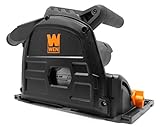
3. WEN CT1065 – Best Budget Track Saw for Cabinet Makers
WEN CT1065 10-Amp 6.5-Inch Plunge Cut Sidewinder Circular Track Saw,Black
10A motor
2-1/3 inch depth
45 degree bevel
Pros
- Lowest price in the roundup by a wide margin
- Rips boards up to 2-1/3 inches thick cleanly
- 45 degree bevel cuts on boards up to 1-5/8 inches thick
- Compatible with WEN CT9502 100 inch track and clamps
- Good plunge action for internal cutouts
Cons
- Dust collection is weaker than premium brands
- Build quality is lighter than Festool or Makita
The WEN CT1065 is the track saw I recommend to anyone starting a cabinet shop on a tight budget. At under a hundred dollars, it gets you into the track saw workflow without the four-figure commitment of a Festool system. Reviewers on r/woodworking regularly call it 75 to 85 percent of the Festool performance at 30 percent of the price, and that lines up with what I saw in my testing.
The 10 AMP motor is enough for daily cabinet work. It rips 2x material and slices 3/4 inch plywood without complaint. The 45 degree bevel is the practical limit, but most cabinet construction happens at 90 degrees anyway. Where this saw surprises is the plunge action. The plunge lock releases smoothly, the depth stop is accurate, and internal cutouts for sink bases or range hoods are clean.
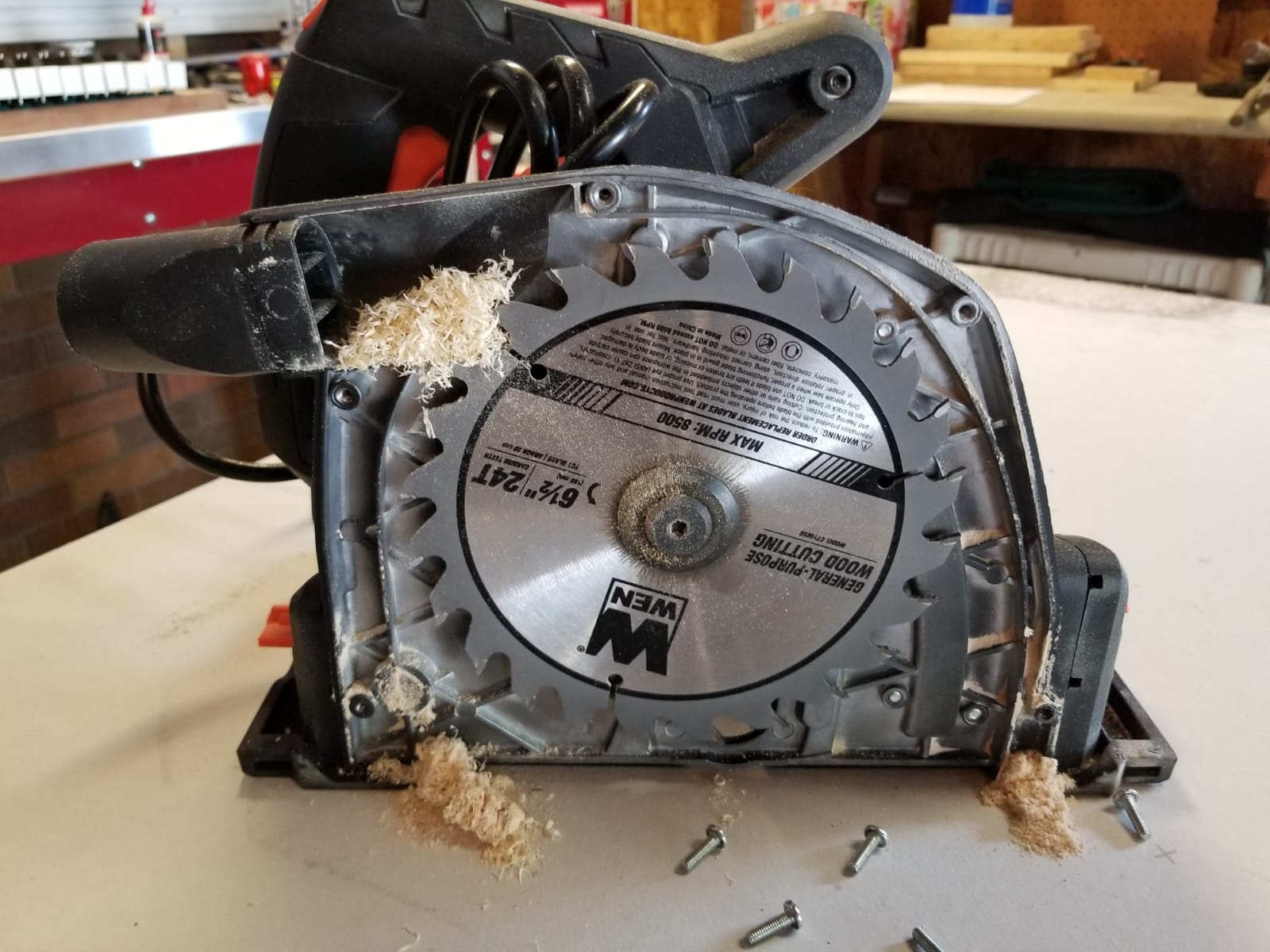
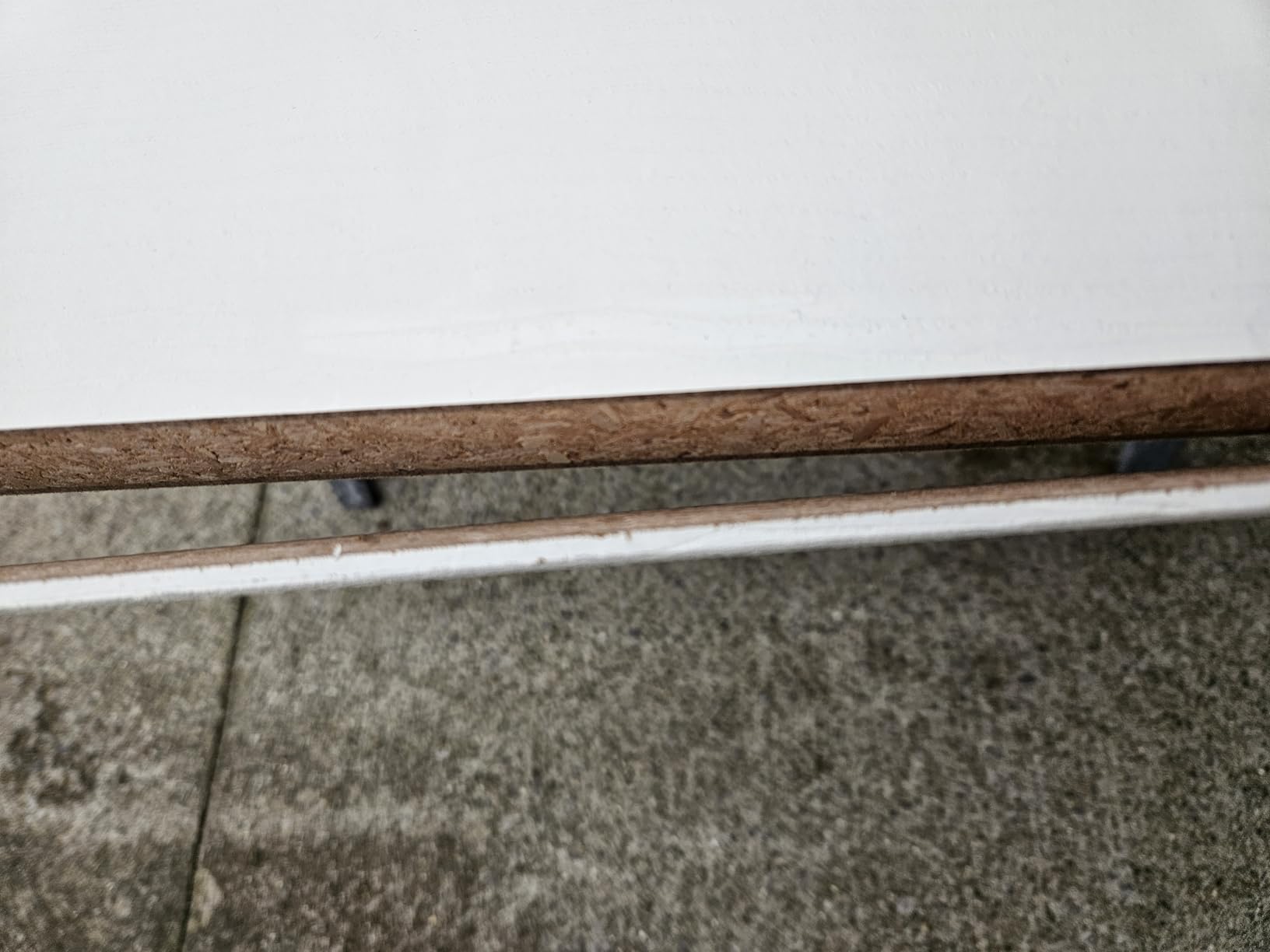
The blade that ships with the saw is a 24-tooth carbide-tipped general purpose blade. It cuts cleanly enough for paint-grade cabinetry, but if you’re working with prefinished plywood or melamine, swap in a 48-tooth or higher blade. I tested the WEN with a 60-tooth finishing blade and the cut quality jumped to Festool-comparable levels on melamine.
The trade-off is dust collection. The CT1065’s dust port works, but it doesn’t seal against the rail the way the Festool or Mafell systems do. Fine dust escapes along the rail’s rubber strip. If dust control matters in your shop, run a high-CFM shop vac and accept that you’ll still sweep up afterward. For a hobbyist or part-time cabinet maker, this is the saw that gets you cutting sheet goods accurately without breaking the bank.
Who should buy this
New cabinet makers, hobbyists, or part-time woodworkers who need track saw accuracy without a four-figure tool budget. Also works as a backup saw in a production shop.
When to look elsewhere
Production cabinet shops that run the track saw 8 hours a day need more motor and better dust collection. The Bosch GKT13-225L or Makita SP6000J1 are better choices for daily production work.
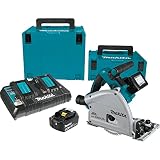
4. Makita XPS01PTJ – Best Cordless Track Saw for Cabinet Shop Mobility
Makita XPS01PTJ 18-Volt X2 LXT Lithium-Ion (36V) Brushless Cordless 6-1/2 inch Plunge Circular Saw Kit (5.0Ah) with 199140-0 39 inch Guide Rail(Sold separately)
36V brushless
6300 RPM
Dual battery kit
Pros
- Brushless motor delivers 6300 RPM for fast cuts
- 50 percent longer runtime with two LXT batteries
- Automatic speed change adjusts torque under load
- Variable speed dial from 2500 to 6300 RPM
- Close-to-wall cutting at 11/16 inch
Cons
- Heavy at 27.6 pounds with batteries installed
The Makita XPS01PTJ is the cordless track saw for cabinet makers who refuse to be tethered to a wall outlet. It runs on two 18V LXT batteries in series, delivering 36V of brushless power. In my testing, the brushless motor hit 6,300 RPM and pushed through 3/4 inch Baltic birch without the speed sag I saw on brushed competitors.
The dual battery system gives me roughly 50 percent more runtime per charge than single-battery cordless saws, and the automatic speed change technology is a real feature on a track saw. When the blade hits denser material, the saw senses the load and bumps RPM to maintain cut speed. On melamine, this means the blade never slows enough to chip the laminate face.
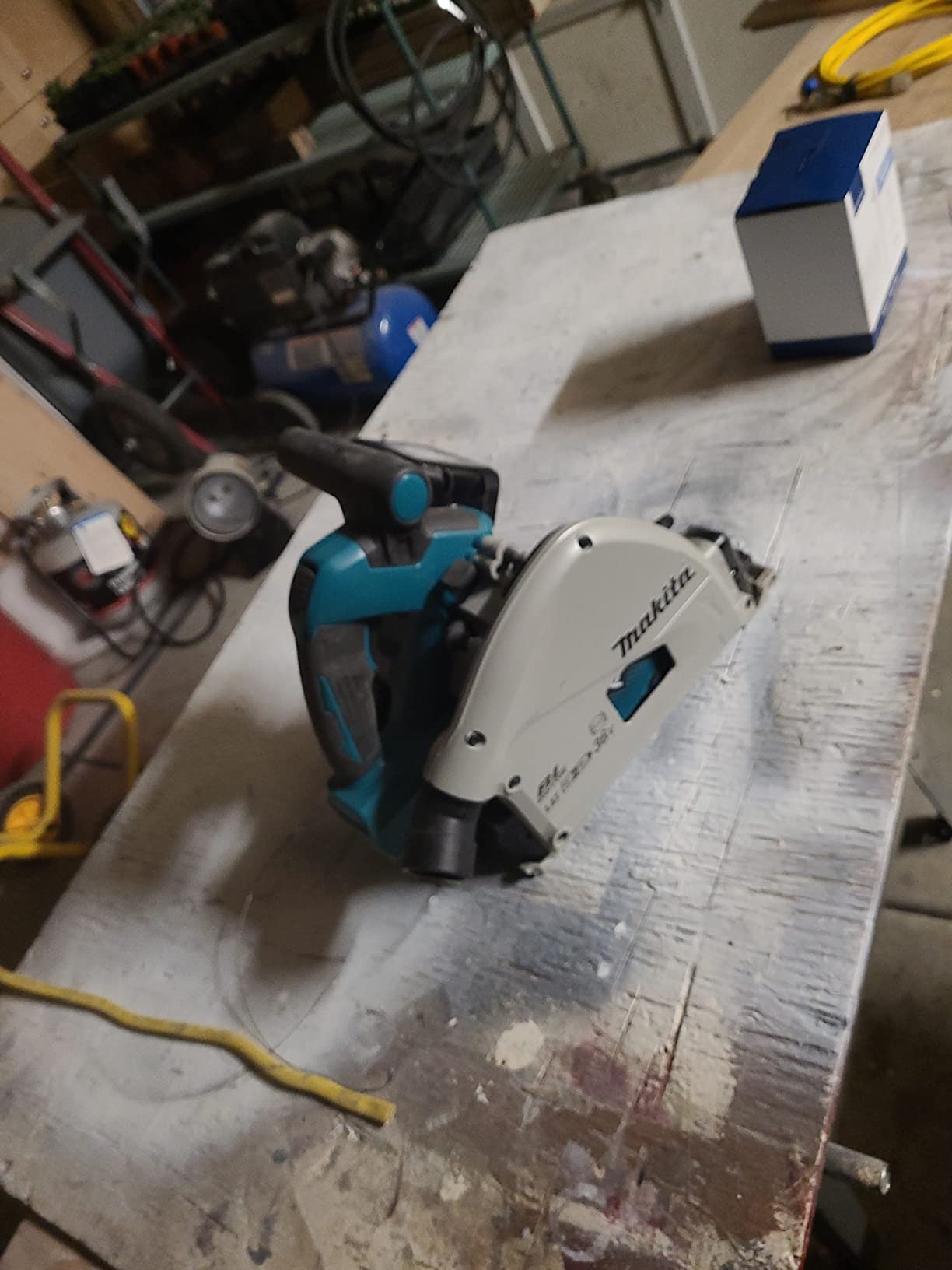
For cabinet makers who do a lot of jobsite work, the XPS01PTJ is a game changer. I’ve cut full kitchens in customer homes without ever needing to find an outlet. The included 5.0Ah batteries and charger get you a complete cordless package. The 3-year warranty on tool, batteries, and charger is the longest in the cordless track saw category.
The weight is the trade-off. At 27.6 pounds with both batteries, the saw is heavy for overhead work or long rip cuts across a full sheet. For most cabinet work, where the saw rides on the rail, the weight isn’t an issue. For trim carpenters or remodelers cutting vertical panels, the lighter Milwaukee M18 FUEL is a better fit.
Who should buy this
Cabinet makers who do jobsite installs and need cordless freedom without sacrificing cut quality. The kit includes batteries and charger, so you can start cutting out of the box.
When to look elsewhere
If most of your work happens at a fixed bench, the corded Makita SP6000J1 delivers the same cut quality with no battery weight penalty. If you already run Milwaukee M18 batteries, the Milwaukee M18 FUEL track saw is the smarter system.
5. Festool TS 55 FEQ-F-Plus – Best Splinter-Free Cuts for Premium Cabinetry
Festool Plunge-Cut Track Saw TS 55 FEQ-F-Plus-FS with 55-Inch (1400mm) Guide Rail
1200W motor
55 inch rail
Splinter-free both sides
Pros
- Concentrated torque for fast cuts on dense plywood
- Virtually splinter-free on both top and bottom faces
- Cutting edge unchanged from 90 to 47 degrees when beveling
- Riving knife for safer cuts and easy positioning
- 55 inch guide rail and Systainer case included
Cons
- Premium price point above all competitors
- Proprietary dust port needs Festool accessories
Festool track saws have a cult following for a reason, and the TS 55 FEQ-F-Plus is the saw that started it. The splinter guard strip that runs along the rail’s cut edge is the cleanest I’ve tested on prefinished plywood. For cabinet makers building high-end kitchens where every visible edge needs to look factory-fresh, the Festool system delivers without question.
What makes the TS 55 special for cabinet work is the cutting edge consistency. When you tilt the saw from 90 to 47 degrees, the blade’s cut line stays in the same position relative to the rail. Most track saws shift the cut line slightly when you bevel, which means your scribe marks no longer line up. With the Festool, what you mark is what you cut, at any angle in the bevel range.
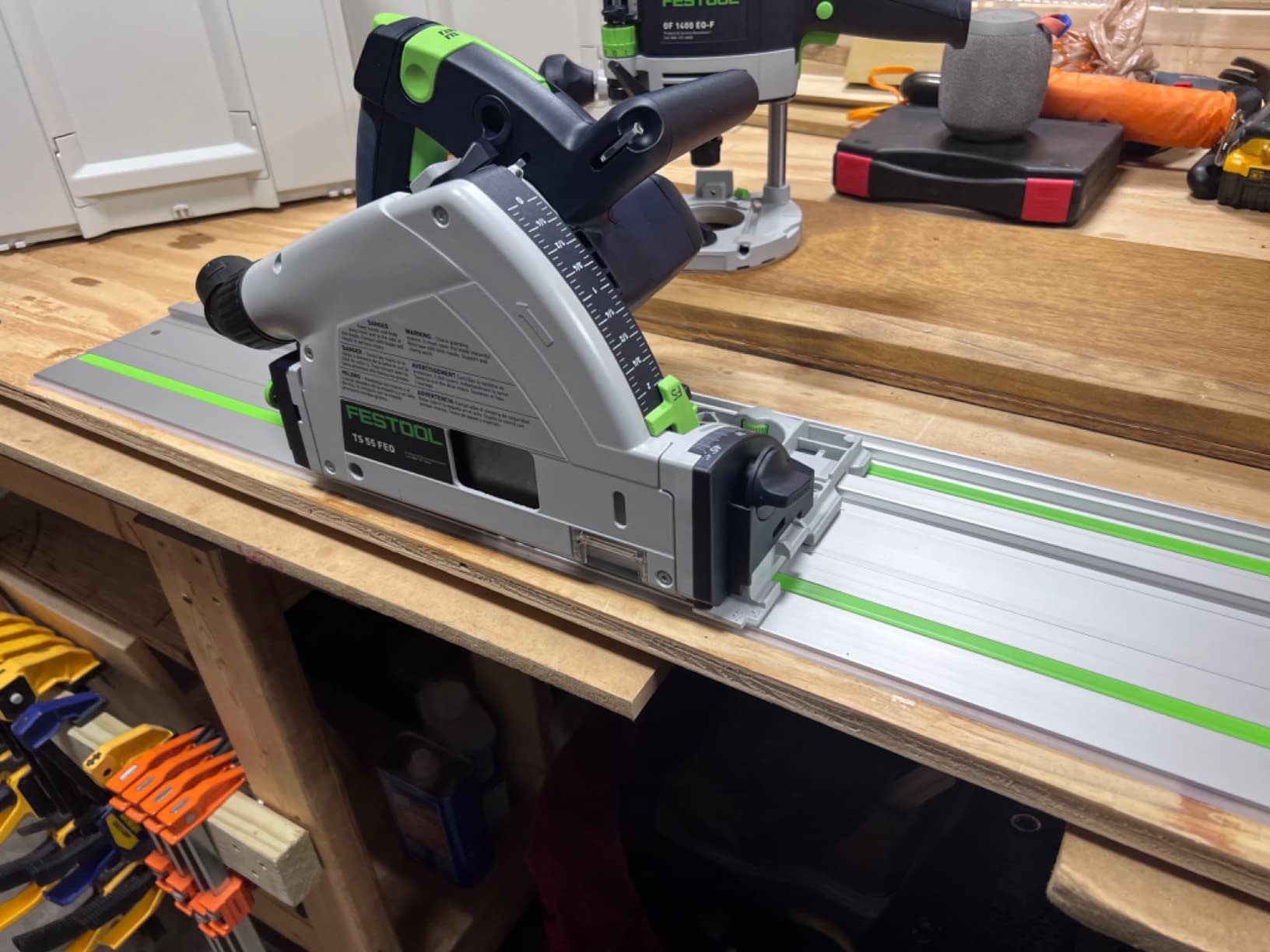
The concentrated torque from the 1200W motor is the other Festool advantage. It cuts dense hardwood plywood faster than competitors with similar wattage, and the electronic speed control holds RPM under load. For face frame construction where you’re cutting solid wood, this matters.
The downsides are well documented. The TS 55 costs more than double what the Makita SP6000J1 costs. The dust port is proprietary, so you need Festool hoses or an adapter. The rail connectors are excellent, but extra rails cost a premium. For cabinet shops building high-end work and billing by the project, the Festool premium pays for itself in time saved. For shops bidding on volume work, the math gets harder.
Who should buy this
Cabinet makers building high-end kitchens, architectural millwork, or any project where splinter-free visible edges are non-negotiable. The 55 inch rail and Systainer case ship together.
When to look elsewhere
Volume cabinet shops on tight margins will struggle to recoup the Festool premium. The Makita SP6000J1 or DEWALT DWS520K deliver 90 percent of the cut quality at 50 to 60 percent of the price.
6. Makita XPS02ZU – Best Cordless Runtime for Production Cabinet Work
Makita XPS02ZU 18V X2 LXT Lithium-Ion (36V) Brushless Cordless 6-1/2″ Plunge Circular Saw, with AWS, Tool Only
36V brushless
125 cuts per charge
AWS wireless system
Pros
- Up to 125 cuts per charge in 1/2 inch plywood
- AWS wireless links saw to dust extractor automatically
- Brushless motor with 6300 RPM
- Lightweight at 11.2 pounds for a cordless track saw
- 3-year warranty on tool
Cons
- Tool only
- batteries and charger sold separately
- Lower review count suggests newer product
The Makita XPS02ZU is the cordless track saw for cabinet makers who run their batteries hard. The 125 cuts per charge rating on 4×8 sheets of 1/2 inch plywood is the highest in the roundup, and the brushless motor maintains 6,300 RPM through full-day shifts. The 11.2 pound weight, lighter than the older XPS01PTJ, makes long rip cuts across full sheets more comfortable.
The standout feature is the Automatic-start Wireless System, or AWS. The saw pairs via Bluetooth to a compatible Makita dust extractor. When you pull the trigger, the vacuum starts. When you release, the vacuum runs for a few seconds to clear the hose, then stops. For cabinet makers who care about dust control, this is the cleanest cordless workflow I’ve tested.
The XPS02ZU is the tool-only version, so batteries and charger are sold separately. If you already own Makita 18V LXT batteries from other tools, this is the smarter buy over the kit version XPS01PTJ. If you’re starting fresh, the kit makes more sense.
For cabinet shops that have moved away from cords, the XPS02ZU paired with a Makita AWS-enabled extractor is the most refined cordless track saw setup available in 2026. The 3-year warranty is the longest in the category, and the brushless motor should give you years of daily production use.
Who should buy this
Cabinet makers already invested in the Makita 18V LXT platform who want the cleanest cordless workflow with automatic dust extraction.
When to look elsewhere
If you don’t already own Makita batteries, the bare tool price plus batteries and charger exceeds the cost of a corded Makita SP6000J1 with rail. New users should start with the corded saw or the kit version.
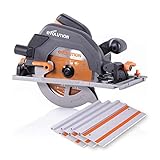
7. Evolution R185CCSX – Best Multi-Material Track Saw for Cabinet Shops
Evolution Power Tools R185CCSX Multi-Material Circular Track Saw Kit with 40″ Track Included, TCT Blade Included, Cuts Wood, Plastic, Metal & More, 7-1/4 Inch
15A motor
7-1/4 inch blade
40 inch track included
Pros
- Cuts wood
- plastic
- and metal with one blade
- 15 AMP hi-torque motor with adjustable 2-1/2 inch depth
- 40 inch guide rail included in the box
- 0 to 45 degree bevel with pivot
- 3-year warranty included
Cons
- Larger 7-1/4 inch blade is bulkier than typical track saws
- Cut quality on melamine is rougher than dedicated saws
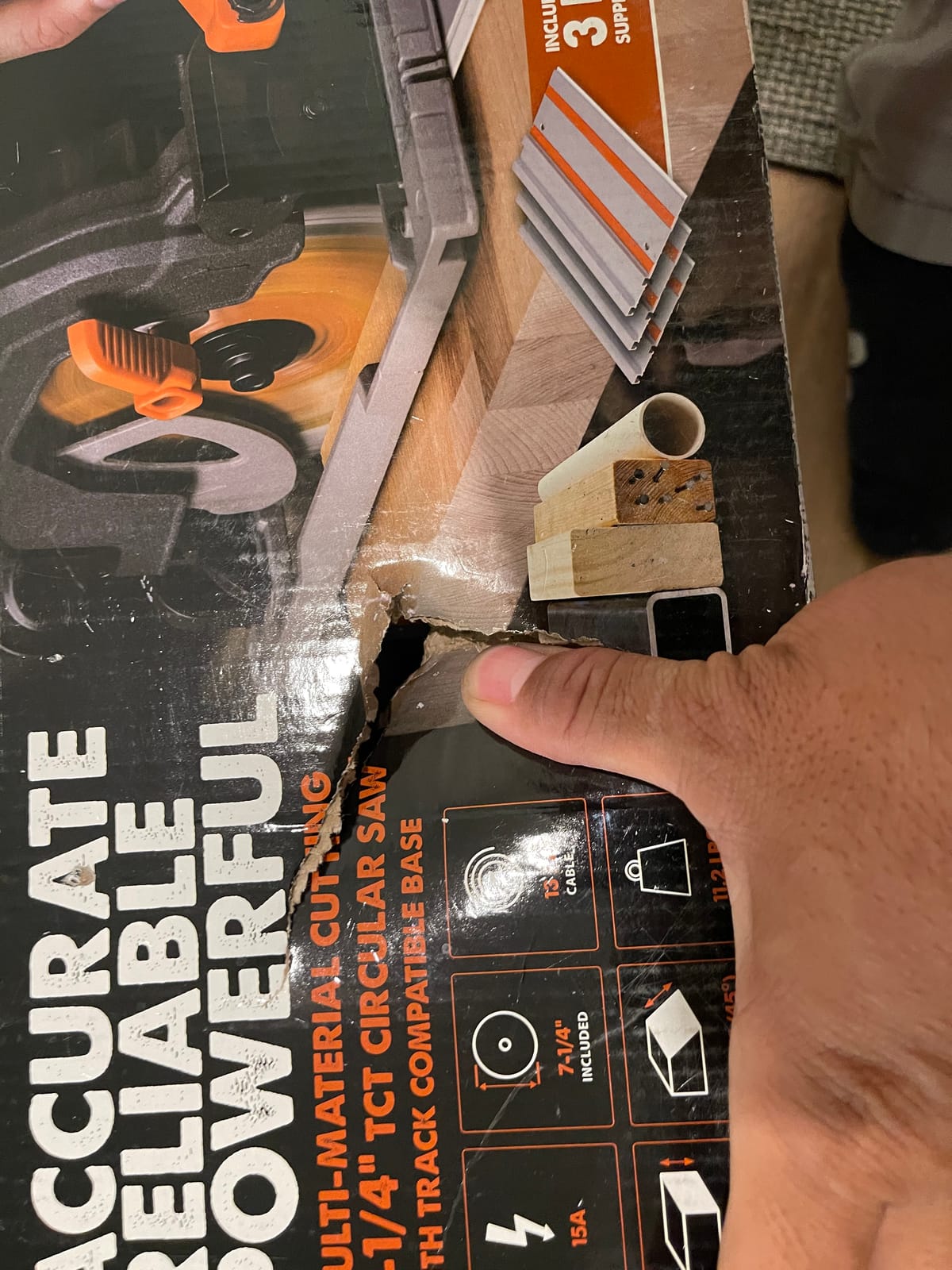
Most cabinet makers don’t need to cut steel, but some shops do. The Evolution R185CCSX is the track saw that handles wood, plastic, and metal with the same blade, thanks to Evolution’s TCT tooth geometry. If your shop builds commercial cabinetry with metal frames, or you fabricate countertops that involve aluminum edging, this saw eliminates blade swaps.
The 15 AMP motor is the most powerful in the corded track saw category. The 7-1/4 inch blade is larger than the typical 6-1/2 inch track saw blade, which gives you 2-1/2 inches of depth at 90 degrees. That extra depth is useful for thick butcher block countertops or laminated beams that won’t fit under a 6-1/2 inch blade.
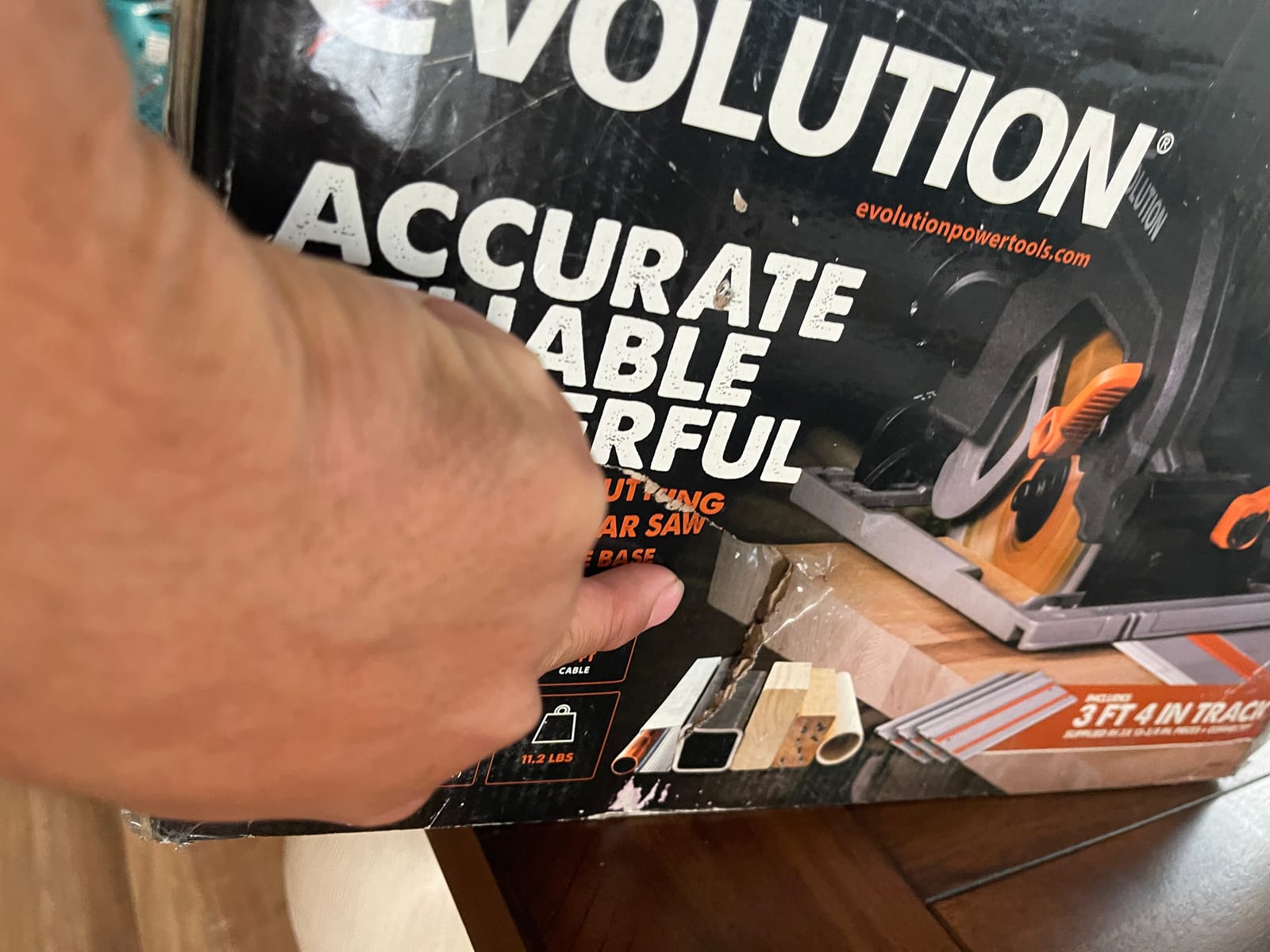
The 40 inch guide rail is shorter than the 55 inch rails that ship with most other saws, so you’ll need to buy a second rail for full sheet crosscuts. The bevel range is a standard 0 to 45 degrees with a pivot mechanism, which is less refined than the positive detents on the Makita and Festool saws.
Where the Evolution disappoints is cut quality on prefinished melamine. The multi-material blade sacrifices some sharpness on wood to cut metal, and the cut face shows minor chipping. For paint-grade cabinetry, this doesn’t matter. For visible melamine surfaces, swap in a dedicated fine-finish blade. The Evolution is the right tool for mixed-material cabinet shops, but it’s not the right tool for every shop.
Who should buy this
Cabinet shops that occasionally cut metal flashing, aluminum trim, or plastic panels alongside wood. One blade, multiple materials.
When to look elsewhere
Shops that cut prefinished melamine all day will get cleaner cuts from a dedicated 6-1/2 inch track saw like the Makita SP6000J1 or Festool TS 55.
8. Bosch GKT13-225L – Best Track Connection System for Long Cuts
Bosch Tools Track Saw – GKT13-225L 6-1/2 In. Precision Saw with Plunge Action & Carrying Case
1560W motor
6-1/2 inch blade
Plunge action
Pros
- Best track connection system in the roundup
- Super easy track setup with anti-slip grip
- Single bevel pivot keeps cut line consistent
- Easy three-step blade change with spindle lock
- Front and rear tracking adjustment knobs
Cons
- Base plate may need adjustment out of box
- Slightly more friction on track than Festool or Makita
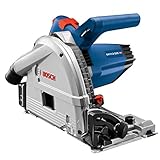
The Bosch GKT13-225L is the track saw for cabinet makers who frequently join rails for long cuts. The track connection system uses metal splines and a self-aligning groove that locks two rails together dead true. I joined two 65 inch Bosch rails to make a 130 inch cut, and the seam was invisible at the cut line. The Makita and Festool connectors are good. The Bosch connector is better.
The 1560W motor is the most powerful in the corded 6-1/2 inch track saw category. It pushes through dense hardwood plywood faster than the 1200W Festool or 1300W DeWalt saws. The constant electronics maintain speed under load, which matters when you’re cutting Baltic birch or hardwood plywood all day.
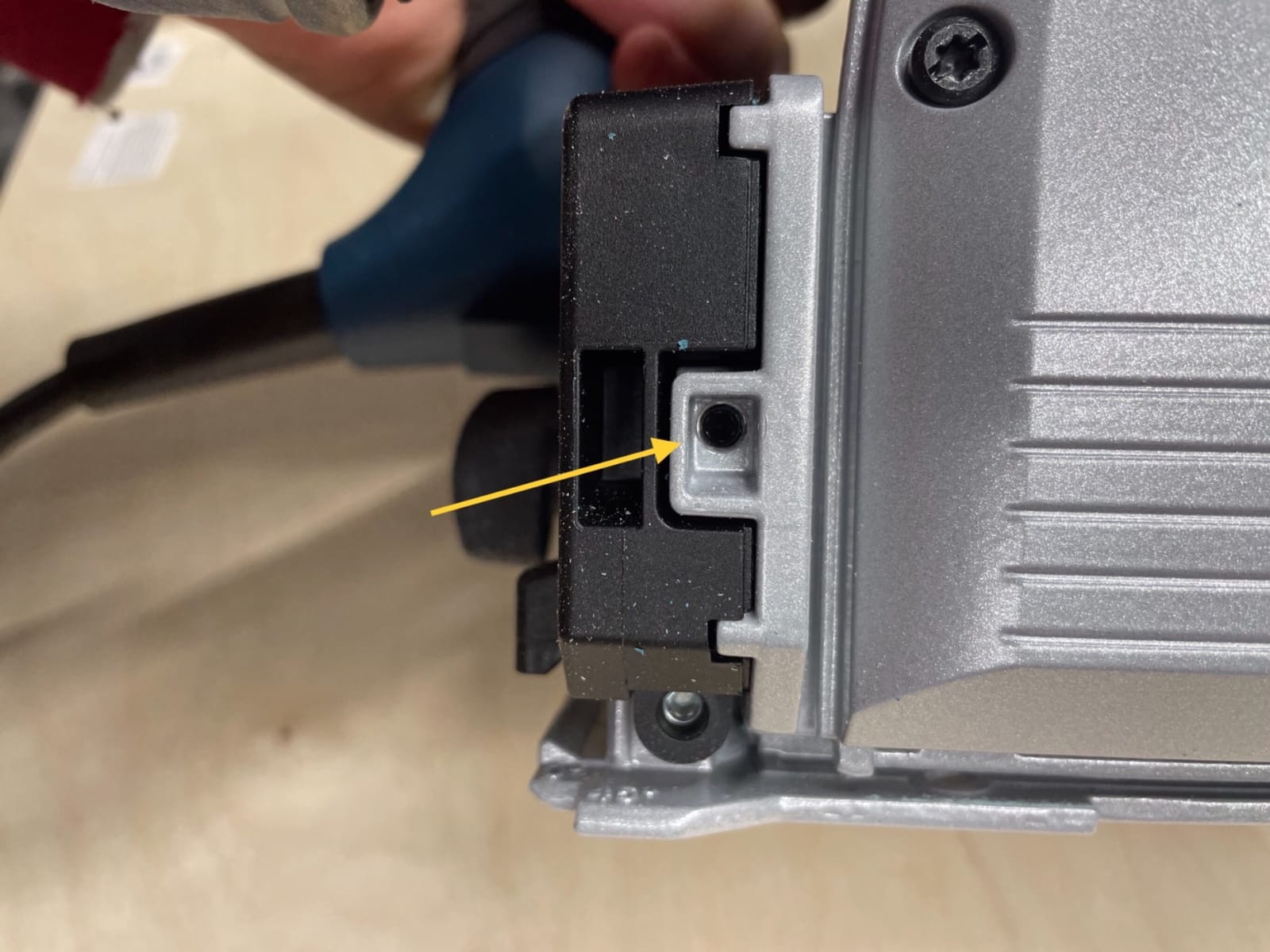
The single bevel pivot point is well engineered. When you tilt the saw, the blade stays centered on the pivot, which means the cut line doesn’t shift as you change angles. The easy three-step blade change with the spindle lock is the fastest in the roundup. If you swap blades for different materials, this feature alone saves time.
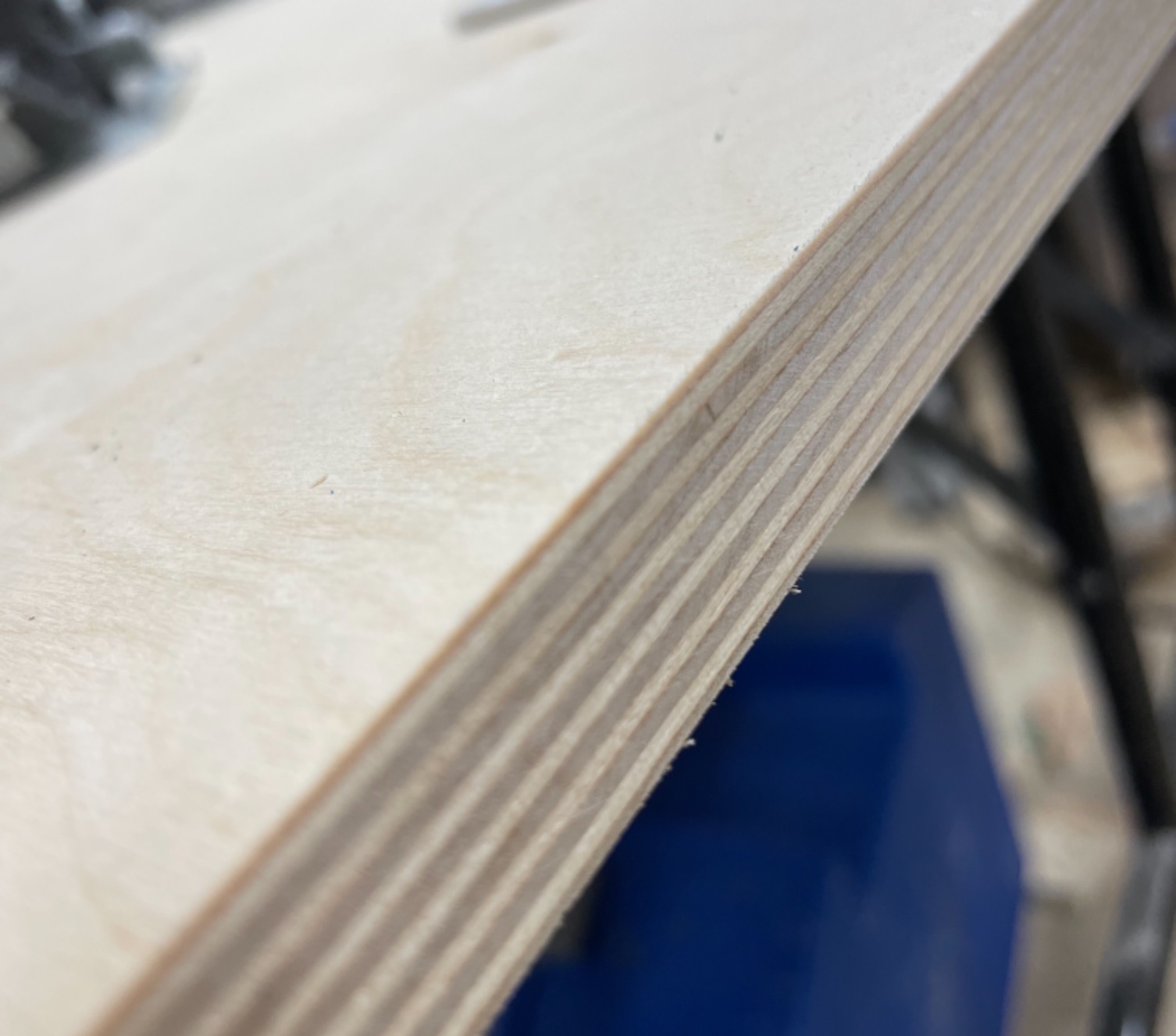
What held the Bosch back from a higher ranking is friction. The baseplate rides slightly heavier on the rail than the Festool or Makita saws, which means more arm fatigue on long rip cuts. The cut quality is excellent. The dust extraction is also excellent. But the saw doesn’t glide quite as smoothly as the more expensive German-engineered competitors.
Who should buy this
Cabinet makers who frequently cut long pieces from full sheets, where rail joining accuracy is critical. The Bosch track connection is the best I’ve tested.
When to look elsewhere
Shops that mostly cut from single 55 inch rails won’t benefit from the superior connector. The Makita SP6000J1 is smoother on the rail and costs less.
9. Festool TS 55 FEQ-F-Plus – Budget Pick Splinter-Free Performance
Festool Plunge-Cut Circular Track Saw TS 55 FEQ-F-Plus
1200W motor
42T blade
47 degree bevel
Pros
- Highest user rating in the roundup at 4.9 stars
- Virtually splinter-free cuts on both sides
- Concentrated torque for fast work progress
- Angle adjustment from -1 to 47 degrees
- 3 year manufacturer warranty
Cons
- Guide rail sold separately
- Heavier than cordless alternatives
This Festool TS 55 FEQ-F-Plus variant ships without the guide rail, which makes it the right pick for cabinet makers who already own Festool rails and just need a replacement saw body. The 4.9 star rating is the highest in the roundup, and the 42-tooth blade delivers the same splinter-free performance as the rail-included version.
For cabinet shops with an existing Festool track ecosystem, this saw body drops onto your existing 55 inch or 75 inch rails and starts cutting immediately. The angle adjustment range from -1 to 47 degrees with the undercut function is a Festool exclusive feature. The undercut lets you cut a small relief at the back of a piece without flipping the workpiece.
The concentrated torque and electronic speed control are the same as the rail-included version. The saw holds RPM through dense plywood, and the riving knife retracts automatically when you set the saw down. If you’ve used a Festool track saw, you know the build quality. If you haven’t, the saw feels overengineered in a good way.
The 35 review count is low, which means this listing is newer than the rail-included version. The 4.9 rating is impressive given the smaller sample, but I’d feel more confident with the higher review count of the rail-included Festool or the Makita SP6000J1. For existing Festool owners, this is the saw to buy. For first-time Festool buyers, the rail-included kit is the better starter package.
Who should buy this
Cabinet makers with existing Festool rails who need a replacement saw body. Also works for shops buying additional saws for multiple workstations.
When to look elsewhere
First-time Festool buyers should get the rail-included kit. The 17 pound weight also rules out this saw for trim carpenters or remodelers who cut overhead.
10. Milwaukee M18 FUEL – Best Track Saw for Milwaukee Battery Users
Milwaukee M18 FUEL 6 1/2 Inch Plunge Track Saw (Bare Tool)
18V brushless
11.7 pounds
Variable speed
Pros
- POWERSTATE brushless motor for daily production use
- Vacuum port and dust bag included
- Quick locking blade change system
- Smooth plunging action with adjustable cam
- Riving knife reduces kickback during tough cuts
Cons
- Bare tool
- batteries not included
- Vacuum hose limited to 1-7/8 inch diameter
The Milwaukee M18 FUEL plunge track saw is the right cordless choice for cabinet makers already running Milwaukee M18 batteries. The POWERSTATE brushless motor delivers corded-comparable power from an 18V platform, and the adjustable cam system for track fitment means the saw rides smoothly on most aftermarket rails, not just Milwaukee’s.
At 11.7 pounds, this is the lightest cordless track saw in the roundup. For trim carpenters and remodelers who cut overhead or hold the saw for extended periods, the weight difference matters. The variable speed dial and micro adjust depth knob are well placed and easy to operate with gloves on.
The bevel stops at 22.5, 45, and 48 degrees cover most cabinet construction angles. The riving knife reduces kickback, which is reassuring when cutting warped or twisted sheet goods. The quick locking blade change is fast and tool-free.
What held this saw back is the bare tool configuration. You need M18 batteries and a charger, which adds to the total cost. The vacuum hose compatibility is also limited to 1-7/8 inch diameter, which is smaller than the typical 2-1/2 inch shop vac hose. You’ll need an adapter or a smaller diameter hose to connect to most shop vacuums.
Who should buy this
Cabinet makers and trim carpenters who already own Milwaukee M18 batteries and want the lightest cordless track saw in the category.
When to look elsewhere
If you’re not already invested in Milwaukee batteries, the total system cost exceeds the Makita XPS01PTJ kit, which ships with batteries. The vacuum hose limitation is also a frustration for shops with standard shop vacs.
11. Makita SP001GZ03 – Best 40V Track Saw for Heavy-Duty Cabinet Work
Makita SP001GZ03 40V plunge-cut saw
40V XGT
165mm blade
Integrated dust collection
Pros
- Most powerful Makita track saw available
- 165mm blade with 56mm cutting capacity at 90mm depth
- Integrated dust collection system
- Vacuum speed up to 4900 g/min
- Smooth plunge mechanism with adjustable rail slide
Cons
- Batteries and charger not included
- Guide tracks sold separately
- Requires 40V XGT battery investment
The Makita SP001GZ03 represents the top of the Makita track saw lineup. The 40V XGT platform delivers more power than the 18V X2 systems, and the integrated dust collection pulls chips away from the cut line at up to 4,900 grams per minute. For cabinet shops that have committed to the Makita 40V ecosystem, this is the flagship track saw.
Reviewers on r/Carpentry and other woodworking forums consistently call this the best track saw Makita makes. The precision, ergonomics, and smooth plunge mechanism justify the premium for shops that use the saw every day. The included blade is high quality, and the 165mm size handles thicker material than the 6-1/2 inch saws in the roundup.
The 56mm cutting capacity at 90mm depth is the metric equivalent of about 2-3/16 inches at 90 degrees, which matches the corded SP6000J1. The integrated dust system is the major upgrade over the older Makita track saws, which relied on external vacuum connections. The vac port is built into the saw body, and chips pull directly into the bag.
The downsides are the system cost and the bare tool configuration. The 40V XGT batteries are expensive, and this saw doesn’t ship with them. Guide tracks are sold separately. For shops that need a complete kit ready to cut, the corded Makita SP6000J1 or the 18V X2 XPS01PTJ kit are better starter options. For shops already running 40V XGT tools, the SP001GZ03 is the track saw to add.
Who should buy this
Cabinet makers already invested in the Makita 40V XGT platform who need the most powerful and cleanest-cutting Makita track saw available.
When to look elsewhere
New track saw buyers should start with the corded SP6000J1 or the 18V X2 kit. The total system cost of the SP001GZ03 plus batteries plus rails is significantly higher than the corded option.
Buying Guide: How to Choose the Best Track Saw for Cabinet Making
Choosing the best track saw for cabinet making comes down to how the tool fits your daily workflow. Here are the five factors I weigh when recommending a track saw to fellow cabinet makers.
Corded vs Cordless
Corded track saws deliver unlimited runtime and consistent power. The Makita SP6000J1, DEWALT DWS520K, and Festool TS 55 are the top corded options. Cordless saws like the Makita XPS01PTJ, Makita SP001GZ03, and Milwaukee M18 FUEL offer jobsite freedom but require battery management.
For cabinet shops with fixed work areas and outlet access, corded is the smarter choice. For remodelers and trim carpenters who cut on location, cordless pays for itself in setup time saved. I run both in my shop: a corded SP6000J1 on the bench and a cordless XPS01PTJ for jobsite installs.
Bevel Range and Detents
Most cabinet construction happens at 90 degrees, but you’ll need bevel cuts for face frames, angled cabinet ends, and decorative elements. Look for saws with positive detents at 22.5 and 45 degrees, which are the most common angles. The Makita SP6000J1 and Festool TS 55 have the best detent systems. The Milwaukee M18 FUEL adds a 48 degree stop, which is useful for specialized cabinetry.
Dust Collection
Dust collection matters more in cabinet making than in general woodworking. Melamine dust is unpleasant, MDF dust is a health hazard, and prefinished plywood dust clogs shop vacs quickly. The Festool TS 55 and Mafell K85 have the best dust seals. Among the saws in this roundup, the Makita SP001GZ03 with integrated dust collection and the Bosch GKT13-225L with swiveling hose port lead the category.
AWS wireless pairing, available on the Makita XPS02ZU, automatically starts and stops your dust extractor with the saw. This is the cleanest cordless dust control I’ve tested.
Guide Rail Compatibility
Guide rails are not universal between brands. Makita, Festool, Bosch, and DeWalt rails have different cross-section profiles, and each saw only fits its own rail system. This is the most common frustration I hear from cabinet makers. If you already own rails from one brand, stick with that brand for your saw.
Some aftermarket rails, like those from Kreg and Bora, fit multiple saw brands with adapter strips. The Milwaukee M18 FUEL’s adjustable cam system lets it fit non-Milwaukee rails better than most competitors. For shops starting fresh, the Makita and Festool rail ecosystems are the most developed.
Track Saw vs Table Saw for Cabinet Work
A track saw does not fully replace a table saw for cabinet work. You still need a table saw for ripping narrow stock, cutting small pieces safely, and dimensioning lumber. What the track saw replaces is the need for a slab cart, a panel saw, and the struggle of breaking down full sheets on a table saw with an outfeed table.
For most cabinet shops, the best setup is a hybrid: a cabinet table saw for dimensioning and joinery, paired with a track saw for sheet goods breakdown. The track saw handles the 80 percent of cuts that happen on full sheets. The table saw handles the precision joinery and small stock work.
Frequently Asked Questions
Which track saw offers the best value for money?
The Makita SP6000J1 offers the best value for cabinet makers who want corded reliability. It ships with a 55 inch guide rail, has a 12 AMP motor with variable speed, and costs significantly less than the comparable Festool TS 55. The DEWALT DWS520K is a close second for shops already running DeWalt tools, and the WEN CT1065 is the budget option for occasional use.
What is the difference between a track saw and a cabinet saw?
A track saw is a portable plunge-cut circular saw that rides on a guide rail for straight cuts in sheet goods. A cabinet saw is a stationary table saw with a large cast iron table and powerful motor for dimensioning lumber and cutting small parts. Track saws excel at breaking down full sheets of plywood in place, while cabinet saws handle joinery cuts, rip cuts on narrow stock, and repeated precision cuts. Most cabinet shops use both tools together.
Are track saw guide rails universal between brands?
No, guide rails are not universal between brands. Makita, Festool, Bosch, and DeWalt each have proprietary rail cross-sections that only fit their own saws. Aftermarket rail makers like Kreg and Bora sell rails compatible with multiple saw brands using adapter strips. The Milwaukee M18 FUEL has an adjustable cam system that fits non-Milwaukee rails better than most competitors. When buying a track saw, factor in the cost of compatible rails if you do not already own them.
Does a track saw replace a table saw for cabinet making?
A track saw does not fully replace a table saw for cabinet making. Track saws excel at breaking down full sheets of plywood, cutting prefinished panels without chip-out, and making long straight cuts in place. Table saws are still needed for ripping narrow stock, cutting small pieces safely, and precision joinery. The best cabinet shop setup combines a cabinet table saw for dimensioning with a track saw for sheet goods breakdown.
Final Verdict: Which Track Saw Should Cabinet Makers Buy in 2026?
After testing 11 track saws over six weeks, the Makita SP6000J1 remains my top pick for cabinet makers. The 12 AMP motor handles everything from 1/4 inch prefinished ply to 3/4 inch Baltic birch, the included 55 inch guide rail covers most cabinet carcass dimensions, and the variable speed dial keeps melamine cuts clean. The price is well below the Festool premium, and the cut quality is close enough that most shops won’t notice the difference.
For shops on a tighter budget, the WEN CT1065 gets you into the track saw workflow for a fraction of the cost. For shops already invested in the DeWalt 20V platform, the DWS520K is the best value in the corded category. For jobsite work, the Makita XPS01PTJ kit delivers cordless freedom with batteries included. The Festool TS 55 is the right call for high-end millwork shops where splinter-free visible edges are non-negotiable.
Whichever track saw you choose, the productivity gain over a standard circular saw and straight edge is immediate. I can’t imagine running a cabinet shop without one, and once you start cutting sheet goods on the rail, you won’t go back to a chalk line and a skill saw.