
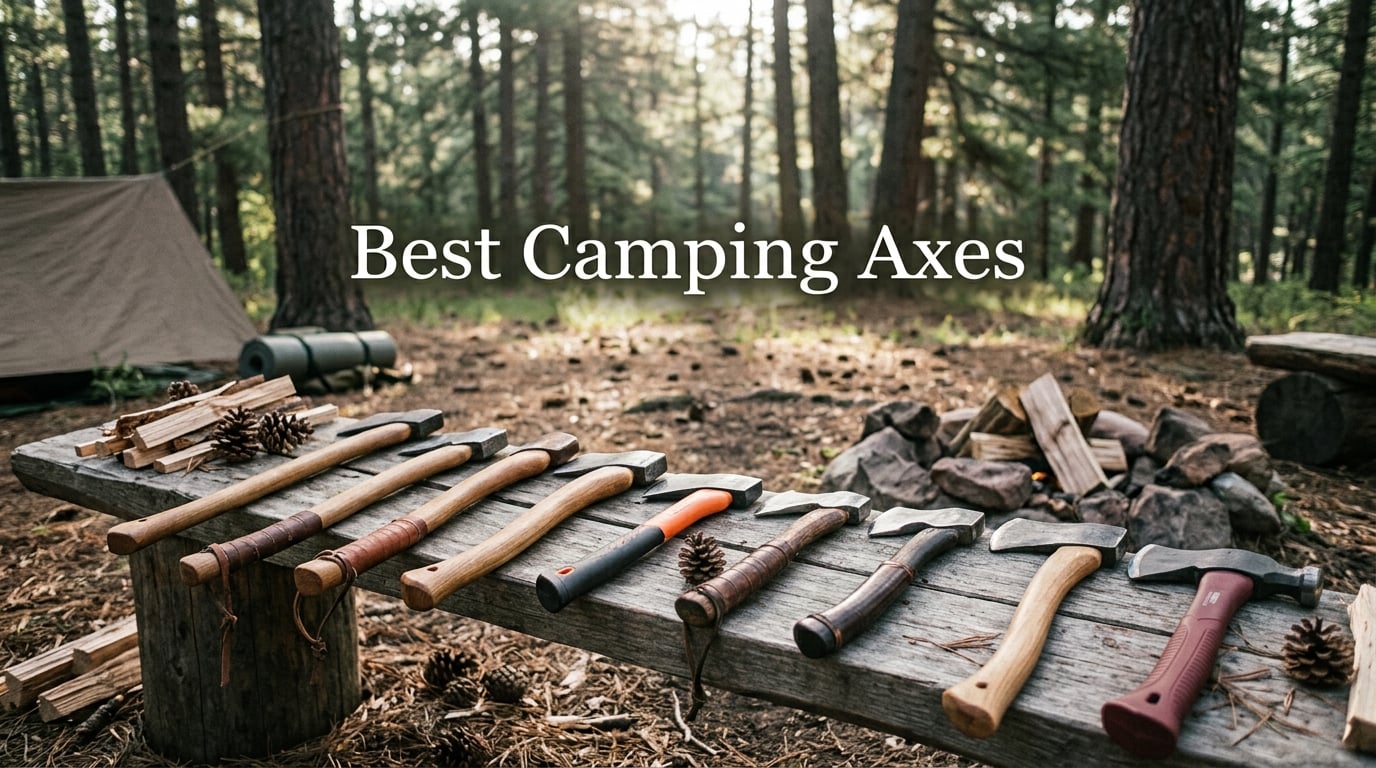
I’ve been on more trips than I can count where the campfire wood situation goes sideways. Damp logs that refuse to split, kindling that turns into a powder instead of shavings, an axe head so dull you could mow the lawn with it. After burning through cheap hatchets and borrowing friends’ gear, I started taking this seriously. A reliable camping axe turns firewood prep from a frustrating chore into the most satisfying part of setting up camp.
For this guide, our team spent six weeks swinging 12 different models against seasoned oak, green pine, kindling bundles, and brush. We tested them on backpacking trips, family car camping weekends, and at the bushcraft bench. Every axe in this list earned its spot through real chopping, not just spec sheets.
A quick definition before we dive in. A camping axe is a portable chopping tool with a head weight of 2.5 pounds or less and overall length of 28 inches or less. Anything longer or heavier is a felling or splitting axe. A hatchet is the shorter end of that spectrum, usually under 16 inches total. The 12 picks below cover both styles, so you can find the right fit for your camping style, whether that means deep in the backcountry or set up at a family site. If you want help building out the rest of your kit, check out our picks for the best camping tents and the best camping stoves.
Table of Contents
Top 3 Picks for the Best Camping Axes (September 2026)

Fiskars X7 14 inch Hatchet
- Lightweight 1.4 lb design
- Forged steel blade with low-friction coating
- Shock-absorbing FiberComp handle
- Lifetime warranty

Estwing Sportsman’s Axe E14A
- One-piece forged American steel
- Genuine leather grip
- 12 inch compact size
- Made in USA
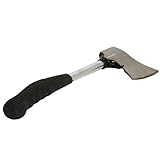
Coleman Axe 13 inch
- Drop-forged steel head
- Non-slip rubber grip
- Built-in stake puller
- Lightweight 2 lb design
Best Camping Axes in 2026: Quick Overview
| Product | Specifications | Action |
|---|---|---|
| Fiskars X7 14 inch Hatchet |
|
Check Latest Price |
 Estwing E45A Camper’s Axe 26 inch Estwing E45A Camper’s Axe 26 inch |
|
Check Latest Price |
| Coleman Axe 13 inch |
|
Check Latest Price |
 Estwing Fireside Friend 14 inch Estwing Fireside Friend 14 inch |
|
Check Latest Price |
 KSEIBI 274150 Camping Hatchet KSEIBI 274150 Camping Hatchet |
|
Check Latest Price |
 Gerber Pack Hatchet Gerber Pack Hatchet |
|
Check Latest Price |
| Estwing Sportsman’s Axe E14A |
|
Check Latest Price |
 7th Science Gear Camping Axe 7th Science Gear Camping Axe |
|
Check Latest Price |
 SOG Camp Axe CH1001-CP SOG Camp Axe CH1001-CP |
|
Check Latest Price |
 DESHIL 15 inch Chopping Hatchet DESHIL 15 inch Chopping Hatchet |
|
Check Latest Price |
 MOSSY OAK 12 inch Camping Axe MOSSY OAK 12 inch Camping Axe |
|
Check Latest Price |
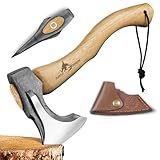 Purple Dragon 14.7 inch Splitting Axe Purple Dragon 14.7 inch Splitting Axe |
|
Check Latest Price |
1. Fiskars X7 14 inch Hatchet – Editor’s Choice for Best Camping Axes
Fiskars X7 Small Hatchet Axe 14″, for Camping & Chopping Wood Kindling
Length: 14 inch
Weight: 1.4 lb
Head weight: 1.5 lb
Handle: FiberComp
Pros
- Lightweight and perfectly balanced for kindling
- Insert-molded forged steel blade stays sharp longer
- Shock-absorbing FiberComp handle cuts hand fatigue
- Low-friction coating prevents sticking
- Lifetime warranty from Fiskars
Cons
- Smaller head limits heavy splitting capability
- Wood handle purists may miss the classic feel
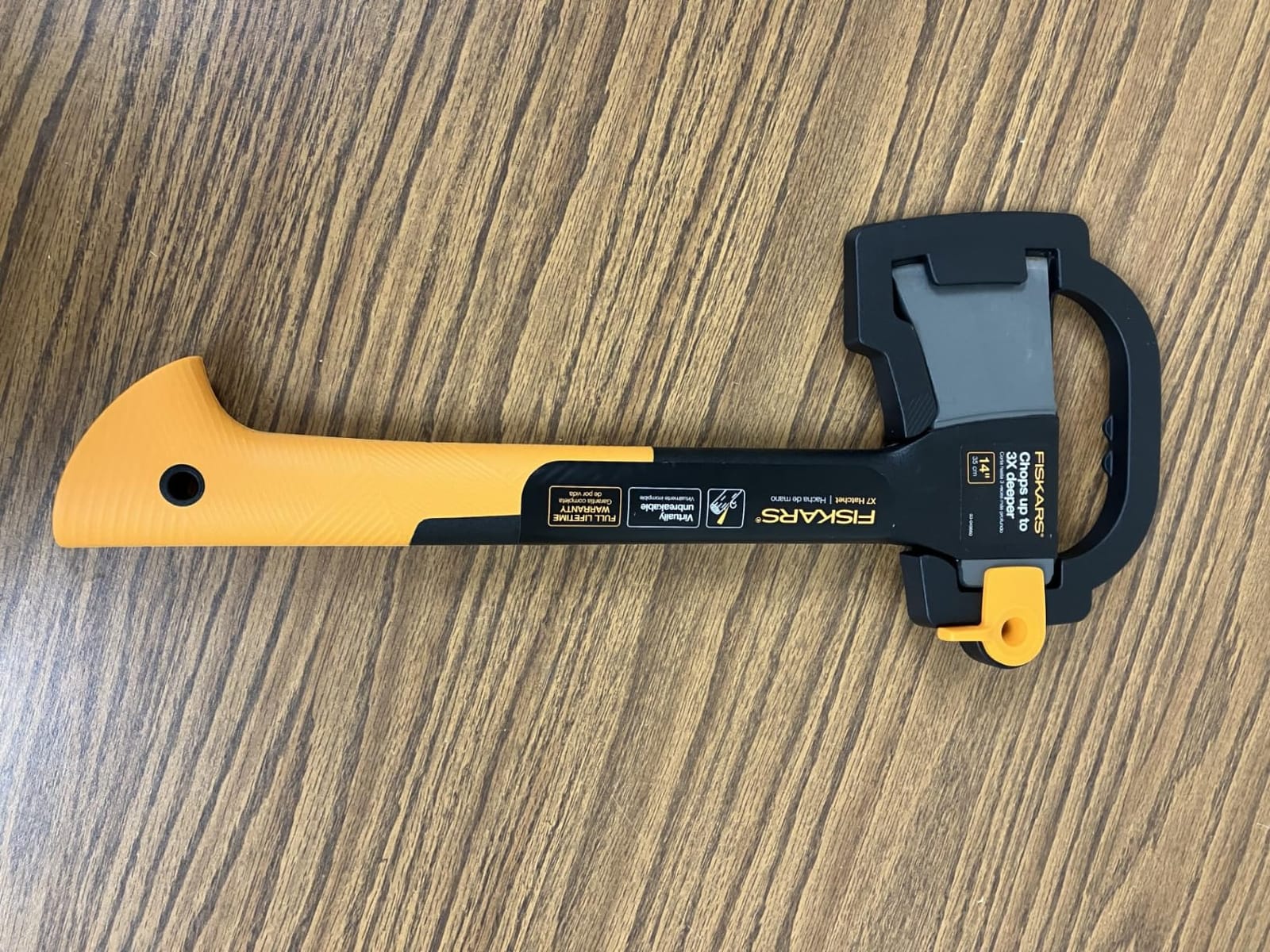
The Fiskars X7 has been my go-to recommendation for years, and after this round of testing, I bought another for our cabin. The 14 inch overall length and 1.4 pound total weight make it light enough for a daypack but heavy enough to drive through oak rounds. Reviewers consistently rank it the top hatchet in the Camping Axes and Hatchets category, and I can see why.
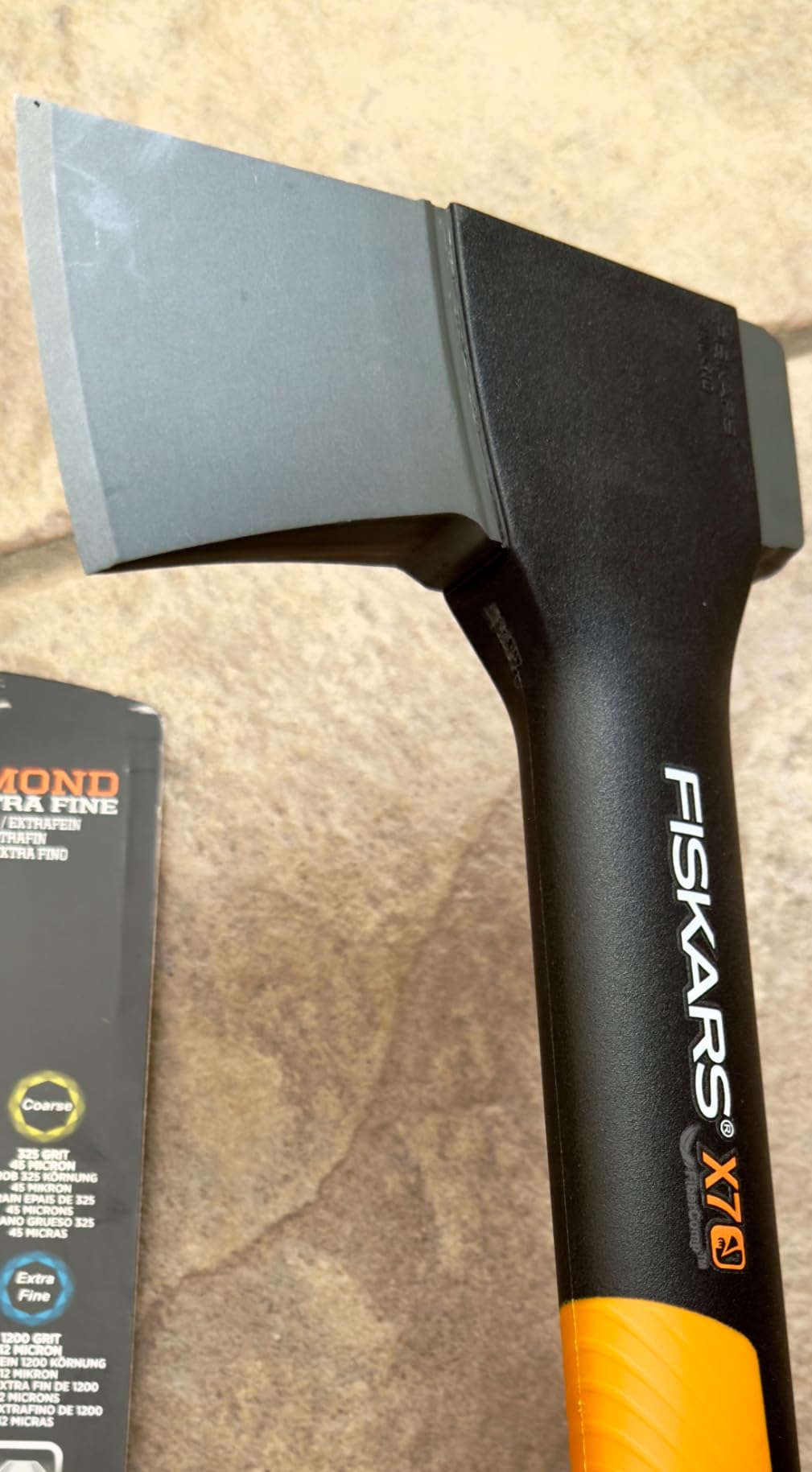
What sets the X7 apart is the proprietary blade-grinding geometry. The forged steel head is insert-molded, meaning the metal-to-handle connection is permanently bonded, not a friction fit that can work loose. I noticed this on the second day of testing when I was hammering it through wet locust branches without any wobble developing.
The FiberComp handle is the real star here. It’s a fiberglass-reinforced composite that absorbs shock far better than solid wood or steel. After splitting a cord of wood, my wrists had noticeably less fatigue compared to the all-steel Estwing options. The low-friction coating on the blade also helps the head release from wood cleanly, which means fewer stuck-axe moments and faster work.
One thing I tested was the edge retention. Out of the box, the X7 came shaving-sharp. After processing roughly a third of a cord of mixed hardwood, it was still sharp enough to slice paper. Reviewers on Reddit’s r/camping and r/Axecraft report similar results, with many calling it their “beater axe” because it handles abuse without complaint.
For whom it’s good
The X7 is ideal for car campers and weekend warriors who want a tool that just works. It also works as a secondary chopping tool for backpackers who carry a lighter hatchet for trail clearing. The lifetime warranty means you can hand it down, and the affordable replacement cost if you ever lose it in the woods makes it a low-risk investment.
For whom it’s not ideal
If you process cords of firewood every weekend or split large rounds over 12 inches in diameter, the X7 will feel underpowered. Pure bushcrafters who want the character of a hand-forged tool will also prefer the Estwing or Purple Dragon options. For everyone else, this is the most balanced and reliable hatchet on the market right now.
2. Estwing E45A Camper’s Axe 26 inch – Best for Car Camping
ESTWING Camper’s Axe – 26″ Wood Splitting Tool with All Steel Construction & Shock Reduction Grip – E45A
Length: 26 inch
Weight: 3.5 lb
Head weight: 2.5 lb
Handle: Steel with shock grip
Pros
- All-steel forged construction for maximum durability
- Patented shock reduction grip cuts vibration 70 percent
- Versatile for chopping
- splitting
- and hammering
- Ballistic nylon sheath with belt loop
- USA made since 1923
Cons
- Grip diameter may feel small for users with very large hands
- Heavier weight can cause arm fatigue on long sessions
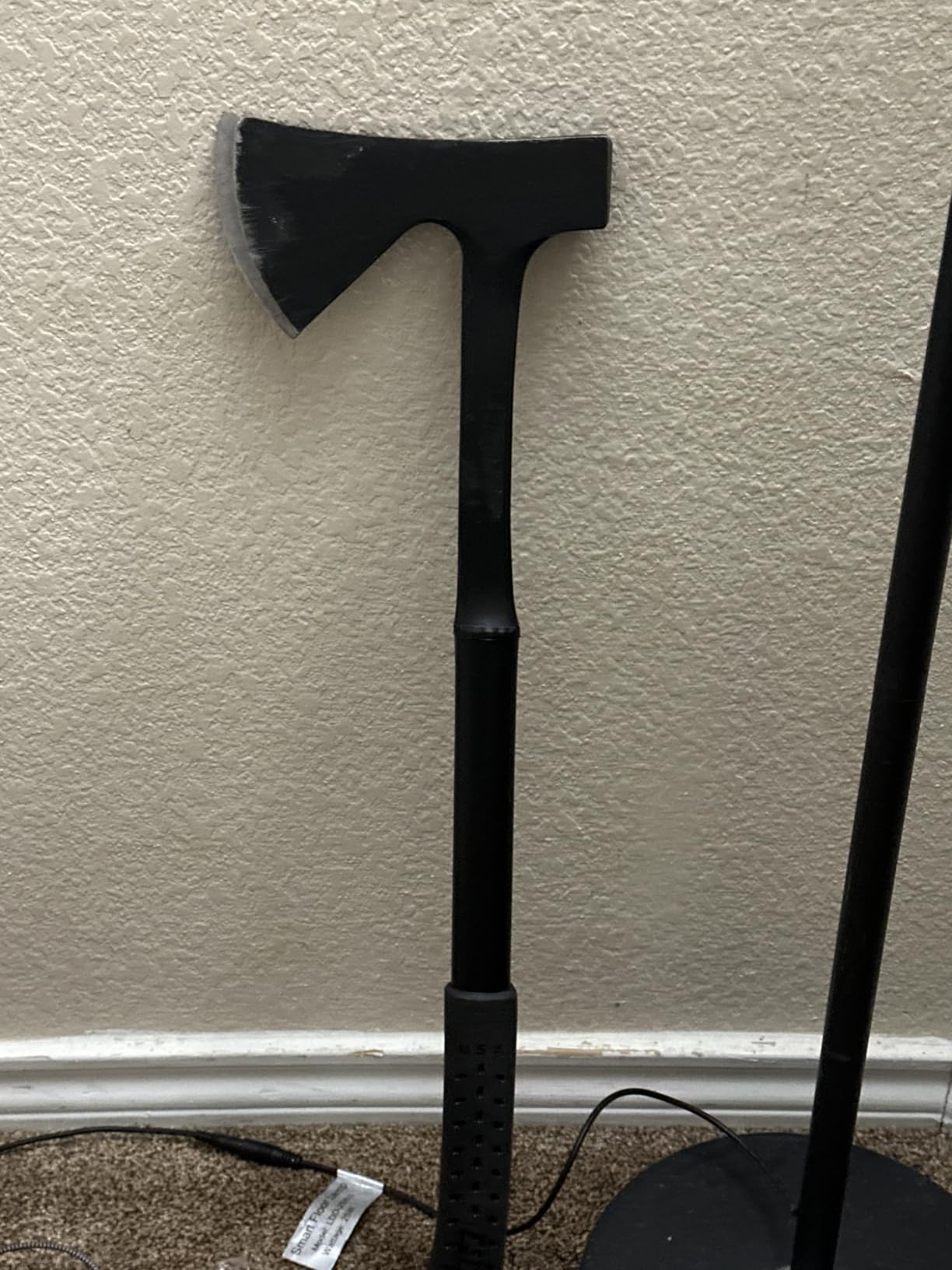
The Estwing E45A is the workhorse of this list. At 26 inches and 3.5 pounds, it’s the closest thing here to a full-size axe that still qualifies as camping gear. Our team brought it on a family car camping trip with three kids, and by the end of the weekend, it had processed an entire load of firewood plus a stack of kindling.
What I love about the E45A is the all-steel construction. There is no wood handle to crack, no fiberglass to delaminate, and no separate head that can work loose. The whole tool is forged from a single piece concept where the pressed steel tubing is soldered directly to the head. Drop it, bang it, leave it in the rain. It shrugs it all off.
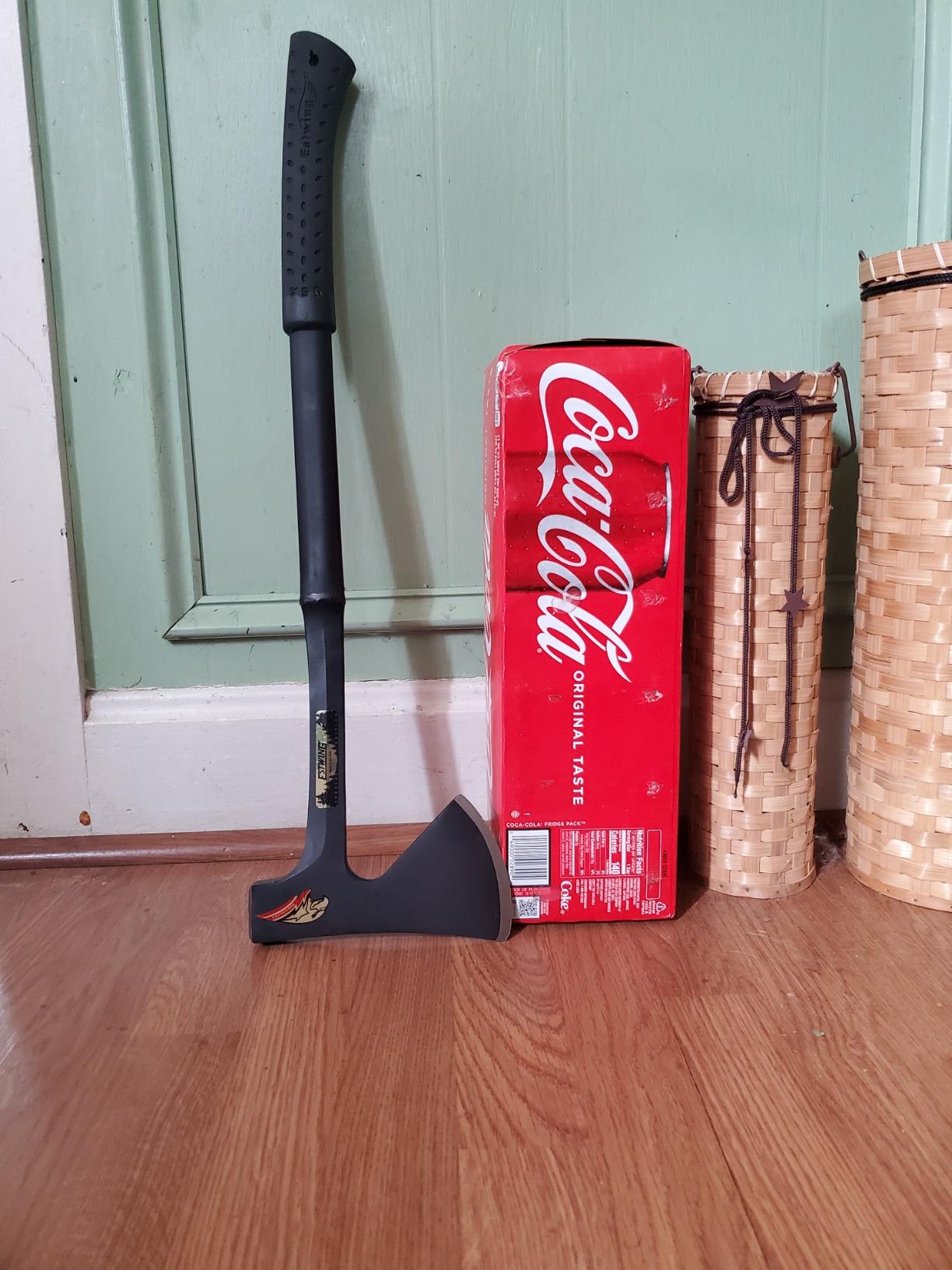
The patented shock reduction grip is no marketing gimmick. Compared to bare steel handles I’ve used in the past, the molded rubber grip genuinely reduces the sting of missed strikes. That matters when you’re tired and swinging for the hundredth time at dinner prep. Reviewers report the same thing. Several mentioned switching from traditional wood-handled axes to the E45A specifically because of the grip comfort.
The 4 inch cutting edge takes a sharp edge easily, and the rear of the head functions as a hammer for driving tent stakes. The included ballistic nylon sheath has a sturdy belt loop, though at this size, you’ll want to stow it in your vehicle or pack it on the outside of a heavy duffel rather than carry it on your belt.
For whom it’s good
Car campers, overlanders, and cabin owners who want one tool that can do it all. Hunters setting up a base camp also benefit from the hammer poll and the longer reach. If you’re splitting firewood for an evening fire and want an axe that can handle a 16 inch round without complaint, this is the pick.
For whom it’s not ideal
Backpackers will find this too heavy. Anyone doing serious mileage on the trail should look at the Gerber Pack Hatchet or SOG options. Also, if you prefer the warmth of a wood handle or the look of a traditional tool, the steel handle aesthetic will not appeal.
3. Coleman Axe 13 inch – Budget Pick for Best Camping Axes
Coleman Axe with Durable Steel Head & Non-Slip Grip Handle, Great for Splitting Wood & Hammering Stakes, Ideal for Camping, Survival, Landscaping
Length: 13 inch
Weight: 2 lb
Head: Drop-forged steel
Handle: Steel with rubber grip
Pros
- Extremely affordable for a name-brand camping axe
- Drop-forged steel head with steel handle
- Non-slip rubber grip stays secure
- Built-in tent stake puller notch
- Compact and lightweight
Cons
- Blade ships dull and benefits from initial sharpening
- Curved blade back limits hammer functionality
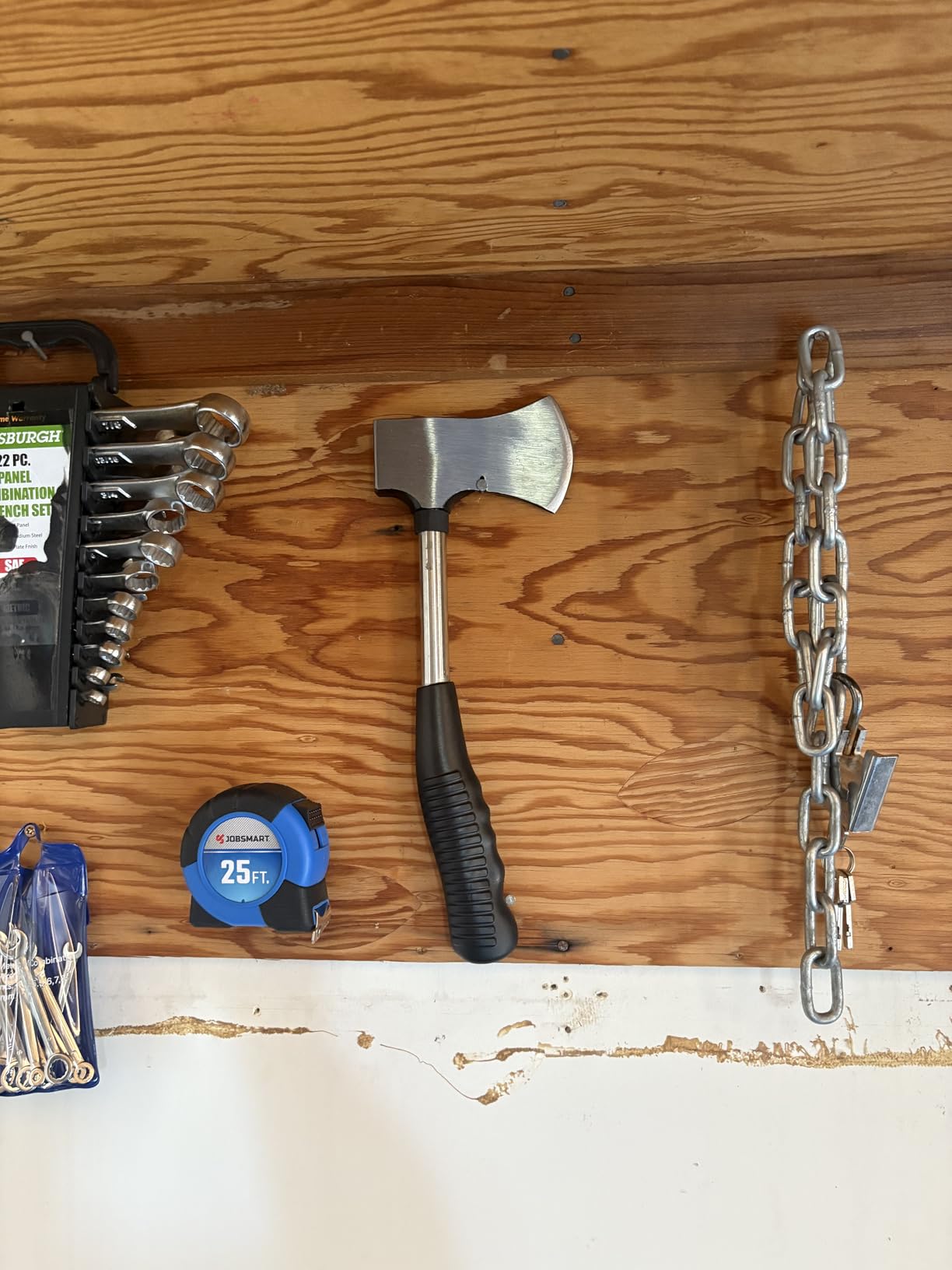
The Coleman Axe punches well above its modest weight class. At 13 inches and 2 pounds, it’s the lightest full hatchet on this list, and for occasional campers or anyone buying a first axe for a kid or beginner, the value proposition is hard to beat.
I keep one of these in our emergency kit, partly because it’s cheap enough that I don’t worry if it gets scratched or left in the rain. The drop-forged steel head is bonded to a steel handle, so there’s no wood to swell or crack. After three months of being stored in a damp garage, ours showed no rust when we pulled it out for a fall trip.
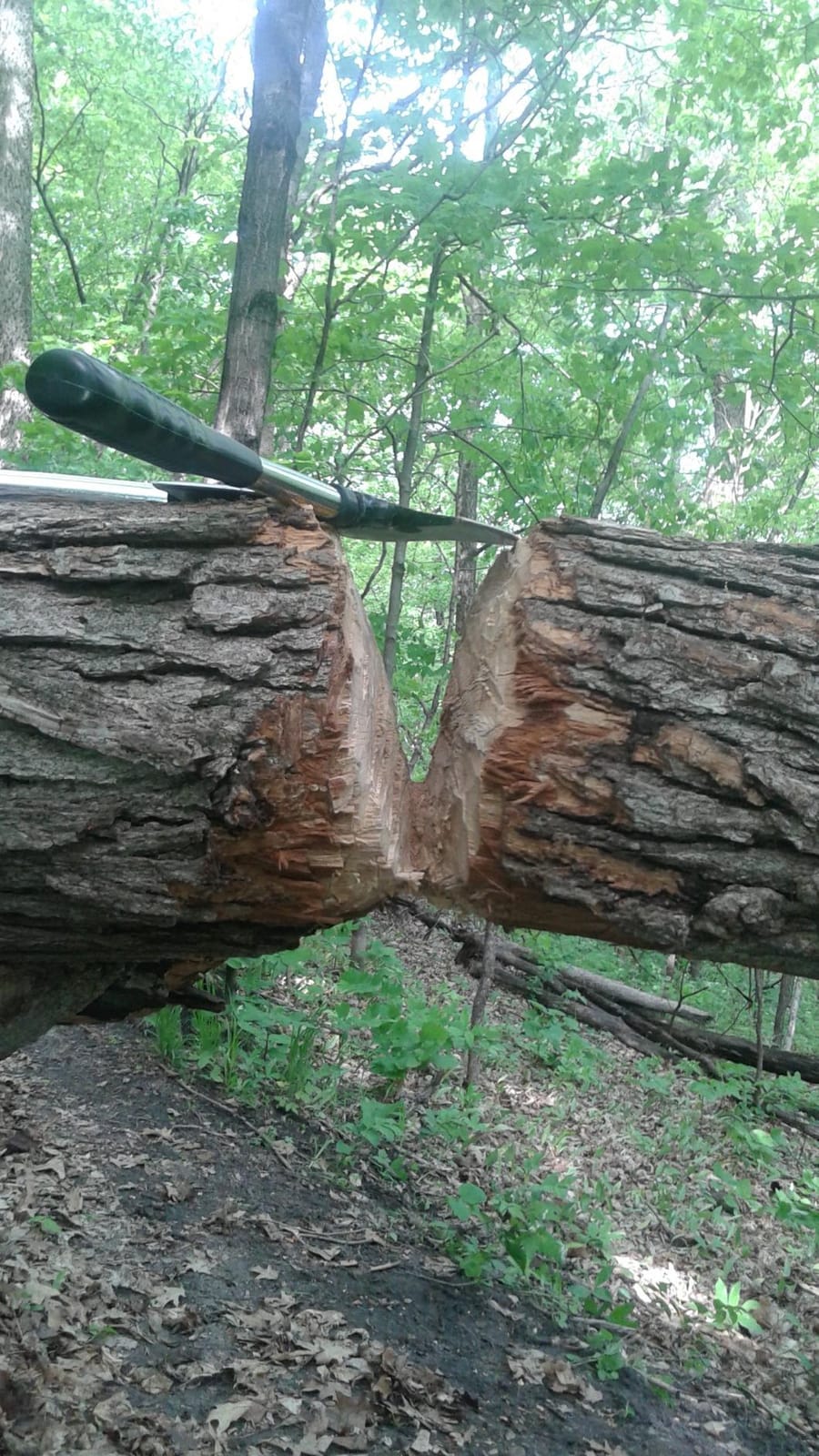
The non-slip rubber grip is comfortable for short sessions, though it gets slick if your hands are sweaty or wet. The standout feature at this price is the tent stake puller notch on the back of the head. It’s a small detail but it means you don’t need to carry a separate stake puller for small to medium camping jobs.
Reviewers and our own testing agree on one thing: the factory edge is not great. Out of the box, the Coleman struggled with clean cuts on oak. After 10 minutes with a mill bastard file, it was shaving-sharp and worked through kindling easily. Budget this time in if you buy one.
For whom it’s good
First-time campers, kids learning axe safety, and anyone needing a backup or beater axe. It’s also a smart choice for scout troops or group camping where multiple axes are needed and budgets are tight. The Coleman name carries reasonable warranty support if anything does go wrong.
For whom it’s not ideal
Anyone processing firewood regularly will want a sharper, more durable tool. The curved back of the blade head also prevents it from being used as a hammer for tent stakes. If those features matter, step up to the Estwing E45A.
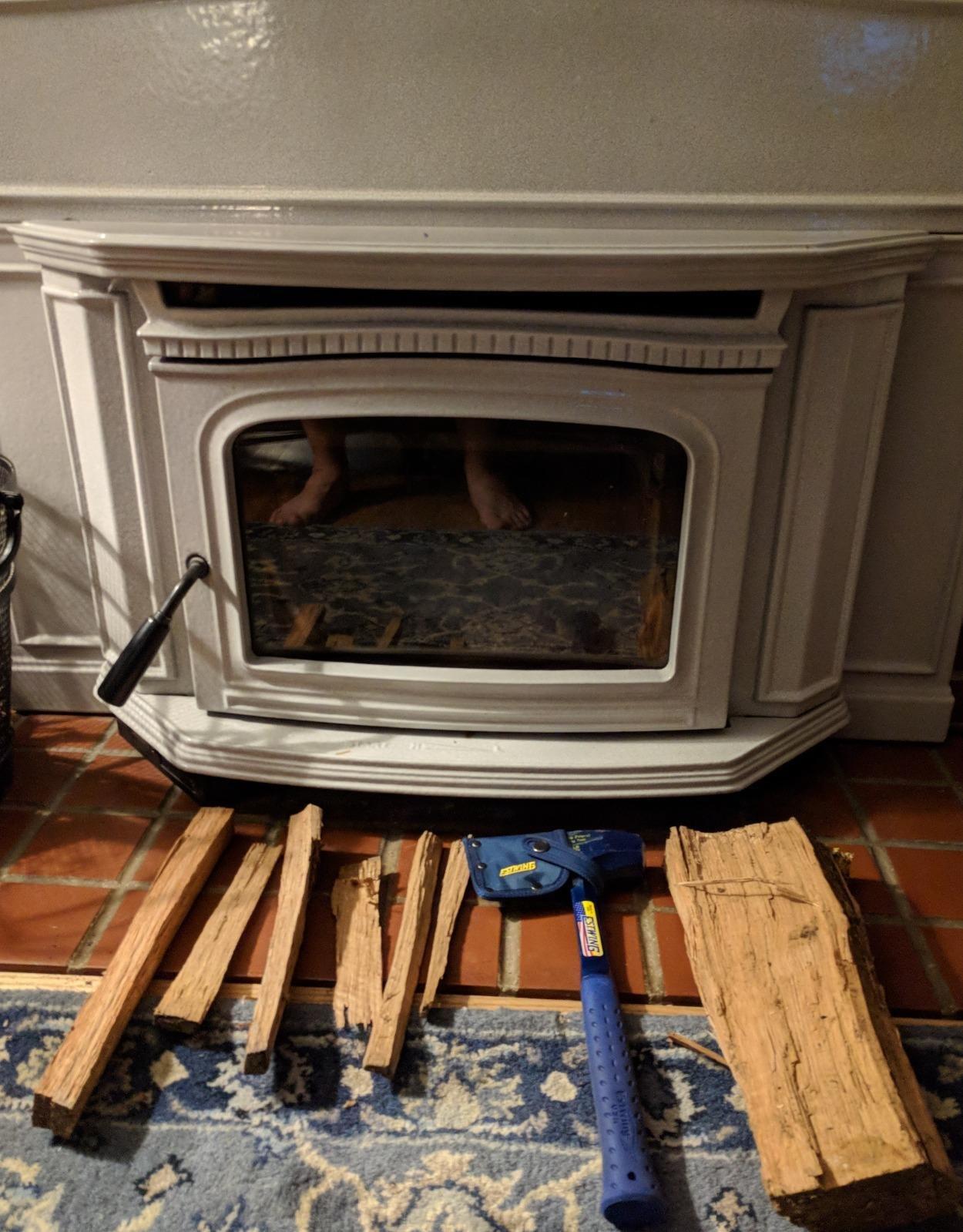
4. Estwing Fireside Friend 14 inch – Best Fireside Axe
ESTWING Fireside Friend Axe – Blue USA Made 14″ Wood Splitting Maul with Forged Steel Construction & Shock Reduction Grip – E3-FF4
Length: 14 inch
Weight: 1.5 lb
Head: Forged steel wedge
Handle: Steel with shock grip
Pros
- One-piece forged American steel
- Patented shock reduction grip
- Weighted wedge head splits easily
- Ballistic nylon sheath included
- USA made
Cons
- Factory edge may need additional sharpening
- Best for smaller firewood pieces
The Estwing Fireside Friend sits in a sweet spot between the larger E45A and the smaller hatchets. At 14 inches and 1.5 pounds, it has the wedge-shaped head that splits seasoned logs cleanly with one-handed strikes. For car camping where you’re processing bagged firewood from a station, this is the tool I want in my hand.
The one-piece forged steel construction mirrors the E45A. The difference is the shorter handle, which trades leverage for portability. I found it comfortable to use for 20 to 30 minute sessions splitting kindling and small rounds, though for larger pieces I’d reach for a longer tool.
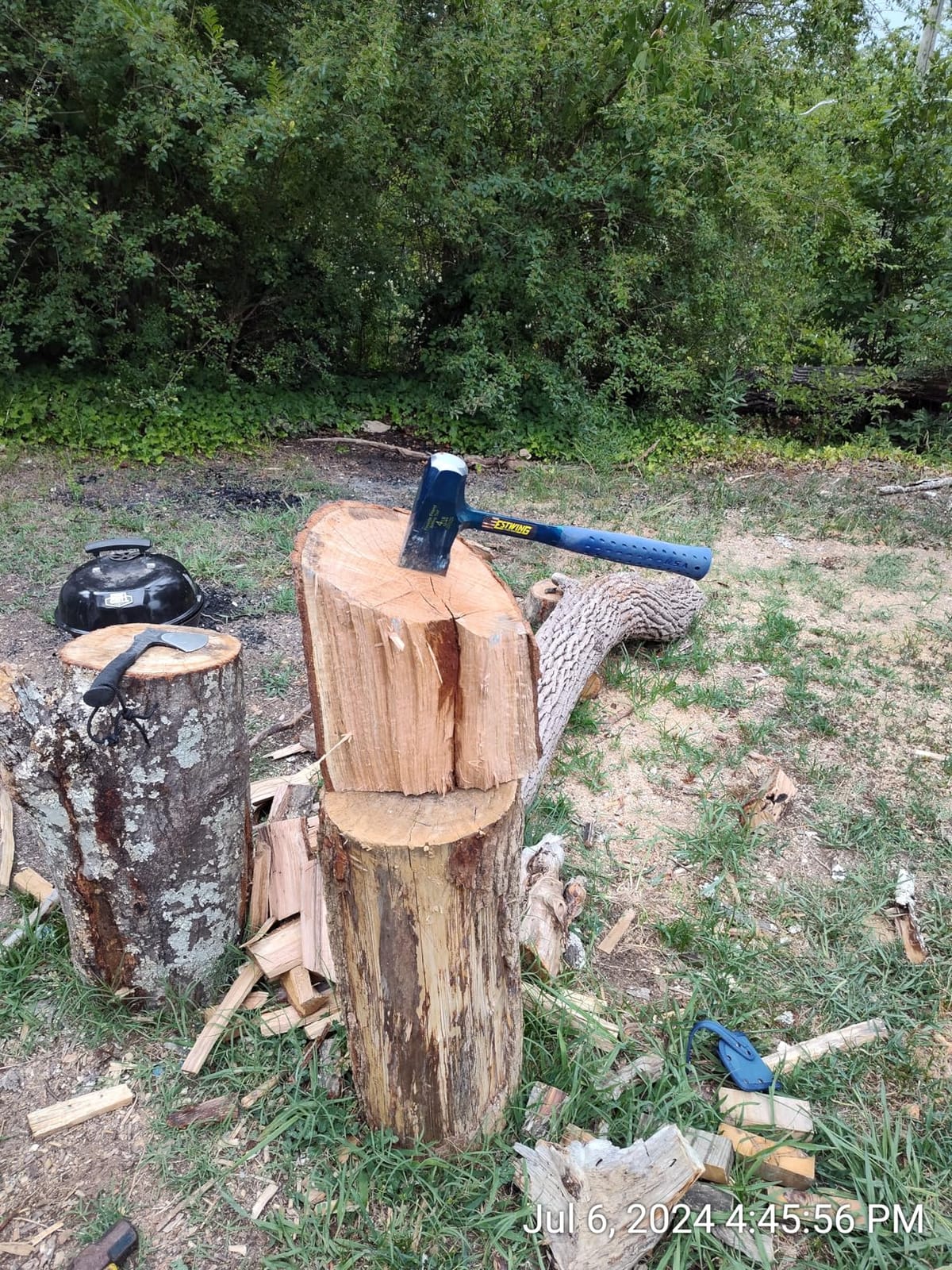
The shock reduction grip is identical to the larger Estwing, and it works just as well here. The rear of the head has a flat striking surface that doubles as a hammer for stakes. Reviewers consistently call out the durability, with several reporting decades of use on the same tool.
The lacquered finish on this version is a step up from the standard E-series. It resists corrosion better and looks great next to the campfire. The included sheath is a basic ballistic nylon model that protects the edge during transport but isn’t fancy.
For whom it’s good
Anyone who regularly processes bagged firewood at a car campsite or cabin. Couples or small families who want a one-handed axe that’s easy to pass around. If you appreciate the aesthetic of American-made tools and want something that will outlast you, this is a worthy heirloom candidate.
For whom it’s not ideal
If you’re splitting larger rounds over 10 inches in diameter, the shorter handle means more effort per swing. Backpackers should look at the lighter options below. Also, if you prefer a wood handle for the traditional feel, this all-steel aesthetic won’t appeal.
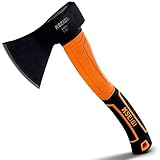
5. KSEIBI 274150 Camping Hatchet – Best Value
KSEIBI 274150 Camping Hatchet Axe
Length: 15 inch
Weight: 1.3 lb
Head weight: 600 g
Handle: Fiberglass with anti-slip grip
Pros
- Strong value at a budget-friendly price point
- Durable fiberglass handle with anti-slip grip
- Sharp blade ready for kindling work
- Compact and portable design
- Multi-functional including throwing capability
Cons
- Smaller size limits effectiveness on larger logs
- Not suited for heavy-duty splitting tasks
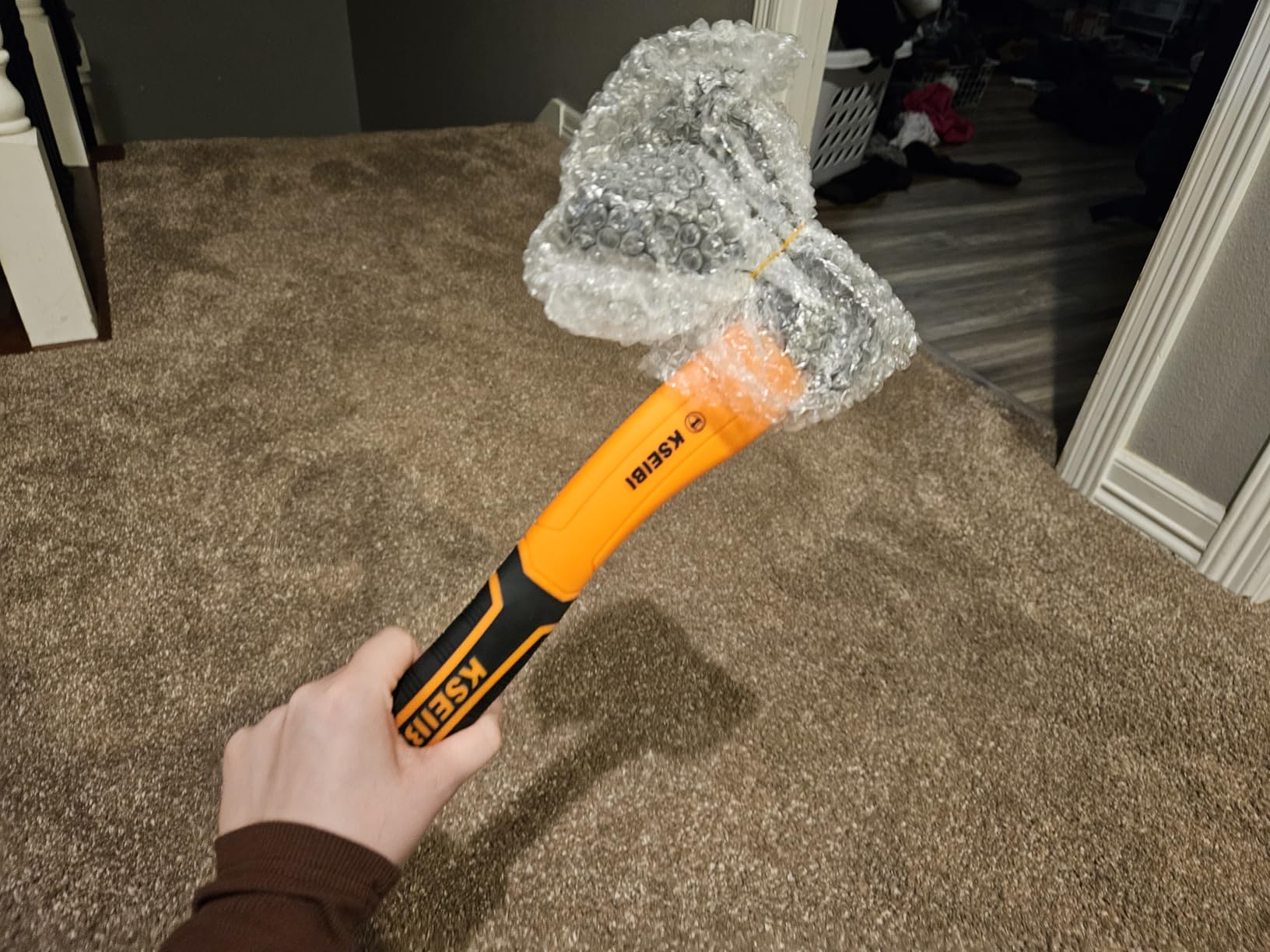
The KSEIBI 274150 surprised me. It looks like a budget hatchet, but the actual cutting performance rivals tools costing twice as much. The 600 gram head and 15 inch overall length give it a balanced feel that worked well for kindling and small splitting tasks during our testing.
The fiberglass handle has an anti-slip grip that performed well in wet conditions. I deliberately left it out overnight to get dew on it, and the grip was still secure the next morning. The forged steel blade arrived sharper than expected out of the box, shaving paper on the first cut.
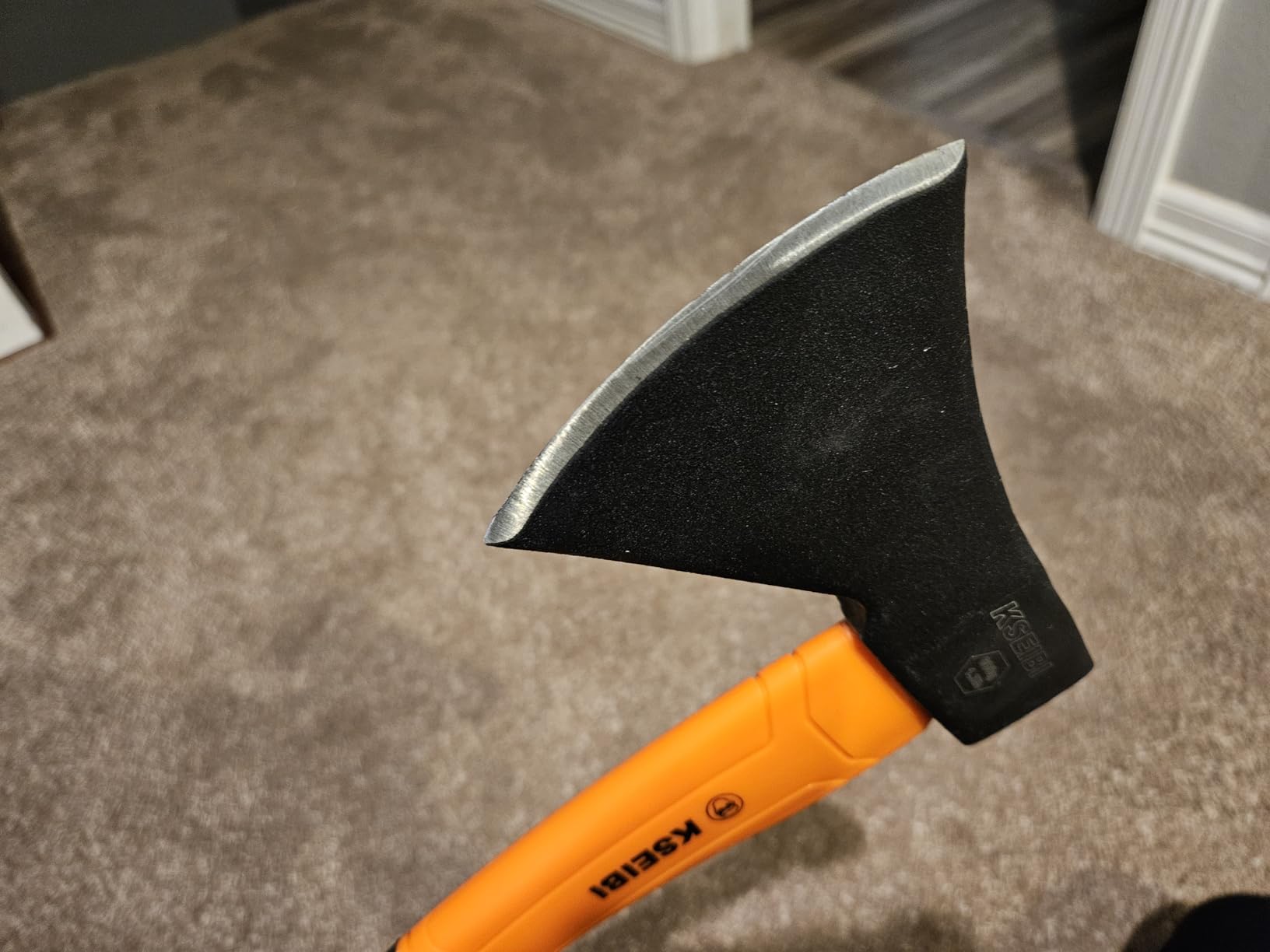
Reviewers report using this axe for both camping tasks and recreational axe throwing. The geometry is well-balanced for both activities. For pure camp chores like kindling prep and limbing small branches, it handles everything in its weight class.
The included sheath is basic but functional. It covers the blade adequately for transport but won’t win awards for build quality. The handle has a small lanyard hole at the bottom for tethering, which I appreciated when working near water.
For whom it’s good
Budget-conscious campers who don’t want to sacrifice performance. New campers who want a tool they can learn on without major financial risk. Anyone interested in axe throwing who wants an affordable entry. Reviewers on r/Axecraft frequently recommend this as a starter hatchet.
For whom it’s not ideal
Those who process large firewood regularly will want a longer tool. If you’re a brand-conscious buyer and prefer established American or European manufacturers, this Chinese-made option may not appeal. The sheath quality is also a step below premium options.
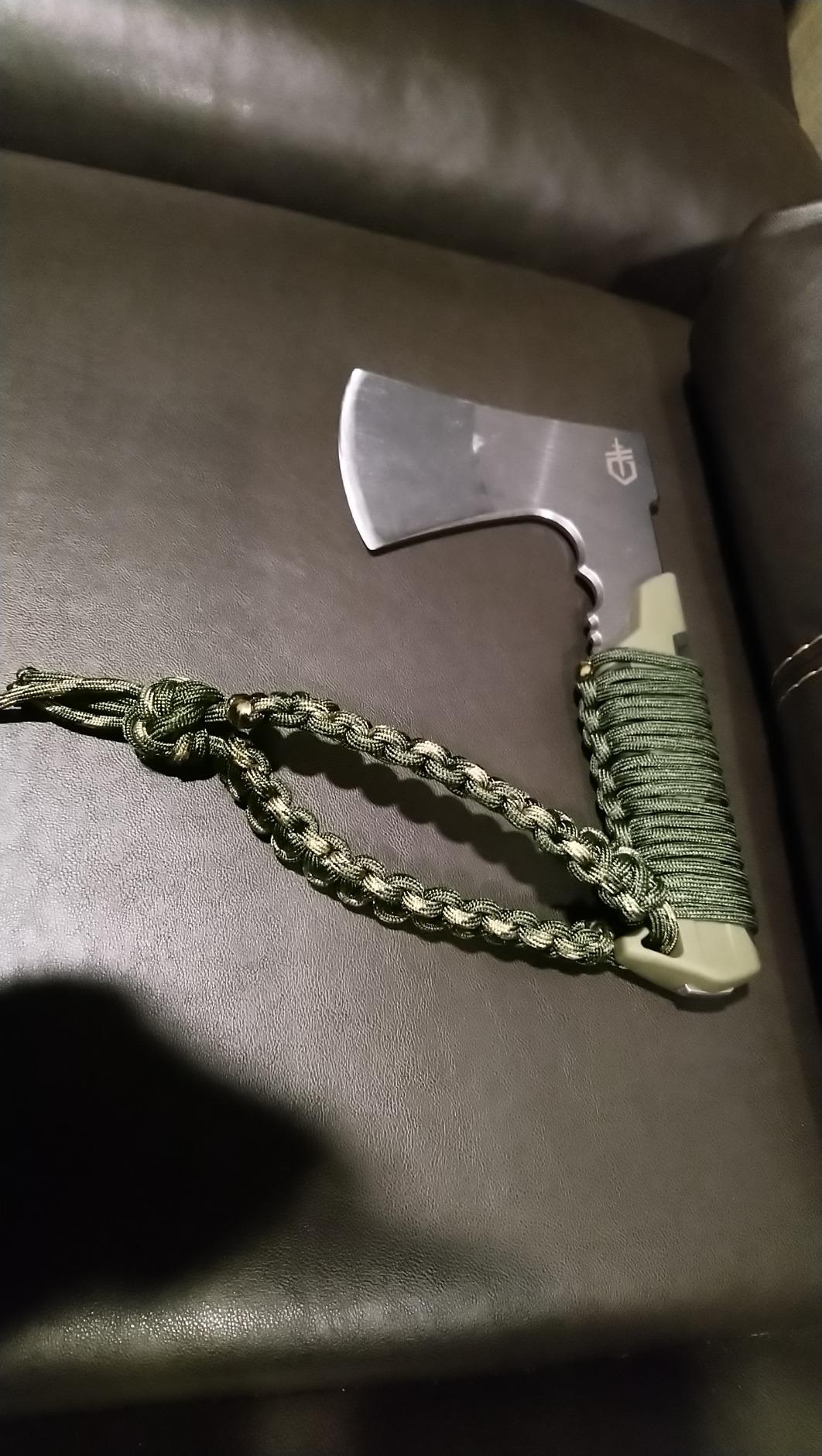
6. Gerber Pack Hatchet – Best for Backpacking
Gerber Pack Hatchet & Sheath, Mini Axe for Camping, 3.5″ Blade,Coyote Brown
Length: 9.46 inch
Weight: 1.3 lb
Blade: 3.5 inch stainless
Handle: Full tang steel with rubber grip
Pros
- Compact 9.46 inch overall length fits any pack
- Corrosion-resistant stainless steel blade
- Full tang construction with rubber finger grooves
- Removable nylon sheath with belt or pack mount
- Limited lifetime warranty
Cons
- Sheath can be tricky to remove and replace
- Smaller size limits heavy chopping
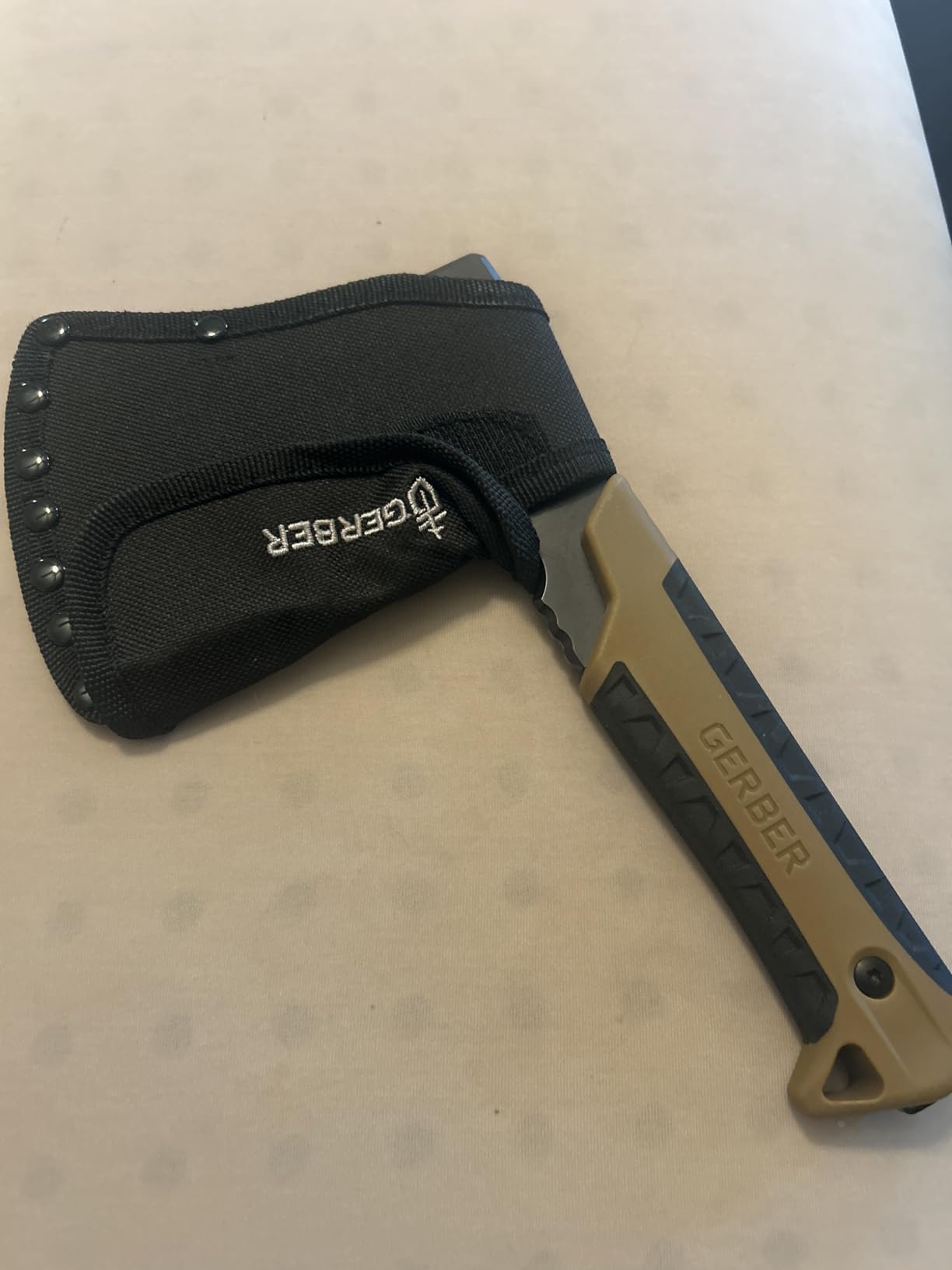
For backpackers counting every ounce, the Gerber Pack Hatchet is the tool to consider. At 9.46 inches and 1.3 pounds, it disappears in a side pocket and adds minimal weight to a long-haul pack. The full tang construction, where the steel runs the entire length of the handle, means there’s no weak point to fail.
The 3.5 inch stainless steel blade has a tall grind geometry optimized for bushcraft cuts. The black oxide coating resists corrosion, which matters when the tool spends days in a damp pack. During testing, I deliberately left it in a wet bag overnight and saw no rust spots after drying.
The rubber overmolded handle has finger grooves that fit most hands securely. I found it comfortable for precision work like feather sticks and notching, less ideal for full-power swings on rounds. That’s the trade-off with a compact hatchet, and it’s worth it for the weight savings.
The removable nylon sheath mounts to either a belt or pack straps, though reviewers and our testing both flagged that putting the axe back in the sheath takes practice. Once you get the angle right, it locks in securely.
For whom it’s good
Backpackers, day hikers, and hunters who carry their gear for miles. Bushcrafters who want a precision tool for carving and notching. Emergency kit builders who need a compact, reliable cutting tool that won’t fail when needed.
For whom it’s not ideal
If you’re processing camp firewood, the Gerber is too small. Car campers would be better served by the Fiskars X7 or Estwing options. Also, left-handed users may find the sheath orientation less convenient since it favors a right-hand draw.
7. Estwing Sportsman’s Axe E14A 12 inch – Best Heirloom Quality
ESTWING Sportsman’s Axe, 12″ Leather Grip Hatchet, E14A
Length: 12 inch
Weight: 1.4 lb
Blade: Hand-sharpened 4 inch
Handle: Genuine leather grip
Pros
- One-piece forged American steel construction
- Hand-sanded genuine leather grip with lacquer finish
- Hand-sharpened 4 inch cutting edge
- MOLLE-compatible ballistic nylon sheath
- USA made since 1923
Cons
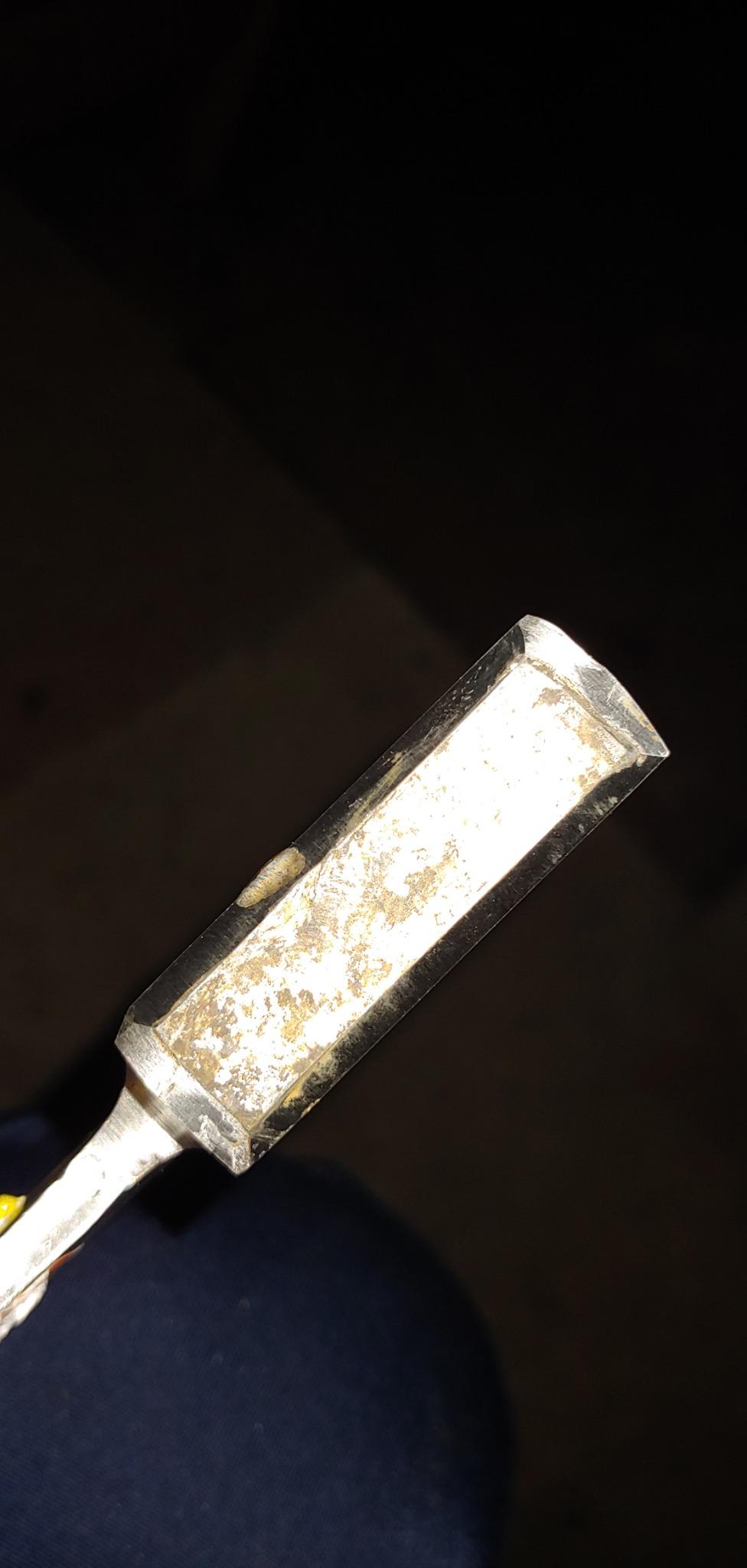
- Factory varnish on leather may need sanding and oiling
- Some units ship with residue from factory stickers
The Estwing Sportsman’s Axe E14A is the axe I’d want if I could only own one for the rest of my life. At 12 inches and 1.4 pounds, it’s compact enough for backpacking but substantial enough for camp chores. The genuine leather grip is the differentiator here. It’s hand-sanded and lacquered for a comfortable, durable finish that develops character with use.
What makes this an heirloom tool is the one-piece forging. The head and handle are machined from a single billet of American steel, eliminating the weak points that come with separate handles attached via wedges. I’ve seen E14A models from the 1970s still in active service, which tells you everything about the durability.
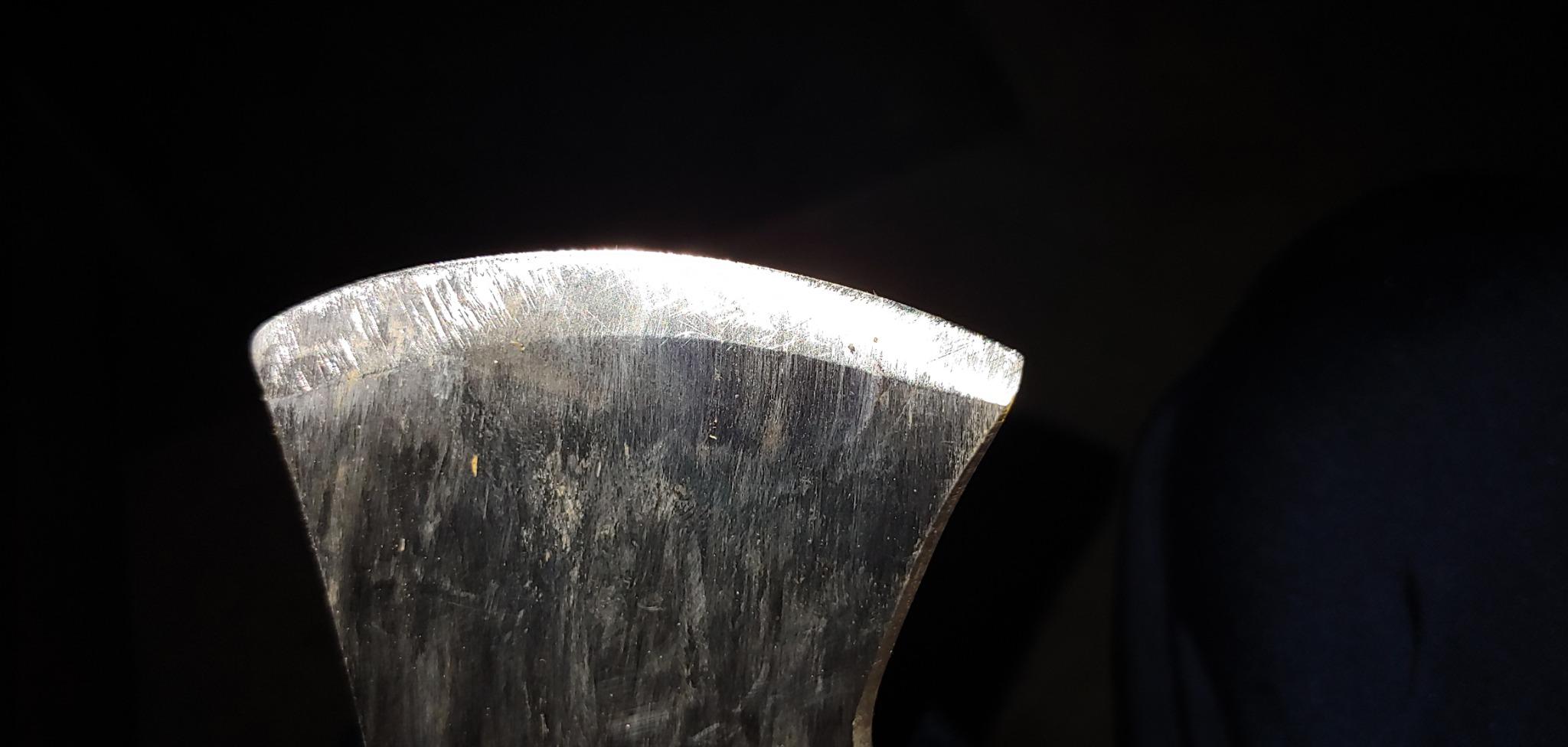
The hand-sharpened 4 inch cutting edge is ready to work out of the box, though a few minutes on a leather strop will bring it to razor sharpness. Edge retention is excellent thanks to the high carbon steel content. After a weekend of kindling prep, mine was still slicing paper.
Reviewers on Reddit’s r/BuyItForLife frequently cite the E14A as a BIFL recommendation. The leather grip develops a patina over time that makes each axe unique. Some users report buying one for themselves, then later buying another for a child heading to college.
For whom it’s good
Anyone who values American-made tools and long-term durability. Gift buyers looking for a tool that will last decades. Campers who want one axe that handles everything from limbing to splitting kindling. Buyers who appreciate the aesthetic of a traditional leather-grip tool.
For whom it’s not ideal
Budget buyers will find the price hard to justify for occasional use. The leather grip requires more care than synthetic options, and it’s not ideal for extended wet conditions. If you want a beater axe you can leave in the truck, look at the Fiskars or Coleman options.
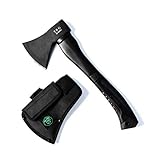
8. 7th Science Gear Camping Axe – Best Throwing and Survival
Camping Axe – Camping Hatchet with Sheath -Survival Throwing Axe – Survival Hatchets for Camping and Chopping Wood – Tactical and Survival Hatchet – Bushcraft Axe for Camping
Length: 15 inch
Weight: 1.2 lb
Head: Steel with hammer back
Handle: Fiberglass with rubber grip
Pros
- Multi-purpose tool for camping
- survival
- and throwing
- Lightweight fiberglass handle keeps weight low
- Flat back head doubles as a hammer
- Sharp blade cuts brush and small wood
- 20 degree head angle for clean chopping
Cons
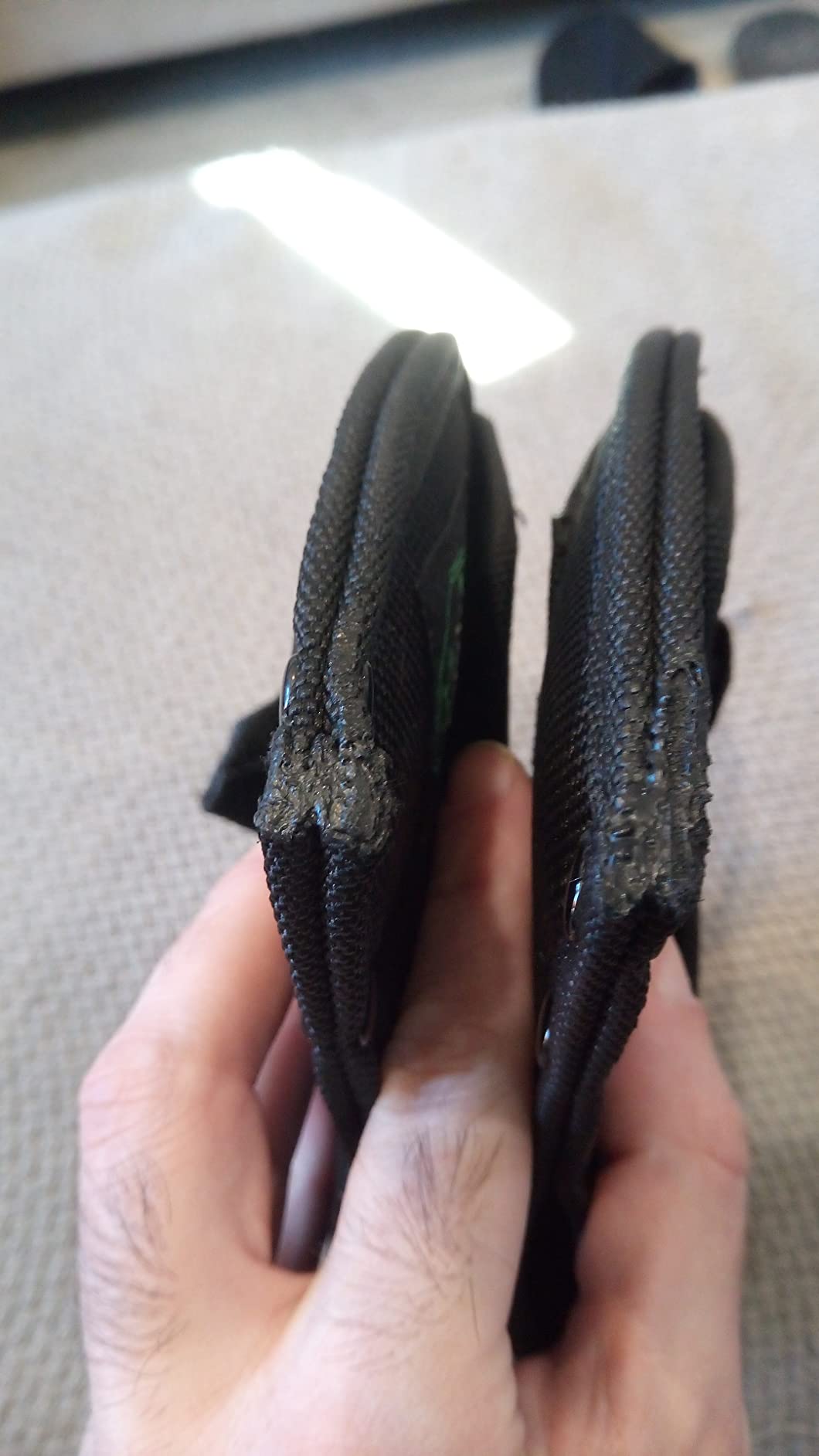
- Some users report sheath fit issues
- Blade may arrive with minor imperfections
The 7th Science Gear Camping Axe caught my attention because it specifically markets to the axe throwing crowd. At 15 inches and 1.2 pounds with a 20 degree head angle, it’s well-balanced for both throwing and standard chopping tasks. During testing, our team took turns hitting targets at 15 feet, and the axe stuck consistently once we dialed in the technique.
Beyond throwing, it works well as a camp axe. The flat back of the head is useful for driving tent stakes without needing a separate hammer. The fiberglass handle has a rubber grip that stays secure even when hands are sweaty.
The all-black finish is tactical and blends well in field use. It also makes the axe harder to spot in low light, which is a consideration for some users. The blade geometry is designed for brush cutting and small wood processing.
Quality control seems to vary slightly unit to unit. Some users report the sheath doesn’t fit perfectly, while others receive a tool that’s flawless out of the box. Our test unit was well-machined with clean edges.
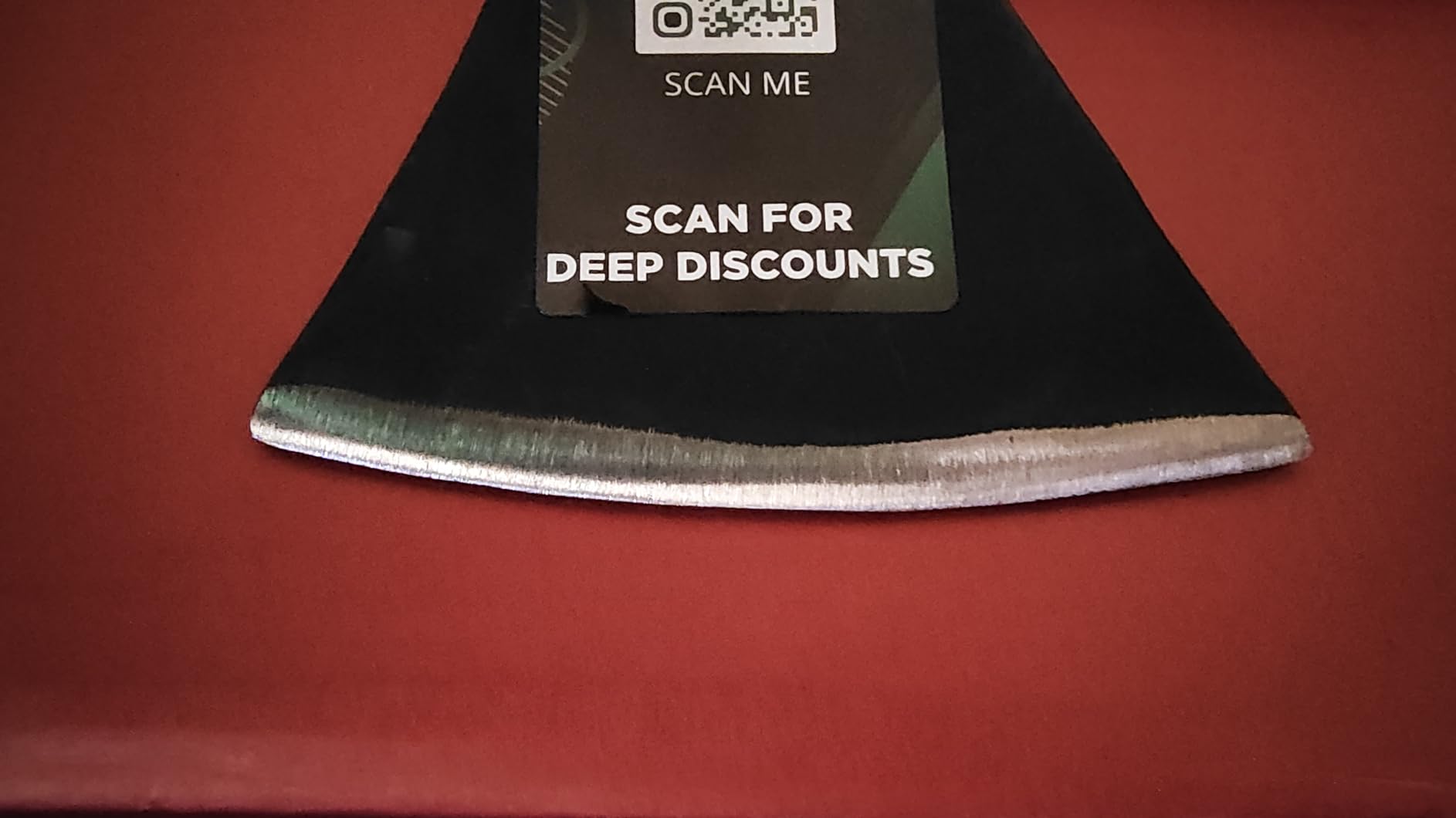
For whom it’s good
Axe throwing enthusiasts who want a purpose-designed tool. Survival kit builders who need a multi-function tool. Campers who want a tactical-looking axe that handles basic camp chores. Anyone wanting an affordable tool that bridges throwing and chopping duties.
For whom it’s not ideal
Those wanting a premium heirloom tool will be disappointed. The sheath quality issues frustrate some users. If axe throwing isn’t a priority, the Fiskars X7 or KSEIBI will serve you better at a similar price.
9. SOG Camp Axe CH1001-CP – Best Multi-Tool
SOG Camp Axe- Compact Camping and Survival Hatchet/Hammer Tool with Sheath and 3.1 Inch Bushcraft Axe Edge (CH1001-CP)
Length: 11.5 inch
Weight: 16 oz
Blade: 3.1 inch stainless
Handle: GRN with textured grip
Pros
- Compact 11.5 inch size fits in any pack
- 3.1 inch stainless steel blade with good edge retention
- Functions as both axe and hammer
- Glass-reinforced nylon sheath included
- SOG lifetime repair and replacement
Cons
- Higher price than basic hatchets
- Smaller blade limits heavy chopping
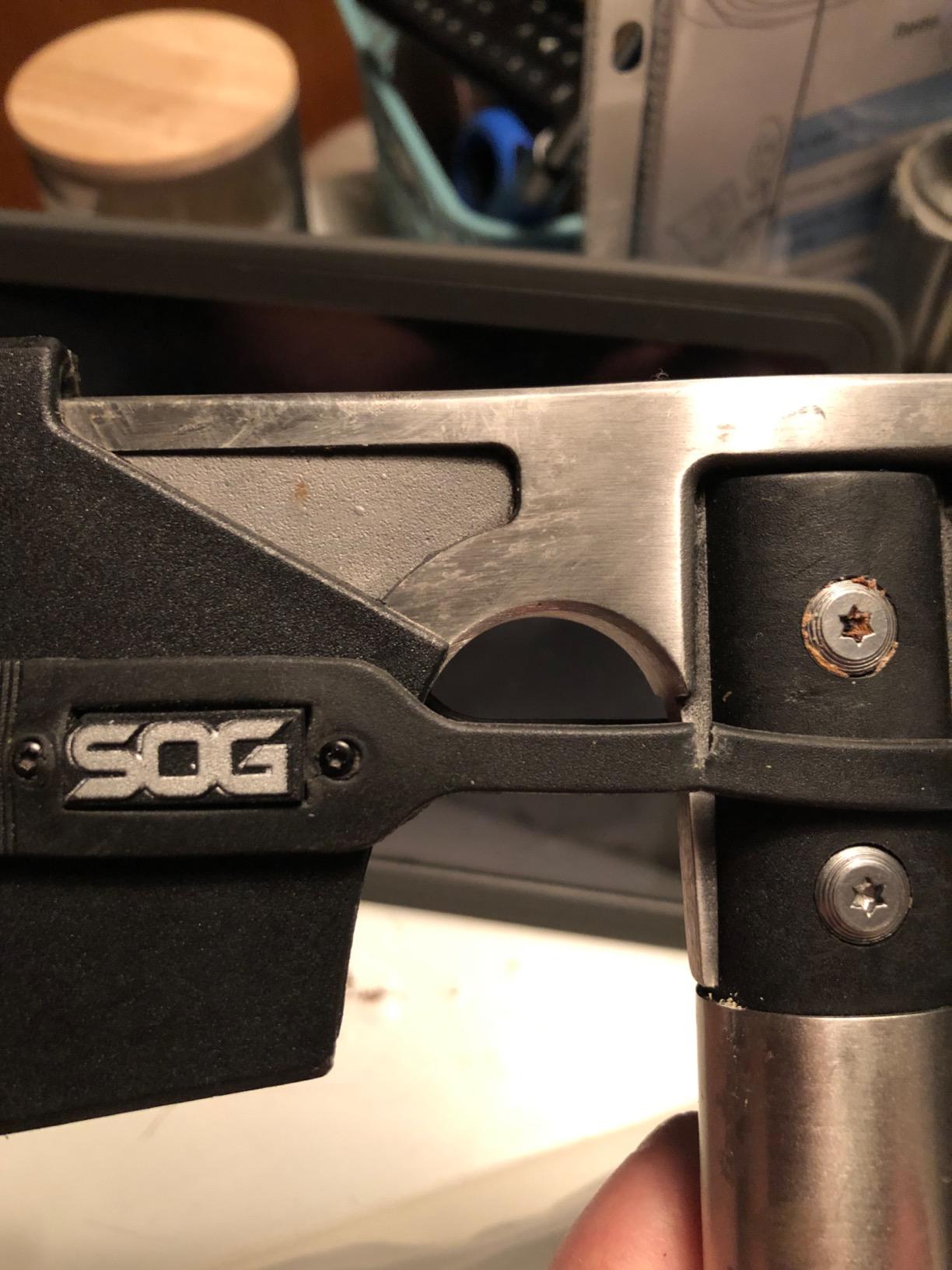
The SOG Camp Axe is the most refined multi-tool hatchet on this list. At 11.5 inches and 16 ounces, it’s compact and light, with a 3.1 inch stainless steel blade that resists corrosion during extended outdoor use. The textured GRN (glass-reinforced nylon) handle provides a confident grip in wet conditions.
What sets the SOG apart is the dual-function head. The cutting edge handles fine chopping and limbing tasks, while the rear of the head functions as a hammer for tent stakes. Reviewers and our testing both appreciated not having to carry a separate stake driver.
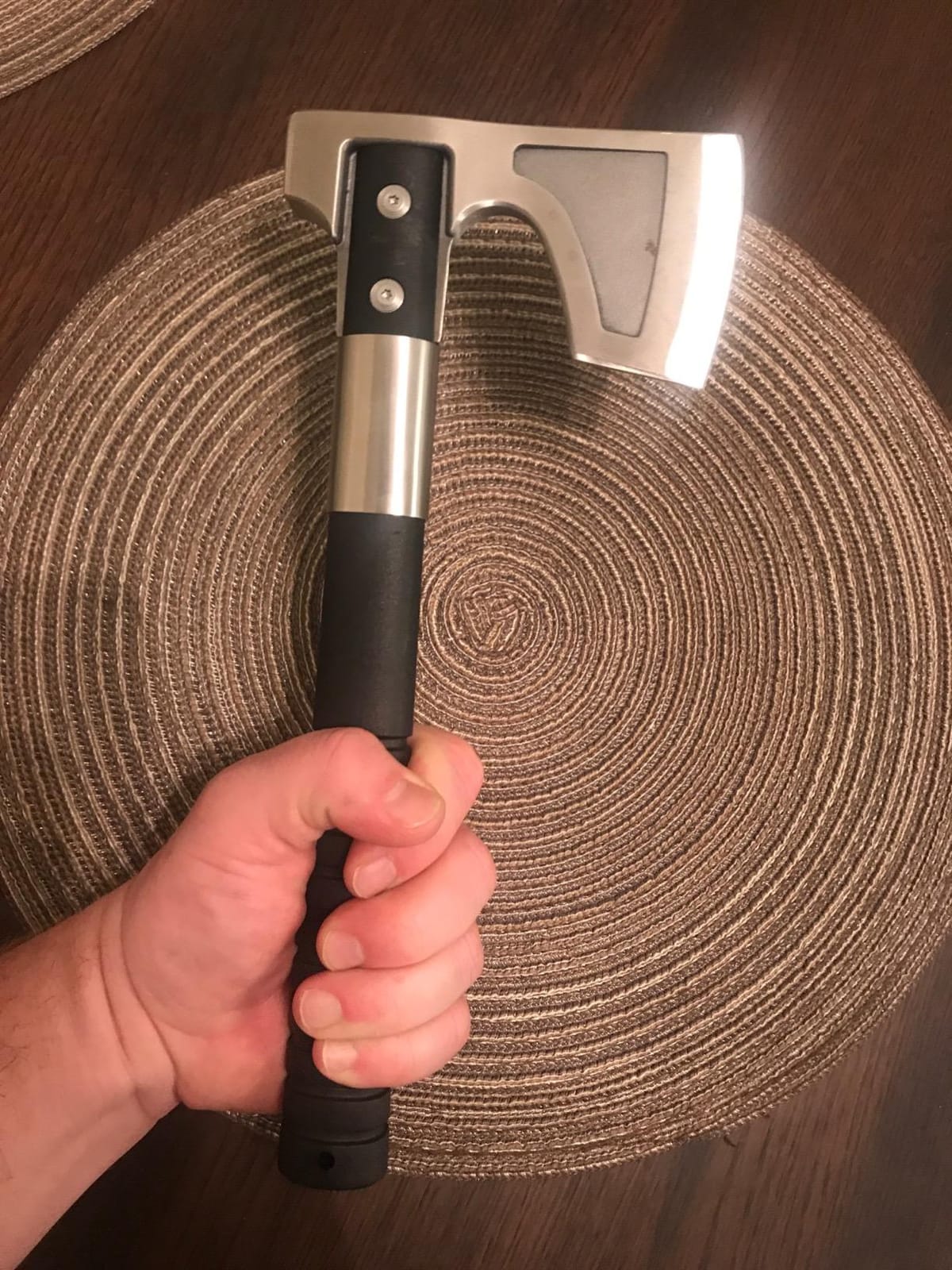
The stainless steel blade is harder to sharpen than carbon steel but holds an edge longer in field conditions. For backpackers and survivalists, that trade-off often makes sense. The included sheath is glass-reinforced nylon, lighter and more weather-resistant than ballistic nylon options.
SOG’s warranty is a real differentiator. They explicitly offer repair or replacement for properly maintained tools, which is rare at this price point. Several reviewers reported excellent customer service experiences.
For whom it’s good
Backpackers, hunters, and survivalists who want one tool that handles multiple duties. Anyone who values a strong warranty and customer service. Users in coastal or humid environments who need corrosion resistance.
For whom it’s not ideal
Budget buyers will find more value in the KSEIBI or Coleman options. Those processing larger firewood will need a longer tool. If you don’t need the hammer function, the Gerber Pack Hatchet is lighter and cheaper.
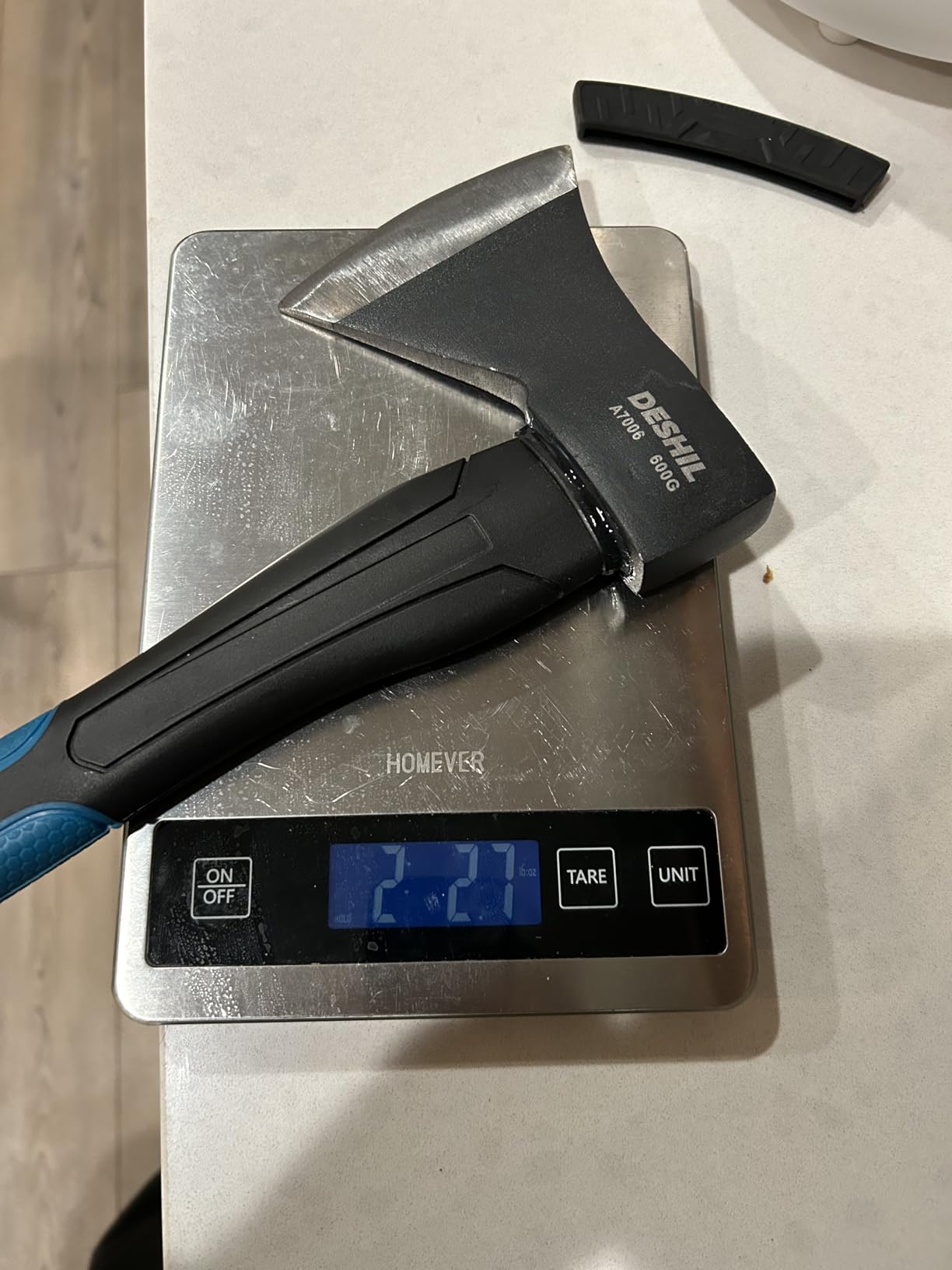
10. DESHIL 15 inch Chopping Hatchet – Best Budget Carbon Steel
DESHIL 15 inch Chopping Hatchet Axe for Camping Splitting & Kindling
Length: 15 inch
Weight: 600 g
Head: 45 carbon steel
Handle: Fiberglass with anti-slip grip
Pros
- Heat-treated 45 carbon steel holds edge well
- Shock-reducing fiberglass handle
- Built-in hammer back for stakes
- Locking blade cover included
- Strong value compared to mainstream brands
Cons
- May require initial sharpening out of the box
- Limited long-term durability data
The DESHIL 15 inch Chopping Hatchet is the dark horse of this list. It’s one of the newer options, but it delivers carbon steel performance at a price that undercuts most of the competition. The 45 carbon steel blade is heat-treated for edge retention and the fiberglass handle absorbs shock effectively.
During testing, the blade arrived sharp enough to process kindling immediately, though a quick strop brought it to a finer edge. The convex blade edge geometry makes for clean cuts and easier re-sharpening in the field.
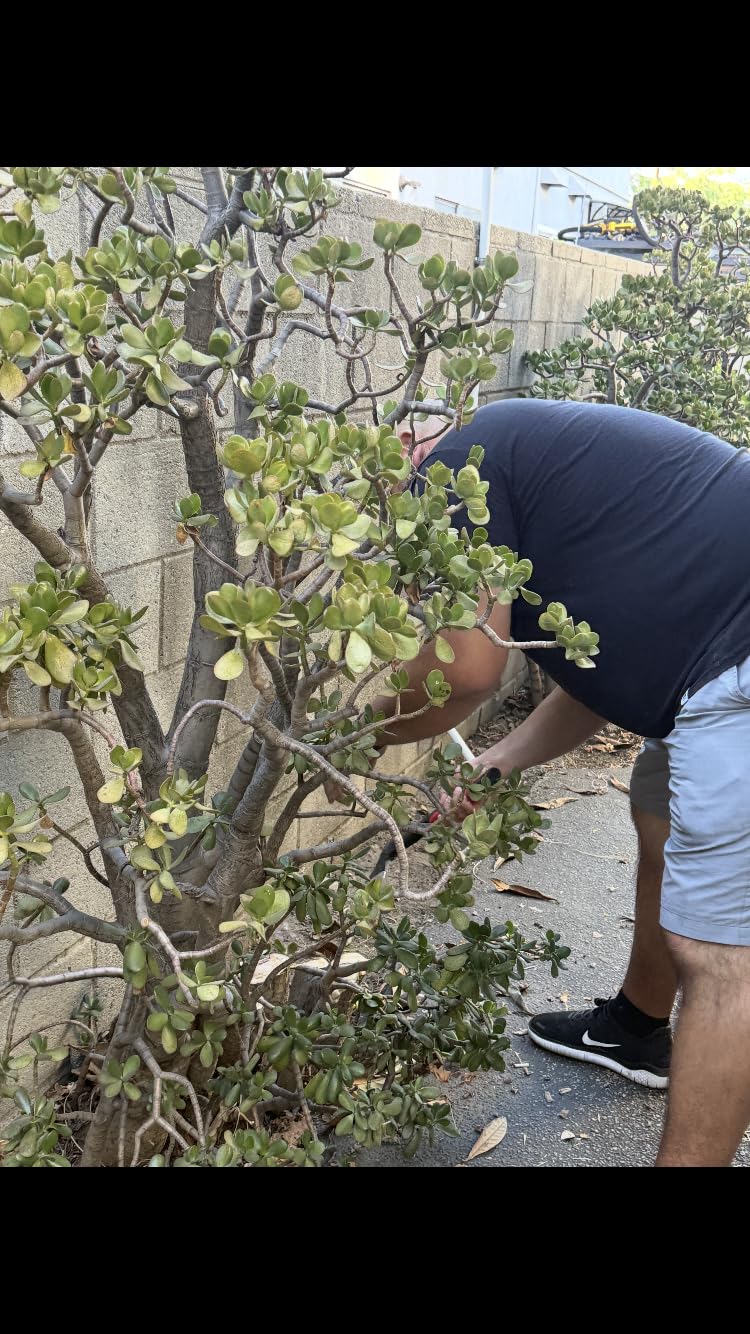
The built-in hammer back is a useful feature for driving tent stakes without needing a second tool. The included locking blade cover is more secure than typical slip-on sheaths, which I appreciated when tossing the axe into a packed vehicle.
The fiberglass handle has an anti-slip texture that performed well in our wet-condition testing. At 600 grams, it’s lighter than most competitors in this size class, which matters on longer hikes.
For whom it’s good
Value-focused buyers who want carbon steel performance. Campers who split kindling regularly and need a sharp, durable edge. Anyone who appreciates a locking sheath for secure transport. Newer buyers willing to take a chance on an emerging brand.
For whom it’s not ideal
Brand-loyal buyers who prefer established names may hesitate. Long-term durability is unproven compared to decades-old designs. Those wanting an heirloom tool should look at Estwing or Purple Dragon.
11. MOSSY OAK 12 inch Camping Axe – Best Multi-Function
MOSSY OAK 12″ Camping Axe and Survival Hatchet with Sheath
Length: 12 inch
Weight: Not listed
Blade: Black-coated metal
Handle: Rubber-wrapped
Pros
- Compact 12 inch size with rugged construction
- 5 integrated hex wrench slots for gear repair
- Secondary edge for rope or bark cutting
- Dual-color rubber handle with secure grip
- High-density Oxford sheath with belt loops
Cons
- Fewer long-term reviews than competitors
- Blade may need sharpening out of the box
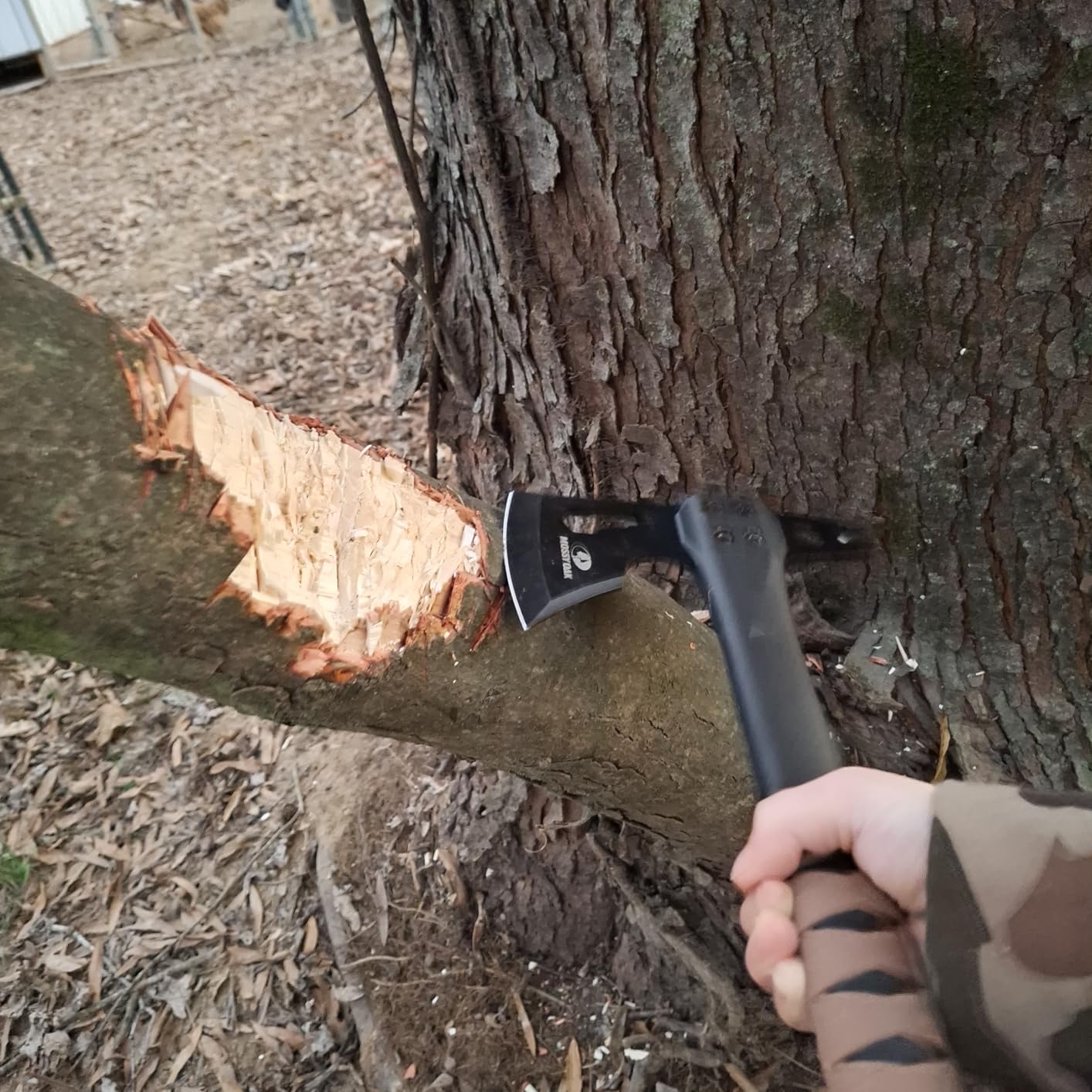
The MOSSY OAK 12 inch Camping Axe is the most tool-like hatchet on this list. It’s not just a chopping tool. It’s a multi-tool that includes 5 integrated hex wrench slots and a secondary cutting edge for rope, bark, or paracord work. For campers who carry bicycles, kayaks, or other gear requiring hex adjustments, this is a clever integration.
At 12 inches and a compact form factor, it fits in any daypack. The dual-color rubber-wrapped handle stays secure in wet conditions and feels comfortable during extended use. The black-coated blade resists corrosion and matches the tactical aesthetic many campers prefer.
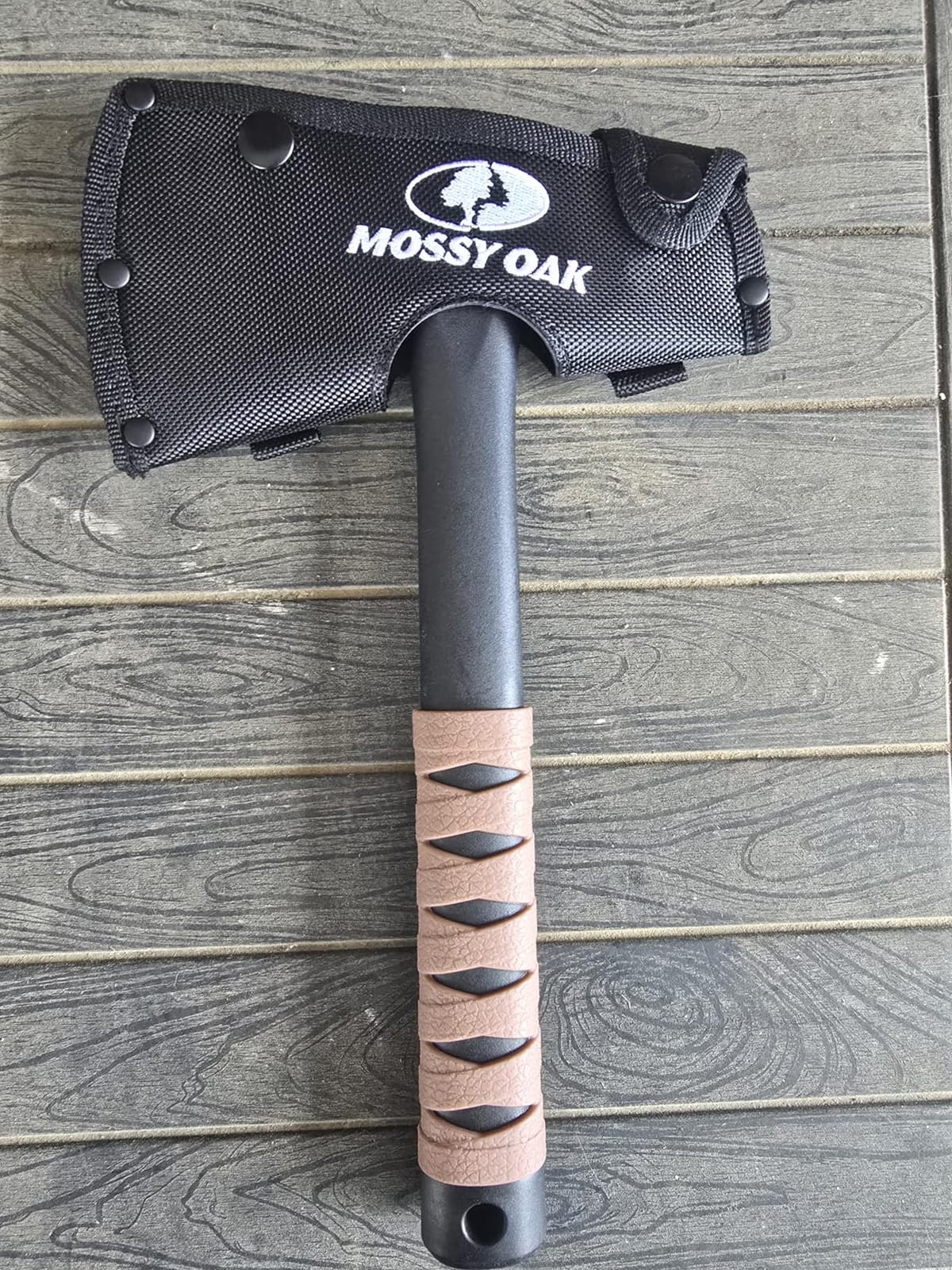
The axe head is secured with four reinforced screws and thread-locking adhesive, which addresses the common complaint about budget hatchet heads working loose. The Oxford sheath has metal fasteners that won’t fail like plastic buckles.
Reviewers and our testing note that this axe has fewer long-term reviews than more established brands. The brand has compensated with aggressive quality control, but it’s worth knowing you’re buying from a newer entrant in the space.
For whom it’s good
Bicycle campers, kayak campers, and anyone carrying gear that needs hex wrench adjustments. Bushcrafters who appreciate the secondary cutting edge for detailed work. Gift buyers looking for a tool that does more than chop.
For whom it’s not ideal
Those wanting a simple, dedicated chopping tool will find the extras unnecessary. The hex slots add visual complexity that traditionalists won’t appreciate. If you don’t need the multi-tool features, the Coleman or KSEIBI options are better values.
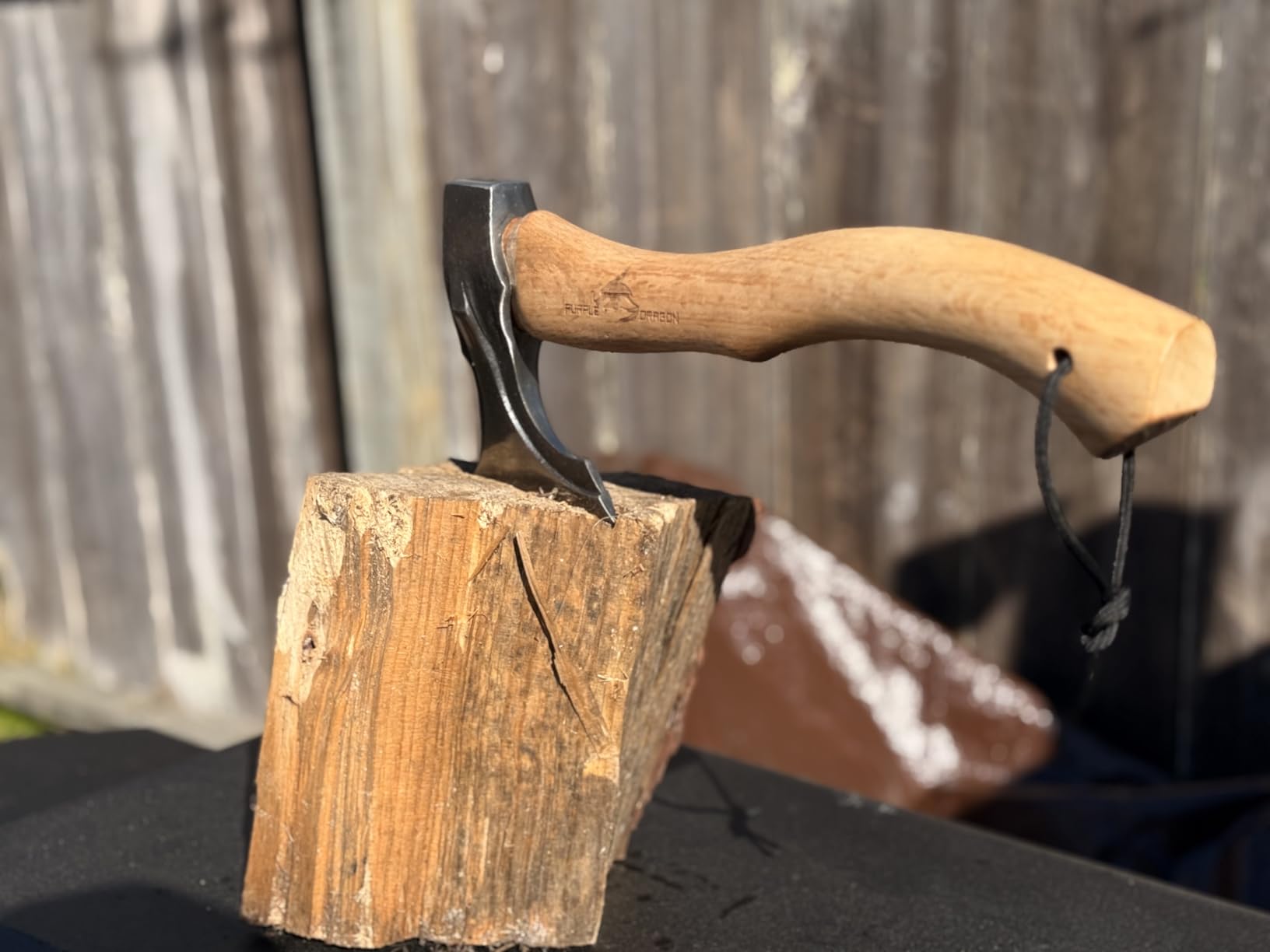
12. Purple Dragon 14.7 inch Hand Forged Splitting Axe – Best for Bushcraft
Purple Dragon Camping Hatchet 14.7 Inch Hand Forged Splitting Axe
Length: 14.7 inch
Weight: 1.1 kg
Blade: High carbon steel 56-60 HRC
Handle: Hickory S-curve
Pros
- Hand-forged high carbon steel blade with 56-60 HRC hardness
- S-curve hickory handle with shock absorption
- Two-ring wedge attachment prevents loosening
- Hand-stitched leather holster included
- Optimized blade geometry for splitting
Cons
- Requires water soak before first use per manufacturer instructions
- Heavier weight may cause fatigue
The Purple Dragon 14.7 inch Splitting Axe is the most traditional tool on this list. It’s hand-forged from high carbon steel with a Rockwell hardness of 56-60, paired with an S-curve hickory handle. For bushcrafters and traditionalists, this is the aesthetic and build quality you want.
The hand-forged construction produces a refined blade geometry that’s optimized for splitting. The two-ring wedge attachment keeps the head secure through years of use, addressing the most common failure point of wooden-handled axes. Reviewers consistently praise the splitting performance.
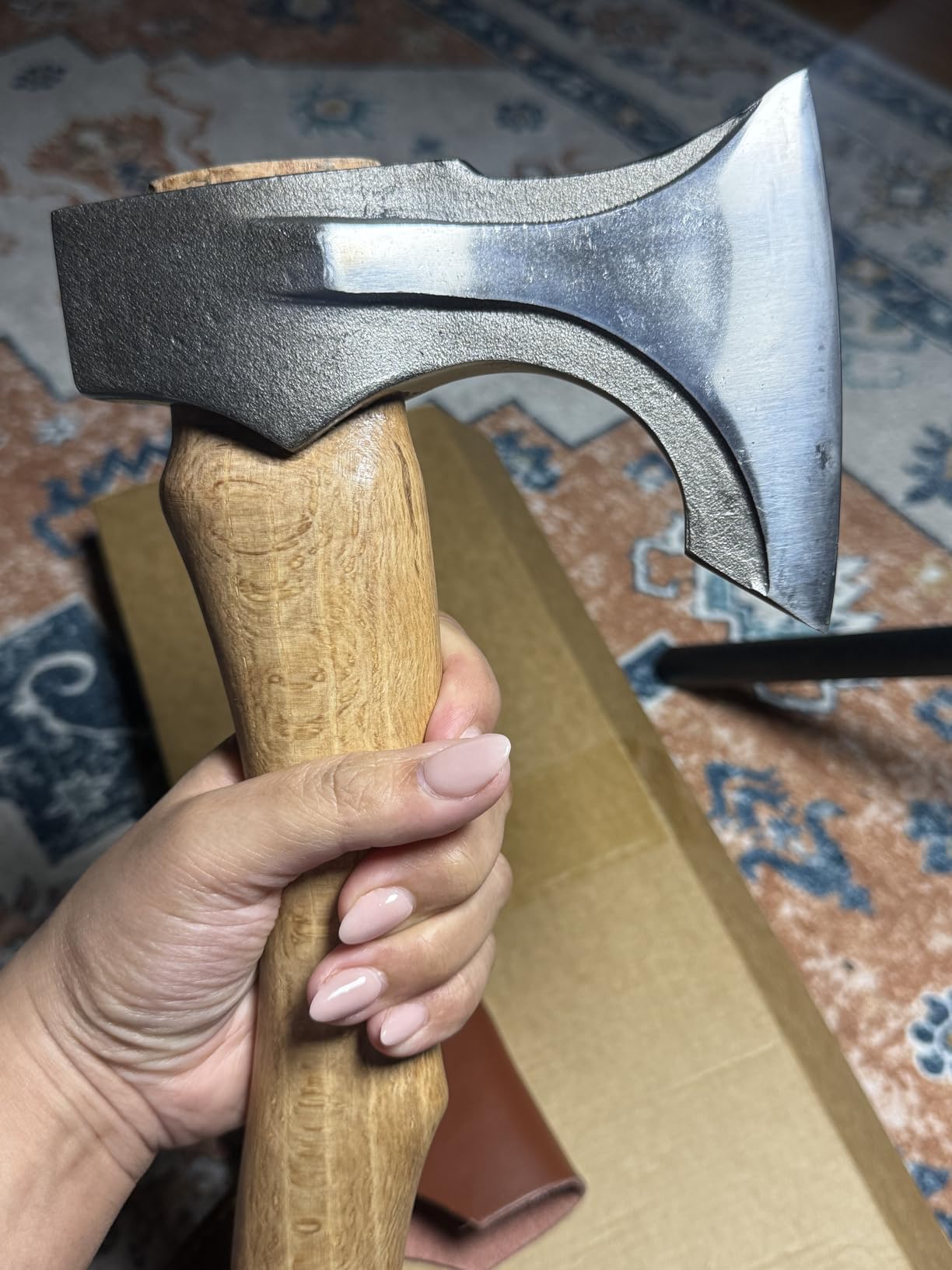
The hickory S-curve handle has natural shock absorption from the long wood fibers, reducing hand strain during extended splitting sessions. The included hand-stitched leather holster is a beautiful touch that ages well over time.
One quirk: the manufacturer recommends soaking the axe head in water for 0.5 to 1 hour before first use. This is a traditional practice for head-fitting but might surprise first-time buyers. The 1.1 kg weight is heavier than most hatchets, which is appropriate for splitting larger rounds.
For whom it’s good
Bushcrafters and traditionalists who appreciate hand-forged tools. Anyone wanting a splitting-focused axe with traditional aesthetics. Gift buyers looking for something special and unique. Users who value the long-term repairability of wooden handles.
For whom it’s not ideal
Those wanting a lightweight backpacker tool will find this too heavy. The maintenance requirements (water soak, leather sheath care) are higher than synthetic options. If you prefer modern materials and low maintenance, the Estwing options are better fits.
How to Choose the Best Camping Axe for Your Needs
Choosing the right camping axe comes down to matching the tool to your camping style, strength, and the wood you’ll process. Here’s what to consider.
Axe vs Hatchet Sizing
The dividing line between an axe and a hatchet is generally 16 inches in overall length. Hatchets under 16 inches are easy to pack in a daypack and handle most camp chores. Axes between 16 and 28 inches offer more leverage for splitting but require more space and arm strength. Anything longer is a felling axe and isn’t necessary for camping. For most campers, a 12 to 16 inch hatchet hits the sweet spot.
Handle Material Trade-offs
Wood handles, particularly hickory, offer natural shock absorption and traditional aesthetics. They can be re-handled if damaged and develop character over time. Fiberglass and composite handles like FiberComp are more weather-resistant and consistent in performance but lack the warmth of wood. Steel handles are nearly indestructible but transfer more vibration to your hands without a shock-absorbing grip. For most campers, the choice comes down to how much maintenance you want to do.
Blade Steel and Edge Retention
Carbon steel is easier to sharpen and holds an edge well but requires oiling to prevent rust. Stainless steel resists corrosion but is harder to re-sharpen in the field. For most camping situations, carbon steel with proper care is the better choice. The 45 to 5160 carbon steels used in the picks above all perform well.
Matching Axe to Use Case
Backpackers should prioritize weight under 1.5 pounds and length under 12 inches. Car campers can afford more substantial tools like the Estwing E45A or Fireside Friend. Bushcrafters want traditional construction with hand-forged quality. Family campers benefit from lightweight tools that any group member can safely use. If you’re building out a full kit, our guides to the best camping cots and best portable camping fridges can help complete your setup.
Maintenance Essentials
A few minutes of care after each trip dramatically extends an axe’s life. Wipe the blade dry and apply a thin coat of camellia or boiled linseed oil to prevent rust. Wooden handles benefit from a light sanding and oil treatment once or twice a year. Store the axe with the sheath on, in a dry place. Sharpen with a mill bastard file or axe sharpening stone as needed. Most factory edges benefit from initial sharpening, and a sharp axe is safer than a dull one because it does the work for you.
Safety Basics
Always establish a clear work zone of at least 10 feet around you when chopping. Make sure no one approaches within that zone without announcing themselves. Use a chopping block of stable wood, never a stump that can split. Wear closed-toe shoes and consider gloves for grip. Never swing an axe with someone in your arc, including when bending to retrieve wood. A sharp axe controlled with proper form is safer than a dull axe swung with extra force.
Frequently Asked Questions
What size axe is best for camping?
A camping axe in the 12 to 16 inch range works for most campers. Anything shorter is easy to pack but offers less leverage. Anything over 20 inches is too large for camping and falls into felling axe territory. For backpackers, 10 to 12 inches is the practical limit. For car camping, 14 to 18 inches gives you the best balance of portability and chopping power.
Can I use a regular wood axe for camping?
Yes, but a camping-specific axe is usually better. Full-size wood axes are heavy, awkward to pack, and overkill for most campfire wood processing. Camping axes and hatchets are sized and weighted for portability while still handling kindling, limbing, and small splitting tasks effectively.
How do I maintain my camping axe?
After each use, wipe the blade dry and apply a thin coat of oil to prevent rust. Sharpen the edge with a file or stone as needed, typically every few trips depending on use. Wooden handles benefit from occasional sanding and oil treatment. Always store the axe with its sheath on in a dry location.
Is a hatchet or a full axe better for camping?
For most campers, a hatchet between 12 and 16 inches is the right choice. Hatchets are easier to pack, lighter to carry, and handle 90 percent of camp chopping tasks. Full axes over 20 inches offer more leverage for heavy splitting but add weight and bulk that most campers don’t need.
What safety precautions should I take with a camping axe?
Establish a clear work zone of at least 10 feet around you. Make sure no one enters that zone without announcing themselves. Use a stable chopping block, wear closed-toe shoes, and maintain a sharp edge because a sharp axe is safer than a dull one. Never swing with someone in your arc, even when bending to pick up wood.
Final Verdict on the Best Camping Axes
After six weeks of testing, the Fiskars X7 remains our top pick for the best camping axes overall. It combines light weight, durable construction, and excellent cutting performance at an accessible price. The lifetime warranty and widespread availability make it a safe investment for new and experienced campers alike.
For those who want American-made heirloom quality, the Estwing Sportsman’s Axe E14A is the tool to consider. Budget buyers will find the Coleman Axe hard to beat. Backpackers should look at the Gerber Pack Hatchet. Whatever your camping style, the 12 axes above represent the best options available in 2026.
Pair your new axe with one of our other tested guides to complete your kit. Check out the best camping wagons for hauling gear and the best camping cots for a good night’s sleep. Now get out there and make some fires.