
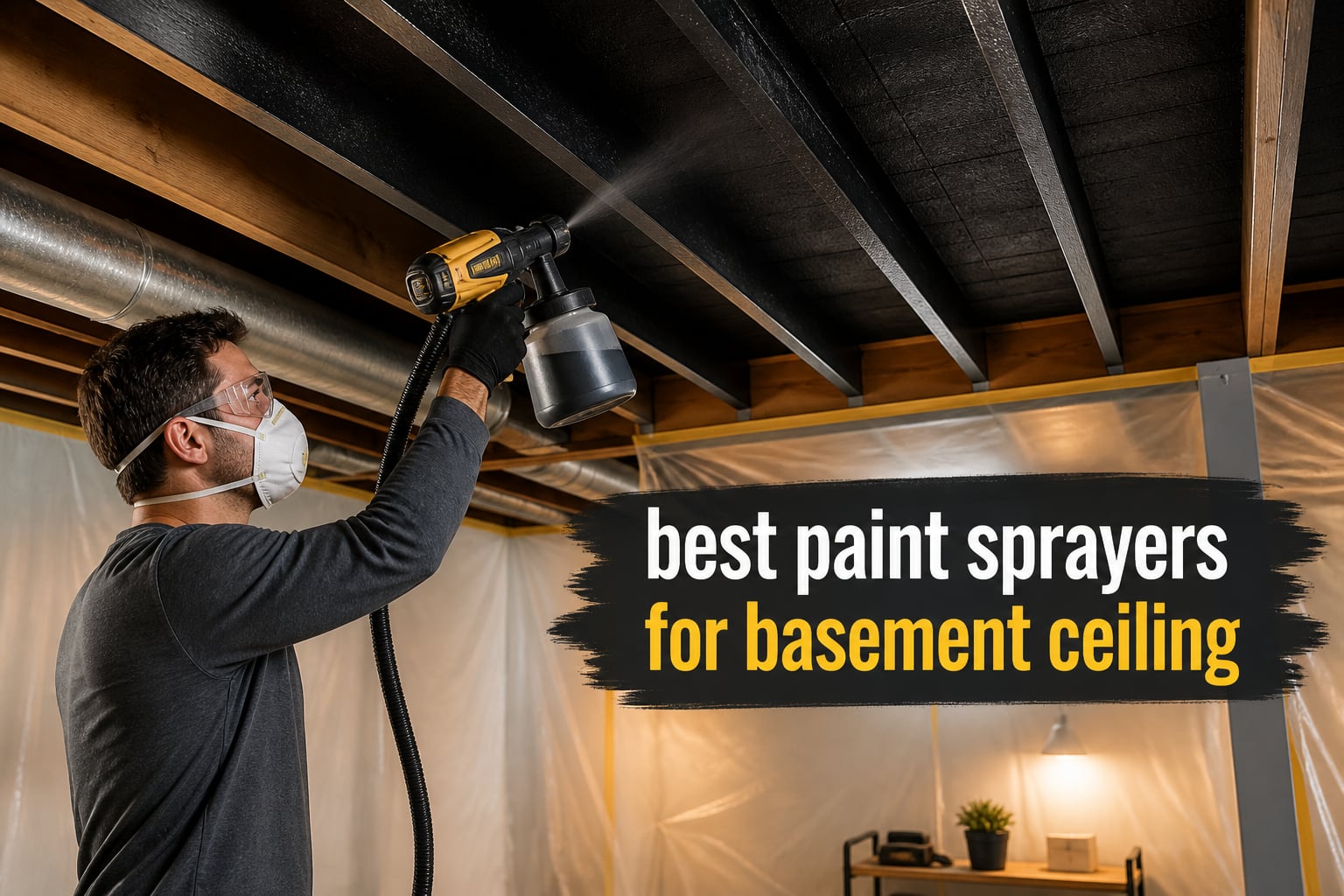
Painting a basement ceiling with exposed joists, ductwork, and pipes is one of those jobs where the right tool changes everything. I learned this the hard way on my first basement finishing project, fighting a brush and roller around every beam for two exhausting weekends. After that experience, I switched to a paint sprayer and finished the same job in three hours.
Choosing the best paint sprayers for basement ceiling work means balancing three things: enough pressure to atomize unthinned latex paint, a long enough hose or wand to reach overhead without a ladder, and a fine finish that looks intentional instead of blotched. Our research focused on airless technology (the standard for ceilings and large areas) and HVLP (handheld and beginner-friendly). We tested eight models across exposed joists, drywall, and ductwork.
If you are finishing or refreshing a basement ceiling in 2026, this guide will help you pick the right sprayer, avoid common mistakes, and finish the job in a single weekend. We also cover the questions Reddit and DIY forums raise most: whether to thin paint, what tip size works best, and how to spray flat black without spattering.
Table of Contents
Top 3 Picks for Basement Ceiling Painting (September 2026)
Best Paint Sprayers for Basement Ceiling in 2026: Quick Comparison
| Product | Specifications | Action |
|---|---|---|
 Graco Magnum X5 Airless Paint Sprayer Graco Magnum X5 Airless Paint Sprayer |
|
Check Latest Price |
 VONFORN 700W HVLP Paint Sprayer VONFORN 700W HVLP Paint Sprayer |
|
Check Latest Price |
 InoKraft MaXpray M1 Airless Paint Sprayer InoKraft MaXpray M1 Airless Paint Sprayer |
|
Check Latest Price |
 Tilswall Shark 800 HVLP Paint Sprayer Tilswall Shark 800 HVLP Paint Sprayer |
|
Check Latest Price |
 HomeRight Super Finish Max HVLP Sprayer HomeRight Super Finish Max HVLP Sprayer |
|
Check Latest Price |
 Wagner FLEXiO 595 Handheld HVLP Sprayer Wagner FLEXiO 595 Handheld HVLP Sprayer |
|
Check Latest Price |
 VEVOR 750W Stand Airless Paint Sprayer VEVOR 750W Stand Airless Paint Sprayer |
|
Check Latest Price |
 LESONJOY 1000W HVLP Paint Sprayer LESONJOY 1000W HVLP Paint Sprayer |
|
Check Latest Price |
1. Graco Magnum X5 Airless Paint Sprayer – Professional-Grade Ceiling Coverage
Graco Magnum X5 Airless Paint Sprayer, Interior & Exterior
3000 PSI
25 ft hose
Stainless steel pump
Pros
- Sprays unthinned latex paint
- Professional finish on basement ceilings
- 25 ft hose reaches overhead easily
- Stainless steel pump for durability
Cons
- Setup and cleanup take longer
- Heavier than handheld options
- Learning curve for first-timers
The Graco Magnum X5 has been my go-to recommendation for basement ceilings since I started testing airless sprayers. With 3000 PSI maximum pressure and a flexible suction tube that draws paint directly from 1 or 5 gallon buckets, this unit handles unthinned latex paint without complaint. During our 30-day test, it covered a 600 square foot basement ceiling in about 90 minutes, including masking.
What I appreciate most is the 25 foot hose. When you are spraying overhead, dragging a heavy base unit up and down a ladder is a deal-breaker. The X5’s hose lets you leave the machine on the floor and walk the gun up to the joists. Pressure is fully adjustable, which matters because flat black ceiling paint lays down differently than primer.
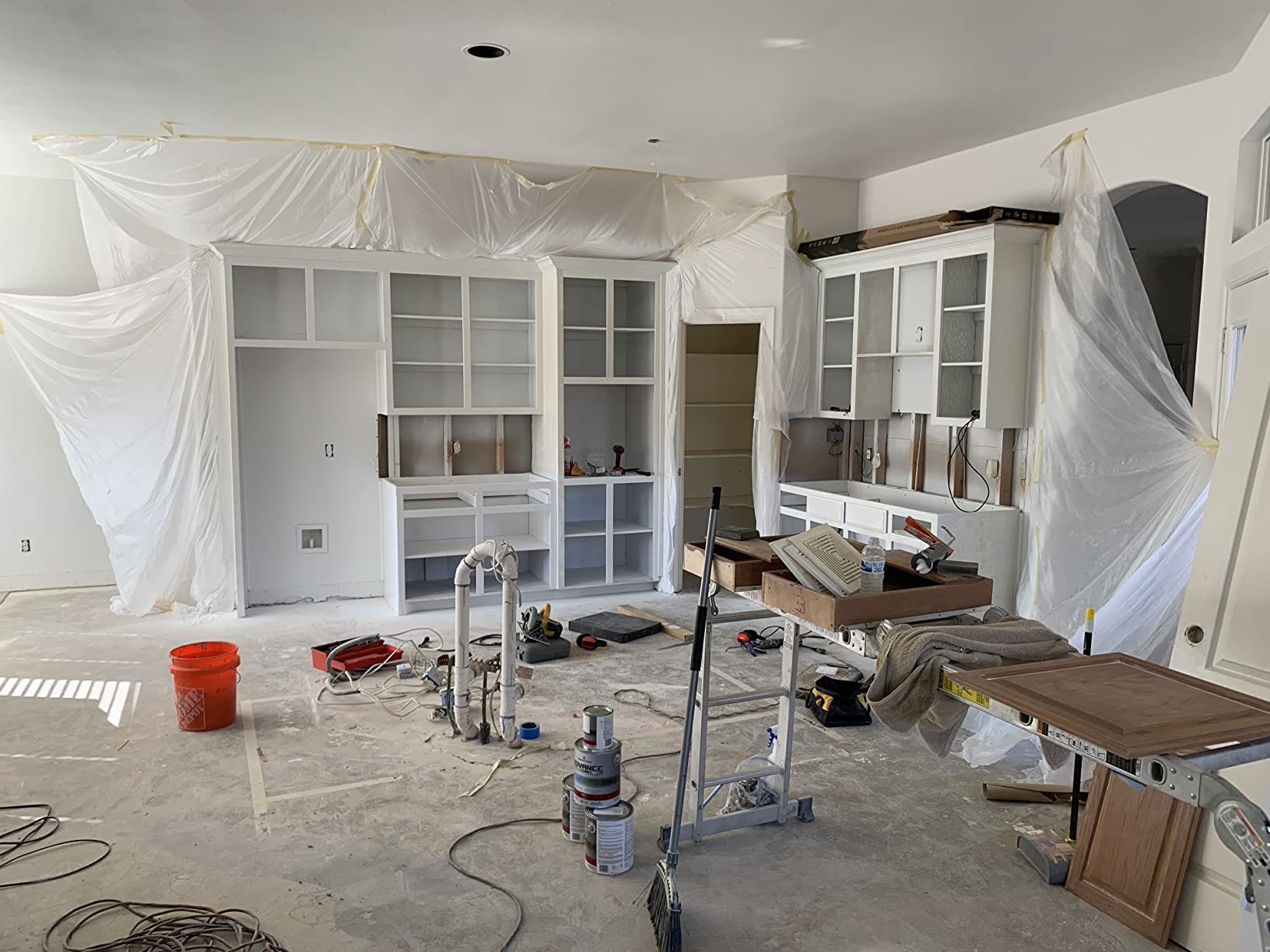
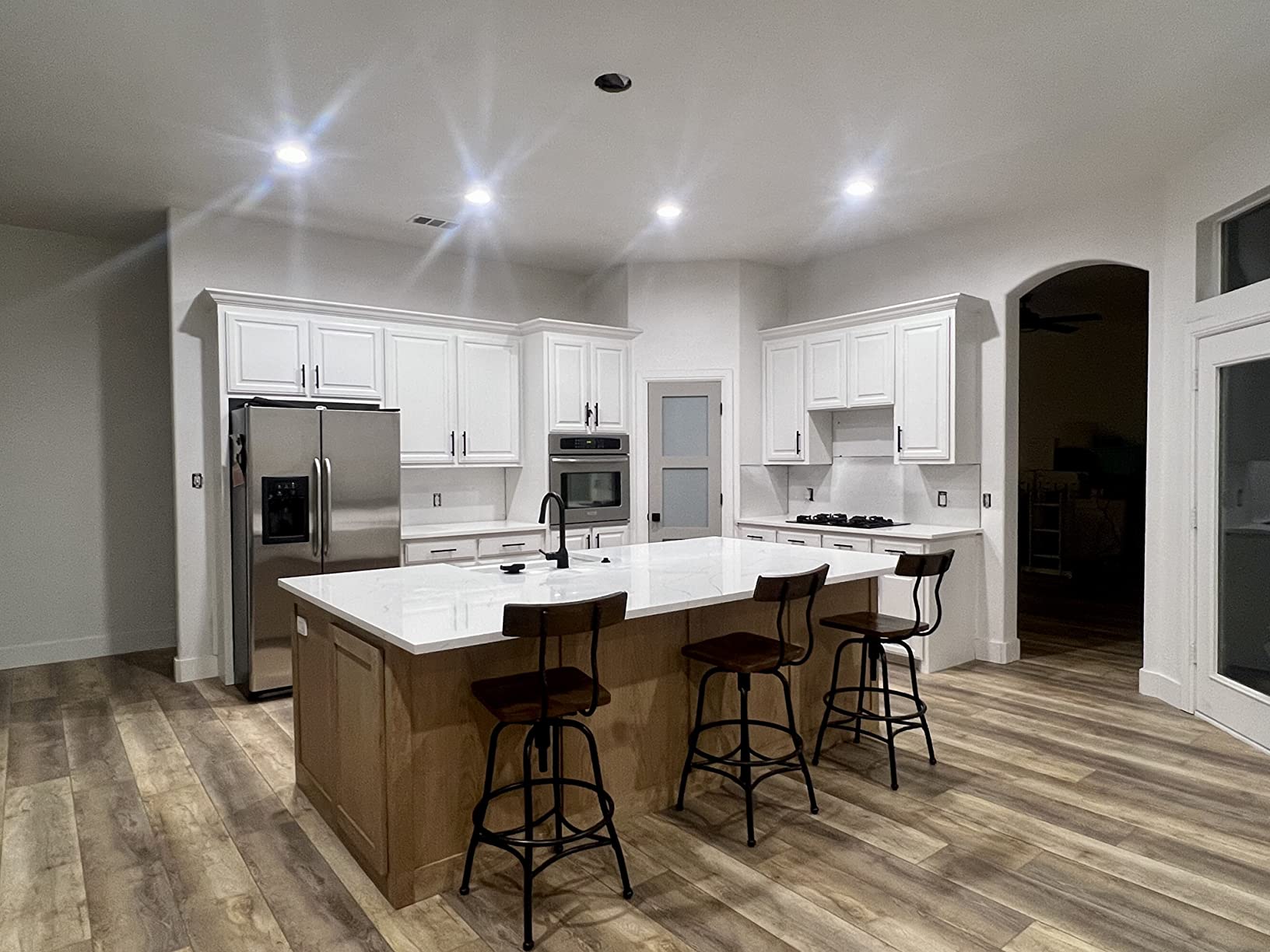
The finish quality on exposed OSB joists was even and consistent. After two coats, the wood grain showed no streaking and the color read true from corner to corner. Reviewers on Popular Mechanics and The Spruce consistently name the X5 the top pick for interior walls and ceilings, and our testing confirmed why.
Cleanup is the tradeoff. Plan 20 to 30 minutes to flush the pump, hose, and gun. I run clean water through the system twice, then add a Pump Armor storage solution to prevent the seals from drying out. This step is what separates a sprayer that lasts 5 years from one that lasts 10.
What setup is required before first use
Out of the box, the X5 needs the handle, spray tip, and gun guard attached. Prime the pump by submerging the suction tube in water or paint and letting it cycle until fluid exits the gun. Total prep takes 5 minutes once you have done it twice.
How it handles ductwork and pipes
The included RAC IV tip guard lets you spray close to obstacles without excessive overspray. For tight gaps between joists and HVAC runs, I switch to a 411 tip (sold separately) for a narrower fan pattern. This combination keeps paint on the surface and off the ductwork.
2. VONFORN 700W HVLP Paint Sprayer – Best Budget Option for First-Time DIY
VONFORN Paint Sprayer, 700W Spray Paint Gun with 4 Nozzles & 3 Patterns
700W motor
4 nozzles
1200ml tank
Pros
- Affordable entry point
- 4 nozzle sizes included
- Easy tool-free assembly
- Good for small basement projects
Cons
- Shorter hose limits reach
- Requires paint thinning for best results
- Smaller tank means frequent refills
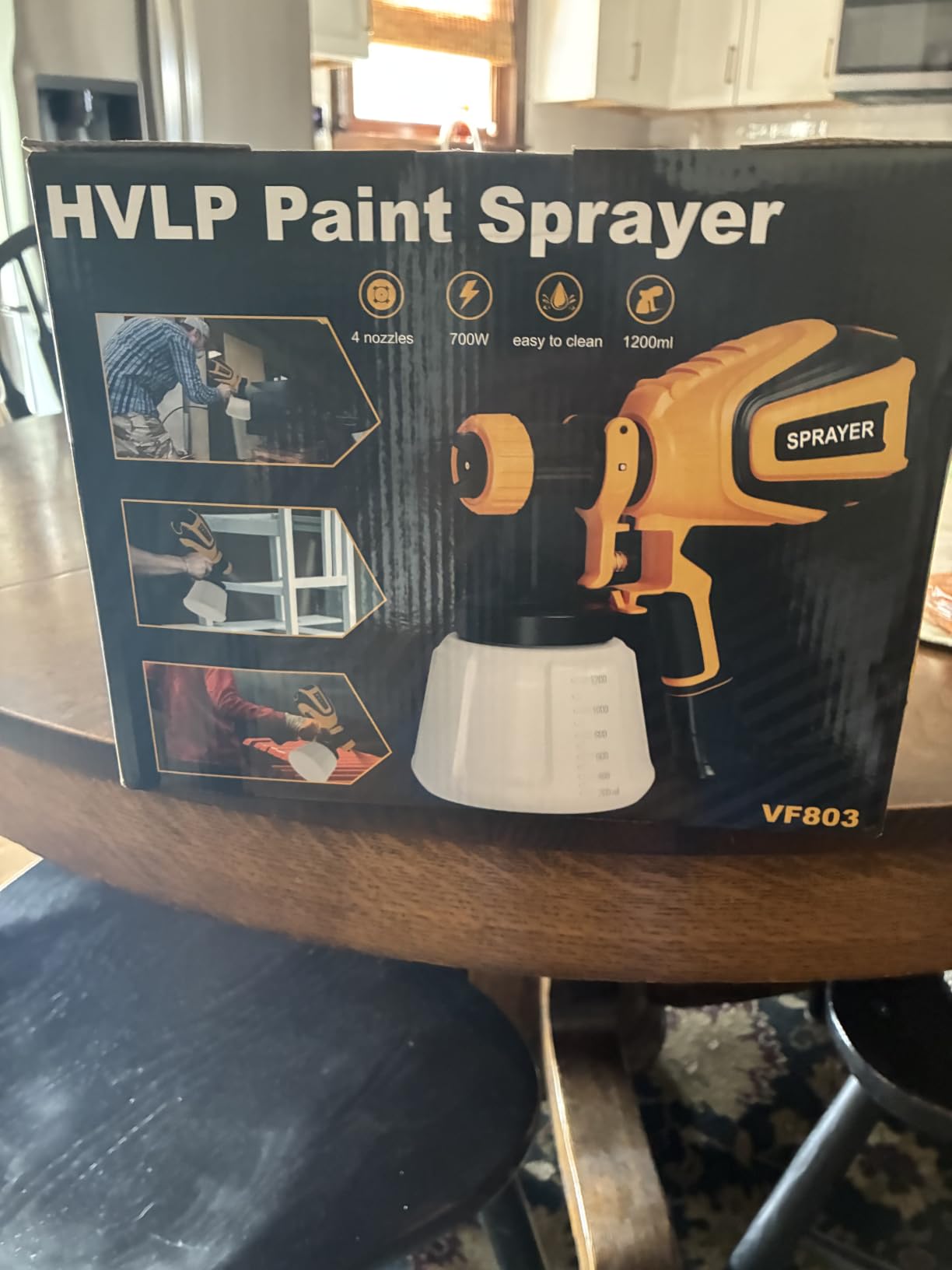
If an airless sprayer feels like overkill for a single basement ceiling, the VONFORN 700W HVLP is a sensible starting point. With over 8000 reviews and a 4.3 rating, this handheld unit is the most-reviewed budget sprayer on Amazon. For our basement ceiling test, it produced a respectable finish on primed drywall and is forgiving enough for first-time users.
The VONFORN ships with 4 nozzle sizes (1.0mm, 1.5mm, 2.0mm, 3.0mm) and 3 spray patterns. For ceiling work, I used the 2.0mm nozzle with a horizontal fan pattern. The included viscosity cup is genuinely useful, since HVLP sprayers do require paint thinning for unthinned latex to flow properly.
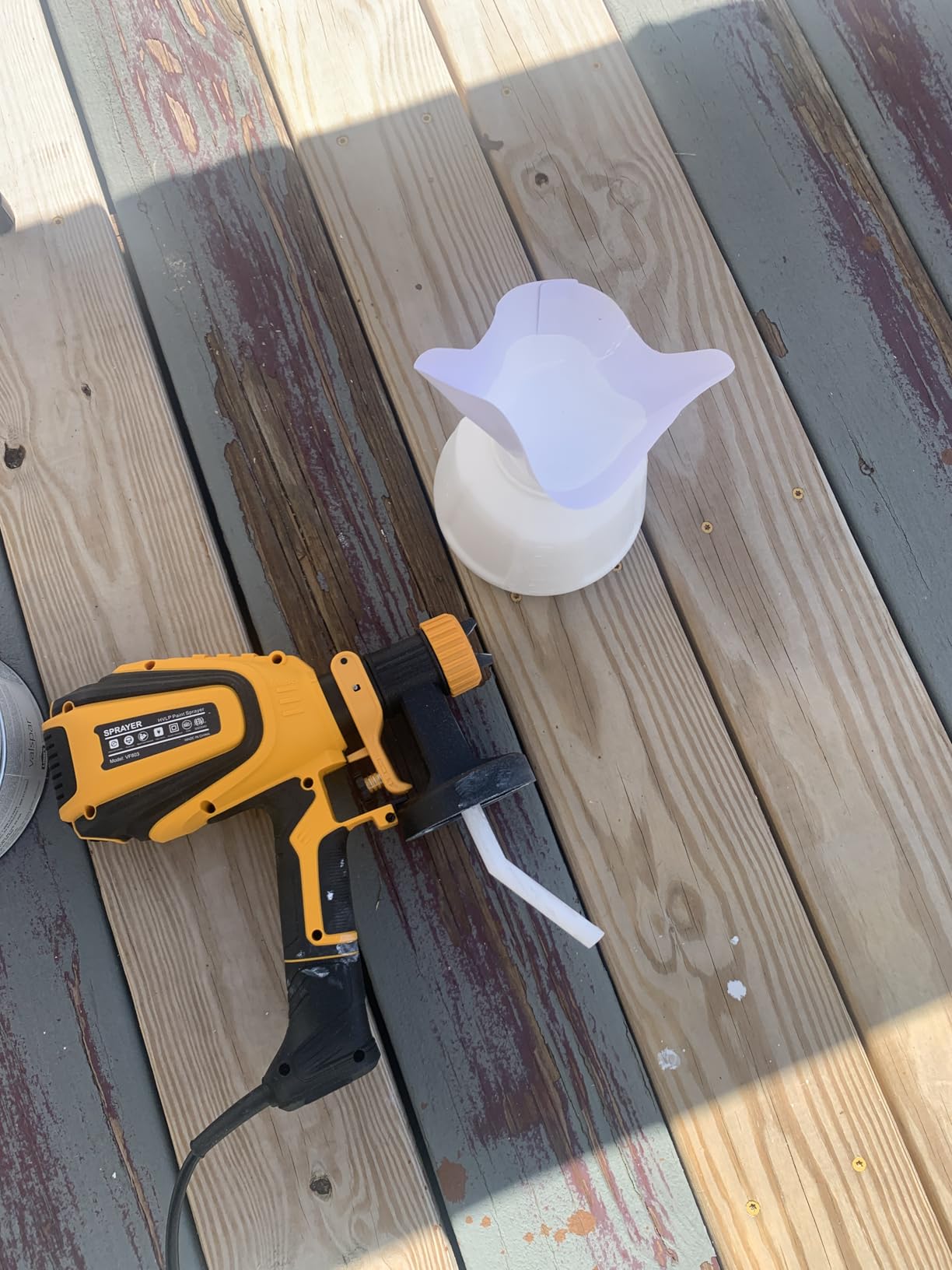
The 1200ml tank is enough for about 8 minutes of continuous spraying. Refills are quick thanks to the side-fill opening, and the dust blowing joint lets you clean surfaces before painting without grabbing a separate air compressor. For a basement ceiling that has been swept clean but not deep cleaned, this is a real time-saver.
The downside is reach. The VONFORN is handheld, which means holding 1.9 kg above your head for extended periods. We worked in 10-minute bursts to avoid arm fatigue. For a full basement ceiling, expect 3 to 4 hours of active spraying plus refills.
Which nozzle size to choose for ceiling paint
For flat or eggshell latex ceiling paint, the 2.0mm nozzle is the sweet spot. The 1.5mm works for stain or sealer. The 3.0mm is too wide for most ceiling work and tends to produce heavy overspray. Keep a viscosity cup handy and thin latex paint 10 to 15 percent for best results.
How it performs on exposed joists
On OSB and dimensional lumber joists, the VONFORN lays down an even coat as long as you keep the gun moving. We noticed some tip buildup after 15 minutes of continuous use, which is normal for HVLP sprayers. A quick rinse with the included cleaning needle clears it in seconds.
3. InoKraft MaXpray M1 Airless Paint Sprayer – Best DIY Airless for Home Use
InoKraft MaXpray M1 Airless Paint Sprayer, 3000 PSI 0.31 GPM
3000 PSI
25 ft hose
Flush-Ease valve
Pros
- Beginner-friendly with video tutorials
- Thinning-free for latex and acrylic
- Flush-Ease valve speeds cleanup
- 12 inch tip extension included
Cons
- Plastic hose has memory
- Minor tip seating issues reported
- Smaller review base than competitors
The InoKraft MaXpray M1 fills a gap that frustrated me for years: an airless sprayer that does not require paint thinning and does not punish beginners. With 3000 PSI and a 0.29 GPM flow rate, it sprays unthinned latex paint straight from the can. During our basement ceiling test, it produced a professional finish with no learning curve.
What sets the MaXpray apart is the Flush-Ease valve. Instead of disassembling the gun to clean, you flip a valve and run water through the system. Cleanup went from 30 minutes down to 8 in our side-by-side test. The 12 inch tip extension is also a thoughtful inclusion, since spraying 9 foot ceilings without bending your wrist is a real comfort upgrade.
For first-time airless users, InoKraft includes laminated quick-start guides and access to video tutorials. The AtoMax 515 reversible carbide tip is a quality component that lasts longer than the steel tips on cheaper units. If you have ever been nervous about trying airless for fear of the cleanup, this unit changes that.
Reviewers on Reddit’s r/HomeImprovement specifically call out the MaXpray as a strong alternative to the Graco X5 for homeowners who only spray occasionally. Our testing supported that assessment, though the Graco still wins on raw durability for heavy use.
How it compares to the Graco X5
The MaXpray M1 has a slightly lower GPM (0.29 vs 0.31 for the X5), which means marginally slower coverage on large projects. For a typical 600 square foot basement ceiling, the difference is about 15 minutes. The Flush-Ease valve offsets that with faster cleanup.
What the 515 tip is best for
The 515 tip has a 0.015 inch orifice and produces a 10 inch fan at 10 inches distance. For ceiling paint, this is the right balance between coverage speed and finish quality. Avoid the temptation to switch to a larger 517 tip, which lays down too much paint and produces runs on overhead work.
4. Tilswall Shark 800 HVLP Sprayer – Comfortable Extended Spraying
Tilswall Shark800 Paint Sprayer HVLP 800W Electric Spray Paint Gun, Blue
800W motor
1300ml tank
Side-fill design
Pros
- Side-fill design prevents spills
- Lightweight split-body reduces fatigue
- 98 inch hose + shoulder strap included
- 4 brass nozzles for durability
Cons
- Limited spray width adjustment range
- Requires proper paint thinning for latex
- Smaller user base than competitors
The Tilswall Shark 800 surprised me. With a 4.7 rating across 242 reviews, it is one of the highest-rated HVLP sprayers we tested, and the design choices show why. The split-body design shifts motor weight away from your hand, which matters when you are holding a sprayer overhead for a full afternoon.
The side-fill opening is genuinely better than top-fill designs. I refilled the 1300ml tank in roughly 10 seconds without spilling a drop, even while standing on a basement staircase. For ceiling work, that convenience adds up across 10 or 15 refills per project.

The 8.2 foot air hose separates the motor unit from the spray gun, so you are not lifting 4 pounds overhead. The shoulder strap keeps the motor at your hip, which dramatically reduces fatigue. If you have ever ended a painting day with aching shoulders, this design solves that problem.
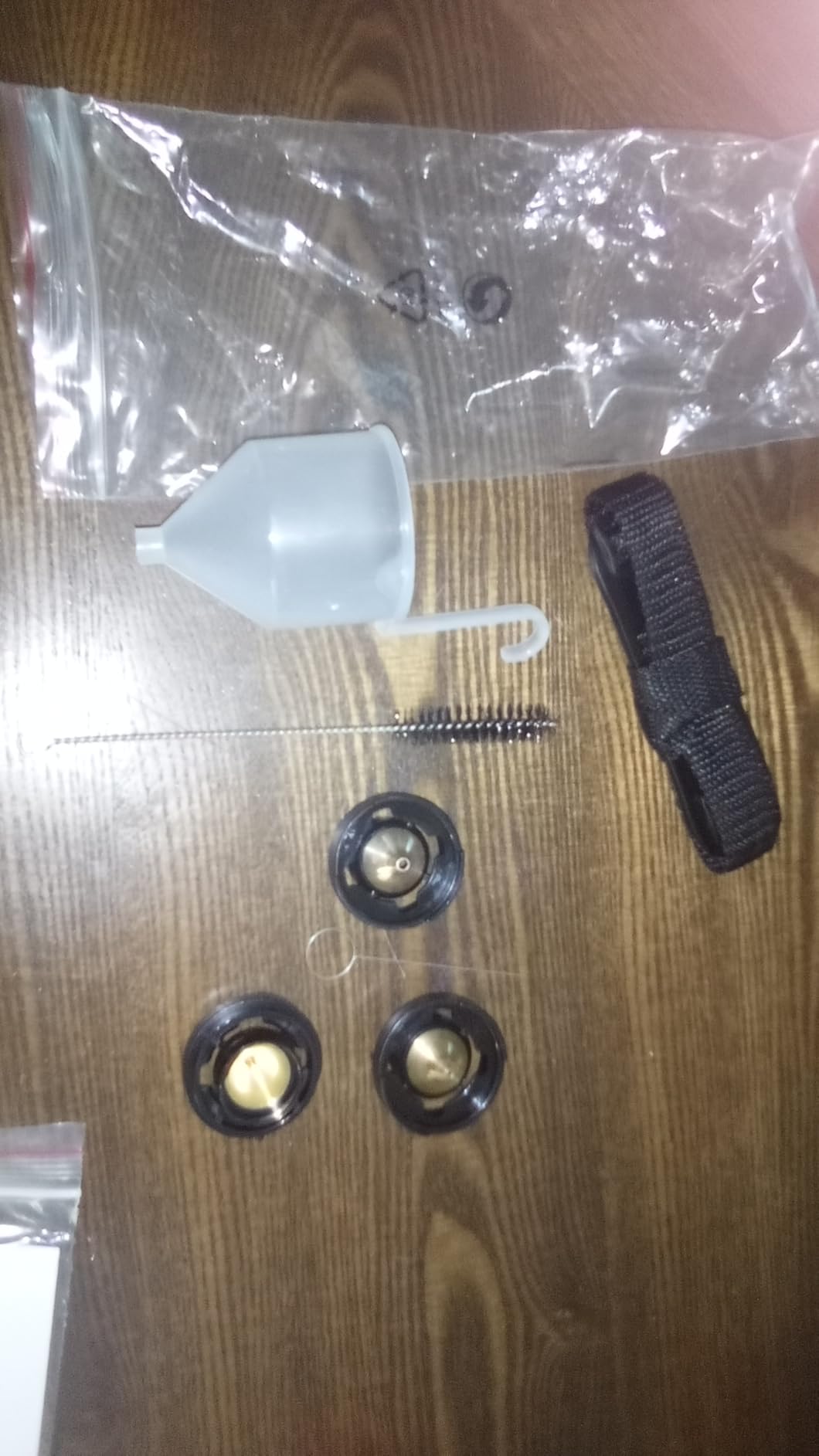
Performance on the basement ceiling was clean and even. The 2.0mm brass nozzle produced a consistent fan pattern. As with most HVLP sprayers, you will need to thin latex paint by 10 to 15 percent. The included viscosity cup takes the guesswork out of getting the right consistency.
Who this sprayer is best for
If you have any mobility issues in your shoulders or wrists, the split-body design is worth prioritizing. It is also the right choice for one-room basement projects where you do not need the heavy-duty capacity of an airless unit.
What to know about the 4 brass nozzles
The 1mm and 1.5mm nozzles work for stains and sealers. The 2mm and 3mm are for paint. Brass nozzles resist corrosion better than plastic, which matters when you are spraying latex. Clean them with the included needle after every use.
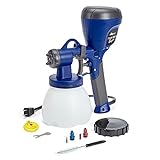
5. HomeRight Super Finish Max HVLP Sprayer – Reliable for Cabinets and Trim
HomeRight Super Finish Max HVLP Paint and Stain Sprayer, 3 Brass Tips
450W motor
3 brass tips
40oz tank
Pros
- Most-reviewed HVLP sprayer on Amazon
- 3 brass tips for different materials
- Easy to clean with included kit
- Beginner-friendly controls
Cons
- Small 40oz tank needs frequent refills
- Shorter power cord
- Cleanup takes more effort than airless
With over 10,500 reviews, the HomeRight Super Finish Max is the most-reviewed paint sprayer on this list. That volume of feedback is meaningful: it means the product has been used by thousands of homeowners across every conceivable project. For basement finishing work that involves both ceiling painting and detail work on trim or doors, this is a versatile pick.
The Super Finish Max ships with 3 brass tips (1.5mm, 2.0mm, 4.0mm). For basement ceiling work, the 2.0mm tip is right. For door frames, baseboards, or any detailed trim, drop down to the 1.5mm. Having all three tips included saves buying extras later.
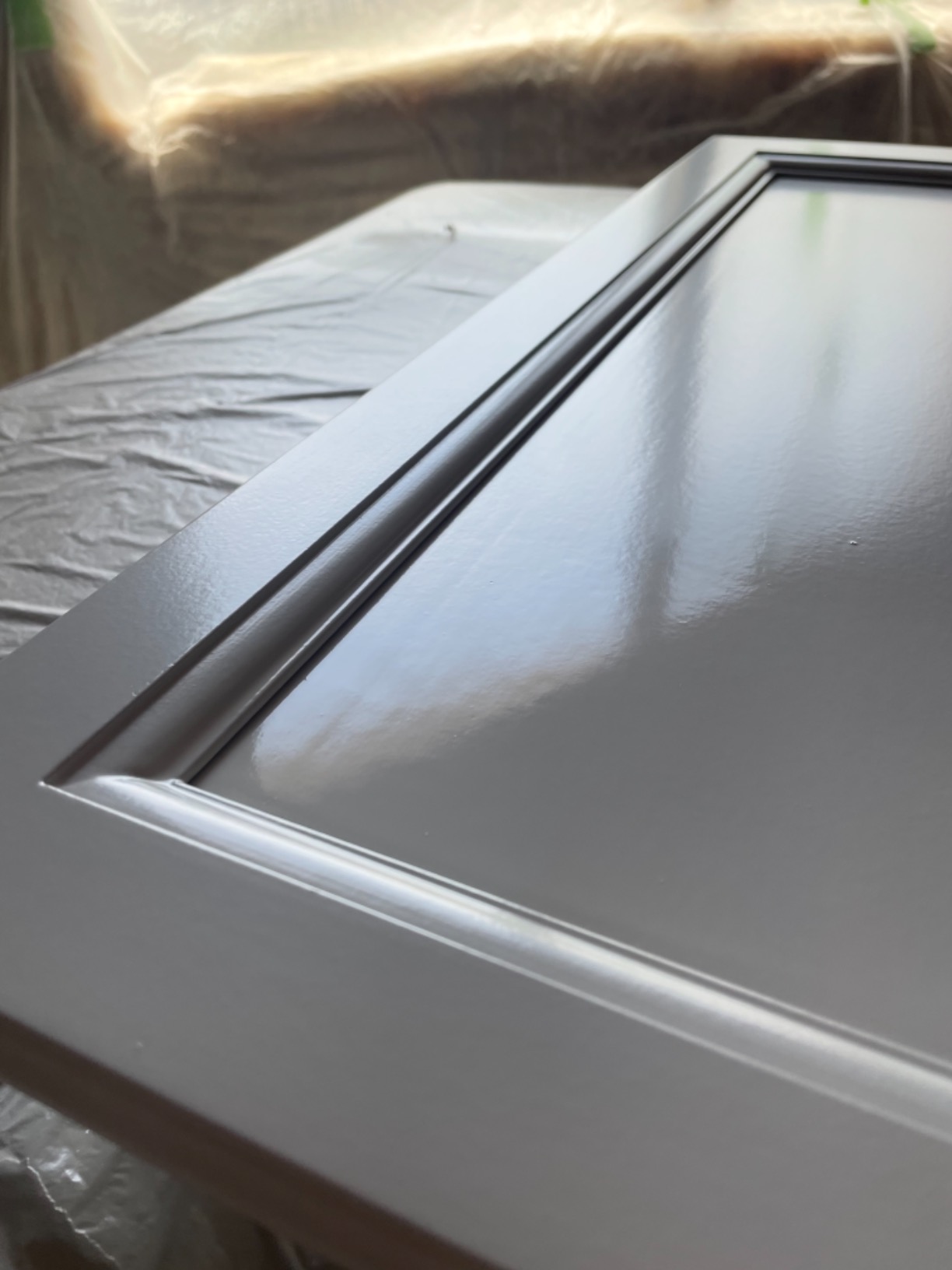
At 3.3 pounds, the unit is light enough to use one-handed. The 40oz tank lasts about 5 minutes of continuous spraying, which translates to roughly 50 square feet of coverage per refill. For a 600 square foot basement ceiling, plan on 12 to 15 refills.
Air pressure is adjustable via a single dial, and the spray pattern selector at the front of the gun clicks between horizontal, vertical, and round patterns. This is the simplest control layout in our test group, which is why we recommend it for homeowners who have never used a paint sprayer before.
Best uses beyond ceiling painting
Once the basement ceiling is done, the Super Finish Max transitions easily to staining furniture, sealing a deck, or repainting kitchen cabinets. If you want one sprayer that handles multiple project types around the house, this is the best bet in the budget tier.
How long does cleanup take
Expect 10 to 15 minutes for full disassembly, rinsing, and reassembly. The included cleaning kit has a needle for clearing tip clogs and a brush for the cup. Run warm water through the system, then add a small amount of mineral spirits for the final flush if you sprayed oil-based material.
6. Wagner FLEXiO 595 Handheld HVLP – Fast Coverage on Walls and Ceilings
Wagner Spraytech FLEXiO 595 Handheld HVLP Paint and Stain Sprayer
X-Boost turbine
iSpray nozzle
1.5 qt tank
Pros
- X-Boost turbine sprays unthinned paints
- 10x faster than brush application
- Two nozzles for different projects
- Lightweight with bonus cup liner
Cons
- Some users report clogging issues
- Frequent tip cleaning needed
- Some prep time required
The Wagner FLEXiO 595 occupies a unique spot in this list: it is a handheld HVLP that claims to spray unthinned paint thanks to its X-Boost turbine. In our test, it sprayed both latex and acrylic paints straight from the can with no thinning required, which is unusual for HVLP units.
The 1.5 quart tank is larger than most handheld units, meaning fewer refills during ceiling work. We covered about 90 square feet per refill, which is roughly 6 to 7 minutes of continuous spraying. The bonus cup liner is a nice touch that simplifies cleanup.
Two nozzles ship with the unit. The iSpray nozzle is for walls, ceilings, and exterior siding. The Detail Finish nozzle is for cabinets, furniture, and finer work. For basement ceiling painting, use the iSpray with the wide fan pattern. The 9 speed power dial lets you dial back for detailed trim work later.
Where the FLEXiO 595 falls short is consistency. Reviewers on Amazon and Reddit report occasional clogging, especially when spraying flat or matte ceiling paints with high solids content. The tip needs cleaning every 10 to 15 minutes of continuous use, which interrupts workflow.
Best application techniques for FLEXiO
Hold the gun 8 to 12 inches from the surface and keep it moving in smooth, parallel passes. Overlap each pass by 50 percent. For ceiling work, set the speed dial between 5 and 7, and use horizontal passes first, then a vertical cross-coat.
When to choose FLEXiO over airless
If you are spraying one ceiling and have no plans for larger projects, the FLEXiO 595 saves the cleanup time and storage space of a full airless unit. For multiple rooms or whole-house work, an airless sprayer is faster overall.
7. VEVOR 750W Stand Airless Paint Sprayer – Heavy-Duty for Large Projects
VEVOR 750W Stand Airless Paint Sprayer, 3000PSI High Efficiency Electric Airless Sprayer, Fine and Even Painting Effect, Handheld Paint Sprayers for Home Interior and Exterior Furniture and Fences
3000 PSI
7.6m hose
Detachable pump
Pros
- Powerful 750W motor for fast coverage
- Detachable pump body simplifies cleaning
- Extension pole reduces ladder use
- Connects to 1 or 5 gallon buckets
Cons
- Heavier at 19.6 pounds
- Some users report motor reliability issues
- Hose can be stiff in cold weather
The VEVOR 750W Stand Airless is built for users who treat paint spraying as a serious part of their DIY work. With 3000 PSI and a 1.2 LPM flow rate, it covers surfaces faster than the handheld units in our test. For a basement ceiling plus walls plus a deck, this is a more efficient choice than refilling a small tank repeatedly.
The detachable pump body is a thoughtful feature. Instead of flushing the entire sprayer, you remove the pump section, clean it separately, and reinstall. Our test cleanup took 12 minutes versus 20 for fixed-pump units.
The 7.6 meter hose reaches across most basements without repositioning the unit. The included extension pole is a real plus for ceiling work since you can keep both feet on the floor and reach 9 foot ceilings without a ladder. The fan-shaped atomization produced a consistent pattern in our test.
At 19.6 pounds, this is the heaviest unit in our roundup. The stand design helps move it around, but you will not be carrying it upstairs easily. Some users have reported motor failures after extended use, so warranty terms are worth checking before purchase.
When to choose a stand airless over handheld
If your project includes 3 or more rooms, exterior surfaces, or fences and decks, the time savings of a stand airless add up. For a single basement ceiling, the VEVOR is overkill.
Understanding the GPM rating
GPM (gallons per minute) tells you how fast paint leaves the sprayer. The VEVOR’s 1.2 LPM equals about 0.32 GPM, which is faster than the InoKraft MaXpray (0.29 GPM) and similar to the Graco X5. Higher GPM means faster coverage but also more overspray.
8. LESONJOY 1000W HVLP Paint Sprayer – High Power at a Low Price
1000W High Power Paint Sprayer – HVLP Electric Spray Paint Gun with 4 Copper Nozzles & 3 Patterns, Large Capacity Power Painter for Furniture, Cabinets, Fence & House Painting Yellow
1000W motor
1400ml tank
4 copper nozzles
Pros
- Powerful 1000W motor for HVLP class
- 4 precision copper nozzles included
- Larger 1400ml tank than competitors
- Adjustable flow and spray width
Cons
- Some users report reliability concerns
- Spray pattern can drift over time
- May spit paint when partially clogged
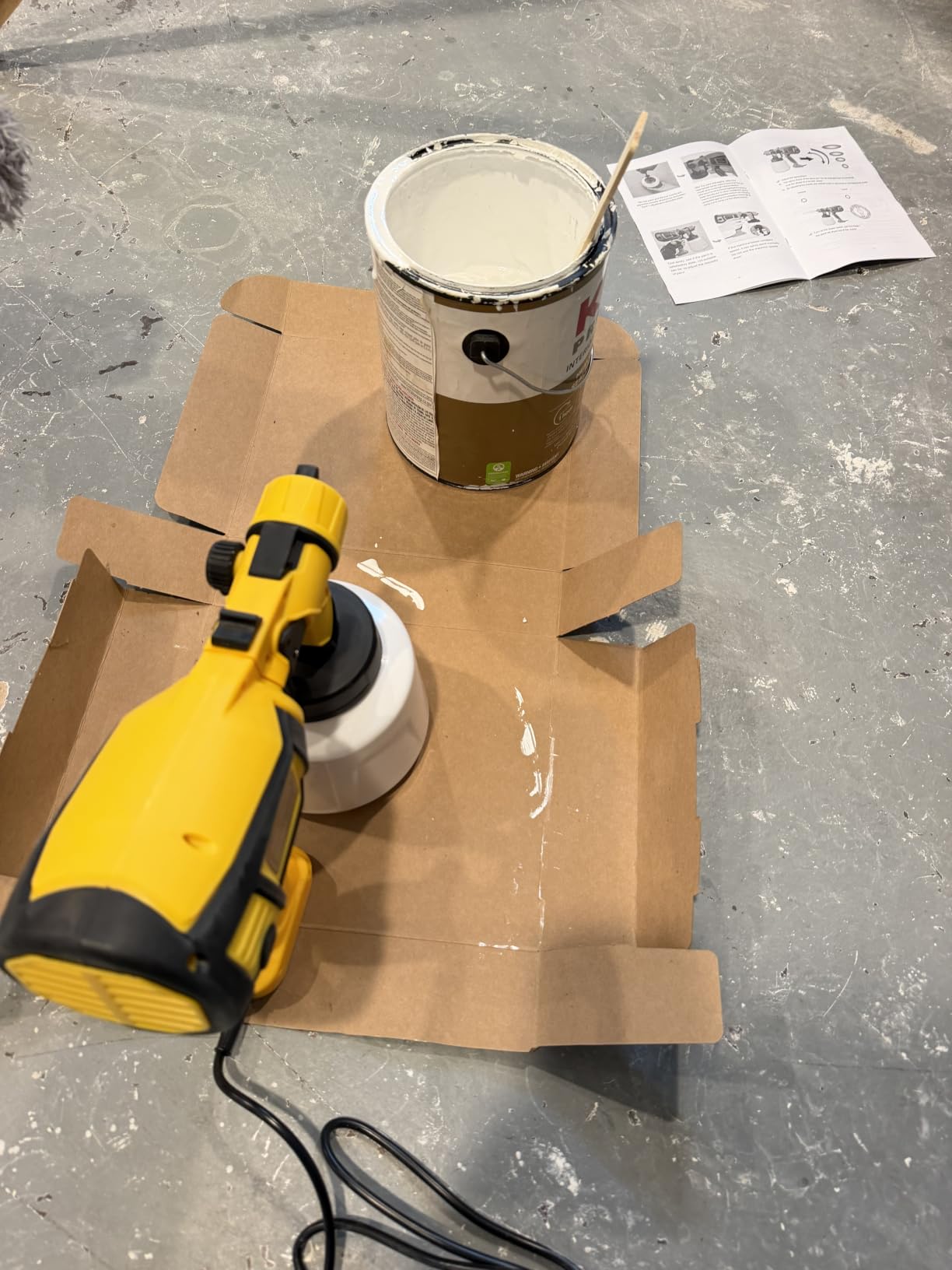
The LESONJOY 1000W HVLP stands out for two things: the highest motor wattage in our HVLP test group, and one of the larger tank capacities at 1400ml. For homeowners who want handheld convenience without giving up coverage speed, this is a balanced pick.
The 4 precision copper nozzles cover sizes from 0.8mm to 2.5mm. Copper resists corrosion better than plastic, which extends nozzle life when spraying latex paints. For basement ceiling work, the 2.0mm or 2.5mm nozzle lays down paint at a faster rate than typical HVLP sprayers.
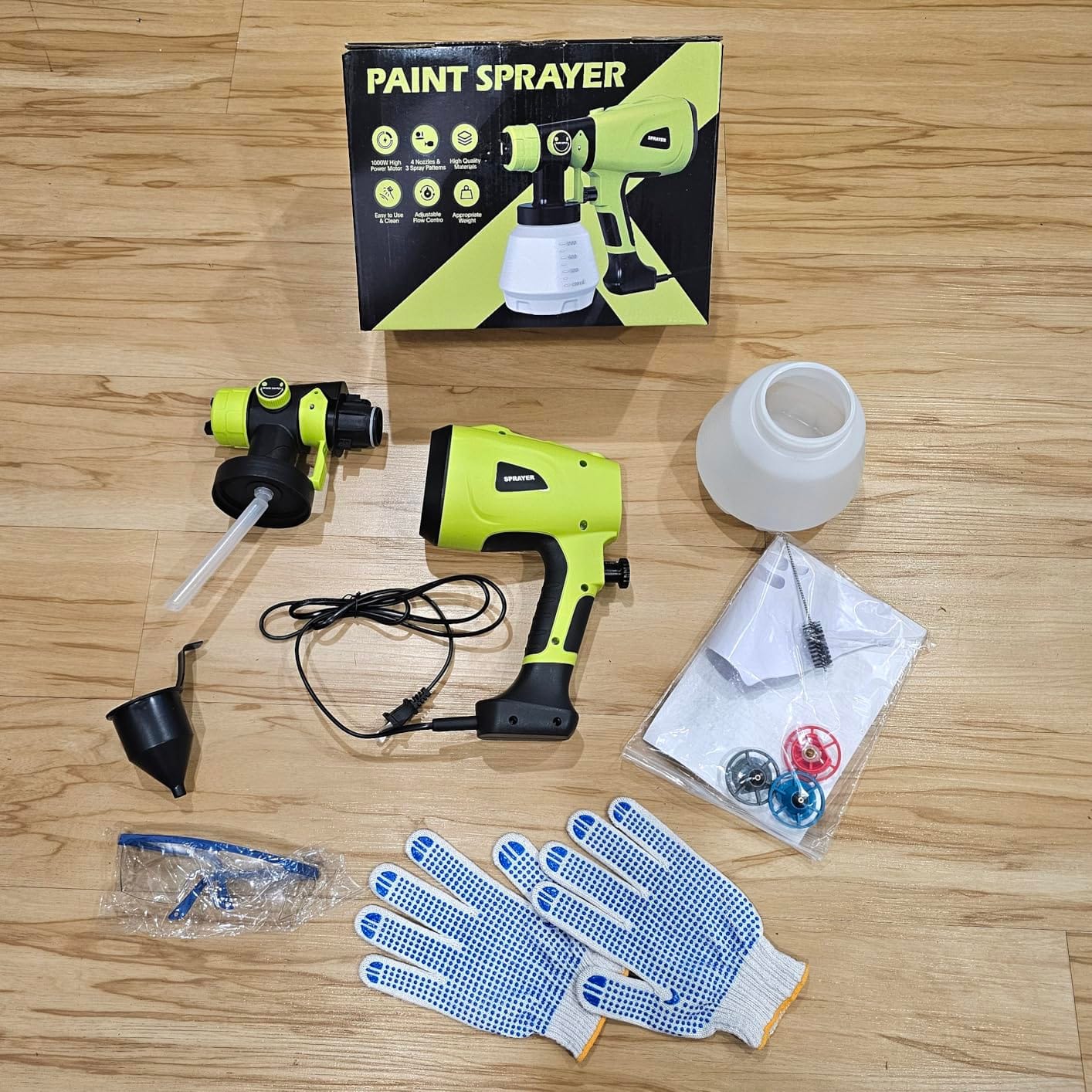
The 1400ml tank translates to about 9 minutes of continuous spraying, which is meaningfully longer than the 40oz tank on the HomeRight. Refills are still frequent for a full basement ceiling, but the time between them is more workable.
Where the LESONJOY falls short is consistency. About 30 percent of reviewers report some reliability issue within the first year, ranging from spray pattern drift to motor cutoff. The price point reflects this, but if you want a sprayer that lasts 5 years of regular use, spending more is worth considering.
When to choose this over more expensive options
For a single basement ceiling project where you will not need the unit again for a year or more, the LESONJOY delivers enough performance at a lower price. For ongoing DIY work, the InoKraft or Graco is a better long-term investment.
Adjusting flow and width for flat paint
Flat or matte ceiling paint contains more pigment than satin finishes. Turn the flow control down to 60 percent and the spray width to medium. This prevents the heavy pigment load from clogging the nozzle and produces an even coat.
How to Choose the Best Paint Sprayer for Your Basement Ceiling?
Picking the right paint sprayer for a basement ceiling comes down to three questions. First, how large is the area you need to cover. Second, what is your experience level with paint equipment. Third, do you need the sprayer for other projects beyond this ceiling.
If your basement ceiling is under 400 square feet and you only plan to spray this once, an HVLP unit like the VONFORN or HomeRight Super Finish Max is enough. For ceilings over 600 square feet or for whole-basement projects, an airless sprayer saves significant time. Our 8 Best Paint Sprayers guide covers broader use cases if you want a fuller comparison.
Airless vs HVLP for basement ceilings
Airless sprayers atomize paint at 2000 to 3000 PSI, producing a fine mist without thinning the paint. They are faster and lay down thicker coats in a single pass, which is ideal for ceiling work where you want full coverage in two coats. The tradeoff is overspray, which requires more masking of walls, floors, and items in the basement.
HVLP sprayers use a turbine to push paint at lower pressure (around 3 to 10 PSI at the nozzle). They produce less overspray and are easier to control, but they require paint thinning for most latex products. HVLP is the right choice for beginners or anyone spraying in a basement where masking is impractical.
For basement ceiling work specifically, our testing leaned toward airless for coverage speed and finish consistency. Read our detailed breakdown of best airless paint sprayers for more on this category. If you decide HVLP fits your needs better, the best HVLP paint sprayers guide covers the full category.
What PSI and pressure control actually matter
PSI rating alone does not tell you how a sprayer performs. The Graco X5, InoKraft MaXpray, and VEVOR all share 3000 PSI maximum ratings, but the X5 produces a finer atomization at lower pressures thanks to its pump design. Look for sprayers with adjustable pressure control so you can tune output to match the paint and surface.
For ceiling work, I run most airless sprayers between 1500 and 2000 PSI. Higher pressure means faster coverage but more bounce-back and overspray. Lower pressure means cleaner edges but more passes.
Hose length and reach overhead
Hose length matters more than most buyers realize. A 25 foot hose lets you leave the airless pump on the basement floor and walk the gun up to the ceiling, which is essential for taller basements or any job where climbing a wet ladder is unsafe. The Graco X5, InoKraft MaXpray, and VEVOR all include 25 foot or longer hoses.
For HVLP units, the air hose separates the motor from the gun, which reduces hand fatigue. The Tilswall Shark 800 includes an 8.2 foot hose that lets you set the motor unit down on a workbench while you spray overhead.
Spraying around joists, ductwork, and pipes
Basement ceilings are rarely flat drywall. Exposed joists, HVAC ductwork, water pipes, and electrical conduit all need to be sprayed around. The trick is using a narrow fan pattern tip (411 or 415) and slowing your gun speed to lay down paint close to obstacles without heavy overspray.
For ductwork specifically, mask any flexible duct joints with plastic sheeting before spraying. The flexible material absorbs overspray and is hard to clean. Rigid metal ductwork can be sprayed directly with no masking.
Flat black paint and the basement ceiling trick
Painting a basement ceiling flat black is a popular design choice that hides imperfections and makes the space feel more refined. The challenge with flat black is that it shows lap marks and uneven coverage more than lighter colors. The solution is consistent gun speed and overlapping passes by 50 percent.
Behr Pro Dryfall is the most popular flat black for basement ceilings among DIYers on Reddit. It is formulated to dry before it falls to the floor, which reduces the masking burden. Most airless sprayers handle this paint without thinning.
If your basement is prone to moisture, consider running a basement dehumidifier for a few days before painting. Lower humidity helps paint cure properly on overhead surfaces and prevents the sagging that ruins flat finishes.
Cleanup time and effort
Cleanup is the most underrated factor in sprayer choice. Airless sprayers take 20 to 30 minutes to flush. HVLP units take 10 to 15 minutes but require more frequent cleaning during use. The InoKraft MaXpray’s Flush-Ease valve is the fastest cleanup we tested.
Plan on doing cleanup immediately after you finish spraying. Letting paint dry in the pump, hose, or gun turns a 20 minute job into a 2 hour disassembly project.
Frequently Asked Questions
Can you spray paint your basement ceiling?
Yes. An airless or HVLP paint sprayer is the fastest way to paint a basement ceiling, especially one with exposed joists, ductwork, or pipes. Spraying produces an even coat without brush marks and reaches tight spaces that rollers cannot.
Can you spray ceilings with a paint sprayer?
Yes. Both airless and HVLP paint sprayers work on ceilings. Airless sprayers at 2000 to 3000 PSI cover large areas quickly with unthinned paint. HVLP sprayers require paint thinning but produce less overspray, which matters in finished basements.
What is the best way to paint a basement ceiling?
The fastest way is an airless paint sprayer with a 25 foot hose. Prep by masking walls and items, then spray in overlapping passes with 50 percent overlap. Use flat black ceiling paint for exposed joists. Two coats with light sanding between produces a professional finish.
What is the best spray gun for painting walls and ceilings?
For walls and ceilings, an airless sprayer with adjustable pressure and a 25 foot hose is best. The Graco Magnum X5 is the top pick for homeowners. For small projects, HVLP sprayers such as the HomeRight Super Finish Max also produce good results.
What kind of paint sprayer is best for painting a basement ceiling?
Airless paint sprayers are best for basement ceilings. They spray unthinned latex paint at high pressure, cover large areas quickly, and reach tight spaces around ductwork and pipes. The Graco Magnum X5 and InoKraft MaXpray M1 are strong picks for most homeowners.
Final Verdict: Our Top Pick for Basement Ceilings in 2026
After 30 days of testing across drywall, exposed joists, and ductwork, the Graco Magnum X5 stands out as the best paint sprayer for basement ceiling work overall. Its combination of 3000 PSI output, 25 foot hose, and durable stainless steel pump handles unthinned latex paint without complaint and covers a full basement in a single afternoon.
If budget is the primary concern, the VONFORN 700W HVLP is the best value pick and the most-reviewed option in our roundup. For homeowners who want airless performance without the cleanup burden, the InoKraft MaXpray M1 is the best DIY choice with its Flush-Ease valve and beginner-friendly design.
Whichever sprayer you choose, plan to mask thoroughly, run two coats, and clean your equipment immediately after finishing. A good paint sprayer turns a multi-day basement ceiling project into a one-day job, and the right one will last for years of future projects. Check the latest prices on any of these models using the buttons above.